

The Prevalence of Mental Disorders among the Homeless in Western Countries: Systematic Review and Meta-Regression Analysis
Open accessThe DOI matches its Crossref record; 76 of the 76 references it cites were found in a registry or an index; 11 of the 139 sources its claims cite were checked for support.
Abstract
There are well over a million homeless people in Western Europe and North America, but reliable estimates of the prevalence of major mental disorders among this population are lacking.
Overview
CoChat Summary
TL;DR
This systematic review and meta-regression of 29 surveys including 5,684 homeless individuals in seven Western countries found high but highly heterogeneous prevalences of mental disorders, with alcohol and drug dependence most common. Pooled prevalences were 37.9% for alcohol dependence, 24.4% for drug dependence, 23.1% for personality disorder, 12.7% for psychotic illness, and 11.4% for major depression.
Key findings
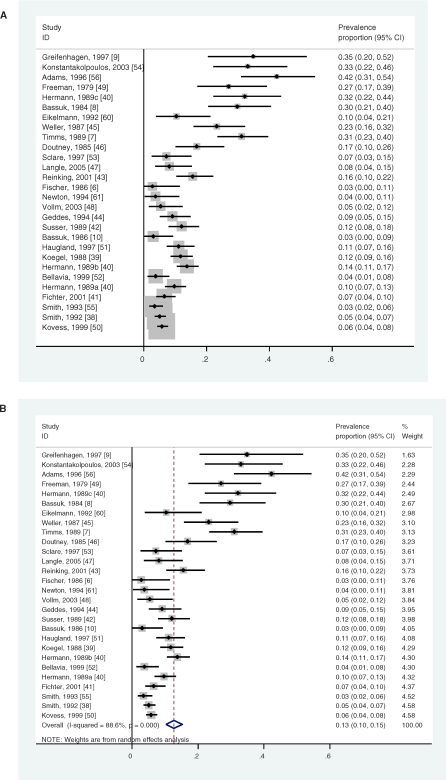
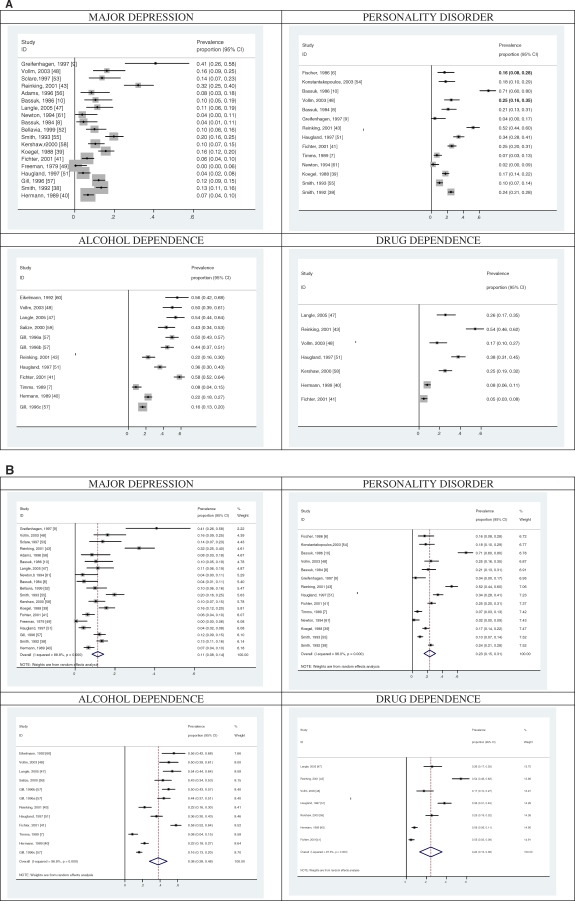
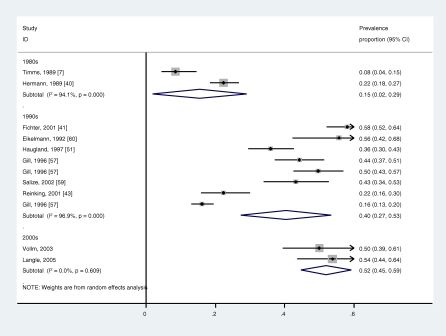
- Across 29 surveys, random-effects pooled prevalence estimates were: alcohol dependence 37.9% (95% CI 27.8%–48.0%; range 8.5%–58.1%), drug dependence 24.4% (95% CI 13.2%–35.6%; range 4.7%–54.2%), personality disorder 23.1% (95% CI 15.5%–30.8%; range 2.2%–71.0%), psychotic illness 12.7% (95% CI 10.2%–15.2%; range 2.8%–42.3%), and major depression 11.4% (95% CI 8.4%–14.4%; range 0.0%–40.9%).
- Heterogeneity was substantial for all disorders (all Cochran’s χ² significant at p < 0.001; all I² > 85%).
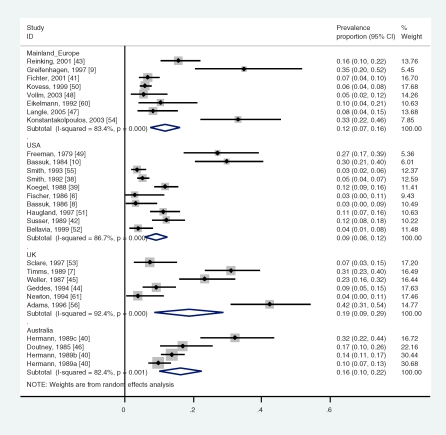
- Alcohol dependence prevalence increased over recent decades (β = 0.18, se[β] = 0.07, p = 0.007), and mainland Europe had higher alcohol dependence prevalence in individual-variable analysis (β = 0.21, se[β] = 0.09, p = 0.022).
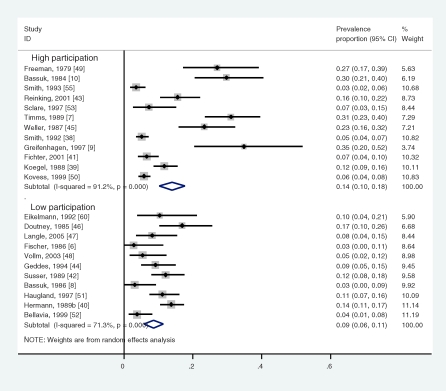
- Lower participation rates were associated with lower psychosis prevalence in multiple meta-regression (β = −0.08, se[β] = 0.03, p = 0.015), and with higher major depression (β = 0.11, se[β] = 0.03, p = 0.002) and personality disorder (β = 0.29, se[β] = 0.08, p < 0.001) in individual analyses.
Methods
- Systematic review searched EMBASE, MEDLINE, and PsycINFO, scanned reference lists, hand-searched journals, and corresponded with authors for surveys published January 1966–December 2007. Inclusion required a clear homelessness definition, ICD/DSM diagnoses, clinical examination or validated diagnostic interviews, past 6-month prevalence (lifetime for personality disorder), and study location in North America, Western Europe, Australia, or New Zealand; surveys with <50% response rate, selected populations, non-interview diagnoses, or solely elderly/juvenile samples were excluded.
- Twenty-nine eligible surveys provided estimates from 5,684 homeless individuals in seven countries; data extracted included geographical location, interview year, homelessness definition, sampling method, sample size, average age, diagnostic instrument/criteria, interviewer type, participation rate, and diagnoses of psychotic illness, major depression, personality disorder, alcohol dependence, and drug dependence.
- Prevalence estimates used the variance-stabilising double arcsine transformation with Wilson confidence intervals; heterogeneity was assessed with Cochran’s Q and I²; random-effects models were used when I² > 75%; meta-regression examined instrument, interviewer, decade, study size, sex, geographical region, and participation rate.
Limitations
- Paper-stated: substantial heterogeneity means service planning should not rely on the summary estimates but should commission local surveys of morbidity; future research should provide clear definitions and breakdowns by homelessness category, include non-Western countries, and use longitudinal cohorts.
- Evident from the text: included studies were restricted to Western countries and were mostly male samples; there were no investigations of alcohol dependence in homeless women and only one report on drug dependence in women (n = 33), limiting generalisability.
- Evident from the text: meta-regression could not explain much of the heterogeneity, and local factors such as provision of mental health and social services were suggested as likely important but were not measured; some studies also lacked sampling or response-rate information.
Model-written summary. Check it against the paper before relying on it.
Integrity signals
Registry
Cites
Statistics
Figures
Verification
Claims the paper makes
7 Valid · 2 Not valid · 30 Not checked · 47 Own results and interpretations
Every source the paper cites for this claim was checked and supports it.
In the paper
“up to 0.8% when only schizophrenia is reported [70]”
§ The Prevalence of Mental Disorders among the Homeless in Western Countries: Systematic Review and Meta-Regression Analysis > Conclusion
What the sources say
- Supportedcites [70] 70. Saha S Chant D Welham J McGrath J 2005 A systematic review of the prevalence of schizophrenia PLoS Medicine 2 e141 doi: 10.1371/journal.pmed.0020141 15916472 10.1371/journal.pmed.0020141 PMC1140952 source
The Discussion reports that about seven to eight people per 1,000 will be affected by schizophrenia, equivalent to 0.7%–0.8%. This is a lifetime morbid risk estimate, not the paper’s point-prevalence estimate, which is lower. (LLM, conf=0.87)
plain- Asserted: passes — The authors put it forward as true.
- Checkable: passes — It can be checked against evidence.
- Load-bearing: unclear — It is unclear whether the paper’s conclusions depend on it.
- Based: passes — The paper gives a reason why it holds.
- Supported
The cited sources support only part of this claim — read each source’s verdict below.
In the paper
“as substance abuse and dependence is an important risk factor, either alone [71] or comorbid with psychosis [21]”
§ The Prevalence of Mental Disorders among the Homeless in Western Countries: Systematic Review and Meta-Regression Analysis > Conclusion
What the sources say
- Partly supportedcites [71] 71. Grann M Fazel S 2004 Substance misuse and violent crime: Swedish population study BMJ 328 1233 1234 15155501 10.1136/bmj.328.7450.1233 PMC416597 sourceExperimental — accuracy not yet measured
The Abstract and Comment report a strong association between substance misuse and violent crime, supporting the risk-factor point attached to [71]. The paper does not establish that this association holds independently of psychosis, and its findings concern violent crime rather than crime generally; the separate claim about comorbidity is attributed to [21]. (LLM, conf=0.82)
- Not checked — no full text of the sourcecites [21] 21. Brennan P Mednick S Hodgins S 2000 Major mental disorders and criminal violence in a Danish birth cohort Arch Gen Psychiatry 57 494 500 10807490 10.1001/archpsyc.57.5.494 source
plainstates a cause- Asserted: passes — The authors put it forward as true.
- Checkable: passes — It can be checked against evidence.
- Load-bearing: unclear — It is unclear whether the paper’s conclusions depend on it.
- Based: passes — The paper gives a reason why it holds.
- Partly supported
Every source the paper cites for this claim was checked and supports it.
In the paper
“The presence of personality disorder is associated with poorer outcomes for treatment of depression [75]”
§ The Prevalence of Mental Disorders among the Homeless in Western Countries: Systematic Review and Meta-Regression Analysis > Conclusion
What the sources say
- Supportedcites [75] 75. Newton-Howes G Tyrer P Johnson T 2006 Personality disorder and the outcome of depression: meta-analysis of published studies Br J Psychiatry 188 13 20 16388064 10.1192/bjp.188.1.13 source
The Conclusions state that depression with comorbid personality disorder is associated with a poorer outcome than depression alone. The Comorbid personality section reports approximately twice the odds of a poor depression outcome when personality disorder is present, supporting the claim about treatment outcomes. (LLM, conf=0.94)
plainstates an association- Asserted: passes — The authors put it forward as true.
- Checkable: passes — It can be checked against evidence.
- Load-bearing: unclear — It is unclear whether the paper’s conclusions depend on it.
- Based: passes — The paper gives a reason why it holds.
- Supported
The sources with a verdict support this claim; the rest weren’t checked yet, have no full text we could read, or their verdicts aren’t rated yet.
In the paper
“The increased prevalence for drug dependence in both sexes may contribute to the reported increased crime rates in the homeless [20,21,22], as substance abuse and dependence is an important risk factor, either alone [71] or comorbid with psychosis [21].”
§ The Prevalence of Mental Disorders among the Homeless in Western Countries: Systematic Review and Meta-Regression Analysis > Conclusion
What the sources say
- Not checked — no full text of the sourcecites [20] 20. Gelberg L Linn LS Leake BD 1988 Mental health, alcohol and drug use, and criminal history among homeless adults Am J Psychiatry 145 191 196 3341464 10.1176/ajp.145.2.191 source
- Not checked — no full text of the sourcecites [21] 21. Brennan P Mednick S Hodgins S 2000 Major mental disorders and criminal violence in a Danish birth cohort Arch Gen Psychiatry 57 494 500 10807490 10.1001/archpsyc.57.5.494 source
- Supportedcites [22] 22. Fazel S Grann M 2006 The population impact of severe mental illness on violent crime Am J Psychiatry 163 1397 1403 16877653 10.1176/ajp.2006.163.8.1397 source
The FAZEL AND GRANN passage (page unavailable) states that comorbid substance abuse increases the risk of violent crime in people with severe mental illness. Citation [21] is attached specifically to the citing sentence’s claim about substance abuse comorbid with psychosis, not to its separate claim about crime rates among homeless people. (LLM, conf=0.91)
- Supportedcites [71] 71. Grann M Fazel S 2004 Substance misuse and violent crime: Swedish population study BMJ 328 1233 1234 15155501 10.1136/bmj.328.7450.1233 PMC416597 source
The citation to this paper is attached to the claim that substance misuse is associated with violent crime on its own, not to the claims about homelessness or both sexes. The Comment reports that people diagnosed with drug misuse committed more than a tenth of violent crimes in Sweden during 1988–2000, while cautioning that the association does not establish a simple causal relationship. (LLM, conf=0.90)
hedgedstates a possible cause- Asserted: passes — The authors put it forward as true.
- Checkable: passes — It can be checked against evidence.
- Load-bearing: passes — The paper’s conclusions depend on it.
- Based: passes — The paper gives a reason why it holds.
Every source the paper cites for this claim was checked and supports it.
In the paper
“all but one reported rates higher than the 4.4% found in a recent community survey [74]”
§ The Prevalence of Mental Disorders among the Homeless in Western Countries: Systematic Review and Meta-Regression Analysis > Conclusion
What the sources say
- Supportedcites [74] 74. Coid J Yang M Tyrer P Roberts A Ullrich S 2006 Prevalence and correlates of personality disorders in Great Britain Br J Psychiatry 188 423 431 16648528 10.1192/bjp.188.5.423 source
The ‘Prevalence of personality disorders’ section reports a weighted rate of 4.4% in the Great Britain household survey. ‘Comparison with previous surveys’ says this was lower than nearly all previous survey rates, which ranged from 3.9% to 22.3%. (LLM, conf=0.91)
plain- Asserted: passes — The authors put it forward as true.
- Checkable: passes — It can be checked against evidence.
- Load-bearing: passes — The paper’s conclusions depend on it.
- Based: passes — The paper gives a reason why it holds.
- Supported
58 more claims · 1 with their cited sources checked
Create a free account to see all 86 claims and to verify the 4 references still open.
- Probably not a substantial claim. 9
- It may state two separate claims as one. 17
- The quote only partly states this claim. 2
Claims other papers make about this one
Each is checked against this paper’s own text: does it say what the citing paper says it does?
The source backs part of the claim, not all of it — or backs it for a different population, condition or comparison.
In the citing paper
“The increased risk of morbidity and mortality from cardiovascular disease is probably a result of high rates of behavioural risk factors (illicit drug use, tobacco use); poor control of hypertension, diabetes, and hyperlipidaemia; and poor access to care for early cardiac disease.80,85”
From The health of homeless people in high-income countries: descriptive epidemiology, health consequences, and clinical and policy recommendations (2014) · cites this paper as [85]
Experimental — accuracy not yet measuredThe source backs part of the claim, not all of it — or backs it for a different population, condition or comparison.
In the citing paper
“In a meta-analysis of 29 studies conducted from 1979 to 2005, the commonest disorders found among the homeless population were alcohol dependence, drug dependence and psychotic disorders, with random effects pooled prevalence estimates of 37.9%, 24.4%, and 12.7%, respectively [15].”
From Burden of mental disorders and unmet needs among street homeless people in Addis Ababa, Ethiopia (2014) · cites this paper as [15]
Experimental — accuracy not yet measuredThe cited source says what the claim attributes to it.
In the citing paper
“Homeless individuals have high rates of chronic psychiatric and medical conditions7,9,10,42,43 and elevated rates of mortality.44”
From Housing first is associated with reduced use of emergency medical services (2014) · cites this paper as [7]
In the citing paper
“These factors were selected on the basis of previous work about heterogeneity in prevalence studies in homeless people.34”
From Prevalence of tuberculosis, hepatitis C virus, and HIV in homeless people: a systematic review and meta-analysis (2012) · cites this paper as [34]
In the citing paper
“A meta-analysis of studies conducted in the United States and worldwide showed that alcohol dependence affects a mean of 38% of homeless adults,7 which exceeds the prevalence in the U.S. general population by more than 10-fold.8”
From Housing first is associated with reduced use of emergency medical services (2014) · cites this paper as [7]
1 more claim about this paper
Create a free account to see every claim other papers make about this one.
Self-check
Percentages, sums and reported differences re-computed from the paper’s own numbers.
Each contradiction between two passages listed here was confirmed by an independent check.
Rated minor: it would not touch a result — a value no result rests on, a p-value that stays on the same side of the significance level, or a conflict that is clerical, resolved elsewhere in the paper, or outside its own findings.
In the paper
§ The Prevalence of Mental Disorders among the Homeless in Western Countries: Systematic Review and Meta-Regression Analysis > Abstract > Methods and Findings
“alcohol dependence, which ranged from 8.1% to 58.5%”
§ The Prevalence of Mental Disorders among the Homeless in Western Countries: Systematic Review and Meta-Regression Analysis > Results > Alcohol Dependence
“The prevalence estimates ranged from 8.5% to 58.1%.”
Rated minor: it would not touch a result — a value no result rests on, a p-value that stays on the same side of the significance level, or a conflict that is clerical, resolved elsewhere in the paper, or outside its own findings.
In the paper
§ The Prevalence of Mental Disorders among the Homeless in Western Countries: Systematic Review and Meta-Regression Analysis > Abstract > Methods and Findings
“drug dependence, which ranged from 4.5% to 54.2%”
§ The Prevalence of Mental Disorders among the Homeless in Western Countries: Systematic Review and Meta-Regression Analysis > Results > Drug Dependence
“The prevalence estimates ranged from 4.7% to 54.2%.”
Citations
Cites
Measuring inconsistency in meta-analyses
Higgins, J. P. T., Thompson, S. G., Deeks, J. J., & Altman, D. G. (2003) · BMJ · doi:10.1136/bmj.327.7414.557 · Cited by 63,139 · cited 2×
“75%), random effects models were used for summary statistics [36].”
MethodQuantifying heterogeneity in a meta‐analysis
Higgins, J. P. T., & Thompson, S. G. (2002) · Statistics in Medicine · doi:10.1002/sim.1186 · Cited by 36,763 · cited 1×
“Heterogeneity among studies was estimated using Cochran’s Q (reported with a v(2)-value and p-value) and the I(2) statistic, the latter describing the percentage of variation across studies that is due to heterogeneity rather than chance [36,37], and presented with a 95% CI [37].”
MethodKessler, R. C. (1994) · Archives of General Psychiatry · doi:10.1001/archpsyc.1994.03950010008002 · Cited by 12,370
Kessler, R. C., Chiu, W. T., Demler, O., & Walters, E. E. (2005) · Archives of General Psychiatry · doi:10.1001/archpsyc.62.6.617 · Cited by 12,052 · cited 3×
“On average, this is many orders of magnitude higher in men and even higher in women compared with community surveys [62,63].”
BackgroundResultKessler, R. C., Berglund, P., Demler, O., Jin, R., Koretz, D., Merikangas, K. R., Rush, A. J., Walters, E. E., & Wang, P. S. (2003) · JAMA · doi:10.1001/jama.289.23.3095 · Cited by 7,988 · cited 1×
“Many estimates included in the review were similar to community estimates of depression in women (which range from 7% to 11% for 1-y estimates), and only slightly higher than general population rates for men [62,72].”
Two-sided confidence intervals for the single proportion: comparison of seven methods
Newcombe, R. G. (1998) · Statistics in Medicine · doi:10.1002/(sici)1097-0258(19980430)17:8<857::aid-sim777>3.0.co;2-e · Cited by 5,107 · cited 1×
“Confidence intervals (CIs) around these estimates were calculated using the Wilson method [34] since the asymptotic method produces intervals which can extend below zero [35].”
MethodProbable Inference, the Law of Succession, and Statistical Inference
Wilson, E. B. (1927) · Journal of the American Statistical Association · doi:10.1080/01621459.1927.10502953 · Cited by 4,476 · cited 1×
“Confidence intervals (CIs) around these estimates were calculated using the Wilson method [34] since the asymptotic method produces intervals which can extend below zero [35].”
MethodTransformations Related to the Angular and the Square Root
Freeman, M. F., & Tukey, J. W. (1950) · The Annals of Mathematical Statistics · doi:10.1214/aoms/1177729756 · Cited by 2,628 · cited 1×
“Prevalence estimates were calculated using the variance stabilising double arcsine transformation [33], because of the use of the inverse variance weight in fixed-effects metaanalysis is suboptimal when dealing with binary data with low prevalences.”
MethodPsychiatric disorders in America: the epidemiologic catchment area study
(1991) · Choice Reviews Online · doi:10.5860/choice.28-5931 · Cited by 2,555 · cited 1×
“The prevalence of psychosis ranged between 3% and 42%, which is substantially higher than community estimates, which typically report 1%–2% when individuals are surveyed using diagnostic instruments [69], and up to 0.”
BackgroundFazel, M., Wheeler, J., & Danesh, J. (2005) · The Lancet · doi:10.1016/s0140-6736(05)61027-6 · Cited by 2,292 · cited 1×
“Second, the prevalence estimates for psychosis were at least as high as those for depression, a finding in marked contrast from community estimates of these conditions [62,63], and in other at-risk groups such as prisoners [64] and refugees [65], in whom depression is more common.”
Result
Research works printed but not linked: 3
- 11. Fischer PJ 1989 Estimating the prevalence of alcohol, drug and mental health problems in the contemporary homeless population: a review of the literature Contemp Drug Probl 16 333 390
- 58. Kershaw A Singleton N Meltzer H 2000 Substance misuse and mental disorder among homeless people in Glasgow London ONS
- 60. Eikelmann B Inhester ML Reker T 1992 Psychische Störungen bei nicht-sesshaften Männern. Defizite in der psychiatrischen Versorgung Sozialpsychiatrische Informationen 2 29 32
Cited by
Items 301–400 of 1,032
The impact of housing prices on residents’ health: a systematic review
Grewal, A., Hepburn, K. J., Lear, S. A., Adshade, M., & Card, K. G. (2024) · BMC Public Health · doi:10.1186/s12889-024-18360-w · Cited by 34
Homelessness and Addiction: Causes, Consequences and Interventions
Schütz, C. G. (2016) · Current Treatment Options in Psychiatry · doi:10.1007/s40501-016-0090-9 · Cited by 31
Predictors of Adolescents' First Episode of Homelessness Following Substance Use Treatment
DiGuiseppi, G., Davis, J. P., Leightley, D., & Rice, E. R. W. (2020) · Journal of Adolescent Health · doi:10.1016/j.jadohealth.2019.11.312 · Cited by 28
Pilla, D., & Park‐Taylor, J. (2021) · Journal of Community Psychology · doi:10.1002/jcop.22724 · Cited by 26
Hamilton‐Wright, S., Woodhall‐Melnik, J., Guilcher, S. J. T., Schuler, A., Wendaferew, A., Hwang, S. W., & Matheson, F. I. (2016) · International Journal of Environmental Research and Public Health · doi:10.3390/ijerph13090854 · Cited by 23
“Indeed, research suggests that mental health issues are correlated with homelessness [57–59].”
BackgroundLachaud, J., Mejía-Lancheros, C., Wang, R., Wiens, K., Nisenbaum, R. A., Stergiopoulos, V., Hwang, S. W., & O'Campo, P. J. (2020) · PLoS ONE · doi:10.1371/journal.pone.0232001 · Cited by 27
“Prevalence estimates for mental disorders, such as psychosis, depression, personality disorder, and posttraumatic stress disorder, are also higher than those reported for the general population of those countries [1,2].”
ResultA house is not a home: The great residential divide in autism care
Mandell, D. S. (2017) · Autism · doi:10.1177/1362361317722101 · Cited by 25
“Many of those who left psychiatric hospitals swelled the ranks of the homeless (Fazel et al., 2008) and incarcerated (Fazel et al., 2016).”
BackgroundGeremew, H., & Geremew, D. (2021) · Systematic Reviews · doi:10.1186/s13643-021-01786-3 · Cited by 36
Risperidone ISM as a New Option in the Clinical Management of Schizophrenia: A Narrative Review
Álamo, C. (2022) · Advances in Therapy · doi:10.1007/s12325-022-02299-8 · Cited by 25
“This pathology is associated with unemployment, homelessness and lack of social integration [2].”
BackgroundRamirez, J., Petruzzi, L. J., Mercer, T., Gulbas, L. E., Sebastian, K., & Jacobs, E. A. (2022) · BMC Family Practice · doi:10.1186/s12875-022-01932-3 · Cited by 25
Abdel-Rahman, S. M., Shaban, N. Z., Haggag, A. S., et al. (2016) · Asian Pacific Journal of Cancer Prevention · doi:10.7314/apjcp.2015.16.18.8411 · Cited by 22
“The ethanolic extract was analyzed for total phenolic contents (Taga et al., 1984), HPLC (phenolic compounds), total flavonoid contents (Zhishen et al., 1999), total triterpenoids (Bai et al., 2007), total alkaloids (Fazel et al., 2008) and total antioxidant capacities (Tyagi et al., 2010).”
MethodPredictors of mental health help-seeking among Polish people living in the United Kingdom
Gondek, D., & Kirkbride, J. B. (2018) · BMC Health Services Research · doi:10.1186/s12913-018-3504-0 · Cited by 29
Emergency Medical Services Utilization by Homeless Patients
Abramson, T. M., Sanko, S., & Eckstein, M. K. (2020) · Prehospital Emergency Care · doi:10.1080/10903127.2020.1777234 · Cited by 24
“This is consistent with the fact that alcohol dependence occurs at a higher in the homeless population than the general population, affecting 38% of homeless adults (29).”
BackgroundBennett, A., Crosse, K., Ku, M., Edgar, N. E., Hodgson, A., & Hatcher, S. (2022) · BMJ Open · doi:10.1136/bmjopen-2021-051079 · Cited by 26
Behavioral Health Care Delivery Through Street Medicine Programs in California
Su, K. Y., Feldman, B. J., Feldman, C. T., Saluja, S., Kogan, A. C., & Cousineau, M. R. (2023) · Community Mental Health Journal · doi:10.1007/s10597-023-01169-z · Cited by 23
“People experiencing homelessness (PEH) are more likely to have a broad range of health problems including serious mental illness (Fazel et al., 2008; Hossain et al., 2020; Iwundu et al., 2020; Koegel et al., 1988), substance use disorders (SUD) (Doran et al., 2018; Spinelli et al., 2016), and…”
BackgroundSubstance use among Dutch homeless people, a follow-up study: prevalence, pattern and housing status
van Straaten, B., Rodenburg, G., van der Laan, J., Boersma, S. N., Wolf, J., & van de Mheen, D. (2015) · European Journal of Public Health · doi:10.1093/eurpub/ckv142 · Cited by 29
The Role of Recovery Housing: Prioritizing Choice in Homeless Services
Paquette, K. L., & Winn, L. A. P. (2016) · Journal of Dual Diagnosis · doi:10.1080/15504263.2016.1175262 · Cited by 27
“…had a serious mental illness (U.S. Department of Housing and Urban Development, 2015a), and several studies have found high rates of co-occurring disorders (Fazel et al., 2008; Fazel, Geddes, & Kushel, 2014; Torchalla et al., 2011; Bassuk, Buckner, Perloff, & Bassuk, 1998; North & Smith, 1992).”
BackgroundNavarro-Lashayas, M. Á., & Eiroá‐Orosa, F. J. (2017) · American Journal of Orthopsychiatry · doi:10.1037/ort0000213 · Cited by 26
“(Care resources practitioners’ discussion group) Page 24 of 35 In this study, just as in past research (S. Fazel et al., 2008; Goodman et al., 1991; Lam & Rosenheck, 2000), frequent alcohol consumption and psychological distress have been shown as important variables when analyzing the general…”
BackgroundSocial networks and substance use after transitioning into permanentsupportive housing
Rhoades, H., Motte‐Kerr, W. L., Duan, L., Woo, D., Rice, E. R. W., Henwood, B. F., Harris, T. E., & Wenzel, S. L. (2018) · Drug and Alcohol Dependence · doi:10.1016/j.drugalcdep.2018.06.027 · Cited by 28
“Substance use disorders are the most common mental health conditions among persons experiencing homelessness (Fazel et al., 2008), and engaging in substance use is associated with worse outcomes for this population, including chronic homelessness (Fichter and Quadflieg, 2006; Kuhn and Culhane, 1998; Lipton et al.”
BackgroundDisaster Planning for Homeless Populations: Analysis and Recommendations for Communities
Morris, S. C. (2020) · Prehospital and Disaster Medicine · doi:10.1017/s1049023x20000278 · Cited by 30
Baracaia, S., McNulty, D., Baldwin, S. W., et al. (2020) · Emergency Medicine Journal · doi:10.1136/emermed-2019-209105 · Cited by 21
“As the prevalence of mental illness is generally higher in those of no fixed abode, 12 we included those of unknown residence.”
Twyman, L., Bonevski, B., Paul, C. L., Bryant, J., GARTNER, C. E., & Guillaumier, A. (2015) · Nicotine & Tobacco Research · doi:10.1093/ntr/ntv183 · Cited by 21
Whitbeck, L. B., Armenta, B. E., & Welch-Lazoritz, M. L. (2015) · Social Psychiatry and Psychiatric Epidemiology · doi:10.1007/s00127-015-1026-1 · Cited by 22
“[1] for an international review of diagnostic studies).”
BackgroundHomelessness & Health in Canada
Guirguis‐Younger, M., Hwang, S. W., & McNeil, R. (2014) · University of Ottawa Press eBooks · doi:10.26530/oapen_515362 · Cited by 36
What drives the high health care costs of the homeless?
Zaretzky, K., Flatau, P., Spicer, B., Conroy, E., & Burns, L. (2017) · Housing Studies · doi:10.1080/02673037.2017.1280777 · Cited by 35
“…is higher among those experiencing homelessness than the general population (Baggett et al., 2013, 2014; Bassuk et al., 1998; Drake et al., 1991; Fazel et al., 2008, 2014; Fichter & Quadflieg, 2001; Glasser & Zywiak, 2003; Goering et al., 2002; Madianos et al., 2013; Palepu et al., 2013; Spicer…”
BackgroundHealth-Related Material Needs and Substance Use among Emergency Department Patients
Gerber, E., Gelberg, L., Rotrosen, J., Castelblanco, D. G., Mijanovich, T., & Doran, K. M. (2019) · Substance Abuse · doi:10.1080/08897077.2019.1635960 · Cited by 22
“severity of drug and alcohol use, and worse substance use–related outcomes.(12,16,22,37,38) Our results add to the growing body of literature suggesting the importance of addressing housing status among people with unhealthy alcohol or drug use.”
BackgroundNelson, R. E., Montgomery, A. E., Suo, Y., Cook, J. R., Pettey, W. B. P., Gundlapalli, A. V., Greene, T., Evans, W. N., Gelberg, L., Kertesz, S. G., et al. (2021) · Health Affairs · doi:10.1377/hlthaff.2020.01796 · Cited by 23
Ijaz, S., Thorley, H., Porter, K., Fleming, C., Jones, T., Kesten, J. M., Mamluk, L., Richards, A., Marques, E. M. R., & Savović, J. (2018) · International Journal for Equity in Health · doi:10.1186/s12939-018-0722-3 · Cited by 24
Ellsworth, J. T. (2019) · Substance Abuse · doi:10.1080/08897077.2019.1686725 · Cited by 24
The evolving role of the pharmacist for individuals with serious mental illness
Eaves, S. M., Gonzalvo, J. D., Hamm, J. A., Williams, G., & Ott, C. A. (2020) · Journal of the American Pharmacists Association · doi:10.1016/j.japh.2020.04.017 · Cited by 22
Interventions to reduce tobacco use in people experiencing homelessness
Vijayaraghavan, M., Elser, H. C., & Apollonio, D. E. (2019) · Cochrane Database of Systematic Reviews · doi:10.1002/14651858.cd013413 · Cited by 23
Health status and utilisation of the healthcare system by homeless and non-homeless people in Vienna
Wagner, J., Diehl, K., Mutsch, L., Löffler, W., Burkert, N. T., & Freidl, W. (2013) · Health & Social Care in the Community · doi:10.1111/hsc.12083 · Cited by 29
Ogden, L. P. (2014) · Journal of Aging Studies · doi:10.1016/j.jaging.2014.01.002 · Cited by 23
Collins, S. E., Taylor, E. M., Jones, C. B., Haelsig, L., Grazioli, V. S., Mackelprang, J. L., Holttum, J., Koker, M. J., Hatsukami, A. S., Baker, M., et al. (2017) · Substance Use & Misuse · doi:10.1080/10826084.2017.1322406 · Cited by 26
Understanding the relationship between poverty and alcohol misuse.
Jones, L., & Sumnall, H. R. (2016) · UKM Journal Article Repository (Universiti Kebangsaan Malaysia) · Cited by 27
Roy, R., Raman, K. J., Elangovan, A. R., & Varambally, S. S. (2024) · International Journal of Social Psychiatry · doi:10.1177/00207640231217173 · Cited by 22
“The prevalence of mental health issues is higher among the homeless population than the general population (Fazel et al., 2014, 2008; 2000).”
Arrangements for adult service users who are homeless in English mental health trusts
Lucas, S., Archard, P. J., Tangen, J., et al. (2018) · Mental Health Review Journal · doi:10.1108/mhrj-03-2017-0017 · Cited by 19
A qualitative exploration of substance misuse among homeless women in Addis Ababa, Ethiopia
Haile, K., Umer, H., Ayano, G., Fejo, E., & Fanta, T. (2020) · BMC Psychiatry · doi:10.1186/s12888-020-02626-9 · Cited by 19
Jacob, L., Sánchez, G. F. L., Carvalho, A. F., Shin, J. I., Oh, H. Y., Yang, L., Veronese, N., Soysal, P., Grabovac, I., Koyanagi, A., et al. (2020) · Journal of Affective Disorders · doi:10.1016/j.jad.2020.05.085 · Cited by 24
Schindel, D., Kleyer, C., & Schenk, L. (2020) · Bundesgesundheitsblatt - Gesundheitsforschung - Gesundheitsschutz · doi:10.1007/s00103-020-03213-9 · Cited by 35
Huỳnh, C., Tremblay, J., & Fleury, M. (2016) · Journal of Substance Abuse Treatment · doi:10.1016/j.jsat.2016.09.007 · Cited by 25
Gicas, K. M., Giesbrecht, C. J., Panenka, W. J., Lang, D. J., Smith, G. N., Vila‐Rodriguez, F., Leonova, O., Jones, A. A., Barr, A. M., Procyshyn, R. M., et al. (2017) · Neuropsychology · doi:10.1037/neu0000304 · Cited by 20
North, C. S., Wohlford, S., Dean, D. J., Black, M., Balfour, M. E., Petrovich, J. C., Downs, D. L., & Pollio, D. E. (2016) · Community Mental Health Journal · doi:10.1007/s10597-016-0057-8 · Cited by 25
Nilsson, S. F., Laursen, T. M., Hjorthøj, C. R., & Nordentoft, M. (2019) · Acta Psychiatrica Scandinavica · doi:10.1111/acps.13082 · Cited by 19
Montgomery, M. P., Paulin, H. N., Morris, A., Cotton, A., Speers, A., Boyd, A. T., Buff, A. M., Mathews, D., Wells, A., Marchman, C., et al. (2021) · Journal of Public Health Management and Practice · doi:10.1097/phh.0000000000001349 · Cited by 20
Safer-Drinking Strategies Used by Chronically Homeless Individuals with Alcohol Dependence
Grazioli, V. S., Hicks, J., Kaese, G., Lenert, J., & Collins, S. E. (2015) · Journal of Substance Abuse Treatment · doi:10.1016/j.jsat.2015.01.010 · Cited by 20
“In fact, according to a metaanalysis, up to 58% of homeless individuals worldwide have alcohol dependence (Fazel et al., 2008).”
InfluentialRutenfrans-Stupar, M., Plas, B. V. D., Haan, R. D., Regenmortel, T. V., & Schalk, R. (2019) · Journal of Social Distress and the Homeless · doi:10.1080/10530789.2018.1563267 · Cited by 26
“Traditionally, research focused especially on objective outcomes in homeless people such as physical and mental health disorders and substance abuse (Fazel et al., 2008; Fischer & Breakey, 1991; Tam et al., 2003).”
BackgroundOliveira, L. D. P., Pereira, M. L., Azevedo, A., & Lunet, N. (2012) · Cadernos de Saúde Pública · doi:10.1590/s0102-311x2012000800010 · Cited by 18
Ralevski, A., Taiyab, N., Nossal, M., Mico, L., Piekos, S. N., & Hadlock, J. (2024) · Journal of Medical Internet Research · doi:10.2196/63445 · Cited by 34
“It is well known that people who are experiencing housing instability are at greater risk for other health issues, including substance use, comorbidities, and mental illness [3,7,8].”
Raines, A. M., Ennis, C. R., Allan, N. P., McGrew, S. J., Walton, J. L., Rogers, A. H., Zvolensky, M. J., Schmidt, N. B., & Franklin, C. L. (2021) · Addictive Behaviors · doi:10.1016/j.addbeh.2020.106791 · Cited by 22
Vogel, M., Choi, F., Westenberg, J. N., Cabanis, M., Nikoo, N., Nikoo, M., Hwang, S. W., Somers, J. M., Schütz, C. G., & Krausz, M. R. (2021) · International Journal of Environmental Research and Public Health · doi:10.3390/ijerph19010005 · Cited by 22
A systematic review of the nutritional status of adults experiencing homelessness
Huang, C., Foster, H. M. E., Paudyal, V., Ward, M., & Lowrie, R. (2022) · Public Health · doi:10.1016/j.puhe.2022.04.013 · Cited by 29
Sarmiento, J. M. H., Correa, N. E., Correa, M., Franco, J. G., Álvarez, M., Ramírez, C., Gómez, L. M., Toro, A. C., Arredondo, N. H. L., Martínez, M., et al. (2013) · Journal of Immigrant and Minority Health · doi:10.1007/s10903-013-9776-x · Cited by 25
Dressler, H., & Smith, C. (2015) · Journal of Hunger & Environmental Nutrition · doi:10.1080/19320248.2015.1045666 · Cited by 21
“Homelessness was also common in the sample, a factor also related to depression risk among low-income women.(48) The majority of women in this study were experiencing some degree of food insecurity, but results indicated that depressed women were more food insecure than their nondepressed counterparts (Table 1).”
BackgroundWeb-Based Violence Risk Monitoring Tool in Psychoses: Pilot Study in Community Forensic Patients
Gulati, G., Cornish, R., Al-Taiar, H., Miller, C., Khosla, V., Hinds, C., Price, J. R., Geddes, J. R., & Fazel, S. (2016) · Journal of Forensic Psychology Practice · doi:10.1080/15228932.2016.1128301 · Cited by 18
Self-citationCollins, S. E., Taylor, E. M., King, V. L., Hatsukami, A. S., Jones, M. B., Lee, C., Lenert, J., Jing, J. M., Barker, C. R., Goldstein, S. C., et al. (2016) · Suicide and Life-Threatening Behavior · doi:10.1111/sltb.12250 · Cited by 23
Mindfulness Training as a Clinical Intervention with Homeless Adults: a Pilot Study
Maddock, A., Hevey, D., & Eidenmueller, K. (2016) · International Journal of Mental Health and Addiction · doi:10.1007/s11469-016-9718-7 · Cited by 26
“The addiction attentional bias can lead to a behavioral response without conscious decisionmaking, i.e., a loss of control and increased impulsivity (Field and Cox 2008).”
BackgroundImplementing managed alcohol programs in hospital settings: A review of academic and grey literature
Brooks, H. L., Kassam, S., Salvalaggio, G., & Hyshka, E. (2018) · Drug and Alcohol Review · doi:10.1111/dar.12659 · Cited by 24
White, H., Saran, A., Fowler, B., Portes, A., Fitzpatrick, S., & Teixeira, L. (2019) · Campbell Systematic Reviews · doi:10.1002/cl2.1069 · Cited by 18
Gentil, L., Grenier, G., & Fleury, M. (2020) · Social Psychiatry and Psychiatric Epidemiology · doi:10.1007/s00127-020-01952-3 · Cited by 24
Wang, A., Pridham, K. F., Nisenbaum, R. A., Pedersen, C., Brown, R. J., & Hwang, S. W. (2021) · Journal of General Internal Medicine · doi:10.1007/s11606-020-06483-w · Cited by 25
Cardiovascular Health Issues in Inner City Populations
Nayyar, D., & Hwang, S. W. (2015) · Canadian Journal of Cardiology · doi:10.1016/j.cjca.2015.04.011 · Cited by 20
Homelessness and Substance Use Disorders
Stablein, G. W., Hill, B. S., Keshavarz, S., & Llorente, M. D. (2021) · Springer eBooks · doi:10.1007/978-3-030-70135-2_12 · Cited by 28
Kaushal, R., Jagpal, P., Khanal, S., Vohra, N., Lowrie, R., Johal, J., Jenkins, D., Saunders, K., & Paudyal, V. (2021) · BJGP Open · doi:10.3399/bjgpo.2021.0050 · Cited by 17
Baggett, T. P., Teixeira, J. B., Rodriguez, E. C., Anandakugan, N., Sporn, N. J., Chang, Y., Percac‐Lima, S., Park, E. R., & Rigotti, N. A. (2021) · Contemporary Clinical Trials · doi:10.1016/j.cct.2021.106666 · Cited by 17
Network collaboration of organizations for homeless individuals in the Montreal region
Fleury, M., Grenier, G., LESAGE, A. D., et al. (2014) · International Journal of Integrated Care · doi:10.5334/ijic.1138 · Cited by 17
“The proportion of Montreal homeless organisations clients with mental health problems, addiction or social problems is quite similar to that found in the international literature [51].”
ResultTermorshuizen, F., van Bergen, A. P. L., Smit, R. B. J., Smeets, H. M., & van Ameijden, E. J. (2013) · International Journal of Social Psychiatry · doi:10.1177/0020764013491942 · Cited by 19
“, 2009) and a higher prevalence of psychiatric disorders (Reinking et al., 2001; Fazel et al., 2008; Beijer & Andreasson, 2010; Folsom et al., 2005).”
BackgroundResultBuitenweg, D. C., Bongers, I. L., van de Mheen, D., van Oers, H., & van Nieuwenhuizen, C. (2019) · JMIR Mental Health · doi:10.2196/12378 · Cited by 24
“Homeless individuals were included in this study because of the high prevalence of severe mental health problems in this group [38-40].”
BackgroundMedical Comorbidities and Medication Use Among Homeless Adults Seeking Mental Health Treatment
Arnold, E. M., Strenth, C. R., Hedrick, L. P., Paterson, R. C., Curiel, J., Joseph, A. E., Brown, T. W., & Kimball, J. N. (2020) · Community Mental Health Journal · doi:10.1007/s10597-020-00552-4 · Cited by 18
Religion and Recovery Among Individuals Experiencing Homelessness
Lovett, K., & Weisz, C. (2020) · Journal of Religion and Health · doi:10.1007/s10943-020-01060-1 · Cited by 22
Motte‐Kerr, W. L., Rhoades, H., Henwood, B. F., Rice, E. R. W., & Wenzel, S. L. (2020) · American Journal of Community Psychology · doi:10.1002/ajcp.12459 · Cited by 24
Thompson, E. L., Galvin, A. M., Rohr, D., Klocek, C., Lowe, H., & Spence, E. E. (2020) · Journal of Children and Poverty · doi:10.1080/10796126.2020.1835131 · Cited by 22
Prevalence of psychiatric disorders among homeless people in Athens area: a cross-sectional study
Madianos, M. G., Chondraki, P., & Papadimitriou, G. N. (2013) · Social Psychiatry and Psychiatric Epidemiology · doi:10.1007/s00127-013-0674-2 · Cited by 23
“of the comorbid cases of homeless people [22].”
BackgroundHousing outcomes and predictors of success: the role of hospitalization in street outreach
Lettner, B., Doan, R., & Miettinen, A. W. (2016) · Journal of Psychiatric and Mental Health Nursing · doi:10.1111/jpm.12287 · Cited by 18
“The over-representation of homeless individuals within the mental health systems of Western countries has been clearly established (Fazel et al. 2008).”
BackgroundStergiopoulos, V., Gozdzik, A., Nisenbaum, R. A., Vasiliadis, H., Chambers, C., McKenzie, K. J., & Misir, V. (2016) · Psychiatric Services · doi:10.1176/appi.ps.201500287 · Cited by 21
“Compared with the general population, homeless individuals experience a higher prevalence of acute and chronic health conditions (1), cognitive impairment (2), and premature mortality (3,4).”
BackgroundCharacteristics of Violent Deaths Among Homeless People in Maryland, 2003–2011
Stanley, J. L., Jansson, A., Akinyemi, A. A., & Mitchell, C. S. (2016) · American Journal of Preventive Medicine · doi:10.1016/j.amepre.2016.08.005 · Cited by 20
Dental problems and chronic diseases in mentally ill homeless adults: a cross-sectional study
Mejía-Lancheros, C., Lachaud, J., Nisenbaum, R. A., Wang, A., Stergiopoulos, V., Hwang, S. W., & O'Campo, P. J. (2020) · BMC Public Health · doi:10.1186/s12889-020-08499-7 · Cited by 23
Grazioli, V. S., Collins, S. E., Daeppen, J., & Larimer, M. E. (2014) · International Journal of Drug Policy · doi:10.1016/j.drugpo.2014.10.009 · Cited by 23
Untangling the Relationship Between Mental Health and Homelessness Among a Sample of Arrestees
Fox, A. M., Mulvey, P., Katz, C. M., & Shafer, M. S. (2013) · Crime & Delinquency · doi:10.1177/0011128713511571 · Cited by 24
“…illness, research has repeatedly shown substance abuse to be a risk for homelessness as well as potentially exasperating it (e.g., see Booth et al., 2002; Fazel et al. 2008; P. J. Fischer & Breakey, 1991; Greenberg & Rosenheck, 2008; Hartwell, 2003; Koegel et al., 1988; Padgett & Struening, 1992).”
BackgroundZabkiewicz, D. (2012) · Journal of Clinical Trials · doi:10.4172/2167-0870.1000123 · Cited by 17
“Individuals who are homeless experience disproportionately high rates of psychiatric disorders [6], including substance use problems [7].”
BackgroundHomelessness in mental illness: Opportunities & prospects in the Indian context
hassan, F. U., Nagavarapu, L. S., Muliyala, K. P., Elangovan, A. R., & Sekhar, K. (2019) · Asian Journal of Psychiatry · doi:10.1016/j.ajp.2019.08.011 · Cited by 20
Zhao, J., Stockwell, T. R., Pauly, B., Wettlaufer, A., & Chow, C. M. (2021) · Alcohol and Alcoholism · doi:10.1093/alcalc/agab078 · Cited by 18
Lutchmun, W., Gach, J., Borup, C., & Froeschl, G. (2022) · BMC Public Health · doi:10.1186/s12889-022-14023-w · Cited by 23
Weightman, A. L., Kelson, M. J., Thomas, I., Mann, M. K., Searchfield, L., Willis, S., Hannigan, B., Smith, R. J., & Cordiner, R. (2023) · Campbell Systematic Reviews · doi:10.1002/cl2.1329 · Cited by 21
Whittaker, E., Swift, W., Flatau, P., Dobbins, T., Schollar‐Root, O., & Burns, L. (2015) · BMC Public Health · doi:10.1186/s12889-015-1700-y · Cited by 22
“Australian and international evidence highlights the heightened prevalence of substance use disorders and other mental health disorders across homeless populations [6,8-12].”
BackgroundReaching out to the forgotten: providing access to medical care for the homeless in Italy
Maio, G. D., den Bergh, R. V., Garelli, S., Maccagno, B., Raddi, F., Stefanizzi, A., Regazzo, C., & Zachariah, R. (2014) · International Health · doi:10.1093/inthealth/ihu002 · Cited by 17
Yang, W., Kang, D., Ha, S. Y., & Lee, S. (2020) · Stroke · doi:10.1161/strokeaha.120.032144 · Cited by 17
Mejía-Lancheros, C., Lachaud, J., Aubry, T., Wiens, K., O'Campo, P. J., Stergiopoulos, V., & Hwang, S. W. (2021) · Social Psychiatry and Psychiatric Epidemiology · doi:10.1007/s00127-021-02093-x · Cited by 20
Nazarzadeh, M., Bidel, Z., Jarahi, A. M., Esmaeelpour, K., Menati, W., Shakeri, A. A., Menati, R., Kikhavani, S., & Saki, K. (2014) · American Journal of Men s Health · doi:10.1177/1557988314546667 · Cited by 18
Fletcher, J. B., & Reback, C. J. (2013) · Journal of Substance Abuse Treatment · doi:10.1016/j.jsat.2013.03.002 · Cited by 20
Sensory‐based approaches in psychiatric care: A systematic mixed‐methods review
Ma, D., Jianping, S., Wang, H., Zhao, Y., Li, H., Li, Y., Zhang, X., Qi, Y., & Sun, J. (2021) · Journal of Advanced Nursing · doi:10.1111/jan.14884 · Cited by 27
Park, S. J., Wai, A., Pavithran, K., Kunheri, B., & Valsraj, K. M. (2021) · Psycho-Oncology · doi:10.1002/pon.5796 · Cited by 17
“For example, there are issues of increased homelessness resulting in little protection from UV and exposure to other environmental stressors.(20,21) There are known metabolic side effects to antipsychotic medications that cause increased weight gain.”
BackgroundPadwa, H., Henwood, B. F., Ijadi‐Maghsoodi, R., Smith, B. T., Darby, A., Bluthenthal, R. N., Chinchilla, M., Vickery, K. D., Kuhn, R., Lawton, A., et al. (2023) · Community Mental Health Journal · doi:10.1007/s10597-023-01138-6 · Cited by 18
O’Shaughnessy, B. R., Mayock, P., & Kakar, A. (2024) · International Journal of Drug Policy · doi:10.1016/j.drugpo.2024.104528 · Cited by 20
Austin, J. L., McKellar, J., & Moos, R. H. (2011) · Addictive Behaviors · doi:10.1016/j.addbeh.2011.05.001 · Cited by 15
Impact of chronically street homeless tenants in congregate supportive housing.
Levitt, A. J., Jost, J. J., Mergl, K. A., Hannigan, A., DeGenova, J., & Chung, S. Y. (2012) · American Journal of Orthopsychiatry · doi:10.1111/j.1939-0025.2012.01164.x · Cited by 15
Pardo, A. A., Ramírez, J. P., & Martínez, A. I. (2020) · OBETS Revista de Ciencias Sociales · doi:10.14198/obets2020.15.2.01 · Cited by 15
Caring for COVID’s Most Vulnerable Victims: a Safety-Net Hospital Responds
Komaromy, M. S., Harris, M. T. H., Koenig, R. M., et al. (2021) · Journal of General Internal Medicine · doi:10.1007/s11606-020-06499-2 · Cited by 15
Wiens, K., Nisenbaum, R. A., Sucha, E., Aubry, T., Farrell, S., Palepu, A., Duhoux, A., Gadermann, A., & Hwang, S. W. (2021) · Medical Care · doi:10.1097/mlr.0000000000001379 · Cited by 16
Addorisio, S., Kamel, M. M., Westenberg, J. N., Heyd, A., Maragha, T., Abusamak, M., Wild, T. C., Jang, K. L., & Krausz, M. R. (2021) · Social Psychiatry and Psychiatric Epidemiology · doi:10.1007/s00127-021-02080-2 · Cited by 14
“Individuals experiencing absolute homelessness are substantially more likely to have alcohol and drug dependence than their housed counterparts, as well as have higher rates of psychiatric illness and disorders [10, 11].”
Background
Metadata
- Authors
- Fazel, S., Khosla, V., Doll, H., & Geddes, J.
- Affiliations
- Warneford Hospital (GB)
- Oxford Health NHS Foundation Trust (GB)
- University of Oxford (GB)
- Corresponding author
- Fazel, Seena
- Venue
- PLoS Medicine
- Publisher
- Public Library of Science (PLoS)
- Published
- 2008-12-02
- Volume
- 5
- Issue
- 12
- Pages
- e225
- ISSN
- 1549-1277 (ISSN-L)
- 1549-1676
- PMC
- PMC2592351
- OpenAlex
- W2107329907
- Cited by
- 1,033
- References
- 76
- Citations by year
- 2026: 28 · 2025: 31 · 2024: 60 · 2023: 77 · 2022: 83 · 2021: 137 · 2020: 126 · 2019: 80 · 2018: 54 · 2017: 49 · 2016: 65 · 2015: 58 · 2014: 62 · 2013: 47 · 2012: 35
- FWCI
- 2.58
- Type
- journal article
- Language
- en
- Open access
- gold
- doi.org
- Locations
- PLoS Medicine (publishedVersion, cc-by)
- Europe PMC (PubMed Central) (publishedVersion, cc-by)
- PubMed Central (publishedVersion, cc-by)
- PubMed (publishedVersion)
- Oxford University Research Archive (ORA) (University of Oxford) (acceptedVersion, cc-by)
- RePEc: Research Papers in Economics (submittedVersion)
- DOAJ (DOAJ: Directory of Open Access Journals) (submittedVersion)
- Figshare (submittedVersion, cc-by)
- UEA Digital Repository (University of East Anglia) (submittedVersion, cc-by)
- Topics
- Social Sciences › Sociology and Political Science › Homelessness and Social Issues
- Health Sciences › Medicine › Psychiatry and Mental health › Mental Health Treatment and Access
- Social Sciences › Psychology › Clinical Psychology › Migration, Health and Trauma
- Keywords
- homelessness, mental illness, prevalence, alcoholism, drug addiction, psychosis, major depressive disorder, personality disorders, Western Europe, North America
- MeSH terms
- Alcoholism, Mental Disorders, Major Depressive Disorder, Ill-Housed Persons, Humans, Personality Disorders, Psychotic Disorders, Prevalence, Western World, Substance-Related Disorders
About these checks
Registry, retraction, Cites and statistics results are computed, not judged, with one exception: a printed reference that no index lists is read once by a model before it counts as a citation error. Claims are extracted by a model and kept only when their quote appears verbatim in the text; each cited source is then checked, with a model’s help, for whether it says what the claim relies on. Those verdicts can be wrong — read the claim’s quote and the cited source before relying on one.
The claim verdicts this report counts are experimental: their accuracy is not yet measured.
A language model drew the claims from the paper on 2026-09-30, under version 3 of the claim definition (model deepseek-v4.1-flash, prompt extract-v3).
A second model labelled each claim on 2026-09-30 (model jev-1.13-20260917, definition revision gold-guideline-v0.2).
Cited sources are checked with a language model’s help (gpt-6-sol).
Statistics and arithmetic are recomputed, not judged.
Confidence bands are shown only for fields calibrated on our annotated test set. None is calibrated yet, so no band is shown.
What counts as a claim ›How we measure confidence ›How we check this ›
Are you an author, or do you see a problem with this page? Request a review
Data sources
Bibliographic data: Semantic Scholar, OpenAlex, Crossref.
Contains information from the Semantic Scholar Academic Graph Datasets, made available under the ODC Attribution License (ODC-BY 1.0).
Semantic Scholar’s data is described in: Kinney, R., et al. (2023). The Semantic Scholar Open Data Platform. arXiv:2301.10140.
