

The Prevalence of Mental Disorders among the Homeless in Western Countries: Systematic Review and Meta-Regression Analysis
Open accessThe DOI matches its Crossref record; 76 of the 76 references it cites were found in a registry or an index; 11 of the 139 sources its claims cite were checked for support.
Abstract
There are well over a million homeless people in Western Europe and North America, but reliable estimates of the prevalence of major mental disorders among this population are lacking.
Overview
CoChat Summary
TL;DR
This systematic review and meta-regression of 29 surveys including 5,684 homeless individuals in seven Western countries found high but highly heterogeneous prevalences of mental disorders, with alcohol and drug dependence most common. Pooled prevalences were 37.9% for alcohol dependence, 24.4% for drug dependence, 23.1% for personality disorder, 12.7% for psychotic illness, and 11.4% for major depression.
Key findings
- Across 29 surveys, random-effects pooled prevalence estimates were: alcohol dependence 37.9% (95% CI 27.8%–48.0%; range 8.5%–58.1%), drug dependence 24.4% (95% CI 13.2%–35.6%; range 4.7%–54.2%), personality disorder 23.1% (95% CI 15.5%–30.8%; range 2.2%–71.0%), psychotic illness 12.7% (95% CI 10.2%–15.2%; range 2.8%–42.3%), and major depression 11.4% (95% CI 8.4%–14.4%; range 0.0%–40.9%).
- Heterogeneity was substantial for all disorders (all Cochran’s χ² significant at p < 0.001; all I² > 85%).
- Alcohol dependence prevalence increased over recent decades (β = 0.18, se[β] = 0.07, p = 0.007), and mainland Europe had higher alcohol dependence prevalence in individual-variable analysis (β = 0.21, se[β] = 0.09, p = 0.022).
- Lower participation rates were associated with lower psychosis prevalence in multiple meta-regression (β = −0.08, se[β] = 0.03, p = 0.015), and with higher major depression (β = 0.11, se[β] = 0.03, p = 0.002) and personality disorder (β = 0.29, se[β] = 0.08, p < 0.001) in individual analyses.
Methods
- Systematic review searched EMBASE, MEDLINE, and PsycINFO, scanned reference lists, hand-searched journals, and corresponded with authors for surveys published January 1966–December 2007. Inclusion required a clear homelessness definition, ICD/DSM diagnoses, clinical examination or validated diagnostic interviews, past 6-month prevalence (lifetime for personality disorder), and study location in North America, Western Europe, Australia, or New Zealand; surveys with <50% response rate, selected populations, non-interview diagnoses, or solely elderly/juvenile samples were excluded.
- Twenty-nine eligible surveys provided estimates from 5,684 homeless individuals in seven countries; data extracted included geographical location, interview year, homelessness definition, sampling method, sample size, average age, diagnostic instrument/criteria, interviewer type, participation rate, and diagnoses of psychotic illness, major depression, personality disorder, alcohol dependence, and drug dependence.
- Prevalence estimates used the variance-stabilising double arcsine transformation with Wilson confidence intervals; heterogeneity was assessed with Cochran’s Q and I²; random-effects models were used when I² > 75%; meta-regression examined instrument, interviewer, decade, study size, sex, geographical region, and participation rate.
Limitations
- Paper-stated: substantial heterogeneity means service planning should not rely on the summary estimates but should commission local surveys of morbidity; future research should provide clear definitions and breakdowns by homelessness category, include non-Western countries, and use longitudinal cohorts.
- Evident from the text: included studies were restricted to Western countries and were mostly male samples; there were no investigations of alcohol dependence in homeless women and only one report on drug dependence in women (n = 33), limiting generalisability.
- Evident from the text: meta-regression could not explain much of the heterogeneity, and local factors such as provision of mental health and social services were suggested as likely important but were not measured; some studies also lacked sampling or response-rate information.
Model-written summary. Check it against the paper before relying on it.
Integrity signals
Registry
Cites
Statistics
Figures
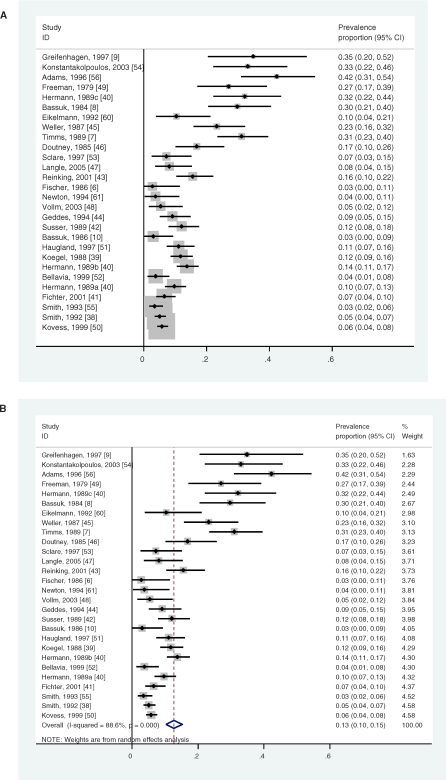
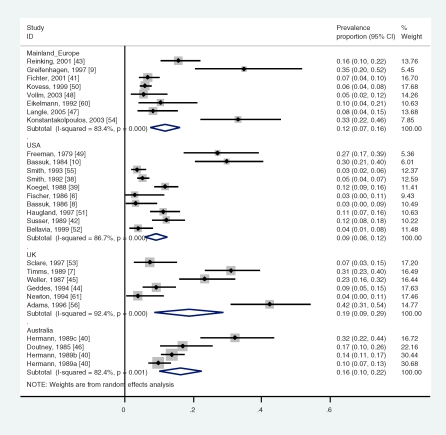
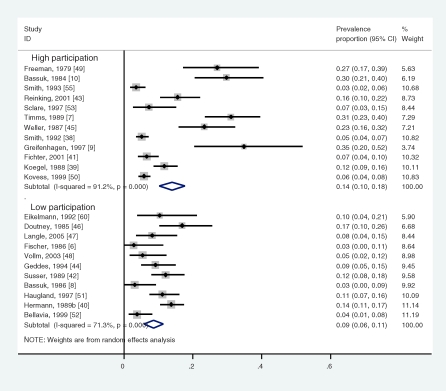
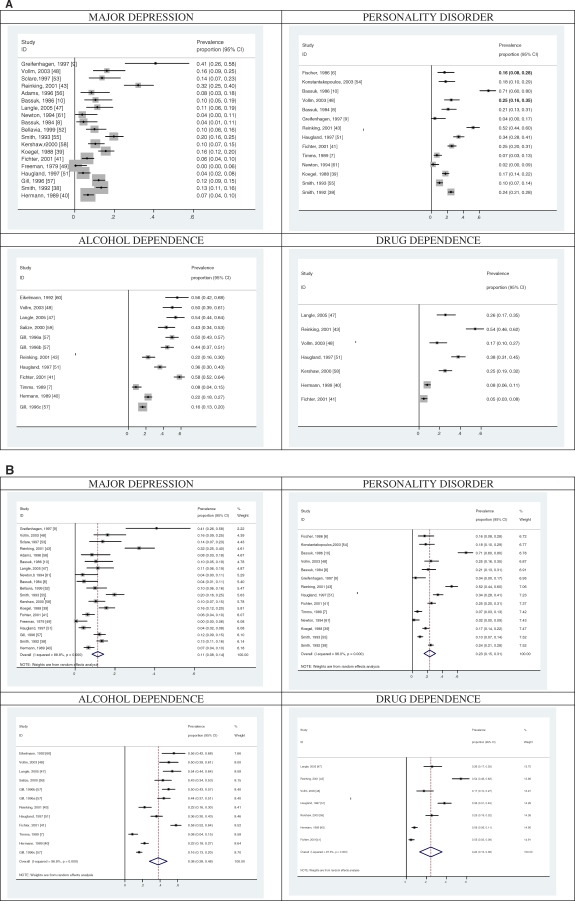
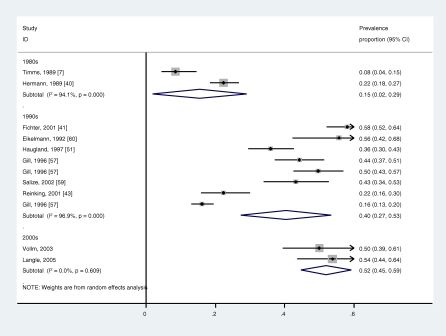
Verification
Claims the paper makes
7 Valid · 2 Not valid · 30 Not checked · 47 Own results and interpretations
Every source the paper cites for this claim was checked and supports it.
In the paper
“up to 0.8% when only schizophrenia is reported [70]”
§ The Prevalence of Mental Disorders among the Homeless in Western Countries: Systematic Review and Meta-Regression Analysis > Conclusion
What the sources say
- Supportedcites [70] 70. Saha S Chant D Welham J McGrath J 2005 A systematic review of the prevalence of schizophrenia PLoS Medicine 2 e141 doi: 10.1371/journal.pmed.0020141 15916472 10.1371/journal.pmed.0020141 PMC1140952 source
The Discussion reports that about seven to eight people per 1,000 will be affected by schizophrenia, equivalent to 0.7%–0.8%. This is a lifetime morbid risk estimate, not the paper’s point-prevalence estimate, which is lower. (LLM, conf=0.87)
plain- Asserted: passes — The authors put it forward as true.
- Checkable: passes — It can be checked against evidence.
- Load-bearing: unclear — It is unclear whether the paper’s conclusions depend on it.
- Based: passes — The paper gives a reason why it holds.
- Supported
The cited sources support only part of this claim — read each source’s verdict below.
In the paper
“as substance abuse and dependence is an important risk factor, either alone [71] or comorbid with psychosis [21]”
§ The Prevalence of Mental Disorders among the Homeless in Western Countries: Systematic Review and Meta-Regression Analysis > Conclusion
What the sources say
- Partly supportedcites [71] 71. Grann M Fazel S 2004 Substance misuse and violent crime: Swedish population study BMJ 328 1233 1234 15155501 10.1136/bmj.328.7450.1233 PMC416597 sourceExperimental — accuracy not yet measured
The Abstract and Comment report a strong association between substance misuse and violent crime, supporting the risk-factor point attached to [71]. The paper does not establish that this association holds independently of psychosis, and its findings concern violent crime rather than crime generally; the separate claim about comorbidity is attributed to [21]. (LLM, conf=0.82)
- Not checked — no full text of the sourcecites [21] 21. Brennan P Mednick S Hodgins S 2000 Major mental disorders and criminal violence in a Danish birth cohort Arch Gen Psychiatry 57 494 500 10807490 10.1001/archpsyc.57.5.494 source
plainstates a cause- Asserted: passes — The authors put it forward as true.
- Checkable: passes — It can be checked against evidence.
- Load-bearing: unclear — It is unclear whether the paper’s conclusions depend on it.
- Based: passes — The paper gives a reason why it holds.
- Partly supported
Every source the paper cites for this claim was checked and supports it.
In the paper
“The presence of personality disorder is associated with poorer outcomes for treatment of depression [75]”
§ The Prevalence of Mental Disorders among the Homeless in Western Countries: Systematic Review and Meta-Regression Analysis > Conclusion
What the sources say
- Supportedcites [75] 75. Newton-Howes G Tyrer P Johnson T 2006 Personality disorder and the outcome of depression: meta-analysis of published studies Br J Psychiatry 188 13 20 16388064 10.1192/bjp.188.1.13 source
The Conclusions state that depression with comorbid personality disorder is associated with a poorer outcome than depression alone. The Comorbid personality section reports approximately twice the odds of a poor depression outcome when personality disorder is present, supporting the claim about treatment outcomes. (LLM, conf=0.94)
plainstates an association- Asserted: passes — The authors put it forward as true.
- Checkable: passes — It can be checked against evidence.
- Load-bearing: unclear — It is unclear whether the paper’s conclusions depend on it.
- Based: passes — The paper gives a reason why it holds.
- Supported
The sources with a verdict support this claim; the rest weren’t checked yet, have no full text we could read, or their verdicts aren’t rated yet.
In the paper
“The increased prevalence for drug dependence in both sexes may contribute to the reported increased crime rates in the homeless [20,21,22], as substance abuse and dependence is an important risk factor, either alone [71] or comorbid with psychosis [21].”
§ The Prevalence of Mental Disorders among the Homeless in Western Countries: Systematic Review and Meta-Regression Analysis > Conclusion
What the sources say
- Not checked — no full text of the sourcecites [20] 20. Gelberg L Linn LS Leake BD 1988 Mental health, alcohol and drug use, and criminal history among homeless adults Am J Psychiatry 145 191 196 3341464 10.1176/ajp.145.2.191 source
- Not checked — no full text of the sourcecites [21] 21. Brennan P Mednick S Hodgins S 2000 Major mental disorders and criminal violence in a Danish birth cohort Arch Gen Psychiatry 57 494 500 10807490 10.1001/archpsyc.57.5.494 source
- Supportedcites [22] 22. Fazel S Grann M 2006 The population impact of severe mental illness on violent crime Am J Psychiatry 163 1397 1403 16877653 10.1176/ajp.2006.163.8.1397 source
The FAZEL AND GRANN passage (page unavailable) states that comorbid substance abuse increases the risk of violent crime in people with severe mental illness. Citation [21] is attached specifically to the citing sentence’s claim about substance abuse comorbid with psychosis, not to its separate claim about crime rates among homeless people. (LLM, conf=0.91)
- Supportedcites [71] 71. Grann M Fazel S 2004 Substance misuse and violent crime: Swedish population study BMJ 328 1233 1234 15155501 10.1136/bmj.328.7450.1233 PMC416597 source
The citation to this paper is attached to the claim that substance misuse is associated with violent crime on its own, not to the claims about homelessness or both sexes. The Comment reports that people diagnosed with drug misuse committed more than a tenth of violent crimes in Sweden during 1988–2000, while cautioning that the association does not establish a simple causal relationship. (LLM, conf=0.90)
hedgedstates a possible cause- Asserted: passes — The authors put it forward as true.
- Checkable: passes — It can be checked against evidence.
- Load-bearing: passes — The paper’s conclusions depend on it.
- Based: passes — The paper gives a reason why it holds.
Every source the paper cites for this claim was checked and supports it.
In the paper
“all but one reported rates higher than the 4.4% found in a recent community survey [74]”
§ The Prevalence of Mental Disorders among the Homeless in Western Countries: Systematic Review and Meta-Regression Analysis > Conclusion
What the sources say
- Supportedcites [74] 74. Coid J Yang M Tyrer P Roberts A Ullrich S 2006 Prevalence and correlates of personality disorders in Great Britain Br J Psychiatry 188 423 431 16648528 10.1192/bjp.188.5.423 source
The ‘Prevalence of personality disorders’ section reports a weighted rate of 4.4% in the Great Britain household survey. ‘Comparison with previous surveys’ says this was lower than nearly all previous survey rates, which ranged from 3.9% to 22.3%. (LLM, conf=0.91)
plain- Asserted: passes — The authors put it forward as true.
- Checkable: passes — It can be checked against evidence.
- Load-bearing: passes — The paper’s conclusions depend on it.
- Based: passes — The paper gives a reason why it holds.
- Supported
58 more claims · 1 with their cited sources checked
Create a free account to see all 86 claims and to verify the 4 references still open.
- Probably not a substantial claim. 9
- It may state two separate claims as one. 17
- The quote only partly states this claim. 2
Claims other papers make about this one
Each is checked against this paper’s own text: does it say what the citing paper says it does?
The source backs part of the claim, not all of it — or backs it for a different population, condition or comparison.
In the citing paper
“The increased risk of morbidity and mortality from cardiovascular disease is probably a result of high rates of behavioural risk factors (illicit drug use, tobacco use); poor control of hypertension, diabetes, and hyperlipidaemia; and poor access to care for early cardiac disease.80,85”
From The health of homeless people in high-income countries: descriptive epidemiology, health consequences, and clinical and policy recommendations (2014) · cites this paper as [85]
Experimental — accuracy not yet measuredThe source backs part of the claim, not all of it — or backs it for a different population, condition or comparison.
In the citing paper
“In a meta-analysis of 29 studies conducted from 1979 to 2005, the commonest disorders found among the homeless population were alcohol dependence, drug dependence and psychotic disorders, with random effects pooled prevalence estimates of 37.9%, 24.4%, and 12.7%, respectively [15].”
From Burden of mental disorders and unmet needs among street homeless people in Addis Ababa, Ethiopia (2014) · cites this paper as [15]
Experimental — accuracy not yet measuredThe cited source says what the claim attributes to it.
In the citing paper
“Homeless individuals have high rates of chronic psychiatric and medical conditions7,9,10,42,43 and elevated rates of mortality.44”
From Housing first is associated with reduced use of emergency medical services (2014) · cites this paper as [7]
In the citing paper
“These factors were selected on the basis of previous work about heterogeneity in prevalence studies in homeless people.34”
From Prevalence of tuberculosis, hepatitis C virus, and HIV in homeless people: a systematic review and meta-analysis (2012) · cites this paper as [34]
In the citing paper
“A meta-analysis of studies conducted in the United States and worldwide showed that alcohol dependence affects a mean of 38% of homeless adults,7 which exceeds the prevalence in the U.S. general population by more than 10-fold.8”
From Housing first is associated with reduced use of emergency medical services (2014) · cites this paper as [7]
1 more claim about this paper
Create a free account to see every claim other papers make about this one.
Self-check
Percentages, sums and reported differences re-computed from the paper’s own numbers.
Each contradiction between two passages listed here was confirmed by an independent check.
Rated minor: it would not touch a result — a value no result rests on, a p-value that stays on the same side of the significance level, or a conflict that is clerical, resolved elsewhere in the paper, or outside its own findings.
In the paper
§ The Prevalence of Mental Disorders among the Homeless in Western Countries: Systematic Review and Meta-Regression Analysis > Abstract > Methods and Findings
“alcohol dependence, which ranged from 8.1% to 58.5%”
§ The Prevalence of Mental Disorders among the Homeless in Western Countries: Systematic Review and Meta-Regression Analysis > Results > Alcohol Dependence
“The prevalence estimates ranged from 8.5% to 58.1%.”
Rated minor: it would not touch a result — a value no result rests on, a p-value that stays on the same side of the significance level, or a conflict that is clerical, resolved elsewhere in the paper, or outside its own findings.
In the paper
§ The Prevalence of Mental Disorders among the Homeless in Western Countries: Systematic Review and Meta-Regression Analysis > Abstract > Methods and Findings
“drug dependence, which ranged from 4.5% to 54.2%”
§ The Prevalence of Mental Disorders among the Homeless in Western Countries: Systematic Review and Meta-Regression Analysis > Results > Drug Dependence
“The prevalence estimates ranged from 4.7% to 54.2%.”
Citations
Cites
Measuring inconsistency in meta-analyses
Higgins, J. P. T., Thompson, S. G., Deeks, J. J., & Altman, D. G. (2003) · BMJ · doi:10.1136/bmj.327.7414.557 · Cited by 63,139 · cited 2×
“75%), random effects models were used for summary statistics [36].”
MethodQuantifying heterogeneity in a meta‐analysis
Higgins, J. P. T., & Thompson, S. G. (2002) · Statistics in Medicine · doi:10.1002/sim.1186 · Cited by 36,763 · cited 1×
“Heterogeneity among studies was estimated using Cochran’s Q (reported with a v(2)-value and p-value) and the I(2) statistic, the latter describing the percentage of variation across studies that is due to heterogeneity rather than chance [36,37], and presented with a 95% CI [37].”
MethodKessler, R. C. (1994) · Archives of General Psychiatry · doi:10.1001/archpsyc.1994.03950010008002 · Cited by 12,370
Kessler, R. C., Chiu, W. T., Demler, O., & Walters, E. E. (2005) · Archives of General Psychiatry · doi:10.1001/archpsyc.62.6.617 · Cited by 12,052 · cited 3×
“On average, this is many orders of magnitude higher in men and even higher in women compared with community surveys [62,63].”
BackgroundResultKessler, R. C., Berglund, P., Demler, O., Jin, R., Koretz, D., Merikangas, K. R., Rush, A. J., Walters, E. E., & Wang, P. S. (2003) · JAMA · doi:10.1001/jama.289.23.3095 · Cited by 7,988 · cited 1×
“Many estimates included in the review were similar to community estimates of depression in women (which range from 7% to 11% for 1-y estimates), and only slightly higher than general population rates for men [62,72].”
Two-sided confidence intervals for the single proportion: comparison of seven methods
Newcombe, R. G. (1998) · Statistics in Medicine · doi:10.1002/(sici)1097-0258(19980430)17:8<857::aid-sim777>3.0.co;2-e · Cited by 5,107 · cited 1×
“Confidence intervals (CIs) around these estimates were calculated using the Wilson method [34] since the asymptotic method produces intervals which can extend below zero [35].”
MethodProbable Inference, the Law of Succession, and Statistical Inference
Wilson, E. B. (1927) · Journal of the American Statistical Association · doi:10.1080/01621459.1927.10502953 · Cited by 4,476 · cited 1×
“Confidence intervals (CIs) around these estimates were calculated using the Wilson method [34] since the asymptotic method produces intervals which can extend below zero [35].”
MethodTransformations Related to the Angular and the Square Root
Freeman, M. F., & Tukey, J. W. (1950) · The Annals of Mathematical Statistics · doi:10.1214/aoms/1177729756 · Cited by 2,628 · cited 1×
“Prevalence estimates were calculated using the variance stabilising double arcsine transformation [33], because of the use of the inverse variance weight in fixed-effects metaanalysis is suboptimal when dealing with binary data with low prevalences.”
MethodPsychiatric disorders in America: the epidemiologic catchment area study
(1991) · Choice Reviews Online · doi:10.5860/choice.28-5931 · Cited by 2,555 · cited 1×
“The prevalence of psychosis ranged between 3% and 42%, which is substantially higher than community estimates, which typically report 1%–2% when individuals are surveyed using diagnostic instruments [69], and up to 0.”
BackgroundFazel, M., Wheeler, J., & Danesh, J. (2005) · The Lancet · doi:10.1016/s0140-6736(05)61027-6 · Cited by 2,292 · cited 1×
“Second, the prevalence estimates for psychosis were at least as high as those for depression, a finding in marked contrast from community estimates of these conditions [62,63], and in other at-risk groups such as prisoners [64] and refugees [65], in whom depression is more common.”
Result
Research works printed but not linked: 3
- 11. Fischer PJ 1989 Estimating the prevalence of alcohol, drug and mental health problems in the contemporary homeless population: a review of the literature Contemp Drug Probl 16 333 390
- 58. Kershaw A Singleton N Meltzer H 2000 Substance misuse and mental disorder among homeless people in Glasgow London ONS
- 60. Eikelmann B Inhester ML Reker T 1992 Psychische Störungen bei nicht-sesshaften Männern. Defizite in der psychiatrischen Versorgung Sozialpsychiatrische Informationen 2 29 32
Cited by
Items 601–700 of 1,032
Can Epigenetics Predict Drug Efficiency in Mental Disorders?
David, G. B., Amir, Y., Salalha, R., Sharvit, L. E., Richter‐Levin, G., & Atzmon, G. (2023) · Cells · doi:10.3390/cells12081173 · Cited by 9
“The mistreatment of psychiatric disorders can also contribute to homelessness, unemployment, and involvement with the criminal justice system [98].”
BackgroundThe study of service use among homeless persons with mental illness: a methodological review
Kerman, N., Sylvestre, J. C., & Polillo, A. (2016) · Health Services and Outcomes Research Methodology · doi:10.1007/s10742-016-0147-7 · Cited by 8
“…University of Ottawa, Ottawa, ON K1N 6N5, Canada 2 School of Psychology and Centre for Research on Educational and Community Services, University of Ottawa, Ottawa, ON K1N 6N5, Canada to be many times higher in homeless populations than in community samples (for a review, see Fazel et al. 2008).”
BackgroundElderly men in Tokyo homeless shelters who are suspected of having cognitive impairment
Okamura, T., Awata, S., Ito, K., Takiwaki, K., Matoba, Y., Niikawa, H., Tachimori, H., & Takeshima, T. (2016) · Psychogeriatrics · doi:10.1111/psyg.12211 · Cited by 6
Creating a Regional Model to Coordinate and Prioritize Access to Permanent Supportive Housing
Sylla, L. N., Franzen, R., Srebnik, D. S., Hoffman, M., & Shoenfeld, A. (2016) · The Journal of Behavioral Health Services & Research · doi:10.1007/s11414-016-9527-6 · Cited by 7
“High cost service use by individuals who are homeless is indicative of ongoing crises for which supportive housing could be a remedy.(10) Housing such individuals also results in large cost offsets (60–86%).”
BackgroundGazey, A., Vallesi, S., Martin, K., et al. (2018) · Housing Care and Support · doi:10.1108/hcs-08-2018-0020 · Cited by 6
Comparison of homeless clinic attenders with and without psychotic illness
Nielssen, O. B., Jones, N., Foung, H., Nielssen, A., Staples, L., & Large, M. M. B. (2019) · Australian & New Zealand Journal of Psychiatry · doi:10.1177/0004867419893426 · Cited by 6
“…which is a higher proportion than found in other studies conducted in Sydney (Doutney et al., 1985; Teesson et al., 2004), and elsewhere (Fazel et al., 2008), and which is probably because our sample was of clinic attenders, rather than a representative sample of homeless hostel…”
BackgroundResultInfluentialLampros, A., Montardi, C., Journeau, L., Georgin‐Lavialle, S., Hanslik, T., Dhôte, R., Goujard, C., Jeunne, C. L., Mahé, I., Papo, T., et al. (2020) · La Revue de Médecine Interne · doi:10.1016/j.revmed.2019.12.016 · Cited by 7
(2021) · doi:10.1186/s13690-021-00546-y · Cited by 6
Fraser, E. R., Hill‐Kapturczak, N., Jett, J. D., Beck, R., Oluwoye, O. A., Kriegel, L. S., Alcover, K. C., McPherson, S., Cabassa, L. J., Javors, M. A., et al. (2021) · Contemporary Clinical Trials Communications · doi:10.1016/j.conctc.2021.100757 · Cited by 6
Wiens, K., Rosella, L. C., Kurdyak, P. A., Chen, S., Aubry, T., Stergiopoulos, V., & Hwang, S. W. (2021) · BMC Health Services Research · doi:10.1186/s12913-021-06562-6 · Cited by 7
Early interventions in a US military FIRST episode psychosis program
Hann, M. C., Caporaso, E. N., Loeffler, G. H., Cuellar, A., Herrington, L., Marrone, L. F., & Yoon, J. H. (2018) · Early Intervention in Psychiatry · doi:10.1111/eip.12709 · Cited by 8
Ferreiro, I. C., Haro, J. M., & Cuadra, M. A. R. (2020) · Journal of Psychosocial Nursing and Mental Health Services · doi:10.3928/02793695-20201203-02 · Cited by 8
Palimaru, A. I., McBain, R. K., McDonald, K., Batra, P., & Hunter, S. B. (2021) · Health & Social Care in the Community · doi:10.1111/hsc.13348 · Cited by 6
Social medical care before and during homelessness in Amsterdam
van Laere, I. (2010) · UvA-DARE (University of Amsterdam) · Cited by 16
Eshun, E., Burke, O., Do, F., Maciver, A., Mathur, A., Mayne, C., Mohamed Jemseed, A. A., Novak, L., Siddique, A., Smith, E., et al. (2024) · International Journal of Environmental Research and Public Health · doi:10.3390/ijerph21060769 · Cited by 6
“The prevalence of head injury, mental health disorders, and infections was consistent with previous studies [1,3,4].”
ResultHausam, J., Lösel, F. A., & Lehmann, R. (2025) · Criminal Behaviour and Mental Health · doi:10.1002/cbm.70003 · Cited by 7
“Research consistently shows that people experiencing home-lessness have a significantly increased prevalence of mental health problems (Fazel et al. 2014; Fazel et al. 2008; Gutwinski et al. 2021; Hossain et al. 2020; Martens 2001; Nielsen et al. 2011; Schreiter et al. 2017).”
Birhanu, M. Y., Bekele, G. M., Yirdaw, G., Demissie, B. S., Getahun, G. K., & Jemberie, S. S. (2024) · BMC Public Health · doi:10.1186/s12889-023-17333-9 · Cited by 7
“The Newcastle–Ottawa Quality Assessment Scale for cohort study (NOQAS) [15] was used to evaluate the quality of the included primary studies based on selection (Representativeness of the exposed cohort, Selection of the non-exposed cohort, Ascertainment of exposure, and Demonstration that outcome…”
MethodCommunity-Level Relationships Between Homelessness and Crime in Finland
Markowitz, F. E. (2024) · Crime & Delinquency · doi:10.1177/00111287241231746 · Cited by 7
“Studies in European countries also find that homelessness increases the risk of offending and victimization (Alm & Bäckman, 2022; Bashir et al., 2021; Fazel et al., 2008).”
Homeless people under the influence of alcohol admitted to hospital emergency departments in Poland
Burak, A. M., Cierzniakowska, K., & Popow, A. (2020) · Nordic Studies on Alcohol and Drugs · doi:10.1177/1455072520908387 · Cited by 5
“Numerous studies confirm poorer health among homeless people in comparison to the general health condition of the entire society (Buciński et al., 2007; Fazel, Geddes, & Kushel, 2014; Fazel et al., 2008; Hwang, 2001).”
Homeless Patients with Lung Cancer in Metropolitan Tokyo
Oguri, T., Sasada, S., Shimada, T., Ishioka, K., Takahashi, S., Adachi, T., & Nakamura, M. (2021) · Internal medicine · doi:10.2169/internalmedicine.6833-20 · Cited by 3
“Homeless people often have borderline mental retardation diagnosed during a psychological examination, resulting in a poor conversation ability, low stress tolerance and depression, somatization, and low interest in preventive medicine (11).”
BackgroundKrishnadas, P., Narasimhan, L. S., Joseph, T., Bunders, J., & Regeer, B. J. (2021) · Journal of Public Health · doi:10.1093/pubmed/fdab219 · Cited by 5
Hassan, S., Cuevas, S., Belesova, K., Murage, P., Whitmee, S., Huxley, R., Green, R., & Haines, A. (2021) · Wellcome Open Research · doi:10.12688/wellcomeopenres.16754.2 · Cited by 8
Compton, M. T., Kelley, M. E., Anderson, S., Ellis, S., Graves, J., Broussard, B., Pauselli, L., Zern, A., Pope, L. G., Johnson, M., et al. (2023) · The Journal of Clinical Psychiatry · doi:10.4088/jcp.22m14498 · Cited by 6
Psychiatry in Prisons and Corrections
Fovet, T., Mundt, A. P., & Fazel, S. (2023) · Springer eBooks · doi:10.1007/978-3-030-42825-9_103-1 · Cited by 9
Self-citationProphetis, E. D., Beck, K., Ridgeway, D., et al. (2023) · CMAJ Open · doi:10.9778/cmajo.20230044 · Cited by 5
The Role of Childhood Violence in Adult Victimization Among Women Experiencing Homelessness in Spain
Vázquez, J. J., Lenta, M. M., Cabrera, A., & Panadero, S. (2024) · Journal of Interpersonal Violence · doi:10.1177/08862605241245381 · Cited by 6
“Various studies (Aubry et al., 2012; Caton et al., 2005; Fazel et al., 2008; Greenberg & Rosenheck, 2009; Guillén et al., 2020; Toro, 2007) have indicated that the consumption of sub-stances represents a factor with a significant effect on a person’s becoming and remaining homeless.”
Garay, M., Notario, E., Duque, J. M., et al. (2012) · ZERBITZUAN · doi:10.5569/1134-7147.52.12 · Cited by 5
Financing Cocaine Use in a Homeless Population
North, C. S., & Pollio, D. E. (2017) · Behavioral Sciences · doi:10.3390/bs7040074 · Cited by 6
Suicide by homeless patients in England and Wales: national clinical survey
Culatto, P., Bojanić, L., Appleby, L., & Turnbull, P. (2021) · BJPsych Open · doi:10.1192/bjo.2021.2 · Cited by 5
Singh, S., Pal, T., & Kumar, G. (2022) · Indian Journal of Behavioural Sciences · doi:10.55229/ijbs2022.0304 · Cited by 5
The effects of supported housing for individuals with mental disorders
Lopes, F. V., Bakx, P., Harper, S. B., Ravesteijn, B., & Ourti, T. V. (2022) · Health Economics · doi:10.1002/hec.4579 · Cited by 6
“, 1999), social insurance benefit receipt (Kouzis & Eaton, 2000), having limited family relationships (Place & Michon, 2014) and homelessness (Fazel et al., 2008; Sullivan et al., 2000), and family members might experience negative health and labor market consequences (Carmichael & Charles, 2003).”
BackgroundDiet Quality, Health, and Wellbeing within the Irish Homeless Sector: A Qualitative Exploration
Ravikumar, D., Vaughan, E., & Kelly, C. N. M. (2022) · International Journal of Environmental Research and Public Health · doi:10.3390/ijerph192315976 · Cited by 9
“Despite the high prevalence of depression, personality disorders and psychotic illness among both adults and children in the homeless population [23,24], research exploring diet and mental wellbeing in the homeless population is very limited.”
BackgroundBayoumi, I., Whitehead, M., Li, W., Kurdyak, P. A., & Glazier, R. H. (2023) · CMAJ Open · doi:10.9778/cmajo.20210190 · Cited by 6
“For example, a substantial proportion of people experiencing homelessness or precarious housing are affected by SMI 36 and have challenges accessing health care services.”
Fu, Y.-N., Cao, X.-L., Hou, C., Ng, C. H., Ungvari, G. S., Chiu, H. F. K., Lin, Y.-Q., Wang, L., Zheng, X., Jia, F., et al. (2017) · Psychiatry Research · doi:10.1016/j.psychres.2017.04.066 · Cited by 5
Rutenfrans-Stupar, M., Schalk, R., & Regenmortel, T. V. (2019) · Journal of Social Service Research · doi:10.1080/01488376.2018.1555111 · Cited by 9
“…it is often associated with multiple issues, such as substance addiction (Dietz, 2010), mental disorders (Belcher, 1991; Creech et al., 2015; Fazel, Khosla, Doll, & Geddes, 2008), physical health problems (Creech et al., 2015), unemployment (Burke, Johnson, Bourgault, Borgia, & O ’ Toole,…”
BackgroundShalit, N., Rehm, J. T., & Lev‐Ran, S. (2019) · Psychiatry Research · doi:10.1016/j.psychres.2019.05.041 · Cited by 7
Chinchilla, M., Gabrielian, S. E., Horan, W. P., GLASMEIER, A. K., Hellemann, G. S., Wynn, J. K., Capone-Newton, P., & Green, M. F. (2019) · Journal of Health Care for the Poor and Underserved · doi:10.1353/hpu.2019.0098 · Cited by 5
Buitenweg, D. C., van de Mheen, D., Grund, J., van Oers, H., & van Nieuwenhuizen, C. (2020) · JMIR Mental Health · doi:10.2196/19593 · Cited by 6
“Individuals experiencing homelessness were included in this study because of the high prevalence of severe mental health problems in this group [3,32,33].”
Boivin, R., & Billette, I. (2013) · Criminologie · doi:10.7202/1013727ar · Cited by 8
Neale, J., & Stevenson, C. (2013) · Social Policy and Society · doi:10.1017/s1474746413000195 · Cited by 5
“…of homeless people use drugs and drug users experience high levels of homelessness (Downing-Orr, 1996; Robertson et al., 1997; Fountain et al., 2003; Glasser and Zywiak, 2003; Teeson et al., 2003; Kemp et al., 2006; March et al., 2006; Das-Douglas et al., 2007; Fazel et al., 2008; Neale, 2012).”
BackgroundMaguire, N., & Ritchie, C. (2015) · Clinical Psychology Forum · doi:10.53841/bpscpf.2015.1.265.23 · Cited by 5
Management of the severely mentally ill and its effects on homeland security
Biasotti, M. C. (2011) · Calhoun: The Naval Postgraduate School Institutional Archive (Naval Postgraduate School) · Cited by 7
Commentary: Questions from the Ground in Severe Mental Illness
Bromley, E. (2019) · Ethos · doi:10.1111/etho.12229 · Cited by 6
Ralevski, A., Taiyab, N., Nossal, M., Mico, L., Piekos, S., & Hadlock, J. (2024) · medRxiv · doi:10.1101/2024.04.25.24306380 · Cited by 6
“It is well known that people who are experiencing housing instability (HI) are at greater risk for other health issues, including substance use, comorbidities, and mental illness 3,7,8 .”
Pan, E. J., Liu, J., Zha, A. C., Seballos, S. S., Falcone, T., Phelan, M. J., & Weleff, J. (2024) · Journal of Child & Adolescent Trauma · doi:10.1007/s40653-023-00608-z · Cited by 5
“These continued high rates of mental illnesses, substance use disorders, and suicidal ideation appear to persist in unhoused adults (Ayano et al., 2019, 2020a, b; Fazel et al., 2008).”
The drivers of high health and justice costs among a cohort young homeless people in Australia
Flatau, P., Zaretzky, K., Crane, E., Carson, G., Steen, A., Thielking, M., & MacKenzie, D. C. (2019) · Housing Studies · doi:10.1080/02673037.2019.1626352 · Cited by 7
“…people more generally, exhibit elevated rates of mental health conditions (Crawford et al., 2011; Narendorf, 2017; Whitbeck et al., 2004; see also Fazel et al., 2008 more generally on the prevalence of mental health conditions among those experiencing homelessness), serious physical health…”
BackgroundChevreau, G., Vallat‐Azouvi, C., Coll, M., Barbot, F., & Castillo, M.-C. (2021) · Psych · doi:10.3390/psych3020016 · Cited by 6
“In 2008, for example, a systematic review found 29 published studies of mental disorders in homeless people [15], of which the majority (n = 26) came from only four different countries, namely the USA, UK, Germany, and Australia.”
BackgroundSubstance use and HIV stage at entry into care among people with HIV
Parrish, C., Whitney, B. M., Nance, R. M., Puttkammer, N. H., Fishman, P. A., Christopoulos, K., Fleming, J. G., Heath, S. L., Mathews, W. C., Chander, G., et al. (2021) · Archives of Public Health · doi:10.1186/s13690-021-00677-2 · Cited by 5
Neuropsychological functioning of homeless people in Paris: An exploratory study
Chevreau, G., Coll, M., Barbot, F., Castillo, M.-C., & Vallat‐Azouvi, C. (2023) · Applied Neuropsychology Adult · doi:10.1080/23279095.2023.2175321 · Cited by 6
“One hypothesis for the high prevalence of neuropsychological disorders is that local structural factors, such as health and social care access, influence the impact of risk factors on cognition, as already suggested for mental health (Ayano et al., 2019; Fazel et al., 2008).”
Barriers to Care: Improving Attendance at a Student-Run Free Psychiatry Clinic
Mause, E., Crowther, L. L., Munger, E., & Qadri, S. (2022) · Journal of Student-Run Clinics · doi:10.59586/jsrc.v8i1.326 · Cited by 4
Mohammad, Y., Kumar, R., Sinha, N., & Kumar, P. (2023) · Industrial Psychiatry Journal · doi:10.4103/ipj.ipj_42_23 · Cited by 8
Sharma, M., Aggarwal, S., & Kumar, D. (2023) · Indian Journal of Social Psychiatry · doi:10.4103/ijsp.ijsp_369_20 · Cited by 4
Reimagining Homelessness: For Policy and Practice
O’Sullivan, E. P. (2020) · Policy Press eBooks · doi:10.56687/9781447353546 · Cited by 4
Homeless people: a review of personality disorders
Henriques‐Calado, J., & Marques, J. G. (2024) · Frontiers in Psychiatry · doi:10.3389/fpsyt.2024.1362723 · Cited by 7
Costa, D., Matanov, A., Canavan, R., Gabor, E., Greacen, T., Vondráčková, P., Kluge, U., Nicaise, P., Moskalewicz, J., Olalla, J. M. D., et al. (2014) · BMC Health Services Research · doi:10.1186/1472-6963-14-49 · Cited by 8
“It has been suggested that comprehensive services addressing a range of different needs might be more efficient in delivering care to marginalized groups with high prevalence of mental disorders, such as the homeless, refugees and asylum seekers, Roma populations, sex workers and the long-term unemployed [4-9].”
BackgroundLanglard, G., & Bouteyre, É. (2013) · Annales Médico-psychologiques revue psychiatrique · doi:10.1016/j.amp.2012.10.015 · Cited by 6
Psychometric properties of the consumer quality index to assess shelter and community care services
Beijersbergen, M. D., Asmoredjo, J., Christians, M. G. M., & Wolf, J. (2014) · European Journal of Public Health · doi:10.1093/eurpub/cku195 · Cited by 7
Morse, G. A., York, M. M., & Blanco, J. (2016) · Mental Health and Addiction Research · doi:10.15761/mhar.1000106 · Cited by 4
“Homelessness continues to be a major problem in Great Britain, the United States, and other Western nations, with estimates of 380,000 people in Great Britain and 740,000 homeless in the United States at any one point in time, with well over one million people homeless annually in both countries [1].”
BackgroundBonin, J., Lavigne, G. L., & Gros, C. P. (2017) · Canadian Journal of Community Mental Health · doi:10.7870/cjcmh-2017-007 · Cited by 6
Royal Perth Hospital Homeless Team- A report on the first 18 months of operation
Gazey, A., Vallesi, S., Cumming, C., & Wood, L. J. (2018) · UWA Profiles and Research Repository (UWA) · doi:10.13140/rg.2.2.26289.68960 · Cited by 6
Review and Evaluation of the Substance Abuse, Mental Health, and Homelessness Grant Formulas
Ashwood, J. S., Osilla, K. C., DeYoreo, M., Breslau, J. A., Ringel, J., Montemayor, C., Shahidinia, N., Adamson, D. M., Chamberlin, M. E., & Burnam, M. A. (2019) · RAND Corporation eBooks · doi:10.7249/rr2454 · Cited by 4
“Numerous local community studies that have surveyed samples of homeless people have reported relatively high prevalence of substance use and mental disorders among homeless samples compared with rates in the general population, but these studies are methodologically as well as geographically diverse, and the reported…”
BackgroundProfiles of persons with current or previous experience of homelessness using emergency departments
Fleury, M., Grenier, G., Cao, Z., & L’Espérance, N. (2020) · Housing Studies · doi:10.1080/02673037.2020.1745762 · Cited by 5
Homeless men with psychosis are spending more time shelterless
Burton, D., Jones, S., Carlisle, T., & Holmes, A. (2020) · Australasian Psychiatry · doi:10.1177/1039856220928860 · Cited by 4
Narasimhan, L. S., Kumar, K. V. K., Regeer, B. J., & Gopikumar, V. (2020) · Springer eBooks · doi:10.1007/978-981-15-5393-6_12 · Cited by 7
Ravindren, R. K., & Jose, K. (2020) · Journal of Psychosocial Rehabilitation and Mental Health · doi:10.1007/s40737-020-00201-9 · Cited by 5
“Psychosis, depression, anaemia, malnutrition and infectious diseases were also common among them [4].”
BackgroundMaking sense of senseless murders: The who, what, when, and where?
Reale, K. S., Beauregard, É., Chopin, J., & Wells, N. (2021) · Behavioral Sciences & the Law · doi:10.1002/bsl.2513 · Cited by 4
Miler, J. A., Foster, R., Hnízdilová, K., Murdoch, H., & Parkes, T. (2021) · Drugs Education Prevention and Policy · doi:10.1080/09687637.2021.1926429 · Cited by 8
“…risk of suffering from poorer physical health, including infectious diseases (Beijer et al., 2012), as well as using alcohol, drugs and tobacco (Fazel et al., 2008), and being at increased risk of premature fraility and ageing (Rogans-Watson et al., 2020) and death (Bean et al., 2013; Kerman…”
Shukla, D. M., Walsh, W. E., & Grande, S. W. (2021) · Housing and Society · doi:10.1080/08882746.2021.1952388 · Cited by 7
“Psychotic illness, major depression, and personality disorder are noted in up to 40– 70% of studied populations, with alcohol and drug dependence being the most common (Fazel et al., 2008; North et al., 1998; Donley & Wright, 2018).”
BackgroundFerreiro, I. C., Cuadra, M. A. R., Serqueda, F. A., & Haro, J. M. (2022) · Journal of Psychosocial Nursing and Mental Health Services · doi:10.3928/02793695-20220316-01 · Cited by 6
Rigney, G. H., Leith, J., Lennon, M. J., Reeves, A., & Chrisinger, B. W. (2022) · Journal of Health Care for the Poor and Underserved · doi:10.1353/hpu.2022.0056 · Cited by 6
Roy, L., Abdel‐Baki, A., Berubé, F.-A., Crocker, A. G., Benedictis, L. D., Dostie, M., Latimer, E. A., & Roy, M. (2022) · Early Intervention in Psychiatry · doi:10.1111/eip.13344 · Cited by 4
McCosker, L. K., Ware, R. S., Maujean, A., Seale, H., & Downes, M. (2022) · Health & Social Care in the Community · doi:10.1111/hsc.14103 · Cited by 4
Occurrence of anxiety and depression among homeless individuals with pulmonary tuberculosis
Chopra, K. K., Indora, A., Pandey, P., et al. (2022) · Indian Journal of Tuberculosis · doi:10.1016/j.ijtb.2022.11.003 · Cited by 4
PTSD, Complex PTSD, and Childhood Abuse: Gender Differences among a Homeless Sample
de Vries, S., Juhnke, G. A., & Keene, C. T. (2019) · Journal for Social Action in Counseling & Psychology · doi:10.33043/jsacp.10.2.2-15 · Cited by 6
Hunter, S. B., Scherling, A., McBain, R. K., Cefalu, M. S., Briscombe, B., Mcconnell, W., & Batra, P. (2021) · RAND Corporation eBooks · doi:10.7249/rra374-2 · Cited by 4
“…homelessness are more likely to suffer from unmanaged chronic physical health problems (Baggett, Liauw, and Hwang, 2018), mental health issues (Bossarte et al., 2013; Fazel et al., 2008; Lee et al., 2017), HIV/AIDS (Clemenzi-Allen et al., 2019), and substance use disorders (Lee et al., 2017).”
BackgroundWorking with People Experiencing Homelessness in Europe
Gaboardi, M., Santinello, M., Disperati, F., Lenzi, M., Vieno, A., Loubière, S., Vargas-Moniz, M., Spinnewijn, F., Greenwood, R. M., Wolf, J., et al. (2022) · Human Services Organizations Management Leadership & Governance · doi:10.1080/23303131.2022.2050330 · Cited by 5
Grenier, G., Fleury, M., Imboua, A., et al. (2013) · Santé mentale au Québec · doi:10.7202/1019189ar · Cited by 4
Helping people without homes: Simple steps for psychologists seeking to change lives.
Rogers, E. B., Stanford, M. S., Dolan, S. L., et al. (2012) · Professional Psychology Research and Practice · doi:10.1037/a0026606 · Cited by 4
Intergenerational Transmission of Poverty
Uganda, N. (2010) · Cited by 4
Alizaga, N. M., Hartman-Filson, M., Elser, H. C., Halpern‐Felsher, B. L., & Vijayaraghavan, M. (2020) · Addictive Behaviors Reports · doi:10.1016/j.abrep.2020.100280 · Cited by 7
Toegel, F., Holtyn, A. F., & Silverman, K. (2020) · The Psychological Record · doi:10.1007/s40732-020-00431-0 · Cited by 4
Hore, B. (2013) · Counselling Psychology Review · doi:10.53841/bpscpr.2013.28.2.17 · Cited by 9
Öçal, M., Kutlu, Ö., & Korkmaz, A. (2022) · Mehmet Akif Ersoy Üniversitesi İktisadi ve İdari Bilimler Fakültesi Dergisi · doi:10.30798/makuiibf.1097609 · Cited by 3
Smaha, J., Falat, J., Gažová, A., Kužma, M., Kyselovič, J., Palkovič, M., Kuruc, R., Babál, P., Payer, J., & Jackuliak, P. (2024) · International Journal of Public Health · doi:10.3389/ijph.2024.1607642 · Cited by 6
“[28].”
Chilman, N., Schofield, P., Laporte, D., Ronaldson, A., & Das‐Munshi, J. (2025) · European Journal of Public Health · doi:10.1093/eurpub/ckaf144 · Cited by 7
“Previous systematic reviews have collated evidence on mental and physical health conditions separately from one another in homeless populations [1, 8, 11, 12].”
Health and social aspects of homelessness
Dvořáčková, D., Belešová, R., Kajanová, A., & Bergougui, B. (2016) · Kontakt · doi:10.1016/j.kontakt.2016.08.004 · Cited by 3
Minimal use of ICD social determinant or phenomenological codes in mental health care records
Kinderman, P., Allsopp, K., Zero, R., Handerer, F., & Tai, S. (2021) · Journal of Mental Health · doi:10.1080/09638237.2021.1952944 · Cited by 4
“This finding immediately sheds doubt on a central set of claims for the necessity of medical diagnosis in mental healthcare; namely that it would be impossible to deliver services or clinical care in a nondiagnostic system (Frances, 2013).”
BackgroundChassman, S., Bacon, B., Rucobo, S. C., Sasser, G., Calhoun, K., Goodwin, E., Gorgens, K. A., & Brisson, D. (2023) · Trauma Care · doi:10.3390/traumacare3010004 · Cited by 3
“ability; changes in one’s emotions and behaviors, as well as one’s ability to regulate themselves, are also common [9].”
BackgroundYohannes, K., Berhane, Y., Bradby, H., van Wees, S. H., & Målqvist, M. (2023) · BMC Health Services Research · doi:10.1186/s12913-023-09810-z · Cited by 4
Birhanu, M. Y., Bekele, G. M., & Jemberie, S. S. (2024) · Frontiers in Medicine · doi:10.3389/fmed.2024.1319845 · Cited by 5
“The Newcastle–Ottawa Quality Assessment Scale (NOQAS) (17) was used to evaluate the quality of the included primary studies based on study representativeness, adequate sample size, acceptable non-response rate, use of validated measurement tool, comparability of the study, description of outcome assessment, and use of…”
MethodPaulus, K., Bass, S. B., Kelly, P. J. A., Pilla, J., Otor, A., Scialanca, M., Arroyo, A., & Faison, N. (2024) · Advances in Drug and Alcohol Research · doi:10.3389/adar.2024.12197 · Cited by 3
Homelessness and Behavioral Health in the New Century
McQuistion, H. L. (2012) · Springer eBooks · doi:10.1007/978-1-4614-3149-7_33 · Cited by 3
Personality Disorders in Brazilian Homeless Compared with Non-Psychiatric and Psychiatric Patients
Bartholomeu, D., Montiel, J. M., Fiamenghi-Jr, G. A., Carvalho, L. D. F., Orsini, M. R. D. C. A., & Ribeiro, C. R. (2015) · Psychology · doi:10.4236/psych.2015.68099 · Cited by 4
“Those results are close to Fazel et al. (2008), as they also found more cases of antisocial behaviour in homeless people, as well as schizoid, borderline and dependent patterns.”
ResultSalavera, C. (2013) · Anales de Psicología · doi:10.6018/analesps.30.1.124081 · Cited by 5
Gezondheidsproblemen bij daklozen
Slockers, M. T., van Laere, I., & van den Muijsenbergh, M. E. T. C. (2017) · Huisarts en Wetenschap · doi:10.1007/s12445-017-0216-3 · Cited by 3
Goertzen, L. N., & Litwiller, F. (2021) · Leisure/Loisir · doi:10.1080/14927713.2021.1880336 · Cited by 5
Homelessness in America: An Overview
Trawver, K. R., Oby, S. J., Kominkiewicz, L., Kominkiewicz, F. B., & Whittington, K. (2019) · Springer eBooks · doi:10.1007/978-3-030-03727-7_1 · Cited by 4
Does Penrose's Law apply to Hungary? Data of an extended survey and reappraisal
Kalapos, M. P. (2020) · International Journal of Law and Psychiatry · doi:10.1016/j.ijlp.2020.101608 · Cited by 3
Psychological Wellbeing of Polish Migrants: What is the Role of the NHS?
Chojnacki, S. (2020) · UEL Research Repository (University of East London) · doi:10.15123/uel.88824 · Cited by 7
Collins, S. E., Goldstein, S. C., Suprasert, B., Doerr, S. A. M., Gliane, J., Song, C., Orfaly, V. E., Moodliar, R., Taylor, E. M., & Hoffmann, G. (2020) · Journal of Urban Health · doi:10.1007/s11524-020-00452-8 · Cited by 3
Metadata
- Authors
- Fazel, S., Khosla, V., Doll, H., & Geddes, J.
- Affiliations
- Warneford Hospital (GB)
- Oxford Health NHS Foundation Trust (GB)
- University of Oxford (GB)
- Corresponding author
- Fazel, Seena
- Venue
- PLoS Medicine
- Publisher
- Public Library of Science (PLoS)
- Published
- 2008-12-02
- Volume
- 5
- Issue
- 12
- Pages
- e225
- ISSN
- 1549-1277 (ISSN-L)
- 1549-1676
- PMC
- PMC2592351
- OpenAlex
- W2107329907
- Cited by
- 1,033
- References
- 76
- Citations by year
- 2026: 28 · 2025: 31 · 2024: 60 · 2023: 77 · 2022: 83 · 2021: 137 · 2020: 126 · 2019: 80 · 2018: 54 · 2017: 49 · 2016: 65 · 2015: 58 · 2014: 62 · 2013: 47 · 2012: 35
- FWCI
- 2.58
- Type
- journal article
- Language
- en
- Open access
- gold
- doi.org
- Locations
- PLoS Medicine (publishedVersion, cc-by)
- Europe PMC (PubMed Central) (publishedVersion, cc-by)
- PubMed Central (publishedVersion, cc-by)
- PubMed (publishedVersion)
- Oxford University Research Archive (ORA) (University of Oxford) (acceptedVersion, cc-by)
- RePEc: Research Papers in Economics (submittedVersion)
- DOAJ (DOAJ: Directory of Open Access Journals) (submittedVersion)
- Figshare (submittedVersion, cc-by)
- UEA Digital Repository (University of East Anglia) (submittedVersion, cc-by)
- Topics
- Social Sciences › Sociology and Political Science › Homelessness and Social Issues
- Health Sciences › Medicine › Psychiatry and Mental health › Mental Health Treatment and Access
- Social Sciences › Psychology › Clinical Psychology › Migration, Health and Trauma
- Keywords
- homelessness, mental illness, prevalence, alcoholism, drug addiction, psychosis, major depressive disorder, personality disorders, Western Europe, North America
- MeSH terms
- Alcoholism, Mental Disorders, Major Depressive Disorder, Ill-Housed Persons, Humans, Personality Disorders, Psychotic Disorders, Prevalence, Western World, Substance-Related Disorders
About these checks
Registry, retraction, Cites and statistics results are computed, not judged, with one exception: a printed reference that no index lists is read once by a model before it counts as a citation error. Claims are extracted by a model and kept only when their quote appears verbatim in the text; each cited source is then checked, with a model’s help, for whether it says what the claim relies on. Those verdicts can be wrong — read the claim’s quote and the cited source before relying on one.
The claim verdicts this report counts are experimental: their accuracy is not yet measured.
A language model drew the claims from the paper on 2026-09-30, under version 3 of the claim definition (model deepseek-v4.1-flash, prompt extract-v3).
A second model labelled each claim on 2026-09-30 (model jev-1.13-20260917, definition revision gold-guideline-v0.2).
Cited sources are checked with a language model’s help (gpt-6-sol).
Statistics and arithmetic are recomputed, not judged.
Confidence bands are shown only for fields calibrated on our annotated test set. None is calibrated yet, so no band is shown.
What counts as a claim ›How we measure confidence ›How we check this ›
Are you an author, or do you see a problem with this page? Request a review
Data sources
Bibliographic data: Semantic Scholar, OpenAlex, Crossref.
Contains information from the Semantic Scholar Academic Graph Datasets, made available under the ODC Attribution License (ODC-BY 1.0).
Semantic Scholar’s data is described in: Kinney, R., et al. (2023). The Semantic Scholar Open Data Platform. arXiv:2301.10140.
