

The Prevalence of Mental Disorders among the Homeless in Western Countries: Systematic Review and Meta-Regression Analysis
Open accessThe DOI matches its Crossref record; 76 of the 76 references it cites were found in a registry or an index; 11 of the 139 sources its claims cite were checked for support.
Abstract
There are well over a million homeless people in Western Europe and North America, but reliable estimates of the prevalence of major mental disorders among this population are lacking.
Overview
CoChat Summary
TL;DR
This systematic review and meta-regression of 29 surveys including 5,684 homeless individuals in seven Western countries found high but highly heterogeneous prevalences of mental disorders, with alcohol and drug dependence most common. Pooled prevalences were 37.9% for alcohol dependence, 24.4% for drug dependence, 23.1% for personality disorder, 12.7% for psychotic illness, and 11.4% for major depression.
Key findings
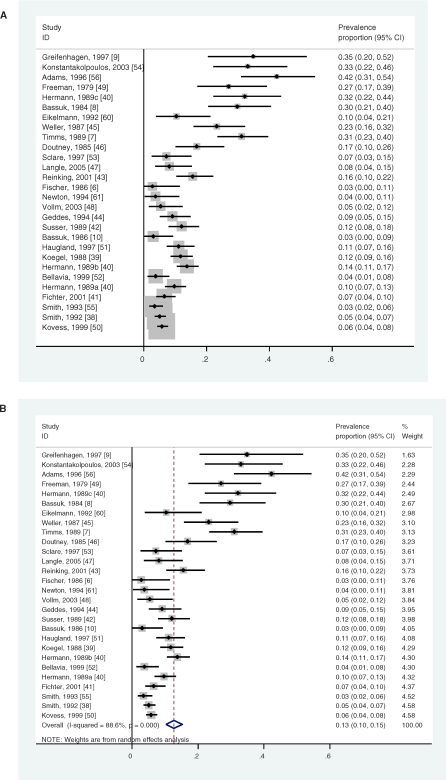
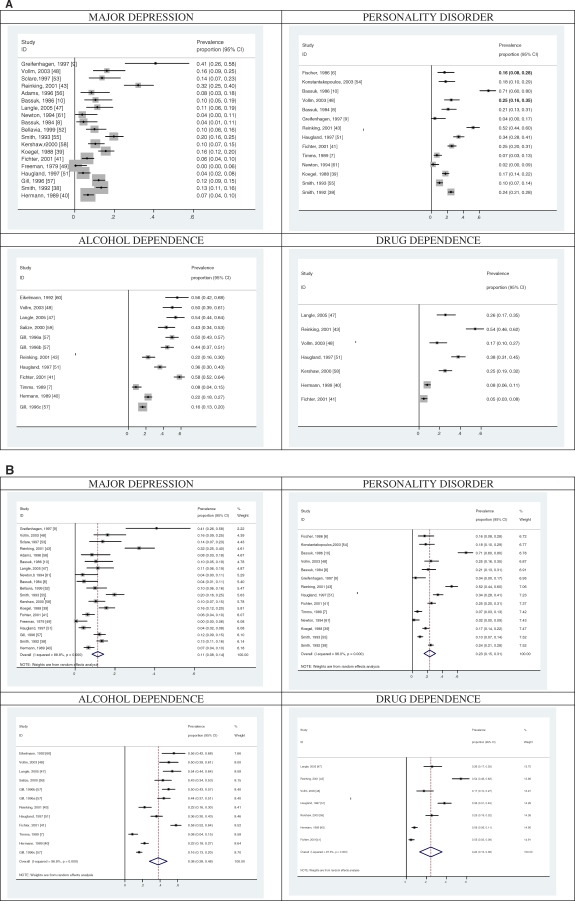
- Across 29 surveys, random-effects pooled prevalence estimates were: alcohol dependence 37.9% (95% CI 27.8%–48.0%; range 8.5%–58.1%), drug dependence 24.4% (95% CI 13.2%–35.6%; range 4.7%–54.2%), personality disorder 23.1% (95% CI 15.5%–30.8%; range 2.2%–71.0%), psychotic illness 12.7% (95% CI 10.2%–15.2%; range 2.8%–42.3%), and major depression 11.4% (95% CI 8.4%–14.4%; range 0.0%–40.9%).
- Heterogeneity was substantial for all disorders (all Cochran’s χ² significant at p < 0.001; all I² > 85%).
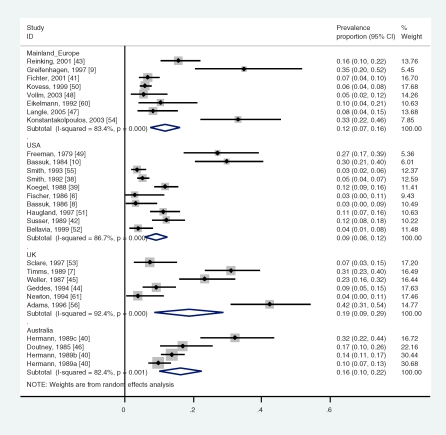
- Alcohol dependence prevalence increased over recent decades (β = 0.18, se[β] = 0.07, p = 0.007), and mainland Europe had higher alcohol dependence prevalence in individual-variable analysis (β = 0.21, se[β] = 0.09, p = 0.022).
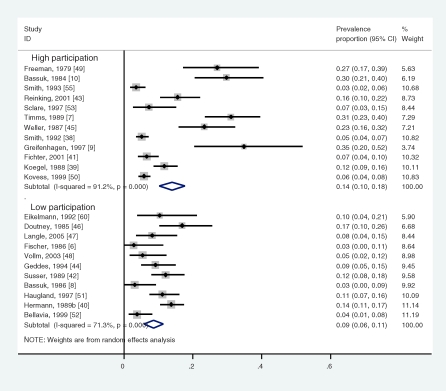
- Lower participation rates were associated with lower psychosis prevalence in multiple meta-regression (β = −0.08, se[β] = 0.03, p = 0.015), and with higher major depression (β = 0.11, se[β] = 0.03, p = 0.002) and personality disorder (β = 0.29, se[β] = 0.08, p < 0.001) in individual analyses.
Methods
- Systematic review searched EMBASE, MEDLINE, and PsycINFO, scanned reference lists, hand-searched journals, and corresponded with authors for surveys published January 1966–December 2007. Inclusion required a clear homelessness definition, ICD/DSM diagnoses, clinical examination or validated diagnostic interviews, past 6-month prevalence (lifetime for personality disorder), and study location in North America, Western Europe, Australia, or New Zealand; surveys with <50% response rate, selected populations, non-interview diagnoses, or solely elderly/juvenile samples were excluded.
- Twenty-nine eligible surveys provided estimates from 5,684 homeless individuals in seven countries; data extracted included geographical location, interview year, homelessness definition, sampling method, sample size, average age, diagnostic instrument/criteria, interviewer type, participation rate, and diagnoses of psychotic illness, major depression, personality disorder, alcohol dependence, and drug dependence.
- Prevalence estimates used the variance-stabilising double arcsine transformation with Wilson confidence intervals; heterogeneity was assessed with Cochran’s Q and I²; random-effects models were used when I² > 75%; meta-regression examined instrument, interviewer, decade, study size, sex, geographical region, and participation rate.
Limitations
- Paper-stated: substantial heterogeneity means service planning should not rely on the summary estimates but should commission local surveys of morbidity; future research should provide clear definitions and breakdowns by homelessness category, include non-Western countries, and use longitudinal cohorts.
- Evident from the text: included studies were restricted to Western countries and were mostly male samples; there were no investigations of alcohol dependence in homeless women and only one report on drug dependence in women (n = 33), limiting generalisability.
- Evident from the text: meta-regression could not explain much of the heterogeneity, and local factors such as provision of mental health and social services were suggested as likely important but were not measured; some studies also lacked sampling or response-rate information.
Model-written summary. Check it against the paper before relying on it.
Integrity signals
Registry
Cites
Statistics
Figures
Verification
Claims the paper makes
7 Valid · 2 Not valid · 30 Not checked · 47 Own results and interpretations
Every source the paper cites for this claim was checked and supports it.
In the paper
“up to 0.8% when only schizophrenia is reported [70]”
§ The Prevalence of Mental Disorders among the Homeless in Western Countries: Systematic Review and Meta-Regression Analysis > Conclusion
What the sources say
- Supportedcites [70] 70. Saha S Chant D Welham J McGrath J 2005 A systematic review of the prevalence of schizophrenia PLoS Medicine 2 e141 doi: 10.1371/journal.pmed.0020141 15916472 10.1371/journal.pmed.0020141 PMC1140952 source
The Discussion reports that about seven to eight people per 1,000 will be affected by schizophrenia, equivalent to 0.7%–0.8%. This is a lifetime morbid risk estimate, not the paper’s point-prevalence estimate, which is lower. (LLM, conf=0.87)
plain- Asserted: passes — The authors put it forward as true.
- Checkable: passes — It can be checked against evidence.
- Load-bearing: unclear — It is unclear whether the paper’s conclusions depend on it.
- Based: passes — The paper gives a reason why it holds.
- Supported
The cited sources support only part of this claim — read each source’s verdict below.
In the paper
“as substance abuse and dependence is an important risk factor, either alone [71] or comorbid with psychosis [21]”
§ The Prevalence of Mental Disorders among the Homeless in Western Countries: Systematic Review and Meta-Regression Analysis > Conclusion
What the sources say
- Partly supportedcites [71] 71. Grann M Fazel S 2004 Substance misuse and violent crime: Swedish population study BMJ 328 1233 1234 15155501 10.1136/bmj.328.7450.1233 PMC416597 sourceExperimental — accuracy not yet measured
The Abstract and Comment report a strong association between substance misuse and violent crime, supporting the risk-factor point attached to [71]. The paper does not establish that this association holds independently of psychosis, and its findings concern violent crime rather than crime generally; the separate claim about comorbidity is attributed to [21]. (LLM, conf=0.82)
- Not checked — no full text of the sourcecites [21] 21. Brennan P Mednick S Hodgins S 2000 Major mental disorders and criminal violence in a Danish birth cohort Arch Gen Psychiatry 57 494 500 10807490 10.1001/archpsyc.57.5.494 source
plainstates a cause- Asserted: passes — The authors put it forward as true.
- Checkable: passes — It can be checked against evidence.
- Load-bearing: unclear — It is unclear whether the paper’s conclusions depend on it.
- Based: passes — The paper gives a reason why it holds.
- Partly supported
Every source the paper cites for this claim was checked and supports it.
In the paper
“The presence of personality disorder is associated with poorer outcomes for treatment of depression [75]”
§ The Prevalence of Mental Disorders among the Homeless in Western Countries: Systematic Review and Meta-Regression Analysis > Conclusion
What the sources say
- Supportedcites [75] 75. Newton-Howes G Tyrer P Johnson T 2006 Personality disorder and the outcome of depression: meta-analysis of published studies Br J Psychiatry 188 13 20 16388064 10.1192/bjp.188.1.13 source
The Conclusions state that depression with comorbid personality disorder is associated with a poorer outcome than depression alone. The Comorbid personality section reports approximately twice the odds of a poor depression outcome when personality disorder is present, supporting the claim about treatment outcomes. (LLM, conf=0.94)
plainstates an association- Asserted: passes — The authors put it forward as true.
- Checkable: passes — It can be checked against evidence.
- Load-bearing: unclear — It is unclear whether the paper’s conclusions depend on it.
- Based: passes — The paper gives a reason why it holds.
- Supported
The sources with a verdict support this claim; the rest weren’t checked yet, have no full text we could read, or their verdicts aren’t rated yet.
In the paper
“The increased prevalence for drug dependence in both sexes may contribute to the reported increased crime rates in the homeless [20,21,22], as substance abuse and dependence is an important risk factor, either alone [71] or comorbid with psychosis [21].”
§ The Prevalence of Mental Disorders among the Homeless in Western Countries: Systematic Review and Meta-Regression Analysis > Conclusion
What the sources say
- Not checked — no full text of the sourcecites [20] 20. Gelberg L Linn LS Leake BD 1988 Mental health, alcohol and drug use, and criminal history among homeless adults Am J Psychiatry 145 191 196 3341464 10.1176/ajp.145.2.191 source
- Not checked — no full text of the sourcecites [21] 21. Brennan P Mednick S Hodgins S 2000 Major mental disorders and criminal violence in a Danish birth cohort Arch Gen Psychiatry 57 494 500 10807490 10.1001/archpsyc.57.5.494 source
- Supportedcites [22] 22. Fazel S Grann M 2006 The population impact of severe mental illness on violent crime Am J Psychiatry 163 1397 1403 16877653 10.1176/ajp.2006.163.8.1397 source
The FAZEL AND GRANN passage (page unavailable) states that comorbid substance abuse increases the risk of violent crime in people with severe mental illness. Citation [21] is attached specifically to the citing sentence’s claim about substance abuse comorbid with psychosis, not to its separate claim about crime rates among homeless people. (LLM, conf=0.91)
- Supportedcites [71] 71. Grann M Fazel S 2004 Substance misuse and violent crime: Swedish population study BMJ 328 1233 1234 15155501 10.1136/bmj.328.7450.1233 PMC416597 source
The citation to this paper is attached to the claim that substance misuse is associated with violent crime on its own, not to the claims about homelessness or both sexes. The Comment reports that people diagnosed with drug misuse committed more than a tenth of violent crimes in Sweden during 1988–2000, while cautioning that the association does not establish a simple causal relationship. (LLM, conf=0.90)
hedgedstates a possible cause- Asserted: passes — The authors put it forward as true.
- Checkable: passes — It can be checked against evidence.
- Load-bearing: passes — The paper’s conclusions depend on it.
- Based: passes — The paper gives a reason why it holds.
Every source the paper cites for this claim was checked and supports it.
In the paper
“all but one reported rates higher than the 4.4% found in a recent community survey [74]”
§ The Prevalence of Mental Disorders among the Homeless in Western Countries: Systematic Review and Meta-Regression Analysis > Conclusion
What the sources say
- Supportedcites [74] 74. Coid J Yang M Tyrer P Roberts A Ullrich S 2006 Prevalence and correlates of personality disorders in Great Britain Br J Psychiatry 188 423 431 16648528 10.1192/bjp.188.5.423 source
The ‘Prevalence of personality disorders’ section reports a weighted rate of 4.4% in the Great Britain household survey. ‘Comparison with previous surveys’ says this was lower than nearly all previous survey rates, which ranged from 3.9% to 22.3%. (LLM, conf=0.91)
plain- Asserted: passes — The authors put it forward as true.
- Checkable: passes — It can be checked against evidence.
- Load-bearing: passes — The paper’s conclusions depend on it.
- Based: passes — The paper gives a reason why it holds.
- Supported
58 more claims · 1 with their cited sources checked
Create a free account to see all 86 claims and to verify the 4 references still open.
- Probably not a substantial claim. 9
- It may state two separate claims as one. 17
- The quote only partly states this claim. 2
Claims other papers make about this one
Each is checked against this paper’s own text: does it say what the citing paper says it does?
The source backs part of the claim, not all of it — or backs it for a different population, condition or comparison.
In the citing paper
“The increased risk of morbidity and mortality from cardiovascular disease is probably a result of high rates of behavioural risk factors (illicit drug use, tobacco use); poor control of hypertension, diabetes, and hyperlipidaemia; and poor access to care for early cardiac disease.80,85”
From The health of homeless people in high-income countries: descriptive epidemiology, health consequences, and clinical and policy recommendations (2014) · cites this paper as [85]
Experimental — accuracy not yet measuredThe source backs part of the claim, not all of it — or backs it for a different population, condition or comparison.
In the citing paper
“In a meta-analysis of 29 studies conducted from 1979 to 2005, the commonest disorders found among the homeless population were alcohol dependence, drug dependence and psychotic disorders, with random effects pooled prevalence estimates of 37.9%, 24.4%, and 12.7%, respectively [15].”
From Burden of mental disorders and unmet needs among street homeless people in Addis Ababa, Ethiopia (2014) · cites this paper as [15]
Experimental — accuracy not yet measuredThe cited source says what the claim attributes to it.
In the citing paper
“Homeless individuals have high rates of chronic psychiatric and medical conditions7,9,10,42,43 and elevated rates of mortality.44”
From Housing first is associated with reduced use of emergency medical services (2014) · cites this paper as [7]
In the citing paper
“These factors were selected on the basis of previous work about heterogeneity in prevalence studies in homeless people.34”
From Prevalence of tuberculosis, hepatitis C virus, and HIV in homeless people: a systematic review and meta-analysis (2012) · cites this paper as [34]
In the citing paper
“A meta-analysis of studies conducted in the United States and worldwide showed that alcohol dependence affects a mean of 38% of homeless adults,7 which exceeds the prevalence in the U.S. general population by more than 10-fold.8”
From Housing first is associated with reduced use of emergency medical services (2014) · cites this paper as [7]
1 more claim about this paper
Create a free account to see every claim other papers make about this one.
Self-check
Percentages, sums and reported differences re-computed from the paper’s own numbers.
Each contradiction between two passages listed here was confirmed by an independent check.
Rated minor: it would not touch a result — a value no result rests on, a p-value that stays on the same side of the significance level, or a conflict that is clerical, resolved elsewhere in the paper, or outside its own findings.
In the paper
§ The Prevalence of Mental Disorders among the Homeless in Western Countries: Systematic Review and Meta-Regression Analysis > Abstract > Methods and Findings
“alcohol dependence, which ranged from 8.1% to 58.5%”
§ The Prevalence of Mental Disorders among the Homeless in Western Countries: Systematic Review and Meta-Regression Analysis > Results > Alcohol Dependence
“The prevalence estimates ranged from 8.5% to 58.1%.”
Rated minor: it would not touch a result — a value no result rests on, a p-value that stays on the same side of the significance level, or a conflict that is clerical, resolved elsewhere in the paper, or outside its own findings.
In the paper
§ The Prevalence of Mental Disorders among the Homeless in Western Countries: Systematic Review and Meta-Regression Analysis > Abstract > Methods and Findings
“drug dependence, which ranged from 4.5% to 54.2%”
§ The Prevalence of Mental Disorders among the Homeless in Western Countries: Systematic Review and Meta-Regression Analysis > Results > Drug Dependence
“The prevalence estimates ranged from 4.7% to 54.2%.”
Citations
Cites
Measuring inconsistency in meta-analyses
Higgins, J. P. T., Thompson, S. G., Deeks, J. J., & Altman, D. G. (2003) · BMJ · doi:10.1136/bmj.327.7414.557 · Cited by 63,139 · cited 2×
“75%), random effects models were used for summary statistics [36].”
MethodQuantifying heterogeneity in a meta‐analysis
Higgins, J. P. T., & Thompson, S. G. (2002) · Statistics in Medicine · doi:10.1002/sim.1186 · Cited by 36,763 · cited 1×
“Heterogeneity among studies was estimated using Cochran’s Q (reported with a v(2)-value and p-value) and the I(2) statistic, the latter describing the percentage of variation across studies that is due to heterogeneity rather than chance [36,37], and presented with a 95% CI [37].”
MethodKessler, R. C. (1994) · Archives of General Psychiatry · doi:10.1001/archpsyc.1994.03950010008002 · Cited by 12,370
Kessler, R. C., Chiu, W. T., Demler, O., & Walters, E. E. (2005) · Archives of General Psychiatry · doi:10.1001/archpsyc.62.6.617 · Cited by 12,052 · cited 3×
“On average, this is many orders of magnitude higher in men and even higher in women compared with community surveys [62,63].”
BackgroundResultKessler, R. C., Berglund, P., Demler, O., Jin, R., Koretz, D., Merikangas, K. R., Rush, A. J., Walters, E. E., & Wang, P. S. (2003) · JAMA · doi:10.1001/jama.289.23.3095 · Cited by 7,988 · cited 1×
“Many estimates included in the review were similar to community estimates of depression in women (which range from 7% to 11% for 1-y estimates), and only slightly higher than general population rates for men [62,72].”
Two-sided confidence intervals for the single proportion: comparison of seven methods
Newcombe, R. G. (1998) · Statistics in Medicine · doi:10.1002/(sici)1097-0258(19980430)17:8<857::aid-sim777>3.0.co;2-e · Cited by 5,107 · cited 1×
“Confidence intervals (CIs) around these estimates were calculated using the Wilson method [34] since the asymptotic method produces intervals which can extend below zero [35].”
MethodProbable Inference, the Law of Succession, and Statistical Inference
Wilson, E. B. (1927) · Journal of the American Statistical Association · doi:10.1080/01621459.1927.10502953 · Cited by 4,476 · cited 1×
“Confidence intervals (CIs) around these estimates were calculated using the Wilson method [34] since the asymptotic method produces intervals which can extend below zero [35].”
MethodTransformations Related to the Angular and the Square Root
Freeman, M. F., & Tukey, J. W. (1950) · The Annals of Mathematical Statistics · doi:10.1214/aoms/1177729756 · Cited by 2,628 · cited 1×
“Prevalence estimates were calculated using the variance stabilising double arcsine transformation [33], because of the use of the inverse variance weight in fixed-effects metaanalysis is suboptimal when dealing with binary data with low prevalences.”
MethodPsychiatric disorders in America: the epidemiologic catchment area study
(1991) · Choice Reviews Online · doi:10.5860/choice.28-5931 · Cited by 2,555 · cited 1×
“The prevalence of psychosis ranged between 3% and 42%, which is substantially higher than community estimates, which typically report 1%–2% when individuals are surveyed using diagnostic instruments [69], and up to 0.”
BackgroundFazel, M., Wheeler, J., & Danesh, J. (2005) · The Lancet · doi:10.1016/s0140-6736(05)61027-6 · Cited by 2,292 · cited 1×
“Second, the prevalence estimates for psychosis were at least as high as those for depression, a finding in marked contrast from community estimates of these conditions [62,63], and in other at-risk groups such as prisoners [64] and refugees [65], in whom depression is more common.”
Result
Research works printed but not linked: 3
- 11. Fischer PJ 1989 Estimating the prevalence of alcohol, drug and mental health problems in the contemporary homeless population: a review of the literature Contemp Drug Probl 16 333 390
- 58. Kershaw A Singleton N Meltzer H 2000 Substance misuse and mental disorder among homeless people in Glasgow London ONS
- 60. Eikelmann B Inhester ML Reker T 1992 Psychische Störungen bei nicht-sesshaften Männern. Defizite in der psychiatrischen Versorgung Sozialpsychiatrische Informationen 2 29 32
Cited by
The Lancet Commission on global mental health and sustainable development
Patel, V., Saxena, S., Lund, C., Thornicroft, G., Baingana, F., Bolton, P., Chisholm, D., Collins, P. Y., Cooper, J. L., Eaton, J., et al. (2018) · The Lancet · doi:10.1016/s0140-6736(18)31612-x · Cited by 3,692
Fazel, S., Geddes, J. R., & Kushel, M. (2014) · The Lancet · doi:10.1016/s0140-6736(14)61132-6 · Cited by 1,568
Self-citationFazel, S., & Baillargeon, J. (2011) · The Lancet · doi:10.1016/s0140-6736(10)61053-7 · Cited by 1,080
Self-citationAssociations Between Socioeconomic Factors and Alcohol Outcomes.
Collins, S. E. (2016) · Europe PMC (PubMed Central) · Cited by 573
Twyman, L., Bonevski, B., Paul, C., & Bryant, J. (2014) · BMJ Open · doi:10.1136/bmjopen-2014-006414 · Cited by 462
Karanika, S., Paudel, S., Grigoras, C., Kalbasi, A., & Mylonakis, E. (2016) · Antimicrobial Agents and Chemotherapy · doi:10.1128/aac.00825-16 · Cited by 402
Community Interventions to Promote Mental Health and Social Equity
Castillo, E. G., Ijadi-Maghsoodi, R., Shadravan, S., Moore, E., Mensah, M. O., Docherty, M., Aguilera Nunez, M. G., Barcelo, N., Goodsmith, N., Halpin, L. E., et al. (2019) · Current Psychiatry Reports · doi:10.1007/s11920-019-1017-0 · Cited by 387
Beijer, U., Wolf, A., & Fazel, S. (2012) · The Lancet Infectious Diseases · doi:10.1016/s1473-3099(12)70177-9 · Cited by 357
Self-citationGoering, P. N., Streiner, D. L., Adair, C., Aubry, T., Barker, J., Distasio, J., Hwang, S. W., Komaroff, J., Latimer, E., Somers, J., et al. (2011) · BMJ Open · doi:10.1136/bmjopen-2011-000323 · Cited by 348
Bronsard, G., Alessandrini, M., Fond, G., Loundou, A., Auquier, P., Tordjman, S., & Boyer, L. (2016) · Medicine · doi:10.1097/md.0000000000002622 · Cited by 346
“Although diagnostic criteria were standardized and this was one of criteria for selecting the articles, we observed that differences in the diagnostic criteria resulted in differences in the prevalence rates as previously reported in several meta-analyses.(2,61,62) In a recent study using 2 major nosological systems,…”
ResultSeners, P., Turc, G., Oppenheim, C., & Baron, J.-C. (2015) · Journal of Neurology, Neurosurgery & Psychiatry · doi:10.1136/jnnp-2014-308327 · Cited by 334
Recovery and Severe Mental Illness: Description and Analysis
Drake, R. E., & Whitley, R. (2014) · The Canadian Journal of Psychiatry · doi:10.1177/070674371405900502 · Cited by 322
Prison suicide in 12 countries: an ecological study of 861 suicides during 2003–2007
Fazel, S., Grann, M., Kling, B., & Hawton, K. (2011) · Social Psychiatry and Psychiatric Epidemiology · doi:10.1007/s00127-010-0184-4 · Cited by 309
“Other ecological associations, which may be important that we have not been able to test include overcrowding, amounts of purposeful activity, and rates of severe psychiatric morbidity in the general population and in the homeless [20, 21 ].”
BackgroundSelf-citationRisk Factors for Homelessness Among US Veterans
Tsai, J., & Rosenheck, R. A. (2015) · Epidemiologic Reviews · doi:10.1093/epirev/mxu004 · Cited by 303
“Homelessness is also a concern because it is associated with a host of other negative outcomes, including a wide range of serious medical problems (13, 14), mental health and substance abuse problems (10, 15), premature mortality (16, 17), frequent hospitalizations, greater than average costs per hospital stay (18, 19…”
BackgroundHousing Disadvantage and Poor Mental Health: A Systematic Review
Singh, A., Daniel, L., Baker, E., & Bentley, R. (2019) · American Journal of Preventive Medicine · doi:10.1016/j.amepre.2019.03.018 · Cited by 301
Gutwinski, S., Schreiter, S., Deutscher, K., & Fazel, S. (2021) · PLOS Medicine · doi:10.1371/journal.pmed.1003750 · Cited by 281
Self-citationStergiopoulos, V., Hwang, S. W., Gozdzik, A., Nisenbaum, R., Latimer, E., Rabouin, D., Adair, C. E., Bourque, J., Connelly, J., Frankish, J., et al. (2015) · JAMA · doi:10.1001/jama.2015.1163 · Cited by 260
“689 Included in the primary analysis 509 Included in the primary analysis 72 Lost to follow-up 25 Died 2 Did not attend follow-up interviews 45 Did not attend 24-month interview 4 Discontinued intervention (withdrew) 102 Lost to follow-up 22 Died 17 Did not attend follow-up interviews 63 Did not attend 24-month interv…”
MethodNeither fixed nor random: weighted least squares meta‐analysis
Stanley, T. D., & Doucouliagos, H. (2015) · Statistics in Medicine · doi:10.1002/sim.6481 · Cited by 253
“Weighted least squares have been used by many meta-analysts in different contexts [1,13-22].”
Bezabih, Y. M., Sabiiti, W., Alamneh, E., Bezabih, A., Peterson, G. M., Bezabhe, W. M., & Roujeinikova, A. (2021) · Journal of Antimicrobial Chemotherapy · doi:10.1093/jac/dkaa399 · Cited by 244
Zacharioudakis, I. M., Zervou, F. N., Pliakos, E. E., Ziakas, P. D., & Mylonakis, E. (2015) · American Journal of Gastroenterology · doi:10.1038/ajg.2015.22 · Cited by 230
Aubry, T., Goering, P., Veldhuizen, S., Adair, C. E., Bourque, J., Distasio, J., Latimer, E., Stergiopoulos, V., Somers, J., Streiner, D. L., et al. (2016) · Psychiatric Services · doi:10.1176/appi.ps.201400587 · Cited by 220
Nielsen, S. F., Hjorthøj, C. R., Erlangsen, A., & Nordentoft, M. (2011) · The Lancet · doi:10.1016/s0140-6736(11)60747-2 · Cited by 214
Roerecke, M., & Rehm, J. (2014) · International Journal of Epidemiology · doi:10.1093/ije/dyu018 · Cited by 202
Burden of Disease Associated with Alcohol Use Disorders in the United States
Rehm, J., Dawson, D., Frick, U., Gmel, G., Roerecke, M., Shield, K. D., & Grant, B. (2014) · Alcoholism: Clinical and Experimental Research · doi:10.1111/acer.12331 · Cited by 200
Cardiovascular Disease and Homelessness
Baggett, T. P., Liauw, S. S., & Hwang, S. W. (2018) · Journal of the American College of Cardiology · doi:10.1016/j.jacc.2018.02.077 · Cited by 199
Prevalence of and Potential Influencing Factors for Alcohol Dependence in Europe
Rehm, J., Anderson, P., Barry, J., Dimitrov, P., Elekes, Z., Feijão, F., Frick, U., Gual, A., Gmel, Jr., Kraus, L., et al. (2015) · European Addiction Research · doi:10.1159/000365284 · Cited by 183
Ayano, G., Tesfaw, G., & Shumet, S. (2019) · BMC Psychiatry · doi:10.1186/s12888-019-2361-7 · Cited by 176
Garland, E. L., Roberts-Lewis, A., Tronnier, C. D., Graves, R., & Kelley, K. (2016) · Behaviour Research and Therapy · doi:10.1016/j.brat.2015.11.012 · Cited by 173
Stubbs, J. L., Thornton, A. E., Sevick, J. M., Silverberg, N. D., Barr, A. M., Honer, W. G., & Panenka, W. J. (2020) · The Lancet Public Health · doi:10.1016/s2468-2667(19)30188-4 · Cited by 173
Substance use and homelessness among emergency department patients
Doran, K. M., Rahai, N., McCormack, R. P., Milian, J., Shelley, D., Rotrosen, J., & Gelberg, L. (2018) · Drug and Alcohol Dependence · doi:10.1016/j.drugalcdep.2018.04.021 · Cited by 172
“2% among homeless populations (Fazel et al., 2008), substantially higher than overall global prevalence rates (WHO, 2018).”
BackgroundCollins, S. E., Malone, D. K., Clifasefi, S. L., Ginzler, J. A., Garner, M. D., Burlingham, B., Lonczak, H. S., Dana, E. A., Kirouac, M., Tanzer, K., et al. (2012) · American Journal of Public Health · doi:10.2105/ajph.2011.300403 · Cited by 164
Cost estimation for the implementation of the Mental Healthcare Act 2017
Math, S., Gowda, G., Basavaraju, V., Manjunatha, N., Kumar, C., Enara, A., Gowda, M., & Thirthalli, J. (2019) · Indian Journal of Psychiatry · doi:10.4103/psychiatry.indianjpsychiatry_188_19 · Cited by 154
“[34] The studies have shown beyond doubt that 70%–80% of the homeless have the mental illness.[35-38] On estimation, approximately 13 lakh people are homeless and suffer from mental illness in India.”
BackgroundNilsson, S. F., Nordentoft, M., & Hjorthøj, C. R. (2019) · Journal of Urban Health · doi:10.1007/s11524-019-00377-x · Cited by 189
The Prevalence of Mental Illness in Homeless Children: A Systematic Review and Meta-Analysis
Bassuk, E. L., Richard, M. K., & Tsertsvadze, A. (2014) · Journal of the American Academy of Child & Adolescent Psychiatry · doi:10.1016/j.jaac.2014.11.008 · Cited by 196
Effectiveness of Case Management for Homeless Persons: A Systematic Review
de Vet, R., van Luijtelaar, M. J. A., Brilleslijper‐Kater, S. N., Vanderplasschen, W., Beijersbergen, M. D., & Wolf, J. (2013) · American Journal of Public Health · doi:10.2105/ajph.2013.301491 · Cited by 188
“Although the prevalence of mental illness and substance use among homeless people is still high, many are not mentally ill.(11) More evidence is needed to establish which model is most suitable and cost-effective for homeless people who are not mentally ill and are not substance users but who often have fewer or other…”
BackgroundMagwood, O., Leki, V. Y., Kpadé, V., Saad, A., Alkhateeb, Q., Gebremeskel, A. T., Rehman, A., Hannigan, T., Pinto, N. M., Sun, A. H., et al. (2019) · PLoS ONE · doi:10.1371/journal.pone.0226306 · Cited by 174
“this population has struggled with mental health and addiction,[6] profound societal stigma,”
BackgroundEvans-Lacko, S., Courtin, E., Fiorillo, A., Knapp, M., Luciano, M., Park, A.-L., Brunn, M., Byford, S., Chevreul, K., Forsman, A. K., et al. (2014) · European Psychiatry · doi:10.1016/j.eurpsy.2014.02.007 · Cited by 133
“Experience of mental health problems early in life can be associated with a trajectory of exclusion and disadvantage, for example, through reduced participation in higher education, exclusion from civil society (including functions such as democratic participation), increased risk of contact with criminal justice syst…”
BackgroundMRSA Colonization and Risk of Infection in the Neonatal and Pediatric ICU: A Meta-analysis
Zervou, F. N., Zacharioudakis, I. M., Ziakas, P. D., & Mylonakis, E. E. (2014) · PEDIATRICS · doi:10.1542/peds.2013-3413 · Cited by 148
The Use of Alcohol, Tobacco, Illegal Drugs and Medicines
Atzendorf, J., Rauschert, C., Seitz, N., Lochbühler, K., & Kraus, L. (2019) · Deutsches Ärzteblatt international · doi:10.3238/arztebl.2019.0577 · Cited by 248
Bezabih, Y. M., Bezabih, A., Dion, M., Batard, É., Teka, S. T., Obole, A., Dessalegn, N., Enyew, A., Roujeinikova, A., Alamneh, E. A., et al. (2022) · JAC-Antimicrobial Resistance · doi:10.1093/jacamr/dlac048 · Cited by 161
van den Bree, M. B. M., Shelton, K., Bonner, A., Moss, S., Thomas, H., & Taylor, P. J. (2009) · Journal of Adolescent Health · doi:10.1016/j.jadohealth.2009.03.027 · Cited by 123
“The prevalence rates of mental health problems, substance abuse problems, and antisocial and offending behavior are considerably higher among homeless persons than among the general population [8–10] .”
Miler, J. A., Carver, H., Foster, R., & Parkes, T. (2020) · BMC Public Health · doi:10.1186/s12889-020-8407-4 · Cited by 147
Hirdes, J. P., van Everdingen, C., Ferris, J., Franco-Martin, M., Fries, B. E., Heikkilä, J., Hirdes, A., Hoffman, R., James, M. L., Martin, L., et al. (2020) · Frontiers in Psychiatry · doi:10.3389/fpsyt.2019.00926 · Cited by 124
Prevalence of mental disorders among people who are homeless: An umbrella review
Hossain, M. M., Sultana, A., Tasnim, S., Fan, Q., Ma, P., McKyer, E. L. J., & Purohit, N. (2020) · International Journal of Social Psychiatry · doi:10.1177/0020764020924689 · Cited by 147
Molloy, C., Conroy, R. M., Cotter, D. R., & Cannon, M. (2011) · Schizophrenia Bulletin · doi:10.1093/schbul/sbr091 · Cited by 123
Canavan, R., Barry, M. M., Matanov, A., Barros, H., Gabor, E., Greacen, T., Holcnerová, P., Kluge, U., Nicaise, P., Moskalewicz, J., et al. (2012) · BMC Health Services Research · doi:10.1186/1472-6963-12-222 · Cited by 116
“Homeless people in Western countries are more likely to have alcohol and drug problems than the general population [1].”
BackgroundZacharioudakis, I. M., Zervou, F. N., Ziakas, P. D., & Mylonakis, E. E. (2014) · Journal of the American Society of Nephrology · doi:10.1681/asn.2013091028 · Cited by 130
Lavoie, J. A. A., & Douglas, K. S. (2011) · Journal of Psychopathology and Behavioral Assessment · doi:10.1007/s10862-011-9266-1 · Cited by 155
Elwell-Sutton, T., Fok, J., Albanese, F., Mathie, H., & Holland, R. (2016) · Journal of Public Health · doi:10.1093/pubmed/fdw008 · Cited by 135
Mortality among the homeless: Causes and meteorological relationships
Romaszko, J., Cymes, I., Dragańska, E., Kuchta, R., & Glińska‐Lewczuk, K. (2017) · PLoS ONE · doi:10.1371/journal.pone.0189938 · Cited by 169
Health care for homeless people
Liu, M., & Hwang, S. W. (2021) · Nature Reviews Disease Primers · doi:10.1038/s41572-020-00241-2 · Cited by 130
Bowen, M., Marwick, S., Marshall, T. P., Saunders, K., Burwood, S., Yahyouche, A., Stewart, D. C., & Paudyal, V. (2019) · British Journal of General Practice · doi:10.3399/bjgp19x704609 · Cited by 119
Krausz, R. M., Clarkson, A. F., Strehlau, V., Torchalla, I., Li, K. K., & Schütz, C. G. (2013) · Social Psychiatry and Psychiatric Epidemiology · doi:10.1007/s00127-012-0649-8 · Cited by 141
“published between 1966 and 2007 [5] of mostly homeless males, the participants in our study reported much higher rates of current drug dependence (82.”
BackgroundResultInfluentialPyridine alkaloids with activity in the central nervous system
Lin, S. X., Curtis, M. A., & Sperry, J. (2020) · Bioorganic & Medicinal Chemistry · doi:10.1016/j.bmc.2020.115820 · Cited by 113
Disparities in Care and Mortality Among Homeless Adults Hospitalized for Cardiovascular Conditions
Wadhera, R. K., Khatana, S. A. M., Choi, E. H., Jiang, G. Y., Shen, C., Yeh, R. W., & Maddox, K. E. J. (2019) · JAMA Internal Medicine · doi:10.1001/jamainternmed.2019.6010 · Cited by 105
Homelessness and Homeless Policies in Europe: Lessons from Research
Busch-Geertsema, V., Edgar, W., & Pleace, N. (2010) · White Rose Research Online (University of Leeds, The University of Sheffield, University of York) · Cited by 218
Trends and Significance of VRE Colonization in the ICU: A Meta-Analysis of Published Studies
Ziakas, P. D., Thapa, R., Rice, L. B., & Mylonakis, E. E. (2013) · PLoS ONE · doi:10.1371/journal.pone.0075658 · Cited by 109
“Data Analysis We performed a meta-analysis of random-effects (RE) to estimate the pooled (combined) prevalence and 95% confidence intervals, using the Freeman-Tukey arcsine methodology to address stabilizing variances [16].”
MethodPauly, B., Gray, E., Perkin, K., Chow, C., Vallance, K., Krysowaty, B., & Stockwell, T. (2016) · Harm Reduction Journal · doi:10.1186/s12954-016-0102-5 · Cited by 99
The Hotel Study: Multimorbidity in a Community Sample Living in Marginal Housing
Vila-Rodriguez, F., Panenka, W. J., Lang, D. J., Thornton, A. E., Vertinsky, T., Wong, H., Barr, A. M., Procyshyn, R. M., Sidhu, J. J., Smith, G. N., et al. (2013) · American Journal of Psychiatry · doi:10.1176/appi.ajp.2013.12111439 · Cited by 94
Eshetie, S., Gizachew, M., Dagnew, M., Kumera, G., Woldie, H., Yehualashet, F. A., Tessema, B., & Moges, F. (2017) · BMC Infectious Diseases · doi:10.1186/s12879-017-2323-y · Cited by 112
The Prevalence of Mental Illness in Homeless People in Germany
Schreiter, S., Bermpohl, F., Krausz, M. R., Leucht, S., Rössler, W., Schouler‐Ocak, M., & Gutwinski, S. (2017) · Deutsches Ärzteblatt international · doi:10.3238/arztebl.2017.0665 · Cited by 141
Coates, S. J., Thomas, C., Chosidow, O., Engelman, D., & Chang, A. Y. (2019) · Journal of the American Academy of Dermatology · doi:10.1016/j.jaad.2019.05.110 · Cited by 125
Suicidal Ideation and Attempt among Homeless People: a Systematic Review and Meta-Analysis
Ayano, G., Tsegay, L., Abraha, M., & Yohannes, K. (2019) · Psychiatric Quarterly · doi:10.1007/s11126-019-09667-8 · Cited by 110
Mortality and life expectancy in homeless men and women in Rotterdam: 2001-2010
Nusselder, W. J., Slockers, M. T., Krol, L., Slockers, C. T., Looman, C. W. N., & van Beeck, E. F. (2013) · PLoS ONE · doi:10.1371/journal.pone.0073979 · Cited by 91
“Also, studies on the homeless have reported a high proportion of psychiatric disorders [16] and substance use [2,10], as well as excess mortality related to different types of substance abuse [2,10].”
BackgroundSundin, E., & Baguley, T. S. (2014) · Social Psychiatry and Psychiatric Epidemiology · doi:10.1007/s00127-014-0937-6 · Cited by 129
“Reported sexual abuse ranged from 4 to 62 %, with average prevalence estimated as 32 %, 95 % CI [23, 44] for female and 10 % for male, 95 % CI [6, 17].”
Hudson, B. F., Flemming, K., Shulman, C., & Candy, B. (2016) · BMC Palliative Care · doi:10.1186/s12904-016-0168-6 · Cited by 119
Somers, J. M., Rezansoff, S. N., Moniruzzaman, A., Palepu, A., & Patterson, M. (2013) · PLoS ONE · doi:10.1371/journal.pone.0072946 · Cited by 86
Priebe, S., Matanov, A., Schor, R., Straßmayr, C., Barros, H., Barry, M. M., Díaz-Olalla, J. M., Gabor, E., Greacen, T., Holcnerová, P., et al. (2012) · BMC Public Health · doi:10.1186/1471-2458-12-248 · Cited by 84
Foster, A. E., Gable, J., & Buckley, J. (2012) · Psychiatric Clinics of North America · doi:10.1016/j.psc.2012.06.010 · Cited by 105
Street Crime Victimization Among Homeless Adults: A Review of the Literature
Ellsworth, J. T. (2018) · Victims & Offenders · doi:10.1080/15564886.2018.1547997 · Cited by 103
Substance use and predictors of substance dependence in homeless women
Torchalla, I., Strehlau, V., Li, K., & Krausz, M. (2011) · Drug and Alcohol Dependence · doi:10.1016/j.drugalcdep.2011.03.016 · Cited by 82
“In nternational studies, high rates of substance use disorders were eported among the homeless (Fazel et al., 2008), but only a few anadian studies exist on substance abuse prevalence rates in his population (Frankish et al., 2005).”
BackgroundSharman, S., Butler, K., & Roberts, A. D. L. (2019) · Addictive Behaviors · doi:10.1016/j.addbeh.2019.106071 · Cited by 94
Neurocognitive impairment in a large sample of homeless adults with mental illness
Stergiopoulos, V., Cusi, A., Bekele, T., Skosireva, A., Latimer, E., Schütz, C., Fernando, I., & Rourke, S. B. (2015) · Acta Psychiatrica Scandinavica · doi:10.1111/acps.12391 · Cited by 81
“4% for mood disorders such as major depression among homeless samples (8).”
BackgroundMeinbresse, M., Brinkley-Rubinstein, L., Grassette, A., Benson, J., Hall, C., Hamilton, R., Malott, M., & Jenkins, D. (2014) · Violence and Victims · doi:10.1891/0886-6708.vv-d-12-00069 · Cited by 81
Topp, L., Iversen, J., Baldry, E., & Maher, L. (2012) · Journal of Urban Health · doi:10.1007/s11524-012-9730-6 · Cited by 90
“A recent meta-analysis indicated that up to 59 % of homeless people are alcohol dependent, and 54 % are dependent on at least one illicit drug.(7) Other evidence suggests that more than half of homeless people with a substance use disorder suffer at least one comorbid psychiatric disorder.”
BackgroundTrends in Substance Use and Related Disorders
Seitz, N.-N., Lochbühler, K., Atzendorf, J., Rauschert, C., Tim, Pfeiffer-Gerschel, & Kraus, L. (2019) · Deutsches Ärzteblatt international · doi:10.3238/arztebl.2019.0585 · Cited by 77
“users with intensive patterns of use are very likely to be greatly underrepresented in population surveys, the majority of positive cases are broadly socially integrated occasional consumers (36).”
BackgroundCommunity managed alcohol programs in Canada: Overview of key dimensions and implementation
Pauly, B., Vallance, K., Wettlaufer, A., Chow, C. M., BROWN, R. M., Evans, J., Gray, E., Krysowaty, B., Ivsins, A., Schiff, R., et al. (2018) · Drug and Alcohol Review · doi:10.1111/dar.12681 · Cited by 96
“3 Introduction Prevalence of substance use disorders among populations experiencing homelessness varies widely with estimates ranging from 8-58% (1, 2).”
BackgroundHousing first is associated with reduced use of emergency medical services
Mackelprang, J. L., Collins, S. E., & Clifasefi, S. L. (2014) · Prehospital Emergency Care · doi:10.3109/10903127.2014.916020 · Cited by 77
“Other psychiatric 35 (2) 15 (2) Medical illness 762 (48) 437 (51) Abdominal/genitourinary 45 (3) 56 (7)”
Poverty and Serious Mental Illness: Toward Action on a Seemingly Intractable Problem
Sylvestre, J. C., Notten, G., Kerman, N., Polillo, A., & Czechowski, K. (2017) · American Journal of Community Psychology · doi:10.1002/ajcp.12211 · Cited by 93
Tsai, A. C., Karasic, D. H., Hammer, G. P., Charlebois, E. D., Ragland, K., Moss, A. R., Sorensen, J. L., Dilley, J., & Bangsberg, D. R. (2012) · American Journal of Public Health · doi:10.2105/ajph.2011.300422 · Cited by 80
Burden of mental disorders and unmet needs among street homeless people in Addis Ababa, Ethiopia
Fekadu, A., Hanlon, C., Gebre-Eyesus, E., Agedew, M., Solomon, H., Teferra, S., Gebre-Eyesus, T., Baheretibeb, Y., Medhin, G., Shibre, T., et al. (2014) · BMC Medicine · doi:10.1186/s12916-014-0138-x · Cited by 76
“In a meta-analysis of 29 studies conducted from 1979 to 2005, the commonest disorders found among the homeless population were alcohol dependence, drug dependence and psychotic disorders, with random effects pooled prevalence estimates of 37.9%, 24.4%, and 12.7%, respectively [15].”
BackgroundInfluentialMethicillin resistant Staphylococcus aureus in Ethiopia: a meta-analysis
Eshetie, S., Kumie, F. T., Moges, F., Amsalu, A., Birhan, W., & Huruy, K. (2016) · BMC Infectious Diseases · doi:10.1186/s12879-016-2014-0 · Cited by 83
de Matos, E. G., Atzendorf, J., Kraus, L., & Piontek, D. (2016) · SUCHT - Zeitschrift für Wissenschaft und Praxis / Journal of Addiction Research and Practice · doi:10.1024/0939-5911/a000445 · Cited by 105
Barriers to obtaining employment for people with severe mental illness experiencing homelessness
Poremski, D., Whitley, R., & Latimer, E. (2014) · Journal of Mental Health · doi:10.3109/09638237.2014.910640 · Cited by 75
“illness (Fazel et al., 2008), could be attributed to the complex relationship between mental illness, employment and housing”
BackgroundHomelessness and severe mental illness in low- and middle-income countries: scoping review
Smartt, C., Prince, M. J., Frissa, S., Eaton, J., Fekadu, A., & Hanlon, C. (2019) · BJPsych Open · doi:10.1192/bjo.2019.32 · Cited by 82
Eshetie, S., Gizachew, M., Alebel, A., & van Soolingen, D. (2018) · PLoS ONE · doi:10.1371/journal.pone.0194675 · Cited by 82
Zacharioudakis, I. M., Zervou, F. N., Ziakas, P. D., Rice, L. B., & Mylonakis, E. E. (2014) · American Journal of Kidney Diseases · doi:10.1053/j.ajkd.2014.05.016 · Cited by 83
Mental Health, Substance Abuse, and Suicide Among Homeless Adults
Lee, K. H., Jun, J. S., Kim, Y. J., Roh, S., Moon, S. S., Bukonda, N. K. Z., & Hines, L. D. (2017) · Journal of Evidence-Informed Social Work · doi:10.1080/23761407.2017.1316221 · Cited by 80
Factors associated with geriatric syndromes in older homeless adults
Brown, R. T., Kiely, D. K., Bharel, M., & Mitchell, S. L. (2013) · Journal of Health Care for the Poor and Underserved · doi:10.1353/hpu.2013.0077 · Cited by 71
Suicide Attempts and Childhood Maltreatment Among Street Youth: A Prospective Cohort Study
Hadland, S. E., Wood, E., Dong, H., Marshall, B. D. L., Kerr, T., Montaner, J. S., & DeBeck, K. (2015) · Pediatrics · doi:10.1542/peds.2015-1108 · Cited by 71
The physical and mental health effects of housing homeless people: A systematic review
Onapa, H., Sharpley, C. F., Bitsika, V., McMillan, M., MacLure, K., Smith, L., & Agnew, L. L. (2021) · Health & Social Care in the Community · doi:10.1111/hsc.13486 · Cited by 106
Narasimhan, L., Gopikumar, V., Jayakumar, V., Bunders, J., & Regeer, B. (2019) · International Journal of Mental Health Systems · doi:10.1186/s13033-019-0313-8 · Cited by 70
Winetrobe, H., Wenzel, S. L., Rhoades, H., Henwood, B. F., Rice, E. R. W., & Harris, T. E. (2017) · Women s Health Issues · doi:10.1016/j.whi.2016.12.011 · Cited by 98
“, 2013) and mental (Fazel et al., 2008; Folsom et al., 2005; Lippert & Lee, 2015; Martens, 2001; Stergiopoulos, Dewa, Durbin, Chau, & Svoboda, 2010; Strehlau, Torchalla, Li, Schuetz, & Krausz, 2012) health conditions, and that there are disparities in homeless men’s and women’s health.”
Ziakas, P. D., Anagnostou, T., & Mylonakis, E. E. (2013) · Critical Care Medicine · doi:10.1097/ccm.0b013e3182a66bb8 · Cited by 79
“Data Synthesis We conducted a meta-analysis using a random effects model to estimate the pooled (combined) prevalence and 95% CIs, using the Freeman-Tukey arcsine methodology to deal with stabilizing variances (6).”
MethodCollins, S. E., Malone, D. K., & Larimer, M. E. (2012) · Addictive Behaviors · doi:10.1016/j.addbeh.2012.03.029 · Cited by 68
The relationship between mental health and risk of active tuberculosis: a systematic review
Hayward, S. E., Deal, A., Rustage, K., Nellums, L. B., Sweetland, A. C., Boccia, D., Hargreaves, S., & Friedland, J. S. (2022) · BMJ Open · doi:10.1136/bmjopen-2021-048945 · Cited by 82
Somers, J. M., Moniruzzaman, A., & Palepu, A. (2015) · Addiction · doi:10.1111/add.13011 · Cited by 67
Mejía-Lancheros, C., Lachaud, J., O'Campo, P. J., Wiens, K., Nisenbaum, R. A., Wang, R., Hwang, S. W., & Stergiopoulos, V. (2020) · PLoS ONE · doi:10.1371/journal.pone.0229385 · Cited by 89
“Individuals with mental disorders are at a higher risk of homelessness, and a high proportion of individuals experiencing homelessness are also living with mental illness[14].”
BackgroundThe social context of homeless men's substance use
Rhoades, H., Wenzel, S. L., Golinelli, D., Tucker, J. S., Kennedy, D. P., Green, H. D., & Zhou, A. (2011) · Drug and Alcohol Dependence · doi:10.1016/j.drugalcdep.2011.04.011 · Cited by 65
“HOMELESS MEN and SUBSTANCE USE Homeless populations are at significantly higher risk for substance dependence (Fazel et al., 2008), with rates of drug and alcohol abuse two to eight times higher than in the general population (Robertson et al., 1997).”
BackgroundResultInfluentialStockwell, T. R., Pauly, B., Chow, C. M., Erickson, R. A., Krysowaty, B., Roemer, A., Vallance, K., Wettlaufer, A., & Zhao, J. (2017) · Drug and Alcohol Review · doi:10.1111/dar.12618 · Cited by 64
Metadata
- Authors
- Fazel, S., Khosla, V., Doll, H., & Geddes, J.
- Affiliations
- Warneford Hospital (GB)
- Oxford Health NHS Foundation Trust (GB)
- University of Oxford (GB)
- Corresponding author
- Fazel, Seena
- Venue
- PLoS Medicine
- Publisher
- Public Library of Science (PLoS)
- Published
- 2008-12-02
- Volume
- 5
- Issue
- 12
- Pages
- e225
- ISSN
- 1549-1277 (ISSN-L)
- 1549-1676
- PMC
- PMC2592351
- OpenAlex
- W2107329907
- Cited by
- 1,033
- References
- 76
- Citations by year
- 2026: 28 · 2025: 31 · 2024: 60 · 2023: 77 · 2022: 83 · 2021: 137 · 2020: 126 · 2019: 80 · 2018: 54 · 2017: 49 · 2016: 65 · 2015: 58 · 2014: 62 · 2013: 47 · 2012: 35
- FWCI
- 2.58
- Type
- journal article
- Language
- en
- Open access
- gold
- doi.org
- Locations
- PLoS Medicine (publishedVersion, cc-by)
- Europe PMC (PubMed Central) (publishedVersion, cc-by)
- PubMed Central (publishedVersion, cc-by)
- PubMed (publishedVersion)
- Oxford University Research Archive (ORA) (University of Oxford) (acceptedVersion, cc-by)
- RePEc: Research Papers in Economics (submittedVersion)
- DOAJ (DOAJ: Directory of Open Access Journals) (submittedVersion)
- Figshare (submittedVersion, cc-by)
- UEA Digital Repository (University of East Anglia) (submittedVersion, cc-by)
- Topics
- Social Sciences › Sociology and Political Science › Homelessness and Social Issues
- Health Sciences › Medicine › Psychiatry and Mental health › Mental Health Treatment and Access
- Social Sciences › Psychology › Clinical Psychology › Migration, Health and Trauma
- Keywords
- homelessness, mental illness, prevalence, alcoholism, drug addiction, psychosis, major depressive disorder, personality disorders, Western Europe, North America
- MeSH terms
- Alcoholism, Mental Disorders, Major Depressive Disorder, Ill-Housed Persons, Humans, Personality Disorders, Psychotic Disorders, Prevalence, Western World, Substance-Related Disorders
About these checks
Registry, retraction, Cites and statistics results are computed, not judged, with one exception: a printed reference that no index lists is read once by a model before it counts as a citation error. Claims are extracted by a model and kept only when their quote appears verbatim in the text; each cited source is then checked, with a model’s help, for whether it says what the claim relies on. Those verdicts can be wrong — read the claim’s quote and the cited source before relying on one.
The claim verdicts this report counts are experimental: their accuracy is not yet measured.
A language model drew the claims from the paper on 2026-09-30, under version 3 of the claim definition (model deepseek-v4.1-flash, prompt extract-v3).
A second model labelled each claim on 2026-09-30 (model jev-1.13-20260917, definition revision gold-guideline-v0.2).
Cited sources are checked with a language model’s help (gpt-6-sol).
Statistics and arithmetic are recomputed, not judged.
Confidence bands are shown only for fields calibrated on our annotated test set. None is calibrated yet, so no band is shown.
What counts as a claim ›How we measure confidence ›How we check this ›
Are you an author, or do you see a problem with this page? Request a review
Data sources
Bibliographic data: Semantic Scholar, OpenAlex, Crossref.
Contains information from the Semantic Scholar Academic Graph Datasets, made available under the ODC Attribution License (ODC-BY 1.0).
Semantic Scholar’s data is described in: Kinney, R., et al. (2023). The Semantic Scholar Open Data Platform. arXiv:2301.10140.
