

The Prevalence of Mental Disorders among the Homeless in Western Countries: Systematic Review and Meta-Regression Analysis
Open accessThe DOI matches its Crossref record; 76 of the 76 references it cites were found in a registry or an index; 11 of the 139 sources its claims cite were checked for support.
Abstract
There are well over a million homeless people in Western Europe and North America, but reliable estimates of the prevalence of major mental disorders among this population are lacking.
Overview
CoChat Summary
TL;DR
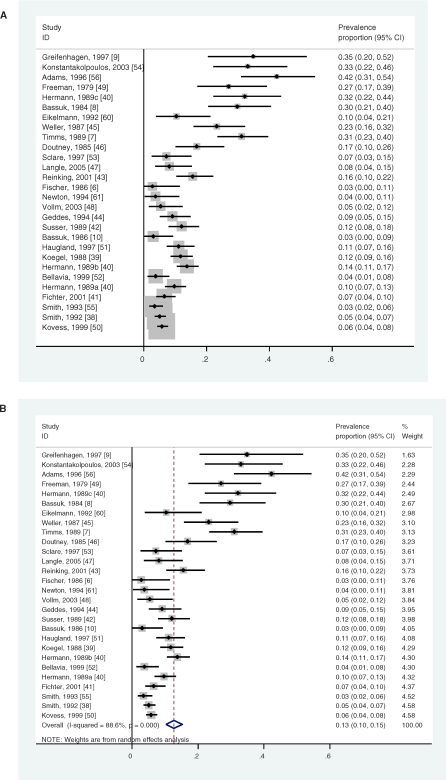
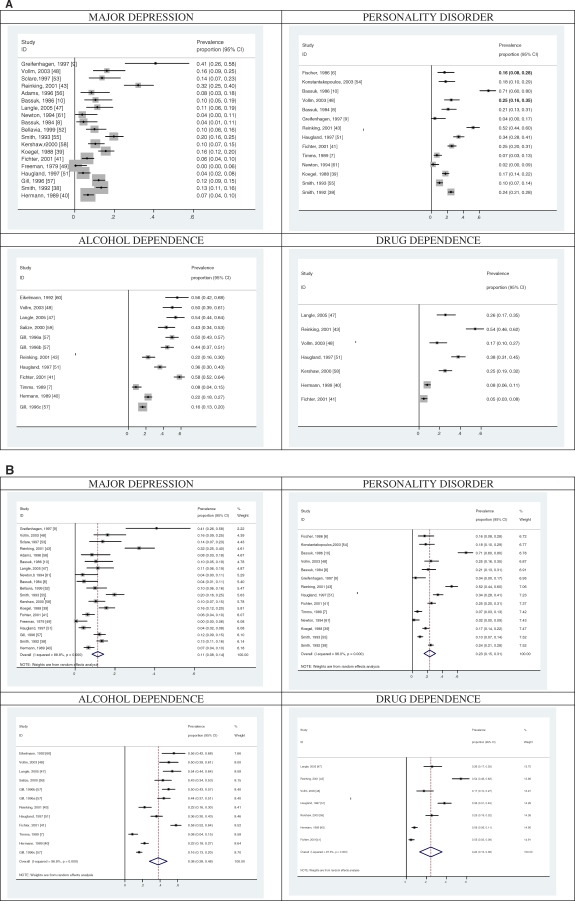
This systematic review and meta-regression of 29 surveys including 5,684 homeless individuals in seven Western countries found high but highly heterogeneous prevalences of mental disorders, with alcohol and drug dependence most common. Pooled prevalences were 37.9% for alcohol dependence, 24.4% for drug dependence, 23.1% for personality disorder, 12.7% for psychotic illness, and 11.4% for major depression.
Key findings
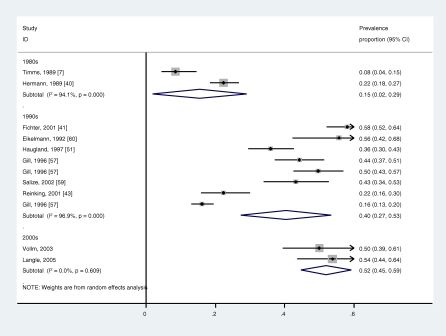
- Across 29 surveys, random-effects pooled prevalence estimates were: alcohol dependence 37.9% (95% CI 27.8%–48.0%; range 8.5%–58.1%), drug dependence 24.4% (95% CI 13.2%–35.6%; range 4.7%–54.2%), personality disorder 23.1% (95% CI 15.5%–30.8%; range 2.2%–71.0%), psychotic illness 12.7% (95% CI 10.2%–15.2%; range 2.8%–42.3%), and major depression 11.4% (95% CI 8.4%–14.4%; range 0.0%–40.9%).
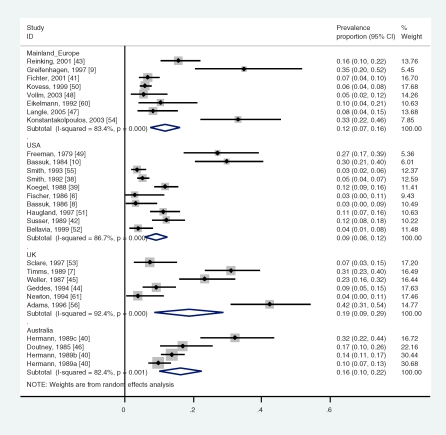
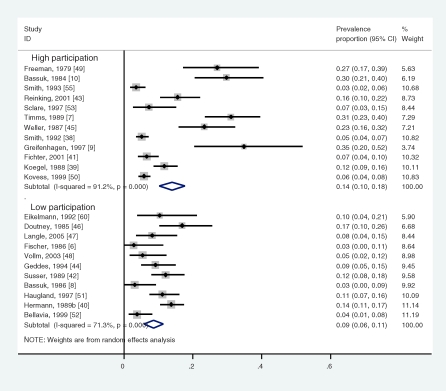
- Heterogeneity was substantial for all disorders (all Cochran’s χ² significant at p < 0.001; all I² > 85%).
- Alcohol dependence prevalence increased over recent decades (β = 0.18, se[β] = 0.07, p = 0.007), and mainland Europe had higher alcohol dependence prevalence in individual-variable analysis (β = 0.21, se[β] = 0.09, p = 0.022).
- Lower participation rates were associated with lower psychosis prevalence in multiple meta-regression (β = −0.08, se[β] = 0.03, p = 0.015), and with higher major depression (β = 0.11, se[β] = 0.03, p = 0.002) and personality disorder (β = 0.29, se[β] = 0.08, p < 0.001) in individual analyses.
Methods
- Systematic review searched EMBASE, MEDLINE, and PsycINFO, scanned reference lists, hand-searched journals, and corresponded with authors for surveys published January 1966–December 2007. Inclusion required a clear homelessness definition, ICD/DSM diagnoses, clinical examination or validated diagnostic interviews, past 6-month prevalence (lifetime for personality disorder), and study location in North America, Western Europe, Australia, or New Zealand; surveys with <50% response rate, selected populations, non-interview diagnoses, or solely elderly/juvenile samples were excluded.
- Twenty-nine eligible surveys provided estimates from 5,684 homeless individuals in seven countries; data extracted included geographical location, interview year, homelessness definition, sampling method, sample size, average age, diagnostic instrument/criteria, interviewer type, participation rate, and diagnoses of psychotic illness, major depression, personality disorder, alcohol dependence, and drug dependence.
- Prevalence estimates used the variance-stabilising double arcsine transformation with Wilson confidence intervals; heterogeneity was assessed with Cochran’s Q and I²; random-effects models were used when I² > 75%; meta-regression examined instrument, interviewer, decade, study size, sex, geographical region, and participation rate.
Limitations
- Paper-stated: substantial heterogeneity means service planning should not rely on the summary estimates but should commission local surveys of morbidity; future research should provide clear definitions and breakdowns by homelessness category, include non-Western countries, and use longitudinal cohorts.
- Evident from the text: included studies were restricted to Western countries and were mostly male samples; there were no investigations of alcohol dependence in homeless women and only one report on drug dependence in women (n = 33), limiting generalisability.
- Evident from the text: meta-regression could not explain much of the heterogeneity, and local factors such as provision of mental health and social services were suggested as likely important but were not measured; some studies also lacked sampling or response-rate information.
Model-written summary. Check it against the paper before relying on it.
Integrity signals
Registry
Cites
Statistics
Figures
Verification
Claims the paper makes
7 Valid · 2 Not valid · 30 Not checked · 47 Own results and interpretations
Every source the paper cites for this claim was checked and supports it.
In the paper
“up to 0.8% when only schizophrenia is reported [70]”
§ The Prevalence of Mental Disorders among the Homeless in Western Countries: Systematic Review and Meta-Regression Analysis > Conclusion
What the sources say
- Supportedcites [70] 70. Saha S Chant D Welham J McGrath J 2005 A systematic review of the prevalence of schizophrenia PLoS Medicine 2 e141 doi: 10.1371/journal.pmed.0020141 15916472 10.1371/journal.pmed.0020141 PMC1140952 source
The Discussion reports that about seven to eight people per 1,000 will be affected by schizophrenia, equivalent to 0.7%–0.8%. This is a lifetime morbid risk estimate, not the paper’s point-prevalence estimate, which is lower. (LLM, conf=0.87)
plain- Asserted: passes — The authors put it forward as true.
- Checkable: passes — It can be checked against evidence.
- Load-bearing: unclear — It is unclear whether the paper’s conclusions depend on it.
- Based: passes — The paper gives a reason why it holds.
- Supported
The cited sources support only part of this claim — read each source’s verdict below.
In the paper
“as substance abuse and dependence is an important risk factor, either alone [71] or comorbid with psychosis [21]”
§ The Prevalence of Mental Disorders among the Homeless in Western Countries: Systematic Review and Meta-Regression Analysis > Conclusion
What the sources say
- Partly supportedcites [71] 71. Grann M Fazel S 2004 Substance misuse and violent crime: Swedish population study BMJ 328 1233 1234 15155501 10.1136/bmj.328.7450.1233 PMC416597 sourceExperimental — accuracy not yet measured
The Abstract and Comment report a strong association between substance misuse and violent crime, supporting the risk-factor point attached to [71]. The paper does not establish that this association holds independently of psychosis, and its findings concern violent crime rather than crime generally; the separate claim about comorbidity is attributed to [21]. (LLM, conf=0.82)
- Not checked — no full text of the sourcecites [21] 21. Brennan P Mednick S Hodgins S 2000 Major mental disorders and criminal violence in a Danish birth cohort Arch Gen Psychiatry 57 494 500 10807490 10.1001/archpsyc.57.5.494 source
plainstates a cause- Asserted: passes — The authors put it forward as true.
- Checkable: passes — It can be checked against evidence.
- Load-bearing: unclear — It is unclear whether the paper’s conclusions depend on it.
- Based: passes — The paper gives a reason why it holds.
- Partly supported
Every source the paper cites for this claim was checked and supports it.
In the paper
“The presence of personality disorder is associated with poorer outcomes for treatment of depression [75]”
§ The Prevalence of Mental Disorders among the Homeless in Western Countries: Systematic Review and Meta-Regression Analysis > Conclusion
What the sources say
- Supportedcites [75] 75. Newton-Howes G Tyrer P Johnson T 2006 Personality disorder and the outcome of depression: meta-analysis of published studies Br J Psychiatry 188 13 20 16388064 10.1192/bjp.188.1.13 source
The Conclusions state that depression with comorbid personality disorder is associated with a poorer outcome than depression alone. The Comorbid personality section reports approximately twice the odds of a poor depression outcome when personality disorder is present, supporting the claim about treatment outcomes. (LLM, conf=0.94)
plainstates an association- Asserted: passes — The authors put it forward as true.
- Checkable: passes — It can be checked against evidence.
- Load-bearing: unclear — It is unclear whether the paper’s conclusions depend on it.
- Based: passes — The paper gives a reason why it holds.
- Supported
The sources with a verdict support this claim; the rest weren’t checked yet, have no full text we could read, or their verdicts aren’t rated yet.
In the paper
“The increased prevalence for drug dependence in both sexes may contribute to the reported increased crime rates in the homeless [20,21,22], as substance abuse and dependence is an important risk factor, either alone [71] or comorbid with psychosis [21].”
§ The Prevalence of Mental Disorders among the Homeless in Western Countries: Systematic Review and Meta-Regression Analysis > Conclusion
What the sources say
- Not checked — no full text of the sourcecites [20] 20. Gelberg L Linn LS Leake BD 1988 Mental health, alcohol and drug use, and criminal history among homeless adults Am J Psychiatry 145 191 196 3341464 10.1176/ajp.145.2.191 source
- Not checked — no full text of the sourcecites [21] 21. Brennan P Mednick S Hodgins S 2000 Major mental disorders and criminal violence in a Danish birth cohort Arch Gen Psychiatry 57 494 500 10807490 10.1001/archpsyc.57.5.494 source
- Supportedcites [22] 22. Fazel S Grann M 2006 The population impact of severe mental illness on violent crime Am J Psychiatry 163 1397 1403 16877653 10.1176/ajp.2006.163.8.1397 source
The FAZEL AND GRANN passage (page unavailable) states that comorbid substance abuse increases the risk of violent crime in people with severe mental illness. Citation [21] is attached specifically to the citing sentence’s claim about substance abuse comorbid with psychosis, not to its separate claim about crime rates among homeless people. (LLM, conf=0.91)
- Supportedcites [71] 71. Grann M Fazel S 2004 Substance misuse and violent crime: Swedish population study BMJ 328 1233 1234 15155501 10.1136/bmj.328.7450.1233 PMC416597 source
The citation to this paper is attached to the claim that substance misuse is associated with violent crime on its own, not to the claims about homelessness or both sexes. The Comment reports that people diagnosed with drug misuse committed more than a tenth of violent crimes in Sweden during 1988–2000, while cautioning that the association does not establish a simple causal relationship. (LLM, conf=0.90)
hedgedstates a possible cause- Asserted: passes — The authors put it forward as true.
- Checkable: passes — It can be checked against evidence.
- Load-bearing: passes — The paper’s conclusions depend on it.
- Based: passes — The paper gives a reason why it holds.
Every source the paper cites for this claim was checked and supports it.
In the paper
“all but one reported rates higher than the 4.4% found in a recent community survey [74]”
§ The Prevalence of Mental Disorders among the Homeless in Western Countries: Systematic Review and Meta-Regression Analysis > Conclusion
What the sources say
- Supportedcites [74] 74. Coid J Yang M Tyrer P Roberts A Ullrich S 2006 Prevalence and correlates of personality disorders in Great Britain Br J Psychiatry 188 423 431 16648528 10.1192/bjp.188.5.423 source
The ‘Prevalence of personality disorders’ section reports a weighted rate of 4.4% in the Great Britain household survey. ‘Comparison with previous surveys’ says this was lower than nearly all previous survey rates, which ranged from 3.9% to 22.3%. (LLM, conf=0.91)
plain- Asserted: passes — The authors put it forward as true.
- Checkable: passes — It can be checked against evidence.
- Load-bearing: passes — The paper’s conclusions depend on it.
- Based: passes — The paper gives a reason why it holds.
- Supported
58 more claims · 1 with their cited sources checked
Create a free account to see all 86 claims and to verify the 4 references still open.
- Probably not a substantial claim. 9
- It may state two separate claims as one. 17
- The quote only partly states this claim. 2
Claims other papers make about this one
Each is checked against this paper’s own text: does it say what the citing paper says it does?
The source backs part of the claim, not all of it — or backs it for a different population, condition or comparison.
In the citing paper
“The increased risk of morbidity and mortality from cardiovascular disease is probably a result of high rates of behavioural risk factors (illicit drug use, tobacco use); poor control of hypertension, diabetes, and hyperlipidaemia; and poor access to care for early cardiac disease.80,85”
From The health of homeless people in high-income countries: descriptive epidemiology, health consequences, and clinical and policy recommendations (2014) · cites this paper as [85]
Experimental — accuracy not yet measuredThe source backs part of the claim, not all of it — or backs it for a different population, condition or comparison.
In the citing paper
“In a meta-analysis of 29 studies conducted from 1979 to 2005, the commonest disorders found among the homeless population were alcohol dependence, drug dependence and psychotic disorders, with random effects pooled prevalence estimates of 37.9%, 24.4%, and 12.7%, respectively [15].”
From Burden of mental disorders and unmet needs among street homeless people in Addis Ababa, Ethiopia (2014) · cites this paper as [15]
Experimental — accuracy not yet measuredThe cited source says what the claim attributes to it.
In the citing paper
“Homeless individuals have high rates of chronic psychiatric and medical conditions7,9,10,42,43 and elevated rates of mortality.44”
From Housing first is associated with reduced use of emergency medical services (2014) · cites this paper as [7]
In the citing paper
“These factors were selected on the basis of previous work about heterogeneity in prevalence studies in homeless people.34”
From Prevalence of tuberculosis, hepatitis C virus, and HIV in homeless people: a systematic review and meta-analysis (2012) · cites this paper as [34]
In the citing paper
“A meta-analysis of studies conducted in the United States and worldwide showed that alcohol dependence affects a mean of 38% of homeless adults,7 which exceeds the prevalence in the U.S. general population by more than 10-fold.8”
From Housing first is associated with reduced use of emergency medical services (2014) · cites this paper as [7]
1 more claim about this paper
Create a free account to see every claim other papers make about this one.
Self-check
Percentages, sums and reported differences re-computed from the paper’s own numbers.
Each contradiction between two passages listed here was confirmed by an independent check.
Rated minor: it would not touch a result — a value no result rests on, a p-value that stays on the same side of the significance level, or a conflict that is clerical, resolved elsewhere in the paper, or outside its own findings.
In the paper
§ The Prevalence of Mental Disorders among the Homeless in Western Countries: Systematic Review and Meta-Regression Analysis > Abstract > Methods and Findings
“alcohol dependence, which ranged from 8.1% to 58.5%”
§ The Prevalence of Mental Disorders among the Homeless in Western Countries: Systematic Review and Meta-Regression Analysis > Results > Alcohol Dependence
“The prevalence estimates ranged from 8.5% to 58.1%.”
Rated minor: it would not touch a result — a value no result rests on, a p-value that stays on the same side of the significance level, or a conflict that is clerical, resolved elsewhere in the paper, or outside its own findings.
In the paper
§ The Prevalence of Mental Disorders among the Homeless in Western Countries: Systematic Review and Meta-Regression Analysis > Abstract > Methods and Findings
“drug dependence, which ranged from 4.5% to 54.2%”
§ The Prevalence of Mental Disorders among the Homeless in Western Countries: Systematic Review and Meta-Regression Analysis > Results > Drug Dependence
“The prevalence estimates ranged from 4.7% to 54.2%.”
Citations
Cites
Measuring inconsistency in meta-analyses
Higgins, J. P. T., Thompson, S. G., Deeks, J. J., & Altman, D. G. (2003) · BMJ · doi:10.1136/bmj.327.7414.557 · Cited by 63,139 · cited 2×
“75%), random effects models were used for summary statistics [36].”
MethodQuantifying heterogeneity in a meta‐analysis
Higgins, J. P. T., & Thompson, S. G. (2002) · Statistics in Medicine · doi:10.1002/sim.1186 · Cited by 36,763 · cited 1×
“Heterogeneity among studies was estimated using Cochran’s Q (reported with a v(2)-value and p-value) and the I(2) statistic, the latter describing the percentage of variation across studies that is due to heterogeneity rather than chance [36,37], and presented with a 95% CI [37].”
MethodKessler, R. C. (1994) · Archives of General Psychiatry · doi:10.1001/archpsyc.1994.03950010008002 · Cited by 12,370
Kessler, R. C., Chiu, W. T., Demler, O., & Walters, E. E. (2005) · Archives of General Psychiatry · doi:10.1001/archpsyc.62.6.617 · Cited by 12,052 · cited 3×
“On average, this is many orders of magnitude higher in men and even higher in women compared with community surveys [62,63].”
BackgroundResultKessler, R. C., Berglund, P., Demler, O., Jin, R., Koretz, D., Merikangas, K. R., Rush, A. J., Walters, E. E., & Wang, P. S. (2003) · JAMA · doi:10.1001/jama.289.23.3095 · Cited by 7,988 · cited 1×
“Many estimates included in the review were similar to community estimates of depression in women (which range from 7% to 11% for 1-y estimates), and only slightly higher than general population rates for men [62,72].”
Two-sided confidence intervals for the single proportion: comparison of seven methods
Newcombe, R. G. (1998) · Statistics in Medicine · doi:10.1002/(sici)1097-0258(19980430)17:8<857::aid-sim777>3.0.co;2-e · Cited by 5,107 · cited 1×
“Confidence intervals (CIs) around these estimates were calculated using the Wilson method [34] since the asymptotic method produces intervals which can extend below zero [35].”
MethodProbable Inference, the Law of Succession, and Statistical Inference
Wilson, E. B. (1927) · Journal of the American Statistical Association · doi:10.1080/01621459.1927.10502953 · Cited by 4,476 · cited 1×
“Confidence intervals (CIs) around these estimates were calculated using the Wilson method [34] since the asymptotic method produces intervals which can extend below zero [35].”
MethodTransformations Related to the Angular and the Square Root
Freeman, M. F., & Tukey, J. W. (1950) · The Annals of Mathematical Statistics · doi:10.1214/aoms/1177729756 · Cited by 2,628 · cited 1×
“Prevalence estimates were calculated using the variance stabilising double arcsine transformation [33], because of the use of the inverse variance weight in fixed-effects metaanalysis is suboptimal when dealing with binary data with low prevalences.”
MethodPsychiatric disorders in America: the epidemiologic catchment area study
(1991) · Choice Reviews Online · doi:10.5860/choice.28-5931 · Cited by 2,555 · cited 1×
“The prevalence of psychosis ranged between 3% and 42%, which is substantially higher than community estimates, which typically report 1%–2% when individuals are surveyed using diagnostic instruments [69], and up to 0.”
BackgroundFazel, M., Wheeler, J., & Danesh, J. (2005) · The Lancet · doi:10.1016/s0140-6736(05)61027-6 · Cited by 2,292 · cited 1×
“Second, the prevalence estimates for psychosis were at least as high as those for depression, a finding in marked contrast from community estimates of these conditions [62,63], and in other at-risk groups such as prisoners [64] and refugees [65], in whom depression is more common.”
Result
Research works printed but not linked: 3
- 11. Fischer PJ 1989 Estimating the prevalence of alcohol, drug and mental health problems in the contemporary homeless population: a review of the literature Contemp Drug Probl 16 333 390
- 58. Kershaw A Singleton N Meltzer H 2000 Substance misuse and mental disorder among homeless people in Glasgow London ONS
- 60. Eikelmann B Inhester ML Reker T 1992 Psychische Störungen bei nicht-sesshaften Männern. Defizite in der psychiatrischen Versorgung Sozialpsychiatrische Informationen 2 29 32
Cited by
Items 701–800 of 1,032
Walker, V. G., & Walker, E. K. (2021) · Journal of Holistic Nursing · doi:10.1177/08980101211025372 · Cited by 4
“…dual stigma related to age as well as diagnosis), and hospitalization and medication against their will (Brooks et al., 2019; Cohen et al., 2010; Fazel et al., 2008; Gauillard, 2016; Larson et al., 2014; Messer, 2018; National Alliance on Mental Illness [NAMI], 2019; Robison et al., 2018; Siddi…”
BackgroundNiclasen, B. V.-L., Røssell, E., Becker, U., & Nielsen, A. S. (2021) · Nordic Journal of Psychiatry · doi:10.1080/08039488.2021.1912171 · Cited by 3
The health of individuals experiencing homelessness: a 15-year retrospective cohort study
Calvo, F., Alfranca, R., Carbonell, X., Molina, E., & Font‐Mayolas, S. (2022) · Journal of Social Distress and the Homeless · doi:10.1080/10530789.2022.2069404 · Cited by 3
“This is consistent with samples in Spain (Calvo-García et al., 2016) and internationally (Fazel et al., 2008).”
ResultUsing novel methodology to estimate the prevalence of mental disorders in British Columbia, Canada
Kaoser, R., Jones, W. R., Dove, N., Tallon, C., Small, W., Vigo, D., & Samji, H. (2022) · Social Psychiatry and Psychiatric Epidemiology · doi:10.1007/s00127-022-02366-z · Cited by 3
“1 3 reserves, although mental disorders have been observed to be higher in populations who have experienced a concentration of adversities [14, 36, 37].”
BackgroundRodriguez‐Moreno, S., Guillén, A. I., Wilner, J. G., Marín‐Martín, C., Cardona, N. D., Eustis, E. H., Farchione, T. J., Barlow, D. H., & Panadero, S. (2022) · Cognitive Therapy and Research · doi:10.1007/s10608-022-10335-8 · Cited by 5
“Homelessness and mental disorders are strongly linked, as a high proportion of people experiencing homelessness live with mental disorders, and individuals suffering from mental disorders are at higher risk of becoming homeless (Fazel et al., 2008; Mejia-Lancheros et al., 2020).”
BackgroundKuehnle, D., Johnson, G., & Tseng, Y. (2023) · Journal of Urban Economics · doi:10.1016/j.jue.2022.103511 · Cited by 7
Differences in Drug Use among Persons Experiencing Homelessness According to Gender and Nationality
Parés-Bayerri, A., Calvo, F., Font‐Mayolas, S., Panadero, S., & Vázquez, J. J. (2023) · International Journal of Environmental Research and Public Health · doi:10.3390/ijerph20054007 · Cited by 10
Sai, A., Konishi, T., Nishiyama, H., Yamazaki, M., Hao, M., Yamauchi, T., & Yamauchi, T. (2023) · International Journal on Homelessness · doi:10.5206/ijoh.2022.2.14682 · Cited by 5
Azevedo, F. O., Neto, A., Gama, A. F., Subtil, A., Fuertes, R., Pereira, C., Tavares, J., Medinas, R. L., Silva, A. V., & Dias, S. (2023) · Frontiers in Psychology · doi:10.3389/fpsyg.2023.1165322 · Cited by 3
“5%), although it may be underdiagnosed and undertreated (National Health Care for the Homeless Council, 2003; Fazel et al., 2008).”
BackgroundRathod, S. D., Annand, P., Hosseini, P., Guise, A., & Platt, L. (2024) · BJPsych Open · doi:10.1192/bjo.2024.34 · Cited by 3
“Otherreviewsinhigh-incomesettings 5,6 estimated a prevalence of 11 and 12% for major depression.”
BackgroundRetractedPerfiles de personalidad y síndromes clínicos en personas sin hogar
Rodríguez-Pellejero, J. M., Alonso, J. L. N., & Hernández, D. (2017) · Revista de Psicopatología y Psicología Clínica · doi:10.5944/rppc.vol.22.num.3.2017.18848 · Cited by 10
50 Lives 50 Homes: a housing first response to ending homelessness in Perth
Vallesi, S., Wood, N., Wood, L. J., Cumming, C., Gazey, A., & Flatau, P. (2018) · Cited by 5
Alcohol consumption and all‐cause mortality: Further implications
Rehm, J. T. (2018) · Drug and Alcohol Review · doi:10.1111/dar.12889 · Cited by 3
Walker, V. G. (2019) · Journal of Holistic Nursing · doi:10.1177/0898010119867169 · Cited by 6
Smith, M. C., Sharma, P. J., & Dressler, G. (2019) · PubMed · Cited by 3
Iacoella, C., De‐Giorgio, F., Palaia, G., Ferraioli, M., Arcangeli, A., & Ralli, M. (2022) · Applied Sciences · doi:10.3390/app12157428 · Cited by 4
El fin del sinhogarismo en Euskadi ¿mito o realidad?
Lashayas, M. Á. N. (2013) · ZERBITZUAN · doi:10.5569/1134-7147.54.07 · Cited by 3
Spencer, J., & Sheridan, S. (2015) · Perspectives in Public Health · doi:10.1177/1757913913517977 · Cited by 3
Addiction and Lifestyles in Contemporary Europe: Reframing Addictions Project
Rap, A. (2014) · Cited by 6
International Perspective on Homelessness
Bandstra, B. S., Mascola, A. J., & Reicherter, D. (2013) · WORLD SCIENTIFIC eBooks · doi:10.1142/9789814405614_0033 · Cited by 3
Brug, A. M., Green, G., Mayer, S., Gregersen, M., Kanter, J., & Jones, C. E. (2020) · Journal of student-run clinics · doi:10.59586/jsrc.v6i1.139 · Cited by 2
Hunter, S. B., Scherling, A., McBain, R. K., Cefalu, M. S., Briscombe, B., Mcconnell, W., & Batra, P. (2021) · Rand health quarterly · doi:10.7249/rhq-09-04-08 · Cited by 2
North, C. S. (2015) · Social Psychiatry and Psychiatric Epidemiology · doi:10.1007/s00127-015-1066-6 · Cited by 5
Langlard, G., Bouteyre, É., & Rezrazi, A. (2018) · Social Work in Mental Health · doi:10.1080/15332985.2018.1547243 · Cited by 4
Vogel, M., Nikoo, M., Nikoo, N., Schütz, C. G., Walter, M., Somers, J. M., & Krausz, M. R. (2018) · International Journal of Mental Health and Addiction · doi:10.1007/s11469-018-0040-4 · Cited by 4
“Prevalence of alcohol or drug dependence is even higher (Krausz et al. 2013), a finding which is supported by the results of a meta-analysis of homeless populations in other settings (Fazel et al. 2008).”
BackgroundResultDuchesne, A., & Rothwell, D. W. (2015) · SSRN Electronic Journal · doi:10.2139/ssrn.2636551 · Cited by 3
Kertesz, S. G. (2014) · Wiley eBooks · doi:10.1002/9781118410868.wbehibs448 · Cited by 3
Wohnungslosigkeit betrifft häufig Menschen mit seelischen Erkrankungen
Gutwinski, S., & Schreiter, S. (2020) · Psychiatrische Praxis · doi:10.1055/a-1125-7793 · Cited by 5
“Wie viele der wohnungslosen Menschen leiden an einer seelischen Erkrankung? Ein Blick in die Literatur dazu ist eindeutig: Der Oxforder Wissenschaftler Fazel beschreibt in seiner Metaanalyse, dass in westlichen Ländern wohnungslose Menschen hohe 1-MonatsPrävalenzen seelischer Erkrankungen aufweisen: Dies sind in erste…”
BackgroundRauschert, C., Seitz, N., Olderbak, S. G., Pogarell, O. M., Dreischulte, T., & Kraus, L. (2022) · Frontiers in Psychiatry · doi:10.3389/fpsyt.2022.918371 · Cited by 3
Singh, N. M., Daniel, K., & Balasanova, A. A. (2024) · Internal Medicine Journal · doi:10.1111/imj.16467 · Cited by 2
Psychiatry in Prisons and Corrections
Fovet, T., Mundt, A. P., & Fazel, S. (2024) · Springer eBooks · doi:10.1007/978-3-030-51366-5_103 · Cited by 4
Self-citationBirhanu, M. Y., Bekele, G. M., Endalew, B., et al. (2024) · BMC Pediatrics · doi:10.1186/s12887-024-05324-7 · Cited by 2
“The quality of the included studies was evaluated using the Newcastle-Ottawa Quality Assessment Scale for cohort study (NOQAS) [16].”
Nutrition Status of People Experiencing Homelessness Residing in Temporary Accommodation in London
Style, H., Vickerstaff, V., & Brown, A. C. (2025) · Journal of Human Nutrition and Dietetics · doi:10.1111/jhn.70024 · Cited by 3
“However, a proportion of participants re-ported the absence of mental illness and variable compliance with medications, suggested to be influenced by substance misuse [55, 57].”
Zielasek, J., Haussleiter, I. S., Heinz, J., Lehmann, I., Ueberberg, B., Kreyenschulte, T., Staninska, A., Juckel, G., & Gouzoulis‐Mayfrank, E. (2025) · International Journal of Mental Health Systems · doi:10.1186/s13033-025-00664-y · Cited by 2
Examining Trends in Homelessness Research: A Literature Review
Dagsoy, R., & Abbas, A. E. (2025) · Sociology Compass · doi:10.1111/soc4.70098 · Cited by 2
Gaze as Embodied Ethics: Homelessness, the Other, and Humanity
Kramer, E. M., & Hsieh, E. (2018) · Springer eBooks · doi:10.1007/978-981-13-2005-7_3 · Cited by 2
Fée, D. (2019) · Interventions économiques · doi:10.4000/interventionseconomiques.6421 · Cited by 3
Borda, J. P., & Zuleta, P. (2020) · Addictive Disorders & Their Treatment · doi:10.1097/adt.0000000000000204 · Cited by 3
“2%.(17) In Colombia, the only data available suggest an SUD prevalence of 81% in homeless youth(18) and 76.”
BackgroundA new approach to treating alcohol use disorder in people experiencing homelessness
Kertesz, S. G. (2021) · The Lancet Psychiatry · doi:10.1016/s2215-0366(21)00035-3 · Cited by 2
A systematic review of psychosis in social work literature
Chaudhry, S., Roy, R. J., Weiss, A. L., & Hansel, T. C. (2022) · Social Work in Mental Health · doi:10.1080/15332985.2022.2029667 · Cited by 2
Rauwerdink-Nijland, E., van den Dries, L., Metz, J. W., Verhoeff, A. P., & Wolf, J. (2022) · Family Relations · doi:10.1111/fare.12744 · Cited by 6
Homelessness Among Acute Care Patients Within a Large Health Care System in Northern California
Mudiganti, S., Nasrallah, C., Brown, S., Pressman, A. R., Kiger, A. J., Casey, J. A., LaMori, J. C., Pesa, J. A., & Azar, K. M. J. (2024) · Population Health Management · doi:10.1089/pop.2023.0190 · Cited by 2
“29,30 Moreover, drug overdose was proven to be the leading cause of death among people experiencing home-lessness, with other causes of death related to substance use.”
Homelessness and psychosocial resources: the role of stress and psychological capital
Cassidy, T., & Reilly, P. (2024) · Journal of Psychology & Clinical Psychiatry · doi:10.15406/jpcpy.2024.15.00755 · Cited by 6
Adams, E. A., Hunter, D. J., Kennedy, J., Jablonski, T., Parker, J., Tasker, F., Widnall, E., O'Donnell, A. J., Kaner, E., & Ramsay, S. E. (2024) · Advances in Dual Diagnosis · doi:10.1108/add-06-2023-0014 · Cited by 2
Mental Health and Homelessness
Mordeson, J. N., & Mathew, S. (2024) · Intelligent systems reference library · doi:10.1007/978-3-031-61770-6_8 · Cited by 2
Health and Wellness in People Living with Serious Mental Illness
(2021) · American Psychiatric Association Publishing eBooks · doi:10.1176/appi.books.9781615379774 · Cited by 3
van Genk, C., Roeg, D. P. K., van Vugt, M. D., van Weeghel, J., Eck, M. V., & Regenmortel, T. V. (2024) · Health & Social Care in the Community · doi:10.1155/hsc/8827219 · Cited by 6
Working with Homeless Men in London: A Mental Health Service Perspective
Duffy, J., & Hutchison, A. (2019) · Springer eBooks · doi:10.1007/978-3-030-04384-1_26 · Cited by 5
Inclusion health: respiratory health among people affected by social exclusion
Tweed, E., & Katikireddi, S. V. (2023) · European Respiratory Society eBooks · doi:10.1183/2312508x.10004822 · Cited by 2
Précarité et maladies infectieuses
Raguin, G., & Sivignon, F. (2009) · La Revue de Médecine Interne · doi:10.1016/j.revmed.2009.03.003 · Cited by 4
Carlson, E. J., Holtyn, A. F., Fingerhood, M., Friedman‐Wheeler, D. G., Leoutsakos, J., & Silverman, K. (2016) · Drug and Alcohol Dependence · doi:10.1016/j.drugalcdep.2016.09.009 · Cited by 3
“As many as half of homeless adults have current alcohol use disorders (Fazel et al., 2008).”
BackgroundAre Substance Use and Mental Illness Associated to an Earlier Onset of Homelessness?
Cambioli, L., Maremmani, A. G. I., Bacciardi, S., Nikoo, N., Addorisio, S., Gehring, N. D., Somers, J. M., Frankish, J., Vogel, M., Jang, K. L., et al. (2016) · Mental Health in Family Medicine · doi:10.25149/1756-8358.1202008 · Cited by 2
“Three quarters of the sample had three or more psychiatric diagnoses, in line with the literature showing that the homeless have a high burden of mental disease [13,45,46].”
BackgroundResultBayesian Sensitivity Analysis for Non-ignorable Missing Data in Longitudinal Studies
Li, T., Somers, J. M., Hu, X. J., & McCandless, L. C. (2019) · Statistics in Biosciences · doi:10.1007/s12561-019-09234-6 · Cited by 4
“Studies have demonstrated that homeless people are particularly susceptible to mental illnesses [9] and substance addiction [24], which doubtlessly have detrimental effects on”
BackgroundPatología dual en poblaciones especiales: una revisión narrativa
Szerman, N., Marín-Navarrete, R., Fernández-Mondragón, J., & Roncero, C. (2015) · Revista Internacional de Investigación en Adicciones · doi:10.28931/riiad.2015.1.07 · Cited by 10
“Con respecto a la PD, se han encontrado prevalencias entre 6 y 43.3% (Baillargeon et al., 2010; Butler et al., 2011; Fazel & Seewald, 2012; Lukasiewicz et al., 2009).”
BackgroundInfluentialVoyages pathologiques dans une population de migrants : une étude rétrospective
Wijnendaele, R. V., Nadeau, C., Kaszuba, M., & Snacken, J. (2017) · L Encéphale · doi:10.1016/j.encep.2017.10.009 · Cited by 2
Oudshoorn, A. (2011) · Scholarship@Western (Western University) · Cited by 3
Sharpley, C. F., Murcell, N., Anderson, M., Bitsika, V., Fourie, P. J., & Agnew, L. L. (2019) · Journal of Social Distress and the Homeless · doi:10.1080/10530789.2019.1646478 · Cited by 3
Tan, J. S., Cariello, A. N., Pugh, M., Henry, R. S., Perrin, P. B., Dautovich, N. D., & Rybarczyk, B. D. (2019) · Family Practice · doi:10.1093/fampra/cmz073 · Cited by 2
Darjee, R., & Davidson, K. (2010) · Elsevier eBooks · doi:10.1016/b978-0-7020-3137-3.00019-x
Wormald, C., & Melia, Y. (2021) · Journal of Applied Research in Intellectual Disabilities · doi:10.1111/jar.12883 · Cited by 2
“Prevalence of people with intellectual disabilities in prisons in the UK has been estimated to be between 1 and 3 per cent (Fazel et al., 2008; Hays et al., 2007).”
BackgroundVA Clinical Services: The Key to Achieving Stability and Sustainment for Homeless Veterans
Lowman, C. A., & Sheetz, R. L. (2021) · Springer eBooks · doi:10.1007/978-3-030-70135-2_20 · Cited by 2
Beigné, M., Lamer, A., Eck, M., Horn, M., Benbouriche, M., Thomas, P., Amad, A., & Fovet, T. (2022) · L Encéphale · doi:10.1016/j.encep.2021.12.001 · Cited by 3
Calvo, F., Alfranca, R., Carbonell, X., Molina, E., & Font‐Mayolas, S. (2022) · Journal of Social Distress and the Homeless · doi:10.1080/10530789.2022.2086668 · Cited by 2
“While in the general population the prevalence of mental disorders — including drug-related disorders — may be as high as 8.5% (Haro et al., 2006), it is as high as 60% among IEHs (Fazel et al., 2008).”
BackgroundInfluentialThe Hidden Face of the Moon: Unveiling the Minutiae of a Black Woman’s Experience on the Streets
Moreira, A. L. C., Alves, N. D. S. S., Macedo, M. L., Reis, A. E. S. F., Holanda, N. V., & Conceição, M. I. G. (2022) · Trends in Psychology · doi:10.1007/s43076-022-00191-6 · Cited by 2
“Facing adversity on homelessness, drug use becomes a means of adaptation and support for the reality experienced by these people (Fazel et al., 2008).”
Understanding the Causes Health Disparities among the Homeless
Andaya, A. (2016) · UC Merced Undergraduate Research Journal · doi:10.5070/m491033277 · Cited by 2
Treatment Mechanisms With Homeless Veterans
Moore, J. T., & Skinner, M. A. (2017) · Journal of Dual Diagnosis · doi:10.1080/15504263.2017.1363448 · Cited by 4
Lachaud, J., Mejía-Lancheros, C., Wang, R., Liu, M., Nisenbaum, R. A., Stergiopoulos, V., Hwang, S. W., & O'Campo, P. J. (2021) · Frontiers in Nutrition · doi:10.3389/fnut.2021.608811 · Cited by 1
Homelessness and Mental Illness: Views from Early Career Psychiatrists from Asian Countries
Sarkar, S., Ashrafi, A., Dahanayake, D. M. A., Ghosh, A., Jang, M., Kafle, B., Kantipudi, S. J., Kapil, V. V., Masri, R., Lili, R., et al. (2020) · World Social Psychiatry · doi:10.4103/wsp.wsp_11_20 · Cited by 3
Homeless Males Addicted to Alcohol about Helplessness: Secondary Qualitative Data Analysis
Borowska-Beszta, B., & Wasilewska-Ostrowska, K. M. (2020) · Paedagogia Christiana · doi:10.12775/pch.2020.022 · Cited by 2
Perceived resistance to experiences of trauma and crisis: A study comparing multiple life events.
Pérez‐Sales, P., Vergara-Campos, M., Eiroá‐Orosa, F. J., Olivos‐Jara, P., Fernández-Liria, A., Val, E. B., & Galán-Santamarina, A. (2022) · Traumatology An International Journal · doi:10.1037/trm0000339 · Cited by 6
Homelessness and health : analysis of mortality and morbidity from a gender perspective
Beijer, U. (2009) · Figshare · Cited by 3
Health Care and Policy Interventions to Improve the Health of Patients Experiencing Homelessness
Golembiewski, E. H. (2019) · IUScholarWorks (Indiana University) · doi:10.7912/c2/2838 · Cited by 3
Multiple exclusion homelessness, attachment and relationship with care : a missing link?
Theodorou, N. (2020) · Cited by 4
Illicit Drug Use and Homelessness
Neale, J. (2012) · Elsevier eBooks · doi:10.1016/b978-0-08-047163-1.00345-3 · Cited by 2
Spirometry testing among the homeless
Romaszko, J., Buciński, A., Romaszko-Wojtowicz, A. M., & Doboszyńska, A. (2018) · Advances in Clinical and Experimental Medicine · doi:10.17219/acem/70915 · Cited by 1
Supersized Alcopop Consumption Associated With Homelessness and Gang Membership
Rossheim, M. E., Lerch, J. A., Walters, S. T., et al. (2020) · Alcoholism Clinical and Experimental Research · doi:10.1111/acer.14469 · Cited by 1
Leveraging Online Treatment to Re-examine the Association Between Alcohol Use and Disinhibition
Anderson, A. C., Giddens, E., Tiego, J., Lubman, D. I., & Verdejo‐García, A. (2024) · Psicothema · doi:10.7334/psicothema2022.516 · Cited by 1
Velandia, D. F., Rodríguez, E. A., Garrido, A., Clotas, C., Checa, M. B., Rúa, M. I. P., & Gotsens, M. (2024) · The American Journal of Drug and Alcohol Abuse · doi:10.1080/00952990.2024.2404242 · Cited by 2
Varley, A. L., DeRussy, A. J., Jones, A. L., Hoge, A. E., Gordon, A. J., Richman, J., Riggs, K. R., Gelberg, L., Gabrielian, S. E., Blosnich, J. R., et al. (2024) · Journal of General Internal Medicine · doi:10.1007/s11606-024-09078-x · Cited by 2
Sayer, J., & Serchuk, M. D. (2021) · American Psychiatric Association Publishing eBooks · doi:10.1176/appi.books.9781615379774.lg11 · Cited by 1
Behavioral Medicine Can Help Reduce Premature Mortality among People who Experience Homelessness
Vickery, K. D., & Busch, A. M. (2024) · Policy Insights from the Behavioral and Brain Sciences · doi:10.1177/23727322241307857 · Cited by 1
“Although estimates vary, the prevalence of mental illness among PEH far surpasses that people with stable housing (Fazel et al., 2008; Hossain et al., 2020).”
Satheeshkumar, P. S., Sonis, S. T., Epstein, J. B., & Пили, Р. (2025) · Cancers · doi:10.3390/cancers17071121 · Cited by 1
“Substance usage rates among the homeless are projected to exceed those of the general population, although these percentages may fluctuate significantly according on the specific group examined and the categories utilized [64,65].”
Gallagher, M., Sheehy, S., Connaughton, M., Hickey, P., & Ivers, J. (2025) · Irish Journal of Medical Science (1971 -) · doi:10.1007/s11845-025-03938-z · Cited by 1
“Service evaluation and local needs analysis have previously been utilised to inform service provision when assessing the needs of complex, hard-to-reach populations [[6].”
Mixson, L. S., Venkataraman, A., Drumright, L. N., Whitney, B. M., Jenkins, W. D., Friedmann, P. D., Zule, W. A., Havens, J. R., Ruderman, S. A., Stopka, T. J., et al. (2025) · Substance Use & Addiction Journal · doi:10.1177/29767342251331701 · Cited by 1
“56,57 Further, opioid use disorder is the most common substance use disorder among people experiencing homelessness; 58 however, methamphetamine is frequently used.”
Oyetunji, A. O., Zamani, I., Kriz, C. R., et al. (2025) · Community Mental Health Journal · doi:10.1007/s10597-025-01469-6 · Cited by 1
“Lack of housing is a major social issue, and the unhoused population experiences a higher prevalence rate of mental illness (Fazel et al., 2008; Gutwinski et al., 2021).”
Unpredictable Drug Access and its Relevance for Substance Use Disorders: A Critical Review
Doyle, W. S., Freeman, K. B., & Huskinson, S. L. (2025) · Perspectives on Behavior Science · doi:10.1007/s40614-025-00449-1 · Cited by 2
“Furthermore, those experiencing homelessness use substances at a higher-than-average rate (e.g., Fazel et al., 2008), and, among patients who visit emergency departments for their healthcare needs, those experiencing current or past homelessness show higher rates of substance use and greater…”
Connell, C., Griffiths, D., Kjellgren, R., & Greenhalgh, J. (2025) · BMJ Open · doi:10.1136/bmjopen-2024-090349 · Cited by 6
Alckmin-Carvalho, F., Camargo, P. H. F., de Moraes, J. V. G. N., Silva, P., Pereira, H., & Vitorino, L. M. (2025) · Psychiatric Quarterly · doi:10.1007/s11126-025-10163-5 · Cited by 6
Gallagher, M., Hunt, R., Kelly, E., & Ivers, J. (2025) · International Journal of Social Psychiatry · doi:10.1177/00207640251317021 · Cited by 1
“Fazel et al. (2008) recommend the use of service data and local needs surveys to inform service provision when addressing this area of complex need.”
InfluentialLenta, M. M., Torrego, S., Iorio, J. D., & Vázquez, J. J. (2025) · Child & Youth Services · doi:10.1080/0145935x.2025.2525321 · Cited by 2
“The prevalence of alcohol dependence among people experiencing homelessness has been estimated at approximately 37.9% (Fazel et al., 2008), while it is even higher for those experiencing a more chronic homelessness (Kuhn & Culhane, 1998).”
InfluentialStaff Recognition of Autism and Autistic Traits in Homelessness Services: A Vignette Study
Milner, V. L., Estrin, G. L., Chapple, T., & Churchard, A. (2026) · Journal of Community Psychology · doi:10.1002/jcop.70095 · Cited by 1
“Staff working in homelessness service may be more familiar with mental health presentations due to elevated prevalence within populations experiencing homelessness, with estimated prevalences of 23.1% for personality disorders and 12.7% for psychosis (Fazel et al. 2008).”
InfluentialRamírez, E. M. (2010) · Jano: Medicina y humanidades · Cited by 1
Risk Factors, Service Delivery, and Prevention of Veteran Homelessness
Tsai, J., & Rosenheck, R. A. (2018) · Springer eBooks · doi:10.1007/978-1-4939-7438-2_13 · Cited by 1
Working with Individuals Who Are Homeless
Forchuk, C. (2018) · Principles of specialty nursing · doi:10.1007/978-3-319-31772-4_40 · Cited by 1
Introduction and History of Veteran Homelessness
(2018) · Oxford University Press eBooks · doi:10.1093/oso/9780190695132.003.0001 · Cited by 3
Mental health, stigma, and barriers to care in a Midwestern sample of homeless individuals
Guenzel, N., Ivanich, J., Habecker, P., Struwe, L. A., & Hinrichsen, S. (2019) · Journal of Social Distress and the Homeless · doi:10.1080/10530789.2019.1671573 · Cited by 2
Kalapos, M. P. (2019) · Orvosi Hetilap · doi:10.1556/650.2019.31558 · Cited by 1
Engda, T., Atnafu, A., & Alemayehu, M. (2020) · Archives of Clinical Microbiology · doi:10.36648/1989-8436.11.3.114 · Cited by 1
“Due to the natures of studies, substantial heterogeneity was expected, and a random-effects meta-analysis was done with the estimate of heterogeneity being taken from an inversevariance model [20-23].”
MethodThe development and validation of a marginalization index for inpatient psychiatry
Rios, S., Meyer, S. B., Hirdes, J. P., Elliott, S. J., & Perlman, C. M. (2020) · International Journal of Social Psychiatry · doi:10.1177/0020764020950785 · Cited by 3
“, 2016), alcoholism and drug dependency (Fazel et al., 2008), and incarceration (Greenberg & Rosenheck, 2008) compared to the general population.”
Background
Metadata
- Authors
- Fazel, S., Khosla, V., Doll, H., & Geddes, J.
- Affiliations
- Warneford Hospital (GB)
- Oxford Health NHS Foundation Trust (GB)
- University of Oxford (GB)
- Corresponding author
- Fazel, Seena
- Venue
- PLoS Medicine
- Publisher
- Public Library of Science (PLoS)
- Published
- 2008-12-02
- Volume
- 5
- Issue
- 12
- Pages
- e225
- ISSN
- 1549-1277 (ISSN-L)
- 1549-1676
- PMC
- PMC2592351
- OpenAlex
- W2107329907
- Cited by
- 1,033
- References
- 76
- Citations by year
- 2026: 28 · 2025: 31 · 2024: 60 · 2023: 77 · 2022: 83 · 2021: 137 · 2020: 126 · 2019: 80 · 2018: 54 · 2017: 49 · 2016: 65 · 2015: 58 · 2014: 62 · 2013: 47 · 2012: 35
- FWCI
- 2.58
- Type
- journal article
- Language
- en
- Open access
- gold
- doi.org
- Locations
- PLoS Medicine (publishedVersion, cc-by)
- Europe PMC (PubMed Central) (publishedVersion, cc-by)
- PubMed Central (publishedVersion, cc-by)
- PubMed (publishedVersion)
- Oxford University Research Archive (ORA) (University of Oxford) (acceptedVersion, cc-by)
- RePEc: Research Papers in Economics (submittedVersion)
- DOAJ (DOAJ: Directory of Open Access Journals) (submittedVersion)
- Figshare (submittedVersion, cc-by)
- UEA Digital Repository (University of East Anglia) (submittedVersion, cc-by)
- Topics
- Social Sciences › Sociology and Political Science › Homelessness and Social Issues
- Health Sciences › Medicine › Psychiatry and Mental health › Mental Health Treatment and Access
- Social Sciences › Psychology › Clinical Psychology › Migration, Health and Trauma
- Keywords
- homelessness, mental illness, prevalence, alcoholism, drug addiction, psychosis, major depressive disorder, personality disorders, Western Europe, North America
- MeSH terms
- Alcoholism, Mental Disorders, Major Depressive Disorder, Ill-Housed Persons, Humans, Personality Disorders, Psychotic Disorders, Prevalence, Western World, Substance-Related Disorders
About these checks
Registry, retraction, Cites and statistics results are computed, not judged, with one exception: a printed reference that no index lists is read once by a model before it counts as a citation error. Claims are extracted by a model and kept only when their quote appears verbatim in the text; each cited source is then checked, with a model’s help, for whether it says what the claim relies on. Those verdicts can be wrong — read the claim’s quote and the cited source before relying on one.
The claim verdicts this report counts are experimental: their accuracy is not yet measured.
A language model drew the claims from the paper on 2026-09-30, under version 3 of the claim definition (model deepseek-v4.1-flash, prompt extract-v3).
A second model labelled each claim on 2026-09-30 (model jev-1.13-20260917, definition revision gold-guideline-v0.2).
Cited sources are checked with a language model’s help (gpt-6-sol).
Statistics and arithmetic are recomputed, not judged.
Confidence bands are shown only for fields calibrated on our annotated test set. None is calibrated yet, so no band is shown.
What counts as a claim ›How we measure confidence ›How we check this ›
Are you an author, or do you see a problem with this page? Request a review
Data sources
Bibliographic data: Semantic Scholar, OpenAlex, Crossref.
Contains information from the Semantic Scholar Academic Graph Datasets, made available under the ODC Attribution License (ODC-BY 1.0).
Semantic Scholar’s data is described in: Kinney, R., et al. (2023). The Semantic Scholar Open Data Platform. arXiv:2301.10140.
