

The PRISMA Statement for Reporting Systematic Reviews and Meta-Analyses of Studies That Evaluate Health Care Interventions: Explanation and Elaboration
Open accessThe DOI matches its Crossref record; 242 of the 251 references it cites were found in a registry or an index; 22 of the 138 sources its claims cite were checked for support.
Abstract
Systematic reviews and meta-analyses are essential to summarize evidence relating to efficacy and safety of health care interventions accurately and reliably. The clarity and transparency of these reports, however, is not optimal. Poor reporting of systematic reviews diminishes their value to clinicians, policy makers, and other users.Since the development of the QUOROM (QUality Of Reporting Of Meta-analysis) Statement--a reporting guideline published in 1999--there have been several conceptual, methodological, and practical advances regarding the conduct and reporting of systematic reviews and meta-analyses. Also, reviews of published systematic reviews have found that key information about these studies is often poorly reported. Realizing these issues, an international group that included experienced authors and methodologists developed PRISMA (Preferred Reporting Items for Systematic reviews and Meta-Analyses) as an evolution of the original QUOROM guideline for systematic reviews and meta-analyses of evaluations of health care interventions.The PRISMA Statement consists of a 27-item checklist and a four-phase flow diagram. The checklist includes items deemed essential for transparent reporting of a systematic review. In this Explanation and Elaboration document, we explain the meaning and rationale for each checklist item. For each item, we include an example of good reporting and, where possible, references to relevant empirical studies and methodological literature. The PRISMA Statement, this document, and the associated Web site (http://www.prisma-statement.org/) should be helpful resources to improve reporting of systematic reviews and meta-analyses.
Overview
CoChat Summary
TL;DR
The paper is an explanation-and-elaboration companion to the PRISMA Statement, aimed at improving how systematic reviews and meta-analyses are reported. It provides item-by-item guidance, examples, and rationale for transparent reporting, not a primary empirical study.
Key findings
- PRISMA was developed by a group of 29 review authors, methodologists, clinicians, medical editors, and consumers after a three-day meeting in 2005 and 11 revisions of the checklist, flow diagram, and explanatory paper.
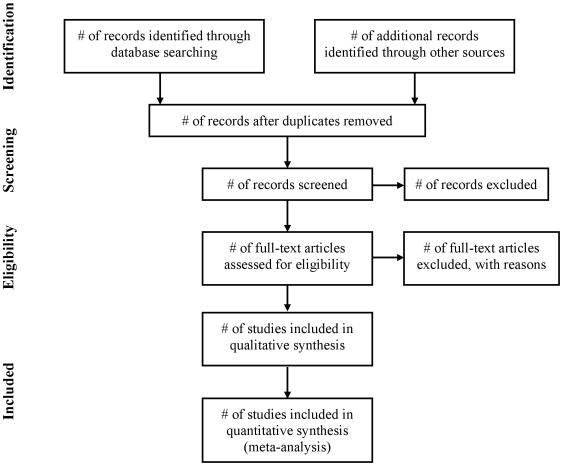
- The final guidance is a 27-item checklist plus a four-phase flow diagram for reporting systematic reviews and meta-analyses.
- The paper notes that systematic review reporting was often poor: for example, a survey found 50% of 300 authors did not mention “systematic review” or “meta-analysis” in the title or abstract, and in another survey, funding sources were not reported in 41% of reviews.
- It cites evidence that reporting deficiencies matter: in one review of antidepressant trials, meta-analysis of only published trials gave effect estimates 32% larger on average than analyses using all trials sent to the drug agency.
Methods
- This is a guideline/explanatory paper, not an original intervention or observational study.
- The authors describe the development process of PRISMA: consensus-based work by a multidisciplinary group, informed by evidence where possible, resulting in the checklist and flow diagram.
- The paper does not report a new study sample or a statistical analysis of original data; instead, it uses examples and prior literature to justify each reporting item.
Limitations
- The paper explicitly states that no systematic literature search was carried out to identify exemplars and evidence for the explanatory document.
- It also notes a general limitation of the guideline itself: PRISMA is aimed at reporting, not at directly addressing the conduct of systematic reviews.
- Evidence is uneven across checklist items; the text makes evident that for some recommendations, supporting evidence is limited or absent, and some items rely on expert judgment rather than direct data.
Model-written summary. Check it against the paper before relying on it.
Integrity signals
Registry
Cites
Statistics
Figures
Verification
Claims the paper makes
19 Valid · 2 Not valid · 72 Not checked · 60 Own results and interpretations
The sources with a verdict support this claim; the rest weren’t checked yet, have no full text we could read, or their verdicts aren’t rated yet.
In the paper
“Bias from selective outcome reporting in randomized trials has been well documented [42],[43].”
§ The PRISMA Statement for Reporting Systematic Reviews and Meta-Analyses of Studies That Evaluate Health Care Interventions: Explanation and Elaboration > The PRISMA Checklist > METHODS
What the sources say
- Not checked yetcites [42] AW Chan, 2004, Empirical evidence for selective reporting of outcomes in randomized trials: Comparison of protocols to published articles., JAMA source
- Supportedcites [43] K Dwan, 2008, Systematic review of the empirical evidence of study publication bias and outcome reporting bias., PLoS ONE source
The Introduction describes direct empirical evidence of outcome reporting bias in randomized controlled trials. The Methodology/Principal Findings section reports that significant outcomes were more likely to be fully reported and that 40–62% of studies had at least one primary outcome changed, introduced, or omitted compared with the protocol. This supports the broad statement that selective outcome-reporting bias in randomized trials is well documented. (LLM, conf=0.94)
boosted- Asserted: passes — The authors put it forward as true.
- Checkable: passes — It can be checked against evidence.
- Load-bearing: unclear — It is unclear whether the paper’s conclusions depend on it.
- Based: passes — The paper gives a reason why it holds.
The cited sources support only part of this claim — read each source’s verdict below.
In the paper
“However, despite advances, the quality of the conduct and reporting of systematic reviews remains well short of ideal [3],[4],[5],[6].”
§ The PRISMA Statement for Reporting Systematic Reviews and Meta-Analyses of Studies That Evaluate Health Care Interventions: Explanation and Elaboration > The QUOROM Statement and Its Evolution into PRISMA
What the sources say
- Partly supportedcites [3] D Moher, 2007, Epidemiology and reporting characteristics of systematic reviews., PLoS Med sourceExperimental — accuracy not yet measured
The Conclusions say the quality of systematic-review reporting is inconsistent, and the Introduction describes reporting as less than optimal. The Discussion cautions that reviews may have been conducted more completely than their reports indicate, so this paper does not establish that the quality of their conduct remains well short of ideal. No page numbers are available in our copy. (LLM, conf=0.88)
- Partly supportedcites [4] E Dixon, 2005, Evaluating meta-analyses in the general surgical literature: A critical appraisal., Ann Surg sourceExperimental — accuracy not yet measured
The Abstract and Discussion report low overall quality, frequent methodological flaws, and weaknesses in reporting search strategies. But the appraisal covers meta-analyses on general surgical topics, so it does not establish the claim for systematic reviews generally. (LLM, conf=0.85)
- Not checked yetcites [5] ME Hemels, 2004, Quality assessment of meta-analyses of RCTs of pharmacotherapy in major depressive disorder., Curr Med Res Opin source
boosted- Asserted: passes — The authors put it forward as true.
- Checkable: passes — It can be checked against evidence.
- Load-bearing: passes — The paper’s conclusions depend on it.
- Based: passes — The paper gives a reason why it holds.
- Partly supported
The cited sources support only part of this claim — read each source’s verdict below.
In the paper
“A recent survey found that 50% of 300 authors did not mention the terms “systematic review” or “meta-analysis” in the title or abstract of their systematic review [3].”
§ The PRISMA Statement for Reporting Systematic Reviews and Meta-Analyses of Studies That Evaluate Health Care Interventions: Explanation and Elaboration > The PRISMA Checklist > TITLE and ABSTRACT
What the sources say
- Partly supportedcites [3] D Moher, 2007, Epidemiology and reporting characteristics of systematic reviews., PLoS Med sourceExperimental — accuracy not yet measured
The Abstract (Methods and Findings) and Results (Reporting Characteristics Related to Potential for Bias) state that 150 of 300 systematic reviews (50%) used neither term in the title or abstract. The claim correctly conveys the percentage but calls the 300 units authors; the paper counted reviews, not authors. (LLM, conf=0.88)
plain- Asserted: passes — The authors put it forward as true.
- Checkable: passes — It can be checked against evidence.
- Load-bearing: passes — The paper’s conclusions depend on it.
- Based: passes — The paper gives a reason why it holds.
- Partly supported
Every source the paper cites for this claim was checked and supports it.
In the paper
“methods are available for estimating the desired quantities from other reported information [111].”
§ The PRISMA Statement for Reporting Systematic Reviews and Meta-Analyses of Studies That Evaluate Health Care Interventions: Explanation and Elaboration > The PRISMA Checklist > METHODS
What the sources say
- Supportedcites [111] JF Tierney, 2007, Practical methods for incorporating summary time-to-event data into meta-analysis., Trials source
The Abstract (Background) states that in the absence of IPD 'methods are available to obtain HRs and/or associated statistics by carefully manipulating published or other summary data', directly supporting the claim. The Background section ('Basic requirements for a meta-analysis based on hazard ratios') adds that where the lnHR and its variance are not reported, 'it is necessary to estimate the O-E and V or the lnHR and V* for each trial', and Appendix 1 sets out the previously published formulae for doing so from reported summary statistics (HR, CI, p-value, events). (LLM, conf=0.90)
plain- Asserted: passes — The authors put it forward as true.
- Checkable: passes — It can be checked against evidence.
- Load-bearing: unclear — It is unclear whether the paper’s conclusions depend on it.
- Based: passes — The paper gives a reason why it holds.
- Supported
The cited sources support only part of this claim — read each source’s verdict below.
In the paper
“Inclusion or not of non-English language literature [51],[52],[53],[54],[55], unpublished data, or older data can influence the effect estimates in meta-analyses [56],[57],[58],[59].”
§ The PRISMA Statement for Reporting Systematic Reviews and Meta-Analyses of Studies That Evaluate Health Care Interventions: Explanation and Elaboration > The PRISMA Checklist > METHODS
What the sources say
- Not checked yetcites [51] M Egger, 1997, Language bias in randomised controlled trials published in English and German., Lancet source
- Partly supportedcites [56] S Hopewell, 2007, Grey literature in meta-analyses of randomized trials of health care interventions., Cochrane Database Syst Rev sourceExperimental — accuracy not yet measured
Our copy strongly supports the unpublished-data half of the claim: the Results ('Effect of methods', Table 6) report that all five included studies found published trials showed a greater treatment effect than grey trials, with a pooled ratio of odds ratios 1.09 (95% CI 1.03–1.16) and Burdett 2003's hazard ratios 1.08 vs 1.04, and the Discussion concludes that 'excluding grey trials from a systematic review and or meta-analysis may artificially inflate its results and conclusions.' What our copy does not support is the other two levers attributed here: the language section (Results, Table 3) only descriptively reports that the majority of trials in three of five studies were in English and that 'no language restrictions appear to have been imposed', with no comparison of effect estimates by language; and although year of publication of the trials was among the extracted data (Abstract, Data collection and analysis), no passage in our copy reports that older versus newer trials changed pooled estimates (searched: 'year of publication', 'older trials', 'language restrictions', 'non-English'). (LLM, conf=0.78)
- Could not verifycites [59] PC Gotzsche, 2006, Believability of relative risks and odds ratios in abstracts: Cross sectional study., BMJ sourceExperimental — accuracy not yet measured
Our copy of Gøtzsche (2006) concerns the distribution of P values and relative risks/odds ratios in the abstracts of 260 randomised trials, 130 cohort and 130 case-control studies (Methods; Results), and its Discussion addresses selective outcome reporting, multiple testing, subgroup analyses and blinding — not meta-analytic inclusion criteria. Searches for 'non-English language studies meta-analysis bias', 'unpublished data meta-analysis effect estimates', 'meta-analysis systematic review pooling studies language bias publication bias' and 'non-English articles excluded search restrictions' returned no passage stating that inclusion or exclusion of non-English literature, unpublished data or older data influences effect estimates in meta-analyses; indeed Table 1 shows pooled results from several studies were excluded from the analysis. The copy is not truncated, so the point is simply absent rather than contradicted. (LLM, conf=0.72)
plainstates a possible cause- Asserted: passes — The authors put it forward as true.
- Checkable: passes — It can be checked against evidence.
- Load-bearing: passes — The paper’s conclusions depend on it.
- Based: passes — The paper gives a reason why it holds.
55 more claims · 11 with their cited sources checked
Create a free account to see all 153 claims and to verify the 116 references still open.
- Probably not a substantial claim. 72
- It may state two separate claims as one. 33
Claims other papers make about this one
Each is checked against this paper’s own text: does it say what the citing paper says it does?
The source backs part of the claim, not all of it — or backs it for a different population, condition or comparison.
In the citing paper
“If the authors felt as though a non-English study should be included in the review, it was instructed that the paper be appropriately translated to minimize the risk of missing important data during the development of recommendations.4”
From International Consensus Statement on Allergy and Rhinology: Allergic Rhinitis (2018) · cites this paper as [4]
Experimental — accuracy not yet measuredThe source backs part of the claim, not all of it — or backs it for a different population, condition or comparison.
In the citing paper
“The most commonly used reporting guidance for systematic reviews, which covers the literature search component, is the Preferred Reporting Items for Systematic reviews and Meta-Analyses Statement, or PRISMA Statement [9].”
From PRISMA-S: an extension to the PRISMA Statement for Reporting Literature Searches in Systematic Reviews (2021) · cites this paper as [9]
Experimental — accuracy not yet measuredThe source backs part of the claim, not all of it — or backs it for a different population, condition or comparison.
In the citing paper
“Without being able to assess the quality of the search strategies used, readers are unable to assess the quality of the systematic review [9, 11, 17].”
From PRISMA-S: an extension to the PRISMA Statement for Reporting Literature Searches in Systematic Reviews (2021) · cites this paper as [9]
Experimental — accuracy not yet measuredThe source backs part of the claim, not all of it — or backs it for a different population, condition or comparison.
In the citing paper
“For this paper, we draw on the PRISMA methodological approach by Liberati et al. [25], since it contains a complete and independently validated framework for the article selection process and a thorough checklist for the contents and structure of the survey paper itself, thus ensuring the quality of the process and the outputs of the survey.”
From A Review of Design and Evaluation Practices in Mobile Text Entry for Visually Impaired and Blind Persons (2023) · cites this paper as [25]
Experimental — accuracy not yet measuredThe source backs part of the claim, not all of it — or backs it for a different population, condition or comparison.
In the citing paper
“Many groups have called for the widespread preparation and registration of systematic review protocols in order to increase the availability and accessibility of a priori methods for systematic reviews [12–14].”
From Preferred reporting items for systematic review and meta-analysis protocols (PRISMA-P) 2015 statement (2015) · cites this paper as [12]
Experimental — accuracy not yet measured
46 more claims about this paper
Create a free account to see every claim other papers make about this one.
Citations
Cites
Preferred Reporting Items for Systematic Reviews and Meta-Analyses: the PRISMA statement
Moher, D., Liberati, A., Tetzlaff, J., Altman, D. G., & for the PRISMA Group (2009) · BMJ · doi:10.1136/bmj.b2535 · Cited by 83,823
Self-citationPreferred Reporting Items for Systematic Reviews and Meta-Analyses: The PRISMA Statement
Moher, D., Liberati, A., Tetzlaff, J., Altman, D. G., & The PRISMA Group (2009) · PLoS Medicine · doi:10.1371/journal.pmed.1000097 · Cited by 64,042
Self-citationMeasuring inconsistency in meta-analyses
Higgins, J. P. T., Thompson, S. G., Deeks, J. J., & Altman, D. G. (2003) · BMJ · doi:10.1136/bmj.327.7414.557 · Cited by 63,139 · cited 3×
“I represents the percentage of the total variation in estimated effects across studies that is due to heterogeneity rather than to chance; some authors consider an I value less than 25% as low [202].”
BackgroundMethodInfluentialSelf-citationBias in meta-analysis detected by a simple, graphical test
Egger, M., Smith, G. D., Schneider, M., & Minder, C. (1997) · BMJ · doi:10.1136/bmj.315.7109.629 · Cited by 56,722 · cited 1×
“Strictly speaking, such analyses investigate ‘‘small study bias’’; there may be many reasons why smaller studies have systematically different effect sizes than larger studies, of which reporting bias is just one [218].”
BackgroundPreferred reporting items for systematic reviews and meta-analyses: the PRISMA Statement.
(2009) · PubMed Central · Cited by 44,859
Meta-analysis in clinical trials
DerSimonian, R., & Laird, N. (1986) · Controlled Clinical Trials · doi:10.1016/0197-2456(86)90046-2 · Cited by 39,552 · cited 1×
“In a random-effects model it is believed that the included studies represent a random sample from a larger population of studies addressing the question of interest [198].”
BackgroundQuantifying heterogeneity in a meta‐analysis
Higgins, J. P. T., & Thompson, S. G. (2002) · Statistics in Medicine · doi:10.1002/sim.1186 · Cited by 36,763 · cited 1×
“By contrast, the I2 statistic quantifies the amount of variation in results across studies beyond that expected by chance and so is preferable to Q (202, 203).”
BackgroundGRADE: an emerging consensus on rating quality of evidence and strength of recommendations
Guyatt, G. H., Oxman, A. D., Vist, G. E., Kunz, R., Falck-Ytter, Y., Alonso-Coello, P., & Schünemann, H. J. (2008) · BMJ · doi:10.1136/bmj.39489.470347.ad · Cited by 23,305 · cited 1×
“Second, there have been many conceptual advances, such as “outcome-level” assessments of the risk of bias (10, 11), that apply to systematic reviews.”
Backgroundvon Elm, E., Altman, D. G., Egger, M., Pocock, S. J., Gøtzsche, P. C., Vandenbroucke, J. P., & Initiative, F. T. S. (2007) · PLoS Medicine · doi:10.1371/journal.pmed.0040296 · Cited by 23,020
Self-citationWang, G., Ma, R., Qiao, G., Wada, K., Aizawa, Y., & Satoh, T. (2015) · Integrative Medicine International · doi:10.1159/000368408 · Cited by 18,657
Research works printed but not linked: 4
- S Green, 2008, Chapter 1: What is a systematic review? In: Higgins JPT, Green S, editors. Cochrane handbook for systematic reviews of interventions version 5.0.0 [updated February 2008]. The Cochrane Collaboration.
- G Brunton, 2008, Chapter 2: Preparing a Cochrane review.
- K Bergerhoff, 2004, Do we need to consider ‘in process citations’ for search strategies? 12th Cochrane Colloquium; 2–6 October 2004; Ottawa, Ontario, Canada.
- M McDonagh, 2000, A systematic review of public water fluoridation. Protocol changes (Appendix M). NHS Centre for Reviews and Dissemination
Cited by
Items 1,201–1,300 of 2,910
Reducing social isolation and loneliness in older people: a systematic review protocol
Landeiro, F., Barrows, P., Nuttall Musson, E., Gray, A. M., & Leal, J. (2017) · BMJ Open · doi:10.1136/bmjopen-2016-013778 · Cited by 222
Trocar site hernia after laparoscopic surgery: a qualitative systematic review
Helgstrand, F., Rosenberg, J., & Bisgaard, T. (2011) · Hernia · doi:10.1007/s10029-010-0757-x · Cited by 222
Freeman, A. M., Petrilli, K., Lees, R., Hindocha, C., Mokrysz, C., Curran, H. V., Saunders, R., & Freeman, T. P. (2019) · Neuroscience & Biobehavioral Reviews · doi:10.1016/j.neubiorev.2019.09.036 · Cited by 222
“This review was conducted according to Preferred Reporting Items for Systematic reviews and Meta-Analyses (PRISMA) guidelines (Liberati et al., 2009) and a checklist is provided in Appendix A.”
MethodEffects of uric acid-lowering therapy on renal outcomes: a systematic review and meta-analysis
Bose, B., Badve, S. V., Hiremath, S. S., Boudville, N., Brown, F. G., Cass, A., de Zoysa, J. R., Fassett, R. G., Faull, R., Harris, D. C., et al. (2014) · Nephrology Dialysis Transplantation · doi:10.1093/ndt/gft378 · Cited by 222
“This systematic review was conducted in accordance with the PRISMA (Preferred Reporting Items for Systematic Reviews and Meta-Analyses) statement [19].”
MethodZhai, Y.-K., Zhu, W.-J., Cai, Y.-L., Sun, D.-X., & Zhao, J. (2014) · Medicine · doi:10.1097/md.0000000000000312 · Cited by 221
Survivorship care plans in cancer: a systematic review of care plan outcomes
Brennan, M. E., Gormally, J. F., Butow, P., Boyle, F. M., & Spillane, A. J. (2014) · British Journal of Cancer · doi:10.1038/bjc.2014.505 · Cited by 221
“The screening process is summarised in Figure 1 (PRISMA flowchart) (Liberati et al, 2009).”
MethodZijlmans, M. A. C., Riksen-Walraven, J. M., & de Weerth, C. (2015) · Neuroscience & Biobehavioral Reviews · doi:10.1016/j.neubiorev.2015.02.015 · Cited by 221
Reboussin, D. M., Allen, N. B., Griswold, M. E., Guallar, E., Hong, Y., Lackland, D. T., Miller, E. (. R., Polonsky, T., Thompson-Paul, A. M., & Vupputuri, S. (2018) · Journal of the American College of Cardiology · doi:10.1016/j.jacc.2017.11.004 · Cited by 221
“This systematic review adhered to the Preferred Reporting Items for Systematic Reviews and Meta-Analyses statement and to recommendations of the “ACCF/AHA Clinical Practice Guideline Methodology Summit Report” (5, 30).”
MethodPrevalence of and risk factors for dysphagia in the community dwelling elderly: A systematic review
Madhavan, A., Lagorio, L. A., Crary, M. A., Dahl, W. J., & Carnaby, G. D. (2016) · The Journal of nutrition, health and aging · doi:10.1007/s12603-016-0712-3 · Cited by 221
Schwingshackl, L., Lampousi, A.-M., Portillo, M. P., Romaguera, D., Hoffmann, G., & Boeing, H. (2017) · Nutrition & Diabetes · doi:10.1038/nutd.2017.12 · Cited by 221
International consensus statement on allergy and rhinology: allergic rhinitis—executive summary
Wise, S. K., Lin, S. Y., & Toskala, E. (2018) · International Forum of Allergy & Rhinology · doi:10.1002/alr.22070 · Cited by 221
Meron, D., Hedger, N., Garner, M., & Baldwin, D. S. (2015) · Neuroscience & Biobehavioral Reviews · doi:10.1016/j.neubiorev.2015.07.012 · Cited by 220
Gould, J. F., Smithers, L. G., & Makrides, M. (2013) · The American Journal of Clinical Nutrition · doi:10.3945/ajcn.112.045781 · Cited by 220
A Systematic Evaluation of Prevalence and Diagnostic Accuracy of Sacroiliac Joint Interventions
Simopoulos, T. T. (2012) · Pain Physician · doi:10.36076/ppj.2012/15/e305 · Cited by 220
Meta-analysis of the association between preterm delivery and intelligence
Kerr-Wilson, C. O., Mackay, D. F., Smith, G. C. S., & Pell, J. P. (2012) · Journal of Public Health · doi:10.1093/pubmed/fdr024 · Cited by 220
Datta, N. R., Puric, E., Klingbiel, D., Gomez, S., & Bodis, S. (2016) · International Journal of Radiation Oncology*Biology*Physics · doi:10.1016/j.ijrobp.2015.12.361 · Cited by 220
The use of mesenchymal stem cells for cartilage repair and regeneration: a systematic review
Goldberg, A., Mitchell, K., Soans, J., Kim, L., & Zaidi, R. (2017) · Journal of Orthopaedic Surgery and Research · doi:10.1186/s13018-017-0534-y · Cited by 220
Clinical efficacy and effectiveness of 3D printing: a systematic review
Diment, L. E., Thompson, M. S., & Bergmann, J. H. M. (2017) · BMJ Open · doi:10.1136/bmjopen-2017-016891 · Cited by 220
“17 A literature search was performed using PubMed, Web of Science, OVID, IEEE Xplore and Google Scholar.”
MethodMurawski, B., Wade, L., Plotnikoff, R. C., Lubans, D. R., & Duncan, M. J. (2018) · Sleep Medicine Reviews · doi:10.1016/j.smrv.2017.12.003 · Cited by 220
“The conduct and reporting of this review was guided by PRISMA guidelines [32] and prospectively registered (PROSPERO: CRD42015029642).”
MethodAbd ElHafeez, S., Bolignano, D., D’Arrigo, G., Dounousi, E., Tripepi, G., & Zoccali, C. (2018) · BMJ Open · doi:10.1136/bmjopen-2016-015069 · Cited by 220
“MAterIAls AnD MethODs Data source and search strategy We followed the Preferred Reporting Items for Systematic Reviews and Meta-Analyses guidelines.(11) A systematic literature search was performed in the PubMed and Ovid Medline databases by two authors (DB and SA) to identify articles reporting epidemiology data on C…”
MethodWatt, J., Tricco, A. C., Talbot-Hamon, C., Pham, B., Rios, P., Grudniewicz, A., Wong, C., Sinclair, D., & Straus, S. E. (2018) · BMC Medicine · doi:10.1186/s12916-017-0986-2 · Cited by 220
“Methods This study was reported in accordance with both the PRISMA statement for reporting systematic reviews and meta-analyses and the MOOSE statement for reporting meta-analysis of observation studies in epidemiology (Additional file 1) [10, 11].”
MethodHsiang, W. R., Lukasiewicz, A., Gentry, M., Kim, C.-Y., Leslie, M. P., Pelker, R., Forman, H. P., & Wiznia, D. H. (2019) · INQUIRY: The Journal of Health Care Organization, Provision, and Financing · doi:10.1177/0046958019838118 · Cited by 220
Umemneku Chikere, C. M., Wilson, K., Graziadio, S., Vale, L., & Allen, A. J. (2019) · PLOS ONE · doi:10.1371/journal.pone.0223832 · Cited by 220
The Association Between the Gut Microbiota and Parkinson’s Disease, a Meta-Analysis
Shen, T., Yue, Y., He, T., Huang, C., Qu, B., Lv, W., & Lai, H.-Y. (2021) · Frontiers in Aging Neuroscience · doi:10.3389/fnagi.2021.636545 · Cited by 219
“, 2000), and also referenced the Preferred Reporting Items for Systematic Reviews and Meta-analyses (PRISMA) statement (Liberati et al., 2009).”
Empirically Supported Treatment: Recommendations for a New Model
Tolin, D. F., McKay, D., Forman, E. M., Klonsky, E. D., & Thombs, B. D. (2015) · Clinical Psychology: Science and Practice · doi:10.1111/cpsp.12122 · Cited by 219
Selected eating behaviours and excess body weight: a systematic review
Mesas, A. E., Muñoz‐Pareja, M., López‐García, E., & Rodríguez‐Artalejo, F. (2012) · Obesity Reviews · doi:10.1111/j.1467-789x.2011.00936.x · Cited by 219
van Mastrigt, G. A. P. G., Hiligsmann, M., Arts, J. J. C., Broos, P. H., Kleijnen, J., Evers, S. M. A. A., & Majoie, M. H. J. M. (2016) · Expert Review of Pharmacoeconomics & Outcomes Research · doi:10.1080/14737167.2016.1246960 · Cited by 219
“In the discussion section of both multipurpose SR-EEs and SREEs for guideline development, it is recommended that the following general topics [16,29,38] be addressed: summary of evidence, heterogeneity, study strengths and limitations, time frame for updating the review, general conclusions, source of funding, confli…”
ResultSelf-citationThe co-occurrence of epilepsy and autism: A systematic review
Lukmanji, S., Manji, S. A., Kadhim, S., Sauro, K. M., Wirrell, E. C., Kwon, C.-S., & Jetté, N. (2019) · Epilepsy & Behavior · doi:10.1016/j.yebeh.2019.07.037 · Cited by 219
The Effects of Curcumin on Diabetes Mellitus: A Systematic Review
Marton, L. T., Pescinini-e-Salzedas, L. M., Camargo, M. E. C., Barbalho, S. M., Haber, J. F. D. S., Sinatora, R. V., Detregiachi, C. R. P., Girio, R. J. S., Buchaim, D. V., & Cincotto dos Santos Bueno, P. (2021) · Frontiers in Endocrinology · doi:10.3389/fendo.2021.669448 · Cited by 219
Meyer, S., Karttunen, A. H., Thijs, V., Feys, H., & Verheyden, G. (2014) · Physical Therapy · doi:10.2522/ptj.20130271 · Cited by 219
Sander, L., Rausch, L., & Baumeister, H. (2016) · JMIR Mental Health · doi:10.2196/mental.6061 · Cited by 218
Teaching history taking to medical students: a systematic review
Keifenheim, K. E., Teufel, M., Ip, J., Speiser, N., Leehr, E. J., Zipfel, S., & Herrmann-Werner, A. (2015) · BMC Medical Education · doi:10.1186/s12909-015-0443-x · Cited by 218
“This review process was conducted according to the PRISMA statement [35, 36].”
MethodGeorgiou, M., Morison, G., Smith, N., Tieges, Z., & Chastin, S. (2021) · International Journal of Environmental Research and Public Health · doi:10.3390/ijerph18052486 · Cited by 218
“composition of systematic reviews in research guidelines [20,21].”
BackgroundGranger, C. L., McDonald, C. F., Berney, S., Chao, C., & Denehy, L. (2011) · Lung Cancer · doi:10.1016/j.lungcan.2011.01.006 · Cited by 218
Suicide during Perinatal Period: Epidemiology, Risk Factors, and Clinical Correlates
Orsolini, L., Valchera, A., Vecchiotti, R., Tomasetti, C., Iasevoli, F., Fornaro, M., De Berardis, D., Perna, G., Pompili, M., & Bellantuono, C. (2016) · Frontiers in Psychiatry · doi:10.3389/fpsyt.2016.00138 · Cited by 218
Islam, M. M., Iqbal, U., Walther, B., Atique, S., Dubey, N. K., Nguyen, P.-A., Poly, T. N., Masud, J. H. B., Li, Y.-C. (., & Shabbir, S.-A. (2016) · Neuroepidemiology · doi:10.1159/000454881 · Cited by 218
Arezzo, A., Passera, R., Lo Secco, G., Verra, M., Bonino, M. A., Targarona, E., & Morino, M. (2017) · Gastrointestinal Endoscopy · doi:10.1016/j.gie.2017.03.1542 · Cited by 218
“Ghazal et al, 2013(20) 60 SBTS 30 12/18 52 (37-68) – – – 18 (6-40)”
BackgroundMethodMcHugh, C. M., Chun Lee, R. S., Hermens, D. F., Corderoy, A., Large, M., & Hickie, I. B. (2019) · Journal of Psychiatric Research · doi:10.1016/j.jpsychires.2019.05.012 · Cited by 218
A systematic review and meta-analysis of bone loss in space travelers
Stavnichuk, M., Mikolajewicz, N., Corlett, T., Morris, M., & Komarova, S. V. (2020) · npj Microgravity · doi:10.1038/s41526-020-0103-2 · Cited by 217
Gualano, M. R., Gili, R., Scaioli, G., Bert, F., & Siliquini, R. (2015) · Pharmacoepidemiology and Drug Safety · doi:10.1002/pds.3716 · Cited by 217
Botulinum toxin type A therapy for cervical dystonia
Castelão, M., Marques, R. E., Duarte, G. S., Rodrigues, F. B., Ferreira, J., Sampaio, C., Moore, A. P., & Costa, J. (2017) · Cochrane Database of Systematic Reviews · doi:10.1002/14651858.cd003633.pub3 · Cited by 217
Colquitt, J. L., Loveman, E., O'Malley, C., Azevedo, L. B., Mead, E., Al-Khudairy, L., Ells, L. J., Metzendorf, M.-I., & Rees, K. (2016) · Cochrane Database of Systematic Reviews · doi:10.1002/14651858.cd012105 · Cited by 217
Effect of Smoking on Outcomes of Urothelial Carcinoma: A Systematic Review of the Literature
Crivelli, J. J., Xylinas, E., Kluth, L. A., Rieken, M., Rink, M., & Shariat, S. F. (2014) · European Urology · doi:10.1016/j.eururo.2013.06.010 · Cited by 217
“We defined study eligibility using the patient population, intervention/exposure, comparator, outcome, and study design (PICOS) approach [19].”
MethodDiNicolantonio, J. J., Lavie, C. J., Fares, H., Menezes, A. R., & O'Keefe, J. H. (2013) · Mayo Clinic Proceedings · doi:10.1016/j.mayocp.2013.02.007 · Cited by 217
Jordans, M. J. D., Pigott, H., & Tol, W. A. (2016) · Current Psychiatry Reports · doi:10.1007/s11920-015-0648-z · Cited by 216
Gilbert-Ouimet, M., Trudel, X., Brisson, C., Milot, A., & Vézina, M. (2014) · Scandinavian Journal of Work, Environment & Health · doi:10.5271/sjweh.3390 · Cited by 216
“It gathered and summarized empirical evidence through an explicit, systematic, and objective research strategy known for minimizing bias (36).”
BackgroundMethodFasugba, O., Gardner, A., Mitchell, B. G., & Mnatzaganian, G. (2015) · BMC Infectious Diseases · doi:10.1186/s12879-015-1282-4 · Cited by 216
“The PRISMA flow chart describing the papers identified from the search strategy and reasons for exclusion is shown in Fig.”
MethodInfluentialEvidence-based management of pain after laparoscopic cholecystectomy: a PROSPECT review update
Barazanchi, A. W. H., MacFater, W. S., Rahiri, J.-L., Tutone, S., Hill, A. G., Joshi, G. P., Kehlet, H., Schug, S., Van de Velde, M., Vercauteren, M., et al. (2018) · British Journal of Anaesthesia · doi:10.1016/j.bja.2018.06.023 · Cited by 216
Vitamin D and dental caries in controlled clinical trials: systematic review and meta-analysis
Hujoel, P. P. (2013) · Nutrition Reviews · doi:10.1111/j.1753-4887.2012.00544.x · Cited by 216
Telemedicine Application in the Care of Diabetes Patients: Systematic Review and Meta-Analysis
Marcolino, M. S., Maia, J. X., Alkmim, M. B. M., Boersma, E., & Ribeiro, A. L. (2013) · PLoS ONE · doi:10.1371/journal.pone.0079246 · Cited by 215
“Study quality assessment included adequate sequence generation, allocation concealment, blinding of outcomes assessors, use of intention-to-treat analysis, and description of losses and exclusions [13].”
MethodBrief Mindfulness Practices for Healthcare Providers - A Systematic Literature Review.
Gilmartin, H., Goyal, A., Hamati, M. C., Mann, J., Saint, S., & Chopra, V. (2017) · The American Journal of Medicine · doi:10.1016/j.amjmed.2017.05.041 · Cited by 211
Johnson, S. A., Stevens, S. M., Woller, S. C., Lake, E., Donadini, M., Cheng, J., Labarère, J., & Douketis, J. D. (2010) · JAMA · doi:10.1001/jama.2010.43 · Cited by 215
Cirocchi, R., Farinella, E., Trastulli, S., Desiderio, J., Listorti, C., Boselli, C., Parisi, A., Noya, G., & Sagar, J. (2013) · Surgical Oncology · doi:10.1016/j.suronc.2012.10.003 · Cited by 215
Systemic Therapy for Non–clear Cell Renal Cell Carcinomas: A Systematic Review and Meta-analysis
Vera-Badillo, F. E., Templeton, A. J., Duran, I., Ocana, A., de Gouveia, P., Aneja, P., Knox, J. J., Tannock, I. F., Escudier, B., & Amir, E. (2015) · European Urology · doi:10.1016/j.eururo.2014.05.010 · Cited by 215
“This analysis was conducted according to the Preferred Reporting Items for Systematic Reviews and Meta-analysis guidelines [22].”
MethodBabitt, J. L., Eisenga, M. F., Haase, V. H., Kshirsagar, A. V., Levin, A., Locatelli, F., Małyszko, J., Swinkels, D. W., Tarng, D.-C., Cheung, M., et al. (2021) · Kidney International · doi:10.1016/j.kint.2021.03.020 · Cited by 215
“147 156 In addition, ef fi cacious treatment with HIF-PHIs was associated with much lower increases in plasma EPO levels compared with traditional ESAs administered i.v. 151,157 Achievement of lower plasma EPO levels may be of clinical bene fi t as high ESA doses in CKD patients have been associated…”
BackgroundPalmerini, T., Biondi-Zoccai, G., Della Riva, D., Mariani, A., Sabaté, M., Valgimigli, M., Frati, G., Kedhi, E., Smits, P. C., Kaiser, C., et al. (2013) · Journal of the American College of Cardiology · doi:10.1016/j.jacc.2013.05.022 · Cited by 215
Targeting the JAK/STAT Signaling Pathway Using Phytocompounds for Cancer Prevention and Therapy
Bose, S., Banerjee, S., Mondal, A., Chakraborty, U., Pumarol, J., Croley, C. R., & Bishayee, A. (2020) · Cells · doi:10.3390/cells9061451 · Cited by 214
“We have followed the preferred reporting items for systematic reviews and meta-analysis (PRISMA) guidelines to perform literature searches [32].”
MethodRupel, K., Ottaviani, G., Gobbo, M., Contardo, L., Tirelli, G., Vescovi, P., Di Lenarda, R., & Biasotto, M. (2014) · Oral Oncology · doi:10.1016/j.oraloncology.2014.08.016 · Cited by 214
“A systematic review of the evidence available in the literature was performed following PRISMA statement [10] to answer the following clinical question: ‘‘Which therapeutical approaches for BRONJ are more effective overall and basing on the disease stage?’’.”
MethodInfluentialMerriel, S. W. D., Pocock, L., Gilbert, E., Creavin, S., Walter, F. M., Spencer, A., & Hamilton, W. (2022) · BMC Medicine · doi:10.1186/s12916-021-02230-y · Cited by 214
“This systematic review was conducted following the PRISMA reporting guidelines for systematic reviews and meta-analyses [13].”
MethodOdone, A., Ferrari, A., Spagnoli, F., Visciarelli, S., Shefer, A., Pasquarella, C., & Signorelli, C. (2015) · Human Vaccines & Immunotherapeutics · doi:10.4161/hv.34313 · Cited by 214
Subthreshold depression in children and adolescents – a systematic review
Wesselhoeft, R., Sørensen, M. J., Heiervang, E. R., & Bilenberg, N. (2013) · Journal of Affective Disorders · doi:10.1016/j.jad.2013.06.010 · Cited by 214
Changes in pain sensitivity following spinal manipulation: A systematic review and meta-analysis
Coronado, R. A., Gay, C. W., Bialosky, J. E., Carnaby, G. D., Bishop, M. D., & George, S. Z. (2012) · Journal of Electromyography and Kinesiology · doi:10.1016/j.jelekin.2011.12.013 · Cited by 214
“This review was conducted in accordance with guidelines from Preferred Reporting Items for Systematic reviews and Meta-Analysis (PRISMA) and the Cochrane Back Review Group (Furlan et al., 2009; Liberati et al., 2009).”
MethodBrain Gains: a literature review of medical missions to low and middle-income countries
Martiniuk, A. L., Manouchehrian, M., Negin, J. A., & Zwi, A. B. (2012) · BMC Health Services Research · doi:10.1186/1472-6963-12-134 · Cited by 214
Müller, A. M., Alley, S., Schoeppe, S., & Vandelanotte, C. (2016) · International Journal of Behavioral Nutrition and Physical Activity · doi:10.1186/s12966-016-0434-2 · Cited by 213
“This review was conducted and is reported according to the PRISMA guidelines [33] and the protocol can be retrieved from the PROSPERO database (Registration ID:”
MethodErectile dysfunction and depression: A systematic review and meta-analysis
Liu, Q., Zhang, Y., Wang, J., Li, S., Cheng, Y., Guo, J., Tang, Y., Zeng, H., & Zhu, Z. (2018) · The Journal of Sexual Medicine · doi:10.1016/j.jsxm.2018.05.016 · Cited by 215
Livesey, G., Taylor, R., Livesey, H., & Liu, S. (2013) · The American Journal of Clinical Nutrition · doi:10.3945/ajcn.112.041467 · Cited by 213
Liver transplantation: a systematic review of long‐term quality of life
Yang, L. S., Shan, L. L., Saxena, A., & Morris, D. L. (2014) · Liver International · doi:10.1111/liv.12553 · Cited by 213
“This is supported by the Cochrane guidelines on systematic reviews (28) and assessment of bias was also performed according to the PRISMA guidelines (13, 29).”
MethodHow do autoimmune diseases cluster in families? A systematic review and meta-analysis
Cárdenas-Roldán, J., Rojas-Villarraga, A., & Anaya, J.-M. (2013) · BMC Medicine · doi:10.1186/1741-7015-11-73 · Cited by 213
“Second, we recall the heterogeneity of the study [100,101].”
BackgroundDesiderio, J., Chao, J., Melstrom, L., Warner, S., Tozzi, F., Fong, Y., Parisi, A., & Woo, Y. (2017) · European Journal of Cancer · doi:10.1016/j.ejca.2017.03.030 · Cited by 213
Siribumrungwong, B., Noorit, P., Wilasrusmee, C., Attia, J., & Thakkinstian, A. (2012) · European Journal of Vascular and Endovascular Surgery · doi:10.1016/j.ejvs.2012.05.017 · Cited by 212
Systematic review and meta-analysis of school-based interventions to reduce body mass index
Lavelle, H. V., Mackay, D. F., & Pell, J. P. (2012) · Journal of Public Health · doi:10.1093/pubmed/fdr116 · Cited by 212
Vitamin D supplementation for prevention of cancer in adults
Bjelakovic, G., Gluud, L. L., Nikolova, D., Whitfield, K., Krstic, G., Wetterslev, J., & Gluud, C. (2014) · Cochrane Database of Systematic Reviews · doi:10.1002/14651858.cd007469.pub2 · Cited by 212
Nguyen, M. T., Berger, R. L., Hicks, S. C., Davila, J. A., Li, L. T., Kao, L. S., & Liang, M. K. (2014) · JAMA Surgery · doi:10.1001/jamasurg.2013.5014 · Cited by 212
Bolandzadeh, N., Davis, J. C., Tam, R., Handy, T. C., & Liu-Ambrose, T. (2012) · BMC Neurology · doi:10.1186/1471-2377-12-126 · Cited by 212
“Search strategy In accordance with the preferred reporting items for systematic reviews and meta-analysis (PRISMA) statement [19], we [NB, JCD and TLA] conducted a search of EMBASE, MEDLINE, PUBMED, and CINAHL supplemented by manual search of included articles’ reference lists.”
MethodWhite, P., Oliveira, R., Oliveira, A., Serafini, M., Araújo, A., Gelain, D., Moreira, J., Almeida, J., Quintans, J., Quintans-Junior, L., et al. (2014) · Molecules · doi:10.3390/molecules190914496 · Cited by 212
Endoscopic Ultrasound-Guided Biliary Drainage: A Systematic Review and Meta-Analysis
Khan, M. A., Akbar, A., Baron, T. H., Khan, S., Kocak, M., Alastal, Y., Hammad, T., Lee, W. M., Sofi, A., Artifon, E. L. A., et al. (2016) · Digestive Diseases and Sciences · doi:10.1007/s10620-015-3933-0 · Cited by 212
Pelleboer‐Gunnink, H. A., Van Oorsouw, W. M. W. J., Van Weeghel, J., & Embregts, P. J. C. M. (2017) · Journal of Intellectual Disability Research · doi:10.1111/jir.12353 · Cited by 212
“Search terms were based on the PICO approach specifying Population, Intervention/exposure, and Comparison and Outcome (Liberati et al. 2009) (see Table 1).”
MethodShellfish-Borne Viral Outbreaks: A Systematic Review
Bellou, M., Kokkinos, P., & Vantarakis, A. (2013) · Food and Environmental Virology · doi:10.1007/s12560-012-9097-6 · Cited by 212
Thillainadesan, J., Gnjidic, D., Green, S., & Hilmer, S. N. (2018) · Drugs & Aging · doi:10.1007/s40266-018-0536-4 · Cited by 212
“asp?ID= CRD42017060236, and was conducted in adherence with PRISMA [24].”
MethodGreen Space, Violence, and Crime: A Systematic Review
Bogar, S., & Beyer, K. M. (2016) · Trauma, Violence, & Abuse · doi:10.1177/1524838015576412 · Cited by 212
Modeling occupant behavior in buildings
Carlucci, S., De Simone, M., Firth, S. K., Kjærgaard, M. B., Markovic, R., Rahaman, M. S., Annaqeeb, M. K., Biandrate, S., Das, A., Dziedzic, J. W., et al. (2020) · Building and Environment · doi:10.1016/j.buildenv.2020.106768 · Cited by 212
Page, M. J., McKenzie, J. E., Bossuyt, P. M., Boutron, I., Hoffmann, T., Mulrow, C. D., Shamseer, L., & Moher, D. (2020) · Journal of Clinical Epidemiology · doi:10.1016/j.jclinepi.2019.11.010 · Cited by 211
“An ‘explanation and elaboration’ paper was also published concurrently in these four journals (2, 6-8), providing detailed guidance for each item along with examples of exemplary reporting found in the literature.”
BackgroundSelf-citationLuedtke, K., Allers, A., Schulte, L. H., & May, A. (2016) · Cephalalgia · doi:10.1177/0333102415597889 · Cited by 211
“Methods This literature review was conducted and reported following the guidelines published by the Cochrane Handbook and the Preferred Reporting Items for Systematic Reviews and Meta-Analyses (PRISMA) statement (13,14).”
MethodThe effect of health facility delivery on neonatal mortality: systematic review and meta-analysis
Tura, G., Fantahun, M., & Worku, A. (2013) · BMC Pregnancy and Childbirth · doi:10.1186/1471-2393-13-18 · Cited by 211
“The review was conducted in accordance with the Preferred Reporting Items for Systematic Review and Meta-Analyses (PRISMA) statement having 27 items Checklist [21].”
MethodGarcía‐Hermoso, A., Cerrillo‐Urbina, A. J., Herrera‐Valenzuela, T., Cristi‐Montero, C., Saavedra, J. M., & Martínez‐Vizcaíno, V. (2016) · Obesity Reviews · doi:10.1111/obr.12395 · Cited by 211
“The study was undertaken in accordance with the Preferred Reporting Items for Systematic Reviews and Meta-Analyses (PRISMA) statement (15).”
MethodA Guide to Understanding Meta-analysis
Israel, H., & Richter, R. R. (2011) · Journal of Orthopaedic & Sports Physical Therapy · doi:10.2519/jospt.2011.3333 · Cited by 211
Kohli-Lynch, M., Russell, N. J., Seale, A. C., Dangor, Z., Tann, C. J., Baker, C. J., Bartlett, L., Cutland, C., Gravett, M. G., Heath, P. T., et al. (2017) · Clinical Infectious Diseases · doi:10.1093/cid/cix663 · Cited by 211
Obstacles and solutions on the ladder of citizen participation: a systematic review
Ianniello, M., Iacuzzi, S., Fedele, P., & Brusati, L. (2019) · Public Management Review · doi:10.1080/14719037.2018.1438499 · Cited by 211
“This study aims to shed light on the variables at work in citizen participation through a systematic review following PRISMA guidelines (Preferred Reporting Items for Systematic Reviews and Meta-Analyses; Liberati et al. 2009; Moher et al. 2009).”
MethodInfluentialFormica, D., Sultana, J., Cutroneo, P., Lucchesi, S., Angelica, R., Crisafulli, S., Ingrasciotta, Y., Salvo, F., Spina, E., & Trifirò, G. (2018) · Expert Opinion on Drug Safety · doi:10.1080/14740338.2018.1491547 · Cited by 211
Rouleau, G., Gagnon, M.-P., Côté, J., Payne-Gagnon, J., Hudson, E., Dubois, C.-A., & Bouix-Picasso, J. (2019) · Journal of Medical Internet Research · doi:10.2196/15118 · Cited by 211
“The overall process of SR selection is illustrated with the Preferred Reporting Items for Systematic Reviews and Meta-Analyses (PRISMA) flow diagram [35] (see Figure 2).”
MethodAutopsy findings in COVID-19-related deaths: a literature review
Maiese, A., Manetti, A. C., La Russa, R., Di Paolo, M., Turillazzi, E., Frati, P., & Fineschi, V. (2021) · Forensic Science, Medicine and Pathology · doi:10.1007/s12024-020-00310-8 · Cited by 211
Larwa, J., Stoy, C., Chafetz, R. S., Boniello, M., & Franklin, C. (2021) · International Journal of Environmental Research and Public Health · doi:10.3390/ijerph18073826 · Cited by 211
“This difference may be attributed to different hip-musculature activation patterns [56] and/or differences in interpretation of incoming sensory input contributing to bodily adjustments and knee stability [18,20,57,58] between men and women.”
BackgroundOranchuk, D. J., Storey, A. G., Nelson, A. R., & Cronin, J. B. (2019) · Scandinavian Journal of Medicine & Science in Sports · doi:10.1111/sms.13375 · Cited by 210
Shikora, S. A., & Mahoney, C. B. (2015) · Obesity Surgery · doi:10.1007/s11695-015-1703-x · Cited by 210
What do family caregivers of people with dementia need? A mixed‐method systematic review
Bressan, V, Visintini, C., & Palese, A. (2020) · Health & Social Care in the Community · doi:10.1111/hsc.13048 · Cited by 210
Preventive Health Behavior Change Text Message Interventions: A Meta-analysis
Armanasco, A. A., Miller, Y. D., Fjeldsoe, B. S., & Marshall, A. L. (2017) · American Journal of Preventive Medicine · doi:10.1016/j.amepre.2016.10.042 · Cited by 210
“This review was guided by the Preferred Reporting Items for Systematic Reviews and Meta-Analyses (PRISMA) guidelines.(25) Data Sources and Searches”
MethodProsberg, M., Bendtsen, F., Vind, I., Petersen, A. M., & Gluud, L. L. (2016) · Scandinavian Journal of Gastroenterology · doi:10.1080/00365521.2016.1216587 · Cited by 210
Delwel, S., Binnekade, T. T., Perez, R. S. G. M., Hertogh, C. M. P. M., Scherder, E. J. A., & Lobbezoo, F. (2018) · Clinical Oral Investigations · doi:10.1007/s00784-017-2264-2 · Cited by 210
“For this review, the PRISMA statement [29] was followed and a protocol for the review process was developed in advance.”
MethodBuldt, A. K., Allan, J. J., Landorf, K. B., & Menz, H. B. (2018) · Gait & Posture · doi:10.1016/j.gaitpost.2018.02.026 · Cited by 210
“The protocol for this systematic review was developed using the preferred reporting of systematic reviews and meta-analysis (PRISMA) guidelines [14] (Additional file 1).”
MethodStarup-Linde, J., Eriksen, S. A., Lykkeboe, S., Handberg, A., & Vestergaard, P. (2014) · Osteoporosis International · doi:10.1007/s00198-014-2676-7 · Cited by 210
Metadata
- Authors
- Liberati, A., Altman, D. G., Tetzlaff, J., Mulrow, C., Gøtzsche, P. C., Ioannidis, J. P. A., Clarke, M., Devereaux, P. J., Kleijnen, J., & Moher, D.
- Affiliations
- University of Modena and Reggio Emilia (IT)
- University of Oxford (GB)
- Ottawa Hospital Research Institute (CA)
- Cochrane (DK)
- University of Ioannina (GR)
- Trinity College Dublin (IE)
- McMaster University (CA)
- Maastricht University (NL)
- University of Ottawa (CA)
- Corresponding author
- Liberati, Alessandro
- ORCID
- Venue
- PLoS Medicine
- Publisher
- Public Library of Science (PLoS)
- Published
- 2009-07-21
- Volume
- 6
- Issue
- 7
- Pages
- e1000100
- ISSN
- 1549-1277 (ISSN-L)
- 1549-1676
- PMC
- PMC2707010
- OpenAlex
- W3022903699
- Cited by
- 28,164
- References
- 251
- Citations by year
- 2026: 467 · 2025: 953 · 2024: 1251 · 2023: 1449 · 2022: 1655 · 2021: 3958 · 2020: 3951 · 2019: 3120 · 2018: 2345 · 2017: 2022 · 2016: 1836 · 2015: 1640 · 2014: 1289 · 2013: 981 · 2012: 653
- FWCI
- 30.22
- Type
- journal article
- Language
- en
- Open access
- gold
- doi.org
- Locations
- PLoS Medicine (publishedVersion, cc-by)
- PubMed Central (publishedVersion, cc-by)
- PubMed (publishedVersion)
- Research Portal (Queen's University Belfast) (submittedVersion, cc-by)
- RePEc: Research Papers in Economics (submittedVersion)
- Archivio Istituzionale della Ricerca (Universita Degli Studi Di Milano) (submittedVersion, other-oa)
- DOAJ (DOAJ: Directory of Open Access Journals) (submittedVersion, cc-by-sa)
- Figshare (submittedVersion, cc-by)
- Funders
- GlaxoSmithKline
- Health Services Research and Development
- Johns Hopkins University
- University of Ottawa
- University of Bern
- Ottawa Hospital Research Institute
- McMaster University
- Cancer Research UK
- National Institute for Health and Care Research
- University of Ioannina
- Johns Hopkins Bloomberg School of Public Health
- Canadian Institutes of Health Research
- Medical Research Council
- Care and Public Health Research Institute, Universiteit Maastricht
- Topics
- Social Sciences › Decision Sciences › Statistics, Probability and Uncertainty › Meta-analysis and systematic reviews
- Health Sciences › Medicine › Public Health, Environmental and Occupational Health › Clinical practice guidelines implementation
- Social Sciences › Sociology and Political Science › Delphi Technique in Research
- Keywords
- PRISMA statement, reporting guidelines, systematic reviews, meta-analysis, health interventions, reporting quality, transparency, flowcharts
- MeSH terms
- Humans, Terminology as Topic, Publishing, Quality Control, Review Literature as Topic, Meta-Analysis as Topic, Evidence-Based Medicine
About these checks
Registry, retraction, Cites and statistics results are computed, not judged, with one exception: a printed reference that no index lists is read once by a model before it counts as a citation error. Claims are extracted by a model and kept only when their quote appears verbatim in the text; each cited source is then checked, with a model’s help, for whether it says what the claim relies on. Those verdicts can be wrong — read the claim’s quote and the cited source before relying on one.
The claim verdicts this report counts are experimental: their accuracy is not yet measured.
A language model drew the claims from the paper on 2026-10-11, under version 3 of the claim definition (model deepseek-v4.1-flash, prompt extract-v3).
A second model labelled each claim on 2026-10-11 (model jev-1.13-20260917, definition revision gold-guideline-v0.2).
Cited sources are checked with a language model’s help (gpt-6-sol and qwen3.8-omni-flash).
Statistics and arithmetic are recomputed, not judged.
Confidence bands are shown only for fields calibrated on our annotated test set. None is calibrated yet, so no band is shown.
What counts as a claim ›How we measure confidence ›How we check this ›
Are you an author, or do you see a problem with this page? Request a review
Data sources
Bibliographic data: Semantic Scholar, OpenAlex, Crossref.
Contains information from the Semantic Scholar Academic Graph Datasets, made available under the ODC Attribution License (ODC-BY 1.0).
Semantic Scholar’s data is described in: Kinney, R., et al. (2023). The Semantic Scholar Open Data Platform. arXiv:2301.10140.
