

The PRISMA Statement for Reporting Systematic Reviews and Meta-Analyses of Studies That Evaluate Health Care Interventions: Explanation and Elaboration
Open accessThe DOI matches its Crossref record; 242 of the 251 references it cites were found in a registry or an index; 22 of the 138 sources its claims cite were checked for support.
Abstract
Systematic reviews and meta-analyses are essential to summarize evidence relating to efficacy and safety of health care interventions accurately and reliably. The clarity and transparency of these reports, however, is not optimal. Poor reporting of systematic reviews diminishes their value to clinicians, policy makers, and other users.Since the development of the QUOROM (QUality Of Reporting Of Meta-analysis) Statement--a reporting guideline published in 1999--there have been several conceptual, methodological, and practical advances regarding the conduct and reporting of systematic reviews and meta-analyses. Also, reviews of published systematic reviews have found that key information about these studies is often poorly reported. Realizing these issues, an international group that included experienced authors and methodologists developed PRISMA (Preferred Reporting Items for Systematic reviews and Meta-Analyses) as an evolution of the original QUOROM guideline for systematic reviews and meta-analyses of evaluations of health care interventions.The PRISMA Statement consists of a 27-item checklist and a four-phase flow diagram. The checklist includes items deemed essential for transparent reporting of a systematic review. In this Explanation and Elaboration document, we explain the meaning and rationale for each checklist item. For each item, we include an example of good reporting and, where possible, references to relevant empirical studies and methodological literature. The PRISMA Statement, this document, and the associated Web site (http://www.prisma-statement.org/) should be helpful resources to improve reporting of systematic reviews and meta-analyses.
Overview
CoChat Summary
TL;DR
The paper is an explanation-and-elaboration companion to the PRISMA Statement, aimed at improving how systematic reviews and meta-analyses are reported. It provides item-by-item guidance, examples, and rationale for transparent reporting, not a primary empirical study.
Key findings
- PRISMA was developed by a group of 29 review authors, methodologists, clinicians, medical editors, and consumers after a three-day meeting in 2005 and 11 revisions of the checklist, flow diagram, and explanatory paper.
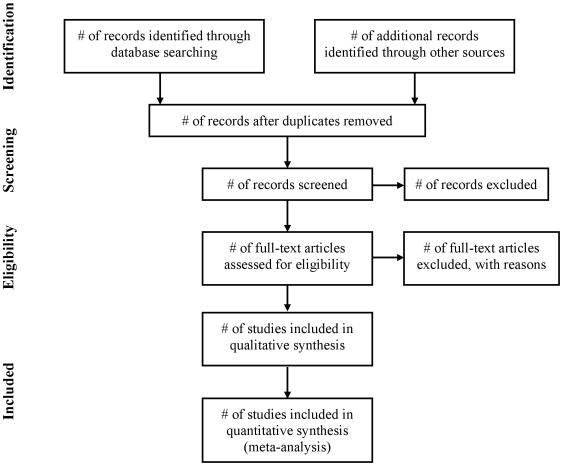
- The final guidance is a 27-item checklist plus a four-phase flow diagram for reporting systematic reviews and meta-analyses.
- The paper notes that systematic review reporting was often poor: for example, a survey found 50% of 300 authors did not mention “systematic review” or “meta-analysis” in the title or abstract, and in another survey, funding sources were not reported in 41% of reviews.
- It cites evidence that reporting deficiencies matter: in one review of antidepressant trials, meta-analysis of only published trials gave effect estimates 32% larger on average than analyses using all trials sent to the drug agency.
Methods
- This is a guideline/explanatory paper, not an original intervention or observational study.
- The authors describe the development process of PRISMA: consensus-based work by a multidisciplinary group, informed by evidence where possible, resulting in the checklist and flow diagram.
- The paper does not report a new study sample or a statistical analysis of original data; instead, it uses examples and prior literature to justify each reporting item.
Limitations
- The paper explicitly states that no systematic literature search was carried out to identify exemplars and evidence for the explanatory document.
- It also notes a general limitation of the guideline itself: PRISMA is aimed at reporting, not at directly addressing the conduct of systematic reviews.
- Evidence is uneven across checklist items; the text makes evident that for some recommendations, supporting evidence is limited or absent, and some items rely on expert judgment rather than direct data.
Model-written summary. Check it against the paper before relying on it.
Integrity signals
Registry
Cites
Statistics
Figures
Verification
Claims the paper makes
19 Valid · 2 Not valid · 72 Not checked · 60 Own results and interpretations
The sources with a verdict support this claim; the rest weren’t checked yet, have no full text we could read, or their verdicts aren’t rated yet.
In the paper
“Bias from selective outcome reporting in randomized trials has been well documented [42],[43].”
§ The PRISMA Statement for Reporting Systematic Reviews and Meta-Analyses of Studies That Evaluate Health Care Interventions: Explanation and Elaboration > The PRISMA Checklist > METHODS
What the sources say
- Not checked yetcites [42] AW Chan, 2004, Empirical evidence for selective reporting of outcomes in randomized trials: Comparison of protocols to published articles., JAMA source
- Supportedcites [43] K Dwan, 2008, Systematic review of the empirical evidence of study publication bias and outcome reporting bias., PLoS ONE source
The Introduction describes direct empirical evidence of outcome reporting bias in randomized controlled trials. The Methodology/Principal Findings section reports that significant outcomes were more likely to be fully reported and that 40–62% of studies had at least one primary outcome changed, introduced, or omitted compared with the protocol. This supports the broad statement that selective outcome-reporting bias in randomized trials is well documented. (LLM, conf=0.94)
boosted- Asserted: passes — The authors put it forward as true.
- Checkable: passes — It can be checked against evidence.
- Load-bearing: unclear — It is unclear whether the paper’s conclusions depend on it.
- Based: passes — The paper gives a reason why it holds.
The cited sources support only part of this claim — read each source’s verdict below.
In the paper
“However, despite advances, the quality of the conduct and reporting of systematic reviews remains well short of ideal [3],[4],[5],[6].”
§ The PRISMA Statement for Reporting Systematic Reviews and Meta-Analyses of Studies That Evaluate Health Care Interventions: Explanation and Elaboration > The QUOROM Statement and Its Evolution into PRISMA
What the sources say
- Partly supportedcites [3] D Moher, 2007, Epidemiology and reporting characteristics of systematic reviews., PLoS Med sourceExperimental — accuracy not yet measured
The Conclusions say the quality of systematic-review reporting is inconsistent, and the Introduction describes reporting as less than optimal. The Discussion cautions that reviews may have been conducted more completely than their reports indicate, so this paper does not establish that the quality of their conduct remains well short of ideal. No page numbers are available in our copy. (LLM, conf=0.88)
- Partly supportedcites [4] E Dixon, 2005, Evaluating meta-analyses in the general surgical literature: A critical appraisal., Ann Surg sourceExperimental — accuracy not yet measured
The Abstract and Discussion report low overall quality, frequent methodological flaws, and weaknesses in reporting search strategies. But the appraisal covers meta-analyses on general surgical topics, so it does not establish the claim for systematic reviews generally. (LLM, conf=0.85)
- Not checked yetcites [5] ME Hemels, 2004, Quality assessment of meta-analyses of RCTs of pharmacotherapy in major depressive disorder., Curr Med Res Opin source
boosted- Asserted: passes — The authors put it forward as true.
- Checkable: passes — It can be checked against evidence.
- Load-bearing: passes — The paper’s conclusions depend on it.
- Based: passes — The paper gives a reason why it holds.
- Partly supported
The cited sources support only part of this claim — read each source’s verdict below.
In the paper
“A recent survey found that 50% of 300 authors did not mention the terms “systematic review” or “meta-analysis” in the title or abstract of their systematic review [3].”
§ The PRISMA Statement for Reporting Systematic Reviews and Meta-Analyses of Studies That Evaluate Health Care Interventions: Explanation and Elaboration > The PRISMA Checklist > TITLE and ABSTRACT
What the sources say
- Partly supportedcites [3] D Moher, 2007, Epidemiology and reporting characteristics of systematic reviews., PLoS Med sourceExperimental — accuracy not yet measured
The Abstract (Methods and Findings) and Results (Reporting Characteristics Related to Potential for Bias) state that 150 of 300 systematic reviews (50%) used neither term in the title or abstract. The claim correctly conveys the percentage but calls the 300 units authors; the paper counted reviews, not authors. (LLM, conf=0.88)
plain- Asserted: passes — The authors put it forward as true.
- Checkable: passes — It can be checked against evidence.
- Load-bearing: passes — The paper’s conclusions depend on it.
- Based: passes — The paper gives a reason why it holds.
- Partly supported
Every source the paper cites for this claim was checked and supports it.
In the paper
“methods are available for estimating the desired quantities from other reported information [111].”
§ The PRISMA Statement for Reporting Systematic Reviews and Meta-Analyses of Studies That Evaluate Health Care Interventions: Explanation and Elaboration > The PRISMA Checklist > METHODS
What the sources say
- Supportedcites [111] JF Tierney, 2007, Practical methods for incorporating summary time-to-event data into meta-analysis., Trials source
The Abstract (Background) states that in the absence of IPD 'methods are available to obtain HRs and/or associated statistics by carefully manipulating published or other summary data', directly supporting the claim. The Background section ('Basic requirements for a meta-analysis based on hazard ratios') adds that where the lnHR and its variance are not reported, 'it is necessary to estimate the O-E and V or the lnHR and V* for each trial', and Appendix 1 sets out the previously published formulae for doing so from reported summary statistics (HR, CI, p-value, events). (LLM, conf=0.90)
plain- Asserted: passes — The authors put it forward as true.
- Checkable: passes — It can be checked against evidence.
- Load-bearing: unclear — It is unclear whether the paper’s conclusions depend on it.
- Based: passes — The paper gives a reason why it holds.
- Supported
The cited sources support only part of this claim — read each source’s verdict below.
In the paper
“Inclusion or not of non-English language literature [51],[52],[53],[54],[55], unpublished data, or older data can influence the effect estimates in meta-analyses [56],[57],[58],[59].”
§ The PRISMA Statement for Reporting Systematic Reviews and Meta-Analyses of Studies That Evaluate Health Care Interventions: Explanation and Elaboration > The PRISMA Checklist > METHODS
What the sources say
- Not checked yetcites [51] M Egger, 1997, Language bias in randomised controlled trials published in English and German., Lancet source
- Partly supportedcites [56] S Hopewell, 2007, Grey literature in meta-analyses of randomized trials of health care interventions., Cochrane Database Syst Rev sourceExperimental — accuracy not yet measured
Our copy strongly supports the unpublished-data half of the claim: the Results ('Effect of methods', Table 6) report that all five included studies found published trials showed a greater treatment effect than grey trials, with a pooled ratio of odds ratios 1.09 (95% CI 1.03–1.16) and Burdett 2003's hazard ratios 1.08 vs 1.04, and the Discussion concludes that 'excluding grey trials from a systematic review and or meta-analysis may artificially inflate its results and conclusions.' What our copy does not support is the other two levers attributed here: the language section (Results, Table 3) only descriptively reports that the majority of trials in three of five studies were in English and that 'no language restrictions appear to have been imposed', with no comparison of effect estimates by language; and although year of publication of the trials was among the extracted data (Abstract, Data collection and analysis), no passage in our copy reports that older versus newer trials changed pooled estimates (searched: 'year of publication', 'older trials', 'language restrictions', 'non-English'). (LLM, conf=0.78)
- Could not verifycites [59] PC Gotzsche, 2006, Believability of relative risks and odds ratios in abstracts: Cross sectional study., BMJ sourceExperimental — accuracy not yet measured
Our copy of Gøtzsche (2006) concerns the distribution of P values and relative risks/odds ratios in the abstracts of 260 randomised trials, 130 cohort and 130 case-control studies (Methods; Results), and its Discussion addresses selective outcome reporting, multiple testing, subgroup analyses and blinding — not meta-analytic inclusion criteria. Searches for 'non-English language studies meta-analysis bias', 'unpublished data meta-analysis effect estimates', 'meta-analysis systematic review pooling studies language bias publication bias' and 'non-English articles excluded search restrictions' returned no passage stating that inclusion or exclusion of non-English literature, unpublished data or older data influences effect estimates in meta-analyses; indeed Table 1 shows pooled results from several studies were excluded from the analysis. The copy is not truncated, so the point is simply absent rather than contradicted. (LLM, conf=0.72)
plainstates a possible cause- Asserted: passes — The authors put it forward as true.
- Checkable: passes — It can be checked against evidence.
- Load-bearing: passes — The paper’s conclusions depend on it.
- Based: passes — The paper gives a reason why it holds.
55 more claims · 11 with their cited sources checked
Create a free account to see all 153 claims and to verify the 116 references still open.
- Probably not a substantial claim. 72
- It may state two separate claims as one. 33
Claims other papers make about this one
Each is checked against this paper’s own text: does it say what the citing paper says it does?
The source backs part of the claim, not all of it — or backs it for a different population, condition or comparison.
In the citing paper
“If the authors felt as though a non-English study should be included in the review, it was instructed that the paper be appropriately translated to minimize the risk of missing important data during the development of recommendations.4”
From International Consensus Statement on Allergy and Rhinology: Allergic Rhinitis (2018) · cites this paper as [4]
Experimental — accuracy not yet measuredThe source backs part of the claim, not all of it — or backs it for a different population, condition or comparison.
In the citing paper
“The most commonly used reporting guidance for systematic reviews, which covers the literature search component, is the Preferred Reporting Items for Systematic reviews and Meta-Analyses Statement, or PRISMA Statement [9].”
From PRISMA-S: an extension to the PRISMA Statement for Reporting Literature Searches in Systematic Reviews (2021) · cites this paper as [9]
Experimental — accuracy not yet measuredThe source backs part of the claim, not all of it — or backs it for a different population, condition or comparison.
In the citing paper
“Without being able to assess the quality of the search strategies used, readers are unable to assess the quality of the systematic review [9, 11, 17].”
From PRISMA-S: an extension to the PRISMA Statement for Reporting Literature Searches in Systematic Reviews (2021) · cites this paper as [9]
Experimental — accuracy not yet measuredThe source backs part of the claim, not all of it — or backs it for a different population, condition or comparison.
In the citing paper
“For this paper, we draw on the PRISMA methodological approach by Liberati et al. [25], since it contains a complete and independently validated framework for the article selection process and a thorough checklist for the contents and structure of the survey paper itself, thus ensuring the quality of the process and the outputs of the survey.”
From A Review of Design and Evaluation Practices in Mobile Text Entry for Visually Impaired and Blind Persons (2023) · cites this paper as [25]
Experimental — accuracy not yet measuredThe source backs part of the claim, not all of it — or backs it for a different population, condition or comparison.
In the citing paper
“Many groups have called for the widespread preparation and registration of systematic review protocols in order to increase the availability and accessibility of a priori methods for systematic reviews [12–14].”
From Preferred reporting items for systematic review and meta-analysis protocols (PRISMA-P) 2015 statement (2015) · cites this paper as [12]
Experimental — accuracy not yet measured
46 more claims about this paper
Create a free account to see every claim other papers make about this one.
Citations
Cites
Preferred Reporting Items for Systematic Reviews and Meta-Analyses: the PRISMA statement
Moher, D., Liberati, A., Tetzlaff, J., Altman, D. G., & for the PRISMA Group (2009) · BMJ · doi:10.1136/bmj.b2535 · Cited by 83,823
Self-citationPreferred Reporting Items for Systematic Reviews and Meta-Analyses: The PRISMA Statement
Moher, D., Liberati, A., Tetzlaff, J., Altman, D. G., & The PRISMA Group (2009) · PLoS Medicine · doi:10.1371/journal.pmed.1000097 · Cited by 64,042
Self-citationMeasuring inconsistency in meta-analyses
Higgins, J. P. T., Thompson, S. G., Deeks, J. J., & Altman, D. G. (2003) · BMJ · doi:10.1136/bmj.327.7414.557 · Cited by 63,139 · cited 3×
“I represents the percentage of the total variation in estimated effects across studies that is due to heterogeneity rather than to chance; some authors consider an I value less than 25% as low [202].”
BackgroundMethodInfluentialSelf-citationBias in meta-analysis detected by a simple, graphical test
Egger, M., Smith, G. D., Schneider, M., & Minder, C. (1997) · BMJ · doi:10.1136/bmj.315.7109.629 · Cited by 56,722 · cited 1×
“Strictly speaking, such analyses investigate ‘‘small study bias’’; there may be many reasons why smaller studies have systematically different effect sizes than larger studies, of which reporting bias is just one [218].”
BackgroundPreferred reporting items for systematic reviews and meta-analyses: the PRISMA Statement.
(2009) · PubMed Central · Cited by 44,859
Meta-analysis in clinical trials
DerSimonian, R., & Laird, N. (1986) · Controlled Clinical Trials · doi:10.1016/0197-2456(86)90046-2 · Cited by 39,552 · cited 1×
“In a random-effects model it is believed that the included studies represent a random sample from a larger population of studies addressing the question of interest [198].”
BackgroundQuantifying heterogeneity in a meta‐analysis
Higgins, J. P. T., & Thompson, S. G. (2002) · Statistics in Medicine · doi:10.1002/sim.1186 · Cited by 36,763 · cited 1×
“By contrast, the I2 statistic quantifies the amount of variation in results across studies beyond that expected by chance and so is preferable to Q (202, 203).”
BackgroundGRADE: an emerging consensus on rating quality of evidence and strength of recommendations
Guyatt, G. H., Oxman, A. D., Vist, G. E., Kunz, R., Falck-Ytter, Y., Alonso-Coello, P., & Schünemann, H. J. (2008) · BMJ · doi:10.1136/bmj.39489.470347.ad · Cited by 23,305 · cited 1×
“Second, there have been many conceptual advances, such as “outcome-level” assessments of the risk of bias (10, 11), that apply to systematic reviews.”
Backgroundvon Elm, E., Altman, D. G., Egger, M., Pocock, S. J., Gøtzsche, P. C., Vandenbroucke, J. P., & Initiative, F. T. S. (2007) · PLoS Medicine · doi:10.1371/journal.pmed.0040296 · Cited by 23,020
Self-citationWang, G., Ma, R., Qiao, G., Wada, K., Aizawa, Y., & Satoh, T. (2015) · Integrative Medicine International · doi:10.1159/000368408 · Cited by 18,657
Assessing the quality of reports of randomized clinical trials: Is blinding necessary?
Jadad, A. R., Moore, R. A., Carroll, D., Jenkinson, C., Reynolds, D. J. M., Gavaghan, D. J., & McQuay, H. J. (1996) · Controlled Clinical Trials · doi:10.1016/0197-2456(95)00134-4 · Cited by 17,582
Zhang, Q., Wang, C., Zheng, M., Li, Y., Li, J., Zhang, L., Shang, X., & Yan, C. (2015) · Cerebrovascular Diseases · doi:10.1159/000369778 · Cited by 11,533
Cook, R. J., Dickens, B. M., & Fathalla, M. F. (2003) · Reproductive Health and Human Rights · doi:10.1093/acprof:oso/9780199241323.003.0025 · Cited by 10,769
Vandenbroucke, J. P., von Elm, E., Altman, D. G., Gøtzsche, P. C., Mulrow, C. D., Pocock, S. J., Poole, C., Schlesselman, J. J., Egger, M., & Initiative, F. T. S. (2007) · PLoS Medicine · doi:10.1371/journal.pmed.0040297 · Cited by 8,613 · cited 4×
“We modeled this Explanation and Elaboration document after those prepared for other reporting guidelines [17,18,19].”
InfluentialSelf-citationPractical methods for incorporating summary time-to-event data into meta-analysis.
Tierney, J. F., Stewart, L. A., Ghersi, D., Burdett, S., & Sydes, M. R. (2007) · Trials · doi:10.1186/1745-6215-8-16 · Cited by 6,208
Moher, D., Cook, D. J., Eastwood, S., Olkin, I., Rennie, D., & Stroup, D. F. (1999) · The Lancet · doi:10.1016/s0140-6736(99)04149-5 · Cited by 4,826
Self-citationDong, Y., Hao, L., Shi, Z., Wang, G., Zhang, Z., & Han, C. (2013) · Urologia Internationalis · doi:10.1159/000351405 · Cited by 4,540
Assessing heterogeneity in meta-analysis: Q statistic or I² index?
Huedo-Medina, T. B., Sánchez-Meca, J., Marín-Martínez, F., & Botella, J. (2006) · Psychological Methods · doi:10.1037/1082-989x.11.2.193 · Cited by 4,256
Mindfulness-based stress reduction and health benefits
Grossman, P., Niemann, L., Schmidt, S., & Walach, H. (2004) · Journal of Psychosomatic Research · doi:10.1016/s0022-3999(03)00573-7 · Cited by 3,958
The Revised CONSORT Statement for Reporting Randomized Trials: Explanation and Elaboration
Altman, D. G., Schulz, K. F., Moher, D., Egger, M., Davidoff, F., Elbourne, D., Gøtzsche, P. C., Lang, T., & for the CONSORT Group (2001) · Annals of Internal Medicine · doi:10.7326/0003-4819-134-8-200104170-00012 · Cited by 3,835
Self-citation(2008) · Cited by 3,790
Funnel plots for detecting bias in meta-analysis
Sterne, J. A. C., & Egger, M. (2001) · Journal of Clinical Epidemiology · doi:10.1016/s0895-4356(01)00377-8 · Cited by 3,779
Vandenbroucke, J. P., Elm, E. V., Altman, D. G., Gøtzsche, P. C., Mulrow, C. D., Pocock, S. J., Poole, C., Schlesselman, J. J., Egger, M., & initiative, F. T. S. (2007) · Annals of Internal Medicine · doi:10.7326/0003-4819-147-8-200710160-00010-w1 · Cited by 3,543
Self-citation(2001) · Journal of Obstetrics and Gynaecology Research · doi:10.1111/j.1447-0756.2001.tb01222.x · Cited by 3,461
Assessing Risk of Bias in Included Studies
Higgins, J. P., & Altman, D. G. (2008) · Cochrane Handbook for Systematic Reviews of Interventions · doi:10.1002/9780470712184.ch8 · Cited by 3,396 · cited 7×
“allocation concealment, blinding, incomplete outcome data, and selective outcome reporting) and a catch-all item called “other sources of bias” (11).”
BackgroundMethodInfluentialSelf-citationAssessing the quality of controlled clinical trials
Jüni, P., Altman, D. G., & Egger, M. (2001) · BMJ · doi:10.1136/bmj.323.7303.42 · Cited by 3,309
Self-citationSystematic reviews: CRD's guidance for undertaking reviews in health care
Tacconelli, E. (2010) · The Lancet Infectious Diseases · doi:10.1016/s1473-3099(10)70065-7 · Cited by 3,245
Realist review - a new method of systematic review designed for complex policy interventions
Pawson, R., Greenhalgh, T., Harvey, G., & Walshe, K. (2005) · Journal of Health Services Research & Policy · doi:10.1258/1355819054308530 · Cited by 3,190
How should meta‐regression analyses be undertaken and interpreted?
Thompson, S. G., & Higgins, J. P. T. (2002) · Statistics in Medicine · doi:10.1002/sim.1187 · Cited by 3,026 · cited 1×
“Similarly, meta-regression results (see Item 16) should not be limited to p-values, but should include effect sizes and confidence intervals (150), as the first example reported above does in a table.”
BackgroundUsers' guides to the medical literature
Guyatt, G. H. (1993) · JAMA · doi:10.1001/jama.270.17.2096 · Cited by 2,970
(2014) · Journal of the Korean Medical Association · doi:10.5124/jkma.2014.57.11.899 · Cited by 2,566
Kirsch, I., Deacon, B. J., Huedo-Medina, T. B., Scoboria, A., Moore, T. J., & Johnson, B. T. (2008) · PLoS Medicine · doi:10.1371/journal.pmed.0050045 · Cited by 2,442
Selective publication of antidepressant trials and its influence on apparent efficacy
Turner, E. H., Matthews, A. M., Linardatos, E., Tell, R. A., & Rosenthal, R. (2008) · New England Journal of Medicine · doi:10.1056/nejmsa065779 · Cited by 2,435
Publication Bias in Meta‐Analysis: Prevention, Assessment and Adjustments
(2005) · doi:10.1002/0470870168 · Cited by 2,368
Available, N. (2000) · JAMA · doi:10.1001/jama.284.23.3043 · Cited by 2,344
Meta-analyses involving cross-over trials: methodological issues
Elbourne, D. R., Altman, D. G., Higgins, J. P., Curtin, F., Worthington, H. V., & Vail, A. (2002) · International Journal of Epidemiology · doi:10.1093/ije/31.1.140 · Cited by 2,305 · cited 1×
“Standard deviations may have to be reconstructed from other statistics such as p-values and t statistics [115,116], or occasionally they may be imputed from the standard deviations observed in other studies [117].”
ResultSelf-citationComparison of two methods to detect publication bias in meta-analysis.
Peters, J. L. (2006) · JAMA · doi:10.1001/jama.295.6.676 · Cited by 2,278
Bjelakovic, G., Nikolova, D., Gluud, L. L., Simonetti, R. G., & Gluud, C. (2007) · JAMA · doi:10.1001/jama.297.8.842 · Cited by 2,275
A modified test for small‐study effects in meta‐analyses of controlled trials with binary endpoints
Harbord, R. M., Egger, M., & Sterne, J. A. C. (2006) · Statistics in Medicine · doi:10.1002/sim.2380 · Cited by 2,267
Porta, M. (2026) · doi:10.1093/acref/9780197663639.001.0001 · Cited by 2,175
Deeks, J. J., Altman, D. G., & Bradburn, M. J. (2001) · Systematic Reviews in Health Care · doi:10.1002/9780470693926.ch15 · Cited by 2,163
Self-citationPharmaceutical industry sponsorship and research outcome and quality: systematic review
Lexchin, J., Bero, L. A., Djulbegovic, B., & Clark, O. (2003) · BMJ · doi:10.1136/bmj.326.7400.1167 · Cited by 2,147
The Hazards of Scoring the Quality of Clinical Trials for Meta-analysis
Jüni, P. (1999) · JAMA · doi:10.1001/jama.282.11.1054 · Cited by 1,981
Chan, A.-W., Hróbjartsson, A., Haahr, M. T., Gøtzsche, P. C., & Altman, D. G. (2004) · JAMA · doi:10.1001/jama.291.20.2457 · Cited by 1,845
Self-citationThe case of the misleading funnel plot
Lau, J., Ioannidis, J. P. A., Terrin, N., Schmid, C. H., & Olkin, I. (2006) · BMJ · doi:10.1136/bmj.333.7568.597 · Cited by 1,766 · cited 1×
“, Egger’s test) are often used (213–215), although their interpretation can be problematic (216, 217).”
BackgroundSelf-citationSystematic Review of the Empirical Evidence of Study Publication Bias and Outcome Reporting Bias
Dwan, K., Altman, D. G., Arnaiz, J. A., Bloom, J., Chan, A.-W., Cronin, E., Decullier, E., Easterbrook, P. J., Von Elm, E., Gamble, C., et al. (2008) · PLoS ONE · doi:10.1371/journal.pone.0003081 · Cited by 1,546 · cited 3×
“Bias from selective outcome reporting in randomized trials has been well documented [42,43].”
BackgroundInfluentialSelf-citationSanderson, S., Tatt, I. D., & Higgins, J. P. (2007) · International Journal of Epidemiology · doi:10.1093/ije/dym018 · Cited by 1,531
Fracture Prevention With Vitamin D Supplementation: A Meta-analysis of Randomized Controlled Trials
Bischoff-Ferrari, H. A., Willett, W. C., Wong, J. B., Giovannucci, E., Dietrich, T., & Dawson-Hughes, B. (2005) · JAMA · doi:10.1001/jama.293.18.2257 · Cited by 1,530 · cited 1×
“’’ [23]”
Empirical assessment of effect of publication bias on meta-analyses
Sutton, A. J. (2000) · BMJ · doi:10.1136/bmj.320.7249.1574 · Cited by 1,398
Mindfulness-based stress reduction and health benefits: A meta-analysis
Grossman, P., Niemann, L., Schmidt, S., & Walach, H. (2003) · Focus on Alternative and Complementary Therapies · doi:10.1111/j.2042-7166.2003.tb04008.x · Cited by 1,394 · cited 1×
“Example “Methods of the analysis and inclusion criteria were specified in advance and documented in a protocol” (37).”
Variance imputation for overviews of clinical trials with continuous response
Follmann, D., Elliott, P., Suh, I., & Cutler, J. (1992) · Journal of Clinical Epidemiology · doi:10.1016/0895-4356(92)90054-q · Cited by 1,385
meta-analysis bias in location and selection of studies
Egger, M., & Smith, G. D. (1998) · BMJ · doi:10.1136/bmj.316.7124.61 · Cited by 1,374
Moher, D., Jadad, A. R., Nichol, G., Penman, M., Tugwell, P., & Walsh, S. (1995) · Controlled Clinical Trials · doi:10.1016/0197-2456(94)00031-w · Cited by 1,308
Self-citationReview papers : The statistical basis of meta-analysis
Fleiss, J. (1993) · Statistical Methods in Medical Research · doi:10.1177/096228029300200202 · Cited by 1,281
Controlling the risk of spurious findings from meta-regression
Higgins, J. P. T., & Thompson, S. G. (2004) · Statistics in Medicine · doi:10.1002/sim.1752 · Cited by 1,267
Uncertainty in heterogeneity estimates in meta-analyses
Ioannidis, J. P. A., Patsopoulos, N. A., & Evangelou, E. (2007) · BMJ · doi:10.1136/bmj.39343.408449.80 · Cited by 1,254
Self-citationMeta-Analyses of Randomized Controlled Trials
Sacks, H. S., Berrier, J., Reitman, D., Ancona-Berk, V. A., & Chalmers, T. C. (1987) · New England Journal of Medicine · doi:10.1056/nejm198702193160806 · Cited by 1,250 · cited 1×
“Of note, a survey of systematic reviews indexed in MEDLINE in November 2004 found that reports of protocol use had increased to about 46% [3] from 8% noted in previous surveys [49].”
BackgroundNetwork meta‐analysis for indirect treatment comparisons
Lumley, T. (2002) · Statistics in Medicine · doi:10.1002/sim.1201 · Cited by 1,206 · cited 1×
“Network meta-analyses, also known as multiple treatments meta-analyses, can be used to analyze data from comparisons of many different treatments [176,177].”
MethodThe STARD Statement for Reporting Studies of Diagnostic Accuracy: Explanation and Elaboration
Bossuyt, P. M., Reitsma, J. B., Bruns, D. E., Gatsonis, C. A., Glasziou, P. P., Irwig, L. M., Moher, D., Rennie, D., de Vet, H. C. W., & Lijmer, J. G. (2003) · Annals of Internal Medicine · doi:10.7326/0003-4819-138-1-200301070-00012-w1 · Cited by 1,124 · cited 4×
“We modeled this Explanation and Elaboration document after those prepared for other reporting guidelines [17,18,19].”
InfluentialSelf-citationEvaluation of networks of randomized trials
Salanti, G., Higgins, J. P., Ades, A., & Ioannidis, J. P. (2008) · Statistical Methods in Medical Research · doi:10.1177/0962280207080643 · Cited by 1,078 · cited 1×
“Network meta-analyses, also known as multiple treatments meta-analyses, can be used to analyze data from comparisons of many different treatments [176,177].”
MethodSelf-citationThe appropriateness of asymmetry tests for publication bias in meta-analyses: A large survey
Ioannidis, J. P. A., & Trikalinos, T. A. (2007) · Canadian Medical Association Journal · doi:10.1503/cmaj.060410 · Cited by 1,052
Self-citationLanguage bias in randomised controlled trials published in English and German
Egger, M., Zellweger-Zähner, T., Schneider, M., Junker, C., Lengeler, C., & Antes, G. (1997) · The Lancet · doi:10.1016/s0140-6736(97)02419-7 · Cited by 1,028
Full publication of results initially presented in abstracts.
Scherer, R. W., Langenberg, P., & von Elm, E. (2007) · Cochrane Database of Systematic Reviews · doi:10.1002/14651858.mr000005.pub3 · Cited by 997
Chapter 10: Addressing reporting biases
Egger, M., & Moher, D. (2011) · Cited by 997
Self-citationGreen, L. W., & Glasgow, R. E. (2006) · Evaluation & the Health Professions · doi:10.1177/0163278705284445 · Cited by 922 · cited 2×
“standard way to assess applicability simultaneously to different audiences, some systems do exist [153].”
BackgroundStorylines of research in diffusion of innovation: a meta-narrative approach to systematic review
Greenhalgh, T., Robert, G., Macfarlane, F., Bate, P., Kyriakidou, O., & Peacock, R. (2005) · Social Science & Medicine · doi:10.1016/j.socscimed.2004.12.001 · Cited by 913 · cited 1×
“Meta-narrative reviews aim to explain complex bodies of evidence through mapping and comparing different over-arching storylines [175].”
BackgroundDirection and impact of language bias in meta-analyses of controlled trials: empirical study
Jüni, P., Holenstein, F., Sterne, J., Bartlett, C., & Egger, M. (2002) · International Journal of Epidemiology · doi:10.1093/ije/31.1.115 · Cited by 892
Epidemiology and reporting characteristics of systematic reviews.
Moher, D., Tetzlaff, J., Tricco, A. C., Sampson, M., & Altman, D. G. (2007) · PLoS Medicine · doi:10.1371/journal.pmed.0040078 · Cited by 891
Self-citationPlint, A. C., Moher, D., Morrison, A., Schulz, K., Altman, D. G., Hill, C., & Gaboury, I. (2006) · Medical Journal of Australia · doi:10.5694/j.1326-5377.2006.tb00557.x · Cited by 872 · cited 1×
“A systematic review of these studies [181] indicates that use of CONSORT is associated with improved reporting of certain items, such as allocation concealment.”
MethodSelf-citationHow Quickly Do Systematic Reviews Go Out of Date? A Survival Analysis
Shojania, K. G., Sampson, M., Ansari, M. T., Ji, J., Doucette, S., & Moher, D. (2007) · Annals of Internal Medicine · doi:10.7326/0003-4819-147-4-200708210-00179 · Cited by 838
Self-citationHunter, J. E., & Schmidt, F. L. (2000) · International Journal of Selection and Assessment · doi:10.1111/1468-2389.00156 · Cited by 833
Shah, M. R., Hasselblad, V., Stevenson, L. W., Binanay, C., O’Connor, C. M., Sopko, G., & Califf, R. M. (2005) · JAMA · doi:10.1001/jama.294.13.1664 · Cited by 790 · cited 1×
“’’ [74]”
Placebo interventions for all clinical conditions
Hróbjartsson, A., & Gøtzsche, P. C. (2010) · Cochrane Database of Systematic Reviews · doi:10.1002/14651858.cd003974.pub3 · Cited by 777 · cited 1×
“’’ [118]”
Self-citationKunz, R., & Oxman, A. D. (1998) · BMJ · doi:10.1136/bmj.317.7167.1185 · Cited by 770 · cited 1×
“Common markers of validity for randomized trials include the following: appropriate generation of random allocation sequence (94); concealment of the allocation sequence (93); blinding of participants, health care providers, data collectors, and outcome adjudicators (95–98); proportion of patients lost to follow-up (9…”
BackgroundForest plots: trying to see the wood and the trees
Lewis, S., & Clarke, M. (2001) · BMJ · doi:10.1136/bmj.322.7300.1479 · Cited by 763
Self-citationAn exploratory test for an excess of significant findings
Ioannidis, J. P., & Trikalinos, T. A. (2007) · Clinical Trials · doi:10.1177/1740774507079441 · Cited by 751
Self-citationAls-Nielsen, B., Chen, W., Gluud, C., & Kjaergard, L. L. (2003) · JAMA · doi:10.1001/jama.290.7.921 · Cited by 746
Impact of covert duplicate publication on meta-analysis: a case study
Tramèr, M. R., Reynolds, D. J. M., Moore, R. A., & McQuay, H. J. (1997) · BMJ · doi:10.1136/bmj.315.7109.635 · Cited by 702
Hopewell, S., Clarke, M., Moher, D., Wager, E., Middleton, P., Altman, D. G., Schulz, K. F., & and the CONSORT Group (2008) · PLoS Medicine · doi:10.1371/journal.pmed.0050020 · Cited by 674 · cited 1×
“We agree with others that the quality of reporting in abstracts presented at conferences and in journal publications needs improvement [24,25].”
ResultSelf-citationStatistical Problems in the Reporting of Clinical Trials
Pocock, S. J., Hughes, M. D., & Lee, R. J. (1987) · New England Journal of Medicine · doi:10.1056/nejm198708133170706 · Cited by 662
Deeks, J. J. (2002) · Statistics in Medicine · doi:10.1002/sim.1188 · Cited by 660
Summing up evidence: one answer is not always enough
Lau, J., Ioannidis, J. P., & Schmid, C. H. (1998) · The Lancet · doi:10.1016/s0140-6736(97)08468-7 · Cited by 655
Self-citationSterne, J. A., Egger, M., & Moher, D. (2008) · Cochrane Handbook for Systematic Reviews of Interventions · doi:10.1002/9780470712184.ch10 · Cited by 651 · cited 1×
“Several alternative tests for bias have also been proposed, beyond the ones testing small study bias [215,219,220], but none can be considered a gold standard.”
BackgroundSelf-citationBias in clinical intervention research.
Gluud, L. L. (2006) · American Journal of Epidemiology · doi:10.1093/aje/kwj069 · Cited by 636 · cited 1×
“The likelihood that the treatment effect reported in a systematic review approximates the truth depends on the validity of the included studies, as certain methodological characteristics may be associated with effect sizes [87,88].”
BackgroundMelander, H., Ahlqvist-Rastad, J., Meijer, G., & Beermann, B. (2003) · BMJ · doi:10.1136/bmj.326.7400.1171 · Cited by 635
What is missing from descriptions of treatment in trials and reviews?
Glasziou, P., Meats, E., Heneghan, C., & Shepperd, S. (2008) · BMJ · doi:10.1136/bmj.39590.732037.47 · Cited by 614
Chan, A.-W., & Altman, D. G. (2005) · BMJ · doi:10.1136/bmj.38356.424606.8f · Cited by 613
Self-citationAn evidence-based practice guideline for the peer review of electronic search strategies
Sampson, M., McGowan, J., Cogo, E., Grimshaw, J., Moher, D., & Lefebvre, C. (2009) · Journal of Clinical Epidemiology · doi:10.1016/j.jclinepi.2008.10.012 · Cited by 608
Self-citationStress Ulcer Prophylaxis in Critically III Patients: Resolving Discordant Meta-analyses
Cook, D. J. (1996) · JAMA · doi:10.1001/jama.1996.03530280060038 · Cited by 608
Grey literature in meta-analyses of randomized trials of health care interventions
Hopewell, S., McDonald, S., Clarke, M. J., & Egger, M. (2007) · Cochrane Database of Systematic Reviews · doi:10.1002/14651858.mr000010.pub3 · Cited by 598
Self-citationGrégoire, G., Derderian, F., & Le Lorier, J. (1995) · Journal of Clinical Epidemiology · doi:10.1016/0895-4356(94)00098-b · Cited by 526
More informative abstracts revisited.
Haynes, R. B., Mulrow, C. D., Huth, E. J., Altman, D. G., & Gardner, M. J. (1990) · Annals of Internal Medicine · doi:10.7326/0003-4819-113-1-69 · Cited by 526
Self-citationInvited commentary: a critical look at some popular meta-analytic methods
Greenland, S. (1994) · American Journal of Epidemiology · doi:10.1093/oxfordjournals.aje.a117248 · Cited by 511 · cited 1×
“As discussed in Box 4, scales that numerically summarize multiple components into a single number are misleading and unhelpful (92, 93).”
BackgroundFormulating Questions and Locating Primary Studies for Inclusion in Systematic Reviews
Counsell, C. (1997) · Annals of Internal Medicine · doi:10.7326/0003-4819-127-5-199709010-00008 · Cited by 505
Harris, K. C., Kuramoto, L. K., Schulzer, M., & Retallack, J. E. (2009) · Canadian Medical Association Journal · doi:10.1503/cmaj.080966 · Cited by 497 · cited 1×
“’’ [33]”
Terrin, N., Schmid, C. H., & Lau, J. (2005) · Journal of Clinical Epidemiology · doi:10.1016/j.jclinepi.2005.01.006 · Cited by 492
Practical methodology of meta‐analyses (overviews) using updated individual patient data
Stewart, L. A., & Cochrane Working Group On Meta‐Analysis Using Individual Patient Data (1995) · Statistics in Medicine · doi:10.1002/sim.4780141902 · Cited by 492
Does blinding of readers affect the results of meta-analyses?
Berlin, J. A. (1997) · The Lancet · doi:10.1016/s0140-6736(05)62352-5 · Cited by 478
The effectiveness and cost-effectiveness of prophylactic removal of wisdom teeth.
Song, O'Meara, Wilson, Golder, & Kleijnen (2000) · Health Technology Assessment · doi:10.3310/hta4150 · Cited by 478
Balk, E. M. (2002) · JAMA · doi:10.1001/jama.287.22.2973 · Cited by 478
Impact of allocation concealment on conclusions drawn from meta-analyses of randomized trials
Pildal, J., Hrobjartsson, A., Jorgensen, K., Hilden, J., Altman, D., & Gotzsche, P. (2007) · International Journal of Epidemiology · doi:10.1093/ije/dym087 · Cited by 472
Self-citationThe Science of Reviewing Researcha
OXMAN, A. D., & GUYATT, G. H. (1993) · Annals of the New York Academy of Sciences · doi:10.1111/j.1749-6632.1993.tb26342.x · Cited by 472 · cited 1×
“It uses explicit, systematic methods that are selected with a view to minimizing bias, thus providing reliable findings from which conclusions can be drawn and decisions made [184,185].”
MethodCONSORT for reporting randomised trials in journal and conference abstracts
Hopewell, S., Clarke, M., Moher, D., Wager, E., Middleton, P., Altman, D. G., & Schulz, K. F. (2008) · The Lancet · doi:10.1016/s0140-6736(07)61835-2 · Cited by 458 · cited 1×
“We agree with others that the quality of reporting in abstracts presented at conferences and in journal publications needs improvement (24, 25).”
ResultSelf-citationPublication and Related Biases
Song, F., Eastwood, A., Gilbody, S., Duley, L., & Sutton, A. (2001) · The Advanced Handbook of Methods in Evidence Based Healthcare · doi:10.4135/9781848608344.n21 · Cited by 455 · cited 1×
“Such analyses include sensitivity analysis, subgroup analysis, and meta-regression (125).”
MethodWhat contributions do languages other than English make on the results of meta-analyses?
Moher, D., Pham, Klassen, T. P., Schulz, K. F., Berlin, J. A., Jadad, A. R., & Liberati, A. (2000) · Journal of Clinical Epidemiology · doi:10.1016/s0895-4356(00)00188-8 · Cited by 453
Self-citationD'Amico, R., Pifferi, S., Leonetti, C., Torri, V., Tinazzi, A., & Liberati, A. (1998) · BMJ · doi:10.1136/bmj.316.7140.1275 · Cited by 450 · cited 1×
“’’ [156]”
Self-citationJørgensen, A. W., Hilden, J., & Gøtzsche, P. C. (2006) · BMJ · doi:10.1136/bmj.38973.444699.0b · Cited by 444
Self-citationA guide to interpreting discordant systematic reviews.
Jadad, A., Cook, D. J., & Browman, G. P. (1997) · Europe PMC (PubMed Central) · Cited by 444
Outcome reporting bias in randomized trials funded by the Canadian Institutes of Health Research
Chan, A.-W. (2004) · Canadian Medical Association Journal · doi:10.1503/cmaj.1041086 · Cited by 444
Devereaux, P. J., Beattie, W. S., Choi, P. T.-L., Badner, N. H., Guyatt, G. H., Villar, J. C., Cinà, C. S., Leslie, K., Jacka, M. J., Montori, V. M., et al. (2005) · BMJ · doi:10.1136/bmj.38503.623646.8f · Cited by 438
Self-citationAssessing the Quality of Randomized Controlled Trials:Current Issues and Future Directions
Moher, D., Jadad, A. R., & Tugwell, P. (1996) · International Journal of Technology Assessment in Health Care · doi:10.1017/s0266462300009570 · Cited by 436
Self-citationPublication and related biases.
Song, Eastwood, Gilbody, Duley, & Sutton (2000) · Health Technology Assessment · doi:10.3310/hta4100 · Cited by 427
Optimal search strategies for retrieving systematic reviews from Medline: analytical survey
Montori, V. M., Wilczynski, N. L., Morgan, D., & Haynes, R. B. (2005) · BMJ · doi:10.1136/bmj.38336.804167.47 · Cited by 422
QUOROM Group, Moher, D., Cook, D. J., Eastwood, S., Olkin, I., Rennie, D., & Stroup, D. F. (2000) · Journal of British Surgery · doi:10.1046/j.1365-2168.2000.01610.x · Cited by 416
Self-citationControversy in Counting and Attributing Events in Clinical Trials
Sackett, D. L., & Gent, M. (1979) · New England Journal of Medicine · doi:10.1056/nejm197912273012602 · Cited by 413
Interventions to improve outpatient referrals from primary care to secondary care
Akbari, A., Mayhew, A., Al-Alawi, M. A., Grimshaw, J., Winkens, R., Glidewell, E., Pritchard, C., Thomas, R., & Fraser, C. (2008) · Cochrane Database of Systematic Reviews · doi:10.1002/14651858.cd005471.pub2 · Cited by 402
Defining the Review Question and Developing Criteria for Including Studies
O'Connor, D., Green, S., & Higgins, J. P. (2008) · Cochrane Handbook for Systematic Reviews of Interventions · doi:10.1002/9780470712184.ch5 · Cited by 374
Moher, Cook, Jadad, Tugwell, Moher, Jones, Pham, & Klassen (1999) · Health Technology Assessment · doi:10.3310/hta3120 · Cited by 368
Liberati, A., D'Amico, R., Pifferi, S., Torri, V., & Brazzi, L. (2004) · Cochrane Database of Systematic Reviews · doi:10.1002/14651858.cd000022.pub2 · Cited by 363 · cited 1×
“The main limitation of this meta-analysis, as with any overview, is that the patient population, the antibiotic regimen and the outcome definitions are not the same across studies” (154).”
BackgroundSelf-citationGreenland, S. (2001) · Biostatistics · doi:10.1093/biostatistics/2.4.463 · Cited by 359 · cited 1×
“There are a great many scales available (192), although we caution their use based on theoretical grounds (193) and emerging empirical evidence (194).”
BackgroundEdwards, P., Clarke, M., DiGuiseppi, C., Pratap, S., Roberts, I., & Wentz, R. (2002) · Statistics in Medicine · doi:10.1002/sim.1190 · Cited by 340
Self-citationDubé, C., Rostom, A., Lewin, G., Tsertsvadze, A., Barrowman, N., Code, C., Sampson, M., & Moher, D. (2007) · Annals of Internal Medicine · doi:10.7326/0003-4819-146-5-200703060-00009 · Cited by 334
Self-citationEQUATOR: reporting guidelines for health research
Altman, D. G., Simera, I., Hoey, J., Moher, D., & Schulz, K. (2008) · The Lancet · doi:10.1016/s0140-6736(08)60505-x · Cited by 325
Self-citationMeta-analysis: Chondroitin for Osteoarthritis of the Knee or Hip
Reichenbach, S., Sterchi, R., Scherer, M., Trelle, S., Bürgi, E., Bürgi, U., Dieppe, P. A., & Jüni, P. (2007) · Annals of Internal Medicine · doi:10.7326/0003-4819-146-8-200704170-00009 · Cited by 316
Factors Associated With Failure to Publish Large Randomized Trials Presented at an Oncology Meeting
Krzyzanowska, M. K. (2003) · JAMA · doi:10.1001/jama.290.4.495 · Cited by 314
Soares, H. P., Daniels, S., Kumar, A., Clarke, M., Scott, C., Swann, S., & Djulbegovic, B. (2004) · BMJ · doi:10.1136/bmj.328.7430.22 · Cited by 313 · cited 1×
“(189, 190) that the report may not be a reasonable facsimile of the”
BackgroundSelf-citationCholesterol lowering trials in coronary heart disease: Frequency of citation and outcome.
Ravnskov, U. (1992) · BMJ · doi:10.1136/bmj.305.6844.15 · Cited by 313
Intravenous immunoglobulin for treating sepsis, severe sepsis and septic shock
Alejandria, M. M., Lansang, M. A. D., Dans, L. F., & Mantaring III, J. B. (2002) · Cochrane Database of Systematic Reviews · doi:10.1002/14651858.cd001090 · Cited by 313 · cited 2×
“’’ [68]”
Nonsteroidal anti-inflammatory drugs for pain in women with endometriosis
Brown, J., Crawford, T. J., Allen, C., Hopewell, S., & Prentice, A. (2017) · Cochrane Database of Systematic Reviews · doi:10.1002/14651858.cd004753.pub4 · Cited by 308
Pittas, A. G., Siegel, R. D., & Lau, J. (2004) · Archives of Internal Medicine · doi:10.1001/archinte.164.18.2005 · Cited by 306
Treatment of human brucellosis: systematic review and meta-analysis of randomised controlled trials
Skalsky, K., Yahav, D., Bishara, J., Pitlik, S., Leibovici, L., & Paul, M. (2008) · BMJ · doi:10.1136/bmj.39497.500903.25 · Cited by 300
Last, J. M. (1993) · Journal of Epidemiology and Community Health · doi:10.1136/jech.47.5.430 · Cited by 300
Mistiaen, P., & Poot, E. (2006) · Cochrane Database of Systematic Reviews · doi:10.1002/14651858.cd004510.pub3 · Cited by 299
Wiebe, N., Vandermeer, B., Platt, R. W., Klassen, T. P., Moher, D., & Barrowman, N. J. (2006) · Journal of Clinical Epidemiology · doi:10.1016/j.jclinepi.2005.08.017 · Cited by 296
Self-citationPublication Bias: Recognizing the Problem, Understanding Its Origins and Scope, and Preventing Harm
Dickersin, K. (2005) · Publication Bias in Meta‐Analysis · doi:10.1002/0470870168.ch2 · Cited by 291
Different Patterns of Duplicate Publication: An Analysis of Articles Used in Systematic Reviews
von Elm, E., Poglia, G., Walder, B., & Tramèr, M. R. (2004) · JAMA · doi:10.1001/jama.291.8.974 · Cited by 290
Ghost Authorship in Industry-Initiated Randomised Trials
Gøtzsche, P. C., Hróbjartsson, A., Johansen, H. K., Haahr, M. T., Altman, D. G., & Chan, A.-W. (2007) · PLoS Medicine · doi:10.1371/journal.pmed.0040019 · Cited by 289
Self-citationWarn, D. E., Thompson, S. G., & Spiegelhalter, D. J. (2002) · Statistics in Medicine · doi:10.1002/sim.1189 · Cited by 277
Tracz, M. J., Sideras, K., Boloña, E. R., Haddad, R. M., Kennedy, C. C., Uraga, M. V., Caples, S. M., Erwin, P. J., & Montori, V. M. (2006) · The Journal of Clinical Endocrinology & Metabolism · doi:10.1210/jc.2006-0036 · Cited by 275
Antiviral medications for preventing cytomegalovirus disease in solid organ transplant recipients
Hodson, E. M., Ladhani, M., Webster, A. C., Strippoli, G. F., & Craig, J. C. (2013) · Cochrane Database of Systematic Reviews · doi:10.1002/14651858.cd003774.pub4 · Cited by 268
An observational study of orthopaedic abstracts and subsequent full-text publications.
BHANDARI, M., DEVEREAUX, P. J., GUYATT, G. H., COOK, D. J., SWIONTKOWSKI, M. F., SPRAGUE, S., & SCHEMITSCH, E. H. (2002) · The Journal of Bone and Joint Surgery-American Volume · doi:10.2106/00004623-200204000-00017 · Cited by 263
Self-citationEQUATOR: reporting guidelines for health research.
Altman, D. G., Simera, I., Hoey, J., Moher, D., & Schulz, K. (2008) · PubMed Central · Cited by 258
Self-citationBucher, H. C. (2000) · BMJ · doi:10.1136/bmj.321.7253.73 · Cited by 257 · cited 1×
“’’ [86]”
Fuccio, L., Minardi, M. E., Zagari, R. M., Grilli, D., Magrini, N., & Bazzoli, F. (2007) · Annals of Internal Medicine · doi:10.7326/0003-4819-147-8-200710160-00008 · Cited by 248
Systematic reviews of trials and other studies.
Sutton, Abrams, Jones, Sheldon, & Song (1998) · Health Technology Assessment · doi:10.3310/hta2190 · Cited by 246 · cited 1×
“Several sources provide guidance about elements to include in the protocol for a systematic review [16,38,39].”
BackgroundSchmid, C. H., Stark, P. C., Berlin, J. A., Landais, P., & Lau, J. (2004) · Journal of Clinical Epidemiology · doi:10.1016/j.jclinepi.2003.12.001 · Cited by 245
Moja, L. P., Telaro, E., D'Amico, R., Moschetti, I., Coe, L., & Liberati, A. (2005) · BMJ · doi:10.1136/bmj.38414.515938.8f · Cited by 239 · cited 4×
“Despite the often difficult task of assessing the risk of bias in included studies, authors are sometimes silent on what they did with the resultant assessments [89].”
BackgroundMethodInfluentialSelf-citationData Extraction Errors in Meta-analyses That Use Standardized Mean Differences
Gøtzsche, P. C., Hróbjartsson, A., Marić, K., & Tendal, B. (2007) · JAMA · doi:10.1001/jama.298.4.430 · Cited by 238
Self-citationYank, V., Rennie, D., & Bero, L. A. (2007) · BMJ · doi:10.1136/bmj.39376.447211.be · Cited by 235 · cited 1×
“Analogous data suggest that similar biases may affect the conclusions of systematic reviews (169).”
BackgroundTaddio, A., the CIHR Team in Children’s Pain, Fassos, F. F., Boon, H., Ilersich, A. L. T., & Einarson, T. R. (1994) · Europe PMC (PubMed Central) · Cited by 229
Guidelines for Reporting Health Research: The EQUATOR Network's Survey of Guideline Authors
Simera, I., Altman, D. G., Moher, D., Schulz, K. F., & Hoey, J. (2008) · PLoS Medicine · doi:10.1371/journal.pmed.0050139 · Cited by 220
Self-citationAppleton, K. M., Hayward, R. C., Gunnell, D., Peters, T. J., Rogers, P. J., Kessler, D., & Ness, A. R. (2006) · The American Journal of Clinical Nutrition · doi:10.1093/ajcn/84.6.1308 · Cited by 220
Devereaux, P. J., Choi, P. T.-L., El-Dika, S., Bhandari, M., Montori, V. M., Schünemann, H. J., Garg, A. X., Busse, J. W., Heels-Ansdell, D., Ghali, W. A., et al. (2004) · Journal of Clinical Epidemiology · doi:10.1016/j.jclinepi.2004.03.017 · Cited by 209
Self-citationMeta-analysis: Combination Endoscopic and Drug Therapy to Prevent Variceal Rebleeding in Cirrhosis
Gonzalez, R., Zamora, J., Gomez-Camarero, J., Molinero, L.-M., Bañares, R., & Albillos, A. (2008) · Annals of Internal Medicine · doi:10.7326/0003-4819-149-2-200807150-00007 · Cited by 207
A quality assessment of randomized control trials of primary treatment of breast cancer.
Liberati, A., Himel, H. N., & Chalmers, T. C. (1986) · Journal of Clinical Oncology · doi:10.1200/jco.1986.4.6.942 · Cited by 195
Self-citationOutcome selection bias in meta-analysis
Williamson, P. R., Gamble, C., Altman, D. G., & Hutton, J. L. (2005) · Statistical Methods in Medical Research · doi:10.1191/0962280205sm415oa · Cited by 188 · cited 1×
“For example, in a particular disease, if one of two linked outcomes is reported but the other is not, then one should question whether the latter has been selectively omitted [121,122].”
BackgroundSelf-citationPublishing Protocols of Systematic Reviews: Comparing What Was Done to What Was Planned
Silagy, C. A., Middleton, P., & Hopewell, S. (2002) · JAMA · doi:10.1001/jama.287.21.2831 · Cited by 188 · cited 2×
“Almost all (n 43) contained a major change, such as the addition or deletion of outcomes, between the protocol and the full publication (44).”
BackgroundMethodPutting clinical trials into context
Young, C., & Horton, R. (2005) · The Lancet · doi:10.1016/s0140-6736(05)66846-8 · Cited by 185 · cited 1×
“They help clinicians keep up-to-date; provide evidence for policy makers to judge risks, benefits, and harms of health care behaviors and interventions; gather together and summarize related research for patients and their carers; provide a starting point for clinical practice guideline developers; provide summaries o…”
Effectiveness of Management Strategies for Renal Artery Stenosis: A Systematic Review
Balk, E., Raman, G., Chung, M., Ip, S., Tatsioni, A., Alonso, A., Chew, P., Gilbert, S. J., & Lau, J. (2006) · Annals of Internal Medicine · doi:10.7326/0003-4819-145-12-200612190-00143 · Cited by 180
Bobat, R., Coovadia, H., Stephen, C., Naidoo, K. L., McKerrow, N., Black, R. E., & Moss, W. J. (2005) · The Lancet · doi:10.1016/s0140-6736(05)67756-2 · Cited by 176 · cited 1×
“’’ [107]”
Why we need a broad perspective on meta-analysis
Gotzsche, P. C. (2000) · BMJ · doi:10.1136/bmj.321.7261.585 · Cited by 175 · cited 1×
“Sometimes broad questions might increase the applicability of the results and facilitate detection of bias, exploratory analyses, and sensitivity analyses [35,36].”
BackgroundCan meta-analysis help target interventions at individuals most likely to benefit?
Thompson, S. G., & Higgins, J. P. (2005) · The Lancet · doi:10.1016/s0140-6736(05)70200-2 · Cited by 174
Effect Measures for Meta‒Analysis of Trials with Binary Outcomes
Deeks, J. J., & Altman, D. G. (2001) · Systematic Reviews in Health Care · doi:10.1002/9780470693926.ch16 · Cited by 170
Self-citationBarker, A., Maratos, E. C., Edmonds, L., & Lim, E. (2007) · The Lancet · doi:10.1016/s0140-6736(07)61163-5 · Cited by 170
Briel, M., Schwartz, G. G., Thompson, P. L., de Lemos, J. A., Blazing, M. A., van Es, G.-A., Kayikçioğlu, M., Arntz, H.-R., den Hartog, F. R., Veeger, N. J. G. M., et al. (2006) · JAMA · doi:10.1001/jama.295.17.2046 · Cited by 170 · cited 1×
“’’ [124]”
Local Literature Bias in Genetic Epidemiology: An Empirical Evaluation of the Chinese Literature
Pan, Z., Trikalinos, T. A., Kavvoura, F. K., Lau, J., & Ioannidis, J. P. A. (2005) · PLoS Medicine · doi:10.1371/journal.pmed.0020334 · Cited by 168
Self-citationPakos, E. E., & Ioannidis, J. P. A. (2004) · International Journal of Radiation Oncology*Biology*Physics · doi:10.1016/j.ijrobp.2003.11.015 · Cited by 167
Self-citationvan Nieuwenhoven, C. A. (2001) · JAMA · doi:10.1001/jama.286.3.335 · Cited by 166
Transition from meeting abstract to full-length journal article for randomized controlled trials.
Toma, M., McAlister, F. A., Bialy, L., Adams, D., Vandermeer, B., & Armstrong, P. W. (2006) · JAMA · doi:10.1001/jama.295.11.1281 · Cited by 159 · cited 1×
“Caution may need to be exercised in including all identified studies due to potential differences in the risk of bias such as, for example, selective reporting in abstracts [60,61,62].”
BackgroundQuality of Cochrane reviews: Assessment of sample from 1998.
Olsen, O., Middleton, P., Ezzo, J., Gøtzsche, P. C., Hadhazy, V., Herxheimer, A., Kleijnen, J., & McIntosh, H. (2001) · BMJ · doi:10.1136/bmj.323.7317.829 · Cited by 159
Self-citationMichiels, S., Piedbois, P., Burdett, S., Syz, N., Stewart, L., & Pignon, J.-P. (2005) · International Journal of Technology Assessment in Health Care · doi:10.1017/s0266462305050154 · Cited by 154 · cited 1×
“Risk ratio and odds ratio (in relation to events occurring by a fixed time) are not equivalent to the hazard ratio, and median survival times are not a reliable basis for meta-analysis (112).”
BackgroundMoher, D., Simera, I., Schulz, K. F., Hoey, J., & Altman, D. G. (2008) · BMC Medicine · doi:10.1186/1741-7015-6-13 · Cited by 153 · cited 2×
“As is true for all research, systematic reviews should be reported fully and transparently to allow readers to assess the strengths and weaknesses of the investigation (7).”
BackgroundSelf-citationThe Campbell Collaboration: Does for public policy what Cochrane does for health
Davies, P., & Boruch, R. (2001) · BMJ · doi:10.1136/bmj.323.7308.294 · Cited by 153
Dressings for venous leg ulcers: systematic review and meta-analysis
Palfreyman, S., Nelson, E. A., & Michaels, J. A. (2007) · BMJ · doi:10.1136/bmj.39248.634977.ae · Cited by 149 · cited 1×
“’’ [144]”
Biondi-Zoccai, G. G. L., Lotrionte, M., Abbate, A., Testa, L., Remigi, E., Burzotta, F., Valgimigli, M., Romagnoli, E., Crea, F., & Agostoni, P. (2006) · BMJ · doi:10.1136/bmj.38693.516782.7c · Cited by 149
Rimonabant for overweight or obesity
Curioni, C., & André, C. (2006) · Cochrane Database of Systematic Reviews · doi:10.1002/14651858.cd006162.pub2 · Cited by 144
Psychosocial interventions for patients with advanced cancer – a systematic review of the literature
Uitterhoeve, R. J., Vernooy, M., Litjens, M., Potting, K., Bensing, J., De Mulder, P., & van Achterberg, T. (2004) · British Journal of Cancer · doi:10.1038/sj.bjc.6602103 · Cited by 143
Briel, M., Studer, M., Glass, T. R., & Bucher, H. C. (2004) · The American Journal of Medicine · doi:10.1016/j.amjmed.2004.04.022 · Cited by 143
A systematic evaluation of the quality of meta-analyses in the critical care literature
Delaney, A., Bagshaw, S. M., Ferland, A., Manns, B., Laupland, K. B., & Doig, C. J. (2005) · Critical Care · doi:10.1186/cc3803 · Cited by 142
Meta-analysis: Antibiotics for Prophylaxis against Hemodialysis Catheter–Related Infections
James, M. T., Conley, J., Tonelli, M., Manns, B. J., MacRae, J., Hemmelgarn, B. R., & for the Alberta Kidney Disease Network (2008) · Annals of Internal Medicine · doi:10.7326/0003-4819-148-8-200804150-00004 · Cited by 141
Bagshaw, S. M., McAlister, F. A., Manns, B. J., & Ghali, W. A. (2006) · Archives of Internal Medicine · doi:10.1001/archinte.166.2.161 · Cited by 134
Compression stockings for preventing deep vein thrombosis in airline passengers
Clarke, M. J., Broderick, C., Hopewell, S., Juszczak, E., & Eisinga, A. (2016) · Cochrane Database of Systematic Reviews · doi:10.1002/14651858.cd004002.pub3 · Cited by 133
Self-citationIdentification and impact of outcome selection bias in meta‐analysis
Williamson, P. R., & Gamble, C. (2005) · Statistics in Medicine · doi:10.1002/sim.2025 · Cited by 132
Atkins, D., Fink, K., & Slutsky, J. (2005) · Annals of Internal Medicine · doi:10.7326/0003-4819-142-12_part_2-200506211-00002 · Cited by 129
Lakhdar, R., Al-Mallah, M. H., & Lanfear, D. E. (2008) · Journal of Cardiac Failure · doi:10.1016/j.cardfail.2007.11.008 · Cited by 129 · cited 1×
“’’ [106]”
Evaluating Meta-analyses in the General Surgical Literature: A Critical Appraisal
Dixon, E., Hameed, M., Sutherland, F., Cook, D. J., & Doig, C. (2005) · Annals of Surgery · doi:10.1097/01.sla.0000154258.30305.df · Cited by 129
Clarke, M., Hopewell, S., & Chalmers, L. (2007) · Journal of the Royal Society of Medicine · doi:10.1177/014107680710011415 · Cited by 129
Self-citationPlacebo interventions for all clinical conditions
Hróbjartsson, A., & Gøtzsche, P. C. (2004) · Cochrane Database of Systematic Reviews · doi:10.1002/14651858.cd003974.pub2 · Cited by 129
Self-citationUse of Antiemetic Agents in Acute Gastroenteritis: A Systematic Review and Meta-analysis
DeCamp, L. R., Byerley, J. S., Doshi, N., & Steiner, M. J. (2008) · Archives of Pediatrics & Adolescent Medicine · doi:10.1001/archpedi.162.9.858 · Cited by 125
Association between pharmaceutical involvement and outcomes in breast cancer clinical trials.
Peppercorn, J., Blood, E., Winer, E., & Partridge, A. (2007) · Cancer · doi:10.1002/cncr.22528 · Cited by 123
Commentary: Meta-analysis of Individual Participants' Data in Genetic Epidemiology
Ioannidis, J. P. A. (2002) · American Journal of Epidemiology · doi:10.1093/aje/kwf031 · Cited by 118
Self-citationDeveloping efficient search strategies to identify reports of adverse effects in medline and embase
Golder, S., McIntosh, H. M., Duffy, S., & Glanville, J. (2006) · Health Information & Libraries Journal · doi:10.1111/j.1471-1842.2006.00634.x · Cited by 117
Blümle, A., Huwiler, K., & Witschi, M. (2008) · Swiss Medical Weekly · doi:10.4414/smw.2008.12027 · Cited by 115
Antiviral medications for preventing cytomegalovirus disease in solid organ transplant recipients
Hodson, E. M., Craig, J. C., Strippoli, G. F., & Webster, A. C. (2008) · Cochrane Database of Systematic Reviews · doi:10.1002/14651858.cd003774.pub3 · Cited by 115
Jones, A. P., Remmington, T., Williamson, P. R., Ashby, D., & Smyth, R. L. (2005) · Journal of Clinical Epidemiology · doi:10.1016/j.jclinepi.2004.11.024 · Cited by 114 · cited 1×
“The authors should describe these methods, including any steps taken to reduce bias and mistakes during data collection and data extraction [78] (Box 3).”
MethodHaemoglobin colour scale for anaemia diagnosis where there is no laboratory: a systematic review
Critchley, J., & Bates, I. (2005) · International Journal of Epidemiology · doi:10.1093/ije/dyi195 · Cited by 113
Multiple publication of reports of drug trials.
G�tzsche, P. C. (1989) · European Journal of Clinical Pharmacology · doi:10.1007/bf00558064 · Cited by 113
Self-citationA proposal for more informative abstracts of review articles.
MULROW, C. D., THACKER, S. B., & PUGH, J. A. (1988) · Annals of Internal Medicine · doi:10.7326/0003-4819-108-4-613 · Cited by 103 · cited 1×
“Structured abstracts provide readers with a series of headings pertaining to the purpose, conduct, findings, and conclusions of the systematic review being reported [26,27].”
BackgroundSelf-citationMultilevel models for meta-analysis, and their application to absolute risk differences
Thompson, S. G., Turner, R. M., & Warn, D. E. (2001) · Statistical Methods in Medical Research · doi:10.1177/096228020101000602 · Cited by 99
Presentation Deficiencies in structured medical abstracts
FROOM, P. (1993) · Journal of Clinical Epidemiology · doi:10.1016/0895-4356(93)90029-z · Cited by 97
Research works printed but not linked: 4
- S Green, 2008, Chapter 1: What is a systematic review? In: Higgins JPT, Green S, editors. Cochrane handbook for systematic reviews of interventions version 5.0.0 [updated February 2008]. The Cochrane Collaboration.
- G Brunton, 2008, Chapter 2: Preparing a Cochrane review.
- K Bergerhoff, 2004, Do we need to consider ‘in process citations’ for search strategies? 12th Cochrane Colloquium; 2–6 October 2004; Ottawa, Ontario, Canada.
- M McDonagh, 2000, A systematic review of public water fluoridation. Protocol changes (Appendix M). NHS Centre for Reviews and Dissemination
Cited by
The PRISMA 2020 statement: An updated guideline for reporting systematic reviews
Page, M. J., McKenzie, J. E., Bossuyt, P. M., Boutron, I., Hoffmann, T. C., Mulrow, C. D., Shamseer, L., Tetzlaff, J. M., Akl, E. A., Brennan, S. E., et al. (2021) · BMJ · doi:10.1136/bmj.n71 · Cited by 108,283
Self-citationPreferred Reporting Items for Systematic Reviews and Meta-Analyses: the PRISMA statement
Moher, D., Liberati, A., Tetzlaff, J., Altman, D. G., & for the PRISMA Group (2009) · BMJ · doi:10.1136/bmj.b2535 · Cited by 83,823
Self-citationPreferred Reporting Items for Systematic Reviews and Meta-Analyses: The PRISMA Statement
Moher, D., Liberati, A., Tetzlaff, J., Altman, D. G., & The PRISMA Group (2009) · PLoS Medicine · doi:10.1371/journal.pmed.1000097 · Cited by 64,042
Self-citationPreferred reporting items for systematic reviews and meta-analyses: the PRISMA Statement.
(2009) · PubMed Central · Cited by 44,859
Self-citationPreferred reporting items for systematic reviews and meta-analyses: The PRISMA statement
Moher, D., Liberati, A., Tetzlaff, J., Altman, D. G., & the PRISMA Group* (2009) · Annals of Internal Medicine · doi:10.7326/0003-4819-151-4-200908180-00135 · Cited by 37,554
Self-citation
Metadata
- Authors
- Liberati, A., Altman, D. G., Tetzlaff, J., Mulrow, C., Gøtzsche, P. C., Ioannidis, J. P. A., Clarke, M., Devereaux, P. J., Kleijnen, J., & Moher, D.
- Affiliations
- University of Modena and Reggio Emilia (IT)
- University of Oxford (GB)
- Ottawa Hospital Research Institute (CA)
- Cochrane (DK)
- University of Ioannina (GR)
- Trinity College Dublin (IE)
- McMaster University (CA)
- Maastricht University (NL)
- University of Ottawa (CA)
- Corresponding author
- Liberati, Alessandro
- ORCID
- Venue
- PLoS Medicine
- Publisher
- Public Library of Science (PLoS)
- Published
- 2009-07-21
- Volume
- 6
- Issue
- 7
- Pages
- e1000100
- ISSN
- 1549-1277 (ISSN-L)
- 1549-1676
- PMC
- PMC2707010
- OpenAlex
- W3022903699
- Cited by
- 28,164
- References
- 251
- Citations by year
- 2026: 467 · 2025: 953 · 2024: 1251 · 2023: 1449 · 2022: 1655 · 2021: 3958 · 2020: 3951 · 2019: 3120 · 2018: 2345 · 2017: 2022 · 2016: 1836 · 2015: 1640 · 2014: 1289 · 2013: 981 · 2012: 653
- FWCI
- 30.22
- Type
- journal article
- Language
- en
- Open access
- gold
- doi.org
- Locations
- PLoS Medicine (publishedVersion, cc-by)
- PubMed Central (publishedVersion, cc-by)
- PubMed (publishedVersion)
- Research Portal (Queen's University Belfast) (submittedVersion, cc-by)
- RePEc: Research Papers in Economics (submittedVersion)
- Archivio Istituzionale della Ricerca (Universita Degli Studi Di Milano) (submittedVersion, other-oa)
- DOAJ (DOAJ: Directory of Open Access Journals) (submittedVersion, cc-by-sa)
- Figshare (submittedVersion, cc-by)
- Funders
- GlaxoSmithKline
- Health Services Research and Development
- Johns Hopkins University
- University of Ottawa
- University of Bern
- Ottawa Hospital Research Institute
- McMaster University
- Cancer Research UK
- National Institute for Health and Care Research
- University of Ioannina
- Johns Hopkins Bloomberg School of Public Health
- Canadian Institutes of Health Research
- Medical Research Council
- Care and Public Health Research Institute, Universiteit Maastricht
- Topics
- Social Sciences › Decision Sciences › Statistics, Probability and Uncertainty › Meta-analysis and systematic reviews
- Health Sciences › Medicine › Public Health, Environmental and Occupational Health › Clinical practice guidelines implementation
- Social Sciences › Sociology and Political Science › Delphi Technique in Research
- Keywords
- PRISMA statement, reporting guidelines, systematic reviews, meta-analysis, health interventions, reporting quality, transparency, flowcharts
- MeSH terms
- Humans, Terminology as Topic, Publishing, Quality Control, Review Literature as Topic, Meta-Analysis as Topic, Evidence-Based Medicine
About these checks
Registry, retraction, Cites and statistics results are computed, not judged, with one exception: a printed reference that no index lists is read once by a model before it counts as a citation error. Claims are extracted by a model and kept only when their quote appears verbatim in the text; each cited source is then checked, with a model’s help, for whether it says what the claim relies on. Those verdicts can be wrong — read the claim’s quote and the cited source before relying on one.
The claim verdicts this report counts are experimental: their accuracy is not yet measured.
A language model drew the claims from the paper on 2026-10-11, under version 3 of the claim definition (model deepseek-v4.1-flash, prompt extract-v3).
A second model labelled each claim on 2026-10-11 (model jev-1.13-20260917, definition revision gold-guideline-v0.2).
Cited sources are checked with a language model’s help (gpt-6-sol and qwen3.8-omni-flash).
Statistics and arithmetic are recomputed, not judged.
Confidence bands are shown only for fields calibrated on our annotated test set. None is calibrated yet, so no band is shown.
What counts as a claim ›How we measure confidence ›How we check this ›
Are you an author, or do you see a problem with this page? Request a review
Data sources
Bibliographic data: Semantic Scholar, OpenAlex, Crossref.
Contains information from the Semantic Scholar Academic Graph Datasets, made available under the ODC Attribution License (ODC-BY 1.0).
Semantic Scholar’s data is described in: Kinney, R., et al. (2023). The Semantic Scholar Open Data Platform. arXiv:2301.10140.
