

Evaluating eHealth Interventions: The Need for Continuous Systemic Evaluation
Open accessThe DOI matches its Crossref record; 21 of the 21 references it cites were found in a registry or an index; none of the 28 sources its claims cite is checked for support yet.
Abstract
This is the first in a monthly series of three articles on evaluating eHealth.The Essay section contains opinion pieces on topics of broad interest to a general medical audience.
Overview
CoChat Summary
TL;DR
This paper argues that eHealth should be evaluated as a health care intervention throughout its lifecycle, not only after deployment. The authors emphasize that benefits are plausible but not yet empirically demonstrated, and that poorly designed systems can waste resources and harm patients.
Key findings
- eHealth is expected to play a substantial role in 21st-century health care, but the paper notes that adoption of ICT in health care is still about 25 to 30 years behind many other sectors.
- The paper argues that eHealth interventions should be evaluated with the same rigor as drugs or treatment programs, because poorly designed systems can fail to deliver benefits and can compromise patient safety.
- Examples of potential harms include erroneous prescribing support from poor decision support software, major access/cybersecurity risks in health portals, and an unexpected increase in mortality after implementation of a commercially sold computerised physician order entry system.
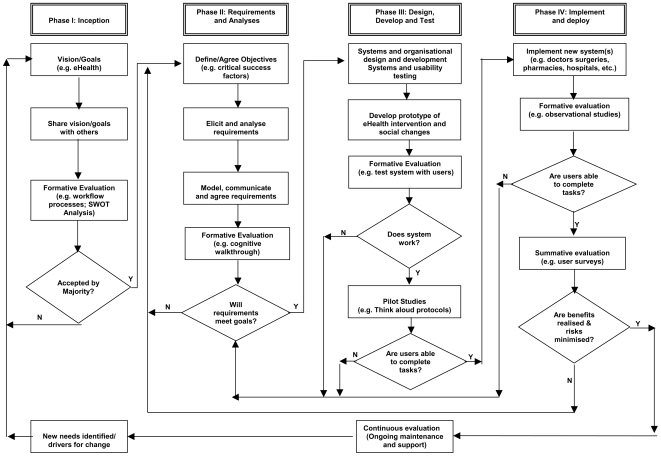
- The authors propose continuous systematic multifaceted evaluations throughout the lifecycle of eHealth interventions, with iterative formative evaluations at four key stages and a final summative evaluation after deployment.
Methods
- This is a conceptual/perspective article, not an empirical study.
- The paper synthesizes prior literature and examples of eHealth implementations, including telemedicine, electronic medical records, health portals, and prescribing software.
- Its main analysis is an argument for a lifecycle-based evaluation model, organized into phases from problem definition through design, testing, deployment, formative evaluation, and summative evaluation.
Limitations
- The paper does not report original data, a sample, or effect estimates; its claims are based on discussion and cited examples rather than direct empirical testing.
- The text itself makes evident that the proposed evaluation approach is not validated in the paper with a study, so its effectiveness is argued rather than demonstrated.
- The paper notes that eHealth definitions and applications are diverse and there is no universal agreement on the term, which limits one-size-fits-all evaluation approaches.
Model-written summary. Check it against the paper before relying on it.
Integrity signals
Registry
Cites
Statistics
Figures
Verification
Claims the paper makes
0 Valid · 0 Not valid · 18 Not checked · 7 Own results and interpretations
None of the sources cited for this claim have been checked yet.
In the paper
“it is of concern that, in this rush, relatively little time, thought, or resources have been devoted to assessing the potential risks associated with eHealth interventions [11]–[13],[33]–[36].”
§ Evaluating eHealth Interventions: The Need for Continuous Systemic Evaluation > Recognising the Risk of Harm
What the sources say
- Not checked yetcites [11] G Mudur, 2004, The great technological divide., BMJ source
- Not checked yetcites [12] E Ammenwerth, 2005, Bad Health Informatics Can Kill – Is Evaluation the Answer? Editorial., Methods Inf Med source
- Not checked yetcites [13] YY Han, 2005, Unexpected increased mortality after implementation of a commercially sold computerized physician order entry system., Pediatrics source
plain- Asserted: passes — The authors put it forward as true.
- Checkable: passes — It can be checked against evidence.
- Load-bearing: passes — The paper’s conclusions depend on it.
- Based: passes — The paper gives a reason why it holds.
In the paper
“Large investments in eHealth may, by diverting resources result in a shortfall in funding for basic infrastructure, equipment, and staffing elsewhere in the system.”
§ Evaluating eHealth Interventions: The Need for Continuous Systemic Evaluation > Recognising the Risk of Harm > Box 2. Examples of problems associated with eHealth projects
What the sources say
- Not checked yetcites [11] G Mudur, 2004, The great technological divide., BMJ source
hedgedstates a possible cause- Asserted: passes — The authors put it forward as true.
- Checkable: passes — It can be checked against evidence.
- Load-bearing: unclear — It is unclear whether the paper’s conclusions depend on it.
- Based: passes — The paper gives a reason why it holds.
In the paper
“Take the example of poorly developed computer decision support functionality, which can result in the issuing of erroneous prescribing support and advice, as was demonstrated by Fernando et al. in their assessment of primary care prescribing software [33].”
§ Evaluating eHealth Interventions: The Need for Continuous Systemic Evaluation > Recognising the Risk of Harm
What the sources say
- Not checked yetcites [33] B Fernando, 2004, Prescribing safety features of general practice computer systems: evaluation using simulated test cases., BMJ source
boostedstates a cause- Asserted: passes — The authors put it forward as true.
- Checkable: passes — It can be checked against evidence.
- Load-bearing: passes — The paper’s conclusions depend on it.
- Based: passes — The paper gives a reason why it holds.
None of the sources cited for this claim have been checked yet.
In the paper
“eHealth may compromise patient safety in a number of ways.”
§ Evaluating eHealth Interventions: The Need for Continuous Systemic Evaluation > Recognising the Risk of Harm
What the sources say
- Not checked yetcites [11] G Mudur, 2004, The great technological divide., BMJ source
- Not checked yetcites [12] E Ammenwerth, 2005, Bad Health Informatics Can Kill – Is Evaluation the Answer? Editorial., Methods Inf Med source
- Not checked yetcites [13] YY Han, 2005, Unexpected increased mortality after implementation of a commercially sold computerized physician order entry system., Pediatrics source
hedgedstates a possible cause- Asserted: passes — The authors put it forward as true.
- Checkable: passes — It can be checked against evidence.
- Load-bearing: passes — The paper’s conclusions depend on it.
- Based: passes — The paper gives a reason why it holds.
In the paper
“Within biomedicine, randomised controlled trials (RCTs) are often seen as the “gold standard” methodological approach, rightly so because of their unique ability to control for the impact of known and unknown confounding factors [16].”
§ Evaluating eHealth Interventions: The Need for Continuous Systemic Evaluation > Implications for Evaluation > Box 3. Suggested seven steps from statement of a problem to definition of a solution [37]
What the sources say
- Not checked yetcites [16] B Kaplan, 2001, Evaluating informatics applications – some alternative approaches: theory, social interactionism, and call for methodological pluralism., Int J Med Inform source
plainstates a cause- Asserted: passes — The authors put it forward as true.
- Checkable: passes — It can be checked against evidence.
- Load-bearing: unclear — It is unclear whether the paper’s conclusions depend on it.
- Based: passes — The paper gives a reason why it holds.
9 more claims
Create a free account to see all 25 claims and to verify the 28 references still open.
- Probably not a substantial claim. 8
- It may state two separate claims as one. 4
Claims other papers make about this one
Each is checked against this paper’s own text: does it say what the citing paper says it does?
The source backs part of the claim, not all of it — or backs it for a different population, condition or comparison.
In the citing paper
“Also of note is that we found virtually no evidence in support of the cost-effectiveness claims (Tables 2– 11) that are frequently being made by policy makers when constructing business cases to raise funding for the large-scale eHealth deployments that are now taking place in many parts of the world [1].”
From The Impact of eHealth on the Quality and Safety of Health Care: A Systematic Overview (2011) · cites this paper as [1]
Experimental — accuracy not yet measuredThe source backs part of the claim, not all of it — or backs it for a different population, condition or comparison.
In the citing paper
“Mock-ups, storyboards, or paper prototypes [101] are created and tested sequentially and iteratively with intended users [23,26,29,48,60] and, as a result, the prototypes are refined.”
From A Holistic Framework to Improve the Uptake and Impact of eHealth Technologies (2011) · cites this paper as [23]
Experimental — accuracy not yet measuredThe cited source says what the claim attributes to it.
In the citing paper
“This is noted in several of the reviewed frameworks [23,29,48,51,60].”
From A Holistic Framework to Improve the Uptake and Impact of eHealth Technologies (2011) · cites this paper as [23]
In the citing paper
“Although there is international pressure for hospitals to implement electronic records, based on the belief that these systems will transform the quality and safety of healthcare [1, 2], there is little empirical evidence to support this.”
From Exploring the implementation of an electronic record into a maternity unit: a qualitative study using Normalisation Process Theory (2017) · cites this paper as [1]
In the citing paper
“IT systems can introduce harms as well as benefits.”
From Evaluating eHealth: How to Make Evaluation More Methodologically Robust (2009) · cites this paper as [1]
Citations
Cites
Han, Y. Y., Carcillo, J. A., Venkataraman, S. T., Clark, R. S. B., Watson, R. S., Nguyen, T. C., Bayir, H., & Orr, R. A. (2005) · Pediatrics · doi:10.1542/peds.2005-1287 · Cited by 1,149
Cognitive and usability engineering methods for the evaluation of clinical information systems.
Kushniruk, A. W., & Patel, V. L. (2004) · Journal of Biomedical Informatics · doi:10.1016/j.jbi.2004.01.003 · Cited by 760 · cited 6×
“eHealth interventions whilst minimising risks, we must be able simultaneously to evaluate eHealth interventions while they are being designed, developed, and deployed [20].”
BackgroundInfluentialWhat Is eHealth (4): A Scoping Exercise to Map the Field
Pagliari, C., Sloan, D., Gregor, P., Sullivan, F., Detmer, D., Kahan, J. P., Oortwijn, W., & MacGillivray, S. (2005) · Journal of Medical Internet Research · doi:10.2196/jmir.7.1.e9 · Cited by 479 · cited 2×
“One such definition that includes these various facets is that proposed by Pagliari [30], who defined eHealth as:”
BackgroundKaplan, B. (2001) · International Journal of Medical Informatics · doi:10.1016/s1386-5056(01)00184-8 · Cited by 380 · cited 3×
“But whilst RCTs and similar experimental design methods may be appropriate for studying interventions under controlled clinical conditions, these design methodologies alone are often less well suited to evaluate the impact of eHealth interventions in a complex environment or to study the effect they have on the delive…”
BackgroundElectronic Health Records: A Systematic Review on Quality Requirements
Ammenwerth, E., & Hoerbst, A. (2010) · Methods of Information in Medicine · doi:10.3414/me10-01-0038 · Cited by 303
Computational Technology for Effective Health Care: Immediate Steps and Strategic Directions
(2009) · National Academies Press eBooks · doi:10.17226/12572 · Cited by 282
The World Bank participation sourcebook.
(1996) · World Bank, Washington, DC eBooks · doi:10.1596/0-8213-3558-8 · Cited by 264
Visions and strategies to improve evaluation of health information systems
Ammenwerth, E., Brender, J., Nykänen, P., Prokosch, H.-U., Rigby, M., & Talmon, J. (2004) · International Journal of Medical Informatics · doi:10.1016/j.ijmedinf.2004.04.004 · Cited by 233 · cited 1×
“The argument about the need rigorously to evaluate medical technologies themselves as well as their social and economic impact is not new [14–16].”
BackgroundElectronic Medical Records: Privacy, Confidentiality, Liability
Steward, M. (2005) · Journal of Legal Medicine · doi:10.1080/01947640500364762 · Cited by 191
Electronic Medical Records vs. Electronic Health Records:Yes,There Is a Difference
Yang, H. (2007) · Chinese Hospitals · Cited by 174
Cited by
Greenhalgh, T., Wherton, J., Papoutsi, C., Lynch, J., Hughes, G., A'Court, C., Hinder, S., Fahy, N., Procter, R., & Shaw, S. (2017) · Journal of Medical Internet Research · doi:10.2196/jmir.8775 · Cited by 2,887
“Our search for evidence-based approaches to guide our empirical work on the above case studies identified 28 technology implementation frameworks, informed by several theoretical perspectives, which we sorted into a simple taxonomy [13,43,47-72]; see Multimedia Appendix 1.”
The Impact of eHealth on the Quality and Safety of Health Care: A Systematic Overview
Black, A. D., Car, J., Pagliari, C., Anandan, C., Cresswell, K., Bokun, T., McKinstry, B., Procter, R., Majeed, A., & Sheikh, A. (2011) · PLoS Medicine · doi:10.1371/journal.pmed.1000387 · Cited by 1,442
Self-citationA Holistic Framework to Improve the Uptake and Impact of eHealth Technologies
van Gemert-Pijnen, J. E., Nijland, N., van Limburg, M., Ossebaard, H. C., Kelders, S. M., Eysenbach, G., & Seydel, E. R. (2011) · Journal of Medical Internet Research · doi:10.2196/jmir.1672 · Cited by 1,126
“Catwell and Sheikh [23] (fr. 2) are of the opinion that “formative iterative evaluations using simple prototypes of the eHealth technology may be useful during the early stage of the development process to assist with communicating ideas, building a common understanding, agreeing to objectives, and securing stakeholde…”
InfluentialA Systematic Review of the Technology Acceptance Model in Health Informatics
Rahimi, B., Nadri, H., Lotfnezhad Afshar, H., & Timpka, T. (2018) · Applied Clinical Informatics · doi:10.1055/s-0038-1668091 · Cited by 688
“14 Therefore, the impact on ICT adoption of different nontech-nical and individual-level factors need to be established.”
BackgroundAvery, A. J., Rodgers, S., Cantrill, J. A., Armstrong, S., Cresswell, K., Eden, M., Elliott, R. A., Howard, R., Kendrick, D., Morris, C. J., et al. (2012) · The Lancet · doi:10.1016/s0140-6736(11)61817-5 · Cited by 454
Self-citationCresswell, K. M., Worth, A., & Sheikh, A. (2010) · BMC Medical Informatics and Decision Making · doi:10.1186/1472-6947-10-67 · Cited by 369
“Information technology (IT) is increasingly being used to facilitate the communication of information across healthcare teams and groups with the aim to make the delivery of care safer and more efficient [1,2].”
BackgroundSelf-citationBarriers and facilitators to the implementation of eHealth services: systematic literature analysis
Schreiweis, B., Pobiruchin, M., Strotbaum, V., Suleder, J., Wiesner, M., & Bergh, B. (2019) · Journal of Medical Internet Research · doi:10.2196/14197 · Cited by 354
Usefulness of telepsychiatry: A critical evaluation of videoconferencing-based approaches
Chakrabarti, S. (2015) · World Journal of Psychiatry · doi:10.5498/wjp.v5.i3.286 · Cited by 292
Why Do Evaluations of eHealth Programs Fail? An Alternative Set of Guiding Principles
Greenhalgh, T., & Russell, J. (2010) · PLoS Medicine · doi:10.1371/journal.pmed.1000360 · Cited by 273
“One recommended systematically addressing each part of a ‘‘chain of reasoning’’, at the centre of which was the program’s goals [6].”
BackgroundThe Impact of Telehealthcare on the Quality and Safety of Care: A Systematic Overview
McLean, S., Sheikh, A., Cresswell, K., Nurmatov, U., Mukherjee, M., Hemmi, A., & Pagliari, C. (2013) · PLoS ONE · doi:10.1371/journal.pone.0071238 · Cited by 255
“2011, focusing on electronic health records and computer decision support systems [14,15,16].”
BackgroundSelf-citationA Digitally Competent Health Workforce: Scoping Review of Educational Frameworks
Nazeha, N., Pavagadhi, D., Kyaw, B. M., Car, J., Jimenez, G., & Tudor Car, L. (2020) · Journal of Medical Internet Research · doi:10.2196/22706 · Cited by 215
“Over the last three decades, there has been considerable interest in the use of digital health to enhance the quality, efficiency, and safety of health care [1,2].”
BackgroundUsing Online Health Communities to Deliver Patient-Centered Care to People With Chronic Conditions
van der Eijk, M., Faber, M. J., Aarts, J. W., Kremer, J. A., Munneke, M., & Bloem, B. R. (2013) · Journal of Medical Internet Research · doi:10.2196/jmir.2476 · Cited by 238
“A challenge now is to perform an in-depth evaluation of our platform, which is simultaneously being designed, developed, and deployed [60].”
BackgroundRobertson, A., Cresswell, K., Takian, A., Petrakaki, D., Crowe, S., Cornford, T., Barber, N., Avery, A., Fernando, B., Jacklin, A., et al. (2010) · BMJ · doi:10.1136/bmj.c4564 · Cited by 230
Self-citationThe importance of values in evidence-based medicine
Kelly, M. P., Heath, I., Howick, J., & Greenhalgh, T. (2015) · BMC Medical Ethics · doi:10.1186/s12910-015-0063-3 · Cited by 209
“In a paper on how politically controversial electronic patient record systems should be evaluated, for example, the two authors argued that “health information systems should be evaluated with the same rigor as a new drug or treatment program, otherwise decisions about future deployments of ICT [information and commun…”
BackgroundWestbrook, J. I., Reckmann, M., Li, L., Runciman, W. B., Burke, R., Lo, C., Baysari, M. T., Braithwaite, J., & Day, R. O. (2012) · PLoS Medicine · doi:10.1371/journal.pmed.1001164 · Cited by 216
“. This illustrates the importance of identifying what errors are occurring, and when, and highlights the improvements that can be achieved once these types of errors are reduced. Hospitals must allocate sufficient resources to detect and respond to such issues as they arise”
BackgroundBaker, T. B., Gustafson, D. H., & Shah, D. (2014) · Journal of Medical Internet Research · doi:10.2196/jmir.2925 · Cited by 221
“This meshes with recent calls to conduct ongoing, systematic assessment of eHealth interventions across their life cycles [2,33]—assessment that taps diverse intervention dimensions and effects (eg, quality of use, impact on workflow, costs).”
BackgroundTelehealthcare for long term conditions
McLean, S., Protti, D., & Sheikh, A. (2011) · BMJ · doi:10.1136/bmj.d120 · Cited by 205
“However, effectiveness depends on the context of the introduction of a specific system. The aim of introducing telehealthcare must be clear from the start.”
BackgroundSelf-citationRyan, D., Price, D., Musgrave, S. D., Malhotra, S., Lee, A. J., Ayansina, D., Sheikh, A., Tarassenko, L., Pagliari, C., & Pinnock, H. (2012) · BMJ · doi:10.1136/bmj.e1756 · Cited by 197
Self-citationChang, L. W., Kagaayi, J., Arem, H., Nakigozi, G., Ssempijja, V., Serwadda, D., Quinn, T. C., Gray, R. H., Bollinger, R. C., & Reynolds, S. J. (2011) · AIDS and Behavior · doi:10.1007/s10461-011-9995-x · Cited by 184
eHealth for improving quality of life in breast cancer patients: A systematic review
Triberti, S., Savioni, L., Sebri, V., & Pravettoni, G. (2019) · Cancer Treatment Reviews · doi:10.1016/j.ctrv.2019.01.003 · Cited by 184
Digital health competencies for primary healthcare professionals: A scoping review
Jimenez, G., Spinazze, P., Matchar, D., Koh Choon Huat, G., van der Kleij, R. M. J. J., Chavannes, N. H., & Car, J. (2020) · International Journal of Medical Informatics · doi:10.1016/j.ijmedinf.2020.104260 · Cited by 162
“Advances in digital technology provide an opportunity to enhance the quality, efficiency and safety of healthcare [1,2].”
BackgroundImplementation science approaches for integrating eHealth research into practice and policy
Glasgow, R. E., Phillips, S. M., & Sanchez, M. A. (2013) · International Journal of Medical Informatics · doi:10.1016/j.ijmedinf.2013.07.002 · Cited by 182
Evidence-Based Evaluation of eHealth Interventions: Systematic Literature Review
Enam, A., Torres-Bonilla, J., & Eriksson, H. (2018) · Journal of Medical Internet Research · doi:10.2196/10971 · Cited by 151
“An extensive assessment of the aspects including sociotechnical aspects is needed through each phase of the technology’s life cycle while evaluating eHealth interventions [10,11,17].”
BackgroundFairbrother, P., Ure, J., Hanley, J., McCloughan, L., Denvir, M., Sheikh, A., McKinstry, B., & The Telescot programme team (2014) · Journal of Clinical Nursing · doi:10.1111/jocn.12137 · Cited by 140
“There is increasing recognition of the importance of project planning and continuous systematic evaluation of eHealth interventions in order to maximise benefit and minimise harm (Catwell & Sheikh 2009a).”
BackgroundSelf-citationWard, R. (2013) · Health Policy and Technology · doi:10.1016/j.hlpt.2013.07.002 · Cited by 172
“If the systems are poorly designed and do not meet user needs, then the perceived benefits will not be achieved and money will have been spent ineffectively and potentially patients put at risk [1].”
BackgroundKeasberry, J. F. S., Scott, I. A., Sullivan, C. M., Staib, A. N., & Ashby, R. (2017) · Australian Health Review · doi:10.1071/ah16233 · Cited by 143
Conceptual Framework for Development of Comprehensive e-Health Evaluation Tool
Khoja, S., Durrani, H., Scott, R. E., Sajwani, A., & Piryani, U. (2013) · Telemedicine and e-Health · doi:10.1089/tmj.2012.0073 · Cited by 128
Baumel, A., & Yom-Tov, E. (2018) · Translational Behavioral Medicine · doi:10.1093/tbm/ibx037 · Cited by 128
GREENHALGH, T., RUSSELL, J., ASHCROFT, R. E., & PARSONS, W. (2011) · Milbank Quarterly · doi:10.1111/j.1468-0009.2011.00642.x · Cited by 119
McLean, S., Chandler, D., Nurmatov, U., Liu, J. L., Pagliari, C., Car, J., & Sheikh, A. (2010) · Cochrane Database of Systematic Reviews · doi:10.1002/14651858.cd007717.pub2 · Cited by 119
Self-citationCresswell, K. M., Williams, R., & Sheikh, A. (2020) · Journal of Medical Internet Research · doi:10.2196/15068 · Cited by 133
“In addition, they can help decision makers learn lessons more rapidly within the time frame of a project life cycle [8-10].”
Self-citationSlattery, B. W., Haugh, S., O'Connor, L., Francis, K., Dwyer, C. P., O'Higgins, S., Egan, J., & McGuire, B. E. (2019) · Journal of Medical Internet Research · doi:10.2196/11086 · Cited by 115
“Typically, an eHealth modality is considered to be some specific form of technology that is applied in the context of health care [2-4].”
Zanaboni, P., Kummervold, P. E., Sørensen, T., & Johansen, M. A. (2020) · Journal of Medical Internet Research · doi:10.2196/16144 · Cited by 101
Computerised decision support systems for healthcare professionals: an interpretative review
Cresswell, K., Majeed, A., Bates, D. W., & Sheikh, A. (2013) · Journal of Innovation in Health Informatics · doi:10.14236/jhi.v20i2.32 · Cited by 100
“…be due to the increasing data that can 71 clinician responses to drug safety alerts in an ePrescribing system, van der Sijs et al that, with the exception serious alerts for overdoses, safety alerts were overridden in 49–96% of cases, 70 although this does not need to be the case if the alerts…”
BackgroundSelf-citationGuideline for good evaluation practice in health informatics (GEP-HI)
Nykänen, P., Brender, J., Talmon, J., de Keizer, N., Rigby, M., Beuscart-Zephir, M.-C., & Ammenwerth, E. (2011) · International Journal of Medical Informatics · doi:10.1016/j.ijmedinf.2011.08.004 · Cited by 105
Njoroge, M., Zurovac, D., Ogara, E. A. A., Chuma, J., & Kirigia, D. (2017) · BMC Research Notes · doi:10.1186/s13104-017-2416-0 · Cited by 100
Building Capacity and Training for Digital Health: Challenges and Opportunities in Latin America
Curioso, W. H. (2019) · Journal of Medical Internet Research · doi:10.2196/16513 · Cited by 93
“Evaluation could be difficult, and they should consider context and how long after the program is initiated should the evaluation be started [55,56].”
BackgroundSalisbury, C., Thomas, C., O'Cathain, A., Rogers, A., Pope, C., Yardley, L., Hollinghurst, S., Fahey, T., Lewis, G., Large, S., et al. (2015) · BMJ Open · doi:10.1136/bmjopen-2014-006448 · Cited by 80
Bonten, T. N., Rauwerdink, A., Wyatt, J. C., Kasteleyn, M. J., Witkamp, L., Riper, H. M., van Gemert‐Pijnen, J. E. W. C., Cresswell, K. M., Sheikh, A., Schijven, M. P., et al. (2020) · Journal of Medical Internet Research · doi:10.2196/17774 · Cited by 101
“Life cycle–based approach United Kingdom 2009 Catwell and Shiekh [53]”
MethodSelf-citationFactors influencing e-health implementation by medical doctors in public hospitals in Zimbabwe
Furusa, S. S., & Coleman, A. (2018) · SA Journal of Information Management · doi:10.4102/sajim.v20i1.928 · Cited by 81
“Studies regarding e-health and its successful implementation have been conducted in both developed and developing countries (Catwell & Sheikh 2009; Lam et al. 2016; Moerman, Houwelingen & Kort 2014; Nielsen 2016; Schweitzer & Synowiec 2010; Sementilli et al. 2007; Stroetmann et al. 2013).”
Salway, T. J., Farrell, J., Bondyra, M., Haag, D., Shoveller, J., & Gilbert, M. (2012) · Journal of Medical Internet Research · doi:10.2196/jmir.1948 · Cited by 85
Has evidence‐based medicine ever been modern? A Latour‐inspired understanding of a changing EBM
Wieringa, S., Engebretsen, E., Heggen, K. M., & Greenhalgh, T. (2017) · Journal of Evaluation in Clinical Practice · doi:10.1111/jep.12752 · Cited by 95
Asbjørnsen, R. A., Wentzel, J., Smedsrød, M. L., Hjelmesæth, J., Clark, M. M., Solberg Nes, L., & Van Gemert-Pijnen, J. E. W. C. (2020) · Journal of Medical Internet Research · doi:10.2196/22598 · Cited by 84
“The proposed method used in this study also unlocks and explores current, latent, and future user needs and possible solutions through its iterative and participatory process [21,39,40,68-72, 77, 154].”
MethodCharani, E., Kyratsis, Y., Lawson, W., Wickens, H., Brannigan, E. T., Moore, L. S. P., & Holmes, A. H. (2013) · Journal of Antimicrobial Chemotherapy · doi:10.1093/jac/dks492 · Cited by 79
Cresswell, K., Coleman, J., Slee, A., Williams, R., Sheikh, A., & ePrescribing Programme Team (2013) · PLoS ONE · doi:10.1371/annotation/1cec200a-6652-449f-91e9-8effb769de1e · Cited by 80
Self-citationEvaluating eHealth: How to Make Evaluation More Methodologically Robust
Lilford, R. J., Foster, J., & Pringle, M. (2009) · PLoS Medicine · doi:10.1371/journal.pmed.1000186 · Cited by 79
“However, as Catwell and Sheikh described in the first article in this series [1], IT systems can introduce harms as well as benefits.”
BackgroundCresswell, K. M., Bates, D. W., Williams, R., Morrison, Z., Slee, A., Coleman, J., Robertson, A., Sheikh, A., Avery, T., Blake, L., et al. (2014) · Journal of the American Medical Informatics Association · doi:10.1136/amiajnl-2013-002252 · Cited by 76
“18 importance of more realistic estimates in terms of timelines, costs and returns, but also the need to continue tracking emerging benefits through longitudinal evaluations of systems and processes.(71) Such considerations are particularly important in light of the recent announcement of NHS England of investments of…”
Self-citationFadahunsi, K. P., Akinlua, J. T., O’Connor, S., Wark, P. A., Gallagher, J., Carroll, C., Majeed, A., & O’Donoghue, J. (2019) · BMJ Open · doi:10.1136/bmjopen-2018-024722 · Cited by 88
The impact of eHealth on the quality and safety of health care: a systematic overview1)
Vermeulen, H., & Ubbink, D. T. (2011) · Nederlands Tijdschrift voor Evidence Based Practice · doi:10.1007/s12468-011-0024-x · Cited by 74
Best, P., Gil-Rodriguez, E., Manktelow, R., & Taylor, B. J. (2016) · Qualitative Health Research · doi:10.1177/1049732316648128 · Cited by 64
Digital health interventions for chronic diseases: a scoping review of evaluation frameworks
Bashi, N., Fatehi, F., Mosadeghi-Nik, M., Askari, M. S., & Karunanithi, M. (2020) · BMJ Health & Care Informatics · doi:10.1136/bmjhci-2019-100066 · Cited by 67
Ten key considerations for the successful optimization of large-scale health information technology
Cresswell, K. M., Bates, D. W., & Sheikh, A. (2016) · Journal of the American Medical Informatics Association · doi:10.1093/jamia/ocw037 · Cited by 75
“Measure progress and gather evidence Evaluation of optimization initiatives can help to create a baseline, track progress over time, and facilitate learning.(45) This work ideally commences well before implementing any system and/or operational changes, and should be designed to obtain good-quality indicators for impr…”
BackgroundSelf-citationThe case for randomized controlled trials to assess the impact of clinical information systems
Liu, J. L. Y., & Wyatt, J. C. (2011) · Journal of the American Medical Informatics Association · doi:10.1136/jamia.2010.010306 · Cited by 66
Priorities to accelerate workflow automation in health care
Zayas‐Cabán, T., Okubo, T. H., & Posnack, S. L. (2022) · Journal of the American Medical Informatics Association · doi:10.1093/jamia/ocac197 · Cited by 73
Health information technology in hospitals: current issues and future trends
Cresswell, K. M., & Sheikh, A. (2015) · Future Hospital Journal · doi:10.7861/futurehosp.2-1-50 · Cited by 74
Self-citationAicken, C. R. H., Fuller, S., Sutcliffe, L. J., Estcourt, C. S., Gkatzidou, V., Oakeshott, P., HONE, K. S., Sadiq, S. T., Sonnenberg, P., & Shahmanesh, M. (2016) · BMC Public Health · doi:10.1186/s12889-016-3648-y · Cited by 64
“Formative research is particularly important in the development of complex interventions [27], especially in e-health [28].”
BackgroundTielman, M. L., Neerincx, M. A., van Meggelen, M., Franken, I., & Brinkman, W.-P. (2018) · Technology and Health Care · doi:10.3233/thc-170899 · Cited by 63
Distinguishing features in the assessment of mHealth apps
Tarricone, R., Petracca, F., Ciani, O., & Cucciniello, M. (2021) · Expert Review of Pharmacoeconomics & Outcomes Research · doi:10.1080/14737167.2021.1891883 · Cited by 62
“and political expediency only but should anyway be supported by robust evidence [41].”
BackgroundCresswell, K. M., Worth, A., & Sheikh, A. (2011) · Clinical Governance An International Journal · doi:10.1108/14777271111175369 · Cited by 87
“however, large scale Information Technology (IT) implementations in healthcare have been characterised by numerous challenges such as technical problems, poor fit between systems and users, and limited acceptance by staff (Ammenwerth et al., 2006; Catwell and Sheikh, 2009; Cresswell and Sheikh, 2009; Lorenzi et al., 2…”
BackgroundSelf-citationGilbert, M., Haag, D., Salway, T. J., Bondyra, M., Elliot, E., Chabot, C., Farrell, J., Bonnell, A., Kopp, S., Andruschak, J., et al. (2016) · JMIR Research Protocols · doi:10.2196/resprot.6293 · Cited by 64
“As recommended for the evaluation of eHealth interventions, we will use mixed-methods to evaluate the impact of GCO at individual, population, and health service delivery levels [53,54] (Table 4).”
McCrorie, C., Benn, J., Johnson, O. A., & Scantlebury, A. (2019) · BMC Medical Informatics and Decision Making · doi:10.1186/s12911-019-0952-3 · Cited by 67
Undertaking sociotechnical evaluations of health information technologies
Cresswell, K. M., & Sheikh, A. (2014) · Journal of Innovation in Health Informatics · doi:10.14236/jhi.v21i2.54 · Cited by 52
“…of the complex processes involved in using and implementing technology in social contexts to improve the safety and quality of health-care, 3–9 current sociotechnical approaches somewhat fail to distinguish themselves from other methodologies such as usability testing and…”
BackgroundSelf-citationKip, H., Jong, N. B.-D., van Gemert‐Pijnen, J. E. W. C., & Kelders, S. M. (2024) · Journal of Medical Internet Research · doi:10.2196/59601 · Cited by 62
“It included frameworks focused on, for example, user-centered design of teleconsulting systems [19], continuous evaluation of eHealth [20], usability engineering [21], interdisciplinary design and evaluation [22], and implementation and behavioral science [23].”
Baumel, A., & Muench, F. (2016) · JMIR Mental Health · doi:10.2196/mental.4563 · Cited by 51
Cresswell, K. M., Coleman, J. J., Slee, A., Williams, R., Sheikh, A., & ePrescribing Programme Team (2013) · PLoS ONE · doi:10.1371/journal.pone.0053369 · Cited by 68
“The design of our questionnaire was informed by the existing literature surrounding information technology (IT) implementations in healthcare settings [8,13,26–29], our own experiences from implementing and evaluating related applications [20,25], and a questionnaire from a scoping study of planned implementations con…”
BackgroundMethodSelf-citationUse of the Internet and Mobile Media for Delivery of Cognitive Behavioral Insomnia Therapy
Espie, C. A., Hames, P., & McKinstry, B. (2013) · Sleep Medicine Clinics · doi:10.1016/j.jsmc.2013.06.001 · Cited by 52
Takian, A., Petrakaki, D., Cornford, T., Sheikh, A., & Barber, N. (2012) · BMC Health Services Research · doi:10.1186/1472-6963-12-105 · Cited by 51
“Hence evaluation studies aim to test their validity and trace the achievement of specific outcomes [7].”
BackgroundSelf-citationHealth care development: integrating transaction cost theory with social support theory
Hajli, N., Shanmugam, M., Hajli, A., Khani, A. H. A., & Wang, Y. (2014) · Informatics for Health and Social Care · doi:10.3109/17538157.2014.924950 · Cited by 57
“E-health, the use of electronic tools in delivering health care (3), is rapidly emerging across the world.”
Background“Real-World” Practical Evaluation Strategies: A Review of Telehealth Evaluation
Agboola, S., Hale, T. M., Masters, C., Kvedar, J., & Jethwani, K. (2014) · JMIR Research Protocols · doi:10.2196/resprot.3459 · Cited by 49
“However, they are always not well suited or practical for telehealth evaluation [16,25,31].”
Tailored e-Health services for the dementia care setting: a pilot study of ‘eHealthMonitor’
Schaller, S., Marinova-Schmidt, V., Gobin, J., Criegee-Rieck, M., Griebel, L., Engel, S., Stein, V., Graessel, E., & Kolominsky-Rabas, P. L. (2015) · BMC Medical Informatics and Decision Making · doi:10.1186/s12911-015-0182-2 · Cited by 48
“the development process [16–18].”
Cresswell, K. M., Rigby, M., Magrabi, F., Scott, P., Brender, J., Craven, C. K., Wong, Z. S.-Y., Kukhareva, P., Ammenwerth, E., Georgiou, A., et al. (2023) · Health Policy · doi:10.1016/j.healthpol.2023.104889 · Cited by 56
Cano, I., Alonso, A., Hernández, C., Burgos, F., Barberán-García, A., Roldan, J., & Roca, J. (2015) · Journal of Biomedical Informatics · doi:10.1016/j.jbi.2015.02.011 · Cited by 57
Furlong, E., Darley, A., Fox, P., Buick, A., Kotronoulas, G., Miller, M., Flowerday, A., Miaskowski, C., Patiraki, E., Katsaragakis, S., et al. (2019) · JMIR Cancer · doi:10.2196/10813 · Cited by 44
Evaluating eHealth: Undertaking Robust International Cross-Cultural eHealth Research
Bates, D. W., & Wright, A. (2009) · PLoS Medicine · doi:10.1371/journal.pmed.1000105 · Cited by 45
“eHealth—the use of electronic tools in delivering health care [1]—is rapidly emerging as an international priority in nations at all levels of development, yet the benefits and priorities have not clearly been defined.”
Telemedicine with clinical decision support for critical care: a systematic review
Mackintosh, N., Terblanche, M., Maharaj, R., Xyrichis, A., Franklin, K., Keddie, J., Larkins, E., Maslen, A., Skinner, J., Newman, S., et al. (2016) · Systematic Reviews · doi:10.1186/s13643-016-0357-7 · Cited by 46
Nijland, N. (2010) · doi:10.3990/1.9789036531337 · Cited by 44
Cresswell, K. M., Sheikh, A., Franklin, B. D., Krasuska, M., Nguyen, H. T., Hinder, S., Lane, W., Mozaffar, H., Mason, K., Eason, S., et al. (2020) · BMC Health Services Research · doi:10.1186/s12913-020-05355-7 · Cited by 51
Self-citationVoncken-Brewster, V., Tange, H. J., Moser, A., Nagykaldi, Z. J., de Vries, H., & van der Weijden, T. (2014) · BMC Family Practice · doi:10.1186/1471-2296-15-4 · Cited by 46
“E-Health initiatives are popular among policy makers, and many applications are being developed and implemented, at significant cost [17].”
BackgroundEvolution of a capacitive electromyography contactless biosensor: Design and modelling techniques
Ng, C. L., & Reaz, M. B. I. (2019) · Measurement · doi:10.1016/j.measurement.2019.05.031 · Cited by 44
Scantlebury, A., Sheard, L., Watt, I., Cairns, P., Wright, J., & Adamson, J. (2017) · BMC Medical Informatics and Decision Making · doi:10.1186/s12911-016-0406-0 · Cited by 41
Brönneke, J. B., Herr, A., Reif, S., & Stern, A. D. (2023) · International Journal of Technology Assessment in Health Care · doi:10.1017/s0266462323002726 · Cited by 41
“The need for continuous evaluations of SaMDs and other medical interventions has been identified before (25; 26).”
BackgroundContexts and Opportunities of e-Health Technology in Medical Care
Zaman, S. B., Hossain, N., Ahammed, S., & Ratan, Z. A. (2017) · Journal of Medical Research and Innovation · doi:10.15419/jmri.62 · Cited by 45
van Tilburg, M. L., Spin, I., Pisters, M. F., Staal, J. B., Ostelo, R., van der Velde, M., Veenhof, C., & Kloek, C. J. J. (2024) · Journal of Medical Internet Research · doi:10.2196/49868 · Cited by 47
“There are several potential benefits to digital health services, such as improved cost-effectiveness, more information about the health status of the patient, better communication between patients and health care professionals, and more accessibility for patients [10,11].”
The PLU Problem: Are We Designing Personal ehealth for People Like Us?
Chris, S., & Paul, T. (2013) · Studies in health technology and informatics · doi:10.3233/978-1-61499-203-5-276 · Cited by 40
“Catwell and Sheikh [11] considered the evaluation of ehealth systems, and argued that the evaluation should be continuous and systemic.”
BackgroundPagliari, C., Sheikh, A., Mukherjee, M., Cresswell, K. M., McLean, S., Nurmatov, U. B., McKinstry, B., Hemmi, A., Procter, R., Car, J., et al. (2011) · Cited by 46
Self-citationEnabling Guidelines for the Adoption of eHealth Solutions: Scoping Review
Støme, L. N., Wilhelmsen, C. R., & Kværner, K. J. (2021) · JMIR Formative Research · doi:10.2196/21357 · Cited by 43
Web-Based Tools for Text-Based Patient-Provider Communication in Chronic Conditions: Scoping Review
Voruganti, T., Grunfeld, E., Makuwaza, T., & Bender, J. L. (2017) · Journal of Medical Internet Research · doi:10.2196/jmir.7987 · Cited by 38
“Traditional study designs, such as RCTs, may not adequately address the dual goals of unbiasedly ascertaining effect and sufficiently capturing the practical realities of implementation [54].”
BackgroundRapid progress or lengthy process? electronic personal health records in mental health
Ennis, L., Rose, D., Callard, F., Denis, M., & Wykes, T. (2011) · BMC Psychiatry · doi:10.1186/1471-244x-11-117 · Cited by 37
“There is a need for continuous and rigorous assessment of e-health interventions whose potential will only be realised if implementation follows a logical progression with constant feedback [44] and ongoing, meaningful involvement of all stakeholders.”
Davidson, E. M., Simpson, C. R., Demiris, G., Sheikh, A., & McKinstry, B. (2013) · Interactive Journal of Medical Research · doi:10.2196/ijmr.2820 · Cited by 38
“Surprisingly, liability was not as strong a concern as has been suggested by previous studies [27,36,37] as many saw the additional data as no different from other sources of data with which they were used to dealing and taking responsibility for.”
ResultSelf-citationApplication of Mobile Health Technologies Aimed at Salt Reduction: Systematic Review
Ali, S. H., Luo, R., Li, Y., Liu, X., Tang, C., & Zhang, P. (2019) · JMIR mhealth and uhealth · doi:10.2196/13250 · Cited by 40
“Despite the strong advocacy of mHealth as an innovative tool for improving both quality and access of health care [25-27], there remains a great need of continued systematic academic evaluations of its direct impact on key health outcomes [28-33].”
Takian, A., Sheikh, A., & Barber, N. (2014) · Health Informatics Journal · doi:10.1177/1460458213493196 · Cited by 37
Self-citationLambert‐Kerzner, A., Ford, K. L., Hammermeister, K. E., Henderson, W. G., Bronsert, M. R., & Meguid, R. A. (2018) · Patient Safety in Surgery · doi:10.1186/s13037-018-0159-z · Cited by 38
Fernando, B., Kalra, D., Morrison, Z., Byrne, E., & Sheikh, A. (2012) · BMJ Quality & Safety · doi:10.1136/bmjqs-2011-000450 · Cited by 43
Self-citationDigital health and patient safety: Technology is not a magic wand
Sujan, M. A., Scott, P., & Cresswell, K. M. (2019) · Health Informatics Journal · doi:10.1177/1460458219876183 · Cited by 40
“16 One might add to that the need to complement clinical trials with rigorous mixed-methods approaches and realist evaluation studies 17 that are well suited to provide evidence about whether, how and under what circumstances new technologies can contribute to the quality and safety of care…”
Reis, W. C. T., Bonetti, A. D. F., Bottacin, W. E., Reis, A. S., de Souza, T. T., Pontarolo, R., Correr, C. J., & Fernández-Llimós, F. (2017) · Pharmacy Practice · doi:10.18549/pharmpract.2017.04.1036 · Cited by 40
Qiu, L.-T., Sun, G.-X., Li, L., Zhang, J., Wang, D., & Fan, B.-Y. (2022) · Frontiers in Endocrinology · doi:10.3389/fendo.2022.999702 · Cited by 34
Changing Ethical Frameworks: From Individual Rights to the Common Good?
Sutrop, M. (2011) · Cambridge Quarterly of Healthcare Ethics · doi:10.1017/s0963180111000272 · Cited by 35
The behavioral outcomes of a technology-supported leisure activity in people with dementia
Nijhof, N., van Hoof, J., van Rijn, H., & van Gemert‐Pijnen, J. E. W. C. (2013) · Technology and Disability · doi:10.3233/tad-140398 · Cited by 38
A personal assistant for dementia to stay at home safe at reduced cost
Nijhof, N., van Gemert‐Pijnen, J. E. W. C., Burns, C. M., & Seydel, E. R. (2013) · Gerontechnology · doi:10.4017/gt.2013.11.3.005.00 · Cited by 33
Carbonnel, F., & Ninot, G. (2019) · Journal of Medical Internet Research · doi:10.2196/13606 · Cited by 33
“%) for software designers [17,30,33,35,36,39,43,46,48,49,64], 1 of which was for software evaluators [66], and 6 (13”
Metadata
- Authors
- Catwell, L., & Sheikh, A.
- Affiliations
- University of Edinburgh (GB)
- Corresponding author
- Sheikh, Aziz
- ORCID
- Sheikh, Aziz
- Venue
- PLoS Medicine
- Publisher
- Public Library of Science (PLoS)
- Published
- 2009-08-18
- Volume
- 6
- Issue
- 8
- Pages
- e1000126
- ISSN
- 1549-1277 (ISSN-L)
- 1549-1676
- PMC
- PMC2719100
- OpenAlex
- W2052843612
- Cited by
- 307
- References
- 21
- Citations by year
- 2026: 2 · 2025: 10 · 2024: 16 · 2023: 11 · 2022: 25 · 2021: 17 · 2020: 17 · 2019: 22 · 2018: 19 · 2017: 25 · 2016: 19 · 2015: 20 · 2014: 18 · 2013: 32 · 2012: 21
- FWCI
- 31.99
- Type
- journal article
- Language
- en
- Open access
- gold
- doi.org
- Locations
- PLoS Medicine (publishedVersion, cc-by)
- PubMed Central (publishedVersion, cc-by)
- PubMed (publishedVersion)
- RePEc: Research Papers in Economics (submittedVersion)
- DOAJ (DOAJ: Directory of Open Access Journals) (submittedVersion, cc-by-sa)
- Edinburgh Research Explorer (University of Edinburgh) (submittedVersion, cc-by)
- Funders
- British Lung Foundation
- Asthma and Lung UK
- Topics
- Health Sciences › Health Professions › General Health Professions › Mobile Health and mHealth Applications
- Social Sciences › Psychology › Applied Psychology › Digital Mental Health Interventions
- Health Sciences › Medicine › Public Health, Environmental and Occupational Health › Telemedicine and Telehealth Implementation
- Keywords
- digital health interventions, continuous assessment, systemic evaluation, digital health
- MeSH terms
- Evaluation Studies as Topic, Humans, Medical Informatics, Research Design, Telecommunications, Internet
About these checks
Registry, retraction, Cites and statistics results are computed, not judged, with one exception: a printed reference that no index lists is read once by a model before it counts as a citation error. Claims are extracted by a model and kept only when their quote appears verbatim in the text; each cited source is then checked, with a model’s help, for whether it says what the claim relies on. Those verdicts can be wrong — read the claim’s quote and the cited source before relying on one.
A language model drew the claims from the paper on 2026-10-11, under version 3 of the claim definition (model deepseek-v4.1-flash, prompt extract-v3).
A second model labelled each claim on 2026-10-11 (model jev-1.13-20260917, definition revision gold-guideline-v0.2).
Statistics and arithmetic are recomputed, not judged.
Confidence bands are shown only for fields calibrated on our annotated test set. None is calibrated yet, so no band is shown.
What counts as a claim ›How we measure confidence ›How we check this ›
Are you an author, or do you see a problem with this page? Request a review
Data sources
Bibliographic data: Semantic Scholar, OpenAlex, Crossref.
Contains information from the Semantic Scholar Academic Graph Datasets, made available under the ODC Attribution License (ODC-BY 1.0).
Semantic Scholar’s data is described in: Kinney, R., et al. (2023). The Semantic Scholar Open Data Platform. arXiv:2301.10140.
