

Impact of community-based maternal health workers on coverage of essential maternal health interventions among internally displaced communities in eastern Burma: the MOM project.
Open accessThe DOI matches its Crossref record; 15 of the 16 references it cites were found in a registry or an index.
Abstract
BACKGROUND: Access to essential maternal and reproductive health care is poor throughout Burma, but is particularly lacking among internally displaced communities in the eastern border regions. In such settings, innovative strategies for accessing vulnerable populations and delivering basic public health interventions are urgently needed. METHODS: Four ethnic health organizations from the Shan, Mon, Karen, and Karenni regions collaborated on a pilot project between 2005 and 2008 to examine the feasibility of an innovative three-tiered network of community-based providers for delivery of maternal health interventions in the complex emergency setting of eastern Burma. Two-stage cluster-sampling surveys among ever-married women of reproductive age (15-45 y) conducted before and after program implementation enabled evaluation of changes in coverage of essential antenatal care interventions, attendance at birth by those trained to manage complications, postnatal care, and family planning services. RESULTS: Among 2,889 and 2,442 women of reproductive age in 2006 and 2008, respectively, population characteristics (age, marital status, ethnic distribution, literacy) were similar. Compared to baseline, women whose most recent pregnancy occurred during the implementation period were substantially more likely to receive antenatal care (71.8% versus 39.3%, prevalence rate ratio [PRR] = 1.83 [95% confidence interval (CI) 1.64-2.04]) and specific interventions such as urine testing (42.4% versus 15.7%, PRR = 2.69 [95% CI 2.69-3.54]), malaria screening (55.9% versus 21.9%, PRR = 2.88 [95% CI 2.15-3.85]), and deworming (58.2% versus 4.1%, PRR = 14.18 [95% CI 10.76-18.71]. Postnatal care visits within 7 d doubled. Use of modern methods to avoid pregnancy increased from 23.9% to 45.0% (PRR = 1.88 [95% CI 1.63-2.17]), and unmet need for contraception was reduced from 61.7% to 40.5%, a relative reduction of 35% (95% CI 28%-40%). Attendance at birth by those trained to deliver elements of emergency obstetric care increased almost 10-fold, from 5.1% to 48.7% (PRR = 9.55 [95% CI 7.21-12.64]). CONCLUSIONS: Coverage of maternal health interventions and higher-level care at birth was substantially higher during the project period. The MOM Project's focus on task-shifting, capacity building, and empowerment at the community level might serve as a model approach for similarly constrained settings.
Overview
The claims and statistics of this paper haven’t been checked yet.
Free: it reads the open-access text and checks the first 5 claims that cite a source we can check. Create a free account to check every claim.
Integrity signals
Registry
Cites
Statistics
Figures
Verification
Claims the paper makes
The claims and statistics of this paper haven’t been checked yet.
Free: it reads the open-access text and checks the first 5 claims that cite a source we can check. Create a free account to check every claim.
Claims other papers make about this one
Each is checked against this paper’s own text: does it say what the citing paper says it does?
The cited source says what the claim attributes to it.
In the citing paper
“Malaria was undoubtedly a significant contributor: in 2008, 56% of pregnant women surveyed in eastern Myanmar, reported that they had a malaria test (rapid test) in their last pregnancy, of which 12% were positive [12].”
From Effect of Early Detection and Treatment on Malaria Related Maternal Mortality on the North-Western Border of Thailand 1986-2010 (2012) · cites this paper as [12]
The cited source says what the claim attributes to it.
In the citing paper
“and in Myanmar this practice increased (10.1%–27.2%) with the creation of a network of trained community-based providers.59”
From A systematic review of newborn health interventions in humanitarian settings (2022) · cites this paper as [59]
The cited source says what the claim attributes to it.
In the citing paper
“40 % of women reported they did not want more children”
The cited source says what the claim attributes to it.
In the citing paper
“A survey presenting data from 2006 and 2008 from Eastern Myanmar in 2,442 participants in an area with an estimated 61,114 individuals (12,223 women of reproductive age) reported an increase in modern methods of family planning from 23.9 to 45.0 % (PRR = 1.88 [95 % CI 1.63-2.17]), and a reduced unmet need for contraception from 61.7 to 40.5 % [13].”
The check wasn’t confident either way, so it gives no verdict — never disputed.
In the citing paper
“Protective community support mechanisms, which make adolescent parenthood socially viable in some agricultural societies, are also often lost in migration or mass population movements 10– 12.”
From Trends and birth outcomes in adolescent refugees and migrants on the Thailand-Myanmar border, 1986-2016: an observational study (2018) · cites this paper as [10]
Experimental — accuracy not yet measured
3 more claims about this paper
Create a free account to see every claim other papers make about this one.
Self-check
Percentages, sums and reported differences re-computed from the paper’s own numbers.
The self-check needs the paper’s full text.
Citations
Cites
Sampling of Populations: Methods and Applications
Ziegel, E. R., Levy, P., & Lemeshaw, S. (1992) · Technometrics · doi:10.2307/1270072 · Cited by 1,250 · cited 2×
“This second stage selection method was appropriate for these communities because household distribution in these village is not systematic [15,16].”
MethodA simplified general method for cluster-sample surveys of health in developing countries.
Bennett, S., Woods, T., Liyanage, W. M., & Smith, D. L. (1991) · PubMed · Cited by 862
Health-care needs of people affected by conflict: future trends and changing frameworks
Spiegel, P. B., Checchi, F., Colombo, S., & Paik, E. (2010) · The Lancet · doi:10.1016/s0140-6736(09)61873-0 · Cited by 369 · cited 2×
“Relative to refugee settings, internally displaced communities have been particularly neglected [5], in part due to substantial difficulties in access by humanitarian agencies [3].”
BackgroundReproductive Health: A Right for Refugees and Internally Displaced Persons
Austin, J., Guy, S., Lee-Jones, L., McGinn, T., & Schlecht, J. (2008) · Reproductive Health Matters · doi:10.1016/s0968-8080(08)31351-2 · Cited by 142 · cited 3×
“org) have made substantial progress in areas of advocacy, tools to assist relief agencies in prioritizing and selecting essential services, and development of technical manuals and guidelines, and knowledge sharing through research and international conferences [5,6].”
BackgroundTeela, K. C., Mullany, L. C., Lee, C. I., Poh, E., Paw, P., Masenior, N. F., Maung, C., Beyrer, C., & Lee, T. J. (2009) · Social Science & Medicine · doi:10.1016/j.socscimed.2009.01.033 · Cited by 97 · cited 2×
“MHWs participating in focus group discussions [12] reported numerous ongoing security-related challenges that prevented them from reaching a higher number of deliveries.”
BackgroundMethodSelf-citationMortality rates in conflict zones in Karen, Karenni, and Mon states in eastern Burma.
Lee, T. J., Mullany, L. C., Richards, A. K., Kuiper, H. K., Maung, C., & Beyrer, C. (2006) · Tropical Medicine & International Health · doi:10.1111/j.1365-3156.2006.01651.x · Cited by 77 · cited 3×
“However, the training period prior to collection was extensive, time between training and data collection short, and survey instruments were identical to those previous used, and the overall implementation approach reflected refinement and lessons learned through 8 y of conducting population-based cluster-sampling sur…”
BackgroundMethodSelf-citationMullany, L. C., Lee, C. I., Yone, L., Paw, P., Oo, E. K. S., Maung, C., Lee, T. J., & Beyrer, C. (2008) · PLoS Medicine · doi:10.1371/journal.pmed.0050242 · Cited by 77 · cited 7×
“In addition, recently delivered women who reported household exposures to human rights violations such as forced displacement or food security issues were at higher risk of anemia, had greater unmet need for contraception, and were substantially less likely to have preprogram access to core antenatal services [11].”
BackgroundMethodInfluentialSelf-citationMullany, L. C., Richards, A. K., Lee, C. I., Suwanvanichkij, V., Maung, C., Mahn, M., Beyrer, C., & Lee, T. J. (2007) · Journal of Epidemiology and Community Health · doi:10.1136/jech.2006.055087 · Cited by 71 · cited 3×
“However, the training period prior to collection was extensive, time between training and data collection short, and survey instruments were identical to those previous used, and the overall implementation approach reflected refinement and lessons learned through 8 y of conducting population-based cluster-sampling sur…”
BackgroundMethodSelf-citationMullany, L. C., Lee, C. I., Paw, P., Shwe Oo, E. K., Maung, C., Kuiper, H., Mansenior, N., Beyrer, C., & Lee, T. J. (2008) · Reproductive Health Matters · doi:10.1016/s0968-8080(08)31341-x · Cited by 50 · cited 5×
“The implementation phase of the project started in September of 2006 and focused on launching the newly established network to identify pregnant women and provide a range of antenatal and postnatal services, attend births, and deliver family planning services [10].”
BackgroundMethodInfluentialSelf-citationProgrammatic Responses to Refugees' Reproductive Health Needs
Krause, S. K., Jones, R. K., & Purdin, S. J. (2000) · International Family Planning Perspectives · doi:10.2307/2648256 · Cited by 49 · cited 2×
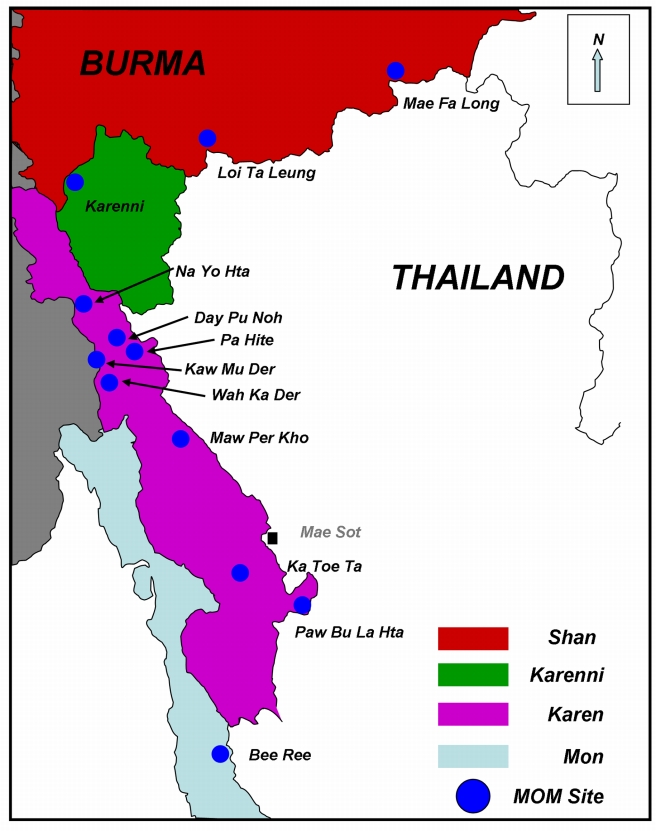
“The pilot project to implement this community-based threetiered network of providers was conducted in a population of approximately 60,000 over four eastern Burma states in a total of 12 communities affected by conflict (Karen [8], Shan [2], Karenni [1], and Mon [1] States; see Figure 1).”
Background
Research works printed but not linked: 1
- Inter-Agency Working Group on Reproductive Health in Crises 2010 Inter-agency field manual on reproductive health in humanitarian settings: 2010 revision for field review. Inter-agency Working Group on Reproductive Health in Crises. Available: http://www.unhcr.org/4c187e5b6.html. Accessed 29 June 2010 26203479
Cited by
Malaria in pregnancy in the Asia-Pacific region
Rijken, M. J., McGready, R., Boel, M. E., Poespoprodjo, R., Singh, N., Syafruddin, D., Rogerson, S., & Nosten, F. (2012) · The Lancet Infectious Diseases · doi:10.1016/s1473-3099(11)70315-2 · Cited by 181
Singh, N. S., Aryasinghe, S., Smith, J., Khosla, R., Say, L., & Blanchet, K. (2018) · BMJ Global Health · doi:10.1136/bmjgh-2017-000682 · Cited by 144
“Myanmar, which included traditional birth attendants, health workers and maternal health workers.(33) With this intervention, the use of modern contraception methods increased from 23.”
Byrne, A., & Morgan, A. (2011) · International Journal of Gynecology & Obstetrics · doi:10.1016/j.ijgo.2011.06.019 · Cited by 129
“TBAs have been able to call for e ambulances in emergencies [54] a conflict zone, TBAs assist SBAs to provide domiciliary care to improve access [38].”
BackgroundInfluentialMcGready, R., Boel, M., Rijken, M. J., Ashley, E. A., Cho, T., Moo, O., Paw, M. K., Pimanpanarak, M., Hkirijareon, L., Carrara, V. I., et al. (2012) · PLoS ONE · doi:10.1371/journal.pone.0040244 · Cited by 101
“[11] Malaria was undoubtedly a significant contributor: in 2008, 56% of pregnant women surveyed in eastern Myanmar, reported that they had a malaria test (rapid test) in their last pregnancy, of which 12% were positive [12].”
BackgroundScott, V. K., Gottschalk, L. B., Wright, K. Q., Twose, C., Bohren, M. A., Schmitt, M. E., & Ortaylı, N. (2015) · Studies in Family Planning · doi:10.1111/j.1728-4465.2015.00028.x · Cited by 119
“If we remove the two studies reporting more than 200 training days (Rosenfield 1974; Mullany et al. 2010), the average length of CHW training was approximately 28 days.”
Alibhai, K. M., Ziegler, B. R., Meddings, L., Batung, E., & Luginaah, I. (2022) · Conflict and Health · doi:10.1186/s13031-022-00459-9 · Cited by 94
“In FCAS, conflict results in displacement of communities and the destruction of roads, transport vehicles and healthcare facilities, which all contribute to the increased distance between residential communities and healthcare facilities [101, 102].”
BackgroundEvaluations of reproductive health programs in humanitarian settings: a systematic review
Casey, S. E. (2015) · Conflict and Health · doi:10.1186/1752-1505-9-s1-s1 · Cited by 92
“Medium Maternal and newborn health and family planning Mullany et al (2010) [11] Burma Trained community-based skilled health workers in basic EmONC, evidence-based ANC and FP in Shan, Mon, Karen, and Karenni regions of Burma Pre (2006) & post (2008) intervention cross-sectional twostage cluster surveys in interventio…”
BackgroundInfluentialDelivering maternal and neonatal health interventions in conflict settings: a systematic review
Munyuzangabo, M., Gaffey, M. F., Khalifa, D. S., Als, D., Ataullahjan, A., Kamali, M., Jain, R. P., Meteke, S., Radhakrishnan, A., Shah, S., et al. (2021) · BMJ Global Health · doi:10.1136/bmjgh-2020-003750 · Cited by 91
Singh, N. S., Smith, J., Aryasinghe, S., Khosla, R., Say, L., & Blanchet, K. (2018) · PLOS ONE · doi:10.1371/journal.pone.0199300 · Cited by 89
“64).[42] A cross-sectional study reviewed the possible impact of a reproductive health literacy programme amongst refugee women in Guinea.”
BackgroundMobile clinics in humanitarian emergencies: a systematic review
McGowan, C. R., Baxter, L. M., Deola, C., Gayford, M., Marston, C., Cummings, R., & Checchi, F. (2020) · Conflict and Health · doi:10.1186/s13031-020-0251-8 · Cited by 108
Innovative approaches for improving maternal and newborn health - A landscape analysis
Lunze, K., Higgins-Steele, A., Simen-Kapeu, A., Vesel, L., Kim, J., & Dickson, K. (2015) · BMC Pregnancy and Childbirth · doi:10.1186/s12884-015-0784-9 · Cited by 72
“Innovative strategies to foster this linkage include establishing an integrated package of care within the national system at community and facility levels, and creating a network of providers across all levels to enhance the capacity and quality of care [124–128].”
BackgroundWarren, E., Post, N., Hossain, M., Blanchet, K., & Roberts, B. (2015) · BMJ Open · doi:10.1136/bmjopen-2015-008226 · Cited by 84
“Five studies attempted to improve maternal and neonatal health through system strengthening and capacity building.(22) 23 31–33 One study using a cohort design from Bo, Sierra Leone, examined if a transportation and referral system could be implemented to reduce delays”
BackgroundMethodInfluentialMiller, T., & Smith, H. (2017) · BMC Pregnancy and Childbirth · doi:10.1186/s12884-017-1534-y · Cited by 77
“Strategies to increase partnerships with TBAs include developing collaborative relationships through opportunities for reciprocal sharing of traditional and professional knowledge between TBAs and SBAs, emphasising such collaboration in in-service midwifery training [4, 5], as well as including TBAs in community level…”
BackgroundInfluentialParmar, P. K., Barina, C. C., Low, S., Tun, K. T., Otterness, C., Mhote, P. P., Htoo, S. N., Kyaw, S. W., Lwin, N. A., Maung, C., et al. (2015) · PLOS ONE · doi:10.1371/journal.pone.0121212 · Cited by 71
“Ethnic CBO health workers and TBAs play an important role in addressing large delivery gaps, but substantial resources and effort is required to expand successful models of community based maternal care [5, 7, 39, 40], and to strengthen linkages with institutions capable of providing higher level care in case of compl…”
BackgroundSelf-citationPostpartum family planning: current evidence on successful interventions
Blazer, C., & Prata, N. (2016) · Open Access Journal of Contraception · doi:10.2147/oajc.s98817 · Cited by 68
“A con-trol group of adolescents received routine discharge training over 30 minutes, including discussion of breastfeeding but not FP.”
InfluentialQuayyum, Z., Khan, M. N. U., Quayyum, T., Nasreen, H. E., Chowdhury, M., & Ensor, T. (2013) · International Journal for Equity in Health · doi:10.1186/1475-9276-12-22 · Cited by 67
“Bangladesh has witnessed a relatively substantial expansion of maternal health interventions by both the government and nongovernmental organizations in rural areas [17,26,27].”
BackgroundResultSalisbury, P., Hall, L., Kulkus, S., Paw, M. K., Tun, N. W., Min, A. M., Chotivanich, K., Srikanok, S., Ontuwong, P., Sirinonthachai, S., et al. (2016) · Reproductive Health · doi:10.1186/s12978-016-0212-2 · Cited by 59
“5 % [13].”
Kasmel, A., & Andersen, P. T. (2011) · International Journal of Environmental Research and Public Health · doi:10.3390/ijerph8061772 · Cited by 67
“, violence against women [48], promotion of mental health [49], maternal and reproductive health among internally displaced communities [50], and the reduction of sex workers’ vulnerability to HIV/STDs [51].”
BackgroundCarrara, V. I., Hogan, C., De Pree, C., Nosten, F., & McGready, R. (2011) · BMC Pregnancy and Childbirth · doi:10.1186/1471-2393-11-45 · Cited by 53
“These reported literacy rates are very similar to self-reported literacy in pregnant women in Eastern Burma [33].”
ResultZhou, G., Lo, E. Y. Y., Zhong, D., Wang, X., Wang, Y., Malla, S., Lee, M., Yang, Z., Cui, L., & Yan, G. (2016) · Malaria Journal · doi:10.1186/s12936-016-1512-2 · Cited by 55
Ehiri, J. E., Gunn, J. K. L., Center, K. E., Li, Y., Rouhani, M., & Ezeanolue, E. E. (2014) · Global Health Action · doi:10.3402/gha.v7.23902 · Cited by 46
“Mullany et al. (2010) (24) Myanmar Pre- and post-test study To examine the feasibility of a network of community-based providers for delivery of maternal health interventions.”
BackgroundEdmond, K. M., Yousufi, K., Naziri, M., Higgins‐Steele, A., Qadir, A., Sadat, S. M., Bellows, A. L., & Smith, E. R. (2019) · Archives of Disease in Childhood · doi:10.1136/archdischild-2019-316802 · Cited by 45
Ekezie, W. C., Adaji, E. E., & Murray, R. L. (2020) · Health Promotion Perspectives · doi:10.15171/hpp.2020.06 · Cited by 56
“The quality scores (in percentages) were ranked using three levels: weak (0-39), moderate (40-79) and strong (80-100).”
MethodGlobal mental health: Global strengths and strategies
McInnis, M. G., & Merajver, S. D. (2011) · Asian Journal of Psychiatry · doi:10.1016/j.ajp.2011.06.002 · Cited by 59
“, 2010) as well in the obstetrical specialties (Mullany et al., 2010).”
BackgroundUnderstanding Barriers and Facilitators of Maternal Health Care Utilization in Central Myanmar.
Milkowska-Shibata, M. A., Aye, T. T., Yi, S. M., Oo, K. T., Khaing, K., Than, M., Win, T., Myo, S. Y., Toe, S. Y., West, H. S., et al. (2020) · International Journal of Environmental Research and Public Health · doi:10.3390/ijerph17051464 · Cited by 35
“In addition, the competences of traditional birth attendants in community settings, especially in conflict areas within the country, have been further enhanced through local networks of service provision, where they are also responsible for overseeing colleagues [35].”
BackgroundThe role of community health worker-based care in post-conflict settings: a systematic review
Werner, K., Kak, M., Herbst, C. H., & Lin, T. K. (2022) · Health Policy and Planning · doi:10.1093/heapol/czac072 · Cited by 48
“…antenatal and post-natal care interventions (Edmond et al., 2018), which aimed to increase reproductive services awareness (Hadi et al., 2007), emergency obstetrics care (Mullany et al., 2010), contraceptive use (Huber et al., 2010; Mai et al., 2019) and family planning (Ojanduru et al., 2018).”
BackgroundInfluentialCasey, S. E., & Tshipamba, M. (2017) · Conflict and Health · doi:10.1186/s13031-017-0104-2 · Cited by 34
Mzembe, T., Chikwapulo, V., Kamninga, T. M., Vellemu, R., Mohamed, S., Nthakomwa, L., Chifungo, C., Wazny, K., Musau, K., Abdullahi, L., et al. (2023) · BMC Public Health · doi:10.1186/s12889-023-16558-y · Cited by 38
“The first intervention was reported in a case study of the situation in Afghanistan conducted by Ait-ken et al. [65] and two-stage cluster-sampling pre-post surveys conducted by Mullany et al. [66] in Myanmar, which included 5,331 pregnant women.”
BackgroundInfluentialLim, A. G., Stock, L., Shwe Oo, E. K., & Jutte, D. P. (2013) · Conflict and Health · doi:10.1186/1752-1505-7-15 · Cited by 26
“Mental health evaluation studies have been carried out among refugee and immigrant populations living in Thailand near the Burmese border [36-40] and qualitative research has illuminated the challenges to health service delivery in eastern Myanmar [41].”
BackgroundLassi, Z. S., Aftab, W., Ariff, S., Kumar, R., Hussain, I., Musavi, N. B., Memon, Z., Soofi, S. B., & Bhutta, Z. A. (2015) · Conflict and Health · doi:10.1186/s13031-015-0054-5 · Cited by 30
“Mullany [11] Myanmar Pre-post Surveys Community based services: CHWs, TBAs and maternal health workers were trained for eight months and allowed to work in the community for two years.”
BackgroundInfluentialGallo, M. F., Walldorf, J. A., Kolesar, R. J., Agarwal, A., Kourtis, A. P., Jamieson, D. J., & Finlay, A. M. (2013) · Contraception · doi:10.1016/j.contraception.2013.06.008 · Cited by 26
“This finding is consistent with other evaluations that have identified benefits in delivering contraceptive services associated with CHW programs [13–16] or the use of remunerated lay counselors [17].”
ResultBrault, M. A., Ngure, K., Haley, C. A., Kabaka, S., Sergon, K., Desta, T., Mwinga, K., Vermund, S. H., & Kipp, A. M. (2017) · PLoS ONE · doi:10.1371/journal.pone.0181777 · Cited by 31
Health and Human Rights in Karen State, Eastern Myanmar
Davis, W. W., Mullany, L. C., Oo, E. K. S., Richards, A., Iacopino, V., & Beyrer, C. (2015) · PLoS ONE · doi:10.1371/journal.pone.0133822 · Cited by 30
Self-citationHashmi, A., Paw, M. K., Nosten, S., Darakamon, M. C., Gilder, M. E., Charunwatthana, P., Carrara, V. I., Wickramasinghe, K. K., Angkurawaranon, C., Plugge, E., et al. (2018) · Global Health Action · doi:10.1080/16549716.2018.1473104 · Cited by 30
“However, the reach of clinic-based care during pregnancy is far from comprehensive in this border region, with limitations in clinic-based programming for maternal nutrition [24,54,55].”
BackgroundParmar, P. K., Benjamin‐Chung, J., Smith, L. S., Htoo, S. N., Laeng, S., Lwin, A. A., Mahn, M., Maung, C., Reh, D., Oo, E. K. S., et al. (2014) · BMC International Health and Human Rights · doi:10.1186/1472-698x-14-15 · Cited by 26
Self-citationParker, A. L., Parker, D. M., Zan, B. N., Min, A. M., Gilder, M. E., Ringringulu, M., Win, E., Wiladphaingern, J., Charunwatthana, P., Nosten, F., et al. (2018) · Wellcome Open Research · doi:10.12688/wellcomeopenres.14613.1 · Cited by 17
Assessing community health worker service delivery in humanitarian settings
Miller, N. P., Richards, A. K., Marx, M. A., Checchi, F., & Kozuki, N. (2020) · Journal of Global Health · doi:10.7189/jogh.10.010307 · Cited by 19
Changing the role of traditional birth attendants in Yirol West County, South Sudan
Wilunda, C., Dall’Oglio, G., Scanagatta, C., Segafredo, G., Lukhele, B. W., Takahashi, R., Putoto, G., Manenti, F., & Betrán, A. P. (2017) · PLoS ONE · doi:10.1371/journal.pone.0185726 · Cited by 21
Ingabire, R., Nyombayire, J. M., Hoagland, A., Costa, V. D., Mazzei, A., Haddad, L. B., Parker, R., Sinabamenye, R., Mukamuyango, J., Smith, J. C., et al. (2018) · Gates Open Research · doi:10.12688/gatesopenres.12854.2 · Cited by 18
Challenges of implementing task-shifting in contraceptive care — an experience in Quebec, Canada
Guilbert, É., Robitaille, J., Guilbert, A. C., & Morin, D. (2013) · Contraception · doi:10.1016/j.contraception.2013.07.004 · Cited by 17
Hossain, M. A., & Dawson, A. J. (2022) · WHO South-East Asia Journal of Public Health · doi:10.4103/who-seajph.who-seajph_144_21 · Cited by 22
Ingabire, R., Nyombayire, J. M., Hoagland, A., Costa, V. D., Mazzei, A., Haddad, L. B., Parker, R., Sinabamenye, R., Mukamuyango, J., Smith, J. C., et al. (2019) · Gates Open Research · doi:10.12688/gatesopenres.12854.3 · Cited by 16
King, R., & Jones, L. (2019) · Midwifery · doi:10.1016/j.midw.2019.102555 · Cited by 20
Naing, C. M., Whittaker, M. A., & Tanner, M. (2018) · Malaria Journal · doi:10.1186/s12936-018-2562-4 · Cited by 21
Brault, M. A., Kennedy, S. B., Haley, C. A., Clarke, A., Duworko, M. C., Habimana, P., Vermund, S. H., Kipp, A. M., & Mwinga, K. (2018) · BMJ Open · doi:10.1136/bmjopen-2018-021879 · Cited by 17
Lay social workers implementing a task-sharing approach to managing depression in Vietnam
Chau, L. W., Murphy, J., Nguyen, V. C., Lou, H., Khanh, H. N. T., Thu, T., Minas, H., & O’Neil, J. (2021) · International Journal of Mental Health Systems · doi:10.1186/s13033-021-00478-8 · Cited by 17
“Despite a large literature on the effectiveness of lay health workers in a number of areas in LMICs, including maternal and reproductive health [14, 15], child health [16], HIV [17], malaria screening and treatment [18], and mental health [19], there is virtually no mention of lay social workers in this literature.”
Background(2014) · PubMed Central · Cited by 12
Kuhlmann, A. S., Altman, L., & Galavotti, C. (2016) · Health Care For Women International · doi:10.1080/07399332.2016.1141911 · Cited by 13
“In studies without significant results, authors report high levels of breastfeeding across the sample, making it difficult to see improvement over time (Mullany et al., 2010) or a difference between groups (Smith et al.”
BackgroundInfluentialA systematic review of newborn health interventions in humanitarian settings
Rodo, M., Duclos, D., DeJong, J., Akik, C., & Singh, N. S. (2022) · BMJ Global Health · doi:10.1136/bmjgh-2022-009082 · Cited by 11
Improving global maternal health: progress, challenges, and promise
Requejo, J. H., Merialdi, M., & Bustreo, F. (2011) · Current Opinion in Obstetrics & Gynecology · doi:10.1097/gco.0b013e32834cdc9b · Cited by 13
Asgary, R. G., & Jacobson, K. B. (2013) · Disaster Medicine and Public Health Preparedness · doi:10.1017/dmp.2013.2 · Cited by 11
“Many programs have sought to recruit and train lay people as community health workers (CHWs) to provide very basic health services, for example, as traditional birth attendants.(3,11,12) Although evidence suggests that such specific trainings can effectively improve selected health measures, it can lead to inconsisten…”
BackgroundExpanded roles of community health workers beyond malaria in the Asia-Pacific: A systematic review
Jongdeepaisal, M., Khonputsa, P., Sirimatayanant, M., Khuenpetch, W., Harriss, E., & Maude, R. J. (2024) · PLOS Global Public Health · doi:10.1371/journal.pgph.0003113 · Cited by 17
“Measures of service uptake for other diseases were also reported for 14 programmes, with higher uptake in 11 programmes [36, 41, 43, 44, 55, 57, 75, 88, 89, 93–99], lower uptake in 2 [71, 83], and mixed findings in 1 [59, 60].”
BackgroundMethodInfluentialExperiences of being diagnosed with motor neuron disease: “I just want to know”
Remm, S. E., Halcomb, E., & Stephens, M. (2019) · Collegian Journal of the Royal College of Nursing Australia · doi:10.1016/j.colegn.2019.02.002 · Cited by 12
“Participants were given as much time as they required during difficult discussions without pressure to continue if they became distressed (Mullany, 2010).”
BackgroundMaduka, O., & Ogu, R. (2020) · IntechOpen eBooks · doi:10.5772/intechopen.90463 · Cited by 10
Khan, M. S., Khilji, S. U. S., Yoong, J., Tun, Z. M., Watson, S. K., & Coker, R. J. (2017) · Health Policy and Planning · doi:10.1093/heapol/czx062 · Cited by 12
Wall, K. M., Ingabire, R., Allen, S. A., & Karita, E. (2018) · Gates Open Research · doi:10.12688/gatesopenres.12858.1 · Cited by 9
Perera, S., Maung, C., Hla, S., Moo Moo, H., Than Lwin, S., Bruck, C., Smith, T., Bakker, M., Akhoon, C., & Sarkar, I. N. (2022) · BMJ Open · doi:10.1136/bmjopen-2021-052571 · Cited by 8
Self-citationNEGLECTED TROPICAL DISEASES, CONFLICT, AND THE RIGHT TO HEALTH
Beyrer, C., Singh, S., & Sudarshi, D. (2011) · Cited by 10
Self-citationMa, Y., Kim, H., Cho, Y., Lee, J.-E., Degley, J. K., Adam, A.-G., Lee, G., Lee, H., & Cha, S. (2017) · BMC Public Health · doi:10.1186/s12889-016-3991-z · Cited by 8
Guilbert, É., Rousseau, M., Guilbert, A. C., Robitaille, J., Gagnon, H., & Morin, D. (2013) · Journal of Obstetrics and Gynaecology Canada · doi:10.1016/s1701-2163(15)30759-3 · Cited by 7
Salmen, C. R., Ndunyu, L. N., Ssenkusu, J. M., Marshall, D. C., DesLauriers, N. R., Anebarassou, A. V., Ogola, E., Ouma, G. B., Mattah, B. J., Okeyo, R., et al. (2021) · Global Public Health · doi:10.1080/17441692.2021.1966640 · Cited by 8
“…health, numerous community-based interventions have shown promise utilising locally-trained patient advocates, support groups, and traditional birth attendants (TBAs) (Chalo et al., 2005; Kitui et al., 2017; Manandhar et al., 2004; Mullany et al., 2010; Sharma et al., 2016; Tomedi et al., 2013).”
BackgroundDeterminants of the implementation of a new practice in hormonal contraception by Quebec nurses
Guilbert, É., Robitaille, J., Guilbert, A. C., & Morin, D. (2014) · The Canadian Journal of Human Sexuality · doi:10.3138/cjhs.23.1-a1 · Cited by 7
Lee, S. J., Hashmi, A. H., Min, A. M., Gilder, M. E., Tun, N. W., Wah, L. L., Wah, M., Win, E., Ner, M., Charunwatthana, P., et al. (2021) · BMJ Global Health · doi:10.1136/bmjgh-2020-004325 · Cited by 6
Mukherjee, J. S. (2021) · Oxford University Press eBooks · doi:10.1093/oso/9780197607251.003.0009 · Cited by 7
Decision Making towards Maternal Health Services in Central Java, Indonesia
Sujana, T., Barnes, M., Rowe, J., & Reed, R. (2017) · Nurse Media Journal of Nursing · doi:10.14710/nmjn.v6i2.12151 · Cited by 6
A Concept Development of the Village Health Worker
Benskin, L. (2012) · Nursing Forum · doi:10.1111/j.1744-6198.2012.00270.x · Cited by 7
The health impacts of displacement due to conflict on adolescents
Ataullahjan, A., Gaffey, M. F., Spiegel, P. B., & Bhutta, Z. A. (2019) · Oxford University Press eBooks · doi:10.1093/oso/9780198814733.003.0010 · Cited by 5
Hashmi, A., Darakamon, M. C., Aung, K. K., Mu, M., Misa, P., Jittamala, P., Chu, C., Phyo, A. P., Turner, C., Nosten, F., et al. (2023) · Frontiers in Public Health · doi:10.3389/fpubh.2023.1144642 · Cited by 4
Hesham, H., Hesham, M., & Goodman, A. (2019) · Open Journal of Obstetrics and Gynecology · doi:10.4236/ojog.2019.92018 · Cited by 5
McGinnis, K. (2012) · Digital Commons - University of South Florida (University of South Florida) · Cited by 6
Wall, K. M., Ingabire, R., Allen, S. A., & Karita, E. (2019) · Gates Open Research · doi:10.12688/gatesopenres.12858.3 · Cited by 3
DesLauriers, N. R., Ogola, E., Ouma, G. B., Salmen, M. R., Muldoon, L., Pederson, B., Hines, K., Ssenkusu, J. M., Mattah, B. J., Okeyo, R., et al. (2020) · Global Public Health · doi:10.1080/17441692.2020.1741662 · Cited by 4
“…underserved communities, utilising patient advocates, support groups, and traditional birth attendant training programmes (Chalo et al., 2005; Hussein & Mpembeni, 2005; Kitui et al., 2017; Manandhar et al., 2004; Mullany et al., 2010; Pyone et al., 2014; Sharma et al., 2016; Tomedi et al., 2013).”
BackgroundWall, K. M., Ingabire, R., Allen, S. A., & Karita, E. (2020) · Gates Open Research · doi:10.12688/gatesopenres.12858.4 · Cited by 3
Hashmi, A., Aung, K. K., Wai, N. S., Misa, P., Thwin, M. M., Paw, K., Nosten, S., Jitham, M. W., Pateekhum, C., pimpasorn, W., et al. (2026) · Frontiers in Global Women s Health · doi:10.3389/fgwh.2026.1637785 · Cited by 2
Rutherford, S., Naman, M., Zaka, N., Michaux, K., Cupp, M. A., Hafezi, H., Sami, S., Alexander, E. C., Lakhanpaul, M., & Manikam, L. (2023) · The International Journal of Health Planning and Management · doi:10.1002/hpm.3655 · Cited by 3
“15 ,16,21,24 These were at various levels of implementation and are not easily compared to one another.”
BackgroundThan, K. K., Luchters, S. M. F., Tin, K. N., La, T., Beeson, J. G., & Morgan, A. (2019) · BMC Health Services Research · doi:10.1186/s12913-019-3958-8 · Cited by 3
Ingabire, R., Nyombayire, J. M., Hoagland, A., Costa, V. D., Mazzei, A., Haddad, L. B., Parker, R., Sinabamenye, R., Mukamuyango, J., Smith, J. C., et al. (2018) · Gates Open Research · doi:10.12688/gatesopenres.12854.1 · Cited by 2
“Finally, given the pre-post study design, it is not possible to rule out the effect of secular changes on PPIUD uptake, though no national interventions or other similar projects were taking place in the capital during our implementation.”
Improving family planning service delivery in humanitarian crises
Undie, C., Khosla, R., & Blanchet, K. (2017) · doi:10.31899/rh4.1009 · Cited by 3
Ramachandran, A., Thwe, S. M., Win, C. Z., Htet, N. L., Myint, S. K., Myint, N. E. M., Zaw, N. T., Goyal, R., Win, Z. M., Aung, Z. Y. P., et al. (2026) · Conflict and Health · doi:10.1186/s13031-026-00785-2 · Cited by 3
“LHOs have developed and scaled care models for medics, CHWs and VHWs to deliver malaria and reproductive health services at the village level; in contrast, treatment of CVD risk factors is facility-based [21, 22].”
The Mobile Obstetric Maternal (MOM) Health Workers Project
Callister, L. C. (2012) · MCN The American Journal of Maternal/Child Nursing · doi:10.1097/nmc.0b013e318244ffc6 · Cited by 1
Shtanko, Y., Litenski, M. N., Clarke, R. D., Hernandez, S., & Oliveira, J. (2024) · Cureus · doi:10.7759/cureus.69940 · Cited by 1
“Given the role comadronas hold with the community, when they are effectively integrated into the existing health system, this cultural acceptance within an established health system can yield positive pregnancy and childbirth outcomes [1,6-8].”
BackgroundMaheen, H. (2017) · Figshare · Cited by 1
Lay Social Workers implementing a task-sharing approach to managing depression in VietnamPreprint
Chau, L. W., Murphy, J., Cong, N. D. H. N. T., Lou, H., Khanh, H. N. T., Thu, T., Minas, H., & O’Neil, J. (2020) · Research Square · doi:10.21203/rs.3.rs-85840/v1
Wall, K. M., Ingabire, R., Allen, S. A., & Karita, E. (2019) · Gates Open Research · doi:10.12688/gatesopenres.12858.2
Chau, L. W., Lou, H., Murphy, J., Nguyen, V. C., Small, W., Samji, H., & O’Neil, J. (2024) · BMC Health Services Research · doi:10.1186/s12913-024-12036-2 · Cited by 4
Htoo, E., Parmar, P. K., Richards, A., Russell, T., Lee, C., Law, S. S. K., Myint, S. K., Aung, Z. Y. P., & Traill, T. (2026) · PLOS Global Public Health · doi:10.1101/2025.11.24.25340927
Self-citationAlibhai, K. M., Ziegler, B. R., Meddings, L., Batung, E. S., & Luginaah, I. (2022) · Figshare · doi:10.6084/m9.figshare.20056634
Mzembe, T., Chikwapulo, V., Kamninga, T. M., Vellemu, R., Mohamed, S., Nthakomwa, L., Chifungo, C., Wazny, K., Musau, K., Abdullahi, L., et al. (2024) · Figshare · doi:10.6084/m9.figshare.26615431
Makama, F. T., & Boyle, N. S. (2026) · Journal of Health Management · doi:10.1177/09720634261466373
Arnott, G. (2014) · uO Research (University of Ottawa) · doi:10.20381/ruor-3829 · Cited by 2
Metadata
- Authors
- Mullany, L. C., Lee, T. J., Yone, L., Lee, C. I., Teela, K. C., Paw, P., Shwe Oo, E. K., Maung, C., Kuiper, H., Masenior, N. F., & Beyrer, C.
- Affiliations
- Johns Hopkins University (US)
- University of California, Los Angeles (US)
- Myanmar Medical Association (MM)
- Mae Tao Clinic (TH)
- Corresponding author
- Mullany, Luke C.
- Venue
- PLoS Medicine
- Publisher
- Public Library of Science (PLoS)
- Published
- 2010-08-03
- Volume
- 7
- Issue
- 8
- Pages
- e1000317
- ISSN
- 1549-1277 (ISSN-L)
- 1549-1676
- PMC
- PMC2914639
- OpenAlex
- W2074542073
- Cited by
- 92
- References
- 16
- Citations by year
- 2026: 3 · 2025: 1 · 2024: 4 · 2023: 3 · 2022: 6 · 2021: 5 · 2020: 8 · 2019: 9 · 2018: 9 · 2017: 9 · 2016: 4 · 2015: 7 · 2014: 6 · 2013: 7 · 2012: 4
- FWCI
- 5.21
- Type
- journal article
- Language
- en
- Open access
- gold
- doi.org
- Locations
- PLoS Medicine (publishedVersion, cc-by)
- PubMed Central (publishedVersion, cc-by)
- PubMed (publishedVersion)
- RePEc: Research Papers in Economics (submittedVersion)
- DOAJ (DOAJ: Directory of Open Access Journals) (submittedVersion, cc-by-sa)
- Funders
- Johns Hopkins University
- Bill and Melinda Gates Institute for Population and Reproductive Health
- Johns Hopkins Bloomberg School of Public Health
- Topics
- Health Sciences › Medicine › Pediatrics, Perinatology and Child Health › Global Maternal and Child Health
- Health Sciences › Medicine › Pediatrics, Perinatology and Child Health › Maternal and Neonatal Healthcare
- Health Sciences › Medicine › Public Health, Environmental and Occupational Health › Reproductive Health and Contraception
- Keywords
- internally displaced persons, antenatal care coverage, postpartum care, family planning, unmet need for contraception, postpartum hemorrhage management, emergency obstetric care, obstetric care, maternal mortality reduction, malaria screening, anthelmintic treatment
- MeSH terms
- Adolescent, Adult, Myanmar, Feasibility Studies, Female, Health Services Accessibility, Health Surveys, Humans, Maternal Health Services, Maternal Welfare, Middle Aged, Pilot Projects, Pregnancy, Pregnancy Outcome, Community Networks, Vulnerable Populations, Young Adult
About these checks
Registry, retraction, Cites and statistics results are computed, not judged, with one exception: a printed reference that no index lists is read once by a model before it counts as a citation error. Claims are extracted by a model and kept only when their quote appears verbatim in the text; each cited source is then checked, with a model’s help, for whether it says what the claim relies on. Those verdicts can be wrong — read the claim’s quote and the cited source before relying on one.
Statistics and arithmetic are recomputed, not judged.
Confidence bands are shown only for fields calibrated on our annotated test set. None is calibrated yet, so no band is shown.
What counts as a claim ›How we measure confidence ›How we check this ›
Are you an author, or do you see a problem with this page? Request a review
Data sources
Bibliographic data: Semantic Scholar, OpenAlex, Crossref.
Contains information from the Semantic Scholar Academic Graph Datasets, made available under the ODC Attribution License (ODC-BY 1.0).
Semantic Scholar’s data is described in: Kinney, R., et al. (2023). The Semantic Scholar Open Data Platform. arXiv:2301.10140.
