

Improved Response to Disasters and Outbreaks by Tracking Population Movements with Mobile Phone Network Data: A Post-Earthquake Geospatial Study in Haiti
Open accessThe DOI matches its Crossref record; 19 of the 20 references it cites were found in a registry or an index.
Abstract
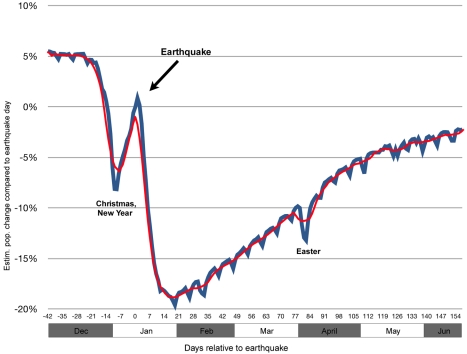
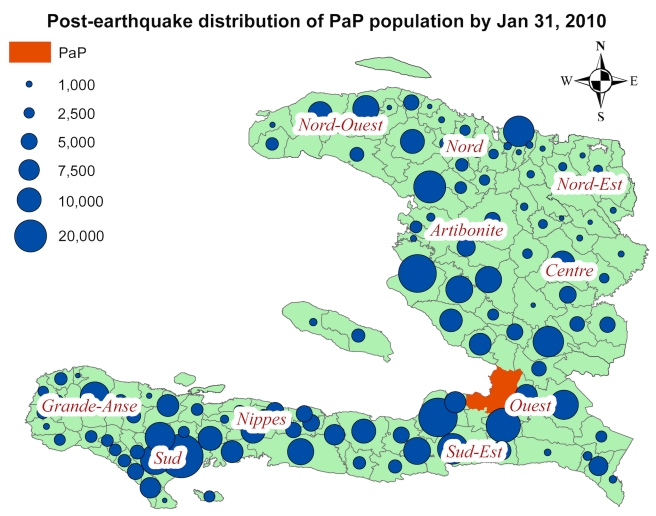
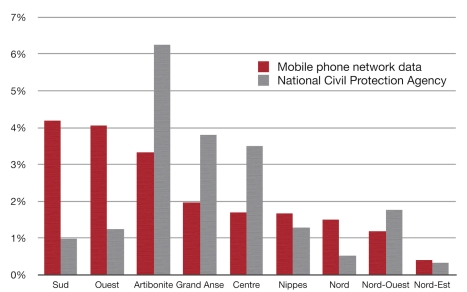
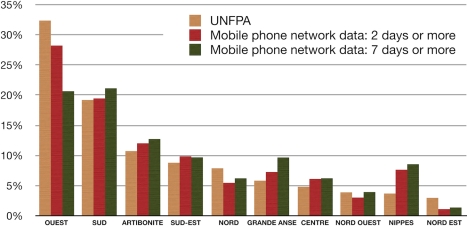
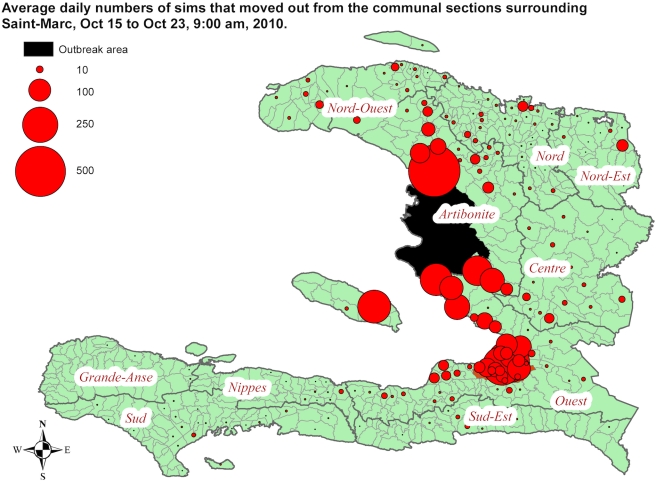
BACKGROUND: Population movements following disasters can cause important increases in morbidity and mortality. Without knowledge of the locations of affected people, relief assistance is compromised. No rapid and accurate method exists to track population movements after disasters. We used position data of subscriber identity module (SIM) cards from the largest mobile phone company in Haiti (Digicel) to estimate the magnitude and trends of population movements following the Haiti 2010 earthquake and cholera outbreak. METHODS AND FINDINGS: Geographic positions of SIM cards were determined by the location of the mobile phone tower through which each SIM card connects when calling. We followed daily positions of SIM cards 42 days before the earthquake and 158 days after. To exclude inactivated SIM cards, we included only the 1.9 million SIM cards that made at least one call both pre-earthquake and during the last month of study. In Port-au-Prince there were 3.2 persons per included SIM card. We used this ratio to extrapolate from the number of moving SIM cards to the number of moving persons. Cholera outbreak analyses covered 8 days and tracked 138,560 SIM cards. An estimated 630,000 persons (197,484 Digicel SIM cards), present in Port-au-Prince on the day of the earthquake, had left 19 days post-earthquake. Estimated net outflow of people (outflow minus inflow) corresponded to 20% of the Port-au-Prince pre-earthquake population. Geographic distribution of population movements from Port-au-Prince corresponded well with results from a large retrospective, population-based UN survey. To demonstrate feasibility of rapid estimates and to identify areas at potentially increased risk of outbreaks, we produced reports on SIM card movements from a cholera outbreak area at its immediate onset and within 12 hours of receiving data. CONCLUSIONS: Results suggest that estimates of population movements during disasters and outbreaks can be delivered rapidly and with potentially high validity in areas with high mobile phone use.
Overview
The claims and statistics of this paper haven’t been checked yet.
Free: it reads the open-access text and checks the first 5 claims that cite a source we can check. Create a free account to check every claim.
Integrity signals
Registry
Cites
Statistics
Figures
Verification
Claims the paper makes
The claims and statistics of this paper haven’t been checked yet.
Free: it reads the open-access text and checks the first 5 claims that cite a source we can check. Create a free account to check every claim.
Claims other papers make about this one
Each is checked against this paper’s own text: does it say what the citing paper says it does?
The cited source says what the claim attributes to it.
In the citing paper
“Reports have described mobile technology use during natural disasters, including the earthquakes in China in 2008 and Haiti in 2010 [38,39].”
Self-check
Percentages, sums and reported differences re-computed from the paper’s own numbers.
The self-check needs the paper’s full text.
Citations
Cites
Understanding individual human mobility patterns
González, M. C., Hidalgo, C. A., & Barabási, A.-L. (2008) · Nature · doi:10.1038/nature06958 · Cited by 6,059 · cited 1×
“. However, in addition to enabling communication, mobile phone networks routinely register data that can be used to track the location of all active mobile phones. This data source has been used to analyse mobility patterns under stable societal conditions”
MethodMultiscale mobility networks and the spatial spreading of infectious diseases
Balcan, D., Colizza, V., Gonçalves, B., Hu, H., Ramasco, J. J., & Vespignani, A. (2009) · Proceedings of the National Academy of Sciences · doi:10.1073/pnas.0906910106 · Cited by 1,380 · cited 1×
“Human mobility is extremely important for the spread of communicable diseases [28,29], and early containment of epidemic outbreaks is often a key factor in preventing spread [30].”
BackgroundZook, M., Graham, M., Shelton, T., & Gorman, S. (2010) · World Medical & Health Policy · doi:10.2202/1948-4682.1069 · Cited by 768 · cited 2×
“Network data can provide even richer information when combined with information on the ground and potentially also with data from mobile phone surveys [13].”
BackgroundSocial and environmental risk factors in the emergence of infectious diseases
Weiss, R. A., & McMichael, A. J. (2004) · Nature Medicine · doi:10.1038/nm1150 · Cited by 704 · cited 1×
“Human mobility is extremely important for the spread of communicable diseases [28,29], and early containment of epidemic outbreaks is often a key factor in preventing spread [30].”
BackgroundMeasuring the information society
(1989) · Choice Reviews Online · doi:10.5860/choice.26-3322 · Cited by 610
Large-Scale Spatial-Transmission Models of Infectious Disease
Riley, S. (2007) · Science · doi:10.1126/science.1134695 · Cited by 603 · cited 1×
“Human mobility is extremely important for the spread of communicable diseases [28,29], and early containment of epidemic outbreaks is often a key factor in preventing spread [30].”
BackgroundTHE PUBLIC HEALTH ASPECTS OF COMPLEX EMERGENCIES AND REFUGEE SITUATIONS
Toole, M., & Waldman, R. (1997) · Annual Review of Public Health · doi:10.1146/annurev.publhealth.18.1.283 · Cited by 381 · cited 1×
“Rapid, uncontrolled population movements often lead to important increases in morbidity and mortality [2,3].”
BackgroundLessons learned from complex emergencies over past decade
Salama, P., Spiegel, P., Talley, L., & Waldman, R. (2004) · The Lancet · doi:10.1016/s0140-6736(04)17405-9 · Cited by 346 · cited 1×
“Rapid, uncontrolled population movements often lead to important increases in morbidity and mortality [2,3].”
BackgroundPublic health impact of Rwandan refugee crisis: what happened in Goma, Zaire, in July, 1994?
Goma Epidemiology Group (1995) · The Lancet · doi:10.1016/s0140-6736(95)90338-0 · Cited by 330
Evaluating passive mobile positioning data for tourism surveys: An Estonian case study
Ahas, R., Aasa, A., Roose, A., Mark, Ü., & Silm, S. (2008) · Tourism Management · doi:10.1016/j.tourman.2007.05.014 · Cited by 319 · cited 2×
“This data source has been used to analyse mobility patterns under stable societal conditions [14–16], but not during major societal disruptions such as a natural disaster or a large infectious disease outbreak under unstable conditions.”
BackgroundMethod
Research works printed but not linked: 2
- 1998, The demography of forced migration: summary of a workshop
- 2010, World Telecommunication/ICT Development Report 2010. Monitoring the WSIS targets. A mid-term review
Cited by
Dynamic population mapping using mobile phone data
Deville, P., Linard, C., Martin, S., Gilbert, M., Stevens, F. R., Gaughan, A. E., Blondel, V. D., & Tatem, A. J. (2014) · Proceedings of the National Academy of Sciences · doi:10.1073/pnas.1408439111 · Cited by 900
“Population movement analyses based on MP data are particularly promising for improving responses to disasters (47, 48) and for planning malaria elimination strategies (49 – 51).”
BackgroundPopulation flow drives spatio-temporal distribution of COVID-19 in China
Jia, J. S., Lu, X., Yuan, Y., Xu, G., Jia, J., & Christakis, N. A. (2020) · Nature · doi:10.1038/s41586-020-2284-y · Cited by 835
Self-citationMobile Crowd Sensing and Computing: The Review of an Emerging Human-Powered Sensing Paradigm
Guo, B., Wang, Z., Yu, Z., Wang, Y., Yen, N. Y., Huang, R., & Zhou, X. (2015) · ACM Computing Surveys · doi:10.1145/2794400 · Cited by 719
“A powerful demonstration of MCSC to disasters came after the January 2010 earthquake in Haiti [Bengtsson et al. 2011].”
BackgroundKällander, K., Tibenderana, J. K., Akpogheneta, O. J., Strachan, D. L., Hill, Z., ten Asbroek, A. H. A., Conteh, L., Kirkwood, B. R., & Meek, S. R. (2013) · Journal of Medical Internet Research · doi:10.2196/jmir.2130 · Cited by 653
“Reports have described mobile technology use during natural disasters, including the earthquakes in China in 2008 and Haiti in 2010 [38,39].”
BackgroundBig data for development: a review of promises and challenges
Hilbert, M. (2016) · Development Policy Review · doi:10.1111/dpr.12142 · Cited by 679
“, 2014); to understand population movements following an earthquake and cholera outbreak (Bengtsson et al., 2011;, Lu et al., 2012); to study social responses to urban earthquakes in Mexico (Moumni et al.”
Jusup, M., Holme, P., Kanazawa, K., Takayasu, M., Romić, I., Wang, Z., Geček, S., Lipić, T., Podobnik, B., Wang, L., et al. (2022) · Physics Reports · doi:10.1016/j.physrep.2021.10.005 · Cited by 643
Predictability of population displacement after the 2010 Haiti earthquake
Lu, X., Bengtsson, L., & Holme, P. (2012) · Proceedings of the National Academy of Sciences · doi:10.1073/pnas.1203882109 · Cited by 631
“We have, however, shown very promising results in this area in earlier research (13).”
BackgroundResultSelf-citationSalathé, M., Bengtsson, L., Bodnar, T. J., Brewer, D. D., Brownstein, J. S., Buckee, C., Campbell, E. M., Cattuto, C., Khandelwal, S., Mabry, P. L., et al. (2012) · PLoS Computational Biology · doi:10.1371/journal.pcbi.1002616 · Cited by 500
“The observation of the spatiotemporal movements of millions of people during disease outbreaks [4], the rapid detection of an unusual respiratory illness in a remote village anywhere on the globe [5], the near real-time estimation of influenza activity levels [6,7], and the assessment of vaccination sentiments during…”
BackgroundMethodSelf-citationKamel Boulos, M. N., Resch, B., Crowley, D. N., Breslin, J. G., Sohn, G., Burtner, R., Pike, W. A., Jezierski, E., & Chuang, K.-Y. (2011) · International Journal of Health Geographics · doi:10.1186/1476-072x-10-67 · Cited by 496
Applications of artificial intelligence for disaster management
Sun, W., Bocchini, P., & Davison, B. D. (2020) · Natural Hazards · doi:10.1007/s11069-020-04124-3 · Cited by 491
“Social media data embed emotional text and images, time and geo-location information, which as useful to identify the spatial and temporal evolution of public behaviors and population mobility, as well as psychological and healthcare needs (Bengtsson et al. 2011; Caragea et al. 2014; Ukkusuri et al. 2014; Wilson et al…”
BackgroundMethodOn the Use of Human Mobility Proxies for Modeling Epidemics
Tizzoni, M., Bajardi, P., Decuyper, A., Kon Kam King, G., Schneider, C. M., Blondel, V., Smoreda, Z., González, M. C., & Colizza, V. (2014) · PLoS Computational Biology · doi:10.1371/journal.pcbi.1003716 · Cited by 413
“They were indeed used to shed light on malaria diffusion and identify hotspot areas [24,26,27], to monitor human displacements in case of natural disasters [25,28] and to study disease containment strategies in Ivory Coast [29].”
BackgroundThe use of mobile phone data to inform analysis of COVID-19 pandemic epidemiology
Grantz, K. H., Meredith, H. R., Cummings, D. A. T., Metcalf, C. J. E., Grenfell, B. T., Giles, J. R., Mehta, S., Solomon, S., Labrique, A., Kishore, N., et al. (2020) · Nature Communications · doi:10.1038/s41467-020-18190-5 · Cited by 413
Everything you need to know about agent-based modelling and simulation
Macal, C. M. (2016) · Journal of Simulation · doi:10.1057/jos.2016.7 · Cited by 469
“Data streams from social media and sensor networks offer the possibility of extracting agent behaviours in real time (Bengtsson et al , 2011) and dynamically aligning agent states to real populations.”
BackgroundApproaching the Limit of Predictability in Human Mobility
Lu, X., Wetter, E., Bharti, N., Tatem, A. J., & Bengtsson, L. (2013) · Scientific Reports · doi:10.1038/srep02923 · Cited by 380
“3A, and 1,2,17 .”
Self-citationMeasuring objective and subjective well-being: dimensions and data sources
Voukelatou, V., Gabrielli, L., Miliou, I., Cresci, S., Sharma, R., Tesconi, M., & Pappalardo, L. (2021) · International Journal of Data Science and Analytics · doi:10.1007/s41060-020-00224-2 · Cited by 365
The environment ontology: contextualising biological and biomedical entities
Buttigieg, P., Morrison, N., Smith, B., Mungall, C. J., Lewis, S. E., & the ENVO Consortium (2013) · Journal of Biomedical Semantics · doi:10.1186/2041-1480-4-43 · Cited by 358
Big data and disaster management: a systematic review and agenda for future research
Akter, S., & Wamba, S. F. (2019) · Annals of Operations Research · doi:10.1007/s10479-017-2584-2 · Cited by 343
Human mobility characterization from cellular network data
Becker, R., Cáceres, R., Hanson, K., Isaacman, S., Loh, J. M., Martonosi, M., Rowland, J., Urbanek, S., Varshavsky, A., & Volinsky, C. (2013) · Communications of the ACM · doi:10.1145/2398356.2398375 · Cited by 311
“The research community has been increasingly using cellular network data to study human mobility, and applying their findings to various domains, including urban planning [19], mobility modeling [10], social relation inference [11], and healthcare [3].”
BackgroundUsing Mobile Phone Data to Predict the Spatial Spread of Cholera
Bengtsson, L., Gaudart, J., Lu, X., Moore, S., Wetter, E., Sallah, K., Rebaudet, S., & Piarroux, R. (2015) · Scientific Reports · doi:10.1038/srep08923 · Cited by 281
Self-citation(2021) · Research Design in Clinical Psychology · doi:10.1017/9781108993647.010 · Cited by 276
In the name of Development: Power, profit and the datafication of the global South
Taylor, L., & Broeders, D. (2015) · Geoforum · doi:10.1016/j.geoforum.2015.07.002 · Cited by 269
Large-Scale Mobile Traffic Analysis: A Survey
Naboulsi, D., Fiore, M., Ribot, S., & Stanica, R. (2016) · IEEE Communications Surveys & Tutorials · doi:10.1109/comst.2015.2491361 · Cited by 257
Research Design in Clinical Psychology
Kazdin, A. E. (2021) · doi:10.1017/9781108993647 · Cited by 240
Human mobility and socioeconomic status: Analysis of Singapore and Boston
Xu, Y., Belyi, A., Bojic, I., & Ratti, C. (2018) · Computers, Environment and Urban Systems · doi:10.1016/j.compenvurbsys.2018.04.001 · Cited by 234
It’s a long, long walk: accessibility to hospitals, maternity and integrated health centers in Niger
Blanford, J. I., Kumar, S., Luo, W., & MacEachren, A. M. (2012) · International Journal of Health Geographics · doi:10.1186/1476-072x-11-24 · Cited by 219
“cholera, mosquito-borne diseases such as malaria during the wet season and pneumonia, meningitis and measles during the dry season as well as feeding centers during severe droughts) or to plan relocation of populations during disaster events such as illustrated in Haiti during the earthquake of 2010 [97]; or to identi…”
BackgroundResch, B., Usländer, F., & Havas, C. (2018) · Cartography and Geographic Information Science · doi:10.1080/15230406.2017.1356242 · Cited by 219
“Naturally, these approaches require a functioning wireless network (mobile phone networks, WiFi networks, etc.), which is usually given even after major disasters, partly with some restrictions (Bengtsson, Xin, Thorson, Garfield, & Johan, 2011).”
BackgroundA Survey of Mobile Crowdsensing Techniques: A Critical Component for The Internet of Things
Liu, J., Shen, H., Narman, H. S., Chung, W., & Lin, Z. (2018) · ACM Transactions on Cyber-Physical Systems · doi:10.1145/3185504 · Cited by 201
Wang, Q., & Taylor, J. E. (2016) · PLOS ONE · doi:10.1371/journal.pone.0147299 · Cited by 194
“Existing research has reported that changes in the natural environment can cause behavioral change and temporary, or even permanent, human migrations [36, 37].”
BackgroundHumanitarian technology: a critical research agenda
Sandvik, K. B., Gabrielsen Jumbert, M., Karlsrud, J., & Kaufmann, M. (2014) · International Review of the Red Cross · doi:10.1017/s1816383114000344 · Cited by 186
Prediction of human emergency behavior and their mobility following large-scale disaster
Song, X., Zhang, Q., Sekimoto, Y., & Shibasaki, R. (2014) · Proceedings of the 20th ACM SIGKDD international conference on Knowledge discovery and data mining · doi:10.1145/2623330.2623628 · Cited by 174
Reassessment of the 2010–2011 Haiti cholera outbreak and rainfall-driven multiseason projections
Rinaldo, A., Bertuzzo, E., Mari, L., Righetto, L., Blokesch, M., Gatto, M., Casagrandi, R., Murray, M., Vesenbeckh, S. M., & Rodriguez-Iturbe, I. (2012) · Proceedings of the National Academy of Sciences · doi:10.1073/pnas.1203333109 · Cited by 182
“Our choice of a model of this kind (SI Materials and Methods) is indirectly supported by a recent empirical study (28) that tracked daily Haitian average movements through mobile phones to determine likely new areas for cholera outbreaks far from the site where the disease was first detected.”
BackgroundWilson, R., zu Erbach-Schoenberg, E., Albert, M., Power, D., Tudge, S., Gonzalez, M., Guthrie, S., Chamberlain, H., Brooks, C., Hughes, C., et al. (2016) · PLoS Currents · doi:10.1371/currents.dis.d073fbece328e4c39087bc086d694b5c · Cited by 179
Self-citationMobile phone data highlights the role of mass gatherings in the spreading of cholera outbreaks
Finger, F., Genolet, T., Mari, L., de Magny, G. C., Manga, N. M., Rinaldo, A., & Bertuzzo, E. (2016) · Proceedings of the National Academy of Sciences · doi:10.1073/pnas.1522305113 · Cited by 176
“Examples are the derivation of magnitude and destination of population fluxes following a sudden outbreak (25, 31), and the quantification of the importance of human mobility and its seasonal variations on the spread of disease in terms of increased outbreak risk in and infectious pressure on connected areas (5, 30, 3…”
BackgroundTatem, A. J., Huang, Z., Narib, C., Kumar, U., Kandula, D., Pindolia, D. K., Smith, D. L., Cohen, J. M., Graupe, B., Uusiku, P., et al. (2014) · Malaria Journal · doi:10.1186/1475-2875-13-52 · Cited by 174
“Following previous studies [24-27,30], anonymized records aggregated to the level of cell towers were provided to ensure that it was impossible to identify individuals.”
BackgroundMethodCrisis analytics: big data-driven crisis response
Qadir, J., Ali, A., ur Rasool, R., Zwitter, A., Sathiaseelan, A., & Crowcroft, J. (2016) · Journal of International Humanitarian Action · doi:10.1186/s41018-016-0013-9 · Cited by 168
Urban Mobility and Activity Space
Cagney, K. A., York Cornwell, E., Goldman, A. W., & Cai, L. (2020) · Annual Review of Sociology · doi:10.1146/annurev-soc-121919-054848 · Cited by 162
“As a result, CDR data have been widely used in a range of contexts, including human mobility (González et al. 2008), disaster response (Bengtsson et al. 2011), epidemic transmission (Le Menach et al. 2011), social connectedness (Wang et al. 2015) and crime (Song et al. 2019).”
BackgroundCommentary: Containing the Ebola Outbreak - the Potential and Challenge of Mobile Network Data
Wesolowski, A., Buckee, C. O., Bengtsson, L., Wetter, E., Lu, X., & Tatem, A. J. (2014) · PLoS Currents · doi:10.1371/currents.outbreaks.0177e7fcf52217b8b634376e2f3efc5e · Cited by 169
Self-citationOn the privacy-conscientious use of mobile phone data
de Montjoye, Y.-A., Gambs, S., Blondel, V., Canright, G., de Cordes, N., Deletaille, S., Engø-Monsen, K., Garcia-Herranz, M., Kendall, J., Kerry, C., et al. (2018) · Scientific Data · doi:10.1038/sdata.2018.286 · Cited by 168
Self-citationAnalyzing large-scale human mobility data: a survey of machine learning methods and applications
Toch, E., Lerner, B., Ben-Zion, E., & Ben-Gal, I. (2019) · Knowledge and Information Systems · doi:10.1007/s10115-018-1186-x · Cited by 167
“, the 2010 Haiti earthquake [9, 57] or the 2011 Japan earthquake [31].”
BackgroundMobile phone location data for disasters: A review from natural hazards and epidemics
Yabe, T., Jones, N. K. W., Rao, P. S. C., Gonzalez, M. C., & Ukkusuri, S. V. (2022) · Computers, Environment and Urban Systems · doi:10.1016/j.compenvurbsys.2022.101777 · Cited by 160
Human movement data for malaria control and elimination strategic planning
Pindolia, D. K., Garcia, A. J., Wesolowski, A., Smith, D. L., Buckee, C. O., Noor, A. M., Snow, R. W., & Tatem, A. J. (2012) · Malaria Journal · doi:10.1186/1475-2875-11-205 · Cited by 162
“Recently, mobile phone usage data have been used to capture nationally comprehensive, high spatial-temporal resolution, individual-level data on within country HPM and link it to disease data [98].”
BackgroundQuantifying Human Mobility Perturbation and Resilience in Hurricane Sandy
Wang, Q., & Taylor, J. E. (2014) · PLoS ONE · doi:10.1371/journal.pone.0112608 · Cited by 162
“While human mobility studies have improved our knowledge about general mobility patterns, it is intuitive to assume that disasters may perturb such routine movements [17,18,19] and even cause population migration [20].”
BackgroundHoffmann, R., Šedová, B., & Vinke, K. (2021) · Global Environmental Change · doi:10.1016/j.gloenvcha.2021.102367 · Cited by 159
No place to hide? The ethics and analytics of tracking mobility using mobile phone data
Taylor, L. (2016) · Environment and Planning D: Society and Space · doi:10.1177/0263775815608851 · Cited by 156
“Mobile traces are currently used by researchers for purposes that span very different timescales and justifications, ranging from real-time humanitarian response (e.g. Bengtsson et al., 2011) to understanding socioeconomic change (Soto et al., 2011).”
BackgroundInfluentialChecchi, F., Warsame, A., Treacy-Wong, V., Polonsky, J. A., van Ommeren, M., & Prudhon, C. (2017) · The Lancet · doi:10.1016/s0140-6736(17)30702-x · Cited by 191
“Mobility patterns of each mobile phone within the area of the phone tower coverage can then be analysed.(33,34)”
(2016) · Thammasat University Digital Collections · Cited by 153
Peak, C. M., Wesolowski, A., zu Erbach-Schoenberg, E., Tatem, A. J., Wetter, E., Lu, X., Power, D., Weidman-Grunewald, E., Ramos, S., Moritz, S., et al. (2018) · International Journal of Epidemiology · doi:10.1093/ije/dyy095 · Cited by 141
Self-citationKass‐Hout, T., & Alhinnawi, H. (2013) · British Medical Bulletin · doi:10.1093/bmb/ldt028 · Cited by 170
Changing travel patterns in China during the early stages of the COVID-19 pandemic
Gibbs, H. P., Liu, Y., Pearson, C. A. B., Jarvis, C. I., Grundy, C., Quilty, B. J., Diamond, C., LSHTM CMMID COVID-19 working group, Simons, D., Gimma, A., et al. (2020) · Nature Communications · doi:10.1038/s41467-020-18783-0 · Cited by 151
Understanding the bias of call detail records in human mobility research
Zhao, Z., Shaw, S., Xu, Y., Lu, F., Chen, J., & Yin, L. (2016) · International Journal of Geographical Information Systems · doi:10.1080/13658816.2015.1137298 · Cited by 169
“In urban areas where cell towers are sparsely distributed, geographic positioning becomes less precise (Bengtsson et al .”
BackgroundCrowdsourcing and Sensing for Indoor Localization in IoT: A Review
Lashkari, B., Rezazadeh, J., Farahbakhsh, R., & Sandrasegaran, K. S. (2018) · IEEE Sensors Journal · doi:10.1109/jsen.2018.2880180 · Cited by 151
“their crowd sensing or crowdsourcing approach [62], [63].”
BackgroundTrending Now: Using Social Media to Predict and Track Disease Outbreaks
Schmidt, C. W. (2012) · Environmental Health Perspectives · doi:10.1289/ehp.120-a30 · Cited by 131
“7 Bengtsson and colleagues subsequently used call records to investigate population movements after cholera took hold in Saint-Marc and surrounding areas.”
BackgroundInfluentialAccuracy of smartphone apps for heart rate measurement
Coppetti, T., Brauchlin, A., Müggler, S., Attinger-Toller, A., Templin, C., Schönrath, F., Hellermann, J., Lüscher, T. F., Biaggi, P., & Wyss, C. A. (2017) · European Journal of Preventive Cardiology · doi:10.1177/2047487317702044 · Cited by 128
RETRACTED: Digital Twin Smart Cities for Disaster Risk Management: A Review of Evolving Concepts
Ariyachandra, M. R. M. F., & Wedawatta, G. (2023) · Sustainability · doi:10.3390/su151511910 · Cited by 155
“The selection of the essential real data can be accomplished through big data analysis and simulation employing AI judgement based on the available empirical data.”
MethodRetractedVirus evolution and transmission in an ever more connected world
Pybus, O. G., Tatem, A. J., & Lemey, P. (2015) · Proceedings of the Royal Society B Biological Sciences · doi:10.1098/rspb.2014.2878 · Cited by 130
Migration and the Value of Social Networks
Blumenstock, J. E., Chi, G., & Tan, X. (2023) · The Review of Economic Studies · doi:10.1093/restud/rdad113 · Cited by 121
Urban Anomaly Analytics: Description, Detection, and Prediction
Zhang, M., Li, T., Yu, Y., Li, Y., Hui, P., & Zheng, Y. (2020) · IEEE Transactions on Big Data · doi:10.1109/tbdata.2020.2991008 · Cited by 135
Gao, J. G., Zhang, Y., & Zhou, T. (2019) · Physics Reports · doi:10.1016/j.physrep.2019.05.002 · Cited by 138
COVID-19 and Contact Tracing Apps: Ethical Challenges for a Social Experiment on a Global Scale
Lucivero, F., Hallowell, N., Johnson, S. B., Prainsack, B., Samuel, G. N., & Sharon, T. (2020) · Journal of Bioethical Inquiry · doi:10.1007/s11673-020-10016-9 · Cited by 129
“Data from search engines can now provide early warning of respiratory illnesses in local communities, data from social networking sites can provide early warning of vaccine refusal, and tracking population movements with mobile phone network data has improved responses to disasters and outbreaks (Bengtsson et al. 2011…”
BackgroundDynamic Participant Recruitment of Mobile Crowd Sensing for Heterogeneous Sensing Tasks
Li, H., Li, T., & Wang, Y. (2015) · IEEE International Conference on Mobile Ad-Hoc and Sensor Systems (MASS) · doi:10.1109/mass.2015.46 · Cited by 112
“These advantages has enabled a broad range of novel MCS applications, such as urban dynamic mining [3], [4], public safety [5] , traffic planning [6]–[9], and environment monitoring [10]–[12].”
BackgroundThe Tyranny of Data? The Bright and Dark Sides of Data-Driven Decision-Making for Social Good
Lepri, B., Staiano, J., Sangokoya, D., Letouzé, E., & Oliver, N. (2017) · Studies in Big Data · doi:10.1007/978-3-319-54024-5_1 · Cited by 111
Zhang, X., Xu, Y., Tu, W., & Ratti, C. (2018) · Journal of Transport Geography · doi:10.1016/j.jtrangeo.2018.05.002 · Cited by 119
Granell, C., & Ostermann, F. (2016) · Computers Environment and Urban Systems · doi:10.1016/j.compenvurbsys.2016.01.006 · Cited by 127
“Examples are probabilistic models (Crandall et al., 2010), predictive models (Bengtsson et al., 2011; Chen et al., 2011; Wirz et al., 2013), and regression analysis (Wirz et al., 2013; Panteras et al., 2015; de Alburquerque et al., 2015; Kent & Capello, 2013).”
BackgroundMethodStrengthening Global Public Health Surveillance through Data and Benefit Sharing
Edelstein, M., Lee, L. M., Herten-Crabb, A., Heymann, D. L., & Harper, D. R. (2018) · Emerging Infectious Diseases · doi:10.3201/eid2407.151830 · Cited by 106
“Data sources include search engine and social media queries (9,10), crowd-sourced event-based information queries (11), machine learning (12), natural language processing, and geolocalization (13).”
BackgroundHuman migration: the big data perspective
Sîrbu, A., Andrienko, G., Andrienko, N. V., Boldrini, C., Conti, M., Giannotti, F., Guidotti, R., Bertoli, S., Kim, J., Muntean, C. I., et al. (2020) · International Journal of Data Science and Analytics · doi:10.1007/s41060-020-00213-5 · Cited by 137
“For instance, [30] propose to use mobile phone data to trace individuals’ movements in the occurrence of earthquake in Haiti.”
BackgroundDeng, H., Aldrich, D. P., Danziger, M. M., Gao, J., Phillips, N. E., Cornelius, S. P., & Wang, Q. (2021) · Humanities and Social Sciences Communications · doi:10.1057/s41599-021-00824-8 · Cited by 129
“…et al., 2018, 2017; González et al., 2008; Hasan et al., 2013), including in large-scale disasters and extreme events (Bagrow et al., 2011; Bengtsson et al., 2011), allowing the construction of probabilistic models (Song et al., 2014, 2013), and highlighting the importance of social…”
BackgroundEffects of the 2010 Haiti Earthquake on Women's Reproductive Health
Behrman, J. A., & Weitzman, A. (2016) · Studies in Family Planning · doi:10.1111/j.1728-4465.2016.00045.x · Cited by 112
Progress and Challenges in Infectious Disease Cartography
Kraemer, M. U. G., Hay, S. I., Pigott, D. M., Smith, D. L., Wint, W., & Golding, N. (2015) · Trends in Parasitology · doi:10.1016/j.pt.2015.09.006 · Cited by 118
“Building on the success of emergency mapping drives in the wake of natural disasters [25], public health and humanitarian agencies have recently sought to improve mapping in resource-poor areas via the Missing Maps Project, which aims to provide detailed crowd-sourced cartographic information for the most vulnerable a…”
BackgroundLu, X. B., & Brelsford, C. M. (2014) · Scientific Reports · doi:10.1038/srep06773 · Cited by 119
Self-citationThe Use of Census Migration Data to Approximate Human Movement Patterns across Temporal Scales
Wesolowski, A., Buckee, C. O., Pindolia, D. K., Eagle, N., Smith, D. L., Garcia, A. J., & Tatem, A. J. (2013) · PLoS ONE · doi:10.1371/journal.pone.0052971 · Cited by 96
Can Twitter predict disease outbreaks?
St Louis, C., & Zorlu, G. (2012) · BMJ · doi:10.1136/bmj.e2353 · Cited by 96
Mapping population and pathogen movements
Tatem, A. J. (2014) · International Health · doi:10.1093/inthealth/ihu006 · Cited by 104
Is bigger better? The emergence of big data as a tool for international development policy
Taylor, L., & Schroeder, R. (2014) · GeoJournal · doi:10.1007/s10708-014-9603-5 · Cited by 110
“They then used this mobility data to identify areas outside the city at risk of cholera outbreaks as a result of the outmigration (Bengtsson et al. 2011).”
BackgroundMethodUsing geotagged tweets to track population movements to and from Puerto Rico after Hurricane Maria
Martín, Y., Cutter, S. L., Li, Z., Emrich, C. T., & Mitchell, J. T. (2020) · Population and Environment · doi:10.1007/s11111-020-00338-6 · Cited by 93
Li, W., Wang, S., Zhang, X., Jia, Q., & Tian, Y. (2020) · International Journal of Geographical Information Systems · doi:10.1080/13658816.2020.1712401 · Cited by 99
Big spatial data for urban and environmental sustainability
Huang, B., & Wang, J. (2020) · Geo-spatial Information Science · doi:10.1080/10095020.2020.1754138 · Cited by 91
“For example, Bengtsson et al. (2011) tracked population movements with a high spatiotemporal resolution by using Subscriber Identity Module (SIM) data during the Haiti 2010 earthquake and cholera outbreak.”
MethodReview of research on tourism-related diseases
Chen, S., Law, R., & Zhang, M. (2020) · Asia Pacific Journal of Tourism Research · doi:10.1080/10941665.2020.1805478 · Cited by 85
Bridging Twitter and Survey Data for Evacuation Assessment of Hurricane Matthew and Hurricane Irma
Martín, Y., Cutter, S. L., & Li, Z. (2020) · Natural Hazards Review · doi:10.1061/(asce)nh.1527-6996.0000354 · Cited by 83
Impact of extreme weather events on urban human flow: A perspective from location-based service data
Chen, Z., Gong, Z., Yang, S., Ma, Q., & Kan, C. (2020) · Computers Environment and Urban Systems · doi:10.1016/j.compenvurbsys.2020.101520 · Cited by 83
Evidence and future potential of mobile phone data for disease disaster management
Cinnamon, J., Jones, S. K., & Adger, W. N. (2016) · Geoforum · doi:10.1016/j.geoforum.2016.07.019 · Cited by 96
“While there are only a small number of early exploratory examples of CDR or SMS data use in disasters (e.g. Bengtsson et al. , 2011; Yang et al. , 2009), the 2013-2015 Ebola outbreak and humanitarian crisis in West Africa stimulated significant interest and debate in academic, policy, and…”
Cross-comparative analysis of evacuation behavior after earthquakes using mobile phone data
Yabe, T., Sekimoto, Y., Tsubouchi, K., & Ikemoto, S. (2019) · PLoS ONE · doi:10.1371/journal.pone.0211375 · Cited by 80
“Due to this characteristic, it has been shown that home locations of individuals can be detected with high accuracy by clustering the individual’s stay point locations over night (Calabrese et al. [2011]).”
Human mobility data and analysis for urban resilience: A systematic review
Haraguchi, M., Nishino, A., Kodaka, A., Allaire, M. C., Lall, U., Liao, K., Onda, K., Tsubouchi, K., & Kohtake, N. (2022) · Environment and Planning B Urban Analytics and City Science · doi:10.1177/23998083221075634 · Cited by 125
“After the earthquake in Haiti in 2010, 630,000 people were displaced temporarily (Bengtsson et al., 2011; Lu et al., 2012).”
BackgroundMethodInfluentialFlooding through the lens of mobile phone activity
Pastor-Escuredo, D., Morales-Guzman, A., Torres-Fernandez, Y., Bauer, J.-M., Wadhwa, A., Castro-Correa, C., Romanoff, L., Lee, J. G., Rutherford, A., Frias-Martinez, V., et al. (2014) · IEEE Global Humanitarian Technology Conference (GHTC 2014) · doi:10.1109/ghtc.2014.6970293 · Cited by 72
“A study after an earthquake in Haiti found that a CDR-based estimation of population movements during disasters or disease outbreaks can be delivered rapidly and with high accuracy [15].”
BackgroundMeasurement of Social Networks for Innovation within Community Disaster Resilience
Wilkin, J., Biggs, E. M., & Tatem, A. J. (2019) · Sustainability · doi:10.3390/su11071943 · Cited by 84
“These insights have found multiple uses within sustainable development applications, including poverty estimation [66,67], epidemiology [68], and disaster response [69].”
BackgroundLu, X., Wrathall, D. J., Sundsøy, P. R., Nadiruzzaman, M., Wetter, E., Iqbal, A., Qureshi, T., Tatem, A. J., Canright, G. S., Engø-Monsen, K., et al. (2016) · Climatic Change · doi:10.1007/s10584-016-1753-7 · Cited by 76
“Operator data has been used during relief operations after the Haiti 2010 earthquake (Bengtsson et al. 2011; Lu et al. 2012) and cholera outbreaks (Bengtsson et al. 2015) and the Nepal 2015 earthquake (Wilson et al. 2016), making them a very promising proxy indicator for measuring impacts of…”
MethodSelf-citationBig Data for Policymaking: Great Expectations, but with Limited Progress?
Poel, M., Meyer, E. T., & Schroeder, R. (2018) · Policy & Internet · doi:10.1002/poi3.176 · Cited by 86
Hara, Y., & Kuwahara, M. (2015) · Transportation Research Part A Policy and Practice · doi:10.1016/j.tra.2015.03.002 · Cited by 73
Call Detail Records Driven Anomaly Detection and Traffic Prediction in Mobile Cellular Networks
Sultan, K., Ali, H., & Zhang, Z. (2018) · IEEE Access · doi:10.1109/access.2018.2859756 · Cited by 90
“People also tend to move away from such a location directly showing a rise in users’ movement away from a particular location [15], [16].”
BackgroundQuantifying the dynamics of migration after Hurricane Maria in Puerto Rico
Acosta, R. J., Kishore, N., Irizarry, R. A., & Buckee, C. O. (2020) · Proceedings of the National Academy of Sciences · doi:10.1073/pnas.2001671117 · Cited by 72
“Assuming that appropriate steps are taken to anonymize and aggregate these data streams in secure ways, novel data streams offer ways to assess the needs of populations more accurately (9, 10).”
BackgroundLiu, Z., Ma, T., Du, Y., Pei, T., Yi, J., & Peng, H. (2018) · Transactions in GIS · doi:10.1111/tgis.12323 · Cited by 80
“Dynamic population estimation can also be beneficial to studies of natural disaster relief and impact assessments, in which population dynamics at high temporal resolution are usually not considered (Bengtsson et al., 2011; Min & Jeong, 2013; Wilson et al., 2016).”
BackgroundReif, J., & Schmücker, D. J. (2020) · Journal of Destination Marketing & Management · doi:10.1016/j.jdmm.2020.100481 · Cited by 93
Dynamic Participant Selection for Large-Scale Mobile Crowd Sensing
Li, H., Li, T., Wang, W., & Wang, Y. (2018) · IEEE Transactions on Mobile Computing · doi:10.1109/tmc.2018.2884945 · Cited by 71
“These advantages has enabled a broad range of MCS applications, such as public safety [3], [4], traffic planning [5], [6], localization [7], [8], environment”
BackgroundJeffrey, B., Walters, C. E., Ainslie, K. E. C., Eales, O. D., Ciavarella, C., Bhatia, S., Hayes, S. E., Baguelin, M., Boonyasiri, A., Brazeau, N. F., et al. (2020) · Wellcome Open Research · doi:10.12688/wellcomeopenres.15997.1 · Cited by 72
“Conclusions: These analyses form a baseline from which to observe changes in behaviour in the UK as social distancing is eased and inform policy towards the future control of SARS-CoV-2 in the UK.”
MethodInfluentialContext-aware real-time population estimation for metropolis
Xu, F., Zhang, P., & Li, Y. (2016) · ACM International Joint Conference on Pervasive and Ubiquitous Computing (UbiComp) · doi:10.1145/2971648.2971673 · Cited by 70
“Besides, many researchers investigate the collective response of population to emergency [35, 36].”
BackgroundThe ethics of big data as a public good: which public? Whose good?
Taylor, L. (2016) · Philosophical Transactions of the Royal Society A: Mathematical, Physical and Engineering Sciences · doi:10.1098/rsta.2016.0126 · Cited by 70
“The independent research organization Flowminder used CDRs to analyze the spread of the ensuing cholera epidemic [16], demonstrating that such data could be of use in tracking disease transmission.”
Mesmar, S., Talhouk, R., Akik, C., Olivier, P., Elhajj, I. H., Elbassuoni, S., Armoush, S., Kalot, J., Balaam, M., Germani, A., et al. (2016) · Journal of Public Health Policy · doi:10.1057/s41271-016-0040-1 · Cited by 70
Storeng, K. T., & de Bengy Puyvallée, A. (2021) · Global Public Health · doi:10.1080/17441692.2021.1882530 · Cited by 67
“In 2010 Flowminder, a nonprofit organisation, obtained data from the Haitian telecom operator Digicel and published a widely-cited study mapping the spread of the cholera epidemic that followed the devastating earthquake (Bengtsson et al., 2011).”
BackgroundA spatiotemporal decay model of human mobility when facing large-scale crises
Li, W., Wang, Q., Liu, Y., Small, M. L., & Gao, J. (2022) · Proceedings of the National Academy of Sciences · doi:10.1073/pnas.2203042119 · Cited by 74
Wang, Q., & Taylor, J. E. (2015) · Journal of Computing in Civil Engineering · doi:10.1061/(asce)cp.1943-5487.0000469 · Cited by 64
The role of data and information quality during disaster response decision-making
Jayawardene, V., Huggins, T. J., Prasanna, R., & Fakhruddin, B. S. H. M. (2021) · Progress in Disaster Science · doi:10.1016/j.pdisas.2021.100202 · Cited by 88
Metadata
- Authors
- Bengtsson, L., Lu, X., Thorson, A., Garfield, R., & von Schreeb, J.
- Affiliations
- Karolinska Institutet (SE)
- Stockholm University (SE)
- Columbia University (US)
- Corresponding author
- Bengtsson, Linus
- Venue
- PLoS Medicine
- Publisher
- Public Library of Science (PLoS)
- Published
- 2011-08-30
- Volume
- 8
- Issue
- 8
- Pages
- e1001083
- ISSN
- 1549-1277 (ISSN-L)
- 1549-1676
- PMC
- PMC3168873
- OpenAlex
- W2057301737
- Cited by
- 634
- References
- 20
- Citations by year
- 2026: 14 · 2025: 17 · 2024: 24 · 2023: 37 · 2022: 38 · 2021: 91 · 2020: 66 · 2019: 46 · 2018: 52 · 2017: 40 · 2016: 53 · 2015: 57 · 2014: 40 · 2013: 33 · 2012: 21
- FWCI
- 91.53
- Type
- journal article
- Language
- en
- Open access
- gold
- doi.org
- Locations
- PLoS Medicine (publishedVersion, cc-by)
- Europe PMC (PubMed Central) (publishedVersion, cc-by)
- PubMed Central (publishedVersion, cc-by)
- PubMed (publishedVersion)
- DOAJ (DOAJ: Directory of Open Access Journals) (submittedVersion, cc-by-sa)
- Figshare (submittedVersion, cc-by)
- Funders
- Socialstyrelsen
- Topics
- Social Sciences › Transportation › Human Mobility and Location-Based Analysis
- Social Sciences › Geography, Planning and Development › Earthquake and Disaster Impact Studies
- Health Sciences › Health Professions › Emergency Medical Services › Disaster Response and Management
- Keywords
- 2010 Haiti earthquake, cholera outbreak, disaster response, humanitarian aid, Port-au-Prince, outbreak risk assessment, spatial epidemiology
- MeSH terms
- Cholera, Demography, Disasters, Disease Outbreaks, Geography, Haiti, Humans, International Cooperation, Locomotion, Relief Work, Cell Phone, Earthquakes
About these checks
Registry, retraction, Cites and statistics results are computed, not judged, with one exception: a printed reference that no index lists is read once by a model before it counts as a citation error. Claims are extracted by a model and kept only when their quote appears verbatim in the text; each cited source is then checked, with a model’s help, for whether it says what the claim relies on. Those verdicts can be wrong — read the claim’s quote and the cited source before relying on one.
Statistics and arithmetic are recomputed, not judged.
Confidence bands are shown only for fields calibrated on our annotated test set. None is calibrated yet, so no band is shown.
What counts as a claim ›How we measure confidence ›How we check this ›
Are you an author, or do you see a problem with this page? Request a review
Data sources
Bibliographic data: Semantic Scholar, OpenAlex, Crossref.
Contains information from the Semantic Scholar Academic Graph Datasets, made available under the ODC Attribution License (ODC-BY 1.0).
Semantic Scholar’s data is described in: Kinney, R., et al. (2023). The Semantic Scholar Open Data Platform. arXiv:2301.10140.
