

The DOI matches its Crossref record; 84 of the 84 references it cites were found in a registry or an index.
Psychosocial Interventions for Perinatal Common Mental Disorders Delivered by Providers Who Are Not Mental Health Specialists in Low- and Middle-Income Countries: A Systematic Review and Meta-Analysis
Open accessAbstract
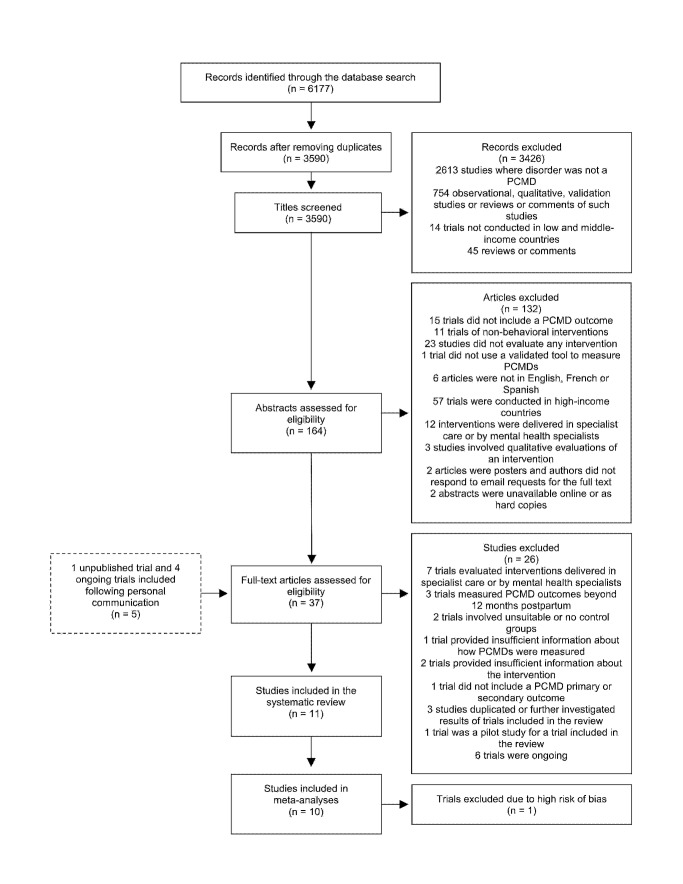
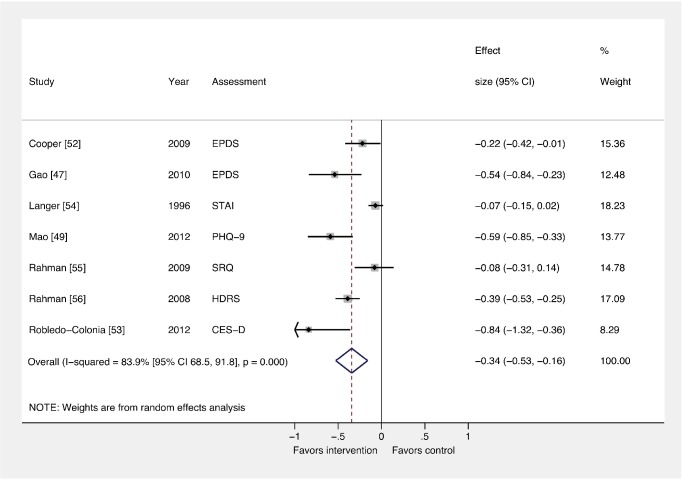
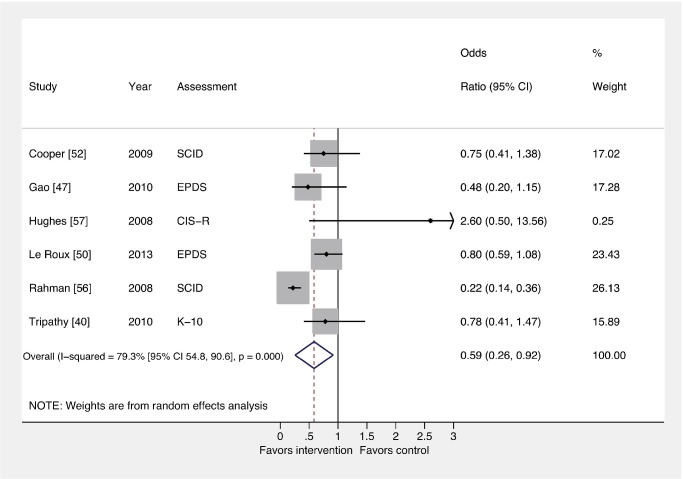
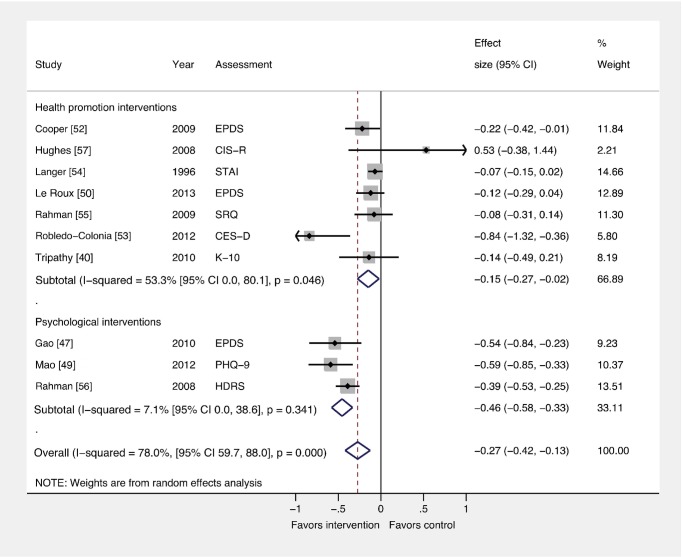
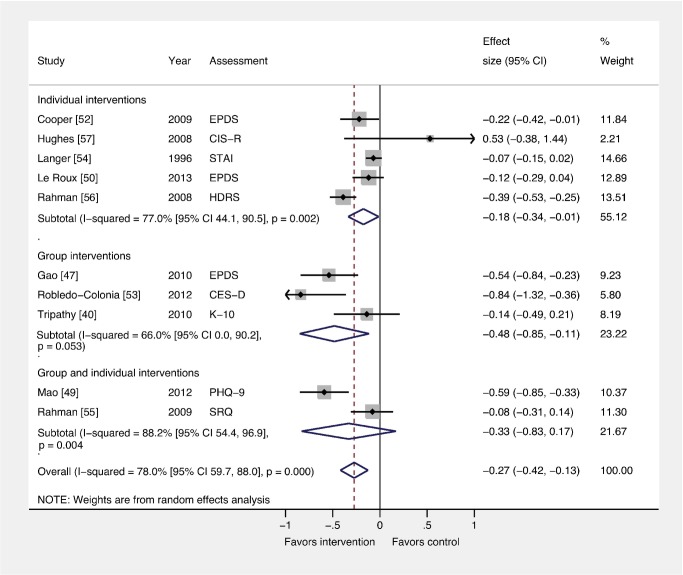
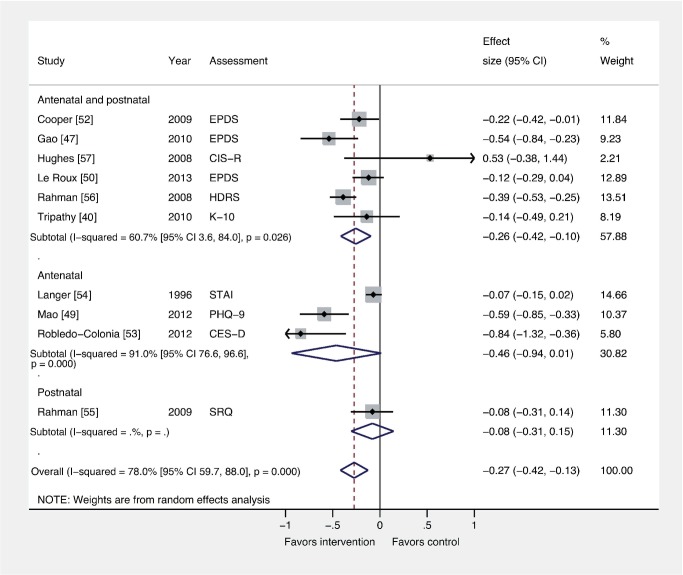
BACKGROUND: Perinatal common mental disorders (PCMDs) are a major cause of disability among women. Psychosocial interventions are one approach to reduce the burden of PCMDs. Working with care providers who are not mental health specialists, in the community or in antenatal health care facilities, can expand access to these interventions in low-resource settings. We assessed effects of such interventions compared to usual perinatal care, as well as effects of interventions based on intervention type, delivery method, and timing. METHODS AND FINDINGS: We conducted a systematic review, meta-analysis, and meta-regression. We searched databases including Embase and the Global Health Library (up to 7 July 2013) for randomized and non-randomized trials of psychosocial interventions delivered by non-specialist mental health care providers in community settings and antenatal health care facilities in low- and middle-income countries. We pooled outcomes from ten trials for 18,738 participants. Interventions led to an overall reduction in PCMDs compared to usual care when using continuous data for PCMD symptomatology (effect size [ES] -0.34; 95% CI -0.53, -0.16) but not binary categorizations for presence or absence of PCMDs (OR 0.62, 95% CI 0.35, 1.080 [corrected]. We found a significantly larger ES for psychological interventions (three studies; ES -0.46; 95% CI -0.58, -0.33) than for health promotion interventions (seven studies; ES -0.15; 95% CI -0.27, -0.02). Both individual (five studies; ES -0.18; 95% CI -0.34, -0.01) and group (three studies; ES -0.48; 95% CI -0.85, -0.11) interventions were effective compared to usual care, though delivery method was not associated with ES (meta-regression β coefficient -0.11; 95% CI -0.36, 0.14). Combined group and individual interventions (based on two studies) had no benefit compared to usual care, nor did interventions restricted to pregnancy (three studies). Intervention timing was not associated with ES (β 0.16; 95% CI -0.16, 0.49). The small number of trials and heterogeneity of interventions limit our findings. CONCLUSIONS: Psychosocial interventions delivered by non-specialists are beneficial for PCMDs, especially psychological interventions. Research is needed on interventions in low-income countries, treatment versus preventive approaches, and cost-effectiveness. Please see later in the article for the Editors' Summary.
Overview
The claims and statistics of this paper haven’t been checked yet.
Run the check — free, no account needed. It reads the open-access text and checks the sources it cites.
Integrity signals
Registry
Cites
Statistics
Figures
Verification
Claims the paper makes
The claims and statistics of this paper haven’t been checked yet.
Run the check — free, no account needed. It reads the open-access text and checks the sources it cites.
Claims other papers make about this one
Each is checked against this paper’s own text: does it say what the citing paper says it does?
The source backs part of the claim, not all of it — or backs it for a different population, condition or comparison.
In the citing paper
“Existing reviews highlight the effectiveness of a number of interventions for PPD including medication (eg, antidepressant medication), health promotion interventions (eg, educational home visits) and psychological interventions (eg, cognitive–behavioural therapy (CBT) and interpersonal therapy.16–27”
From Effectiveness and acceptability of cognitive-behavioural therapy based interventions for maternal peripartum depression: A systematic review, meta-analysis and thematic synthesis protocol (2019) · cites this paper as [16]
Experimental — accuracy not yet measuredIn the citing paper
“While half the psychiatric outpatients surveyed reported a positive view of mental health apps, only one in four had ever downloaded an app and only one in ten was currently using an app. 644”
From Time for united action on depression: a Lancet–World Psychiatric Association Commission (2022) · cites this paper as [644]
Self-check
Percentages, sums and reported differences re-computed from the paper’s own numbers.
The self-check needs the paper’s full text.
Citations
Cites
Preferred Reporting Items for Systematic Reviews and Meta-Analyses: the PRISMA statement
Moher, D., Liberati, A., Tetzlaff, J., Altman, D. G., & for the PRISMA Group (2009) · BMJ · doi:10.1136/bmj.b2535 · Cited by 83,823
Preferred Reporting Items for Systematic Reviews and Meta-Analyses: The PRISMA Statement
Moher, D., Liberati, A., Tetzlaff, J., Altman, D. G., & The PRISMA Group (2009) · PLoS Medicine · doi:10.1371/journal.pmed.1000097 · Cited by 64,042
Preferred reporting items for systematic reviews and meta-analyses: the PRISMA Statement.
(2009) · PubMed Central · Cited by 44,859
Quantifying heterogeneity in a meta‐analysis
Higgins, J. P. T., & Thompson, S. G. (2002) · Statistics in Medicine · doi:10.1002/sim.1186 · Cited by 36,763
The Cochrane Collaboration's tool for assessing risk of bias in randomised trials
Higgins, J. P. T., Altman, D. G., Gotzsche, P. C., Juni, P., Moher, D., Oxman, A. D., Savovic, J., Schulz, K. F., Weeks, L., Sterne, J. A. C., et al. (2011) · BMJ · doi:10.1136/bmj.d5928 · Cited by 33,817
Detection of Postnatal Depression: Development of the 10-item Edinburgh Postnatal Depression Scale
Cox, J. L., Holden, J. M., & Sagovsky, R. (1987) · British Journal of Psychiatry · doi:10.1192/bjp.150.6.782 · Cited by 14,183
KESSLER, R. C., ANDREWS, G., COLPE, L. J., HIRIPI, E., MROCZEK, D. K., NORMAND, S.-L. T., WALTERS, E. E., & ZASLAVSKY, A. M. (2002) · Psychological Medicine · doi:10.1017/s0033291702006074 · Cited by 10,327
(1988) · NFER-Nelson eBooks · Cited by 5,560
Cochrane Handbook for Systematic Reviews of Interventions Version 5.0.1. The Cochrane Collaboration
Higgins, J., Green, S. R., & Higgins, J. (2008) · Cited by 5,544
Research works printed but not linked: 3
- Goldberg D, Huxley P (1992) Common mental disorders: a biosocial model. London: Tavistock/Routledge.
- L Wu, 2007, Effectiveness of informational support for maternal anxiety and postpartum depression in Chinese mothers of premature infants: a quasi-experimental study, Asian J Nurs, 10, 251
- Hughes MW (2008) A randomised controlled trial of a perinatal psycho-social interventoin for postnatal depression in Goa, India [PhD dissertation]. London: Kings College London.
Cited by
Sorted by citations
Non-psychotic mental disorders in the perinatal period
Howard, L. M., Molyneaux, E., Dennis, C.-L., Rochat, T., Stein, A., & Milgrom, J. (2014) · The Lancet · doi:10.1016/s0140-6736(14)61276-9 · Cited by 1,328
Time for united action on depression: a Lancet–World Psychiatric Association Commission
Herrman, H., Patel, V., Kieling, C., Berk, M., Buchweitz, C., Cuijpers, P., Furukawa, T. A., Kessler, R. C., Kohrt, B. A., Maj, M., et al. (2022) · The Lancet · doi:10.1016/s0140-6736(21)02141-3 · Cited by 1,104
Psychological Treatments for the World: Lessons from Low- and Middle-Income Countries
Singla, D. R., Kohrt, B. A., Murray, L. K., Anand, A., Chorpita, B. F., & Patel, V. (2017) · Annual Review of Clinical Psychology · doi:10.1146/annurev-clinpsy-032816-045217 · Cited by 913
Economics and mental health: the current scenario
Knapp, M., & Wong, G. (2020) · World Psychiatry · doi:10.1002/wps.20692 · Cited by 409
Kohrt, B. A., Asher, L., Bhardwaj, A., Fazel, M. S., Jordans, M. J. D., Mutamba, B. B., Nadkarni, A., Pedersen, G. A., Singla, D. R., & Patel, V. (2018) · International Journal of Environmental Research and Public Health · doi:10.3390/ijerph15061279 · Cited by 381
Singla, D. R., Kumbakumba, E., & Aboud, F. E. (2015) · The Lancet Global Health · doi:10.1016/s2214-109x(15)00099-6 · Cited by 334
Fu, Z., Burger, H., Arjadi, R., & Bockting, C. L. H. (2020) · The Lancet Psychiatry · doi:10.1016/s2215-0366(20)30256-x · Cited by 336
Garman, E. C., Hanlon, C., Mall, S., Honikman, S., Breuer, E., Kathree, T., Luitel, N. P., Nakku, J. E. M., Lund, C., Medhin, G., et al. (2016) · BMC Health Services Research · doi:10.1186/s12913-016-1291-z · Cited by 207
van Ginneken, N., Chin, W. Y., Lim, Y. C., Ussif, A., Singh, R. K., Shahmalak, U., Purgato, M., Rojas‐García, A., Uphoff, E., McMullen, S., et al. (2021) · Cochrane Database of Systematic Reviews · doi:10.1002/14651858.cd009149.pub3 · Cited by 199
Tsai, A. C., Scott, J. A., Hung, K. J., Zhu, J. Q., Matthews, L. T., Psaros, C., & Tomlinson, M. (2013) · PLoS ONE · doi:10.1371/journal.pone.0082521 · Cited by 178
Innovative strategies for closing the mental health treatment gap globally
Rebello, T. J., Marques, A. D. F. H., Gureje, O., & Pike, K. M. (2014) · Current Opinion in Psychiatry · doi:10.1097/yco.0000000000000068 · Cited by 134
Treatment gap and help-seeking for postpartum depression in a rural African setting
Azale, T., Fekadu, A., & Hanlon, C. (2016) · BMC Psychiatry · doi:10.1186/s12888-016-0892-8 · Cited by 132
Coates, D., & Foureur, M. J. (2019) · Health & Social Care in the Community · doi:10.1111/hsc.12740 · Cited by 131
Azale, T., Fekadu, A., Medhin, G., & Hanlon, C. (2018) · BMC Psychiatry · doi:10.1186/s12888-018-1624-z · Cited by 125
Lund, C., Schneider, M., Garman, E. C., Davies, T., Munodawafa, M., Honikman, S., Bhana, A., Bass, J., Bolton, P. A., Dewey, M. E., et al. (2019) · Behaviour Research and Therapy · doi:10.1016/j.brat.2019.103466 · Cited by 117
Lönnberg, G., Jonas, W., Unternaehrer, E., Bränström, R., Nissen, E., & Niemi, M. (2020) · Journal of Affective Disorders · doi:10.1016/j.jad.2019.10.048 · Cited by 108
Vigod, S. N., Wilson, C. A., & Howard, L. M. (2016) · BMJ · doi:10.1136/bmj.i1547 · Cited by 148
Sikander, S., Lazarus, A., Bangash, O., Fuhr, D. C., Weobong, B., Krishna, R. N., Ahmad, I., Weiss, H. A., Price, L., Rahman, A., et al. (2015) · Trials · doi:10.1186/s13063-015-1063-9 · Cited by 95
Vigod, S. N., Frey, B. N., Clark, C. T., Grigoriadis, S., Barker, L. C., Brown, H. K., Charlebois, J., Dennis, C., Fairbrother, N., Green, S. M., et al. (2025) · The Canadian Journal of Psychiatry · doi:10.1177/07067437241303031 · Cited by 96
Gureje, O., Oladeji, B. D., Montgomery, A. A., Araya, R., Bello, T., Chisholm, D., Groleau, D., Kirmayer, L. J., Kola, L., Olley, L. B., et al. (2019) · British Journal of Psychiatry · doi:10.1192/bjp.2019.4 · Cited by 69
Interventions for perinatal depression in low and middle-income countries: A systematic review
Gajaria, A., & Ravindran, A. V. (2018) · Asian Journal of Psychiatry · doi:10.1016/j.ajp.2018.08.014 · Cited by 73
Rose‐Clarke, K., Saville, N. M., Shrestha, B. P., Costello, A. M. D. L., King, M., Manandhar, D. S., Osrin, D., & Prost, A. (2013) · Journal of Affective Disorders · doi:10.1016/j.jad.2013.11.018 · Cited by 79
Self-citationWomen’s Preferences for Treatment of Perinatal Depression and Anxiety: A Discrete Choice Experiment
Ride, J., & Lancsar, E. (2016) · PLoS ONE · doi:10.1371/journal.pone.0156629 · Cited by 62
Prom, M. C., Denduluri, A., Philpotts, L. L., Rondón, M. B., Borba, C. P. C., Gelaye, B., & Byatt, N. (2022) · Frontiers in Psychiatry · doi:10.3389/fpsyt.2022.859341 · Cited by 75
Fonseca, A., Ganho-Ávila, A., den Berg, M. P. L., Lupattelli, A., Muñoz, M. D. L. F. R., Ferreira, P. L., Radoš, S. N., & Bina, R. (2020) · Journal of Affective Disorders · doi:10.1016/j.jad.2020.05.112 · Cited by 58
Preventing infant and child morbidity and mortality due to maternal depression
Surkan, P. J., Patel, S. A., & Rahman, A. (2016) · Best Practice & Research Clinical Obstetrics & Gynaecology · doi:10.1016/j.bpobgyn.2016.05.007 · Cited by 64
Stewart, R. C., Umar, E., Ware, S. G., Creed, F. H., & Bristow, K. (2014) · Archives of Women s Mental Health · doi:10.1007/s00737-014-0431-x · Cited by 56
Tsai, A. C., Tomlinson, M., Dewing, S., le Roux, I. M., Harwood, J. M., Chopra, M., & Rotheram‐Borus, M. J. (2014) · Archives of Women s Mental Health · doi:10.1007/s00737-014-0426-7 · Cited by 52
Azale, T., Fekadu, A., & Hanlon, C. (2018) · International Journal of Mental Health Systems · doi:10.1186/s13033-018-0219-x · Cited by 49
Doi, S. K., Fujiwara, T., Isumi, A., & Ochi, M. (2019) · Frontiers in Psychology · doi:10.3389/fpsyg.2019.00937 · Cited by 45
Demissie, M., Hanlon, C., Birhane, R., Ng, L., Medhin, G., & Fekadu, A. (2018) · BJPsych Open · doi:10.1192/bjo.2018.46 · Cited by 43
Tereno, S., Madigan, S. L., Lyons‐Ruth, K., Plamondon, A., Atkinson, L. R., Guédeney, N., Greacen, T., Dugravier, R., Saïas, T., & Guédeney, A. (2017) · Development and Psychopathology · doi:10.1017/s0954579417000232 · Cited by 42
Clinkscales, N., Golds, L., Berlouis, K., & MacBeth, A. (2023) · Psychology and Psychotherapy: Theory, Research and Practice · doi:10.1111/papt.12441 · Cited by 41
Pettman, D., O'Mahen, H., Skoog Svanberg, A., von Essen, L., Axfors, C., Blomberg, O., & Woodford, J. (2019) · BMJ Open · doi:10.1136/bmjopen-2019-032659 · Cited by 24
Keynejad, R. C., Spagnolo, J., & Thornicroft, G. (2022) · Evidence-Based Mental Health · doi:10.1136/ebmental-2021-300401 · Cited by 48
Tol, W. A., Ebrecht, B., Aiyo, R., Murray, S. M., Nguyen, A. J., Kohrt, B. A., Ndyanabangi, S., Alderman, S., Musisi, S., & Nakku, J. E. M. (2018) · BMC Psychiatry · doi:10.1186/s12888-018-1626-x · Cited by 42
Munodawafa, M., Lund, C., & Schneider, M. (2017) · BMC Psychiatry · doi:10.1186/s12888-017-1397-9 · Cited by 47
Place, J. M., Billings, D. L., Frongillo, E. A., Blake, C. E., Mann, J. R., & deCastro, F. (2015) · Administration and Policy in Mental Health and Mental Health Services Research · doi:10.1007/s10488-015-0629-x · Cited by 35
Ryan, G. K., Bauer, A., Endale, T., Qureshi, O., Doukani, A., Pashoja, A. C., Brar, S. K., Eaton, J., & Bass, J. (2021) · Conflict and Health · doi:10.1186/s13031-021-00363-8 · Cited by 37
Chomat, A. M., Menchú, A. I., Andersson, N., Ramírez‐Zea, M., Pedersen, D., Bleile, A. C. E., Letona, P., & Araya, R. (2019) · BMC Women s Health · doi:10.1186/s12905-019-0744-z · Cited by 45
Fellmeth, G. L., Plugge, E., Fazel, M. S., Oo, M., Pimanpanarak, M., Phichitpadungtham, Y., Wai, K., Charunwatthana, P., Simpson, J. A., Nosten, F. H., et al. (2020) · BMC Psychiatry · doi:10.1186/s12888-020-02572-6 · Cited by 32
Stamou, G., García-Palacios, A., & Botella, C. (2018) · BMC Psychology · doi:10.1186/s40359-018-0240-5 · Cited by 28
Bhushan, N. L., Krupp, K., Jaykrishna, P., Ravi, K., Khan, A., Shidhaye, R. R., Kiplagat, S. J., Srinivas, V., & Madhivanan, P. (2020) · Social Psychiatry and Psychiatric Epidemiology · doi:10.1007/s00127-020-01854-4 · Cited by 23
MYERS, B. J., Breuer, E., Lund, C., Williams, P. P., van der Westhuizen, C., Brooke‐Sumner, C., Naledi, T., Stein, D. J., & Sorsdahl, K. R. (2019) · Journal of Psychiatric and Mental Health Nursing · doi:10.1111/jpm.12519 · Cited by 27
Boisits, S., Abrahams, Z., Schneider, M., Honikman, S., Kaminer, D., & Lund, C. (2021) · International Journal of Mental Health Systems · doi:10.1186/s13033-021-00443-5 · Cited by 28
Atif, N., Rauf, N., Nazir, H., Maryam, H., Mumtaz, S., Zulfiqar, S., Shouket, R., Rowther, A. A., Malik, A., Rahman, A., et al. (2023) · BMJ Open · doi:10.1136/bmjopen-2022-069988 · Cited by 23
Prina, E., Ceccarelli, C., Abdulmalik, J. O., Amaddeo, F., Cadorin, C., Papola, D., Tol, W. A., Lund, C., Barbui, C., & Purgato, M. (2023) · International Journal of Social Psychiatry · doi:10.1177/00207640231174451 · Cited by 30
Spedding, M. F., Stein, D. J., Naledi, T., MYERS, B. J., Cuijpers, P. J., & Sorsdahl, K. R. (2020) · African Journal of Primary Health Care & Family Medicine · doi:10.4102/phcfm.v12i1.2378 · Cited by 27
Elias, L., Singh, A., & Burgess, R. A. (2020) · Health Policy and Planning · doi:10.1093/heapol/czaa140 · Cited by 20
Dixon, S., & Dantas, J. A. R. (2016) · Health Care For Women International · doi:10.1080/07399332.2016.1255213 · Cited by 23
Davies, T., Lund, C., & Schneider, M. (2021) · SSM - Mental Health · doi:10.1016/j.ssmmh.2021.100056 · Cited by 26
Xue, W., Cheng, K. K., Liu, L., Li, Q., Jin, X., Yi, J., & Gong, W. (2023) · BMC Pregnancy and Childbirth · doi:10.1186/s12884-023-05532-6 · Cited by 19
Xie, E. B., Freeman, M., Penner‐Goeke, L., Reynolds, K., Lebel, C. A., Giesbrecht, G. F., Rioux, C., MacKinnon, A., Sauer-Zavala, S. E., Roos, L. E., et al. (2023) · Pilot and Feasibility Studies · doi:10.1186/s40814-023-01245-x · Cited by 25
Assanangkornchai, S., Saingam, D., Apakupakul, N., & Edwards, J. G. (2016) · Asia-Pacific Psychiatry · doi:10.1111/appy.12247 · Cited by 18
Perinatal Mental Healthcare Needs Among Women at a Community Hospital
Schwartz, H. R., McCusker, J., Law, S., Zelkowitz, P., Somera, J., & Singh, S. (2020) · Journal of Obstetrics and Gynaecology Canada · doi:10.1016/j.jogc.2020.08.015 · Cited by 19
Gureje, O., Oladeji, B. D., Kola, L., Bello, T., Ayinde, O. O., Faregh, N., Bennett, I. M., & Zelkowitz, P. (2022) · Journal of Affective Disorders · doi:10.1016/j.jad.2022.06.032 · Cited by 21
Ryan, G. K., Bauer, A., Bass, J., & Eaton, J. (2018) · BMJ Open · doi:10.1136/bmjopen-2017-018193 · Cited by 17
Existential aspects as an inevitable part of salutogenesis in maternity care – A discussion paper
Prinds, C., Hvidtjørn, D., Schrøder, K., & Viftrup, D. T. (2022) · Women and Birth · doi:10.1016/j.wombi.2022.02.001 · Cited by 16
Global maternal mental health: where you live matters
Alderdice, F. A., & Newham, J. J. (2016) · Journal of Reproductive and Infant Psychology · doi:10.1080/02646838.2016.1126945 · Cited by 16
Rose‐Clarke, K., Prakash, B. K., Magar, J., Pradhan, I., Shrestha, P., Hassan, E., Jaoude, G. J. A., Haghparast‐Bidgoli, H., Devakumar, D., Carrino, L., et al. (2022) · Cambridge Prisms Global Mental Health · doi:10.1017/gmh.2022.46 · Cited by 16
Velloza, J., Ndimande-Khoza, M. N., Mills, L., Concepcion, T. L., Gumede, S., Chauke, H., Verhey, R., Chibanda, D., Hosek, S., Weiner, B. J., et al. (2024) · Journal of the International AIDS Society · doi:10.1002/jia2.26274 · Cited by 13
Bhamani, S. S., Parys, A. V., Arthur, D., Letourneau, N. L., Wagnild, G. M., & Degomme, O. (2024) · BMC Pregnancy and Childbirth · doi:10.1186/s12884-024-06629-2 · Cited by 14
Li, S. N., Yang, L., Wang, Q., Pan, S., Xiao, M. H., & Jiao, X. (2024) · Depression and Anxiety · doi:10.1155/2024/2181544 · Cited by 15
Systematic review on the prevalence of perinatal depression in Malawi
Chorwe‐Sungani, G., Wella, K., Mapulanga, P., Nyirongo, D., & Pindani, M. (2022) · South African Journal of Psychiatry · doi:10.4102/sajpsychiatry.v28i0.1859 · Cited by 12
Rose‐Clarke, K., Azad, K., Kuddus, A., Shaha, S. K., Nahar, T., Aumon, B. H., Hossen, M. M., Beard, J., Costello, A. M. D. L., Houweling, T. A. J., et al. (2014) · PLoS ONE · doi:10.1371/journal.pone.0110697 · Cited by 12
Self-citationHynie, M., Umubyeyi, B., Gasanganwa, M. C., Bohr, Y. M., McGrath, S. L., Umuziga, P. M., & Mukarusanga, B. (2015) · Springer eBooks · doi:10.1007/978-3-319-17326-9_23 · Cited by 11
Health Care Platform Interventions
Shidhaye, R. R., Lund, C., & Chisholm, D. (2016) · World Bank, Washington, DC eBooks · doi:10.1596/978-1-4648-0426-7_ch11 · Cited by 12
Sarkar, N. D. P., Baingana, F. K., & Criel, B. (2020) · Social Science & Medicine · doi:10.1016/j.socscimed.2020.113464 · Cited by 10
Ackerman, A., Afzal, N., Lautarescu, A., Wilson, C. A., & Nadkarni, A. (2024) · PLOS Global Public Health · doi:10.1371/journal.pgph.0003031 · Cited by 10
Xie, E. B., Simpson, K. M., Reynolds, K., Giuliano, R. J., Protudjer, J. L. P., Söderström, M., Sauer-Zavala, S. E., Giesbrecht, G. F., Lebel, C. A., MacKinnon, A., et al. (2022) · Trials · doi:10.1186/s13063-022-06512-5 · Cited by 10
Mohsin, S., Atif, N., Rabbani, M. W., Tariq, A., Khan, S. A., Tariq, M., & Sikander, S. (2021) · Frontiers in Psychiatry · doi:10.3389/fpsyt.2021.598857 · Cited by 12
Spedding, M. F., Kohrt, B. A., MYERS, B. J., Stein, D. J., Petersen, I., Lund, C., & Sorsdahl, K. R. (2022) · Cambridge Prisms Global Mental Health · doi:10.1017/gmh.2022.40 · Cited by 9
Kumar, D., Hameed, W., & Avan, B. I. (2023) · PLoS ONE · doi:10.1371/journal.pone.0295955 · Cited by 13
Pinar, S., Ersser, S. J., McMillan, D., & Bedford, H. (2022) · Behavioural and Cognitive Psychotherapy · doi:10.1017/s1352465822000315 · Cited by 7
Adapting a perinatal empathic training method from South Africa to Germany
Knapp, C. A., Honikman, S., Wirsching, M., Husni-Pascha, G., & Hänselmann, E. (2018) · Pilot and Feasibility Studies · doi:10.1186/s40814-018-0292-6 · Cited by 8
Mental health in an unequal world
Subramaniam, M., Verma, S. K., & Chong, S. A. (2021) · International Journal of Microbiology Research · doi:10.4103/ijmr.ijmr_2972_21 · Cited by 6
Dutta, G. K., Ahmed, H. U., Talukder, M. Q., Bhattacharyya, D. S., Reza, M. S., Rahman, M. M., Majumdar, R., Tofail, F., Perry, H. B., & Biswas, T. K. (2024) · Asian Journal of Psychiatry · doi:10.1016/j.ajp.2024.104290 · Cited by 6
Psychotherapy for perinatal mental disorders in low- and middle-income countries
Davies, T., Rahman, A., & Lund, C. (2019) · Elsevier eBooks · doi:10.1016/b978-0-12-814932-4.00014-8 · Cited by 7
Chorwe‐Sungani, G. (2021) · IntechOpen eBooks · doi:10.5772/intechopen.97411 · Cited by 6
Zulaekah, S., & Kusumawati, Y. (2021) · Jurnal Kebidanan dan Keperawatan Aisyiyah · doi:10.31101/jkk.2064 · Cited by 5
Missed Opportunities in Global Health: Identifying New Strategies to Improve Mental Health in LMICsPreprint
de Menil, V. P. (2015) · RePEc: Research Papers in Economics · Cited by 5
Tembo, C. P., Portsmouth, L., & Burns, S. K. (2024) · BMC Health Services Research · doi:10.1186/s12913-024-11469-z · Cited by 4
Uphoff, E., Zamperoni, V., Yap, J., Simmonds, R., Rodgers, M., Dawson, S., Seymour, C., Kousoulis, A. A., & Churchill, R. C. (2022) · Journal of Mental Health · doi:10.1080/09638237.2022.2069724 · Cited by 5
Tereno, S., Greacen, T., & Guédeney, A. (2022) · Children · doi:10.3390/children9081166 · Cited by 3
Peer counseling for perinatal depression in low- and middle-income countries: A scoping review
Cuncannon, A., Seitz, K., Brar, A. S., & Dosani, A. (2024) · Cambridge Prisms Global Mental Health · doi:10.1017/gmh.2024.73 · Cited by 5
Mekonnen, H., Medhin, G., Tomlinson, M., Alem, A., Prince, M. J., & Hanlon, C. (2019) · BJPsych Open · doi:10.1192/bjo.2019.69 · Cited by 3
La sensibilité maternelle et la sécurité de l’attachement dans un projet d’intervention précoce
de Matos, I. S. A. C. L., Tereno, S., Wendland, J., Guédeney, N., Panaccione, É., Fuentealba, L., Dugravier, R., Greacen, T., Saïas, T., Tubach, F., et al. (2016) · Neuropsychiatrie de l Enfance et de l Adolescence · doi:10.1016/j.neurenf.2016.11.007 · Cited by 3
Psychosocial Interventions in Perinatal Mental Illness
Vaiphei, K., Manukrishnan, & Lobo, R. (2023) · Indian Journal of Social Psychiatry · doi:10.4103/ijsp.ijsp_252_23 · Cited by 2
Tembo, C. P., Portsmouth, L., & Burns, S. K. (2023) · Journal of Child and Adolescent Mental Health · doi:10.2989/17280583.2024.2323922 · Cited by 4
Bliznashka, L., Nwabuikwu, O., Ahun, M. N., Roschnik, N., Phiri, B., Gondwe-Matekesa, E., Kachinjika, M., Mvula, P., Munthali, A., Maggio, D., et al. (2026) · BMJ Global Health · doi:10.1136/bmjgh-2025-018860 · Cited by 2
Woodhead, S., Marley, C., Calia, C., Guerra, C., Reid, C. L., Burke, J. P., & Amos, A. (2023) · Research Square · doi:10.21203/rs.3.rs-2769632/v1 · Cited by 2
Keikhaie, K. R., Moghadam, M. N., Siahkal, S. F., Arbabi, H., & Koochakzai, M. (2026) · Medicine · doi:10.1097/md.0000000000047814 · Cited by 1
Magrassi, A. O., Collado, A., Hicks, L. M., Hubley, S. H., Bauer, D., & Dimidjian, S. (2026) · Current Psychiatry Reports · doi:10.1007/s11920-026-01692-2 · Cited by 1
Music and parental mental wellbeing
Perkins, R., & Miele, M. (2024) · Oxford University Press eBooks · doi:10.1093/oso/9780192863287.003.0001 · Cited by 1
Fisher, J. (2014) · Evidence-Based Mental Health · doi:10.1136/eb-2014-101800
Cursos masivos abiertos en línea de psicoterapia
Urrunaga‐Pastor, D., Mariños-Claudet, A., Cjuno, J., Reátegui-Rivera, C. M., & Taype-Rondán, Á. (2017) · Revista médica de Chile · doi:10.4067/s0034-98872017000100021
Hurt, D. (2018) · UTS ePRESS (University of Technology Sydney)
Evidence-based mental health policy
Iemmi, V., Votruba, N., & Thornicroft, G. (2020) · Oxford University Press eBooks · doi:10.1093/med/9780198735564.003.0024
Metadata
- Authors
- Clarke, K., King, M., & Prost, A.
- Affiliations
- University College London (GB)
- Venue
- PLoS Medicine
- Publisher
- Public Library of Science (PLoS)
- Published
- 2013-10-29
- Volume
- 10
- Issue
- 10
- Pages
- e1001541
- ISSN
- 1549-1277 (ISSN-L)
- 1549-1676
- PMC
- PMC3812075
- OpenAlex
- W2006651096
- Cited by
- 122
- References
- 84
- Citations by year
- 2026: 9 · 2025: 2 · 2024: 15 · 2023: 10 · 2022: 13 · 2021: 14 · 2020: 11 · 2019: 10 · 2018: 10 · 2017: 4 · 2016: 10 · 2015: 5 · 2014: 7 · 2013: 2
- FWCI
- 1.14
- Type
- journal article
- Language
- en
- Update notices
- correction (2014-06-25)
- Open access
- gold
- doi.org
- Locations
- PLoS Medicine (publishedVersion, cc-by)
- Europe PMC (PubMed Central) (publishedVersion, cc-by)
- PubMed Central (publishedVersion, cc-by)
- PubMed (publishedVersion)
- RePEc: Research Papers in Economics (submittedVersion)
- DOAJ (DOAJ: Directory of Open Access Journals) (submittedVersion, cc-by-sa)
- UCL Discovery (University College London) (submittedVersion)
- Figshare (submittedVersion, cc-by)
- Research Portal (King's College London) (submittedVersion, cc-by)
- Funders
- National Institute for Health and Care Research (NF-SI-0611-10210)
- Medical Research Council
- Topics
- Health Sciences › Medicine › Public Health, Environmental and Occupational Health › Maternal Mental Health During Pregnancy and Postpartum
- Health Sciences › Medicine › Psychiatry and Mental health › Mental Health Treatment and Access
- Health Sciences › Medicine › Pediatrics, Perinatology and Child Health › Global Maternal and Child Health
- Keywords
- psychosocial interventions, community-based intervention, prenatal care, low- and middle-income countries, psychological intervention, health promotion interventions, group intervention, individual interventions, intervention timing, access to mental health care, maternal mental health, postpartum depression, postpartum anxiety, perinatal anxiety
- MeSH terms
- Mental Disorders, Humans, Mental Health, Psychotherapy, Global Health
About these checks
Registry, retraction, Cites and statistics results are computed, not judged, with one exception: a printed reference that no index lists is read once by a model before it counts as a citation error. Claims are extracted by a model and kept only when their quote appears verbatim in the text; each cited source is then checked, with a model’s help, for whether it says what the claim relies on. Those verdicts can be wrong — read the claim’s quote and the cited source before relying on one.
Statistics and arithmetic are recomputed, not judged.
Confidence bands are shown only for fields calibrated on our annotated test set. None is calibrated yet, so no band is shown.
What counts as a claim ›How we measure confidence ›How we check this ›
Are you an author, or do you see a problem with this page? Request a review
