

The Impact of Pyrethroid Resistance on the Efficacy of Insecticide-Treated Bed Nets against African Anopheline Mosquitoes: Systematic Review and Meta-Analysis
Open accessThe DOI matches its Crossref record; 60 of the 61 references it cites were found in a registry or an index.
Abstract
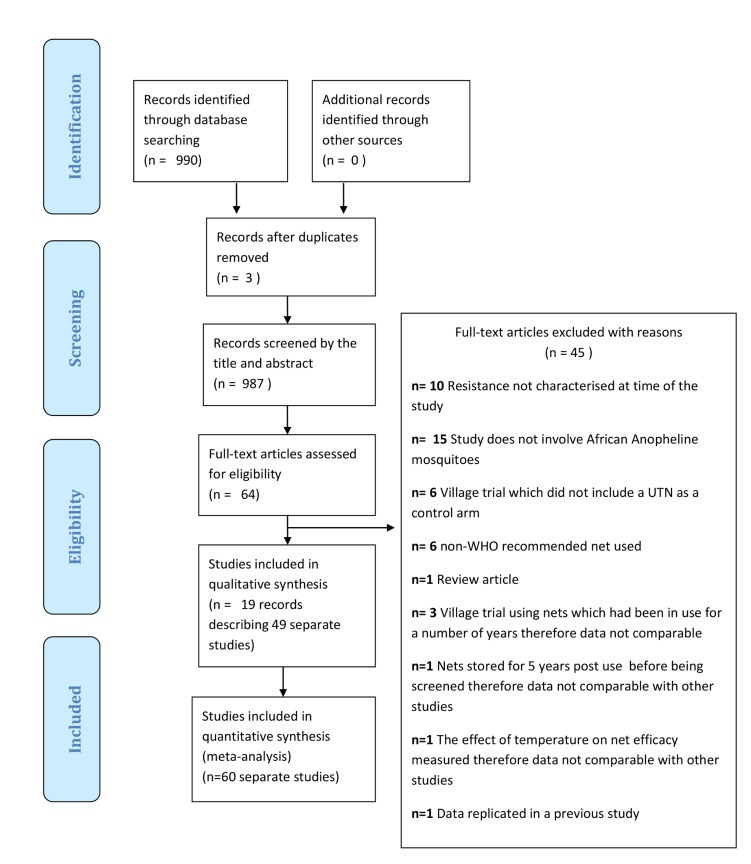
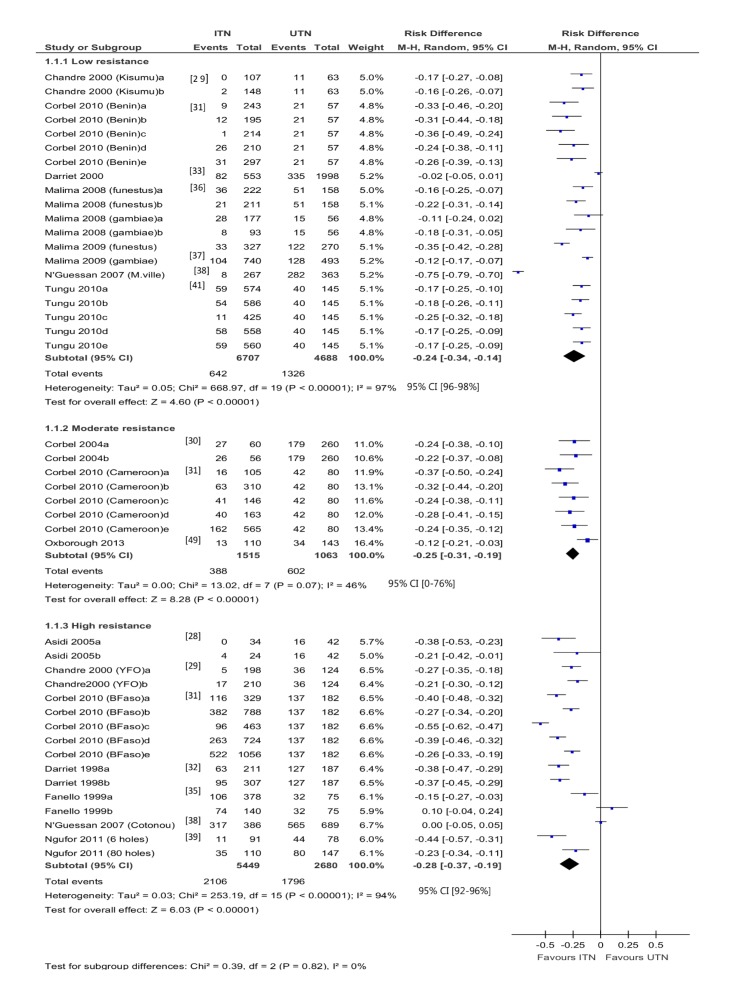
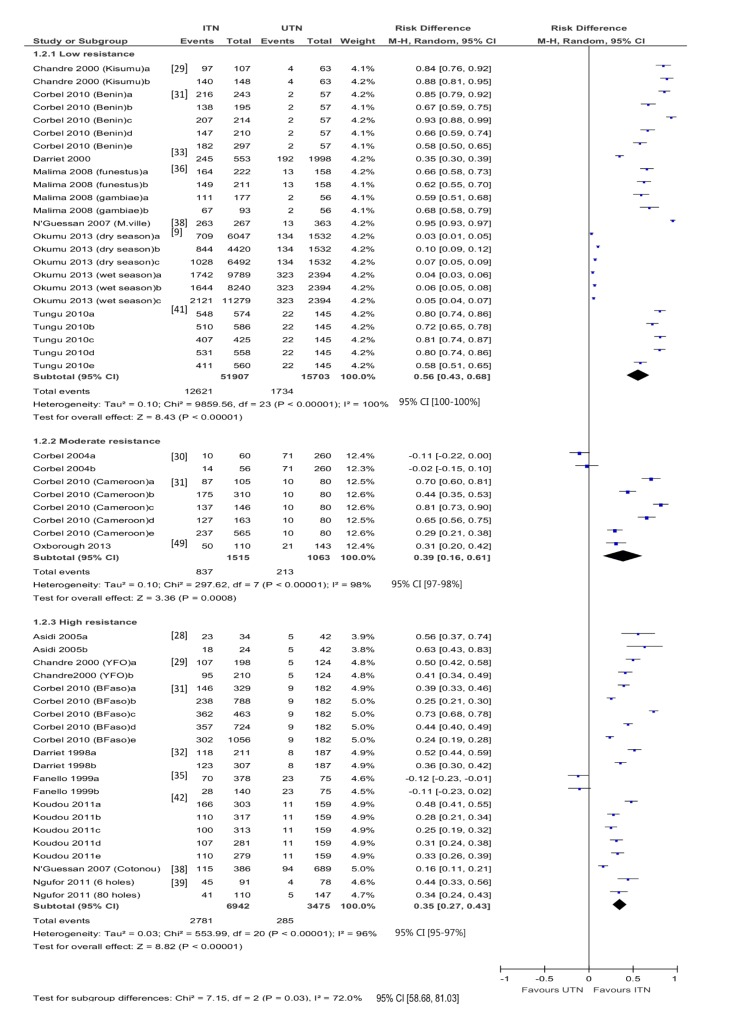
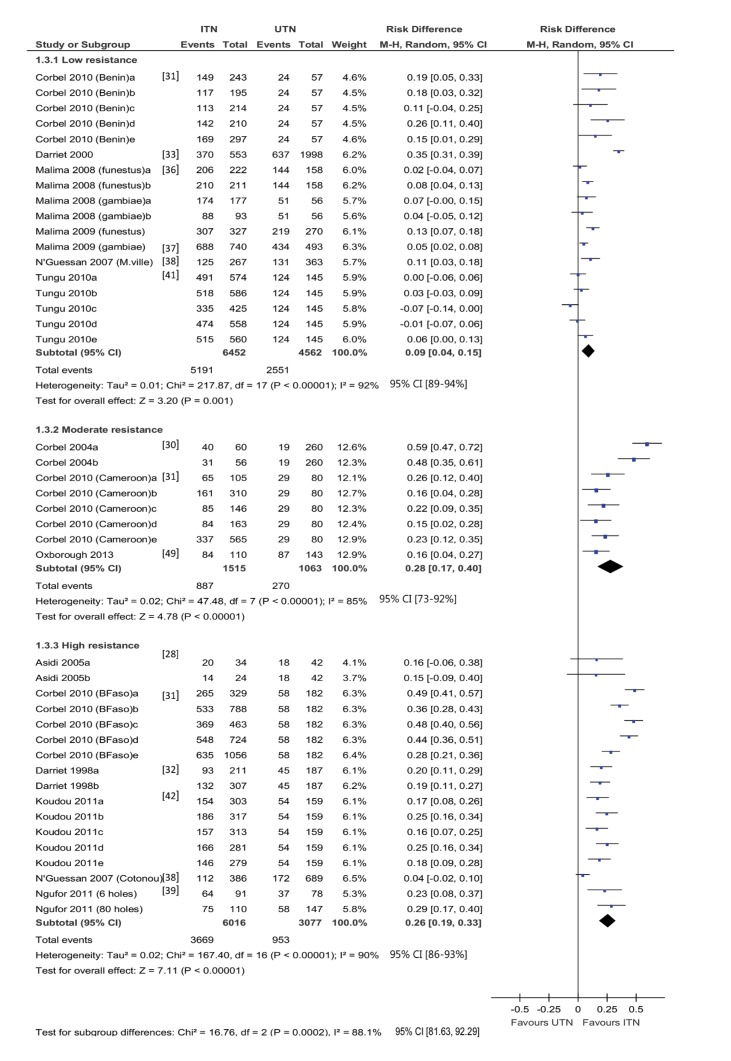
BACKGROUND: Pyrethroid insecticide-treated bed nets (ITNs) help contribute to reducing malaria deaths in Africa, but their efficacy is threatened by insecticide resistance in some malaria mosquito vectors. We therefore assessed the evidence that resistance is attenuating the effect of ITNs on entomological outcomes. METHODS AND FINDINGS: We included laboratory and field studies of African malaria vectors that measured resistance at the time of the study and used World Health Organization-recommended impregnation regimens. We reported mosquito mortality, blood feeding, induced exophily (premature exit of mosquitoes from the hut), deterrence, time to 50% or 95% knock-down, and percentage knock-down at 60 min. Publications were searched from 1 January 1980 to 31 December 2013 using MEDLINE, Cochrane Central Register of Controlled Trials, Science Citation Index Expanded, Social Sciences Citation Index, African Index Medicus, and CAB Abstracts. We stratified studies into three levels of insecticide resistance, and ITNs were compared with untreated bed nets (UTNs) using the risk difference (RD). Heterogeneity was explored visually and statistically. Included were 36 laboratory and 24 field studies, reported in 25 records. Studies tested and reported resistance inconsistently. Based on the meta-analytic results, the difference in mosquito mortality risk for ITNs compared to UTNs was lower in higher resistance categories. However, mortality risk was significantly higher for ITNs compared to UTNs regardless of resistance. For cone tests: low resistance, risk difference (RD) 0.86 (95% CI 0.72 to 1.01); moderate resistance, RD 0.71 (95% CI 0.53 to 0.88); high resistance, RD 0.56 (95% CI 0.17 to 0.95). For tunnel tests: low resistance, RD 0.74 (95% CI 0.61 to 0.87); moderate resistance, RD 0.50 (95% CI 0.40 to 0.60); high resistance, RD 0.39 (95% CI 0.24 to 0.54). For hut studies: low resistance, RD 0.56 (95% CI 0.43 to 0.68); moderate resistance, RD 0.39 (95% CI 0.16 to 0.61); high resistance, RD 0.35 (95% CI 0.27 to 0.43). However, with the exception of the moderate resistance category for tunnel tests, there was extremely high heterogeneity across studies in each resistance category (chi-squared test, p<0.00001, I² varied from 95% to 100%). CONCLUSIONS: This meta-analysis found that ITNs are more effective than UTNs regardless of resistance. There appears to be a relationship between resistance and the RD for mosquito mortality in laboratory and field studies. However, the substantive heterogeneity in the studies' results and design may mask the true relationship between resistance and the RD, and the results need to be interpreted with caution. Our analysis suggests the potential for cumulative meta-analysis in entomological trials, but further field research in this area will require specialists in the field to work together to improve the quality of trials, and to standardise designs, assessment, and reporting of both resistance and entomological outcomes.
Overview
The claims and statistics of this paper haven’t been checked yet.
Free: it reads the open-access text and checks the first 5 claims that cite a source we can check. Create a free account to check every claim.
Integrity signals
Registry
Cites
Statistics
Figures
Verification
Claims the paper makes
The claims and statistics of this paper haven’t been checked yet.
Free: it reads the open-access text and checks the first 5 claims that cite a source we can check. Create a free account to check every claim.
Claims other papers make about this one
Each is checked against this paper’s own text: does it say what the citing paper says it does?
The source backs part of the claim, not all of it — or backs it for a different population, condition or comparison.
In the citing paper
“However, if the trait is in high frequency and especially in combination with metabolic mechanisms, it may then impact the effectiveness of pyrethroid insecticides for malaria vector control as shown in a systematic review with meta-analysis [113].”
From Evolution of insecticide resistance and its mechanisms in Anopheles stephensi in the WHO Eastern Mediterranean Region (2020) · cites this paper as [113]
Experimental — accuracy not yet measured
Self-check
Percentages, sums and reported differences re-computed from the paper’s own numbers.
The self-check needs the paper’s full text.
Citations
Cites
1 retracted
Ndiath, M. O., Sougoufara, S., Gaye, A., Mazenot, C., Konate, L., Faye, O., Sokhna, C., & Trape, J.-F. (2012) · PLoS ONE · doi:10.1371/journal.pone.0031943 · Cited by 47 · cited 4×
“One comparison [22], with high resistance mosquitoes, reported 80% and 20% induced exophily (figures estimated from graph) in the ITN and UTN groups, respectively (RD = 0.”
BackgroundInfluentialRetractedInsecticide-treated bed nets and curtains for preventing malaria
Lengeler, C. (2004) · Cochrane Database of Systematic Reviews · doi:10.1002/14651858.cd000363.pub2 · Cited by 1,700 · cited 1×
“ITNs reduce deaths in children [2] and provide personal protection to the user, and at scale they provide community-wide protection by reducing the number of infective mosquitoes in the vicinity where ITNs are used [3,4].”
BackgroundIncreasing value and reducing waste in research design, conduct, and analysis
Ioannidis, J. P. A., Greenland, S., Hlatky, M. A., Khoury, M. J., Macleod, M. R., Moher, D., Schulz, K. F., & Tibshirani, R. (2014) · The Lancet · doi:10.1016/s0140-6736(13)62227-8 · Cited by 1,597
Ranson, H., N’Guessan, R., Lines, J., Moiroux, N., Nkuni, Z., & Corbel, V. (2011) · Trends in Parasitology · doi:10.1016/j.pt.2010.08.004 · Cited by 1,142 · cited 2×
“It is becoming increasingly clear that metabolic resistance often underpins pyrethroid resistance in mosquitoes, as demonstrated by both gene expression studies of resistant populations [11,17,18,19,20,54] and enzyme characterisation studies [55,56].”
BackgroundThe molecular basis of insecticide resistance in mosquitoes
Hemingway, J., Hawkes, N. J., McCarroll, L., & Ranson, H. (2004) · Insect Biochemistry and Molecular Biology · doi:10.1016/j.ibmb.2004.03.018 · Cited by 1,109 · cited 1×
“Metabolic resistance is caused by the activity of three large multi- gene families (cytochrome P450s, glutathione transferases, and carboxylesterases) that are able to metabolise or sequester the insecticide, thereby preventing it from reaching its target [16].”
BackgroundSelf-citationMartinez‐Torres, D., Chandre, F., Williamson, M. S., Darriet, F., Bergé, J. B., Devonshire, A. L., Guillet, P., Pasteur, N., & Pauron, D. (1998) · Insect Molecular Biology · doi:10.1046/j.1365-2583.1998.72062.x · Cited by 1,040 · cited 1×
“arabiensis is underpinned by a non-silent point mutation (either L1014F or L1014S) in the sodium channel gene, which is referred to as the knock-down resistance (kdr) genotype [14,15].”
BackgroundChan, M. (2010) · Cited by 842
Ranson, H., Jensen, B., Vulule, J. M., Wang, X., Hemingway, J., & Collins, F. H. (2000) · Insect Molecular Biology · doi:10.1046/j.1365-2583.2000.00209.x · Cited by 645 · cited 1×
“arabiensis is underpinned by a non-silent point mutation (either L1014F or L1014S) in the sodium channel gene, which is referred to as the knock-down resistance (kdr) genotype [14,15].”
BackgroundSelf-citationN’Guessan, R., Corbel, V., Akogbéto, M., & Rowland, M. (2007) · Emerging Infectious Diseases · doi:10.3201/eid1302.060631 · Cited by 548
Anopheles funestus resistant to pyrethroid insecticides in South Africa
Hargreaves, K., Koekemoer, L. L., Brooke, B. D., Hunt, R. H., Mthembu, J., & Coetzee, M. (2000) · Medical and Veterinary Entomology · doi:10.1046/j.1365-2915.2000.00234.x · Cited by 530 · cited 1×
“funestus in South Africa [57].”
Cited by
Items 101–200 of 278
Ferreira, C. P., Poloni, S., Azevedo, F., Greenhalgh, D., & Massad, E. (2017) · Malaria Journal · doi:10.1186/s12936-017-2014-6 · Cited by 31
“The night-biting preference of these mosquitoes explains the efficacy of ITNs in Africa due to the double effects of ITNs in reducing the biting rates—they provide a physical barrier against bites [6]—and repelling or killing mosquitoes (or both)— the insecticide that impregnates the nets has a powerful knock-down and…”
BackgroundMadgwick, P. G., & Kanitz, R. (2022) · Malaria Journal · doi:10.1186/s12936-022-04083-z · Cited by 30
Ngongang-Yipmo, E. S., Tchouakui, M., Menze, B. D., Mugenzi, L. M. J., Njiokou, F., & Wondji, C. S. (2022) · Parasites & Vectors · doi:10.1186/s13071-022-05335-2 · Cited by 30
Laser induced mortality of Anopheles stephensi mosquitoes
Keller, M. D., Leahy, D. J., Norton, B. J., Johanson, R., Mullen, E. R., Marvit, M., & Makagon, A. (2016) · Scientific Reports · doi:10.1038/srep20936 · Cited by 29
Adhikari, K., & Khanikor, B. (2021) · Toxicology Reports · doi:10.1016/j.toxrep.2021.11.013 · Cited by 35
“insensitivity, and metabolic resistance [22].”
Kudom, A. A., Mensah, B. A., Froeschl, G., Rinder, H., & Boakye, D. A. (2015) · Acta Tropica · doi:10.1016/j.actatropica.2015.07.009 · Cited by 31
Wat’senga, F., Agossa, F. R., Manzambi, E. Z., Ilombe, G., Mapangulu, T., Muyembe, T., Clark, T., Niang, M., Ntoya, F., Sadou, A., et al. (2020) · Malaria Journal · doi:10.1186/s12936-020-03240-6 · Cited by 34
Repurposing the orphan drug nitisinone to control the transmission of African trypanosomiasis
Sterkel, M., Haines, L. R., Casas-Sánchez, A., Adung’a, V. O., Vionette-Amaral, R. J., Quek, S., Rose, C., dos Santos, M. S., Escude, N. G., Ismail, H. M., et al. (2021) · PLoS Biology · doi:10.1371/journal.pbio.3000796 · Cited by 30
Barreaux, P., Koella, J. C., N’Guessan, R., & Thomas, M. B. (2022) · Parasites & Vectors · doi:10.1186/s13071-022-05220-y · Cited by 33
“Insecticide-treated nets (ITNs) are the most widely distributed and perhaps most important tool to date [2].”
BackgroundWolie, R. Z., Koffi, A. A., Ahoua Alou, L. P., Sternberg, E. D., N’Nan-Alla, O., Dahounto, A., Yapo, F. H. A., Kanh, K. M. H., Camara, S., Oumbouke, W. A., et al. (2021) · Parasites & Vectors · doi:10.1186/s13071-021-05079-5 · Cited by 24
“However, the long-term effectiveness of both of these strategies is threatened by the emergence of insecticide resistance in malaria vector populations [6, 7].”
BackgroundHeinig, R. L., Paaijmans, K. P., Hancock, P. A., & Thomas, M. B. (2015) · Journal of Applied Ecology · doi:10.1111/1365-2664.12522 · Cited by 26
“…License, which permits use and distribution in any medium, provided the original work is properly cited, the use is non-commercial and no modifications or adaptations are made. et al. 2011; Hemingway 2014; Strode et al. 2014), prompting investigation of alternative technologies.”
BackgroundDambach, P., Winkler, V. F., Bärnighausen, T., Traoré, I., Ouedraogo, S., Sié, A., Sauerborn, R., Becker, N., & Louis, V. R. (2020) · Global Health Action · doi:10.1080/16549716.2020.1829828 · Cited by 24
“However, the development of resistance to pyrethroids is decelerating and sometimes reversing current gains in malaria control [2,3].”
BackgroundKouassi, B. L., Edi, C., Ouattara, A. F., Ekra, A. K., Bellai, L. G., Gouaméné, J., Kacou, Y. A. K., Kouamé, J. K. I., Beke, O. A.-H., Yokoly, F. N., et al. (2023) · Malaria Journal · doi:10.1186/s12936-023-04439-z · Cited by 33
Remote Effect of Insecticide-Treated Nets and the Personal Protection against Malaria Mosquito Bites
Moiroux, N., Chandre, F., Hougard, J.-M., Corbel, V., & Pennetier, C. (2017) · PLOS ONE · doi:10.1371/journal.pone.0170732 · Cited by 23
“Conclusion Current WHO efficacy criteria do not take into account the deterrence and the deterrence variability is neither analyzed nor discussed in the majority of the reports of experimental hut studies as illustrated in a recent literature review [6].”
BackgroundInfluentialSarkar, R., Kessler, A., Mawkhlieng, B., Sullivan, S. A., Wilson, M. L., Carlton, J. M., & Albert, S. (2021) · Malaria Journal · doi:10.1186/s12936-021-03982-x · Cited by 24
“In another meta-analysis study, ITNs were found to be more effective than untreated bed-nets regardless of insecticide resistance, although substantial heterogeneity between studies was noted [50].”
BackgroundInsecticide resistance in mosquitoes: molecular mechanisms, management, and alternatives
Hazarika, H., Rajan, R. K., Pegu, P., & Das, P. (2025) · Journal of Pest Science · doi:10.1007/s10340-025-01895-1 · Cited by 31
“This precision-guided approach holds promise for optimizing the efficacy of control endeavors while concurrently curbing the further dissemination of resistance traits (Hemingway and Ranson 2000a; Strode et al. 2014; Ranson and Lissenden 2016).”
Genome engineering in insects for the control of vector borne diseases
Hillary, V. E., & Ceasar, S. A. (2021) · Progress in molecular biology and translational science · doi:10.1016/bs.pmbts.2020.12.017 · Cited by 28
Abeku, T. A., Helinski, M. E. H., Kirby, M. J., Ssekitooleko, J., Bass, C., Kyomuhangi, I., Okia, M., Magumba, G., & Meek, S. R. (2017) · Malaria Journal · doi:10.1186/s12936-017-1799-7 · Cited by 24
“A meta-analysis suggested that insecticide-treated nets (ITNs) continue to have an effect on entomological outcomes regardless of resistance [12].”
BackgroundFrancica, J. R., Shi, W., Chuang, G., Chen, S. J., Pereira, L. D. S., Farney, S. K., Flynn, B. J., Ou, L., Stephens, T., Tsybovsky, Y., et al. (2021) · Vaccines · doi:10.3390/vaccines9030272 · Cited by 22
Beer, B. D., Vandenhole, M., Njiru, C., Spanoghe, P., Dermauw, W., & Leeuwen, T. V. (2022) · Biology · doi:10.3390/biology11111630 · Cited by 29
Burton, T. A., Kabinga, L. H., Simubali, L., Hayre, Q., Moore, S., Stevenson, J. C., & Lobo, N. F. (2023) · PLoS ONE · doi:10.1371/journal.pone.0285501 · Cited by 24
Insecticide Resistance and Its Intensity in Populations of Malaria Vectors in Colombia
Orjuela, L. I., Morales, J. A., Ahumada, M. L., Rios, J. F. M. D. L., González, J. J., Yañez, J., Rosales, A., Cabarcas, D. M., Venegas, J., Yasnot, M. F., et al. (2018) · BioMed Research International · doi:10.1155/2018/9163543 · Cited by 28
“This is less clear when using LLINs, attributed by some to the personal protection provided by the nets despite high level of vector resistance [31, 32].”
BackgroundStelmach, R. D., Colaço, R., Lalji, S. M., McFarland, D. A., & Reithinger, R. (2018) · American Journal of Tropical Medicine and Hygiene · doi:10.4269/ajtmh.17-0537 · Cited by 20
Chourasia, M. K., Kamaraju, R., Kleinschmidt, I., Bhatt, R. M., Swain, D. K., Knox, T. B., & Valecha, N. (2017) · International Journal of Infectious Diseases · doi:10.1016/j.ijid.2017.02.001 · Cited by 23
“39 In India, occurrence of pyrethroid resistance has been reported in malaria endemic states including Chhattisgarh.”
Nignan, C., Niang, A., Maïga, H., Sawadogo, S. P., Poda, S. B., Gnankiné, O., Dabiré, R. K., Tripet, F., & Diabaté, A. (2020) · Malaria Journal · doi:10.1186/s12936-020-03248-y · Cited by 24
Use of alternative bioassays to explore the impact of pyrethroid resistance on LLIN efficacy
Grossman, M. K., Oliver, S. V., Brooke, B. D., & Thomas, M. B. (2020) · Parasites & Vectors · doi:10.1186/s13071-020-04055-9 · Cited by 20
Yaro, J. B., Ouédraogo, A., Ouedraogo, Z. A., Diarra, A., Lankouande, M., Agboraw, E., Worrall, E., Toé, K. H., Sanou, A., Guelbeogo, W. M., et al. (2020) · Malaria Journal · doi:10.1186/s12936-020-03443-x · Cited by 17
Syme, T., N’dombidjé, B., Gbegbo, M., Todjinou, D., Ariori, V., Vos, P. D., Pigeon, O., & Ngufor, C. (2023) · Scientific Reports · doi:10.1038/s41598-023-39140-3 · Cited by 19
Genome engineering in insects: focus on the CRISPR/Cas9 system
Hillary, V. E., Ceasar, S. A., & Savarimuthu Ignacimuthu, S. J. (2020) · Elsevier eBooks · doi:10.1016/b978-0-12-818140-9.00018-0 · Cited by 25
Gleave, K., Lissenden, N., Richardson, M., & Ranson, H. (2017) · Cochrane Database of Systematic Reviews · doi:10.1002/14651858.cd012776 · Cited by 17
Delivering insecticide-treated nets for malaria prevention: innovative strategies
Krezanoski, P. J. (2016) · Research and Reports in Tropical Medicine · doi:10.2147/rrtm.s83173 · Cited by 20
“41 It argues that supply chains, especially for vital commodities such as ITNs, must be flexible and adaptable to local requirements.”
InfluentialOmonijo, A., & Omonijo, A. O. (2019) · Journal of Parasitology Research · doi:10.1155/2019/1273714 · Cited by 18
“While LLINs usage still remains a pivotal control measure in curtailing malaria irrespective of resistance development [31], awareness should be created on personal protection through behaviour change communication activities.”
BackgroundPyrethroid-treated bed nets impair blood feeding performance in insecticide resistant mosquitoes
Barreaux, P., Ranson, H., Foster, G. M., & McCall, P. J. (2023) · Scientific Reports · doi:10.1038/s41598-023-35958-z · Cited by 20
Ashu, F. A., Fouet, C., Ambadiang, M. M., Penlap-Beng, V., & Kamdem, C. (2024) · Malaria Journal · doi:10.1186/s12936-024-04876-4 · Cited by 15
“Indeed, resistance to any of the classes of neurotoxic insecticides used in interventions has been reported posing a challenge to the sustainability of vector control [6, 7].”
BackgroundFonseca, J. A., Cabrera-Mora, M., Kashentseva, E. A., Villegas, J. P., Fernandez, A. M., Pelt, A. E. V., Dmitriev, I. P., Curiel, D. T., & Moreno, A. (2016) · PLoS ONE · doi:10.1371/journal.pone.0154819 · Cited by 15
“The emergence, resurgence and spread of antimalarial drug resistance [2–5] along with vector resistance to insecticides [6, 7] have the potential of reducing the impact of existing malaria control measures, making a vaccine a public health priority.”
BackgroundEchodu, R., Iga, J., Oyet, W. S., Mireji, P. O., Anena, J., Onanyang, D., Iwiru, T., Lutwama, J. J., & Opiyo, E. A. (2020) · BMC Research Notes · doi:10.1186/s13104-020-05193-0 · Cited by 16
Tognarelli, J., Moya, P. R., González, C. R., & Collao-Ferrada, X. (2025) · Parasites & Vectors · doi:10.1186/s13071-025-06817-9 · Cited by 18
“This adaptability enhances their role in comprehensive vector control programs and provides public health officials with flexibility in diverse operational contexts [52, 131, 132].”
Modelling the implications of stopping vector control for malaria control and elimination
Yukich, J. O., & Chitnis, N. (2017) · Malaria Journal · doi:10.1186/s12936-017-2051-1 · Cited by 14
“However, given the broad utility of malaria vector control, especially the continued effectiveness of LLINs in the presence of pyrethroid resistance [34] and of adult vector control even with partially zoophagic and exophilic vectors [35, 36], the situations in which well deployed adult vector control has no meaningfu…”
BackgroundInsecticide-Treated Mosquito Nets
Carnevale, P., & Gay, F. (2019) · Methods in molecular biology · doi:10.1007/978-1-4939-9550-9_16 · Cited by 14
Minwuyelet, A., Yewhalaw, D., Sciarretta, A., & Atenafu, G. (2025) · Frontiers in Malaria · doi:10.3389/fmala.2025.1478249 · Cited by 17
Githinji, E. K., Irungu, L. W., Ndegwa, P. N., Machani, M. G., Amito, R. O., Kemei, B. J., Murima, P. N., Ombui, G. M., Wanjoya, A. K., Mbogo, C. M., et al. (2020) · Journal of Parasitology Research · doi:10.1155/2020/3560310 · Cited by 15
“[17], reported forced exophily that is premature escape of mosquitoes from the hut, deterrence, and knockdown by pyrethroid-treated bed nets.”
BackgroundStromsky, V. E., Hajkazemian, M., Vaisbourd, E., Mozūraitis, R., & Emami, S. N. (2021) · Communications Biology · doi:10.1038/s42003-021-02689-8 · Cited by 16
Likwela, J. L., Ngwala, P. L., Kalonji, A. N., Ntale, D. C., Sompwe, É. M., Mpiana, G. K., Tshula, J. K., Likwela, T. K., Kanku-Ka-Munabe, P., N’siala, A. K., et al. (2022) · Malaria Journal · doi:10.1186/s12936-022-04258-8 · Cited by 14
Nouage, L., Elanga-Ndille, E., Binyang, A., Tchouakui, M., Atsatse, T., Ndo, C., Kekeunou, S., & Wondji, C. S. (2020) · PLoS ONE · doi:10.1371/journal.pone.0230984 · Cited by 15
“Unfortunately, the widespread use of these insecticides has favoured the development of resistance in malaria vector species [13,14].”
Unbiased Approaches for Reviewing Entomology Literature: A Systematized Review
Oliveira, A. R. S., Cohnstaedt, L. W., & Cernicchiaro, N. (2021) · Annals of the Entomological Society of America · doi:10.1093/aesa/saaa058 · Cited by 15
Walker, K. J., Williams, C. T., Oladepo, F., Lucas, J., Malone, D. J., Paine, M. J. I., & Ismail, H. M. (2022) · Scientific Reports · doi:10.1038/s41598-022-13768-z · Cited by 15
Helinski, M. E. H., Nuwa, A., Protopopoff, N., Feldman, M., Ojuka, P., Oguttu, D., Abeku, T. A., & Meek, S. (2015) · Parasites & Vectors · doi:10.1186/s13071-015-1060-6 · Cited by 14
“The extensive use of LLINs, coupled with agricultural use of pesticides, has led to resistance of mosquito vectors to pyrethroid insecticides in sub-Saharan Africa [10], although the impact of resistance on LLIN effectiveness is not fully understood [11].”
BackgroundLeclair, C., Cronery, J., Kessy, E., Tomás, E. V., Kulwa, Y., Mosha, F. W., Rowland, M., Protopopoff, N., & Charlwood, J. D. (2017) · Malaria Journal · doi:10.1186/s12936-017-1972-z · Cited by 13
Insecticide Resistance and Its Impact on Vector Control
Paine, M. J. I., & Brooke, B. D. (2016) · Springer eBooks · doi:10.1007/978-3-319-31800-4_15 · Cited by 16
Hemingway, J. (2016) · International Congress of Entomology (ICE) · doi:10.1603/ice.2016.94173 · Cited by 12
Self-citationMalaria: Control, Elimination, and Eradication
Ojurongbe, O. (2016) · Human Parasitic Diseases · doi:10.4137/hpd.s16590 · Cited by 11
Krezanoski, P. J., Santorino, D., Agaba, A., Dorsey, G., Bangsberg, D. R., & Carroll, R. W. (2019) · American Journal of Tropical Medicine and Hygiene · doi:10.4269/ajtmh.19-0032 · Cited by 11
Chouaïbou, M., Luan, K., Fodjo, B. K., West, A. J., McCord, M., Apperson, C. S., & Roe, R. M. (2020) · Insects · doi:10.3390/insects11110732 · Cited by 11
Implications of Insecticide-Treated Mosquito Net Fishing in Lower Income Countries
Larsen, D. A., Makaure, J., Ryan, S. J., Stewart, D. J., Traub, A., Welsh, R., Love, D. H., & Bisesi, J. H. (2021) · Environmental Health Perspectives · doi:10.1289/ehp7001 · Cited by 16
“Next-Generation ITNs Combine Pesticides and Synergists Malaria-transmitting mosquitoes in many areas have developed resistance to the pyrethroid insecticide used in ITNs (Strode et al. 2014).”
BackgroundMulatier, M., Pennetier, C., Porciani, A., Chandre, F., Dormont, L., & Cohuet, A. (2019) · Scientific Reports · doi:10.1038/s41598-019-44633-1 · Cited by 13
Mougabure‐Cueto, G., Fronza, G., & Nattero, J. (2024) · Medical and Veterinary Entomology · doi:10.1111/mve.12753 · Cited by 10
Kakaire, C. N., & Christofides, N. J. (2023) · PLoS ONE · doi:10.1371/journal.pone.0289097 · Cited by 11
“The evidence for efficacy of ITNs in reducing cases of malaria is widely documented [7, 8].”
BackgroundOptimal management of endemic Burkitt lymphoma: a holistic approach mindful of limited resources
Moormann, A. M., Skiles, J. L., Otieno, J. A., Buckle, G. C., & Vik, T. A. (2014) · Blood and Lymphatic Cancer Targets and Therapy · doi:10.2147/blctt.s67769 · Cited by 10
“34”
Emami, S. N., Hajkazemian, M., & Mozūraitis, R. (2019) · Pathogens and Global Health · doi:10.1080/20477724.2019.1703398 · Cited by 11
“For example, mosquito resistance to the pyrethroid insecticides exclusively used in LLINs is emerging [86] and in the case of the many hundreds of millions of LLINs distributed for minimizing human PATHOGENS AND GLOBAL HEALTH 331”
BackgroundOsei, K. M., Adiak, A. A., & Han, W. M. (2026) · Tropical Medicine and Health · doi:10.1186/s41182-026-00932-8 · Cited by 9
“At high coverage levels, ITNs confer both individual and community-wide benefits through the reduction of vector density and survival [6].”
InfluentialIrish, S. R. (2014) · Memórias do Instituto Oswaldo Cruz · doi:10.1590/0074-0276140159 · Cited by 9
“The entomological and epidemiological impact of this resistance is still under investigation (Ranson et al. 2011, WHO 2012, Strode et al. 2014).”
BackgroundLong-lasting insecticide-treated net use and malaria infections on the Kenyan coast
Kamau, A., Musau, M. M., Mtanje, G., Mataza, C., Bejon, P., & Snow, R. W. (2022) · Transactions of the Royal Society of Tropical Medicine and Hygiene · doi:10.1093/trstmh/trac029 · Cited by 10
Iacovidou, M. A., Barreaux, P., Spencer, S. E. F., Thomas, M. B., Gorsich, E. E., & Rock, K. S. (2022) · PLoS Computational Biology · doi:10.1371/journal.pcbi.1009540 · Cited by 13
“These results are in accordance with other publications [10, 12, 13].”
BackgroundResultObembe, A., Popoola, K. O. K., Oduola, A. O., & Awolola, S. (2018) · Parasites & Vectors · doi:10.1186/s13071-018-3078-z · Cited by 9
Ivermectin treatment in humans for reducing malaria transmission
de Souza, D. K., Thomas, R., Bradley, J., Leyrat, C., Boakye, D. A., & Okebe, J. (2021) · Cochrane Database of Systematic Reviews · doi:10.1002/14651858.cd013117.pub2 · Cited by 15
New approaches for integrated and cost-effective malaria vector control
Dambach, P. (2018) · Journal of Rare Diseases Research & Treatment · doi:10.29245/2572-9411/2018/1.1144 · Cited by 9
Olkeba, B. K., Goethals, P. L. M., Boets, P., Duchateau, L., Degefa, T., Eba, K., Yewhalaw, D., & Mereta, S. T. (2021) · International Journal of Environmental Research and Public Health · doi:10.3390/ijerph18136904 · Cited by 9
“arabiensis and residual malaria transmission may compromise the current LLINs- or IRS-based interventions and thus threaten malaria elimination efforts [13,14].”
BackgroundPeng, H., Wang, H., Guo, X., Lv, W., Liu, L., Wang, H., Cheng, P., Liu, H., & Gong, M. (2023) · American Journal of Tropical Medicine and Hygiene · doi:10.4269/ajtmh.22-0524 · Cited by 8
“Aedes albopictus, a vector of dengue fever, Japanese encephalitis, Zika virus, and other viruses, is a great threat to human health.(1,2) At present, decreasing vector populations through chemical control is the most powerful method of controlling mosquito-borne infections.”
BackgroundDenham, S. T., Eisen, L., Beaty, M. K., Beaty, B. J., Black, W. C., & Saavedra-Rodríguez, K. (2015) · Journal of the American Mosquito Control Association · doi:10.2987/14-6445r.1 · Cited by 11
Kemibala, E. E., Mafra‐Neto, A., Dekker, T., Saroli, J., Silva, R. O. S., Philbert, A., Ng’habi, K. R., & Mboera, L. E. G. (2020) · Malaria Journal · doi:10.1186/s12936-020-3136-9 · Cited by 7
Kaura, T., Mewara, A., Zaman, K., & Sehgal, R. (2023) · Journal of Vector Borne Diseases · doi:10.4103/0972-9062.374240 · Cited by 6
Lukole, E., Cook, J. A., Mosha, J. F., Matowo, N. S., Kulkarni, M. A., Mallya, E., Aziz, T., Martin, J., Rowland, M., Kleinschmidt, I., et al. (2025) · BMC Public Health · doi:10.1186/s12889-025-21586-x · Cited by 6
“This has been demonstrated in experimental hut trials [10– 12], modelling [7, 13], and community trials [6, 14] where a higher level of community coverage of pyrethroid-only nets was associated with a decrease in malaria risk in those not using nets.”
Lyimo, E., Kulaya, N. B., Njotto, L. L., Kassam, N. A., Gesase, S., Malabeja, A., Liheluka, E., Mbwana, J. R., Baraka, V., Alifrangis, M., et al. (2025) · Malaria Journal · doi:10.1186/s12936-025-05311-y · Cited by 8
“However, ITNs remain more effective than untreated nets in reducing malaria transmission [7].”
Galick, D. S., Vaz, L. M., Ondo, L., Iyanga, M. M., Bikie, F. E. E., Avue, R. M. N., Donfack, O. T., Eyono, J. N. M., Mifumu, T. A. O., Hergott, D., et al. (2025) · Proceedings of the National Academy of Sciences · doi:10.1073/pnas.2421531122 · Cited by 6
Marathe, A., Shi, R., Mendez‐Lopez, A., Hu, Z., Lewis, B. L., Rabinovich, R. N., Chaccour, C., & Rist, C. (2021) · BMJ Global Health · doi:10.1136/bmjgh-2021-006424 · Cited by 6
Medjigbodo, A. A., Djihinto, O., Salavi, E. B. J., Sonounameto, E. G., Abbey, E., Djossou, L., & Djogbénou, L. (2022) · Frontiers in Tropical Diseases · doi:10.3389/fitd.2022.903654 · Cited by 6
Jones, J., Matope, A., Barreaux, P., Gleave, K., Steen, K., Ranson, H., McCall, P. J., & Foster, G. M. (2023) · Parasites & Vectors · doi:10.1186/s13071-023-06029-z · Cited by 7
Aretz, C. D., Morwitzer, M. J., Sanford, A. G., Hogan, A. M., Portillo, M. V., Kharade, S. V., Kramer, M., Mccarthey, J. B., Trigueros, R. R., Piermarini, P. M., et al. (2019) · ACS Infectious Diseases · doi:10.1021/acsinfecdis.8b00368 · Cited by 6
Mgaya, J. N., Siria, D. J., Makala, F. E., Mgando, J. P., Vianney, J., Mwanga, E. P., & Okumu, F. O. (2022) · Parasites & Vectors · doi:10.1186/s13071-022-05396-3 · Cited by 5
Korti, M. Y., Abuelmaali, S. A., Ageep, T. B., Ahmad, A. H., Elnour, M. B., Noaman, K., Algadam, A. A., Baleela, R. M. H., Garedaghi, Y., & Saad, H. A. (2024) · International Journal of Medical Parasitology and Epidemiology Sciences · doi:10.34172/ijmpes.4173 · Cited by 6
“Entomological cross-sectional surveys were carried out in Khartoum State in four sites classified as urban or suburban, according to topography, agriculture, socio-economic activities, physical expansion of cities, and dissemination of socio-economic and cultural patterns.”
BackgroundInfluentialMoiroux, N., & Pennetier, C. (2025) · Peer Community Journal · doi:10.24072/pcjournal.632 · Cited by 2
“These levels of attraction have been observed multiple times in field studies (Supplementary Figure 1) (Strode et al., 2014; Moiroux et al., 2017).”
Chaumeau, V., Wisisakun, P., Sawasdichai, S., Kankew, P., Htoo, G. N., Saithanmettajit, S., Aryalamloed, S., Lee, N. Y., Delmas, G., & Nosten, F. H. (2020) · PLoS ONE · doi:10.1371/journal.pone.0231251 · Cited by 5
“Our results were similar to that reported during the evaluation of LLINs impregnated with 55 mg of deltamethrin /m(2) (KD rate at 60 min = 100%, mortality = 100% and KDT50 < 10 min) [31].”
ResultTondossama, N., Virgillito, C., Coulibaly, Z. I., Pichler, V., Dia, I., della Torre, A., Touré, A. O., Adja, A. M., & Caputo, B. (2023) · Insects · doi:10.3390/insects14090758 · Cited by 5
“…number of people sleeping under the bed net [10] and infrequent use of LLINs [11], (ii) human factors such as sleeping time, night-time activities and time spent outdoors at night [12–14] and (iii) resistance to pyrethroid insecticides used to impregnate the nets in the vector populations [15–17].”
BackgroundMadgwick, P. G., Wubs, M., & Kanitz, R. (2023) · Malaria Journal · doi:10.1186/s12936-023-04724-x · Cited by 6
“Further, the initial population is assumed to only contain one very rare allele with the first mutational step in resistance for all insecticides except pyrethroids, which by default start from one very rare allele with the third mutational step (to account for a widespread targetsite and metabolic mutation [12]).”
BackgroundMalaria Vector Surveillance and Insecticide Resistance Monitoring and Management
Chanda, E. (2015) · Malaria Control & Elimination · doi:10.4172/2470-6965.1000e130 · Cited by 6
“Resistance is emerging and spreading at a faster pace and threatens to potentially compromise the gains already attained in malaria control and thus delay progress towards elimination [5].”
BackgroundRoh, M. E., Oundo, B., Dorsey, G., SHIBOSKI, S. C., Gosling, R. D., Glymour, M. M., Staedke, S. G., Bennett, A. F., Sturrock, H. J. W., & Mpimbaza, A. (2022) · Malaria Journal · doi:10.1186/s12936-021-04034-0 · Cited by 5
Tapsoba, M., Guelbeogo, W. M., Sanou, A., Zongo, S., Gogue, C., Débé, S., Arnett, K., Davis, K. M., Shannon, J., Digre, P., et al. (2025) · Parasites & Vectors · doi:10.1186/s13071-025-07190-3 · Cited by 4
“Pyrethroid resistance in malaria vectors has been linked to reduced ITN-induced mortality and increased malaria transmission [32–34].”
Modelling the impact of declining insecticide resistance with mosquito age on malaria transmission
Saddler, A., & Koella, J. C. (2015) · MalariaWorld journal · doi:10.5281/zenodo.10876460 · Cited by 7
Acklin, M., Graham, J. P., & Benjamin‐Chung, J. (2025) · PLOS Global Public Health · doi:10.1371/journal.pgph.0003805 · Cited by 5
Effect of aminopyridinium-based ionic liquids against larvae of Culex pipiens (Diptera: Culicidae)
Alahmadi, S., Ibrahim, R. A., Messali, M., & Ali, M. (2020) · Journal of Taibah University for Science · doi:10.1080/16583655.2020.1782601 · Cited by 4
Ivermectin treatment in humans for reducing malaria transmission
de Souza, D. K., Larbi, I. A., Boakye, D. A., & Okebe, J. (2018) · Cochrane Database of Systematic Reviews · doi:10.1002/14651858.cd013117 · Cited by 4
Optimizing Strategic Insecticide Resistance Management Planning in Malaria Vectors
Chanda, E. (2016) · InTech eBooks · doi:10.5772/61301 · Cited by 4
Aircraft disinsection: what is the usefulness as a public health measure?
Grout, A., & Russell, R. C. (2020) · Journal of Travel Medicine · doi:10.1093/jtm/taaa124 · Cited by 4
Anbalagan, S., Arunprasanna, V., Kannan, M., Dinakaran, S., & Krishnan, M. (2015) · Acta Tropica · doi:10.1016/j.actatropica.2015.09.024 · Cited by 4
Ebere, N., Atting, I., Ekerette, I. B., & Amadi, N. (2019) · Annual Research & Review in Biology · doi:10.9734/arrb/2019/v32i130071 · Cited by 6
“Because of the intense selection pressure caused by agricultural practices [4] and the large-scale implementation of malaria vector control interventions [5], resistance has been implicated in the reduced efficacy of vector control interventions such as IRS and LLIN [6,7] and malaria resurgence [8,9,10,11,12].”
BackgroundKoudou, G. B., Monroe, A. C., Irish, S. R., Humes, M., Krezanoski, J. D., Koenker, H. M., Malone, D. J., Hemingway, J., & Krezanoski, P. J. (2022) · Malaria Journal · doi:10.1186/s12936-022-04102-z · Cited by 4
“Whether the continuing effectiveness of LLINs for malaria prevention hinges on evolving mosquito pyrethroid resistance [5, 6], shifts in vector-biting behaviour [7, 8], net durability [9], increasing access [10, 11] or other factors, accurate and precise measures of usage patterns are essential for planning the future…”
BackgroundSelf-citationEchodu, R., Oyet, W. S., Iwiru, T., Apili, F., Lutwama, J. J., Opiyo, E. A., & Otim, O. (2025) · BMC Public Health · doi:10.1186/s12889-025-22175-8 · Cited by 3
“It is believed that factors such as high mosquito insecticide resistance [40, 41] are responsible for the observed persistence of malaria in such areas as was recently shown by Echodu et al. in the study area [9].”
Liu, Y., Miao, J., Yin, F., Lu, H., Fu, B., Xiao, Y., & Qin, Z. (2026) · Journal of Agricultural and Food Chemistry · doi:10.1021/acs.jafc.5c11838 · Cited by 2
Kezeta-Bondja, S., Wondji, C. S., & Djidjou‐Demasse, R. (2026) · Journal of Mathematical Biology · doi:10.1007/s00285-026-02343-z · Cited by 3
Insecticidal Nets Versus kdr-Resistant Mosquitoes
(2018) · Current Trends in Entomology and Zoological Studies · doi:10.29011/2690-0114.100006 · Cited by 3
Metadata
- Authors
- Strode, C., Donegan, S., Garner, P., Enayati, A. A., & Hemingway, J.
- Affiliations
- Edge Hill University (GB)
- Liverpool School of Tropical Medicine (GB)
- Corresponding author
- Strode, Clare
- Venue
- PLoS Medicine
- Publisher
- Public Library of Science (PLoS)
- Published
- 2014-03-18
- Volume
- 11
- Issue
- 3
- Pages
- e1001619
- ISSN
- 1549-1277 (ISSN-L)
- 1549-1676
- PMC
- PMC3958359
- OpenAlex
- W1972528017
- Cited by
- 274
- References
- 61
- Citations by year
- 2026: 13 · 2025: 14 · 2024: 14 · 2023: 20 · 2022: 28 · 2021: 20 · 2020: 31 · 2019: 24 · 2018: 24 · 2017: 25 · 2016: 26 · 2015: 27 · 2014: 8
- FWCI
- 4.48
- Type
- journal article
- Language
- en
- Open access
- gold
- doi.org
- Locations
- PLoS Medicine (publishedVersion, cc-by)
- Europe PMC (PubMed Central) (publishedVersion, cc-by)
- PubMed Central (publishedVersion, cc-by)
- PubMed (publishedVersion)
- Edge Hill University Research Information Repository (Edge Hill University) (publishedVersion, cc-by)
- LSTM Online Archive (Liverpool School of Tropical Medicine) (acceptedVersion)
- Edge Hill University (submittedVersion)
- RePEc: Research Papers in Economics (submittedVersion)
- DOAJ (DOAJ: Directory of Open Access Journals) (submittedVersion, cc-by-sa)
- Figshare (submittedVersion, cc-by)
- Funders
- United States Agency for International Development
- Bill and Melinda Gates Foundation
- Department for International Development
- Centers for Disease Control and Prevention
- Medical Research Council (MR/K021435/1)
- Topics
- Health Sciences › Medicine › Public Health, Environmental and Occupational Health › Malaria Research and Control
- Life Sciences › Agricultural and Biological Sciences › Plant Science › Insect Pest Control Strategies
- Life Sciences › Biochemistry, Genetics and Molecular Biology › Molecular Biology › Insect Resistance and Genetics
- Keywords
- pyrethroid resistance, insecticide-treated nets, anopheline mosquitoes, malaria vectors, insecticide resistance, mosquito mortality, knockdown, blood feeding, exophily, deterrence, Africa, malaria control, vector control, insecticide rotation
- MeSH terms
- Africa, Animals, Insecticide Resistance, Insecticides, Malaria, Mosquito Control, Culicidae, Pyrethrins, Insecticide-Treated Bednets
About these checks
Registry, retraction, Cites and statistics results are computed, not judged, with one exception: a printed reference that no index lists is read once by a model before it counts as a citation error. Claims are extracted by a model and kept only when their quote appears verbatim in the text; each cited source is then checked, with a model’s help, for whether it says what the claim relies on. Those verdicts can be wrong — read the claim’s quote and the cited source before relying on one.
Statistics and arithmetic are recomputed, not judged.
Confidence bands are shown only for fields calibrated on our annotated test set. None is calibrated yet, so no band is shown.
What counts as a claim ›How we measure confidence ›How we check this ›
Are you an author, or do you see a problem with this page? Request a review
Data sources
Bibliographic data: Semantic Scholar, OpenAlex, Crossref.
Contains information from the Semantic Scholar Academic Graph Datasets, made available under the ODC Attribution License (ODC-BY 1.0).
Semantic Scholar’s data is described in: Kinney, R., et al. (2023). The Semantic Scholar Open Data Platform. arXiv:2301.10140.
