

Ionizing Radiation Changes the Electronic Properties of Melanin and Enhances the Growth of Melanized Fungi
Open accessThe DOI matches its Crossref record; 41 of the 41 references it cites were found in a registry or an index.
Abstract
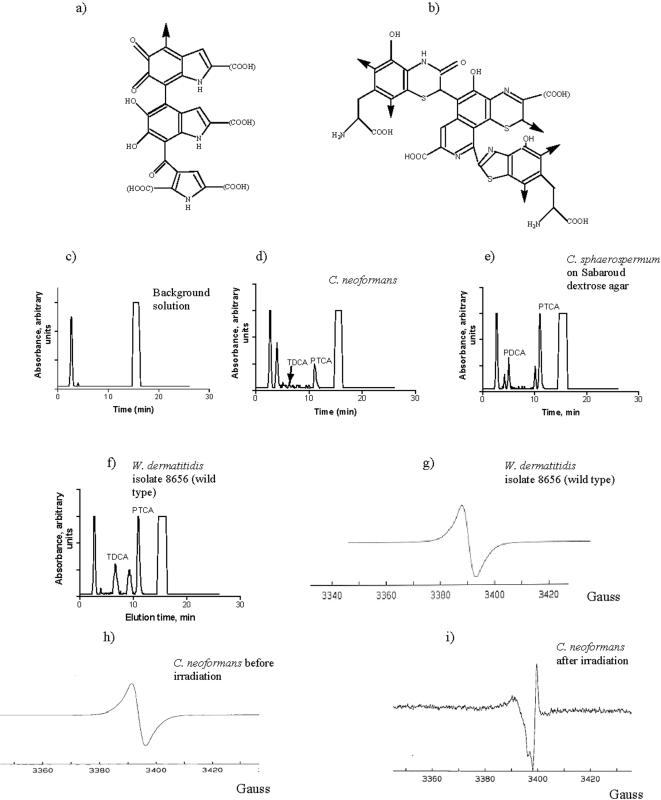
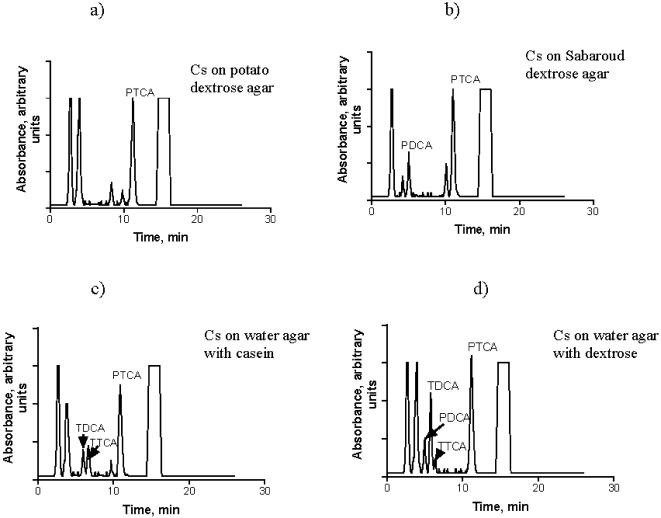
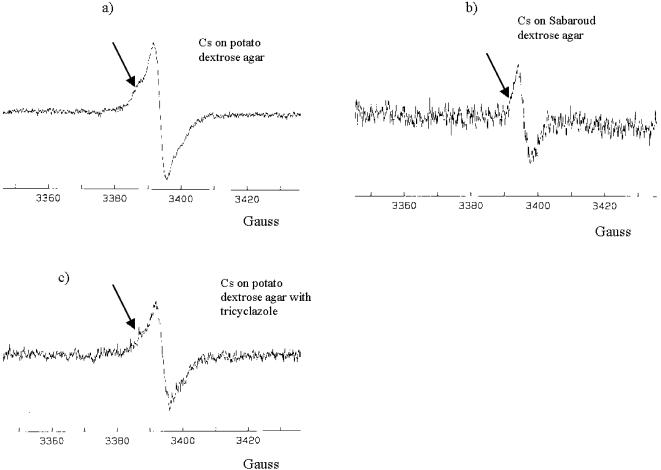
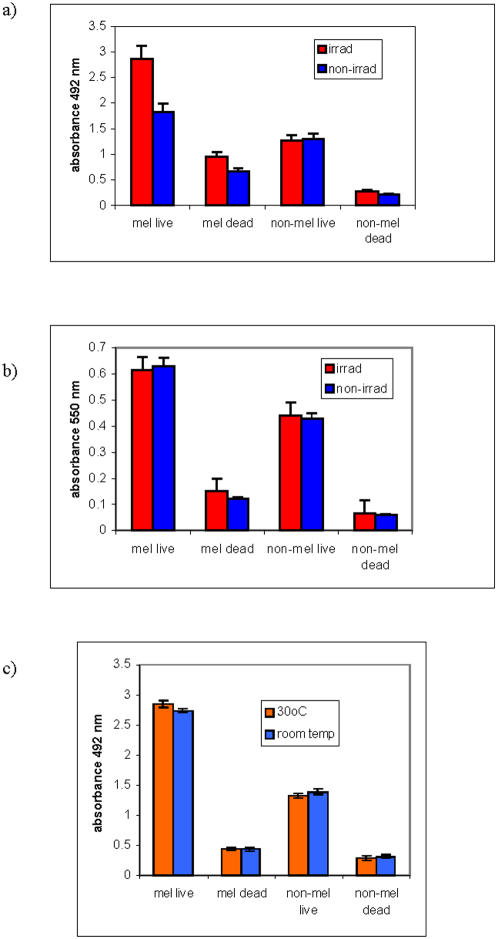
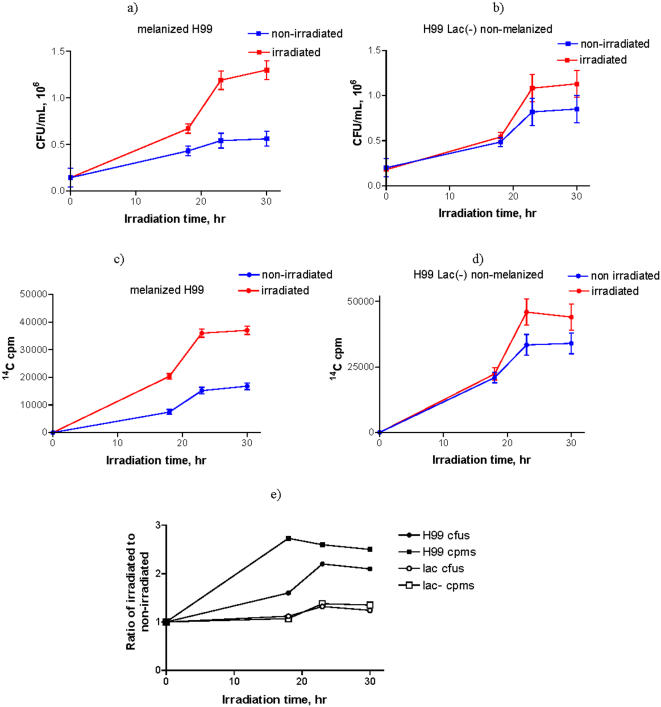
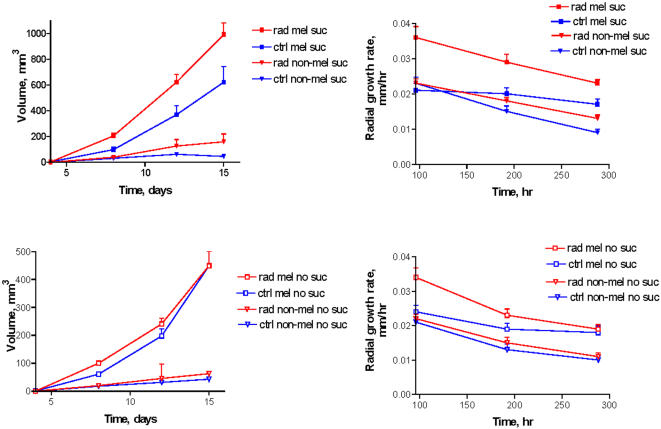
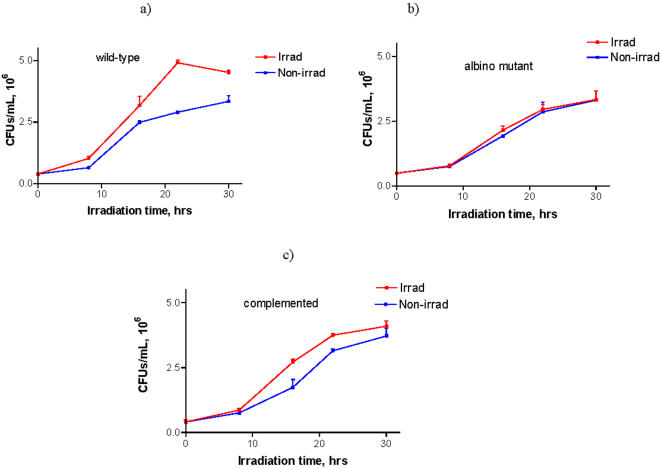
BACKGROUND: Melanin pigments are ubiquitous in nature. Melanized microorganisms are often the dominating species in certain extreme environments, such as soils contaminated with radionuclides, suggesting that the presence of melanin is beneficial in their life cycle. We hypothesized that ionizing radiation could change the electronic properties of melanin and might enhance the growth of melanized microorganisms. METHODOLOGY/PRINCIPAL FINDINGS: Ionizing irradiation changed the electron spin resonance (ESR) signal of melanin, consistent with changes in electronic structure. Irradiated melanin manifested a 4-fold increase in its capacity to reduce NADH relative to non-irradiated melanin. HPLC analysis of melanin from fungi grown on different substrates revealed chemical complexity, dependence of melanin composition on the growth substrate and possible influence of melanin composition on its interaction with ionizing radiation. XTT/MTT assays showed increased metabolic activity of melanized C. neoformans cells relative to non-melanized cells, and exposure to ionizing radiation enhanced the electron-transfer properties of melanin in melanized cells. Melanized Wangiella dermatitidis and Cryptococcus neoformans cells exposed to ionizing radiation approximately 500 times higher than background grew significantly faster as indicated by higher CFUs, more dry weight biomass and 3-fold greater incorporation of (14)C-acetate than non-irradiated melanized cells or irradiated albino mutants. In addition, radiation enhanced the growth of melanized Cladosporium sphaerospermum cells under limited nutrients conditions. CONCLUSIONS/SIGNIFICANCE: Exposure of melanin to ionizing radiation, and possibly other forms of electromagnetic radiation, changes its electronic properties. Melanized fungal cells manifested increased growth relative to non-melanized cells after exposure to ionizing radiation, raising intriguing questions about a potential role for melanin in energy capture and utilization.
Overview
The claims and statistics of this paper haven’t been checked yet.
Free: it reads the open-access text and checks the first 5 claims that cite a source we can check. Create a free account to check every claim.
Integrity signals
Registry
Cites
Statistics
Figures
Verification
Claims the paper makes
The claims and statistics of this paper haven’t been checked yet.
Free: it reads the open-access text and checks the first 5 claims that cite a source we can check. Create a free account to check every claim.
Claims other papers make about this one
Each is checked against this paper’s own text: does it say what the citing paper says it does?
The source backs part of the claim, not all of it — or backs it for a different population, condition or comparison.
In the citing paper
“Melanized W. dermatitidis and C. neoformans cells exposed to ionizing radiation approximately 500 times higher than background grew significantly faster as indicated by higher CFUs, more dry weight biomass and 3-fold greater incorporation of 14C-acetate than non-irradiated melanized cells or irradiated albino mutants.”
From Ionizing radiation: how fungi cope, adapt, and exploit with the help of melanin (2008) · cites this paper as [25]
Experimental — accuracy not yet measuredThe cited source says what the claim attributes to it.
In the citing paper
“Recent data show that melanized fungal species like those from Chernobyl’s reactor respond to ionizing radiation with enhanced growth.”
From Ionizing radiation: how fungi cope, adapt, and exploit with the help of melanin (2008) · cites this paper as [25]
The cited source says what the claim attributes to it.
In the citing paper
“The observations that melanized fungal cells manifested increased growth relative to non-melanized cells after exposure to ionizing radiation raised the intriguing possibility that melanin can function in energy capture and utilization (25).”
From Ionizing radiation: how fungi cope, adapt, and exploit with the help of melanin (2008) · cites this paper as [25]
The cited source says what the claim attributes to it.
In the citing paper
“ionizing irradiation changed the electron spin resonance (ESR) signal of melanin, consistent with changes in electronic structure (25).”
From Ionizing radiation: how fungi cope, adapt, and exploit with the help of melanin (2008) · cites this paper as [25]
The cited source says what the claim attributes to it.
In the citing paper
“Irradiated melanin manifested a 4-fold increase in its capacity to reduce NADH relative to non-irradiated melanin.”
From Ionizing radiation: how fungi cope, adapt, and exploit with the help of melanin (2008) · cites this paper as [25]
2 more claims about this paper
Create a free account to see every claim other papers make about this one.
Self-check
Percentages, sums and reported differences re-computed from the paper’s own numbers.
The self-check needs the paper’s full text.
Citations
Cites
Tetrazolium dyes as tools in cell biology: new insights into their cellular reduction
Berridge, M. V., Herst, P. M., & Tan, A. S. (2005) · Biotechnology Annual Review · doi:10.1016/s1387-2656(05)11004-7 · Cited by 2,222 · cited 1×
“The use of XTT and MTT assays in parallel can help to define the location of the melanin-mediated electron transfer in the cells since positively charged MTT is taken into the cells via the plasma membrane potential and is reduced intracellularly; while the negatively charged XTT is largely cell-impermeable and its re…”
MethodAGTR2 Mutations in X-Linked Mental Retardation
Vervoort, V. S., Beachem, M. A., Edwards, P. S., Ladd, S., Miller, K. E., de Mollerat, X., Clarkson, K., DuPont, B., Schwartz, C. E., Stevenson, R. E., et al. (2002) · Science · doi:10.1126/science.1072191 · Cited by 721
Thermotolerance Generated by Plant/Fungal Symbiosis
Redman, R. S., Sheehan, K. B., Stout, R. G., Rodriguez, R. J., & Henson, J. M. (2002) · Science · doi:10.1126/science.1078055 · Cited by 707 · cited 1×
“A symbiotic association of plants and a melanotic fungus that allows for extreme thermotolerance has been attributed to heat dissipating properties of melanin [15].”
BackgroundThe contribution of melanin to microbial pathogenesis: Melanin and microbial pathogenesis
Nosanchuk, J. D., & Casadevall, A. (2003) · Cellular Microbiology · doi:10.1046/j.1462-5814.2003.00268.x · Cited by 650
Self-citation(2014) · Nuclear Medicine · doi:10.1016/b978-0-323-08299-0.00003-1 · Cited by 578
Pathogenic roles for fungal melanins
Jacobson, E. S. (2000) · Clinical Microbiology Reviews · doi:10.1128/cmr.13.4.708 · Cited by 574 · cited 1×
“Many fungi constitutively synthesize melanin [2], which is likely to confer a survival advantage in the environment [3] by protecting against UV and solar radiation [reviewed in 4].”
BackgroundCold adaptation in Arctic and Antarctic fungi
Robinson, C. H. (2001) · New Phytologist · doi:10.1046/j.1469-8137.2001.00177.x · Cited by 520 · cited 3×
“Melanotic fungi inhabit the extraordinarly harsh climate of Antarctica [5].”
BackgroundInfluentialSteenbergen, J. N., Shuman, H. A., & Casadevall, A. (2001) · Proceedings of the National Academy of Sciences · doi:10.1073/pnas.261418798 · Cited by 511 · cited 1×
“Many fungi constitutively synthesize melanin [2], which is likely to confer a survival advantage in the environment [3] by protecting against UV and solar radiation [reviewed in 4].”
BackgroundSelf-citationLong-Term Sustainability of a High-Energy, Low-Diversity Crustal Biome
Lin, L.-H., Wang, P.-L., Rumble, D., Lippmann-Pipke, J., Boice, E., Pratt, L. M., Lollar, B. S., Brodie, E. L., Hazen, T. C., Andersen, G. L., et al. (2006) · Science · doi:10.1126/science.1127376 · Cited by 414 · cited 1×
“while some microorganisms living in mines exploit energy from radiolysis of water”
BackgroundIto, S., & Fujita, K. (1985) · Analytical Biochemistry · doi:10.1016/0003-2697(85)90150-2 · Cited by 386 · cited 6×
“In contrast, pheomelanin is a reddish-brown pigment composed of benzothiazine monomer units with 8–11% nitrogen and 9–12% sulfur [18,19] (Fig.”
BackgroundInfluential
Research works printed but not linked: 1
- RA Nicolaus, 1968, Melanins., Hermann, Paris.
Cited by
Items 101–200 of 463
Boruta, T. (2017) · Bioengineered · doi:10.1080/21655979.2017.1341022 · Cited by 72
“The microbial growth in the area of Chernobyl power plant accident is inevitably associated with adaptation to extreme conditions and facing immense selective pressure.(21,22) To survive and thrive in this highly challenging environment fungal strains need to exhibit unique metabolic characteristics associated with ad…”
BackgroundSynthetic fungal melanin nanoparticles with excellent antioxidative property
Zhang, H., Huang, C., Zhang, J., Wang, C., Wang, T., Shi, S., Gu, Z., & Li, Y. (2022) · Giant · doi:10.1016/j.giant.2022.100120 · Cited by 65
Nair, R. R., An, J. M., Kim, J., & Kim, D. (2023) · Coordination Chemistry Reviews · doi:10.1016/j.ccr.2023.215336 · Cited by 68
Heavy Water as a Probe of the Free Radical Nature and Electrical Conductivity of Melanin
Rienecker, S. B., Mostert, A. B., Schenk, G., Hanson, G. R., & Meredith, P. (2015) · The Journal of Physical Chemistry B · doi:10.1021/acs.jpcb.5b08970 · Cited by 63
Rock-inhabiting fungi and their role in deterioration of stone monuments in the Mediterranean area
Onofri, S., Zucconi, L., Isola, D., & Selbmann, L. (2014) · Plant Biosystems - An International Journal Dealing with all Aspects of Plant Biology · doi:10.1080/11263504.2013.877533 · Cited by 62
“…to ionizing radiations: some melanized fungal species have been found in nuclear reactors and their cooling water systems (Zhdanova et al. 2000); they even feed on radiation by using melanins to convert gamma radiations into chemical energy by still unclear process (Dadachova et al. 2007).”
BackgroundJung, K., Yang, D., Kim, M., Seo, H. S., Lim, S., & Bahn, Y. (2016) · mBio · doi:10.1128/mbio.01483-16 · Cited by 69
“Melanin also functions in energy transduction postradiation exposure (27).”
InfluentialSong, S., Li, S., Su, N., Li, J., Fang, S., & Ye, M. (2016) · Food & Function · doi:10.1039/c6fo00333h · Cited by 69
Rammali, S., Hilali, L., Dari, K., Bencharki, B., Rahim, A., Timinouni, M., Gaboune, F., Aalaoui, M. E., & Khattabi, A. (2022) · Scientific Reports · doi:10.1038/s41598-022-21644-z · Cited by 75
Cairns, T. C., Zheng, X., Zheng, P., Sun, J., & Meyer, V. (2021) · Journal of Fungi · doi:10.3390/jof7070535 · Cited by 72
“With a few hypothesized exceptions [96,97], fungi are heterotrophic, meaning they are unable to generate their own metabolites and energy from inorganic sources by photosynthesis.”
BackgroundStudies of the Rate Constant of l-DOPA Oxidation and Decarboxylation by HPLC
Zhou, Y. Z., Alany, R. G., Chuang, V. T. G., & Wen, J. (2012) · Chromatographia · doi:10.1007/s10337-012-2229-1 · Cited by 59
“Melanin is a high molecular weight-mixed copolymer [35], which makes it non-chromophoric under the current LC–MS conditions.”
BackgroundShed Light in the DaRk LineagES of the Fungal Tree of Life—STRES
Selbmann, L., Benkő, Z., Coleine, C., de Hoog, S., Donati, C., Druzhinina, I. S., Emri, T., Ettinger, C. L., Gladfelter, A. S., Gorbushina, A. A., et al. (2020) · Life · doi:10.3390/life10120362 · Cited by 61
“We are particularly interested in the role of melanin that enables black fungi to utilize radiation for growing [54]; the utilization of these unconventional sources of energy may play a significant role in conditions of continuous nutrient deficiency.”
BackgroundTesei, D., Marzban, G., Zakharova, K., Isola, D., Selbmann, L., & Sterflinger, K. (2012) · Fungal Biology · doi:10.1016/j.funbio.2012.06.004 · Cited by 59
“…last 30 y they have been isolated from hypersaline waters (Gunde-Cimerman et al. 2000), acidic environments (Baker et al. 2004), radioactive areas (Dadachova et al. 2007), as human pathogens or opportunists (Matos et al. 2002) and as a dominant part of the epiand endolithic microbial communities…”
BackgroundRageh, M. M., El-Gebaly, R. H., Abou-Shady, H., & Amin, D. G. (2014) · Molecular and Cellular Biochemistry · doi:10.1007/s11010-014-2232-y · Cited by 64
“The radioprotective properties of melanin in microorganisms result from a combination of physical shielding and quenching of cytotoxic-free radicals [17–19].”
BackgroundWhat are the 100 most cited fungal genera?
Bhunjun, C. S., Chen, Y. J., Phukhamsakda, C., Boekhout, T., Groenewald, J. Z., McKenzi, E. H. C., Francisco, E. C., Frisvad, J. C., Groenewald, M., Hurdeal, V. G., et al. (2024) · Studies in Mycology · doi:10.3114/sim.2024.108.01 · Cited by 88
Revskaya, E., Chu, P., Howell, R. C., Schweitzer, A. D., Bryan, R. A., Harris, M., Gerfen, G., Jiang, Z., Jandl, T., Kim, K., et al. (2012) · Cancer Biotherapy and Radiopharmaceuticals · doi:10.1089/cbr.2012.1318 · Cited by 55
“Initially, we demonstrated that microbial melanin could function in transducing the energy of c radiation in fungal cells 3 and that the efficacy of the radioprotection of melanized cells by melanin was dependent on its chemical composition and spatial arrangement.”
Self-citationProton‐Conductive Melanin‐Like Fibers through Enzymatic Oxidation of a Self‐Assembling Peptide
Reddy, S. M. M., Raßlenberg, E., Sloan‐Dennison, S., Hesketh, T., Silberbush, O., Tuttle, T., Smith, E., Graham, D., Faulds, K., Ulijn, R. V., et al. (2020) · Advanced Materials · doi:10.1002/adma.202003511 · Cited by 57
Selbmann, L., Pacelli, C., Zucconi, L., Dadachova, E., Moeller, R., Vera, J.-P. P. D., & Onofri, S. (2017) · Fungal Biology · doi:10.1016/j.funbio.2017.10.012 · Cited by 51
Self-citationRock-inhabiting fungi: terminology, diversity, evolution and adaptation mechanisms
Liu, B., Fu, R., Wu, B., Liu, X., & Xiang, M. (2021) · Mycology: An International Journal on Fungal Biology · doi:10.1080/21501203.2021.2002452 · Cited by 52
“In fact, it is common to enhance the growth of melanised fungal cells after exposure to ionising radiation, such as black yeasts Wangiella dermatitidis and pathogenic C. neoformans (Dadachova et al. 2007).”
BackgroundDias, L. P., Araújo, C. A. S., Pupin, B., Ferreira, P. C., Braga, G. Ú. L., & Rangel, D. E. N. (2018) · Fungal Biology · doi:10.1016/j.funbio.2018.01.003 · Cited by 52
Khajo, A., Bryan, R. A., Friedman, M., Burger, R. M., Levitsky, Y., Casadevall, A., Magliozzo, R. S., & Dadachova, E. (2011) · PLoS ONE · doi:10.1371/journal.pone.0025092 · Cited by 50
“A dense arrangement of these particles near the cell surface affords a protective physical barrier and was proposed to provide radiation protection by a combination of Compton scattering, energy attenuation of photons, and quenching of free electrons and free radicals generated by radiolysis of water [8,12].”
Self-citationActivation of Melanin Synthesis in Alternaria infectoria by Antifungal Drugs
Fernandes, C., Prados‐Rosales, R., Silva, B. M. A., Nakouzi, A. S., Zuzarte, M., Chatterjee, S., Stark, R. E., Casadevall, A., & Gonçalves, T. (2015) · Antimicrobial Agents and Chemotherapy · doi:10.1128/aac.02190-15 · Cited by 56
Self-citationPurification, characterisation and biological activity of melanin from Streptomyces sp.
Li, C., Ji, C., & Tang, B. (2018) · FEMS Microbiology Letters · doi:10.1093/femsle/fny077 · Cited by 50
Le, M., McNeill, F. E., Seymour, C. B., Rainbow, A. J., & Mothersill, C. E. (2015) · Radiation Research · doi:10.1667/rr13827.1 · Cited by 52
“This finding indicates to us that there is an interaction between radiation and melanin, which is consistent with existing literature involving microorganisms (32) and fungi (33) whereby melanized organisms demonstrate enhanced growth with UV exposure.”
ResultPacelli, C., Selbmann, L., Zucconi, L., Raguse, M., Moeller, R., Shuryak, I., & Onofri, S. (2017) · Astrobiology · doi:10.1089/ast.2015.1456 · Cited by 51
“Dadachova et al. (2007) even reported the surprising results that low levels of c radiation stimulate growth in melanized fungi.”
Seager, S., Petkowski, J. J., Gao, P., Bains, W., Bryan, N. C., Ranjan, S., & Greaves, J. S. (2020) · DSpace@MIT (Massachusetts Institute of Technology) · Cited by 48
Alves, V., Zamith‐Miranda, D., Frasés, S., & Nosanchuk, J. D. (2025) · Journal of Fungi · doi:10.3390/jof11020093 · Cited by 60
“Melanin, a vital secondary metabolite, plays a critical role in radiation protection for melanized fungi, which exhibit enhanced growth, radiotropism, and improved survival in response to radiation exposure [34,35].”
Self-citationTurick, C. E., Beliaev, A. S., Zakrajsek, B. A., Reardon, C. L., Löwy, D. A., Poppy, T. E., Maloney, A., & Ekechukwu, A. A. (2009) · FEMS Microbiology Ecology · doi:10.1111/j.1574-6941.2009.00670.x · Cited by 50
Babič, M. N., Zupančič, J. Č., Gunde‐Cimerman, N., de Hoog, S., & Zalar, P. (2017) · Mycopathologia · doi:10.1007/s11046-017-0134-8 · Cited by 46
Anthropogenic radioactive particles in the environment
Steinhäuser, G. (2018) · Journal of Radioanalytical and Nuclear Chemistry · doi:10.1007/s10967-018-6268-4 · Cited by 46
Steiger, M., Charola, A. E., & Sterflinger, K. (2014) · Springer eBooks · doi:10.1007/978-3-642-45155-3_4 · Cited by 58
Mechanisms for Ultrafast Nonradiative Relaxation in Electronically Excited Eumelanin Constituents
Meng, S., & Kaxiras, E. (2008) · Biophysical Journal · doi:10.1529/biophysj.108.135756 · Cited by 51
“1%) (4); ultrafast relaxation dynamics (5,6); and the ability to transfer x-ray energy into chemical energy (7), analogous to photosynthesis.”
BackgroundColeine, C., Masonjones, S., Sterflinger, K., Onofri, S., Selbmann, L., & Stajich, J. (2020) · Fungal Biology · doi:10.1016/j.funbio.2020.01.005 · Cited by 46
Actinobacterial melanins: current status and perspective for the future
Manivasagan, P., Venkatesan, J., Sivakumar, K., & Kim, S. (2013) · World Journal of Microbiology and Biotechnology · doi:10.1007/s11274-013-1352-y · Cited by 51
Madkhali, N., AlQahtani, H. R., Alterary, S. S., Laref, A., & Hassib, A. (2019) · Optical and Quantum Electronics · doi:10.1007/s11082-019-1936-3 · Cited by 48
Kang, M., Kim, E., Temoçin, Z., Li, J., Dadachova, E., Wang, Z., Panzella, L., Napolitano, A., Bentley, W. E., & Payne, G. F. (2018) · Chemistry of Materials · doi:10.1021/acs.chemmater.8b02428 · Cited by 48
Self-citationBryan, R. A., Jiang, Z., Friedman, M., & Dadachova, E. (2011) · Fungal Biology · doi:10.1016/j.funbio.2011.04.003 · Cited by 46
Self-citationMa, W., Zhang, J., Yan, L., Jiao, Y., Gao, Y., & Meng, S. (2015) · Computational Materials Science · doi:10.1016/j.commatsci.2015.08.056 · Cited by 41
Nutritional Requirements and Their Importance for Virulence of Pathogenic Cryptococcus Species
Watkins, R. A., King, J., & Johnston, S. A. (2017) · Microorganisms · doi:10.3390/microorganisms5040065 · Cited by 53
“neoformans showed increased metabolic activity, faster growth, and increased dry weight biomass than irradiated non-melanised cells [119,120].”
BackgroundBlack yeasts in the omics era: Achievements and challenges
Moreno, L. F., Vicente, V. A., & de Hoog, S. (2018) · Medical Mycology · doi:10.1093/mmy/myx129 · Cited by 45
Fernandes, C., Mota, M., Barros, L., Días, M. I., Ferreira, I. C. F. R., Piedade, A. P., Casadevall, A., & Gonçalves, T. (2021) · Frontiers in Microbiology · doi:10.3389/fmicb.2021.691433 · Cited by 46
Self-citationLlorente, C., Bárcena, A., Bahima, J. V., Saparrat, M. C. N., Arambarri, A. M., Rozas, M. F., Mirífico, M. V., & Balatti, P. A. (2012) · Mycopathologia · doi:10.1007/s11046-012-9558-3 · Cited by 44
Pacelli, C., Selbmann, L., Zucconi, L., Vera, J.-P. P. D., Rabbow, E., Horneck, G., de la Torre, R., & Onofri, S. (2016) · Origins of Life and Evolution of Biospheres · doi:10.1007/s11084-016-9485-2 · Cited by 44
Fungal Melanins Differ in Planar Stacking Distances
Casadevall, A., Nakouzi, A. S., Crippa, P. R., & Eisner, M. (2012) · PLoS ONE · doi:10.1371/journal.pone.0030299 · Cited by 44
“Melanin was recently proposed to function as an energy transducer in fungi promoting the growth of melanized organisms under gamma radiation fluxes [4].”
BackgroundSelf-citationCzirják, G. Á., Møller, A. P., Mousseau, T. A., & Heeb, P. (2010) · Microbial Ecology · doi:10.1007/s00248-010-9716-4 · Cited by 39
“Highly resistant melanized [58] and genetically adapted [27] species are favoured in radioactive areas, and it has been suggested that some fungal lineages may be able to use ionizing radiation as an energy in their life cycles [10, 11].”
BackgroundHeiß, C., Skowyra, M. L., Liu, H., Klutts, J. S., Wang, Z., Williams, M., Srikanta, D., Beverley, S. M., Azadi, P., & Doering, T. L. (2013) · Journal of Biological Chemistry · doi:10.1074/jbc.m112.441998 · Cited by 39
“neoformans is an extremely adaptable environmental yeast that can withstand a variety of harsh conditions (66-68), and is capable of living in close association with numerous organisms, including plants (69,70), birds (71,72), predatory amoebae (73), and mammals (74,75), notably humans (76,77).”
BackgroundBiological constraints on habitability
Dartnell, L. R. (2011) · Astronomy & Geophysics · doi:10.1111/j.1468-4004.2011.52125.x · Cited by 42
Core Technologies: Data Mining and “Big Data”
Nadkarni, P. M. (2016) · Elsevier eBooks · doi:10.1016/b978-0-12-803130-8.00010-5 · Cited by 38
Sivaperumal, P., Kamala, K., & Rajaram, R. (2014) · Natural Product Research · doi:10.1080/14786419.2014.988712 · Cited by 47
“Themelanin showed a broad spectrumof biological roles, including antioxidant activity (Goncalves & Pombeiro-Sponchiado 2005), antibacterial activity (Manivasagan et al. 2013b), liver protecting activity (Sava et al. 2003), radio protective activity (Dadachova et al. 2007), etc.”
BackgroundPacelli, C., Selbmann, L., Zucconi, L., Coleine, C., Vera, J.-P. P. D., Rabbow, E., Böttger, U., Dadachova, E., & Onofri, S. (2018) · Astrobiology · doi:10.1089/ast.2016.1631 · Cited by 38
“Melanins also possess unique physical, chemical, paramagnetic, and semiconductive properties (Meredith and Sarna, 2006) that act as possible energy harvesting pigments (Dadachova et al., 2007; Gessler et al., 2014).”
Self-citationEl-Sayyad, G. S., Mosallam, F. M., El-Sayed, S. S., & El-Batal, A. I. (2019) · Journal of Cluster Science · doi:10.1007/s10876-019-01629-1 · Cited by 37
Melanin‐Inspired Chromophoric Microparticles Composed of Polymeric Peptide Pigments
Lampel, A., McPhee, S. A., Kassem, S., Sementa, D., Massarano, T., Aramini, J. M., He, Y., & Ulijn, R. V. (2021) · Angewandte Chemie International Edition · doi:10.1002/anie.202015170 · Cited by 37
d’Ischia, M., Manini, P., Martins, Z., Rémusat, L., Alexander, C. M. O., Puzzarini, C., Barone, V., & Saladino, R. (2021) · Physics of Life Reviews · doi:10.1016/j.plrev.2021.03.002 · Cited by 42
Fungal melanins that deteriorate paper cultural heritage: An overview
Nitiu, D. S., Mallo, A. C., & Saparrat, M. C. N. (2020) · Mycologia · doi:10.1080/00275514.2020.1788846 · Cited by 38
Singh, S., Malhotra, A. G., Pandey, A. K., & Pandey, K. M. (2013) · Bioinformation · doi:10.6026/97320630009094 · Cited by 44
Ecological Stress: Melanization as a Response in Fungi to Radiation
Grishkan, I. (2010) · Springer eBooks · doi:10.1007/978-4-431-53898-1_54 · Cited by 41
Chu, E.-H., Shin, E.-J., Park, H.-J., & Jeong, R. (2015) · Radiation Physics and Chemistry · doi:10.1016/j.radphyschem.2015.05.042 · Cited by 34
“Although many researchers have employed SEM to study structural changes in microbial vegetable cells after irradiation, not many have been conducted regarding postharvest pathogenic fungi (Dadachova et al., 2007).”
BackgroundYew, S. M., Chan, C. L., Ngeow, Y. F., Toh, Y. F., Na, S. L., Lee, K. W., Hoh, C.-C., Yee, W.-Y., Ng, K. P., & Kuan, C. S. (2016) · Scientific Reports · doi:10.1038/srep27008 · Cited by 44
Radical-Enriched Artificial Melanin
Cao, W., Mantanona, A. J., Mao, H., McCallum, N. C., Jiao, Y., Battistella, C., Caponetti, V., Zang, N., Thompson, M. P., Montalti, M., et al. (2020) · Chemistry of Materials · doi:10.1021/acs.chemmater.0c01573 · Cited by 38
Melanin for space travel radioprotection
Cordero, R. J. B. (2017) · Environmental Microbiology · doi:10.1111/1462-2920.13753 · Cited by 38
Pacelli, C., Bryan, R. A., Onofri, S., Selbmann, L., Zucconi, L., Shuryak, I., & Dadachova, E. (2018) · Environmental Microbiology Reports · doi:10.1111/1758-2229.12632 · Cited by 33
Self-citationKallawicha, K., Tsai, Y.-J., Chuang, Y., Lung, S. C., Wu, C., Chen, T.-H., Chen, P.-C., Chompuchan, C., & Chao, H. J. (2015) · Environmental Pollution · doi:10.1016/j.envpol.2015.04.020 · Cited by 35
Melanin nanoparticles: Antioxidant activities and effects on γ-ray-induced DNA damage in the mouse
Rageh, M. M., & El-Gebaly, R. H. (2018) · Mutation Research/Genetic Toxicology and Environmental Mutagenesis · doi:10.1016/j.mrgentox.2018.01.009 · Cited by 39
Disaster Microbiology—a New Field of Study
Smith, D. F. Q., & Casadevall, A. (2022) · mBio · doi:10.1128/mbio.01680-22 · Cited by 46
“The association of melanotic fungi with the damaged reactor at Chernobyl led to experiments showing that melanized fungi grew faster during exposure to high radiation in a process that was postulated to be radiation capture by melanin and conversion into biologically useful energy (59).”
BackgroundSelf-citationIonizing radiation and melanism in Chornobyl tree frogs
Burraco, P., & Orizaola, G. (2022) · Evolutionary Applications · doi:10.1111/eva.13476 · Cited by 33
“Previous studies have also revealed that melanin- based coloration can mitigate the impact of different forms of radiation, including ionizing radiation (Cordero & Casadevall, 2020; Dadachova et al., 2007, 2008; Dadachova & Casadevall, 2008).”
BackgroundPrenafeta-Boldú, F. X., Roca, N., Villatoro, C., Vera, L., & de Hoog, S. (2018) · Journal of Hazardous Materials · doi:10.1016/j.jhazmat.2018.08.059 · Cited by 32
“melanin might also act as an antenna pigment that captures high energy photons (from ultraviolet to gamma rays) and yields metabolic energy for growth [37].”
BackgroundKannaiah, S., Pandey, R. R., Muthukumar, T., Sathiyaseelan, A., Loushambam, S., & Seth, A. (2022) · Archives of Microbiology · doi:10.1007/s00203-022-02788-y · Cited by 35
Bagwell, C. E., Milliken, C. E., Ghoshroy, S., & Blom, D. (2008) · Applied and Environmental Microbiology · doi:10.1128/aem.02175-07 · Cited by 37
Atri, D. (2016) · Journal of The Royal Society Interface · doi:10.1098/rsif.2016.0459 · Cited by 39
“Proposed Mechanisms”
Roth, C., Murray, D., Scott, A., Fu, C., Averette, A. F., Sun, S., Heitman, J., & Magwene, P. M. (2021) · PLoS Genetics · doi:10.1371/journal.pgen.1009313 · Cited by 31
“For example, the biosynthesis of melanin, a hydrophobic high-molecular weight black or brown pigmented polymer, buffers Cryptococcus cells from thermal stress and protects cells against solar radiation [68, 69].”
Lim, S., Bijlani, S., Blachowicz, A., Chiang, Y., Lee, M.-S., Török, T., Venkateswaran, K. J., & Wang, C. C. C. (2021) · Fungal Genetics and Biology · doi:10.1016/j.fgb.2021.103567 · Cited by 34
Anne, K. K., Mwirichia, R., Kasili, R. W., Karanja, E., Huxley, M. M., & Hamadi, I. B. (2016) · African Journal of Microbiology Research · doi:10.5897/ajmr2015.7879 · Cited by 29
“…such as tropical regions (Hawksworth, 1991), extreme environments such as deserts, areas with high salt concentrations (Vaupotic et al., 2008), ionizing radiation (Dadachova et al., 2007), deep sea sediments (Raghukumar and Raghukumar, 1998) and ocean hydrothermal areas (Le Calvez et al., 2009).”
BackgroundLabel-free fluorescence microscopy in fungi
Knaus, H., Blab, G. A., van Veluw, G. J., Gerritsen, H. C., & Wösten, H. A. B. (2013) · Fungal Biology Reviews · doi:10.1016/j.fbr.2013.05.003 · Cited by 30
Raman Characterization of Fungal DHN and DOPA Melanin Biosynthesis Pathways
Strycker, B. D., Han, Z., Bahari, A., Pham, T., Lin, X., Shaw, B. D., Sokolov, A. V., & Scully, M. O. (2021) · Journal of Fungi · doi:10.3390/jof7100841 · Cited by 31
Herzigkeit, B., Flöser, B. M., Engesser, T. A., Näther, C., & Tuczek, F. (2018) · European Journal of Inorganic Chemistry · doi:10.1002/ejic.201800319 · Cited by 28
The relevance of fungi in astrobiology research – Astromycology
Simões, M., Cortesão, M., Azúa-Bustos, A., Bai, F.-Y., Canini, F., Casadevall, A., Cassaro, A., Cordero, R., Fairén, A. G., González-Silva, C., et al. (2023) · Mycosphere · doi:10.5943/mycosphere/14/1/13 · Cited by 36
“…fungal melanin serves as an energy-harvesting biological pigment, absorbing electromagnetic radiation with conversion into thermal energy (Cordero et al. 2018) and/or chemical energy associated with enhanced fungal growth and metabolic activity (Dadachova et al. 2007, Robertson et al. 2012).”
BackgroundSelf-citationAbramczyk, D., PARK, C., & Szaniszlo, P. J. (2008) · Fungal Genetics and Biology · doi:10.1016/j.fgb.2008.10.004 · Cited by 32
“…have mostly been aimed at discovering cell wall-related virulence and resistance factors, which may be targets for the development of new antifungal agents (Boyle et al., 1994; Wang et al., 2001; Feng et al., 2001; Liu et al., 2004; Zheng et al., 2006; Paolo et al., 2006; Dadachova et al., 2007).”
Biotechnological Potential of Oxidative Enzymes from Actinobacteria
Roes‐Hill, M. L., & Prins, A. (2016) · InTech eBooks · doi:10.5772/61321 · Cited by 31
“Biologically active melanin has been shown to have many advantages, including anti-tumour activity and providing protection against UV radiation [83-86].”
Background(2012) · Mycology · doi:10.1201/b11873-3 · Cited by 28
Ionizing radiation effects on microorganisms and its applications in the food industry
Danyo, E. K., Ivantsova, M. N., & Selezneva, I. S. (2023) · Foods and raw materials · doi:10.21603/2308-4057-2024-1-583 · Cited by 45
Bedran, Z. V., Zhukov, S. S., Abramov, P. A., Tyurenkov, I. O., Gorshunov, B. P., Mostert, A. B., & Motovilov, K. A. (2021) · Polymers · doi:10.3390/polym13244403 · Cited by 29
Turnbull, J. (2021) · Environmental Humanities · doi:10.1215/22011919-8867329 · Cited by 26
Diene, O., Sakagami, N., & Narisawa, K. (2014) · PLoS ONE · doi:10.1371/journal.pone.0109233 · Cited by 26
“Exposure to ionizing radiation was recently proved to enhance the growth of melanized fungi [42].”
BackgroundThe structural impact of water sorption on device-quality melanin thin films
Clulow, A. J., Mostert, A. B., Sheliakina, M., Nelson, A. R. J., Booth, N., Burn, P. L., Gentle, I., & Meredith, P. (2017) · Soft Matter · doi:10.1039/c6sm02420c · Cited by 28
Melanins as Sustainable Resources for Advanced Biotechnological Applications
Galeb, H. A., Wilkinson, E. L., Stowell, A. F., Lin, H., Murphy, S. T., Martin‐Hirsch, P. L., Mort, R. L., Taylor, A. M., & Hardy, J. G. (2020) · Global Challenges · doi:10.1002/gch2.202000102 · Cited by 29
Environmental Factors That Contribute to the Maintenance of Cryptococcus neoformans Pathogenesis
Maliehe, M., Ntoi, M. A., Lahiri, S., Folorunso, O. S., Ogundeji, A. O., Pohl, C. H., & Sebolai, O. M. (2020) · Microorganisms · doi:10.3390/microorganisms8020180 · Cited by 37
“Production of melanin is reported to aid cells during the daytime to withstand ultraviolet (UV) light [76] by capturing radiation energy from the sun and converting it to chemical energy [77].”
BackgroundKuan, C. S., Yew, S. M., Toh, Y. F., Chan, C. L., Ngeow, Y. F., Lee, K. W., Na, S. L., Yee, W.-Y., Hoh, C.-C., & Ng, K. P. (2015) · DNA Research · doi:10.1093/dnares/dsv007 · Cited by 29
“Melanin production, a hallmark of dematiaceous fungi, is responsible for the protection of the fungi fromUV irradiation, high temperatures as well as oxidants.(59) PKS18, encoding a PKS for melanin biosynthesis, is conserved in all Cochliobolus plant pathogens.”
BackgroundSelbmann, L., de Hoog, S., Zucconi, L., Isola, D., & Onofri, S. (2013) · Springer eBooks · doi:10.1007/978-3-642-39681-6_8 · Cited by 26
“2000) which even feed on radiation by using melanins to convert ionizing gamma radiation into chemical energy by still unknown mechanisms (Dadachova et al. 2007).”
BackgroundPacelli, C., Bryan, R. A., Onofri, S., Selbmann, L., Zucconi, L., Shuryak, I., & Dadachova, E. (2018) · Fungal Biology · doi:10.1016/j.funbio.2018.10.002 · Cited by 26
Self-citationMelanin as an Energy Transducer and a Radioprotector in Black Fungi
Malo, M. E., & Dadachova, E. (2019) · Springer eBooks · doi:10.1007/978-3-030-19030-9_10 · Cited by 30
Self-citationA biomimetic approach to shielding from ionizing radiation: The case of melanized fungi
Vasileiou, T., & Summerer, L. (2020) · PLoS ONE · doi:10.1371/journal.pone.0229921 · Cited by 28
“In addition, it has been suggested that the interaction of melanin with photons through the Compton scattering mechanism—the inelastic scattering of a photon by charged particles—attenuates the photon energy and produces secondary electrons which melanin traps [10, 16].”
Romsdahl, J., Blachowicz, A., Chiang, Y., Venkateswaran, K. J., & Wang, C. C. C. (2020) · Frontiers in Microbiology · doi:10.3389/fmicb.2020.00931 · Cited by 28
“, 2015), and it has been reported that the electronic properties of melanin change following exposure to ionizing radiation (Dadachova et al., 2007).”
BackgroundHost immune response againstScedosporiumspecies
Roilides, E., Roilides, E., Simitsopoulou, M., Katragkou, A., & Walsh, T. J. (2009) · Medical Mycology · doi:10.1080/13693780902738006 · Cited by 27
Tyrosinase versus Catecholoxidase: ein Asparagin macht den Unterschied
Solem, E., Tuczek, F., & Decker, H. (2016) · Angewandte Chemie · doi:10.1002/ange.201508534 · Cited by 24
Global Catastrophic Threats from the Fungal Kingdom
Casadevall, A. (2019) · Current topics in microbiology and immunology · doi:10.1007/82_2019_161 · Cited by 32
Self-citationNatural selection drives population divergence for local adaptation in a wheat pathogen
Pereira, D., Croll, D., Brunner, P. C., & McDonald, B. A. (2020) · Fungal Genetics and Biology · doi:10.1016/j.fgb.2020.103398 · Cited by 23
Adaptation Mechanisms and Applications of Psychrophilic Fungi
Rafiq, M., Hassan, N., Rehman, M., & Hasan, F. (2019) · Springer eBooks · doi:10.1007/978-3-030-19030-9_9 · Cited by 33
Aquino, S., Gonçalez, E., Rossi, M. H. W., Nogueira, J. H. C., dos Reis, T. A., & Corrêa, B. (2010) · Journal of Food Protection · doi:10.4315/0362-028x-73.5.932 · Cited by 24
On the free energy that drove primordial anabolism
Kaufmann, M. (2009) · International Journal of Molecular Sciences · doi:10.3390/ijms10041853 · Cited by 23
“The authors assume that melanotic organisms may harness radioactive radiation for metabolic energy [69].”
BackgroundXu, L., Li, J., Chang, M., Cheng, Y., Geng, X., Meng, J., & Zhu, M. (2020) · Journal of Basic Microbiology · doi:10.1002/jobm.202000430 · Cited by 23
“Melanin has shown a wide spectrum of biological effects, including radical‐scavenging activity [8], liver‐ protecting [1], antimicrobial [9], antiradiation [10], and antioxidation [11].”
BackgroundAveresch, N. J. H., Shunk, G. K., & Kern, C. A. (2022) · Frontiers in Microbiology · doi:10.3389/fmicb.2022.877625 · Cited by 26
“The growth advantage in space may be attributable to the stimulating effect of ionizing radiation of the space environment on the fungus, analogous to Earth-based scenarios: when subjected to high levels of γ-radiation (500-times stronger than usual), the metabolism of melanized fungi appears to be significantly incre…”
Background
Metadata
- Authors
- Dadachova, E., Bryan, R. A., Huang, X., Moadel, T., Schweitzer, A. D., Aisen, P., Nosanchuk, J. D., & Casadevall, A.
- Affiliations
- Albert Einstein College of Medicine (US)
- Corresponding author
- Dadachova, Ekaterina
- Venue
- PLoS ONE
- Publisher
- Public Library of Science (PLoS)
- Published
- 2007-05-23
- Volume
- 2
- Issue
- 5
- Pages
- e457
- ISSN
- 1932-6203 (ISSN-L)
- PMC
- PMC1866175
- OpenAlex
- W2157963818
- Cited by
- 463
- References
- 41
- Citations by year
- 2026: 15 · 2025: 29 · 2024: 30 · 2023: 28 · 2022: 33 · 2021: 47 · 2020: 34 · 2019: 29 · 2018: 25 · 2017: 30 · 2016: 21 · 2015: 21 · 2014: 28 · 2013: 17 · 2012: 14
- FWCI
- 5.51
- Type
- journal article
- Language
- en
- Open access
- gold
- doi.org
- Locations
- PLoS ONE (publishedVersion, cc-by)
- PubMed Central (publishedVersion, cc-by)
- PubMed (publishedVersion)
- DOAJ (DOAJ: Directory of Open Access Journals) (submittedVersion, cc-by-sa)
- Funders
- York University
- National Institutes of Health (5r01ai052733-16, AI52733.)
- National Institute of Allergy and Infectious Diseases (AI52733, R01-AI052733)
- Topics
- Life Sciences › Biochemistry, Genetics and Molecular Biology › Cell Biology › melanin and skin pigmentation
- Health Sciences › Medicine › Radiology, Nuclear Medicine and Imaging › Effects of Radiation Exposure
- Life Sciences › Biochemistry, Genetics and Molecular Biology › Biotechnology › Microbial Metabolism and Applications
- Keywords
- melanin, ionizing radiation, dematiaceous fungi, fungal growth, electron spin resonance, NADH reduction, electron transfer, Wangiella dermatitidis, Cryptococcus neoformans, Cladosporium sphaerospermum, energy capture, radionuclide-contaminated soil
- MeSH terms
- Chromatography, High Pressure Liquid, Cryptococcus neoformans, Exophiala, Melanins, Radiation, Ionizing
About these checks
Registry, retraction, Cites and statistics results are computed, not judged, with one exception: a printed reference that no index lists is read once by a model before it counts as a citation error. Claims are extracted by a model and kept only when their quote appears verbatim in the text; each cited source is then checked, with a model’s help, for whether it says what the claim relies on. Those verdicts can be wrong — read the claim’s quote and the cited source before relying on one.
Statistics and arithmetic are recomputed, not judged.
Confidence bands are shown only for fields calibrated on our annotated test set. None is calibrated yet, so no band is shown.
What counts as a claim ›How we measure confidence ›How we check this ›
Are you an author, or do you see a problem with this page? Request a review
Data sources
Bibliographic data: Semantic Scholar, OpenAlex, Crossref.
Contains information from the Semantic Scholar Academic Graph Datasets, made available under the ODC Attribution License (ODC-BY 1.0).
Semantic Scholar’s data is described in: Kinney, R., et al. (2023). The Semantic Scholar Open Data Platform. arXiv:2301.10140.
