

Ionizing Radiation Changes the Electronic Properties of Melanin and Enhances the Growth of Melanized Fungi
Open accessThe DOI matches its Crossref record; 41 of the 41 references it cites were found in a registry or an index.
Abstract
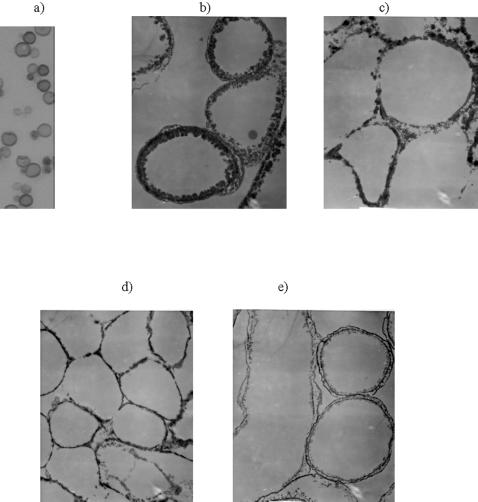
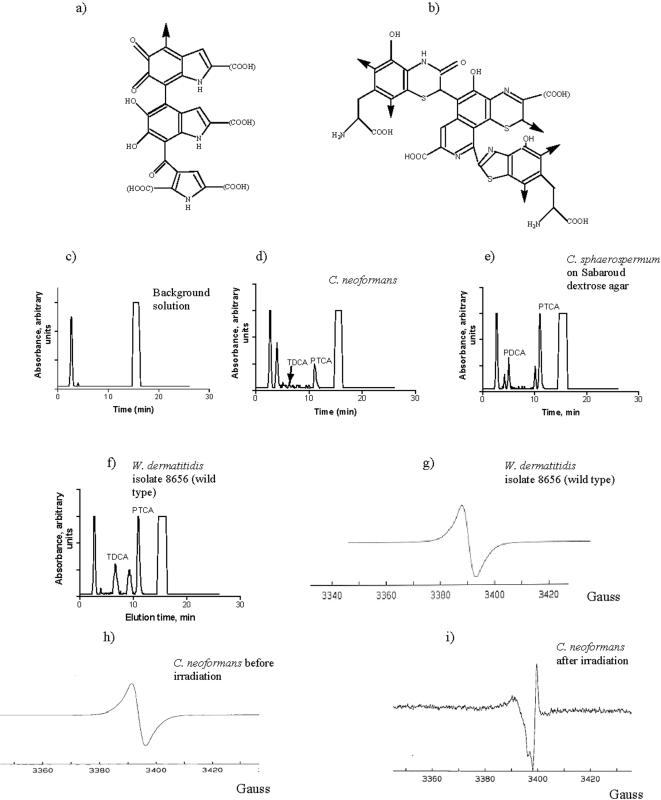
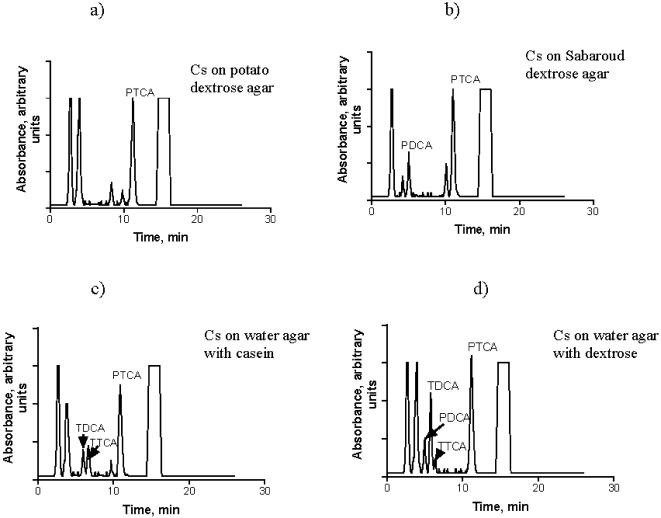
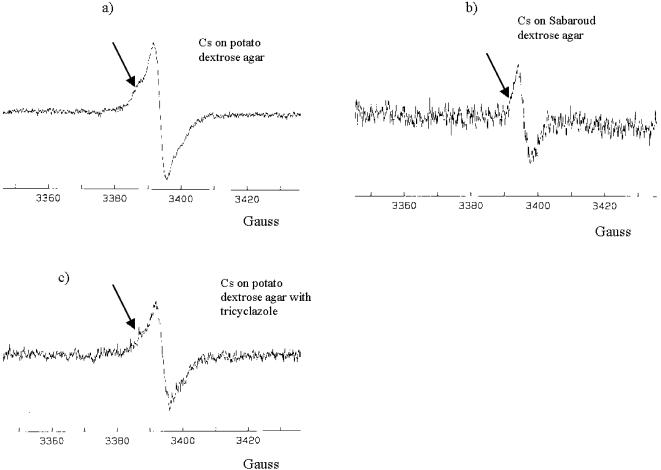
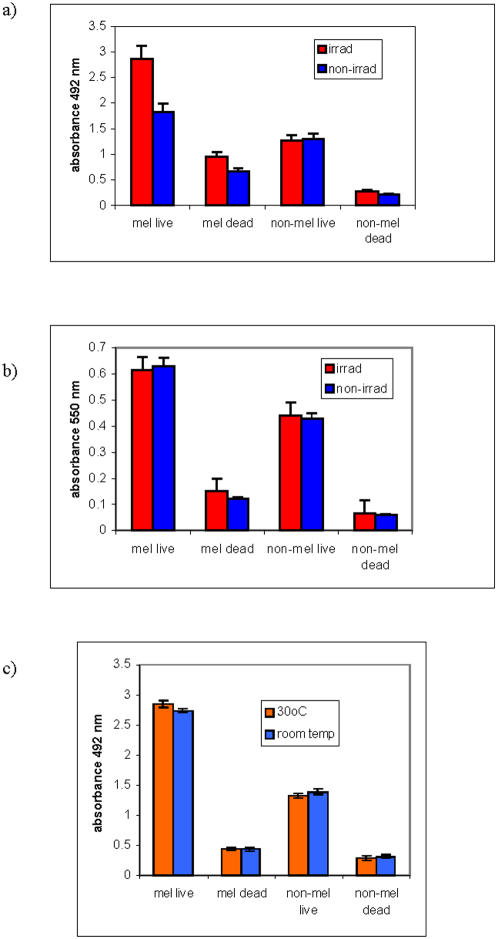
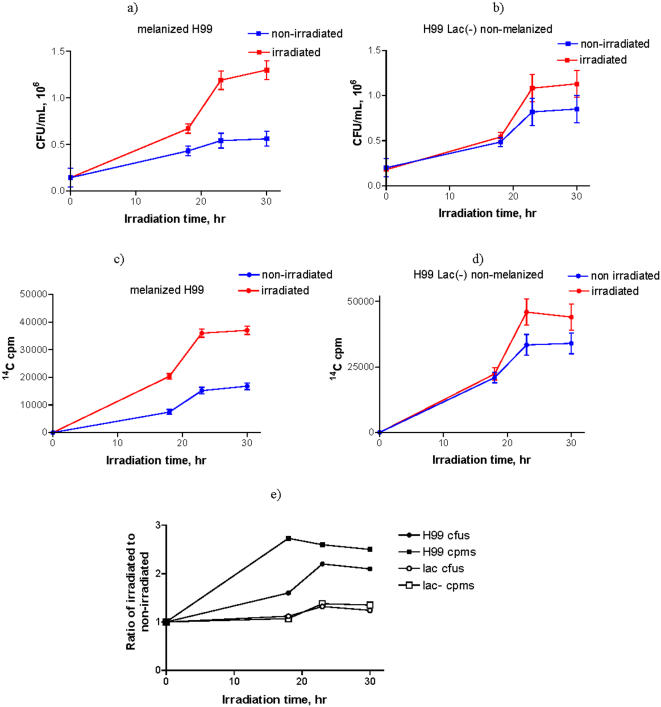
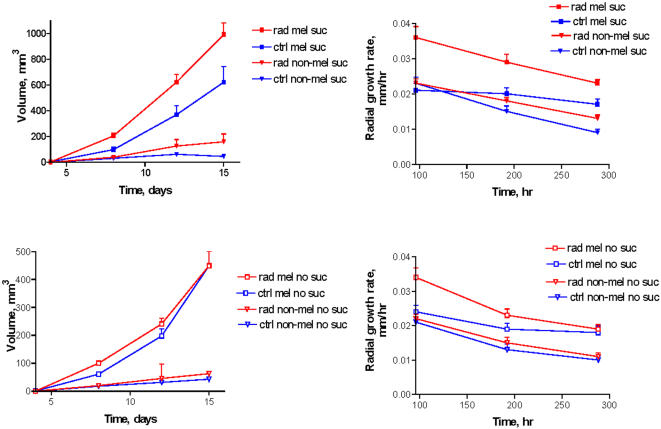
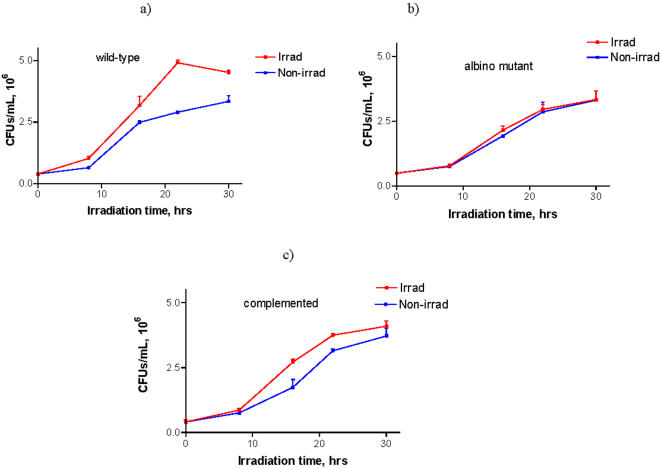
BACKGROUND: Melanin pigments are ubiquitous in nature. Melanized microorganisms are often the dominating species in certain extreme environments, such as soils contaminated with radionuclides, suggesting that the presence of melanin is beneficial in their life cycle. We hypothesized that ionizing radiation could change the electronic properties of melanin and might enhance the growth of melanized microorganisms. METHODOLOGY/PRINCIPAL FINDINGS: Ionizing irradiation changed the electron spin resonance (ESR) signal of melanin, consistent with changes in electronic structure. Irradiated melanin manifested a 4-fold increase in its capacity to reduce NADH relative to non-irradiated melanin. HPLC analysis of melanin from fungi grown on different substrates revealed chemical complexity, dependence of melanin composition on the growth substrate and possible influence of melanin composition on its interaction with ionizing radiation. XTT/MTT assays showed increased metabolic activity of melanized C. neoformans cells relative to non-melanized cells, and exposure to ionizing radiation enhanced the electron-transfer properties of melanin in melanized cells. Melanized Wangiella dermatitidis and Cryptococcus neoformans cells exposed to ionizing radiation approximately 500 times higher than background grew significantly faster as indicated by higher CFUs, more dry weight biomass and 3-fold greater incorporation of (14)C-acetate than non-irradiated melanized cells or irradiated albino mutants. In addition, radiation enhanced the growth of melanized Cladosporium sphaerospermum cells under limited nutrients conditions. CONCLUSIONS/SIGNIFICANCE: Exposure of melanin to ionizing radiation, and possibly other forms of electromagnetic radiation, changes its electronic properties. Melanized fungal cells manifested increased growth relative to non-melanized cells after exposure to ionizing radiation, raising intriguing questions about a potential role for melanin in energy capture and utilization.
Overview
The claims and statistics of this paper haven’t been checked yet.
Free: it reads the open-access text and checks the first 5 claims that cite a source we can check. Create a free account to check every claim.
Integrity signals
Registry
Cites
Statistics
Figures
Verification
Claims the paper makes
The claims and statistics of this paper haven’t been checked yet.
Free: it reads the open-access text and checks the first 5 claims that cite a source we can check. Create a free account to check every claim.
Claims other papers make about this one
Each is checked against this paper’s own text: does it say what the citing paper says it does?
The source backs part of the claim, not all of it — or backs it for a different population, condition or comparison.
In the citing paper
“Melanized W. dermatitidis and C. neoformans cells exposed to ionizing radiation approximately 500 times higher than background grew significantly faster as indicated by higher CFUs, more dry weight biomass and 3-fold greater incorporation of 14C-acetate than non-irradiated melanized cells or irradiated albino mutants.”
From Ionizing radiation: how fungi cope, adapt, and exploit with the help of melanin (2008) · cites this paper as [25]
Experimental — accuracy not yet measuredThe cited source says what the claim attributes to it.
In the citing paper
“Recent data show that melanized fungal species like those from Chernobyl’s reactor respond to ionizing radiation with enhanced growth.”
From Ionizing radiation: how fungi cope, adapt, and exploit with the help of melanin (2008) · cites this paper as [25]
The cited source says what the claim attributes to it.
In the citing paper
“The observations that melanized fungal cells manifested increased growth relative to non-melanized cells after exposure to ionizing radiation raised the intriguing possibility that melanin can function in energy capture and utilization (25).”
From Ionizing radiation: how fungi cope, adapt, and exploit with the help of melanin (2008) · cites this paper as [25]
The cited source says what the claim attributes to it.
In the citing paper
“ionizing irradiation changed the electron spin resonance (ESR) signal of melanin, consistent with changes in electronic structure (25).”
From Ionizing radiation: how fungi cope, adapt, and exploit with the help of melanin (2008) · cites this paper as [25]
The cited source says what the claim attributes to it.
In the citing paper
“Irradiated melanin manifested a 4-fold increase in its capacity to reduce NADH relative to non-irradiated melanin.”
From Ionizing radiation: how fungi cope, adapt, and exploit with the help of melanin (2008) · cites this paper as [25]
2 more claims about this paper
Create a free account to see every claim other papers make about this one.
Self-check
Percentages, sums and reported differences re-computed from the paper’s own numbers.
The self-check needs the paper’s full text.
Citations
Cites
Tetrazolium dyes as tools in cell biology: new insights into their cellular reduction
Berridge, M. V., Herst, P. M., & Tan, A. S. (2005) · Biotechnology Annual Review · doi:10.1016/s1387-2656(05)11004-7 · Cited by 2,222 · cited 1×
“The use of XTT and MTT assays in parallel can help to define the location of the melanin-mediated electron transfer in the cells since positively charged MTT is taken into the cells via the plasma membrane potential and is reduced intracellularly; while the negatively charged XTT is largely cell-impermeable and its re…”
MethodAGTR2 Mutations in X-Linked Mental Retardation
Vervoort, V. S., Beachem, M. A., Edwards, P. S., Ladd, S., Miller, K. E., de Mollerat, X., Clarkson, K., DuPont, B., Schwartz, C. E., Stevenson, R. E., et al. (2002) · Science · doi:10.1126/science.1072191 · Cited by 721
Thermotolerance Generated by Plant/Fungal Symbiosis
Redman, R. S., Sheehan, K. B., Stout, R. G., Rodriguez, R. J., & Henson, J. M. (2002) · Science · doi:10.1126/science.1078055 · Cited by 707 · cited 1×
“A symbiotic association of plants and a melanotic fungus that allows for extreme thermotolerance has been attributed to heat dissipating properties of melanin [15].”
BackgroundThe contribution of melanin to microbial pathogenesis: Melanin and microbial pathogenesis
Nosanchuk, J. D., & Casadevall, A. (2003) · Cellular Microbiology · doi:10.1046/j.1462-5814.2003.00268.x · Cited by 650
Self-citation(2014) · Nuclear Medicine · doi:10.1016/b978-0-323-08299-0.00003-1 · Cited by 578
Pathogenic roles for fungal melanins
Jacobson, E. S. (2000) · Clinical Microbiology Reviews · doi:10.1128/cmr.13.4.708 · Cited by 574 · cited 1×
“Many fungi constitutively synthesize melanin [2], which is likely to confer a survival advantage in the environment [3] by protecting against UV and solar radiation [reviewed in 4].”
BackgroundCold adaptation in Arctic and Antarctic fungi
Robinson, C. H. (2001) · New Phytologist · doi:10.1046/j.1469-8137.2001.00177.x · Cited by 520 · cited 3×
“Melanotic fungi inhabit the extraordinarly harsh climate of Antarctica [5].”
BackgroundInfluentialSteenbergen, J. N., Shuman, H. A., & Casadevall, A. (2001) · Proceedings of the National Academy of Sciences · doi:10.1073/pnas.261418798 · Cited by 511 · cited 1×
“Many fungi constitutively synthesize melanin [2], which is likely to confer a survival advantage in the environment [3] by protecting against UV and solar radiation [reviewed in 4].”
BackgroundSelf-citationLong-Term Sustainability of a High-Energy, Low-Diversity Crustal Biome
Lin, L.-H., Wang, P.-L., Rumble, D., Lippmann-Pipke, J., Boice, E., Pratt, L. M., Lollar, B. S., Brodie, E. L., Hazen, T. C., Andersen, G. L., et al. (2006) · Science · doi:10.1126/science.1127376 · Cited by 414 · cited 1×
“while some microorganisms living in mines exploit energy from radiolysis of water”
BackgroundIto, S., & Fujita, K. (1985) · Analytical Biochemistry · doi:10.1016/0003-2697(85)90150-2 · Cited by 386 · cited 6×
“In contrast, pheomelanin is a reddish-brown pigment composed of benzothiazine monomer units with 8–11% nitrogen and 9–12% sulfur [18,19] (Fig.”
BackgroundInfluential
Research works printed but not linked: 1
- RA Nicolaus, 1968, Melanins., Hermann, Paris.
Cited by
Items 401–463 of 463
General Overview of Yeast and Yeast Cell as a Novel Model for Investigations
Lahir, Y. (2022) · Advances in Clinical Toxicology · doi:10.23880/act-16000252
The Role of Melanin in Fungal Disease
Baker, R. P., Casadevall, A., Camacho, E., Cordero, R. J. B., Waghmode, A., Liporagi-Lopes, L., Liu, A. W. K., Mattoon, E. R., Mudrak, N. J., & Smith, D. F. Q. (2023) · Springer eBooks · doi:10.1007/978-3-031-27799-3_2 · Cited by 2
Self-citationIntroduction to special edition on fungal photobiology
Bell‐Pedersen, D. (2010) · Fungal Genetics and Biology · doi:10.1016/j.fgb.2010.07.001 · Cited by 2
Climate and host identity structure fungal endophyte communities
Hansen, S. H. (2018) · NORA - Norwegian Open Research Archives · Cited by 1
Lucentini, C. G. (2021) · El Servicio de Difusión de la Creación Intelectual (National University of La Plata) · doi:10.35537/10915/116403 · Cited by 1
Perumal, P., & Chinnadurai, G. S. (2021) · Research Square · doi:10.21203/rs.3.rs-706088/v1 · Cited by 2
Fungus characteristics, taxonomy, poison and therapeutic possibilities and therapy (Kingdom: Fungi).
Marchiori, C. H. (2024) · Definitions · doi:10.32388/sbfg4z · Cited by 1
Diversité et processus de colonisation microbienne sur des substrats minéraux
Ragon, M. (2011) · theses.fr (ABES) · doi:10.70675/0a3ad3e4z4a86z47c2z8778z73ebf23e46c6 · Cited by 3
Barros, V. P. (2014) · LA Referencia (Red Federada de Repositorios Institucionales de Publicaciones Científicas)
Radiation hazards on crop soils
Kumar, V. (2014) · Research Journal of Information Technology & Software Management
Biological Removal of Radiocarbon-14 from Irradiated Graphite
Molokwane, P. E., & Chirwa, E. M. N. (2008)
Guimarães, O., Pereira, J. R. D., Batista, L. R., Evangelista, R. M., & Ferreira, E. B. (2010)
Farmakoloske, toksikoloske i biohemijske osobine preparata gljive Coprinus comatus
Stilinović, N. (2013) · doi:10.2298/ns20131230stilinovic · Cited by 2
early hominin evolution? Was skin cancer a selective force for black pigmentation in
Greaves, M. F. (2014)
Specific b alleles matter in phytopathogenic Ustilago maydis.
Aulakh, K. B. (2012) · ThinkIR: The University of Louisville's Institutional Repository (University of Louisville) · doi:10.18297/etd/57
Villalpanda, M. A., Borrego, S. F., & Fernández, M. C. (2021) · Revista CENIC. Ciencias biológicas
Das, D., Chakraborty, D., Chakraborty, A., & Santra, S. C. (2021) · International Journal of Advancement in Life Sciences Research · doi:10.31632/ijalsr.2021.v04i02.005
HUMUS: A MEANS OF ATTENUATING RADIONUCLIDES IN SOILS
Dayo-Olagbende, O. G., & Akingbola, O. O. (2021) · Journal CleanWAS · doi:10.26480/jcleanwas.02.2021.54.57
Coker, J. (2019) · Faculty Opinions – Post-Publication Peer Review of the Biomedical Literature · doi:10.3410/f.733175972.793567051
(2014) · Elsevier eBooks · doi:10.1016/b978-0-12-387731-4.00024-4
(2016) · Mycology · doi:10.1201/b19652-2
The new frontier of an IOM-based panspermia hypothesis: Perspectives and feasibility
Manini, P., & d’Ischia, M. (2022) · Physics of Life Reviews · doi:10.1016/j.plrev.2022.06.005 · Cited by 1
Metagenomics Analysis of Extremophiles and Its Potential Use in Industrial Waste Water Treatment
Shettihalli, A. K., Vinjamuri, S., Reddy, S. D. N., Pai, R., & Narayanan, P. (2023) · Springer eBooks · doi:10.1007/978-3-031-24086-7_12
Accessment of the Powder form of Auricularia Fungus' Ability to Absorb Harmful Ionizing Radiations
Thakur, S., Kandwal, A., Anh, Q. N. B., Sharma, Y. D., Jasrotia, R., Long, P. N. H., & Liu, L. W. (2023) · IEEE East-West Design & Test Symposium (EWDTS) · doi:10.1109/ewdts59469.2023.10297104
“The ability of fungi to absorb ionizing radiations have been well documented [10-11].”
BackgroundInfluence of Ionizing Radiation on Microfungi at Polar Latitudes
Kirtsideli, I. Y., Zvereva, G. N., Vasilev, A. A., Kuzora, N., Vaganyan, L. G., Pak, F., Iliushin, V. A., Matchs, E. M., & Khalikov, A. (2023) · Springer proceedings in earth and environmental sciences · doi:10.1007/978-3-031-40470-2_32 · Cited by 2
The Effect Of Fungi On Human Health
Alkhubrani, A. J., Alzaidi, R. A., Albarakati, N. G., Jastaniah, M. A., Wazzan, M. Y., Hamdi, F. Y., alkaabi, Y. A., Qudus, F. K., Abdulgader, S. A., Alharbi, M. H., et al. (2023) · Journal of Survey in Fisheries Sciences · doi:10.53555/sfs.v10i5.2211
Fungus characteristics, taxonomy, poison and therapeutic possibilities and therapy (Kingdom: Fungi).
Marchiori, C. H. (2024) · Definitions · doi:10.32388/sbfg4z.12
Fungus characteristics, taxonomy, poison and therapeutic possibilities and therapy (Kingdom: Fungi).
Marchiori, C. H. (2024) · Definitions · doi:10.32388/sbfg4z.11
Fungus characteristics, taxonomy, poison and therapeutic possibilities and therapy (Kingdom: Fungi).
Marchiori, C. H. (2024) · Definitions · doi:10.32388/sbfg4z.4
Fungus characteristics, taxonomy, poison and therapeutic possibilities and therapy (Kingdom: Fungi).
Marchiori, C. H. (2024) · Definitions · doi:10.32388/sbfg4z.6
Fungus characteristics, taxonomy, poison and therapeutic possibilities and therapy (Kingdom: Fungi).
Marchiori, C. H. (2024) · Definitions · doi:10.32388/sbfg4z.2
Fungus characteristics, taxonomy, poison and therapeutic possibilities and therapy (Kingdom: Fungi).
Marchiori, C. H. (2024) · Definitions · doi:10.32388/sbfg4z.7
Fungus characteristics, taxonomy, poison and therapeutic possibilities and therapy (Kingdom: Fungi).
Marchiori, C. H. (2024) · Definitions · doi:10.32388/sbfg4z.5
Fungus characteristics, taxonomy, poison and therapeutic possibilities and therapy (Kingdom: Fungi).
Marchiori, C. H. (2024) · Definitions · doi:10.32388/sbfg4z.9
Fungus characteristics, taxonomy, poison and therapeutic possibilities and therapy (Kingdom: Fungi).
Marchiori, C. H. (2024) · Definitions · doi:10.32388/sbfg4z.3
Fungus characteristics, taxonomy, poison and therapeutic possibilities and therapy (Kingdom: Fungi).
Marchiori, C. H. (2024) · Definitions · doi:10.32388/sbfg4z.10
Biofilm formation and response in Exserohilum turcicumPreprint
Kola, W., Nsibo, D. L., & Motaung, T. E. (2024) · Research Square · doi:10.21203/rs.3.rs-5178972/v1 · Cited by 1
Increased aridity is associated with diversity and composition changes in the biocrust mycobiomePreprint
Kelly, K., Liu, X., Croyle, J., & Stajich, J. (2025) · bioRxiv (Cold Spring Harbor Laboratory) · doi:10.1101/2025.03.05.641731
Pirttilä, A. M., Tukalenko, E., Watts, P. C., Lehosmaa, K., Huuskonen, J., Lavrinienko, A., & Koskimäki, J. J. (2025) · SSRN Electronic Journal · doi:10.2139/ssrn.5281141
Mycoremediation: The case of Pleurotus ostreatus on polymers synthetics such as cellulose acetate
Barrantes-Jiménez, I., Marín-Sandí, E., Murillo-Murillo, M., Rojas-Rojas, D., Vallecillo-Cedeño, S., & Valverde-Rojas, S. (2025) · Journal of Polymer Science and Engineering · doi:10.24294/jpse11793
“It has also been shown that the Melanized fungi is capable of absorbing heavy metals and radioactive contaminants from industrial effluents [12].”
UV-Resistant Cell-Free Reactions with Synthetic Melanin Additives
Irie, L. M., Brown, D. M., Lucks, J. B., & Gianneschi, N. C. (2025) · ACS Synthetic Biology · doi:10.1021/acssynbio.5c00212
Budiasih, K. A. S., & Handrean, I. G. E. (2025) · International Journal Of Scientific Advances · doi:10.51542/ijscia.v6i3.24
Einführung: Mensch und Natur – eine konfliktreiche Wechselbeziehung
Bärlocher, F. (2025) · Springer eBooks · doi:10.1007/978-3-662-70586-5_1
Von extremen Lebensräumen auf der Erde lernen
Domainko, W. F. (2025) · Springer eBooks · doi:10.1007/978-3-662-71577-2_4
Fundamentals of Algae and Microbial Systems
Garima, & Kaur, S. (2025) · Springer eBooks · doi:10.1007/978-981-96-8054-2_2
Chhoker, K., Hausner, G., & Harris, S. D. (2025) · G3 Genes Genomes Genetics · doi:10.1093/g3journal/jkaf205 · Cited by 6
“Fungal melanin provides various benefits to black yeasts such as protection against oxidative stress (Cordero and Casadevall 2017), radiation (Dadachova et al. 2007), UV, and hyperosmotic stress (Wollenzien et al. 1995; Kogej et al. 2007).”
Atri, D. (2015) · arXiv (Cornell University)
Isolation and Purification Techniques for Microbial Pigments
Malilah, M., Thakur, U., Shaikh, M. A. R., & Kumar, K. V. (2025) · CABI eBooks · doi:10.1079/9781836990505.0008 · Cited by 1
Legorreta‐Castañeda, A. J., Guerra‐Sánchez, G., García‐Gutiérrez, K., Hernández‐Fernández, M. E., Cervantes‐Camacho, C., Burrola-Aguilar, C., & Olicón-Hernández, D. R. (2026) · Journal of Chemical Technology & Biotechnology · doi:10.1002/jctb.70137 · Cited by 1
Applications of Fungi in Remediation of Radioactive Contaminants
Nayak, S., Singh, S., Maurya, A., Dixit, S., & Kumar, M. (2026) · Springer water · doi:10.1007/978-3-032-01955-4_10
From Skin to Brain: Antagonism and Parallelism in the MCH and MSH Systems
Alachkar, A., & Civelli, O. (2026) · Annals of the New York Academy of Sciences · doi:10.1111/nyas.70267
“It serves multiple protective and adaptive functions, including UV absorption, reactive oxygen species quenching, thermoregulation, and camouflage functions [ 61–64 ].”
Radiation-Resistant Microbes: Pioneers for Life Beyond Earth
Coleine, C., & Cordero, R. J. B. (2026) · Current Microbiology · doi:10.1007/s00284-026-04945-8
Yıldırım, A., & Opçin, B. (2026) · Advances in Space Research · doi:10.1016/j.asr.2026.05.076
The Channelled Substrate: Physical Constraints on Biological VariationPreprint
Goel, S. S. (2026) · SSRN Electronic Journal · doi:10.2139/ssrn.6916240
Symeonidou, A., Audiello, D., & Burnard, P. (2026) · Springer eBooks · doi:10.1007/978-3-032-26379-7_10
Microbial adaptation and biological effects in the spaceflight environment
Wu, L., Simões, M. F., Xu, X., & Yin, W. (2026) · Mycology: An International Journal on Fungal Biology · doi:10.1080/21501203.2026.2688594
“Early discovery of the black fungus Cladosporium sphaerospermum at Chernobyl, which exhibited accelerated growth under strong radiation, suggested that its melanin might absorb and convert radiation energy into metabolic energy (Dadachova et al. 2007).”
Renati, P., & Madl, P. (2026) · Biophysica · doi:10.3390/biophysica6050078
“It is also synthesized in many fungi and concentrated in the cell wall [3].”
Biological radiation shielding in space: Safety of Cladosporium sphaerospermum
da Cunha, C. E. X., Ribeiro, M. V. M. R., de Carvalho, A. D. S., Castro, L. R., Moreira, M., Silveira, E., Veras, I. L., Abath, G. Z., & Barbosa, N. (2026) · Indian Journal of Aerospace Medicine · doi:10.25259/ijasm_3_2022
Bachand, G. D., Bland, J., Foster, J., Mayes, C. M., Lopez-Gaston, A., & Settecerri, T. (2026) · Fungal Biology · doi:10.1016/j.funbio.2026.101863
Salinas-Hernández, J. A., Benítez-Zamudio, J. E., Manzano-Villanueva, R. P., Franyutti, F. C., López-Jaramillo, M. J., Munguía-Pérez, R., Silva-González, R., Bernès, S., Lugo, J. E., & Salazar-Kuri, U. (2026) · Surfaces and Interfaces · doi:10.1016/j.surfin.2026.110739
Metadata
- Authors
- Dadachova, E., Bryan, R. A., Huang, X., Moadel, T., Schweitzer, A. D., Aisen, P., Nosanchuk, J. D., & Casadevall, A.
- Affiliations
- Albert Einstein College of Medicine (US)
- Corresponding author
- Dadachova, Ekaterina
- Venue
- PLoS ONE
- Publisher
- Public Library of Science (PLoS)
- Published
- 2007-05-23
- Volume
- 2
- Issue
- 5
- Pages
- e457
- ISSN
- 1932-6203 (ISSN-L)
- PMC
- PMC1866175
- OpenAlex
- W2157963818
- Cited by
- 463
- References
- 41
- Citations by year
- 2026: 15 · 2025: 29 · 2024: 30 · 2023: 28 · 2022: 33 · 2021: 47 · 2020: 34 · 2019: 29 · 2018: 25 · 2017: 30 · 2016: 21 · 2015: 21 · 2014: 28 · 2013: 17 · 2012: 14
- FWCI
- 5.51
- Type
- journal article
- Language
- en
- Open access
- gold
- doi.org
- Locations
- PLoS ONE (publishedVersion, cc-by)
- PubMed Central (publishedVersion, cc-by)
- PubMed (publishedVersion)
- DOAJ (DOAJ: Directory of Open Access Journals) (submittedVersion, cc-by-sa)
- Funders
- York University
- National Institutes of Health (5r01ai052733-16, AI52733.)
- National Institute of Allergy and Infectious Diseases (AI52733, R01-AI052733)
- Topics
- Life Sciences › Biochemistry, Genetics and Molecular Biology › Cell Biology › melanin and skin pigmentation
- Health Sciences › Medicine › Radiology, Nuclear Medicine and Imaging › Effects of Radiation Exposure
- Life Sciences › Biochemistry, Genetics and Molecular Biology › Biotechnology › Microbial Metabolism and Applications
- Keywords
- melanin, ionizing radiation, dematiaceous fungi, fungal growth, electron spin resonance, NADH reduction, electron transfer, Wangiella dermatitidis, Cryptococcus neoformans, Cladosporium sphaerospermum, energy capture, radionuclide-contaminated soil
- MeSH terms
- Chromatography, High Pressure Liquid, Cryptococcus neoformans, Exophiala, Melanins, Radiation, Ionizing
About these checks
Registry, retraction, Cites and statistics results are computed, not judged, with one exception: a printed reference that no index lists is read once by a model before it counts as a citation error. Claims are extracted by a model and kept only when their quote appears verbatim in the text; each cited source is then checked, with a model’s help, for whether it says what the claim relies on. Those verdicts can be wrong — read the claim’s quote and the cited source before relying on one.
Statistics and arithmetic are recomputed, not judged.
Confidence bands are shown only for fields calibrated on our annotated test set. None is calibrated yet, so no band is shown.
What counts as a claim ›How we measure confidence ›How we check this ›
Are you an author, or do you see a problem with this page? Request a review
Data sources
Bibliographic data: Semantic Scholar, OpenAlex, Crossref.
Contains information from the Semantic Scholar Academic Graph Datasets, made available under the ODC Attribution License (ODC-BY 1.0).
Semantic Scholar’s data is described in: Kinney, R., et al. (2023). The Semantic Scholar Open Data Platform. arXiv:2301.10140.
