

The DOI matches its Crossref record; 28 of the 28 references it cites were found in a registry or an index.
Chimpanzees Share Forbidden Fruit
Open accessAbstract
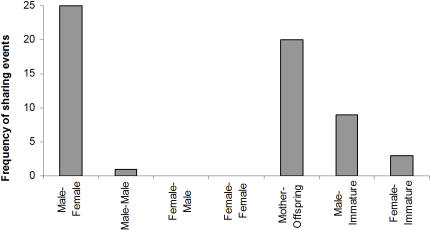
The sharing of wild plant foods is infrequent in chimpanzees, but in chimpanzee communities that engage in hunting, meat is frequently used as a 'social tool' for nurturing alliances and social bonds. Here we report the only recorded example of regular sharing of plant foods by unrelated, non-provisioned wild chimpanzees, and the contexts in which these sharing behaviours occur. From direct observations, adult chimpanzees at Bossou (Republic of Guinea, West Africa) very rarely transferred wild plant foods. In contrast, they shared cultivated plant foods much more frequently (58 out of 59 food sharing events). Sharing primarily consists of adult males allowing reproductively cycling females to take food that they possess. We propose that hypotheses focussing on 'food-for-sex and -grooming' and 'showing-off' strategies plausibly account for observed sharing behaviours. A changing human-dominated landscape presents chimpanzees with fresh challenges, and our observations suggest that crop-raiding provides adult male chimpanzees at Bossou with highly desirable food commodities that may be traded for other currencies.
Overview
The claims and statistics of this paper haven’t been checked yet.
Run the check — free, no account needed. It reads the open-access text and checks the sources it cites.
Integrity signals
Registry
Cites
Statistics
Figures
Verification
Claims the paper makes
The claims and statistics of this paper haven’t been checked yet.
Run the check — free, no account needed. It reads the open-access text and checks the sources it cites.
Claims other papers make about this one
Each is checked against this paper’s own text: does it say what the citing paper says it does?
In the citing paper
“Food sharing in chimpanzees, however, is not restricted to meat but has also been reported with non-meat foods, for example honey [52], or large fruits such as Carica papaya [57] or Treculia africana [52].”
From Food sharing is linked to urinary oxytocin levels and bonding in related and unrelated wild chimpanzees (2014) · cites this paper as [57]
Self-check
Percentages, sums and reported differences re-computed from the paper’s own numbers.
The self-check needs the paper’s full text.
Citations
Cites
(1982) · Medical Entomology and Zoology · Cited by 1,329
The Chimpanzees of the Taï Forest: Behavioural Ecology and Evolution
Boesch, C., & Boesch-Achermann, H. (2000) · doi:10.1093/oso/9780198505082.001.0001 · Cited by 1,079
Hunting behavior of wild chimpanzees in the Taï National Park
Boesch, C., & Boesch, H. (1989) · American Journal of Physical Anthropology · doi:10.1002/ajpa.1330780410 · Cited by 976
Cooperative hunting in wild chimpanzees
Boesch, C. (1994) · Animal Behaviour · doi:10.1006/anbe.1994.1285 · Cited by 650 · cited 1×
“Additionally, as meat is typically energetically costly and risky to acquire for chimpanzees, sharing with others may advertise an individual’s strength and prowess [11]; simply possessing a desirable item may draw positive attention to an individual, enhancing the latter’s social status [12,13].”
BackgroundFood sharing and reciprocal obligations among chimpanzees
de Waal, F. Β. Μ. (1989) · Journal of Human Evolution · doi:10.1016/0047-2484(89)90074-2 · Cited by 463
Why do chimpanzees hunt and share meat?
Mitani, J. C., & Watts, D. P. (2001) · Animal Behaviour · doi:10.1006/anbe.2000.1681 · Cited by 451 · cited 1×
“Within chimpanzee communities that engage in hunting, meat is reportedly used as a ‘social tool’ [5]; alliances and affiliative relationships are cemented by gifts of meat.”
BackgroundTutin, C. E. G. (1979) · Behavioral Ecology and Sociobiology · doi:10.1007/bf00293242 · Cited by 449 · cited 1×
“or to establish or strengthen an affiliative relationship and thus increase future mating opportunities”
BackgroundThe Predatory Behavior of Wild Chimpanzees
Teleki, G. (1973) · Medical Entomology and Zoology · Cited by 395
Chimpanzee politics: power and sex among apes
(1998) · Choice Reviews Online · doi:10.5860/choice.36-1584 · Cited by 363
Meat sharing among the Gombe chimpanzees: harassment and reciprocal exchange
Gilby, I. C. (2006) · Animal Behaviour · doi:10.1016/j.anbehav.2005.09.009 · Cited by 287 · cited 1×
“range from cognitively simple explanations, such as begging intensity”
Background
Research works printed but not linked: 2
- ATC Feistner, 1989, Food-sharing in primates: a critical review., 21
- E Bethell, 2000, Active plant food division and sharing by wild chimpanzees., Primate Report, 56, 67
Cited by
Sorted by citations
Origins of Human Cooperation and Morality
Tomasello, M., & Vaish, A. (2013) · Annual Review of Psychology · doi:10.1146/annurev-psych-113011-143812 · Cited by 916
Requesting in Social Interaction
(2014) · Studies in language and social interaction · doi:10.1075/slsi.26 · Cited by 309
The cognitive bases of human tool use
Vaesen, K. (2012) · Behavioral and Brain Sciences · doi:10.1017/s0140525x11001452 · Cited by 299
Prosocial primates: selfish and unselfish motivations
de Waal, F. Β. Μ., & Suchak, M. (2010) · Philosophical Transactions of the Royal Society B Biological Sciences · doi:10.1098/rstb.2010.0119 · Cited by 276
“For example, male chimpanzees in Bossou, Guinea, sometimes raid papaya plantations (a risky endeavour) and share the highly prized fruits specifically with females, which they hypothesized was a strategy for obtaining future copulations (Hockings et al. 2007).”
BackgroundCognitive Development in Chimpanzees
Matsuzawa, T. (2010) · Elsevier eBooks · doi:10.1016/b978-0-08-045337-8.00103-0 · Cited by 254
Self-citationThe ethnoprimatological approach in primatology
Fuentes, A., & Hockings, K. J. (2010) · American Journal of Primatology · doi:10.1002/ajp.20844 · Cited by 242
“Additionally, whether foods are being exploited as fallback or preferred items [Hockings et al., 2009; Naughton-Treves et al., 1998], they are likely to change the activity patterns, behavioral profiles, and demography of primates [Hockings et al., 2006, 2007; Sapolsky & Share, 2004].”
BackgroundSelf-citationWittig, R. M., Crockford, C., Deschner, T., Langergraber, K. E., Ziegler, T. E., & Zuberbühler, K. (2014) · Proceedings of the Royal Society B: Biological Sciences · doi:10.1098/rspb.2013.3096 · Cited by 235
“Food sharing in chimpanzees, however, is not restricted to meat but has also been reported with non-meat foods, for example honey [52], or large fruits such as Carica papaya [57] or Treculia africana [52].”
BackgroundApes in the Anthropocene: flexibility and survival
Hockings, K. J., McLennan, M. R., Carvalho, S., Ancrenaz, M., Bobe, R. L., Byrne, R. W., Dunbar, R., Matsuzawa, T., McGrew, W. C., Williamson, E. A., et al. (2015) · Trends in Ecology & Evolution · doi:10.1016/j.tree.2015.02.002 · Cited by 227
Self-citationChimpanzees Help Each Other upon Request
Yamamoto, S., Humle, T., & Tanaka, M. (2009) · PLoS ONE · doi:10.1371/journal.pone.0007416 · Cited by 211
“wild and captivity have reported evidence of altruism and cooperation in chimpanzees, such as food sharing, grooming, coalition formation, consolation and cooperative hunting [10–13].”
BackgroundSelf-citationShowing Off in Humans: Male Generosity as a Mating Signal
Iredale, W., van Vugt, M., & Dunbar, R. (2008) · Evolutionary Psychology · doi:10.1177/147470490800600302 · Cited by 214
“Finally, recent data from wild chimpanzee populations suggest that males use food-sharing to show-off to sexually receptive females (Hockings et al., 2007).”
BackgroundTolerant food sharing and reciprocity is precluded by despotism among bonobos but not chimpanzees
Jaeggi, A. V., Stevens, J. M. G., & Van Schaik, C. P. (2010) · American Journal of Physical Anthropology · doi:10.1002/ajpa.21288 · Cited by 205
Natural cooperators: Food sharing in humans and other primates
Jaeggi, A. V., & Gurven, M. (2013) · Evolutionary Anthropology Issues News and Reviews · doi:10.1002/evan.21364 · Cited by 208
Hockings, K. J., Anderson, J. R., & Matsuzawa, T. (2009) · American Journal of Primatology · doi:10.1002/ajp.20698 · Cited by 189
“prestige and access to mates, as well as simply gaining the highest return rate with the least energy expended [Hockings et al., 2007].”
BackgroundSelf-citationHow Children Solve the Two Challenges of Cooperation
Warneken, F. (2017) · Annual Review of Psychology · doi:10.1146/annurev-psych-122216-011813 · Cited by 191
McLennan, M. R., Spagnoletti, N., & Hockings, K. J. (2017) · International Journal of Primatology · doi:10.1007/s10764-017-9962-0 · Cited by 174
“…and 274 fences for travelling or resting (e.g., Semnopithecus vetulus; Moore et al. 2010), use of human water 275 sources for drinking (Erythrocebus patas, de Jong et al. 2008), and use of high-valued agricultural 276 fruits as potential ‘commodities’ (e.g., Pan troglodytes, Hockings et al. 2007).”
BackgroundSelf-citationThe evolution of food sharing in primates
Jaeggi, A. V., & van Schaik, C. P. (2011) · Behavioral Ecology and Sociobiology · doi:10.1007/s00265-011-1221-3 · Cited by 172
“... (1994), Kuroda et al. (1996), Nishida and Turner (1996), Hemelrijk et al. (1999), Mitani and Watts (1999, 2001), Newton-Fisher (1999), Stanford (1999), Bethell et al. (2000), Nakamura and Itoh (2001), Hunt and McGrew (2002), Matsumoto-Oda (2002), Watts and Mitani (2002), Hirata and Celli (2003), Ueno and Matsuzawa…”
BackgroundBest practice guidelines for the prevention and mitigation of conflict between humans and great apes
Hockings, K. J., & Humley, T. (2009) · IUCN eBooks · doi:10.2305/iucn.ch.2009.ssc-op.37.en · Cited by 164
Self-citationCooperation and competition in chimpanzees: Current understanding and future challenges
Mitani, J. C. (2009) · Evolutionary Anthropology: Issues, News, and Reviews · doi:10.1002/evan.20229 · Cited by 156
Silk, J. B., Brosnan, S. F., Henrich, J., Lambeth, S. P., & Shapiro, S. (2013) · Animal Behaviour · doi:10.1016/j.anbehav.2013.02.014 · Cited by 146
“Adult chimpanzees frequently hunt monkeys and small mammals, regularly share meat from the carcasses of captured prey (Muller & Mitani 2005) and occasionally share plant foods with other adults (McGrew 1975; Slocombe & Newton-Fisher 2005; Hockings et al. 2011).”
Social bonds facilitate cooperative resource sharing in wild chimpanzees
Samuni, L., Preis, A., Mielke, A., Deschner, T., Wittig, R. M., & Crockford, C. (2018) · Proceedings of the Royal Society B Biological Sciences · doi:10.1098/rspb.2018.1643 · Cited by 151
Attacks on local persons by chimpanzees in Bossou, Republic of Guinea: long‐term perspectives
Hockings, K. J., Yamakoshi, G., Kabasawa, A., & Matsuzawa, T. (2009) · American Journal of Primatology · doi:10.1002/ajp.20784 · Cited by 131
“Because of his generally bold behavior during crop-raids and road-crossings [Hockings et al., 2007], researchers at Bossou strongly suspect that the same individual was responsible for the other attacks that occurred between 2003 and 2007; this period coincided with Yolo asserting more dominance and increasing his sta…”
BackgroundSelf-citationWild Chimpanzees on the Edge: Nocturnal Activities in Croplands
Krief, S., Cibot, M., Bortolamiol, S., Seguya, A., Krief, J.-M., & Masi, S. (2014) · PLoS ONE · doi:10.1371/journal.pone.0109925 · Cited by 130
“They also tended to transport crops into the forest to reduce stationing in exposed areas [34].”
BackgroundResultInfluentialIn search of the last common ancestor: new findings on wild chimpanzees
McGrew, W. C. (2010) · Philosophical Transactions of the Royal Society B Biological Sciences · doi:10.1098/rstb.2010.0067 · Cited by 122
Raiders of the Lost Bark: Orangutan Foraging Strategies in a Degraded Landscape
Campbell‐Smith, G., Campbell-Smith, M., Singleton, I., & Linkie, M. (2011) · PLoS ONE · doi:10.1371/journal.pone.0020962 · Cited by 116
“raiding crops in exposed areas near villages) in order to obtain cultivated fruits [13].”
BackgroundThe Power of Feasts: From Prehistory to the Present
Hayden, B. D. (2014) · Cited by 110
Chimpanzee responses to researchers in a disturbed forest–farm mosaic at Bulindi, western Uganda
McLennan, M. R., & Hill, C. M. (2010) · American Journal of Primatology · doi:10.1002/ajp.20839 · Cited by 106
“While boldness in encounters with humans and during forays into village areas may enhance the social status of individual adult males [see also Hockings et al., 2007], frequent aggression shown toward humans by chimpanzees at Bulindi is best viewed as a strategy adopted by the apes under difficult…”
BackgroundNo evidence of short-term exchange of meat for sex among chimpanzees
Gilby, I. C., Thompson, M. E., Ruane, J. D., & Wrangham, R. W. (2010) · Journal of Human Evolution · doi:10.1016/j.jhevol.2010.02.006 · Cited by 105
“A recent study at Bossou, Guinea, found that the beta male shared papaya with a frequent consort partner (Hockings et al., 2007), but there was no evidence that sharing and consorting were causally linked.”
BackgroundMeat eating by nonhuman primates: A review and synthesis
Watts, D. P. (2020) · Journal of Human Evolution · doi:10.1016/j.jhevol.2020.102882 · Cited by 107
The influence of kin relationship and reciprocal context on chimpanzees' other-regarding preferences
Yamamoto, S., & Tanaka, M. (2010) · Animal Behaviour · doi:10.1016/j.anbehav.2009.11.034 · Cited by 101
“…in giving and receiving commodities and services, such as food, grooming, agonistic support and mating (de Waal 1997; Mitani & Watts 2001; Koyama et al. 2006; Duffy et al. 2007; Hockings et al. 2007; but see also criticisms: Hammerstein 2003; Stevens 2004; Stevens & Gilby 2004; Gilby 2006).”
Hockings, K. J., Anderson, J. R., & Matsuzawa, T. (2012) · Animal Behaviour · doi:10.1016/j.anbehav.2012.01.002 · Cited by 94
“Males might be morewilling to engage in risky raidswhen othermales are present in larger party sizes for support, or ‘show off’ their boldness to females through crop raiding during these periods (Hockings et al. 2007).”
BackgroundInfluentialSelf-citationChimpanzee social intelligence: selfishness, altruism, and the mother–infant bond
Hirata, S. (2009) · Primates · doi:10.1007/s10329-008-0122-1 · Cited by 88
“In another group of wild chimpanzees at Bossou, Guinea, Hockings et al. (2007) examined sharing of cultivated plant foods among group members.”
BackgroundTo Each According to his Need? Variability in the Responses to Inequity in Non-Human Primates
Price, S. A., & Brosnan, S. F. (2012) · Social Justice Research · doi:10.1007/s11211-012-0153-z · Cited by 84
“Males may also share hard-to-get cultivated fruits with females (Hockings et al., 2007).”
BackgroundBrosnan, S. F. (2011) · New Directions for Child and Adolescent Development · doi:10.1002/cd.293 · Cited by 81
“Barter has not been reported in wild populations; however, chimpanzees and other species do share food (e.g., Feistner & McGrew, 1989; Hockings et al., 2007), which is a related behavior.”
Plant-food and tool transfer among savanna chimpanzees at Fongoli, Senegal
Pruetz, J. D., & Lindshield, S. M. (2011) · Primates · doi:10.1007/s10329-011-0287-x · Cited by 73
“Hockings et al. (2007) define immatures in their Bossou study as individuals less than 8 years old and do not explicitly report transfer behavior in adolescents or subadults.”
BackgroundMethodInfluentialBryson‐Morrison, N., Tzanopoulos, J., Matsuzawa, T., & Humle, T. (2017) · International Journal of Primatology · doi:10.1007/s10764-016-9947-4 · Cited by 67
Self-citationTrading behavior between conspecifics in chimpanzees, Pan troglodytes.
Brosnan, S. F., & Beran, M. J. (2009) · Journal of comparative psychology · doi:10.1037/a0015092 · Cited by 61
“Even food sharing is rare outside of the context of hunts and often occurs in contexts other than barter (Hockings et al., 2007; Silk, 1979; Slocombe & Newton-Fisher, 2005).”
BackgroundThe stable isotope ecology of Pan in Uganda and beyond
Loudon, J. E., Sandberg, P., Wrangham, R. W., Fahey, B. P., & Sponheimer, M. (2016) · American Journal of Primatology · doi:10.1002/ajp.22552 · Cited by 55
Non-reciprocal but peaceful fruit sharing in wild bonobos in Wamba
Yamamoto, S. (2015) · Behaviour · doi:10.1163/1568539x-00003257 · Cited by 54
“This hypothesis is supported by previous studies on chimpanzees, which detected statistical associations between sharing food with socially established partners (de Waal, 1989a, 1997; Mitani & Watts, 2001; Hockings et al., 2007; Gomes & Boesch, 2009).”
“Requests” and “offers” in orangutans and human infants
Rossano, F., & Liebal, K. (2014) · Studies in language and social interaction · doi:10.1075/slsi.26.13ros · Cited by 54
Social tolerance in a despotic primate: Co‐feeding between consortship partners in rhesus macaques
Dubuc, C., Hughes, K. D., Cascio, J., & Santos, L. R. (2012) · American Journal of Physical Anthropology · doi:10.1002/ajpa.22043 · Cited by 53
The “Prehistory” Before 1976: Looking Back on Three Decades of Research on Bossou Chimpanzees
Yamakoshi, G. (2011) · Primatology monographs · doi:10.1007/978-4-431-53921-6_5 · Cited by 52
Intersexual food transfer among orangutans: do females test males for coercive tendency?
van Noordwijk, M. A., & van Schaik, C. P. (2009) · Behavioral Ecology and Sociobiology · doi:10.1007/s00265-009-0728-3 · Cited by 51
“…they are both common and well studied in wild chimpanzees (e.g., Teleki 1973; Mitani and Watts 2001; Matsomoto-Oda 2002; Watts and Mitani 2002; Gilby 2006; Slocombe and NewtonFisher 2005; Ohashi 2007; Hockings et al. 2007) and humans (e.g., Hawkes 1991; Smith and Bliege Bird 2000; Gurven 2004).”
InfluentialKaburu, S., & Newton‐Fisher, N. E. (2015) · Behavioral Ecology and Sociobiology · doi:10.1007/s00265-015-1917-x · Cited by 52
“…chimpanzees mated more with those males who shared meat with them than with those who did not (Gomes and Boesch 2009, 2011); in Guinea, male chimpanzees were more likely to engage successfully in consortship with cycling females with whom they shared fruits more frequently (Hockings et al. 2007).”
Green Corridor Project: Planting Trees in the Savanna Between Bossou and Nimba
Matsuzawa, T., Ohashi, G., Humle, T., Granier, N., Kourouma, M., & Soumah, A. G. (2011) · Primatology monographs · doi:10.1007/978-4-431-53921-6_38 · Cited by 47
Self-citationThe Crop-Raiders of the Sacred Hill
Hockings, K. J. (2011) · Primatology monographs · doi:10.1007/978-4-431-53921-6_23 · Cited by 46
Self-citationThe Green Corridor Project: long-term research and conservation in Bossou, Guinea
Matsuzawa, T., & Kourouma, M. (2008) · Cambridge University Press eBooks · doi:10.1017/cbo9780511754920.019 · Cited by 46
Self-citationChimpanzees balance resources and risk in an anthropogenic landscape of fear
Bersacola, E., Hill, C. M., & Hockings, K. J. (2021) · Scientific Reports · doi:10.1038/s41598-021-83852-3 · Cited by 39
Self-citationLindshield, S. M., Danielson, B. J., Rothman, J. M., & Pruetz, J. D. (2017) · American Journal of Physical Anthropology · doi:10.1002/ajpa.23221 · Cited by 38
Bullinger, A. F., Burkart, J. M., Melis, A. P., & Tomasello, M. (2012) · Animal Behaviour · doi:10.1016/j.anbehav.2012.10.006 · Cited by 37
“Outside of the hunting context, food sharing in chimpanzees is rare (Bethell et al. 2000; Nakamura & Itoh 2001; Slocombe & Newton-Fisher 2005; Hockings et al. 2007) and occurs mainly between mother and dependent offspring, in which mothers usually give only food of low quality or leftovers (McGrew 1975; Nishida & Turn…”
Perseverance and food sharing among closely affiliated female chimpanzees
Eppley, T. M., Suchak, M., Tinsman, J. C., & de Waal, F. Β. Μ. (2013) · Primates · doi:10.1007/s10329-013-0374-2 · Cited by 36
Rodrigues, E. D., dos Santos, A. J., Hayashi, M., Matsuzawa, T., & Hobaiter, C. (2021) · Primates · doi:10.1007/s10329-021-00957-z · Cited by 33
“229 By crossing the roads between the two forests (Hockings et al. 2007), both sites were 230 regularly used by the chimpanzees for cracking palm-nuts with stone tools.”
Self-citationEvolution of the brain and social behavior in chimpanzees
Matsuzawa, T. (2013) · Current Opinion in Neurobiology · doi:10.1016/j.conb.2013.01.012 · Cited by 32
“Altruistic behavior Chimpanzees in the wild show a highly developed tool technology [25] and also altruistic behavior [26–29].”
BackgroundSelf-citationA comprehensive review on sustainability-motivated applications of SAPO-34 molecular sieve
Rimaz, S., Kosari, M., Zarinejad, M., & Ramakrishna, S. (2022) · Journal of Materials Science · doi:10.1007/s10853-021-06643-1 · Cited by 30
Hockings, K. J., Anderson, J. R., & Matsuzawa, T. (2010) · Journal of Human Evolution · doi:10.1016/j.jhevol.2009.11.004 · Cited by 30
Self-citationMorality as a Biological Adaptation – An Evolutionary Model Based on the Lifestyle of Human Foragers
van Schaik, C. P., Burkart, J. M., Jaeggi, A. V., & von Rohr, C. R. (2013) · Library of ethics and applied philosophy · doi:10.1007/978-3-319-01369-5_4 · Cited by 30
Kopp, K. S., & Liebal, K. (2016) · Behavioral Ecology and Sociobiology · doi:10.1007/s00265-016-2130-2 · Cited by 31
“, Hohmann and Fruth 2008; Gomes and Boesch 2009) and large fruits or cultivated plant food (Hockings et al. 2007; Yamamoto 2015).”
BackgroundInfluentialThe evolutionary roots of prosociality: the case of instrumental helping
Melis, A. P. (2017) · Current Opinion in Psychology · doi:10.1016/j.copsyc.2017.08.019 · Cited by 29
“Prototypical cases are cases of consolation behaviour [14,15], instrumental helping or intervening to help others that are struggling with an action goal [16,17], and sharing of valuable resources, such as meat or fruits [18-20].”
BackgroundFarsightedness (presbyopia) in a wild elderly chimpanzee: The first report
Fujisawa, M., Matsubayashi, K., Soumah, A. G., Kasahara, Y., Nakatsuka, M., & Matsuzawa, T. (2009) · Geriatrics and gerontology international/Geriatrics & gerontology international · doi:10.1111/j.1447-0594.2009.00575.x · Cited by 26
Self-citationLiebal, K., & Rossano, F. (2017) · Animal Behaviour · doi:10.1016/j.anbehav.2017.09.006 · Cited by 25
Oelze, V. M., Douglas, P. H., Stephens, C. R., Surbeck, M., Behringer, V., Richards, M. P., Fruth, B., & Hohmann, G. (2016) · PLoS ONE · doi:10.1371/journal.pone.0162091 · Cited by 25
The roles of food quality and sex in chimpanzee sharing behavior (Pan troglodytes)
Tinsman, J. C., Suchak, M., Eppley, T. M., Campbell, M., & de Waal, F. Β. Μ. (2013) · Behaviour · doi:10.1163/1568539x-00003087 · Cited by 21
“However, male chimpanzees at Bossou in Guinea have also been observed to share more food following risky crop raids on human agricultural fields than easily obtainable, uncultivated fruits (Hockings et al., 2007).”
InfluentialResponses to Inequity in Non-human Primates
Brosnan, S. F. (2009) · Elsevier eBooks · doi:10.1016/b978-0-12-374176-9.00019-1 · Cited by 20
Chacma baboon mating markets: competitor suppression mediates the potential for intersexual exchange
Clarke, P. M. R., Halliday, J. E. B., Barrett, L., & Henzi, S. P. (2010) · Behavioral Ecology · doi:10.1093/beheco/arq125 · Cited by 19
“…intersexual exchange seen in species like chimpanzees, where males commonly provide services and/or foodstuffs to females with whom they mate and where the frequency with which they mate is correlated with the degree of provision (Hemelrijk et al. 1992; Hockings et al. 2007; Gomes and Boesch 2009).”
BackgroundBonobo Cognition and Behaviour
Cahn, C. (2015) · BRILL eBooks · doi:10.1163/9789004304178 · Cited by 20
Behavioral Flexibility and Division of Roles in Chimpanzee Road-Crossing
Hockings, K. J. (2011) · Primatology monographs · doi:10.1007/978-4-431-53921-6_24 · Cited by 19
Self-citationChimpanzee interactions with nonhuman species in an anthropogenic habitat
Matsuzawa, T., Hockings, K. J., Humle, T., & Carvalho, S. (2012) · Behaviour · doi:10.1163/156853912x636735 · Cited by 18
“In the case of the potto, the second-ranked adult male shared meat with the alpha male; this contrasts with other adult food-sharing events observed at Bossou, which are predominantly from adult males to females (e.g., crops, Hockings et al., 2007).”
BackgroundInfluentialSelf-citationSupply and demand predict male grooming of swollen females in captive chimpanzees, Pan troglodytes
Koyama, N. F., Caws, C., & Aureli, F. (2012) · Animal Behaviour · doi:10.1016/j.anbehav.2012.09.007 · Cited by 17
“The idea of sexual exchange is well established as there are a number of examples from primates (grooming for sex: Gumert 2007; food for sex: Goodall 1986; Hemelrijk et al. 1992; Hockings et al. 2007; Gomes & Boesch 2009, 2011; political support for sex: Duffy et al. 2007) and nonprimates (insects: e.”
BackgroundInfluentialGift-Giving as a Courtship or Mate-Retention Tactic?: Insights from Non-Human Models
Jonason, P. K., Cetrulo, J. F., Madrid, J. M., & Morrison, C. (2009) · Evolutionary Psychology · doi:10.1177/147470490900700112 · Cited by 17
“When male long-tailed macaques groom females (Gumert, 2007), when male chimpanzees offer animal meat to females (Hockings et al., 2007), and when insects offer gifts which range from gifts of a nutritious nature to token-gifts to females (Elgar, 1992; Kessel, 1955; Thornhill, 1976) they increase the probability they w…”
BackgroundThe Prosocial Primate—A Critical Review
Jensen, K. (2016) · Advances in the study of behavior · doi:10.1016/bs.asb.2016.03.001 · Cited by 14
Captive chimpanzees share diminishing resources
Calcutt, S. E., Lonsdorf, E. V., Bonnie, K. E., Milstein, M. S., & Ross, S. R. (2014) · Behaviour · doi:10.1163/1568539x-00003225 · Cited by 13
“Chimpanzees in Tai National Forest share meat from hunts even when only a small amount is caught (Boesch & Boesch, 1989) and chimpanzees at Bossou share high-value fruit that was risky to obtain (Hockings et al., 2007).”
BackgroundNon-reciprocal but peaceful fruit sharing in wild bonobos in Wamba
Yamamoto, S. (2015) · BRILL eBooks · doi:10.1163/9789004304178_006 · Cited by 13
Male chimpanzees' grooming rates vary by female age, parity, and fertility status
Proctor, D. P., Lambeth, S. P., Schapiro, S. J., & Brosnan, S. F. (2011) · American Journal of Primatology · doi:10.1002/ajp.20964 · Cited by 13
How chimpanzees (Pan troglodytes) share the spoils with collaborators and bystanders
John, M., Duguid, S., Tomasello, M., & Melis, A. P. (2019) · PLoS ONE · doi:10.1371/journal.pone.0222795 · Cited by 13
“There are examples of non-meat foods in the chimpanzee diet that are large and monopolizable or difficult to get, such as Treculia africana fruit or the proceeds of crop raiding, and these are more likely to be shared than other non-meat foods [24, 26] but there may be additional Fig 3.”
BackgroundTanaka, M., & Yamamoto, S. (2009) · Animal Cognition · doi:10.1007/s10071-009-0270-8 · Cited by 13
“The Xexibility might enable them to “share” various kinds of items between conspeciWcs (e.g., Hockings et al. 2007 ).”
BackgroundCourtesy food sharing characterized by begging for social bonds in wild bonobos
Yamamoto, S., & Furuichi, T. (2017) · Oxford University Press eBooks · doi:10.1093/oso/9780198728511.003.0009 · Cited by 12
Satsias, Z. M., Silk, M. J., Hockings, K. J., Cibot, M., Rohen, J., & McLennan, M. R. (2022) · Animal Behaviour · doi:10.1016/j.anbehav.2022.01.016 · Cited by 11
Self-citationCouturier, C., Bortolamiol, S., Ortmann, S., Okimat, J. P., Asalu, E., & Krief, S. (2022) · Animals · doi:10.3390/ani12070806 · Cited by 14
“Nevertheless, in a crop-foraging context, chimpanzees can be vigilant, silent, and anxious [33,43,111] (personal observation).”
BackgroundYamagiwa, J., Tsubokawa, K., Inoue, E., & Ando, C. (2014) · Primates · doi:10.1007/s10329-014-0433-3 · Cited by 9
“Although such a small sample size (only 18 cases) could not examine the various hypotheses (Ruiz-Miranda et al. 1999; Brown et al. 2004; Hockings et al. 2007; van Noordwijk and van Schaik 2009) relevant to food transfer or sharing among gorillas, frequent social staring by non-possessors at the…”
Chimpanzee Velu: the wild chimpanzee who passed away at the estimated age of 58
Matsuzawa, T. (2018) · Primates · doi:10.1007/s10329-018-0654-y · Cited by 9
Self-citationPlacentophagy in wild chimpanzees (Pan troglodytes verus) at Bossou, Guinea
Fujisawa, M., Hockings, K. J., Soumah, A. G., & Matsuzawa, T. (2016) · Primates · doi:10.1007/s10329-016-0510-x · Cited by 8
Self-citationCollective movement decision-making in primates in crop-raiding contexts
Anand, S., & Radhakrishna, S. (2022) · Behavioural Processes · doi:10.1016/j.beproc.2022.104604 · Cited by 8
Byrnit, J., Høgh‐Olesen, H., & Makransky, G. (2015) · Journal of comparative psychology · doi:10.1037/a0039351 · Cited by 8
Precursors of Morality – Evidence for Moral Behaviors in Non-human Primates
Brosnan, S. F. (2013) · Library of ethics and applied philosophy · doi:10.1007/978-3-319-01369-5_5 · Cited by 8
A review of great ape behavioural responses and their outcomes to anthropogenic landscapes
Gilbert, M. A., & Kalan, A. K. (2025) · Primates · doi:10.1007/s10329-025-01180-w · Cited by 7
“Additionally, great can apes experience stress when engaging in crop foraging (Hockings et al. 2007, 2009; Krief et al. 2014) and it has been suggested that long-term exposure to stress hormones can degrade immune function, reproduction, and growth in wild animals (Hing et al. 2016; Kaisin et al.…”
InfluentialKrief, S., Špirhanzlová, P., Masi, S., Couturier, C., Okwir, E., Asalu, E., Paco Bustamante, A., & Costantini, D. (2023) · Environmental Science and Pollution Research · doi:10.1007/s11356-023-30187-3 · Cited by 8
“In addition, feeding on anthropogenic food exposes crop feeders to direct threats, such as being chased, injured, and hunted (Carlitz et al. 2016; Hockings et al. 2007; Hyeroba et al. 2011).”
BackgroundNeves, E., Cherkaoui, S. I., Amhaouch, Z., Duperron, C., Ménard, N., & Gouar, P. L. (2024) · International Journal of Primatology · doi:10.1007/s10764-024-00422-w · Cited by 7
“…males, being larger and stronger, tend to engage in riskier behaviors than other age-sex classes, which involves more crop visits (chimpanzees: Hockings et al., 2007; olive baboons: Strum, 1994), spending more time in crops (vervets: Saj et al., 1999), and leading the group into crops (Buton…”
Dell’Anna, F., Llorente, M., Weiß, B., von Fersen, L., & Amici, F. (2019) · American Journal of Primatology · doi:10.1002/ajp.23078 · Cited by 7
Education by Master-Apprenticeship
Matsuzawa, T. (2011) · Primatology monographs · doi:10.1007/978-4-431-53921-6_22 · Cited by 7
Self-citationHalloran, A. R., Cloutier, C. T., & Sesay, P. B. (2014) · Cited by 6
Chimpanzees – Investigating Cognition in the Wild
Wittig, R. M., & Crockford, C. (2018) · Cambridge University Press eBooks · doi:10.1017/9781108333191.008 · Cited by 6
de Waal, F. Β. Μ. (2021) · Philosophical Transactions of the Royal Society B Biological Sciences · doi:10.1098/rstb.2019.0663 · Cited by 6
Call, J., & Tomasello, M. (2024) · doi:10.1093/oso/9780198910626.001.0001 · Cited by 5
Kaufhold, S. P., & Rossano, F. (2020) · Animal Behaviour · doi:10.1016/j.anbehav.2020.07.016 · Cited by 5
Haider, S., De‐Pablos‐Heredero, C., & De-Pablos-Heredero, M. (2021) · Frontiers in Psychology · doi:10.3389/fpsyg.2021.661715 · Cited by 5
Achorn, A. M., Lindshield, S. M., Ndiaye, P. I., Winking, J., & Pruetz, J. D. (2023) · American Journal of Biological Anthropology · doi:10.1002/ajpa.24815 · Cited by 4
Tellier, M., Druelle, F., Cibot, M., Baruzaliire, J.-M., Sabiiti, T., & McLennan, M. R. (2025) · American Journal of Primatology · doi:10.1002/ajp.70000 · Cited by 4
“Nevertheless, males did not generally exhibit signs of anxiety when surveying for traffic or pedestrians (such as bipedalism [Pierce 2009; Krief et al. 2014] or self ‐ scratching [Aureli and de Waal 1997; Hockings et al. 2007]).”
InfluentialSauciuc, G.-A., & Persson, T. (2023) · Frontiers in Psychology · doi:10.3389/fpsyg.2023.1157137 · Cited by 5
“Based on the currently limited data, several functional hypotheses are simultaneously consistent with raided-crop sharing, including the costly signalling hypothesis, the food-for-sex hypothesis, and the food-for-grooming hypothesis (Hockings et al., 2007).”
BackgroundInfluentialHow context influences primates' decisions about reciprocity
Brosnan, S. F. (2024) · Ethology · doi:10.1111/eth.13433 · Cited by 4
Peut-on étudier la morale chez les animaux ?
Bovet, D. (2012) · Études rurales · doi:10.4000/etudesrurales.9571 · Cited by 4
Tomasello, M., & Call, J. (2024) · Oxford University Press eBooks · doi:10.1093/oso/9780198910626.003.0001 · Cited by 4
Metadata
- Authors
- Hockings, K. J., Humle, T., Anderson, J. R., Biro, D., Sousa, C., Ohashi, G., & Matsuzawa, T.
- Affiliations
- University of Stirling (GB)
- University of Wisconsin–Madison (US)
- University of Oxford (GB)
- Kyoto University (JP)
- Corresponding author
- Hockings, Kimberley J.
- Venue
- PLoS ONE
- Publisher
- Public Library of Science (PLoS)
- Published
- 2007-09-12
- Volume
- 2
- Issue
- 9
- Pages
- e886
- ISSN
- 1932-6203 (ISSN-L)
- PMC
- PMC1964537
- OpenAlex
- W2139162770
- Cited by
- 138
- References
- 28
- Citations by year
- 2025: 4 · 2024: 14 · 2023: 5 · 2022: 8 · 2021: 4 · 2020: 3 · 2019: 3 · 2018: 5 · 2017: 9 · 2016: 5 · 2015: 8 · 2014: 9 · 2013: 8 · 2012: 11
- FWCI
- 13.78
- Type
- journal article
- Language
- en
- Open access
- gold
- doi.org
- Locations
- PLoS ONE (publishedVersion, cc-by)
- PubMed Central (publishedVersion, cc-by)
- PubMed (publishedVersion)
- Portuguese National Funding Agency for Science, Research and Technology (RCAAP Project by FCT) (submittedVersion, cc-by)
- Portuguese National Funding Agency for Science, Research and Technology (RCAAP Project by FCT) (submittedVersion, other-oa)
- DOAJ (DOAJ: Directory of Open Access Journals) (submittedVersion, cc-by-sa)
- Figshare (submittedVersion, cc-by)
- Kent Academic Repository (University of Kent) (submittedVersion)
- Funders
- Ministry of Education, Culture, Sports, Science and Technology (#16002001)
- University of Stirling
- Japan Society for the Promotion of Science (16002001)
- Topics
- Life Sciences › Agricultural and Biological Sciences › Ecology, Evolution, Behavior and Systematics › Primate Behavior and Ecology
- Life Sciences › Agricultural and Biological Sciences › Ecology, Evolution, Behavior and Systematics › Animal Behavior and Reproduction
- Physical Sciences › Environmental Science › Ecology › Wildlife Ecology and Conservation
- Keywords
- chimpanzees, food sharing, wild plant foods, crop raiding, social bonds, showing off, male-female interaction, Bossou, anthropogenic landscapes, primate social behavior
- MeSH terms
- Animals, Behavior, Animal, Pan troglodytes, Female, Male, Social Behavior
About these checks
Registry, retraction, Cites and statistics results are computed, not judged, with one exception: a printed reference that no index lists is read once by a model before it counts as a citation error. Claims are extracted by a model and kept only when their quote appears verbatim in the text; each cited source is then checked, with a model’s help, for whether it says what the claim relies on. Those verdicts can be wrong — read the claim’s quote and the cited source before relying on one.
Statistics and arithmetic are recomputed, not judged.
Confidence bands are shown only for fields calibrated on our annotated test set. None is calibrated yet, so no band is shown.
What counts as a claim ›How we measure confidence ›How we check this ›
Are you an author, or do you see a problem with this page? Request a review
