

Probiotic Escherichia coli Nissle 1917 Inhibits Leaky Gut by Enhancing Mucosal Integrity
Open accessThe DOI matches its Crossref record; 60 of the 60 references it cites were found in a registry or an index.
Abstract
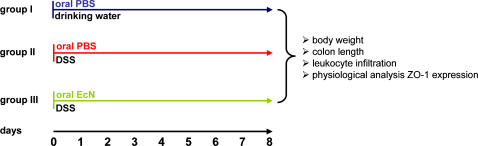
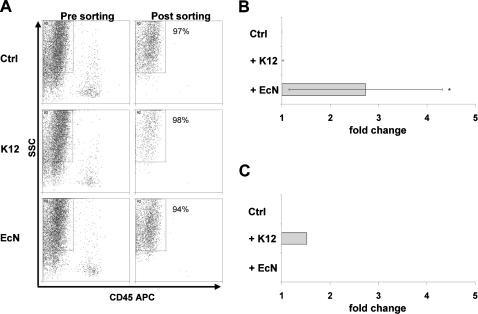
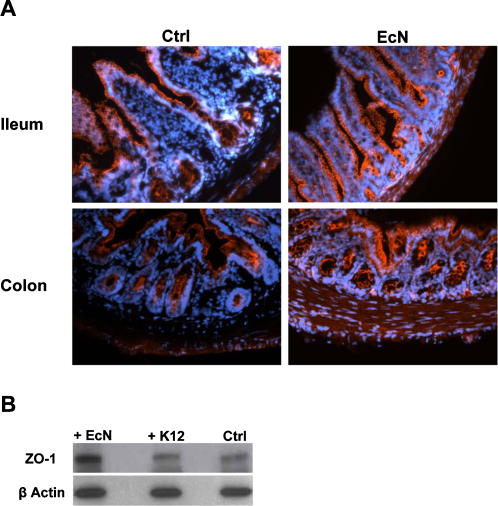
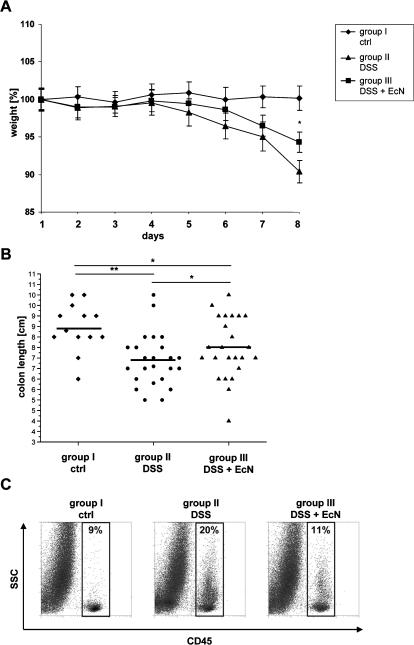
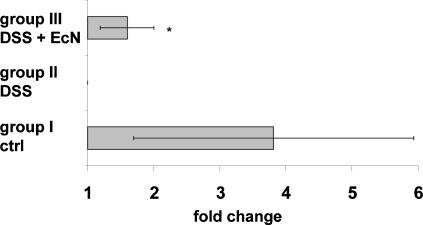
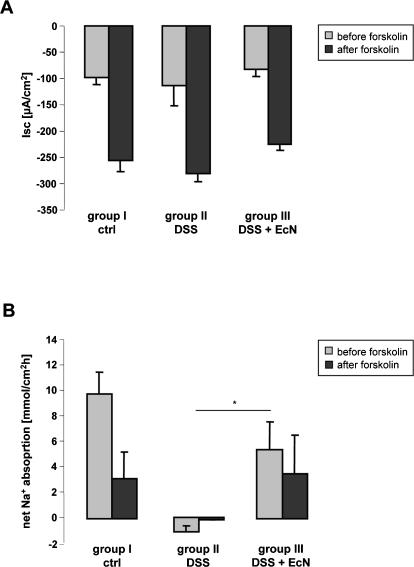
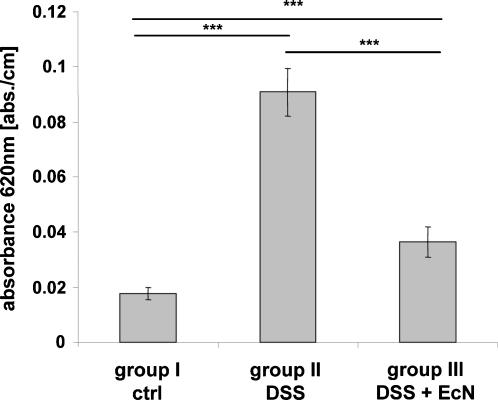
BACKGROUND: Probiotics are proposed to positively modulate the intestinal epithelial barrier formed by intestinal epithelial cells (IECs) and intercellular junctions. Disruption of this border alters paracellular permeability and is a key mechanism for the development of enteric infections and inflammatory bowel diseases (IBDs). METHODOLOGY AND PRINCIPAL FINDINGS: To study the in vivo effect of probiotic Escherichia coli Nissle 1917 (EcN) on the stabilization of the intestinal barrier under healthy conditions, germfree mice were colonized with EcN or K12 E. coli strain MG1655. IECs were isolated and analyzed for gene and protein expression of the tight junction molecules ZO-1 and ZO-2. Then, in order to analyze beneficial effects of EcN under inflammatory conditions, the probiotic was orally administered to BALB/c mice with acute dextran sodium sulfate (DSS) induced colitis. Colonization of gnotobiotic mice with EcN resulted in an up-regulation of ZO-1 in IECs at both mRNA and protein levels. EcN administration to DSS-treated mice reduced the loss of body weight and colon shortening. In addition, infiltration of the colon with leukocytes was ameliorated in EcN inoculated mice. Acute DSS colitis did not result in an anion secretory defect, but abrogated the sodium absorptive function of the mucosa. Additionally, intestinal barrier function was severely affected as evidenced by a strong increase in the mucosal uptake of Evans blue in vivo. Concomitant administration of EcN to DSS treated animals resulted in a significant protection against intestinal barrier dysfunction and IECs isolated from these mice exhibited a more pronounced expression of ZO-1. CONCLUSION AND SIGNIFICANCE: This study convincingly demonstrates that probiotic EcN is able to mediate up-regulation of ZO-1 expression in murine IECs and confer protection from the DSS colitis-associated increase in mucosal permeability to luminal substances.
Overview
The claims and statistics of this paper haven’t been checked yet.
Free: it reads the open-access text and checks the first 5 claims that cite a source we can check. Create a free account to check every claim.
Integrity signals
Registry
Cites
Statistics
Figures
Verification
Claims the paper makes
The claims and statistics of this paper haven’t been checked yet.
Free: it reads the open-access text and checks the first 5 claims that cite a source we can check. Create a free account to check every claim.
Claims other papers make about this one
Each is checked against this paper’s own text: does it say what the citing paper says it does?
In the citing paper
“Microbes(Figure 3) can directly alter expression of tight junction proteins such as claudin-380 and zonula occludens-181 or enhance expression of genes involved in tight junction signaling82.”
From The gut Microbiome in adult and pediatric functional gastrointestinal disorders (2019) · cites this paper as [81]
Self-check
Percentages, sums and reported differences re-computed from the paper’s own numbers.
The self-check needs the paper’s full text.
Citations
Cites
JUNCTIONAL COMPLEXES IN VARIOUS EPITHELIA
Farquhar, M. G., & Palade, G. E. (1963) · The Journal of Cell Biology · doi:10.1083/jcb.17.2.375 · Cited by 3,635 · cited 1×
“Its effectiveness and stability are ensured by the junctional complex [1].”
BackgroundPodolsky, D. K. (2002) · New England Journal of Medicine · doi:10.1056/nejmra020831 · Cited by 3,159
Stevenson, B. R., Siliciano, J. D., Mooseker, M. S., & Goodenough, D. A. (1986) · The Journal of cell biology · doi:10.1083/jcb.103.3.755 · Cited by 1,638 · cited 1×
“The first junction-associated protein identified was zonula occludens 1 (ZO-1), with a molecular mass between ,210–225 kDa [5].”
BackgroundKruis, W., Frič, P., Pokrotnieks, J., Lukáš, M., Fixa, B., Kaščák, M., Kamm, M. A., Weismueller, J., Beglinger, C., Stolte, M., et al. (2004) · Gut · doi:10.1136/gut.2003.037747 · Cited by 1,285 · cited 2×
“characterized probiotics, and its therapeutic efficacy and safety have convincingly been proven [12–16].”
BackgroundRembacken, B., Snelling, A., Hawkey, P., Chalmers, D., & Axon, A. (1999) · The Lancet · doi:10.1016/s0140-6736(98)06343-0 · Cited by 1,101
Sartor, R. B. (2004) · Gastroenterology · doi:10.1053/j.gastro.2004.03.024 · Cited by 1,052 · cited 10×
“A potential mechanism by which probiotics may exhibit their beneficial activities is modulation of the epithelial barrier function [17,18].”
BackgroundInfluentialRachmilewitz, D., Katakura, K., Karmeli, F., Hayashi, T., Reinus, C., Rudensky, B., Akira, S., Takeda, K., Lee, J., Takabayashi, K., et al. (2004) · Gastroenterology · doi:10.1053/j.gastro.2003.11.019 · Cited by 859 · cited 1×
“In the past years, probiotics have been shown to be effective in the treatment of mild to moderately active IBD [18] and to reduce inflammation in animal models of colitis [29,34–36].”
BackgroundKRUIS, W., SCHÜTZ, E., FRIC, P., FIXA, B., JUDMAIER, G., & STOLTE, M. (1997) · Alimentary Pharmacology & Therapeutics · doi:10.1046/j.1365-2036.1997.00225.x · Cited by 775 · cited 2×
“characterized probiotics, and its therapeutic efficacy and safety have convincingly been proven [12–16].”
BackgroundOrla-Jensen, S. (1919) · Cited by 698
Wang, F., Graham, W. V., Wang, Y., Witkowski, E. D., Schwarz, B. T., & Turner, J. R. (2005) · The American Journal of Pathology · doi:10.1016/s0002-9440(10)62264-x · Cited by 696 · cited 2×
“It has been shown that the impaired barrier function in IBD is associated with an altered TJ structure [7,8,25–28].”
Background
Cited by
Items 401–481 of 481
Specific carbohydrate diet: irritable bowel syndrome patient case study
O'Dwyer, D. D., & Darville, R. L. (2015) · Nutrition & Food Science · doi:10.1108/nfs-05-2015-0056 · Cited by 3
“…been found in 30-75% D ow nl oa de d by W or ce st er P ol yt ec hn ic I ns tit ut e A t 1 0: 39 0 9 O ct ob er 2 01 5 (P T ) of irritable bowel sufferers (Anderson et al., 2010; Ewaschuk et al., 2008; Lin, 2004; Lupascu et al., 2005; Pimentel et al., 2003; Sapone et al., 2011; Ukena et al., 2007).”
BackgroundInfluentialProbiotics and Prebiotics in Inflammatory Bowel Disease
Geier, M. S., Prisciandaro, L. D., & Howarth, G. S. (2009) · CRC Press eBooks · doi:10.1201/9781420062151.ch12 · Cited by 2
Microbial personified therapy as an instrument of medical doctor in the future
Suvorov, A. N. (2022) · Russian Journal for Personalized Medicine · doi:10.18705/2782-3806-2022-2-1-51-62 · Cited by 2
Fermented foods, prebiotics, and probiotics
Diez‐Echave, P., Hidalgo‐Garcia, L., Molina‐Tijeras, J. A., Algieri, F., Rodríguez‐Cabezas, M. E., Rodríguez‐Nogales, A., & Gálvez, J. (2023) · Elsevier eBooks · doi:10.1016/b978-0-323-99111-7.00012-x · Cited by 2
The Impact of Inflammation on Brain Function and Behavior in Rodent Models of Affective Disorders
Farzana, F., Renoir, T., & Hannan, A. J. (2018) · Elsevier eBooks · doi:10.1016/b978-0-12-811073-7.00005-2 · Cited by 5
Gaio, D., DeMaere, M. Z., Anantanawat, K., Eamens, G. J., Zingali, T., Falconer, L., Chapman, T. A., Djordjevic, S. P., & Darling, A. E. (2020) · bioRxiv (Cold Spring Harbor Laboratory) · doi:10.1101/2020.07.20.211326 · Cited by 2
Yin, Y., Zeng, X., Wu, Z. F., Du, Q., Zhang, T., Pan, D., Du, M., & Tu, M. (2024) · Food Science and Human Wellness · doi:10.26599/fshw.2024.9250176 · Cited by 2
“A large number of microorganisms and metabolites adhere to the mucosal surface of the intestinal epithelium [101] .”
Funayama, T., Nozu, T., Ishioh, M., Igarashi, S., Tanaka, H., Sumi, C., Saito, T., Toki, Y., Hatayama, M., Yamamoto, M., et al. (2024) · Neurogastroenterology & Motility · doi:10.1111/nmo.14949 · Cited by 2
Yim, J., Cho, S. W., Park, S., Han, S., Kim, T. H., & Seo, S. W. (2025) · New Biotechnology · doi:10.1016/j.nbt.2025.11.007 · Cited by 2
The interplay between probiotics and mast cells in gut inflammation: a mini-review
Herrera-Saldivar, M. F., Hernandez-Bautista, N. C., Quiroga-Garza, J. M., Vázquez-Guillén, J. M., Chacón‐Salinas, R., Rojas-Contreras, M., Vázquez‐Juárez, R., Reséndez‐Pérez, D., Tamez-Guerra, R. S., & Rodríguez-Padilla, C. (2026) · Frontiers in Cellular and Infection Microbiology · doi:10.3389/fcimb.2026.1772010 · Cited by 1
Cappella, C., Redaelli, C., Balzarotti, M., Scarcia, P., Agrimi, G., & Bettiga, M. (2026) · Gut Microbes · doi:10.1080/19490976.2026.2673679 · Cited by 1
“62 In vitro and organoid studies further suggest that EcN can inhibit pathogenic bacterial growth and enhance host defense pathways.”
The emerging therapy with probiotics in the management of inflammatory bowel disease: current status
Kumar, R., & Singh, J. (2013) · International Journal of Basic & Clinical Pharmacology · doi:10.5455/2319-2003.ijbcp20130803 · Cited by 1
Probiotic Treatment in Crohn’s Disease
Kroeker, K. I., & Lu, C.-H. (2017) · Elsevier eBooks · doi:10.1016/b978-0-12-804024-9.00036-7 · Cited by 2
Role of probiotics in the management of respiratory infections
Méndez-Malagón, C., Egea-Zorrilla, A., Pérez-Ferrer, P. A., & Plaza‐Díaz, J. (2021) · Elsevier eBooks · doi:10.1016/b978-0-12-823733-5.00030-1 · Cited by 1
Effect of probiotics therapy on intestinal leakage: A meta-analysis of randomized controlled trials
Li, C.-P., Kuo, W., Chang, K.-S., Yu, J.-T., & Tsai, R. (2023) · 童綜合醫學雜誌 · doi:10.4103/etmj.tmj-110012 · Cited by 1
Role of the Gut Microbiota in Maintaining GI Health: Highlights on Inflammatory Bowel Disease
Gruber, L., & Haller, D. (2014) · Molecular and integrative toxicology · doi:10.1007/978-1-4471-6539-2_13 · Cited by 3
Haller, D., & Hörmannsperger, G. (2012) · Springer-Lehrbuch · doi:10.1007/978-3-642-29374-0_6 · Cited by 3
Probiotics to Target the Intestinal and Vaginal Microbiota in HIV
Hummelen, R. (2011) · EUR Research Repository (Erasmus University Rotterdam) · Cited by 1
Probiotic Treatment of Colitis in Animal Models and People
Fitzpatrick, L. R., & Karpa, K. D. (2010) · Elsevier eBooks · doi:10.1016/b978-0-12-374938-3.00034-7 · Cited by 1
(Patho)physiology of gut wall integrity in health and disease in man
Derikx, J. P. M. (2009) · Research Publications (Maastricht University) · doi:10.26481/dis.20090612jd · Cited by 1
Modulation nutritionnelle du développement postnatal des fonctions neuro-digestives
Vanhaecke, T. (2016) · theses.fr (ABES) · doi:10.70675/314bdbdfz4219z4db8zacd3z796751145682 · Cited by 2
Impact de souches commensales et probiotiques d'Escherichia coli sur la physiopathologie de l'hôte
Escribano-Vázquez, U. (2018) · theses.fr (ABES) · doi:10.70675/ae439ff5z4d13z4af2za21az2572e5749b15 · Cited by 1
Ethanol and intestinal barrier : human intervention and mechanistic in vitro studies
Elamin, E. E. (2014) · Research Publications (Maastricht University) · doi:10.26481/dis.20140123ee
Evaluating patient susceptibility in Clostridium difficile infection
Islam, J. (2013) · University of Brighton Repository (University of Brighton)
Synthetic Biology Approaches to Cell Therapy
Paek, S., & Ruder, W. C. (2014) · Wiley-VCH eBooks · doi:10.1002/3527600906.mcb.20120056
Gut Microbiota: Physiology and Relationship with Inflammatory Bowel Disease
Lin, C.-Y., Lin, Y.-J., & Chen, H.-A. (2013) · Open Journal of Endocrine and Metabolic Diseases · doi:10.4236/ojemd.2013.37039 · Cited by 1
“Increase permeability and leukocyte infiltration of colon in dextran sodium sulfate (DSS) treated mice were ameliorated greatly by concomitant administration of probiotic Escherichia coli Nissle 1917 [34].”
Zhu, Y. (2010) · Universitätsbibliothek der FU Berlin Hochschulschriftenstelle u. Dokumentenserver · doi:10.17169/refubium-8567
POTENCY OF Lactobacillus reuteri ON REDUCED INFLAMMATION IN SEPTIC ENCEPHALOPATHY
Hartanto, O., & Hp, D. (2008) · Folia Medica Indonesiana
The impact of host-microbe interactions on murine colonic secretomotor function
Lomasney, K. W. (2014) · Cork Open Research Archive (University College Cork, Ireland)
Do Probiotics Protect Against the Deleterious Effects of a High-Fat Diet?
Fundaro, G. (2014) · VTechWorks (Virginia Tech)
GUT MICROBIOTA AND CARDIOVASCULAR RISK FACTORS. PART 2. GUT MICROBIOTA AND OBESITY
Kashtanova, D. A., Tkacheva, O. N., & Boytsov, S. A. (2015) · CARDIOVASCULAR THERAPY AND PREVENTION · doi:10.15829/1728-8800-2015-5-83-86 · Cited by 1
Iraporda, C. (2016) · El Servicio de Difusión de la Creación Intelectual (National University of La Plata) · doi:10.35537/10915/51913 · Cited by 2
Correction of Microbiota Disturbances or Antagonism Against Specific Pathogens in IBD
Schiffrin, E. J., Marteau, P. R., & Brassart, D. (2014) · CRC Press eBooks · doi:10.1201/b16442-12
Presentation of Microbial Signals via Maternal Cells: An Evolutionary Advantage of Mammals
Schiffrin, E. J., Marteau, P. R., & Brassart, D. (2014) · CRC Press eBooks · doi:10.1201/b16442-4
Najafzadeh, N., Azadi, B., Farahani, F. D., Mohammad, S., Farahani, D., Mehrabian, S., & Ganji, S. M. (2015)
Cox, A. J., West, N. P., & Cripps, A. W. (2016) · Wiley eBooks · doi:10.1002/9781118924853.ch17 · Cited by 1
Biffi, E. (2017) · Springer eBooks · doi:10.1007/978-3-319-40010-5_7 · Cited by 1
Pre and post HIV seroconversion gut microbiome in HIV-infected individuals
Cole, M. (2017) · D-Scholarship@Pitt (University of Pittsburgh)
Darmmikrobiota und Silent Inflammation
Rüffer, A., Eckert, M., Gollsch, A., Kleinhenz, A., Krause, D., Lurz, K., Niebling, M., & Teibert, A. (2018) · Erfahrungsheilkunde · doi:10.1055/a-0647-0141
Nardo, V. D., Daaboul, F., Amey, C. E., & Barygina, V. V. (2019) · Wiley eBooks · doi:10.1002/9781119476009.ch19
Prisciandaro, L. D. (2013) · Adelaide Research & Scholarship (AR&S) (University of Adelaide)
MICROBIOMA INTESTINAL: SEU POTENCIAL COMO UM NOVO ALVO TERAPÊUTICO
Magalhães, M. D. C., Roque, A. T., & Taketani, N. F. (2019) · Ensaios USF · doi:10.24933/eusf.v2i2.120 · Cited by 1
Hulme, H., Meikle, L. M., Strittmatter, N., Swales, J. G., Hamm, G. R., Brown, S. L., Milling, S. W. F., MacDonald, A. S., Goodwin, R. J. A., Burchmore, R., et al. (2020) · bioRxiv (Cold Spring Harbor Laboratory) · doi:10.1101/2020.03.13.987164
Royal, J. M. (2019) · ThinkIR: The University of Louisville's Institutional Repository (University of Louisville) · doi:10.18297/etd/3317
“In line with these data, drugs that reduce gut permeability or maintain barrier integrity are protective against DSS-induced damage [160, 206, 207].”
BackgroundKanouchi, H., Majumder, K., Shibata, H., & Mine, Y. (2020) · Food Production Processing and Nutrition · doi:10.1186/s43014-020-0018-z
Li, A. Z. (2020) · DR-NTU (Nanyang Technological University) · doi:10.32657/10356/143784 · Cited by 1
Schröder, N. C. H., Korša, A., Wami, H., Dobrindt, U., & Kurtz, J. (2021) · bioRxiv · doi:10.1101/2021.01.04.425298
“EcN has been shown to inhibit “leaky gut” symptoms, which are associated with diseases like coeliac or Crohn’s disease, by enhancing the integrity of the mucosal surface of the intestinal epithelium (Souza et al., 2016; Ukena et al., 2007; Zyrek et al., 2007).”
BackgroundExpanding the bio-capabilities of Lactococcus lactis through efficient genome modification
Rothstein, S. M. (2020) · Iowa State University Digital Repository (Iowa State University) · doi:10.31274/etd-20210114-128
Molecular Mechanisms of Transforming Growth Factor-β/Smad7 Signaling Pathway in Ulcerative ColitisPreprint
Bai, B., Li, H., Han, L., Mei, Y., Hu, C., Mei, Q., Xu, J., & Liu, X. (2021) · Research Square · doi:10.21203/rs.3.rs-471885/v1
“[3] Ukena SN, Singh A, Dringenberg U, et al.”
BackgroundIntestino permeable en síndrome de intestino irritable: enfoque terapéutico
Amieva‐Balmori, M., & Cano-Contreras, A. D. (2023) · NeuroGastroLATAM Reviews · doi:10.24875/ngl.20000022 · Cited by 2
Babu, G., & Mohanty, B. (2022) · Research Square · doi:10.21203/rs.3.rs-1525945/v1
Islam, J. (2016) · Elsevier eBooks · doi:10.1016/b978-0-7020-6285-8.00158-1
Mesenchymal stem cell-probiotic communication: Beneficial bacteria in preconditioning
Mendi, A. H., Aktaş, B., & Aslım, B. (2022) · Springer eBooks · doi:10.1007/978-981-16-6016-0_51-1 · Cited by 3
Batatinha, H. (2021) · Digital Library of Theses and Dissertations (Universidade de São Paulo) · doi:10.11606/t.42.2021.tde-03082021-110552
Mesenchymal Stem Cell-Probiotic Communication: Beneficial Bacteria in Preconditioning
Mendi, A. H., Aktaş, B., & Aslım, B. (2022) · Springer eBooks · doi:10.1007/978-981-19-2655-6_51
Non-LAB Bacterial Probiotic: Next-Generation Probiotic, Bacillus Spp., Clostridium butyricum
Khomeiri, M., Taheri, S., & Nasrollahzadeh, A. (2023) · Springer eBooks · doi:10.1007/978-3-030-81404-5_42-1
Cox, A. J., West, N. P., & Cripps, A. W. (2024) · Wiley eBooks · doi:10.1002/9781119697473.ch19
Amebicidal Activity of Escherichia coli Nissle 1917 Against Entamoeba histolytica
Oliveira, V. M. D., Oliveira, F. M. S., Moreno, O. L. M., Ferreira, J. R., Szawka, R. E., Campideli-Santana, A. C., Teles, J., Capettini, L. D. S. A., Martins, F. S., & Gomes, M. A. (2025) · Microorganisms · doi:10.3390/microorganisms13040828
“…effect on the formation and stabilization of epithelial tight junctions [36], the positive regulation of zona occludens-1 mRNA expression [37], the induction of human β -defensin 2, an inducible antimicrobial peptide synthesized by the epithelium to counteract bacterial adhesion and…”
Precision medicine approaches to personalized probiotic therapy
Dinda, A., Banik, S., Kirtania, P., & Bhowmik, P. (2025) · Elsevier eBooks · doi:10.1016/b978-0-443-27594-4.00015-2
Han, M., Li, Q., Deng, J., Qiao, N., Zhang, H., Han, Q., Guo, J., Li, Y., & Tang, Z. (2025) · Journal of Reproductive Immunology · doi:10.1016/j.jri.2025.104655
Pathophysiologic interrelationships of metabolic syndrome and gut microbiota
Кlimchuk, A. V., Kritskaya, D. V., Ivashkova, E. O., Konovalova, P. S., & Yatskov, I. A. (2025) · Obesity and metabolism · doi:10.14341/omet13097 · Cited by 2
Role of the Intestinal Microbiota in Gut Barrier Dysfunction Following Burn Injury
Earley, Z. M. (2014) · Loyola eCommons (Loyola University of Chicago)
Cellular Nanoparticle–Probiotic Biohybrid for Multimodal Oral Therapy of Food Allergy
Sun, L., Shen, W., Zhang, J. A., Yu, Y., Bai, D., Feng, K., Guo, Z., Zhou, Z., Gao, W., & Zhang, L. (2026) · ACS Nano · doi:10.1021/acsnano.5c18828
Li, Y., Chen, Z., Huo, R., Huang, P., Zhang, C., Zhao, J., 田丰伟, Zhai, Q., & Zhang, C. (2026) · Food Nutrition · doi:10.1016/j.fnutr.2026.100056 · Cited by 1
Protective Effects of Laktera Nature Probiotic in Experimentally Induced Gastric Ulcers in Rats
Georgiev, K., Dzhenkov, D. L., Georgieva, M., & Tsvetkova, A. (2026) · Microbiology Research · doi:10.3390/microbiolres17030059
“Recent experimental studies have suggested that probiotics may attenuate NSAID-induced gastric injury by modulating inflammatory responses, enhancing mucosal defense, and promoting tissue repair [15].”
Lemaire, M. (2018) · theses.fr (ABES) · doi:10.70675/d4a3481fzc7f5z40b0zba41z08905cdd9ce8 · Cited by 2
Etude de la perméabilité intestinale au cours de l'obésité humaine
Genser, L. (2017) · theses.fr (ABES) · doi:10.70675/b31dde1bz1941z4398zaa56z406e97d709fa
Rôle de l'îlot génomique pks dans la synthèse des sidérophores-microcines chez Escherichia coli
Massip, C. (2019) · theses.fr (ABES) · doi:10.70675/79fd3cdcz6be0z491ez95c5zf2b155b65e97
Étude et stratégie d'inhibition des Escherichia coli shigatoxinogènes
Perrat, A. (2021) · theses.fr (ABES) · doi:10.70675/7c00083dzc910z47cdza6f6zd45a56b9f3ac
Modulations nutritionnelles du microbiote intestinal et du métabolisme chez le chien
Moinard, A. (2020) · theses.fr (ABES) · doi:10.70675/c720b82az313fz4d78z8570zc8273d3391da
Verdugo‐Meza, A., Gill, S. K., Godovannyi, A., Chiang, H. M., Bosetti, S., Barnett, J. A., Estaki, M., Ishida, R., Ye, J., Quin, C., et al. (2026) · Gastroenterology · doi:10.1053/j.gastro.2026.04.007 · Cited by 3
Wasiewska, L. A., Kareem, L., Linares, A. G., Gunnigle, E., Risso, D., Laurie, I., van Sinderen, D., Clarke, G. A., & Schellekens, H. (2026) · Journal of Applied Microbiology · doi:10.1093/jambio/lxag124
Yu, L. C.-H., & Chan, J. Y.-H. (2026) · Elsevier eBooks · doi:10.1016/b978-0-443-40306-4.00002-8
Xiang, X., Pei, Y., & Wang, Q. Y. (2026) · Frontiers in Cellular and Infection Microbiology · doi:10.3389/fcimb.2026.1870000
“Several animal studies have preliminarily explored that probiotics could regulate epithelial function, maintain mucosal barrier integrity, enhance host immunity, and inhibit the colonization of pathogenic bacteria (Ukena et al., 2007; Li et al., 2025; Souza et al., 2026).”
Zhao, Q., Ding, Y., Yan, S., Ma, H., Wang, Y., Guo, S., Luo, X., Pang, Y., Jiang, C., & Wang, K. (2026) · Gut · doi:10.1136/gutjnl-2026-339637
Funayama, T., Nozu, T., Ishioh, M., Sumi, C., Hatayama, M., Yamamoto, M., Shindo, M., Takahashi, S., & Okumura, T. (2026) · Neuroscience Research · doi:10.1016/j.neures.2026.105135
Metadata
- Authors
- Ukena, S. N., Singh, A., Dringenberg, U., Engelhardt, R., Seidler, U., Hansen, W., Bleich, A., Bruder, D., Franzke, A., Rogler, G., Suerbaum, S., Buer, J., Gunzer, F., & Westendorf, A. M.
- Affiliations
- Medizinische Hochschule Hannover (DE)
- Helmholtz Centre for Infection Research (DE)
- University Hospital Zurich (CH)
- Essen University Hospital (DE)
- Technische Universität Dresden (DE)
- Corresponding author
- Ukena, Sya N.
- ORCID
- Venue
- PLoS ONE
- Publisher
- Public Library of Science (PLoS)
- Published
- 2007-12-12
- Volume
- 2
- Issue
- 12
- Pages
- e1308
- ISSN
- 1932-6203 (ISSN-L)
- PMC
- PMC2110898
- OpenAlex
- W2149362751
- Cited by
- 482
- References
- 60
- Citations by year
- 2026: 16 · 2025: 22 · 2024: 24 · 2023: 27 · 2022: 39 · 2021: 37 · 2020: 26 · 2019: 26 · 2018: 24 · 2017: 31 · 2016: 25 · 2015: 24 · 2014: 30 · 2013: 22 · 2012: 25
- FWCI
- 30.83
- Type
- journal article
- Language
- en
- Open access
- gold
- doi.org
- Locations
- PLoS ONE (publishedVersion, cc-by)
- PubMed Central (publishedVersion, cc-by)
- PubMed (publishedVersion)
- DOAJ (DOAJ: Directory of Open Access Journals) (submittedVersion, cc-by-sa)
- HZI (Helmholtz Centre for Infection Research) (submittedVersion)
- Funders
- Deutsche Forschungsgemeinschaft (SFB621)
- Topics
- Life Sciences › Agricultural and Biological Sciences › Food Science › Probiotics and Fermented Foods
- Health Sciences › Medicine › Gastroenterology › Inflammatory Bowel Disease
- Health Sciences › Medicine › Gastroenterology › Gastrointestinal motility and disorders
- Keywords
- Escherichia coli Nissle 1917, probiotics, leaky gut, intestinal barrier, tight junctions, ZO-1, ZO-2, intestinal epithelial cells, DSS-induced colitis, mucosal permeability, gnotobiotic mice, inflammatory bowel disease, sodium uptake, Evans blue
- MeSH terms
- Animals, Base Sequence, Colitis, Escherichia coli, Female, Fluorescent Antibody Technique, Germ-Free Life, Intestinal Mucosa, Mice, Inbred BALB C, Blotting, Western, DNA Primers, Probiotics, Mice
About these checks
Registry, retraction, Cites and statistics results are computed, not judged, with one exception: a printed reference that no index lists is read once by a model before it counts as a citation error. Claims are extracted by a model and kept only when their quote appears verbatim in the text; each cited source is then checked, with a model’s help, for whether it says what the claim relies on. Those verdicts can be wrong — read the claim’s quote and the cited source before relying on one.
Statistics and arithmetic are recomputed, not judged.
Confidence bands are shown only for fields calibrated on our annotated test set. None is calibrated yet, so no band is shown.
What counts as a claim ›How we measure confidence ›How we check this ›
Are you an author, or do you see a problem with this page? Request a review
Data sources
Bibliographic data: Semantic Scholar, OpenAlex, Crossref.
Contains information from the Semantic Scholar Academic Graph Datasets, made available under the ODC Attribution License (ODC-BY 1.0).
Semantic Scholar’s data is described in: Kinney, R., et al. (2023). The Semantic Scholar Open Data Platform. arXiv:2301.10140.
