

Probiotic Escherichia coli Nissle 1917 Inhibits Leaky Gut by Enhancing Mucosal Integrity
Open accessThe DOI matches its Crossref record; 60 of the 60 references it cites were found in a registry or an index.
Abstract
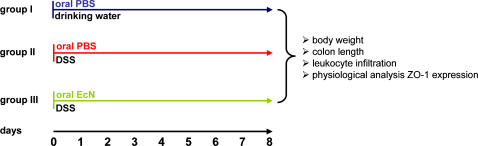
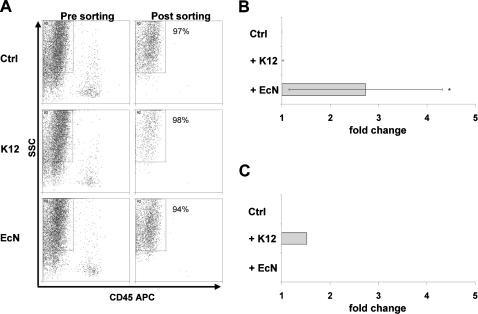
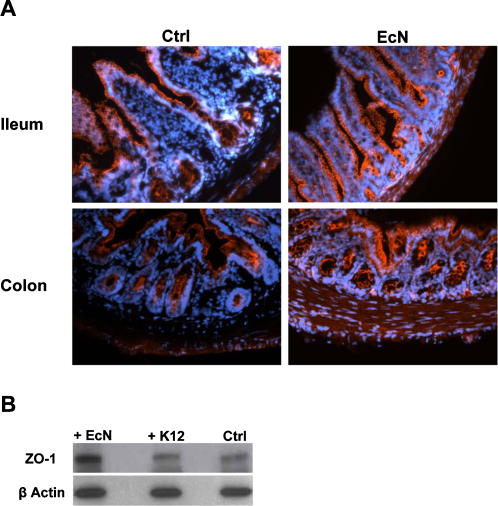
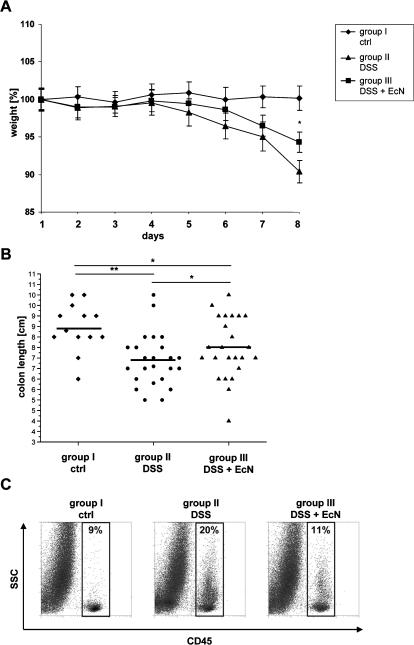
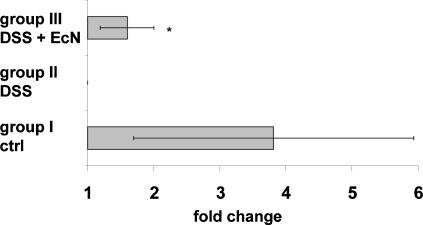
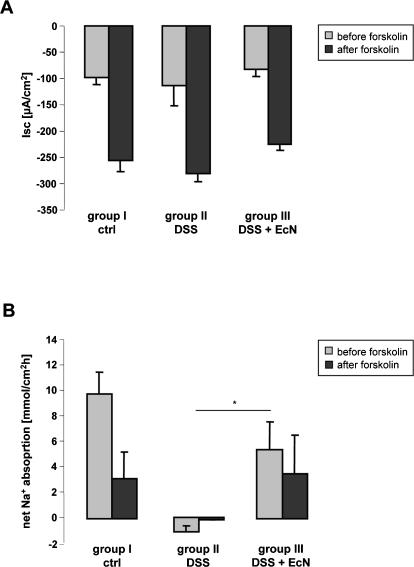
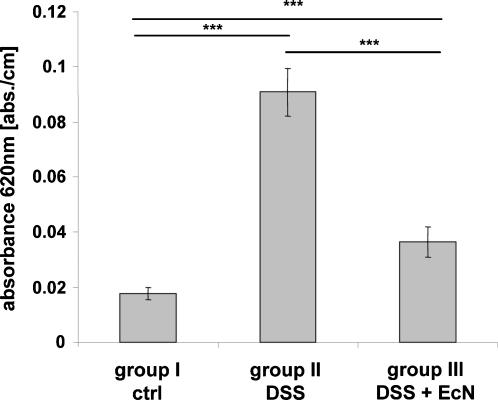
BACKGROUND: Probiotics are proposed to positively modulate the intestinal epithelial barrier formed by intestinal epithelial cells (IECs) and intercellular junctions. Disruption of this border alters paracellular permeability and is a key mechanism for the development of enteric infections and inflammatory bowel diseases (IBDs). METHODOLOGY AND PRINCIPAL FINDINGS: To study the in vivo effect of probiotic Escherichia coli Nissle 1917 (EcN) on the stabilization of the intestinal barrier under healthy conditions, germfree mice were colonized with EcN or K12 E. coli strain MG1655. IECs were isolated and analyzed for gene and protein expression of the tight junction molecules ZO-1 and ZO-2. Then, in order to analyze beneficial effects of EcN under inflammatory conditions, the probiotic was orally administered to BALB/c mice with acute dextran sodium sulfate (DSS) induced colitis. Colonization of gnotobiotic mice with EcN resulted in an up-regulation of ZO-1 in IECs at both mRNA and protein levels. EcN administration to DSS-treated mice reduced the loss of body weight and colon shortening. In addition, infiltration of the colon with leukocytes was ameliorated in EcN inoculated mice. Acute DSS colitis did not result in an anion secretory defect, but abrogated the sodium absorptive function of the mucosa. Additionally, intestinal barrier function was severely affected as evidenced by a strong increase in the mucosal uptake of Evans blue in vivo. Concomitant administration of EcN to DSS treated animals resulted in a significant protection against intestinal barrier dysfunction and IECs isolated from these mice exhibited a more pronounced expression of ZO-1. CONCLUSION AND SIGNIFICANCE: This study convincingly demonstrates that probiotic EcN is able to mediate up-regulation of ZO-1 expression in murine IECs and confer protection from the DSS colitis-associated increase in mucosal permeability to luminal substances.
Overview
The claims and statistics of this paper haven’t been checked yet.
Free: it reads the open-access text and checks the first 5 claims that cite a source we can check. Create a free account to check every claim.
Integrity signals
Registry
Cites
Statistics
Figures
Verification
Claims the paper makes
The claims and statistics of this paper haven’t been checked yet.
Free: it reads the open-access text and checks the first 5 claims that cite a source we can check. Create a free account to check every claim.
Claims other papers make about this one
Each is checked against this paper’s own text: does it say what the citing paper says it does?
In the citing paper
“Microbes(Figure 3) can directly alter expression of tight junction proteins such as claudin-380 and zonula occludens-181 or enhance expression of genes involved in tight junction signaling82.”
From The gut Microbiome in adult and pediatric functional gastrointestinal disorders (2019) · cites this paper as [81]
Self-check
Percentages, sums and reported differences re-computed from the paper’s own numbers.
The self-check needs the paper’s full text.
Citations
Cites
JUNCTIONAL COMPLEXES IN VARIOUS EPITHELIA
Farquhar, M. G., & Palade, G. E. (1963) · The Journal of Cell Biology · doi:10.1083/jcb.17.2.375 · Cited by 3,635 · cited 1×
“Its effectiveness and stability are ensured by the junctional complex [1].”
BackgroundPodolsky, D. K. (2002) · New England Journal of Medicine · doi:10.1056/nejmra020831 · Cited by 3,159
Stevenson, B. R., Siliciano, J. D., Mooseker, M. S., & Goodenough, D. A. (1986) · The Journal of cell biology · doi:10.1083/jcb.103.3.755 · Cited by 1,638 · cited 1×
“The first junction-associated protein identified was zonula occludens 1 (ZO-1), with a molecular mass between ,210–225 kDa [5].”
BackgroundKruis, W., Frič, P., Pokrotnieks, J., Lukáš, M., Fixa, B., Kaščák, M., Kamm, M. A., Weismueller, J., Beglinger, C., Stolte, M., et al. (2004) · Gut · doi:10.1136/gut.2003.037747 · Cited by 1,285 · cited 2×
“characterized probiotics, and its therapeutic efficacy and safety have convincingly been proven [12–16].”
BackgroundRembacken, B., Snelling, A., Hawkey, P., Chalmers, D., & Axon, A. (1999) · The Lancet · doi:10.1016/s0140-6736(98)06343-0 · Cited by 1,101
Sartor, R. B. (2004) · Gastroenterology · doi:10.1053/j.gastro.2004.03.024 · Cited by 1,052 · cited 10×
“A potential mechanism by which probiotics may exhibit their beneficial activities is modulation of the epithelial barrier function [17,18].”
BackgroundInfluentialRachmilewitz, D., Katakura, K., Karmeli, F., Hayashi, T., Reinus, C., Rudensky, B., Akira, S., Takeda, K., Lee, J., Takabayashi, K., et al. (2004) · Gastroenterology · doi:10.1053/j.gastro.2003.11.019 · Cited by 859 · cited 1×
“In the past years, probiotics have been shown to be effective in the treatment of mild to moderately active IBD [18] and to reduce inflammation in animal models of colitis [29,34–36].”
BackgroundKRUIS, W., SCHÜTZ, E., FRIC, P., FIXA, B., JUDMAIER, G., & STOLTE, M. (1997) · Alimentary Pharmacology & Therapeutics · doi:10.1046/j.1365-2036.1997.00225.x · Cited by 775 · cited 2×
“characterized probiotics, and its therapeutic efficacy and safety have convincingly been proven [12–16].”
BackgroundOrla-Jensen, S. (1919) · Cited by 698
Wang, F., Graham, W. V., Wang, Y., Witkowski, E. D., Schwarz, B. T., & Turner, J. R. (2005) · The American Journal of Pathology · doi:10.1016/s0002-9440(10)62264-x · Cited by 696 · cited 2×
“It has been shown that the impaired barrier function in IBD is associated with an altered TJ structure [7,8,25–28].”
Background
Cited by
Items 101–200 of 481
Recent developments and perspectives in the investigation of probiotic effects
Wohlgemuth, S., Loh, G., & Blaut, M. (2009) · International Journal of Medical Microbiology · doi:10.1016/j.ijmm.2009.08.003 · Cited by 124
Constitutive IKK2 activation in intestinal epithelial cells induces intestinal tumors in mice
Vlantis, K., Wullaert, A., Sasaki, Y., Schmidt‐Supprian, M., Rajewsky, K., Roskams, T., & Pasparakis, M. (2011) · Journal of Clinical Investigation · doi:10.1172/jci45349 · Cited by 105
Microbiome therapeutics for hepatic encephalopathy
Bloom, P. P., Tapper, E. B., Young, V. B., & Lok, A. S.-F. (2021) · Journal of Hepatology · doi:10.1016/j.jhep.2021.08.004 · Cited by 104
Hu, J. P., Chen, L., Zheng, W., Shi, M. Y., Liu, L., Xie, C., Wang, X., Niu, Y., Hou, Q., Xu, X., et al. (2018) · Frontiers in Microbiology · doi:10.3389/fmicb.2018.00897 · Cited by 102
“…infantis, and Escherichia coli Nissle 1917) contribute to the intestinal epithelial physical barrier function maintenance (Resta-Lenert and Barrett, 2003, 2006; Ukena et al., 2007; Zyrek et al., 2007; Ewaschuk et al., 2008) by increasing the intestinal epithelial tight junction proteins expression.”
BackgroundWasilewska, E., Zlotkowska, D., & Wroblewska, B. (2019) · Journal of Dairy Science · doi:10.3168/jds.2018-14520 · Cited by 93
The gut-liver-kidney axis: Novel regulator of fatty liver associated chronic kidney disease
Raj, D., Tomar, B., Lahiri, A., & Mulay, S. R. (2019) · Pharmacological Research · doi:10.1016/j.phrs.2019.104617 · Cited by 105
Probiotics for the airways: Potential to improve epithelial and immune homeostasis
Martens, K., Pugin, B., Boeck, I. D., Spacova, I., Steelant, B., Seys, S., Lebeer, S., & Hellings, P. W. (2018) · Allergy · doi:10.1111/all.13495 · Cited by 105
“plantarum MB452,(40) and the Gram-negative probiotic strain Escherichia coli Nissle 1917.(41,42)”
BackgroundHoarau, C., Martin, L., Faugaret, D., Baron, C., Dauba, A., Aubert-Jacquin, C., Velge-Roussel, F., & Lebranchu, Y. (2008) · PLoS ONE · doi:10.1371/journal.pone.0002753 · Cited by 93
“Probiotic bacteria have been shown to modulate immune responses, particularly mucosal immunity, and could have therapeutic effects in allergic and inflammatory disorders [8–10].”
BackgroundDíez-Sainz, E., Lorente-Cebrián, S., Aranaz, P., Riezu-Boj, J. I., Martínez, J. A., & Milagro, F. I. (2021) · Frontiers in Nutrition · doi:10.3389/fnut.2021.586564 · Cited by 91
Overview of the Importance of Biotics in Gut Barrier Integrity
Kocot, A. M., Jarocka‐Cyrta, E., & Drabińska, N. (2022) · International Journal of Molecular Sciences · doi:10.3390/ijms23052896 · Cited by 108
“[52], EcN upregulated the expression of ZO-1 in gene and protein levels.”
BackgroundExercise, Intestinal Barrier Dysfunction and Probiotic Supplementation
Lamprecht, M., & Frauwallner, A. (2012) · Medicine and Sport Science · doi:10.1159/000342169 · Cited by 91
Lactobacillus acidophilus CRL 1014 improved “gut health” in the SHIME®reactor
Sivieri, K., Morales, M. L. V., Adorno, M. Â. T., Sakamoto, I. K., Saad, S. M. I., & Rossi, E. A. (2013) · BMC Gastroenterology · doi:10.1186/1471-230x-13-100 · Cited by 103
Surface Modifications for Improved Delivery and Function of Therapeutic Bacteria
Vargason, A. M., Santhosh, S., & Anselmo, A. C. (2020) · Small · doi:10.1002/smll.202001705 · Cited by 100
Prisciandaro, L. D., Geier, M. S., Butler, R. N., Cummins, A. G., & Howarth, G. S. (2011) · Critical Reviews in Food Science and Nutrition · doi:10.1080/10408390903551747 · Cited by 92
“…with the live probiotic Escherichia coli Nissle 1917 resulted in an up-regulation of the tight junction molecule zonula occluden-1 at both mRNA and protein levels, and reduced intestinal barrier permeability in mice following dextran sulfate sodium (DSS)-induced damage (Ukena et al., 2007).”
BackgroundImpact of the gut microbiota on rodent models of human disease
Hansen, A. K., Hansen, C. H. F., Krych, Ł., & Nielsen, D. S. (2014) · World Journal of Gastroenterology · doi:10.3748/wjg.v20.i47.17727 · Cited by 87
The Potential Impact of Probiotics on the Gut Microbiome of Athletes
Wosinska, L., Cotter, P. D., O’Sullivan, Ó., & Guinane, C. M. (2019) · Nutrients · doi:10.3390/nu11102270 · Cited by 99
“coli affects the intestinal epithelial barrier [52,53], additionally EcN can be used for irritable bowel disorder [53], constipation (for review see [54]), and has pro-inflammatory potential [55].”
Yu, L. C.-H., Shih, Y.-A., Wu, L.-L., Lin, Y.-D., Kuo, W.-T., Peng, W.-H., Lu, K.-S., Wei, S.-C., Turner, J. R., & Ni, Y.-H. (2014) · American Journal of Physiology-Gastrointestinal and Liver Physiology · doi:10.1152/ajpgi.00070.2014 · Cited by 83
Ashrafian, F., Behrouzi, A., Shahryari, A., Badi, S. A., Davari, M., Khatami, S., Jamnani, F. R., Fateh, A., Vaziri, F., & Siadat, S. D. (2019) · Gastroenterology and hepatology from bed to bench. · Cited by 116
Time to include the gut microbiota in the hygienic standardisation of laboratory rodents
Bleich, A., & Hansen, A. K. (2012) · Comparative Immunology, Microbiology and Infectious Diseases · doi:10.1016/j.cimid.2011.12.006 · Cited by 82
Self-citationTerciolo, C., Dapoigny, M., & Andre, F. (2019) · Clinical and Experimental Gastroenterology · doi:10.2147/ceg.s181590 · Cited by 80
“10,11 In addition, the microbiota protects intestinal tissue by secreting into the intestinal lumen bacterial toxins, known as bacteriocins, that inhibit the growth of other bacteria, thus reducing bacterial invasion.”
Gut health: The results of microbial and mucosal immune interactions in pigs
Peng, J., Tang, Y., & Huang, Y. (2021) · Animal nutrition · doi:10.1016/j.aninu.2021.01.001 · Cited by 87
Lee, C. Y. (2013) · Clinical and Translational Gastroenterology · doi:10.1038/ctg.2013.11 · Cited by 89
Whelan, R. A., Rausch, S., Ebner, F., Günzel, D., Richter, J. F., Hering, N. A., Schulzke, J.-D., Kühl, A. A., Keles, A., Janczyk, P., et al. (2014) · Molecular Therapy · doi:10.1038/mt.2014.125 · Cited by 77
Murine Models of Inflammatory Bowel Disease (IBD): Challenges of Modeling Human Disease
DeVoss, J., & Diehl, L. J. (2013) · Toxicologic Pathology · doi:10.1177/0192623313509729 · Cited by 89
“Consistent with this, therapeutics that maintain or increase gut permeability are protective in DSS colitis (Ukena, Singh, and Westendorf 2007; Chogle et al. 2011).”
Martín, R., Laval, L., Chain, F., Miquel, S., Natividad, J., Cherbuy, C., Sokol, H., Verdu, E. F., van Hylckama Vlieg, J., Bermudez-Humaran, L. G., et al. (2016) · Frontiers in Microbiology · doi:10.3389/fmicb.2016.00608 · Cited by 78
“…mixture of lactobacilli and bifidobacteria (L. casei, L. plantarum, L. acidophilus, L. delbrueckii ssp. bulgaricus, B. longum, B. breve, and B. infantis) prevent the increase in intestinal permeability in vivo (Ukena et al., 2007; Mennigen et al., 2009; Donato et al., 2010; Natividad et al., 2013).”
Gut Microbiota Dysbiosis in Functional Dyspepsia
Tziatzios, G., Gkolfakis, P., Papanikolaou, I. S., Mathur, R., Pimentel, M., Giamarellos‐Bourboulis, E. J., & Τriantafyllou, Κ. (2020) · Microorganisms · doi:10.3390/microorganisms8050691 · Cited by 89
“Similarly, probiotics were also able to mediate the up-regulation of gene and protein expression of another significant element of tight junctions, namely zonula occludens 1 (ZO-1) [25].”
BackgroundChen, H.-Q., Yang, J., Zhang, M., Zhou, Y.-K., Shen, T.-Y., Chu, Z.-X., Zhang, M., Hang, X.-M., Jiang, Y.-Q., & Qin, H.-L. (2010) · American Journal of Physiology-Gastrointestinal and Liver Physiology · doi:10.1152/ajpgi.00196.2010 · Cited by 75
“Increased paracellular permeability has been observed in IBD, along with disrupted TJ structure and decreased expression or redistribution of TJ proteins or AJ proteins (1, 27).”
BackgroundInfluentialHudson, L. E., Anderson, S. E., Corbett, A. H., & Lamb, T. J. (2016) · Clinical Microbiology Reviews · doi:10.1128/cmr.00049-16 · Cited by 88
Chau, J. Y., Tiffany, C. M., Nimishakavi, S., Lawrence, J. A., Pakpour, N., Mooney, J. P., Lokken, K. L., Caughey, G. H., Tsolis, R. M., & Luckhart, S. (2013) · Infection and Immunity · doi:10.1128/iai.00380-13 · Cited by 84
“coli Nissle has been observed to upregulate ZO-1 expression and enhance intestinal barrier function (55).”
BackgroundHindryckx, P., De Vos, M., Jacques, P., Ferdinande, L., Peeters, H., Olievier, K., Bogaert, S., Brinkman, B., Vandenabeele, P., Elewaut, D., et al. (2010) · The Journal of Immunology · doi:10.4049/jimmunol.1002541 · Cited by 73
“In a separate experiment, 10 seven-week-old mice (four DMOG-treated TNF, four vehicle-treated TNF, and two healthy control mice) were used to analyze epithelial permeability of the terminal ileum after 4 d of either DMOG or vehicle treatment by using the previously described Evans blue method (20).”
MethodGnotobiotics: Past, present and future
Basic, M., & Bleich, A. (2019) · Laboratory Animals · doi:10.1177/0023677219836715 · Cited by 80
Self-citationArribas, B., Rodríguez‐Cabezas, M., Camuesco, D., Comalada, M., Bailón, E., Utrilla, P., Nieto, A., Concha, A., Zarzuelo, A., & Gálvez, J. (2009) · British Journal of Pharmacology · doi:10.1111/j.1476-5381.2009.00270.x · Cited by 73
“Furthermore, this probiotic strain may reinforce the mucosal barrier and restore it when it is disrupted, specifically through the up-regulation of expression of the mRNA for the zonula occludens proteins ZO-1 and ZO-2 in intestinal epithelial cells (Ukena et al., 2007; Zyrek et al., 2007).”
BackgroundHuman regulatory T cells in allogeneic stem cell transplantation
Ukena, S. N., Velaga, S., Geffers, R., Grosse, J., Baron, U., Buchholz, S., Stadler, M., Bruder, D., Ganser, A., & Franzke, A. (2011) · Blood · doi:10.1182/blood-2011-05-352708 · Cited by 72
Self-citationTrebichavsky, I., Splichal, I., Rada, V., & Splichalova, A. (2010) · Nutrition Reviews · doi:10.1111/j.1753-4887.2010.00305.x · Cited by 70
Agustina, R., Bovee-Oudenhoven, I. M. J., Lukito, W., Fahmida, U., van de Rest, O., Zimmermann, M. B., Firmansyah, A., Wulanti, R., Albers, R., van den Heuvel, E. G. H. M., et al. (2013) · Journal of Nutrition · doi:10.3945/jn.112.166397 · Cited by 84
“Although speculative, the beneficial effects of probiotics observed on growth could be due to enhanced mucosal integrity (62) and reduced intestinal infections (diarrhea incidence, especially in children with lower nutritional status supplemented with probiotics, i.”
BackgroundFecal Microbiota Transplantation and Other Gut Microbiota Manipulation Strategies
Quaranta, G., Guarnaccia, A., Fancello, G., Agrillo, C., Iannarelli, F., Sanguinetti, M., & Masucci, L. (2022) · Microorganisms · doi:10.3390/microorganisms10122424 · Cited by 79
Modern Approaches in Probiotics Research to Control Foodborne Pathogens
Amalaradjou, M. A. R., & Bhunia, A. K. (2012) · Advances in food and nutrition research · doi:10.1016/b978-0-12-394598-3.00005-8 · Cited by 82
Probiotics as regulators of inflammation: A review
Lescheid, D. W. (2014) · Functional Foods in Health and Disease · doi:10.31989/ffhd.v4i7.2 · Cited by 67
“, zonulin-1, occludin and cingulin) [16, 17].”
Probiotics, Nuclear Receptor Signaling, and Anti-Inflammatory Pathways
Yoon, S. S., & Sun, J. (2011) · Gastroenterology Research and Practice · doi:10.1155/2011/971938 · Cited by 66
“This paper discusses progress in understanding how probiotics contribute to intestinal mucosal function, particularly in relation to antiinflammatory signaling pathways.”
BackgroundEnhancement of Epithelial Barrier Function by Probiotics
L. Madsen, K. (2012) · Journal of Epithelial Biology and Pharmacology · doi:10.2174/1875044301205010055 · Cited by 66
Wang, Y., Du, W., Lei, K., Wang, B., Wang, Y., Zhou, Y., & Li, W. (2017) · Probiotics and Antimicrobial Proteins · doi:10.1007/s12602-017-9252-3 · Cited by 74
Stehr, M., Greweling, M. C., Tischer, S., Singh, M., Blöcker, H., Monner, D. A., & Müller, W. (2009) · Laboratory Animals · doi:10.1258/la.2009.0080075 · Cited by 65
Hering, N. A., Richter, J. F., Fromm, A., Wieser, A., Hartmann, S., Günzel, D., Bücker, R., Fromm, M., Schulzke, J., & Troeger, H. (2013) · Mucosal Immunology · doi:10.1038/mi.2013.55 · Cited by 73
Probiotics and their derivatives as treatments for inflammatory bowel disease
Prisciandaro, L. D., Geier, M. S., Butler, R. N., Cummins, A. G., & Howarth, G. S. (2009) · Inflammatory Bowel Diseases · doi:10.1002/ibd.20938 · Cited by 70
Mawad, A. M. M., Helmy, Y. A., Shalkami, A. S., Kathayat, D., & Rajashekara, G. (2018) · Applied Microbiology and Biotechnology · doi:10.1007/s00253-018-9417-3 · Cited by 66
Wang, Y., Sun, L., Chen, S., Guo, S., Yue, T., Hou, Q., Feng, M., Xu, H., Liu, Y., Wang, P., et al. (2019) · Life Sciences · doi:10.1016/j.lfs.2019.06.004 · Cited by 70
Differential crosstalk between epithelial cells, dendritic cells and bacteria in a co-culture model
Ζουμποπούλου, Γ., Tsakalidou, E., Dewulf, J., Pot, B., & Grangette, C. (2009) · International Journal of Food Microbiology · doi:10.1016/j.ijfoodmicro.2008.12.037 · Cited by 77
Ekmekçiu, I., von Klitzing, E., Fiebiger, U., Neumann, C., Bächer, P., Scheffold, A., Bereswill, S., & Heimesaat, M. M. (2017) · Frontiers in Cellular and Infection Microbiology · doi:10.3389/fcimb.2017.00167 · Cited by 65
“For instance, Escherichia coli strain Nissle 1917 was shown to prevent acute and chronic colitis (Kamada et al., 2005) and to enhance mucosal barrier functions in mice (Ukena et al., 2007; Wassenaar, 2016).”
BackgroundGarrido‐Mesa, N., Utrilla, P., Comalada, M., Zorrilla, P., Garrido‐Mesa, J., Zarzuelo, A., Rodríguez‐Cabezas, M. E., & Gálvez, J. (2011) · Biochemical Pharmacology · doi:10.1016/j.bcp.2011.09.004 · Cited by 76
Dai, C., Guandalini, S., Zhao, D.-H., & Jiang, M. (2012) · Molecular and Cellular Biochemistry · doi:10.1007/s11010-011-1126-5 · Cited by 60
“This is a well-validated method for assessing epithelial permeability [34, 35].”
Altered Host-Microbe Interaction in HIV: A Target for Intervention with Pro- and Prebiotics
Hummelen, R., Vos, A. P., Land, B. V., van Norren, K., & Reid, G. (2010) · International Reviews of Immunology · doi:10.3109/08830185.2010.505310 · Cited by 62
“For example, the Gram-negative probiotic strain Escherichia coli Nissle 1917 was shown to enhance the intestinal epithelial integrity via the induction of epithelial tight junctions proteins (ZO-1 and ZO-2) [75, 76].”
BackgroundKandasamy, S., Vlasova, A. N., Fischer, D. D., Chattha, K. S., Shao, L., Kumar, A., Langel, S. N., Rauf, A., Huang, H., Rajashekara, G., et al. (2017) · Frontiers in Immunology · doi:10.3389/fimmu.2017.00334 · Cited by 72
“induced colitis Strengthened intestinal barrier function (37)”
Probiotics and the intestinal tight junction barrier function
Ferris, M. M., Antonio, L. S., & Al–Sadi, R. (2025) · Frontiers in Cell and Developmental Biology · doi:10.3389/fcell.2025.1671152 · Cited by 77
“In a DSS-induced colitis mouse model, EcN prevented the DSS-induced increase in TJ permeability, and which was associated with the preservation of ZO-1 expression (Ukena et al., 2007).”
Bereswill, S., Ekmekçiu, I., Escher, U., Fiebiger, U., Stingl, K., & Heimesaat, M. M. (2017) · Scientific Reports · doi:10.1038/s41598-017-02436-2 · Cited by 66
Jeong, S., Song, Y.-K., & Cho, J.-H. (2009) · Regulatory Toxicology and Pharmacology · doi:10.1016/j.yrtph.2009.01.004 · Cited by 65
Integrating the gut microbiome and pharmacology
Verdegaal, A. A., & Goodman, A. L. (2024) · Science Translational Medicine · doi:10.1126/scitranslmed.adg8357 · Cited by 72
“Bacterial isolates (e.g., E. coli Nissle 1917) and gut microbial metabolites promote gut barrier integrity ( 30 – 32 ), suggesting that these microbes and their products may affect drug absorption through an impact on paracellular passive diffusion.”
BackgroundIntestinal Barrier Function and the Brain-Gut Axis
Alonso, C., Vicario, M., Pigrau, M., Lobo, B., & Santos, J. (2014) · Advances in experimental medicine and biology · doi:10.1007/978-1-4939-0897-4_4 · Cited by 61
Bruno, M. E. C., Rogier, E. W., Frantz, A. L., Stefka, A. T., Thompson, S. N., & Kaetzel, C. S. (2010) · Immunological Investigations · doi:10.3109/08820131003622809 · Cited by 66
“…inhibition of signaling by the pro-inflammatory cytokine TNF (Kamada et al., 2008), stimulation of tight junction formation and barrier function (Ukena et al., 2007; Zyrek et al., 2007), induction of chemokine synthesis (Lammers et al., 2002; Otte et al., 2004; Ukena et al., 2005; Zoumpopoulou…”
BackgroundCarbuhn, A. F., Reynolds, S. M., Campbell, C. W., Bradford, L. A., Deckert, J. A., Kreutzer, A., & Fry, A. C. (2018) · Sports · doi:10.3390/sports6040116 · Cited by 56
E. coli Nissle 1917 Affects Salmonella Adhesion to Porcine Intestinal Epithelial Cells
Schierack, P., Kleta, S., Tedin, K., Babila, J. T., Oswald, S., Oelschlaeger, T. A., Hiemann, R., Paetzold, S., & Wieler, L. H. (2011) · PLoS ONE · doi:10.1371/journal.pone.0014712 · Cited by 71
“Proposed probiotic actions of EcN include effects on pathogens, host epithelial cells, host smooth muscle cell activity and the host immune system [7,8,9,10,11,12,13].”
BackgroundGut Microbiota, Probiotics, and Human Health
Suvorov, A. N. (2013) · Bioscience of Microbiota Food and Health · doi:10.12938/bmfh.32.81 · Cited by 62
Using murine colitis models to analyze probiotics–host interactions
Martín, R., Chain, F., Miquel, S., Motta, J., Vergnolle, N., Sokol, H., & Langella, P. (2017) · FEMS Microbiology Reviews · doi:10.1093/femsre/fux035 · Cited by 69
Rogler, G., Biedermann, L., & Scharl, M. M. (2018) · Swiss Medical Weekly · doi:10.4414/smw.2018.14599 · Cited by 69
Self-citationGuo, J., Dong, X. F., Liu, S., & Tong, J. M. (2018) · Poultry Science · doi:10.3382/ps/pey112 · Cited by 58
“Probiotics are live microorganisms that confer health benefits on the host (Sanders, 2008) by enhancing intestinal epithelial barrier function (Ukena et al., 2007; Yan et al., 2007), protecting against physiologic stress (Bai et al.”
Perspectives on tight junction research
Schulzke, J., Günzel, D., John, L., & Fromm, M. (2012) · Annals of the New York Academy of Sciences · doi:10.1111/j.1749-6632.2012.06485.x · Cited by 66
Díaz‐Garrido, N., Fábrega, M.-J., Vera, R., Gíménez, R., Badía, J., & Baldomà, L. (2019) · Journal of Functional Foods · doi:10.1016/j.jff.2019.103495 · Cited by 58
Christofi, T., Panayidou, S., Dieronitou, I., Michael, C., & Apidianakis, Y. (2019) · Scientific Reports · doi:10.1038/s41598-019-51058-3 · Cited by 65
Pils, M. C., Bleich, A., Prinz, I., Fasnacht, N., Bollati-Fogolin, M., Schippers, A., Rozell, B., & Müller, W. (2011) · Inflammatory Bowel Diseases · doi:10.1002/ibd.21587 · Cited by 53
Self-citationShigemori, S., & Shimosato, T. (2017) · Frontiers in Immunology · doi:10.3389/fimmu.2017.00022 · Cited by 59
Glucose Metabolism by Escherichia coli Inhibits Vibrio cholerae Intestinal Colonization of Zebrafish
Nag, D., Breen, P., Raychaudhuri, S., & Withey, J. H. (2018) · Infection and Immunity · doi:10.1128/iai.00486-18 · Cited by 53
Intestinal Microbes in Autoimmune and Inflammatory Disease
Wu, W.-J. H., Zegarra-Ruiz, D. F., & Diehl, G. E. (2020) · Frontiers in Immunology · doi:10.3389/fimmu.2020.597966 · Cited by 58
“The administration of probiotics shows success in animal models (75, 76) and some patients (77, 78).”
BackgroundAntibiotic Resistance and Microbiota Response
Santacroce, L., Domenico, M. D., Montagnani, M., & Jirillo, E. (2022) · Current Pharmaceutical Design · doi:10.2174/1381612829666221219093450 · Cited by 64
Engineered live bacteria as disease detection and diagnosis tools
Tanniche, I., & Behkam, B. (2023) · Journal of Biological Engineering · doi:10.1186/s13036-023-00379-z · Cited by 65
“In addition, the probiotic strain E. coli Nissle 1917 has often been used for gastrointestinal (GI) applications due to its ability to colonize the GI tract [123–125].”
BackgroundKong, W., Li, S.-S., Chen, X., Huang, Y.-Q., Tang, Y., & Wu, Z. (2017) · Fish Physiology and Biochemistry · doi:10.1007/s10695-017-0366-z · Cited by 53
“Under healthy circumstances, EB and D-lactate are not absorbed through the intestinal mucosal barrier; thus, monitoring the EB uptake and serum D-lactate level can directly reflect intestinal mucosal permeability changes (Murray et al. 1994; Ukena 2007).”
BackgroundNative and Engineered Probiotics: Promising Agents against Related Systemic and Intestinal Diseases
Shen, H., Zhao, Z., Zhao, Z., Chen, Y., & Zhang, L. (2022) · International Journal of Molecular Sciences · doi:10.3390/ijms23020594 · Cited by 58
Kim, Y., Kessler, S. P., Obery, D. R., Homer, C. R., McDonald, C., & de la Motte, C. A. (2016) · Matrix Biology · doi:10.1016/j.matbio.2016.11.001 · Cited by 54
“The importance of ZO-1 and tight junctions for mucosal integrity is supported by a study that demonstrated that probiotic Escherichia coli Nissle 1917 (EcN) could upregulate ZO-1 and also protect mice from DSS-colitis, including the associated increase in gut permeability [39].”
BackgroundEffects of Lactobacillus kefiranofaciens M1 Isolated from Kefir Grains on Germ-Free Mice
Chen, Y.-P., & Chen, M.-J. (2013) · PLoS ONE · doi:10.1371/journal.pone.0078789 · Cited by 50
“[27] indicated that gnotobiotic mice mono-associated with probiotic Escherichia coli Nissle 1917 showed reduced symptoms of DSS-induced colitis via an increase in the tight-junction protein ZO-1 and enhanced mucosal integrity.”
BackgroundHuang, Y., Xiaojun, L., Yu, S., Chen, R., & Chen, W.-Z. (2022) · ACS Synthetic Biology · doi:10.1021/acssynbio.2c00314 · Cited by 59
Andrade, S. D. D. E., Souza, E. L. S., Vieira, A. T., Teixeira, M. M., Arantes, R. M. E., Nicoli, J. R., & Martins, F. S. (2014) · Beneficial Microbes · doi:10.3920/bm2014.0070 · Cited by 57
“…in studies using other probiotic microorganism, such as E. coli Nissle 1917, in which it was demonstrated that the use of this bacterium in the treatment of UC was able to provide improved intestinal permeability with the reestablishment of barrier function (Ukena et al., 2007; Zyrek et al., 2007.”
BackgroundPresent and Future Therapeutic Approaches to Barrier Dysfunction
Fortea, M., Albert-Bayo, M., Abril-Gil, M., Mall, J. G., Serra-Ruiz, X., Henao-Paez, A., Expósito, E., González-Castro, A. M., Guagnozzi, D., Lobo, B., et al. (2021) · Frontiers in Nutrition · doi:10.3389/fnut.2021.718093 · Cited by 57
Veltman, K., Hummel, S., Cichon, C., Sonnenborn, U., & Schmidt, M. A. (2011) · The International Journal of Biochemistry & Cell Biology · doi:10.1016/j.biocel.2011.11.006 · Cited by 55
Distinct Gut Microbiota Signatures in Mice Treated with Commonly Used Food Preservatives
Nagpal, R., Indugu, N., & Singh, P. R. (2021) · Microorganisms · doi:10.3390/microorganisms9112311 · Cited by 56
Kleta, S., Nordhoff, M., Tedin, K., Wieler, L. H., Kolenda, R., Oswald, S., Oelschlaeger, T. A., Bleiß, W., & Schierack, P. (2014) · Infection and Immunity · doi:10.1128/iai.01431-13 · Cited by 59
Nononcogenic restoration of the intestinal barrier by E. coli–delivered human EGF
Yu, M. R., Kim, J., Ahn, J. H., & Moon, Y. (2019) · JCI Insight · doi:10.1172/jci.insight.125166 · Cited by 51
Mechanisms and applications of probiotics in prevention and treatment of swine diseases
Zhang, Y., Zhang, Y., Liu, F., Mao, Y., Zhang, Y., Zeng, H., Ren, S., Guo, L., Chen, Z., Hrabchenko, N., et al. (2023) · Porcine Health Management · doi:10.1186/s40813-022-00295-6 · Cited by 65
“coli Nissle 1917 upregulated the expression of tight junction protein-1 (ZO-1) in intestinal epithelial cells [83].”
BackgroundZeng, J., Jiang, J., Zhu, W., & Chu, Y. (2015) · Annals of Microbiology · doi:10.1007/s13213-015-1093-2 · Cited by 51
“Two recent studies found that the probiotic E. coli Nissle 1917 restored barrier integrity by altering the redistribution and expression of TJ proteins such as ZO-1 and ZO-2, which are important for maintaining the integrity of TJ (Ukena et al. 2007; Zyrek et al. 2007 ).”
ResultRapin, J. R., & Wiernsperger, N. F. (2010) · Clinics · doi:10.1590/s1807-59322010000600012 · Cited by 57
Effendi, S. S. W., & Ng, I. (2022) · Critical Reviews in Microbiology · doi:10.1080/1040841x.2022.2109405 · Cited by 50
“EcN also strengthened the junctional barrier of leaky T84 gut epithelial cell lines by upregulating the mRNA expression of zonula occludens (ZO) proteins (Zyrek et al. 2007; Ukena et al. 2007).”
BackgroundL. fermentum CECT 5716 prevents stress‐induced intestinal barrier dysfunction in newborn rats
Vanhaecke, T., Aubert, P., Grohard, P. ‐., Durand, T., Hulin, P., Paul‐Gilloteaux, P., Fournier, A., Docagne, F., Ligneul, A., Fressange‐Mazda, C., et al. (2017) · Neurogastroenterology & Motility · doi:10.1111/nmo.13069 · Cited by 45
Intestinal microbiota alterations in chronic kidney disease and the influence of dietary components
Ondrussek-Sekac, M., Navas-Carrillo, D., & Orenes‐Piñero, E. (2020) · Critical Reviews in Food Science and Nutrition · doi:10.1080/10408398.2020.1761771 · Cited by 50
“In a mouse model of induced colitis, E. coli, strain Nissle 1917 upregulated zona-occludens 1 expression in apical tight junctions in intestinal epithelial cells, resulting in reduced gut leakiness and enhanced mucosal integrity (Ukena et al. 2007).”
BackgroundPrisciandaro, L. D., Geier, M. S., Chua, A., Butler, R. N., Cummins, A. G., Sander, G. R., & Howarth, G. S. (2012) · Supportive Care in Cancer · doi:10.1007/s00520-012-1446-3 · Cited by 53
“EcN has been shown to upregulate expression of ZO-1 [15] and ZO-2 [17], two tight junction molecules which have previously been associated with improvements in TEER [18].”
BackgroundInfluentialNiu, G., Jian, T., Gai, Y., & Chen, J. (2023) · Advanced Drug Delivery Reviews · doi:10.1016/j.addr.2023.114774 · Cited by 48
Natural immunomodulating substances used for alleviating food allergy
Tian, Y., Li, C., Xue, W., Huang, L., & Wang, Z. (2021) · Critical Reviews in Food Science and Nutrition · doi:10.1080/10408398.2021.1975257 · Cited by 47
“…thermophilus ATCC 19258 and L. acidophilus ATCC 4356, inhibited the phosphorylation of cytoplasmic tight junction proteins caused by enteroinvasive Escherichia coli (Ukena et al. 2007; Wittchen, Haskins, and Stevenson 1999), thus protected the intercellular junction of the intestinal barrier.”
BackgroundMercado‐Monroy, J., Falfán‐Cortés, R. N., Muñoz‐Pérez, V. M., Gómez‐Aldapa, C. A., & Castro‐Rosas, J. (2025) · Journal of the Science of Food and Agriculture · doi:10.1002/jsfa.70168 · Cited by 70
Lessons from probiotic–host interaction studies in murine models of experimental colitis
Claes, I. J. J., De Keersmaecker, S. C. J., Vanderleyden, J., & Lebeer, S. (2011) · Molecular Nutrition & Food Research · doi:10.1002/mnfr.201100139 · Cited by 43
“coli Nissle 1917 Significant improvement S C57/Bl6 [20] Significant improvement S C57/Bl6 [19] Significant improvement P BALB/c [21] Significant improvement P1S BALB/c [18] Significant improvement S BALB/c [22] VSL]3 Significant improvement P1S and Po BALB;C57/BL6;129XB6F2 [24] Significant improvement S BALB/c [26] No…”
BackgroundInfluentialIntestinal effect of the probiotic Escherichia coli strain Nissle 1917 and its OMV
Behrouzi, A., Mazaheri, H., Falsafi, S., Tavassol, Z. H., Moshiri, A., & Siadat, S. D. (2020) · Journal of Diabetes & Metabolic Disorders · doi:10.1007/s40200-020-00511-6 · Cited by 50
“In the gut, the probiotics can balance the cytokine generation by the immune system [64, 65] and recover the impaired epithelium by the means of TJ and zonula occludens proteins modulation [50, 51].”
BackgroundLanglois, L., Akhtar, N., Tam, K. C., Dixon, B., & Reid, G. (2021) · FEMS Microbiology Reviews · doi:10.1093/femsre/fuab030 · Cited by 54
Consumption of probiotics increases the effect of regulatory T cells in transfer colitis
Petersen, E. R., Claësson, M. H., Schmidt, E. G. W., Jensen, S. S., Ravn, P., Olsen, J., Ouwehand, A. C., & Kristensen, N. N. (2011) · Inflammatory Bowel Diseases · doi:10.1002/ibd.21709 · Cited by 44
“pathological circumstances might be an effect of probiotics.(11) Only relatively few experiments in this field have been carried out on the two probiotic strains L.”
BackgroundProduction and Sensing of Butyrate in a Probiotic E. coli Strain
Bai, Y., & Mansell, T. J. (2020) · International Journal of Molecular Sciences · doi:10.3390/ijms21103615 · Cited by 47
Sang, L.-X., Chang, B., Dai, C., Gao, N., Liu, W., & Jiang, M. (2013) · International Journal of Molecular Sciences · doi:10.3390/ijms15010015 · Cited by 44
“Furthermore, some possible mechanisms of intestinal protection by probiotics have been proposed, including the up-regulation of tight junction proteins ZO-1 expression [38], activated the p38MAPK pathway, regulated the production of proinammatory cytokines, improved the barrier function of the intestinal epithelia in…”
Metadata
- Authors
- Ukena, S. N., Singh, A., Dringenberg, U., Engelhardt, R., Seidler, U., Hansen, W., Bleich, A., Bruder, D., Franzke, A., Rogler, G., Suerbaum, S., Buer, J., Gunzer, F., & Westendorf, A. M.
- Affiliations
- Medizinische Hochschule Hannover (DE)
- Helmholtz Centre for Infection Research (DE)
- University Hospital Zurich (CH)
- Essen University Hospital (DE)
- Technische Universität Dresden (DE)
- Corresponding author
- Ukena, Sya N.
- ORCID
- Venue
- PLoS ONE
- Publisher
- Public Library of Science (PLoS)
- Published
- 2007-12-12
- Volume
- 2
- Issue
- 12
- Pages
- e1308
- ISSN
- 1932-6203 (ISSN-L)
- PMC
- PMC2110898
- OpenAlex
- W2149362751
- Cited by
- 482
- References
- 60
- Citations by year
- 2026: 16 · 2025: 22 · 2024: 24 · 2023: 27 · 2022: 39 · 2021: 37 · 2020: 26 · 2019: 26 · 2018: 24 · 2017: 31 · 2016: 25 · 2015: 24 · 2014: 30 · 2013: 22 · 2012: 25
- FWCI
- 30.83
- Type
- journal article
- Language
- en
- Open access
- gold
- doi.org
- Locations
- PLoS ONE (publishedVersion, cc-by)
- PubMed Central (publishedVersion, cc-by)
- PubMed (publishedVersion)
- DOAJ (DOAJ: Directory of Open Access Journals) (submittedVersion, cc-by-sa)
- HZI (Helmholtz Centre for Infection Research) (submittedVersion)
- Funders
- Deutsche Forschungsgemeinschaft (SFB621)
- Topics
- Life Sciences › Agricultural and Biological Sciences › Food Science › Probiotics and Fermented Foods
- Health Sciences › Medicine › Gastroenterology › Inflammatory Bowel Disease
- Health Sciences › Medicine › Gastroenterology › Gastrointestinal motility and disorders
- Keywords
- Escherichia coli Nissle 1917, probiotics, leaky gut, intestinal barrier, tight junctions, ZO-1, ZO-2, intestinal epithelial cells, DSS-induced colitis, mucosal permeability, gnotobiotic mice, inflammatory bowel disease, sodium uptake, Evans blue
- MeSH terms
- Animals, Base Sequence, Colitis, Escherichia coli, Female, Fluorescent Antibody Technique, Germ-Free Life, Intestinal Mucosa, Mice, Inbred BALB C, Blotting, Western, DNA Primers, Probiotics, Mice
About these checks
Registry, retraction, Cites and statistics results are computed, not judged, with one exception: a printed reference that no index lists is read once by a model before it counts as a citation error. Claims are extracted by a model and kept only when their quote appears verbatim in the text; each cited source is then checked, with a model’s help, for whether it says what the claim relies on. Those verdicts can be wrong — read the claim’s quote and the cited source before relying on one.
Statistics and arithmetic are recomputed, not judged.
Confidence bands are shown only for fields calibrated on our annotated test set. None is calibrated yet, so no band is shown.
What counts as a claim ›How we measure confidence ›How we check this ›
Are you an author, or do you see a problem with this page? Request a review
Data sources
Bibliographic data: Semantic Scholar, OpenAlex, Crossref.
Contains information from the Semantic Scholar Academic Graph Datasets, made available under the ODC Attribution License (ODC-BY 1.0).
Semantic Scholar’s data is described in: Kinney, R., et al. (2023). The Semantic Scholar Open Data Platform. arXiv:2301.10140.
