

Probiotic Escherichia coli Nissle 1917 Inhibits Leaky Gut by Enhancing Mucosal Integrity
Open accessThe DOI matches its Crossref record; 60 of the 60 references it cites were found in a registry or an index.
Abstract
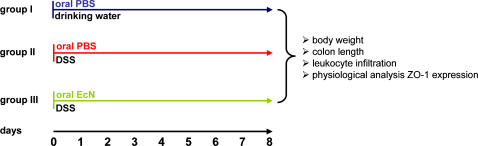
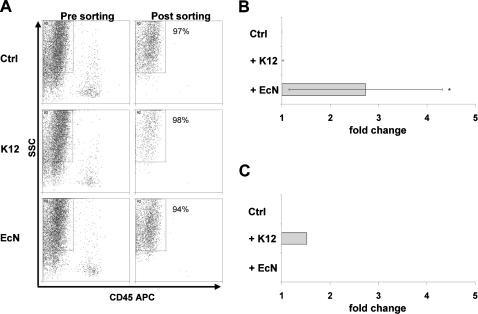
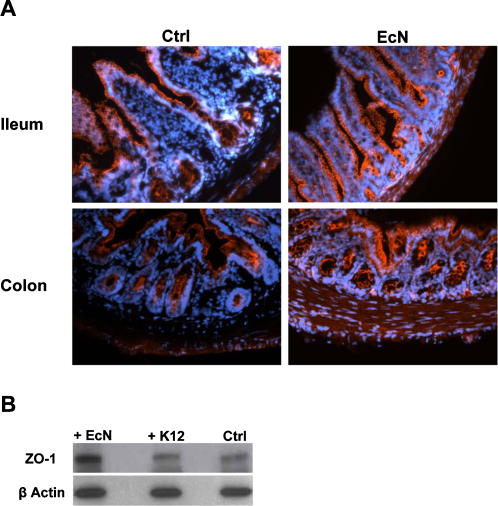
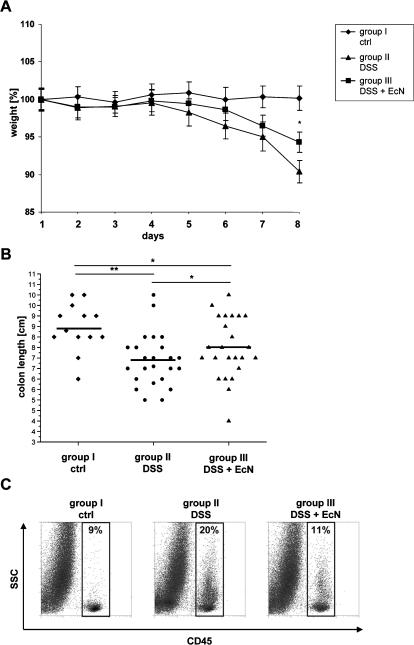
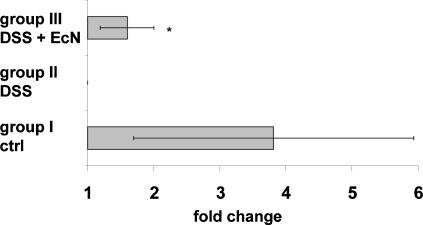
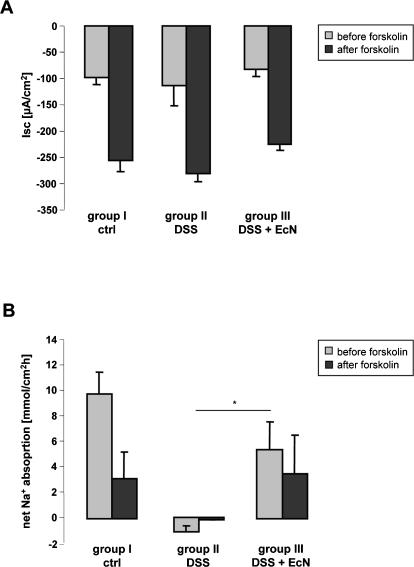
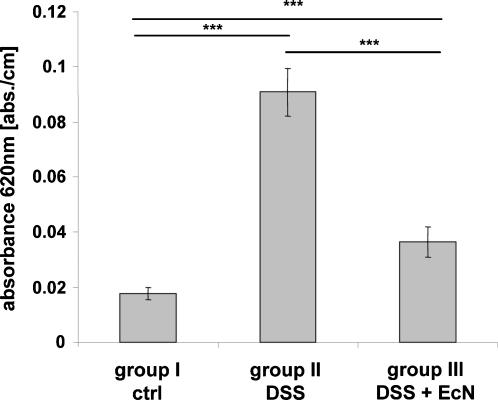
BACKGROUND: Probiotics are proposed to positively modulate the intestinal epithelial barrier formed by intestinal epithelial cells (IECs) and intercellular junctions. Disruption of this border alters paracellular permeability and is a key mechanism for the development of enteric infections and inflammatory bowel diseases (IBDs). METHODOLOGY AND PRINCIPAL FINDINGS: To study the in vivo effect of probiotic Escherichia coli Nissle 1917 (EcN) on the stabilization of the intestinal barrier under healthy conditions, germfree mice were colonized with EcN or K12 E. coli strain MG1655. IECs were isolated and analyzed for gene and protein expression of the tight junction molecules ZO-1 and ZO-2. Then, in order to analyze beneficial effects of EcN under inflammatory conditions, the probiotic was orally administered to BALB/c mice with acute dextran sodium sulfate (DSS) induced colitis. Colonization of gnotobiotic mice with EcN resulted in an up-regulation of ZO-1 in IECs at both mRNA and protein levels. EcN administration to DSS-treated mice reduced the loss of body weight and colon shortening. In addition, infiltration of the colon with leukocytes was ameliorated in EcN inoculated mice. Acute DSS colitis did not result in an anion secretory defect, but abrogated the sodium absorptive function of the mucosa. Additionally, intestinal barrier function was severely affected as evidenced by a strong increase in the mucosal uptake of Evans blue in vivo. Concomitant administration of EcN to DSS treated animals resulted in a significant protection against intestinal barrier dysfunction and IECs isolated from these mice exhibited a more pronounced expression of ZO-1. CONCLUSION AND SIGNIFICANCE: This study convincingly demonstrates that probiotic EcN is able to mediate up-regulation of ZO-1 expression in murine IECs and confer protection from the DSS colitis-associated increase in mucosal permeability to luminal substances.
Overview
The claims and statistics of this paper haven’t been checked yet.
Free: it reads the open-access text and checks the first 5 claims that cite a source we can check. Create a free account to check every claim.
Integrity signals
Registry
Cites
Statistics
Figures
Verification
Claims the paper makes
The claims and statistics of this paper haven’t been checked yet.
Free: it reads the open-access text and checks the first 5 claims that cite a source we can check. Create a free account to check every claim.
Claims other papers make about this one
Each is checked against this paper’s own text: does it say what the citing paper says it does?
In the citing paper
“Microbes(Figure 3) can directly alter expression of tight junction proteins such as claudin-380 and zonula occludens-181 or enhance expression of genes involved in tight junction signaling82.”
From The gut Microbiome in adult and pediatric functional gastrointestinal disorders (2019) · cites this paper as [81]
Self-check
Percentages, sums and reported differences re-computed from the paper’s own numbers.
The self-check needs the paper’s full text.
Citations
Cites
JUNCTIONAL COMPLEXES IN VARIOUS EPITHELIA
Farquhar, M. G., & Palade, G. E. (1963) · The Journal of Cell Biology · doi:10.1083/jcb.17.2.375 · Cited by 3,635 · cited 1×
“Its effectiveness and stability are ensured by the junctional complex [1].”
BackgroundPodolsky, D. K. (2002) · New England Journal of Medicine · doi:10.1056/nejmra020831 · Cited by 3,159
Stevenson, B. R., Siliciano, J. D., Mooseker, M. S., & Goodenough, D. A. (1986) · The Journal of cell biology · doi:10.1083/jcb.103.3.755 · Cited by 1,638 · cited 1×
“The first junction-associated protein identified was zonula occludens 1 (ZO-1), with a molecular mass between ,210–225 kDa [5].”
BackgroundKruis, W., Frič, P., Pokrotnieks, J., Lukáš, M., Fixa, B., Kaščák, M., Kamm, M. A., Weismueller, J., Beglinger, C., Stolte, M., et al. (2004) · Gut · doi:10.1136/gut.2003.037747 · Cited by 1,285 · cited 2×
“characterized probiotics, and its therapeutic efficacy and safety have convincingly been proven [12–16].”
BackgroundRembacken, B., Snelling, A., Hawkey, P., Chalmers, D., & Axon, A. (1999) · The Lancet · doi:10.1016/s0140-6736(98)06343-0 · Cited by 1,101
Sartor, R. B. (2004) · Gastroenterology · doi:10.1053/j.gastro.2004.03.024 · Cited by 1,052 · cited 10×
“A potential mechanism by which probiotics may exhibit their beneficial activities is modulation of the epithelial barrier function [17,18].”
BackgroundInfluentialRachmilewitz, D., Katakura, K., Karmeli, F., Hayashi, T., Reinus, C., Rudensky, B., Akira, S., Takeda, K., Lee, J., Takabayashi, K., et al. (2004) · Gastroenterology · doi:10.1053/j.gastro.2003.11.019 · Cited by 859 · cited 1×
“In the past years, probiotics have been shown to be effective in the treatment of mild to moderately active IBD [18] and to reduce inflammation in animal models of colitis [29,34–36].”
BackgroundKRUIS, W., SCHÜTZ, E., FRIC, P., FIXA, B., JUDMAIER, G., & STOLTE, M. (1997) · Alimentary Pharmacology & Therapeutics · doi:10.1046/j.1365-2036.1997.00225.x · Cited by 775 · cited 2×
“characterized probiotics, and its therapeutic efficacy and safety have convincingly been proven [12–16].”
BackgroundOrla-Jensen, S. (1919) · Cited by 698
Wang, F., Graham, W. V., Wang, Y., Witkowski, E. D., Schwarz, B. T., & Turner, J. R. (2005) · The American Journal of Pathology · doi:10.1016/s0002-9440(10)62264-x · Cited by 696 · cited 2×
“It has been shown that the impaired barrier function in IBD is associated with an altered TJ structure [7,8,25–28].”
Background
Cited by
Intestinal permeability – a new target for disease prevention and therapy
Bischoff, S. C., Barbara, G., Buurman, W., Ockhuizen, T., Schulzke, J.-D., Serino, M., Tilg, H., Watson, A., & Wells, J. M. (2014) · BMC Gastroenterology · doi:10.1186/s12876-014-0189-7 · Cited by 1,755
“EcN also increases claudin-14 expression in the epithelial TJ and its effect is mediated via TcpC via PKC-zeta and the MAPK ERK1/2.”
BackgroundInfluentialGut microbiota, intestinal permeability, and systemic inflammation: a narrative review
Di Vincenzo, F., Del Gaudio, A., Petito, V., Lopetuso, L. R., & Scaldaferri, F. (2024) · Internal and Emergency Medicine · doi:10.1007/s11739-023-03374-w · Cited by 1,498
“…on the intestinal barrier; indeed, E. coli strain C25 increases intestinal permeability, while E. coli Nissle 191 7 stimulates Zonu-lin-2 (ZO-2), and ZO-1 expression, and confers protection against DSS-colitis-associated increase of mucosal permeability to luminal substances in mice models [16].”
BackgroundRegulation of intestinal epithelial permeability by tight junctions
Suzuki, T. (2013) · Cellular and Molecular Life Sciences · doi:10.1007/s00018-012-1070-x · Cited by 1,343
“experimental mouse model of colitis [223, 224].”
Regulation of Tight Junction Permeability by Intestinal Bacteria and Dietary Components1,2
Ulluwishewa, D., Anderson, R. C., McNabb, W. C., Moughan, P. J., Wells, J. M., & Roy, N. C. (2011) · The Journal of Nutrition · doi:10.3945/jn.110.135657 · Cited by 1,177
Kelly, J. R., Kennedy, P. J., Cryan, J. F., Dinan, T. G., Clarke, G., & Hyland, N. P. (2015) · Frontiers in Cellular Neuroscience · doi:10.3389/fncel.2015.00392 · Cited by 1,110
Leaky gut: mechanisms, measurement and clinical implications in humans
Camilleri, M. (2019) · Gut · doi:10.1136/gutjnl-2019-318427 · Cited by 1,081
Intestinal barrier function in health and gastrointestinal disease
Camilleri, M., Madsen, K., Spiller, R., Van Meerveld, B. G., & Verne, G. N. (2012) · Neurogastroenterology & Motility · doi:10.1111/j.1365-2982.2012.01921.x · Cited by 908
Probiotics and the gut microbiota in intestinal health and disease
Gareau, M. G., Sherman, P. M., & Walker, W. A. (2010) · Nature Reviews Gastroenterology & Hepatology · doi:10.1038/nrgastro.2010.117 · Cited by 907
“coli , strain Nissle 1917 upregulates zona-occludens 1 expression in apical tight junctions in intestinal epithelial cells, resulting in reduced gut leakiness and enhanced mucosal integrity”
BackgroundObesity, inflammation, and the gut microbiota
Cox, A. J., West, N. P., & Cripps, A. W. (2015) · The Lancet Diabetes & Endocrinology · doi:10.1016/s2213-8587(14)70134-2 · Cited by 869
Probiotic bacteria and intestinal epithelial barrier function
Ohland, C. L., & MacNaughton, W. K. (2010) · American Journal of Physiology-Gastrointestinal and Liver Physiology · doi:10.1152/ajpgi.00243.2009 · Cited by 801
Mechanisms of probiotic actions – A review
Oelschlaeger, T. A. (2010) · International Journal of Medical Microbiology · doi:10.1016/j.ijmm.2009.08.005 · Cited by 719
“EcN was even able to protect mice with dextran sodium sulphate-induced colitis by reducing the loss of body weight and colon shortening as a consequence of increasing intestinal barrier function (Ukena et al., 2007).”
BackgroundMichielan, A., & D’Incà, R. (2015) · Mediators of Inflammation · doi:10.1155/2015/628157 · Cited by 709
“Themechanisms of their effect in UC have not been fully understood but probably, along with direct anti-inflammatory effects, they may strengthen mucosal barrier [134, 135] and reduce intestinal permeability once again upregulating TJs proteins [136, 137].”
BackgroundKarczewski, J., Troost, F. J., Konings, I., Dekker, J., Kleerebezem, M., Brummer, R.-J. M., & Wells, J. M. (2010) · American Journal of Physiology-Gastrointestinal and Liver Physiology · doi:10.1152/ajpgi.00327.2009 · Cited by 676
FADD prevents RIP3-mediated epithelial cell necrosis and chronic intestinal inflammation
Welz, P.-S., Wullaert, A., Vlantis, K., Kondylis, V., Fernández-Majada, V., Ermolaeva, M., Kirsch, P., Sterner-Kock, A., van Loo, G., & Pasparakis, M. (2011) · Nature · doi:10.1038/nature10273 · Cited by 594
Importance of disrupted intestinal barrier in inflammatory bowel diseases
Salim, S. Y., & Söderholm, J. D. (2011) · Inflammatory Bowel Diseases · doi:10.1002/ibd.21403 · Cited by 602
Secreted bioactive factors from Bifidobacterium infantis enhance epithelial cell barrier function
Ewaschuk, J. B., Diaz, H., Meddings, L., Diederichs, B., Dmytrash, A., Backer, J., Looijer-van Langen, M., & Madsen, K. L. (2008) · American Journal of Physiology-Gastrointestinal and Liver Physiology · doi:10.1152/ajpgi.90227.2008 · Cited by 590
“coli Nissle, and secreted products from VSL#3 are able to maintain or enhance tight junction protein expression under normal and physiological stressed conditions (27, 34, 42, 49).”
BackgroundProbiotic Bacteria Reduce Salmonella Typhimurium Intestinal Colonization by Competing for Iron
Deriu, E., Liu, J. Z., Pezeshki, M., Edwards, R. A., Ochoa, R. J., Contreras, H., Libby, S. J., Fang, F. C., & Raffatellu, M. (2013) · Cell Host & Microbe · doi:10.1016/j.chom.2013.06.007 · Cited by 550
“…(Guzy et al., 2008), the reduction of the secretion of pro-inflammatory cytokines in the mucosa (Grabig et al., 2006), the enhanced secretion of IgA and IgM (Cukrowska et al., 2002), and the production of tight junction proteins (Ukena et al., 2007) and human betadefensin-2 (Wehkamp et al., 2004).”
BackgroundRIPK1 maintains epithelial homeostasis by inhibiting apoptosis and necroptosis
Dannappel, M., Vlantis, K., Kumari, S., Polykratis, A., Kim, C., Wachsmuth, L., Eftychi, C., Lin, J., Corona, T., Hermance, N., et al. (2014) · Nature · doi:10.1038/nature13608 · Cited by 534
Self-citationModulation of intestinal barrier by intestinal microbiota: Pathological and therapeutic implications
Natividad, J. M. M., & Verdu, E. F. (2013) · Pharmacological Research · doi:10.1016/j.phrs.2012.10.007 · Cited by 525
Mennigen, R., Nolte, K., Rijcken, E., Utech, M., Loeffler, B., Senninger, N., & Bruewer, M. (2009) · American Journal of Physiology-Gastrointestinal and Liver Physiology · doi:10.1152/ajpgi.90534.2008 · Cited by 483
“In vivo, probiotic therapy increased the expression of occludin in the gut mucosa of animals with an abdominal infection (44), and the expression of ZO-1 mRNA in DSS colitis (55).”
BackgroundMethodResultInfluentialAyres, J. S., & Schneider, D. S. (2012) · Annual Review of Immunology · doi:10.1146/annurev-immunol-020711-075030 · Cited by 475
Hwang, I. Y., Koh, E., Wong, A., March, J. C., Bentley, W. E., Lee, Y. S., & Chang, M. W. (2017) · Nature Communications · doi:10.1038/ncomms15028 · Cited by 472
Microbiota‐derived extracellular vesicles in interkingdom communication in the gut
Díaz‐Garrido, N., Badia, J., & Baldomà, L. (2021) · Journal of Extracellular Vesicles · doi:10.1002/jev2.12161 · Cited by 405
Probiotics and the Gut Immune System: Indirect Regulation
La Fata, G., Weber, P., & Mohajeri, M. H. (2018) · Probiotics and Antimicrobial Proteins · doi:10.1007/s12602-017-9322-6 · Cited by 407
“TJs and therefore improves the barrier function of the intestinal epithelium [74].”
BackgroundMethodInfluentialInflammatory and Microbiota-Related Regulation of the Intestinal Epithelial Barrier
Barbara, G., Barbaro, M. R., Fuschi, D., Palombo, M., Falangone, F., Cremon, C., Marasco, G., & Stanghellini, V. (2021) · Frontiers in Nutrition · doi:10.3389/fnut.2021.718356 · Cited by 403
Role of the gut microbiota in host appetite control: bacterial growth to animal feeding behaviour
Fetissov, S. O. (2017) · Nature Reviews Endocrinology · doi:10.1038/nrendo.2016.150 · Cited by 403
E. coli as an All-Rounder: The Thin Line Between Commensalism and Pathogenicity
Leimbach, A., Hacker, J., & Dobrindt, U. (2013) · Current Topics in Microbiology and Immunology · doi:10.1007/82_2012_303 · Cited by 366
Role of gut microbiota and Toll-like receptors in nonalcoholic fatty liver disease
Miura, K. (2014) · World Journal of Gastroenterology · doi:10.3748/wjg.v20.i23.7381 · Cited by 355
'Gut health': a new objective in medicine?
Bischoff, S. C. (2011) · BMC Medicine · doi:10.1186/1741-7015-9-24 · Cited by 338
“Indeed, it has been shown that chronic bowel diseases such as IBD are associated with adherence of commensal bacteria to the otherwise sterile intestinal epithelium [101] and that selected probiotics can prevent the adhesion of pathogenic bacteria to the intestinal mucosa [102] or restore leaky gut by improving the mo…”
Early life: gut microbiota and immune development in infancy
Martin, R., Nauta, A., Ben Amor, K., Knippels, L., Knol, J., & Garssen, J. (2010) · Beneficial Microbes · doi:10.3920/bm2010.0027 · Cited by 338
“In a murine model of dextran sodium sulfate (DSS-) induced colititis, the probiotic Escherichia coli Nissle 1917 was shown to protect against colitis (Ukena et al., 2007).”
BackgroundMicrobiota-liver axis in hepatic disease
Chassaing, B., Etienne-Mesmin, L., & Gewirtz, A. T. (2014) · Hepatology · doi:10.1002/hep.26494 · Cited by 326
“Probiotics may also be promising way to restore the “leaky gut” state observe in numerous patients with liver disease as Escherichia coli strain Nissle 1917 is able to restore normal mucosal permeability in the murine Dextran Sulfate Sodium (DSS)-induced colitis model, as well as induce up-regulation of zonula occlude…”
BackgroundRole of the microbiota in inflammatory bowel diseases
Nagalingam, N. A., & Lynch, S. V. (2012) · Inflammatory Bowel Diseases · doi:10.1002/ibd.21866 · Cited by 315
Sonnenborn, U. (2016) · FEMS Microbiology Letters · doi:10.1093/femsle/fnw212 · Cited by 315
Probiotics and Prebiotics: Effects on Diarrhea1
de Vrese, M., & Marteau, P. R. (2007) · The Journal of Nutrition · doi:10.1093/jn/137.3.803s · Cited by 312
How do intestinal probiotics restore the intestinal barrier?
Gou, H.-Z., Zhang, Y.-L., Ren, L.-F., Li, Z.-J., & Zhang, L. (2022) · Frontiers in Microbiology · doi:10.3389/fmicb.2022.929346 · Cited by 305
Jang, Y. J., Kim, W.-K., Han, D. H., Lee, K., & Ko, G. (2019) · Gut Microbes · doi:10.1080/19490976.2019.1589281 · Cited by 296
“fermentum KBL375 increases E-cadherin and Claudin-3 levels, which are important transmembrane and intracellular tight junction proteins.(4,40,41) Alterations in tight junction protein expression and distribution have been considered key factors in the onset of colonic inflammation and UC.”
BackgroundGreen, M., Arora, K., & Prakash, S. (2020) · International Journal of Molecular Sciences · doi:10.3390/ijms21082890 · Cited by 293
“For one, lipopolysaccharide (LPS) derived from the cell wall of pathogenic Gram-negative microbes can bind toll-like receptors (TLRs) in mucosal and peripheral tissues, initiating pro-inflammatory signaling cascades [56,57].”
BackgroundProbiotics: Properties, Examples, and Specific Applications
Behnsen, J., Deriu, E., Sassone-Corsi, M., & Raffatellu, M. (2013) · Cold Spring Harbor Perspectives in Medicine · doi:10.1101/cshperspect.a010074 · Cited by 293
“Furthermore, oral administration of EcN to DSS-treated mice reduced loss of body weight and colon shortening and also conferred protection from the DSS colitis-associated increase in mucosal permeability to lumenal substances (Ukena et al. 2007).”
BackgroundYarandi, S. S., Peterson, D. A., Treisman, G. J., Moran, T. H., & Pasricha, P. J. (2016) · Journal of Neurogastroenterology and Motility · doi:10.5056/jnm15146 · Cited by 293
“production and consequently improve the physical barrier protecting the epithelial layer.(34,35) Products of bacterial fermentation can also play an important role in maintaining the intestinal barrier.”
BackgroundDeterminants of colonic barrier function in inflammatory bowel disease and potential therapeutics
Hering, N. A., Fromm, M., & Schulzke, J. (2012) · The Journal of Physiology · doi:10.1113/jphysiol.2011.224568 · Cited by 275
“…compound of the preparation Mutaflor, is proven to be effective in maintaining remission in UC (Rembacken et al. 1999), enhances mucosal integrity (Ukena et al. 2007), and its effect on barrier-relevant TJ proteins is presently under investigation by our group with experimental evidence for a TJ…”
BackgroundYu, L. C.-H. (2012) · World Journal of Gastrointestinal Pathophysiology · doi:10.4291/wjgp.v3.i1.27 · Cited by 270
Protection and Restitution of Gut Barrier by Probiotics: Nutritional and Clinical Implications
Krishna Rao, R., & Samak, G. (2013) · Current Nutrition & Food Science · doi:10.2174/1573401311309020004 · Cited by 266
“Regulation of tight junction and barrier function by cell signaling Numerous cell signaling molecules are localized at the tight junctions and physically interact with tight junction proteins such as occludin and ZO-1.”
BackgroundInfluentialLamprecht, M., Bogner, S., Schippinger, G., Steinbauer, K., Fankhauser, F., Hallstroem, S., Schuetz, B., & Greilberger, J. F. (2012) · Journal of the International Society of Sports Nutrition · doi:10.1186/1550-2783-9-45 · Cited by 257
“Several probiotic strains such as Lactobacillus plantarum [15-17], Bacteroides thetaiotaomicron ATCC29184 [18], Escherichia coli Nissle 1917 [19], Bifidobacterium longum SP 07/3 and Lactobacillus rhamnosus GG [20] revealed beneficial impacts on tight junctionand intestinal barrier function.”
BackgroundBelizário, J. E., & Faintuch, J. (2018) · Experientia Supplementum · doi:10.1007/978-3-319-74932-7_13 · Cited by 255
Conterno, L., Fava, F., Viola, R., & Tuohy, K. M. (2011) · Genes & Nutrition · doi:10.1007/s12263-011-0230-1 · Cited by 247
Rose, E. C., Odle, J., Blikslager, A. T., & Ziegler, A. L. (2021) · International Journal of Molecular Sciences · doi:10.3390/ijms22136729 · Cited by 239
Fan, L., Qi, Y., Qu, S., Chen, X., Li, A., Hendi, M., Xu, C., Wang, L., Hou, T., Si, J., et al. (2021) · Gut Microbes · doi:10.1080/19490976.2020.1826746 · Cited by 239
“Occludin is an important transmembrane and intracellular tight junction.(5,20) Mucin is a critical component that is made of the gut barrier,(21) so we investigated the mucin family expression of muc2, muc3 in the experiment model.”
BackgroundFábrega, M.-J., Rodríguez-Nogales, A., Garrido-Mesa, J., Algieri, F., Badía, J., Giménez, R., Gálvez, J., & Baldomà, L. (2017) · Frontiers in Microbiology · doi:10.3389/fmicb.2017.01274 · Cited by 240
“…it has been reported that the intestinal anti-inflammatory properties of EcN are related to its ability to reinforce TJs of intestinal epithelial cells, thus counteracting the altered permeability status in the intestinal epithelium that characterizes intestinal inflammation (Ukena et al., 2007).”
BackgroundInfluentialJonkers, D., Penders, J., Masclee, A., & Pierik, M. (2012) · Drugs · doi:10.2165/11632710-000000000-00000 · Cited by 240
“butyrate) or affect the intestinal barrier function by induction of mucin secretion, enhancement of tight-junction expression and functioning and reduction of epithelial cell apoptosis.([64-67]) These mechanisms of action have mainly been studied in vitro, ex vivo or in animal studies, and it has to be acknowledged th…”
BackgroundGenomics and pathotypes of the many faces of Escherichia coli
Geurtsen, J., de Been, M., Weerdenburg, E., Zomer, A., McNally, A., & Poolman, J. (2022) · FEMS Microbiology Reviews · doi:10.1093/femsre/fuac031 · Cited by 235
“These probiotic E. coli strains strengthen the mucosal barrier (Ukena et al. 2007) with reported benefits in allergy prevention (Lodinova-Zadnikova et al. 2003) and suspected therapeutic effects in autoimmune disease (Secher et al. 2017).”
BackgroundProbiotics in Disease Prevention and Treatment
Liu, Y., Tran, D. Q., & Rhoads, J. M. (2018) · The Journal of Clinical Pharmacology · doi:10.1002/jcph.1121 · Cited by 231
The non-pathogenic Escherichia coli strain Nissle 1917 – features of a versatile probiotic
Sonnenborn, U., & Schulze, J. (2009) · Microbial Ecology in Health and Disease · doi:10.3109/08910600903444267 · Cited by 232
Tabibian, J. H., O'Hara, S. P., Trussoni, C. E., Tietz, P. S., Splinter, P. L., Mounajjed, T., Hagey, L. R., & LaRusso, N. F. (2016) · Hepatology · doi:10.1002/hep.27927 · Cited by 223
“1).(25,26) Mean liver weight was similar between groups (1.”
BackgroundAlvarez, C.-S., Badia, J., Bosch, M., Giménez, R., & Baldomà, L. (2016) · Frontiers in Microbiology · doi:10.3389/fmicb.2016.01981 · Cited by 218
Yang, F., Wang, A., Zeng, X., Hou, C., Liu, H., & Qiao, S. (2015) · BMC Microbiology · doi:10.1186/s12866-015-0372-1 · Cited by 216
“Ingestion of probiotics has been shown to prevent or treat a variety of gut disorders [16,17], although the mechanisms through which they function are not completely known.”
Laval, L., Martin, R., Natividad, J., Chain, F., Miquel, S., de Maredsous, C. D., Capronnier, S., Sokol, H., Verdu, E., van Hylckama Vlieg, J., et al. (2015) · Gut Microbes · doi:10.4161/19490976.2014.990784 · Cited by 215
Gut Microbiome and Obesity: A Plausible Explanation for Obesity
Sanmiguel, C., Gupta, A., & Mayer, E. A. (2015) · Current Obesity Reports · doi:10.1007/s13679-015-0152-0 · Cited by 204
Zakostelska, Z., Kverka, M., Klimesova, K., Rossmann, P., Mrazek, J., Kopecny, J., Hornova, M., Srutkova, D., Hudcovic, T., Ridl, J., et al. (2011) · PLoS ONE · doi:10.1371/journal.pone.0027961 · Cited by 199
“Similar effects have been already described as mechanisms involved in the probiotics-mediated protection from intestinal inflammation [29,45].”
BackgroundInfluentialScaldaferri, F., Gerardi, V., Mangiola, F., Lopetuso, L. R., Pizzoferrato, M., Petito, V., Papa, A., Stojanovic, J., Poscia, A., Cammarota, G., et al. (2016) · World Journal of Gastroenterology · doi:10.3748/wjg.v22.i24.5505 · Cited by 194
Human gut symbiont roseburia hominis promotes and regulates innate immunity
Patterson, A. M., Mulder, I. E., Travis, A. J., Lan, A., Cerf-Bensussan, N., Gaboriau-Routhiau, V., Garden, K., Logan, E., Delday, M. I., Coutts, A. G. P., et al. (2017) · Frontiers in Immunology · doi:10.3389/fimmu.2017.01166 · Cited by 192
“Tight junctions, gap junctions, and adherens junctions operate to limit bacterial translocation to the subepithelial layer of the gut, and these functions may be promoted by intestinal bacteria (30).”
BackgroundMicrobiota’s role in health and diseases
El-Sayed, A., Aleya, L., & Kamel, M. (2021) · Environmental Science and Pollution Research · doi:10.1007/s11356-021-14593-z · Cited by 191
“…functionality is supported by the administration of probio t ics such as Streptococcus thermophi lus , Lactobacillus acidophilus, and Escherichia coli Nissle 1917, which not only improves the efficiency of the intestinal barrier but also prevents invasion of gut pathogens (Ukena et al. 2007).”
BackgroundInfluentialZENG, J., LI, Y. ‐., ZUO, X. ‐., ZHEN, Y. ‐., YANG, J., & LIU, C. ‐. (2008) · Alimentary Pharmacology & Therapeutics · doi:10.1111/j.1365-2036.2008.03818.x · Cited by 189
Immunomodulation by commensal and probiotic bacteria
Forsythe, P., & Bienenstock, J. (2010) · Immunological Investigations · doi:10.3109/08820131003667978 · Cited by 189
Modulation of immune homeostasis by commensal bacteria
Ivanov, I. I., & Littman, D. R. (2011) · Current Opinion in Microbiology · doi:10.1016/j.mib.2010.12.003 · Cited by 188
Martín, R., Chamignon, C., Mhedbi-Hajri, N., Chain, F., Derrien, M., Escribano-Vázquez, U., Garault, P., Cotillard, A., Pham, H. P., Chervaux, C., et al. (2019) · Scientific Reports · doi:10.1038/s41598-019-41738-5 · Cited by 186
Ethanol metabolism and its effects on the intestinal epithelial barrier
Elamin, E. E., Masclee, A. A., Dekker, J., & Jonkers, D. M. (2013) · Nutrition Reviews · doi:10.1111/nure.12027 · Cited by 186
Schoultz, I., & Keita, Å. V. (2019) · Cells · doi:10.3390/cells8020193 · Cited by 185
“coli Nissle 1917 upregulates the mRNA and protein expression of the tight junction protein ZO-1 and when given orally was able to reduce experimental colitis and improve intestinal barrier function [152].”
BackgroundAhl, D., Liu, H., Schreiber, O., Roos, S., Phillipson, M., & Holm, L. (2016) · Acta Physiologica · doi:10.1111/apha.12695 · Cited by 180
“Gnotobiotic mice colonized with the probiotic strain E. coli Nissle 1917 had increased expression of ZO-1 compared with untreated controls (Ukena et al. 2007) and VSL”
BackgroundThe involvement of gut microbiota in inflammatory bowel disease pathogenesis: Potential for therapy
Cammarota, G., Ianiro, G., Cianci, R., Bibbò, S., Gasbarrini, A., & Currò, D. (2015) · Pharmacology & Therapeutics · doi:10.1016/j.pharmthera.2014.12.006 · Cited by 180
“…mucin-secreting goblet cells and the evidence of leaking tight junctions) have been shown in germ-free animals in comparison to conventional animals (Bouskra et al., 2008; Durkin et al., 1981; Gordon et al., 1966; Hamada et al., 2002; Ukena et al. 2007; for a review, see Nagalingam et al., 2012).”
BackgroundEffect of Bacillus subtilis Strains on Intestinal Barrier Function and Inflammatory Response
Rhayat, L., Maresca, M., Nicoletti, C., Perrier, J., Brinch, K. S., Christian, S., Devillard, E., & Eckhardt, E. (2019) · Frontiers in Immunology · doi:10.3389/fimmu.2019.00564 · Cited by 178
“pumilus, for example) as probiotics became popular due to their spore-forming properties which makes them easy to handle (16) and to their ability to replace antibiotics as growth promoters (22).”
BackgroundIntestinal microbiota, probiotics and prebiotics in inflammatory bowel disease
Orel, R. (2014) · World Journal of Gastroenterology · doi:10.3748/wjg.v20.i33.11505 · Cited by 177
Srutkova, D., Schwarzer, M., Hudcovic, T., Zakostelska, Z., Drab, V., Spanova, A., Rittich, B., Kozakova, H., & Schabussova, I. (2015) · PLOS ONE · doi:10.1371/journal.pone.0134050 · Cited by 171
The gut Microbiome in adult and pediatric functional gastrointestinal disorders
Shin, A., Preidis, G. A., Shulman, R., & Kashyap, P. C. (2019) · Clinical Gastroenterology and Hepatology · doi:10.1016/j.cgh.2018.08.054 · Cited by 163
Inflammatory bowel disease, gut bacteria and probiotic therapy
Reiff, C., & Kelly, D. (2010) · International Journal of Medical Microbiology · doi:10.1016/j.ijmm.2009.08.004 · Cited by 164
“treated mice (Ukena et al., 2007).”
Olier, M., Marcq, I., Salvador-Cartier, C., Secher, T., Dobrindt, U., Boury, M., Bacquié, V., Penary, M., Gaultier, E., Nougayrède, J.-P., et al. (2012) · Gut Microbes · doi:10.4161/gmic.21737 · Cited by 159
Kozakova, H., Schwarzer, M., Tuckova, L., Srutkova, D., Czarnowska, E., Rosiak, I., Hudcovic, T., Schabussova, I., Hermanova, P., Zakostelska, Z., et al. (2016) · Cellular & Molecular Immunology · doi:10.1038/cmi.2015.09 · Cited by 159
Secher, T., Kassem, S., Benamar, M., Bernard, I., Boury, M., Barreau, F., Oswald, E., & Saoudi, A. (2017) · Frontiers in Immunology · doi:10.3389/fimmu.2017.01096 · Cited by 148
“The effectiveness of ECN as a probiotic organism has been correlated to its ability to strengthen the intestinal barrier function (37).”
BackgroundJosé Fábrega, M., Aguilera, L., Giménez, R., Varela, E., Alexandra Cañas, M., Antolín, M., Badía, J., & Baldomà, L. (2016) · Frontiers in Microbiology · doi:10.3389/fmicb.2016.00705 · Cited by 143
Effect of Probiotics on Intestinal Barrier Function
Mennigen, R., & Bruewer, M. (2009) · Annals of the New York Academy of Sciences · doi:10.1111/j.1749-6632.2009.04059.x · Cited by 137
Cañas, M.-A., Giménez, R., Fábrega, M.-J., Toloza, L., Baldomà, L., & Badia, J. (2016) · PLOS ONE · doi:10.1371/journal.pone.0160374 · Cited by 134
Role of Intestinal Bacteria in Gliadin-Induced Changes in Intestinal Mucosa: Study in Germ-Free Rats
Cinova, J., De Palma, G., Stepankova, R., Kofronova, O., Kverka, M., Sanz, Y., & Tuckova, L. (2011) · PLoS ONE · doi:10.1371/journal.pone.0016169 · Cited by 134
“others [48–50], could be a consequence of partial aggregation,”
BackgroundKong, W., Huang, C., Tang, Y., Zhang, D., Wu, Z., & Chen, X. (2017) · Scientific Reports · doi:10.1038/s41598-017-01336-9 · Cited by 138
Yan, Y., Yu, L., Qu, Y., Fan, Z., Zhang, T., Xu, Y., Du, Q., Brügger, D., Chen, Y., Zhang, K., et al. (2023) · npj Biofilms and Microbiomes · doi:10.1038/s41522-023-00420-5 · Cited by 149
“The tight junction proteins can effectively prevent the paracellular transport of bacteria, toxins, and other substances into the intestinal lumen through regulation, thus maintaining the integrity of the epithelial barrier function of the intestinal mucosa 29,30 .”
BackgroundRusso, F., Linsalata, M., Clemente, C., Chiloiro, M., Orlando, A., Marconi, E., Chimienti, G., & Riezzo, G. (2012) · Nutrition Research · doi:10.1016/j.nutres.2012.09.010 · Cited by 137
“[30] Ukena SN, Singh A, Dringenberg U, Engelhardt R, Seidler U, Hansen W, et al.”
BackgroundVitamin D/VDR, Probiotics, and Gastrointestinal Diseases
Shang, M., & Sun, J. (2017) · Current Medicinal Chemistry · doi:10.2174/0929867323666161202150008 · Cited by 123
Leukocytoclastic vasculitis due to etanercept.
Galaria, N. A., Werth, V. P., & Schumacher, H. R. (2000) · PubMed · Cited by 130
Chen, H., Lei, P., Ji, H., Yang, Q., Peng, B., Ma, J., Fang, Y., Qu, L., Li, H., Wu, W., et al. (2023) · Materials Today Bio · doi:10.1016/j.mtbio.2023.100543 · Cited by 120
Corridoni, D., Pastorelli, L., Mattioli, B., Locovei, S., Ishikawa, D., Arseneau, K. O., Chieppa, M., Cominelli, F., & Pizarro, T. T. (2012) · PLoS ONE · doi:10.1371/journal.pone.0042067 · Cited by 118
“In addition, in vivo studies have demonstrated the global protective effects of probiotics on the gut epithelium in different animal models of intestinal inflammation [46–48].”
BackgroundJiang, M. (2011) · International Journal of Molecular Medicine · doi:10.3892/ijmm.2011.839 · Cited by 116
Non-invasive markers of gut wall integrity in health and disease
Derikx, J. P. (2010) · World Journal of Gastroenterology · doi:10.3748/wjg.v16.i42.5272 · Cited by 114
Oriá, R. B., Murray‐Kolb, L. E., Scharf, R. J., Pendergast, L. L., Lang, D., Kolling, G. L., & Guerrant, R. L. (2016) · Nutrition Reviews · doi:10.1093/nutrit/nuw008 · Cited by 118
“of dextran sodium sulfate-induced colitis in BALB/c mice.(51,52) The dysbiosis or disruption of resident micro-”
Backgrounddi Vito, R., Conte, C., & Traina, G. (2022) · Cells · doi:10.3390/cells11162617 · Cited by 120
Chen, Y. P., Hsiao, P. J., Hong, W. S., Dai, T. Y., & Chen, M. J. (2012) · Journal of Dairy Science · doi:10.3168/jds.2011-4696 · Cited by 110
“Probiotics are also capable of upregulating expression of defensins (Schlee et al., 2008), mucins (CaballeroFranco et al., 2007), and proteins related to tight junctions (Ukena et al., 2007).”
BackgroundCukrowská, B., Sowińska, A., Bierła, J. B., Czarnowska, E., Rybak, A., & Grzybowska‐Chlebowczyk, U. (2017) · World Journal of Gastroenterology · doi:10.3748/wjg.v23.i42.7505 · Cited by 131
Constante, M., Fragoso, G., Lupien-Meilleur, J., Calvé, A., & Santos, M. M. (2017) · Inflammatory Bowel Diseases · doi:10.1097/mib.0000000000001089 · Cited by 106
Álvarez-Villagómez, C. S., Gíménez, R., Cañas, M.-A., Vera, R., Díaz‐Garrido, N., Badía, J., & Baldomà, L. (2019) · BMC Microbiology · doi:10.1186/s12866-019-1534-3 · Cited by 115
The role of innate signaling in the homeostasis of tolerance and immunity in the intestine
Wells, J. M., Loonen, L. M. P., & Karczewski, J. M. (2009) · International Journal of Medical Microbiology · doi:10.1016/j.ijmm.2009.08.008 · Cited by 134
Tight Junction Protein Occludin Is a Porcine Epidemic Diarrhea Virus Entry Factor
Luo, X., Guo, L., Zhang, J., Xu, Y., Gu, W., Feng, L., & Wang, Y. (2017) · Journal of Virology · doi:10.1128/jvi.00202-17 · Cited by 108
“The first is that the maintenance of the epithelial barrier is associated with restoration of tight junction structures and increased expression of tight junction proteins (47, 48).”
BackgroundIntestinal barrier dysfunction: implications for chronic inflammatory conditions of the bowel
Miner-Williams, W. M., & Moughan, P. J. (2016) · Nutrition Research Reviews · doi:10.1017/s0954422416000019 · Cited by 108
“increasing the phosphorylation of TJ proteins, such as ZO-1, claudin-1, or occludin in dextran-sodium sulfate-induced colitis (acute model) mice((57,63,64)) and IL-10 (chronic model) mice((65,66)).”
Hörmannsperger, G., & Haller, D. (2009) · International Journal of Medical Microbiology · doi:10.1016/j.ijmm.2009.08.006 · Cited by 108
Metadata
- Authors
- Ukena, S. N., Singh, A., Dringenberg, U., Engelhardt, R., Seidler, U., Hansen, W., Bleich, A., Bruder, D., Franzke, A., Rogler, G., Suerbaum, S., Buer, J., Gunzer, F., & Westendorf, A. M.
- Affiliations
- Medizinische Hochschule Hannover (DE)
- Helmholtz Centre for Infection Research (DE)
- University Hospital Zurich (CH)
- Essen University Hospital (DE)
- Technische Universität Dresden (DE)
- Corresponding author
- Ukena, Sya N.
- ORCID
- Venue
- PLoS ONE
- Publisher
- Public Library of Science (PLoS)
- Published
- 2007-12-12
- Volume
- 2
- Issue
- 12
- Pages
- e1308
- ISSN
- 1932-6203 (ISSN-L)
- PMC
- PMC2110898
- OpenAlex
- W2149362751
- Cited by
- 482
- References
- 60
- Citations by year
- 2026: 16 · 2025: 22 · 2024: 24 · 2023: 27 · 2022: 39 · 2021: 37 · 2020: 26 · 2019: 26 · 2018: 24 · 2017: 31 · 2016: 25 · 2015: 24 · 2014: 30 · 2013: 22 · 2012: 25
- FWCI
- 30.83
- Type
- journal article
- Language
- en
- Open access
- gold
- doi.org
- Locations
- PLoS ONE (publishedVersion, cc-by)
- PubMed Central (publishedVersion, cc-by)
- PubMed (publishedVersion)
- DOAJ (DOAJ: Directory of Open Access Journals) (submittedVersion, cc-by-sa)
- HZI (Helmholtz Centre for Infection Research) (submittedVersion)
- Funders
- Deutsche Forschungsgemeinschaft (SFB621)
- Topics
- Life Sciences › Agricultural and Biological Sciences › Food Science › Probiotics and Fermented Foods
- Health Sciences › Medicine › Gastroenterology › Inflammatory Bowel Disease
- Health Sciences › Medicine › Gastroenterology › Gastrointestinal motility and disorders
- Keywords
- Escherichia coli Nissle 1917, probiotics, leaky gut, intestinal barrier, tight junctions, ZO-1, ZO-2, intestinal epithelial cells, DSS-induced colitis, mucosal permeability, gnotobiotic mice, inflammatory bowel disease, sodium uptake, Evans blue
- MeSH terms
- Animals, Base Sequence, Colitis, Escherichia coli, Female, Fluorescent Antibody Technique, Germ-Free Life, Intestinal Mucosa, Mice, Inbred BALB C, Blotting, Western, DNA Primers, Probiotics, Mice
About these checks
Registry, retraction, Cites and statistics results are computed, not judged, with one exception: a printed reference that no index lists is read once by a model before it counts as a citation error. Claims are extracted by a model and kept only when their quote appears verbatim in the text; each cited source is then checked, with a model’s help, for whether it says what the claim relies on. Those verdicts can be wrong — read the claim’s quote and the cited source before relying on one.
Statistics and arithmetic are recomputed, not judged.
Confidence bands are shown only for fields calibrated on our annotated test set. None is calibrated yet, so no band is shown.
What counts as a claim ›How we measure confidence ›How we check this ›
Are you an author, or do you see a problem with this page? Request a review
Data sources
Bibliographic data: Semantic Scholar, OpenAlex, Crossref.
Contains information from the Semantic Scholar Academic Graph Datasets, made available under the ODC Attribution License (ODC-BY 1.0).
Semantic Scholar’s data is described in: Kinney, R., et al. (2023). The Semantic Scholar Open Data Platform. arXiv:2301.10140.
