

The Enduring Hypoxic Response of Mycobacterium tuberculosis
Open accessThe DOI matches its Crossref record; 52 of the 52 references it cites were found in a registry or an index.
Abstract
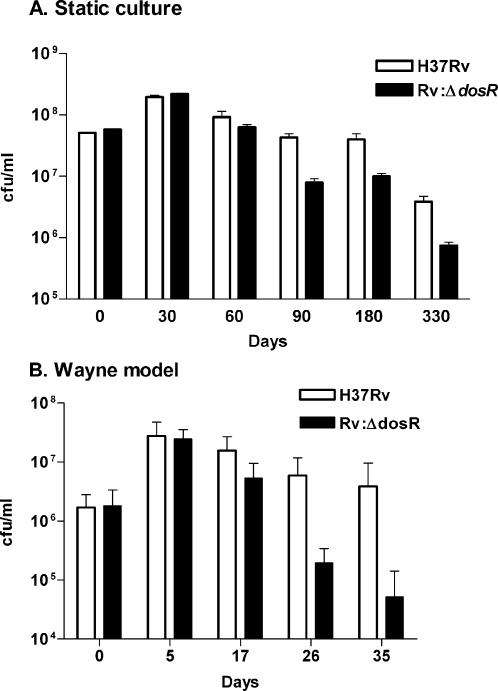
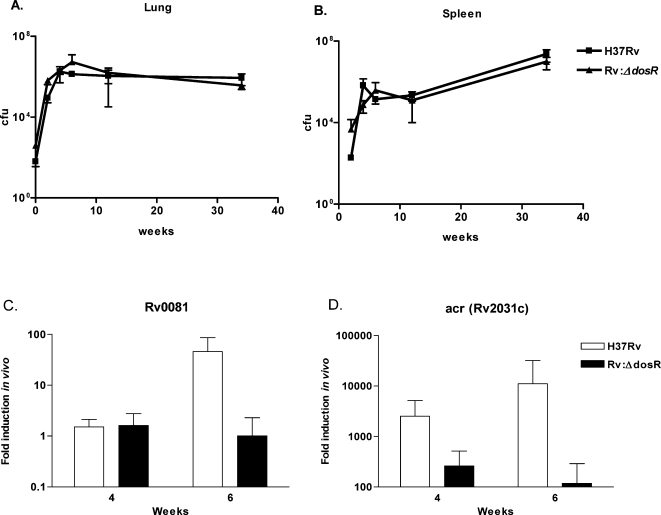
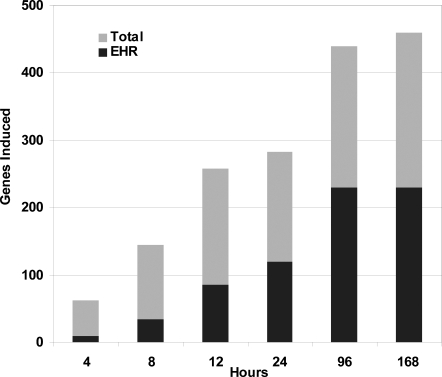
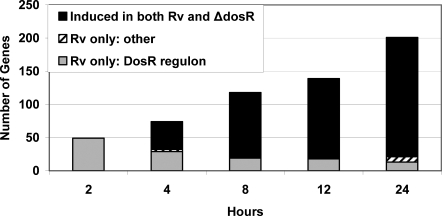
BACKGROUND: A significant body of evidence accumulated over the last century suggests a link between hypoxic microenvironments within the infected host and the latent phase of tuberculosis. Studies to test this correlation have identified the M. tuberculosis initial hypoxic response, controlled by the two-component response regulator DosR. The initial hypoxic response is completely blocked in a dosR deletion mutant. METHODOLOGY/PRINCIPAL FINDINGS: We show here that a dosR deletion mutant enters bacteriostasis in response to in vitro hypoxia with only a relatively mild decrease in viability. In the murine infection model, the phenotype of the mutant was indistinguishable from that of the parent strain. These results suggested that additional genes may be essential for entry into and maintenance of bacteriostasis. Detailed microarray analysis of oxygen starved cultures revealed that DosR regulon induction is transient, with induction of nearly half the genes returning to baseline within 24 hours. In addition, a larger, sustained wave of gene expression follows the DosR-mediated initial hypoxic response. This Enduring Hypoxic Response (EHR) consists of 230 genes significantly induced at four and seven days of hypoxia but not at initial time points. These genes include a surprising number of transcriptional regulators that could control the program of bacteriostasis. We found that the EHR is independent of the DosR-mediated initial hypoxic response, as EHR expression is virtually unaltered in the dosR mutant. CONCLUSIONS/SIGNIFICANCE: Our results suggest a reassessment of the role of DosR and the initial hypoxic response in MTB physiology. Instead of a primary role in survival of hypoxia induced bacteriostasis, DosR may regulate a response that is largely optional in vitro and in mouse infections. Analysis of the EHR should help elucidate the key regulatory factors and enzymatic machinery exploited by M. tuberculosis for long-term bacteriostasis in the face of oxygen deprivation.
Overview
The claims and statistics of this paper haven’t been checked yet.
Free: it reads the open-access text and checks the first 5 claims that cite a source we can check. Create a free account to check every claim.
Integrity signals
Registry
Cites
Statistics
Figures
Verification
Claims the paper makes
The claims and statistics of this paper haven’t been checked yet.
Free: it reads the open-access text and checks the first 5 claims that cite a source we can check. Create a free account to check every claim.
Claims other papers make about this one
Each is checked against this paper’s own text: does it say what the citing paper says it does?
The source backs part of the claim, not all of it — or backs it for a different population, condition or comparison.
In the citing paper
“The DosR system activates transcription of hrp1, a PDIM synthesis factor113, during short-term and long-term oxygen deprivation57,115.”
From The mycobacterial cell envelope — a moving target (2020) · cites this paper as [57]
Experimental — accuracy not yet measuredThe cited source says what the claim attributes to it.
In the citing paper
“Induction of EHR was independent of DosR, suggesting that other sensory and regulatory mechanisms must exist to signal prolonged exposure to hypoxia.”
From Energetics of Respiration and Oxidative Phosphorylation in Mycobacteria (2014) · cites this paper as [125]
Experimental — accuracy not yet measuredThe cited source says what the claim attributes to it.
In the citing paper
“For example, DosR of M. tuberculosis H37Rv was shown not to be strictly required for survival of hypoxia in vitro (125).”
From Energetics of Respiration and Oxidative Phosphorylation in Mycobacteria (2014) · cites this paper as [125]
The cited source says what the claim attributes to it.
In the citing paper
“In contrast, a set of 230 genes was significantly up-regulated at four and seven days of hypoxia, but not initially, and were termed the enduring hypoxic response (EHR) (125).”
From Energetics of Respiration and Oxidative Phosphorylation in Mycobacteria (2014) · cites this paper as [125]
Self-check
Percentages, sums and reported differences re-computed from the paper’s own numbers.
The self-check needs the paper’s full text.
Citations
Cites
In silico prediction of protein-protein interactions in human macrophages
Souiai, O., Guerfali, F., Ben Miled, S., Brun, C., & Benkahla, A. (2014) · BMC Research Notes · doi:10.1186/1756-0500-7-157 · Cited by 10,803
Significance analysis of microarrays applied to the ionizing radiation response
Tusher, V. G., Tibshirani, R., & Chu, G. (2001) · Proceedings of the National Academy of Sciences · doi:10.1073/pnas.091062498 · Cited by 10,568
Deciphering the biology of Mycobacterium tuberculosis from the complete genome sequence
Cole, S. T., Brosch, R., Parkhill, J., Garnier, T., Churcher, C., Harris, D., Gordon, S. V., Eiglmeier, K., Gas, S., Barry, C. E., et al. (1998) · Nature · doi:10.1038/31159 · Cited by 7,847 · cited 1×
“A survey of the annotated functional categories [36] of EHR genes reveals that a dominant feature of this gene list is the large”
BackgroundThe Growing Burden of Tuberculosis: Global Trends and Interactions With the HIV Epidemic
Corbett, E. L., Watt, C. J., Walker, N., Maher, D., Williams, B. G., Raviglione, M. C., & Dye, C. (2003) · Archives of Internal Medicine · doi:10.1001/archinte.163.9.1009 · Cited by 2,553 · cited 1×
“Up to a third of all people are skin test positive for MTB infection [3,4].”
BackgroundTranscriptional Adaptation of Mycobacterium tuberculosis within Macrophages
Schnappinger, D., Ehrt, S., Voskuil, M. I., Liu, Y., Mangan, J. A., Monahan, I. M., Dolganov, G., Efron, B., Butcher, P. D., Nathan, C., et al. (2003) · The Journal of Experimental Medicine · doi:10.1084/jem.20030846 · Cited by 1,420 · cited 1×
“Under these conditions, oxygen tension is likely reduced relative to rolling cultures in vitro, however bacilli are replicating and DosR is induced [42–45].”
BackgroundBetts, J. C., Lukey, P. T., Robb, L. C., McAdam, R. A., & Duncan, K. (2002) · Molecular Microbiology · doi:10.1046/j.1365-2958.2002.02779.x · Cited by 1,395 · cited 3×
“Condition Total EHR: 230 Genes DosR: 49 genes Overlap (By Chance) Overlap (By Chance) Starvation a 4 hours ND 170 23 (10) 0 (2) 1 day ND 250 54 (15) 0 (3) 4 day ND 276 47 (16) 0 (3) Wayne model b NRP 4 days 78 8 (5) 42 (1) NRP 20 days 177 73 (10) 33 (2) NRP 80 days 9 5 (1) 0 (0) Control stresses c pH 4.8 195 18 (11) 1…”
BackgroundMethodInfluentialMcKinney, J. D., zu Bentrup, K. H., Muñoz-Elías, E. J., Miczak, A., Chen, B., Chan, W.-T., Swenson, D., Sacchettini, J. C., Jacobs, W. R., & Russell, D. G. (2000) · Nature · doi:10.1038/35021074 · Cited by 1,360 · cited 1×
“Granulomas are formed by activated macrophages and other host components that surround infected lung tissue, isolating the infected cells in an organized structure and creating an environment that suppresses MTB replication [2,8–14].”
BackgroundWayne, L. G., & Hayes, L. G. (1996) · Infection and Immunity · doi:10.1128/iai.64.6.2062-2069.1996 · Cited by 1,141 · cited 2×
“The Wayne model was performed as previously described [16,17].”
MethodA small-molecule nitroimidazopyran drug candidate for the treatment of tuberculosis
Stover, C. K., Warrener, P., VanDevanter, D. R., Sherman, D. R., Arain, T. M., Langhorne, M. H., Anderson, S. W., Towell, J. A., Yuan, Y., McMurray, D. N., et al. (2000) · Nature · doi:10.1038/35016103 · Cited by 1,034 · cited 1×
“These nonreplicating bacilli have a drug susceptibility profile resembling that of latent TB infections [16– 20].”
BackgroundSelf-citationInhibition of Respiration by Nitric Oxide Induces a Mycobacterium tuberculosis Dormancy Program
Voskuil, M. I., Schnappinger, D., Visconti, K. C., Harrell, M. I., Dolganov, G. M., Sherman, D. R., & Schoolnik, G. K. (2003) · The Journal of Experimental Medicine · doi:10.1084/jem.20030205 · Cited by 966 · cited 1×
“This result is consistent with the ,2 log drop shown earlier with a related MTB mutant in which DosR expression is disrupted [26], though significantly less than the 1000-fold drop in viability reported in a dosR deletion in a Mycobacterium bovis BCG vaccine strain [32].”
ResultSelf-citation
Cited by
Items 101–200 of 495
LAG3 Expression in Active Mycobacterium tuberculosis Infections
Phillips, B., Mehra, S., Ahsan, M. H., Selman, M., Khader, S. A., & Kaushal, D. (2014) · American Journal Of Pathology · doi:10.1016/j.ajpath.2014.11.003 · Cited by 81
Cowan, J., Pandey, S., Filion, L. G., Angel, J. B., Kumar, A., & Cameron, D. W. (2012) · Clinical & Experimental Immunology · doi:10.1111/j.1365-2249.2011.04520.x · Cited by 92
Individual Mycobacterium tuberculosis universal stress protein homologues are dispensable in vitro
Hingley‐Wilson, S., Lougheed, K. E. A., Ferguson, K., Leiva, S., & Williams, H. D. (2010) · Tuberculosis · doi:10.1016/j.tube.2010.03.013 · Cited by 90
“Due to the upregulation of the DosR regulon under hypoxic conditions, 15 the fact that mutation of dosR compromises bacterial survival 11,14,47,48 and that six USPs, including Rv1996, Rv2005c, and Rv2028c, are DosR-regulated, the survival of the mutants under hypoxic stationary phase conditions was…”
BackgroundTallman, K. R., Levine, S. R., & Beatty, K. E. (2016) · ACS Infectious Diseases · doi:10.1021/acsinfecdis.6b00135 · Cited by 86
Structure-Based Design of DevR Inhibitor Active against Nonreplicating Mycobacterium tuberculosis
Gupta, R. K., Thakur, T. S., Desiraju, G. R., & Tyagi, J. S. (2009) · Journal of Medicinal Chemistry · doi:10.1021/jm900358q · Cited by 79
Synthesis and biological activity of furoxan derivatives against Mycobacterium tuberculosis
Fernandes, G., de Souza, P. C., Marino, L. B., Chegaev, K. Y., Guglielmo, S., Lazzarato, L., Fruttero, R., Chung, M. C., Pavan, F. R., & dos Santos, J. L. (2016) · European Journal of Medicinal Chemistry · doi:10.1016/j.ejmech.2016.07.039 · Cited by 83
“Furthermore, WHO estimates that one third of the world population are infected by latent TB [2], whose treatment is unavailable due to the lack of new drugs [3-5].”
Fontán, P. A., Voskuil, M. I., Gómez, M. J., Tan, D., Pardini, M., Manganelli, R., Fattorini, L., Schoolnik, G. K., & Smith, I. (2009) · Journal of Bacteriology · doi:10.1128/jb.00510-09 · Cited by 86
“tuberculosis survival in vivo under some conditions (21), although in other in vivo environments, the DosR regulon may be required (2).”
BackgroundSherrid, A. M., Rustad, T. R., Cangelosi, G. A., & Sherman, D. R. (2010) · PLoS ONE · doi:10.1371/journal.pone.0011622 · Cited by 85
“cDNA synthesis and real time PCR were performed as described [21], with each sample normalized to sigA expression level.”
BackgroundMethodInfluentialSelf-citationChen, J., Zhang, S., Cui, P., Shi, W., Zhang, W., & Zhang, Y. (2017) · Journal of Antimicrobial Chemotherapy · doi:10.1093/jac/dkx316 · Cited by 75
Antigens for CD4 and CD8 T Cells in Tuberculosis
Arlehamn, C. S. L., Lewinsohn, D. M., Sette, A., & Lewinsohn, D. M. (2014) · Cold Spring Harbor Perspectives in Medicine · doi:10.1101/cshperspect.a018465 · Cited by 84
“Expression of early secreted antigens decrease, whereas antigens encoded during starvation and dormancy increase (Leyten et al. 2006; Rustad et al. 2008; Schuck et al. 2009).”
Mycobacterium tuberculosis Ser/Thr Protein Kinase B Mediates an Oxygen-Dependent Replication Switch
Ortega, C., Liao, R., Anderson, L. N., Rustad, T., Ollodart, A. R., Wright, A. T., Sherman, D. R., & Grundner, C. (2014) · PLoS Biology · doi:10.1371/journal.pbio.1001746 · Cited by 74
“hypoxia or reaeration, consistent with a limited role of DosR in hypoxia [21].”
BackgroundMethodInfluentialSelf-citationHalicyclamine A, a marine spongean alkaloid as a lead for anti-tuberculosis agent
Arai, M., Sobou, M., Vilchèze, C., Baughn, A. D., Hashizume, H., Pruksakorn, P., Ishida, S., Matsumoto, M., Jacobs, W. R., & Kobayashi, M. (2008) · Bioorganic & Medicinal Chemistry · doi:10.1016/j.bmc.2008.05.061 · Cited by 79
Immunogenicity of 60 novel latency-related antigens of Mycobacterium tuberculosis
Serra-Vidal, M. M., Latorre, I., Franken, K. L. M. C., Díaz, J., de Souza-Galvão, M. L., Casas, I., Maldonado, J., Milà, C., Solsona, J., Jiménez-Fuentes, M. Á., et al. (2014) · Frontiers in Microbiology · doi:10.3389/fmicb.2014.00517 · Cited by 79
“ORIGINAL RESEARCH ARTICLE published: 08 October 2014 doi: 10.3389/fmicb.2014.00517 Immunogenicity of 60 novel latency-related antigens of”
BackgroundInfluentialNickel, D., Busch, M., Mayer, D., Hagemann, B., Knoll, V., & Stenger, S. (2012) · The Journal of Immunology · doi:10.4049/jimmunol.1100976 · Cited by 71
“Sustained oxygen limitation, as occurs during latent tuberculosis, induces an extended and distinct set of genes that is largely DosR independent and is termed “enduring hypoxic response” (22).”
BackgroundIs Mycobacterium tuberculosis stressed out? A critical assessment of the genetic evidence
Stallings, C. L., & Glickman, M. S. (2010) · Microbes and Infection · doi:10.1016/j.micinf.2010.07.014 · Cited by 86
“tuberculosis gene expression in response to more extended hypoxia has revealed a gene expression program that is mostly DosR independent [66].”
BackgroundNixon, M. R., Saionz, K. W., Koo, M.-S., Szymonifka, M. J., Jung, H., Roberts, J. P., Nandakumar, M., Kumar, A., Liao, R., Rustad, T. R., et al. (2014) · Chemistry & Biology · doi:10.1016/j.chembiol.2014.04.009 · Cited by 73
Self-citationThe DosR regulon of M. tuberculosis and antibacterial tolerance
Bartek, I. L., Rutherford, R. S., Gruppo, V., Morton, R. A., Morris, R. P., Klein, M. R., Visconti, K. C., Ryan, G. J., Schoolnik, G. K., Lenaerts, A. J. M., et al. (2009) · Tuberculosis · doi:10.1016/j.tube.2009.06.001 · Cited by 81
“As has been previously reported [36,37], the Bartek et al.”
Dutta, N. K., Mehra, S., Martinez, A. N., Alvarez, X. A., Renner, N. A., Morici, L. A., Pahar, B., MacLean, A. G., Lackner, A. A., & Kaushal, D. (2012) · PLoS ONE · doi:10.1371/journal.pone.0028958 · Cited by 71
“The phenotype of the culture cells was .95% pure macrophage type by immunophenotyping, by the measurement of CD14, CD86, HLA-DR, and CD11b [17].”
BackgroundInfluentialMetabolic Versatility of Mycobacterium tuberculosis during Infection and Dormancy
Chang, D. P. S., & Guan, X. L. (2021) · Metabolites · doi:10.3390/metabo11020088 · Cited by 82
Hatzios, S. K., Baer, C. E., Rustad, T. R., Siegrist, M. S., Pang, J. M., Ortega, C., Alber, T., Grundner, C., Sherman, D. R., & Bertozzi, C. R. (2013) · Proceedings of the National Academy of Sciences · doi:10.1073/pnas.1321205110 · Cited by 73
“RNA extraction and microarray analysis were performed as previously described (75).”
MethodSelf-citationNovel tuberculosis vaccines on the horizon
Parida, S. K., & Kaufmann, S. H. E. (2010) · Current Opinion in Immunology · doi:10.1016/j.coi.2010.04.006 · Cited by 79
Nedeltchev, G. G., Raghunand, T. R., Jassal, M. S., Lun, S., Cheng, Q. J., & Bishai, W. R. (2008) · Infection and Immunity · doi:10.1128/iai.01132-08 · Cited by 72
“tuberculosis, and its role in dormancy has been extensively studied (15, 22, 24, 25, 26, 31).”
BackgroundThe DosS-DosT/DosR Mycobacterial Sensor System
Sivaramakrishnan, S., & de Montellano, P. R. O. (2013) · Biosensors · doi:10.3390/bios3030259 · Cited by 75
“The role of the dosR system in virulence appears to be model dependent [20–22], but in general contributes to survival and growth under hypoxic conditions.”
BackgroundFarhana, A., Guidry, L., Ak, S., Singh, A., Hondalus, M. K., & Steyn, A. J. C. (2010) · Advances in microbial physiology/Advances in Microbial Physiology · doi:10.1016/b978-0-12-381045-8.00002-3 · Cited by 71
Integrated Modeling of Gene Regulatory and Metabolic Networks in Mycobacterium tuberculosis
Ma, S., Minch, K. J., Rustad, T. R., Hobbs, S. J., Zhou, S.-L., Sherman, D. R., & Price, N. D. (2015) · PLoS Computational Biology · doi:10.1371/journal.pcbi.1004543 · Cited by 69
“RNA was isolated and applied to arrays provided by TIGR under the NIAID contract N01-AI-15447 using published protocols [30] (the data are accessible from the Gene Expression Omnibus, accession number GSE71200).”
MethodSelf-citationMartini, M. C., Zhou, Y., Sun, H., & Shell, S. S. (2019) · Frontiers in Microbiology · doi:10.3389/fmicb.2019.00591 · Cited by 69
Modeling Phenotypic Metabolic Adaptations of Mycobacterium tuberculosis H37Rv under Hypoxia
Fang, X. D., Wallqvist, A., & Reifman, J. (2012) · PLoS Computational Biology · doi:10.1371/journal.pcbi.1002688 · Cited by 68
“After this period, additional cellular reprogramming in response to extended hypoxia occurs [55], a response that is not dependent on dosR and represents further biological and metabolic adaptations not modeled here.”
BackgroundCarette, X., Platig, J., Young, D. C., Helmel, M., Young, A. T., Wang, Z., Potluri, L.-P., Moody, C. S., Zeng, J., Prisic, S., et al. (2018) · mBio · doi:10.1128/mbio.02333-17 · Cited by 65
Different Roles of DosS and DosT in the Hypoxic Adaptation of Mycobacteria
Kim, M., Park, K.-J., Ko, I.-J., Kim, Y. M., & Oh, J. (2010) · Journal of Bacteriology · doi:10.1128/jb.00550-10 · Cited by 69
“Several studies showed that induction of the DosR regulon occurs in the early phase of progressive hypoxia in vitro, and such an initial hypoxic response appears to prime mycobacteria for subsequent adaptation to and survival in extended and more unfavorable anaerobiosis (27, 40, 41).”
BackgroundCoppola, M., van Meijgaarden, K. E., Franken, K. L. M. C., Commandeur, S., Dolganov, G., Kramnik, I., Schoolnik, G. K., Comas, I., Lund, O., Prins, C., et al. (2016) · Scientific Reports · doi:10.1038/srep37793 · Cited by 65
Prasher, P., Sharma, M., Mehta, M., Paudel, K. R., Satija, S., Chellappan, D. K., Dureja, H., Gupta, G., Tambuwala, M. M., Negi, P., et al. (2020) · Chemico-Biological Interactions · doi:10.1016/j.cbi.2020.109125 · Cited by 65
“The dormant mycobacterium requires hypoxic conditions for survival and displays considerable resistance against the representative drugs [59].”
BackgroundHe, H., Bretl, D. J., Penoske, R. M., Anderson, D. M., & Zahrt, T. C. (2011) · Journal of Bacteriology · doi:10.1128/jb.05562-11 · Cited by 64
“tuberculosis in several animal model systems, including mice, guinea pigs, and rabbits (19, 39), although this remains controversial (44, 50).”
BackgroundA high-resolution network model for global gene regulation in Mycobacterium tuberculosis
Peterson, E. J. R., Reiss, D. J., Turkarslan, S., Minch, K. J., Rustad, T. R., Plaisier, C. L., Longabaugh, W. J. R., Sherman, D. R., & Baliga, N. S. (2014) · Nucleic Acids Research · doi:10.1093/nar/gku777 · Cited by 63
“In addition to accurately reconstructing the KstR regulon, the gene regulatory network model also predicted that it is active under cell envelope stress, hypoxia (41) and oxidative stress con-”
Self-citationComprehensive definition of human immunodominant CD8 antigens in tuberculosis
Lewinsohn, D. A., Swarbrick, G. M., Park, B., Cansler, M. E., Null, M. D., Toren, K. G., Baseke, J., Zalwango, S., Mayanja-Kizza, H., Malone, L. L., et al. (2017) · npj Vaccines · doi:10.1038/s41541-017-0008-6 · Cited by 58
Self-citationFernandes, G., de Souza, P. C., Moreno‐Viguri, E., Santivañez‐Veliz, M., Paucar, R., Pérez‐Silanes, S., Chegaev, K. Y., Guglielmo, S., Lazzarato, L., Fruttero, R., et al. (2017) · Journal of Medicinal Chemistry · doi:10.1021/acs.jmedchem.7b01332 · Cited by 65
Ma, S., Jaipalli, S., Larkins‐Ford, J., Lohmiller, J., Aldridge, B. B., Sherman, D. R., & Chandrasekaran, S. (2019) · mBio · doi:10.1128/mbio.02627-19 · Cited by 64
“05% Tween80 at 37 °C under aerobic conditions 507 with constant agitation to mid-log phase, as described previously (35, 52).”
MethodSelf-citationSoni, D. K., Dubey, S. K., & Bhatnagar, R. (2020) · Emerging Microbes & Infections · doi:10.1080/22221751.2020.1714488 · Cited by 64
Analyzing the Regulatory Role of the HigA Antitoxin within Mycobacterium tuberculosis
Fivian-Hughes, A. S., & Davis, E. O. (2010) · Journal of Bacteriology · doi:10.1128/jb.00454-10 · Cited by 60
“tuberculosis higBA locus is upregulated when the bacterium is exposed to heat shock (48), nutrient starvation (5), DNA damage (38), and hypoxia (37, 41), supporting the hypothesis that TA loci are involved in survival under stress.”
BackgroundCharacterization of a Novel ArsR-Like Regulator Encoded by Rv2034 in Mycobacterium tuberculosis
Gao, C., Yang, M., & He, Z. (2012) · PLoS ONE · doi:10.1371/journal.pone.0036255 · Cited by 63
“However, a recent study claimed that only the initial hypoxic response genes are regulated by dosR [8] while the regulatory mechanism of enduring hypoxic response genes remains unclear.”
BackgroundInfluentialRittershaus, E. S. C., Baek, S.-H., Krieger, I. V., Nelson, S. J., Cheng, Y., Nambi, S., Baker, R. E., Leszyk, J., Shaffer, S. A., Sacchettini, J. C., et al. (2018) · Cell chemical biology · doi:10.1016/j.chembiol.2018.09.009 · Cited by 61
“This initial response is followed by more stable transcriptional and metabolic changes that promote long-term survival (Galagan et al., 2013; Rustad et al., 2008).”
BackgroundDeep, A., Tiwari, P., Agarwal, S., Kaundal, S., Kidwai, S., Singh, R., & Thakur, K. G. (2018) · Nucleic Acids Research · doi:10.1093/nar/gky924 · Cited by 60
Saini, V., Farhana, A., & Steyn, A. J. C. (2011) · Antioxidants and Redox Signaling · doi:10.1089/ars.2011.4341 · Cited by 62
“In another genome-wide expression study, whiB6 expression was consistently upregulated under prolonged hypoxia, a condition associated with dormant infection, whereas whiB4 and whiB2 were moderately upregulated (35, 36).”
BackgroundInteraction of Mycobacterium tuberculosis with the host: consequences for vaccine development
Dietrich, J., & Doherty, T. M. (2009) · Apmis · doi:10.1111/j.1600-0463.2009.02458.x · Cited by 73
“the dosR regulon that consists of 48 genes (156, 157).”
BackgroundA comprehensive map of genome-wide gene regulation in Mycobacterium tuberculosis
Turkarslan, S., Peterson, E. J. R., Rustad, T. R., Minch, K. J., Reiss, D. J., Morrison, R., Ma, S., Price, N. D., Sherman, D. R., & Baliga, N. S. (2015) · Scientific Data · doi:10.1038/sdata.2015.10 · Cited by 63
Self-citationTranscriptional Profiling of Mycobacterium tuberculosis Exposed toIn VitroLysosomal Stress
Lin, W., de Sessions, P. F., Teoh, G. H. K., Mohamed, A. N. N., Zhu, Y. O., Koh, V. H. Q., Ang, M. L. T., Dedon, P. C., Hibberd, M. L., & Alonso, S. (2016) · Infection and Immunity · doi:10.1128/iai.00072-16 · Cited by 59
“tuberculosis during macrophage infection, including hypoxia (16), nitric oxide (17, 18), iron limitation (19), acidic pH (20), gradual oxygen depletion (21, 22), nutrient starvation (23, 24), antibiotic pressure (25), and stationary phase (26).”
BackgroundInfluentialKhademi, F., Derakhshan, M., Avarvand, A. Y., Tafaghodi, M., & Soleimanpour, S. (2017) · Expert Review of Vaccines · doi:10.1080/14760584.2018.1406309 · Cited by 55
“Such latency-associated antigens are included, for example, in (1) DosR (also called DevR) regulon antigens, which are responsible for adaptation to hypoxia and which constitute the latency-expressing antigens and could possibly be strong candidates for use in subunit vaccines; and (2) nutrient starvation antigens [54…”
BackgroundKumar, A., Zhang, M., Zhu, L.-Y., Liao, R., Mutai, C., Hafsat, S., Sherman, D. R., & Wang, M. (2012) · PLoS ONE · doi:10.1371/journal.pone.0039961 · Cited by 54
“Briefly, RNA was harvested as described previously [16] from wild-type H37Rv and H37Rv:dfrA-TetON (DHFR kd) cultures grown with varied levels of tetracycline (ATc).”
MethodSelf-citationWilliams, M. J., Kana, B. D., & Mizrahi, V. (2010) · Journal of Bacteriology · doi:10.1128/jb.00774-10 · Cited by 60
“tuberculosis to hypoxia (32, 53) or in NRP-1 and NRP-2 (29), and moeB1 is the only gene in the MoCo biosynthetic pathway that shows modest upregulation at a late stage of the enduring hypoxic response (39).”
BackgroundMycobacterium bovis antigens for the differential diagnosis of vaccinated and infected cattle
Vordermeier, M. H., Gordon, S. V., & Hewinson, R. G. (2011) · Veterinary Microbiology · doi:10.1016/j.vetmic.2011.02.020 · Cited by 61
“Therefore such antigens as well as other hypoxia-induced antigens (Rustad et al., 2008) could define latency in humans.”
BackgroundMajumdar, S. D., Vashist, A., Dhingra, S., Gupta, R., Singh, A., Challu, V. K., Ramanathan, V. D., Kumar, P., & Tyagi, J. S. (2012) · PLoS ONE · doi:10.1371/journal.pone.0035847 · Cited by 54
“Of the remaining genes induced under hypoxia in the WT strain, 66 genes belonged to the Enduring Hypoxic Response (EHR) category as described [13].”
BackgroundGautam, U. S., McGillivray, A., Mehra, S., Didier, P. J., Midkiff, C. C., Kissee, R. S., Golden, N., Alvarez, X. A., Niu, T., Rengarajan, J., et al. (2014) · American Journal of Respiratory Cell and Molecular Biology · doi:10.1165/rcmb.2014-0230oc · Cited by 56
“Transcript Measurements from Mycobacteria To demonstrate a high level of hypoxia,Mtb wild-type mice and mutants were cultured as described with minor modifications (6, 26).”
BackgroundMethodResultSelf-citationIona, E., Pardini, M., Mustazzolu, A., Piccaro, G., Nisini, R., Fattorini, L., & Giannoni, F. (2016) · The Journal of Microbiology · doi:10.1007/s12275-016-6150-4 · Cited by 56
“This set of genes was observed to be up-regulated after the DR in a different model of dormancy (Rustad et al., 2008).”
New Targets and Inhibitors of Mycobacterial Sulfur Metabolism
Paritala, H., & Carroll, K. S. (2013) · Infectious Disorders - Drug Targets · doi:10.2174/18715265113139990022 · Cited by 54
“Hypoxia mediated induction of cysD, cysNC, cysK2, cysM, cysT and subsequent activation of ATP sulfurylase and cysteine biosynthesis indicate genetic level regulation of sulfate assimilation to defend against reactive species in the granuloma [105].”
BackgroundFallow, A., Domenech, P., & Reed, M. B. (2010) · Journal of Bacteriology · doi:10.1128/jb.01597-09 · Cited by 56
“Every conceivable in vivo phenotype has now been reported for dosR mutants, ranging from hypervirulence to attenuation to no effect at all (10, 45, 52).”
BackgroundHost-pathogen redox dynamics modulate Mycobacterium tuberculosis pathogenesis
Pacl, H. T., Reddy, V. P., Saini, V., Chinta, K. C., & Steyn, A. J. C. (2018) · Pathogens and Disease · doi:10.1093/femspd/fty036 · Cited by 54
“Infection studies in C57BL/6J and SCID mice using Mtb lacking dosR showed no attenuation and, in one study, led to increased virulence compared to wild type (Parish et al. 2003a; Rustad et al. 2008).”
BackgroundResultThe Biological and Clinical Aspects of a Latent Tuberculosis Infection
Khabibullina, N. F., Kutuzova, D. M., Burmistrova, I. A., & Lyadova, I. V. (2022) · Tropical Medicine and Infectious Disease · doi:10.3390/tropicalmed7030048 · Cited by 64
Arora, D., Chawla, Y., Malakar, B., Singh, A., & Nandicoori, V. K. (2018) · Journal of Biological Chemistry · doi:10.1074/jbc.m117.811190 · Cited by 48
“Mycobacterium tuberculosis (Mtb) cell wall is a complex structure that provides osmotic stability, drug resistance, enhanced virulence(1-3) and protects it from stress conditions in the host, such as reactive oxygen species (ROS), starvation, and hypoxia(4-9).”
Tripathi, P., Singh, L. K., Kumari, S., Hakiem, O. R., & Batra, J. K. (2020) · International Journal of Medical Microbiology · doi:10.1016/j.ijmm.2020.151402 · Cited by 52
CsoR Is Essential for Maintaining Copper Homeostasis in Mycobacterium tuberculosis
Marcus, S. A., Sidiropoulos, S. W., Steinberg, H., & Talaat, A. M. (2016) · PLOS ONE · doi:10.1371/journal.pone.0151816 · Cited by 47
“The role of the cso in dormancy is supported by the observed induction of csoR throughout the enduring hypoxic response [29].”
BackgroundOpening Pandora’s Box: Mechanisms of Mycobacterium tuberculosis Resuscitation
Veatch, A. V., & Kaushal, D. (2017) · Trends in Microbiology · doi:10.1016/j.tim.2017.08.001 · Cited by 53
“Other in vitro work has identified the enduring hypoxic response (EHR) regulon comprised of genes identified during long-term dormancy [16].”
BackgroundPisu, D., Provvedi, R., Mata‐Espinosa, D., Barrios‐Payán, J., Boldrin, F., Palù, G., Hernández‐Pando, R., & Manganelli, R. (2017) · Antimicrobial Agents and Chemotherapy · doi:10.1128/aac.01596-17 · Cited by 52
“SigB was shown to be involved in resistance to hypoxia (27), probably one of the major environmental factors inducing dormancy, while SigE is regulated by a very complex regulatory network, including several positive feed-forward regulatory loops, hypothesized to result in a bistable switch (22, 24, 28) and is one of…”
BackgroundRegulation of Three Virulence Strategies of Mycobacterium tuberculosis: A Success Story
Zondervan, N. A., van Dam, J. C. J., Schaap, P. J., dos Santos, V. A. P. M., & Diez, M. S. (2018) · International Journal of Molecular Sciences · doi:10.3390/ijms19020347 · Cited by 50
“Although DevRST and WhiB3 are involved in the preparation for dormancy, the enduring hypoxic response measured in a devR knockout mutant showed 230 genes to be differentially expressed with roughly half of them upregulated in in the first day of hypoxia and the other half only upregulated at 4 and 7 days of hypoxia [1…”
BackgroundTuberculosis drug discovery and emerging targets
Mdluli, K. E., Kaneko, T., & Upton, A. M. (2014) · Annals of the New York Academy of Sciences · doi:10.1111/nyas.12459 · Cited by 52
Wang, Y., Huang, Y., Xue, C., He, Y., & He, Z. (2011) · Journal of Biological Chemistry · doi:10.1074/jbc.m111.241802 · Cited by 51
The Mycobacterium DosR regulon structure and diversity revealed by comparative genomic analysis
Chen, T., He, L., Deng, W., & Xie, J. (2012) · Journal of Cellular Biochemistry · doi:10.1002/jcb.24302 · Cited by 56
“No distinguishable colony forming units (cfu) and histopathology difference can be spotted between dosR mutant and the parent strain H37Rv when C57BL/6, DBA2, and C3He/FEJ mice were challenged, respectively [Rustad et al., 2008].”
BackgroundInfluentialAgarwal, S., Sharma, A., Bouzeyen, R., Deep, A., Sharma, H., Mangalaparthi, K. K., Datta, K. K., Kidwai, S., Gowda, H., Varadarajan, R., et al. (2020) · Science Advances · doi:10.1126/sciadv.aba6944 · Cited by 58
“RNA-seq analysis revealed that overexpression of VapC22 results in transcriptional reprogramming and the expression profiles were similar to those obtained in bacilli upon exposure to either nutrient limiting or low oxygen growth conditions (22, 24).”
MethodTARGETING DORMANT BACILLI TO FIGHT TUBERCULOSIS
Fattorini, L., Piccaro, G., Mustazzolu, A., & Giannoni, F. (2013) · Mediterranean Journal of Hematology and Infectious Diseases · doi:10.4084/mjhid.2013.072 · Cited by 54
Metabolomics of Central Carbon Metabolism in Mycobacterium tuberculosis
Baughn, A. D., & Rhee, K. Y. (2014) · Microbiology Spectrum · doi:10.1128/microbiolspec.mgm2-0026-2013 · Cited by 53
McGillivray, A., Golden, N., & Kaushal, D. (2014) · Journal of Biological Chemistry · doi:10.1074/jbc.m114.615534 · Cited by 46
“Several groups have implicated that the network controlled by H and E is transcriptionally interlinked with the expression of Rv2745c during diverse stress conditions (10, 20, 21, 25).”
BackgroundTranslational Research in the Nonhuman Primate Model of Tuberculosis
Foreman, T. W., Mehra, S., Lackner, A. A., & Kaushal, D. (2017) · ILAR Journal · doi:10.1093/ilar/ilx015 · Cited by 46
“As previously described, no major pathological differences were observed when BALB/c and C57Bl/6 mice (Rustad et al. 2008) were infected with Mtb strains deficient in hypoxia response genes (dosR, dosS, dosT).”
BackgroundLevillain, F., Poquet, Y., Mallet, L., Mazères, S., Marceau, M., Brosch, R., Bange, F., Supply, P., Magalon, A., & Neyrolles, O. (2017) · PLoS Pathogens · doi:10.1371/journal.ppat.1006752 · Cited by 48
“Moreover, in addition to MoaR1, the moaA1-D1 locus can be activated by Rv0081, by Rv0324, a regulator involved in the HER [43], by Rv3286c/SigF, and by the histone-like protein Rv3597c/Lsr2.”
BackgroundMprA and DosR Coregulate a Mycobacterium tuberculosis Virulence Operon Encoding Rv1813c and Rv1812c
Bretl, D. J., He, H., Demetriadou, C., White, M. J., Penoske, R. M., Salzman, N. H., & Zahrt, T. C. (2012) · Infection and Immunity · doi:10.1128/iai.00520-12 · Cited by 46
“tuberculosis are attenuated for virulence in several animal model systems (14, 39), although this remains controversial (5, 48, 51).”
BackgroundAdvances in protein subunit vaccines against tuberculosis
Zhang, Y., Xu, J., Hu, Z., & Fan, X. (2023) · Frontiers in Immunology · doi:10.3389/fimmu.2023.1238586 · Cited by 52
Mathematical Model of Oxygen Transport in Tuberculosis Granulomas
Datta, M., Via, L. E., Chen, W., Baish, J. W., Xu, L., Barry, C. E., & Jain, R. K. (2015) · Annals of Biomedical Engineering · doi:10.1007/s10439-015-1415-3 · Cited by 51
Mycobacterium tuberculosis acg Gene Is Required for Growth and Virulence In Vivo
Hu, Y., & Coates, A. R. M. (2011) · PLoS ONE · doi:10.1371/journal.pone.0020958 · Cited by 47
“Additional evidence which supports this hypothesis comes from the data that suggests dosR only controls the initial hypoxic response, whilst enduring hypoxic responses are independent of dosR regulation [22].”
BackgroundResultInfluentialTandhavanant, S., Thanwisai, A., Limmathurotsakul, D., Korbsrisate, S., Day, N., Peacock, S. J., & Chantratita, N. (2010) · BMC Microbiology · doi:10.1186/1471-2180-10-303 · Cited by 56
“Low oxygen concentration may limit the intracellular growth of aerobic bacteria within the host [14].”
BackgroundMycobacterium tuberculosis Dormancy: How to Fight a Hidden Danger
Salina, E. G., & Makarov, V. (2022) · Microorganisms · doi:10.3390/microorganisms10122334 · Cited by 47
Construction and application of a co-expression network in Mycobacterium tuberculosis
Jiang, J. H., Sun, X. L., Wu, W., Li, L., Wu, H., Zhang, L., Yu, G., & Li, Y. (2016) · Scientific Reports · doi:10.1038/srep28422 · Cited by 48
“To investigate the regulatory mechanisms of these modules in greater detail, we performed a synthesis of the relativity between the first principal component (PC1) of some important modules and the TFs. Based on the GSE9331 and GSE8786 time course analyses, we used the modules related to hypoxia to build subnetworks (…”
InfluentialIntricate Genetic Programs Controlling Dormancy in Mycobacterium tuberculosis
Peterson, E. J. R., Abidi, A. A., Arrieta‐Ortiz, M. L., Aguilar, B. H., Yurkovich, J. T., Kaur, A., Pan, M., Srinivas, V., Shmulevich, I., & Baliga, N. S. (2020) · Cell Reports · doi:10.1016/j.celrep.2020.107577 · Cited by 52
“…or the defined hypoxia model, in which nitrogen (N 2 ) gas is flowed into the headspace to rapidly deplete O 2 [Kempner, 1939; Yuan et al., 1998]) were limited to either static snapshots or low-resolution time course studies (Rustad et al., 2008; Muttucumaru et al., 2004; Sherman et al., 2001).”
Region of Difference 2 Contributes to Virulence ofMycobacterium tuberculosis
Kozak, R. A., Alexander, D. C., Liao, R., Sherman, D. R., & Behr, M. A. (2010) · Infection and Immunity · doi:10.1128/iai.00824-10 · Cited by 53
“It has been shown previously that Rv1985c is upregulated as part of the response to the hypoxic conditions meant to mimic latency (32).”
BackgroundResultSelf-citationThe Physiology and Genetics of Oxidative Stress in Mycobacteria
Cumming, B. M., Lamprecht, D. A., Wells, R. M., Saini, V., Mazorodze, J. H., & Steyn, A. J. C. (2014) · Microbiology Spectrum · doi:10.1128/microbiolspec.mgm2-0019-2013 · Cited by 38
“The transcription of WhiB4 is induced by nutrient starvation (48), long-term hypoxia (49), oxidants such as cumene hydroperoxide and diamide, heat stress (30), and infection of macrophages (50).”
BackgroundDIVA reagents for bovine tuberculosis vaccines in cattle
Vordermeier, M. H., Jones, G. J., & Whelan, A. O. (2011) · Expert Review of Vaccines · doi:10.1586/erv.11.22 · Cited by 44
The emerging role of gasotransmitters in the pathogenesis of tuberculosis
Chinta, K. C., Saini, V., Glasgow, J. N., Mazorodze, J. H., Rahman, M. A., Reddy, D., Lancaster, J. R., & Steyn, A. J. C. (2016) · Nitric Oxide · doi:10.1016/j.niox.2016.06.009 · Cited by 50
Toxin-mediated ribosome stalling reprograms the Mycobacterium tuberculosis proteome
Barth, V. C., Zeng, J., Vvedenskaya, I. O., Ouyang, M., Husson, R. N., & Woychik, N. A. (2019) · Nature Communications · doi:10.1038/s41467-019-10869-8 · Cited by 44
Arai, M., Ishida, S., Setiawan, A., & Kobayashi, M. (2009) · Chemical and Pharmaceutical Bulletin · doi:10.1248/cpb.57.1136 · Cited by 47
Nitrate reduction pathways in mycobacteria and their implications during latency
Khan, A., & Sarkar, D. M. (2011) · Microbiology · doi:10.1099/mic.0.054759-0 · Cited by 43
Role of two‐component regulatory systems in intracellular survival of Mycobacterium tuberculosis
Li, X., Lv, X., Lin, Y., Zhen, J., Ruan, C., Duan, W., Li, Y., & Xie, J. (2019) · Journal of Cellular Biochemistry · doi:10.1002/jcb.28792 · Cited by 45
Houghton, J., Cortes, T., Schubert, O. T., Rose, G., Rodgers, A., Croix, M. D. S., Aebersold, R. H., Young, D. B., & Arnvig, K. B. (2013) · PLoS ONE · doi:10.1371/journal.pone.0080047 · Cited by 40
“In addition, strong induction of Rv2660c has been associated with hypoxia-induced non-replicating persistence and the enduring hypoxic response [5,6].”
BackgroundMa, J., Teng, X., Wang, X., Fan, X., Wu, Y., Tian, M., Zhou, Z., & Li, L. (2017) · EBioMedicine · doi:10.1016/j.ebiom.2017.07.005 · Cited by 43
“At least 230 geneswere found to be characteristically up-regulated during hypoxia in vitro (Rustad et al., 2008).”
BackgroundPortillo, P. D., García-Morales, L., Menendez, M. C., Anzola, J. M., Rodríguez, J. G., Helguera‐Repetto, A. C., Ares, M. Á., Prados‐Rosales, R., González-y-Merchand, J. A., & García, M. J. G. (2019) · Frontiers in Cellular and Infection Microbiology · doi:10.3389/fcimb.2018.00449 · Cited by 45
“Interestingly, we found that 5 out of 10 genes that were common among DNRP1/EHR/FNRP1 were also over-expressed in the persister cells (Supplementary Table 1).”
InfluentialKumar, S., Puniya, B. L., Parween, S., Nahar, P., & Ramachandran, S. (2013) · PLoS ONE · doi:10.1371/journal.pone.0069790 · Cited by 48
“tuberculosis include whole genome expression of multiple strains under log phase of growth (GSE3201) [51], gene expression during adaptation to stationary phase and low oxygen dormancy (GSE8786) [52]; in vitro dormancy achieved by multiple stresses (GSE10391) [53]; transcriptional response to lung surfactants WLS (who…”
BackgroundVirulence Factor SenX3 Is the Oxygen-Controlled Replication Switch of Mycobacterium tuberculosis
Singh, N., & Kumar, A. (2015) · Antioxidants and Redox Signaling · doi:10.1089/ars.2014.6020 · Cited by 40
“However, the role of DosR in Mtb latency and reactivation remains controversial with some reports suggesting an important role (3, 11), while others describe only minor survival defects during hypoxia in DosR mutant strain (22, 23).”
BackgroundThe case for hypervirulence through gene deletion in Mycobacterium tuberculosis
ten Bokum, A., Movahedzadeh, F., Frita, R., Bancroft, G. J., & Stoker, N. G. (2008) · Trends in Microbiology · doi:10.1016/j.tim.2008.06.003 · Cited by 40
Multi-Omics Technologies Applied to Tuberculosis Drug Discovery
Goff, A., Cantillon, D. M., Wildner, L. M., & Waddell, S. J. (2020) · Applied Sciences · doi:10.3390/app10134629 · Cited by 40
Sharma, A., Chattopadhyay, G., Chopra, P., Bhasin, M., Thakur, C., Agarwal, S., Ahmed, S., Chandra, N. R., Varadarajan, R., & Singh, R. (2020) · Frontiers in Microbiology · doi:10.3389/fmicb.2020.02037 · Cited by 41
Mycobacterial MCE proteins as transporters that control lipid homeostasis of the cell wall
Klepp, L. I., y García, J. S., & FabianaBigi (2021) · Tuberculosis · doi:10.1016/j.tube.2021.102162 · Cited by 38
Gideon, H. P., Wilkinson, K. A., Rustad, T. R., Oni, T., Guio, H., Kozak, R. A., Sherman, D. R., Meintjes, G., Behr, M. A., Vordermeier, M. H., et al. (2010) · PLoS Pathogens · doi:10.1371/journal.ppat.1001237 · Cited by 40
“Antigen selection Cross-reference of genes with the greatest fold induction in hypoxic culture over 7 days [25] with sequence databases revealed two species-specific (Rv2658c and Rv2659c, both RD11 encoded) and one partially species-specific gene (Rv1986, RD-2 encoded).”
BackgroundMethodSelf-citationTrutneva, K. A., Shleeva, M. O., Demina, G. R., Vostroknutova, G. N., & Kaprelyans, A. S. (2020) · Frontiers in Cellular and Infection Microbiology · doi:10.3389/fcimb.2020.00026 · Cited by 38
The Mycobacterium tuberculosis protein O-phosphorylation landscape
Frando, A., Boradia, V. M., Gritsenko, M., Beltejar, C., Day, L. Z., Sherman, D. R., Ma, S., Jacobs, J., & Grundner, C. (2023) · Nature Microbiology · doi:10.1038/s41564-022-01313-7 · Cited by 38
“604 (B) The induction of STPKs in the GoF strains as determined by RNA-seq was within the range 605 observed in historical data (41-45) under physiologic stress conditions for most STPKs.”
BackgroundSelf-citationKurthkoti, K., Tare, P., Paitchowdhury, R., Gowthami, V. N., Garcia, M. J., Colangeli, R., Chatterji, D., Nagaraja, V., & Rodríguez, G. M. (2015) · Molecular Microbiology · doi:10.1111/mmi.13166 · Cited by 40
“For instance, the upregulation of bfrB under low levels of oxygen, previously observed, correlates with downregulation of lsr2 (Rustad et al., 2008).”
Background
Metadata
- Authors
- Rustad, T. R., Harrell, M. I., Liao, R., & Sherman, D. R.
- Affiliations
- Center for Infectious Disease Research (US)
- University of Washington (US)
- Corresponding author
- Sherman, David R.
- Venue
- PLoS ONE
- Publisher
- Public Library of Science (PLoS)
- Published
- 2008-01-30
- Volume
- 3
- Issue
- 1
- Pages
- e1502
- ISSN
- 1932-6203 (ISSN-L)
- PMC
- PMC2198943
- OpenAlex
- W2094222845
- Cited by
- 491
- References
- 52
- Citations by year
- 2026: 18 · 2025: 20 · 2024: 15 · 2023: 18 · 2022: 19 · 2021: 15 · 2020: 32 · 2019: 21 · 2018: 19 · 2017: 23 · 2016: 35 · 2015: 39 · 2014: 41 · 2013: 35 · 2012: 41
- FWCI
- 21.21
- Type
- journal article
- Language
- en
- Open access
- gold
- doi.org
- Locations
- PLoS ONE (publishedVersion, cc-by)
- PubMed Central (publishedVersion, cc-by)
- PubMed (publishedVersion)
- DOAJ (DOAJ: Directory of Open Access Journals) (submittedVersion)
- Figshare (submittedVersion, cc-by)
- Funders
- National Institutes of Health (n01ai15447-36-0-3, R01‐grant)
- National Institute of Allergy and Infectious Diseases (N01-AI15447, R01 AI 47704, N01 AI015447, F32 AI 638772)
- Topics
- Health Sciences › Medicine › Infectious Diseases › Tuberculosis Research and Epidemiology
- Life Sciences › Biochemistry, Genetics and Molecular Biology › Genetics › Bacterial Genetics and Biotechnology
- Health Sciences › Medicine › Epidemiology › Mycobacterium research and diagnosis
- Keywords
- Mycobacterium tuberculosis, hypoxia response, DosR, bacteriostatic activity, DosR regulon, transcription factors, latent tuberculosis infection, hypoxia, gene expression, mouse infection model
- MeSH terms
- Animals, Hypoxia, Genes, Bacterial, Mice, Inbred CBA, Mice, Inbred C57BL, Mice, Inbred DBA, Mycobacterium tuberculosis, Transcription, Genetic, Gene Deletion, Oligonucleotide Array Sequence Analysis, Mice
About these checks
Registry, retraction, Cites and statistics results are computed, not judged, with one exception: a printed reference that no index lists is read once by a model before it counts as a citation error. Claims are extracted by a model and kept only when their quote appears verbatim in the text; each cited source is then checked, with a model’s help, for whether it says what the claim relies on. Those verdicts can be wrong — read the claim’s quote and the cited source before relying on one.
Statistics and arithmetic are recomputed, not judged.
Confidence bands are shown only for fields calibrated on our annotated test set. None is calibrated yet, so no band is shown.
What counts as a claim ›How we measure confidence ›How we check this ›
Are you an author, or do you see a problem with this page? Request a review
Data sources
Bibliographic data: Semantic Scholar, OpenAlex, Crossref.
Contains information from the Semantic Scholar Academic Graph Datasets, made available under the ODC Attribution License (ODC-BY 1.0).
Semantic Scholar’s data is described in: Kinney, R., et al. (2023). The Semantic Scholar Open Data Platform. arXiv:2301.10140.
