

The Enduring Hypoxic Response of Mycobacterium tuberculosis
Open accessThe DOI matches its Crossref record; 52 of the 52 references it cites were found in a registry or an index.
Abstract
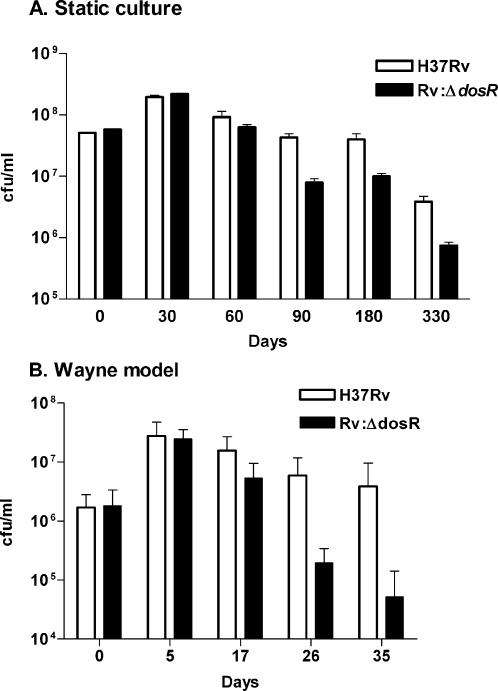
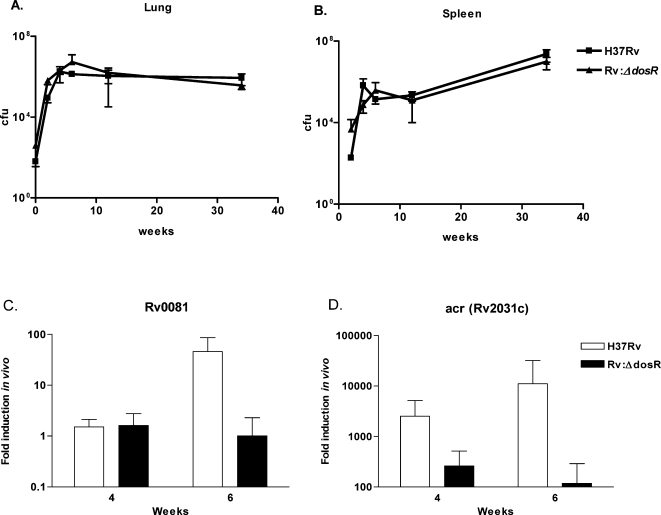
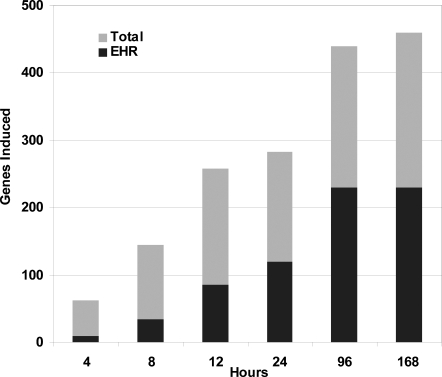
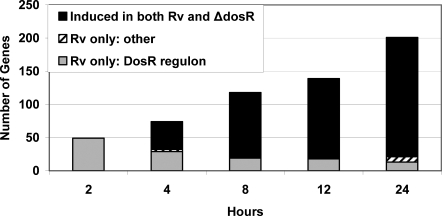
BACKGROUND: A significant body of evidence accumulated over the last century suggests a link between hypoxic microenvironments within the infected host and the latent phase of tuberculosis. Studies to test this correlation have identified the M. tuberculosis initial hypoxic response, controlled by the two-component response regulator DosR. The initial hypoxic response is completely blocked in a dosR deletion mutant. METHODOLOGY/PRINCIPAL FINDINGS: We show here that a dosR deletion mutant enters bacteriostasis in response to in vitro hypoxia with only a relatively mild decrease in viability. In the murine infection model, the phenotype of the mutant was indistinguishable from that of the parent strain. These results suggested that additional genes may be essential for entry into and maintenance of bacteriostasis. Detailed microarray analysis of oxygen starved cultures revealed that DosR regulon induction is transient, with induction of nearly half the genes returning to baseline within 24 hours. In addition, a larger, sustained wave of gene expression follows the DosR-mediated initial hypoxic response. This Enduring Hypoxic Response (EHR) consists of 230 genes significantly induced at four and seven days of hypoxia but not at initial time points. These genes include a surprising number of transcriptional regulators that could control the program of bacteriostasis. We found that the EHR is independent of the DosR-mediated initial hypoxic response, as EHR expression is virtually unaltered in the dosR mutant. CONCLUSIONS/SIGNIFICANCE: Our results suggest a reassessment of the role of DosR and the initial hypoxic response in MTB physiology. Instead of a primary role in survival of hypoxia induced bacteriostasis, DosR may regulate a response that is largely optional in vitro and in mouse infections. Analysis of the EHR should help elucidate the key regulatory factors and enzymatic machinery exploited by M. tuberculosis for long-term bacteriostasis in the face of oxygen deprivation.
Overview
The claims and statistics of this paper haven’t been checked yet.
Free: it reads the open-access text and checks the first 5 claims that cite a source we can check. Create a free account to check every claim.
Integrity signals
Registry
Cites
Statistics
Figures
Verification
Claims the paper makes
The claims and statistics of this paper haven’t been checked yet.
Free: it reads the open-access text and checks the first 5 claims that cite a source we can check. Create a free account to check every claim.
Claims other papers make about this one
Each is checked against this paper’s own text: does it say what the citing paper says it does?
The source backs part of the claim, not all of it — or backs it for a different population, condition or comparison.
In the citing paper
“The DosR system activates transcription of hrp1, a PDIM synthesis factor113, during short-term and long-term oxygen deprivation57,115.”
From The mycobacterial cell envelope — a moving target (2020) · cites this paper as [57]
Experimental — accuracy not yet measuredThe cited source says what the claim attributes to it.
In the citing paper
“Induction of EHR was independent of DosR, suggesting that other sensory and regulatory mechanisms must exist to signal prolonged exposure to hypoxia.”
From Energetics of Respiration and Oxidative Phosphorylation in Mycobacteria (2014) · cites this paper as [125]
Experimental — accuracy not yet measuredThe cited source says what the claim attributes to it.
In the citing paper
“For example, DosR of M. tuberculosis H37Rv was shown not to be strictly required for survival of hypoxia in vitro (125).”
From Energetics of Respiration and Oxidative Phosphorylation in Mycobacteria (2014) · cites this paper as [125]
The cited source says what the claim attributes to it.
In the citing paper
“In contrast, a set of 230 genes was significantly up-regulated at four and seven days of hypoxia, but not initially, and were termed the enduring hypoxic response (EHR) (125).”
From Energetics of Respiration and Oxidative Phosphorylation in Mycobacteria (2014) · cites this paper as [125]
Self-check
Percentages, sums and reported differences re-computed from the paper’s own numbers.
The self-check needs the paper’s full text.
Citations
Cites
In silico prediction of protein-protein interactions in human macrophages
Souiai, O., Guerfali, F., Ben Miled, S., Brun, C., & Benkahla, A. (2014) · BMC Research Notes · doi:10.1186/1756-0500-7-157 · Cited by 10,803
Significance analysis of microarrays applied to the ionizing radiation response
Tusher, V. G., Tibshirani, R., & Chu, G. (2001) · Proceedings of the National Academy of Sciences · doi:10.1073/pnas.091062498 · Cited by 10,568
Deciphering the biology of Mycobacterium tuberculosis from the complete genome sequence
Cole, S. T., Brosch, R., Parkhill, J., Garnier, T., Churcher, C., Harris, D., Gordon, S. V., Eiglmeier, K., Gas, S., Barry, C. E., et al. (1998) · Nature · doi:10.1038/31159 · Cited by 7,847 · cited 1×
“A survey of the annotated functional categories [36] of EHR genes reveals that a dominant feature of this gene list is the large”
BackgroundThe Growing Burden of Tuberculosis: Global Trends and Interactions With the HIV Epidemic
Corbett, E. L., Watt, C. J., Walker, N., Maher, D., Williams, B. G., Raviglione, M. C., & Dye, C. (2003) · Archives of Internal Medicine · doi:10.1001/archinte.163.9.1009 · Cited by 2,553 · cited 1×
“Up to a third of all people are skin test positive for MTB infection [3,4].”
BackgroundTranscriptional Adaptation of Mycobacterium tuberculosis within Macrophages
Schnappinger, D., Ehrt, S., Voskuil, M. I., Liu, Y., Mangan, J. A., Monahan, I. M., Dolganov, G., Efron, B., Butcher, P. D., Nathan, C., et al. (2003) · The Journal of Experimental Medicine · doi:10.1084/jem.20030846 · Cited by 1,420 · cited 1×
“Under these conditions, oxygen tension is likely reduced relative to rolling cultures in vitro, however bacilli are replicating and DosR is induced [42–45].”
BackgroundBetts, J. C., Lukey, P. T., Robb, L. C., McAdam, R. A., & Duncan, K. (2002) · Molecular Microbiology · doi:10.1046/j.1365-2958.2002.02779.x · Cited by 1,395 · cited 3×
“Condition Total EHR: 230 Genes DosR: 49 genes Overlap (By Chance) Overlap (By Chance) Starvation a 4 hours ND 170 23 (10) 0 (2) 1 day ND 250 54 (15) 0 (3) 4 day ND 276 47 (16) 0 (3) Wayne model b NRP 4 days 78 8 (5) 42 (1) NRP 20 days 177 73 (10) 33 (2) NRP 80 days 9 5 (1) 0 (0) Control stresses c pH 4.8 195 18 (11) 1…”
BackgroundMethodInfluentialMcKinney, J. D., zu Bentrup, K. H., Muñoz-Elías, E. J., Miczak, A., Chen, B., Chan, W.-T., Swenson, D., Sacchettini, J. C., Jacobs, W. R., & Russell, D. G. (2000) · Nature · doi:10.1038/35021074 · Cited by 1,360 · cited 1×
“Granulomas are formed by activated macrophages and other host components that surround infected lung tissue, isolating the infected cells in an organized structure and creating an environment that suppresses MTB replication [2,8–14].”
BackgroundWayne, L. G., & Hayes, L. G. (1996) · Infection and Immunity · doi:10.1128/iai.64.6.2062-2069.1996 · Cited by 1,141 · cited 2×
“The Wayne model was performed as previously described [16,17].”
MethodA small-molecule nitroimidazopyran drug candidate for the treatment of tuberculosis
Stover, C. K., Warrener, P., VanDevanter, D. R., Sherman, D. R., Arain, T. M., Langhorne, M. H., Anderson, S. W., Towell, J. A., Yuan, Y., McMurray, D. N., et al. (2000) · Nature · doi:10.1038/35016103 · Cited by 1,034 · cited 1×
“These nonreplicating bacilli have a drug susceptibility profile resembling that of latent TB infections [16– 20].”
BackgroundSelf-citationInhibition of Respiration by Nitric Oxide Induces a Mycobacterium tuberculosis Dormancy Program
Voskuil, M. I., Schnappinger, D., Visconti, K. C., Harrell, M. I., Dolganov, G. M., Sherman, D. R., & Schoolnik, G. K. (2003) · The Journal of Experimental Medicine · doi:10.1084/jem.20030205 · Cited by 966 · cited 1×
“This result is consistent with the ,2 log drop shown earlier with a related MTB mutant in which DosR expression is disrupted [26], though significantly less than the 1000-fold drop in viability reported in a dosR deletion in a Mycobacterium bovis BCG vaccine strain [32].”
ResultSelf-citation
Cited by
The spectrum of latent tuberculosis: rethinking the biology and intervention strategies
Barry, C. E., Boshoff, H. I., Dartois, V., Dick, T., Ehrt, S., Flynn, J., Schnappinger, D., Wilkinson, R. J., & Young, D. (2009) · Nature Reviews Microbiology · doi:10.1038/nrmicro2236 · Cited by 1,422
“Second, it is now recognized that the hypoxia regulon comprises at least two subsets of genes that are differentially upregulated during initial adaptation and extended exposure to hypoxic environment”
Virulence factors of the Mycobacterium tuberculosis complex
Forrellad, M. A., Klepp, L. I., Gioffré, A., Sabio y García, J., Morbidoni, H. R., Santangelo, M. D. L. P., Cataldi, A. A., & Bigi, F. (2013) · Virulence · doi:10.4161/viru.22329 · Cited by 622
Drain, P. K., Bajema, K. L., Dowdy, D., Dheda, K., Naidoo, K., Schumacher, S. G., Ma, S., Meermeier, E., Lewinsohn, D. M., & Sherman, D. R. (2018) · Clinical Microbiology Reviews · doi:10.1128/cmr.00021-18 · Cited by 565
Self-citationOjha, A. K., Baughn, A. D., Sambandan, D., Hsu, T., Trivelli, X., Guerardel, Y., Alahari, A., Kremer, L., Jacobs, W. R., & Hatfull, G. F. (2008) · Molecular Microbiology · doi:10.1111/j.1365-2958.2008.06274.x · Cited by 545
“…indicate that active growth is important for susceptibility of M. tuberculosis to many front-line antibiotics (Xie et al., 2005), mutant strains that are defective in in vitro dormancy do not appear defective in in vivo persistence (Parish et al., 2003; Voskuil et al., 2003; Rustad et al., 2008).”
BackgroundA multistage tuberculosis vaccine that confers efficient protection before and after exposure
Aagaard, C., Hoang, T., Dietrich, J., Cardona, P.-J., Izzo, A., Dolganov, G., Schoolnik, G. K., Cassidy, J. P., Billeskov, R., & Andersen, P. (2011) · Nature Medicine · doi:10.1038/nm.2285 · Cited by 527
“Mimicking conditions thought to reflect the environment inside the granuloma in vitro and evaluating the transcriptional response has been the subject of intensive research in recent years, and strategies have included hypoxi”
MethodRamage, H. R., Connolly, L. E., & Cox, J. S. (2009) · PLoS Genetics · doi:10.1371/journal.pgen.1000767 · Cited by 501
“tuberculosis is hypoxia [26–28].”
Vaccines against Tuberculosis: Where Are We and Where Do We Need to Go?
Ottenhoff, T. H. M., & Kaufmann, S. H. E. (2012) · PLoS Pathogens · doi:10.1371/journal.ppat.1002607 · Cited by 455
Tuberculosis Pathogenesis and Immunity
Philips, J. A., & Ernst, J. D. (2012) · Annual Review of Pathology: Mechanisms of Disease · doi:10.1146/annurev-pathol-011811-132458 · Cited by 416
The Mycobacterium tuberculosis regulatory network and hypoxia
Galagan, J. E., Minch, K., Peterson, M., Lyubetskaya, A., Azizi, E., Sweet, L., Gomes, A., Rustad, T., Dolganov, G., Glotova, I., et al. (2013) · Nature · doi:10.1038/nature12337 · Cited by 431
Self-citationCharacterization and Transcriptome Analysis of Mycobacterium tuberculosis Persisters
Keren, I., Minami, S., Rubin, E., & Lewis, K. (2011) · mBio · doi:10.1128/mbio.00100-11 · Cited by 404
“Both the toxin and the antitoxin of Rv1989c/Rv1990c, Rv2865/Rv2866, and Rv2021c/Rv2022c were also upregulated in EHR.”
BackgroundMethodResultInfluentialThe mycobacterial cell envelope — a moving target
Dulberger, C. L., Rubin, E. J., & Boutte, C. C. (2020) · Nature Reviews Microbiology · doi:10.1038/s41579-019-0273-7 · Cited by 365
Biosynthesis and Functions of Mycothiol, the Unique Protective Thiol of Actinobacteria
Newton, G. L., Buchmeier, N., & Fahey, R. C. (2008) · Microbiology and Molecular Biology Reviews · doi:10.1128/mmbr.00008-08 · Cited by 353
A replication clock for Mycobacterium tuberculosis
Gill, W. P., Harik, N. S., Whiddon, M. R., Liao, R. P., Mittler, J. E., & Sherman, D. R. (2009) · Nature Medicine · doi:10.1038/nm.1915 · Cited by 341
“We grew hypoxic cultures in 7H9 medium in spinner flasks with 2% oxygen flow-through as previously describe”
MethodSelf-citationThe ongoing challenge of latent tuberculosis
Esmail, H., Barry, C. E., Young, D. B., & Wilkinson, R. J. (2014) · Philosophical Transactions of the Royal Society B: Biological Sciences · doi:10.1098/rstb.2013.0437 · Cited by 325
“Adaptation often includes transient transcriptional activation of a characteristic set of approximately 50 genes under the control of the DosR ‘dormancy’ regulator, together with additional genes appropriate to the specific environmental cue [50].”
BackgroundGenerating specificity and diversity in the transcriptional response to hypoxia
Lendahl, U., Lee, K. L., Yang, H., & Poellinger, L. (2009) · Nature Reviews Genetics · doi:10.1038/nrg2665 · Cited by 330
“Some of the target genes encode chaperones, HSPs and components of prokaryotic aerobic and anaerobic respiratio”
BackgroundCortes, T., Schubert, O. T., Rose, G., Arnvig, K. B., Comas, I., Aebersold, R., & Young, D. B. (2013) · Cell Reports · doi:10.1016/j.celrep.2013.10.031 · Cited by 310
“…5, 1121–1131, November 27, 2013 ª2013 The Authors 1121 strains in well-characterized experimental models involving uptake of bacteria by macrophages and withdrawal of oxygen or other nutrients (Rustad et al., 2008; Rohde et al., 2012; Betts et al., 2002; Stewart et al., 2002; Deb et al., 2009).”
Koul, A., Vranckx, L., Dhar, N., Göhlmann, H. W. H., Özdemir, E., Neefs, J.-M., Schulz, M., Lu, P., Mørtz, E., McKinney, J. D., et al. (2014) · Nature Communications · doi:10.1038/ncomms4369 · Cited by 293
Leistikow, R. L., Morton, R. A., Bartek, I. L., Frimpong, I., Wagner, K., & Voskuil, M. I. (2010) · Journal of Bacteriology · doi:10.1128/jb.00926-09 · Cited by 270
“Studies of DosR regulon mutants for murine infection have produced inconsistent findings that vary from hypervirulent (30) to attenuated (11) and not attenuated (3, 31).”
BackgroundMethodResultInfluentialEoh, H., & Rhee, K. Y. (2013) · Proceedings of the National Academy of Sciences · doi:10.1073/pnas.1219375110 · Cited by 278
Targeting Persisters for Tuberculosis Control
Zhang, Y., Yew, W. W., & Barer, M. R. (2012) · Antimicrobial Agents and Chemotherapy · doi:10.1128/aac.06288-11 · Cited by 271
“It appears that DosR is involved in the initial hypoxic adaptation but not in persister survival or drug tolerance (6, 62).”
BackgroundRohde, K. H., Veiga, D. F. T., Caldwell, S., Balázsi, G., & Russell, D. G. (2012) · PLoS Pathogens · doi:10.1371/journal.ppat.1002769 · Cited by 265
“early phase of extended exposure to hypoxia [37].”
BackgroundMethodInfluentialHypoxia: a window into Mycobacterium tuberculosis latency
Rustad, T. R., Sherrid, A. M., Minch, K. J., & Sherman, D. R. (2009) · Cellular Microbiology · doi:10.1111/j.1462-5822.2009.01325.x · Cited by 252
“However, acr mRNA appears several weeks prior to cessation of bacterial growth in the mouse model (Rustad et al., 2008).”
BackgroundResultInfluentialSelf-citationMouse Model of Necrotic Tuberculosis Granulomas Develops Hypoxic Lesions
Harper, J., Skerry, C., Davis, S. L., Tasneen, R., Weir, M., Kramnik, I., Bishai, W. R., Pomper, M. G., Nuermberger, E. L., & Jain, S. K. (2012) · The Journal of Infectious Diseases · doi:10.1093/infdis/jir786 · Cited by 256
“Fourteen M. tuberculosis hypoxia-associated genes that are also members of the ‘‘enduring hypoxic response’’ described by Rustad et al [23] were evaluated and compared with 3 control (hypoxiaindependent) genes.”
BackgroundInfluentialCavitary tuberculosis: the gateway of disease transmission
Urbanowski, M. E., Ordonez, A. A., Ruiz-Bedoya, C. A., Jain, S. K., & Bishai, W. R. (2020) · The Lancet Infectious Diseases · doi:10.1016/s1473-3099(20)30148-1 · Cited by 239
Latent Tuberculosis Infection: Myths, Models, and Molecular Mechanisms
Dutta, N. K., & Karakousis, P. C. (2014) · Microbiology and Molecular Biology Reviews · doi:10.1128/mmbr.00010-14 · Cited by 247
“Similarly, DBA2 mice infected with a dosR-dosS-deficient mutant had higher levels of bacteria in their organs at 15, 30, and 45 days after aerosol infection (231, 244).”
BackgroundIdentification of New Drug Targets and Resistance Mechanisms in Mycobacterium tuberculosis
Ioerger, T. R., O’Malley, T., Liao, R., Guinn, K. M., Hickey, M. J., Mohaideen, N., Murphy, K. C., Boshoff, H. I. M., Mizrahi, V., Rubin, E. J., et al. (2013) · PLoS ONE · doi:10.1371/journal.pone.0075245 · Cited by 241
“Genes implicated in maintaining this state, ranging from isocitrate lyase (a member of the glyoxylate shunt [58]) to DosR (regulator of the hypoxic response [59,60]) to MbtI (mycobactin biosynthesis, iron acquisition [61,62]), have all been investigated as drug targets, but these efforts have so far failed to yield ef…”
BackgroundSelf-citationFumarate Reductase Activity Maintains an Energized Membrane in Anaerobic Mycobacterium tuberculosis
Watanabe, S., Zimmermann, M., Goodwin, M. B., Sauer, U., Barry, C. E., & Boshoff, H. I. (2011) · PLoS Pathogens · doi:10.1371/journal.ppat.1002287 · Cited by 246
“the oxidative TCA branch were downregulated [25,26,27,29].”
BackgroundInfluentialArnvig, K. B., Comas, I., Thomson, N. R., Houghton, J., Boshoff, H. I., Croucher, N. J., Rose, G., Perkins, T. T., Parkhill, J., Dougan, G., et al. (2011) · PLoS Pathogens · doi:10.1371/journal.ppat.1002342 · Cited by 243
“tuberculosis by RT-PCR and hybridization to microarrays representing the complete set of predicted coding sequences (CDSs) [3], and several regulons induced under physiologically relevant growth conditions have been characterized [4–9].”
BackgroundLin, P. L., Dietrich, J., Tan, E., Abalos, R. M., Burgos, J., Bigbee, C., Bigbee, M., Milk, L., Gideon, H. P., Rodgers, M., et al. (2012) · Journal of Clinical Investigation · doi:10.1172/jci46252 · Cited by 241
Self-citationPhoP: A Missing Piece in the Intricate Puzzle of Mycobacterium tuberculosis Virulence
Gonzalo-Asensio, J., Mostowy, S., Harders-Westerveen, J., Huygen, K., Hernández-Pando, R., Thole, J., Behr, M., Gicquel, B., & Martín, C. (2008) · PLoS ONE · doi:10.1371/journal.pone.0003496 · Cited by 223
“tuberculosis is accomplished by an enduring hypoxic response (EHR) which consists of a transcriptional response much larger than the dormancy regulon and maintained for a much longer period [7].”
BackgroundGordon, B. R. G., Li, Y., Wang, L., Sintsova, A., van Bakel, H., Tian, S., Navarre, W. W., Xia, B., & Liu, J. (2010) · Proceedings of the National Academy of Sciences · doi:10.1073/pnas.0913551107 · Cited by 220
“tb during latent infection in the host (53, 54).”
BackgroundCook, G. M., Berney, M., Gebhard, S., Heinemann, M., Cox, R. A., Danilchanka, O., & Niederweis, M. (2009) · Advances in Microbial Physiology · doi:10.1016/s0065-2911(09)05502-7 · Cited by 204
“Induction of EHR was independent of DosR, suggesting that other sensory and regulatory mechanisms must exist to signal prolonged exposure to hypoxia.”
BackgroundInfluentialDiagnosis for Latent Tuberculosis Infection: New Alternatives
Carranza, C., Pedraza-Sanchez, S., de Oyarzabal-Mendez, E., & Torres, M. (2020) · Frontiers in Immunology · doi:10.3389/fimmu.2020.02006 · Cited by 209
“Transcriptional analysis under hypoxic conditions has revealed that, while induction of the DosR regulon is transient, over 200 genes known as enduring hypoxic response (EHR) genes remain induced for a long time, showing more stability than the DosR genes and some overlap with those induced in the Wayne model of hypox…”
BackgroundThe DNA-binding network of Mycobacterium tuberculosi s
Minch, K. J., Rustad, T. R., Peterson, E. J. R., Winkler, J., Reiss, D. J., Ma, S., Hickey, M., Brabant, W., Morrison, B., Turkarslan, S., et al. (2015) · Nature Communications · doi:10.1038/ncomms6829 · Cited by 221
“RNA was converted to Cy dye-labeled cDNA probes as described previously 27 .”
Self-citationEliminating latent tuberculosis
Young, D. B., Gideon, H. P., & Wilkinson, R. J. (2009) · Trends in Microbiology · doi:10.1016/j.tim.2009.02.005 · Cited by 220
Heme Oxygenase-1-derived Carbon Monoxide Induces the Mycobacterium tuberculosis Dormancy Regulon
Kumar, A., Deshane, J. S., Crossman, D. K., Bolisetty, S., Yan, B.-S., Kramnik, I., Agarwal, A., & Steyn, A. J. C. (2008) · Journal of Biological Chemistry · doi:10.1074/jbc.m802274200 · Cited by 222
Letting Sleeping dos Lie: Does Dormancy Play a Role in Tuberculosis?
Chao, M. C., & Rubin, E. J. (2010) · Annual Review of Microbiology · doi:10.1146/annurev.micro.112408.134043 · Cited by 214
Mycobacterium tuberculosis Senses Host-Derived Carbon Monoxide during Macrophage Infection
Shiloh, M. U., Manzanillo, P., & Cox, J. S. (2008) · Cell Host & Microbe · doi:10.1016/j.chom.2008.03.007 · Cited by 216
Datta, M., Via, L. E., Kamoun, W. S., Liu, C., Chen, W., Seano, G., Weiner, D. M., Schimel, D., England, K., Martin, J. D., et al. (2015) · Proceedings of the National Academy of Sciences · doi:10.1073/pnas.1424563112 · Cited by 207
“Previous studies showed that in MTB, hypoxia triggers a set of adaptive transcriptional programs by the bacteria that result phenotypically in dramatic reductions in drug susceptibility (30).”
Energetics of Respiration and Oxidative Phosphorylation in Mycobacteria
Cook, G. M., Hards, K., Vilchèze, C., Hartman, T., & Berney, M. (2014) · Microbiology Spectrum · doi:10.1128/microbiolspec.mgm2-0015-2013 · Cited by 212
“For example, DosR of M. tuberculosis H37Rv was shown not to be strictly required for survival of hypoxia in vitro (125).”
BackgroundInfluentialSchubert, O. T., Ludwig, C., Kogadeeva, M., Zimmermann, M., Rosenberger, G., Gengenbacher, M., Gillet, L. C., Collins, B. C., Röst, H. L., Kaufmann, S. H. E., et al. (2015) · Cell Host & Microbe · doi:10.1016/j.chom.2015.06.001 · Cited by 211
Redox homeostasis in mycobacteria: the key to tuberculosis control?
Kumar, A., Farhana, A., Guidry, L., Saini, V., Hondalus, M., & Steyn, A. J. C. (2011) · Expert Reviews in Molecular Medicine · doi:10.1017/s1462399411002079 · Cited by 210
A Comparative Lipidomics Platform for Chemotaxonomic Analysis of Mycobacterium tuberculosis
Layre, E., Sweet, L., Hong, S., Madigan, C. A., Desjardins, D., Young, D. C., Cheng, T.-Y., Annand, J. W., Kim, K., Shamputa, I. C., et al. (2011) · Chemistry & Biology · doi:10.1016/j.chembiol.2011.10.013 · Cited by 205
“, 1970), nutrient deprivation (Rustad et al., 2008; Singh et al., 2009), and genetic regulation (Raman et al.”
Latent tuberculosis: what the host “sees”?
Gideon, H. P., & Flynn, J. L. (2011) · Immunologic Research · doi:10.1007/s12026-011-8229-7 · Cited by 182
“More recently, it has been shown that a second wave of genes are induced by more prolonged hypoxia with only a small overlap with the dosR regulon: this has been called the enduring hypoxic response (EHR) and includes a large number of transcriptional regulators [47, 49].”
BackgroundtRNA-mediated codon-biased translation in mycobacterial hypoxic persistence
Chionh, Y. H., McBee, M., Babu, I. R., Hia, F., Lin, W., Zhao, W., Cao, J., Dziergowska, A., Malkiewicz, A., Begley, T. J., et al. (2016) · Nature Communications · doi:10.1038/ncomms13302 · Cited by 187
The Tuberculosis Drug Discovery and Development Pipeline and Emerging Drug Targets
Mdluli, K., Kaneko, T., & Upton, A. (2015) · Cold Spring Harbor Perspectives in Medicine · doi:10.1101/cshperspect.a021154 · Cited by 180
“2003), to study genome-wide DNA microarrays for patterns of gene expression under various growth conditions (Sherman et al. 2001; Schnappinger et al. 2003; Rustad et al. 2008; Zhang et al. 2012), and to more rapidly identify targets of new compounds via identification of the mutated genes of compound-resistant mutants…”
BackgroundBretl, D. J., Demetriadou, C., & Zahrt, T. C. (2011) · Microbiology and Molecular Biology Reviews · doi:10.1128/mmbr.05004-11 · Cited by 179
“notype (31, 127) when examined in in vitro and/or in vivo model”
BackgroundMehra, S., Foreman, T. W., Didier, P. J., Ahsan, M. H., Hudock, T. A., Kissee, R., Golden, N. A., Gautam, U. S., Johnson, A.-M., Alvarez, X., et al. (2015) · American Journal of Respiratory and Critical Care Medicine · doi:10.1164/rccm.201408-1502oc · Cited by 174
“The key findings of our investigation are as follows: (1) rhesus TB granulomas are hypoxic; (2) DosR is expressed in M.”
BackgroundResultSelf-citationBlack, G. F., Thiel, B., Ota, M. O. C., Parida, S. K., Adegbola, R. A., Boom, W. H., Dockrell, H. M., Franken, K. L. M. C., Friggen, A. H., Hill, P. C., et al. (2009) · Clinical and Vaccine Immunology · doi:10.1128/cvi.00111-09 · Cited by 170
Novel Vaccination Strategies against Tuberculosis
Andersen, P., & Kaufmann, S. H. E. (2014) · Cold Spring Harbor Perspectives in Medicine · doi:10.1101/cshperspect.a018523 · Cited by 155
“The antigens under consideration are (i) DosR regulon and the enduring hypoxic response—both sets of overlapping genes are up-regulated in response to hypoxia (Park et al. 2003; Rustad et al. 2008); (ii) starvation antigens—up-regulated by Mtb upon depletion of nutrients (Betts et al.”
BackgroundConverse, P. J., Karakousis, P. C., Klinkenberg, L. G., Kesavan, A. K., Ly, L. H., Allen, S. S., Grosset, J. H., Jain, S. K., Lamichhane, G., Manabe, Y. C., et al. (2009) · Infection and Immunity · doi:10.1128/iai.01117-08 · Cited by 150
“Previously reported studies using the mouse (26, 31) and guinea pig (21) models have produced conflicting results regarding the virulence of M.”
ResultPhosphate Depletion: A Novel Trigger forMycobacterium tuberculosisPersistence
Rifat, D., Bishai, W. R., & Karakousis, P. C. (2009) · The Journal of Infectious Diseases · doi:10.1086/605700 · Cited by 151
“The overlap of certain genes of the MTB PSR with those induced after exposure of MTB to progressive hypoxia [44] and nutrient starvation [31], including sigE and relA [29, 42], indicate the convergence of multiple metabolic pathways into a common regulatory network con-”
BackgroundNeutrophil Metabolic Shift during Their Lifecycle: Impact on Their Survival and Activation
Injarabian, L., Devin, A., Ransac, S., & Marteyn, B. (2019) · International Journal of Molecular Sciences · doi:10.3390/ijms21010287 · Cited by 157
“[41]) and Salmonella typhimurium infections [42] or upon Mycobacterium tuberculosis granuloma formation [43].”
BackgroundRustad, T. R., Minch, K. J., Ma, S., Winkler, J. K., Hobbs, S., Hickey, M., Brabant, W., Turkarslan, S., Price, N. D., Baliga, N. S., et al. (2014) · Genome Biology · doi:10.1186/preaccept-1701638048134699 · Cited by 146
“Both are associated with the MTB Enduring Hypoxic Response (her) [27] and might therefore require reduced oxygen tension as a signal to trigger their activity.”
BackgroundMethodInfluentialSelf-citationSchifano, J. M., Edifor, R., Sharp, J. D., Ouyang, M., Konkimalla, A., Husson, R. N., & Woychik, N. A. (2013) · Proceedings of the National Academy of Sciences · doi:10.1073/pnas.1222031110 · Cited by 134
“tuberculosis are induced during heat shock (23), hypoxia (9, 21), DNA damage (20), nutrient starvation (13), macrophage infection (9, 14, 18), and antibiotic treatment (19, 22), whereas other TA loci are down-regulated during macrophage infection (16) or salicylate treatment (15).”
BackgroundDrumm, J. E., Mi, K., Bilder, P. W., Sun, M., Lim, J., Bielefeldt‐Ohmann, H., Basaraba, R. J., So, M., Zhu, G., Tufariello, J. M., et al. (2009) · PLoS Pathogens · doi:10.1371/journal.ppat.1000460 · Cited by 148
“to lead to an attenuated phenotype [42,43].”
BackgroundCook, G. M., Hards, K., Dunn, E. A., Heikal, A., Nakatani, Y., Greening, C., Crick, D. C., Fontes, F. L., Pethe, K., Hasenoehrl, E., et al. (2017) · Microbiology Spectrum · doi:10.1128/microbiolspec.tbtb2-0014-2016 · Cited by 141
“Consistent with such roles, both the canonical fumarate reductase and Sdh2 are strongly upregulated and highly active under hypoxia (8, 9, 46, 148).”
BackgroundThe temporal response of the Mycobacterium tuberculosis gene regulatory network during growth arrest
Balázsi, G., Heath, A. P., Shi, L., & Gennaro, M. L. (2008) · Molecular Systems Biology · doi:10.1038/msb.2008.63 · Cited by 139
“Assembly of a large-scale M. tuberculosis”
BackgroundInfluentialKowalski, C. H., Beattie, S. R., Fuller, K. K., McGurk, E. A., Tang, Y.-W., Hohl, T. M., Obar, J. J., & Cramer, R. A. (2016) · mBio · doi:10.1128/mbio.01515-16 · Cited by 123
Mak, P. A., Rao, S. P. S., Tan, M. P., Lin, X., Chyba, J., Tay, J. A., Ng, S. H., Tan, B. H., Cherian, J., Duraiswamy, J., et al. (2012) · ACS Chemical Biology · doi:10.1021/cb2004884 · Cited by 126
“15 We have previously demonstrated that hypoxic nongrowing M. tuberculosis maintains a reduced but signi fi cant pool of ATP when compared to growing bacilli, making them exquisitely sensitive to further ATP depletion.”
Gurumurthy, M., Rao, M., Mukherjee, T., Rao, S. P. S., Boshoff, H. I., Dick, T., Barry, C. E., & Manjunatha, U. H. (2013) · Molecular Microbiology · doi:10.1111/mmi.12127 · Cited by 119
“In a microarray study (Rustad et al., 2008), the fbiC gene is significantly upregulated (7.4-fold) in the hypoxic environment (7 days exposure to 0.2% oxygen) in comparison with the aerobic conditions and is independent of DosR regulation, suggesting a potential role of F420 biosynthesis in hypoxic…”
BackgroundInfluentialTuberculosis vaccines – rethinking the current paradigm
Andersen, P. L., & Woodworth, J. S. (2014) · Trends in Immunology · doi:10.1016/j.it.2014.04.006 · Cited by 133
Singh, P., Rao, R. N., Reddy, J. R. C., Prasad, R., Kotturu, S. K., Ghosh, S., & Mukhopadhyay, S. (2016) · Scientific Reports · doi:10.1038/srep21624 · Cited by 116
The Regulation of Sulfur Metabolism in Mycobacterium tuberculosis
Hatzios, S. K., & Bertozzi, C. R. (2011) · PLoS Pathogens · doi:10.1371/journal.ppat.1002036 · Cited by 130
“Both cysK2 and cysM are transcriptionally regulated by multiple environmental cues (Table 1) [21,24,29,72].”
BackgroundTranscriptional Reprogramming in Nonhuman Primate (Rhesus Macaque) Tuberculosis Granulomas
Mehra, S., Pahar, B., Dutta, N. K., Conerly, C., Philippi-Falkenstein, K., Alvarez, X. A., & Kaushal, D. (2010) · PLoS ONE · doi:10.1371/journal.pone.0012266 · Cited by 118
“the hypoxia induced DosRST regulon [22], and the repression of antigenic Mtb virulence factors.”
Non-coding RNA and its potential role in Mycobacterium tuberculosis pathogenesis
Arnvig, K., & Young, D. (2012) · RNA Biology · doi:10.4161/rna.20105 · Cited by 110
Chao, J. D., Papavinasasundaram, K. G., Zheng, X., Chávez-Steenbock, A., Wang, X., Lee, G. Q., & Av-Gay, Y. (2010) · Journal of Biological Chemistry · doi:10.1074/jbc.m110.132894 · Cited by 108
Bisson, G. P., Mehaffy, C., Broeckling, C. D., Prenni, J. E., Rifat, D., Lun, D. S., Burgos, M. V., Weissman, D., Karakousis, P. C., & Dobos, K. M. (2012) · Journal of Bacteriology · doi:10.1128/jb.01013-12 · Cited by 120
“Others have demonstrated upregulation of genes in this pathway in response to acid exposure (29, 62), hypoxia (58, 62), and treatment with antibiotics, such as clofazamine and rifapentine (7).”
BackgroundtRNA is a new target for cleavage by a MazF toxin
Schifano, J. M., Cruz, J. W., Vvedenskaya, I. O., Edifor, R., Ouyang, M., Husson, R. N., Nickels, B. E., & Woychik, N. A. (2016) · Nucleic Acids Research · doi:10.1093/nar/gkv1370 · Cited by 100
How Mycobacterium Tuberculosis goes to Sleep: The Dormancy Survival Regulator DosR a Decade Later
Boon, C., & Dick, T. (2012) · Future Microbiology · doi:10.2217/fmb.12.14 · Cited by 111
“Surprisingly, studies of DosR mutants in animal models showed various phenotypes ranging from hyper- to hypo-virulent forms [46–50].”
BackgroundChawla, M., Parikh, P., Saxena, A., Munshi, M., Mehta, M., Mai, D., Srivastava, A. K., Narasimhulu, K. V., Redding, K., Vashi, N., et al. (2012) · Molecular Microbiology · doi:10.1111/j.1365-2958.2012.08165.x · Cited by 114
“For example, WhiB4 is induced during longterm hypoxia (Rustad et al., 2008) and upon nutrient starvation (Betts et al.”
BackgroundInfluentialCharacterization of a Mycobacterium tuberculosis Nanocompartment and Its Potential Cargo Proteins
Contreras, H., Joens, M. S., McMath, L. M., Le, V. P., Tullius, M. V., Kimmey, J. M., Bionghi, N., Horwitz, M. A., Fitzpatrick, J. A. J., & Goulding, C. W. (2014) · Journal of Biological Chemistry · doi:10.1074/jbc.m114.570119 · Cited by 109
“tuberculosis in vivo microarray data suggest that Mt-Enc and Mt-FolB both are up-regulated under hypoxic conditions (60) and exposure to cephalexin (61), further suggesting that they indeed may interact.”
BackgroundTan, M. P., Sequeira, P., Lin, W. W., Phong, W. Y., Cliff, P., Ng, S. H., Lee, B. H., Camacho, L., Schnappinger, D., Ehrt, S., et al. (2010) · PLoS ONE · doi:10.1371/journal.pone.0013356 · Cited by 101
“tuberculosis to hypoxia has recently been reassessed [12].”
BackgroundCunningham-Bussel, A., Zhang, T., & Nathan, C. F. (2013) · Proceedings of the National Academy of Sciences · doi:10.1073/pnas.1316894110 · Cited by 100
“Enduring hypoxic response (62) (incubation at 0.”
Understanding latent tuberculosis: the key to improved diagnostic and novel treatment strategies
Esmail, H., Barry, C. E., & Wilkinson, R. J. (2011) · Drug Discovery Today · doi:10.1016/j.drudis.2011.12.013 · Cited by 108
“This initial hypoxic response (although it is also induced by other conditions) encoded by the Dormancy survival (Dos) regulon[21] is followed by induction of a larger set of genes termed the Enduring Hypoxic Response (EHR) that increases with prolonged hypoxia[22].”
BackgroundGrowth-regulating Mycobacterium tuberculosis VapC-mt4 toxin is an isoacceptor-specific tRNase
Cruz, J. W., Sharp, J. D., Hoffer, E. D., Maehigashi, T., Vvedenskaya, I. O., Konkimalla, A., Husson, R. N., Nickels, B. E., Dunham, C. M., & Woychik, N. A. (2015) · Nature Communications · doi:10.1038/ncomms8480 · Cited by 98
Profiling the Proteome of Mycobacterium tuberculosis during Dormancy and Reactivation
Gopinath, V., Raghunandanan, S., Gomez, R. L., Jose, L., Surendran, A., Ramachandran, R., Pushparajan, A. R., Mundayoor, S., Jaleel, A., & Kumar, R. A. (2015) · Molecular & Cellular Proteomics · doi:10.1074/mcp.m115.051151 · Cited by 100
“In accordance with earlier reports we found that nonreplicating persistent stage 1 (NRP1) was attained at 192 h (8 day) and the nonreplicating persistent stage 2 (NRP2) or enduring hypoxia was attained at 336 h (14 day) (9, 34).”
BackgroundThe Dormancy Regulator DosR Controls Ribosome Stability in Hypoxic Mycobacteria
Trauner, A., Lougheed, K. E. A., Bennett, M. H., Hingley-Wilson, S. M., & Williams, H. D. (2012) · Journal of Biological Chemistry · doi:10.1074/jbc.m112.364851 · Cited by 98
“The requirement for DosR activity in in vitropersistencemodels iswell established (11–13, 21) but remains controversial in vivo (22, 23).”
BackgroundChen, Z., Hu, Y., Cumming, B. M., Lu, P., Feng, L., Deng, J., Steyn, A. J. C., & Chen, S. (2016) · Cell Reports · doi:10.1016/j.celrep.2016.07.080 · Cited by 101
“Unexpectedly, there is a clear overlap between our transcriptional profiling of reduced apo-WhiB6-like complemented Mm and the transcriptional profiles of Mtb that have been treated with NO (Voskuil et al., 2003) or subjected to oxygen deprivation (Rustad et al., 2008).”
BackgroundMehra, S., & Kaushal, D. (2009) · Journal of Bacteriology · doi:10.1128/jb.00064-09 · Cited by 97
Global analysis of mRNA stability in Mycobacterium tuberculosis
Rustad, T. R., Minch, K. J., Brabant, W. H., Winkler, J. K., Reiss, D. J., Baliga, N. S., & Sherman, D. R. (2012) · Nucleic Acids Research · doi:10.1093/nar/gks1019 · Cited by 96
“One hour of exposure to hypoxic conditions (1% atmospheric O2) is sufficient to arrest growth and induce the initial hypoxic response (13).”
BackgroundMethodInfluentialSelf-citationCommandeur, S., Lin, M. Y., van Meijgaarden, K. E., Friggen, A. H., Franken, K. L. M. C., Drijfhout, J. W., Korsvold, G. E., Oftung, F., Geluk, A., & Ottenhoff, T. H. M. (2011) · European Journal of Immunology · doi:10.1002/eji.201141602 · Cited by 94
Targeting the Proteostasis Network for Mycobacterial Drug Discovery
Lupoli, T. J., Vaubourgeix, J., Burns-Huang, K. E., & Gold, B. S. (2018) · ACS Infectious Diseases · doi:10.1021/acsinfecdis.7b00231 · Cited by 94
Bordes, P., Cirinesi, A.-M., Ummels, R., Sala, A., Sakr, S., Bitter, W., & Genevaux, P. (2011) · Proceedings of the National Academy of Sciences · doi:10.1073/pnas.1101189108 · Cited by 89
“Previous work has shown that transcription of the higB-higARv1957 operon is induced by DNA damage (36, 37), heat shock (38), nutrient starvation (39), and hypoxia (32, 40), suggesting a role in an adaptive response of M.”
BackgroundGenome Sequence of the Fleming Strain of Micrococcus luteus , a Simple Free-Living Actinobacterium
Young, M. R., Artsatbanov, V., Beller, H. R., Chandra, G., Chater, K. F., Dover, L. G., Goh, E.-B., Kahan, T., Kaprelyants, A. S., Kyrpides, N. C., et al. (2009) · Journal of Bacteriology · doi:10.1128/jb.01254-09 · Cited by 98
“tuberculosis (103) revealed that more 6 than two hundred genes are up-regulated, only five of which belong to the Dos regulon, and 7 only two of these five were up-regulated more than threefold (103).”
BackgroundRedox Biology of Tuberculosis Pathogenesis
Trivedi, A., Singh, N., Bhat, S. A., Gupta, P., & Kumar, A. (2012) · Advances in Microbial Physiology · doi:10.1016/b978-0-12-398264-3.00004-8 · Cited by 88
Defining dormancy in mycobacterial disease
Lipworth, S., Hammond, R., Baron, V. O., Hu, Y., Coates, A. R. M., & Gillespie, S. H. (2016) · Tuberculosis · doi:10.1016/j.tube.2016.05.006 · Cited by 99
“tuberculosis as knock out strains have only a modest decrease in viability in a hypoxic environment[36,37].”
BackgroundMycobacterium tuberculosis progresses through two phases of latent infection in humans
Colangeli, R., Gupta, A., Vinhas, S. A., Venkata, U. D. C., Kim, S., Grady, C. A., Jones‐López, E. C., Soteropoulos, P., Palaci, M., Marques-Rodrigues, P., et al. (2020) · Nature Communications · doi:10.1038/s41467-020-18699-9 · Cited by 87
Prosser, G. A., Brandenburg, J., Reiling, N., Barry, C. E., Wilkinson, R. J., & Wilkinson, K. A. (2016) · Microbes and Infection · doi:10.1016/j.micinf.2016.10.001 · Cited by 100
“Transcriptional analysis of the hypoxic response at later timepoints led to the identification of 230 genes induced between 4 and 7 days of hypoxia, that were named the enduring hypoxic response (EHR) genes [18].”
BackgroundHeme Catabolism by Heme Oxygenase-1 Confers Host Resistance to Mycobacterium Infection
Silva-Gomes, S., Appelberg, R., Larsen, R., Soares, M. P., & Gomes, M. S. (2013) · Infection and Immunity · doi:10.1128/iai.00251-13 · Cited by 85
“tuberculosis deficient in the induction of the dormancy regulon establishes in vivo infections in mice that are indistinguishable from those caused by the parental strain (57) or even present a growth defect (58), suggesting that a putative effect of CO on the dormancy regulon should have a limited impact on bacterial…”
BackgroundSalina, E. G., Waddell, S. J., Hoffmann, N. A., Rosenkrands, I., Butcher, P. D., & Kaprelyants, A. S. (2014) · Open Biology · doi:10.1098/rsob.140106 · Cited by 90
“07 10) [49], nutrient starvation (hp 6.”
Strain specific transcriptional response in Mycobacterium tuberculosis infected macrophages
Koo, M.-S., Subbian, S., & Kaplan, G. (2012) · Cell Communication and Signaling · doi:10.1186/1478-811x-10-2 · Cited by 98
“It is well documented that DosR, the master regulator of “DosR regulon” regulates the expression of several genes, including narX, narK2, hspX, fdxA, pcaA and devR that are induced when Mtb encounters hypoxic conditions [59,60].”
Ortega, C., Anderson, L. N., Frando, A., Sadler, N., Brown, R. W. B., Smith, R. D., Wright, A., & Grundner, C. (2016) · Cell chemical biology · doi:10.1016/j.chembiol.2016.01.003 · Cited by 84
“We induced non-replication by hypoxic culture, which induces reversible bacteriostasis and is widely used as an in vitro model for Mtb latency and persistence (Rustad et al., 2008, 2009).”
BackgroundMethodPeterson, E. J. R., Ma, S., Sherman, D. R., & Baliga, N. S. (2016) · Nature Microbiology · doi:10.1038/nmicrobiol.2016.78 · Cited by 88
“To measure the growth consequences of overexpressing TFs, we used strains containing an anhydrotetracycline (ATc)- inducible expression vector of the TF gene, as described previously 17,44 .”
InfluentialSelf-citationCommandeur, S., van Meijgaarden, K. E., Prins, C., Pichugin, A. V., Dijkman, K., van den Eeden, S. J. F., Friggen, A. H., Franken, K. L. M. C., Dolganov, G., Kramnik, I., et al. (2013) · The Journal of Immunology · doi:10.4049/jimmunol.1201593 · Cited by 93
“tuberculosis DosR regulon–encoded gene (Rv0079) (7) as well as six genes that are part of the EHR regulon (Rv1284, Rv1956, Rv2034, Rv2324, Rv2465, and Rv3515) (17).”
BackgroundInfluentialAn NAD+ Phosphorylase Toxin Triggers Mycobacterium tuberculosis Cell Death
Freire, D. M., Gutierrez, C., Garza-García, A., Grabowska, A. D., Sala, A. J., Ariyachaokun, K., Páníková, T., Beckham, K. S. H., Colom, A., Pogenberg, V., et al. (2019) · Molecular Cell · doi:10.1016/j.molcel.2019.01.028 · Cited by 84
“, 2011), during hypoxic stress (Rustad et al., 2008), under starvation (Gupta et al.”
BackgroundToxin–antitoxin systems and regulatory mechanisms in Mycobacterium tuberculosis
Slayden, R. A., Dawson, C. C., & Cummings, J. E. (2018) · Pathogens and Disease · doi:10.1093/femspd/fty039 · Cited by 82
Parikh, A., Kumar, D., Chawla, Y., Kurthkoti, K., Khan, S., Varshney, U., & Nandicoori, V. K. (2013) · Applied and Environmental Microbiology · doi:10.1128/aem.03695-12 · Cited by 80
“smegmatis transformed with pST-KnarK2-gfpaav plasmid was cultured aerobically without ascorbic acid (vitamin C), subjected to hypoxic growth (56), or grown in the presence of vitamin C (58).”
BackgroundMethodTargeting drug tolerance in mycobacteria: a perspective from mycobacterial biofilms
Islam, M. S., Richards, J. P., & Ojha, A. K. (2012) · Expert Review of Anti-infective Therapy · doi:10.1586/eri.12.88 · Cited by 90
Jain, P., Weinrick, B. C., Kalivoda, E. J., Yang, H., Munsamy, V., Vilcheze, C., Weisbrod, T. R., Larsen, M. H., O’Donnell, M. R., Pym, A., et al. (2016) · mBio · doi:10.1128/mbio.01023-16 · Cited by 83
“Interestingly, dosR and most of its regulon are also downregulated, in concordance with its expression in the enduring hypoxic response (EHR) (21) but in contrast to its upregulation in some hypoxic models of nonreplicating persistence (NRP) (22).”
Background
Metadata
- Authors
- Rustad, T. R., Harrell, M. I., Liao, R., & Sherman, D. R.
- Affiliations
- Center for Infectious Disease Research (US)
- University of Washington (US)
- Corresponding author
- Sherman, David R.
- Venue
- PLoS ONE
- Publisher
- Public Library of Science (PLoS)
- Published
- 2008-01-30
- Volume
- 3
- Issue
- 1
- Pages
- e1502
- ISSN
- 1932-6203 (ISSN-L)
- PMC
- PMC2198943
- OpenAlex
- W2094222845
- Cited by
- 491
- References
- 52
- Citations by year
- 2026: 18 · 2025: 20 · 2024: 15 · 2023: 18 · 2022: 19 · 2021: 15 · 2020: 32 · 2019: 21 · 2018: 19 · 2017: 23 · 2016: 35 · 2015: 39 · 2014: 41 · 2013: 35 · 2012: 41
- FWCI
- 21.21
- Type
- journal article
- Language
- en
- Open access
- gold
- doi.org
- Locations
- PLoS ONE (publishedVersion, cc-by)
- PubMed Central (publishedVersion, cc-by)
- PubMed (publishedVersion)
- DOAJ (DOAJ: Directory of Open Access Journals) (submittedVersion)
- Figshare (submittedVersion, cc-by)
- Funders
- National Institutes of Health (n01ai15447-36-0-3, R01‐grant)
- National Institute of Allergy and Infectious Diseases (N01-AI15447, R01 AI 47704, N01 AI015447, F32 AI 638772)
- Topics
- Health Sciences › Medicine › Infectious Diseases › Tuberculosis Research and Epidemiology
- Life Sciences › Biochemistry, Genetics and Molecular Biology › Genetics › Bacterial Genetics and Biotechnology
- Health Sciences › Medicine › Epidemiology › Mycobacterium research and diagnosis
- Keywords
- Mycobacterium tuberculosis, hypoxia response, DosR, bacteriostatic activity, DosR regulon, transcription factors, latent tuberculosis infection, hypoxia, gene expression, mouse infection model
- MeSH terms
- Animals, Hypoxia, Genes, Bacterial, Mice, Inbred CBA, Mice, Inbred C57BL, Mice, Inbred DBA, Mycobacterium tuberculosis, Transcription, Genetic, Gene Deletion, Oligonucleotide Array Sequence Analysis, Mice
About these checks
Registry, retraction, Cites and statistics results are computed, not judged, with one exception: a printed reference that no index lists is read once by a model before it counts as a citation error. Claims are extracted by a model and kept only when their quote appears verbatim in the text; each cited source is then checked, with a model’s help, for whether it says what the claim relies on. Those verdicts can be wrong — read the claim’s quote and the cited source before relying on one.
Statistics and arithmetic are recomputed, not judged.
Confidence bands are shown only for fields calibrated on our annotated test set. None is calibrated yet, so no band is shown.
What counts as a claim ›How we measure confidence ›How we check this ›
Are you an author, or do you see a problem with this page? Request a review
Data sources
Bibliographic data: Semantic Scholar, OpenAlex, Crossref.
Contains information from the Semantic Scholar Academic Graph Datasets, made available under the ODC Attribution License (ODC-BY 1.0).
Semantic Scholar’s data is described in: Kinney, R., et al. (2023). The Semantic Scholar Open Data Platform. arXiv:2301.10140.
