

The Enduring Hypoxic Response of Mycobacterium tuberculosis
Open accessThe DOI matches its Crossref record; 52 of the 52 references it cites were found in a registry or an index.
Abstract
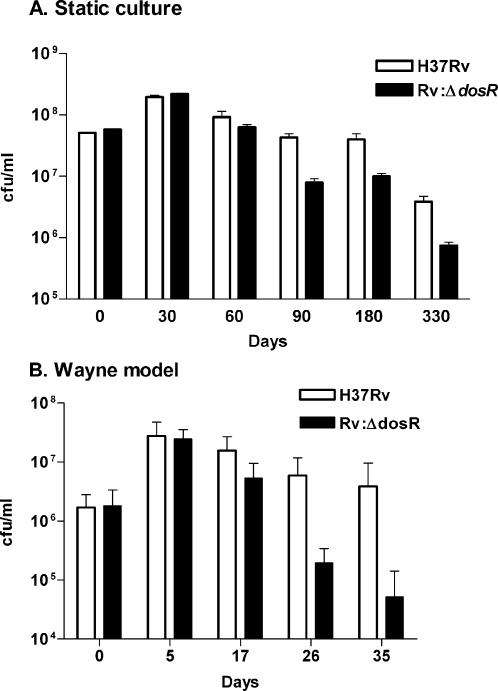
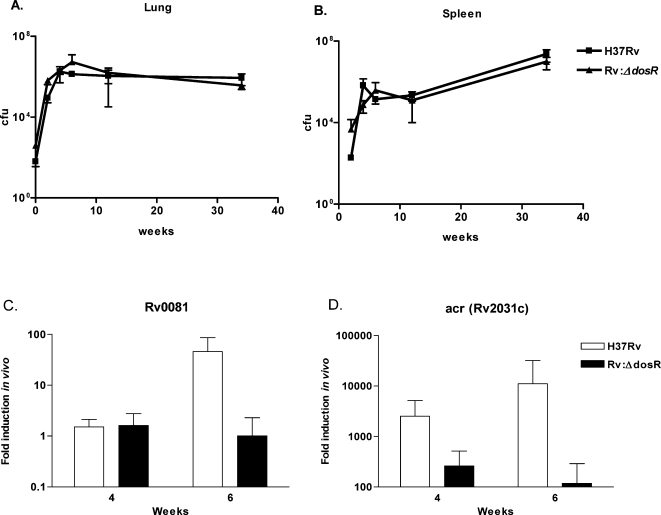
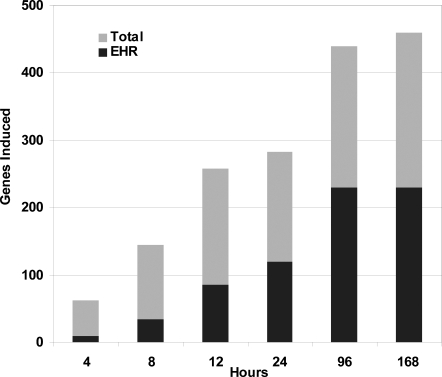
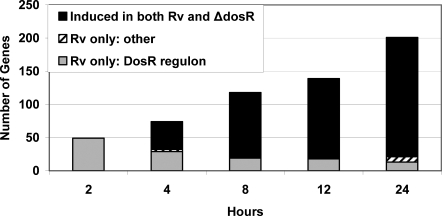
BACKGROUND: A significant body of evidence accumulated over the last century suggests a link between hypoxic microenvironments within the infected host and the latent phase of tuberculosis. Studies to test this correlation have identified the M. tuberculosis initial hypoxic response, controlled by the two-component response regulator DosR. The initial hypoxic response is completely blocked in a dosR deletion mutant. METHODOLOGY/PRINCIPAL FINDINGS: We show here that a dosR deletion mutant enters bacteriostasis in response to in vitro hypoxia with only a relatively mild decrease in viability. In the murine infection model, the phenotype of the mutant was indistinguishable from that of the parent strain. These results suggested that additional genes may be essential for entry into and maintenance of bacteriostasis. Detailed microarray analysis of oxygen starved cultures revealed that DosR regulon induction is transient, with induction of nearly half the genes returning to baseline within 24 hours. In addition, a larger, sustained wave of gene expression follows the DosR-mediated initial hypoxic response. This Enduring Hypoxic Response (EHR) consists of 230 genes significantly induced at four and seven days of hypoxia but not at initial time points. These genes include a surprising number of transcriptional regulators that could control the program of bacteriostasis. We found that the EHR is independent of the DosR-mediated initial hypoxic response, as EHR expression is virtually unaltered in the dosR mutant. CONCLUSIONS/SIGNIFICANCE: Our results suggest a reassessment of the role of DosR and the initial hypoxic response in MTB physiology. Instead of a primary role in survival of hypoxia induced bacteriostasis, DosR may regulate a response that is largely optional in vitro and in mouse infections. Analysis of the EHR should help elucidate the key regulatory factors and enzymatic machinery exploited by M. tuberculosis for long-term bacteriostasis in the face of oxygen deprivation.
Overview
The claims and statistics of this paper haven’t been checked yet.
Free: it reads the open-access text and checks the first 5 claims that cite a source we can check. Create a free account to check every claim.
Integrity signals
Registry
Cites
Statistics
Figures
Verification
Claims the paper makes
The claims and statistics of this paper haven’t been checked yet.
Free: it reads the open-access text and checks the first 5 claims that cite a source we can check. Create a free account to check every claim.
Claims other papers make about this one
Each is checked against this paper’s own text: does it say what the citing paper says it does?
The source backs part of the claim, not all of it — or backs it for a different population, condition or comparison.
In the citing paper
“The DosR system activates transcription of hrp1, a PDIM synthesis factor113, during short-term and long-term oxygen deprivation57,115.”
From The mycobacterial cell envelope — a moving target (2020) · cites this paper as [57]
Experimental — accuracy not yet measuredThe cited source says what the claim attributes to it.
In the citing paper
“Induction of EHR was independent of DosR, suggesting that other sensory and regulatory mechanisms must exist to signal prolonged exposure to hypoxia.”
From Energetics of Respiration and Oxidative Phosphorylation in Mycobacteria (2014) · cites this paper as [125]
Experimental — accuracy not yet measuredThe cited source says what the claim attributes to it.
In the citing paper
“For example, DosR of M. tuberculosis H37Rv was shown not to be strictly required for survival of hypoxia in vitro (125).”
From Energetics of Respiration and Oxidative Phosphorylation in Mycobacteria (2014) · cites this paper as [125]
The cited source says what the claim attributes to it.
In the citing paper
“In contrast, a set of 230 genes was significantly up-regulated at four and seven days of hypoxia, but not initially, and were termed the enduring hypoxic response (EHR) (125).”
From Energetics of Respiration and Oxidative Phosphorylation in Mycobacteria (2014) · cites this paper as [125]
Self-check
Percentages, sums and reported differences re-computed from the paper’s own numbers.
The self-check needs the paper’s full text.
Citations
Cites
In silico prediction of protein-protein interactions in human macrophages
Souiai, O., Guerfali, F., Ben Miled, S., Brun, C., & Benkahla, A. (2014) · BMC Research Notes · doi:10.1186/1756-0500-7-157 · Cited by 10,803
Significance analysis of microarrays applied to the ionizing radiation response
Tusher, V. G., Tibshirani, R., & Chu, G. (2001) · Proceedings of the National Academy of Sciences · doi:10.1073/pnas.091062498 · Cited by 10,568
Deciphering the biology of Mycobacterium tuberculosis from the complete genome sequence
Cole, S. T., Brosch, R., Parkhill, J., Garnier, T., Churcher, C., Harris, D., Gordon, S. V., Eiglmeier, K., Gas, S., Barry, C. E., et al. (1998) · Nature · doi:10.1038/31159 · Cited by 7,847 · cited 1×
“A survey of the annotated functional categories [36] of EHR genes reveals that a dominant feature of this gene list is the large”
BackgroundThe Growing Burden of Tuberculosis: Global Trends and Interactions With the HIV Epidemic
Corbett, E. L., Watt, C. J., Walker, N., Maher, D., Williams, B. G., Raviglione, M. C., & Dye, C. (2003) · Archives of Internal Medicine · doi:10.1001/archinte.163.9.1009 · Cited by 2,553 · cited 1×
“Up to a third of all people are skin test positive for MTB infection [3,4].”
BackgroundTranscriptional Adaptation of Mycobacterium tuberculosis within Macrophages
Schnappinger, D., Ehrt, S., Voskuil, M. I., Liu, Y., Mangan, J. A., Monahan, I. M., Dolganov, G., Efron, B., Butcher, P. D., Nathan, C., et al. (2003) · The Journal of Experimental Medicine · doi:10.1084/jem.20030846 · Cited by 1,420 · cited 1×
“Under these conditions, oxygen tension is likely reduced relative to rolling cultures in vitro, however bacilli are replicating and DosR is induced [42–45].”
BackgroundBetts, J. C., Lukey, P. T., Robb, L. C., McAdam, R. A., & Duncan, K. (2002) · Molecular Microbiology · doi:10.1046/j.1365-2958.2002.02779.x · Cited by 1,395 · cited 3×
“Condition Total EHR: 230 Genes DosR: 49 genes Overlap (By Chance) Overlap (By Chance) Starvation a 4 hours ND 170 23 (10) 0 (2) 1 day ND 250 54 (15) 0 (3) 4 day ND 276 47 (16) 0 (3) Wayne model b NRP 4 days 78 8 (5) 42 (1) NRP 20 days 177 73 (10) 33 (2) NRP 80 days 9 5 (1) 0 (0) Control stresses c pH 4.8 195 18 (11) 1…”
BackgroundMethodInfluentialMcKinney, J. D., zu Bentrup, K. H., Muñoz-Elías, E. J., Miczak, A., Chen, B., Chan, W.-T., Swenson, D., Sacchettini, J. C., Jacobs, W. R., & Russell, D. G. (2000) · Nature · doi:10.1038/35021074 · Cited by 1,360 · cited 1×
“Granulomas are formed by activated macrophages and other host components that surround infected lung tissue, isolating the infected cells in an organized structure and creating an environment that suppresses MTB replication [2,8–14].”
BackgroundWayne, L. G., & Hayes, L. G. (1996) · Infection and Immunity · doi:10.1128/iai.64.6.2062-2069.1996 · Cited by 1,141 · cited 2×
“The Wayne model was performed as previously described [16,17].”
MethodA small-molecule nitroimidazopyran drug candidate for the treatment of tuberculosis
Stover, C. K., Warrener, P., VanDevanter, D. R., Sherman, D. R., Arain, T. M., Langhorne, M. H., Anderson, S. W., Towell, J. A., Yuan, Y., McMurray, D. N., et al. (2000) · Nature · doi:10.1038/35016103 · Cited by 1,034 · cited 1×
“These nonreplicating bacilli have a drug susceptibility profile resembling that of latent TB infections [16– 20].”
BackgroundSelf-citationInhibition of Respiration by Nitric Oxide Induces a Mycobacterium tuberculosis Dormancy Program
Voskuil, M. I., Schnappinger, D., Visconti, K. C., Harrell, M. I., Dolganov, G. M., Sherman, D. R., & Schoolnik, G. K. (2003) · The Journal of Experimental Medicine · doi:10.1084/jem.20030205 · Cited by 966 · cited 1×
“This result is consistent with the ,2 log drop shown earlier with a related MTB mutant in which DosR expression is disrupted [26], though significantly less than the 1000-fold drop in viability reported in a dosR deletion in a Mycobacterium bovis BCG vaccine strain [32].”
ResultSelf-citation
Cited by
Items 201–300 of 495
Aaptamines, marine spongean alkaloids, as anti-dormant mycobacterial substances
Arai, M., Han, C., Yamano, Y., Setiawan, A., & Kobayashi, M. (2014) · Journal of Natural Medicines · doi:10.1007/s11418-013-0811-y · Cited by 40
“[17] with minor modification.”
Arai, M., Yamano, Y., Setiawan, A., & Kobayashi, M. (2013) · ChemBioChem · doi:10.1002/cbic.201300470 · Cited by 40
mosR , a Novel Transcriptional Regulator of Hypoxia and Virulence in Mycobacterium tuberculosis
Abomoelak, B., Hoye, E. A., Chi, J., Marcus, S. A., Laval, F., Bannantine, J. P., Ward, S. K., Daffé, M., Liu, H. D., & Talaat, A. M. (2009) · Journal of Bacteriology · doi:10.1128/jb.00778-09 · Cited by 39
“Such disparity between CFU counts and qRT-PCR suggests that mosR might not directly impact mycobacterial survival during exposure to in vitro stressors but might have a role in regulating the expression of other genes under stress conditions, such as high temperature or the stationary phase of growth, in addition to s…”
BackgroundResultInfluentialIdentifying and Tackling Emergent Vulnerability in Drug-Resistant Mycobacteria
Padiadpu, J., Baloni, P., Anand, K., Munshi, M., Thakur, C., Mohan, A., Singh, A., & Chandra, N. R. (2016) · ACS Infectious Diseases · doi:10.1021/acsinfecdis.6b00004 · Cited by 39
Magombedze, G., Dowdy, D. W., & Mulder, N. (2013) · Frontiers in Bioengineering and Biotechnology · doi:10.3389/fbioe.2013.00004 · Cited by 40
Yamano, Y., Arai, M., & Kobayashi, M. (2012) · Bioorganic & Medicinal Chemistry Letters · doi:10.1016/j.bmcl.2012.05.071 · Cited by 39
Fighting tuberculosis by drugs targeting nonreplicating Mycobacterium tuberculosis bacilli
Fattorini, L., Iacobino, A., Piccaro, G., Giannoni, F., & Mustazzolu, A. (2017) · International Journal of Mycobacteriology · doi:10.4103/ijmy.ijmy_85_17 · Cited by 44
Mitroi, D. M., Bălteanu, M. A., Cioboată, R., Vlăsceanu, S. G., Zlatian, O. M., Catană, O. M., Mirea, A. A., Mogoș, G. F. R., Rotaru, I., & Biciuşcă, V. (2025) · Journal of Clinical Medicine · doi:10.3390/jcm14030762 · Cited by 35
“One of the key effects of HIF-1 is the increased production of tissue factor, a primary initiator of the extrinsic coagulation pathway, which leads to enhanced thrombin generation and fibrin formation, ultimately promoting clot formation [57].”
Novel drug target strategies against Mycobacterium tuberculosis
Murphy, D. J., & Brown, J. R. (2008) · Current Opinion in Microbiology · doi:10.1016/j.mib.2008.08.001 · Cited by 39
Cintrón, M., Zeng, J., Barth, V. C., Cruz, J. W., Husson, R. N., & Woychik, N. A. (2019) · Scientific Reports · doi:10.1038/s41598-019-41548-9 · Cited by 36
Banerjee, S. K., Lata, S., Sharma, A. K., Bagchi, S., Kumar, M., Sahu, S. K., Sarkar, D., Gupta, P., Jana, K., Gupta, U. D., et al. (2019) · Journal of Biological Chemistry · doi:10.1074/jbc.ra119.009449 · Cited by 34
Joshi, H., Kandari, D., & Bhatnagar, R. (2021) · Virulence · doi:10.1080/21505594.2021.1990660 · Cited by 42
Healy, C. M., Golby, P., MacHugh, D. E., & Gordon, S. V. (2015) · Tuberculosis · doi:10.1016/j.tube.2015.10.003 · Cited by 34
Banaei‐Esfahani, A., Nicod, C., Aebersold, R. H., & Collins, B. C. (2017) · Current Opinion in Microbiology · doi:10.1016/j.mib.2017.09.013 · Cited by 36
“Sherman and colleagues used transcriptome analyses to demonstrate that a transcription factor, DosR (Rv3133c), regulates 50 genes in the so-called DosR regulon in response to hypoxia [17,18].”
Inhibiting DosRST As a New Approach to Tuberculosis Therapy
Zheng, H., & Abramovitch, R. B. (2020) · Future Medicinal Chemistry · doi:10.4155/fmc-2019-0263 · Cited by 33
Commandeur, S., van den Eeden, S. J. F., Dijkman, K., Clark, S. O., van Meijgaarden, K. E., Wilson, L., Franken, K. L. M. C., Williams, A., Christensen, D., Ottenhoff, T. H. M., et al. (2014) · Vaccine · doi:10.1016/j.vaccine.2014.05.005 · Cited by 36
Yu, P., Liu, S., Bu, Q., Zhou, Z., Zhu, Z., Huang, F.-L., & Li, Y. (2014) · Applied and Environmental Microbiology · doi:10.1128/aem.01849-14 · Cited by 34
Molecular findings and approaches spotlightingMycobacterium bovispersistence in cattle
Álvarez, Á. H., Estrada‐Chávez, C., & Flores‐Valdez, M. A. (2009) · Veterinary Research · doi:10.1051/vetres/2009005 · Cited by 44
The Spectrum of Drug Susceptibility in Mycobacteria
Aldridge, B. B., Keren, I., & Fortune, S. M. (2014) · Microbiology Spectrum · doi:10.1128/microbiolspec.mgm2-0031-2013 · Cited by 33
Cyclic di-GMP mediates Mycobacterium tuberculosis dormancy and pathogenecity
Hong, Y., Zhou, X., Fang, H., Yu, D., Li, C., & Sun, B. (2013) · Tuberculosis · doi:10.1016/j.tube.2013.09.002 · Cited by 36
Abshire, C. F., Prasai, K., Soto, I., Shi, R., Concha, M., Baddoo, M., Flemington, E. K., Ennis, D. G., Scott, R. S., & Harrison, L. (2016) · npj Microgravity · doi:10.1038/npjmgrav.2016.38 · Cited by 34
Simultaneous Immunization against Tuberculosis
Tchilian, E. Z., Ronan, E. O., de Lara, C., Lee, L. N., Franken, K. L. M. C., Vordermeier, M. H., Ottenhoff, T. H. M., & Beverley, P. C. L. (2011) · PLoS ONE · doi:10.1371/journal.pone.0027477 · Cited by 32
“Additionally we immunized mice 3 times with the hypoxia induced rec protein Rv1284 [24] s.c. or i.n. with CT or MPL. Rv1284 immunized mice (Fig.”
BackgroundInfluentialGideon, H. P., Wilkinson, K. A., Rustad, T. R., Oni, T., Guio, H., Sherman, D. R., Vordermeier, H. M., Robertson, B. D., Young, D. B., & Wilkinson, R. J. (2012) · The Journal of Immunology · doi:10.4049/jimmunol.1202281 · Cited by 33
“Using ProPred (16), MHCIIpeptide binding prediction was performed for the following allelic variants, as described in Materials and Methods: DR1 (two allelic variants), DR3 (7), DR4 (9), DR 7 (6), DR8 (9), DR11 (9),”
BackgroundMethodSelf-citationMycobacterial nucleoid associated proteins: An added dimension in gene regulation
Kriel, N. L., Gallant, J., van Wyk, N., van Helden, P. D., Sampson, S. L., Warren, R. M., & Williams, M. J. (2017) · Tuberculosis · doi:10.1016/j.tube.2017.12.004 · Cited by 31
Latent tuberculosis infection: What we know about its genetic control?
Kondratieva, T. K., Azhikina, T. L., Nikonenko, B. V., Kaprelyants, A. S., & Apt, A. S. (2014) · Tuberculosis · doi:10.1016/j.tube.2014.06.009 · Cited by 32
“independent gene cohort, EHR, including a significant number of transcriptional regulators [19].”
BackgroundMethodInfection of human THP-1 cells with dormant Mycobacterium tuberculosis
Iona, E., Pardini, M., Gagliardi, M. C., Colone, M., Stringaro, A., Teloni, R., Brunori, L., Nisini, R., Fattorini, L., & Giannoni, F. (2012) · Microbes and Infection · doi:10.1016/j.micinf.2012.04.003 · Cited by 35
“Moreover, the dormancy regulon is upregulated in vivo [17] and, more recently, a second wave of genes, belonging to the so-called Enduring Hypoxic Response was shown to be induced in hypoxic conditions subsequently to the dormancy regulon [18], suggesting a role of this response also in vivo.”
BackgroundThe Mycobacterium tuberculosis Rv2745c Plays an Important Role in Responding to Redox Stress
McGillivray, A., Golden, N., Gautam, U. S., Mehra, S., & Kaushal, D. (2014) · PLoS ONE · doi:10.1371/journal.pone.0093604 · Cited by 30
“redox stress by diamide [14], cell envelope damage by thioridazine, vancomycin or SDS [19,20,32], low pH [6], enduring hypoxia and reaeration [18], etc.”
BackgroundResuscitation-promoting Factors (Rpf): In Search of Inhibitors
Kaprelyants, A. S., Mukamolova, G. V., Ruggiero, A., Makarov, V., Demina, G. R., Shleeva, M. O., Potapov, V., & Shramko, P. A. (2012) · Protein and Peptide Letters · doi:10.2174/092986612802762723 · Cited by 36
“tuberculosis [3-9].”
Insights into redox sensing metalloproteins in Mycobacterium tuberculosis
Chim, N., Johnson, P. M., & Goulding, C. W. (2013) · Journal of Inorganic Biochemistry · doi:10.1016/j.jinorgbio.2013.11.003 · Cited by 33
Mycobacterium tuberculosisMT2816 Encodes a Key Stress‐Response Regulator
Mehra, S., Dutta, N. K., Mollenkopf, H., & Kaushal, D. (2010) · The Journal of Infectious Diseases · doi:10.1086/654820 · Cited by 30
“It is also coexpressed with j and j during enduring hypoxia [39].”
BackgroundSharma, A., Rustad, T. R., Mahajan, G., Kumar, A., Rao, K. V. S., Banerjee, S., Sherman, D. R., & Mande, S. C. (2015) · Tuberculosis · doi:10.1016/j.tube.2015.11.003 · Cited by 29
“Isocitrate lyase (ICL) is one of the major enzymes in adaptation to limited availability of oxygen [46,47].”
BackgroundSelf-citationIdentification of a Mycothiol-Dependent Nitroreductase from Mycobacterium tuberculosis
Negri, A., Javidnia, P. E., Mu, R., Zhang, X., Vendôme, J., Gold, B. S., Roberts, J., Barman, D., Ioerger, T. R., Sacchettini, J. C., et al. (2018) · ACS Infectious Diseases · doi:10.1021/acsinfecdis.7b00111 · Cited by 28
Murillo, J. R., Ramírez, A. S., Salas‐Rangel, L. P., Helguera‐Repetto, A. C., González-y-Merchand, J. A., Soto, C. Y., & Hernández‐Pando, R. (2013) · PLoS ONE · doi:10.1371/journal.pone.0058378 · Cited by 31
“This behaviour is important because the virulence regulator phoP induces transcription of the global latency regulator Rv3133/dosR, together with the genes responsible for the initial and enduring hypoxic response and genes involved in the biosynthesis of the trehalose-based glycolipids that are correlated with Mtb vi…”
Nikitushkin, V. D., Trenkamp, S., Demina, G. R., Shleeva, M. O., & Kaprelyants, A. S. (2020) · Metabolomics · doi:10.1007/s11306-020-1645-8 · Cited by 27
Multi-Stress Induction of the Mycobacterium tuberculosis MbcTA Bactericidal Toxin-Antitoxin System
Ariyachaokun, K., Grabowska, A. D., Gutierrez, C., & Neyrolles, O. (2020) · Toxins · doi:10.3390/toxins12050329 · Cited by 30
“Transcriptomic studies demonstrated increased amounts of mbcA and/or mbcT mRNA in stationary compared to exponential phase [15], during the so-called enduring hypoxic response [22], or in M.”
BackgroundVilchèze, C., Yan, B., Casey, R., Hingley‐Wilson, S., Ettwiller, L. M., & Jacobs, W. R. (2022) · Frontiers in Immunology · doi:10.3389/fimmu.2022.909904 · Cited by 30
“David Sherman’s group had performed a similar study ofM. tuberculosis cultivated under hypoxic conditions for 14 days, which resulted in the identification of the Enduring Hypoxic Response (14).”
BackgroundInfluentialStupar, M., Tan, L., Kerr, E. D., Voss, C. J. D., Forde, B. M., Schulz, B. L., & West, N. P. (2024) · Nature Communications · doi:10.1038/s41467-024-45343-7 · Cited by 28
“Functional pathway enrichment revealed signi fi cant remodelling of several metabolic and redox pathways (Supplementary Data 4 and 5).”
InfluentialIn-Vivo Gene Signatures of Mycobacterium tuberculosis in C3HeB/FeJ Mice
Gautam, U. S., Mehra, S., & Kaushal, D. (2015) · PLoS ONE · doi:10.1371/journal.pone.0135208 · Cited by 32
“Another gene, Rv2989 required for survival in macrophages [50] and during hypoxia [36] was down-regulated inMtb:ΔdosS infected samples only (Fig 4).”
BackgroundInfluentialMycobacterium tuberculosis Growth following Aerobic Expression of the DosR Regulon
Minch, K. J., Rustad, T. R., & Sherman, D. R. (2012) · PLoS ONE · doi:10.1371/journal.pone.0035935 · Cited by 27
“tuberculosis to hypoxic environments [10].”
BackgroundMethodInfluentialSelf-citationPhoY2 of Mycobacteria Is Required for Metabolic Homeostasis and Stress Response
Wang, C., Mao, Y., Yu, J., Zhu, L., Li, M., Wang, D., Dong, D., Liu, J., & Gao, Q. (2012) · Journal of Bacteriology · doi:10.1128/jb.01556-12 · Cited by 27
“tuberculosis response to several stress conditions, including hypoxia, nutrient deprivation, nitric oxide treatment, and growth in acidic media, have been described previously (6–11), and genes induced by certain stress conditions such as the DosR regulon (12–14) and EHR genes (15) in response to hypoxia have been ide…”
BackgroundCurrent Advances in Antitubercular Drug Discovery: Potent Prototypes and New Targets
Fernandes, G., Jornada, P. D., de Souza, C. O., Chin, C. M., Pavan, F. R., & dos Santos, J. L. (2015) · Current Medicinal Chemistry · doi:10.2174/0929867322666150818103836 · Cited by 29
Maitra, A., Evangelopoulos, D., Chrzastek, A., Martin, L. T., Hanrath, A. T., Chapman, E., Hailes, H. C., Lipman, M. C. I., McHugh, T. D., Waddell, S. J., et al. (2020) · Journal of Antimicrobial Chemotherapy · doi:10.1093/jac/dkaa307 · Cited by 28
The LuxR family regulator Rv0195 modulates Mycobacterium tuberculosis dormancy and virulence
Fang, H., Yu, D., Hong, Y., Zhou, X., Li, C., & Sun, B. (2013) · Tuberculosis · doi:10.1016/j.tube.2013.04.005 · Cited by 30
Modeling of Mycobacterium tuberculosis dormancy in bacterial cultures
Batyrshina, Y., & Schwartz, Y. S. (2019) · Tuberculosis · doi:10.1016/j.tube.2019.05.005 · Cited by 29
Simcox, B. S., Tomlinson, B. R., Shaw, L. N., & Rohde, K. H. (2023) · Frontiers in Cellular and Infection Microbiology · doi:10.3389/fcimb.2023.1144210 · Cited by 27
“The lux reporter under the control of PdosR shows sustained induction over time, indicating that dosR is expressed throughout early and late stages of hypoxia, a trait not observed in Mtb (Rustad et al., 2008).”
BackgroundArai, M., Kamiya, K., Pruksakorn, P., Sumii, Y., Kotoku, N., Joubert, J.-P., Moodley, P., Han, C., Shin, D., & Kobayashi, M. (2015) · Bioorganic & Medicinal Chemistry · doi:10.1016/j.bmc.2015.04.033 · Cited by 27
Sikri, K., Kumari, P., Tyagi, J. S., Nandi, M., Taneja, N. K., & Batra, S. D. (2015) · Microbiology · doi:10.1099/mic.0.000049 · Cited by 27
“It also resembled, albeit to a lesser extent in terms of the magnitude of induction, the enduring hypoxic response between 4 and 12 h (Rustad et al., 2008).”
BackgroundInfluentialJones, G. J., Pirson, C., Gideon, H. P., Wilkinson, K. A., Sherman, D. R., Wilkinson, R. J., Hewinson, R. G., & Vordermeier, H. M. (2011) · PLoS ONE · doi:10.1371/journal.pone.0021371 · Cited by 26
Self-citationMycobacterium tuberculosis Reporter Strains as Tools for Drug Discovery and Development
Abramovitch, R. B. (2018) · IUBMB Life · doi:10.1002/iub.1862 · Cited by 27
“In vitro, hspX expression is induced as part of the initial hypoxic response (44), the enduring hypoxic response (45) and is also induced by nitric oxide (NO) (46) and carbon monoxide (47).”
BackgroundRamirez, M. V., Dawson, C. C., Crew, R. M., England, K., & Slayden, R. A. (2013) · BMC Microbiology · doi:10.1186/1471-2180-13-240 · Cited by 29
“in relation to the number of genes in the genome (4,124 as indicated from the Broad Institute) to determine the number of genes that would be shared only by chance, as described previously [38].”
BackgroundDrumm, J. E., Mi, K., Bilder, P. W., Sun, M., Lim, J., Bielefeldt‐Ohmann, H., Basaraba, R. J., So, M., Zhu, G., Tufariello, J. M., et al. (2009) · PLoS Pathogens · doi:10.1371/annotation/2b1a4b06-9558-448b-a8e8-5e2d407816a0 · Cited by 26
Integrating knowledge ofMycobacterium tuberculosispathogenesis for the design of better vaccines
Mascart, F., & Locht, C. (2015) · Expert Review of Vaccines · doi:10.1586/14760584.2015.1102638 · Cited by 25
“In this dynamic crosstalk, genetic reprogramming of the bacteria may occur, such as the induction of the DosR regulon [21] and the enduring hypoxic response.[22] Whether this battle results in long-term control of the infection depends on both the state of the host immune response and the ability of the bacteria to co…”
BackgroundA review of murine models of latent tuberculosis infection
Shi, C., Shi, J.-R., & Xu, Z. (2011) · Scandinavian Journal of Infectious Diseases · doi:10.3109/00365548.2011.603745 · Cited by 26
Alqaseer, K., Turapov, O. A., Barthe, P., Jagatia, H., Visch, A. D., Roumestand, C., Węgrzyn, M., Bartek, I. L., Voskuil, M. I., O’Hare, H. M., et al. (2019) · Molecular Microbiology · doi:10.1111/mmi.14398 · Cited by 25
“, 2012), the enduring hypoxic response (Rv3334) (Rustad et al., 2008), multiple stress responses (SigB) (Lee et al.”
BackgroundBoot, M., van Winden, V. J. C., Sparrius, M., van de Weerd, R., Speer, A., Ummels, R., Rustad, T. R., Sherman, D. R., & Bitter, W. (2017) · PLoS Genetics · doi:10.1371/journal.pgen.1007131 · Cited by 24
Self-citationMa, S., Morrison, R., Hobbs, S. J., Soni, V., Farrow-Johnson, J., Frando, A., Fleck, N. D., Grundner, C., Rhee, K. Y., Rustad, T. R., et al. (2020) · Nature Microbiology · doi:10.1038/s41564-020-00810-x · Cited by 25
Self-citationMagombedze, G., & Mulder, N. (2011) · Journal of Theoretical Biology · doi:10.1016/j.jtbi.2011.09.025 · Cited by 25
Sharma, A., Sagar, K., Chauhan, N. K., Venkataraman, B., Gupta, N., Gosain, T. P., Bhalla, N., Singh, R., & Gupta, A. (2021) · Frontiers in Microbiology · doi:10.3389/fmicb.2021.748890 · Cited by 23
Energetics of Respiration and Oxidative Phosphorylation in Mycobacteria
Cook, G. M., Hards, K., Vilchèze, C., Hartman, T. E., & Berney, M. (2015) · ASM Press eBooks · doi:10.1128/9781555818845.ch20 · Cited by 24
Sevalkar, R. R., Glasgow, J. N., Pettinati, M., Marti, M. A., Reddy, V. P., Basu, S., Alipour, E., Kim‐Shapiro, D. B., Estrin, D. A., Lancaster, J. R., et al. (2022) · Redox Biology · doi:10.1016/j.redox.2022.102316 · Cited by 23
“Intriguingly, we have shown that exposure of Mtb cells to exogenous H 2 S induces the copper regulon [7], which is part of the enduring hypoxic response (EHR) [50] that is independently regulated and induced 4 – 7 days after the DosR dormancy regulon [50].”
Mycobacterium Tuberculosis Virulence: Insights and Impact on Vaccine Development
Delogu, G., Provvedi, R., Sali, M., & Manganelli, R. (2015) · Future Microbiology · doi:10.2217/fmb.15.26 · Cited by 27
Metabolic modeling predicts metabolite changes in Mycobacterium tuberculosis
Garay, C. D., Dreyfuss, J. M., & Galagan, J. E. (2015) · BMC Systems Biology · doi:10.1186/s12918-015-0206-7 · Cited by 25
“Within the host, the bacterium must adapt to a range of stresses including hypoxic [12 – 24], acidic [25], nitrosative [26], and redox [27 – 30] stresses.”
BackgroundMansour, M., Giudice, E., Xu, X., Akarsu, H., Bordes, P., Guillet, V., Bigot, D.-J., Slama, N., D’Urso, G., Chat, S., et al. (2022) · Nature Communications · doi:10.1038/s41467-022-30373-w · Cited by 21
Benjak, A., Uplekar, S., Zhang, M., Piton, J., Cole, S. T., & Sala, C. (2016) · BMC Genomics · doi:10.1186/s12864-016-2528-2 · Cited by 24
“Interestingly, the results from one hypoxia study [59] clustered closest to SS18b, but those of other hypoxia models were scattered (Fig.”
BackgroundResultSun, X. L., Zhang, L., Jiang, J. H., Ng, M. C. W., Cui, Z., Mai, J., Ahn, S. K., Liu, J., Zhang, J., Liu, J., et al. (2018) · Virulence · doi:10.1080/21505594.2018.1514237 · Cited by 23
“genes induced at the later stage of hypoxia [32].”
BackgroundInfluentialBiomarkers of Disease Activity, Cure, and Relapse in Tuberculosis
Doherty, T. M., Wallis, R. S., & Zumla, A. I. (2009) · Clinics in Chest Medicine · doi:10.1016/j.ccm.2009.08.008 · Cited by 23
Mycobacteria Tolerate Carbon Monoxide by Remodeling Their Respiratory Chain
Bayly, K., Cordero, P. R. F., Kropp, A., Huang, C., Schittenhelm, R. B., Grinter, R., & Greening, C. (2021) · mSystems · doi:10.1128/msystems.01292-20 · Cited by 20
“tuberculosis has not been determined (8, 28, 31).”
BackgroundIn Vitro Miniaturized Tuberculosis Spheroid Model
Mukundan, S., Singh, P., Shah, A., Kumar, R., O’Neill, K. C., Carter, C. L., Russell, D. G., Subbian, S., & Parekkadan, B. (2021) · Biomedicines · doi:10.3390/biomedicines9091209 · Cited by 24
“In vitro TB assays represent disease states to some extent, by tuning oxygen [2,3], nitric oxide [4] and nutrient sources [5,6] to alter mycobacterial growth.”
BackgroundSingh, D. K., Ahmed, M., Akter, S., Shivanna, V., Bucşan, A. N., Mishra, A., Golden, N., Didier, P. J., Doyle‐Meyers, L. A., Hall-Ursone, S., et al. (2025) · Nature Communications · doi:10.1038/s41467-025-57090-4 · Cited by 25
“SigH regulates responses 9 to multiple stress conditions including phagocytosis, heat-shock 68 , nitrosative stress 11 , low-pH 13 , enduring hypoxia 16 andcigarettesmoke 69 .”
Spaniol, V., Wyder, S., & Aebi, C. (2013) · PLoS ONE · doi:10.1371/journal.pone.0068298 · Cited by 21
“tuberculosis by diverse environmental cues, including nutrient starvation, hypoxia, oxidative stress, and cell wall stress [56].”
BackgroundTranscriptional Profiling of Mycobacterium Tuberculosis During Infection: Lessons Learned
Ward, S. K., Abomoelak, B., Marcus, S. A., & Talaat, A. M. (2010) · Frontiers in Microbiology · doi:10.3389/fmicb.2010.00121 · Cited by 29
Cruz, J. W., & Woychik, N. A. (2015) · Pathogens and Disease · doi:10.1093/femspd/ftv117 · Cited by 21
“2002), hypoxia (Rustad et al. 2008; Ramage, Connolly and Cox 2009), DNA damage (Rand et al.”
BackgroundThe preprotein translocase YidC controls respiratory metabolism in Mycobacterium tuberculosis
Thakur, P., Gantasala, N. P., Choudhary, E., Singh, N., Abdin, M. Z., & Agarwal, N. (2016) · Scientific Reports · doi:10.1038/srep24998 · Cited by 24
Gample, S. P., Agrawal, S., & Sarkar, D. M. (2019) · Scientific Reports · doi:10.1038/s41598-019-45652-8 · Cited by 19
Verma, A., Kaur, M., Singh, L. V., Aggarwal, D., Verma, I., Radotra, B. D., & Sharma, S. (2021) · Scientific Reports · doi:10.1038/s41598-021-99257-1 · Cited by 21
Application of antigenic biomarkers for Mycobacterium tuberculosis
Rodríguez-Hernández, E., Granados, L. I. Q., Flores‐Villalva, S., Cantó-Alarcón, J. G., & Milián-Suazo, F. (2020) · Journal of Zhejiang University SCIENCE B · doi:10.1631/jzus.b2000325 · Cited by 20
Shaikh, A., Sriraman, K., Vaswani, S., Oswal, V., Rao, S., & Mistry, N. F. (2021) · Scientific Reports · doi:10.1038/s41598-021-96902-7 · Cited by 19
A Role for Mycobacterium tuberculosis Sigma Factor C in Copper Nutritional Immunity
Grosse-Siestrup, B. T., Gupta, T., Helms, S., Tucker, S. L., Voskuil, M. I., Quinn, F. D., & Karls, R. K. (2021) · International Journal of Molecular Sciences · doi:10.3390/ijms22042118 · Cited by 20
“font) [33], E = enduring hypoxic response (dark blue font) [34], G = in granulomas (green font) [35], L = RelMtb stringent”
BackgroundChattopadhyay, G., Bhasin, M., Ahmed, S., Gosain, T. P., Ganesan, S., Das, S., Thakur, C., Chandra, N. R., Singh, R., & Varadarajan, R. (2022) · Journal of Bacteriology · doi:10.1128/jb.00058-22 · Cited by 20
Shleeva, M. O., Salina, E. G., & Kaprelyants, A. S. (2010) · Microbiology · doi:10.1134/s0026261710010017 · Cited by 20
“A more numerous group of genes was then activated, reflecting the “true” cellular response to hypoxia [ 62 ].”
BackgroundMoustafa, G. A. I., Nojima, S., Yamano, Y., Aono, A., Arai, M., Mitarai, S., Tanaka, T., & Yoshimitsu, T. (2013) · MedChemComm · doi:10.1039/c3md00016h · Cited by 18
Arun, P. V. P. S., Miryala, S. K., Rana, A., Kurukuti, S., Akhter, Y., & Yellaboina, S. (2018) · Scientific Reports · doi:10.1038/s41598-018-22884-8 · Cited by 19
Das, M., Sreedharan, S., Shee, S., Malhotra, N., Nandy, M., Banerjee, U., Kohli, S., Rajmani, R. S., Chandra, N. R., Seshasayee, A. S. N., et al. (2023) · Science Advances · doi:10.1126/sciadv.adh2858 · Cited by 18
“In contrast, hypoxia represses the suf operon ( 65 ).”
BackgroundSystems biology approaches to understanding mycobacterial survival mechanisms
Boshoff, H. I., & Lun, D. S. (2010) · Drug Discovery Today Disease Mechanisms · doi:10.1016/j.ddmec.2010.09.008 · Cited by 18
“Thus, microarray analysis under defined in vitro conditions such as exposure to lung surfactant, starvation, nitrosative stress, iron restriction, low oxygen and acidic pH [9–19] has indicated the importance of certain transcriptional pathways for adaptation or survival under these in vivo pertinent conditions.”
BackgroundSustained expression of DevR/DosR during long-term hypoxic culture of Mycobacterium tuberculosis
Kumari, P., Sikri, K., Kaur, K., Gupta, U. D., & Tyagi, J. S. (2017) · Tuberculosis · doi:10.1016/j.tube.2017.06.003 · Cited by 17
Protein Turnover in Mycobacterial Proteomics
Rao, P., & Li, Q. (2009) · Molecules · doi:10.3390/molecules14093237 · Cited by 18
“Because many tuberculosis patients might receive treatment long after the initial infection, the EHR genes should represent a better pool of drug-target candidates against dormant M. tuberculosis [72].”
BackgroundInfluentialIsaza, J. P., Duque, C., Gomez, V., Robledo, J., Barrera, L. F., & Álzate, J. F. (2012) · FEMS Microbiology Letters · doi:10.1111/j.1574-6968.2012.02540.x · Cited by 17
“, 2003; Lin & Ottenhoff, 2008), and activation of this regulon is considered important in the nonreplication persistence stage of Mtb under hypoxic and other stress conditions (Rustad et al., 2008).”
BackgroundChallenging Mycobacterium tuberculosis dormancy mechanisms and their immunodiagnostic potential
Chaves, A. S., Rodrigues, M. F., de Mattos, A. M. M., & Teixeira, H. C. (2015) · The Brazilian Journal of Infectious Diseases · doi:10.1016/j.bjid.2015.08.004 · Cited by 18
Adaptation of the Mycobacterium tuberculosis transcriptome to biofilm growth
Youngblom, M. A., Smith, T. M., Murray, H. J., & Pepperell, C. S. (2024) · PLoS Pathogens · doi:10.1371/journal.ppat.1012124 · Cited by 16
“Features of this regulatory system have been well-studied under a number of conditions relevant to M . tb pathogenesis including dormancy [5] and hypoxia [6–8].”
Sarangi, A., Singh, M., Das, B. S., Rajput, S., Fatima, S., & Bhattacharya, D. (2024) · Heliyon · doi:10.1016/j.heliyon.2024.e32003 · Cited by 18
“The contrasting virulency in different hosts is probably due to the peculiar lesions formed by the M. tb in these hosts [30].”
BackgroundUnderstanding TB latency using computational and dynamic modelling procedures
Magombedze, G., & Mulder, N. (2012) · Infection Genetics and Evolution · doi:10.1016/j.meegid.2012.09.017 · Cited by 20
Bose, T., Das, C., Dutta, A., Mahamkali, V., Sadhu, S., & Mande, S. S. (2018) · BMC Genomics · doi:10.1186/s12864-018-4947-8 · Cited by 17
Trutneva, K. A., Shleeva, M. O., Nikitushkin, V. D., Demina, G. R., & Kaprelyants, A. S. (2018) · Frontiers in Microbiology · doi:10.3389/fmicb.2018.02083 · Cited by 18
“We were not surprised by this result because, in the in long-lasting Wayne anaerobic model for Mtb (which is closer to the one in our study), proteins of the Dos regulon are much less expressed in comparison with the short-term non-replicative model (Rustad et al., 2008) and the same situation for vitamin C induced do…”
BackgroundResultA century of attempts to develop an effective tuberculosis vaccine: Why they failed?
Soleimanpour, S., Yaghoubi, A., Seddighinia, F. S., & Rezaee, S. A. (2022) · International Immunopharmacology · doi:10.1016/j.intimp.2022.108791 · Cited by 16
Alebouyeh, S., Weinrick, B. C., Achkar, J. M., García, M. J. G., & Prados‐Rosales, R. (2022) · Frontiers in Medicine · doi:10.3389/fmed.2022.965359 · Cited by 16
“Nevertheless, previous transcriptomic studies showed downregulation of MPT64 (Rv1980c) in several in vitro dormancy models (37, 38).”
BackgroundMajumdar, S. D., Sharma, D., Vashist, A., Kaur, K., Taneja, N. K., Chauhan, S., Challu, V. K., Ramanathan, V. D., Balasangameshwara, V., Kumar, P., et al. (2010) · PLoS ONE · doi:10.1371/journal.pone.0009448 · Cited by 17
Alghamdi, S. A., Rehman, S. U., Shesha, N. T., Faidah, H. S., Khurram, M., & Rehman, S. U. (2020) · Molecules · doi:10.3390/molecules25235685 · Cited by 18
“Rifampicin resistance detection is also used for the prediction of MDR-tuberculosis with isoniazid resistance (in most of the cases) [14].”
BackgroundMycobacterium tuberculosis Adaptation to Survival in a Human Host
Saviola, B. (2013) · InTech eBooks · doi:10.5772/54956 · Cited by 22
“An enduring hypoxic response begins after the initial response, and this may be important for M. tuberculosis to enter and stay in a dormant state (Rustad et al, 2008).”
InfluentialEffect of isoniazid on antigen-specific interferon-γ secretion in latent tuberculosis
Torres, M., García‐García, L., Cruz‐Hervert, L. P., Guio, H., Carranza, C., Ferreyra-Reyes, L. D., Canizales‐Quintero, S., Molina, S., Ferreira-Guerrero, E., Téllez-Vázquez, N. A., et al. (2014) · European Respiratory Journal · doi:10.1183/09031936.00123314 · Cited by 15
Cook, G. M., Hards, K., Dunn, E. A., Heikal, A., Nakatani, Y., Greening, C., Crick, D. C., Fontes, F. L., Pethe, K., Hasenoehrl, E., et al. (2017) · ASM Press eBooks · doi:10.1128/9781555819569.ch14 · Cited by 19
Metadata
- Authors
- Rustad, T. R., Harrell, M. I., Liao, R., & Sherman, D. R.
- Affiliations
- Center for Infectious Disease Research (US)
- University of Washington (US)
- Corresponding author
- Sherman, David R.
- Venue
- PLoS ONE
- Publisher
- Public Library of Science (PLoS)
- Published
- 2008-01-30
- Volume
- 3
- Issue
- 1
- Pages
- e1502
- ISSN
- 1932-6203 (ISSN-L)
- PMC
- PMC2198943
- OpenAlex
- W2094222845
- Cited by
- 491
- References
- 52
- Citations by year
- 2026: 18 · 2025: 20 · 2024: 15 · 2023: 18 · 2022: 19 · 2021: 15 · 2020: 32 · 2019: 21 · 2018: 19 · 2017: 23 · 2016: 35 · 2015: 39 · 2014: 41 · 2013: 35 · 2012: 41
- FWCI
- 21.21
- Type
- journal article
- Language
- en
- Open access
- gold
- doi.org
- Locations
- PLoS ONE (publishedVersion, cc-by)
- PubMed Central (publishedVersion, cc-by)
- PubMed (publishedVersion)
- DOAJ (DOAJ: Directory of Open Access Journals) (submittedVersion)
- Figshare (submittedVersion, cc-by)
- Funders
- National Institutes of Health (n01ai15447-36-0-3, R01‐grant)
- National Institute of Allergy and Infectious Diseases (N01-AI15447, R01 AI 47704, N01 AI015447, F32 AI 638772)
- Topics
- Health Sciences › Medicine › Infectious Diseases › Tuberculosis Research and Epidemiology
- Life Sciences › Biochemistry, Genetics and Molecular Biology › Genetics › Bacterial Genetics and Biotechnology
- Health Sciences › Medicine › Epidemiology › Mycobacterium research and diagnosis
- Keywords
- Mycobacterium tuberculosis, hypoxia response, DosR, bacteriostatic activity, DosR regulon, transcription factors, latent tuberculosis infection, hypoxia, gene expression, mouse infection model
- MeSH terms
- Animals, Hypoxia, Genes, Bacterial, Mice, Inbred CBA, Mice, Inbred C57BL, Mice, Inbred DBA, Mycobacterium tuberculosis, Transcription, Genetic, Gene Deletion, Oligonucleotide Array Sequence Analysis, Mice
About these checks
Registry, retraction, Cites and statistics results are computed, not judged, with one exception: a printed reference that no index lists is read once by a model before it counts as a citation error. Claims are extracted by a model and kept only when their quote appears verbatim in the text; each cited source is then checked, with a model’s help, for whether it says what the claim relies on. Those verdicts can be wrong — read the claim’s quote and the cited source before relying on one.
Statistics and arithmetic are recomputed, not judged.
Confidence bands are shown only for fields calibrated on our annotated test set. None is calibrated yet, so no band is shown.
What counts as a claim ›How we measure confidence ›How we check this ›
Are you an author, or do you see a problem with this page? Request a review
Data sources
Bibliographic data: Semantic Scholar, OpenAlex, Crossref.
Contains information from the Semantic Scholar Academic Graph Datasets, made available under the ODC Attribution License (ODC-BY 1.0).
Semantic Scholar’s data is described in: Kinney, R., et al. (2023). The Semantic Scholar Open Data Platform. arXiv:2301.10140.
