

The Enduring Hypoxic Response of Mycobacterium tuberculosis
Open accessThe DOI matches its Crossref record; 52 of the 52 references it cites were found in a registry or an index.
Abstract
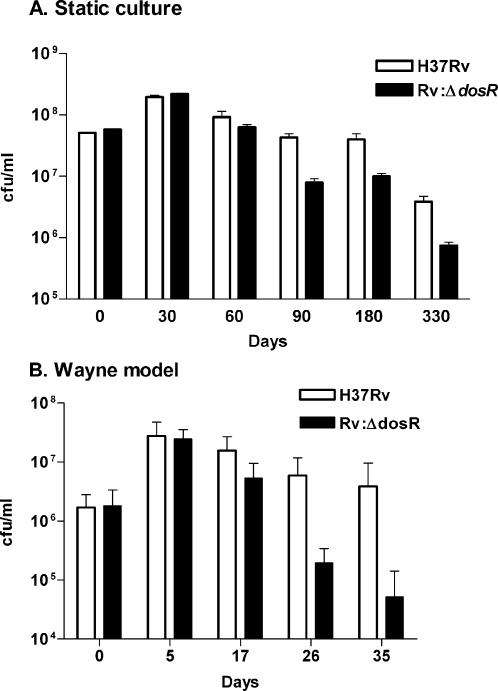
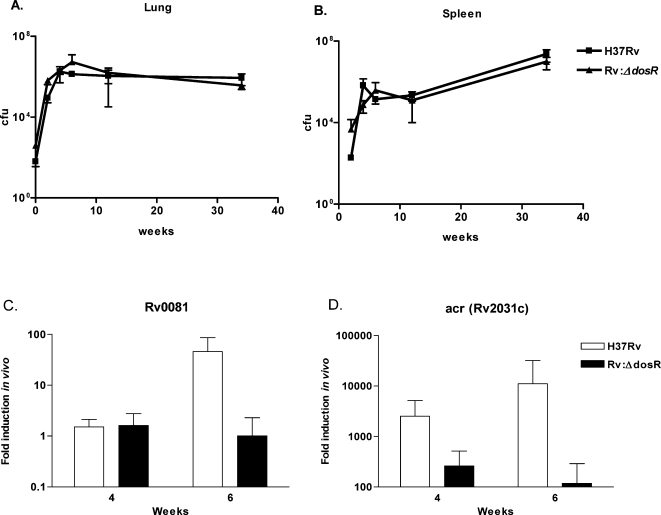
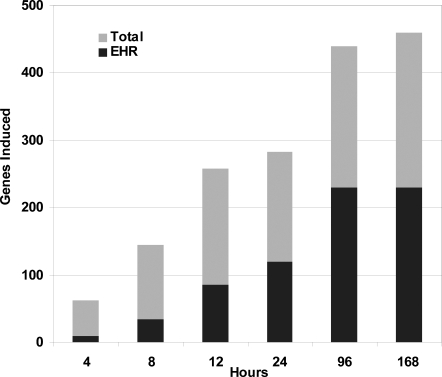
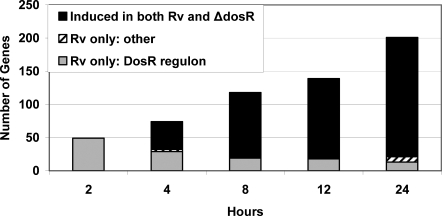
BACKGROUND: A significant body of evidence accumulated over the last century suggests a link between hypoxic microenvironments within the infected host and the latent phase of tuberculosis. Studies to test this correlation have identified the M. tuberculosis initial hypoxic response, controlled by the two-component response regulator DosR. The initial hypoxic response is completely blocked in a dosR deletion mutant. METHODOLOGY/PRINCIPAL FINDINGS: We show here that a dosR deletion mutant enters bacteriostasis in response to in vitro hypoxia with only a relatively mild decrease in viability. In the murine infection model, the phenotype of the mutant was indistinguishable from that of the parent strain. These results suggested that additional genes may be essential for entry into and maintenance of bacteriostasis. Detailed microarray analysis of oxygen starved cultures revealed that DosR regulon induction is transient, with induction of nearly half the genes returning to baseline within 24 hours. In addition, a larger, sustained wave of gene expression follows the DosR-mediated initial hypoxic response. This Enduring Hypoxic Response (EHR) consists of 230 genes significantly induced at four and seven days of hypoxia but not at initial time points. These genes include a surprising number of transcriptional regulators that could control the program of bacteriostasis. We found that the EHR is independent of the DosR-mediated initial hypoxic response, as EHR expression is virtually unaltered in the dosR mutant. CONCLUSIONS/SIGNIFICANCE: Our results suggest a reassessment of the role of DosR and the initial hypoxic response in MTB physiology. Instead of a primary role in survival of hypoxia induced bacteriostasis, DosR may regulate a response that is largely optional in vitro and in mouse infections. Analysis of the EHR should help elucidate the key regulatory factors and enzymatic machinery exploited by M. tuberculosis for long-term bacteriostasis in the face of oxygen deprivation.
Overview
The claims and statistics of this paper haven’t been checked yet.
Free: it reads the open-access text and checks the first 5 claims that cite a source we can check. Create a free account to check every claim.
Integrity signals
Registry
Cites
Statistics
Figures
Verification
Claims the paper makes
The claims and statistics of this paper haven’t been checked yet.
Free: it reads the open-access text and checks the first 5 claims that cite a source we can check. Create a free account to check every claim.
Claims other papers make about this one
Each is checked against this paper’s own text: does it say what the citing paper says it does?
The source backs part of the claim, not all of it — or backs it for a different population, condition or comparison.
In the citing paper
“The DosR system activates transcription of hrp1, a PDIM synthesis factor113, during short-term and long-term oxygen deprivation57,115.”
From The mycobacterial cell envelope — a moving target (2020) · cites this paper as [57]
Experimental — accuracy not yet measuredThe cited source says what the claim attributes to it.
In the citing paper
“Induction of EHR was independent of DosR, suggesting that other sensory and regulatory mechanisms must exist to signal prolonged exposure to hypoxia.”
From Energetics of Respiration and Oxidative Phosphorylation in Mycobacteria (2014) · cites this paper as [125]
Experimental — accuracy not yet measuredThe cited source says what the claim attributes to it.
In the citing paper
“For example, DosR of M. tuberculosis H37Rv was shown not to be strictly required for survival of hypoxia in vitro (125).”
From Energetics of Respiration and Oxidative Phosphorylation in Mycobacteria (2014) · cites this paper as [125]
The cited source says what the claim attributes to it.
In the citing paper
“In contrast, a set of 230 genes was significantly up-regulated at four and seven days of hypoxia, but not initially, and were termed the enduring hypoxic response (EHR) (125).”
From Energetics of Respiration and Oxidative Phosphorylation in Mycobacteria (2014) · cites this paper as [125]
Self-check
Percentages, sums and reported differences re-computed from the paper’s own numbers.
The self-check needs the paper’s full text.
Citations
Cites
In silico prediction of protein-protein interactions in human macrophages
Souiai, O., Guerfali, F., Ben Miled, S., Brun, C., & Benkahla, A. (2014) · BMC Research Notes · doi:10.1186/1756-0500-7-157 · Cited by 10,803
Significance analysis of microarrays applied to the ionizing radiation response
Tusher, V. G., Tibshirani, R., & Chu, G. (2001) · Proceedings of the National Academy of Sciences · doi:10.1073/pnas.091062498 · Cited by 10,568
Deciphering the biology of Mycobacterium tuberculosis from the complete genome sequence
Cole, S. T., Brosch, R., Parkhill, J., Garnier, T., Churcher, C., Harris, D., Gordon, S. V., Eiglmeier, K., Gas, S., Barry, C. E., et al. (1998) · Nature · doi:10.1038/31159 · Cited by 7,847 · cited 1×
“A survey of the annotated functional categories [36] of EHR genes reveals that a dominant feature of this gene list is the large”
BackgroundThe Growing Burden of Tuberculosis: Global Trends and Interactions With the HIV Epidemic
Corbett, E. L., Watt, C. J., Walker, N., Maher, D., Williams, B. G., Raviglione, M. C., & Dye, C. (2003) · Archives of Internal Medicine · doi:10.1001/archinte.163.9.1009 · Cited by 2,553 · cited 1×
“Up to a third of all people are skin test positive for MTB infection [3,4].”
BackgroundTranscriptional Adaptation of Mycobacterium tuberculosis within Macrophages
Schnappinger, D., Ehrt, S., Voskuil, M. I., Liu, Y., Mangan, J. A., Monahan, I. M., Dolganov, G., Efron, B., Butcher, P. D., Nathan, C., et al. (2003) · The Journal of Experimental Medicine · doi:10.1084/jem.20030846 · Cited by 1,420 · cited 1×
“Under these conditions, oxygen tension is likely reduced relative to rolling cultures in vitro, however bacilli are replicating and DosR is induced [42–45].”
BackgroundBetts, J. C., Lukey, P. T., Robb, L. C., McAdam, R. A., & Duncan, K. (2002) · Molecular Microbiology · doi:10.1046/j.1365-2958.2002.02779.x · Cited by 1,395 · cited 3×
“Condition Total EHR: 230 Genes DosR: 49 genes Overlap (By Chance) Overlap (By Chance) Starvation a 4 hours ND 170 23 (10) 0 (2) 1 day ND 250 54 (15) 0 (3) 4 day ND 276 47 (16) 0 (3) Wayne model b NRP 4 days 78 8 (5) 42 (1) NRP 20 days 177 73 (10) 33 (2) NRP 80 days 9 5 (1) 0 (0) Control stresses c pH 4.8 195 18 (11) 1…”
BackgroundMethodInfluentialMcKinney, J. D., zu Bentrup, K. H., Muñoz-Elías, E. J., Miczak, A., Chen, B., Chan, W.-T., Swenson, D., Sacchettini, J. C., Jacobs, W. R., & Russell, D. G. (2000) · Nature · doi:10.1038/35021074 · Cited by 1,360 · cited 1×
“Granulomas are formed by activated macrophages and other host components that surround infected lung tissue, isolating the infected cells in an organized structure and creating an environment that suppresses MTB replication [2,8–14].”
BackgroundWayne, L. G., & Hayes, L. G. (1996) · Infection and Immunity · doi:10.1128/iai.64.6.2062-2069.1996 · Cited by 1,141 · cited 2×
“The Wayne model was performed as previously described [16,17].”
MethodA small-molecule nitroimidazopyran drug candidate for the treatment of tuberculosis
Stover, C. K., Warrener, P., VanDevanter, D. R., Sherman, D. R., Arain, T. M., Langhorne, M. H., Anderson, S. W., Towell, J. A., Yuan, Y., McMurray, D. N., et al. (2000) · Nature · doi:10.1038/35016103 · Cited by 1,034 · cited 1×
“These nonreplicating bacilli have a drug susceptibility profile resembling that of latent TB infections [16– 20].”
BackgroundSelf-citationInhibition of Respiration by Nitric Oxide Induces a Mycobacterium tuberculosis Dormancy Program
Voskuil, M. I., Schnappinger, D., Visconti, K. C., Harrell, M. I., Dolganov, G. M., Sherman, D. R., & Schoolnik, G. K. (2003) · The Journal of Experimental Medicine · doi:10.1084/jem.20030205 · Cited by 966 · cited 1×
“This result is consistent with the ,2 log drop shown earlier with a related MTB mutant in which DosR expression is disrupted [26], though significantly less than the 1000-fold drop in viability reported in a dosR deletion in a Mycobacterium bovis BCG vaccine strain [32].”
ResultSelf-citation
Cited by
Items 301–400 of 495
Vordermeier, M. H., Gordon, S. V., & Hewinson, R. G. (2009) · Transboundary and Emerging Diseases · doi:10.1111/j.1865-1682.2009.01070.x · Cited by 19
Gomez, R. L., Jose, L., Ramachandran, R., Raghunandanan, S., Muralikrishnan, B., Johnson, J. B., Sivakumar, K. C., Mundayoor, S., & Kumar, R. A. (2016) · FEBS Journal · doi:10.1111/febs.13791 · Cited by 15
Velasco, R. G., Jesús, J. Á.-D., & Mejía, L. M. P. (2016) · Educación Química · doi:10.1016/j.eq.2016.09.009 · Cited by 15
Voskuil, M. I., & Schlesinger, L. S. (2015) · American Journal of Respiratory and Critical Care Medicine · doi:10.1164/rccm.201503-0424ed · Cited by 15
Targeting Mycobacterium tuberculosis pH-driven adaptation
Dechow, S. J., & Abramovitch, R. B. (2024) · Microbiology · doi:10.1099/mic.0.001458 · Cited by 16
“Baek and colleagues also showed that a ΔdosR mutant , the response regulator of the DosRST TCS and regulator of tgs1 [58], shows a similar growth phenotype to Δtgs1 under acid stress [52] and could also be described as having an eag phenotype as well.”
BackgroundBiofilms of Mycobacterium tuberculosis: New Perspectives of an Old Pathogen
Anil, K., & Graham, F. G. (2012) · InTech eBooks · doi:10.5772/30303 · Cited by 14
“…of bacilli in a mice model (McKinney et al., 2000), the phenotype of dosR-dosS mutants in animal models have yielded conflicting results (Rustad et al., 2008, Parish et al., 2003, Malhotra et al., 2004). www.intechopen.com Biofilms of Mycobacterium tuberculosis: New Perspectives of an…”
ResultStokes, R. W., & Waddell, S. J. (2009) · Future Microbiology · doi:10.2217/fmb.09.94 · Cited by 17
Changes in protein abundance are observed in bacterial isolates from a natural host
Rees, M., Stinear, T. P., Goode, R. J. A., Coppel, R. L., Smith, A. I., & Kleifeld, O. (2015) · Frontiers in Cellular and Infection Microbiology · doi:10.3389/fcimb.2015.00071 · Cited by 16
“…environment on the basis of transcriptional profiling, such as the increased expression of Nudix hydrolase (nudL; Park et al., 2003), pyruvate carboxylase, fructose-1,6-bisphosphatase (glpX; Rustad et al., 2009) and decreased expression of riboflavin biosynthesis protein RibD (Rustad et al., 2008).”
BackgroundMethodResultInfluentialCoppola, M., Jurion, F., van den Eeden, S. J. F., Tima, H. G., Franken, K. L. M. C., Geluk, A., Romano, M., & Ottenhoff, T. H. M. (2021) · npj Vaccines · doi:10.1038/s41541-021-00343-2 · Cited by 17
Sousa, E. H. S., Carepo, M. S. P., & Moura, J. J. G. (2020) · Coordination Chemistry Reviews · doi:10.1016/j.ccr.2020.213476 · Cited by 17
Ramos, B., Gordon, S. V., & Cunha, M. V. (2020) · PLoS ONE · doi:10.1371/journal.pone.0229700 · Cited by 13
“On the contrary, some regulatory genes, 470 members of the DosT regulon, namely devR, devS and dosT were shown to be highly 471 up-regulated at hypoxic conditions (Figure 6), which is also supported by previous 472 studies (52-54).”
ResultInhibition of NarL of Mycobacterium Tuberculosis: an in silico approach
Shivakumar, K. V., Karunakar, P., & Chatterjee, J. (2014) · Interdisciplinary Sciences Computational Life Sciences · doi:10.1007/s12539-014-0179-z · Cited by 13
“Depletion of oxygen along with change in pH and lack of nutrients allows the mycobacterium to enter a state called Non-Replicating persistent (NRP) state which resembles dormant state seen with latent tuberculosis (Rustad et al., 2008, 2009; Sohaskey, 2008).”
BackgroundAbomoelak, B., Marcus, S. A., Ward, S. K., Karakousis, P. C., Steinberg, H. N., & Talaat, A. M. (2011) · Journal of Bacteriology · doi:10.1128/jb.01536-10 · Cited by 13
“In another report, progressive hypoxia identified transcripts of rv0990c among 230 other hypoxia responsive genes (24).”
BackgroundVashist, A., Raj, D. P., Gupta, U. D., Bhat, R., & Tyagi, J. S. (2016) · FEBS Journal · doi:10.1111/febs.13664 · Cited by 13
Antibodies as clinical tools for tuberculosis
McIntyre, S., Warner, J. M., Rush, C. M., & Vanderven, H. A. (2023) · Frontiers in Immunology · doi:10.3389/fimmu.2023.1278947 · Cited by 14
HspX vaccination and role in virulence in the guinea pig model of tuberculosis
Wieczorek, A. E., Troudt, J. M., Knabenbauer, P., Taylor, J. L., Pavlicek, R. L., Karls, R. K., Hess, A., Davidson, R. M., Strong, M., Bielefeldt‐Ohmann, H., et al. (2014) · Pathogens and Disease · doi:10.1111/2049-632x.12147 · Cited by 12
“Studies performed by ourselves [8], and others [24] [25], suggest that hspX deletion strains”
ResultBarrios‐Payán, J., Castañón-Arreola, M., Flores‐Valdez, M. A., & Hernández‐Pando, R. (2010) · Salud Pública de México · doi:10.1590/s0036-36342010000100011 · Cited by 12
Banerjee, U., Sankar, S., Singh, A., & Chandra, N. R. (2020) · Frontiers in Chemistry · doi:10.3389/fchem.2020.593497 · Cited by 13
“gcvB (Rv1832) and ald (Rv2780), encoding a glycine cleavage complex component and L-alanine dehydrogenase, respectively, have also been observed to be present in high amount in hypoxia-induced dormancy models at transcript and protein levels (Wayne and Lin, 1982; Betts et al., 2002; Schnappinger et al., 2003; Rustad e…”
BackgroundPdtaS Deficiency Affects Resistance of Mycobacteria to Ribosome Targeting Antibiotics
Dadura, K., Płocińska, R., Rumijowska-Galewicz, A., Płociński, P., Żaczek, A., Dziadek, B. R., Zaborowski, A., & Dziadek, J. (2017) · Frontiers in Microbiology · doi:10.3389/fmicb.2017.02145 · Cited by 13
“PdtaS transcription drops down during macrophage infection (Fontan et al., 2008) and is significantly depleted during hypoxia and in a NAD+ production knockout strain lacking the nadABC operon (Rustad et al., 2008; Vilchèze et al., 2010).”
BackgroundDoddam, S. N., Peddireddy, V., Yerra, P., Arun, P. V. P. S., Qaria, M. A., Baddam, R., Sarker, N., & Ahmed, N. (2019) · International Journal of Medical Microbiology · doi:10.1016/j.ijmm.2019.151353 · Cited by 12
Proteomic characterization of Mycobacterium tuberculosis subjected to carbon starvation
Devlin, K. L., Leach, D. T., Stratton, K. G., Lamichhane, G., Lin, V., & Beatty, K. E. (2025) · mSystems · doi:10.1128/msystems.01530-24 · Cited by 14
“The DosR regulon plays a key role in non-replicating Mtb induced by hypoxia (100, 101).”
Nangpal, P., Nagpal, N., Angrish, N., & Khare, G. (2025) · Frontiers in Cellular and Infection Microbiology · doi:10.3389/fcimb.2025.1572547 · Cited by 12
“Although, to understand TB pathogenesis, in vitro models have been developed to represent various features of the in vivo conditions, such as low oxygen levels (Rustad et al., 2008), low nutrients (Betts et al., 2002) and the addition of exogenous stresses (Stewart et al., 2002; Deb et al., 2009).”
The role of histone-like protein, Hlp, in Mycobacterium smegmatis dormancy
Anuchin, A. M., Гончаренко, А. В., Demina, G. R., Mulyukin, A. L., Ostrovsky, D. N., & Kaprelyants, A. S. (2010) · FEMS Microbiology Letters · doi:10.1111/j.1574-6968.2010.01988.x · Cited by 12
“Genetic regulation of Mycobacterium tuberculosis in a lipid-rich environment”
Aguilar-Ayala, D. A., Palomino, J. C., Vandamme, P. A. R., Martin, A., & González-y-Merchand, J. A. (2016) · Infection Genetics and Evolution · doi:10.1016/j.meegid.2016.10.015 · Cited by 11
Cloaked dagger: tRNA slicing by an unlikely culprit
Schifano, J. M., & Woychik, N. A. (2016) · RNA Biology · doi:10.1080/15476286.2016.1255396 · Cited by 12
“MazFhw HQ2202A Haloquadra walsbyi mRNA UU#ACUCA 5 (8) Yamaguchi et al.”
BackgroundZhou, F., Xu, X., Wu, S., Cui, X., & Pan, W. (2017) · BMC Infectious Diseases · doi:10.1186/s12879-017-2910-y · Cited by 11
Jiang, J. H., Chen, L., Zhang, J., Wang, Y., Shen, L., Yang, K., Xiao, W., Li, Y., Zhang, L., & Liu, J. (2020) · Frontiers in Genetics · doi:10.3389/fgene.2019.01359 · Cited by 15
Kriel, N. L., Heunis, T. D. J., Sampson, S. L., van Pittius, N. C. G., Williams, M. J., & Warren, R. M. (2020) · BMC Molecular and Cell Biology · doi:10.1186/s12860-020-00261-6 · Cited by 12
Conserved Conformational Changes in the Regulation of Mycobacterium tuberculosis MazEF-mt1
Chen, R., Zhou, J., Sun, R., Du, C., & Xie, W. (2020) · ACS Infectious Diseases · doi:10.1021/acsinfecdis.0c00048 · Cited by 11
Hopewell, P. C., Kato‐Maeda, M., & Ernst, J. (2015) · Elsevier eBooks · doi:10.1016/b978-1-4557-3383-5.00035-x · Cited by 15
The TbD1 Locus Mediates a Hypoxia-Induced Copper Response in Mycobacterium bovis
Ma, R., Farrell, D., González, G., Browne, J. A., Nakajima, C., Suzuki, Y., & Gordon, S. V. (2022) · Frontiers in Microbiology · doi:10.3389/fmicb.2022.817952 · Cited by 11
“Rustad et al. (2008) identified 230 enduring hypoxic response (EHR) genes that were stably induced by hypoxic stress and largely independent of the DosR regulon.”
Thi, L. T. N., Borrero, R., Fernández-Castillo, S., Reyes, G., Perez, J. L., Reyes, F., García, M. D. L. A., Fariñas, M., Infante, J. F., Tirado, Y., et al. (2010) · DOAJ (DOAJ: Directory of Open Access Journals) · Cited by 11
Molecular Mechanisms of Drug Tolerance in Mycobacterium tuberculosis
Антонова, А. В., Gryadunov, D. A., & Zimenkov, D. V. (2018) · Molecular Biology · doi:10.1134/s0026893318030020 · Cited by 12
“Transcription of the DosR regulon was not induced until 20 days of hypoxia in a clinical isolate [122], while expression of the regulon genes was upregulated only during primary adaptation and returned to its baseline level 24 h after in a wild-type strain [26].”
BackgroundMetabolic switching and cell wall remodelling of Mycobacterium tuberculosis during bone tuberculosis
Kaur, K., Sharma, S., Abhishek, S., Kaur, P., Saini, U. C., Dhillon, M. S., Karakousis, P. C., & Verma, I. (2022) · Journal of Infection · doi:10.1016/j.jinf.2022.12.014 · Cited by 11
Toxin-mediated depletion of NAD and NADP drives persister formation in a human pathogen
Santi, I., Teixeira, R. D., Manfredi, P., Gonzalez, H. H., Spiess, D. C., Mas, G., Klotz, A., Kaczmarczyk, A., van Vliet, S., Zamboni, N., et al. (2024) · The EMBO Journal · doi:10.1038/s44318-024-00248-5 · Cited by 10
“…the MbcA-MbcT system of M. tuberculosis is signi fi cantly upregulated in a variety of stress conditions, including persister cells (Keren et al, 2011), hypoxic stress (Rustad et al, 2008), starvation (Gupta et al, 2017), and in human macrophages (Homolka et al, 2010; Ariyachaokun et al, 2020).”
BackgroundBack, Y. W., Shin, K. W., Choi, S., Park, H., Lee, K.-I., Choi, H., & Kim, H. (2020) · Vaccines · doi:10.3390/vaccines8030370 · Cited by 10
Rao, S. P. S., Camacho, L. R., Tan, B. H., Boon, C., Russell, D. G., Dick, T., & Pethe, K. (2008) · FEMS Microbiology Letters · doi:10.1111/j.1574-6968.2008.01193.x · Cited by 12
“The transcription factor DosR coordinates the mycobacterial genetic response to a reduced oxygen tension (Park et al., 2003), and was previously shown to be required for the survival of M. bovis BCG and of M. tuberculosis in the Wayne model (Boon & Dick, 2002; Rustad et al., 2008).”
BackgroundMolecular analysis of the Mycobacterium tuberculosis lux-like mel2 operon
Janagama, H. K., Sambou, T., Cirillo, S. L. G., Zinniel, D. K., Barletta, R. G., & Cirillo, J. D. (2013) · Tuberculosis · doi:10.1016/s1472-9792(13)70016-7 · Cited by 11
Immunoinformatics study on highly expressed Mycobacterium tuberculosis genes during infection
Thi, L. T. N., Sarmiento, M. E., Ramos, R. C., Camacho, F., Reyes, F., Hossain, M. M., González, G. S., Norazmi, M. N., & Acosta, A. (2014) · Tuberculosis · doi:10.1016/j.tube.2014.06.004 · Cited by 10
“The EHR may contain the machinery used to enter into and survive latency [35].”
BackgroundMethodInfluentialHypoxia promotes Mycobacterium tuberculosis-specific up-regulation of granulysin in human T cells
Zenk, S. F., Vollmer, M., Schercher, E., Kallert, S., Kubis, J., & Stenger, S. (2015) · Medical Microbiology and Immunology · doi:10.1007/s00430-015-0442-x · Cited by 11
Puniya, B. L., Kulshreshtha, D., Mittal, I., Mobeen, A., & Ramachandran, S. (2016) · Scientific Reports · doi:10.1038/srep23440 · Cited by 11
Ngcobo, N. S., Chiliza, Z. E., Chen, W., Yu, J., Nelson, D. R., Tuszyński, J. A., Preto, J., & Syed, K. (2020) · International Journal of Molecular Sciences · doi:10.3390/ijms21144816 · Cited by 9
“Binding of azole drugs to CYP128A1 protein models further shows the complex biology of mycobacterial species, as azole drugs have been found to be effective against Mycobacterium tuberculosis [18–20], indicating the expression of CYP128A1 in the latent phase [11,12], and possible binding of azole drugs during experime…”
BackgroundContribution and Future of High-Throughput Transcriptomics in Battling Tuberculosis
Martínez-Pérez, A., Estévez, O., & González‐Fernández, Á. (2022) · Frontiers in Microbiology · doi:10.3389/fmicb.2022.835620 · Cited by 12
Mazzabò, L. C., Boldrin, F., Beauvineau, C., Speth, M. T., Marina, A., Namouchi, A., Segafreddo, G., Cimino, M., Favre-Rochex, S., Balasingham, S. V., et al. (2022) · Nucleic Acids Research · doi:10.1093/nar/gkac1173 · Cited by 10
“tuberculosis (92,95), therefore, likely playing a role in the M.”
BackgroundStiens, J., Tan, Y. Y., Joyce, R., Arnvig, K. B., Kendall, S. L., & Nobeli, I. (2023) · Molecular Microbiology · doi:10.1111/mmi.15055 · Cited by 10
“For example, the DosR regulon is a well-studied regulon associated with hypoxia and stress responses (Du et al., 2016; Rustad et al., 2008; Voskuil et al., 2004).”
BackgroundSingh, A., Shee, S., Reshma, T. V., Mohanraj, K., Das, M., Malhotra, N., Bandopadhyay, D., Beig, H., Birua, S., Niphadkar, S., et al. (2023) · eLife · doi:10.7554/elife.80218 · Cited by 10
Kumar, S., Khan, M. Z., Khandelwal, N., Chongtham, C., Singha, B., Dabla, A., Behera, D., Singh, A. K., Gopal, B., Arimbasseri, G. A., et al. (2022) · mBio · doi:10.1128/mbio.03836-21 · Cited by 10
“poxia response (EHR) is mediated by different transcriptional regulators (31, 48).”
BackgroundKumar, A., Phulera, S., Rizvi, A., Sonawane, P. J., Panwar, H. S., Banerjee, S., Sahu, A., & Mande, S. C. (2019) · FEBS Letters · doi:10.1002/1873-3468.13375 · Cited by 9
“Subsequently, it was shown that 86 besides DosR-mediated initial hypoxic response, sustained hypoxia spanning to 4-7 days 87 induced a set of 230 genes, referred to as Enduring Hypoxic Response (EHR), that 88 facilitated the shift to a persistent, metabolically inactive, but viable state (6, 19).”
BackgroundSharma, A. K., Singh, N., Bhasin, M., Tiwari, P., Chopra, P., Varadarajan, R., & Singh, R. (2024) · Communications Biology · doi:10.1038/s42003-024-06998-6 · Cited by 8
Harnessing hypoxia: bacterial adaptation and chronic infection in cystic fibrosis
Carey, C. J., Duggan, N., Drabinska, J., & McClean, S. (2025) · FEMS Microbiology Reviews · doi:10.1093/femsre/fuaf018 · Cited by 9
“Mansour et al. ( 2023 ) explored the impact of a series of small molecules on the activation of the FixLJ TCS with promising results (Mansour et al. 2023 ).”
InfluentialUnveiling the orchestration: mycobacterial small RNAs as key mediators in host-pathogen interactions
Garg, R., Manhas, I., & Chaturvedi, D. (2024) · Frontiers in Microbiology · doi:10.3389/fmicb.2024.1399280 · Cited by 9
“…shows high levels of induction occurs during infection with PhiRv2 positive strain of Mtb, and this acts as a potential biomarker for identifying cells undergoing both starvation and hypoxia which later might turn into persisters (Betts et al., 2002; Voskuil et al., 2004; Rustad et al., 2008).”
BackgroundWynn, E. A., Dide-Agossou, C., Mubarak, R. A., Rossmassler, K., Ektnitphong, V. A., Bauman, A., Massoudi, L. M., Voskuil, M. I., Robertson, G. T., Moore, C. M., et al. (2025) · Antimicrobial Agents and Chemotherapy · doi:10.1128/aac.01310-24 · Cited by 10
Gurwitz, K., Burman, R. J., Murugan, B. D., Garnett, S., Ganief, T. A., Soares, N. C., Raimondo, J. V., & Blackburn, J. M. (2017) · Frontiers in Molecular Neuroscience · doi:10.3389/fnmol.2017.00163 · Cited by 9
“If this second proposed response does continue long-term, one might draw parallels between the trends in nucleic acid binding proteins in HIV-Tat treated neurons and other biphasic genomic responses in nature, such as the Mycobacterium tuberculosis (Mtb) hypoxic response (Rustad et al., 2008).”
BackgroundHuang, S., Zhou, W., Tang, W., Zhang, Y., Hu, Y., & Chen, S. (2021) · BMC Genomics · doi:10.1186/s12864-021-07572-8 · Cited by 9
Trigos, A., Goudey, B., Bedő, J., Conway, T., Faux, N. G., & Wyres, K. L. (2021) · mSphere · doi:10.1128/msphere.00245-21 · Cited by 8
Mahatha, A. C., Banerjee, S. K., Ghosh, A., Lata, S., Saha, S., Basu, J., & Kundu, M. (2022) · Microbiology · doi:10.1099/mic.0.001229 · Cited by 8
Hade, M. D., Sethi, D., Datta, H., Singh, S., Thakur, N., Chhaya, A., & Dikshit, K. L. (2019) · Antioxidants and Redox Signaling · doi:10.1089/ars.2018.7708 · Cited by 12
“Mtb is able to survive in its host for years by existing in a latent state where it remains viable and metabolizes, but at an extremely slow pace (31, 32).”
Regulation of pathogen metabolism by small RNA
Arnvig, K. B., & Young, D. B. (2010) · Drug Discovery Today Disease Mechanisms · doi:10.1016/j.ddmec.2010.09.001 · Cited by 8
Learning modular structures from network data and node variablesPreprint
Azizi, E., Galagan, J. E., & Airoldi, E. M. (2014) · arXiv (Cornell University) · doi:10.48550/arxiv.1405.2566 · Cited by 8
“, 2003) (module M1) and transcription (Rustad et al., 2008) (module M25).”
BackgroundInfluentialThe hemerythrin-like diiron protein from Mycobacterium kansasii is a nitric oxide peroxidase
Ma, Z., Holland, A. A., Szlamkowicz, I. B., Anagnostopoulos, V. A., Nogueira, M. L. C., Caranto, J. D., & Davidson, V. L. (2022) · Journal of Biological Chemistry · doi:10.1016/j.jbc.2022.101696 · Cited by 7
“Furthermore, production of nitrite can also be advantageous, as nitrite is a signaling molecule in mycobacteria that slows the growth of the organism under hypoxia conditions (17, 23, 24).”
BackgroundNetupitant Exhibits Potent Activity on Mycobacterium tuberculosis Persisters
Eldesouky, H. E., Jones, R. M., Gleason, N., Mohammed, S., 邢恩明, Li, P.-K., & Sherman, D. R. (2025) · ACS Infectious Diseases · doi:10.1021/acsinfecdis.5c00298 · Cited by 7
Self-citationDevasundaram, S., Khan, I., Kumar, N., Das, S. D., & Raja, A. (2015) · Journal of Biotechnology · doi:10.1016/j.jbiotec.2015.04.017 · Cited by 8
“To date, numerous hypoxia models of persistence is limited by the use of H37Rv as the single reference strain (Rustad et al., 2008).”
BackgroundDuncan, C. L., Jamieson, F., Troudt, J. M., Izzo, L. S., Bielefeldt‐Ohmann, H., Izzo, A. A., & Mehaffy, C. (2017) · PLoS ONE · doi:10.1371/journal.pone.0179996 · Cited by 7
Gao, L., Zhang, L., Xu, H., Zhao, F., Ke, W., Chen, J., Yang, J., Qi, C., & Liu, J. (2020) · Veterinary Microbiology · doi:10.1016/j.vetmic.2020.108704 · Cited by 7
Cellular dormancy: A widespread phenomenon that perpetuates infectious diseases
da Silva, C. V., Velikkakam, T., de Oliveira, E. C. M., Silveira, A. C. A., Júnior, J. P. D. L., Uombe, N. P. I., Silva, P., & Borges, B. C. (2023) · Journal of Basic Microbiology · doi:10.1002/jobm.202300389 · Cited by 6
“Authors verified by gene knockout that DosR is not an essential gene for the mycobacteria, since its deletion caused only an insignificant decrease in bacterial viability under hypoxic conditions [37, 38].”
BackgroundFu, X., Wan, X., Memon, A. A., Fan, X., Sun, Q., Chen, H., Yao, Y., Deng, Z., Ma, J., & Ma, W. (2024) · Frontiers in Microbiology · doi:10.3389/fmicb.2024.1415554 · Cited by 6
“…dispensable for M. tuberculosis , and no more than 50 target genes have been identified thus far (Park et al., 2003); moreover, the survival rate of the DosR knockout mutant was only slightly lower than that of the wild type under hypoxic conditions (Rustad et al., 2008, 2009; Taneja et al., 2010).”
Dahiya, P., Banerjee, A., Saha, A., Nandicoori, V. K., Ghosh, S., & Mukhopadhyay, S. (2024) · Biochemical and Biophysical Research Communications · doi:10.1016/j.bbrc.2024.150927 · Cited by 6
Toxin-Antitoxin Loci in Mycobacterium tuberculosis
Sala, A. J., Bordes, P., Fichant, G. A., & Genevaux, P. (2012) · Springer eBooks · doi:10.1007/978-3-642-33253-1_17 · Cited by 7
The DosR regulon of Mycobacterium avium and adaptation to hypoxia
Belardinelli, J. M., Avanzi, C., Martin, K. E., Lam, H., Dragset, M. S., Wheat, W. H., Podell, B. K., Juarrero, M. G., & Jackson, M. (2025) · Frontiers in Cellular and Infection Microbiology · doi:10.3389/fcimb.2025.1545856 · Cited by 6
Schreuder, L. J., & Parish, T. (2014) · PLoS ONE · doi:10.1371/journal.pone.0107283 · Cited by 6
“Within this highly organised environment bacterial growth is limited through deprivation of oxygen and nutrients, acidification and production of host factors such as nitric oxide [7,8].”
BackgroundJimenez, B. A. J., Hinojoza-Loza, E., Flores‐Valdez, M. A., de Oca, E. P.-M., Allen, K., Estrada‐Chávez, C., Herrera-Rodríguez, S. E., Flores-Fernández, J. M., Martínez‐Velázquez, M., Hernández‐Gutiérrez, R., et al. (2013) · Microbial Pathogenesis · doi:10.1016/j.micpath.2013.04.012 · Cited by 6
“tuberculosis, where a second wave of transcriptional response, not DosR based, gains induction for a much longer period [26].”
BackgroundVeatch, A. V., Niu, T., Caskey, J., McGillivray, A., Gautam, U. S., Subramanian, R., Kousoulas, K. G., Mehra, S., & Kaushal, D. (2016) · Tuberculosis · doi:10.1016/j.tube.2016.09.020 · Cited by 6
Nelson, S. J., Williams, J. T., Buglino, J. A., Nambi, S., Lojek, L. J., Glickman, M. S., Ioerger, T. R., & Sassetti, C. M. (2023) · mSphere · doi:10.1128/msphere.00389-22 · Cited by 8
Crew, R. M., Ramirez, M. V., England, K., & Slayden, R. A. (2015) · Tuberculosis · doi:10.1016/j.tube.2015.03.005 · Cited by 7
Gordhan, B. G., Peters, J. S., & Kana, B. D. (2019) · Advances in applied microbiology · doi:10.1016/bs.aambs.2019.08.001 · Cited by 6
Sumii, Y., Kamiya, K., Nakamura, T., Tanaka, K., Kaji, T., Mukomura, J., Kotoku, N., & Arai, M. (2022) · Marine Drugs · doi:10.3390/md20020098 · Cited by 6
He, C., Li, B., Gong, Z., Sheng, H., Liu, X., Wang, J., Xie, J., & Shi, T. (2023) · Heliyon · doi:10.1016/j.heliyon.2023.e14513 · Cited by 5
Sugandhi, S., Rajmane, V., Taunk, K., Jadhav, S., Nema, V., Rapole, S., & Mande, S. C. (2023) · Biochemistry and Biophysics Reports · doi:10.1016/j.bbrep.2023.101512 · Cited by 5
Espinoza, M. E., Swing, A. M., Elghraoui, A., Modlin, S. J., & Valafar, F. (2025) · mSystems · doi:10.1128/msystems.00499-24 · Cited by 7
“…in the core genome, including genes known to limit drug efficacy, genes with MamA, MamB, or MamC DNA methylation motif sites in their promoters (88), genes whose transposon-inserted TA dinucleotide sites are underrepre sented post-infection in mouse models (89), and transcription factors (TF).”
Bustad, E., Petry, E., Gu, O., Griebel, B. T., Rustad, T. R., Sherman, D. R., Yang, J. H., & Ma, S. (2025) · Frontiers in Tuberculosis · doi:10.3389/ftubr.2025.1500899 · Cited by 6
“Five TFs were predicted to be highly influential for growth arrest during hypoxia.”
Self-citationBull, T. J., Munshi, T., Lopez-Perez, P. M., Tran, A. C., Cosgrove, C., Bartolf, A., Menichini, M., Rindi, L., Parigger, L., Malanović, N., et al. (2023) · International Journal of Molecular Sciences · doi:10.3390/ijms242417555 · Cited by 5
“…a significant association of these Genesets with the transcriptomic profiles involving networks controlling the reduction of the MTB enduring hypoxic [27] and starvation responses [28], the maintenance of the MTB antibiotic persister phenotype [29] and lipid metabolism (mce3 operon) [30], plus a…”
BackgroundTuberculosis: laboratory diagnosis and treatment strategies
McHugh, T. D. (2013) · CABI eBooks · doi:10.1079/9781845938079.0000 · Cited by 5
Chen, J., Ruan, Q., Shen, Y., Wang, S., Shao, L., & Zhang, W. (2018) · The Brazilian Journal of Infectious Diseases · doi:10.1016/j.bjid.2018.10.280 · Cited by 5
Tuberculosis vaccines: present and future
Minassian, A. M., & McShane, H. (2008) · Expert Review of Respiratory Medicine · doi:10.1586/17476348.2.6.721 · Cited by 6
Transcript-Capture sequencing enriches mRNA of Mycobacterium tuberculosis from host samples
Lamont, E. I., Jones, R. M., Assadi, J., Morrison, R., Song, T., Yu, X., Weiner, D. M., Via, L. E., Winter, J. A., Ma, S., et al. (2025) · NAR Molecular Medicine · doi:10.1093/narmme/ugaf045 · Cited by 6
“RNA was extracted as previously described [ 25 , 26 ].”
Self-citationSkvortsov, T., & Azhikina, T. L. (2012) · Russian Journal of Bioorganic Chemistry · doi:10.1134/s1068162012040139 · Cited by 5
Byrne, G. I., & Beatty, W. L. (2014) · ASM Press eBooks · doi:10.1128/9781555817329.ch12 · Cited by 4
Hudock, T. A., & Kaushal, D. (2014) · Journal of Visualized Experiments · doi:10.3791/51693 · Cited by 4
Spaniol, V., Wyder, S., & Aebi, C. (2013) · PLoS ONE · doi:10.1371/annotation/a6e15b35-386c-4b0a-9de9-6fea091e9088 · Cited by 4
Liu, R., Dang, J. N., Lee, R.-E., Lee, J. J., Kesavamoorthy, N., Ameri, H., Rao, N. A., & Eoh, H. (2024) · Microbiology Spectrum · doi:10.1128/spectrum.00788-24 · Cited by 3
“As we observed that DosR expression was induced under mycobac terial dormancy within the RPE cell culture system, we monitored 20 selected DosR regulon genes at days 1 and 3 after H37Ra infection (35, 36).”
Farnia, P., Velayati, A. A., Ghanavi, J., & Farnia, P. (2025) · Advances in experimental medicine and biology · doi:10.1007/978-3-031-96883-9_7 · Cited by 3
Santoshi, M., Anand, C., Hussain, M., Rajmani, R. S., Ghosh, S., & Nagaraja, V. (2026) · Nucleic Acids Research · doi:10.1093/nar/gkag246 · Cited by 3
Campo-Pérez, V., Luk, C. H., Botella, L., Vaubourgeix, J., & Gutierrez, M. G. (2026) · mSystems · doi:10.1128/msystems.01796-25 · Cited by 3
The role of thioredoxin system in the maintenance of redox homeostasis in Mycobacterium tuberculosis
Sugandhi, S., Yadav, L. R., Tiwari, P., Kumar, A., & Mande, S. C. (2024) · Proceedings of the Indian National Science Academy · doi:10.1007/s43538-024-00311-z · Cited by 4
“Notably, even under hypoxic conditions, the expression of thioredoxin proteins is observed, emphasizing their significance in hypoxia (Rustad et al. 2008).”
InfluentialUdou, T. (2013) · Journal of UOEH · doi:10.7888/juoeh.35.109 · Cited by 3
Arya, S., Singh, P., Kaur, J., Kumar, A., & Kaur, J. (2022) · Molecular Biology Reports · doi:10.1007/s11033-022-07305-4 · Cited by 3
Sun, H., Vargas-Blanco, D. A., Zhou, Y., Masiello, C. S., Kelly, J. M., Moy, J. K., Korkin, D., & Shell, S. S. (2024) · NAR Genomics and Bioinformatics · doi:10.1093/nargab/lqae147 · Cited by 3
“This result is consistent with expectations from previous work indicating the hypoxia causes changes in gene expression patterns as well as longer transcript half-lives in mycobacteria ( 2 , 7 , 39 , 60 , 61 ).”
ResultIdentification of the likely translational start of Mycobacterium tuberculosis GyrB
Karkare, S., Brown, A. C., Parish, T., & Maxwell, A. (2013) · BMC Research Notes · doi:10.1186/1756-0500-6-274 · Cited by 3
“tuberculosis H37Rv, as previously described [14], and DNase treated prior to cDNA synthesis [15].”
MethodThe Sculpting of theMycobacterium tuberculosisGenome by Host Cell–Derived Pressures
Russell, D. G., Lee, W., Tan, S., Sukumar, N., Podinovskaia, M., Fahey, R. J., & VanderVen, B. C. (2014) · Microbiology Spectrum · doi:10.1128/microbiolspec.mgm2-0016-2013 · Cited by 4
Crystallization and preliminary X-ray analysis of Rv1674c fromMycobacterium tuberculosis
Li, J., Wang, X., Gong, W., Niu, C., & Zhang, M. (2015) · Acta Crystallographica Section F Structural Biology Communications · doi:10.1107/s2053230x15001028 · Cited by 3
“Rv0324 and KstR are both associated with the enduring hypoxic response (EHR), which is induced later but not in the initial response to hypoxia (Rustad et al., 2008).”
Background
Metadata
- Authors
- Rustad, T. R., Harrell, M. I., Liao, R., & Sherman, D. R.
- Affiliations
- Center for Infectious Disease Research (US)
- University of Washington (US)
- Corresponding author
- Sherman, David R.
- Venue
- PLoS ONE
- Publisher
- Public Library of Science (PLoS)
- Published
- 2008-01-30
- Volume
- 3
- Issue
- 1
- Pages
- e1502
- ISSN
- 1932-6203 (ISSN-L)
- PMC
- PMC2198943
- OpenAlex
- W2094222845
- Cited by
- 491
- References
- 52
- Citations by year
- 2026: 18 · 2025: 20 · 2024: 15 · 2023: 18 · 2022: 19 · 2021: 15 · 2020: 32 · 2019: 21 · 2018: 19 · 2017: 23 · 2016: 35 · 2015: 39 · 2014: 41 · 2013: 35 · 2012: 41
- FWCI
- 21.21
- Type
- journal article
- Language
- en
- Open access
- gold
- doi.org
- Locations
- PLoS ONE (publishedVersion, cc-by)
- PubMed Central (publishedVersion, cc-by)
- PubMed (publishedVersion)
- DOAJ (DOAJ: Directory of Open Access Journals) (submittedVersion)
- Figshare (submittedVersion, cc-by)
- Funders
- National Institutes of Health (n01ai15447-36-0-3, R01‐grant)
- National Institute of Allergy and Infectious Diseases (N01-AI15447, R01 AI 47704, N01 AI015447, F32 AI 638772)
- Topics
- Health Sciences › Medicine › Infectious Diseases › Tuberculosis Research and Epidemiology
- Life Sciences › Biochemistry, Genetics and Molecular Biology › Genetics › Bacterial Genetics and Biotechnology
- Health Sciences › Medicine › Epidemiology › Mycobacterium research and diagnosis
- Keywords
- Mycobacterium tuberculosis, hypoxia response, DosR, bacteriostatic activity, DosR regulon, transcription factors, latent tuberculosis infection, hypoxia, gene expression, mouse infection model
- MeSH terms
- Animals, Hypoxia, Genes, Bacterial, Mice, Inbred CBA, Mice, Inbred C57BL, Mice, Inbred DBA, Mycobacterium tuberculosis, Transcription, Genetic, Gene Deletion, Oligonucleotide Array Sequence Analysis, Mice
About these checks
Registry, retraction, Cites and statistics results are computed, not judged, with one exception: a printed reference that no index lists is read once by a model before it counts as a citation error. Claims are extracted by a model and kept only when their quote appears verbatim in the text; each cited source is then checked, with a model’s help, for whether it says what the claim relies on. Those verdicts can be wrong — read the claim’s quote and the cited source before relying on one.
Statistics and arithmetic are recomputed, not judged.
Confidence bands are shown only for fields calibrated on our annotated test set. None is calibrated yet, so no band is shown.
What counts as a claim ›How we measure confidence ›How we check this ›
Are you an author, or do you see a problem with this page? Request a review
Data sources
Bibliographic data: Semantic Scholar, OpenAlex, Crossref.
Contains information from the Semantic Scholar Academic Graph Datasets, made available under the ODC Attribution License (ODC-BY 1.0).
Semantic Scholar’s data is described in: Kinney, R., et al. (2023). The Semantic Scholar Open Data Platform. arXiv:2301.10140.
