

The DOI matches its Crossref record; 48 of the 48 references it cites were found in a registry or an index.
A Specific and Rapid Neural Signature for Parental Instinct
Open accessAbstract
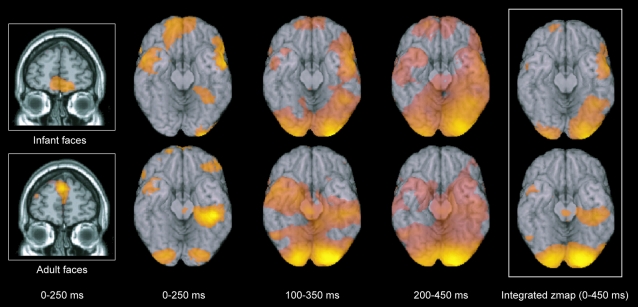
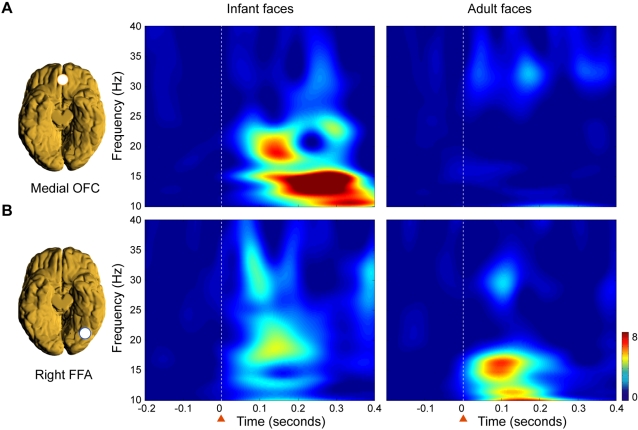
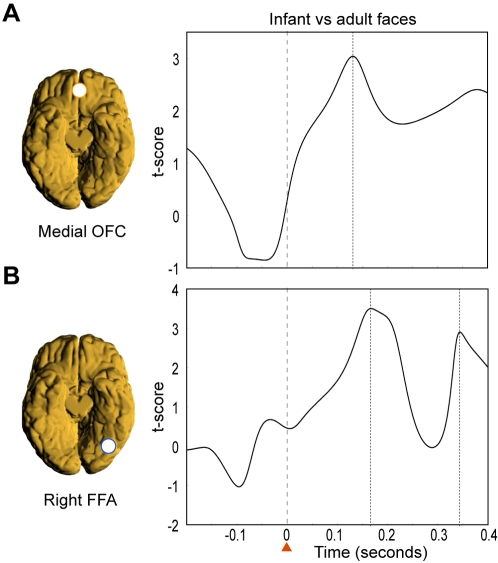
Darwin originally pointed out that there is something about infants which prompts adults to respond to and care for them, in order to increase individual fitness, i.e. reproductive success, via increased survivorship of one's own offspring. Lorenz proposed that it is the specific structure of the infant face that serves to elicit these parental responses, but the biological basis for this remains elusive. Here, we investigated whether adults show specific brain responses to unfamiliar infant faces compared to adult faces, where the infant and adult faces had been carefully matched across the two groups for emotional valence and arousal, as well as size and luminosity. The faces also matched closely in terms of attractiveness. Using magnetoencephalography (MEG) in adults, we found that highly specific brain activity occurred within a seventh of a second in response to unfamiliar infant faces but not to adult faces. This activity occurred in the medial orbitofrontal cortex (mOFC), an area implicated in reward behaviour, suggesting for the first time a neural basis for this vital evolutionary process. We found a peak in activity first in mOFC and then in the right fusiform face area (FFA). In mOFC the first significant peak (p<0.001) in differences in power between infant and adult faces was found at around 130 ms in the 10-15 Hz band. These early differences were not found in the FFA. In contrast, differences in power were found later, at around 165 ms, in a different band (20-25 Hz) in the right FFA, suggesting a feedback effect from mOFC. These findings provide evidence in humans of a potential brain basis for the "innate releasing mechanisms" described by Lorenz for affection and nurturing of young infants. This has potentially important clinical applications in relation to postnatal depression, and could provide opportunities for early identification of families at risk.
Overview
The claims and statistics of this paper haven’t been checked yet.
Run the check — free, no account needed. It reads the open-access text and checks the sources it cites.
Integrity signals
Registry
Cites
Statistics
Figures
Verification
Claims the paper makes
The claims and statistics of this paper haven’t been checked yet.
Run the check — free, no account needed. It reads the open-access text and checks the sources it cites.
Claims other papers make about this one
Each is checked against this paper’s own text: does it say what the citing paper says it does?
In the citing paper
“Again, coordinated responses in drive (amygdala) and regulation (cinglulate) figure prominently in these papers.”
From The human parental brain: In vivo neuroimaging (2011) · cites this paper as Kringelbach et al., 2008
In the citing paper
“Not only is facial recognition of one’s infant and their emotional state critical to their survival, but evidence supports human preference for the exaggerated cute/infantile features of baby faces which appear to activate reward mechanisms within the caregiver and motivate/promote mothers to caregiving, bonding and attachment.”
From Approaching the biology of human parental attachment: Brain imaging, oxytocin and coordinated assessments of mothers and fathers (2014) · cites this paper as Kringelbach et al., 2008
In the citing paper
“In addition to activation of nucleus accumbens (NAcc) in response to baby schema (Glocker et al., 2009) and medial orbitofrontal cortex (OFC) response to infant faces relative to adults (Kringelbach et al., 2008), higher levels of infantile features are preferred (Parsons et al., 2011).”
From Approaching the biology of human parental attachment: Brain imaging, oxytocin and coordinated assessments of mothers and fathers (2014) · cites this paper as Kringelbach et al., 2008
Self-check
Percentages, sums and reported differences re-computed from the paper’s own numbers.
The self-check needs the paper’s full text.
Citations
Cites
The expression of the emotions in man and animals.
Darwin, C. D. (1872) · J. Murray eBooks · doi:10.1037/10001-000 · Cited by 12,120
Attachment and Loss. Vol. 1. Attachment
Rever, G. W. (1972) · Psychosomatic Medicine · doi:10.1097/00006842-197211000-00011 · Cited by 8,446
The fusiform face area: a module in human extrastriate cortex specialized for face perception
Kanwisher, N., McDermott, J., & Chun, M. M. (1997) · The Journal of Neuroscience · doi:10.1523/jneurosci.17-11-04302.1997 · Cited by 7,738 · cited 2×
“It is still, however, controversial whether the activity in FFA represents a localized or distributed coding of faces [8,11,12].”
BackgroundA global optimisation method for robust affine registration of brain images
Jenkinson, M., & Smith, S. M. (2001) · Medical Image Analysis · doi:10.1016/s1361-8415(01)00036-6 · Cited by 7,018 · cited 2×
“The normalisation parameters were obtained using FLIRT (FMRIB’s Linear Image Registration Tool) [44] to reslice each individual’s anatomical MRI to the same orientation and position as the SAM functional volume and finding the transformation matrix from this functional space into the standard MNI space.”
MethodAttachment and Loss. Vol. I. Attachment.
Jones, N. B., & Bowlby, J. (1970) · Man · doi:10.2307/2798963 · Cited by 4,208 · cited 1×
“It is argued that these ‘‘babyish’’ features increase the infant’s chance of survival by evoking parental responses [4,5].”
BackgroundDeep Brain Stimulation for Treatment-Resistant Depression
Mayberg, H. S., Lozano, A. M., Voon, V., McNeely, H. E., Seminowicz, D., Hamani, C., Schwalb, J. M., & Kennedy, S. H. (2005) · Neuron · doi:10.1016/j.neuron.2005.02.014 · Cited by 4,059 · cited 1×
“Also, there is now evidence from deep brain stimulation linking depression to the nearby subgenual cingulate cortex which is strongly connected with the medial orbitofrontal cortex [35].”
BackgroundDistributed and overlapping representations of faces and objects in ventral temporal cortex
Haxby, J. V., Gobbini, M. I., Furey, M. L., Ishai, A., Schouten, J. L., & Pietrini, P. (2001) · Science · doi:10.1126/science.1063736 · Cited by 3,940 · cited 1×
“It is still, however, controversial whether the activity in FFA represents a localized or distributed coding of faces [8,11,12].”
BackgroundEkman, P., & Friesen, W. V. (1975) · Cited by 3,569
Speed of processing in the human visual system
Thorpe, S., Fize, D., & Marlot, C. (1996) · Nature · doi:10.1038/381520a0 · Cited by 3,538
Automatic 3D intersubject registration of MR volumetric data in standardized Talairach space
Collins, D. L., Neelin, P., Peters, T. M., & Evans, A. C. (1994) · Journal of Computer Assisted Tomography · doi:10.1097/00004728-199403000-00005 · Cited by 3,431 · cited 1×
“Group statistical maps for each frequency band were generated by first normalising the SAM functional volumes to MNI standard space [43] and then combining these volumes across participants for each time window and frequency band.”
Method
Cited by
Sorted by citations
Items 101–200 of 262
Bowlby's “Environment of Evolutionary Adaptedness”
Schore, A. N. (2012) · Oxford University Press eBooks · doi:10.1093/acprof:oso/9780199755059.003.0002 · Cited by 31
Pascalis, L. D., Kkeli, N., Chakrabarti, B., Dalton, L. J., Vaillancourt, K., Rayson, H., Bicknell, S., Goodacre, T., Cooper, P., Stein, A. L., et al. (2017) · Infant Behavior and Development · doi:10.1016/j.infbeh.2016.12.003 · Cited by 30
“Notably, the facial disruption entailed by cleft lip also reduces the specific parental brain responses elicited by typical infant faces and associated with reward (Kringelbach et al., 2008; Parsons et al., 2013).”
Voorthuis, A., Riem, M. M. E., van IJzendoorn, M. H., & Bakermans‐Kranenburg, M. J. (2013) · Brain Research · doi:10.1016/j.brainres.2013.10.051 · Cited by 28
Motivated Attention and Reward in Parenting
Ferrey, A. E., Santascoy, N., McCrory, E. J. P., Thompson‐Booth, C., Mayes, L. C., & Rutherford, H. J. V. (2016) · Parenting · doi:10.1080/15295192.2016.1184928 · Cited by 31
“A related MEG study found that medial OFC activity peaked around 130 ms when non-parents viewed infant faces but not adult faces (Kringelbach et al., 2008).”
BackgroundColasante, T., Mossad, S. I., Dudek, J., & Haley, D. W. (2016) · Social Cognitive and Affective Neuroscience · doi:10.1093/scan/nsw166 · Cited by 26
“Viewing infant vs adult faces (e.g., Kringelbach et al., 2008; Proverbio et al., 2011) and negative vs positive facial expressions (e.g. Blau et al., 2007) is associated with greater neural activity in regions sensitive to face processing.”
BackgroundLookism as Epistemic Injustice
Spiegel, T. J. (2022) · Social Epistemology · doi:10.1080/02691728.2022.2076629 · Cited by 28
“Ugly children are treated differently, worse, than beautiful children (Kringelbach et al. 2008) from an early age.”
BackgroundEpigenetic and Neural Circuitry Landscape of Psychotherapeutic Interventions
Miller, C. W. T. (2017) · Psychiatry Journal · doi:10.1155/2017/5491812 · Cited by 26
Development + Social Selection in the Emergence of “Emotionally Modern” Humans
Hrdy, S. B. (2013) · Research and perspectives in neurosciences · doi:10.1007/978-3-319-02904-7_5 · Cited by 27
Neurobiology and child development: Challenging current interpretation and policy implications
Sims, M. (2009) · Australasian Journal of Early Childhood · doi:10.1177/183693910903400106 · Cited by 24
Cognitive and Neurological Mechanisms of Cuteness Perception: A New Perspective on Moral Education
Zhang, Z., & Zhou, J. (2020) · Mind Brain and Education · doi:10.1111/mbe.12252 · Cited by 25
Bhandari, R., van der Veen, R., Parsons, C. E., Young, K. S., Voorthuis, A., Bakermans‐Kranenburg, M. J., Stein, A. L., Kringelbach, M. L., & van IJzendoorn, M. H. (2014) · Social Neuroscience · doi:10.1080/17470919.2014.932307 · Cited by 23
“As infant cues differ from adult cues in how they are processed in the adult brain (Kringelbach et al., 2008), and as oxytocin selectively increases the preference for infants compared to adults (Marsh et al.”
InfluentialThe other-race effect does not apply to infant faces: An ERP attentional study
Proverbio, A. M., & Gabriele, V. D. (2017) · Neuropsychologia · doi:10.1016/j.neuropsychologia.2017.03.028 · Cited by 23
“Baby faces are perceived as cute and this is thought to increase the adult motivation to take care of infants (Hahn and Perrett, 2014; Alley, 1981; Glocker et al., 2009; Kringelbach et al., 2008; Leibenluft et al., 2004; Nitschke et al., 2004; Proverbio et al., 2011b).”
Carli, P. D., Riem, M. M. E., & Parolin, L. A. L. (2017) · Infant Behavior and Development · doi:10.1016/j.infbeh.2017.08.005 · Cited by 21
“…parents and it is therefore likely that specific neurophysiological mechanisms have developed to subserve the perception of infant signals (Esposito, Valenzi, Islam, Mash, & Bornstein, 2015; Kringelbach et al., 2008; Piallini, De Palo, & Simonelli, 2015; Swain et al., 2014; Young et al., 2015).”
BackgroundMother brain is wired for social moments
Shimon-Raz, O., Salomon, R., Bloch, M., Romano, G. A., Hendler, T., Yeshurun, Y., Ulmer-Yaniv, A., Zagoory‐Sharon, O., & Feldman, R. (2021) · eLife · doi:10.7554/elife.59436 · Cited by 20
Proverbio, A. M., Tacchini, M., & Jiang, K. (2022) · Frontiers in Behavioral Neuroscience · doi:10.3389/fnbeh.2022.1025870 · Cited by 22
“The N2 response to infant faces was thought to reflect the brain response to baby schema, in particular the activity of reward circuits located within the orbitofrontal cortex, and be sensitive to pedomorphic features of the face (Kringelbach et al., 2008; Glocker et al., 2009; Parsons et al., 2013).”
BackgroundSocial and Affective Neuroscience of Everyday Human Interaction
Boggio, P. S., Wingenbach, T. S. H., Coêlho, M. L. D. S., Comfort, W. E., Marques, L. M., & Alves, M. V. (2022) · Springer eBooks · doi:10.1007/978-3-031-08651-9 · Cited by 23
Wong, W.-W., Cabral, J., Rane, R., Ly, R., Kringelbach, M. L., & Feusner, J. D. (2021) · Neuropsychopharmacology · doi:10.1038/s41386-021-01039-w · Cited by 18
Graamans, E., Zolnikov, T. R., Smet, E., Nguura, P. N., Leshore, L. C., & ten Have, S. (2019) · Pan African Medical Journal · doi:10.11604/pamj.2019.32.59.17624 · Cited by 19
Bjertrup, A. J., Friis, N. K., Væver, M. S., & Miskowiak, K. W. (2021) · Social Cognitive and Affective Neuroscience · doi:10.1093/scan/nsab002 · Cited by 18
Yoga Lessons for Consciousness Research: A Paralimbic Network Balancing Brain Resource Allocation
Lou, H. C., Joensson, M., & Kringelbach, M. L. (2011) · Frontiers in Psychology · doi:10.3389/fpsyg.2011.00366 · Cited by 18
“…smell, and touch (linked to survival-related rewards such as food and sex) and their subsequent evaluation have the potential to temporarily shift the focus of the brain networks to allow for efficient processing and control over behaviors (Berridge and Kringelbach, 2008; Kringelbach et al., 2008).”
Mellor, D. J. (2018) · Animals · doi:10.3390/ani8060082 · Cited by 18
“Thus, adult humans (both female and male) exhibit highly specific and salient brain electrical activity within a seventh of a second of being shown faces of newborn infants but not adult faces [111].”
BackgroundEmotional Processing of Infants Displays in Eating Disorders
Cardi, V., Corfield, F., Leppänen, J., Rhind, C., Deriziotis, S., Hadjimichalis, A., Hibbs, R., Micali, N., & Treasure, J. L. (2014) · PLoS ONE · doi:10.1371/journal.pone.0113191 · Cited by 17
“Infant faces are considered to be particularly salient and rewarding for humans [11, 12].”
BackgroundMethodGolonka, E., Jones, K. M., Sheehan, P., Pandža, N. B., Paletz, S. B. F., Rytting, C. A., & Johns, M. A. (2023) · Frontiers in Psychology · doi:10.3389/fpsyg.2023.1068373 · Cited by 17
Stein, A. L., Murphy, S. E., Arteche, A. X., Lehtonen, A., Harvey, A. G., Craske, M. G., & Harmer, C. J. (2011) · Journal of Psychopharmacology · doi:10.1177/0269881111421970 · Cited by 17
Li, B., Cheng, G., Zhang, D., Wei, D., Qiao, L., Wang, X., & Che, X. (2016) · PLoS ONE · doi:10.1371/journal.pone.0166860 · Cited by 17
FMRI Study of Neural Responses to Implicit Infant Emotion in Anorexia Nervosa
Leppänen, J., Cardi, V., Paloyelis, Y., Simmons, A., Tchanturia, K., & Treasure, J. L. (2017) · Frontiers in Psychology · doi:10.3389/fpsyg.2017.00780 · Cited by 16
“The stimuli were acquired from a validated set of infant emotional facial expressions and composed of ten different babies (five female, five male) (Kringelbach et al., 2008).”
BackgroundVolk, A. A. (2009) · Journal of Evolutionary Psychology · doi:10.1556/jep.7.2009.3.3 · Cited by 16
Both cute and threatening images drive narrowing of attention in men and women
Millán, A. Á.-S., Iglesias, J., Gutkin, A., & Olivares, E. I. (2021) · Psychological Research · doi:10.1007/s00426-021-01548-9 · Cited by 15
Kawaguchi, Y., Nakamura, K., Tajima, T., & Waller, B. M. (2023) · Scientific Reports · doi:10.1038/s41598-023-31731-4 · Cited by 19
The Effect of a Cute Stimulus on Personally-Initiated, Self-Administered Surveys
Bellfield, J., Bimont, C., Blom, J. L., Dommeyer, C. J., Gardiner, K., Mathenia, E., & Soto, J. (2011) · Cited by 15
Creation and Validation of the Japanese Cute Infant Face (JCIF) Dataset
Nittono, H., Ohashi, A., & Komori, M. (2022) · Frontiers in Psychology · doi:10.3389/fpsyg.2022.819428 · Cited by 16
Maternal face processing in Mosuo preschool children
Dai, J., Zhai, H., Wu, H., Yang, S., Cacioppo, J. T., Cacioppo, S., & Luo, Y. (2014) · Biological Psychology · doi:10.1016/j.biopsycho.2014.03.001 · Cited by 14
“Familiarity was characterized by the length of time spent with someone or the information collected concerning someone (Guerra et al., 2011; Kringelbach et al., 2008; Langeslag et al., 2007; Vico et al., 2010).”
BackgroundSustained opioid antagonism modulates striatal sensitivity to baby schema in opioid use disorder
Wang, A., Lowen, S. B., Elman, I., Shi, Z., Fairchild, V. P., Bouril, A., Gur, R. C., & Langleben, D. D. (2017) · Journal of Substance Abuse Treatment · doi:10.1016/j.jsat.2017.10.007 · Cited by 15
“Infant faces are postulated to be instinctively hedonic stimuli that activate the ventral striatum and other components of the extended limbic system in healthy individuals (M. L. Glocker et al., 2009b; Kringelbach, 2005; Kringelbach et al., 2008; Nocjar & Panksepp, 2007; Parsons et al., 2011).”
BackgroundBjertrup, A. J., Jensen, M. B., Schjødt, M. S., Parsons, C. E., Kjærbye‐Thygesen, A., Mikkelsen, R. L., Moszkowicz, M., Frøkjær, V. G., Vinberg, M., Kessing, L. V., et al. (2020) · European Neuropsychopharmacology · doi:10.1016/j.euroneuro.2020.10.006 · Cited by 14
Experimental manipulation of infant temperament affects amygdala functional connectivity
Riem, M. M. E., van IJzendoorn, M. H., Parsons, C. E., Young, K. S., Carli, P. D., Kringelbach, M. L., & Bakermans‐Kranenburg, M. J. (2017) · Cognitive Affective & Behavioral Neuroscience · doi:10.3758/s13415-017-0518-8 · Cited by 14
“In order to reduce any confounding effects of stimulus gender, we had an independent sample of adult females (n = 40) rate faces from a larger set of 13 (Kringelbach et al., 2008) as B male, ^ B female, ^ B cannot tell.”
Kawai vs. Whimsical: The influence of cuteness types of luxury brands on consumers’ preferences
Feng, W., Yuanping, X., Huang, H., & Tao, W. A. N. G. (2022) · Acta Psychologica Sinica · doi:10.3724/sp.j.1041.2022.00313 · Cited by 13
Lorenz’s classic ‘baby schema’: a useful biological concept?
Kawaguchi, Y., & Waller, B. M. (2024) · Proceedings of the Royal Society B Biological Sciences · doi:10.1098/rspb.2024.0570 · Cited by 18
“When responses to infant faces versus adult faces were examined using magnetoencephalography(MEG), e.g. specific brain activity was found to occur in the medial orbitofrontal cortex, which mediates reward processing [5].”
BackgroundMethodSensitive infant care tunes a frontotemporal interbrain network in adolescence
Schwartz, L., Hayut, O., Lévy, J., Gordon, I., & Feldman, R. (2024) · Scientific Reports · doi:10.1038/s41598-024-73630-2 · Cited by 13
“This aligns with extensive research pointing to the crucial role of beta rhythm in parent-child interactions and attachment processes 61,80,92,153,154 .”
BackgroundImpact of Emotion on Consciousness: Positive Stimuli Enhance Conscious Reportability
Thomsen, K. R., Lou, H. C., Joensson, M., Hyam, J. A., Holland, P. C., Parsons, C. E., Young, K. S., Møller, A., Stein, A. L., Green, A. L., et al. (2011) · PLoS ONE · doi:10.1371/journal.pone.0018686 · Cited by 13
“The infant faces used in the task are from a database of digital photographs of infant facial expressions that was produced from digital videotapes of 27 infants (ages 3–12 months) [25].”
Swain, J. E., & Ho, S.-H. S. (2023) · Journal of Neuroendocrinology · doi:10.1111/jne.13316 · Cited by 11
Using Modern Attachment Theory to Guide Clinical Assessments of Early Attachment Relationships
Schore, A. N., & Newton, R. P. (2012) · Springer eBooks · doi:10.1007/978-1-4614-4848-8_4 · Cited by 12
“In the aforementioned editorial by Leckman and March (2011), the authors describe “A complex, dynamic story is unfolding of evolutionarily conserved genetic programs that guide mammalian brain development and how our in utero and our early postnatal interpersonal worlds shape and mold the individuals (infants, childre…”
BackgroundInfluentialJia, Y., Ding, F., Cheng, G., Chen, J., Zhang, W., Lin, N., & Zhang, D. J. (2020) · Quarterly Journal of Experimental Psychology · doi:10.1177/1747021820981862 · Cited by 12
“As the baby schema was proposed with the implicit assumption that typical adult physical features could be used as a baseline for comparison, it is necessary to remove the general effect of adult faces to reveal the specific effect of infant faces, as in a series of previous studies (Brosch et al., 2007; Kringelbach e…”
ResultDoebel, S., Stucke, N. J., & Pang, S. (2022) · Scientific Reports · doi:10.1038/s41598-022-15922-z · Cited by 16
Bohne, A., Nordahl, D., Lindahl, Å. A. W., Ulvenes, P., Wang, C. E. A., & Pfuhl, G. (2021) · Frontiers in Psychology · doi:10.3389/fpsyg.2021.657269 · Cited by 12
Dydynski, J. M. (2020) · Biosemiotics · doi:10.1007/s12304-020-09386-9 · Cited by 11
“…including: the impact of the baby schema on the mesocorticolimbic system in women (Glocker et al. 2009); the neurological responses behind parental instincts in adults (Kringelbach et al. 2008); responses in the orbitofrontal cortex of women when viewing infants (Nitschke et al. 2004).”
BackgroundChanging mothers’ perception of infant emotion: a pilot study
Carnegie, R., Shepherd, C., Pearson, R. M., Button, K. S., Munafo, M. R., Evans, J., & Penton‐Voak, I. S. (2015) · Archives of Women s Mental Health · doi:10.1007/s00737-015-0565-5 · Cited by 11
Burunat, E. (2016) · Psychology · doi:10.4236/psych.2016.714173 · Cited by 14
Attractiveness Modulates Neural Processing of Infant Faces Differently in Males and Females
Yin, L., Fan, M., Lin, L., Sun, D., & Wang, Z. (2017) · Frontiers in Human Neuroscience · doi:10.3389/fnhum.2017.00551 · Cited by 11
“Enhanced brain activation in the vmPFC was also found while seeing one’s own baby’s neutral face or hearing one’s own baby crying (Kringelbach et al., 2008; Noriuchi et al., 2008).”
BackgroundLimbic-visual attenuation to crying faces underlies neglectful mothering
León, I., López, M. J. R., El‐Deredy, W., Modroño, C., Hernandez-Cabrera, J. A., & Quiñones, I. (2019) · Scientific Reports · doi:10.1038/s41598-019-42908-1 · Cited by 11
Lewis, J., Roberson, D. D., & Foulsham, T. (2017) · PLoS ONE · doi:10.1371/journal.pone.0180499 · Cited by 10
Azhari, A., Truzzi, A., Rigo, P., Bornstein, M. H., & Esposito, G. (2018) · Physiology & Behavior · doi:10.1016/j.physbeh.2018.08.010 · Cited by 10
Baby Faces: Development and psychometric study of a stimuli set based on babies’ emotions
Donadon, M. F., Martín‐Santos, R., & Osório, F. D. L. (2018) · Journal of Neuroscience Methods · doi:10.1016/j.jneumeth.2018.10.021 · Cited by 10
Stäbler, S., & Mierisch, K. K. (2021) · Marketing Letters · doi:10.1007/s11002-021-09566-8 · Cited by 13
Konner, M. J. (2021) · Human Nature · doi:10.1007/s12110-021-09414-8 · Cited by 10
“, 2017), tracing “a specific and rapid neural signature for parental instinct” (Kringelbach et al., 2008; Young et al., 2016), including OFC in a network cued to infant faces and voices.”
BackgroundMothers’ pupillary responses to infant facial expressions
Yrttiaho, S., Niehaus, D. J. H., Thomas, E., & Leppänen, J. M. (2017) · Behavioral and Brain Functions · doi:10.1186/s12993-017-0120-9 · Cited by 10
Night Shifts: Revisiting Blanket Restrictions on Children’s Overnights With Separated Parents
Warshak, R. A. (2018) · Journal of Divorce & Remarriage · doi:10.1080/10502556.2018.1454193 · Cited by 10
“Moreover, fathers and mothers are equally sensitive toward their infants (Braungart-Rieker, Garwood, Powers, & Notaro, 1998; Cabrera, Shannon, & Tamis-LeMonda, 2010; Kringelbach et al., 2008; Lamb, 1977).”
BackgroundGender differences in brain response to infant emotional faces
Zhang, K., Du, X., Liu, X., Su, W., Sun, Z., Wang, M., & Du, X. (2022) · BMC Neuroscience · doi:10.1186/s12868-022-00761-5 · Cited by 10
“The activity of the fusiform gyrus was modulated by individual differences in interest-in-infants [36], and the fusiform gyrus plays an important role in learning, monitoring, and memory of salient reward-related stimuli in the environment [37].”
BackgroundXu, J., Zhang, C., Cuijpers, R. H., & IJsselsteijn, W. A. (2025) · CHI Conference on Human Factors in Computing Systems · doi:10.1145/3706598.3714271 · Cited by 9
Effects of sex and parental status on the assessment of infant faces.
Arteche, A. X., Vivian, F. A., Dalpiaz, B. P. Y., & Salvador-Silva, R. (2016) · Psychology & Neuroscience · doi:10.1037/h0101552 · Cited by 9
Eye Size Affects Cuteness in Different Facial Expressions and Ages
Yao, L., Dai, Q., Wu, Q., Liu, Y., Yu, Y., Guo, T., Zhou, M., Yang, J., Takahashi, S., Ejima, Y., et al. (2022) · Frontiers in Psychology · doi:10.3389/fpsyg.2021.674456 · Cited by 10
The impact of alcohol use during pregnancy on maternal responses after birth
Pearson, R. M., Heron, J., Melotti, R., Joinson, C. J., & Evans, J. (2012) · Archives of Women s Mental Health · doi:10.1007/s00737-012-0305-z · Cited by 9
“system also involved in reward processing and approach motivation (Swain et al. 2007a; Bartels and Zeki 2004; Noriuchi et al. 2008; Nitschke et al. 2004; Seifritz et al. 2003; Lorberbaum et al. 2002; Kringelbach et al. 2008).”
BackgroundCárdenas, E. F., Hill, K. E., Estes, E., Jackson, M., Venanzi, L., Humphreys, K. L., & Kujawa, A. (2023) · Biological Psychology · doi:10.1016/j.biopsycho.2023.108673 · Cited by 9
Towards a neural model of bonding in self-attachment
Cittern, D., & Edalat, A. (2015) · International Joint Conference on Neural Networks (IJCNN) · doi:10.1109/ijcnn.2015.7280548 · Cited by 9
“For example, [13] found activation of the medial OFC (a region implicated in stimulus-reward association) in response to images of unfamiliar infants but not adults.”
BackgroundTime in the orbitofrontal cortex
Kringelbach, M. L., & Rapuano, K. M. (2016) · Brain · doi:10.1093/brain/aww049 · Cited by 8
“Previous studies have observed rapid reward-related activity in the OFC ( 130 ms) to salient visual stimuli requiring a fast orienting response, which is often followed by a second, slower wave of activity thought to reflect conscious cognitive processes (Bar et al., 2006; Kringelbach et al., 2008).”
BackgroundNo other race effect (ORE) for infant face recognition: A memory task
Proverbio, A. M., Parietti, N., & Benedetto, F. D. (2020) · Neuropsychologia · doi:10.1016/j.neuropsychologia.2020.107439 · Cited by 8
Glued to Which Face? Attentional Priority Effect of Female Babyface and Male Mature Face
Zheng, W., Luo, T., Chuan-Peng, H., & Peng, K. (2018) · Frontiers in Psychology · doi:10.3389/fpsyg.2018.00286 · Cited by 8
Sex Differences in Social Cognition
Proverbio, A. M. (2022) · Springer eBooks · doi:10.1007/978-3-031-08651-9_6 · Cited by 7
Trentini, C., Pagani, M., Lauriola, M., & Tambelli, R. (2020) · International Journal of Environmental Research and Public Health · doi:10.3390/ijerph17093314 · Cited by 9
“Based on this evidence, it has been suggested that mOFC is “a potential brain basis for the ‘innate releasing mechanisms’ described by Lorenz for affection and nurturing of young infants” [18] (p.”
BackgroundA magnetoencephalography study of first-time mothers listening to infant cries
Høgholt, N. F., Bonetti, L., Stevner, A. B. A., Andersen, C., Hughes, M., Fernandes, H. M., Vuust, P., & Kringelbach, M. L. (2022) · Cerebral Cortex · doi:10.1093/cercor/bhac469 · Cited by 8
Attentional Prioritization of Infant Faces in Parents: The Influence of Parents’ Experiences of Care
Gemignani, M., Giannotti, M., Schmalz, X., Rigo, P., & de Falco, S. (2022) · International Journal of Environmental Research and Public Health · doi:10.3390/ijerph20010527 · Cited by 7
Ethnic effects when facing children: An ERP study
Spencer, H., Heitland, I., Montoya, E. R., Branje, S., & Bos, P. A. (2018) · Biological Psychology · doi:10.1016/j.biopsycho.2018.08.015 · Cited by 7
“The effect of baby schema furthermore appears to evoke a very early specific neural response reflecting enhanced attentional processing of infant faces compared to adult faces (Hahn et al., 2016; Jantzen et al., 2017; Kringelbach et al., 2008).”
BackgroundThe Involvement of Parents in the Children’s Care Process; a Comparison of Various Countries
Santoso, M. B. (2018) · EMPATI Jurnal Ilmu Kesejahteraan Sosial · doi:10.15408/empati.v7i1.10008 · Cited by 7
How a mother processes her infant's distress: Cognitive pathways to maternal insensitivity
Fuths, S., Seehagen, S., & Schneider, S. (2017) · Mental Health & Prevention · doi:10.1016/j.mhp.2017.03.004 · Cited by 5
“Mothers display striatal, thalamic, orbitofrontal and anterior cingulate activation that are presumed to underlie reward, motivational and approach processes in response to audiotapes of infant distress (Kim et al., 2011; Kringelbach et al., 2008).”
BackgroundPrenatal affective cognitive training: A proof-of-concept study
Bjertrup, A. J., Petersen, T. H., Beier, N., Kofoed, J., Horgen, I. Å., Kjærbye‐Thygesen, A., Kirkegaard, T., & Miskowiak, K. W. (2023) · Neuroscience Applied · doi:10.1016/j.nsa.2023.101135 · Cited by 6
“The cognitive bias modi fi cation task consisted of grey scale images of 50 emotional infant faces (from Kringelbach, Lehtonen (Kringelbach et al., 2008)) in fi ve different categories (very happy, moderately happy, very distressed, moderately distressed and ambiguous/neutral faces) presented for 2 s…”
The Role of Perception in Age Estimation
Murphy, C. A. (2012) · Lecture notes of the Institute for Computer Sciences, Social Informatics and Telecommunications Engineering · doi:10.1007/978-3-642-35515-8_1 · Cited by 6
“Kringelbach commented on the findings of the study stating, “These responses are almost certainly too fast to be consciously controlled and so are probably instinctive [22].”
BackgroundConsciousness: a neural capacity for objectivity, especially pronounced in humans
Dijker, A. J. M. (2014) · Frontiers in Psychology · doi:10.3389/fpsyg.2014.00223 · Cited by 6
Raghunath, B. L., Leng, K. S. H., Chen, S. H. A., Vijayaragavan, V., Gulyás, B. Z., Setoh, P., & Esposito, G. (2022) · Scientific Reports · doi:10.1038/s41598-022-15289-1 · Cited by 5
Kraft‐Todd, G. (2023) · Springer eBooks · doi:10.1007/978-3-031-17125-3_101-1 · Cited by 6
Social interactions between attachment partners increase inter-brain plasticity
Schwartz, L., Lévy, J., Salomonski, C., Peleg, I., Hayut, O., Zagoory‐Sharon, O., & Feldman, R. (2025) · Brain Research · doi:10.1016/j.brainres.2025.149856 · Cited by 5
Høgholt, N. F., Buus, S., Fernandes, H. M., Sui, J., Vuust, P., & Kringelbach, M. L. (2022) · Acta Paediatrica · doi:10.1111/apa.16561 · Cited by 5
Russo, C., & Senese, V. P. (2022) · European Journal of Neuroscience · doi:10.1111/ejn.15890 · Cited by 6
“MEG has been used to study the brain areas involved in the development of infant faces (Kringelbach et al., 2008; Parsons et al., 2013), mother–infant relationship (Hirata et al., 2014) and their cerebral synchrony (Levy et al., 2017), helping to identify the brain areas involved in the parental…”
MethodFabrício, D. D. M., Ferreira, B. L. C., Maximiano‐Barreto, M. A., Muniz, M., & Chagas, M. H. N. (2022) · Dementia & Neuropsychologia · doi:10.1590/1980-5764-dn-2022-0039 · Cited by 5
The scent of cuteness—neural signatures of infant body odors
Schäfer, L., Koeppel, C. J., Kreßner-Kiel, D., Schwerdtfeger, S., Michael, M. A., Weidner, K., & Croy, I. (2024) · Social Cognitive and Affective Neuroscience · doi:10.1093/scan/nsae038 · Cited by 7
“On a neural level, the perception of visual cuteness is associated with fast and specific responses in the orbitofrontal cortex (OFC) (Kringelbach et al ., 2008).”
BackgroundLeitão, M. B. P., & Castelo‐Branco, R. (2010) · Estudos de Psicologia (Natal) · doi:10.1590/s1413-294x2010000100010 · Cited by 5
Altruistic responses to the most vulnerable involve sensorimotor processes
Vickers, B. D., Seidler, R. D., Stansfield, R. B., Weissman, D. H., & Preston, S. D. (2023) · Frontiers in Psychiatry · doi:10.3389/fpsyt.2023.1140986 · Cited by 7
“This circuit is also activated by images of neonates (51, 97, 98) and their cries (99, 100)—particularly OFC, amygdala, nucleus accumbens, and cingulate cortex.”
BackgroundRobotic Alloparenting: A New Solution to an Old Problem?
McClelland, R. T. (2016) · The Journal of mind and behavior · Cited by 4
Endendijk, J. J., Bos, P. A., Smit, A. K., & van Baar, A. L. (2020) · Behavioural Brain Research · doi:10.1016/j.bbr.2020.112677 · Cited by 4
Limbic Cortex: The Functional Neuroanatomy of Emotion and Hedonic Processing
Kringelbach, M. L. (2015) · Springer eBooks · doi:10.1007/978-1-4614-6434-1_46-3 · Cited by 4
Lopez, A. F., Joy, S., & Kumar, A. A. (2023) · Advances in human resources management and organizational development book series · doi:10.4018/978-1-6684-6567-7.ch011 · Cited by 4
Attachment Reminders Trigger Widespread Synchrony across Multiple Brains
Shimon-Raz, O., Yeshurun, Y., Ulmer-Yaniv, A., Levinkron, A., Salomon, R., & Feldman, R. (2023) · Journal of Neuroscience · doi:10.1523/jneurosci.0026-23.2023 · Cited by 7
“…of the young and reminders of the primary attachment, whether stimuli of one ’ s own child or those of a standard infant (Ranote et al., 2004; Kringelbach et al., 2008; Noriuchi et al., 2008; Mascaro et al., 2014), trigger a powerful response in the brains of human adults (Swain, 2011) as…”
BackgroundRECOGNIZING INFANTS’ EMOTIONAL EXPRESSIONS: ARE ADOLESCENTS LESS SENSITIVE TO INFANTS’ CUES?
Nießen, A., Konrad, K., Dahmen, B., Herpertz‐Dahlmann, B., & Firk, C. (2017) · Infant Mental Health Journal · doi:10.1002/imhj.21651 · Cited by 4
When Do We Design for Emotion?
van Gorp, T., & Adams, E. (2012) · Elsevier eBooks · doi:10.1016/b978-0-12-386531-1.00003-x · Cited by 4
Babyface Effect: Babyface Preference and Overgeneralization
Dou, D., Xiaocen, L. I. U., & ZHANG, Y. (2014) · Advances in Psychological Science · doi:10.3724/sp.j.1042.2014.00760 · Cited by 4
Neurobiology of Culturally Common Maternal Responses to Infant Cry
Bornstein, M. H., Putnick, D. L., Suwalsky, J. T. D., Rigo, P., Esposito, G., Swain, J. E., Su, X., Du, X., Zhang, K., Cote, L. R., et al. (2022) · Routledge eBooks · doi:10.4324/9781003167570-19 · Cited by 5
The Prevalence and Potential Problem of Cuteness in Zoomorphic Robots
Voysey, I., Baillie, L., Williams, J. M., & Herrmann, J. M. (2025) · ACM Transactions on Human-Robot Interaction · doi:10.1145/3767724 · Cited by 4
“Cuteness captures attention [15, 67] and influences behaviour [99, 133].”
Who tugs at our heart strings? The effect of avatar images on player generosity in the dictator game
Buchanan, K. E., Rolison, J. J., Jinga, I., Thompson, J., & Russo, R. (2021) · Quarterly Journal of Experimental Psychology · doi:10.1177/17470218211050359 · Cited by 3
“In a neuroimaging study, Kringelbach et al. (2008) presented adult participants with photos of faces of unfamiliar adults and infants.”
BackgroundSteinnes, K. K., Lyshol, J. K. B., Zickfeld, J., Schubert, T. W., & Seibt, B. (2024) · Oxford University Press eBooks · doi:10.1093/oxfordhb/9780197544754.013.16 · Cited by 3
Bourne, V. J., & Jonauskaitė, D. (2014) · Personality and Individual Differences · doi:10.1016/j.paid.2014.10.026 · Cited by 3
“Infant chimeric faces were created from infant face stimuli used elsewhere (Kringelbach et al., 2008; Parsons et al., 2011) and had either positively or negatively valenced emotional expressions.”
BackgroundDeliberate control over facial expressions in motherhood. Evidence from a Stroop-like task
Recio, G., Surdzhiyska, Y., Bagherzadeh‐Azbari, S., Hilpert, P., Rostami, H. N., Xu, Q., & Sommer, W. (2022) · Acta Psychologica · doi:10.1016/j.actpsy.2022.103652 · Cited by 3
Effects of cleft lip on visual scanning and neural processing of infant faces
Hahn, A. C., Riedelsheimer, J. A., Royer, Z., Frederick, J. T., Kee, R., Crimmins, R., Huber, B. R., Harris, D. H., & Jantzen, K. J. (2024) · PLoS ONE · doi:10.1371/journal.pone.0300673 · Cited by 5
“…observed reduced activity in the orbitofrontal cortex, a critical reward-related region of the parental brain, when adults viewed infants with cleft lip/ palate compared to healthy infants, suggesting that cleft lip/palate may disrupt the neural responses typically associated with caregiving [3].”
Background
Metadata
- Authors
- Kringelbach, M. L., Lehtonen, A., Squire, S., Harvey, A. G., Craske, M. G., Holliday, I. E., Green, A. L., Aziz, T. Z., Hansen, P. C., Cornelissen, P. L., & Stein, A.
- Affiliations
- Aarhus University (DK)
- University of Oxford (GB)
- University of California, Berkeley (US)
- University of California, Los Angeles (US)
- Aston University (GB)
- John Radcliffe Hospital (GB)
- University of Birmingham (GB)
- University of York (GB)
- Corresponding author
- Kringelbach, Morten L.
- ORCID
- Venue
- PLoS ONE
- Publisher
- Public Library of Science (PLoS)
- Published
- 2008-02-27
- Volume
- 3
- Issue
- 2
- Pages
- e1664
- ISSN
- 1932-6203 (ISSN-L)
- PMC
- PMC2244707
- OpenAlex
- W2123848474
- Cited by
- 262
- References
- 47
- Citations by year
- 2026: 7 · 2025: 9 · 2024: 17 · 2023: 11 · 2022: 24 · 2021: 12 · 2020: 13 · 2019: 10 · 2018: 12 · 2017: 22 · 2016: 18 · 2015: 20 · 2014: 20 · 2013: 11 · 2012: 16
- FWCI
- 6.74
- Type
- journal article
- Language
- en
- Open access
- gold
- doi.org
- Locations
- PLoS ONE (publishedVersion, cc-by)
- Europe PMC (PubMed Central) (publishedVersion, cc-by)
- PubMed Central (publishedVersion, cc-by)
- PubMed (publishedVersion)
- Northumbria Research Link (Northumbria University) (acceptedVersion)
- Aston Publications Explorer (Aston University) (submittedVersion)
- DOAJ (DOAJ: Directory of Open Access Journals) (submittedVersion)
- Research Explorer (The University of Manchester) (submittedVersion, cc-by)
- University of Birmingham Research Portal (University of Birmingham) (submittedVersion, other-oa)
- Funders
- Wellcome Trust (017571, 071571)
- Lord Dowding Fund
- TrygFonden
- Topics
- Life Sciences › Neuroscience › Cognitive Neuroscience › Face Recognition and Perception
- Social Sciences › Psychology › Experimental and Cognitive Psychology › Evolutionary Psychology and Human Behavior
- Life Sciences › Neuroscience › Endocrine and Autonomic Systems › Neuroendocrine regulation and behavior
- Keywords
- infant face perception, face processing, medial orbitofrontal cortex, fusiform face area, Lorenz, infant care, reward processing, postpartum depression, magnetoencephalography
- MeSH terms
- Adult, Brain Mapping, Face, Frontal Lobe, Humans, Infant, Newborn, Pattern Recognition, Visual, Magnetoencephalography, Parenting
About these checks
Registry, retraction, Cites and statistics results are computed, not judged, with one exception: a printed reference that no index lists is read once by a model before it counts as a citation error. Claims are extracted by a model and kept only when their quote appears verbatim in the text; each cited source is then checked, with a model’s help, for whether it says what the claim relies on. Those verdicts can be wrong — read the claim’s quote and the cited source before relying on one.
Statistics and arithmetic are recomputed, not judged.
Confidence bands are shown only for fields calibrated on our annotated test set. None is calibrated yet, so no band is shown.
What counts as a claim ›How we measure confidence ›How we check this ›
Are you an author, or do you see a problem with this page? Request a review
