

Membrane Potential Controls Adipogenic and Osteogenic Differentiation of Mesenchymal Stem Cells
Open accessThe DOI matches its Crossref record; 66 of the 66 references it cites were found in a registry or an index.
Abstract
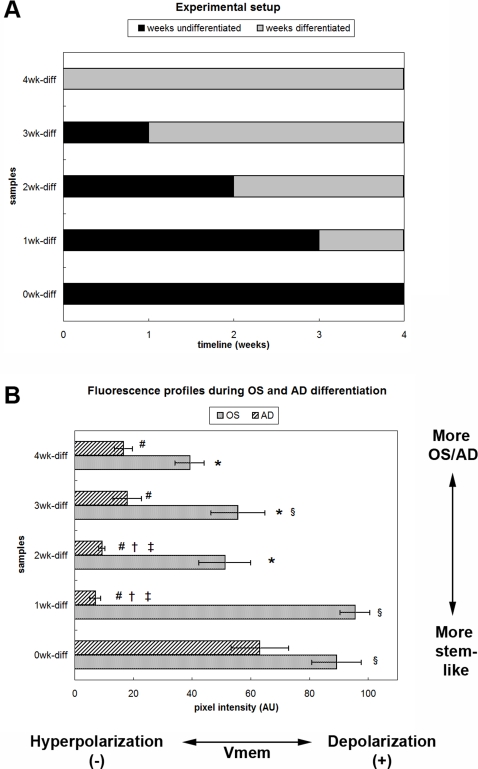
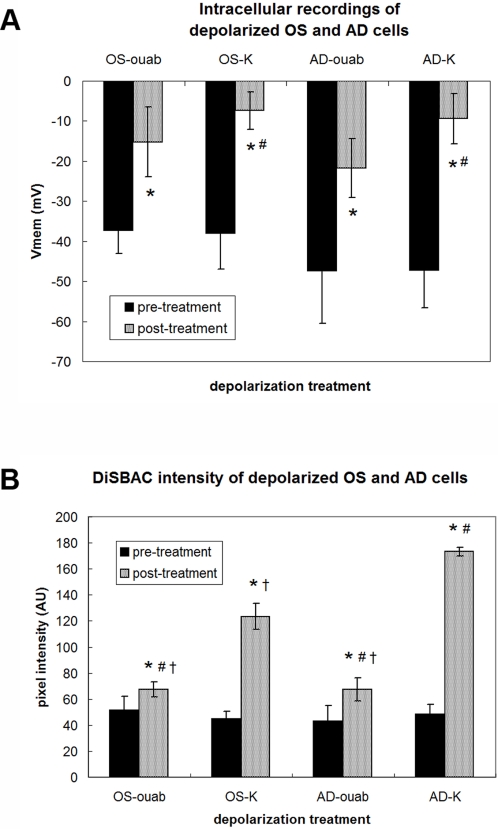
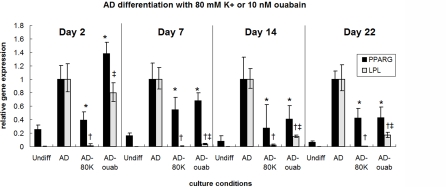
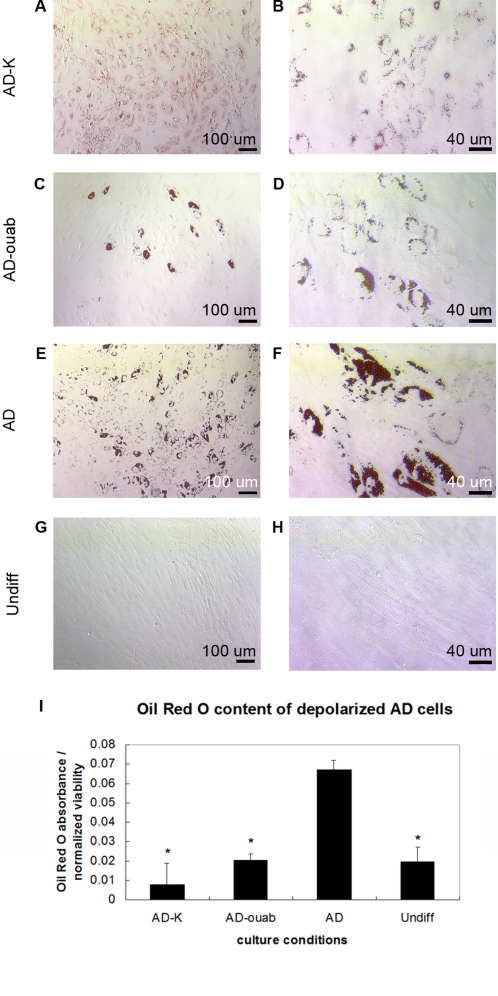
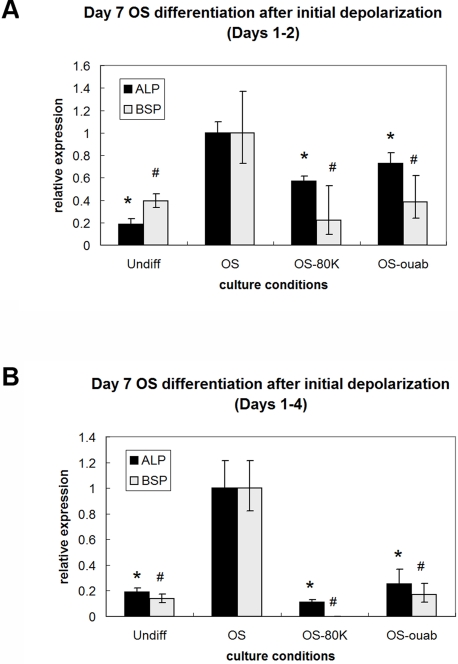
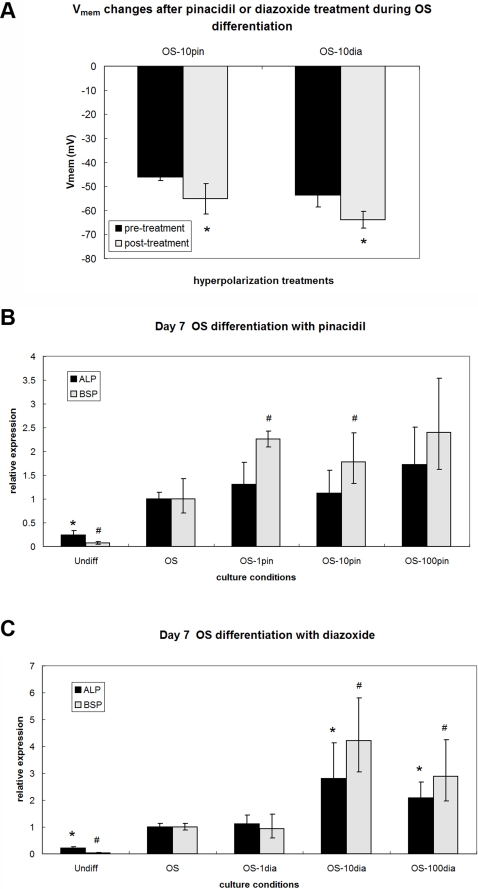
BACKGROUND: Control of stem cell behavior is a crucial aspect of developmental biology and regenerative medicine. While the functional role of electrophysiology in stem cell biology is poorly understood, it has become clear that endogenous ion flows represent a powerful set of signals by means of which cell proliferation, differentiation, and migration can be controlled in regeneration and embryonic morphogenesis. METHODOLOGY/PRINCIPAL FINDINGS: We examined the membrane potential (V(mem)) changes exhibited by human mesenchymal stem cells (hMSCs) undergoing adipogenic (AD) and osteogenic (OS) differentiation, and uncovered a characteristic hyperpolarization of differentiated cells versus undifferentiated cells. Reversal of the progressive polarization via pharmacological modulation of transmembrane potential revealed that depolarization of hMSCs prevents differentiation. In contrast, treatment with hyperpolarizing reagents upregulated osteogenic markers. CONCLUSIONS/SIGNIFICANCE: Taken together, these data suggest that the endogenous hyperpolarization is a functional determinant of hMSC differentiation and is a tractable control point for modulating stem cell function.
Overview
The claims and statistics of this paper haven’t been checked yet.
Free: it reads the open-access text and checks the first 5 claims that cite a source we can check. Create a free account to check every claim.
Integrity signals
Registry
Cites
Statistics
Figures
Verification
Claims the paper makes
The claims and statistics of this paper haven’t been checked yet.
Free: it reads the open-access text and checks the first 5 claims that cite a source we can check. Create a free account to check every claim.
Claims other papers make about this one
Each is checked against this paper’s own text: does it say what the citing paper says it does?
The cited source says what the claim attributes to it.
In the citing paper
“Pharmacologically-induced Vm depolarization suppresses adipogenic and osteogenic differentiation of hMSCs (Sundelacruz et al., 2008).”
From Membrane potential and cancer progression (2013) · cites this paper as Sundelacruz et al., 2008
The cited source says what the claim attributes to it.
In the citing paper
“Vm hyperpolarization is also a functional determinant of human mesenchymal stem cell (hMSC) differentiation.”
From Membrane potential and cancer progression (2013) · cites this paper as Sundelacruz et al., 2008
Self-check
Percentages, sums and reported differences re-computed from the paper’s own numbers.
The self-check needs the paper’s full text.
Citations
Cites
Quantification of mRNA using real-time RT-PCR
Nolan, T., Hands, R. E., & Bustin, S. A. (2006) · Nature Protocols · doi:10.1038/nprot.2006.236 · Cited by 2,247 · cited 1×
“Expression levels were normalized to the housekeeping gene glyceraldehyde 3phosphate dehydrogenase (GAPDH) and reported relative to positive control reactions (untreated OS or AD) [58–60].”
MethodmPPAR gamma 2: tissue-specific regulator of an adipocyte enhancer.
Tontonoz, P., Hu, E., Graves, R. A., Budavari, A. I., & Spiegelman, B. M. (1994) · Genes & Development · doi:10.1101/gad.8.10.1224 · Cited by 2,181
PPAR-gamma: adipogenic regulator and thiazolidinedione receptor.
Spiegelman, B. M. (1998) · Diabetes · doi:10.2337/diabetes.47.4.507 · Cited by 1,730
Bone structure and formation: A new perspective
Olszta, M. J., Cheng, X., Jee, S. S., Kumar, R., Kim, Y.-Y., Kaufman, M. J., Douglas, E. P., & Gower, L. B. (2007) · Materials Science and Engineering: R: Reports · doi:10.1016/j.mser.2007.05.001 · Cited by 1,563 · cited 1×
“The resulting tissue has a high concentration of calcium ions, as the inorganic mineral phase of bone consists mainly of calcium hydroxyapatite [42].”
BackgroundAn Overview of Real-Time Quantitative PCR: Applications to Quantify Cytokine Gene Expression
Giulietti, A., Overbergh, L., Valckx, D., Decallonne, B., Bouillon, R., & Mathieu, C. (2001) · Methods · doi:10.1006/meth.2001.1261 · Cited by 1,411 · cited 1×
“Expression levels were normalized to the housekeeping gene glyceraldehyde 3phosphate dehydrogenase (GAPDH) and reported relative to positive control reactions (untreated OS or AD) [58–60].”
MethodQuantitative real-time RT-PCR – a perspective
Bustin, S. A., Benes, V, Nolan, T., & Pfaffl, M. W. (2005) · Journal of Molecular Endocrinology · doi:10.1677/jme.1.01755 · Cited by 1,321 · cited 1×
“RNA was isolated from hMSCs using Trizol reagent (Invitrogen) following the single step acid-phenol guanidinium method, and purified using the Qiagen RNEasy kit (Qiagen, Valencia, CA). To synthesize cDNA, reverse transcription was performed on the purified RNA using the High Capacity cDNA Archive kit (Applied Biosyste…”
MethodSchoonjans, K., Peinado‐Onsurbe, J., Lefebvre, A. M., Heyman, R. A., Briggs, M., Deeb, S., Staels, B., & Auwerx, J. (1996) · The EMBO Journal · doi:10.1002/j.1460-2075.1996.tb00918.x · Cited by 1,173
Electrical signals control wound healing through phosphatidylinositol-3-OH kinase-γ and PTEN
Zhao, M., Song, B., Pu, J., Wada, T., Reid, B., Tai, G., Wang, F., Guo, A., Walczysko, P., Gu, Y., et al. (2006) · Nature · doi:10.1038/nature04925 · Cited by 1,167 · cited 1×
“. In a corneal wound healing model, endogenous electric fields regulated both cell migration”
BackgroundControlling Cell Behavior Electrically: Current Views and Future Potential
McCaig, C. D., Rajnicek, A. M., Song, B., & Zhao, M. (2005) · Physiological Reviews · doi:10.1152/physrev.00020.2004 · Cited by 1,096 · cited 1×
“During embryonic development and tissue regeneration, two events during which stem cells actively proliferate and differentiate, a wealth of literature suggests that biophysical signaling plays a critical role (reviewed in [1,2]).”
BackgroundSchoonjans, K., Staels, B., & Auwerx, J. (1996) · Biochimica et Biophysica Acta (BBA) - Lipids and Lipid Metabolism · doi:10.1016/0005-2760(96)00066-5 · Cited by 1,047 · cited 1×
“LPL is one of several highly specialized proteins induced during adipocyte differentiation by PPARG, and plays an important role in lipoprotein and energy metabolism [35,36].”
Background
Cited by
Fate decision of mesenchymal stem cells: adipocytes or osteoblasts?
Chen, Q., Shou, P., Zheng, C., Jiang, M., Cao, G., Yang, Q., Cao, J., Xie, N., Velletri, T., Zhang, X., et al. (2016) · Cell Death & Differentiation · doi:10.1038/cdd.2015.168 · Cited by 1,156
“adipogenic and osteogenic differentiation of MSCs while hyper-polarization promotes osteogenic differentiation.(119)”
BackgroundMembrane potential and cancer progression
Yang, M., & Brackenbury, W. J. (2013) · Frontiers in Physiology · doi:10.3389/fphys.2013.00185 · Cited by 614
Role of membrane potential in the regulation of cell proliferation and differentiation
Sundelacruz, S., Levin, M., & Kaplan, D. L. (2009) · Stem Cell Reviews and Reports · doi:10.1007/s12015-009-9080-2 · Cited by 489
“polarization during both osteogenic (OS) and adipogenic (AD) differentiation [108].”
BackgroundInfluentialSelf-citationLiu, Z., Wan, X., Wang, Z. L., & Li, L. (2021) · Advanced Materials · doi:10.1002/adma.202007429 · Cited by 478
Bioelectric controls of cell proliferation: Ion channels, membrane voltage and the cell cycle
Blackiston, D. J., McLaughlin, K. A., & Levin, M. (2009) · Cell Cycle · doi:10.4161/cc.8.21.9888 · Cited by 468
“Similarly, the normal course of human mesenchymal stem cell differentiation is accompanied by a progressive hyperpolarization; it has recently been shown that this is an instructive parameter, as artificial depolarization keeps the MSCs in the stem state, while hyperpolarization accelerates their differentiation.(34)…”
BackgroundSelf-citation
Metadata
- Authors
- Sundelacruz, S., Levin, M., & Kaplan, D. L.
- Affiliations
- Tufts University (US)
- Corresponding author
- Kaplan, David L.
- Venue
- PLoS ONE
- Publisher
- Public Library of Science (PLoS)
- Published
- 2008-11-17
- Volume
- 3
- Issue
- 11
- Pages
- e3737
- ISSN
- 1932-6203 (ISSN-L)
- PMC
- PMC2581599
- OpenAlex
- W2064572662
- Semantic Scholar
- 38373cc8a98978ea6f204dae7989370efe6ca055
- Cited by
- 249
- References
- 64
- Citations by year
- 2026: 11 · 2025: 9 · 2024: 12 · 2023: 9 · 2022: 16 · 2021: 16 · 2020: 10 · 2019: 18 · 2018: 19 · 2017: 20 · 2016: 16 · 2015: 14 · 2014: 18 · 2013: 14 · 2012: 20
- FWCI
- 4.14
- Type
- journal article
- Language
- en
- Open access
- gold
- doi.org
- Locations
- PLoS ONE (publishedVersion, cc-by)
- PubMed Central (publishedVersion, cc-by)
- PubMed (publishedVersion)
- DOAJ (DOAJ: Directory of Open Access Journals) (submittedVersion, cc-by-sa)
- Funders
- National Science Foundation
- National Institutes of Health (00001, EB002520)
- Defense Advanced Research Projects Agency
- National Highway Traffic Safety Administration (DTNH22-06-G-00001)
- National Institute of Biomedical Imaging and Bioengineering (P41EB002520)
- Topics
- Life Sciences › Biochemistry, Genetics and Molecular Biology › Cell Biology › Mesenchymal stem cell research
- Life Sciences › Biochemistry, Genetics and Molecular Biology › Molecular Biology › Pluripotent Stem Cells Research
- Life Sciences › Biochemistry, Genetics and Molecular Biology › Cell Biology › Cellular Mechanics and Interactions
- Keywords
- membrane potential, mesenchymal stem cells, adipogenesis, osteogenic differentiation, hyperpolarization, depolarization, ion flow, electrophysiology, stem cell differentiation, osteogenic markers
- MeSH terms
- Alkaline Phosphatase, Calcium, Extracellular Space, Humans, Membrane Potentials, Osteogenesis, Ouabain, Potassium, Biomarkers, Up-Regulation, Adipogenesis, Mesenchymal Stem Cells
About these checks
Registry, retraction, Cites and statistics results are computed, not judged, with one exception: a printed reference that no index lists is read once by a model before it counts as a citation error. Claims are extracted by a model and kept only when their quote appears verbatim in the text; each cited source is then checked, with a model’s help, for whether it says what the claim relies on. Those verdicts can be wrong — read the claim’s quote and the cited source before relying on one.
Statistics and arithmetic are recomputed, not judged.
Confidence bands are shown only for fields calibrated on our annotated test set. None is calibrated yet, so no band is shown.
What counts as a claim ›How we measure confidence ›How we check this ›
Are you an author, or do you see a problem with this page? Request a review
Data sources
Bibliographic data: Semantic Scholar, OpenAlex, Crossref.
Contains information from the Semantic Scholar Academic Graph Datasets, made available under the ODC Attribution License (ODC-BY 1.0).
Semantic Scholar’s data is described in: Kinney, R., et al. (2023). The Semantic Scholar Open Data Platform. arXiv:2301.10140.
