

The DOI matches its Crossref record; 32 of the 32 references it cites were found in a registry or an index.
Observation of Static Pictures of Dynamic Actions Enhances the Activity of Movement-Related Brain Areas
Open accessAbstract
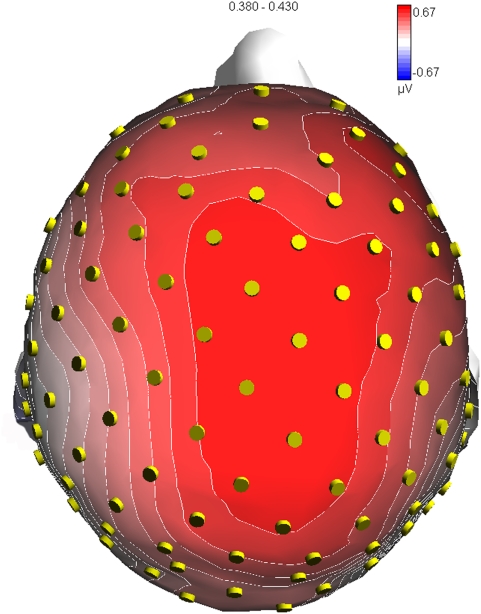
BACKGROUND: Physiological studies of perfectly still observers have shown interesting correlations between increasing effortfulness of observed actions and increases in heart and respiration rates. Not much is known about the cortical response induced by observing effortful actions. The aim of this study was to investigate the time course and neural correlates of perception of implied motion, by presenting 260 pictures of human actions differing in degrees of dynamism and muscular exertion. ERPs were recorded from 128 sites in young male and female adults engaged in a secondary perceptual task. PRINCIPAL FINDINGS: Our results indicate that even when the stimulus shows no explicit motion, observation of static photographs of human actions with implied motion produces a clear increase in cortical activation, manifest in a long-lasting positivity (LP) between 350-600 ms that is much greater to dynamic than less dynamic actions, especially in men. A swLORETA linear inverse solution computed on the dynamic-minus-static difference wave in the time window 380-430 ms showed that a series of regions was activated, including the right V5/MT, left EBA, left STS (BA38), left premotor (BA6) and motor (BA4) areas, cingulate and IF cortex. CONCLUSIONS AND SIGNIFICANCE: Overall, the data suggest that corresponding mirror neurons respond more strongly to implied dynamic than to less dynamic actions. The sex difference might be partially cultural and reflect a preference of young adult males for highly dynamic actions depicting intense muscular activity, or a sporty context.
Overview
The claims and statistics of this paper haven’t been checked yet.
Run the check — free, no account needed. It reads the open-access text and checks the sources it cites.
Integrity signals
Registry
Cites
Statistics
Figures
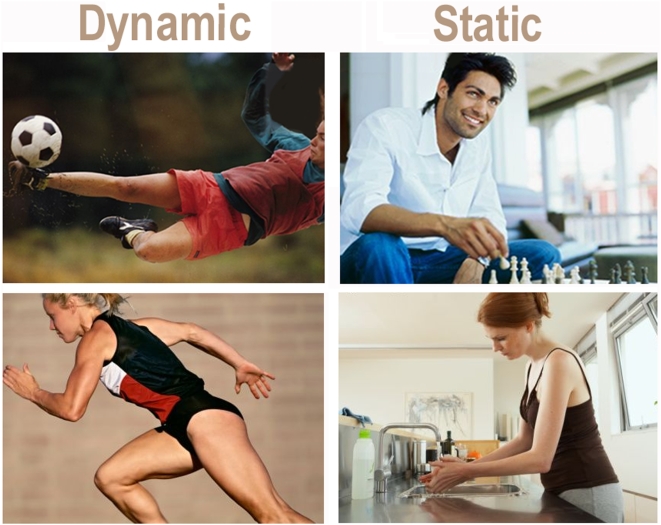
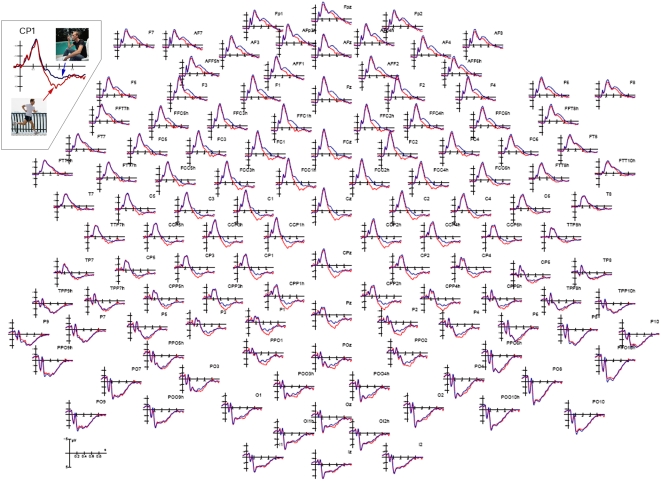
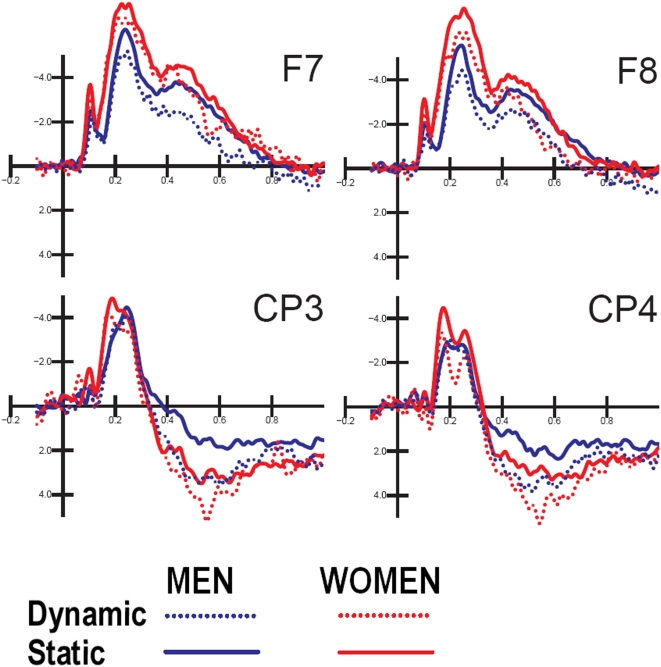
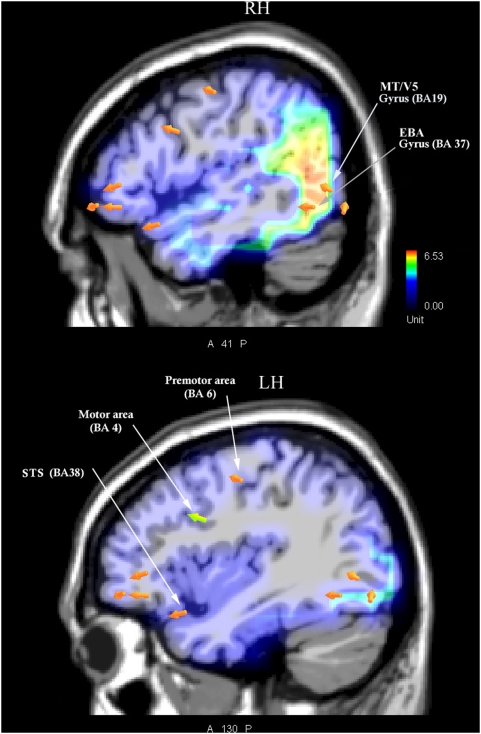
Verification
Claims the paper makes
The claims and statistics of this paper haven’t been checked yet.
Run the check — free, no account needed. It reads the open-access text and checks the sources it cites.
Claims other papers make about this one
Each is checked against this paper’s own text: does it say what the citing paper says it does?
The source backs part of the claim, not all of it — or backs it for a different population, condition or comparison.
In the citing paper
“complex visual stimuli, including actions, reach PMC and motor areas in around 300ms”
From Mirror neurons: from origin to function (2014) · cites this paper as Proverbio, Riva, & Zani, 2009
Experimental — accuracy not yet measuredThe cited source says what the claim attributes to it.
In the citing paper
“It has been demonstrated (by using both TMS and event related potentials) that static images with implied motion perception activate both motor and visual areas (Urgesi et al., 2006; Proverbio et al., 2009).”
From Corticomotor Excitability during Observation and Imagination of a Work of Art (2011) · cites this paper as Proverbio et al., 2009
Self-check
Percentages, sums and reported differences re-computed from the paper’s own numbers.
The self-check needs the paper’s full text.
Citations
Cites
Rizzolatti, G., & Craighero, L. (2004) · Annual Review of Neuroscience · doi:10.1146/annurev.neuro.27.070203.144230 · Cited by 7,433
Cattaneo, L., & Rizzolatti, G. (2009) · Archives of Neurology · doi:10.1001/archneurol.2009.41 · Cited by 3,137
Cortical mechanisms of human imitation
Iacoboni, M., Woods, R. P., Brass, M., Bekkering, H., Mazziotta, J. C., & Rizzolatti, G. (1999) · Science · doi:10.1126/science.286.5449.2526 · Cited by 2,683
Neural simulation of action: a unifying mechanism for motor cognition.
Jeannerod, M. (2001) · NeuroImage · doi:10.1006/nimg.2001.0832 · Cited by 2,563
Action observation activates premotor and parietal areas in a somatotopic manner: an fMRI study
Buccino, G., Binkofski, F., Fink, G. R., Fadiga, L., Fogassi, L., Gallese, V., Seitz, R. J., Zilles, K., Rizzolatti, G., & Freund, H. ‐. (2001) · European Journal of Neuroscience · doi:10.1111/j.1460-9568.2001.01385.x · Cited by 2,488
A cortical area selective for visual processing of the human body
Downing, P. E., Jiang, Y., Shuman, M., & Kanwisher, N. (2001) · Science · doi:10.1126/science.1063414 · Cited by 2,043
Imitation, empathy, and mirror neurons
Iacoboni, M. (2009) · Annual Review of Psychology · doi:10.1146/annurev.psych.60.110707.163604 · Cited by 1,606
Arbib, M. A. (2005) · Behavioral and Brain Sciences · doi:10.1017/s0140525x05000038 · Cited by 1,164
Mapping motor representations with positron emission tomography
Decety, J., Perani, D., Jeannerod, M., Bettinardi, V., Tadary, B., Woods, R., Mazziotta, J. C., & Fazio, F. (1994) · Nature · doi:10.1038/371600a0 · Cited by 976
Brain Areas Involved in Perception of Biological Motion
Grossman, E. D., Donnelly, M. P. W., Price, R. R., Pickens, D. R., Morgan, V. L., Neighbor, G., & Blake, R. (2000) · Journal of Cognitive Neuroscience · doi:10.1162/089892900562417 · Cited by 917
Research works printed but not linked: 1
- J Decety, 1994, Mapping motor representations with PET., Nature, 600, 10.1038/371600a0 · DOI · Paper page
Cited by
Sorted by citations
Mirror neurons: from origin to function
Cook, R., Bird, G., Catmur, C., Press, C., & Heyes, C. (2014) · Behavioral and Brain Sciences · doi:10.1017/s0140525x13000903 · Cited by 647
Dolcos, F., Katsumi, Y., Moore, M., Berggren, N., de Gelder, B., Derakshan, N., Hamm, A. O., Koster, E. H. W., Ladouceur, C. D., Okon‐Singer, H., et al. (2019) · Neuroscience & Biobehavioral Reviews · doi:10.1016/j.neubiorev.2019.08.017 · Cited by 247
Simulating the Future of Actions in the Human Corticospinal System
Urgesi, C., Maieron, M., Avenanti, A., Tidoni, E., Fabbro, F., & Aglioti, S. M. (2010) · Cerebral Cortex · doi:10.1093/cercor/bhp292 · Cited by 218
Abstract art and cortical motor activation: an EEG study
Umiltà, M. A., Berchio, C., Sestito, M., Freedberg, D., & Gallese, V. (2012) · Frontiers in Human Neuroscience · doi:10.3389/fnhum.2012.00311 · Cited by 173
Does it make a difference if I have an eye contact with you or with your picture? An ERP study
Pönkänen, L. M., Alhoniemi, A., Leppänen, J. M., & Hietanen, J. K. (2010) · Social Cognitive and Affective Neuroscience · doi:10.1093/scan/nsq068 · Cited by 179
Avenanti, A., Annella, L., Candidi, M., Urgesi, C., & Aglioti, S. M. (2012) · Cerebral Cortex · doi:10.1093/cercor/bhs040 · Cited by 145
Long- and short-term plastic modeling of action prediction abilities in volleyball
Urgesi, C., Savonitto, M. M., Fabbro, F., & Aglioti, S. M. (2011) · Psychological Research · doi:10.1007/s00426-011-0383-y · Cited by 129
Dio, C. D., Ardizzi, M., Massaro, D., Cesare, G. D., Gilli, G., Marchetti, A., & Gallese, V. (2016) · Frontiers in Human Neuroscience · doi:10.3389/fnhum.2015.00705 · Cited by 122
ERP Modulation during Observation of Abstract Paintings by Franz Kline
Sbriscia-Fioretti, B., Berchio, C., Freedberg, D., Gallese, V., & Umiltà, M. A. (2013) · PLoS ONE · doi:10.1371/journal.pone.0075241 · Cited by 112
What modulates the Mirror Neuron System during action observation?
Kemmerer, D. L. (2021) · Progress in Neurobiology · doi:10.1016/j.pneurobio.2021.102128 · Cited by 112
Motor mapping of implied actions during perception of emotional body language
Borgomaneri, S., Gazzola, V., & Avenanti, A. (2012) · Brain stimulation · doi:10.1016/j.brs.2012.03.011 · Cited by 102
Time to Tango: Expertise and contextual anticipation during action observation
Amoruso, L., Sedeño, L., Huepe, D., Tomio, A., Kamienkowski, J. E., Hurtado, E., Cardona, J. F., González, M. Á. Á., Rieznik, A. A., Sigman, M., et al. (2014) · NeuroImage · doi:10.1016/j.neuroimage.2014.05.005 · Cited by 94
Gender Affects Body Language Reading
Sokolov, A. A., Krüger, S., Enck, P., Krägeloh‐Mann, I., & Pavlova, M. A. (2011) · Frontiers in Psychology · doi:10.3389/fpsyg.2011.00016 · Cited by 82
Seeing touch in the somatosensory cortex: A TMS study of the visual perception of touch
Bolognini, N., Rossetti, A., Maravita, A., & Miniussi, C. (2011) · Human Brain Mapping · doi:10.1002/hbm.21172 · Cited by 81
Corticomotor Excitability during Observation and Imagination of a Work of Art
Battaglia, F., Lisanby, S. H., & Freedberg, D. (2011) · Frontiers in Human Neuroscience · doi:10.3389/fnhum.2011.00079 · Cited by 66
Giromini, L., Porcelli, P., Viglione, D. J., Parolin, L. A. L., & Pineda, J. A. (2010) · Biological Psychology · doi:10.1016/j.biopsycho.2010.07.008 · Cited by 65
On the Role of Object Information in Action Observation: An fMRI Study
Bach, P., Peelen, M. V., & Tipper, S. P. (2010) · Cerebral Cortex · doi:10.1093/cercor/bhq026 · Cited by 62
Ticini, L. F., Rachman, L., Pelletier, J., & Dubal, S. (2014) · Frontiers in Human Neuroscience · doi:10.3389/fnhum.2014.00391 · Cited by 59
Cattaneo, Z., Schiavi, S., Silvanto, J., & Nadal, M. (2015) · Cognitive Neuroscience · doi:10.1080/17588928.2015.1083968 · Cited by 52
Dance expertise modulates visual sensitivity to complex biological movements
Orlandi, A., Zani, A., & Proverbio, A. M. (2017) · Neuropsychologia · doi:10.1016/j.neuropsychologia.2017.08.019 · Cited by 55
Self-citationNeural Coding of Cooperative vs. Affective Human Interactions: 150 ms to Code the Action's Purpose
Proverbio, A. M., Riva, F., Paganelli, L., Cappa, S. F., Canessa, N., Perani, D., & Zani, A. (2011) · PLoS ONE · doi:10.1371/journal.pone.0022026 · Cited by 50
Self-citationBorgomaneri, S., Vitale, F., & Avenanti, A. (2017) · Brain Structure and Function · doi:10.1007/s00429-017-1403-5 · Cited by 48
Time dilation caused by static images with implied motion
Yamamoto, K., & Miura, K. (2012) · Experimental Brain Research · doi:10.1007/s00221-012-3259-5 · Cited by 43
Candidi, M., Leone‐Fernandez, B., Barber, H. A., Carreiras, M., & Aglioti, S. M. (2010) · European Journal of Neuroscience · doi:10.1111/j.1460-9568.2010.07305.x · Cited by 43
Implied motion from static photographs influences the perceived position of stationary objects
Pavan, A., Cuturi, L. F., Maniglia, M., Casco, C., & Campana, G. (2010) · Vision Research · doi:10.1016/j.visres.2010.11.004 · Cited by 42
Anatomical and temporal architecture of theory of mind: A MEG insight into the early stages
Vistoli, D., Brunet-Gouet, É., Baup-Bobin, E., Hardy-Baylé, M. C., & Passerieux, C. (2010) · NeuroImage · doi:10.1016/j.neuroimage.2010.09.015 · Cited by 42
The Case for Hand Stencils and Prints as Proprio-Performative
Dobrez, P. (2013) · Arts · doi:10.3390/arts2040273 · Cited by 40
Del Casale, A., Ferracuti, S., Rapinesi, C., De Rossi, P., Angeletti, G., Sani, G., Kotzalidis, G. D., & Girardi, P. (2015) · Journal of Physiology-Paris · doi:10.1016/j.jphysparis.2016.01.001 · Cited by 39
The Effect of Expertise on Kinesthetic Motor Imagery of Complex Actions
Orlandi, A., Arno, E., & Proverbio, A. M. (2020) · Brain Topography · doi:10.1007/s10548-020-00760-x · Cited by 37
Self-citationReal and implied motion at the center of gaze
Açık, A., Bartel, A., & Peter König, B. (2014) · Journal of Vision · doi:10.1167/14.1.2 · Cited by 34
Osaka, N., Matsuyoshi, D., Ikeda, T., & Osaka, M. (2010) · NeuroReport · doi:10.1097/wnr.0b013e328335b371 · Cited by 60
Suitner, C., & Maass, A. (2015) · Advances in experimental social psychology · doi:10.1016/bs.aesp.2015.09.004 · Cited by 38
Visual perception of bodily interactions in the primary somatosensory cortex
Rossetti, A., Miniussi, C., Maravita, A., & Bolognini, N. (2012) · European Journal of Neuroscience · doi:10.1111/j.1460-9568.2012.08137.x · Cited by 31
The visual encoding of tool–object affordances
Natraj, N., Pella, Y. M., Borghi, A. M., & Wheaton, L. A. (2015) · Neuroscience · doi:10.1016/j.neuroscience.2015.09.060 · Cited by 29
Linguistic Representations of Motion Do Not Depend on the Visual Motion System
Pavan, A., & Baggio, G. (2013) · Psychological Science · doi:10.1177/0956797612450882 · Cited by 29
Riach, M., Holmes, P. S., Franklin, Z. C., & Wright, D. J. (2018) · Neuropsychologia · doi:10.1016/j.neuropsychologia.2018.08.002 · Cited by 28
Optimizing Word Learning via Links to Perceptual and Motoric Experience
Hald, L. A., de Nooijer, J. A., van Gog, T., & Harold Bekkering, A. (2015) · Educational Psychology Review · doi:10.1007/s10648-015-9334-2 · Cited by 31
Hart, C., & Queralto, J. M. (2021) · Cognitive Linguistics · doi:10.1515/cog-2021-0039 · Cited by 25
Conscious and Unconscious Representations of Observed Actions in the Human Motor System
Mattiassi, A. D. A., Mele, S., Ticini, L. F., & Urgesi, C. (2014) · Journal of Cognitive Neuroscience · doi:10.1162/jocn_a_00619 · Cited by 25
Wamain, Y., Tallet, J., Zanone, P.-G., & Longcamp, M. (2012) · NeuroImage · doi:10.1016/j.neuroimage.2012.07.020 · Cited by 25
Bellis, F. D., Ferrara, A., Errico, D., Panico, F., Sagliano, L., Conson, M., & Trojano, L. (2015) · Experimental Brain Research · doi:10.1007/s00221-015-4432-4 · Cited by 25
Mizelle, J. C., & Wheaton, L. A. (2010) · Frontiers in Human Neuroscience · doi:10.3389/fnhum.2010.00233 · Cited by 24
Ando, A. M. C., Pineda, J. A., Giromini, L., Soghoyan, G., QunYang, Bohm, M., Maryanovsky, D., & Zennaro, A. (2017) · Brain Research · doi:10.1016/j.brainres.2017.12.007 · Cited by 19
Mental simulation of drawing actions enhances delayed recall of a complex figure
Lucia, N. D., Trojano, L., Senese, V. P., & Conson, M. (2016) · Experimental Brain Research · doi:10.1007/s00221-016-4696-3 · Cited by 17
Minio-Paluello, I., Lombardo, M. V., Chakrabarti, B., Wheelwright, S. J., & Baron‐Cohen, S. (2009) · Journal of Autism and Developmental Disorders · doi:10.1007/s10803-009-0800-x · Cited by 19
Pupillary response to real, illusory, and implied motion
Castellotti, S., Carlo, F., & Viva, M. M. D. (2021) · PLoS ONE · doi:10.1371/journal.pone.0254105 · Cited by 14
Neural correlates of radial frequency trajectory perception in the human brain
Gorbet, D. J., Wilkinson, F., & Wilson, H. R. (2014) · Journal of Vision · doi:10.1167/14.1.11 · Cited by 12
Movement in Aesthetic Experiences: What We Can Learn from Parkinson Disease
Humphries, S. A., Rick, J. H., Weintraub, D. A., & Chatterjee, A. K. (2021) · Journal of Cognitive Neuroscience · doi:10.1162/jocn_a_01718 · Cited by 14
Orlandi, A., S D'Incà, & Proverbio, A. M. (2020) · Brain Research · doi:10.1016/j.brainres.2020.146712 · Cited by 11
Self-citationCharacteristics of EEG power spectra involved in the proficiency of motor learning
Hamada, H., Wen, W., Kawasaki, T., Yamashita, A., & Asama, H. (2023) · Frontiers in Neuroscience · doi:10.3389/fnins.2023.1094658 · Cited by 11
Natraj, N., Alterman, B. L., Basunia, S., & Wheaton, L. A. (2018) · Neuroscience · doi:10.1016/j.neuroscience.2018.10.019 · Cited by 12
Neural circuits underlying motor facilitation during observation of implied motion
Concerto, C., Sawah, M. A., Infortuna, C., Freedberg, D., Chusid, E., Aguglia, E., & Battaglia, F. (2015) · Somatosensory & motor research · doi:10.3109/08990220.2015.1048329 · Cited by 13
Moore, M., Katsumi, Y., Dolcos, S. M., & Dolcos, F. (2021) · Journal of Cognitive Neuroscience · doi:10.1162/jocn_a_01782 · Cited by 11
Nather, F. C., Fernandes, P. A. M., & Bueno, J. L. O. (2014) · Psychology & Neuroscience · doi:10.3922/j.psns.2014.046 · Cited by 10
Ocampo, B., Painter, D. R., & Kritikos, A. (2012) · Experimental Brain Research · doi:10.1007/s00221-012-3073-0 · Cited by 9
Ottoboni, G., Nicoletti, R., & Tessari, A. (2021) · International Journal of Environmental Research and Public Health · doi:10.3390/ijerph18105384 · Cited by 13
Neuroimaging features inC9orf72andTARDBPdouble mutation with FTD phenotype
Origone, P., Accardo, J., Verdiani, S., Lamp, M., Arnaldi, D., Bellone, E., Picco, A., Morbelli, S. D., Mandich, P., & Nobili, F. M. (2014) · Neurocase · doi:10.1080/13554794.2014.951057 · Cited by 9
Modulation of corticospinal excitability during paintings viewing: A TMS study
Fiori, F., Plow, E. B., Rusconi, M. L., & Cattaneo, Z. (2020) · Neuropsychologia · doi:10.1016/j.neuropsychologia.2020.107664 · Cited by 9
Wamain, Y., Tallet, J., Zanone, P., & Longcamp, M. (2011) · PLoS ONE · doi:10.1371/journal.pone.0015995 · Cited by 9
Martı́nez, A., Gaspar, P. A., Bermudez, D. H., Aburto-Ponce, M. B., Beggel, O., & Javitt, D. C. (2024) · NeuroImage Clinical · doi:10.1016/j.nicl.2024.103570 · Cited by 8
Photographs of Actions: What Makes Them Special Cues to Social Perception
Kislinger, L. (2021) · Brain Sciences · doi:10.3390/brainsci11111382 · Cited by 8
Move Still: The Effects of Implied and Real Motion on the Duration Estimates of Dance Steps
Sgouramani, H., Moutoussis, K., & Vatakis, A. (2019) · Perception · doi:10.1177/0301006619854914 · Cited by 8
Li, K., Bi, Y., Wang, Y., Zhang, M., Liu, Y., Yang, H., & Lin, F. (2019) · Advances in Cognitive Psychology · doi:10.5709/acp-0267-9 · Cited by 7
Action perception in infancy: the plasticity of 7-month-olds’ attention to grasping actions
Daum, M. M., Wronski, C., Harms, A., & Gredebäck, G. (2016) · Experimental Brain Research · doi:10.1007/s00221-016-4651-3 · Cited by 7
Neural Correlates of Myths in Which an Image Becomes Alive
d’Huy, J. (2013) · Leonardo · doi:10.1162/leon_a_00529 · Cited by 7
Electrophysiological Correlates of Racial In-group Bias in Observing Nonverbal Social Encounters
Katsumi, Y., Dolcos, F., Moore, M., Bartholow, B. D., Fabiani, M., & Dolcos, S. M. (2019) · Journal of Cognitive Neuroscience · doi:10.1162/jocn_a_01475 · Cited by 6
Janik, L. (2020) · World Archaeology · doi:10.1080/00438243.2020.1858952 · Cited by 6
Wang, S., Kotnik, T., Schwartz, J. E., & Cao, T. (2022) · Frontiers of Architectural Research · doi:10.1016/j.foar.2022.01.001 · Cited by 6
Angelini, M., Vecchio, M. D., Lopomo, N. F., Gobbo, M., & Avanzini, P. (2021) · Brain Research · doi:10.1016/j.brainres.2021.147604 · Cited by 7
Depicting Motion in a Static Image: Philosophy, Psychology and the Perception of Pictures
Marchetti, L. (2021) · The British Journal of Aesthetics · doi:10.1093/aesthj/ayab044 · Cited by 6
Neural activity associated with attention orienting triggered by implied action cues
Li, K., Liu, Y., Qu, F., & Fu, X. (2016) · Brain Research · doi:10.1016/j.brainres.2016.04.018 · Cited by 5
Cinema and Neurology: From History to Therapy
Lorusso, L., & Venturini, S. (2019) · Springer eBooks · doi:10.1007/978-3-030-23580-2_9 · Cited by 5
Scanpath EEG dynamic, a new perspective for neuroaesthetic connoisseurship in paintings
Chéron, G., & Maere, J. D. (2025) · Frontiers in Psychology · doi:10.3389/fpsyg.2025.1442623 · Cited by 4
Sehyr, Z. S., Midgley, K. J., Emmorey, K. D., & Holcomb, P. J. (2023) · Neurobiology of Language · doi:10.1162/nol_a_00104 · Cited by 4
Casper, M.-O., Nyakatura, J. A., Pawel, A., Reimer, C. B., Schubert, T., & Lauschke, M. (2018) · Frontiers in Psychology · doi:10.3389/fpsyg.2018.00991 · Cited by 4
The body and the brain: Neuroscience and the representation of anthropomorphs in palaeoart
Watson, B. C. (2012) · Rock Art Research · doi:10.69978/rar.v29i1.93 · Cited by 4
Exploring Aesthetic Perception in Impaired Aging: A Multimodal Brain—Computer Interface Study
Clemente, L., Rocca, M. L., Paparella, G., Delussi, M. D., Tancredi, G., Ricci, K., Procida, G., Introna, A., Brunetti, A., Taurisano, P., et al. (2024) · Sensors · doi:10.3390/s24072329 · Cited by 3
Extension of Dancer’s Legs: Increasing Angles Show Motion
Mastandrea, S., & Kennedy, J. M. (2022) · Frontiers in Psychology · doi:10.3389/fpsyg.2021.706004 · Cited by 3
Face your fears: direct and indirect measurement of responses to looming threats
Mulier, L., Slabbinck, H., & Vermeir, I. (2023) · Cognition & Emotion · doi:10.1080/02699931.2023.2258593 · Cited by 3
Jia, L., Xu, Y., Sweeney, J. A., Wang, C., Sung, B., & Wang, J. (2019) · Frontiers in Psychology · doi:10.3389/fpsyg.2019.02117 · Cited by 3
Une approche cognitive de la narrativité musicale
Hauer, C. (2015) · Cahiers de narratologie · doi:10.4000/narratologie.7194 · Cited by 6
Implied Movement in Static Images Reveals Biological Timing Processing
Nather, F. C., Anelli, V., Ennes, G., & Bueno, J. L. O. (2015) · Paidéia (Ribeirão Preto) · doi:10.1590/1982-43272561201513 · Cited by 3
Bottom-up and top-down contributions to impaired motion processing in schizophreniaPreprint
Martı́nez, A., Gaspar, P. A., Bermudez, D. H., Aburto-Ponce, M. B., & Javitt, D. C. (2023) · medRxiv · doi:10.1101/2023.07.07.23292259 · Cited by 3
Zheng, W. (2024) · Behavioral Sciences · doi:10.3390/bs14111092 · Cited by 2
Photographs Beyond Concepts: Access to Actions and Sensations
Kislinger, L. (2020) · Review of General Psychology · doi:10.1177/1089268020969113 · Cited by 2
Heinrich, M. (2022) · Springer eBooks · doi:10.1007/978-3-658-22321-2_11 · Cited by 2
Probing the content of semantic representations in body-selective regions
Yashiro, R., Sawayama, M., Yamashita, A., & Amano, K. (2026) · Imaging Neuroscience · doi:10.1162/imag.a.1309 · Cited by 1
Coffman, B. A. (2014) · UNM’s Digital Repository (University of New Mexico) · Cited by 1
Gozzano, N. (2016) · Recherches en danse · doi:10.4000/danse.1374 · Cited by 1
Experiencing Pictorial Artworks: The Role of Intersubjectivity
Savazzi, F. A., Gilli, G., & Ruggi, S. (2014) · Cambridge University Press eBooks · doi:10.1017/cbo9781139198745.013
SEX DIFFERENCES IN BODY LANGUAGE READING
Sokolov, A. A., Krüger, S., & Pavlova, M. A. (2010) · Proceedings of Fechner Day
Harvesting Motion Patterns in Still Images from the Internet
Wu, J., Wang, Y., Li, Z., & Zhuowen Tu, A. (2014) · eScholarship (California Digital Library)
Proverbio, A. M. (2012)
Self-citationRiach, M. (2026) · e-space (Manchester Metropolitan University) · doi:10.83056/mmu.32479431
Aesthetics in motion: The beauty of action paintings as revealed by Parkinson’s diseasePreprint
Humphries, S. A., Rick, J. H., Weintraub, D. A., & Chatterjee, A. K. (2020) · doi:10.31234/osf.io/ujzf6
Action perception in infancy: The plasticity of 7-month-olds’ attention to grasping actionsPreprint
Daum, M. M., & Gredebäck, G. (2018) · doi:10.31219/osf.io/yvgkj
Chen, J. (2023) · Advances in Psychological Science · doi:10.3724/sp.j.1042.2023.01228
Kino und Neurologie: Von der Geschichte zur Therapie
Lorusso, L., & Venturini, S. (2023) · Springer eBooks · doi:10.1007/978-3-031-24131-4_9
Metadata
- Authors
- Proverbio, A. M., Riva, F., & Zani, A.
- Affiliations
- University of Milano-Bicocca (IT)
- Institute of Molecular Bioimaging and Physiology (IT)
- Corresponding author
- Proverbio, Alice Mado
- Venue
- PLoS ONE
- Publisher
- Public Library of Science (PLoS)
- Published
- 2009-05-06
- Volume
- 4
- Issue
- 5
- Pages
- e5389
- ISSN
- 1932-6203 (ISSN-L)
- PMC
- PMC2671843
- OpenAlex
- W2146356260
- Cited by
- 108
- References
- 32
- Citations by year
- 2026: 4 · 2025: 3 · 2024: 3 · 2023: 7 · 2022: 4 · 2021: 9 · 2020: 6 · 2019: 6 · 2018: 4 · 2017: 3 · 2016: 5 · 2015: 9 · 2014: 12 · 2013: 6 · 2012: 10
- FWCI
- 11.75
- Type
- journal article
- Language
- en
- Open access
- gold
- doi.org
- Locations
- PLoS ONE (publishedVersion, cc-by)
- PubMed Central (publishedVersion, cc-by)
- PubMed (publishedVersion)
- BOA (University of Milano-Bicocca) (submittedVersion, cc-by)
- DOAJ (DOAJ: Directory of Open Access Journals) (submittedVersion, cc-by-sa)
- Figshare (submittedVersion, cc-by)
- Funders
- Università degli Studi di Milano-Bicocca
- Topics
- Social Sciences › Psychology › Social Psychology › Action Observation and Synchronization
- Life Sciences › Neuroscience › Cognitive Neuroscience › Face Recognition and Perception
- Life Sciences › Neuroscience › Cognitive Neuroscience › Aesthetic Perception and Analysis
- Keywords
- implied motion, mirror neurons, event-related potentials, sex differences, MT/V5, premotor cortex, STS, cingulate cortex, muscular exertion
- MeSH terms
- Adult, Brain Mapping, Cerebral Cortex, Electroencephalography, Evoked Potentials, Visual, Female, Humans, Male, Motion Perception, Movement, Evoked Potentials, Motor, Observation, Young Adult
About these checks
Registry, retraction, Cites and statistics results are computed, not judged, with one exception: a printed reference that no index lists is read once by a model before it counts as a citation error. Claims are extracted by a model and kept only when their quote appears verbatim in the text; each cited source is then checked, with a model’s help, for whether it says what the claim relies on. Those verdicts can be wrong — read the claim’s quote and the cited source before relying on one.
Statistics and arithmetic are recomputed, not judged.
Confidence bands are shown only for fields calibrated on our annotated test set. None is calibrated yet, so no band is shown.
What counts as a claim ›How we measure confidence ›How we check this ›
Are you an author, or do you see a problem with this page? Request a review
