

Was Dinosaurian Physiology Inherited by Birds? Reconciling Slow Growth in Archaeopteryx
Open accessThe DOI matches its Crossref record; 59 of the 62 references it cites were found in a registry or an index; 2 of the 46 sources its claims cite were checked for support.
Abstract
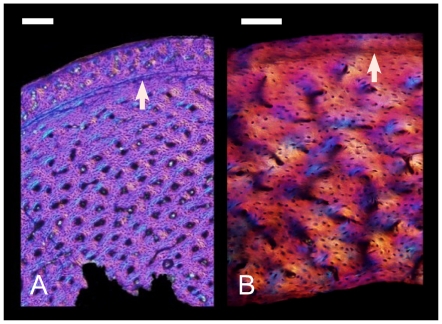
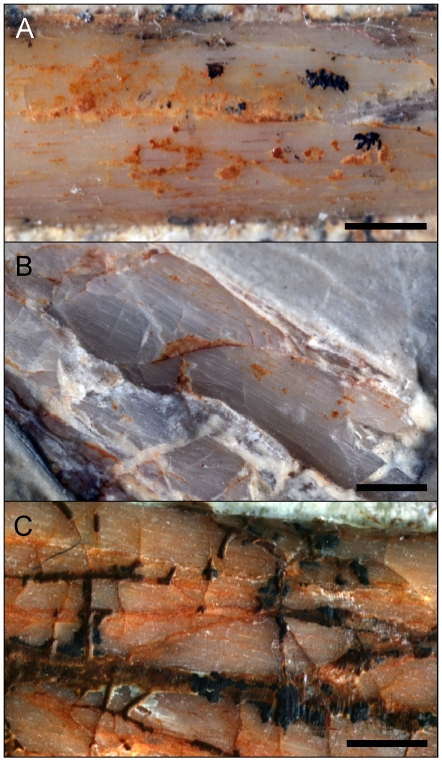
BACKGROUND: Archaeopteryx is the oldest and most primitive known bird (Avialae). It is believed that the growth and energetic physiology of basalmost birds such as Archaeopteryx were inherited in their entirety from non-avialan dinosaurs. This hypothesis predicts that the long bones in these birds formed using rapidly growing, well-vascularized woven tissue typical of non-avialan dinosaurs. METHODOLOGY/PRINCIPAL FINDINGS: We report that Archaeopteryx long bones are composed of nearly avascular parallel-fibered bone. This is among the slowest growing osseous tissues and is common in ectothermic reptiles. These findings dispute the hypothesis that non-avialan dinosaur growth and physiology were inherited in totality by the first birds. Examining these findings in a phylogenetic context required intensive sampling of outgroup dinosaurs and basalmost birds. Our results demonstrate the presence of a scale-dependent maniraptoran histological continuum that Archaeopteryx and other basalmost birds follow. Growth analysis for Archaeopteryx suggests that these animals showed exponential growth rates like non-avialan dinosaurs, three times slower than living precocial birds, but still within the lowermost range for all endothermic vertebrates. CONCLUSIONS/SIGNIFICANCE: The unexpected histology of Archaeopteryx and other basalmost birds is actually consistent with retention of the phylogenetically earlier paravian dinosaur condition when size is considered. The first birds were simply feathered dinosaurs with respect to growth and energetic physiology. The evolution of the novel pattern in modern forms occurred later in the group's history.
Overview
CoChat Summary
TL;DR
The paper argues that *Archaeopteryx* and other basal birds did not inherit the rapid, modern-bird growth pattern from non-avialan dinosaurs. Instead, their long bones show slow, reptilian-like histology, with growth rates and maturation timing closer to same-sized non-avialan theropods than to living birds.
Key findings
- *Archaeopteryx* long bones are composed of “nearly avascular parallel-fibered bone,” which the paper describes as among the slowest-growing osseous tissues.
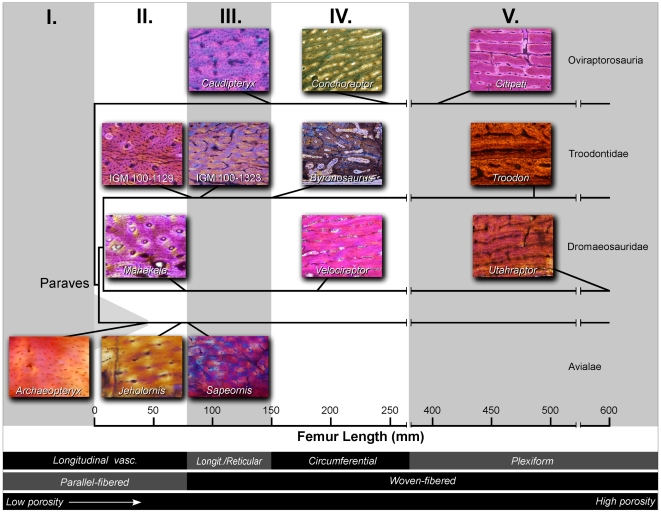
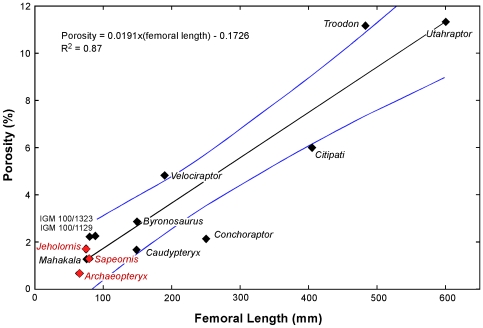
- Femoral histology across maniraptorans forms a size-dependent continuum: vascular complexity declines and bone fiber orientation becomes less random as body size decreases; femoral porosity drops from 11.32% to 1.26%.
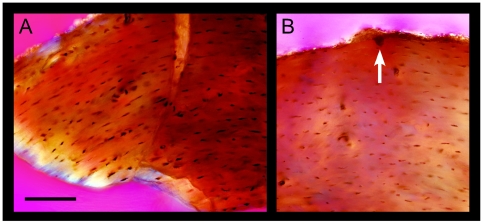
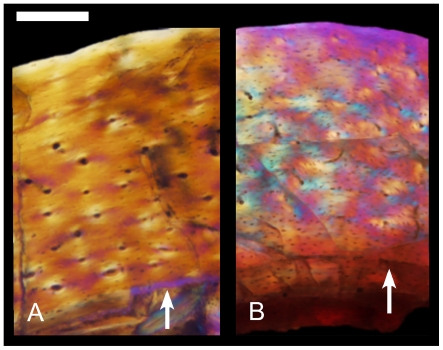
- The *Archaeopteryx* specimen studied had femoral porosity of 0.68%, lacked Haversian bone, and showed no deep intracortical growth lines; *Jeholornis* and *Sapeornis* showed similar basal-avialan patterns, with porosity 1.7% and 1.3%, respectively.
- Growth modeling suggests the known *Archaeopteryx* specimens span about 428 days of development, with maximal growth rates of 1.87 to 2.2 g/day, estimated adult mass of about 895–928 g, and somatic maturity during the second to third year of life; the paper says this is about three times slower than living precocial birds.
Methods
- Comparative osteohistology was performed on *Archaeopteryx* (including the Munich specimen BSPG 1999 I 50) and a broader sample of basal birds and maniraptoran outgroups: *Jeholornis*, *Sapeornis*, oviraptorids, and deinonychosaurs including *Mahakala*, *Utahraptor*, *Deinonychus*, *Velociraptor*, *Troodon*, *Byronosaurus*, and two undescribed troodontids.
- Minute cortical chips and histological sections were taken from long bones, especially femora; microstructure was examined with polarizing and reflectance microscopy, and porosity was quantified with NIH ImageJ.
- Character mapping and phylogenetic optimization were done in TNT on a coelurosaur phylogeny; *Archaeopteryx* growth was then modeled using femoral length, body-mass regressions, a logistic growth curve, and Bayesian estimation, with comparisons to living birds and same-sized non-avialan dinosaurs.
Limitations
- The paper states that the taxonomy of *Archaeopteryx* is complex, and the authors therefore treat all known specimens as a single species (*Archaeopteryx lithographica*); this is an interpretive limitation noted by the authors.
- The paper says earlier work lacked small outgroup taxa, which likely hindered detection of the body-size/histology relationship; this motivated broader sampling.
- Evidence from *Archaeopteryx* is based on young individuals spanning a limited developmental range, so the adult-size and growth-rate estimates are inferred rather than directly observed; this is evident from the text.
Model-written summary. Check it against the paper before relying on it.
Integrity signals
Registry
Cites
Statistics
Figures
![Figure 9 Growth depictions for Archaeopteryx. (Left) The size and estimated age for all ten specimens are depicted. The growth curves are based upon age and size estimates (diamonds) for the eight specimens where femoral length is known. The dashed line represents the best fit for the unconstrained statistical analysis with hatchling and adult size undefined. The solid line represents the best fit when hatchling and adult size are constrained. (Right) The maximal growth rates from these analyses (1.87–2.2 g/day; hollow diamond) fit expectations (1.83–1.87 g/day; [31]) for same-sized non-avialan dinosaurs (solid line) – animals that grew like slow growing endotherms, here compared to marsupials (M). The Archaeopteryx estimates are three times lower than typical rates for extant precocial land birds (5.7 g/day; P], 15 times lower than alticial land birds (28.6 g/day; A), and four times higher than typical rates for extant reptiles (0.46 g/day; R) [32]. Specimens designations: Ei = Eichstäat, Mu = Munich, 8th = 8th Exemplar, Te = Teyler, Th = Thermopolis, Be = Berlin, Ma = Maxberg, O&S = Exemplar der Familien Ottmann & Steil, Lo = London, So = Solnhofen.](https://figures.cochat.ai/paper-figures/a11430afaa92480bb70999595dc495d9/was-dinosaurian-physiology-inherited-by-birds-reconciling-slow-growth-in-figure-9.jpg)
Verification
Claims the paper makes
0 Valid · 3 Not valid · 30 Not checked · 61 Own results and interpretations
The cited sources that could be checked couldn’t confirm or dispute this claim.
In the paper
“Growth analysis for Archaeopteryx suggests that these animals showed exponential growth rates like non-avialan dinosaurs”
- Also stated in: § Results · plain
“These rates compare favorably with the expectations of 1.83 to 1.87 g/day for a same-sized non-avialan dinosaur (Figure 9) [31].”
§ Was Dinosaurian Physiology Inherited by Birds? Reconciling Slow Growth in Archaeopteryx > Abstract > Methodology/Principal Findings
What the sources say
- Could not verifycites [31] Erickson GM Makovicky PJ Inouye BD Chang-Fu Z Ke-Qin G 2009 A life table for Psittacosaurus lujiatunensis: Initial insights into ornithischian population biology. Anat Rec 292 1514 1521 19711482 sourceExperimental — accuracy not yet measured
Our copy of Erickson et al. (2009) is a life-table/growth-curve study of Psittacosaurus lujiatunensis and nowhere mentions Archaeopteryx; searches for 'Archaeopteryx', 'exponential growth rates' and 'avian growth' returned only the paper's own Psittacosaurus results (DISCUSSION, p. n/a: threshold size at 3-4 years entering the exponential stage 'sensu Sussman, 1964') and reference-list titles such as Erickson et al. 2001 Nature 'Dinosaur growth patterns and rapid avian growth rates' (References, p. n/a). The exponential-stage statements in the source concern Psittacosaurus, not Archaeopteryx, so nothing in our copy supports or contradicts the attributed Archaeopteryx growth analysis. (LLM, conf=0.70)
plainstates an association- Asserted: passes — The authors put it forward as true.
- Checkable: passes — It can be checked against evidence.
- Load-bearing: passes — The paper’s conclusions depend on it.
- Based: passes — The paper gives a reason why it holds.
- Also stated in: § Results · plain
The cited sources that could be checked couldn’t confirm or dispute this claim.
In the paper
“These rates compare favorably with the expectations of 1.83 to 1.87 g/day for a same-sized non-avialan dinosaur (Figure 9) [31].”
§ Was Dinosaurian Physiology Inherited by Birds? Reconciling Slow Growth in Archaeopteryx > Results
What the sources say
- Could not verifycites [31] Erickson GM Makovicky PJ Inouye BD Chang-Fu Z Ke-Qin G 2009 A life table for Psittacosaurus lujiatunensis: Initial insights into ornithischian population biology. Anat Rec 292 1514 1521 19711482 sourceExperimental — accuracy not yet measured
Our copy of Erickson et al. (2009) contains no daily growth-rate expectation values: searches for 'g/day', 'grams per day', '1.83/1.87', 'instantaneous/daily growth rate' and 'same-sized non-avian dinosaur' returned nothing of the sort. The paper treats growth only qualitatively and in mass/age terms — the DISCUSSION credits 'rapid tissue formation (Padian et al., 2001; Chinsamy-Turan, 2005)' and 'whole body growth rates (Erickson et al., 2004)', the INTRODUCTION gives maximum size as 37 kg versus 5,600 kg for Tyrannosaurus, and the RESULTS give a ~12-year longevity with a 2-kg threshold size — but it never states an expected g/day rate for a comparably sized non-avialan dinosaur. Nor does our copy contradict the figure or credit it to another named work, so the point simply falls outside what our copy says. (LLM, conf=0.70)
plain- Asserted: passes — The authors put it forward as true.
- Checkable: passes — It can be checked against evidence.
- Load-bearing: passes — The paper’s conclusions depend on it.
- Based: passes — The paper gives a reason why it holds.
- Could not verify
In the paper
“Furthermore, transversely running fracture faces showed a circumferential fabric characteristic of the dense lamellar or parallel-fibered bone-types of living non-dinosaurian reptiles [17].”
§ Was Dinosaurian Physiology Inherited by Birds? Reconciling Slow Growth in Archaeopteryx > Introduction
What the sources say
- Not matchedcites [17] Enlow DH 1969 The bone of reptiles. Gans C d'A Bellairs A Biology of the Reptilia: Morphology A London Academic Press 45 77
We searched by its title and found no matching paper.
plain- Asserted: passes — The authors put it forward as true.
- Checkable: passes — It can be checked against evidence.
- Load-bearing: passes — The paper’s conclusions depend on it.
- Based: passes — The paper gives a reason why it holds.
- Not matched
A result the paper reports from its own data — it cites no other source for it, so there is none to check. The quote shows it is in the paper.
In the paper
“We report that Archaeopteryx long bones are composed of nearly avascular parallel-fibered bone.”
- Also stated in: § Results · plain
“histological analysis revealed that the femoral diaphysis of Archaeopteryx (BSPG 1999 I 50) is almost entirely composed of parallel-fibered bone with longitudinally oriented vascular canals (Figure 7).”
- Also stated in: § Discussion · plain
“Our discovery that the long bones of Archaeopteryx are composed of slow growing, reptilian grade, parallel-fibered bone is surprising.”
§ Was Dinosaurian Physiology Inherited by Birds? Reconciling Slow Growth in Archaeopteryx > Abstract > Methodology/Principal Findings
plainSingle case- Asserted: passes — The authors put it forward as true.
- Checkable: passes — It can be checked against evidence.
- Load-bearing: passes — The paper’s conclusions depend on it.
- Based: passes — The paper gives a reason why it holds.
- Also stated in: § Results · plain
A result the paper reports from its own data — it cites no other source for it, so there is none to check. The quote shows it is in the paper.
In the paper
“three times slower than living precocial birds”
§ Was Dinosaurian Physiology Inherited by Birds? Reconciling Slow Growth in Archaeopteryx > Abstract > Methodology/Principal Findings
plainSingle case- Asserted: passes — The authors put it forward as true.
- Checkable: passes — It can be checked against evidence.
- Load-bearing: passes — The paper’s conclusions depend on it.
- Based: passes — The paper gives a reason why it holds.
56 more claims
Create a free account to see all 94 claims and to verify the 5 references still open.
- It may state two separate claims as one. 29
- Probably not a substantial claim. 4
Claims other papers make about this one
Each is checked against this paper’s own text: does it say what the citing paper says it does?
The source backs part of the claim, not all of it — or backs it for a different population, condition or comparison.
In the citing paper
“Earlier hypotheses that Archaeopteryx was only capable of gliding flight [38], a locomotor strategy not present in living birds, have lost support and a gliding-only phase for the evolution of avian flight is considered unlikely [2, 22, 78].”
From The ecology of Archaeopteryx (2026) · cites this paper as [38]
Experimental — accuracy not yet measuredThe cited source says what the claim attributes to it.
In the citing paper
“Furthermore, either interpretation would require that this small, moulted 1,2,10 feather originated from an individual much smaller than the other known Archaeopteryx specimens 2,10,20 , which all represent immature individuals 21,22 .”
From New evidence on the colour and nature of the isolated Archaeopteryx feather (2012) · cites this paper as [22]
The cited source says what the claim attributes to it.
In the citing paper
“which all represent immature individuals 21,22 .”
From New evidence on the colour and nature of the isolated Archaeopteryx feather (2012) · cites this paper as [22]
The cited source says what the claim attributes to it.
In the citing paper
“This is consistent with a higher bone growth rate14 and associated higher resting metabolic rate15 than inferred from nearly avascular bone chips of the seventh specimen13.”
From Wing bone geometry reveals active flight in Archaeopteryx (2018) · cites this paper as [13]
The cited source says what the claim attributes to it.
In the citing paper
“Contrary to previously reported data13, the bone cortex of Archaeopteryx is well vascularised (Fig. 1c–h, Supplementary Data 1).”
From Wing bone geometry reveals active flight in Archaeopteryx (2018) · cites this paper as [13]
5 more claims about this paper
Create a free account to see every claim other papers make about this one.
Citations
Cites
WinBUGS - A Bayesian modelling framework: Concepts, structure, and extensibility
Lunn, D. J., Thomas, A., Best, N., & Spiegelhalter, D. (2000) · Statistics and Computing · doi:10.1023/a:1008929526011 · Cited by 5,368
Size, Function, and Life History
Calder, W. A. (1984) · Medical Entomology and Zoology · Cited by 2,864
T.N.T.: Tree Analysis Using New Technology
Goloboff, P. A., Farris, J., & Nixon, K. C. (2003) · Cited by 881
Ricklefs, R. E. (1968) · Ibis · doi:10.1111/j.1474-919x.1968.tb00058.x · Cited by 862
Relationships between body size and some life history parameters
Blueweiss, L., Fox, H., Kudzma, V., Nakashima, D., Peters, R., & Sams, S. (1978) · Oecologia · doi:10.1007/bf00344996 · Cited by 842 · cited 2×
“6 g estimate for a full-term egg mass was obtained from the regression analysis of Blueweiss [55].”
InfluentialOn the Evolution and Adaptive Significance of Postnatal Growth Rates in the Terrestrial Vertebrates
Case, T. J. (1978) · The Quarterly Review of Biology · doi:10.1086/410622 · Cited by 661 · cited 4×
“strongly correlate with basal metabolic rate [32,43].”
InfluentialMicrostructure and Mineralization of Vertebrate Skeletal Tissues
Francillon-Vieillot, H., de Buffrénil, V., Castanet, J., Géraudie, J., Meunier, F. J., Sire, J. Y., Zylberberg, L., & de Ricqlès, A. (2013) · Short Courses in Geology · doi:10.1029/sc005p0175 · Cited by 587
PATTERNS OF GROWTH IN BIRDS. II. GROWTH RATE AND MODE OF DEVELOPMENT
Ricklefs, R. E. (1973) · Ibis · doi:10.1111/j.1474-919x.1973.tb02636.x · Cited by 387 · cited 2×
“In most comparable-sized volant birds, juveniles and sub-adult sized animals are present for only a small fraction of the year as growth rates are remarkably rapid [1,36].”
Coral Growth and Geochronometry
WELLS, J. W. (1963) · Nature · doi:10.1038/197948a0 · Cited by 351 · cited 1×
“Evidence for this includes: 1) the finding of exceptionally slow growing bone tissues suggesting prolonged development relative to living birds, 2) estimates that Archaeopteryx somatically matured in no less than 970 days (Figure 9) (there were 375 days in a Late Jurassic year; [37]), 3) growth lines that not only bri…”
The Microstructure of Dinosaur Bone
Chinsamy-Turan, A. (2005) · doi:10.56021/9780801881206 · Cited by 342
Research works printed but not linked: 5
- Zhang F Hou L Ouyang L 1998 Osteological microstructure of Confuciusornis: Preliminary Report. Vert PalAsia 36 126 135
- Chinsamy A Hillenius WJ 2004 Physiology of non-avian dinosaurs. Weishampel DB Dodson P Osmólska H The Dinosauria. 2nd Edition Berkeley University of California Press 643 659
- Enlow DH 1969 The bone of reptiles. Gans C d'A Bellairs A Biology of the Reptilia: Morphology A London Academic Press 45 77
- Enlow DH Brown SO 1957 A comparative histological study of fossil and recent bone tissues. Part 2. Tex J Sci 9 186 214
- Enlow DH Brown SO 1958 A comparative histological study of fossil and recent bone tissues. Part 3. Tex J Sci 10 187 230
Cited by
Items 101–194 of 194
A histological survey of avian post-natal skeletal ontogeny
Atterholt, J., & Woodward, H. N. (2021) · PeerJ · doi:10.7717/peerj.12160 · Cited by 25
“Reconciling slow growth in Archaeopteryx.”
BackgroundInfluentialCaspar, K. R., Gutiérrez‐Ibáñez, C., Bertrand, O., Carr, T. D., Colbourne, J. A. D., Erb, A., George, H., Holtz, T. R., Naish, D., WYLIE, D. R. W., et al. (2024) · The Anatomical Record · doi:10.1002/ar.25459 · Cited by 21
Shen, C., Lü, J., Chunling, G., Hoshino, M., Uesugi, K., & Kundrát, M. (2017) · Historical Biology · doi:10.1080/08912963.2017.1360296 · Cited by 17
“…have been also described in the alvarezsaurid dinosaur Shuvuuia (Erickson et al. 2001), Albinykus (Nesbitt et al. 2011) and the basal avialans (Erickson et al. 2009; O’Connor et al. 2014), suggesting that these characteristics are likely concomitant with the evolution of limb bone development…”
BackgroundWang, X., Huang, J., Kundrát, M., Cau, A., Liu, X., Wang, Y., & Ju, S.-B. (2020) · Journal of Asian Earth Sciences · doi:10.1016/j.jseaes.2020.104401 · Cited by 19
Skutschas, P. P., Boitsova, E. A., Averianov, A. O., & Sues, H. (2016) · Historical Biology · doi:10.1080/08912963.2016.1233180 · Cited by 17
“Erickson et al. (2009) noted size-related differences in the femoral histology of various maniraptoran theropods.”
BackgroundInfluentialWu, Q., Bailleul, A. M., Li, Z., O’Connor, J., & Zhou, Z. (2021) · Frontiers in Earth Science · doi:10.3389/feart.2021.617124 · Cited by 16
“required several years to reach skeletal maturity (Erickson et al., 2009; Zheng et al., 2014; Prondvai et al., 2018; Shen et al., 2019), Confuciusornis had elevated growth rates, reaching near-adult size in the first year of uninterrupted growth (de Ricqlès et al.”
BackgroundResultSelf-citationEstimating body weight and habitat type from extinct avian and avian-like theropod footprints
Tanaka, I. (2015) · Lethaia · doi:10.1111/let.12098 · Cited by 17
Williams, K. A., Gostling, N. J., Steer, J. W., Oreffo, R. O. C., & Schneider, P. (2020) · Journal of Anatomy · doi:10.1111/joa.13325 · Cited by 16
“…between intracortical bone microstructure and a variety of biological traits, from growth rate to lifestyle, has therefore significantly enhanced our understanding of extinct animals and evolution (Chinsamy-Turan & Hurum, 2005; Erickson, 2014; Erickson et al., 2009; Padian & Lamm, 2013).”
BackgroundDinosaur Metabolism and the Allometry of Maximum Growth Rate
Myhrvold, N. (2016) · PLoS ONE · doi:10.1371/journal.pone.0163205 · Cited by 15
SOUZA, G. A. D., Soares, M. B., Brum, A. S., Zucolotto, M. E., Sayão, J. M., Weinschütz, L. C., & Kellner, A. W. A. (2020) · PeerJ · doi:10.7717/peerj.9771 · Cited by 21
“, femora) of Archaeopteryx are composed of nearly avascular parallel-fibered tissue, a pattern also observed in the early Cretaceous basal birds Sapheornis and Jeholornis (Erickson et al., 2009).”
BackgroundInfluentialChapelle, K. E. J., Barrett, P. M., Choiniere, J. N., & Botha, J. (2022) · PeerJ · doi:10.7717/peerj.13918 · Cited by 14
“, 2021), including growth rates (Erickson, Rogers & Yerby, 2001; Erickson, 2005; Lehman & Woodward, 2008; Erickson, 2014; Bailleul, O’Connor & Schweitzer, 2019), metabolic rates (Sander & Klein, 2005; Erickson et al., 2009), and the onset of sexual maturity (Erickson et al.”
Buck, A., Sotiriou, S. A., & Bogner, F. X. (2019) · Springer eBooks · doi:10.1007/978-3-030-14698-6_9 · Cited by 15
Palaeobiology of the Cretaceous bird Confuciusornis : a comment on Peters & Peters (2009)
Chiappe, L. M., Marugán‐Lobón, J., & Chinsamy, A. (2010) · Biology Letters · doi:10.1098/rsbl.2009.1057 · Cited by 13
Comparative bone histology of rhabdodontid dinosaurs
Prondvai, E. (2014) · Palaeovertebrata · doi:10.18563/pv.38.2.e1 · Cited by 13
Cubo, J., Buscalioni, Á. D., Legendre, L. J., Bourdon, E., Sanz, J. L., & de Ricqlès, A. J. (2021) · Palaeontology · doi:10.1111/pala.12583 · Cited by 11
“This means that the pattern of slow post-hatching growth rates with relatively high resting metabolic rate inferred in Enantiornithes is probably unique among birds (the only known exceptions would be Apteryx (Bourdon et al. 2009) and Archaeopteryx (Erickson et al. 2009)).”
BackgroundInfluentialThe osteohistological variability in the evolution of basal avialans
Monfroy, Q. T., & Kundrát, M. (2021) · Acta Zoologica · doi:10.1111/azo.12396 · Cited by 11
Baiano, M. A., & Cerda, I. A. (2022) · Historical Biology · doi:10.1080/08912963.2022.2063052 · Cited by 12
“2004), the predominance of longitudinal osteons in Aucasaurus may be interpreted as an evidence for a relatively lower growth rate in comparison with other theropods, which commonly exhibit plexiform or reticular patterns (e.g., Horner and Padian 2004; Erickson et al. 2009; D’Emic et al. 2012).”
BackgroundResultInfluentialBody Temperatures in Dinosaurs: What Can Growth Curves Tell Us?
Griebeler, E. M. (2013) · PLoS ONE · doi:10.1371/journal.pone.0074317 · Cited by 10
“[53], of Psittacosaurus lujiatunensis (37.”
BackgroundMethodMetabolism of dinosaurs as determined from their growth
Lee, S. A. (2015) · Physical Review E · doi:10.1103/physreve.92.032706 · Cited by 9
The other half of avian evolution: Cyril Walker's contribution
Martin, L. D. (2011) · Journal of Systematic Palaeontology · doi:10.1080/14772019.2010.512617 · Cited by 8
“For instance, there is now evidence that true avian endothermy is restricted to ornithurines, and that both Archaeopteryx and enantiornithines are physiologically different from modern birds and were probably ectothermic (Erickson et al. 2009).”
BackgroundEvidence corroborates identity of isolated fossil feather as a wing covert of Archaeopteryx
Carney, R. M., Tischlinger, H., & Shawkey, M. D. (2020) · Scientific Reports · doi:10.1038/s41598-020-65336-y · Cited by 10
Response to Comments on “Evidence for mesothermy in dinosaurs”
Grady, J. M., Enquist, B. J., Dettweiler‐Robinson, E., Wright, N. A., & Smith, F. A. (2015) · Science · doi:10.1126/science.1260299 · Cited by 7
“On the contrary, we grouped Archaeopteryx with other Mesozoic dinosaurs precisely because of their similar biology, as they share more traits with nonavian dinosaurs than derived birds (16, 17).”
BackgroundOntogeny and miniaturization of Alvarezsauridae (Dinosauria, Theropoda)
Averianov, A. O., Skutschas, P. P., & Lopatin, A. V. (2023) · Biological Communications · doi:10.21638/spbu03.2023.201 · Cited by 7
“, 2021)), and other small coelurosaurian theropods, including basal avialans (Erickson et al., 2009; Nesbitt, Clarke, Turner, and Norell, 2011).”
BackgroundPreliminary study on dinosaur rib microstructure by applying correlative microscopy techniques
Kim, J.-K., Huh, M., Lee, S.-G., & Kim, Y. (2011) · Geosciences Journal · doi:10.1007/s12303-001-0026-1 · Cited by 8
Garros, C. W., Powers, M. J., Dyer, A. D., & Currie, P. J. (2025) · Journal of Anatomy · doi:10.1111/joa.14262 · Cited by 7
“…only Troodon sp. from the Campanian Two Medicine and Judith River Formations of Montana and Talos sampsoni from the Campanian Kaiparowits Formation of Utah have been studied histologically (Erickson et al., 2009; Horner et al., 2001 ; Varricchio, 1993; Varricchio et al., 2008; Zanno et al., 2011 ).”
King, L., Zhao, Q., Dufeau, D., Kawabe, S., Witmer, L. M., Zhou, C., Rayfield, E. J., Benton, M. J., & Watanabe, A. (2024) · Nature Communications · doi:10.1038/s41467-024-51627-9 · Cited by 8
Faggi, A., Lucenti, S. B., & Rook, L. (2023) · Frontiers in Earth Science · doi:10.3389/feart.2023.1163280 · Cited by 9
Ventilatory mechanics from maniraptoran theropods to extant birds
Tickle, P. G., Norell, M. A., & Codd, J. R. (2012) · Journal of Evolutionary Biology · doi:10.1111/j.1420-9101.2012.02465.x · Cited by 6
“…& Xu, 2005), evidence of brooding behaviour (Norell et al., 1995), osteological traits (Padian & Chiappe, 1998; Codd et al., 2008) and histological analysis (Chinsamy et al., 1995; Erickson et al., 2007, 2009) indicate that the origin of Aves is to be found in nonavian maniraptoran theropods.”
BackgroundSelf-citationChiappe, L. M. (2012) · BioScience · doi:10.1525/bio.2012.62.8.11 · Cited by 6
Martin, D., Currie, P. J., & Kundrát, M. (2023) · Acta Zoologica · doi:10.1111/azo.12467 · Cited by 6
Comment on “Evidence for mesothermy in dinosaurs”
Myhrvold, N. (2015) · Science · doi:10.1126/science.1260410 · Cited by 7
Earliest evidence of avian primary feather moult
Wang, X., O'Connor, J., Zheng, X., Wang, Y., & Kiat, Y. (2024) · Biology Letters · doi:10.1098/rsbl.2024.0106 · Cited by 6
“Most of these early-diverging lineages experienced protracted growth taking several years to become fully grown [38 – 41].”
BackgroundO’Connor, J. K., Atterholt, J., Bailleul, A. M., Wang, M., Kuo, P.-C., & Zhou, Z. (2025) · Geobios · doi:10.1016/j.geobios.2024.05.004 · Cited by 6
Self-citationWoodward, H. N., Myhrvold, N., & Horner, J. R. (2026) · PeerJ · doi:10.7717/peerj.20469 · Cited by 9
Imai, T., Hattori, S., Uesugi, K., & Hoshino, M. (2023) · Journal of Synchrotron Radiation · doi:10.1107/s1600577523001790 · Cited by 6
Dieudonné, P.-É., Fernández‐Baldor, F. T., & Stein, K. H. W. (2022) · Cretaceous Research · doi:10.1016/j.cretres.2022.105342 · Cited by 7
Wang, R., Hu, D., Zhang, M., Wang, S., Zhao, Q., Sullivan, C., & Xu, X. (2022) · Communications Biology · doi:10.1038/s42003-022-04316-6 · Cited by 5
Self-citationSex Chromosomes in Vertebrates: XX/XY against ZZ/ZW
Zechner, U., & Hameister, H. (2011) · Sexual Development · doi:10.1159/000331233 · Cited by 5
“This may be one of the reasons that today’s birds are the most species-rich amniote clade with roughly 10,000 species [Erickson et al., 2009].”
BackgroundOrkney, A., Rothier, P. S., & Hedrick, B. P. (2025) · Proceedings of the Royal Society B Biological Sciences · doi:10.1098/rspb.2025.1647 · Cited by 8
Goldsmith, E. R., Barta, D. E., Kligman, B. T., Nesbitt, S. J., Marsh, A. D., Parker, W. G., & Stocker, M. R. (2024) · Journal of Anatomy · doi:10.1111/joa.14185 · Cited by 4
“Considering femoral lengths in evolutionary studies of growth has proven use - ful in determining ancestral growth conditions in avialans (Erickson et al., 2009), but that type of osteohistological study has yet to be conducted for early archosauriforms and archosauromorphs due to the lack of…”
InfluentialOsteohistology of enantiornithine birds from the Lower Cretaceous Xiagou Formation
Atterholt, J., O'Connor, J. K., & You, H. (2025) · Geobios · doi:10.1016/j.geobios.2024.08.020 · Cited by 4
“This is consistent with the previous observation that differences in bone tissue in early birds compared to large bodied non-avian dinosaurs reflects the relatively smaller body size of stem birds (Erickson et al., 2009).”
Hanai, T., Iwami, Y., Tomita, N., & Tsuihiji, T. (2021) · Journal of Zoology · doi:10.1111/jzo.12907 · Cited by 7
Immature feathers preserved in Burmite provide evidence of rapid molting in enantiornithines
O'Connor, J. K., Kiat, Y., Ma, H., Ai, T., Lihua, W., & Bi, S. (2023) · Cretaceous Research · doi:10.1016/j.cretres.2023.105572 · Cited by 5
Description and ontogenetic assessment of a new Jehol microraptorine
Poust, A. W. (2014) · Montana State University ScholarWorks (Montana State University) · Cited by 5
Successeurs des dinosaures ? Paléobiologie et paléoécologie d’un oiseau géant terrestre du Paléogène
Angst, D. (2014) · theses.fr (ABES) · doi:10.70675/403dbd70za1bdz46f1zb1b7zed389a47501d · Cited by 6
Monfroy, Q. T., Kundrát, M., O'Connor, J. K., You, H., Marone, F., Stampanoni, M., & Šmajda, B. (2021) · Acta Zoologica · doi:10.1111/azo.12402 · Cited by 3
The Link between Birds and Dinosaurs: Aves Evolved from Dinosaurs
Moon, Y. S. (2022) · Korean Journal of Poultry Science · doi:10.5536/kjps.2022.49.3.167 · Cited by 3
“장률을 보이며, 현대 조류의 빠른 성장과 성숙은 중생대 시 기에 더 진화된 오르니티투라(Ornithurae)에서 진화한 것으 로 추정된다(Chinsamy, 2002; Erickson et al., 2009).”
O'Connor, J. K. (2025) · Philosophical Transactions of the Royal Society B Biological Sciences · doi:10.1098/rstb.2023.0426 · Cited by 3
“The morphology of the preserved skin in Confuciusornis and closely related non-avian dinosaurs suggests that early diverging birds had lower metabolic rates compared to extant birds [49], consistent with the morphology of bone tissue in non-ornithurines [81].”
Evolution: A Rapid Flight towards Birds
Ksepka, D. T. (2014) · Current Biology · doi:10.1016/j.cub.2014.09.018 · Cited by 4
Griebeler, E. M., & Werner, J. (2018) · PLoS ONE · doi:10.1371/journal.pone.0184756 · Cited by 5
Chinsamy, A. (2011) · Wiley eBooks · doi:10.1002/9780470015902.a0003319.pub2 · Cited by 3
Evolution: How Some Birds Survived When All Other Dinosaurs Died
Brusatte, S. L. (2016) · Current Biology · doi:10.1016/j.cub.2016.03.043 · Cited by 4
Lee, S. A. (2017) · Physical review. E · doi:10.1103/physreve.95.042407 · Cited by 4
Response to formal comment on Myhrvold (2016) submitted by Griebeler and Werner (2017)
Myhrvold, N. (2018) · PLoS ONE · doi:10.1371/journal.pone.0192912 · Cited by 1
“The clear separation in the scaling regressions on MR observed between endothermic and ectothermic species by Myhrvold [10] is a shear temperature effect in the raw data of Grady et al.”
BackgroundKsepka, D. T. (2021) · Elsevier eBooks · doi:10.1016/b978-0-12-819770-7.00009-8 · Cited by 3
Scanes, C. G., Emami, N. K., & Dridi, S. (2021) · Elsevier eBooks · doi:10.1016/b978-0-12-819770-7.00019-0 · Cited by 4
Avian Locomotion: Flying, Running, Walking, Climbing, Swimming, and Diving
Ritchison, G. (2023) · Fascinating life sciences · doi:10.1007/978-3-031-14852-1_11 · Cited by 2
Forcellati, M. R., Green, T. L., & Watanabe, A. (2024) · Royal Society Open Science · doi:10.1098/rsos.240765 · Cited by 1
“…may not be visible in immature bird fossils even if it does in fact emerge in adulthood, possibly obscuring the evolutionary origin of the Wulst when sampling stem birds that are ontogenetically immature, such as certain Archaeopteryx lithographica specimens used in other studies (e.g. [80,81]).”
BackgroundOlfactory Ratio as a Potential Proxy for Behavior in Theropoda
Brightly, W. H., & Lockwood, R. (2014) · The Paleontological Society Special Publications · doi:10.1017/s2475262200010716 · Cited by 1
“Examinations of bone histology in basal avian species also reveal that growth patterns were similar to those of non-avian theropods, suggesting that basal birds were physiologically similar to the non-avian dinosaurs from which they evolved (Erickson et al., 2009).”
BackgroundResultInfluentialPaul, G. S. (2017) · International Journal of Earth Sciences · doi:10.1007/s00531-017-1509-2 · Cited by 1
Soja, C. M. (2018) · Journal of Geoscience Education · doi:10.1080/10899995.2018.1485003 · Cited by 2
“…the dissection helped elevate some students’ knowledge of basic vertebrate anatomy, especially of maniraptoran dinosaurs and birds (Dececchi & Larsson, 2013; Erickson et al., 2009; Meadows, 2014; Xu et al., 2015; for helpful summaries about maniraptorans, see Dinobuzz, 2018; Naish, 2016a, 2016b).”
BackgroundGrowth rate and locomotor performance tradeoff is not universal in birds
Zhao, T., & Li, Z. (2020) · PeerJ · doi:10.7717/peerj.8423 · Cited by 1
“Recent prolific studies suggest that growth rates of extinct taxa can be estimated from their bone histology (Cubo et al., 2012; Erickson, 2005, 2014; Erickson et al., 2009; Erickson, Rogers & Yerby, 2001; Padian, De Ricqlès & Horner, 2001).”
BackgroundAnálise do uso de elementos da paleontologia em livros didáticos de biologia no ensino médio
Alves, E. F., & Lippi, M. D. S. S. P. (2021) · ACTIO Docência em Ciências · doi:10.3895/actio.v6n2.14360 · Cited by 5
O’Connor, J. K., & Clark, A. D. (2026) · Discover Ecology · doi:10.1007/s44396-026-00026-z
Ibrahim, N., & Kutschera, U. (2013) · Theory in Biosciences · doi:10.1007/s12064-013-0192-5
“The dinosaurian origin of birds, originating as an idea in the 1860s with Huxley (1868a, b, 1870), is widely accepted today (Prum 2002; Chiappe 2004, 2007, 2009; Erickson et al. 2009) and remains a very active and dynamic area of research.”
BackgroundPsittacine growth : measurement of daily weight on a psittacine nursery
Pereira, J. R. G. (2014) · Portuguese National Funding Agency for Science, Research and Technology (RCAAP Project by FCT)
Dinosaurs neither warm-blooded nor cold-blooded
Witze, A. (2014) · Nature · doi:10.1038/nature.2014.15399
Developmental Mechanisms of Morphological Transitions: Examples from Archosaurian Evolution
(2015) · University of Chicago Press eBooks · doi:10.7208/chicago/9780226268392.003.0018
Evolution of osteology and ecology in the Mesozoic birds
Aotsuka, K. (2018) · Japanese Journal of Ornithology · doi:10.3838/jjo.67.41
da Costa, T. V. V., & David, N. (2019) · The Bulletin of zoological nomenclature · doi:10.21805/bzn.v76.a028
Wang, S., Tan, Q., Zhang, Q., Steigler, J., Zhang, H., & Tan, L. (2020) · bioRxiv (Cold Spring Harbor Laboratory) · doi:10.1101/2020.02.05.936526
“…by fragmentary elements (e.g. Geminiraptoz (Senter et al. 2010) and LH PV39), and the estimated growth stage of some taxa is unclear (e.g. Almas, the histological study of the type specimen has been performed but the growth stage at which it perished has not been published (Erickson et al. 2009)).”
BackgroundResultInfluentialBrusatte, S. L. (2012) · Wiley eBooks · doi:10.1002/9781118274071.refs
Mayr, G. (2016) · Wiley eBooks · doi:10.1002/9781119020677.refs
Martin, D., Shen, C., & Kundrát, M. (2023) · Historical Biology · doi:10.1080/08912963.2023.2242911 · Cited by 1
“For example, though the femur is the most extensively investigated bone (Horner et al. 2001; Xu et al. 2008; Erickson et al. 2009; Zanno et al. 2011; Xu et al. 2012); Prondvai et al. (2018), it has not been studied in all species.”
Fascinating Natural and Biological Traits of Birds
Maina, J. N. (2023) · Zoological monographs · doi:10.1007/978-3-031-35180-8_1
Hebert, L. (., III (2023) · Proceedings of the International Conference on Creationism/Proceedings of the ... International Conference on Creationism · doi:10.15385/jpicc.2023.9.1.12
SOUZA, G. A. D., Soares, M. B., Weinschütz, L. C., & Kellner, A. W. A. (2025) · The Anatomical Record · doi:10.1002/ar.70110
“…pattern is widespread among noasaurids (de Souza et al., 2020; Lee & O'Connor, 2013; Martinelli et al., 2019), and abelisaurids (Canale et al., 2016; de Souza et al., 2020), and is regarded to have evolved independently in basal members of the bird-line theropod lineage (Erickson et al., 2009).”
Dynamics and evolution of dental replacement in Amniota
Bertin, T. (2018) · theses.fr (ABES) · doi:10.70675/ef84d23cz801fz4486z9cbaz7837075a4af7
Lechki, S. C., & Benson, R. (2026) · Royal Society Open Science · doi:10.1098/rsos.251708
Han, M., Duan, M., Song, J., Hao, M., Liu, Y., Shao, S., Kubo, K., Li, Y., Wu, Q., Rummy, P., et al. (2026) · Swiss Journal of Palaeontology · doi:10.3897/sjp.145.207461
“Only osteohis-tological data from the femur of Caudipteryx zoui (IVPP 11819) and from the fibula of Similicaudipteryx yixian-ensis (PMOL-AD00113) have been reported; however, the accompanying descriptions are limited in detail (Erickson et al. 2009; Cullen et al. 2020).”
Metadata
- Authors
- Erickson, G. M., Rauhut, O. W. M., Zhou, Z., Turner, A. H., Inouye, B. D., Hu, D., & Norell, M. A.
- Affiliations
- Florida State University (US)
- Bayerische Staatssammlung für Paläontologie und Geologie (DE)
- Chinese Academy of Sciences (CN)
- American Museum of Natural History (US)
- Shenyang Normal University (CN)
- Corresponding author
- Erickson, Gregory M.
- ORCID
- Venue
- PLoS ONE
- Publisher
- Public Library of Science (PLoS)
- Published
- 2009-10-09
- Volume
- 4
- Issue
- 10
- Pages
- e7390
- ISSN
- 1932-6203 (ISSN-L)
- PMC
- PMC2756958
- OpenAlex
- W2036031391
- Cited by
- 195
- References
- 62
- Citations by year
- 2026: 4 · 2025: 5 · 2024: 6 · 2023: 13 · 2022: 8 · 2021: 14 · 2020: 17 · 2019: 14 · 2018: 16 · 2017: 5 · 2016: 19 · 2015: 8 · 2014: 17 · 2013: 17 · 2012: 13
- FWCI
- 8.29
- Type
- journal article
- Language
- en
- Open access
- gold
- doi.org
- Locations
- PLoS ONE (publishedVersion, cc-by)
- PubMed Central (publishedVersion, cc-by)
- PubMed (publishedVersion)
- DOAJ (DOAJ: Directory of Open Access Journals) (submittedVersion, cc-by-sa)
- Open access LMU (Ludwid Maxmilian's Universitat Munchen) (submittedVersion)
- Figshare (submittedVersion, cc-by)
- Funders
- National Science Foundation (0446224, 0228693)
- Deutsche Forschungsgemeinschaft
- Division of Biological Infrastructure
- Topics
- Physical Sciences › Earth and Planetary Sciences › Paleontology › Paleontology and Evolutionary Biology
- Physical Sciences › Earth and Planetary Sciences › Paleontology › Evolution and Paleontology Studies
- Health Sciences › Medicine › Anatomy › Comparative Animal Anatomy Studies
- Keywords
- Archaeopteryx, dinosaur-bird transition, bone histology, parallel-fibered bone, woven bone, long bones, ectothermy, endothermy, maniraptorans, Paraves, feathered dinosaurs, phylogenetic comparative analysis
- MeSH terms
- Animals, Birds, Bone and Bones, Biological Evolution, Feathers, Flight, Animal, Fossils, Models, Anatomic, Models, Biological, Paleontology, Phylogeny, Dinosaurs
About these checks
Registry, retraction, Cites and statistics results are computed, not judged, with one exception: a printed reference that no index lists is read once by a model before it counts as a citation error. Claims are extracted by a model and kept only when their quote appears verbatim in the text; each cited source is then checked, with a model’s help, for whether it says what the claim relies on. Those verdicts can be wrong — read the claim’s quote and the cited source before relying on one.
The claim verdicts this report counts are experimental: their accuracy is not yet measured.
A language model drew the claims from the paper on 2026-10-10, under version 3 of the claim definition (model deepseek-v4.1-flash, prompt extract-v3).
A second model labelled each claim on 2026-10-10 (model jev-1.13-20260917, definition revision gold-guideline-v0.2).
Cited sources are checked with a language model’s help (qwen3.8-omni-flash).
Statistics and arithmetic are recomputed, not judged.
Confidence bands are shown only for fields calibrated on our annotated test set. None is calibrated yet, so no band is shown.
What counts as a claim ›How we measure confidence ›How we check this ›
Are you an author, or do you see a problem with this page? Request a review
Data sources
Bibliographic data: Semantic Scholar, OpenAlex, Crossref.
Contains information from the Semantic Scholar Academic Graph Datasets, made available under the ODC Attribution License (ODC-BY 1.0).
Semantic Scholar’s data is described in: Kinney, R., et al. (2023). The Semantic Scholar Open Data Platform. arXiv:2301.10140.
