

Was Dinosaurian Physiology Inherited by Birds? Reconciling Slow Growth in Archaeopteryx
Open accessThe DOI matches its Crossref record; 59 of the 62 references it cites were found in a registry or an index; 2 of the 46 sources its claims cite were checked for support.
Abstract
BACKGROUND: Archaeopteryx is the oldest and most primitive known bird (Avialae). It is believed that the growth and energetic physiology of basalmost birds such as Archaeopteryx were inherited in their entirety from non-avialan dinosaurs. This hypothesis predicts that the long bones in these birds formed using rapidly growing, well-vascularized woven tissue typical of non-avialan dinosaurs. METHODOLOGY/PRINCIPAL FINDINGS: We report that Archaeopteryx long bones are composed of nearly avascular parallel-fibered bone. This is among the slowest growing osseous tissues and is common in ectothermic reptiles. These findings dispute the hypothesis that non-avialan dinosaur growth and physiology were inherited in totality by the first birds. Examining these findings in a phylogenetic context required intensive sampling of outgroup dinosaurs and basalmost birds. Our results demonstrate the presence of a scale-dependent maniraptoran histological continuum that Archaeopteryx and other basalmost birds follow. Growth analysis for Archaeopteryx suggests that these animals showed exponential growth rates like non-avialan dinosaurs, three times slower than living precocial birds, but still within the lowermost range for all endothermic vertebrates. CONCLUSIONS/SIGNIFICANCE: The unexpected histology of Archaeopteryx and other basalmost birds is actually consistent with retention of the phylogenetically earlier paravian dinosaur condition when size is considered. The first birds were simply feathered dinosaurs with respect to growth and energetic physiology. The evolution of the novel pattern in modern forms occurred later in the group's history.
Overview
CoChat Summary
TL;DR
The paper argues that *Archaeopteryx* and other basal birds did not inherit the rapid, modern-bird growth pattern from non-avialan dinosaurs. Instead, their long bones show slow, reptilian-like histology, with growth rates and maturation timing closer to same-sized non-avialan theropods than to living birds.
Key findings
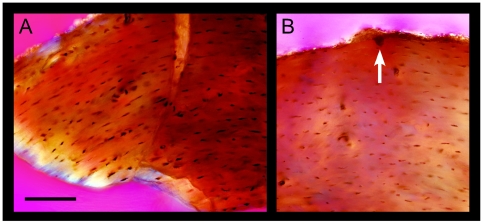
- *Archaeopteryx* long bones are composed of “nearly avascular parallel-fibered bone,” which the paper describes as among the slowest-growing osseous tissues.
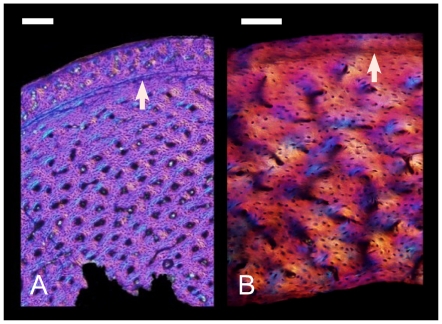
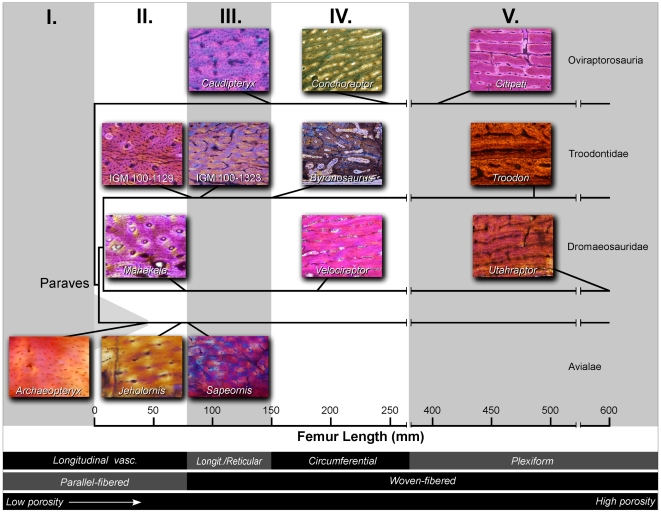
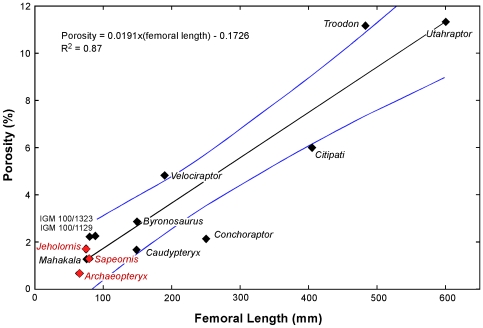
- Femoral histology across maniraptorans forms a size-dependent continuum: vascular complexity declines and bone fiber orientation becomes less random as body size decreases; femoral porosity drops from 11.32% to 1.26%.
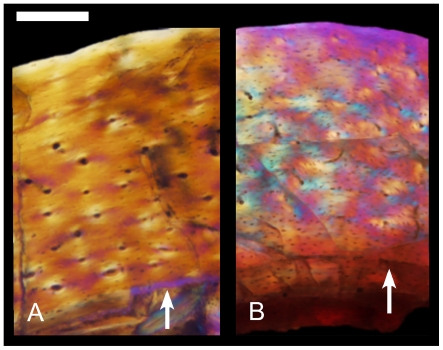
- The *Archaeopteryx* specimen studied had femoral porosity of 0.68%, lacked Haversian bone, and showed no deep intracortical growth lines; *Jeholornis* and *Sapeornis* showed similar basal-avialan patterns, with porosity 1.7% and 1.3%, respectively.
- Growth modeling suggests the known *Archaeopteryx* specimens span about 428 days of development, with maximal growth rates of 1.87 to 2.2 g/day, estimated adult mass of about 895–928 g, and somatic maturity during the second to third year of life; the paper says this is about three times slower than living precocial birds.
Methods
- Comparative osteohistology was performed on *Archaeopteryx* (including the Munich specimen BSPG 1999 I 50) and a broader sample of basal birds and maniraptoran outgroups: *Jeholornis*, *Sapeornis*, oviraptorids, and deinonychosaurs including *Mahakala*, *Utahraptor*, *Deinonychus*, *Velociraptor*, *Troodon*, *Byronosaurus*, and two undescribed troodontids.
- Minute cortical chips and histological sections were taken from long bones, especially femora; microstructure was examined with polarizing and reflectance microscopy, and porosity was quantified with NIH ImageJ.
- Character mapping and phylogenetic optimization were done in TNT on a coelurosaur phylogeny; *Archaeopteryx* growth was then modeled using femoral length, body-mass regressions, a logistic growth curve, and Bayesian estimation, with comparisons to living birds and same-sized non-avialan dinosaurs.
Limitations
- The paper states that the taxonomy of *Archaeopteryx* is complex, and the authors therefore treat all known specimens as a single species (*Archaeopteryx lithographica*); this is an interpretive limitation noted by the authors.
- The paper says earlier work lacked small outgroup taxa, which likely hindered detection of the body-size/histology relationship; this motivated broader sampling.
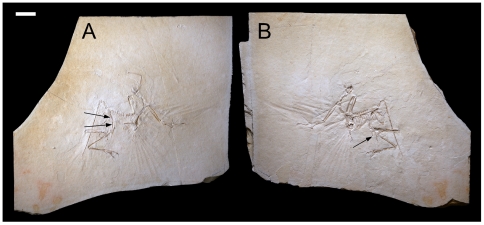
- Evidence from *Archaeopteryx* is based on young individuals spanning a limited developmental range, so the adult-size and growth-rate estimates are inferred rather than directly observed; this is evident from the text.
Model-written summary. Check it against the paper before relying on it.
Integrity signals
Registry
Cites
Statistics
Figures
![Figure 9 Growth depictions for Archaeopteryx. (Left) The size and estimated age for all ten specimens are depicted. The growth curves are based upon age and size estimates (diamonds) for the eight specimens where femoral length is known. The dashed line represents the best fit for the unconstrained statistical analysis with hatchling and adult size undefined. The solid line represents the best fit when hatchling and adult size are constrained. (Right) The maximal growth rates from these analyses (1.87–2.2 g/day; hollow diamond) fit expectations (1.83–1.87 g/day; [31]) for same-sized non-avialan dinosaurs (solid line) – animals that grew like slow growing endotherms, here compared to marsupials (M). The Archaeopteryx estimates are three times lower than typical rates for extant precocial land birds (5.7 g/day; P], 15 times lower than alticial land birds (28.6 g/day; A), and four times higher than typical rates for extant reptiles (0.46 g/day; R) [32]. Specimens designations: Ei = Eichstäat, Mu = Munich, 8th = 8th Exemplar, Te = Teyler, Th = Thermopolis, Be = Berlin, Ma = Maxberg, O&S = Exemplar der Familien Ottmann & Steil, Lo = London, So = Solnhofen.](https://figures.cochat.ai/paper-figures/a11430afaa92480bb70999595dc495d9/was-dinosaurian-physiology-inherited-by-birds-reconciling-slow-growth-in-figure-9.jpg)
Verification
Claims the paper makes
0 Valid · 3 Not valid · 30 Not checked · 61 Own results and interpretations
The cited sources that could be checked couldn’t confirm or dispute this claim.
In the paper
“Growth analysis for Archaeopteryx suggests that these animals showed exponential growth rates like non-avialan dinosaurs”
- Also stated in: § Results · plain
“These rates compare favorably with the expectations of 1.83 to 1.87 g/day for a same-sized non-avialan dinosaur (Figure 9) [31].”
§ Was Dinosaurian Physiology Inherited by Birds? Reconciling Slow Growth in Archaeopteryx > Abstract > Methodology/Principal Findings
What the sources say
- Could not verifycites [31] Erickson GM Makovicky PJ Inouye BD Chang-Fu Z Ke-Qin G 2009 A life table for Psittacosaurus lujiatunensis: Initial insights into ornithischian population biology. Anat Rec 292 1514 1521 19711482 sourceExperimental — accuracy not yet measured
Our copy of Erickson et al. (2009) is a life-table/growth-curve study of Psittacosaurus lujiatunensis and nowhere mentions Archaeopteryx; searches for 'Archaeopteryx', 'exponential growth rates' and 'avian growth' returned only the paper's own Psittacosaurus results (DISCUSSION, p. n/a: threshold size at 3-4 years entering the exponential stage 'sensu Sussman, 1964') and reference-list titles such as Erickson et al. 2001 Nature 'Dinosaur growth patterns and rapid avian growth rates' (References, p. n/a). The exponential-stage statements in the source concern Psittacosaurus, not Archaeopteryx, so nothing in our copy supports or contradicts the attributed Archaeopteryx growth analysis. (LLM, conf=0.70)
plainstates an association- Asserted: passes — The authors put it forward as true.
- Checkable: passes — It can be checked against evidence.
- Load-bearing: passes — The paper’s conclusions depend on it.
- Based: passes — The paper gives a reason why it holds.
- Also stated in: § Results · plain
The cited sources that could be checked couldn’t confirm or dispute this claim.
In the paper
“These rates compare favorably with the expectations of 1.83 to 1.87 g/day for a same-sized non-avialan dinosaur (Figure 9) [31].”
§ Was Dinosaurian Physiology Inherited by Birds? Reconciling Slow Growth in Archaeopteryx > Results
What the sources say
- Could not verifycites [31] Erickson GM Makovicky PJ Inouye BD Chang-Fu Z Ke-Qin G 2009 A life table for Psittacosaurus lujiatunensis: Initial insights into ornithischian population biology. Anat Rec 292 1514 1521 19711482 sourceExperimental — accuracy not yet measured
Our copy of Erickson et al. (2009) contains no daily growth-rate expectation values: searches for 'g/day', 'grams per day', '1.83/1.87', 'instantaneous/daily growth rate' and 'same-sized non-avian dinosaur' returned nothing of the sort. The paper treats growth only qualitatively and in mass/age terms — the DISCUSSION credits 'rapid tissue formation (Padian et al., 2001; Chinsamy-Turan, 2005)' and 'whole body growth rates (Erickson et al., 2004)', the INTRODUCTION gives maximum size as 37 kg versus 5,600 kg for Tyrannosaurus, and the RESULTS give a ~12-year longevity with a 2-kg threshold size — but it never states an expected g/day rate for a comparably sized non-avialan dinosaur. Nor does our copy contradict the figure or credit it to another named work, so the point simply falls outside what our copy says. (LLM, conf=0.70)
plain- Asserted: passes — The authors put it forward as true.
- Checkable: passes — It can be checked against evidence.
- Load-bearing: passes — The paper’s conclusions depend on it.
- Based: passes — The paper gives a reason why it holds.
- Could not verify
In the paper
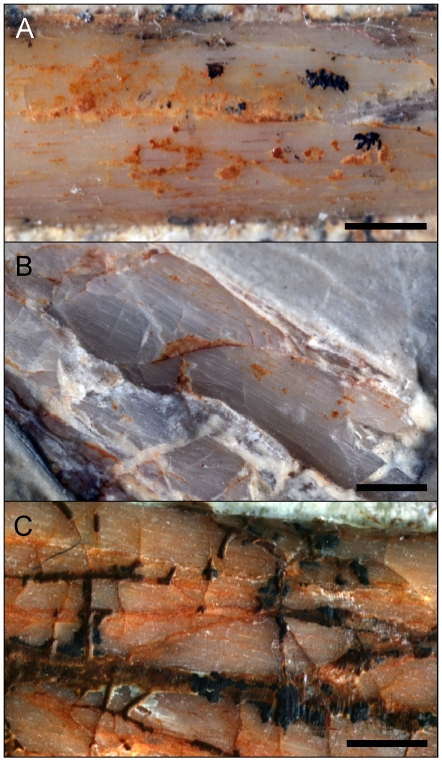
“Furthermore, transversely running fracture faces showed a circumferential fabric characteristic of the dense lamellar or parallel-fibered bone-types of living non-dinosaurian reptiles [17].”
§ Was Dinosaurian Physiology Inherited by Birds? Reconciling Slow Growth in Archaeopteryx > Introduction
What the sources say
- Not matchedcites [17] Enlow DH 1969 The bone of reptiles. Gans C d'A Bellairs A Biology of the Reptilia: Morphology A London Academic Press 45 77
We searched by its title and found no matching paper.
plain- Asserted: passes — The authors put it forward as true.
- Checkable: passes — It can be checked against evidence.
- Load-bearing: passes — The paper’s conclusions depend on it.
- Based: passes — The paper gives a reason why it holds.
- Not matched
A result the paper reports from its own data — it cites no other source for it, so there is none to check. The quote shows it is in the paper.
In the paper
“We report that Archaeopteryx long bones are composed of nearly avascular parallel-fibered bone.”
- Also stated in: § Results · plain
“histological analysis revealed that the femoral diaphysis of Archaeopteryx (BSPG 1999 I 50) is almost entirely composed of parallel-fibered bone with longitudinally oriented vascular canals (Figure 7).”
- Also stated in: § Discussion · plain
“Our discovery that the long bones of Archaeopteryx are composed of slow growing, reptilian grade, parallel-fibered bone is surprising.”
§ Was Dinosaurian Physiology Inherited by Birds? Reconciling Slow Growth in Archaeopteryx > Abstract > Methodology/Principal Findings
plainSingle case- Asserted: passes — The authors put it forward as true.
- Checkable: passes — It can be checked against evidence.
- Load-bearing: passes — The paper’s conclusions depend on it.
- Based: passes — The paper gives a reason why it holds.
- Also stated in: § Results · plain
A result the paper reports from its own data — it cites no other source for it, so there is none to check. The quote shows it is in the paper.
In the paper
“three times slower than living precocial birds”
§ Was Dinosaurian Physiology Inherited by Birds? Reconciling Slow Growth in Archaeopteryx > Abstract > Methodology/Principal Findings
plainSingle case- Asserted: passes — The authors put it forward as true.
- Checkable: passes — It can be checked against evidence.
- Load-bearing: passes — The paper’s conclusions depend on it.
- Based: passes — The paper gives a reason why it holds.
56 more claims
Create a free account to see all 94 claims and to verify the 5 references still open.
- It may state two separate claims as one. 29
- Probably not a substantial claim. 4
Claims other papers make about this one
Each is checked against this paper’s own text: does it say what the citing paper says it does?
The source backs part of the claim, not all of it — or backs it for a different population, condition or comparison.
In the citing paper
“Earlier hypotheses that Archaeopteryx was only capable of gliding flight [38], a locomotor strategy not present in living birds, have lost support and a gliding-only phase for the evolution of avian flight is considered unlikely [2, 22, 78].”
From The ecology of Archaeopteryx (2026) · cites this paper as [38]
Experimental — accuracy not yet measuredThe cited source says what the claim attributes to it.
In the citing paper
“Furthermore, either interpretation would require that this small, moulted 1,2,10 feather originated from an individual much smaller than the other known Archaeopteryx specimens 2,10,20 , which all represent immature individuals 21,22 .”
From New evidence on the colour and nature of the isolated Archaeopteryx feather (2012) · cites this paper as [22]
The cited source says what the claim attributes to it.
In the citing paper
“which all represent immature individuals 21,22 .”
From New evidence on the colour and nature of the isolated Archaeopteryx feather (2012) · cites this paper as [22]
The cited source says what the claim attributes to it.
In the citing paper
“This is consistent with a higher bone growth rate14 and associated higher resting metabolic rate15 than inferred from nearly avascular bone chips of the seventh specimen13.”
From Wing bone geometry reveals active flight in Archaeopteryx (2018) · cites this paper as [13]
The cited source says what the claim attributes to it.
In the citing paper
“Contrary to previously reported data13, the bone cortex of Archaeopteryx is well vascularised (Fig. 1c–h, Supplementary Data 1).”
From Wing bone geometry reveals active flight in Archaeopteryx (2018) · cites this paper as [13]
5 more claims about this paper
Create a free account to see every claim other papers make about this one.
Citations
Cites
WinBUGS - A Bayesian modelling framework: Concepts, structure, and extensibility
Lunn, D. J., Thomas, A., Best, N., & Spiegelhalter, D. (2000) · Statistics and Computing · doi:10.1023/a:1008929526011 · Cited by 5,368
Size, Function, and Life History
Calder, W. A. (1984) · Medical Entomology and Zoology · Cited by 2,864
T.N.T.: Tree Analysis Using New Technology
Goloboff, P. A., Farris, J., & Nixon, K. C. (2003) · Cited by 881
Ricklefs, R. E. (1968) · Ibis · doi:10.1111/j.1474-919x.1968.tb00058.x · Cited by 862
Relationships between body size and some life history parameters
Blueweiss, L., Fox, H., Kudzma, V., Nakashima, D., Peters, R., & Sams, S. (1978) · Oecologia · doi:10.1007/bf00344996 · Cited by 842 · cited 2×
“6 g estimate for a full-term egg mass was obtained from the regression analysis of Blueweiss [55].”
InfluentialOn the Evolution and Adaptive Significance of Postnatal Growth Rates in the Terrestrial Vertebrates
Case, T. J. (1978) · The Quarterly Review of Biology · doi:10.1086/410622 · Cited by 661 · cited 4×
“strongly correlate with basal metabolic rate [32,43].”
InfluentialMicrostructure and Mineralization of Vertebrate Skeletal Tissues
Francillon-Vieillot, H., de Buffrénil, V., Castanet, J., Géraudie, J., Meunier, F. J., Sire, J. Y., Zylberberg, L., & de Ricqlès, A. (2013) · Short Courses in Geology · doi:10.1029/sc005p0175 · Cited by 587
PATTERNS OF GROWTH IN BIRDS. II. GROWTH RATE AND MODE OF DEVELOPMENT
Ricklefs, R. E. (1973) · Ibis · doi:10.1111/j.1474-919x.1973.tb02636.x · Cited by 387 · cited 2×
“In most comparable-sized volant birds, juveniles and sub-adult sized animals are present for only a small fraction of the year as growth rates are remarkably rapid [1,36].”
Coral Growth and Geochronometry
WELLS, J. W. (1963) · Nature · doi:10.1038/197948a0 · Cited by 351 · cited 1×
“Evidence for this includes: 1) the finding of exceptionally slow growing bone tissues suggesting prolonged development relative to living birds, 2) estimates that Archaeopteryx somatically matured in no less than 970 days (Figure 9) (there were 375 days in a Late Jurassic year; [37]), 3) growth lines that not only bri…”
The Microstructure of Dinosaur Bone
Chinsamy-Turan, A. (2005) · doi:10.56021/9780801881206 · Cited by 342
Research works printed but not linked: 5
- Zhang F Hou L Ouyang L 1998 Osteological microstructure of Confuciusornis: Preliminary Report. Vert PalAsia 36 126 135
- Chinsamy A Hillenius WJ 2004 Physiology of non-avian dinosaurs. Weishampel DB Dodson P Osmólska H The Dinosauria. 2nd Edition Berkeley University of California Press 643 659
- Enlow DH 1969 The bone of reptiles. Gans C d'A Bellairs A Biology of the Reptilia: Morphology A London Academic Press 45 77
- Enlow DH Brown SO 1957 A comparative histological study of fossil and recent bone tissues. Part 2. Tex J Sci 9 186 214
- Enlow DH Brown SO 1958 A comparative histological study of fossil and recent bone tissues. Part 3. Tex J Sci 10 187 230
Cited by
Benson, R. B. J., Campione, N. E., Carrano, M. T., Mannion, P. D., Sullivan, C., Upchurch, P., & Evans, D. C. (2014) · PLoS Biology · doi:10.1371/journal.pbio.1001853 · Cited by 457
“99 kg (the largest, subadult specimen [52]) and the Cretaceous sauropod Argentinosaurus weighed approximately 90,000 kg (Table 1).”
BackgroundThe origin and diversification of birds
Brusatte, S. L., O’Connor, J. K., & Jarvis, E. D. (2015) · Current Biology · doi:10.1016/j.cub.2015.08.003 · Cited by 334
“The oldest birds, such as Archaeopteryx, and Mesozoic bird groups, such as enantiornithines, had growth rates similar to derived non-bird dinosaurs [83], and the amplified rates and rapid matu-”
BackgroundAn integrative approach to understanding bird origins
Xu, X., Zhou, Z., Dudley, R., Mackem, S., Chuong, C.-M., Erickson, G. M., & Varricchio, D. J. (2014) · Science · doi:10.1126/science.1253293 · Cited by 319
“Cretaceous Period (37, 98, 100), although increased growth and metabolic rates occurred early in theropod evolution (Fig.”
BackgroundInfluentialSelf-citationBirds have paedomorphic dinosaur skulls
Bhullar, B.-A. S., Marugán-Lobón, J., Racimo, F., Bever, G. S., Rowe, T. B., Norell, M. A., & Abzhanov, A. (2012) · Nature · doi:10.1038/nature11146 · Cited by 249
Self-citationCope's rule and the adaptive landscape of dinosaur body size evolution
Benson, R. B. J., Hunt, G., Carrano, M. T., & Campione, N. (2018) · Palaeontology · doi:10.1111/pala.12329 · Cited by 202
Assessing ontogenetic maturity in extinct saurian reptiles
Griffin, C. T., Stocker, M. R., Colleary, C., Stefanic, C. M., Lessner, E. J., Riegler, M., Formoso, K., Koeller, K., & Nesbitt, S. J. (2021) · Biological Reviews · doi:10.1111/brv.12666 · Cited by 191
Skeletal Correlates for Body Mass Estimation in Modern and Fossil Flying Birds
Field, D. J., Lynner, C., Brown, C., & Darroch, S. A. F. (2013) · PLoS ONE · doi:10.1371/journal.pone.0082000 · Cited by 178
“[10-12], homeothermy [13], body size [14-16], and flight”
BackgroundBenson, R. B. J., Butler, R. J., Carrano, M. T., & O'Connor, P. M. (2012) · Biological Reviews · doi:10.1111/j.1469-185x.2011.00190.x · Cited by 175
“…& Sanz, 2010), rapid growth rates (e.g. Horner, de Ricqlès & Padian, 1999; Sander, 2000; Erickson, Curry-Rogers & Yerby, 2001; Lee & Werning, 2008; Erickson et al., 2009), medullary bone (a specialised reproductive tissue; Schweitzer, Wittmeyer & Horner, 2005; Lee & Werning, 2008), genomic…”
Evolution of olfaction in non-avian theropod dinosaurs and birds
Zelenitsky, D. K., Therrien, F., Ridgely, R. C., McGee, A. R., & Witmer, L. M. (2011) · Proceedings of the Royal Society B: Biological Sciences · doi:10.1098/rspb.2011.0238 · Cited by 173
Evidence for mesothermy in dinosaurs
Grady, J. M., Enquist, B. J., Dettweiler-Robinson, E., Wright, N. A., & Smith, F. A. (2014) · Science · doi:10.1126/science.1253143 · Cited by 168
“Archaeopteryx lithographica W (17) (66)”
BackgroundResultInfluentialHutchinson, J. R., Bates, K. T., Molnar, J., Allen, V., & Makovicky, P. J. (2011) · PLoS ONE · doi:10.1371/journal.pone.0026037 · Cited by 167
Pre‐modern Birds: Avian Divergences in the Mesozoic
O'Connor, J., Chiappe, L. M., & Bell, A. (2011) · Living Dinosaurs · doi:10.1002/9781119990475.ch3 · Cited by 163
Bone Histology of Fossil Tetrapods: Advancing Methods, Analysis, and Interpretation
(2013) · University of California Press eBooks · doi:10.1525/california/9780520273528.001.0001 · Cited by 161
Stein, K., Csiki, Z., Rogers, K. C., Weishampel, D. B., Redelstorff, R., Carballido, J. L., & Sander, P. M. (2010) · Proceedings of the National Academy of Sciences · doi:10.1073/pnas.1000781107 · Cited by 139
Stein, K. H. W., & Prondvai, E. (2013) · Biological reviews/Biological reviews of the Cambridge Philosophical Society · doi:10.1111/brv.12041 · Cited by 140
“…trend that largerbodied forms show more densely vascularized long bone cortices, also applies to extant homeothermic amniotes with generally high basal metabolic rate (BMR) and growth rate, namely birds and mammals (Klevezal, 1996, p. 22; Padian, De Ricqlès & Horner, 2001; Erickson et al., 2009).”
BackgroundFrom snout to beak: the loss of teeth in birds
Louchart, A., & Viriot, L. (2011) · Trends in Ecology & Evolution · doi:10.1016/j.tree.2011.09.004 · Cited by 146
Preservation of ovarian follicles reveals early evolution of avian reproductive behaviour
Zheng, X., O'Connor, J. K., Huchzermeyer, F. W., Wang, X., Wang, Y., Wang, M., & Zhou, Z. (2013) · Nature · doi:10.1038/nature11985 · Cited by 138
Self-citationFarlow, J. O., & Brett-Surman, M. K. (1997) · Opus: Research & Creativity (Indiana University – Purdue University Fort Wayne) · Cited by 135
Development-based revision of bone tissue classification: the importance of semantics for science
Prondvai, E., Stein, K. H. W., de Ricqlès, A. J., & Cubo, J. (2014) · Biological Journal of the Linnean Society · doi:10.1111/bij.12323 · Cited by 129
“Slow growth in Archaeopteryx.”
BackgroundBhullar, B.-A. S., Hanson, M., Fabbri, M., Pritchard, A., Bever, G. S., & Hoffman, E. (2016) · Integrative and Comparative Biology · doi:10.1093/icb/icw069 · Cited by 117
“Our inference of ‘‘juvenile’’ and ‘‘adult’’ states for Coelophysis follows previous literature but is not rigorously validated by bone histology and additional studies as is the status of the specimens of Archaeopteryx (Colbert 1989; Houk et al. 1990; Erickson et al. 2009).”
ResultInfluentialErickson, G. M. (2014) · Annual Review of Earth and Planetary Sciences · doi:10.1146/annurev-earth-060313-054858 · Cited by 103
Self-citationRauhut, O. W. M., Foth, C., & Tischlinger, H. (2018) · PeerJ · doi:10.7717/peerj.4191 · Cited by 100
“Because the Eichstätt specimen is a juvenile individual (Wellnhofer, 1974; Erickson et al., 2009), we excluded this specimen in a second analysis, to”
BackgroundSelf-citationGriffin, C. T., & Nesbitt, S. J. (2016) · Journal of Vertebrate Paleontology · doi:10.1080/02724634.2016.1111224 · Cited by 109
“A similar external morphology of long bones is a characteristic of fast-growing stages in tetrapods, including crocodilians (Tumarkin-Deratzian et al., 2007) and birds (Tumarkin-Deratzian et al., 2006; Erickson et al., 2009).”
BackgroundZheng, X., O’Connor, J., Wang, X., Wang, M., Zhang, X., & Zhou, Z. (2014) · Proceedings of the National Academy of Sciences · doi:10.1073/pnas.1411070111 · Cited by 96
“The first LAG in Sapeornis STM15-32 is a double LAG, separated from the closely packed LAGs in the OCL, indicating that Sapeornis took several years to reachmaturity and then continued to grow, albeit slowly (SI Appendix, Fig.”
BackgroundInfluentialSelf-citationRates of dinosaur limb evolution provide evidence for exceptional radiation in Mesozoic birds
Benson, R. B. J., & Choiniere, J. N. (2013) · Proceedings of the Royal Society B: Biological Sciences · doi:10.1098/rspb.2013.1780 · Cited by 96
Gender identification of the Mesozoic bird Confuciusornis sanctus
Chinsamy, A., Chiappe, L. M., Marugán‐Lobón, J., Chunling, G., & Zhang, F. (2013) · Nature Communications · doi:10.1038/ncomms2377 · Cited by 97
Choiniere, J. N., Clark, J. M., Forster, C. A., Norell, M. A., Eberth, D. A., Erickson, G. M., Chu, H., & Xu, X. (2013) · Journal of Systematic Palaeontology · doi:10.1080/14772019.2013.781067 · Cited by 100
“Notable exceptions among coelurosaurs are most Archaeopteryx specimens, which are approximately one year old (Erickson et al. 2009) and partial developmental sequences for tyrannosaurids (Carr 1999; Carr & Williamson 2004), including the recent description of a specimen of Tarbosaurus estimated at 2–3 years old (Tsuih…”
BackgroundSelf-citationHoussaye, A. (2012) · Biological Journal of the Linnean Society · doi:10.1111/j.1095-8312.2012.02002.x · Cited by 96
“Bone histology is one of the major sources of information about life history traits (e.g. Sander & Klein, 2005; Erickson et al., 2009; Sanchez et al., 2010).”
BackgroundThe Ontogenetic Osteohistology of Tenontosaurus tilletti
Werning, S. (2012) · PLoS ONE · doi:10.1371/journal.pone.0033539 · Cited by 96
“These histological traits are consistent with faster growth rates in a relative sense [78–80], but the bones of most of these taxa are larger at each ontogenetic stage compared to those of Tenontosaurus, so they were growing at absolutely faster rates as well [78].”
BackgroundNew evidence on the colour and nature of the isolated Archaeopteryx feather
Carney, R. M., Vinther, J., Shawkey, M. D., D'Alba, L., & Ackermann, J. (2012) · Nature Communications · doi:10.1038/ncomms1642 · Cited by 83
Dinosaur Macroevolution and Macroecology
Benson, R. (2018) · Annual Review of Ecology Evolution and Systematics · doi:10.1146/annurev-ecolsys-110617-062231 · Cited by 87
Torres, C. R., Norell, M. A., & Clarke, J. A. (2021) · Science Advances · doi:10.1126/sciadv.abg7099 · Cited by 86
Self-citationKlein, N. (2010) · PLoS ONE · doi:10.1371/journal.pone.0011613 · Cited by 84
Wing bone geometry reveals active flight in Archaeopteryx
Voeten, D. F. A. E., Cubo, J., de Margerie, E., Röper, M., Beyrand, V., Bureš, S., Tafforeau, P., & Sanchez, S. (2018) · Nature Communications · doi:10.1038/s41467-018-03296-8 · Cited by 77
Non-dinosaurian Dinosauromorpha
Langer, M. C., Nesbitt, S. J., Bittencourt, J. S., & Irmis, R. B. (2013) · Geological Society London Special Publications · doi:10.1144/sp379.9 · Cited by 92
A distinct dinosaur life history?
Varricchio, D. J. (2010) · Historical Biology · doi:10.1080/08912963.2010.500379 · Cited by 81
“This multiple-year growth pattern appears to have extended into Mesozoic birds as well (Chinsamy et al. 1995; de Ricqlès et al. 2001; Erickson et al. 2009b).”
BackgroundResultInfluentialDumont, M., Tafforeau, P., Bertin, T., Bhullar, B.-A., Field, D., Schulp, A., Strilisky, B., Thivichon-Prince, B., Viriot, L., & Louchart, A. (2016) · BMC Evolutionary Biology · doi:10.1186/s12862-016-0753-6 · Cited by 74
Lee, A. H., & O’Connor, P. M. (2013) · Journal of Vertebrate Paleontology · doi:10.1080/02724634.2013.743898 · Cited by 84
“…Patterns—Femoral and tibial bone histology of Masiakasaurus share some features typical to other non-avian theropods (e.g., Chinsamy, 1990; Varricchio, 1993; de Ricqlès et al., 2003; Horner and Padian, 2004; Padian et al., 2004; Bybee et al., 2006; Erickson et al., 2009; D’Emic et al., 2012).”
BackgroundRevisiting the Estimation of Dinosaur Growth Rates
Myhrvold, N. P. (2013) · PLoS ONE · doi:10.1371/journal.pone.0081917 · Cited by 72
“Some later studies [18,27] nevertheless employed asymptotic curve fits exclusively for age– mass data, despite in one case [18] finding that linear models provided an excellent fit to the femur length–age data, which implies that growth was not asymptotic.”
BackgroundMethodResultThe wings before the bird: an evaluation of flapping-based locomotory hypotheses in bird antecedents
Dececchi, T. A., Larsson, H. C. E., & Habib, M. B. (2016) · PeerJ · doi:10.7717/peerj.2159 · Cited by 72
A mid-Cretaceous tyrannosauroid and the origin of North American end-Cretaceous dinosaur assemblages
Nesbitt, S. J., Denton, R. K., Loewen, M. A., Brusatte, S. L., Smith, N. D., Turner, A. H., Kirkland, J. I., McDonald, A. T., & Wolfe, D. G. (2019) · Nature Ecology & Evolution · doi:10.1038/s41559-019-0888-0 · Cited by 75
Self-citationA large bird from the Early Cretaceous of China: new information on the skull of enantiornithines
Zhang, Z., Chiappe, L. M., Han, G., & Chinsamy, A. (2013) · Journal of Vertebrate Paleontology · doi:10.1080/02724634.2013.762708 · Cited by 68
“The bone microstructure of CNUVB-0903 agrees with that of other enantiornithines and basal birds (Chinsamy et al., 1994, 1995; Erickson et al., 2009), indicating that these animals experienced a relatively slow rate of growth (and bone deposition) even during the fastest phase of growth, and…”
BackgroundProndvai, E., Stein, K. H. W., Ősi, A., & Sander, M. P. (2012) · PLoS ONE · doi:10.1371/journal.pone.0031392 · Cited by 73
“Vascularity is also relatively low when compared to the laminar, plexiform or reticular fibrolamellar bone found in most dinosaurs (e.g. PLoS ONE | www.plosone.org 13 February 2012 | Volume 7 | Issue 2 | e31392 sauropods), but comparable to the vascularization degree seen in the primary bone of smaller maniraptorans l…”
BackgroundDinosaur paleohistology: review, trends and new avenues of investigation
Bailleul, A. M., O'Connor, J. K., & Schweitzer, M. H. (2019) · PeerJ · doi:10.7717/peerj.7764 · Cited by 73
Foth, C., Hedrick, B. P., & Ezcurra, M. D. (2016) · PeerJ · doi:10.7717/peerj.1589 · Cited by 65
“Althoughdinosaurs generally have higher growth rates compared to other non-avian reptiles, histological studies reveal that growth rates are not identical (Erickson, Rogers & Yerby, 2001; Erickson et al., 2004; Padian, De Ricqlès & Horner, 2001; Sander et al., 2004; Erickson et al., 2009; Grady et al., 2014; Werner &…”
BackgroundGao, C., Chiappe, L. M., Zhang, F., Pomeroy, D. L., Shen, C., Chinsamy, A., & Walsh, M. O. (2012) · Journal of Vertebrate Paleontology · doi:10.1080/02724634.2012.693865 · Cited by 52
Wang, M., Stidham, T. A., & Zhou, Z. (2018) · Proceedings of the National Academy of Sciences · doi:10.1073/pnas.1812176115 · Cited by 51
“S9), and similar sized nonavian theropods in terms of their bone microstructure (37).”
BackgroundSelf-citationThe first specimen of Archaeopteryx from the Upper Jurassic Mörnsheim Formation of Germany
Kundrát, M., Nudds, J., Kear, B. P., Lü, J., & Ahlberg, P. (2019) · Historical Biology · doi:10.1080/08912963.2018.1518443 · Cited by 48
“(Erickson et al. 2009) reported that the femoral compacta is nearly avascular in the Munich specimen.”
BackgroundPlateau, O., & Foth, C. (2020) · Communications Biology · doi:10.1038/s42003-020-0914-4 · Cited by 61
Theropod diversity and the refinement of avian characteristics
Makovicky, P. J., & Zanno, L. E. (2011) · Living Dinosaurs · doi:10.1002/9781119990475.ch1 · Cited by 50
“Given that a number of primitive avian taxa including Archeopteryx (Erickson et al., 2009), Confuciusornis Theropod Diversity and the Refinement of Avian Characteristics 19”
BackgroundInfluentialAn Early Cretaceous enantiornithine (Aves) preserving an unlaid egg and probable medullary bone
Bailleul, A. M., O'Connor, J. K., Zhang, S., Li, Z., Wang, Q., Lamanna, M. C., Zhu, X., & Zhou, Z. (2019) · Nature Communications · doi:10.1038/s41467-019-09259-x · Cited by 54
Self-citationNesbitt, S. J., & Clarke, J. A. (2016) · Bulletin of the American Museum of Natural History · doi:10.1206/0003-0090-406.1.1 · Cited by 54
Nesbitt, S. J., Clarke, J. A., Turner, A. H., & Norell, M. A. (2011) · Journal of Vertebrate Paleontology · doi:10.1080/02724634.2011.10371575 · Cited by 57
“All of these characteristics seem to be present in all small coelurosaurian theropods (femoral length 75 mm) including basal avialans (Erickson et al., 2009).”
InfluentialSelf-citationDevelopmental palaeontology of Reptilia as revealed by histological studies
Scheyer, T. M., Klein, N., & Sander, P. M. (2009) · Seminars in Cell and Developmental Biology · doi:10.1016/j.semcdb.2009.11.005 · Cited by 50
Ritchison, G. (2023) · Fascinating life sciences · doi:10.1007/978-3-031-14852-1_1 · Cited by 45
New observations on the skull of Archaeopteryx
Rauhut, O. W. M. (2014) · Paläontologische Zeitschrift · doi:10.1007/s12542-013-0186-0 · Cited by 44
“2011), Archaeopteryx can still be regarded as the ‘‘yardstick’’ of bird evolution, and new insights into the anatomy and biology of this animal are published frequently (e.g., Dominguez Alonso et al. 2004; Mayr et al. 2005, 2007; Tischlinger 2005, 2009; Wellnhofer 2008; Erickson et al. 2009; Bergmann et al. 2010; Long…”
BackgroundSelf-citationShrinking dinosaurs and the evolution of endothermy in birds
Rezende, E. L., Bacigalupe, L. D., Nespolo, R. F., & Bozinovic, F. (2020) · Science Advances · doi:10.1126/sciadv.aaw4486 · Cited by 51
Wang, M., Li, Z., & Zhou, Z. (2017) · Proceedings of the National Academy of Sciences · doi:10.1073/pnas.1707237114 · Cited by 44
“We performed osteohistological analysis on the referred specimen using a thin section of the long bones and suggests that Pterygornis could reach skeletal maturity in approximately 1 y, a growth strategy that most living birds exhibit (8).”
MethodSelf-citationOsteohistology and Life History of the Basal Pygostylian, Confuciusornis sanctus
Chinsamy, A., Marugán‐Lobón, J., Serrano, F. J., & Chiappe, L. (2020) · The Anatomical Record · doi:10.1002/ar.24282 · Cited by 42
“Erickson et al. (2009) describes the bone tissue of a femur of a subadult Sapeornis (LPM B00166) as being primarily woven-fibred with a mix of longitudinal and reticular vascularization, mentioning that avascular parallel-fibred bone brackets a line of arrested growth.”
BackgroundResultInfluentialSmith, N. A., & Clarke, J. A. (2014) · The Anatomical Record · doi:10.1002/ar.22841 · Cited by 41
From baby birds to feathered dinosaurs: incipient wings and the evolution of flight
Heers, A. M., Dial, K. P., & Tobalske, B. W. (2014) · Paleobiology · doi:10.1666/13057 · Cited by 41
“From baby birds to feathered dinosaurs: incipient wings and the evolution of flight”
BackgroundA new basal bird from China with implications for morphological diversity in early birds
Wang, M., Wang, X., Wang, Y., & Zhou, Z. (2016) · Scientific Reports · doi:10.1038/srep19700 · Cited by 41
Self-citationEggshell geochemistry reveals ancestral metabolic thermoregulation in Dinosauria
Dawson, R. R., Field, D. J., Hull, P. M., Zelenitsky, D. K., Therrien, F., & Affek, H. P. (2020) · Science Advances · doi:10.1126/sciadv.aax9361 · Cited by 44
“Although many crownward stem avians, such as Archaeopteryx ( 49 ), exhibited slower growth rates than extant birds, our results indicate that these extinct avian taxa would have inherited an ancestral capacity for thermoregulation.”
IgH loci of American alligator and saltwater crocodile shed light on IgA evolution
Magadán, S., Sánchez‐Espinel, C., & Gambón-Deza, F. (2013) · Immunogenetics · doi:10.1007/s00251-013-0692-y · Cited by 43
Nesting at extreme polar latitudes by non-avian dinosaurs
Druckenmiller, P. S., Erickson, G. M., Brinkman, D., Brown, C. M., & Eberle, J. J. (2021) · Current Biology · doi:10.1016/j.cub.2021.05.041 · Cited by 40
Self-citationA new microraptorine theropod from the Jehol Biota and growth in early dromaeosaurids
Poust, A. W., Chunling, G., Varricchio, D. J., Wu, J., & Zhang, F. (2020) · The Anatomical Record · doi:10.1002/ar.24343 · Cited by 41
“The largest specimen ofMicroraptor is similar to D2933 in size, but comparison of histology with other small theropods (Erickson et al., 2009) and Troodon suggests that D2933 may only be 2/3 of its adult size putting it above the adult size range ofMicroraptor.”
Farlow, J. O., Coroian, I. D., & Foster, J. R. (2010) · Historical Biology · doi:10.1080/08912961003787598 · Cited by 42
“…physiology is arguably approaching consensus; dinosaurian metabolic rates are almost certainly constrained at the low end by extrapolations from varanid lizards (McNab 2009b), and at the high end by the lower range of values for modern endotherms, such as marsupials (Erickson et al. 2009a, 2009b).”
BackgroundMethodInfluentialClimatic controls on the ecological ascendancy of dinosaurs
Dunne, E. M., Farnsworth, A., Benson, R. B. J., Godoy, P. L., Greene, S. E., Valdes, P. J., Lunt, D. J., & Butler, R. J. (2023) · Current Biology · doi:10.1016/j.cub.2022.11.064 · Cited by 39
Wang, M., & Zhou, Z. (2017) · Journal of Systematic Palaeontology · doi:10.1080/14772019.2015.1136968 · Cited by 37
Self-citationO’Connor, J., Erickson, G. M., Norell, M., Bailleul, A. M., Hu, H., & Zhou, Z. (2018) · Nature Communications · doi:10.1038/s41467-018-07621-z · Cited by 36
Self-citationD’Emic, M. D., Melstrom, K. M., & Eddy, D. R. (2012) · Palaeogeography Palaeoclimatology Palaeoecology · doi:10.1016/j.palaeo.2012.03.003 · Cited by 39
“See Harris (1998b), Currie and Carpenter (2000), and Eddy and Clarke (2011) for other autapomorphies of Acrocanthosaurus atokensis.”
BackgroundDevelopmental strategies underlying gigantism and miniaturization in non-avialan theropod dinosaurs
D’Emic, M. D., O’Connor, P. M., Sombathy, R. S., Cerda, I. A., Pascucci, T. R., Varricchio, D. J., Pol, D., Dave, A., Coria, R. A., & Rogers, K. A. C. (2023) · Science · doi:10.1126/science.adc8714 · Cited by 38
A new alvarezsaurian theropod from the Upper Jurassic Shishugou Formation of western China
Qin, Z., Clark, J. M., Choiniere, J. N., & Xu, X. (2019) · Scientific Reports · doi:10.1038/s41598-019-48148-7 · Cited by 39
Macroevolutionary and morphofunctional patterns in theropod skulls: a morphometric approach
Foth, C., & Rauhut, O. W. M. (2012) · Acta Palaeontologica Polonica · doi:10.4202/app.2011.0145 · Cited by 62
Self-citationProndvai, E., Godefroit, P., Adriaens, D., & Hu, D. (2018) · Scientific Reports · doi:10.1038/s41598-017-18218-9 · Cited by 33
Self-citationBirdlike growth and mixed-age flocks in avimimids (Theropoda, Oviraptorosauria)
Funston, G. F., Currie, P. J., Ryan, M. J., & Dong, Z.-M. (2019) · Scientific Reports · doi:10.1038/s41598-019-55038-5 · Cited by 31
Atterholt, J., Poust, A. W., Erickson, G. M., & O'Connor, J. K. (2021) · Frontiers in Earth Science · doi:10.3389/feart.2021.640220 · Cited by 28
Self-citationDecoupling body shape and mass distribution in birds and their dinosaurian ancestors
Macaulay, S., Hoehfurtner, T., Cross, S. R. R., Marek, R. D., Hutchinson, J. R., Schachner, E. R., Maher, A. E., & Bates, K. T. (2023) · Nature Communications · doi:10.1038/s41467-023-37317-y · Cited by 31
“Here, we modelled the Berlin specimen of Archaeopteryx , which, like all known near-complete specimens, is considered as juvenile 35 .”
Osteohistology of the Lower Cretaceous Yixian Formation ornithuromorph (Aves) Iteravis huchzermeyeri
O’Connor, J., Wang, M., Zhou, S., & Zhou, Z. (2015) · Palaeontologia Electronica · doi:10.26879/520 · Cited by 32
Self-citationImmunoglobulin genes of the turtles
Magadán, S., Sánchez‐Espinel, C., & Gambón-Deza, F. (2012) · Immunogenetics · doi:10.1007/s00251-012-0672-7 · Cited by 30
Identifying medullary bone in extinct avemetatarsalians: challenges, implications and perspectives
Canoville, A., Schweitzer, M. H., & Zanno, L. E. (2020) · Philosophical Transactions of the Royal Society B Biological Sciences · doi:10.1098/rstb.2019.0133 · Cited by 28
Hogg, R. T. (2018) · Vertebrate paleobiology and paleoanthroplogy series/Vertebrate paleobiology and paleoanthropology series · doi:10.1007/978-3-319-94265-0_6 · Cited by 26
Stefanic, C. M., & Nesbitt, S. J. (2019) · Royal Society Open Science · doi:10.1098/rsos.190258 · Cited by 29
Growth and miniaturization among alvarezsauroid dinosaurs
Qin, Z., Zhao, Q., Choiniere, J. N., Clark, J. M., Benton, M. J., & Xu, X. (2021) · Current Biology · doi:10.1016/j.cub.2021.06.013 · Cited by 25
“When comparing larger and smaller alvarezsauroids, vascular complexity simplifies (circumferential to reticular to longitudinal) and randomness in bone-fiber orientation diminishes (fibrolamellar bone dominates in the form of observed parallel-fibered bone) in smaller forms, as reported in other theropods.(18) In revi…”
A fast-growing basal troodontid (Dinosauria: Theropoda) from the latest Cretaceous of Europe
Sellés, A. G., Vila, B., Brusatte, S. L., Currie, P. J., & Galobart, À. (2021) · Scientific Reports · doi:10.1038/s41598-021-83745-5 · Cited by 26
Growth patterns and life-history strategies in Placodontia (Diapsida: Sauropterygia)
Klein, N., Neenan, J. M., Scheyer, T. M., & Griebeler, E. M. (2015) · Royal Society Open Science · doi:10.1098/rsos.140440 · Cited by 25
“It thus reveals important insights into life history at the individual and population level, the latter by averaging traits across several individuals [18–21].”
BackgroundAerodynamics Show Membrane-Winged Theropods Were a Poor Gliding Dead-end
Dececchi, T. A., Roy, A., Pittman, M., Kaye, T. G., Xu, X., Habib, M. B., Larsson, H. C. E., Wang, X., & Zheng, X. (2020) · iScience · doi:10.1016/j.isci.2020.101574 · Cited by 22
Imai, T., Azuma, Y., Kawabe, S., Shibata, M., Miyata, K., Wang, M., & Zhou, Z. (2019) · Communications Biology · doi:10.1038/s42003-019-0639-4 · Cited by 24
Self-citationSkeletal completeness of the non‐avian theropod dinosaur fossil record
Cashmore, D. D., & Butler, R. J. (2019) · Palaeontology · doi:10.1111/pala.12436 · Cited by 28
“…the non-avian theropod and bird records are unsurprising given that the latter are direct descendants of the former, considering their similar life histories, ecologies and environmental preferences (Erickson et al. 2009; O’Connor et al. 2011b), as well as the overlapping geological occurrences.”
BackgroundOrigins of slow growth on the crocodilian stem lineage
Botha, J., Weiss, B. M., Dollman, K., Barrett, P. M., Benson, R., & Choiniere, J. N. (2023) · Current Biology · doi:10.1016/j.cub.2023.08.057 · Cited by 24
Chinsamy, A., Buffetaut, É., Canoville, A., & Angst, D. (2014) · Die Naturwissenschaften · doi:10.1007/s00114-014-1170-6 · Cited by 24
Marugán-Lobón, J., Chiappe, L. M., Ji, S., Zhou, Z., Chunling, G., Hu, D., & Meng, Q. (2011) · Journal of Systematic Palaeontology · doi:10.1080/14772019.2010.517786 · Cited by 21
“and an assessment of the relationship between allometry and the characteristics of bone tissue (Erickson et al. 2009), to truly ascertain their validity.”
BackgroundSelf-citationFunston, G. F., & Currie, P. J. (2020) · Historical Biology · doi:10.1080/08912963.2020.1726908 · Cited by 26
Ontogenetic niche shifts in the Mesozoic bird Confuciusornis sanctus
Marugán‐Lobón, J., & Chiappe, L. M. (2022) · Current Biology · doi:10.1016/j.cub.2022.02.010 · Cited by 18
Prondvai, E., Bodor, E., & Ősi, A. (2014) · Paleobiology · doi:10.1666/13030 · Cited by 26
“…as most sauropterygians (Klein 2010), several dinosaurs (e.g., de Ricqlès 1983; Chinsamy 1994; Erickson and Tumanova 2000; Horner et al. 2000, 2009; Erickson et al. 2004, 2007, 2009; Horner and Padian 2004; Chinsamy-Turan 2005; Erickson 2005; Scheyer et al. 2010; Woodward et al. 2011), and a…”
BackgroundHorizontal Gene Transfers with or without Cell Fusions in All Categories of the Living Matter
Sinkovics, J. G. (2011) · Advances in experimental medicine and biology · doi:10.1007/978-94-007-0782-5_2 · Cited by 23
“The ancestors and the "missing links" are preserved in the Gobi desert and elsewhere (Liaoning, China) possessing melanosomes for the spectacular coloring of their skins and plumage [242] [243] [244] [245] [246] [247] .”
BackgroundWang, J., Hao, X., Kundrát, M., Liu, Z., Uesugi, K., Jurašeková, Z., Guo, B., Hoshino, M., Li, Y., Monfroy, Q. T., et al. (2019) · Historical Biology · doi:10.1080/08912963.2019.1593405 · Cited by 24
Ultraviolet light illuminates the avian nature of the Berlin Archaeopteryx skeleton
Schwarz, D., Kundrát, M., Tischlinger, H., Dyke, G. J., & Carney, R. M. (2019) · Scientific Reports · doi:10.1038/s41598-019-42823-5 · Cited by 21
Redelstorff, R., Hübner, T., Chinsamy, A., & Sander, P. M. (2013) · The Anatomical Record · doi:10.1002/ar.22701 · Cited by 20
Prondvai, E., Witten, P. E., Abourachid, A., Huysseune, A., & Adriaens, D. (2019) · Journal of Anatomy · doi:10.1111/joa.13109 · Cited by 22
“…deceleration nor the relative duration of slow growth along their developmental trajectory is clear, it has been suggested that this slow growth is related to their superprecocity, i.e. the capacity to fly soon after hatching (Chinsamy & Elzanowski, 2001; Erickson et al. 2009; Xing et al. 2017).”
Background
Metadata
- Authors
- Erickson, G. M., Rauhut, O. W. M., Zhou, Z., Turner, A. H., Inouye, B. D., Hu, D., & Norell, M. A.
- Affiliations
- Florida State University (US)
- Bayerische Staatssammlung für Paläontologie und Geologie (DE)
- Chinese Academy of Sciences (CN)
- American Museum of Natural History (US)
- Shenyang Normal University (CN)
- Corresponding author
- Erickson, Gregory M.
- ORCID
- Venue
- PLoS ONE
- Publisher
- Public Library of Science (PLoS)
- Published
- 2009-10-09
- Volume
- 4
- Issue
- 10
- Pages
- e7390
- ISSN
- 1932-6203 (ISSN-L)
- PMC
- PMC2756958
- OpenAlex
- W2036031391
- Cited by
- 195
- References
- 62
- Citations by year
- 2026: 4 · 2025: 5 · 2024: 6 · 2023: 13 · 2022: 8 · 2021: 14 · 2020: 17 · 2019: 14 · 2018: 16 · 2017: 5 · 2016: 19 · 2015: 8 · 2014: 17 · 2013: 17 · 2012: 13
- FWCI
- 8.29
- Type
- journal article
- Language
- en
- Open access
- gold
- doi.org
- Locations
- PLoS ONE (publishedVersion, cc-by)
- PubMed Central (publishedVersion, cc-by)
- PubMed (publishedVersion)
- DOAJ (DOAJ: Directory of Open Access Journals) (submittedVersion, cc-by-sa)
- Open access LMU (Ludwid Maxmilian's Universitat Munchen) (submittedVersion)
- Figshare (submittedVersion, cc-by)
- Funders
- National Science Foundation (0446224, 0228693)
- Deutsche Forschungsgemeinschaft
- Division of Biological Infrastructure
- Topics
- Physical Sciences › Earth and Planetary Sciences › Paleontology › Paleontology and Evolutionary Biology
- Physical Sciences › Earth and Planetary Sciences › Paleontology › Evolution and Paleontology Studies
- Health Sciences › Medicine › Anatomy › Comparative Animal Anatomy Studies
- Keywords
- Archaeopteryx, dinosaur-bird transition, bone histology, parallel-fibered bone, woven bone, long bones, ectothermy, endothermy, maniraptorans, Paraves, feathered dinosaurs, phylogenetic comparative analysis
- MeSH terms
- Animals, Birds, Bone and Bones, Biological Evolution, Feathers, Flight, Animal, Fossils, Models, Anatomic, Models, Biological, Paleontology, Phylogeny, Dinosaurs
About these checks
Registry, retraction, Cites and statistics results are computed, not judged, with one exception: a printed reference that no index lists is read once by a model before it counts as a citation error. Claims are extracted by a model and kept only when their quote appears verbatim in the text; each cited source is then checked, with a model’s help, for whether it says what the claim relies on. Those verdicts can be wrong — read the claim’s quote and the cited source before relying on one.
The claim verdicts this report counts are experimental: their accuracy is not yet measured.
A language model drew the claims from the paper on 2026-10-10, under version 3 of the claim definition (model deepseek-v4.1-flash, prompt extract-v3).
A second model labelled each claim on 2026-10-10 (model jev-1.13-20260917, definition revision gold-guideline-v0.2).
Cited sources are checked with a language model’s help (qwen3.8-omni-flash).
Statistics and arithmetic are recomputed, not judged.
Confidence bands are shown only for fields calibrated on our annotated test set. None is calibrated yet, so no band is shown.
What counts as a claim ›How we measure confidence ›How we check this ›
Are you an author, or do you see a problem with this page? Request a review
Data sources
Bibliographic data: Semantic Scholar, OpenAlex, Crossref.
Contains information from the Semantic Scholar Academic Graph Datasets, made available under the ODC Attribution License (ODC-BY 1.0).
Semantic Scholar’s data is described in: Kinney, R., et al. (2023). The Semantic Scholar Open Data Platform. arXiv:2301.10140.
