

Gut Microbiota in Human Adults with Type 2 Diabetes Differs from Non-Diabetic Adults
Open accessThe DOI matches its Crossref record; 38 of the 38 references it cites were found in a registry or an index.
Abstract
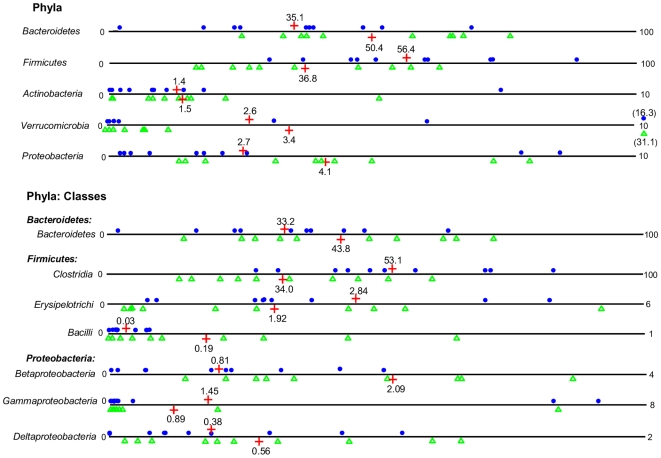
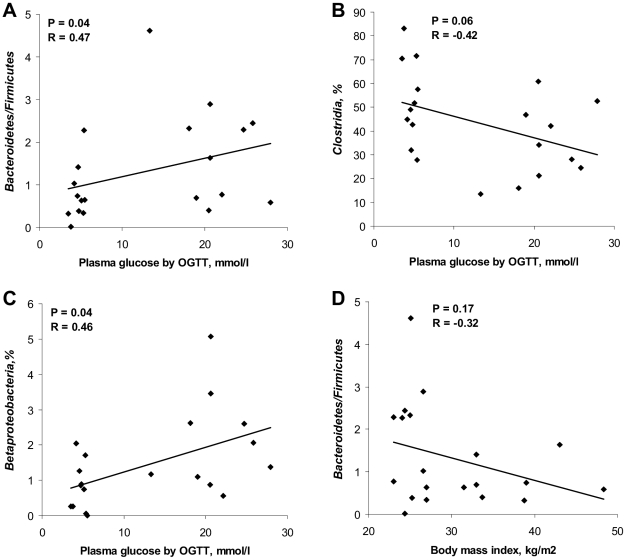
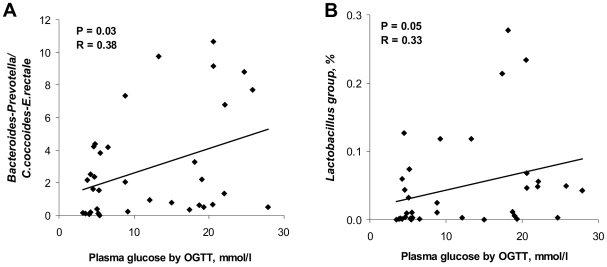
BACKGROUND: Recent evidence suggests that there is a link between metabolic diseases and bacterial populations in the gut. The aim of this study was to assess the differences between the composition of the intestinal microbiota in humans with type 2 diabetes and non-diabetic persons as control. METHODS AND FINDINGS: The study included 36 male adults with a broad range of age and body-mass indices (BMIs), among which 18 subjects were diagnosed with diabetes type 2. The fecal bacterial composition was investigated by real-time quantitative PCR (qPCR) and in a subgroup of subjects (N = 20) by tag-encoded amplicon pyrosequencing of the V4 region of the 16S rRNA gene. The proportions of phylum Firmicutes and class Clostridia were significantly reduced in the diabetic group compared to the control group (P = 0.03). Furthermore, the ratios of Bacteroidetes to Firmicutes as well as the ratios of Bacteroides-Prevotella group to C. coccoides-E. rectale group correlated positively and significantly with plasma glucose concentration (P = 0.04) but not with BMIs. Similarly, class Betaproteobacteria was highly enriched in diabetic compared to non-diabetic persons (P = 0.02) and positively correlated with plasma glucose (P = 0.04). CONCLUSIONS: The results of this study indicate that type 2 diabetes in humans is associated with compositional changes in intestinal microbiota. The level of glucose tolerance should be considered when linking microbiota with metabolic diseases such as obesity and developing strategies to control metabolic diseases by modifying the gut microbiota.
Overview
The claims and statistics of this paper haven’t been checked yet.
Free: it reads the open-access text and checks the first 5 claims that cite a source we can check. Create a free account to check every claim.
Integrity signals
Registry
Cites
Statistics
Figures
Verification
Claims the paper makes
The claims and statistics of this paper haven’t been checked yet.
Free: it reads the open-access text and checks the first 5 claims that cite a source we can check. Create a free account to check every claim.
Claims other papers make about this one
Each is checked against this paper’s own text: does it say what the citing paper says it does?
The source backs part of the claim, not all of it — or backs it for a different population, condition or comparison.
In the citing paper
“Compelling evidence have shown that the composition of the gut microbiota is altered in animal models of obesity and subjects with prediabetes or type 2 diabetes compared with controls (182–186).”
From The Role of Short-Chain Fatty Acids From Gut Microbiota in Gut-Brain Communication (2020) · cites this paper as [183]
Experimental — accuracy not yet measuredThe cited source says what the claim attributes to it.
In the citing paper
“Chronic autoimmune inflammatory diseases, including celiac disease,17 type 2 diabetes18 and obesity19 are associated with intestinal dysbiosis.”
From Probiotics and the gut microbiota in intestinal health and disease (2010) · cites this paper as [18]
In the citing paper
“Conversely, heterocyclic amines and glycan derived from red meat may promote inflammation in gut health due to higher concentration of Bacteroides and Fusobacterium and lower levels of Lactobacillus and Roseburia, which are also linked with lower anti-inflammatory responses and increased incidence of type 2 diabetes [191,192,193].”
From Impact of Protein Intake in Older Adults with Sarcopenia and Obesity: A Gut Microbiota Perspective (2020) · cites this paper as [191]
Self-check
Percentages, sums and reported differences re-computed from the paper’s own numbers.
The self-check needs the paper’s full text.
Citations
Cites
2 retracted
[RETRACTION]Translational research into gut microbiota: new horizons in obesity treatment
Tsukumo, D. M., Carvalho, B. M., Carvalho-Filho, M. A., & Saad, M. J. A. (2009) · Arquivos Brasileiros de Endocrinologia & Metabologia · doi:10.1590/s0004-27302009000200004 · Cited by 44
RetractedTranslational research into gut microbiota: new horizons in obesity treatment
Tsukumo, D. M. L., Carvalho, B. M., Filho, C., & Saad, M. J. A. (2013) · Arquivos Brasileiros de Endocrinologia & Metabologia · doi:10.1590/s0004-27302013000900014 · Cited by 17
RetractedAn obesity-associated gut microbiome with increased capacity for energy harvest
Turnbaugh, P. J., Ley, R. E., Mahowald, M. A., Magrini, V., Mardis, E. R., & Gordon, J. I. (2006) · Nature · doi:10.1038/nature05414 · Cited by 12,444 · cited 1×
“The differences in microbial composition were explained by an increased capacity of the obesity-associated microbiome to harvest energy from the diet [13].”
BackgroundA core gut microbiome in obese and lean twins
Turnbaugh, P. J., Hamady, M., Yatsunenko, T., Cantarel, B. L., Duncan, A., Ley, R. E., Sogin, M. L., Jones, W. J., Roe, B. A., Affourtit, J. P., et al. (2009) · Nature · doi:10.1038/nature07540 · Cited by 7,823
The gut microbiota as an environmental factor that regulates fat storage
Bäckhed, F., Ding, H., Wang, T., Hooper, L. V., Koh, G. Y., Nagy, A., Semenkovich, C. F., & Gordon, J. I. (2004) · Proceedings of the National Academy of Sciences · doi:10.1073/pnas.0407076101 · Cited by 6,245
Obesity alters gut microbial ecology
Ley, R. E., Bäckhed, F., Turnbaugh, P., Lozupone, C. A., Knight, R. D., & Gordon, J. I. (2005) · Proceedings of the National Academy of Sciences · doi:10.1073/pnas.0504978102 · Cited by 6,176
The Ribosomal Database Project: improved alignments and new tools for rRNA analysis
Cole, J. R., Wang, Q., Cardenas, E., Fish, J., Chai, B., Farris, R. J., Kulam-Syed-Mohideen, A. S., McGarrell, D. M., Marsh, T., Garrity, G. M., et al. (2009) · Nucleic Acids Research · doi:10.1093/nar/gkn879 · Cited by 4,762
Inflammation, stress, and diabetes
Wellen, K. E., & Hotamisligil, G. S. (2005) · Journal of Clinical Investigation · doi:10.1172/jci25102 · Cited by 4,143
Cani, P. D., Possemiers, S., Van de Wiele, T., Guiot, Y., Everard, A., Rottier, O., Geurts, L., Naslain, D., Neyrinck, A., Lambert, D. M., et al. (2009) · Gut · doi:10.1136/gut.2008.165886 · Cited by 2,518 · cited 2×
“For example, levels of Bifidobacterium significantly and positively correlated with improved glucose-tolerance and low-grade inflammation in prebiotic treated-mice [1,6].”
BackgroundMicrobiota and SCFA in lean and overweight healthy subjects
Schwiertz, A., Taras, D., Schäfer, K., Beijer, S., Bos, N. A., Donus, C., & Hardt, P. D. (2010) · Obesity · doi:10.1038/oby.2009.167 · Cited by 2,457
Cited by
Items 901–1,000 of 1,020
Han, X., Bai, B., Zhou, Q., Niu, J., Yuan, J., Zhang, H., Jia, J., Zhao, W., & Chen, H. (2020) · Food & Function · doi:10.1039/d0fo00008f · Cited by 66
CHIERICO, F. D., Manco, M., Gardini, S., Guarrasi, V., Russo, A., Bianchi, M., Tortosa, V., Quagliariello, A., Shashaj, B., Fintini, D., et al. (2021) · Acta Diabetologica · doi:10.1007/s00592-020-01669-4 · Cited by 62
“* Melania Manco melania.manco@opbg.net 1 Unit of Human Microbiome, Bambino Gesù Children’s Hospital, IRCCS, Rome, Italy 2 Research Area for Multifactorial Diseases and Complex Phenotypes, Obesity and Diabetes, Bambino Gesù Children’s Hospital, IRCCS, Via Ferdinando Baldelli 38, 00146 Rome, Italy 3 GenomeUp SRL, Rome,…”
BackgroundInfluentialRondanelli, M., Gasparri, C., Peroni, G., Faliva, M. A., Naso, M., Perna, S., Bazire, P., Sajoux, I., Maugeri, R., & Rigon, C. (2021) · Frontiers in Endocrinology · doi:10.3389/fendo.2021.662591 · Cited by 60
“In addition, the composition of gut microbiota may be altered by certain diseases; it has been shown, for example, that the gut microbiota of people with diabetes has a different composition to that of healthy individuals (9).”
BackgroundZouiouich, S., Loftfield, E., Huybrechts, I., Viallon, V., Louca, P., Vogtmann, E., Wells, P. M., Steves, C. J., Herzig, K., Menni, C., et al. (2021) · Diabetologia · doi:10.1007/s00125-021-05464-w · Cited by 70
“Previous studies have suggested a link between the gut microbiome and metabolic health [6, 7], and have described differences of microbial composition and functionality in type 2 diabetes patients compared with healthy participants [7, 8].”
BackgroundFarhangi, M. A., Dehghan, P., & Namazi, N. (2019) · European Journal of Nutrition · doi:10.1007/s00394-019-02140-z · Cited by 64
“Furthermore, replacing the gut microbiota with Gram-negative bacteria such as phyla Bacteroidetes and Proteobacteria [7] in the patients with T2DM leads to increased Lipopolysaccharides (LPS).”
BackgroundAbrupt dietary changes between grass and hay alter faecal microbiota of ponies
Garber, A., Hastie, P. M., McGuinness, D. H., Malarange, P., & Murray, J. (2020) · PLoS ONE · doi:10.1371/journal.pone.0237869 · Cited by 64
“The proportions of Firmicutes and Bacteroidetes have been shown to be indicators of digestive health in humans [34], where obese people had fewer Bacteroidetes and more Firmicutes than their leaner counterparts.”
BackgroundNaseri, K., Saadati, S., Ashtary‐Larky, D., Asbaghi, O., Ghaemi, F., Pashayee-Khamene, F., Yari, Z., & de Courten, B. V. (2022) · Pharmacological Research · doi:10.1016/j.phrs.2022.106399 · Cited by 63
Pectin mediates the mechanism of host blood glucose regulation through intestinal flora
Guo, Q., Hou, X., Cui, Q., Li, S., Shen, G., Luo, Q., Wu, H., Chen, H., Liu, Y., Chen, A., et al. (2023) · Critical Reviews in Food Science and Nutrition · doi:10.1080/10408398.2023.2173719 · Cited by 67
“Further research found that the reduction of intestinal Lactobacillus , Bifidobacteria , and other probiotics is closely related to abnormal glucose tolerance (Larsen et al. 2010).”
BackgroundEvaluation of mulberry leaves’ hypoglycemic properties and hypoglycemic mechanisms
Chen, S., Xi, M., Gao, F., Li, M., Dong, T., Geng, Z., Liu, C., Huang, F., Wang, J., Li, X., et al. (2023) · Frontiers in Pharmacology · doi:10.3389/fphar.2023.1045309 · Cited by 70
Hsu, K.-Y., Ho, C., & Pan, M. (2023) · Journal of Food and Drug Analysis · doi:10.38212/2224-6614.3454 · Cited by 65
Yarahmadi, A., Afkhami, H., Javadi, A., & Kashfi, M. (2024) · Diabetology & Metabolic Syndrome · doi:10.1186/s13098-024-01561-z · Cited by 74
“The research conducted by Larsen and his colleagues has established a favorable association between blood glucose levels and two important ratios, namely the Firmicutes to Bacteroidetes ratio and the Bacteroides Prevotella / Clostridium coccoides - Eubacterium ratio [126].”
Probiotics: a proactive approach to health. A symposium report
Thomas, L. V., Suzuki, K., & Zhao, J. (2015) · British Journal of Nutrition · doi:10.1017/s0007114515004043 · Cited by 59
“The one human study conducted to date showed a similar positive trend: consumption of a probiotic yogurt improved the antioxidant status of people with T2D(73).”
BackgroundInfluentialLefever, D. E., Xu, J., Chen, Y., Huang, G., Nagy, T., & Guo, T. L. (2016) · Toxicology and Applied Pharmacology · doi:10.1016/j.taap.2016.05.016 · Cited by 64
“Of themany factors that contribute to the pathogenesis of metabolic disease, the gut microbiota was shown to strongly contribute to the incidence of both T1D and T2D in rodents and humans (Kostic et al., 2015; Larsen et al., 2010; Markle et al., 2013).”
BackgroundResultInfluentialShao, T., Yu, Q., Zhu, T., Liu, A., Gao, X., Long, X., & Liu, Z. (2019) · British Journal Of Nutrition · doi:10.1017/s0007114519002332 · Cited by 66
“4), which is consistent with the published results(58).”
ResultYadav, M., & Chauhan, N. S. (2020) · Journal of Applied Microbiology · doi:10.1111/jam.14883 · Cited by 61
Wang, X., Yang, J., Qiu, X., Wen, Q., Liu, M., Zhou, D., & Chen, Q. (2021) · Frontiers in Public Health · doi:10.3389/fpubh.2021.645035 · Cited by 68
“Lipopolysaccharides (LPS), a main outer cell membrane component of Gram-negative bacteria, can exist in high concentrations and be absorbed by intestines (20).”
BackgroundRothschild, D., Leviatan, S., Hanemann, A., Cohen, Y., Weissbrod, O., & Segal, E. (2022) · PLOS ONE · doi:10.1371/journal.pone.0265756 · Cited by 59
Exploring the Gut Microbiome in Myasthenia Gravis
Thye, A. Y.-K., Law, J. W., Tan, L. T., Thurairajasingam, S., Chan, K., Letchumanan, V., & Lee, L. (2022) · Nutrients · doi:10.3390/nu14081647 · Cited by 69
“Intestinal dysbiosis has been linked to chronic low-grade inflammation [66]; metabolic disorders [67] leading to metabolic syndromes, for example, obesity and diabetes [60,68,69]; infections in the gastrointestinal tract (GIT); irritable bowel syndrome (IBS); and inflammatory bowel disease (IBD) [60,70].”
BackgroundZhang, L., Liu, Y., Sun, Y., & Zhang, X. (2022) · Nutrients · doi:10.3390/nu14224774 · Cited by 66
“T2D has also been considered to be under the influence of the dysregulated GM composition and functionality.”
BackgroundInfluentialHu, W., Gong, W., Yang, F., Cheng, R., Zhang, G., Gan, L., Zhu, Y., Qin, W., Gao, Y., Li, X., et al. (2025) · International Immunopharmacology · doi:10.1016/j.intimp.2024.113937 · Cited by 66
Relationship between intestinal microbiota and colorectal cancer
Çıpe, G., İdiz, U. O., Fırat, Y. D., & Bektaşoğlu, H. K. (2015) · World Journal of Gastrointestinal Oncology · doi:10.4251/wjgo.v7.i10.233 · Cited by 70
Diabetes-associated microbiota in fa/fa rats is modified by Roux-en-Y gastric bypass
Arora, T., Seyfried, F., Docherty, N. G., Tremaroli, V., le Roux, C. W., Perkins, R., & Bäckhed, F. (2017) · The ISME Journal · doi:10.1038/ismej.2017.70 · Cited by 58
“, 2012) patients with type 2 diabetes, and fecal Lactobacillus levels were shown to correlate with blood glucose levels in a study of men with varying degrees of glucose tolerance (Larsen et al., 2010).”
BackgroundFitzgerald, E., Lambert, K., Stanford, J., & Neale, E. P. (2020) · British Journal Of Nutrition · doi:10.1017/s0007114520002925 · Cited by 76
“Interestingly, several health conditions have been linked with alterations in the gut microbiota populations, including type 2 diabetes(6,7), obesity(8,9) and inflammatory bowel disease(10); however, it is unclear if this dysbiosis is a cause or consequence of the disease(11).”
BackgroundIntegrated omics analysis reveals the alteration of gut microbe–metabolites in obese adults
Li, R., Huang, X., Xiao, L., Su, M., Lai, K. P., & Chen, J. (2020) · Briefings in Bioinformatics · doi:10.1093/bib/bbaa165 · Cited by 61
Yuan, X., Chang, C., Chen, X., & Li, K. (2021) · Journal of Translational Medicine · doi:10.1186/s12967-021-03009-8 · Cited by 61
Stadlbauer, V., Leber, B., Lemesch, S., Trajanoski, S., Bashir, M., Horvath, A., Tawdrous, M., Stojakovic, T., Fauler, G., Fickert, P., et al. (2015) · PLOS ONE · doi:10.1371/journal.pone.0141399 · Cited by 59
“[11, 12] This suggests that the microbiota might be involved in the pathogenesis of obesity, insulin resistance and T2DM, possibly by having an impact on gut barrier integrity and inflammation.”
Effect ofRhizoma coptidis(Huang Lian) on Treating Diabetes Mellitus
Pang, B., Yu, X., Zhou, Q., Zhao, T., Wang, H., Gu, C., & Tong, X. (2015) · Evidence-based Complementary and Alternative Medicine · doi:10.1155/2015/921416 · Cited by 68
“In recent years, some researches [95] found that diabetic patients havemore Firmicutes and less Bacteroidetes than lean control; the change of gut microbiota caused activation of a network of inflammatory signal pathways via the Lipopolysaccharides (LPS) and CD14/toll-like receptor4 (TLR4-) dependent pathway, which ma…”
BackgroundLi, L., & Somerset, S. M. (2014) · Clinical Nutrition · doi:10.1016/j.clnu.2014.04.004 · Cited by 65
Mitchell, C. M., Davy, B. M., Halliday, T. M., Hulver, M. W., Neilson, A. P., Ponder, M. A., & Davy, K. P. (2015) · Contemporary Clinical Trials · doi:10.1016/j.cct.2015.10.012 · Cited by 66
“[21,22] In addition, elevated endotoxin concentrations are associated with an increased risk of incident T2D [23].”
BackgroundLi, K.-K., Tian, P., Wang, S., Peng, L., Qu, L., Huang, J., Shan, Y., & Li, B.-L. (2017) · Journal of Functional Foods · doi:10.1016/j.jff.2017.09.049 · Cited by 62
“However, other studies suggested that SCFAs triggered signaling cascades by activation of GPR43 and GPR41 (Brown et al., 2003; Le Poul et al., 2003).”
BackgroundMetformin effect on gut microbiota: insights for HIV-related inflammation
Ouyang, J., Isnard, S., Lin, J., Fombuena, B., Marette, A., Routy, B., Chen, Y., & Routy, J.-P. (2020) · AIDS Research and Therapy · doi:10.1186/s12981-020-00267-2 · Cited by 58
The role of microbiome in pancreatic cancer
Li, J., Zhu, M., Kashyap, P., Chia, N., Tran, N. H., McWilliams, R. R., Bekaii‐Saab, T., & Ma, W. W. (2021) · Cancer and Metastasis Reviews · doi:10.1007/s10555-021-09982-2 · Cited by 66
Probiotics and their beneficial effects against various diseases
Iqbal, M. Z. (2014) · Pakistan Journal of Pharmaceutical Sciences · doi:10.36721/pjps/27/2/2014/2109/405-415 · Cited by 97
Lemaire, M., Dou, S., Cahu, A., Formal, M., Normand, L. L., Rome, V., Nogret, I., Ferret‐Bernard, S., Rhimi, M., Cuinet, I., et al. (2018) · Scientific Reports · doi:10.1038/s41598-018-29971-w · Cited by 61
Circulating glucuronic acid predicts healthspan and longevity in humans and mice
Ho, A., Sinick, J., Esko, T., Fischer, K., Menni, C., Zierer, J., Matey-Hernandez, M. L., Fortney, K., & Morgen, E. K. (2019) · Aging · doi:10.18632/aging.102281 · Cited by 66
“Microbiome composition has also been linked to the onset of numerous age-related diseases, including atherosclerosis [48], type 2 diabetes [49], Alzheimer’s disease [50], chronic kidney disease [51], and nonalcoholic steatohepatitis [52], all of which contribute to reduced healthspan and increased mortality.”
BackgroundSleep and circadian disruption and the gut microbiome-possible links to dysregulated metabolism
Withrow, D., Bowers, S. J., Depner, C. M., González, A., Reynolds, A. C., & Wright, K. P. (2020) · Current Opinion in Endocrine and Metabolic Research · doi:10.1016/j.coemr.2020.11.009 · Cited by 60
Metabolites of Gut Microbiota and Possible Implication in Development of Diabetes Mellitus
Guo, Z., Pan, J., Zhu, H., & Chen, Z. (2022) · Journal of Agricultural and Food Chemistry · doi:10.1021/acs.jafc.1c07851 · Cited by 65
Intestinal lipid absorption and transport in type 2 diabetes
Vergès, B. L. (2022) · Diabetologia · doi:10.1007/s00125-022-05765-8 · Cited by 64
“ABCA1 ATP-binding cassette A1 ABCG5 ATP-binding cassette G5 ABCG8 ATP-binding cassette G8 ACAT acyl-coA:cholesterol acyltransferase Apo Apolipoprotein CD36/FAT Fatty acid translocase DGAT Diacylglycerol acyltransferase DPP-4 Dipeptidyl peptidase 4 ER Endoplasmic reticulum FABP Fatty acid-binding protein FABPpm Membran…”
BackgroundInfluentialType 2 diabetes, gut microbiome, and systems biology: A novel perspective for a new era
Martínez-López, Y. E., Esquivel-Hernandez, D. A., Sánchez-Castañeda, J. P., Neri-Rosario, D., Guardado‐Mendoza, R., & Reséndis-Antonio, O. (2022) · Gut Microbes · doi:10.1080/19490976.2022.2111952 · Cited by 65
“Despite these incipient achievements providing little insight into the mechanisms by which the phageome participates in T2D, they supply evidence of their involvement in the disease and pave the way for further research to discover human gut phage functions in the development of T2D.121 Systems biology: In silico mode…”
BackgroundResultInfluentialYe, J., Wu, Z., Zhao, Y., Zhang, S., Liu, W.-T., & Su, Y. (2022) · Frontiers in Microbiology · doi:10.3389/fmicb.2022.1029890 · Cited by 65
“At the phyla level, Firmicutes level was reported to be lower in T2DM patients than in healthy individuals, while Bacteroidetes level was increased (Larsen et al., 2010).”
BackgroundElie, C., Perret, M., Hage, H., Sentausa, E., Hesketh, A., Louis, K., Fritah, A., Leissner, P., Vachon, C., Rostaing, H., et al. (2023) · Scientific Reports · doi:10.1038/s41598-023-33959-6 · Cited by 63
Plaza-Díaz, J., Fernández-Caballero, J., Chueca, N., García, F., Gómez-Llorente, C., Sáez-Lara, M., Fontana, L., & Gil, Á. (2015) · Nutrients · doi:10.3390/nu7063999 · Cited by 58
“Thus, 16S rRNA gene-based barcoded pyrosequencing has been extensively used for the characterization of gut microbial communities in healthy and diseased individuals [10–12] and has also been used to study the effects of dietary intervention on the colon microbiota [10,13,14].”
MethodEffects of Diet on Gut Microbiota Profile and the Implications for Health and Disease
Lee, Y. K. (2013) · Bioscience of Microbiota Food and Health · doi:10.12938/bmfh.32.1 · Cited by 64
“Firmicutes, Clostridium, Bifidobacterium Low [28, 29]”
van Zanten, G. C., Krych, L., Röytiö, H., Forssten, S., Lahtinen, S. J., Al-Soud, W. A., Sørensen, S., Svensson, B., Jespersen, L., & Jakobsen, M. (2014) · FEMS Microbiology Ecology · doi:10.1111/1574-6941.12397 · Cited by 56
“Altered composition of gut microbiota has been reported for several diseases including low-grade inflammatory diseases such as type 2 diabetes (Larsen et al., 2010; Qin et al., 2012) and obesity (Ley et al.”
BackgroundSelf-citationKieffer, D. A., Piccolo, B. D., Marco, M. L., Kim, E. B., Goodson, M. L., Keenan, M. J., Dunn, T. N., Knudsen, K. E. B., Martin, R. J., & Adams, S. H. (2016) · Journal of Nutrition · doi:10.3945/jn.116.238931 · Cited by 60
“This phylum-level shift has been associated with positive health outcomes (35, 36); however, some studies have found the opposite ratio to be associated with improved health outcomes (37, 38).”
Tea consumption and risk of ischaemic heart disease
Li, X., Yu, C., Guo, Y., Bian, Z., Si, J., Yang, L., Chen, Y., Ren, X., Jiang, G., Chen, J., et al. (2017) · Heart · doi:10.1136/heartjnl-2016-310462 · Cited by 61
The gut microbiota: a possible factor influencing systemic lupus erythematosus
Neuman, H., & Koren, O. (2017) · Current Opinion in Rheumatology · doi:10.1097/bor.0000000000000395 · Cited by 58
Ji, Y., Park, S., Park, H., Hwang, E., Shin, H.-K., Pot, B., & Holzapfel, W. H. (2018) · Frontiers in Microbiology · doi:10.3389/fmicb.2018.00710 · Cited by 61
“While shifts or alterations in the autochthonous microbial population of people suffering from metabolic diseases have been reported frequently (Turnbaugh et al., 2006; Cani et al., 2008; Raoult, 2008; Armougom et al., 2009; Cani and Delzenne, 2009; Larsen et al., 2010; Zhang et al., 2013; Kasai et al., 2015; Ussar et…”
BackgroundJoseph, N., Vasodavan, K., Saipudin, N. A., Yusof, B. N. M., Kumar, S., & Nordin, S. A. (2019) · Journal of Functional Foods · doi:10.1016/j.jff.2019.03.042 · Cited by 55
Cabello-Olmo, M., Oneca, M., Torre, P., Sáinź, N., Moreno-Aliaga, M. J., Guruceaga, E., Cano, J. V. D., Encío, I., Barajas, M. A., & Araña, M. (2019) · Nutrients · doi:10.3390/nu11102530 · Cited by 66
“Gut dysbiosis has been described in relation to glucose dyshomeostasis and emerging experimental and clinical evidence suggests that GM activity is modified in T2D [12,40,45,46].”
BackgroundThe Circadian Clock as an Essential Molecular Link Between Host Physiology and Microorganisms
Murakami, M., & Tognini, P. (2020) · Frontiers in Cellular and Infection Microbiology · doi:10.3389/fcimb.2019.00469 · Cited by 60
Juárez‐Fernández, M., Porras, D., García‐Mediavilla, M. V., Román-Sagüillo, S., González‐Gallego, J., Nistal, E., & Sánchez‐Campos, S. (2020) · Nutrients · doi:10.3390/nu13010016 · Cited by 66
“Moreover, a tendency to decrease Clostridia levels with the increasing plasma glucose levels in T2D disease was also observed [52].”
BackgroundPharmacologic and Nonpharmacologic Therapies for the Gut Microbiota in Type 2 Diabetes
Caesar, R. (2019) · Canadian Journal of Diabetes · doi:10.1016/j.jcjd.2019.01.007 · Cited by 58
Goh, Y. Q., Cheam, G., & Wang, Y. (2021) · Journal of Agricultural and Food Chemistry · doi:10.1021/acs.jafc.1c03077 · Cited by 64
Toumi, E., Goutorbe, B., Plauzolles, A., Bonnet, M., Mezouar, S., Militello, M., Mège, J., Chiche, L., & Halfon, P. (2022) · Frontiers in Immunology · doi:10.3389/fimmu.2022.943241 · Cited by 61
Wang, Z., Du, H., Peng, W., Yang, S., Feng, Y., Ouyang, H., Zhu, W., & Liu, R. (2022) · Nutrients · doi:10.3390/nu14193926 · Cited by 59
“The species composition in each group was analyzed at the phylum level, and the abundance of firmicutes in the intestinal microbiota of the T2D mice was lower than in the normal group, while the abundance of Bacteroides was higher than in the normal group, which was consistent with another study revealing that the abu…”
BackgroundResultBai, Z., Huang, X., Wu, G., Zhang, Y. L., Xu, H., Chen, Y., Yang, H., & Nie, S. (2023) · Food Hydrocolloids · doi:10.1016/j.foodhyd.2023.108670 · Cited by 58
Emerging science of the human microbiome
Jones, M. L., Ganopolsky, J. G., Martoni, C. J., Labbé, A., & Prakash, S. (2014) · Gut Microbes · doi:10.4161/gmic.29810 · Cited by 57
Opportunities and challenges for gut microbiome studies in the Indian population
Shetty, S. A., Marathe, N. P., & Shouche, Y. S. (2013) · Microbiome · doi:10.1186/2049-2618-1-24 · Cited by 59
“A detailed follow-up study Age Ref: [3,7] Ref: [47,48] (Specific bacterial groups were targeted); 50 (Included only six individuals from two families) Diet Ref: [2,7] Ref: [49] (Preliminary results based on real-time qPCR) Geographic Ref: [2,7,50,51] No reference available Genetic Ref: [4,6] No reference available Dis…”
BackgroundMicrobiota prevents cholesterol loss from the body by regulating host gene expression in mice
Zhong, C.-Y., Sun, W.-W., Ma, Y., Zhu, H., Yang, P., Wei, H., Zeng, B.-H., Zhang, Q., Liu, Y., Li, W.-X., et al. (2015) · Scientific Reports · doi:10.1038/srep10512 · Cited by 55
Stefanaki, C., Peppa, Μ., Mastorakos, G. P., & Chrousos, G. P. (2017) · Metabolism · doi:10.1016/j.metabol.2017.04.014 · Cited by 58
“12 healthy individuals 48 to 62 years Larsen et al. – 2010 [56] Case-control/Bacteriome 36 1.”
BackgroundInfluentialHuang, R., Li, T., Ni, J., Bai, X., Gao, Y., Li, Y., Zhang, P., & Gong, Y. (2018) · Frontiers in Microbiology · doi:10.3389/fmicb.2018.01008 · Cited by 64
A comparative study of the gut microbiome in Egyptian patients with Type I and Type II diabetes
Radwan, S., Gilfillan, D., Eklund, B., Radwan, H. M., Menofy, N. G. E., Lee, J., Kapuscinski, M. L., & Abdo, Z. (2020) · PLoS ONE · doi:10.1371/journal.pone.0238764 · Cited by 62
Insights on β-glucan as a prebiotic coadjuvant in the treatment of diabetes mellitus: A review
Sivieri, K., de Oliveira, S. M., Marquez, A. D. S., Pérez‐Jiménez, J., & Diniz, S. N. (2022) · Food Hydrocolloids for Health · doi:10.1016/j.fhfh.2022.100056 · Cited by 56
Revisiting the Bacterial Phylum Composition in Metabolic Diseases Focused on Host Energy Metabolism
Lee, Y., & Lee, H. (2020) · Diabetes & Metabolism Journal · doi:10.4093/dmj.2019.0220 · Cited by 59
“T2DM Decrease Decrease of Clostridia class at the phylum Firmicutes in T2DM patients Human [33]”
BackgroundThe Alteration in Composition and Function of Gut Microbiome in Patients with Type 2 Diabetes
Zhao, X. Y., Zhang, Y., Guo, R., Yu, W., Zhang, F., Wu, F., & Shang, J. (2020) · Journal of Diabetes Research · doi:10.1155/2020/8842651 · Cited by 63
“By means of 16S rRNA gene sequencing, the diversity analysis of the two groups revealed that the diversity of the DM group significantly decreased compared to the Con group, which was consistent with other research [6].”
ResultOh, M., Jang, H.-Y., Lee, S.-Y., Jung, S., Chae, S., Lee, S., & Park, B. (2021) · Nutrients · doi:10.3390/nu13072337 · Cited by 57
“A diminished presence of Firmicutes and relatively higher levels of Bacteroidetes are found in type 2 diabetic patients, as compared to healthy individuals [6].”
BackgroundSynbiotics and Gut Microbiota: New Perspectives in the Treatment of Type 2 Diabetes Mellitus
Jiang, H., Cai, M., Shen, B., Wang, Q., Zhang, T., & Zhou, X. Q. (2022) · Foods · doi:10.3390/foods11162438 · Cited by 62
“Compared with normal subjects, the number and abundance of deleterious microflora in the stools of diabetic patients increased, with a marked increase in the abundance of beta-proteobacteria [66].”
BackgroundRehman, A. U., Siddiqui, N. Z., Farooqui, N. A., Alam, G., Gul, A., Ahmad, B., Asim, M., Khan, A. I., Xin, Y., Zexu, W., et al. (2022) · Frontiers in Nutrition · doi:10.3389/fnut.2022.984695 · Cited by 59
“Previously, many studies revealed that Actinobacteria increased (40, 41) while Firmicutes decreased in T2DM (42).”
Gómez-Arango, L. F., Barrett, H. L., Callaway, L. K., & Nitert, M. D. (2014) · Current Diabetes Reports · doi:10.1007/s11892-014-0567-0 · Cited by 62
El Kaoutari, A., Armougom, F., Leroy, Q., Vialettes, B., Million, M., Raoult, D., & Henrissat, B. (2013) · PLoS ONE · doi:10.1371/journal.pone.0084033 · Cited by 55
“Shifts in the composition and function of the human gut microbiota have been suggested as possible break points for the health state and are thus associated with diseases, including obesity [9,10,11,12,13], diabetes, non-alcoholic fatty liver disease [11,14,15], colonic cancer [16] and allergy [17].”
RetractedAbundance and Diversity of Microbiota in Type 2 Diabetes and Obesity
Remely, M. (2013) · Journal of Diabetes & Metabolism · doi:10.4172/2155-6156.1000253 · Cited by 63
Wang, Y., Luo, X., Mao, X., Tao, Y., Ran, X., Zhao, H.-X., Xiong, J., & Li, L. (2017) · PLoS ONE · doi:10.1371/journal.pone.0172774 · Cited by 63
MPA Portable: A Stand-Alone Software Package for Analyzing Metaproteome Samples on the Go
Muth, T., Kohrs, F., Heyer, R., Benndorf, D., Rapp, E., Reichl, U., Martens, L., & Renard, B. Y. (2017) · Analytical Chemistry · doi:10.1021/acs.analchem.7b03544 · Cited by 60
Zhao, J., Zhang, Q., Shen, J., Wang, K., & Liu, J. (2018) · Acta Pharmacologica Sinica · doi:10.1038/s41401-018-0029-3 · Cited by 59
Inflammation and Metabolic Complications in HIV
Bourgi, K., Wanjalla, C. N., & Koethe, J. R. (2018) · Current HIV/AIDS Reports · doi:10.1007/s11904-018-0411-2 · Cited by 63
Beyond gut microbiota: understanding obesity and type 2 diabetes
Lau, E., Carvalho, D. M., Pina‐Vaz, C., Barbosa, J.-A., & Freitas, P. (2015) · HORMONES · doi:10.14310/horm.2002.1571 · Cited by 69
Ban, Q., Cheng, J., Sun, X., Jiang, Y., Zhao, S., Song, X., & Guo, M. (2020) · Journal of Dairy Science · doi:10.3168/jds.2019-17700 · Cited by 73
Okesene-Gafa, K. A., Moore, A. E., Jordan, V., McCowan, L., & Crowther, C. A. (2020) · Cochrane Database of Systematic Reviews · doi:10.1002/14651858.cd012970.pub2 · Cited by 53
“Larsen 2010 Larsen N, Vogensen FK, van den Berg FW, Nielsen DS, Andreasen AS, Pedersen BK, et al. Gut microbiota in human adults with type 2 diabetes diJers from non-diabetic adults.”
BackgroundCharacterizing the postmortem human bone microbiome from surface-decomposed remains
Emmons, A. L., Mundorff, A. Z., Keenan, S. W., Davoren, J., Andronowski, J. M., Carter, D. O., & DeBruyn, J. M. (2020) · PLoS ONE · doi:10.1371/journal.pone.0218636 · Cited by 58
Ai, X., Wu, C., Yin, T., Zhur, O., Liu, C., Yan, X., Yi, C., Liu, D., Xiao, L., Li, W., et al. (2021) · Frontiers in Microbiology · doi:10.3389/fmicb.2021.682290 · Cited by 58
The chemistry of gut microbiome in health and diseases
Lau, A., Tan, L. T., Mutalib, N. A., Wong, S. H., Letchumanan, V., & Lee, L. (2021) · Progress In Microbes & Molecular Biology · doi:10.36877/pmmb.a0000175 · Cited by 59
“This shows that a diverse gut microbiome with different glucose metabolism capabilities and lower glucose metabolism can predispose the host to T2DM.”
BackgroundInfluentialTily, H., Patridge, E. V., Cai, Y., Gopu, V., Gline, S., Genkin, M., Lindau, H., Sjue, A., Slavov, I., Perlina, A., et al. (2021) · Diabetes Therapy · doi:10.1007/s13300-021-01174-z · Cited by 62
New definition of resistant starch types from the gut microbiota perspectives – a review
Li, C., & Hu, Y. (2022) · Critical Reviews in Food Science and Nutrition · doi:10.1080/10408398.2022.2031101 · Cited by 58
Chen, G., Zhou, X., Zhu, Y., Shi, W., & Kong, L. (2023) · European Journal of Neurology · doi:10.1111/ene.15961 · Cited by 57
“The reduction of Firmicutes in patients may also cause metabolic and immune dysfunction in the host and further lead to obesity [ 44 ], hyperglycaemia and diabetes [47,48 ].”
Pi, Y., Fang, M., Li, Y., Cai, L., Han, R., Sun, W., Jiang, X., Chen, L., Du, J., Zhu, Z., et al. (2024) · Nutrients · doi:10.3390/nu16172838 · Cited by 60
“Research indicates that the F/B ratio increases in T2DM patients compared to healthy individuals, potentially impacting energy harvest and metabolic inflammation [38,39].”
BackgroundHe, M., Deng, Y., Shi, Q.-Z., Zhang, X., & Lv, Y. (2014) · Journal of Ethnopharmacology · doi:10.1016/j.jep.2014.05.033 · Cited by 58
Yin, J., Zhang, X., Wu, B., & Xian, Q. (2015) · Ecotoxicology · doi:10.1007/s10646-015-1540-7 · Cited by 55
Zhao, Y., Li, B., Bai, D., Huang, J., Shiraigo, W., Yang, L., Zhao, Q., Ren, X., Wu, J., Bao, W., et al. (2015) · Asian-Australasian Journal of Animal Sciences · doi:10.5713/ajas.15.0587 · Cited by 55
“The Firmicutes and Bacteroidetes phyla predominated in donkey, human, pig and beef cattle feces suggesting the ecological and functional importance of this group within the gut across species (Larsen et al., 2010; Lamendella et al., 2011; Shanks et al., 2011; Liu et al., 2014).”
BackgroundVenkataratnamma, V., Begum, P. S., Madhavi, G., Rajagopal, S., Viswanath, B., & Razak, M. (2017) · International journal of Nutrition Pharmacology Neurological Diseases · doi:10.4103/ijnpnd.ijnpnd_90_16 · Cited by 66
“could exert a beneficial effect by reducing the body fat percentage in individuals suffering from diet-induced obesity, particularly by reducing the cell size of the white adipose tissues.([43]) Keeping in mind the enormous potential and possibility of utilizing the new dietary-based approaches to effectively control…”
BackgroundPark, A.-M., Omura, S., Fujita, M., Sato, F., & Tsunoda, I. (2017) · Clinical and Experimental Neuroimmunology · doi:10.1111/cen3.12401 · Cited by 59
Parajuli, A., Grönroos, M., Kauppi, S., Płociniczak, T., Roslund, M. I., Galitskaya, P., Laitinen, O. H., Hyöty, H., Jumpponen, A., Strömmer, R., et al. (2017) · PLoS ONE · doi:10.1371/journal.pone.0187852 · Cited by 59
Wang, K., Yu, X., Li, Y., Guo, Y., Lin, G., Pu, F., Ma, X., Cui, W., Marrota, F., He, F., et al. (2018) · Probiotics and Antimicrobial Proteins · doi:10.1007/s12602-018-9441-8 · Cited by 57
The Role of the Gut Microbiota in Sustained Weight Loss Following Roux-en-Y Gastric Bypass Surgery
Fouladi, F., Brooks, A. E., Fodor, A. A., Carroll, I. M., Bulik‐Sullivan, E. C., Tsilimigras, M. C. B., Sioda, M., & Steffen, K. J. (2019) · Obesity Surgery · doi:10.1007/s11695-018-03653-y · Cited by 57
Rodrigues, G. S. P., Cayres, L. C. D. F., Gonçalves, F. J., Takaoka, N. N. C., Lengert, A. V. H., Tansini, A., Brisotti, J. L., Sasdelli, C. B. G., & de Oliveira, G. L. V. (2019) · Microorganisms · doi:10.3390/microorganisms7100413 · Cited by 56
“The presence of specific groups of bacteria was determined by using primers described previously, and the genus-specific primers were designed using 16S rRNA gene sequences from the Ribosomal Database Project (RDP 10) [22].”
MethodTrans-ethnic gut microbial signatures of prediabetic subjects from India and Denmark
Pinna, N. K., Anjana, R. M., Saxena, S., Dutta, A., Gnanaprakash, V., Rameshkumar, G., Aswath, S., Raghavan, S., Rani, C. S. S., Radha, V., et al. (2021) · Genome Medicine · doi:10.1186/s13073-021-00851-9 · Cited by 62
Impact of Dietary Sugars on Gut Microbiota and Metabolic Health
Garcia, K., Ferreira, G., Reis, F., & Viana, S. (2022) · Diabetology · doi:10.3390/diabetology3040042 · Cited by 61
Roles of Commensal Microbiota in Pancreas Homeostasis and Pancreatic Pathologies
Leal‐Lopes, C., Velloso, F. J., Campopiano, J. C., Sogayar, M. C., & Correa, R. G. (2015) · Journal of Diabetes Research · doi:10.1155/2015/284680 · Cited by 58
“Adding to these findings, the intestinal microbiota across subjects with T2D showed an apparent enrichment of bacteria belonging to the phyla Bacteroidetes and Proteobacteria, both of which are LPS-containing Gramnegative bacteria [192].”
BackgroundHarata, G., Kumar, H., He, F., Miyazawa, K., Yoda, K., Kawase, M., Kubota, A., Hiramatsu, M., Rautava, S., & Salminen, S. (2016) · European Journal of Nutrition · doi:10.1007/s00394-016-1264-3 · Cited by 58
“Prevotella are non-butyrate-producing bacteria and potential mucin degraders [27].”
BackgroundThe impact of culturomics on taxonomy in clinical microbiology
Abdallah, R. A., Beye, M., Diop, A., Bakour, S., Raoult, D., & Fournier, P. (2017) · Antonie van Leeuwenhoek · doi:10.1007/s10482-017-0871-1 · Cited by 56
“…(Hiergeist et al. 2015) and clear links between the microbiota composition and many disorders such as obesity (Armougom et al. 2009), diabetes (Larsen et al. 2010), Crohn’s disease, necrotizing enterocolitis, colo-rectal cancer (De Hertogh et al. 2006; Siggers et al. 2008), immune response…”
Background
Metadata
- Authors
- Larsen, N., Vogensen, F. K., van den Berg, F. W. J., Nielsen, D. S., Andreasen, A. S., Pedersen, B. K., Al-Soud, W. A., Sørensen, S. J., Hansen, L. H., & Jakobsen, M.
- Affiliations
- University of Copenhagen (DK)
- Rigshospitalet (DK)
- Corresponding author
- Larsen, Nadja
- ORCID
- Venue
- PLoS ONE
- Publisher
- Public Library of Science (PLoS)
- Published
- 2010-02-05
- Volume
- 5
- Issue
- 2
- Pages
- e9085
- ISSN
- 1932-6203 (ISSN-L)
- PMC
- PMC2816710
- OpenAlex
- W2135989088
- Cited by
- 2,952
- References
- 38
- Citations by year
- 2026: 90 · 2025: 168 · 2024: 217 · 2023: 199 · 2022: 296 · 2021: 331 · 2020: 294 · 2019: 264 · 2018: 191 · 2017: 158 · 2016: 174 · 2015: 150 · 2014: 134 · 2013: 115 · 2012: 83
- FWCI
- 36.90
- Type
- journal article
- Language
- en
- Open access
- gold
- doi.org
- Locations
- PLoS ONE (publishedVersion, cc-by)
- PubMed Central (publishedVersion, cc-by)
- PubMed (publishedVersion)
- Research at the University of Copenhagen (University of Copenhagen) (publishedVersion, other-oa)
- DOAJ (DOAJ: Directory of Open Access Journals) (submittedVersion, cc-by-sa)
- Figshare (submittedVersion, cc-by)
- Funders
- Ministeriet for Fø devarer, Landbrug og Fiskeri
- Topics
- Life Sciences › Biochemistry, Genetics and Molecular Biology › Molecular Biology › Gut microbiota and health
- Health Sciences › Dentistry › Periodontics › Oral microbiology and periodontitis research
- Health Sciences › Medicine › Endocrinology, Diabetes and Metabolism › Adipokines, Inflammation, and Metabolic Diseases
- Keywords
- type 2 diabetes, gut microbiota, Firmicutes, Bacteroidetes, Betaproteobacteria, plasma glucose, glucose tolerance, obesity, metabolic disorders, 16S rRNA gene
- MeSH terms
- Adult, Aged, Bacteria, Diabetes Mellitus, Type 2, DNA, Bacterial, Feces, Humans, Intestines, Male, Middle Aged, RNA, Ribosomal, 16S, Colony Count, Microbial, Body Mass Index, Sequence Analysis, DNA
About these checks
Registry, retraction, Cites and statistics results are computed, not judged, with one exception: a printed reference that no index lists is read once by a model before it counts as a citation error. Claims are extracted by a model and kept only when their quote appears verbatim in the text; each cited source is then checked, with a model’s help, for whether it says what the claim relies on. Those verdicts can be wrong — read the claim’s quote and the cited source before relying on one.
Statistics and arithmetic are recomputed, not judged.
Confidence bands are shown only for fields calibrated on our annotated test set. None is calibrated yet, so no band is shown.
What counts as a claim ›How we measure confidence ›How we check this ›
Are you an author, or do you see a problem with this page? Request a review
Data sources
Bibliographic data: Semantic Scholar, OpenAlex, Crossref.
Contains information from the Semantic Scholar Academic Graph Datasets, made available under the ODC Attribution License (ODC-BY 1.0).
Semantic Scholar’s data is described in: Kinney, R., et al. (2023). The Semantic Scholar Open Data Platform. arXiv:2301.10140.
