

Adolescents, Adults and Rewards: Comparing Motivational Neurocircuitry Recruitment Using fMRI
Open accessThe DOI matches its Crossref record; 50 of the 50 references it cites were found in a registry or an index.
Abstract
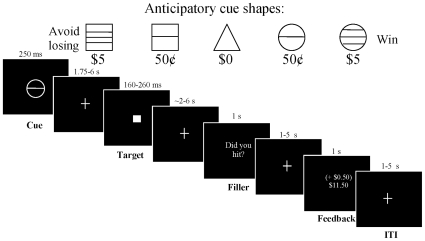
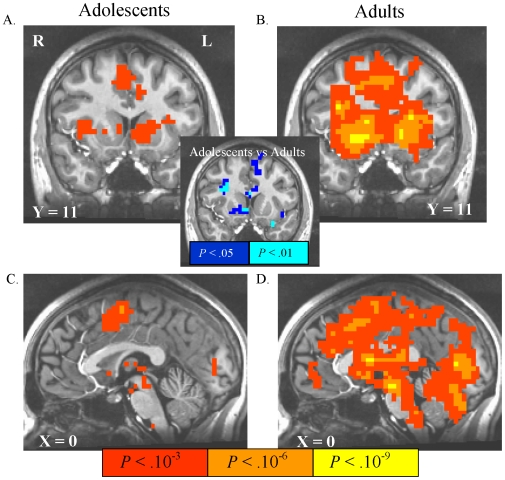
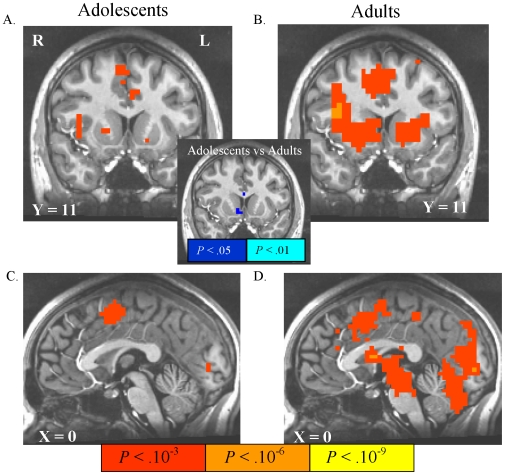
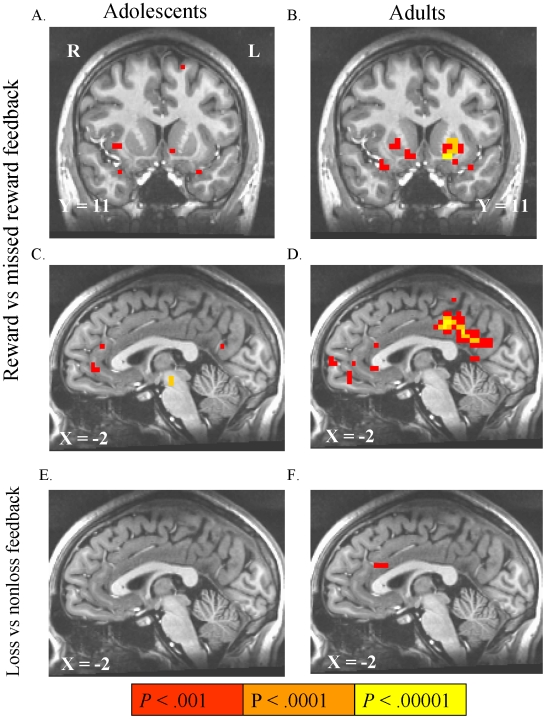
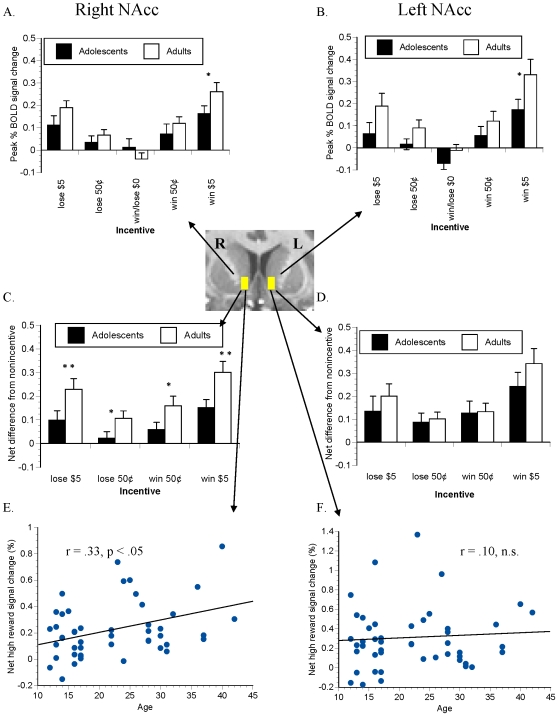
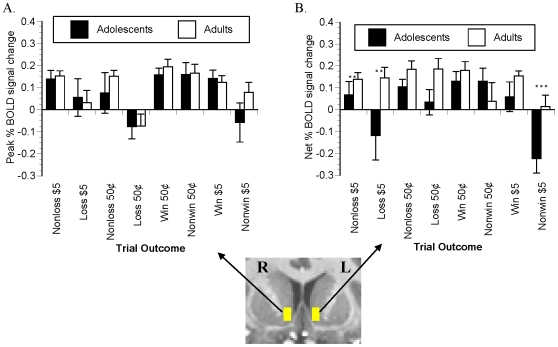
BACKGROUND: Adolescent risk-taking, including behaviors resulting in injury or death, has been attributed in part to maturational differences in mesolimbic incentive-motivational neurocircuitry, including ostensible oversensitivity of the nucleus accumbens (NAcc) to rewards. METHODOLOGY/PRINCIPAL FINDINGS: To test whether adolescents showed increased NAcc activation by cues for rewards, or by delivery of rewards, we scanned 24 adolescents (age 12-17) and 24 adults age (22-42) with functional magnetic resonance imaging while they performed a monetary incentive delay (MID) task. The MID task was configured to temporally disentangle potential reward or potential loss anticipation-related brain signal from reward or loss notification-related signal. Subjects saw cues signaling opportunities to win or avoid losing $0, $.50, or $5 for responding quickly to a subsequent target. Subjects then viewed feedback of their trial success after a variable interval from cue presentation of between 6 to 17 s. Adolescents showed reduced NAcc recruitment by reward-predictive cues compared to adult controls in a linear contrast with non-incentive cues, and in a volume-of-interest analysis of signal change in the NAcc. In contrast, adolescents showed little difference in striatal and frontocortical responsiveness to reward deliveries compared to adults. CONCLUSIONS/SIGNIFICANCE: In light of divergent developmental difference findings between neuroimaging incentive paradigms (as well as at different stages within the same task), these data suggest that maturational differences in incentive-motivational neurocircuitry: 1) may be sensitive to nuances of incentive tasks or stimuli, such as behavioral or learning contingencies, and 2) may be specific to the component of the instrumental behavior (such as anticipation versus notification).
Overview
The claims and statistics of this paper haven’t been checked yet.
Free: it reads the open-access text and checks the first 5 claims that cite a source we can check. Create a free account to check every claim.
Integrity signals
Registry
Cites
Statistics
Figures
Verification
Claims the paper makes
The claims and statistics of this paper haven’t been checked yet.
Free: it reads the open-access text and checks the first 5 claims that cite a source we can check. Create a free account to check every claim.
Claims other papers make about this one
Each is checked against this paper’s own text: does it say what the citing paper says it does?
The source backs part of the claim, not all of it — or backs it for a different population, condition or comparison.
In the citing paper
“The only significant group difference in this second study concerned the nucleus accumbens during test preparation: In response to both gain cues and loss cues, the nucleus accumbens activation was lower in adolescents than in adults.”
From A systematic review of fMRI reward paradigms used in studies of adolescents vs. adults: The impact of task design and implications for understanding neurodevelopment (2013) · cites this paper as Bjork et al., 2010
Experimental — accuracy not yet measuredThe source backs part of the claim, not all of it — or backs it for a different population, condition or comparison.
In the citing paper
“these instrumental-reward studies showed that striatal activation was lower in adolescents during the cue stage in one task (Bjork et al., 2004; Bjork et al., 2010; Geier et al., 2009b), and during the test preparation stage of another task (Bjork et al., 2004; Bjork et al., 2010; Cho et al., 2012).”
From A systematic review of fMRI reward paradigms used in studies of adolescents vs. adults: The impact of task design and implications for understanding neurodevelopment (2013) · cites this paper as Bjork et al., 2010
Experimental — accuracy not yet measuredThe source backs part of the claim, not all of it — or backs it for a different population, condition or comparison.
In the citing paper
“In some studies, adolescents were found to exhibit a relative decrease of VS, OFC and mesial PFC recruitment during reward cue and anticipation”
From Developmental changes in brain function underlying the influence of reward processing on inhibitory control (2011) · cites this paper as Bjork et al., 2010
Experimental — accuracy not yet measuredThe source backs part of the claim, not all of it — or backs it for a different population, condition or comparison.
In the citing paper
“Adolescence represents a key window of vulnerability given that reward processing and social needs undergo maturational changes (207, 208).”
From A transdiagnostic perspective on social anhedonia (2019) · cites this paper as [208]
Experimental — accuracy not yet measuredThe source backs part of the claim, not all of it — or backs it for a different population, condition or comparison.
In the citing paper
“as well as developmental troughs (Bjork et al., 2004, Bjork et al., 2010, Lamm et al., 2014).”
From Effects of incentives, age, and behavior on brain activation during inhibitory control: a longitudinal fMRI study (2015) · cites this paper as Bjork et al., 2010
Experimental — accuracy not yet measured
12 more claims about this paper
Create a free account to see every claim other papers make about this one.
Self-check
Percentages, sums and reported differences re-computed from the paper’s own numbers.
The self-check needs the paper’s full text.
Citations
Cites
AFNI: Software for analysis and visualization of functional magnetic resonance neuroimages
Cox, R. W. (1996) · Computers and Biomedical Research · doi:10.1006/cbmr.1996.0014 · Cited by 10,913 · cited 1×
“Blood Oxygen-Level Dependent (BOLD) signal was analyzed using Analysis of Functional NeuroImages (AFNI) software [45].”
MethodBrain development during childhood and adolescence: a longitudinal MRI study
Giedd, J. N., Blumenthal, J., Jeffries, N. O., Castellanos, F. X., Liu, H., Zijdenbos, A., Paus, T., Evans, A. C., & Rapoport, J. L. (1999) · Nature Neuroscience · doi:10.1038/13158 · Cited by 5,552 · cited 1×
“Developmental neuroimaging findings have detected structural changes in striatum [2] and frontal cortex [3] across adolescence, where frontocortical gray matter morphology maturation continues into the mid 20 s [4], relatively later than other cortex (reviewed in [5]).”
BackgroundThe role of the medial frontal cortex in cognitive control
Ridderinkhof, K. R., Ullsperger, M., Crone, E. A., & Nieuwenhuis, S. (2004) · Science · doi:10.1126/science.1100301 · Cited by 2,974 · cited 1×
“Despite how the direct group-wise activation difference did not survive FDR correction, we retain mention of this difference as a preliminary finding due to the extensive implication of this portion of ACC in error monitoring [32].”
BackgroundCircular analysis in systems neuroscience: the dangers of double dipping
Kriegeskorte, N., Simmons, W. K., Bellgowan, P. S. F., & Baker, C. I. (2009) · Nature Neuroscience · doi:10.1038/nn.2303 · Cited by 2,696 · cited 1×
“To avoid circularity of statistical inference [46,47], the masks were not localized based on observed contrast activation, but rather were anatomically localized a priori.”
MethodAnticipation of Increasing Monetary Reward Selectively Recruits Nucleus Accumbens
Knutson, B., Adams, C. M., Fong, G. W., & Hommer, D. (2001) · The Journal of Neuroscience · doi:10.1523/jneurosci.21-16-j0002.2001 · Cited by 2,244 · cited 5×
“The most widely-adopted probes of human incentivemotivational neurocircuitry are variants of the monetary incentive delay (MID) task (Figure 1), wherein learned cues that signal an imminent opportunity to respond for monetary rewards reliably recruit the VS in proportion to potential reward magnitude [13,14,15,16,17,1…”
BackgroundMethodResultSelf-citationCastellanos, F. X. (2002) · JAMA · doi:10.1001/jama.288.14.1740 · Cited by 1,646 · cited 1×
“Developmental neuroimaging findings have detected structural changes in striatum [2] and frontal cortex [3] across adolescence, where frontocortical gray matter morphology maturation continues into the mid 20 s [4], relatively later than other cortex (reviewed in [5]).”
BackgroundPuzzlingly High Correlations in fMRI Studies of Emotion, Personality, and Social Cognition
Vul, E., Harris, C., Winkielman, P., & Pashler, H. (2009) · Perspectives on Psychological Science · doi:10.1111/j.1745-6924.2009.01125.x · Cited by 1,475
In vivo evidence for post-adolescent brain maturation in frontal and striatal regions
Sowell, E. R., Thompson, P. M., Holmes, C. J., Jernigan, T. L., & Toga, A. W. (1999) · Nature Neuroscience · doi:10.1038/13154 · Cited by 1,439 · cited 1×
“Developmental neuroimaging findings have detected structural changes in striatum [2] and frontal cortex [3] across adolescence, where frontocortical gray matter morphology maturation continues into the mid 20 s [4], relatively later than other cortex (reviewed in [5]).”
BackgroundGalvan, A., Hare, T. A., Parra, C. E., Penn, J., Voss, H., Glover, G., & Casey, B. J. (2006) · Journal of Neuroscience · doi:10.1523/jneurosci.1062-06.2006 · Cited by 1,282 · cited 8×
“In the Galvan study [8], once associations between cues and rewarding outcomes had become learned, adolescents showed greater VS activation by rewarding trials compared to responses of adults or younger children.”
BackgroundResultInfluentialAcute effects of cocaine on human brain activity and emotion
Breiter, H. C., Gollub, R. L., Weisskoff, R. M., Kennedy, D. N., Makris, N., Berke, J. D., Goodman, J. M., Kantor, H. L., Gastfriend, D. R., Riorden, J. P., et al. (1997) · Neuron · doi:10.1016/s0896-6273(00)80374-8 · Cited by 1,270 · cited 1×
“. This was a two-voxel mask comprised of the 3.75 mm cubic voxel that corresponded to activation maxima or VOI placement in previous reports (Talairach±8, 11, 0), along with the adjacent voxel located ventrally at the junction of caudate and putamen”
MethodInfluential
Cited by
Items 201–268 of 268
Bretzke, M., Wahl, H., Plichta, M. M., Wolff, N., Roessner, V., Vetter, N. C., & Buse, J. (2021) · Frontiers in Human Neuroscience · doi:10.3389/fnhum.2021.649724 · Cited by 9
“Reward sensitivity is not only of interest for a better understanding of adolescent behavior (Ernst et al., 2005; Bjork et al., 2010) but also allows for a better understanding of the development of mental health problems.”
BackgroundMonahan, K. C., Guyer, A. E., Silk, J. S., Doremus‐Fitzwater, T. L., & Steinberg, L. D. (2016) · Wiley eBooks · doi:10.1002/9781119125556.devpsy219 · Cited by 11
Moses-Kolko, E. L., Forbes, E. E., Stepp, S., Fraser, D., Keenan, K. E., Guyer, A. E., Chase, H. W., Phillips, M. L., Zevallos, C. R., Guo, C., et al. (2016) · Psychoneuroendocrinology · doi:10.1016/j.psyneuen.2016.01.009 · Cited by 6
“Our findings are consisent with prior research that has shown heighted behavioral and ST response to reward-predictive cues in late adolescence (ages 5–18), which becomes dampened with maturation of prefrontal ortical systems in young adulthood (age 19–22) (Bjork et al., 2010).”
ResultUddin, L. Q., & Garavan, H. (2025) · Biological Psychiatry · doi:10.1016/j.biopsych.2025.09.012 · Cited by 13
Baumgärtner, T., Hausfeld, J., dos Santos, M., & Knoch, D. (2021) · Human Brain Mapping · doi:10.1002/hbm.25648 · Cited by 6
Nasri, S., Nazari, M. A., Maiqani, E., Shahrokhi, H., & Goodarzi, I. (2018) · Shenakht Journal of Psychology and Psychiatry · doi:10.29252/shenakht.5.4.63 · Cited by 6
Altered Functional Networks during Gain Anticipation in Fibromyalgia
Park, S. H., Michael, A. M., Baker, A. K., Lei, C., & Martucci, K. T. (2023) · Cortex · doi:10.1016/j.cortex.2023.12.017 · Cited by 5
Ściślewska, P., Zareba, M. R., Lengier, J., Schirmer, A. E., Bębas, P., & Szatkowska, I. (2025) · Scientific Reports · doi:10.1038/s41598-025-07049-8 · Cited by 7
“VTA is a core part of the mesolimbic system and activation of this structure has already been shown during anticipation of a loss 20,21 .”
Fosco, W. D., Meisel, S. N., Weigard, A. S., White, C. N., & Colder, C. R. (2021) · Developmental Science · doi:10.1111/desc.13159 · Cited by 8
Cha, E., Ahn, H. J., Kang, W., Jung, K., Ohn, S. H., Bashir, S., & Yoo, W. (2022) · Medicine · doi:10.1097/md.0000000000029214 · Cited by 6
Ladouceur, C. D. (2016) · Santé mentale au Québec · doi:10.7202/1036965ar · Cited by 8
Parr, A. C., Ojha, A., Petrie, D. J., Calabro, F. J., Tervo‐Clemmens, B., Foran, W., Fitzgerald, D., Tapert, S. F., Nooner, K. B., Thompson, W., et al. (2026) · Nature Communications · doi:10.1038/s41467-026-73611-1 · Cited by 6
Yang, L., Chen, Z., Qi, L., Yang, H., & Zhang, Y. (2024) · The American Journal of Drug and Alcohol Abuse · doi:10.1080/00952990.2024.2304036 · Cited by 4
“The MIDT paradigm and its variants are often used to study monetary reward processing (40,41).”
MethodBretzke, M., Vetter, N. C., Kohls, G., Wahl, H., Roessner, V., Plichta, M. M., & Buse, J. (2022) · Cognitive Neuroscience · doi:10.1080/17588928.2022.2038555 · Cited by 4
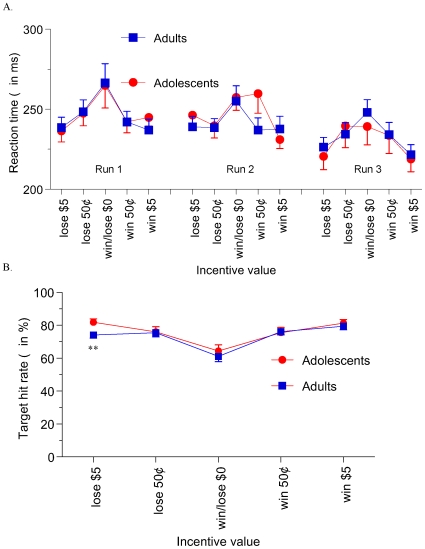
“Behaviorally, this study demonstrated overall slower RTs in adolescents than adults, which corresponds to previous work (Bjork et al., 2010), and both age groups were faster in the monetary versus the verbal condition, replicating previous findings (Plichta et al., 2013).”
ResultBrislin, S. J., Weigard, A. S., Hardee, J. E., Cope, L. M., Martz, M. E., Zucker, R. A., & Heitzeg, M. M. (2021) · Clinical Psychological Science · doi:10.1177/21677026211054780 · Cited by 4
“Large-loss and large-reward contrasts were used because these have been found to provide a more robust BOLD signal compared with the small-loss and small-reward contrasts (Bjork et al., 2010).”
MethodThe Neurobiology of Adolescent Self‐Control
Cohen, A. O., & Casey, B. J. (2017) · Wiley eBooks · doi:10.1002/9781118920497.ch26 · Cited by 7
Developmental Trends in Adaptive and Maladaptive Risk Taking in Youth
Khurana, A., & Römer, D. (2020) · Elsevier eBooks · doi:10.1016/b978-0-12-819641-0.00029-3 · Cited by 4
“This variability has been attributed to underlying personality-based differences (Hawes et al., 2017), unique task characteristics (reward anticipation vs. receipt) (Bjork et al., 2010), and developmental as well as gender differences.”
BackgroundThe Developmental Cognitive Neural Mechanisms of Adolescents' Risky Decision Making
Zhang, Y., & Tingyong, F. E. N. G. (2014) · Advances in Psychological Science · doi:10.3724/sp.j.1042.2014.01139 · Cited by 7
Hwang, S., Meffert, H., VanTieghem, M., White, S. F., Sinclair, S., Bookheimer, S. Y., & Blair, J. (2017) · Clinical Psychopharmacology and Neuroscience · doi:10.9758/cpn.2017.15.4.369 · Cited by 5
Behavioural and Neural Reliability of a Pavlovian‐to‐Instrumental Transfer Task
Belanger, M. J., Chen, H., Fröhner, J. H., Garbusow, M., Heinz, A., & Smolka, M. N. (2025) · Addiction Biology · doi:10.1111/adb.70112 · Cited by 2
“In addition, changes in reward processing during early adulthood may have played a role in the instability of the motivational PIT contrast [69, 70].”
Social motivation deficits in individuals with autism spectrum disorders
Hui, X. U., & Tao, W. A. N. G. (2022) · Advances in Psychological Science · doi:10.3724/sp.j.1042.2022.01050 · Cited by 5
Neuroimaging Human Dopamine-Related Neurophysiology Across Development
Parr, A. C., Larsen, B., Calabro, F. J., Tervo‐Clemmens, B., & Luna, B. (2022) · Neuromethods · doi:10.1007/978-1-0716-2799-0_13 · Cited by 2
FMRI Studies of the Adolescent Reward System: The Triadic Model Perspective
Plate, R. C., Richards, J., & Ernst, M. (2015) · Springer eBooks · doi:10.1007/978-3-319-17795-3_8 · Cited by 4
Galván, A. (2018) · Cambridge University Press eBooks · doi:10.1017/9781316106143.008 · Cited by 2
Zhang, Z. (2022) · Developmental Review · doi:10.1016/j.dr.2022.101052 · Cited by 5
Mikkelsen, C. A., Robertson, E. C., Somerville, L. H., Mayes, M., Meltzoff, A. N., McLaughlin, K. A., & Rosen, M. L. (2025) · NeuroImage · doi:10.1016/j.neuroimage.2025.121672 · Cited by 1
“The striatum (Arsalidou et al., 2020; Bjork et al., 2010; Vrieze et al., 2013), the amygdala (Baxter and Murray, 2002; Wassum, 2022), the orbitofrontal cortex (OFC) (Rolls et al., 2020), the insula (Duarte et al., 2020), and the ventromedial prefrontal cortex (vmPFC) (Vassena et al., 2014) have all…”
Brain Development and the Risk for Substance Abuse
Heitzeg, M. M., & Casey, B. J. (2017) · Oxford University Press eBooks · doi:10.1093/med/9780190681425.003.0047 · Cited by 1
Sawyers, C. K., Straub, L. K., Gauntlett, J., & Bjork, J. M. (2024) · Developmental Cognitive Neuroscience · doi:10.1016/j.dcn.2024.101412 · Cited by 2
“On the other hand, studies that showed decreased VS activation in adolescents used explicit payoffs that required intense vigilance for rapid responses to serially-presented targets (Bjork et al., 2010, 2004; Cho et al., 2013; Geier et al., 2010; Lamm et al., 2014).”
BackgroundMethodResultInfluentialSelf-citationGalván, A. (2018) · Cambridge University Press eBooks · doi:10.1017/9781316106143.002 · Cited by 1
Galván, A. (2018) · Cambridge University Press eBooks · doi:10.1017/9781316106143.006 · Cited by 1
Inequity Aversion: Do Rats Get Jealous?
Douglas, H. M. (2012) · ScholarWorks@BGSU (Bowling Green State University) · Cited by 1
Behavioral and Brain Response to Non‐Drug Rewards in Substance Abuse
Bjork, J. M. (2015) · Wiley eBooks · doi:10.1002/9781118472415.ch4 · Cited by 2
Self-citationDairywala, K. (2018) · Brock University Digital Repository (Brock University) · Cited by 1
Neural Mechanisms of Reward Processing in Antisocial Behavior
Murray, L. (2019) · Deep Blue (University of Michigan) · Cited by 1
Fryt, J., Smoleń, T., Czernecka, K., Szczygieł, M., & Torre, A. L. (2021) · Research Square · doi:10.21203/rs.3.rs-163132/v1 · Cited by 1
Galván, A. (2018) · Cambridge University Press eBooks · doi:10.1017/9781316106143.011 · Cited by 1
Cortical and Subcortical correlates of emotional control across adolescent development
Porter, J. N. (2013) · University of Minnesota Digital Conservancy (University of Minnesota)
DEVELOPMENTAL AND INDIVIDUAL DIFFERENCES IN REWARD PROCESSING ACROSS CHILDHOOD AND ADOLESCENCE
Kirwan, M. L. (2010) · University Libraries (University of Maryland)
The significance of dopamine and glutamate for neuronal reward processing over the lifespan
Gleich, T. (2016) · Universitätsbibliothek der FU Berlin Hochschulschriftenstelle u. Dokumentenserver · doi:10.17169/refubium-15734
Effects of Peer Influence in Adolescence
Wolf, L. K. (2015) · UCL Discovery (University College London)
Examining the effects of reward and punishment on incidental learning
Freedberg, M., Hazeltine, E., Duff, M., McMurray, B., Voss, M., & Darling, W. (2016) · doi:10.17077/etd.b4zjzeio
Reward Processing and Risk for Depression Across
Pagliaccio, D., & Luby, J. L. (2016)
Neuroeconomic Predictors of Adolescent Risky Decision-Making
Lauharatanahirun, N. (2017) · VTechWorks (Virginia Tech)
The Implications of Adolescent Neuroscience on Policy
Galván, A. (2018) · Cambridge University Press eBooks · doi:10.1017/9781316106143.009
Galván, A. (2018) · Cambridge University Press eBooks · doi:10.1017/9781316106143.010
Cognitive Neuroscience Methods to Study the Adolescent Brain
Galván, A. (2018) · Cambridge University Press eBooks · doi:10.1017/9781316106143.004
Gaining Control: Neural Basis of Proactive Inhibition
Pas, P. (2021) · Utrecht University Repository (Utrecht University) · doi:10.33540/862
Lydon‐Staley, D. M., & Bassett, D. S. (2018) · PsyArXiv (OSF Preprints) · doi:10.31234/osf.io/74stn
Galván, A. (2018) · Cambridge University Press eBooks · doi:10.1017/9781316106143.001
Galván, A. (2018) · Cambridge University Press eBooks · doi:10.1017/9781316106143.005
Galván, A. (2018) · Cambridge University Press eBooks · doi:10.1017/9781316106143.003
Galván, A. (2018) · Cambridge University Press eBooks · doi:10.1017/9781316106143.007
Keulers, E. H. H., Falbo, L., de Bruin, A. B. H., & Stiers, P. L. J. (2024) · Trends in Neuroscience and Education · doi:10.1016/j.tine.2024.100223
“Contrasting results are obtained with the monetary incentive delay task, in which participants need to respond as fast as possible to the appearance of a stimulus to obtain the reward [13,14,18,19].”
Gao, D., Yang, G., Shen, J., Wu, F., & Ji, C. (2024) · Frontiers in Computational Neuroscience · doi:10.3389/fncom.2024.1478193 · Cited by 1
Ramakrishnan, S. A., Shaik, R., Peri, S., Adams, F., Haas, S. S., Frangou, S., Srinivasan, S. S., Shahawy, O. E., Hammond, C. J., Ivanov, I., et al. (2025) · Frontiers in Child and Adolescent Psychiatry · doi:10.3389/frcha.2025.1631474 · Cited by 1
Padmanabhan, A. (2013) · D-Scholarship@Pitt (University of Pittsburgh)
Ripke, S. (2013) · Qucosa (Saxon State and University Library Dresden)
McDonald, M., Kohls, G., Henke, N., Wahl, H., Backhausen, L. L., Roessner, V., & Buse, J. (2024) · Figshare · doi:10.6084/m9.figshare.26720424
Sullivan, R. M., Wallace, A. L., Tomas, C. W., Wirtz, H. G., Larson, C. L., & Lisdahl, K. M. (2026) · Frontiers in Adolescent Medicine · doi:10.3389/fradm.2026.1737529
Perez, P. M. V., Hill, L. D., Crooks, K. E., Sutherland, B. D., Laird, A. R., Trucco, E. M., & Sutherland, M. T. (2026) · Frontiers in Adolescent Medicine · doi:10.3389/fradm.2026.1741884
“Behaviorally, adolescents show faster response times (RTs) and higher hit rates (HRs) to gain-trial targets (vs. loss or neutral ones), with responses scaling as incentives increase (23, 45, 46).”
Development of the Nervous System During Adolescence
Aigbogho, U. G. (2026) · Advances in experimental medicine and biology · doi:10.1007/978-981-95-7000-3_5
Aouidad, A. (2021) · theses.fr (ABES) · doi:10.70675/f93e0a2az7d69z4b2fzaa04z1751ff1e6bdc · Cited by 2
Protracted prediction: Neurodevelopment of reward processing in the adolescent cerebellumPreprint
Mullins, T. S., & Hogeveen, J. (2026) · bioRxiv (Cold Spring Harbor Laboratory) · doi:10.64898/2026.05.27.726906
Cannabis use and neurocognitive functioning in adolescents
(2026) · Frontiers research topics · doi:10.3389/978-2-8325-8161-2
A four-factor model of psychopathy assessed via neural reinforcement sensitivity theory
Dickison, E. M., Neo, P. S. ‐., Young, C. K., McNaughton, N., & Sellbom, M. (2026) · Personality Neuroscience · doi:10.1017/pen.2026.10008
Silver, J., Quam, A. J., Parker, A. J., Wiggins, J. L., & Dougherty, L. R. (2026) · Journal of Child Psychology and Psychiatry · doi:10.1111/jcpp.70227
Metadata
- Authors
- Bjork, J. M., Smith, A. R., Chen, G., & Hommer, D. W.
- Affiliations
- National Institutes of Health (US)
- Corresponding author
- Bjork, James M.
- Venue
- PLoS ONE
- Publisher
- Public Library of Science (PLoS)
- Published
- 2010-07-06
- Volume
- 5
- Issue
- 7
- Pages
- e11440
- ISSN
- 1932-6203 (ISSN-L)
- PMC
- PMC2897849
- OpenAlex
- W2158226602
- Cited by
- 271
- References
- 50
- Citations by year
- 2026: 7 · 2025: 6 · 2024: 7 · 2023: 8 · 2022: 18 · 2021: 16 · 2020: 13 · 2019: 8 · 2018: 28 · 2017: 11 · 2016: 21 · 2015: 21 · 2014: 34 · 2013: 29 · 2012: 27
- FWCI
- 14.12
- Type
- journal article
- Language
- en
- Open access
- gold
- doi.org
- Locations
- PLoS ONE (publishedVersion, cc-by)
- PubMed Central (publishedVersion, public-domain)
- PubMed (publishedVersion)
- DOAJ (DOAJ: Directory of Open Access Journals) (submittedVersion, cc-by-sa)
- Figshare (submittedVersion, cc-by)
- Funders
- National Institutes of Health
- National Institute on Alcohol Abuse and Alcoholism
- Topics
- Life Sciences › Neuroscience › Cognitive Neuroscience › Neural and Behavioral Psychology Studies
- Life Sciences › Neuroscience › Cellular and Molecular Neuroscience › Neurotransmitter Receptor Influence on Behavior
- Social Sciences › Psychology › Clinical Psychology › Gambling Behavior and Treatments
- Keywords
- adolescent brain development, nucleus accumbens, reward anticipation, mesolimbic system, monetary incentive delay task, risk-taking, striatum
- MeSH terms
- Adolescent, Adult, Child, Humans, Magnetic Resonance Imaging, Motivation, Neural Pathways, Nucleus Accumbens, Reward, Young Adult
About these checks
Registry, retraction, Cites and statistics results are computed, not judged, with one exception: a printed reference that no index lists is read once by a model before it counts as a citation error. Claims are extracted by a model and kept only when their quote appears verbatim in the text; each cited source is then checked, with a model’s help, for whether it says what the claim relies on. Those verdicts can be wrong — read the claim’s quote and the cited source before relying on one.
Statistics and arithmetic are recomputed, not judged.
Confidence bands are shown only for fields calibrated on our annotated test set. None is calibrated yet, so no band is shown.
What counts as a claim ›How we measure confidence ›How we check this ›
Are you an author, or do you see a problem with this page? Request a review
Data sources
Bibliographic data: Semantic Scholar, OpenAlex, Crossref.
Contains information from the Semantic Scholar Academic Graph Datasets, made available under the ODC Attribution License (ODC-BY 1.0).
Semantic Scholar’s data is described in: Kinney, R., et al. (2023). The Semantic Scholar Open Data Platform. arXiv:2301.10140.
