

Adolescents, Adults and Rewards: Comparing Motivational Neurocircuitry Recruitment Using fMRI
Open accessThe DOI matches its Crossref record; 50 of the 50 references it cites were found in a registry or an index.
Abstract
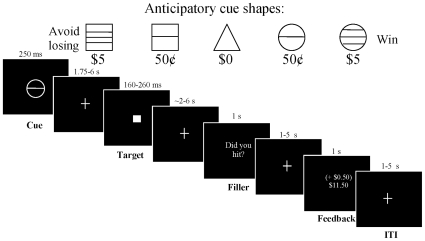
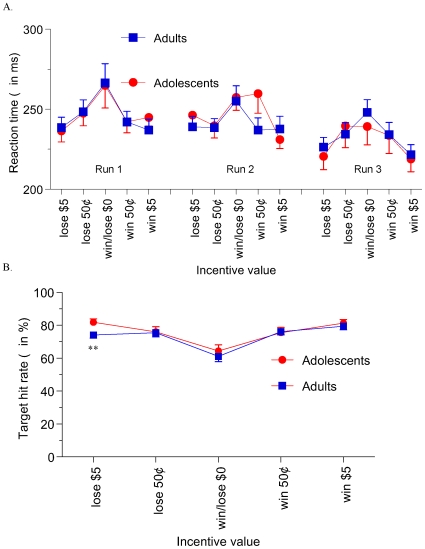
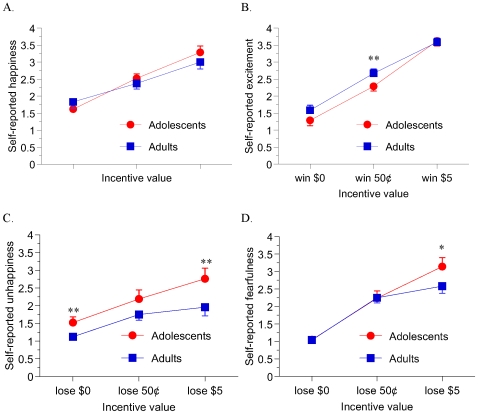
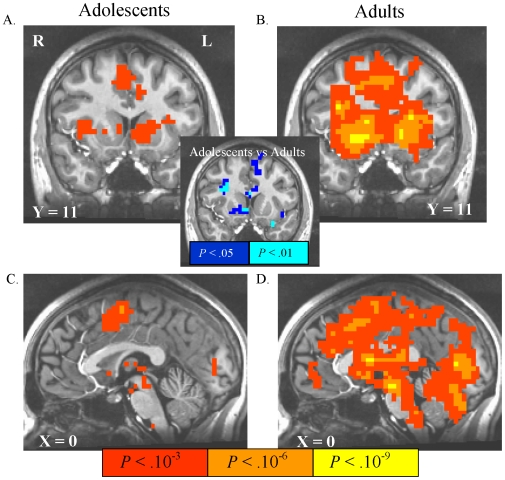
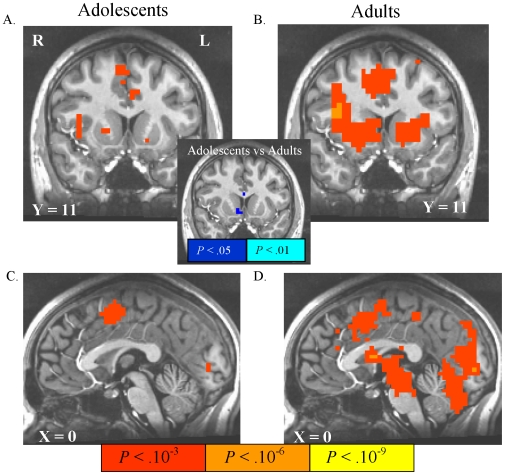
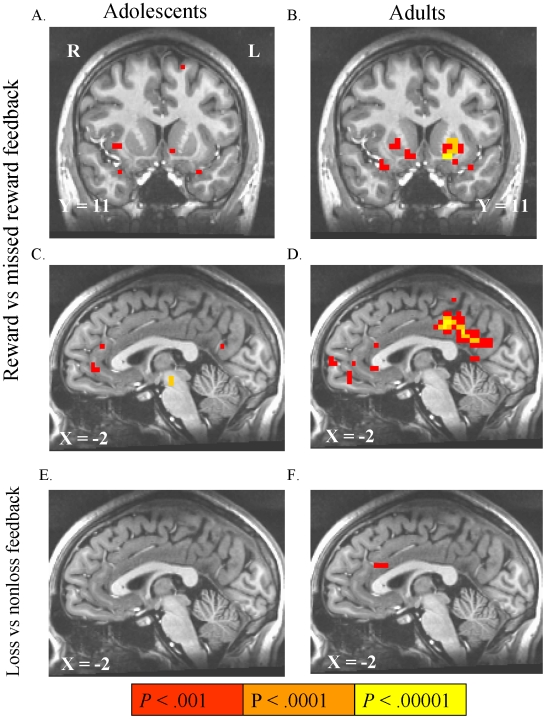
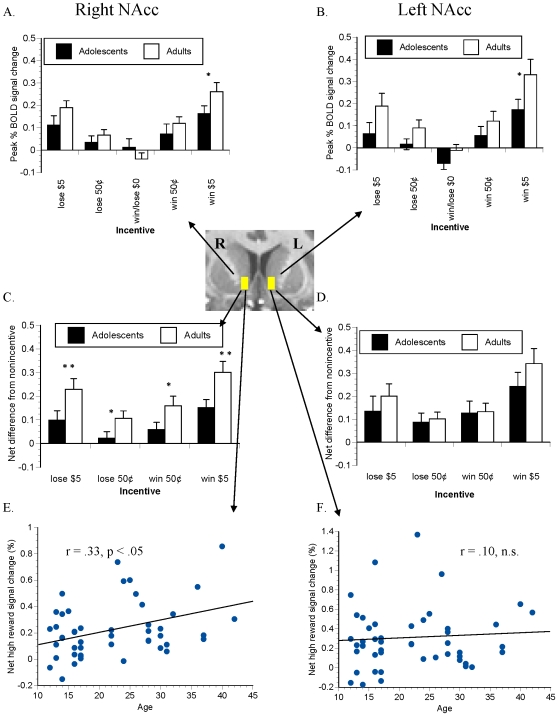
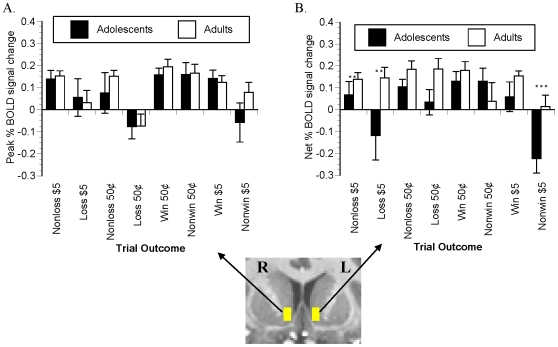
BACKGROUND: Adolescent risk-taking, including behaviors resulting in injury or death, has been attributed in part to maturational differences in mesolimbic incentive-motivational neurocircuitry, including ostensible oversensitivity of the nucleus accumbens (NAcc) to rewards. METHODOLOGY/PRINCIPAL FINDINGS: To test whether adolescents showed increased NAcc activation by cues for rewards, or by delivery of rewards, we scanned 24 adolescents (age 12-17) and 24 adults age (22-42) with functional magnetic resonance imaging while they performed a monetary incentive delay (MID) task. The MID task was configured to temporally disentangle potential reward or potential loss anticipation-related brain signal from reward or loss notification-related signal. Subjects saw cues signaling opportunities to win or avoid losing $0, $.50, or $5 for responding quickly to a subsequent target. Subjects then viewed feedback of their trial success after a variable interval from cue presentation of between 6 to 17 s. Adolescents showed reduced NAcc recruitment by reward-predictive cues compared to adult controls in a linear contrast with non-incentive cues, and in a volume-of-interest analysis of signal change in the NAcc. In contrast, adolescents showed little difference in striatal and frontocortical responsiveness to reward deliveries compared to adults. CONCLUSIONS/SIGNIFICANCE: In light of divergent developmental difference findings between neuroimaging incentive paradigms (as well as at different stages within the same task), these data suggest that maturational differences in incentive-motivational neurocircuitry: 1) may be sensitive to nuances of incentive tasks or stimuli, such as behavioral or learning contingencies, and 2) may be specific to the component of the instrumental behavior (such as anticipation versus notification).
Overview
The claims and statistics of this paper haven’t been checked yet.
Free: it reads the open-access text and checks the first 5 claims that cite a source we can check. Create a free account to check every claim.
Integrity signals
Registry
Cites
Statistics
Figures
Verification
Claims the paper makes
The claims and statistics of this paper haven’t been checked yet.
Free: it reads the open-access text and checks the first 5 claims that cite a source we can check. Create a free account to check every claim.
Claims other papers make about this one
Each is checked against this paper’s own text: does it say what the citing paper says it does?
The source backs part of the claim, not all of it — or backs it for a different population, condition or comparison.
In the citing paper
“The only significant group difference in this second study concerned the nucleus accumbens during test preparation: In response to both gain cues and loss cues, the nucleus accumbens activation was lower in adolescents than in adults.”
From A systematic review of fMRI reward paradigms used in studies of adolescents vs. adults: The impact of task design and implications for understanding neurodevelopment (2013) · cites this paper as Bjork et al., 2010
Experimental — accuracy not yet measuredThe source backs part of the claim, not all of it — or backs it for a different population, condition or comparison.
In the citing paper
“these instrumental-reward studies showed that striatal activation was lower in adolescents during the cue stage in one task (Bjork et al., 2004; Bjork et al., 2010; Geier et al., 2009b), and during the test preparation stage of another task (Bjork et al., 2004; Bjork et al., 2010; Cho et al., 2012).”
From A systematic review of fMRI reward paradigms used in studies of adolescents vs. adults: The impact of task design and implications for understanding neurodevelopment (2013) · cites this paper as Bjork et al., 2010
Experimental — accuracy not yet measuredThe source backs part of the claim, not all of it — or backs it for a different population, condition or comparison.
In the citing paper
“In some studies, adolescents were found to exhibit a relative decrease of VS, OFC and mesial PFC recruitment during reward cue and anticipation”
From Developmental changes in brain function underlying the influence of reward processing on inhibitory control (2011) · cites this paper as Bjork et al., 2010
Experimental — accuracy not yet measuredThe source backs part of the claim, not all of it — or backs it for a different population, condition or comparison.
In the citing paper
“Adolescence represents a key window of vulnerability given that reward processing and social needs undergo maturational changes (207, 208).”
From A transdiagnostic perspective on social anhedonia (2019) · cites this paper as [208]
Experimental — accuracy not yet measuredThe source backs part of the claim, not all of it — or backs it for a different population, condition or comparison.
In the citing paper
“as well as developmental troughs (Bjork et al., 2004, Bjork et al., 2010, Lamm et al., 2014).”
From Effects of incentives, age, and behavior on brain activation during inhibitory control: a longitudinal fMRI study (2015) · cites this paper as Bjork et al., 2010
Experimental — accuracy not yet measured
12 more claims about this paper
Create a free account to see every claim other papers make about this one.
Self-check
Percentages, sums and reported differences re-computed from the paper’s own numbers.
The self-check needs the paper’s full text.
Citations
Cites
AFNI: Software for analysis and visualization of functional magnetic resonance neuroimages
Cox, R. W. (1996) · Computers and Biomedical Research · doi:10.1006/cbmr.1996.0014 · Cited by 10,913 · cited 1×
“Blood Oxygen-Level Dependent (BOLD) signal was analyzed using Analysis of Functional NeuroImages (AFNI) software [45].”
MethodBrain development during childhood and adolescence: a longitudinal MRI study
Giedd, J. N., Blumenthal, J., Jeffries, N. O., Castellanos, F. X., Liu, H., Zijdenbos, A., Paus, T., Evans, A. C., & Rapoport, J. L. (1999) · Nature Neuroscience · doi:10.1038/13158 · Cited by 5,552 · cited 1×
“Developmental neuroimaging findings have detected structural changes in striatum [2] and frontal cortex [3] across adolescence, where frontocortical gray matter morphology maturation continues into the mid 20 s [4], relatively later than other cortex (reviewed in [5]).”
BackgroundThe role of the medial frontal cortex in cognitive control
Ridderinkhof, K. R., Ullsperger, M., Crone, E. A., & Nieuwenhuis, S. (2004) · Science · doi:10.1126/science.1100301 · Cited by 2,974 · cited 1×
“Despite how the direct group-wise activation difference did not survive FDR correction, we retain mention of this difference as a preliminary finding due to the extensive implication of this portion of ACC in error monitoring [32].”
BackgroundCircular analysis in systems neuroscience: the dangers of double dipping
Kriegeskorte, N., Simmons, W. K., Bellgowan, P. S. F., & Baker, C. I. (2009) · Nature Neuroscience · doi:10.1038/nn.2303 · Cited by 2,696 · cited 1×
“To avoid circularity of statistical inference [46,47], the masks were not localized based on observed contrast activation, but rather were anatomically localized a priori.”
MethodAnticipation of Increasing Monetary Reward Selectively Recruits Nucleus Accumbens
Knutson, B., Adams, C. M., Fong, G. W., & Hommer, D. (2001) · The Journal of Neuroscience · doi:10.1523/jneurosci.21-16-j0002.2001 · Cited by 2,244 · cited 5×
“The most widely-adopted probes of human incentivemotivational neurocircuitry are variants of the monetary incentive delay (MID) task (Figure 1), wherein learned cues that signal an imminent opportunity to respond for monetary rewards reliably recruit the VS in proportion to potential reward magnitude [13,14,15,16,17,1…”
BackgroundMethodResultSelf-citationCastellanos, F. X. (2002) · JAMA · doi:10.1001/jama.288.14.1740 · Cited by 1,646 · cited 1×
“Developmental neuroimaging findings have detected structural changes in striatum [2] and frontal cortex [3] across adolescence, where frontocortical gray matter morphology maturation continues into the mid 20 s [4], relatively later than other cortex (reviewed in [5]).”
BackgroundPuzzlingly High Correlations in fMRI Studies of Emotion, Personality, and Social Cognition
Vul, E., Harris, C., Winkielman, P., & Pashler, H. (2009) · Perspectives on Psychological Science · doi:10.1111/j.1745-6924.2009.01125.x · Cited by 1,475
In vivo evidence for post-adolescent brain maturation in frontal and striatal regions
Sowell, E. R., Thompson, P. M., Holmes, C. J., Jernigan, T. L., & Toga, A. W. (1999) · Nature Neuroscience · doi:10.1038/13154 · Cited by 1,439 · cited 1×
“Developmental neuroimaging findings have detected structural changes in striatum [2] and frontal cortex [3] across adolescence, where frontocortical gray matter morphology maturation continues into the mid 20 s [4], relatively later than other cortex (reviewed in [5]).”
BackgroundGalvan, A., Hare, T. A., Parra, C. E., Penn, J., Voss, H., Glover, G., & Casey, B. J. (2006) · Journal of Neuroscience · doi:10.1523/jneurosci.1062-06.2006 · Cited by 1,282 · cited 8×
“In the Galvan study [8], once associations between cues and rewarding outcomes had become learned, adolescents showed greater VS activation by rewarding trials compared to responses of adults or younger children.”
BackgroundResultInfluentialAcute effects of cocaine on human brain activity and emotion
Breiter, H. C., Gollub, R. L., Weisskoff, R. M., Kennedy, D. N., Makris, N., Berke, J. D., Goodman, J. M., Kantor, H. L., Gastfriend, D. R., Riorden, J. P., et al. (1997) · Neuron · doi:10.1016/s0896-6273(00)80374-8 · Cited by 1,270 · cited 1×
“. This was a two-voxel mask comprised of the 3.75 mm cubic voxel that corresponded to activation maxima or VOI placement in previous reports (Talairach±8, 11, 0), along with the adjacent voxel located ventrally at the junction of caudate and putamen”
MethodInfluential
Cited by
Understanding adolescence as a period of social–affective engagement and goal flexibility
Crone, E. A., & Dahl, R. E. (2012) · Nature Reviews Neuroscience · doi:10.1038/nrn3313 · Cited by 2,507
The Adolescent Brain Cognitive Development (ABCD) study: Imaging acquisition across 21 sites
Casey, B. J., Cannonier, T., Conley, M. I., Cohen, A. O., Barch, D. M., Heitzeg, M. M., Soules, M. E., Teslovich, T., Dellarco, D. V., Garavan, H., et al. (2018) · Developmental Cognitive Neuroscience · doi:10.1016/j.dcn.2018.03.001 · Cited by 2,204
“As reported in the literature (Bjork et al., 2010), the average hit rate is slightly higher for reward (59%) and loss trials (54%) than for neutral trials (49%).”
Self-citationBartra, O., McGuire, J. T., & Kable, J. W. (2013) · NeuroImage · doi:10.1016/j.neuroimage.2013.02.063 · Cited by 1,927
The dual systems model: Review, reappraisal, and reaffirmation
Shulman, E. P., Smith, A. R., Silva, K., Icenogle, G., Duell, N., Chein, J., & Steinberg, L. (2016) · Developmental Cognitive Neuroscience · doi:10.1016/j.dcn.2015.12.010 · Cited by 867
“However, a handful of studies find the opposite pattern—dampened striatal response during adolescence relative to adulthood (Bjork et al., 2004, 2010; Hoogendam et al., 2013; Lamm et al., 2014)—and others fail to demonstrate any age differences (Krain et al., 2006; Teslovich et al., 2014; Van…”
Self-citationNeuroscience and education: myths and messages
Howard-Jones, P. A. (2014) · Nature Reviews Neuroscience · doi:10.1038/nrn3817 · Cited by 703
Sescousse, G., Caldú, X., Segura, B., & Dreher, J.-C. (2013) · Neuroscience & Biobehavioral Reviews · doi:10.1016/j.neubiorev.2013.02.002 · Cited by 782
Beyond simple models of self-control to circuit-based accounts of adolescent behavior
Casey, B. J. (2015) · Annual Review of Psychology · doi:10.1146/annurev-psych-010814-015156 · Cited by 742
“Differential activity in the ventral striatum to monetary rewards in adolescents has been observed across a number of labs and in experimental tasks (Bjork et al. 2008, 2010; Ernst et al. 2006; Galván et al. 2006; Geier et al. 2010; van Leijenhorst et al. 2010).”
BackgroundBraking and accelerating of the adolescent brain
Casey, B. J., Jones, R. M., & Somerville, L. H. (2011) · Journal of Research on Adolescence · doi:10.1111/j.1532-7795.2010.00712.x · Cited by 621
Braams, B. R., van Duijvenvoorde, A. C. K., Peper, J. S., & Crone, E. A. (2015) · The Journal of Neuroscience · doi:10.1523/jneurosci.4764-14.2015 · Cited by 617
A meta-analysis on age differences in risky decision making: Adolescents versus children and adults.
Defoe, I. N., Dubas, J. S., Figner, B., & van Aken, M. A. G. (2015) · Psychological Bulletin · doi:10.1037/a0038088 · Cited by 456
Social re-orientation and brain development: An expanded and updated view
Nelson, E. E., Jarcho, J. M., & Guyer, A. E. (2016) · Developmental Cognitive Neuroscience · doi:10.1016/j.dcn.2015.12.008 · Cited by 447
“…relative increases between adolescents nd adults in activity of both striatum and amygdala in response to arious social stimuli (Ernst et al., 2006; Carter and Pelphrey, 2008; uyer et al., 2009; Bjork et al., 2010; Galvan, 2010; Gunther Moor t al., 2010; Scherf et al., 2013; Casey et al., 2014).”
Oldham, S., Murawski, C., Fornito, A., Youssef, G., Yücel, M., & Lorenzetti, V. (2018) · Human Brain Mapping · doi:10.1002/hbm.24184 · Cited by 425
“3405 Of the 22 studies that examined reward receipt in some form, 13 used a contrast of successful reward outcome versus unsuccessful reward outcome (Bjork et al., 2004, 2010, 2012; Bjork, Smith, & Hommer, 2008; Boecker et al., 2014; Jung et al., 2011; Kirk et al., 2015; Knutson et al., 2003, 2008;…”
MethodYokum, S., Ng, J., & Stice, E. (2011) · Obesity · doi:10.1038/oby.2011.168 · Cited by 397
Pfeifer, J. H., & Allen, N. B. (2012) · Trends in Cognitive Sciences · doi:10.1016/j.tics.2012.04.011 · Cited by 299
Adolescence: what do transmission, transition and translation have to do with it?
Casey, B. J., Duhoux, S., & Cohen, M. M. (2010) · Neuron · doi:10.1016/j.neuron.2010.08.033 · Cited by 297
“…groups have shown heightened activation of the ventral striatum in adolescents in anticipation and/or receipt of rewards compared to adults (Ernst et al., 2005; Galvan et al., 2006; Geier et al., 2010; Van Leijenhorst et al., 2010a), others have shown suppressed activity (Bjork et al., 2004, 2010).”
BackgroundResultAddiction, adolescence, and the integration of control and motivation
Gladwin, T. E., Figner, B., Crone, E. A., & Wiers, R. W. (2011) · Developmental Cognitive Neuroscience · doi:10.1016/j.dcn.2011.06.008 · Cited by 296
Spear, L. P. (2011) · Developmental Cognitive Neuroscience · doi:10.1016/j.dcn.2011.08.001 · Cited by 292
Silverman, M. H., Jedd, K., & Luciana, M. (2015) · NeuroImage · doi:10.1016/j.neuroimage.2015.07.083 · Cited by 277
“…meta-analysis of functional neuroima..., NeuroImage (2015), http://dx.doi E D P R O O F Among the studies that have studied loss events in adolescents, a number have found reduced responses in the amygdala, OFC, and ACC (Ernst et al., 2005; Bjork et al., 2010; Van Leijenhorst et al., 2010a).”
InfluentialTelzer, E. H. (2016) · Developmental Cognitive Neuroscience · doi:10.1016/j.dcn.2015.10.010 · Cited by 274
Adolescent impatience decreases with increased frontostriatal connectivity
van den Bos, W., Rodriguez, C. A., Schweitzer, J. B., & McClure, S. M. (2015) · Proceedings of the National Academy of Sciences · doi:10.1073/pnas.1423095112 · Cited by 253
The triadic model perspective for the study of adolescent motivated behavior
Ernst, M. (2014) · Brain and Cognition · doi:10.1016/j.bandc.2014.01.006 · Cited by 240
“During the cue-appraisal stage, adolescents activate the striatum less than adults (Bjork et al., 2004, 2010; Geier et al., 2010), but during the performance preparation stage, adolescents activate striatum more than adults, particularly in reward-trials (Geier et al., 2010; Somerville & Casey,…”
BackgroundThe Teenage Brain: Sensitivity to Rewards
Galván, A. (2013) · Current Directions in Psychological Science · doi:10.1177/0963721413480859 · Cited by 231
Smith, A. R., Chein, J., & Steinberg, L. (2013) · Hormones and Behavior · doi:10.1016/j.yhbeh.2013.03.006 · Cited by 214
“Although opposite results were found in an fMRI study of age differences in reward anticipation (rather than receipt), with adolescents showing decreased ventral striatum activation relative to adults (Bjork et al., 2004; Bjork et al., 2010), a recent review of research on developmental changes in reward sensitivity,…”
ResultSelf-citationCommon and distinct neural correlates of personal and vicarious reward: A quantitative meta-analysis
Morelli, S. A., Sacchet, M. D., & Zaki, J. (2015) · NeuroImage · doi:10.1016/j.neuroimage.2014.12.056 · Cited by 203
Padmanabhan, A., Geier, C. F., Ordaz, S. J., Teslovich, T., & Luna, B. (2011) · Developmental Cognitive Neuroscience · doi:10.1016/j.dcn.2011.06.004 · Cited by 202
“In some studies, adolescents were found to exhibit a relative decrease of VS, OFC and mesial PFC recruitment during reward cue and anticipation (Bjork et al., 2004; Bjork et al., 2007; Bjork et al., 2010).”
Reward Processing and Risk for Depression Across Development
Luking, K. R., Pagliaccio, D., Luby, J. L., & Barch, D. M. (2016) · Trends in Cognitive Sciences · doi:10.1016/j.tics.2016.04.002 · Cited by 185
“, [32]).”
Social and monetary reward processing in autism spectrum disorders
Delmonte, S., Balsters, J. H., McGrath, J., Fitzgerald, J., Brennan, S., Fagan, A. J., & Gallagher, L. (2012) · Molecular Autism · doi:10.1186/2040-2392-3-7 · Cited by 180
Crone, E. A., van Duijvenvoorde, A. C. K., & Peper, J. S. (2016) · Journal of Child Psychology and Psychiatry · doi:10.1111/jcpp.12502 · Cited by 174
Richards, J. M., Plate, R. C., & Ernst, M. (2013) · Neuroscience & Biobehavioral Reviews · doi:10.1016/j.neubiorev.2013.03.004 · Cited by 174
“Careful task design is crucial to dissociate these two stages (Bjork et al., 2010), but often comes at the expense of longer trial durations, and subsequent restriction in the number of repeats of a given condition.”
BackgroundResultInfluentialCho, Y. T., Fromm, S., Guyer, A. E., Detloff, A., Pine, D. S., Fudge, J. L., & Ernst, M. (2013) · NeuroImage · doi:10.1016/j.neuroimage.2012.10.013 · Cited by 173
“We report the small-volume corrected peak activations in the regions commonly activated in the previous studies of theMID task (Bjork andHommer, 2007; Bjork et al., 2004, 2008, 2010, 2011; Guyer et al., 2006; Knutson et al., 2001; Samanez-Larkin et al., 2007) (Tables 1A,1B).”
InfluentialBroyd, S. J., Richards, H. J., Helps, S. K., Chronaki, G., Bamford, S., & Sonuga-Barke, E. J. S. (2012) · Journal of Neuroscience Methods · doi:10.1016/j.jneumeth.2012.05.015 · Cited by 167
“…for a differential effect of monetary loss on anticipatory brain activity is mixed (Knutson et al., 2001; Stark, et al., 2011), and much of this research has focused on comparisons between gain and no-gain rather than loss per se (e.g. Bjork et al., 2004; Bjork et al., 2010; Bjork et al., 2008).”
Effects of early life stress on amygdala and striatal development
Fareri, D. S., & Tottenham, N. (2016) · Developmental Cognitive Neuroscience · doi:10.1016/j.dcn.2016.04.005 · Cited by 168
“…a button press to a cue often report a decreased ventral striatal response in adolescents (vs. adults) when anticipating the delivery of a reward (Bjork et al., 2010, 2004), while anticipation of making a response during an anti-saccade task is associated with increased ventral striatal…”
A transdiagnostic perspective on social anhedonia
Barkus, E., & Badcock, J. C. (2019) · Frontiers in Psychiatry · doi:10.3389/fpsyt.2019.00216 · Cited by 165
“org social needs undergo maturational changes (207, 208).”
Adolescent brain development in normality and psychopathology
Luciana, M. (2013) · Development and Psychopathology · doi:10.1017/s0954579413000643 · Cited by 154
“…to reward anticipation and gain, several studies have reported that adolescents demonstrate blunted responses to loss events as measured within the amygdala (Ernst et al., 2005), the orbitofrontal cortex (van Leijenhorst, Gunther Moor, et al., 2010) and the anterior cingulate (Bjork et al., 2010).”
BackgroundLuciana, M., Wahlstrom, D., Porter, J. N., & Collins, P. F. (2012) · Developmental Psychology · doi:10.1037/a0027432 · Cited by 156
“However, during the processing of reward outcomes, adolescents showed a unique pattern of increased activation in the ventral striatum, a pattern that was not observed by Bjork et al. (2004, 2010) but is more akin to Ernst et al.’s (2005) findings.”
BackgroundMethodInfluentialSilk, J. S., Davis, S., McMakin, D. L., Dahl, R. E., & Forbes, E. E. (2012) · Psychological Medicine · doi:10.1017/s0033291712000207 · Cited by 155
“However, although several studies have observed hyporeactivity to reward in adolescents (Bjork et al. 2004, 2010 ; Forbes et al. 2010), other studies have reported evidence of hyper-reactivity (Ernst et al. 2005 ; Galvan et al. 2006).”
BackgroundYokum, S., & Stice, E. (2013) · International Journal of Obesity · doi:10.1038/ijo.2013.39 · Cited by 149
Age differences in the impact of peers on adolescents’ and adults’ neural response to reward
Smith, A. R., Steinberg, L., Strang, N., & Chein, J. (2015) · Developmental Cognitive Neuroscience · doi:10.1016/j.dcn.2014.08.010 · Cited by 147
“There are also several studies, however, reporting a dampened striatal response to reward during adolescence (Bjork et al., 2004, 2010; Hoogendam et al., 2013; Lamm et al., 2014) and others that do not find any effect of age on striatal response (Benningfield et al., 2014; Krain et al., 2006;…”
Self-citationAdolescent cognitive control and reward processing: Implications for risk taking and substance use
Geier, C. F. (2013) · Hormones and Behavior · doi:10.1016/j.yhbeh.2013.02.008 · Cited by 182
“An increasing number of studies have focused on reward processing during the adolescent period (for recent reviews see Bjork et al., 2010; Fareri et al., 2008; Galvan, 2010).”
BackgroundBjork, J. M., & Pardini, D. A. (2015) · Developmental Cognitive Neuroscience · doi:10.1016/j.dcn.2014.07.008 · Cited by 144
Self-citationNeural correlates of expected risks and returns in risky choice across development
van Duijvenvoorde, A. C. K., Huizenga, H. M., Somerville, L. H., Delgado, M. R., Powers, A., Weeda, W. D., Casey, B. J., Weber, E. U., & Figner, B. (2015) · The Journal of Neuroscience · doi:10.1523/jneurosci.1924-14.2015 · Cited by 141
“…responses to reward in adolescents (Galvan et al., 2006; Van Leijenhorst et al., 2010; Padmanabhan et al., 2011; Smith et al., 2011), while others observed hyposensitivity (Bjork et al., 2004, 2010), or minimal developmental changes (May et al., 2004; Paulsen et al., 2011; Teslovich et al., 2014).”
Neuroeconomics: A Bridge for Translational Research
Sharp, C., Monterosso, J., & Montague, P. R. (2012) · Biological Psychiatry · doi:10.1016/j.biopsych.2012.02.029 · Cited by 139
Neural and Psychological Maturation of Decision-making in Adolescence and Young Adulthood
Christakou, A., Gershman, S. J., Niv, Y., Simmons, A., Brammer, M., & Rubia, K. (2013) · Journal of Cognitive Neuroscience · doi:10.1162/jocn_a_00447 · Cited by 133
“Accord-ingly, there is interest in adolescent neural reactivity to the anticipation or delivery of reward (Bjork, Smith, Chen, & Hommer, 2010; Van Leijenhorst et al., 2010; Eshel, Nelson, Blair, Pine, & Ernst, 2007; Bjork et al., 2004) as well as in the way rewards are integrated into adolescent…”
Maza, M. T., Fox, K. A., Kwon, S.-J., Flannery, J. E., Lindquist, K. A., Prinstein, M. J., & Telzer, E. H. (2023) · JAMA Pediatrics · doi:10.1001/jamapediatrics.2022.4924 · Cited by 109
Adolescent brain maturation and smoking: What we know and where we’re headed
Lydon, D. M., Wilson, S. J., Child, A., & Geier, C. F. (2014) · Neuroscience & Biobehavioral Reviews · doi:10.1016/j.neubiorev.2014.07.003 · Cited by 136
Social rewards and social networks in the human brain
Fareri, D. S., & Delgado, M. R. (2014) · The Neuroscientist · doi:10.1177/1073858414521869 · Cited by 124
“…varying valence (e.g., positive/gain, negative/loss) and magnitude (e.g., high, low) strongly recruits the ventral striatum (Knutson and others 2001) as well as the caudate nucleus (Bjork and others 2010); activation in these regions appears to scale linearly with the value of the monetary outcome.”
BackgroundIncentive Motivation, Cognitive Control, and the Adolescent Brain: Is It Time for a Paradigm Shift?
Luciana, M., & Collins, P. F. (2012) · Child Development Perspectives · doi:10.1111/j.1750-8606.2012.00252.x · Cited by 123
Yau, W.-Y. W., Zubieta, J.-K., Weiland, B. J., Samudra, P. G., Zucker, R. A., & Heitzeg, M. M. (2012) · The Journal of Neuroscience · doi:10.1523/jneurosci.1390-11.2012 · Cited by 126
Gu, R., Huang, W., Camilleri, J., Xu, P., Wei, P., Eickhoff, S. B., & Feng, C. (2019) · Neuroscience & Biobehavioral Reviews · doi:10.1016/j.neubiorev.2019.02.017 · Cited by 124
Büchel, C., Peters, J., Banaschewski, T., Bokde, A. L. W., Bromberg, U., Conrod, P. J., Flor, H., Papadopoulos, D., Garavan, H., Gowland, P., et al. (2017) · Nature Communications · doi:10.1038/ncomms14140 · Cited by 118
van Duijvenvoorde, A. C. K., Op de Macks, Z. A., Overgaauw, S., Gunther Moor, B., Dahl, R. E., & Crone, E. A. (2014) · Brain and Cognition · doi:10.1016/j.bandc.2013.10.005 · Cited by 118
Neurobiology of adolescent substance use and addictive behaviors: treatment implications.
Hammond, C. J., Mayes, L. C., & Potenza, M. N. (2014) · Adolescent medicine: state of the art reviews · Cited by 160
Neural representation of expected value in the adolescent brain
Barkley-Levenson, E., & Galván, A. (2014) · Proceedings of the National Academy of Sciences · doi:10.1073/pnas.1319762111 · Cited by 114
“fMRI reward studies that find less activation in VS in adolescents versus adults in anticipation of reward (35, 36), or no age-related differences in response to reward receipt compared with children (37) or adults (27, 36), may have used computer tasks that are not developmentally appropriate.”
BackgroundMethodResultInfluentialEnhanced striatal sensitivity to aversive reinforcement in adolescents versus adults
Galván, A., & McGlennen, K. M. (2013) · Journal of Cognitive Neuroscience · doi:10.1162/jocn_a_00326 · Cited by 111
The role of the anterior insula in adolescent decision making
Smith, A. R., Steinberg, L., & Chein, J. (2014) · Developmental Neuroscience · doi:10.1159/000358918 · Cited by 110
Self-citationBjork, J. M., Chen, G., & Hommer, D. W. (2012) · Biological Psychology · doi:10.1016/j.biopsycho.2011.12.003 · Cited by 108
Self-citationCao, Z., Bennett, M., Orr, C., Icke, I., Banaschewski, T., Barker, G. J., Bokde, A. L. W., Bromberg, U., Büchel, C., Quinlan, E. B., et al. (2019) · Human Brain Mapping · doi:10.1002/hbm.24370 · Cited by 104
Caudate responses to reward anticipation associated with delay discounting behavior in healthy youth
Benningfield, M. M., Blackford, J. U., Ellsworth, M. E., Samanez-Larkin, G. R., Martin, P. R., Cowan, R. L., & Zald, D. H. (2014) · Developmental Cognitive Neuroscience · doi:10.1016/j.dcn.2013.10.009 · Cited by 103
“During anticipation of reward, adolescents sometimes show lower activation in the striatum during anticipation of reward with the MID task (Bjork et al., 2004, 2010), but increased activation relative to adults during reward receipt using other paradigms (e.g. Ernst et al., 2005; Galvan et al.,…”
BackgroundBraams, B. R., Peters, S., Peper, J. S., Güroğlu, B., & Crone, E. A. (2014) · NeuroImage · doi:10.1016/j.neuroimage.2014.06.020 · Cited by 102
Meaningful Family Relationships: Neurocognitive Buffers of Adolescent Risk Taking
Telzer, E. H., Fuligni, A. J., Lieberman, M. D., & Galván, A. (2013) · Journal of Cognitive Neuroscience · doi:10.1162/jocn_a_00331 · Cited by 102
Behavioral and neural correlates of loss aversion and risk avoidance in adolescents and adults
Barkley-Levenson, E. E., Van Leijenhorst, L., & Galván, A. (2013) · Developmental Cognitive Neuroscience · doi:10.1016/j.dcn.2012.09.007 · Cited by 97
The Teenage Brain: Cognitive Control and Motivation
Luna, B., Paulsen, D. J., Padmanabhan, A., & Geier, C. (2013) · Current Directions in Psychological Science · doi:10.1177/0963721413478416 · Cited by 92
Lutz, K., & Widmer, M. (2014) · Neuroscience and Neuroeconomics · doi:10.2147/nan.s38864 · Cited by 113
“96 More recently, it was found that, compared with adults, adolescents show less of a linear increase in ventral striatal activity during anticipation of increasing reward magnitude.”
BackgroundHeller, A. S., & Casey, B. J. (2016) · Developmental Science · doi:10.1111/desc.12373 · Cited by 92
Shigemune, Y., Tsukiura, T., Kambara, T., & Kawashima, R. (2013) · Cerebral Cortex · doi:10.1093/cercor/bhs415 · Cited by 109
“For example, one fMRI study demonstrated that VTA/SN and NA regions showed significant activations during the anticipation of punishments, but not during the acceptance of punishments (Bjork et al. 2010).”
Developmental imaging genetics: Linking dopamine function to adolescent behavior
Padmanabhan, A., & Luna, B. (2014) · Brain and Cognition · doi:10.1016/j.bandc.2013.09.011 · Cited by 87
Paulsen, D. J., Hallquist, M. N., Geier, C. F., & Luna, B. (2015) · Developmental Cognitive Neuroscience · doi:10.1016/j.dcn.2014.09.003 · Cited by 86
Normative development of ventral striatal resting state connectivity in humans
Fareri, D. S., Gabard-Durnam, L., Goff, B., Flannery, J., Gee, D. G., Lumian, D. S., Caldera, C., & Tottenham, N. (2015) · NeuroImage · doi:10.1016/j.neuroimage.2015.06.022 · Cited by 87
“…ventral striatum, such as heightened responses to monetary reward receipt and to reward anticipatory cues in adolescents compared to adults (Ernst et al., 2005; Somerville et al., 2011) and children (Somerville et al., 2011) (but see also (Bjork et al., 2004; 2010; Silvers et al., 2014)).”
BackgroundEffects of reward sensitivity and regional brain volumes on substance use initiation in adolescence
Urošević, S., Collins, P., Muetzel, R., Schissel, A., Lim, K. O., & Luciana, M. (2015) · Social Cognitive and Affective Neuroscience · doi:10.1093/scan/nsu022 · Cited by 83
The Neuroscience of Adolescence
Galván, A. (2017) · Cambridge University Press eBooks · doi:10.1017/9781316106143 · Cited by 91
Adolescent Development of Value-Guided Goal Pursuit
Davidow, J. Y., Insel, C., & Somerville, L. H. (2018) · Trends in Cognitive Sciences · doi:10.1016/j.tics.2018.05.003 · Cited by 91
“Further, many studies have shown that the ventral striatum response to the anticipation and receipt of rewards is elevated during adolescence [18–21], although it should be noted that this pattern is not always observed [9,22].”
BackgroundDiminished Cortical Thickness Is Associated with Impulsive Choice in Adolescence
Pehlivanova, M., Wolf, D. H., Sotiras, A., Kaczkurkin, A. N., Moore, T. M., Ciric, R., Cook, P. A., Garcia de La Garza, A., Rosen, A. F. G., Ruparel, K., et al. (2018) · The Journal of Neuroscience · doi:10.1523/jneurosci.2200-17.2018 · Cited by 79
“While speculative, future research may reveal that individual differences in brain structure which emerge early in life may impact evolving patterns of value and cognitive control system function in adolescence which, in turn, may contribute to impulsivity during this critical period (Casey et al., 2008; Bjork et al.,…”
BackgroundDifferent developmental trajectories for anticipation and receipt of reward during adolescence
Hoogendam, J. M., Kahn, R. S., Hillegers, M. H. J., van Buuren, M., & Vink, M. (2013) · Developmental Cognitive Neuroscience · doi:10.1016/j.dcn.2013.08.004 · Cited by 78
“This is in line with earlier work showing component-specific activation differences between adolescents and adults (for example Bjork et al., 2010; Cohen et al., 2010; Geier et al., 2010).”
InfluentialCservenka, A., Herting, M. M., Seghete, K. L. M., Hudson, K. A., & Nagel, B. J. (2012) · NeuroImage · doi:10.1016/j.neuroimage.2012.11.003 · Cited by 93
“Furthermore, in a study of adolescents with and without externalizing symptomology, insular activity was present during loss notification, independent of group classification (Bjork et al., 2010a).”
Cohn, M. D., Veltman, D. J., Pape, L. E., van Lith, K., Vermeiren, R. R. J. M., van den Brink, W., DORELEIJERS, T. A. H., & Popma, A. (2014) · Biological Psychiatry · doi:10.1016/j.biopsych.2014.08.017 · Cited by 85
“Impulsive and irresponsible behaviors are relatively common in adolescents, as compared with adults, and healthy adolescents show reduced ventral striatal responses during reward anticipation when compared with adults (49), potentially obscuring the relation of such neural responses with trait impulsivity within the p…”
BackgroundAdjusting behavior to changing environmental demands with development
Lourenco, F., & Casey, B. J. (2013) · Neuroscience & Biobehavioral Reviews · doi:10.1016/j.neubiorev.2013.03.003 · Cited by 67
“This controversary is consistent with the mixed adolescent imaging findings of diminished or elevated ventral striatal activity in anticipation of appetitive outcomes (Bjork et al., 2010; Somerville et al., 2011).”
BackgroundResultPorter, J. N., Roy, A. K., Benson, B., Carlisi, C., Collins, P. F., Leibenluft, E., Pine, D. S., Luciana, M., & Ernst, M. (2015) · Developmental Cognitive Neuroscience · doi:10.1016/j.dcn.2014.08.011 · Cited by 75
“…for the dual-system theory, both at a behavioral (Harden and Tucker-Drob, 2011; Steinberg et al., 2008; Urosevic et al., 2012) and a neural level (Chein et al., 2011; Ernst et al., 2005; Galvan et al., 2006; Somerville et al., 2010; Van Leijenhorst et al., 2010; but see Bjork et al., 2004, 2010).”
Potenza, M. N. (2013) · Journal of Adolescent Health · doi:10.1016/j.jadohealth.2012.05.007 · Cited by 67
“However, while some studies indicate that adolescents in general show increased reward-related and risk-taking-related responses [9, 85], other studies indicate that they show relatively diminished activation [86, 87].”
Bjork, J. M., Smith, A. R., Chen, G., & Hommer, D. W. (2012) · Human Brain Mapping · doi:10.1002/hbm.21351 · Cited by 70
“Each side of the bilateral NAcc mask [also used in Bjork et al., 2010b] was comprised of the 3.75 mm cubic voxel at the activation maxima of previous reports (Talairach 8, 11, 0) along with its ventral shared-face neighbor (inset in Fig.”
BackgroundMethodResultInfluentialSelf-citationvan der Schaaf, M. E., Warmerdam, E., Crone, E. A., & Cools, R. (2011) · Developmental Cognitive Neuroscience · doi:10.1016/j.dcn.2011.06.007 · Cited by 70
“Furthermore, some studies have reported that reward-related striatal responses are attenuated, rather than exaggerated in adolescents compared with adults (Bjork et al., 2004, 2010; Geier et al., 2010).”
ResultLadouceur, C. D., Kerestes, R., Schlund, M. W., Shirtcliff, E. A., Lee, Y., & Dahl, R. E. (2018) · Psychoneuroendocrinology · doi:10.1016/j.psyneuen.2018.12.016 · Cited by 81
“Research studies focusing on neural activation to reward cues assessed using versions of the Monetary Incentive Delay (MID), which focuses on reward cue processing, demonstrate that striatal activation is lower in adolescents compared to adults (Bjork et al., 2010) but that it tends to increase with age (Lamm et al.”
MethodResultAdolescent Neurological Development and Implications for Health and Well-Being
Griffin, A. (2017) · Healthcare · doi:10.3390/healthcare5040062 · Cited by 69
“We also know they process rewards, an emotional process, differently to adults and in a way which may drive risk taking, especially if those rewards relate to acceptance by peers [10,11].”
BackgroundDevelopmental perspectives on risky and impulsive choice
Rosenbaum, G. M., & Hartley, C. A. (2018) · Philosophical Transactions of the Royal Society B Biological Sciences · doi:10.1098/rstb.2018.0133 · Cited by 79
The contribution of imaging genetics to the development of predictive markers for addictions
Loth, E., Carvalho, F. M., & Schumann, G. (2011) · Trends in Cognitive Sciences · doi:10.1016/j.tics.2011.07.008 · Cited by 71
Dugre, J. R., Dumais, A., Bitar, N., & Potvin, S. (2018) · PeerJ · doi:10.7717/peerj.4749 · Cited by 82
“…66.6% Bjork et al. (2004) 12 ROI X 23.8 AFNI 3 2 2000 0.20$, 1$, 5$ 66.6% Bjork, Smith & Hommer (2008) 23 ROI – 32 AFNI 3 8 2000 0.50$, 5$ 66.6% Bjork et al. (2010) 24 ROI X 29.3 AFNI 3 8 1000 0.50$, 5$ 67.0% Bustamante et al. (2014) 18 WB – 37.44 spm8 1.5 8 2000 ¤0.20,¤3 75.0% Cho et…”
InfluentialRisky decision-making in adolescent girls: The role of pubertal hormones and reward circuitry
Op de Macks, Z. A., Bunge, S. A., Bell, O. N., Wilbrecht, L., Kriegsfeld, L. J., Kayser, A. S., & Dahl, R. E. (2016) · Psychoneuroendocrinology · doi:10.1016/j.psyneuen.2016.08.013 · Cited by 66
“Although other paradigms succeeded at disentangling the different reward processes associated with decision-making (Bjork et al., 2010; Forbes et al., 2010), these studies have not been able to capture their role in risk taking.”
BackgroundNeurocognitive Development of Risk Aversion from Early Childhood to Adulthood
Paulsen, D. J., Carter, R. M., Platt, M. L., Huettel, S. A., & Brannon, E. M. (2012) · Frontiers in Human Neuroscience · doi:10.3389/fnhum.2011.00178 · Cited by 65
“, 2009; Burnett et al., 2010). Still, other studies have found age-related differences only under specific conditions. For example, van Leijenhorst et al. (2010a) did not find behavioral differences in choices between a gamble that had a 0.”
BackgroundResultThe neurobiological effects of stress on adolescent decision making
Galván, A., & Rahdar, A. (2012) · Neuroscience · doi:10.1016/j.neuroscience.2012.09.074 · Cited by 76
Ripke, S., Hübner, T., Mennigen, E., Müller, K. U., Rodehacke, S., Schmidt, D., Jacob, M. J., & Smolka, M. N. (2012) · Brain Research · doi:10.1016/j.brainres.2012.08.034 · Cited by 76
Altered Reward Processing in Adolescents With Prenatal Exposure to Maternal Cigarette Smoking
Müller, K. U. (2013) · JAMA Psychiatry · doi:10.1001/jamapsychiatry.2013.44 · Cited by 64
Lamm, C., Benson, B. E., Guyer, A. E., Perez-Edgar, K., Fox, N. A., Pine, D. S., & Ernst, M. (2014) · Brain and Cognition · doi:10.1016/j.bandc.2013.12.003 · Cited by 62
“Second, this is the only task that has been used in more than a single study of reward-related age differences across adolescence in striatal function, and the available cross-sectional findings appear consistent across multiple studies (Bjork et al., 2004, 2010; Cho et al., 2013).”
BackgroundMethodResultInfluentialKujawa, A., Klein, D. N., Pegg, S. L., & Weinberg, A. (2020) · Developmental Cognitive Neuroscience · doi:10.1016/j.dcn.2020.100791 · Cited by 68
Parr, A. C., Calabro, F., Larsen, B., Tervo-Clemmens, B., Elliot, S., Foran, W., Olafsson, V., & Luna, B. (2021) · Progress in Neurobiology · doi:10.1016/j.pneurobio.2021.101997 · Cited by 60
Chen, Y., Chaudhary, S., & Li, C. R. (2022) · NeuroImage · doi:10.1016/j.neuroimage.2022.119764 · Cited by 65
Impact of aging on frontostriatal reward processing
Vink, M., Kleerekooper, I., van den Wildenberg, W. P. M., & Kahn, R. S. (2015) · Human Brain Mapping · doi:10.1002/hbm.22771 · Cited by 69
“We and others have shown that this shift develops throughout adolescence [Bjork et al., 2010; Ernst et al., 2005; Hoogendam et al., 2013] and is paralleled by frontostriatal maturation [May et al., 2014; Vink et al., 2014].”
Urošević, S., Collins, P., Muetzel, R., Lim, K. O., & Luciana, M. (2014) · Brain and Cognition · doi:10.1016/j.bandc.2014.01.007 · Cited by 58
Multi‐band FMRI compromises detection of mesolimbic reward responses
Srirangarajan, T., Mortazavi, L., Bortolini, T., Moll, J., & Knutson, B. D. (2021) · NeuroImage · doi:10.1016/j.neuroimage.2021.118617 · Cited by 66
Validation of a child-friendly version of the monetary incentive delay task
Helfinstein, S. M., Kirwan, M. L., Benson, B. E., Hardin, M. G., Pine, D. S., Ernst, M., & Fox, N. A. (2013) · Social Cognitive and Affective Neuroscience · doi:10.1093/scan/nss057 · Cited by 58
“It has been suggested (Bjork et al., 2010) that these divergent patterns of findings may be due to the fact that the MID task is less entertaining than other incentive processing tasks used in adolescent populations, and thus is less rewarding for adolescents.”
BackgroundKaroly, H. C., Bryan, A. D., Weiland, B. J., Mayer, A., Dodd, A., & Feldstein Ewing, S. W. (2015) · Developmental Cognitive Neuroscience · doi:10.1016/j.dcn.2015.05.005 · Cited by 58
Neural Effects of Positive and Negative Incentives during Marijuana Withdrawal
Filbey, F. M., Dunlop, J., & Myers, U. S. (2013) · PLoS ONE · doi:10.1371/journal.pone.0061470 · Cited by 56
“Increased response in VS during anticipation of monetary rewards has been inconsistent [42,43], and discrepancies between findings could be attributed to differences in populations, task parameters, and/or other factors such as risk-taking bias [44], expectancies [45], as well as maturational differences [46].”
Result
Metadata
- Authors
- Bjork, J. M., Smith, A. R., Chen, G., & Hommer, D. W.
- Affiliations
- National Institutes of Health (US)
- Corresponding author
- Bjork, James M.
- Venue
- PLoS ONE
- Publisher
- Public Library of Science (PLoS)
- Published
- 2010-07-06
- Volume
- 5
- Issue
- 7
- Pages
- e11440
- ISSN
- 1932-6203 (ISSN-L)
- PMC
- PMC2897849
- OpenAlex
- W2158226602
- Cited by
- 271
- References
- 50
- Citations by year
- 2026: 7 · 2025: 6 · 2024: 7 · 2023: 8 · 2022: 18 · 2021: 16 · 2020: 13 · 2019: 8 · 2018: 28 · 2017: 11 · 2016: 21 · 2015: 21 · 2014: 34 · 2013: 29 · 2012: 27
- FWCI
- 14.12
- Type
- journal article
- Language
- en
- Open access
- gold
- doi.org
- Locations
- PLoS ONE (publishedVersion, cc-by)
- PubMed Central (publishedVersion, public-domain)
- PubMed (publishedVersion)
- DOAJ (DOAJ: Directory of Open Access Journals) (submittedVersion, cc-by-sa)
- Figshare (submittedVersion, cc-by)
- Funders
- National Institutes of Health
- National Institute on Alcohol Abuse and Alcoholism
- Topics
- Life Sciences › Neuroscience › Cognitive Neuroscience › Neural and Behavioral Psychology Studies
- Life Sciences › Neuroscience › Cellular and Molecular Neuroscience › Neurotransmitter Receptor Influence on Behavior
- Social Sciences › Psychology › Clinical Psychology › Gambling Behavior and Treatments
- Keywords
- adolescent brain development, nucleus accumbens, reward anticipation, mesolimbic system, monetary incentive delay task, risk-taking, striatum
- MeSH terms
- Adolescent, Adult, Child, Humans, Magnetic Resonance Imaging, Motivation, Neural Pathways, Nucleus Accumbens, Reward, Young Adult
About these checks
Registry, retraction, Cites and statistics results are computed, not judged, with one exception: a printed reference that no index lists is read once by a model before it counts as a citation error. Claims are extracted by a model and kept only when their quote appears verbatim in the text; each cited source is then checked, with a model’s help, for whether it says what the claim relies on. Those verdicts can be wrong — read the claim’s quote and the cited source before relying on one.
Statistics and arithmetic are recomputed, not judged.
Confidence bands are shown only for fields calibrated on our annotated test set. None is calibrated yet, so no band is shown.
What counts as a claim ›How we measure confidence ›How we check this ›
Are you an author, or do you see a problem with this page? Request a review
Data sources
Bibliographic data: Semantic Scholar, OpenAlex, Crossref.
Contains information from the Semantic Scholar Academic Graph Datasets, made available under the ODC Attribution License (ODC-BY 1.0).
Semantic Scholar’s data is described in: Kinney, R., et al. (2023). The Semantic Scholar Open Data Platform. arXiv:2301.10140.
