

Adolescents, Adults and Rewards: Comparing Motivational Neurocircuitry Recruitment Using fMRI
Open accessThe DOI matches its Crossref record; 50 of the 50 references it cites were found in a registry or an index.
Abstract
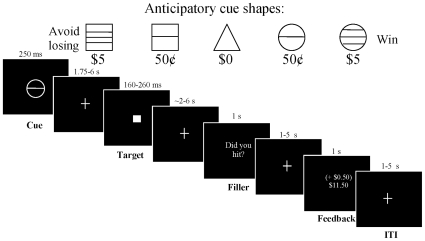
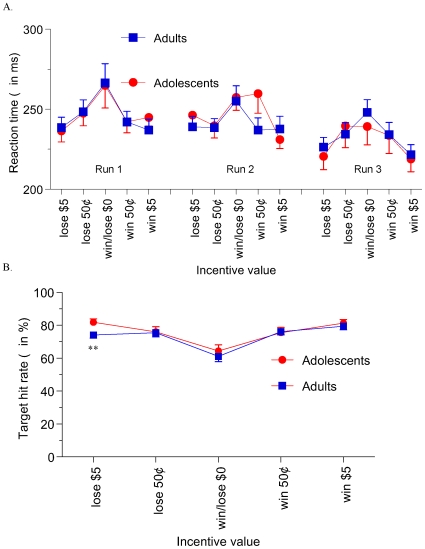
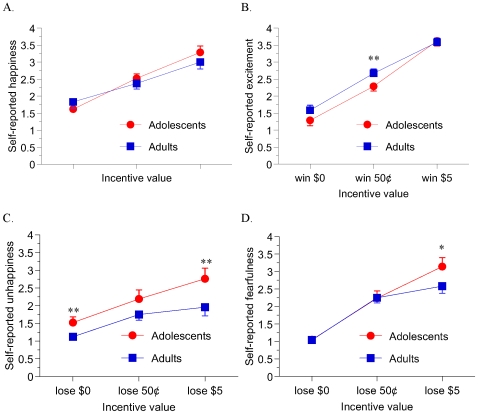
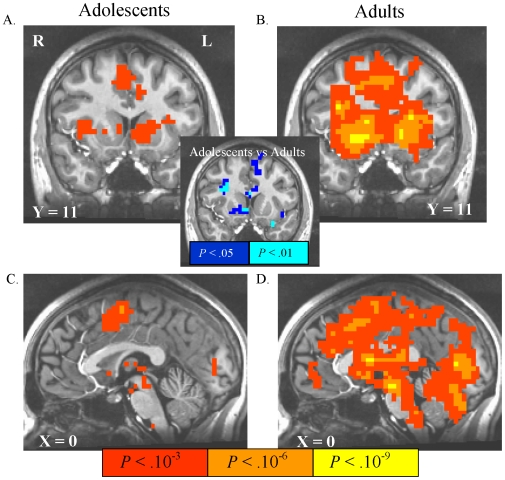
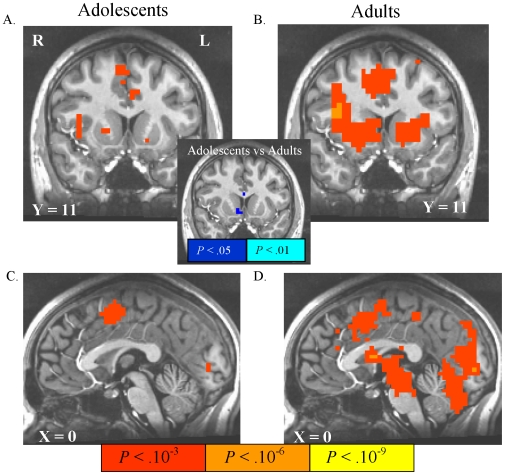
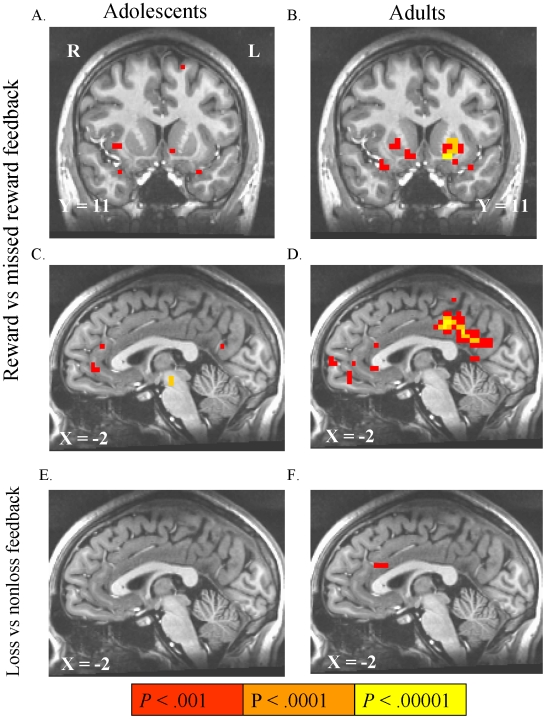
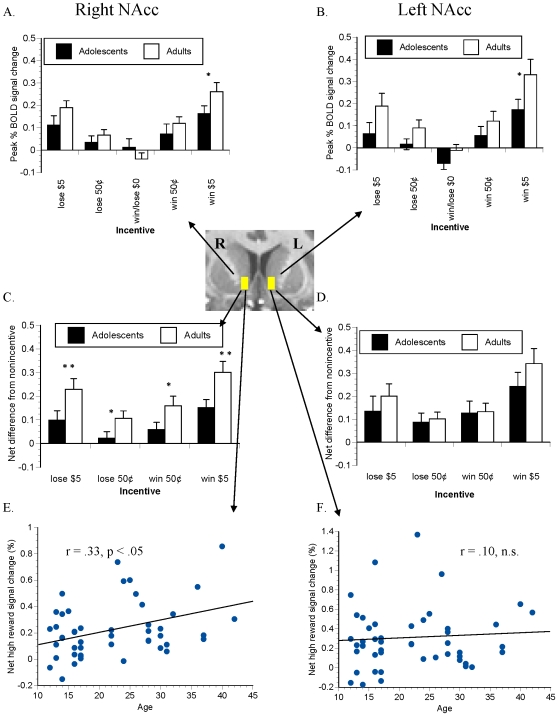
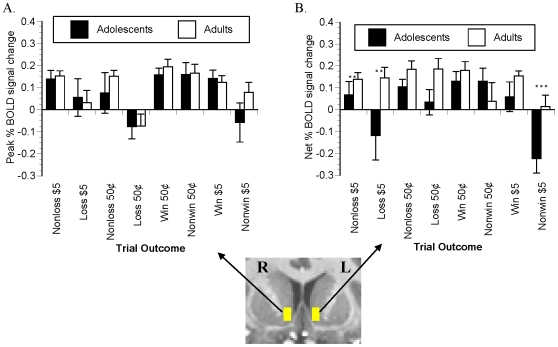
BACKGROUND: Adolescent risk-taking, including behaviors resulting in injury or death, has been attributed in part to maturational differences in mesolimbic incentive-motivational neurocircuitry, including ostensible oversensitivity of the nucleus accumbens (NAcc) to rewards. METHODOLOGY/PRINCIPAL FINDINGS: To test whether adolescents showed increased NAcc activation by cues for rewards, or by delivery of rewards, we scanned 24 adolescents (age 12-17) and 24 adults age (22-42) with functional magnetic resonance imaging while they performed a monetary incentive delay (MID) task. The MID task was configured to temporally disentangle potential reward or potential loss anticipation-related brain signal from reward or loss notification-related signal. Subjects saw cues signaling opportunities to win or avoid losing $0, $.50, or $5 for responding quickly to a subsequent target. Subjects then viewed feedback of their trial success after a variable interval from cue presentation of between 6 to 17 s. Adolescents showed reduced NAcc recruitment by reward-predictive cues compared to adult controls in a linear contrast with non-incentive cues, and in a volume-of-interest analysis of signal change in the NAcc. In contrast, adolescents showed little difference in striatal and frontocortical responsiveness to reward deliveries compared to adults. CONCLUSIONS/SIGNIFICANCE: In light of divergent developmental difference findings between neuroimaging incentive paradigms (as well as at different stages within the same task), these data suggest that maturational differences in incentive-motivational neurocircuitry: 1) may be sensitive to nuances of incentive tasks or stimuli, such as behavioral or learning contingencies, and 2) may be specific to the component of the instrumental behavior (such as anticipation versus notification).
Overview
The claims and statistics of this paper haven’t been checked yet.
Free: it reads the open-access text and checks the first 5 claims that cite a source we can check. Create a free account to check every claim.
Integrity signals
Registry
Cites
Statistics
Figures
Verification
Claims the paper makes
The claims and statistics of this paper haven’t been checked yet.
Free: it reads the open-access text and checks the first 5 claims that cite a source we can check. Create a free account to check every claim.
Claims other papers make about this one
Each is checked against this paper’s own text: does it say what the citing paper says it does?
The source backs part of the claim, not all of it — or backs it for a different population, condition or comparison.
In the citing paper
“The only significant group difference in this second study concerned the nucleus accumbens during test preparation: In response to both gain cues and loss cues, the nucleus accumbens activation was lower in adolescents than in adults.”
From A systematic review of fMRI reward paradigms used in studies of adolescents vs. adults: The impact of task design and implications for understanding neurodevelopment (2013) · cites this paper as Bjork et al., 2010
Experimental — accuracy not yet measuredThe source backs part of the claim, not all of it — or backs it for a different population, condition or comparison.
In the citing paper
“these instrumental-reward studies showed that striatal activation was lower in adolescents during the cue stage in one task (Bjork et al., 2004; Bjork et al., 2010; Geier et al., 2009b), and during the test preparation stage of another task (Bjork et al., 2004; Bjork et al., 2010; Cho et al., 2012).”
From A systematic review of fMRI reward paradigms used in studies of adolescents vs. adults: The impact of task design and implications for understanding neurodevelopment (2013) · cites this paper as Bjork et al., 2010
Experimental — accuracy not yet measuredThe source backs part of the claim, not all of it — or backs it for a different population, condition or comparison.
In the citing paper
“In some studies, adolescents were found to exhibit a relative decrease of VS, OFC and mesial PFC recruitment during reward cue and anticipation”
From Developmental changes in brain function underlying the influence of reward processing on inhibitory control (2011) · cites this paper as Bjork et al., 2010
Experimental — accuracy not yet measuredThe source backs part of the claim, not all of it — or backs it for a different population, condition or comparison.
In the citing paper
“Adolescence represents a key window of vulnerability given that reward processing and social needs undergo maturational changes (207, 208).”
From A transdiagnostic perspective on social anhedonia (2019) · cites this paper as [208]
Experimental — accuracy not yet measuredThe source backs part of the claim, not all of it — or backs it for a different population, condition or comparison.
In the citing paper
“as well as developmental troughs (Bjork et al., 2004, Bjork et al., 2010, Lamm et al., 2014).”
From Effects of incentives, age, and behavior on brain activation during inhibitory control: a longitudinal fMRI study (2015) · cites this paper as Bjork et al., 2010
Experimental — accuracy not yet measured
12 more claims about this paper
Create a free account to see every claim other papers make about this one.
Self-check
Percentages, sums and reported differences re-computed from the paper’s own numbers.
The self-check needs the paper’s full text.
Citations
Cites
AFNI: Software for analysis and visualization of functional magnetic resonance neuroimages
Cox, R. W. (1996) · Computers and Biomedical Research · doi:10.1006/cbmr.1996.0014 · Cited by 10,913 · cited 1×
“Blood Oxygen-Level Dependent (BOLD) signal was analyzed using Analysis of Functional NeuroImages (AFNI) software [45].”
MethodBrain development during childhood and adolescence: a longitudinal MRI study
Giedd, J. N., Blumenthal, J., Jeffries, N. O., Castellanos, F. X., Liu, H., Zijdenbos, A., Paus, T., Evans, A. C., & Rapoport, J. L. (1999) · Nature Neuroscience · doi:10.1038/13158 · Cited by 5,552 · cited 1×
“Developmental neuroimaging findings have detected structural changes in striatum [2] and frontal cortex [3] across adolescence, where frontocortical gray matter morphology maturation continues into the mid 20 s [4], relatively later than other cortex (reviewed in [5]).”
BackgroundThe role of the medial frontal cortex in cognitive control
Ridderinkhof, K. R., Ullsperger, M., Crone, E. A., & Nieuwenhuis, S. (2004) · Science · doi:10.1126/science.1100301 · Cited by 2,974 · cited 1×
“Despite how the direct group-wise activation difference did not survive FDR correction, we retain mention of this difference as a preliminary finding due to the extensive implication of this portion of ACC in error monitoring [32].”
BackgroundCircular analysis in systems neuroscience: the dangers of double dipping
Kriegeskorte, N., Simmons, W. K., Bellgowan, P. S. F., & Baker, C. I. (2009) · Nature Neuroscience · doi:10.1038/nn.2303 · Cited by 2,696 · cited 1×
“To avoid circularity of statistical inference [46,47], the masks were not localized based on observed contrast activation, but rather were anatomically localized a priori.”
MethodAnticipation of Increasing Monetary Reward Selectively Recruits Nucleus Accumbens
Knutson, B., Adams, C. M., Fong, G. W., & Hommer, D. (2001) · The Journal of Neuroscience · doi:10.1523/jneurosci.21-16-j0002.2001 · Cited by 2,244 · cited 5×
“The most widely-adopted probes of human incentivemotivational neurocircuitry are variants of the monetary incentive delay (MID) task (Figure 1), wherein learned cues that signal an imminent opportunity to respond for monetary rewards reliably recruit the VS in proportion to potential reward magnitude [13,14,15,16,17,1…”
BackgroundMethodResultSelf-citationCastellanos, F. X. (2002) · JAMA · doi:10.1001/jama.288.14.1740 · Cited by 1,646 · cited 1×
“Developmental neuroimaging findings have detected structural changes in striatum [2] and frontal cortex [3] across adolescence, where frontocortical gray matter morphology maturation continues into the mid 20 s [4], relatively later than other cortex (reviewed in [5]).”
BackgroundPuzzlingly High Correlations in fMRI Studies of Emotion, Personality, and Social Cognition
Vul, E., Harris, C., Winkielman, P., & Pashler, H. (2009) · Perspectives on Psychological Science · doi:10.1111/j.1745-6924.2009.01125.x · Cited by 1,475
In vivo evidence for post-adolescent brain maturation in frontal and striatal regions
Sowell, E. R., Thompson, P. M., Holmes, C. J., Jernigan, T. L., & Toga, A. W. (1999) · Nature Neuroscience · doi:10.1038/13154 · Cited by 1,439 · cited 1×
“Developmental neuroimaging findings have detected structural changes in striatum [2] and frontal cortex [3] across adolescence, where frontocortical gray matter morphology maturation continues into the mid 20 s [4], relatively later than other cortex (reviewed in [5]).”
BackgroundGalvan, A., Hare, T. A., Parra, C. E., Penn, J., Voss, H., Glover, G., & Casey, B. J. (2006) · Journal of Neuroscience · doi:10.1523/jneurosci.1062-06.2006 · Cited by 1,282 · cited 8×
“In the Galvan study [8], once associations between cues and rewarding outcomes had become learned, adolescents showed greater VS activation by rewarding trials compared to responses of adults or younger children.”
BackgroundResultInfluentialAcute effects of cocaine on human brain activity and emotion
Breiter, H. C., Gollub, R. L., Weisskoff, R. M., Kennedy, D. N., Makris, N., Berke, J. D., Goodman, J. M., Kantor, H. L., Gastfriend, D. R., Riorden, J. P., et al. (1997) · Neuron · doi:10.1016/s0896-6273(00)80374-8 · Cited by 1,270 · cited 1×
“. This was a two-voxel mask comprised of the 3.75 mm cubic voxel that corresponded to activation maxima or VOI placement in previous reports (Talairach±8, 11, 0), along with the adjacent voxel located ventrally at the junction of caudate and putamen”
MethodInfluential
Cited by
Items 101–200 of 268
"Hot" cognition and dual systems: Introduction, criticisms, and ways forward
Gladwin, T. E., & Figner, B. (2014) · UvA-DARE (University of Amsterdam) · Cited by 72
Kruithof, E. S., Klaus, J., & Schutter, D. J. L. G. (2023) · Neuroscience & Biobehavioral Reviews · doi:10.1016/j.neubiorev.2023.105171 · Cited by 61
Heitzeg, M. M., Villafuerte, S. M., Weiland, B. J., Enoch, M., Burmeister, M., Zubieta, J., & Zucker, R. A. (2014) · Neuropsychopharmacology · doi:10.1038/npp.2014.161 · Cited by 62
Association between the oxytocin receptor (OXTR) gene and mesolimbic responses to rewards
Damiano, C. R., Aloi, J., Dunlap, K., Burrus, C. J., Mosner, M. G., Kozink, R. V., McLaurin, R., Mullette-Gillman, O. A., Carter, R., Huettel, S. A., et al. (2014) · Molecular Autism · doi:10.1186/2040-2392-5-7 · Cited by 53
“To index the neural substrates of reward processing, we used a monetary incentive delay (MID) task [51] that reliably recruits reward-processing circuitry across a wide range of clinical and non-clinical populations [52-59].”
MethodThe developmental psychopathology of motivation in adolescence
Fairchild, G. (2011) · Developmental Cognitive Neuroscience · doi:10.1016/j.dcn.2011.07.009 · Cited by 53
Bjork, J. M., Smith, A. R., Chen, G., & Hommer, D. W. (2011) · Developmental Cognitive Neuroscience · doi:10.1016/j.dcn.2011.07.005 · Cited by 52
Self-citationThe Teenage Brain: A Neuroeconomic Approach to Adolescent Decision Making
Van Duijvenvoorde, A. C. K., & Crone, E. A. (2013) · Current Directions in Psychological Science · doi:10.1177/0963721413475446 · Cited by 51
The effect of age on neural processing of pleasant soft touch stimuli
May, A. C., Stewart, J. L., Tapert, S. F., & Paulus, M. P. (2014) · Frontiers in Behavioral Neuroscience · doi:10.3389/fnbeh.2014.00052 · Cited by 51
“Developmental differences have previously been found in this region (Bjork et al., 2010) as well as in ACC (Eshel et al., 2007).”
BackgroundDevelopmental effects of decision-making on sensitivity to reward: An fMRI study
Jarcho, J. M., Benson, B. E., Plate, R. C., Guyer, A. E., Detloff, A. M., Pine, D. S., Leibenluft, E., & Ernst, M. (2012) · Developmental Cognitive Neuroscience · doi:10.1016/j.dcn.2012.04.002 · Cited by 50
“…that do not require decision-making often result in developmental differences in striatal activity during reward anticipation, but not receipt (Bjork et al., 2004, 2010; Geier et al., 2010), whereas tasks with decision-making often find the opposite results (Ernst et al., 2005; Eshel et al.,…”
InfluentialNeural Dynamic Responses of Monetary and Social Reward Processes in Adolescents
Wang, D., Liu, T., & Shi, J. (2020) · Frontiers in Human Neuroscience · doi:10.3389/fnhum.2020.00141 · Cited by 56
Regional White Matter Volumes Correlate with Delay Discounting
Yu, R. (2012) · PLoS ONE · doi:10.1371/journal.pone.0032595 · Cited by 48
“One possibility is that dynamic BOLD responses to immediate rewards at the individual level are highly variable and may highly depend on the experimental contexts [17,20,42,43].”
Adolescents Adapt More Slowly than Adults to Varying Reward Contingencies
Javadi, A. H., Schmidt, D. H. K., & Smolka, M. N. (2014) · Journal of Cognitive Neuroscience · doi:10.1162/jocn_a_00677 · Cited by 48
Neighborhood Deprivation Shapes Motivational-Neurocircuit Recruitment in Children
Mullins, T. S., Campbell, E. M., & Hogeveen, J. (2020) · Psychological Science · doi:10.1177/0956797620929299 · Cited by 42
Neural responses to reward in childhood: relations to early behavioral inhibition and social anxiety
Lahat, A., Benson, B. E., Pine, D. S., Fox, N. A., & Ernst, M. (2016) · Social Cognitive and Affective Neuroscience · doi:10.1093/scan/nsw122 · Cited by 43
Motivational Influences on Performance Monitoring and Cognitive Control Across the Adult Lifespan
Ferdinand, N. K., & Czernochowski, D. (2018) · Frontiers in Psychology · doi:10.3389/fpsyg.2018.01018 · Cited by 55
Basal ganglia lateralization in different types of reward
Arsalidou, M., Vijayarajah, S., & Sharaev, M. (2020) · Brain Imaging and Behavior · doi:10.1007/s11682-019-00215-3 · Cited by 46
Lydon‐Staley, D. M., & Geier, C. F. (2018) · Journal of Research on Adolescence · doi:10.1111/jora.12335 · Cited by 41
Considerations for imaging the adolescent brain
Galván, A., Leijenhorst, L. V., & McGlennen, K. M. (2012) · Developmental Cognitive Neuroscience · doi:10.1016/j.dcn.2012.02.002 · Cited by 51
Reduced cerebellar brain activity during reward processing in adolescent binge drinkers
Cservenka, A., Jones, S. A., & Nagel, B. J. (2015) · Developmental Cognitive Neuroscience · doi:10.1016/j.dcn.2015.06.004 · Cited by 40
Yan, H., Shlobin, N. A., Jung, Y., Zhang, K. K., Warsi, N. M., Kulkarni, A. V., & Ibrahim, G. M. (2022) · Journal of neurosurgery · doi:10.3171/2022.5.jns212548 · Cited by 45
Reward anticipation in the adolescent and aging brain
Lorenz, R. C., Gleich, T., Beck, A., Pöhland, L., Raufelder, D., Sommer, W., Rapp, M. A., Kühn, S., & Gallinat, J. (2014) · Human Brain Mapping · doi:10.1002/hbm.22540 · Cited by 39
Prefrontal mechanisms of comorbidity from a transdiagnostic and ontogenic perspective
MacDonald, A. N., Goines, K., Novacek, D. M., & Walker, E. F. (2016) · Development and Psychopathology · doi:10.1017/s0954579416000742 · Cited by 44
A neuroscience perspective on sexual risk behavior in adolescence and emerging adulthood
Victor, E. C., & Hariri, A. R. (2016) · Development and Psychopathology · doi:10.1017/s0954579415001042 · Cited by 33
Neural Correlates of Rewarded Response Inhibition in Youth at Risk for Problematic Alcohol Use
Tervo-Clemmens, B., Quach, A., Luna, B., Foran, W., Chung, T., De Bellis, M. D., & Clark, D. B. (2017) · Frontiers in Behavioral Neuroscience · doi:10.3389/fnbeh.2017.00205 · Cited by 36
“This result is consistent with previous work (Bjork et al., 2010b) suggesting adults have greater NAcc activation during reward anticipation.”
BackgroundResultInfluentialAdolescent Decision-Making Under Risk: Neural Correlates and Sex Differences
Korucuoglu, O., Harms, M. P., Kennedy, J. T., Golosheykin, S., Astafiev, S. V., Barch, D. M., & Anokhin, A. P. (2020) · Cerebral Cortex · doi:10.1093/cercor/bhz269 · Cited by 33
Kray, J., Schmitt, H., Lorenz, C., & Ferdinand, N. K. (2018) · Frontiers in Psychology · doi:10.3389/fpsyg.2018.00768 · Cited by 39
“In two studies by Bjork et al. (2004, 2010), the effects of magnitude of the monetary incentives was measured by a modified Monetary Incentive Delay (MID) task in which different cues indicated monetary incentives and risks (e.g., win or lose 0, 0.5, 1, or 5$).”
BackgroundMethodResultInfluentialNeurobiology of decision-making in adolescents
Shad, M. U., Bidesi, A. S., Chen, L.-A., Thomas, B. P., Ernst, M., & Rao, U. (2010) · Behavioural Brain Research · doi:10.1016/j.bbr.2010.09.033 · Cited by 37
Pediatric functional magnetic resonance neuroimaging: tactics for encouraging task compliance
Schlund, M. W., Cataldo, M. F., Siegle, G. J., Ladouceur, C. D., Silk, J. S., Forbes, E. E., McFarland, A. M., Iyengar, S., Dahl, R. E., & Ryan, N. D. (2011) · Behavioral and Brain Functions · doi:10.1186/1744-9081-7-10 · Cited by 32
Eye blink rate predicts reward decisions in adolescents
Barkley‐Levenson, E. E., & Galván, A. (2016) · Developmental Science · doi:10.1111/desc.12412 · Cited by 34
A fuzzy trace theory of adolescent risk taking: Beyond self-control and sensation seeking.
Chick, C. F., & Reyna, V. F. (2011) · American Psychological Association eBooks · doi:10.1037/13493-013 · Cited by 41
Emergent Emotions in Adolescence
Coe-Odess, S., Narr, R. K., & Allen, J. P. (2019) · Springer eBooks · doi:10.1007/978-3-030-17332-6_23 · Cited by 40
Neural Systems Underlying Reward and Approach Behaviors in Childhood and Adolescence
Galván, A. (2013) · Current topics in behavioral neurosciences · doi:10.1007/7854_2013_240 · Cited by 41
Cummings, L. R., Mattfeld, A. T., Pettit, J. W., & McMakin, D. L. (2021) · Clinical Psychological Science · doi:10.1177/2167702621989323 · Cited by 35
Parr, A. C., Calabro, F. J., Tervo‐Clemmens, B., Larsen, B., Foran, W., & Luna, B. (2022) · Developmental Cognitive Neuroscience · doi:10.1016/j.dcn.2022.101100 · Cited by 37
Frontal glutamate and reward processing in adolescence and adulthood
Gleich, T., Lorenz, R. C., Pöhland, L., Raufelder, D., Deserno, L., Beck, A., Heinz, A., Kühn, S., & Gallinat, J. (2014) · Brain Structure and Function · doi:10.1007/s00429-014-0844-3 · Cited by 36
“In earlier studies, unchanged as well as increased BOLD activity in the VS has been observed during reward processing in adolescents compared to adults (Bjork et al. 2010; Van Leijenhorst et al. 2010).”
Li, R. (2017) · Developmental Cognitive Neuroscience · doi:10.1016/j.dcn.2017.08.007 · Cited by 32
Yip, S. W., & Potenza, M. N. (2016) · Clinical Psychology Review · doi:10.1016/j.cpr.2016.11.003 · Cited by 32
Neural correlates of reward processing in healthy siblings of patients with schizophrenia
Hanssen, E., van der Velde, J., Gromann, P. M., Shergill, S. S., de Haan, L., Bruggeman, R., Krabbendam, L., Aleman, A., & van Atteveldt, N. (2015) · Frontiers in Human Neuroscience · doi:10.3389/fnhum.2015.00504 · Cited by 33
Age differences in appetitive Pavlovian conditioning and extinction in rats
Meyer, H. C., & Bucci, D. J. (2016) · Physiology & Behavior · doi:10.1016/j.physbeh.2016.10.004 · Cited by 28
Chan, Y., Hsu, W.-C., & Chou, T. (2018) · Scientific Reports · doi:10.1038/s41598-018-33623-4 · Cited by 29
Kahn, L. E., Peake, S. J., Dishion, T. J., Stormshak, E. A., & Pfeifer, J. H. (2015) · Journal of Cognitive Neuroscience · doi:10.1162/jocn_a_00694 · Cited by 29
Nees, F., Witt, S. H., Lourdusamy, A., Vollstädt‐Klein, S., Steiner, S., Poustka, L., Banaschewski, T., Barker, G. J., Büchel, C., Conrod, P., et al. (2013) · Neuropsychopharmacology · doi:10.1038/npp.2013.131 · Cited by 30
“In addition, adolescence is a period that is characterized by increased risky behavior that has been attributed to maturational differences in mesolimibic structures and in consequence to hyperresponsivity to reward anticipation and reward magnitude compared with adults (eg, Bjork et al, 2010).”
BackgroundDimatelis, J. J., Russell, V. A., Stein, D. J., & Daniels, W. M. U. (2012) · Metabolic Brain Disease · doi:10.1007/s11011-012-9288-8 · Cited by 29
Vink, M., de Leeuw, M., Pouwels, R., van den Munkhof, H. E., Kahn, R. S., & Hillegers, M. H. J. (2015) · Schizophrenia Research · doi:10.1016/j.schres.2015.11.018 · Cited by 32
“In contrast to SZ offspring, we observed low levels of striatal activation during reward anticipation in young control adolescents, and this is consistent with most studies of reward processing in healthy adolescents (Bjork et al., 2010; Geier et al., 2010; Hoogendam et al., 2013).”
BackgroundResultDelDonno, S. R., Mickey, B. J., Pruitt, P. J., Stange, J. P., Hsu, D. T., Weldon, A. L., Zubieta, J.-K., & Langenecker, S. A. (2019) · Biological Psychology · doi:10.1016/j.biopsycho.2019.05.009 · Cited by 32
Brain Maturation and Risky Behavior: The Promise and the Challenges of Neuroimaging-Based Accounts
Bjork, J. M., Lynne-Landsman, S. D., Sirocco, K., & Boyce, C. A. (2012) · Child Development Perspectives · doi:10.1111/cdep.12001 · Cited by 25
Self-citationSelf-regulation in the pre-adolescent brain
Pas, P., Pol, H. E. H., Raemaekers, M. A. H., & Vink, M. (2021) · Developmental Cognitive Neuroscience · doi:10.1016/j.dcn.2021.101012 · Cited by 38
Chronaki, G., Soltész, F., Benikos, N., & Sonuga-Barke, E. J. S. (2017) · Developmental Cognitive Neuroscience · doi:10.1016/j.dcn.2017.10.003 · Cited by 27
“This is consistent with earlier work showing larger ventral-striatum and pregenual anterior cingulate cortex (ACC) activation in adolescents with externalising disorders (ADHD and CD) compared to controls in response to notifications of positive (monetary reward) versus negative (failure to win reward) stimuli (Bjork…”
Poon, J. A., Niehaus, C. E., Thompson, J. C., & Chaplin, T. M. (2019) · Hormones and Behavior · doi:10.1016/j.yhbeh.2019.02.015 · Cited by 24
“, 2006), but a few find blunted activation (Bjork et al., 2004; Bjork et al., 2010).”
BackgroundNeural Sensitivity to Absolute and Relative Anticipated Reward in Adolescents
Vaidya, J. G., Knutson, B. D., OʼLeary, D. S., Block, R. I., & Magnotta, V. A. (2013) · PLoS ONE · doi:10.1371/journal.pone.0058708 · Cited by 28
“delay (MID) task, Bjork and colleagues reported reduced activity in the ventral striatum (VS) in adolescents compared to adults during reward anticipation [9,14].”
BackgroundMethodInfluentialAdolescent Transformations of Behavioral and Neural Processes as Potential Targets for Prevention
Eldreth, D. A., Hardin, M. G., Pavletić, N., & Ernst, M. (2013) · Prevention Science · doi:10.1007/s11121-012-0322-1 · Cited by 33
“These studies reported greater striatal recruitment for adults than adolescents during preparation for a reactiontime task associated with incentives (Bjork et al. 2004; Bjork et al. 2010).”
BackgroundResultNeural response to rewards predicts risk-taking in late but not early adolescent females
Freeman, C. R., Dirks, M. A., & Weinberg, A. (2020) · Developmental Cognitive Neuroscience · doi:10.1016/j.dcn.2020.100808 · Cited by 29
“…studies, that adolescents show increased neural sensitivity to reward receipt compared to adults and children and that this increased reward sensitivity peaks in mid adolescence (Braams et al., 2015; Galv � an, 2013; Van Leijenhorst et al., 2010a, b; see however Bjork, 2004; Bjork et al., 2010).”
Age associations with neural processing of reward anticipation in adolescents with bipolar disorders
Urošević, S., Luciana, M. M., Jensen, J. B., Youngstrom, E. A., & Thomas, K. M. (2016) · NeuroImage Clinical · doi:10.1016/j.nicl.2016.03.013 · Cited by 27
Demidenko, M. I., Huntley, E. D., Jahn, A., Thomason, M. E., Monk, C. S., & Keating, D. P. (2020) · Developmental Cognitive Neuroscience · doi:10.1016/j.dcn.2020.100798 · Cited by 22
“To evaluate the neural activation of reward processing, the MID task reward (Knutson, Westdorp, Kaiser, & Hommer, 2000) was used to model the neural signatures of the anticipation of monetary reward (Cao et al., 2019; Bjork et al., 2010).”
Acquisition and baseline performance of working memory tasks by adolescent rhesus monkeys
Verrico, C. D., Liu, S., Asafu-Adjei, J. K., Sampson, A. R., Bradberry, C. W., & Lewis, D. A. (2011) · Brain Research · doi:10.1016/j.brainres.2010.12.081 · Cited by 27
“, 2002), which are temporally correlated with improved inhibitory control and decreased impulsivity (Bjork et al., 2010).”
BackgroundInfluentialMcGonigle, J., Murphy, A., Paterson, L. M., Reed, L. J., Nestor, L. J., Nash, J., Elliott, R., Ersche, K. D., Flechais, R., Newbould, R. D., et al. (2016) · Journal of Psychopharmacology · doi:10.1177/0269881116668592 · Cited by 23
Lydon‐Staley, D. M., & Bassett, D. S. (2018) · Frontiers in Psychology · doi:10.3389/fpsyg.2018.01576 · Cited by 22
“In terms of brain function, age typically accounts for a modest portion of the variance in ventral striatal response to rewards (Bjork et al., 2010) due to vast interindividual differences within age groups (Somerville et al.”
BackgroundSilverman, M. H., Krueger, R. F., Iacono, W. G., Malone, S. M., Hunt, R. H., & Thomas, K. M. (2014) · Biological Psychology · doi:10.1016/j.biopsycho.2014.07.016 · Cited by 21
“For the loss compared to no incentive contrast, these regions included: left cuneus, putamen, caudate, right insula, thalamus, right middle occipital gyrus, right precentral gyrus, right medial frontal gyrus, mesial cerebellum and supplementary motor area (Knutson et al., 2001a; Bjork et al., 2004; Bjork et al., 2010).”
BackgroundResultInfluentialLiu, T., Wang, D., Wang, C., Xiao, T., & Shi, J. (2022) · Developmental Cognitive Neuroscience · doi:10.1016/j.dcn.2022.101118 · Cited by 24
“…2 February 2022; Received in revised form 14 April 2022; Accepted 20 May 2022 Developmental Cognitive Neuroscience 55 (2022) 101118 regarded as nonlinear development (Bjork et al., 2010; Ernst et al., 2005; Ethridge et al., 2017; Kujawa et al., 2018; Lamm et al., 2014; Somerville and Casey, 2010).”
Reward network dysfunction is associated with cognitive impairment after stroke
Wagner, F., Rogenz, J., Opitz, L., Maas, J., Schmidt, A., Brodoehl, S., Ullsperger, M., & Klingner, C. M. (2023) · NeuroImage Clinical · doi:10.1016/j.nicl.2023.103446 · Cited by 22
“Due to the high number of trials (300 complete tasks, in three equal blocks with 100 trials each) the structure of our MID may have led to a monotonous task experience, which can negatively affect subjects' attention (Bjork et al., 2010).”
The Ups and Downs of Relating Nondrug Reward Activation to Substance Use Risk in Adolescents
Bjork, J. M. (2020) · Current Addiction Reports · doi:10.1007/s40429-020-00327-7 · Cited by 23
Self-citationNeural substrates of the influence of emotional cues on cognitive control in risk-taking adolescents
Lee, N. C., Weeda, W. D., Insel, C., Somerville, L. H., Krabbendam, L., & Huizinga, M. (2018) · Developmental Cognitive Neuroscience · doi:10.1016/j.dcn.2018.04.007 · Cited by 20
Characterizing reward system neural trajectories from adolescence to young adulthood
Cao, Z., Ottino‐González, J., Cupertino, R. B., Juliano, A., Chaarani, B., Banaschewski, T., Bokde, A. L. W., Quinlan, E. B., Desrivières, S., Flor, H., et al. (2021) · Developmental Cognitive Neuroscience · doi:10.1016/j.dcn.2021.101042 · Cited by 21
“Some studies have shown lower brain response during reward processing in adolescents relative to adults, supporting the hypothesis that heightened reward-seeking behaviors during adolescence compensate for a hypo-responsive reward system (Bjork et al., 2004; Bjork et al., 2010; Vaidya et al., 2013), while others have…”
BackgroundResultStaffend, N. A., Mohr, M. A., DonCarlos, L. L., & Sisk, C. L. (2014) · Developmental Neurobiology · doi:10.1002/dneu.22160 · Cited by 20
“Functional MRI studies comparing adolescent and adult humans demonstrate age differences in responsiveness to rewarding stimuli throughout the striatal circuitry (Ernst et al., 2005; Knutson et al., 2008; Bjork et al., 2010; Sturman and Moghaddam, 2011b).”
BackgroundNees, F., Vollstädt‐Klein, S., Fauth‐Bühler, M., Steiner, S., Mann, K. F., Poustka, L., Banaschewski, T., Büchel, C., Conrod, P., Garavan, H., et al. (2012) · Experimental Brain Research · doi:10.1007/s00221-012-3272-8 · Cited by 20
“This indicates that the striatal response to small reward is rather stable, task-independent and that specific parameters of an incentive task are critical when trying to make inferences about developmental differences as it was highlighted by previous work (e.g., Bjork et al. 2010).”
InfluentialNeural responses to reward valence and magnitude from pre- to early adolescence
Polack, R. G., Mollick, J., Keren, H., Joormann, J., & Watts, R. (2023) · NeuroImage · doi:10.1016/j.neuroimage.2023.120166 · Cited by 18
“To our knowledge, no study has simultaneously examined the valence and magnitude of the incentive in adolescence across the whole brain using the MID task (vs. focusing on specific regions such as the NAcc; Bjork et al., 2010).”
InfluentialInfluence of neurobehavioral incentive valence and magnitude on alcohol drinking behavior
Joseph, J. E., Zhu, X., Corbly, C. R., DeSantis, S. M., Lee, D. C., Baik, G., Kiser, S., Jiang, Y., Lynam, D. R., & Kelly, T. H. (2014) · NeuroImage · doi:10.1016/j.neuroimage.2014.09.037 · Cited by 14
Differential heart rate responses to social and monetary reinforcement in women with obesity
Kube, J., Schrimpf, A. M., García‐García, I., Villringer, A., Neumann, J., & Horstmann, A. (2016) · Psychophysiology · doi:10.1111/psyp.12624 · Cited by 15
Yaple, Z. A., Yu, R., & Arsalidou, M. (2020) · Human Brain Mapping · doi:10.1002/hbm.25103 · Cited by 16
The Role of Reward System in Dishonest Behavior: A Functional Near-Infrared Spectroscopy Study
Liang, Y., Fu, G., Yu, R., Bi, Y., & Ding, X. P. (2020) · Brain Topography · doi:10.1007/s10548-020-00804-2 · Cited by 16
Executive functioning moderates neural reward processing in youth
Kryza‐Lacombe, M., Christian, I. R., Liuzzi, M. T., Owen, C. E., Hernandez, B. N., Dougherty, L. R., & Wiggins, J. L. (2020) · Cognitive Affective & Behavioral Neuroscience · doi:10.3758/s13415-020-00851-z · Cited by 15
Demidenko, M. I., Weigard, A. S., Ganesan, K., Jang, H., Jahn, A., Huntley, E. D., & Keating, D. P. (2021) · Brain and Behavior · doi:10.1002/brb3.2093 · Cited by 19
“Given the undershoot, if the neural process of interest is specific to the outcome phase, designs that temporally separate the outcome phase should be considered (Bjork et al., 2010; Murray et al., 2020).”
BackgroundMethodResultInfluentialGalván, A., & Tottenham, N. (2016) · Wiley eBooks · doi:10.1002/9781119125556.devpsy218 · Cited by 16
The Brain Basis Underlying the Transition from Adolescence to Adulthood
Luna, B., Ravindranath, O., Larsen, B., & Parr, A. C. (2022) · Cambridge University Press eBooks · doi:10.1017/9781108399838.008 · Cited by 14
Risk and aversion coding in human habenula high gamma activity
Manssuer, L. R., Ding, Q., Zhang, Y., Gong, H., Liu, W., Yang, R., Zhang, C., Zhao, Y., Pan, Y., Zhan, S., et al. (2022) · Brain · doi:10.1093/brain/awac456 · Cited by 12
Newbury‐Birch, D., Scott, S., O'Donnell, A. J., Coulton, S., Howel, D., McColl, E., Stamp, E., Graybill, E., Gilvarry, E. A., Laing, K., et al. (2014) · Public Health Research · doi:10.3310/phr02060 · Cited by 13
“Although these behaviours are well known to be linked,(16) it is not clear if drinking leads to these behavioural problems or if they all arise due to a common linked trait.(17) A significant positive association between alcohol dose and aggression for both genders has been found.”
BackgroundPromoting adolescent health: insights from developmental and communication neuroscience
Pei, R., Kranzler, E. C., Suleiman, A. B., & Falk, E. B. (2018) · Behavioural Public Policy · doi:10.1017/bpp.2018.30 · Cited by 14
“2 Note that some studies have found dampened VS responses (Bjork et al., 2004; Bjork et al., 2010; Lamm et al., 2014) or similar responses to rewards in adolescents compared to adults (Krain et al.”
BackgroundCole, K. M., Wei, S.-M., Martinez, P. E., Nguyen, T., Gregory, M. D., Kippenhan, J. S., Kohn, P. D., Soldin, S. J., Nieman, L. K., Yanovski, J. A., et al. (2021) · NeuroImage · doi:10.1016/j.neuroimage.2021.117970 · Cited by 17
Willinger, D., Karipidis, I. I., Dimanova, P., Walitza, S., & Brem, S. (2021) · NeuroImage · doi:10.1016/j.neuroimage.2021.118186 · Cited by 14
“In contrast, we predicted that increased striatal outcome sensitivity in youth (Bjork et al., 2010; Cohen et al., 2010)”
BackgroundInfluentialWong, S. M. Y., Li, Y. Y., Hui, C. L. M., Wong, C. S. M., Wong, T. Y., Cheung, C., Suen, Y. N., Lam, B. Y., Lui, S. S. Y., Chan, K. T., et al. (2022) · Current Psychology · doi:10.1007/s12144-022-03183-y · Cited by 12
“Previous research has found reduced brain activation during reward anticipation in adolescents below the age of 18 compared to young adults and adult populations (Bjork et al., 2010; Bretzke et al., 2021; Hoogendam et al., 2013), which may contribute to the consistent associations observed between younger age and redu…”
BackgroundEckstrand, K., Lenniger, C. J., & Forbes, E. E. (2022) · Annual Review of Developmental Psychology · doi:10.1146/annurev-devpsych-120920-040820 · Cited by 13
Joseph, J. E., Zhu, X., Lynam, D. R., & Kelly, T. H. (2015) · NeuroImage · doi:10.1016/j.neuroimage.2015.12.005 · Cited by 13
“…or younger children (7 to 11 years) in a MID-like task, several other studies have reported reduced mesolimbic activation in adolescents compared to adults, or no differences ((Bjork et al., 2004b; Bjork et al., 2010b; Cho et al., 2013; Geier et al., 2010; Lamm et al., 2014; Vaidya et al., 2013).”
BackgroundResultInfluentialHormones and Affect in Adolescent Decision Making
Laube, C., & van den Bos, W. (2016) · Advances in motivation and achievement · doi:10.1108/s0749-742320160000019013 · Cited by 16
Rodríguez‐Arias, M., & Asunción, M. (2012) · InTech eBooks · doi:10.5772/47961 · Cited by 13
“Neuroimaging studies have shown variations in human adolescent functional activity in different forebrain regions, including the amygdala, orbitofrontal cortex and striatum (Bjork et al., 2010).”
Background(2014) · doi:10.1037/14322-004 · Cited by 12
Still Wanting to Win: Reward System Stability in Healthy Aging
Opitz, L., Wagner, F., Rogenz, J., Maas, J., Schmidt, A., Brodoehl, S., & Klingner, C. M. (2022) · Frontiers in Aging Neuroscience · doi:10.3389/fnagi.2022.863580 · Cited by 16
“We performed a study contrasting older and younger participant groups in a monetary incentive delay task (MID) using electroencephalography (EEG) (Knutson et al., 2000).”
BackgroundInfluentialDevelopmental changes in the neural influence of sublexical information on semantic processing
Lee, S., Booth, J. R., & Chou, T. (2015) · Neuropsychologia · doi:10.1016/j.neuropsychologia.2015.05.001 · Cited by 12
“…neurodevelopmental studies is consistent with the notion of an agerelated increase in motivational control and reward processing that is associated with changes in the medial orbital frontal cortex (BA 10, 11) and ventral striatum (Bjork et al., 2010; Geier et al., 2010; Leijenhorst et al., 2010).”
BackgroundNeural activation to loss and reward among alcohol naive adolescents who later initiate alcohol use
Gonçalves, S. F., Turpyn, C. C., Niehaus, C. E., Mauro, K. L., Hinagpis, C. L., Thompson, J. C., & Chaplin, T. M. (2021) · Developmental Cognitive Neuroscience · doi:10.1016/j.dcn.2021.100978 · Cited by 10
“These results are consistent with findings from other studies examining main effects of reward > neutral contrasts (e.g., Cao et al., 2019; Oldham et al., 2018; Bjork et al., 2010).”
ResultFryt, J., Smoleń, T., Czernecka, K., Szczygieł, M., & Torre, A. L. (2021) · Current Psychology · doi:10.1007/s12144-021-01769-6 · Cited by 12
“Although the literature does not give a clear answer on whether adolescents respond differently than adults to increasing rewards (Kray et al. 2018), the effect observed for the IVS Task can be compared with the results of Bjork et al. (2010).”
ResultLeMoult, J., Colich, N. L., Sherdell, L., Hamilton, J. P., & Gotlib, I. H. (2015) · Social Cognitive and Affective Neuroscience · doi:10.1093/scan/nsv016 · Cited by 12
“Interestingly, however, researchers have also reported VS activation in anticipation of loss (Bjork et al., 2010; Lamm et al., 2014).”
BackgroundInfluentialWright, L., & Kutcher, S. (2016) · Colloquium Series on The Developing Brain · doi:10.4199/c00133ed1v01y201602dbr012 · Cited by 16
Ferdinand, N. K., Kapsali, E., Woirgardt, M., & Kray, J. (2022) · Cognitive Affective & Behavioral Neuroscience · doi:10.3758/s13415-021-00978-7 · Cited by 10
Appetitive and aversive cue reactivities differentiate neural subtypes of alcohol drinkers
Chen, Y., & Li, C. R. (2023) · Addiction Neuroscience · doi:10.1016/j.addicn.2023.100089 · Cited by 11
“Substantial research has also revealed neural underpinnings of appetitive and aversive emotional states; for instance, studies of the monetary incentive delay task (MIDT) have characterized the neural correlates of win and loss processing [4,19,20].”
BackgroundDemidenko, M. I., Huntley, E. D., Weigard, A. S., Keating, D. P., & Beltz, A. M. (2022) · Journal of Neuroscience Research · doi:10.1002/jnr.25005 · Cited by 11
CID: a valid incentive delay paradigm for children
Kappel, V., Koch, A. S., Lorenz, R. C., Brühl, R., Renneberg, B., Lehmkuhl, U., Salbach‐Andrae, H., & Beck, A. (2013) · Journal of Neural Transmission · doi:10.1007/s00702-012-0962-0 · Cited by 13
O’Neil, S., Coulton, S., Deluca, P., Deverill, M., Drummond, C., Gilvarry, E. A., Graybill, E., Harle, C., Howel, D., Kaner, E., et al. (2012) · Trials · doi:10.1186/1745-6215-13-166 · Cited by 12
“Whilst these behaviours are well known to be linked, it is not clear whether drinking leads to these behavioural problems or whether there are common causal factors [17].”
BackgroundDoes losing money truly hurt? The shared neural bases of monetary loss and pain
Tan, H., Duan, Q., Liu, Y., Qiao, X., & Luo, S. (2022) · Human Brain Mapping · doi:10.1002/hbm.25840 · Cited by 10
Kehinde, F., Oduyeye, O., & Mohammed, R. (2019) · Substance Abuse and Rehabilitation · doi:10.2147/sar.s202996 · Cited by 8
McDonald, M., Kohls, G., Henke, N., Wahl, H., Backhausen, L. L., Roessner, V., & Buse, J. (2024) · BMC Psychiatry · doi:10.1186/s12888-024-05808-x · Cited by 8
Demidenko, M. I., Mumford, J. A., Ram, N., & Poldrack, R. A. (2023) · Developmental Cognitive Neuroscience · doi:10.1016/j.dcn.2023.101337 · Cited by 9
“…is often established by citing work for a particular construct, such as reward (as author MD here has done in [Demidenko et al., 2020]) or motivational processing during the MID task (as in [Bjork et al., 2010]), through reference to studies that use a range of fMRI task designs and contrasts.”
Background
Metadata
- Authors
- Bjork, J. M., Smith, A. R., Chen, G., & Hommer, D. W.
- Affiliations
- National Institutes of Health (US)
- Corresponding author
- Bjork, James M.
- Venue
- PLoS ONE
- Publisher
- Public Library of Science (PLoS)
- Published
- 2010-07-06
- Volume
- 5
- Issue
- 7
- Pages
- e11440
- ISSN
- 1932-6203 (ISSN-L)
- PMC
- PMC2897849
- OpenAlex
- W2158226602
- Cited by
- 271
- References
- 50
- Citations by year
- 2026: 7 · 2025: 6 · 2024: 7 · 2023: 8 · 2022: 18 · 2021: 16 · 2020: 13 · 2019: 8 · 2018: 28 · 2017: 11 · 2016: 21 · 2015: 21 · 2014: 34 · 2013: 29 · 2012: 27
- FWCI
- 14.12
- Type
- journal article
- Language
- en
- Open access
- gold
- doi.org
- Locations
- PLoS ONE (publishedVersion, cc-by)
- PubMed Central (publishedVersion, public-domain)
- PubMed (publishedVersion)
- DOAJ (DOAJ: Directory of Open Access Journals) (submittedVersion, cc-by-sa)
- Figshare (submittedVersion, cc-by)
- Funders
- National Institutes of Health
- National Institute on Alcohol Abuse and Alcoholism
- Topics
- Life Sciences › Neuroscience › Cognitive Neuroscience › Neural and Behavioral Psychology Studies
- Life Sciences › Neuroscience › Cellular and Molecular Neuroscience › Neurotransmitter Receptor Influence on Behavior
- Social Sciences › Psychology › Clinical Psychology › Gambling Behavior and Treatments
- Keywords
- adolescent brain development, nucleus accumbens, reward anticipation, mesolimbic system, monetary incentive delay task, risk-taking, striatum
- MeSH terms
- Adolescent, Adult, Child, Humans, Magnetic Resonance Imaging, Motivation, Neural Pathways, Nucleus Accumbens, Reward, Young Adult
About these checks
Registry, retraction, Cites and statistics results are computed, not judged, with one exception: a printed reference that no index lists is read once by a model before it counts as a citation error. Claims are extracted by a model and kept only when their quote appears verbatim in the text; each cited source is then checked, with a model’s help, for whether it says what the claim relies on. Those verdicts can be wrong — read the claim’s quote and the cited source before relying on one.
Statistics and arithmetic are recomputed, not judged.
Confidence bands are shown only for fields calibrated on our annotated test set. None is calibrated yet, so no band is shown.
What counts as a claim ›How we measure confidence ›How we check this ›
Are you an author, or do you see a problem with this page? Request a review
Data sources
Bibliographic data: Semantic Scholar, OpenAlex, Crossref.
Contains information from the Semantic Scholar Academic Graph Datasets, made available under the ODC Attribution License (ODC-BY 1.0).
Semantic Scholar’s data is described in: Kinney, R., et al. (2023). The Semantic Scholar Open Data Platform. arXiv:2301.10140.
