

The DOI matches its Crossref record; 51 of the 53 references it cites were found in a registry or an index.
Inferring Regulatory Networks from Expression Data Using Tree-Based Methods
Open accessAbstract
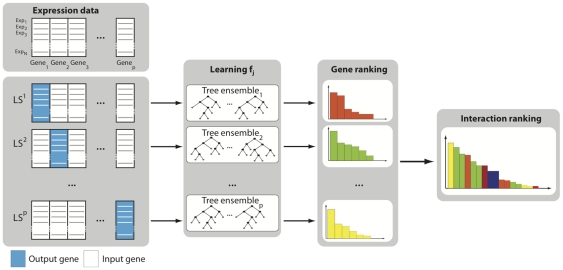
One of the pressing open problems of computational systems biology is the elucidation of the topology of genetic regulatory networks (GRNs) using high throughput genomic data, in particular microarray gene expression data. The Dialogue for Reverse Engineering Assessments and Methods (DREAM) challenge aims to evaluate the success of GRN inference algorithms on benchmarks of simulated data. In this article, we present GENIE3, a new algorithm for the inference of GRNs that was best performer in the DREAM4 In Silico Multifactorial challenge. GENIE3 decomposes the prediction of a regulatory network between p genes into p different regression problems. In each of the regression problems, the expression pattern of one of the genes (target gene) is predicted from the expression patterns of all the other genes (input genes), using tree-based ensemble methods Random Forests or Extra-Trees. The importance of an input gene in the prediction of the target gene expression pattern is taken as an indication of a putative regulatory link. Putative regulatory links are then aggregated over all genes to provide a ranking of interactions from which the whole network is reconstructed. In addition to performing well on the DREAM4 In Silico Multifactorial challenge simulated data, we show that GENIE3 compares favorably with existing algorithms to decipher the genetic regulatory network of Escherichia coli. It doesn't make any assumption about the nature of gene regulation, can deal with combinatorial and non-linear interactions, produces directed GRNs, and is fast and scalable. In conclusion, we propose a new algorithm for GRN inference that performs well on both synthetic and real gene expression data. The algorithm, based on feature selection with tree-based ensemble methods, is simple and generic, making it adaptable to other types of genomic data and interactions.
Overview
The claims and statistics of this paper haven’t been checked yet.
Free: it reads the open-access text and checks the first 5 claims that cite a source we can check. Create a free account to check every claim.
Integrity signals
Registry
Cites
Statistics
Figures
Verification
Claims the paper makes
The claims and statistics of this paper haven’t been checked yet.
Free: it reads the open-access text and checks the first 5 claims that cite a source we can check. Create a free account to check every claim.
Claims other papers make about this one
Each is checked against this paper’s own text: does it say what the citing paper says it does?
The source backs part of the claim, not all of it — or backs it for a different population, condition or comparison.
In the citing paper
“A limitation of GENIE3 is that TF information is required for it to perform better than random chance [113].”
From Gene co-expression analysis for functional classification and gene–disease predictions (2017) · cites this paper as [113]
Experimental — accuracy not yet measuredThe cited source says what the claim attributes to it.
In the citing paper
“Because of this second constraint, we cannot use pre-existing GRN inference algorithms, such as GENIE3 and GRNboost (refs. 7,51).”
From Dissecting cell identity via network inference and in silico gene perturbation (2023) · cites this paper as [51]
The cited source says what the claim attributes to it.
In the citing paper
“A major family of methods in this category is based on co-expression analysis (reviewed in [32]), and has been broadly used on bulk gene expression data (e.g. GENIE3 [33] and WGCNA [34], see [27, 35] for benchmark comparisons).”
From Mapping gene regulatory networks from single-cell omics data (2018) · cites this paper as [33]
The cited source says what the claim attributes to it.
In the citing paper
“GENIE3 incorporates TF information to construct a regulatory network by determining the TF expression pattern that best explains the expression of each of their target genes.”
From Gene co-expression analysis for functional classification and gene–disease predictions (2017) · cites this paper as [113]
Self-check
Percentages, sums and reported differences re-computed from the paper’s own numbers.
The self-check needs the paper’s full text.
Citations
Cites
Breiman, L. (2001) · Machine Learning · doi:10.1023/a:1010933404324 · Cited by 133,538
Classification and Regression Trees.
Gordon, A. D., Breiman, L., Friedman, J. H., Olshen, R. A., & Stone, C. J. (1984) · Biometrics · doi:10.2307/2530946 · Cited by 23,522
Classification and Regression Trees.
Ryzin, J. V., Breiman, L., Friedman, J. H., Olshen, R. A., & Stone, C. J. (1986) · Journal of the American Statistical Association · doi:10.2307/2288003 · Cited by 20,825
Breiman, L. (1996) · Machine Learning · doi:10.1007/bf00058655 · Cited by 16,325
Cluster analysis and display of genome-wide expression patterns
Eisen, M. B., Spellman, P. T., Brown, P. O., & Botstein, D. (1998) · Proceedings of the National Academy of Sciences · doi:10.1073/pnas.95.25.14863 · Cited by 16,184 · cited 1×
“Models based on the statistical analysis of dependencies between expression patterns have an intermediate complexity, and have already been successfully applied to the inference of large GRNs. Early models used correlation coefficients between expression patterns of all pairs of genes to infer “coexpression networks””
MethodClassification And Regression Trees
Breiman, L., Friedman, J. H., Olshen, R. A., & Stone, C. J. (2017) · doi:10.1201/9781315139470 · Cited by 11,417
Geurts, P., Ernst, D., & Wehenkel, L. (2006) · Machine Learning · doi:10.1007/s10994-006-6226-1 · Cited by 9,300 · cited 2×
“Empirical validations in [32] have shown that these two values of K were near-optimal in terms of predictive accuracy on several problems.”
BackgroundMethodSelf-citationThe Origins of Order: Self-Organization and Selection in Evolution
Kauffman, S. A. (1993) · doi:10.1093/oso/9780195079517.001.0001 · Cited by 7,855
The origins of order; self organization and selection in evolution
(1994) · International Journal of Biochemistry · doi:10.1016/0020-711x(94)90119-8 · Cited by 6,649
A review of feature selection techniques in bioinformatics
Saeys, Y., Inza, I., & Larrañaga, P. (2007) · Bioinformatics · doi:10.1093/bioinformatics/btm344 · Cited by 5,244
Bias in random forest variable importance measures: Illustrations, sources and a solution
Strobl, C., Boulesteix, A.-L., Zeileis, A., & Hothorn, T. (2007) · BMC Bioinformatics · doi:10.1186/1471-2105-8-25 · Cited by 3,688
Using Bayesian Networks to Analyze Expression Data
Friedman, N., Linial, M., Nachman, I., & Pe'er, D. (2000) · Journal of Computational Biology · doi:10.1089/106652700750050961 · Cited by 3,266 · cited 1×
“Among these methods, Bayesian networks have been used since the advent of microarray technologies for GRN modeling and inference [16].”
MethodHigh dimensional graphs and variable selection with the Lasso
Meinshausen, N., & Bühlmann, P. (2006) · Cited by 2,539
High-dimensional graphs and variable selection with the Lasso
Meinshausen, N., & Bühlmann, P. (2006) · The Annals of Statistics · doi:10.1214/009053606000000281 · Cited by 2,521 · cited 1×
“Meinshausen and Bu¨hlmann [21] show that finding the zero entries in the inverse covariance matrix of a multivariate Gaussian distribution can be solved by applying the LASSO embedded feature selection mechanism using each gene in turn as the target output, which links Gaussian graphical models…”
MethodFaith, J. J., Hayete, B., Thaden, J. T., Mogno, I., Wierzbowski, J., Cottarel, G., Kasif, S., Collins, J. J., & Gardner, T. S. (2007) · PLoS Biology · doi:10.1371/journal.pbio.0050008 · Cited by 1,563
Schäfer, J., & Strimmer, K. (2005) · Statistical Applications in Genetics and Molecular Biology · doi:10.2202/1544-6115.1175 · Cited by 1,561
Inferring Cellular Networks Using Probabilistic Graphical Models
Friedman, N. (2004) · Science · doi:10.1126/science.1094068 · Cited by 1,202 · cited 1×
“Probabilistic graphical models have been widely used to model GRNs [15].”
MethodInferring Genetic Networks and Identifying Compound Mode of Action via Expression Profiling
Gardner, T. S., di Bernardo, D., Lorenz, D., & Collins, J. J. (2003) · Science · doi:10.1126/science.1081900 · Cited by 1,117 · cited 1×
“These models, typically based on systems of ordinary or stochastic differential equations, can generate realistic behavior [7].”
BackgroundBUTTE, A. J., & KOHANE, I. S. (1999) · Biocomputing 2000 · doi:10.1142/9789814447331_0040 · Cited by 945 · cited 2×
“The simplest model based on this measure, the ‘‘relevance network’’, computes MI between all pairs of genes and infers the presence of a regulatory interaction when MI is larger than a given threshold [10].”
BackgroundMethodBishop, C. M. (2004) · Handbook of Neural Computation · doi:10.1887/0750303123/b365c43 · Cited by 833
How to infer gene networks from expression profiles
Bansal, M., Belcastro, V., Ambesi‐Impiombato, A., & di Bernardo, D. (2007) · Molecular Systems Biology · doi:10.1038/msb4100120 · Cited by 766 · cited 1×
“They are however also less informative for the prediction of edge directionality [3,26,27] and therefore make the regulatory network inference task more challenging.”
BackgroundRevealing strengths and weaknesses of methods for gene network inference
Marbach, D., Prill, R. J., Schaffter, T., Mattiussi, C., Floreano, D., & Stolovitzky, G. (2010) · Proceedings of the National Academy of Sciences · doi:10.1073/pnas.0913357107 · Cited by 752 · cited 1×
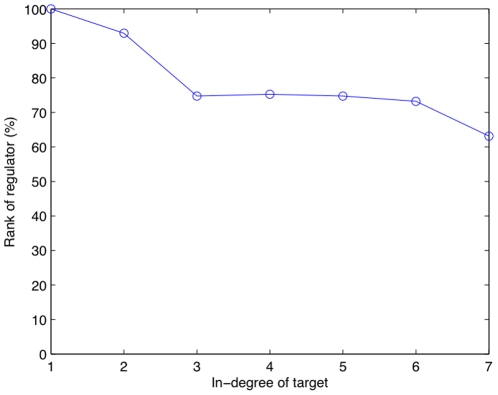
“This suggests that the performance of GENIE3 at retrieving a regulator of one gene degrades as the number of regulators of this gene increases, as also observed from the analysis of the results of the DREAM3 challenge in [42].”
ResultYu, J., Smith, V. A., Wang, P. P., Hartemink, A. J., & Jarvis, E. D. (2004) · Bioinformatics · doi:10.1093/bioinformatics/bth448 · Cited by 675 · cited 2×
“While this limitation is partially circumvented by dynamic Bayesian networks [17,19], these models can only be learned from time-series expression data.”
BackgroundBonneau, R., Reiss, D. J., Shannon, P., Facciotti, M., Hood, L., Baliga, N. S., & Thorsson, V. (2006) · Genome Biology · doi:10.1186/gb-2006-7-5-r36 · Cited by 510 · cited 1×
“Nevertheless, hybrid methods involving ordinary differential equations have shown good performances on real-life genome-wide GRN inference [8].”
BackgroundMeyer, P. E., Lafitte, F., & Bontempi, G. (2008) · BMC Bioinformatics · doi:10.1186/1471-2105-9-461 · Cited by 510 · cited 1×
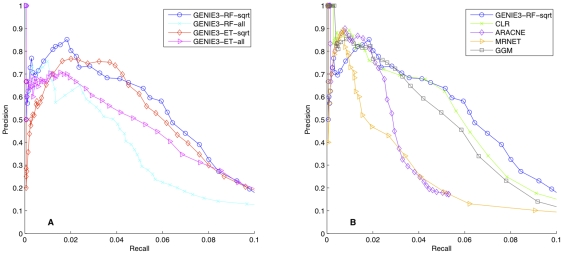
“For these experiments, we used the original MatLab implementation of CLR [43] and the implementations of ARACNE and MRNET in the minet R package [44].”
MethodGama-Castro, S., Jimenez-Jacinto, V., Peralta-Gil, M., Santos-Zavaleta, A., Penaloza-Spinola, M. I., Contreras-Moreira, B., Segura-Salazar, J., Muniz-Rascado, L., Martinez-Flores, I., Salgado, H., et al. (2007) · Nucleic Acids Research · doi:10.1093/nar/gkm994 · Cited by 491 · cited 1×
“To validate the network predictions we used 3433 experimentally confirmed regulatory interactions among 1471 genes that have been curated in RegulonDB version 6.4 [40].”
MethodInfluentialTowards a rigorous assessment of systems biology models: the DREAM3 challenges
Prill, R. J., Marbach, D., Saez-Rodriguez, J., Sorger, P. K., Alexopoulos, L. G., Xue, X., Clarke, N. D., Altan-Bonnet, G., & Stolovitzky, G. (2010) · PLoS ONE · doi:10.1371/journal.pone.0009202 · Cited by 439 · cited 1×
“DREAM4 Datasets The DREAM (for ‘‘Dialogue for Reverse Engineering Assessments and Methods’’) initiative organizes an annual reverse engineering competition called the DREAM challenge [34–37].”
BackgroundMarbach, D., Schaffter, T., Mattiussi, C., & Floreano, D. (2009) · Journal of Computational Biology · doi:10.1089/cmb.2008.09tt · Cited by 430 · cited 1×
“All networks and data were generated with GeneNetWeaver (GNW) version 2.0 [38].”
MethodInfluentialGene networks inference using dynamic Bayesian networks
Perrin, B.-E., Ralaivola, L., Mazurie, A., Bottani, S., Mallet, J., & d’Alché–Buc, F. (2003) · Bioinformatics · doi:10.1093/bioinformatics/btg1071 · Cited by 425
Inferring cellular networks – a review
Markowetz, F., & Spang, R. (2007) · BMC Bioinformatics · doi:10.1186/1471-2105-8-s6-s5 · Cited by 391 · cited 1×
“These advances have prompted the development of a plethora of models of GRNs and algorithms to reverse-engineer them from expression data [2–5].”
BackgroundOpgen-Rhein, R., & Strimmer, K. (2007) · BMC Systems Biology · doi:10.1186/1752-0509-1-37 · Cited by 381
Reverse engineering cellular networks
Margolin, A. A., Wang, K., Lim, W. K., Kustagi, M., Nemenman, I., & Califano, A. (2006) · Nature Protocols · doi:10.1038/nprot.2006.106 · Cited by 379 · cited 3×
“For ARACNE, the tolerance parameter was optimized between 0 and 15%, as advised in [12].”
MethodSTOLOVITZKY, G., MONROE, D., & CALIFANO, A. (2007) · Annals of the New York Academy of Sciences · doi:10.1196/annals.1407.021 · Cited by 377 · cited 1×
“The DREAM (for ‘‘Dialogue for Reverse Engineering Assessments and Methods’’) initiative organizes an annual reverse engineering competition called the DREAM challenge [34–37].”
BackgroundWerhli, A. V., Grzegorczyk, M., & Husmeier, D. (2006) · Bioinformatics · doi:10.1093/bioinformatics/btl391 · Cited by 335
Information-Theoretic Inference of Large Transcriptional Regulatory Networks
Meyer, P. E., Kontos, K., Lafitte, F., & Bontempi, G. (2007) · EURASIP Journal on Bioinformatics and Systems Biology · doi:10.1155/2007/79879 · Cited by 273 · cited 3×
“Finally, MRNET [14] uses an iterative feature selection method based on a maximum relevance/ minimum redundancy criterion.”
MethodFaith, J. J., Driscoll, M. E., Fusaro, V. A., Cosgrove, E. J., Hayete, B., Juhn, F. S., Schneider, S. J., & Gardner, T. S. (2007) · Nucleic Acids Research · doi:10.1093/nar/gkm815 · Cited by 259 · cited 1×
“The dataset of expression profiles we used was retrieved from the Many Microbe Microarrays ( M 3D ) database [39] (version 4 build 6).”
MethodSupervised learning with decision tree-based methods in computational and systems biology
Geurts, P., Irrthum, A., & Wehenkel, L. (2009) · Molecular BioSystems · doi:10.1039/b907946g · Cited by 245 · cited 1×
“They work well in the presence of a large number of features, are fast to compute, scalable, and essentially parameter-free (see [29] for a review).”
BackgroundSelf-citationReverse-engineering transcription control networks
GARDNER, T., & FAITH, J. (2005) · Physics of Life Reviews · doi:10.1016/j.plrev.2005.01.001 · Cited by 234 · cited 1×
“These advances have prompted the development of a plethora of models of GRNs and algorithms to reverse-engineer them from expression data [2–5].”
BackgroundComputational methods for discovering gene networks from expression data
Lee, W.-P., & Tzou, W.-S. (2009) · Briefings in Bioinformatics · doi:10.1093/bib/bbp028 · Cited by 223 · cited 1×
“These advances have prompted the development of a plethora of models of GRNs and algorithms to reverse-engineer them from expression data [2–5].”
BackgroundLessons from the DREAM2 Challenges: A Community Effort to Assess Biological Network Inference
Stolovitzky, G., Prill, R. J., & Califano, A. (2009) · Annals of the New York Academy of Sciences · doi:10.1111/j.1749-6632.2009.04497.x · Cited by 196 · cited 1×
“DREAM4 Datasets The DREAM (for ‘‘Dialogue for Reverse Engineering Assessments and Methods’’) initiative organizes an annual reverse engineering competition called the DREAM challenge [34–37].”
BackgroundLearning Module NetworksPreprint
Segal, E., Pe’er, D., Regev, A., Koller, D., & Friedman, N. (2012) · arXiv (Cornell University) · doi:10.48550/arxiv.1212.2517 · Cited by 130 · cited 1×
“The closest work to ours is the procedure developed by Segal et al. [50], that recovers module networks from expression data, so that the genes in each module share the same regulators in the network and the same conditional probability distribution, represented by a (single) regression tree.”
MethodInferring sparse Gaussian graphical models with latent structure
Ambroise, C., Chiquet, J., & Matias, C. (2009) · Electronic Journal of Statistics · doi:10.1214/08-ejs314 · Cited by 85 · cited 1×
“The estimation of this graph for high-dimensional data is difficult but several robust solutions have been proposed in the literature [20–23].”
BackgroundReconstruction of gene networks using Bayesian learning and manipulation experiments
Pournara, I., & Wernisch, L. (2004) · Bioinformatics · doi:10.1093/bioinformatics/bth337 · Cited by 80 · cited 1×
“They are however also less informative for the prediction of edge directionality [3,26,27] and therefore make the regulatory network inference task more challenging.”
BackgroundPal, N. R., Aguan, K., Sharma, A., & Amari, S. (2007) · BMC Bioinformatics · doi:10.1186/1471-2105-8-5 · Cited by 78
Computational Modeling of Gene Regulatory Networks — A Primer
Bolouri, H. (2008) · IMPERIAL COLLEGE PRESS eBooks · doi:10.1142/p567 · Cited by 70
Reverse Engineering Molecular Regulatory Networks from Microarray Data with qp-Graphs
Castelo, R., & Roverato, A. (2009) · Journal of Computational Biology · doi:10.1089/cmb.2008.08tt · Cited by 66 · cited 1×
“The estimation of this graph for high-dimensional data is difficult but several robust solutions have been proposed in the literature [20–23].”
BackgroundIdentification of Yeast Transcriptional Regulation Networks Using Multivariate Random Forests
Xiao, Y., & Segal, M. R. (2009) · PLoS Computational Biology · doi:10.1371/journal.pcbi.1000414 · Cited by 47 · cited 1×
“Most of these procedures exploits other kinds of data in addition to expression data, e.g. counts of regulatory motifs that serve as binding sites for transcription factors [47,48], or ChIP-based binding data [49].”
BackgroundAuliac, C., Frouin, V., Gidrol, X., & d’Alché–Buc, F. (2008) · BMC Bioinformatics · doi:10.1186/1471-2105-9-91 · Cited by 42 · cited 1×
“Learning the structure of a Bayesian network is a non trivial problem, both from a theoretical and computational point of view, and several sophisticated heuristics have been proposed in the context of GRN inference [17,18].”
BackgroundRegression trees for regulatory element identification
Phuong, T. M., Lee, D., & Lee, K. H. (2004) · Bioinformatics · doi:10.1093/bioinformatics/btg480 · Cited by 37 · cited 1×
“counts of regulatory motifs that serve as binding sites for transcription factors [47,48], or ChIP-based binding data [49].”
BackgroundA bi-dimensional regression tree approach to the modeling of gene expression regulation
Ruan, J., & Zhang, W. (2005) · Bioinformatics · doi:10.1093/bioinformatics/bti792 · Cited by 25
Exploiting tree-based variable importances to selectively identify relevant variables
Huynh‐Thu, V. A., Wehenkel, L. A., & Geurts, P. (2008) · ORBi (University of Liège) · Cited by 17
Self-citation
Research works printed but not linked: 2
- TM Cover, 2006, Elements of Information Theory 2nd Edition
- J Schäfer, 2006, Reverse engineering genetic networks using the GeneNet package., R News 6/, 5, 50
Cited by
Scenic: single-cell regulatory network inference and clustering.
Aibar, S., González-Blas, C. B., Moerman, T., Huynh-Thu, V. A., Imrichova, H., Hulselmans, G., Rambow, F., Marine, J.-C., Geurts, P., Aerts, J., et al. (2017) · Nature Methods · doi:10.1038/nmeth.4463 · Cited by 6,520
Self-citationWisdom of crowds for robust gene network inference
The DREAM5 Consortium, Marbach, D., Costello, J. C., Küffner, R., Vega, N. M., Prill, R. J., Camacho, D. M., Allison, K. R., Kellis, M., Collins, J. J., et al. (2012) · Nature Methods · doi:10.1038/nmeth.2016 · Cited by 1,667
PanglaoDB: a web server for exploration of mouse and human single-cell RNA sequencing data
Franzén, O., Gan, L.-M., & Björkegren, J. L. M. (2019) · Database · doi:10.1093/database/baz046 · Cited by 1,551
Microbial co-occurrence relationships in the human microbiome
Faust, K., Sathirapongsasuti, J. F., Izard, J., Segata, N., Gevers, D., Raes, J., & Huttenhower, C. (2012) · PLoS Computational Biology · doi:10.1371/journal.pcbi.1002606 · Cited by 1,527
“GBLMs were the most distinct method included in this ensemble and share some similarities with recently proposed genetic regulatory network (GRN) reconstruction techniques [66].”
MethodA scalable SCENIC workflow for single-cell gene regulatory network analysis
Van de Sande, B., Flerin, C., Davie, K., De Waegeneer, M., Hulselmans, G., Aibar, S., Seurinck, R., Saelens, W., Cannoodt, R., Rouchon, Q., et al. (2020) · Nature Protocols · doi:10.1038/s41596-020-0336-2 · Cited by 1,494
Metadata
- Authors
- Huynh-Thu, V. A., Irrthum, A., Wehenkel, L., & Geurts, P.
- Affiliations
- University of Liège (BE)
- Venue
- PLoS ONE
- Publisher
- Public Library of Science (PLoS)
- Published
- 2010-09-28
- Volume
- 5
- Issue
- 9
- Pages
- e12776
- ISSN
- 1932-6203 (ISSN-L)
- PMC
- PMC2946910
- OpenAlex
- W2076513103
- Cited by
- 2,131
- References
- 53
- Citations by year
- 2026: 237 · 2025: 273 · 2024: 274 · 2023: 241 · 2022: 225 · 2021: 194 · 2020: 146 · 2019: 120 · 2018: 95 · 2017: 79 · 2016: 59 · 2015: 63 · 2014: 53 · 2013: 36 · 2012: 25
- FWCI
- 9.24
- Type
- journal article
- Language
- en
- Open access
- gold
- doi.org
- Locations
- PLoS ONE (publishedVersion, cc-by)
- PubMed Central (publishedVersion, cc-by)
- PubMed (publishedVersion)
- RePEc: Research Papers in Economics (submittedVersion)
- DOAJ (DOAJ: Directory of Open Access Journals) (submittedVersion, cc-by-sa)
- Figshare (submittedVersion, cc-by)
- Open Repository and Bibliography (University of Liège) (submittedVersion)
- ORBi (University of Liège) (submittedVersion, other-oa)
- ORBi (University of Liège) (submittedVersion)
- Funders
- Fonds De La Recherche Scientifique - FNRS
- Fédération Wallonie-Bruxelles
- Topics
- Life Sciences › Biochemistry, Genetics and Molecular Biology › Molecular Biology › Gene Regulatory Network Analysis
- Life Sciences › Biochemistry, Genetics and Molecular Biology › Molecular Biology › Bioinformatics and Genomic Networks
- Life Sciences › Biochemistry, Genetics and Molecular Biology › Molecular Biology › Microbial Metabolic Engineering and Bioproduction
- Keywords
- GENIE3, random forest, extra trees, microarray gene expression, Escherichia coli, feature selection, network topology
- MeSH terms
- Algorithms, Escherichia coli, Gene Expression Regulation, Computational Biology, Oligonucleotide Array Sequence Analysis, Gene Regulatory Networks
About these checks
Registry, retraction, Cites and statistics results are computed, not judged, with one exception: a printed reference that no index lists is read once by a model before it counts as a citation error. Claims are extracted by a model and kept only when their quote appears verbatim in the text; each cited source is then checked, with a model’s help, for whether it says what the claim relies on. Those verdicts can be wrong — read the claim’s quote and the cited source before relying on one.
Statistics and arithmetic are recomputed, not judged.
Confidence bands are shown only for fields calibrated on our annotated test set. None is calibrated yet, so no band is shown.
What counts as a claim ›How we measure confidence ›How we check this ›
Are you an author, or do you see a problem with this page? Request a review
Data sources
Bibliographic data: Semantic Scholar, OpenAlex, Crossref.
Contains information from the Semantic Scholar Academic Graph Datasets, made available under the ODC Attribution License (ODC-BY 1.0).
Semantic Scholar’s data is described in: Kinney, R., et al. (2023). The Semantic Scholar Open Data Platform. arXiv:2301.10140.
