

Inferring Regulatory Networks from Expression Data Using Tree-Based Methods
Open accessThe DOI matches its Crossref record; 51 of the 53 references it cites were found in a registry or an index.
Abstract
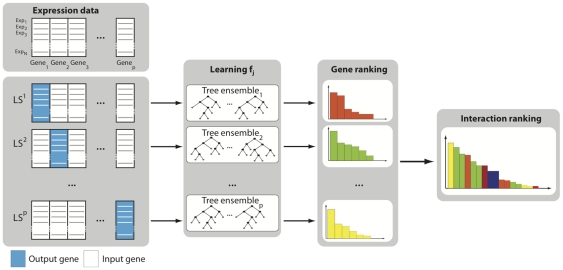
One of the pressing open problems of computational systems biology is the elucidation of the topology of genetic regulatory networks (GRNs) using high throughput genomic data, in particular microarray gene expression data. The Dialogue for Reverse Engineering Assessments and Methods (DREAM) challenge aims to evaluate the success of GRN inference algorithms on benchmarks of simulated data. In this article, we present GENIE3, a new algorithm for the inference of GRNs that was best performer in the DREAM4 In Silico Multifactorial challenge. GENIE3 decomposes the prediction of a regulatory network between p genes into p different regression problems. In each of the regression problems, the expression pattern of one of the genes (target gene) is predicted from the expression patterns of all the other genes (input genes), using tree-based ensemble methods Random Forests or Extra-Trees. The importance of an input gene in the prediction of the target gene expression pattern is taken as an indication of a putative regulatory link. Putative regulatory links are then aggregated over all genes to provide a ranking of interactions from which the whole network is reconstructed. In addition to performing well on the DREAM4 In Silico Multifactorial challenge simulated data, we show that GENIE3 compares favorably with existing algorithms to decipher the genetic regulatory network of Escherichia coli. It doesn't make any assumption about the nature of gene regulation, can deal with combinatorial and non-linear interactions, produces directed GRNs, and is fast and scalable. In conclusion, we propose a new algorithm for GRN inference that performs well on both synthetic and real gene expression data. The algorithm, based on feature selection with tree-based ensemble methods, is simple and generic, making it adaptable to other types of genomic data and interactions.
Overview
The claims and statistics of this paper haven’t been checked yet.
Free: it reads the open-access text and checks the first 5 claims that cite a source we can check. Create a free account to check every claim.
Integrity signals
Registry
Cites
Statistics
Figures
Verification
Claims the paper makes
The claims and statistics of this paper haven’t been checked yet.
Free: it reads the open-access text and checks the first 5 claims that cite a source we can check. Create a free account to check every claim.
Claims other papers make about this one
Each is checked against this paper’s own text: does it say what the citing paper says it does?
The source backs part of the claim, not all of it — or backs it for a different population, condition or comparison.
In the citing paper
“A limitation of GENIE3 is that TF information is required for it to perform better than random chance [113].”
From Gene co-expression analysis for functional classification and gene–disease predictions (2017) · cites this paper as [113]
Experimental — accuracy not yet measuredThe cited source says what the claim attributes to it.
In the citing paper
“Because of this second constraint, we cannot use pre-existing GRN inference algorithms, such as GENIE3 and GRNboost (refs. 7,51).”
From Dissecting cell identity via network inference and in silico gene perturbation (2023) · cites this paper as [51]
The cited source says what the claim attributes to it.
In the citing paper
“A major family of methods in this category is based on co-expression analysis (reviewed in [32]), and has been broadly used on bulk gene expression data (e.g. GENIE3 [33] and WGCNA [34], see [27, 35] for benchmark comparisons).”
From Mapping gene regulatory networks from single-cell omics data (2018) · cites this paper as [33]
The cited source says what the claim attributes to it.
In the citing paper
“GENIE3 incorporates TF information to construct a regulatory network by determining the TF expression pattern that best explains the expression of each of their target genes.”
From Gene co-expression analysis for functional classification and gene–disease predictions (2017) · cites this paper as [113]
Self-check
Percentages, sums and reported differences re-computed from the paper’s own numbers.
The self-check needs the paper’s full text.
Citations
Cites
Breiman, L. (2001) · Machine Learning · doi:10.1023/a:1010933404324 · Cited by 133,538
Classification and Regression Trees.
Gordon, A. D., Breiman, L., Friedman, J. H., Olshen, R. A., & Stone, C. J. (1984) · Biometrics · doi:10.2307/2530946 · Cited by 23,522
Classification and Regression Trees.
Ryzin, J. V., Breiman, L., Friedman, J. H., Olshen, R. A., & Stone, C. J. (1986) · Journal of the American Statistical Association · doi:10.2307/2288003 · Cited by 20,825
Breiman, L. (1996) · Machine Learning · doi:10.1007/bf00058655 · Cited by 16,325
Cluster analysis and display of genome-wide expression patterns
Eisen, M. B., Spellman, P. T., Brown, P. O., & Botstein, D. (1998) · Proceedings of the National Academy of Sciences · doi:10.1073/pnas.95.25.14863 · Cited by 16,184 · cited 1×
“Models based on the statistical analysis of dependencies between expression patterns have an intermediate complexity, and have already been successfully applied to the inference of large GRNs. Early models used correlation coefficients between expression patterns of all pairs of genes to infer “coexpression networks””
MethodClassification And Regression Trees
Breiman, L., Friedman, J. H., Olshen, R. A., & Stone, C. J. (2017) · doi:10.1201/9781315139470 · Cited by 11,417
Geurts, P., Ernst, D., & Wehenkel, L. (2006) · Machine Learning · doi:10.1007/s10994-006-6226-1 · Cited by 9,300 · cited 2×
“Empirical validations in [32] have shown that these two values of K were near-optimal in terms of predictive accuracy on several problems.”
BackgroundMethodSelf-citationThe Origins of Order: Self-Organization and Selection in Evolution
Kauffman, S. A. (1993) · doi:10.1093/oso/9780195079517.001.0001 · Cited by 7,855
The origins of order; self organization and selection in evolution
(1994) · International Journal of Biochemistry · doi:10.1016/0020-711x(94)90119-8 · Cited by 6,649
A review of feature selection techniques in bioinformatics
Saeys, Y., Inza, I., & Larrañaga, P. (2007) · Bioinformatics · doi:10.1093/bioinformatics/btm344 · Cited by 5,244
Research works printed but not linked: 3
- Cover TM Thomas JA 2006 Elements of Information Theory 2nd Edition Wiley-Interscience
- Faith JJ Hayete B Thaden JT Mogno I Wierzbowski J Supplemental website for: Large-scale mapping and validation of Escherichia coli transcriptional regulation from a compendium of expression profiles. http://gardnerlab.bu.edu/data/PLoS_2007/ PMC1764438 17214507
- Schäfer J Opgen-Rhein R Strimmer K 2006 Reverse engineering genetic networks using the GeneNet package. R News 6/ 5 50 53
Cited by
Scenic: single-cell regulatory network inference and clustering.
Aibar, S., González-Blas, C. B., Moerman, T., Huynh-Thu, V. A., Imrichova, H., Hulselmans, G., Rambow, F., Marine, J.-C., Geurts, P., Aerts, J., et al. (2017) · Nature Methods · doi:10.1038/nmeth.4463 · Cited by 6,520
“To achieve high-quality modules, we combined existing methods for TF-target inference that were originally developed for bulk RNA-seq or microarray data, namely GENIE3 32 and gradient boosting 72 , and found that they perform adequately on single-cell RNA-seq data.”
BackgroundMethodSelf-citationWisdom of crowds for robust gene network inference
The DREAM5 Consortium, Marbach, D., Costello, J. C., Küffner, R., Vega, N. M., Prill, R. J., Camacho, D. M., Allison, K. R., Kellis, M., Collins, J. J., et al. (2012) · Nature Methods · doi:10.1038/nmeth.2016 · Cited by 1,667
“The two teams with the best overall score used novel inference approaches based on random forests 19 and ANOVA 20 (Other 1 and 2), respectively (Table 1).”
MethodPanglaoDB: a web server for exploration of mouse and human single-cell RNA sequencing data
Franzén, O., Gan, L.-M., & Björkegren, J. L. M. (2019) · Database · doi:10.1093/database/baz046 · Cited by 1,551
“We also explored creating co-expression networks using GENIE3 (26) and WGCNA (27), the former was deemed too computationally expensive and the latter did not work well due to the sparse properties of the single cell sequencing data.”
MethodMicrobial co-occurrence relationships in the human microbiome
Faust, K., Sathirapongsasuti, J. F., Izard, J., Segata, N., Gevers, D., Raes, J., & Huttenhower, C. (2012) · PLoS Computational Biology · doi:10.1371/journal.pcbi.1002606 · Cited by 1,527
“GBLMs were the most distinct method included in this ensemble and share some similarities with recently proposed genetic regulatory network (GRN) reconstruction techniques [66].”
MethodA scalable SCENIC workflow for single-cell gene regulatory network analysis
Van de Sande, B., Flerin, C., Davie, K., De Waegeneer, M., Hulselmans, G., Aibar, S., Seurinck, R., Saelens, W., Cannoodt, R., Rouchon, Q., et al. (2020) · Nature Protocols · doi:10.1038/s41596-020-0336-2 · Cited by 1,494
Consistent Individualized Feature Attribution for Tree Ensembles
Lundberg, S. M., Erion, G. G., & Lee, S.-I. (2018) · arXiv · doi:10.48550/arxiv.1802.03888 · Cited by 1,430
“Though its motivation is largely heuristic [11], gain is widely used as the basis for feature selection methods [5, 13, 25].”
Gene co-expression analysis for functional classification and gene–disease predictions
van Dam, S., Võsa, U., van der Graaf, A., Franke, L., & de Magalhães, J. P. (2017) · Briefings in Bioinformatics · doi:10.1093/bib/bbw139 · Cited by 995
“Genie3 [113] A tool that incorporates TF information to construct a regulatory network by determining”
BackgroundMethodInfluentialThe transcriptional landscape of polyploid wheat
Ramírez-González, R. H., Borrill, P., Lang, D., Harrington, S. A., Brinton, J., Venturini, L., Davey, M., Jacobs, J., van Ex, F., Pasha, A., et al. (2018) · Science · doi:10.1126/science.aar6089 · Cited by 1,018
“Random forest regression was estimated for each gene based on the transcription factors as inputs using the genie3 package (68) in R (version 3.”
MethodDecade-long leukaemia remissions with persistence of CD4+ CAR T cells
Melenhorst, J. J., Chen, G. M., Wang, M., Porter, D. L., Chen, C., Collins, M. A., Gao, P., Bandyopadhyay, S., Sun, H., Zhao, Z., et al. (2022) · Nature · doi:10.1038/s41586-021-04390-6 · Cited by 923
A Single-Cell Transcriptome Atlas of the Aging Drosophila Brain
Davie, K., Janssens, J., Koldere, D., De Waegeneer, M., Pech, U., Kreft, Ł., Aibar, S., Makhzami, S., Christiaens, V., Bravo González-Blas, C., et al. (2018) · Cell · doi:10.1016/j.cell.2018.05.057 · Cited by 840
Benchmarking algorithms for gene regulatory network inference from single-cell transcriptomic data
Pratapa, A., Jalihal, A. P., Law, J. N., Bharadwaj, A., & Murali, T. M. (2020) · Nature Methods · doi:10.1038/s41592-019-0690-6 · Cited by 792
An Arabidopsis gene regulatory network for secondary cell wall synthesis
Taylor-Teeples, M., Lin, L., de Lucas, M., Turco, G., Toal, T. W., Gaudinier, A., Young, N. F., Trabucco, G. M., Veling, M. T., Lamothe, R., et al. (2015) · Nature · doi:10.1038/nature14099 · Cited by 761
Understanding Random Forests: From Theory to Practice
Louppe, G. (2014) · arXiv (Cornell University) · doi:10.13140/2.1.1570.5928 · Cited by 563
Understanding Random Forests: From Theory to Practice
Louppe, G. (2014) · arXiv · doi:10.48550/arxiv.1407.7502 · Cited by 693
“n factors on the basis of their expression level, in order to reconstruct a global network of interactions (as illustrated in Figure 7.9 for Staphylococcus aureus). As proposed in the GENIE 3 method [Huynh-Thu et al., 2010 ], the network inference problem can be solved generically by remarking that it can decomposed i…”
MethodInfluentialGRNBoost2 and Arboreto: efficient and scalable inference of gene regulatory networks
Moerman, T., Aibar Santos, S., Bravo González-Blas, C., Simm, J., Moreau, Y., Aerts, J., & Aerts, S. (2019) · Bioinformatics · doi:10.1093/bioinformatics/bty916 · Cited by 621
Dissecting cell identity via network inference and in silico gene perturbation
Kamimoto, K., Stringa, B., Hoffmann, C. M., Jindal, K., Solnica-Krezel, L., & Morris, S. A. (2023) · Nature · doi:10.1038/s41586-022-05688-9 · Cited by 677
Single-Cell Transcriptomic Atlas of Primate Ovarian Aging
Wang, S., Zheng, Y., Li, J., Yu, Y., Zhang, W., Song, M., Liu, Z., Min, Z., Hu, H., Jing, Y., et al. (2020) · Cell · doi:10.1016/j.cell.2020.01.009 · Cited by 588
GeneNetWeaver: in silico benchmark generation and performance profiling of network inference methods
Schaffter, T., Marbach, D., & Floreano, D. (2011) · Bioinformatics · doi:10.1093/bioinformatics/btr373 · Cited by 535
“The Matlab implementation of GENIE3 was used with the Random Forests procedure, the parameterK set to the square root of the number of input genes, and the number of trees grown in an ensemble set to 1000 (Huynh-Thu et al., 2010).”
Big Data Analytics in Healthcare
Belle, A., Thiagarajan, R., Soroushmehr, S. M. R., Navidi, F., Beard, D. A., & Najarian, K. (2015) · BioMed Research International · doi:10.1155/2015/370194 · Cited by 487
“A tree based method (using ensembles of regression trees) [162] and two way ANOVA (analysis of variance) method [163] gave the highest performance in a recent DREAM challenge [146].”
BackgroundMethodDecoding the regulatory landscape of melanoma reveals TEADS as regulators of the invasive cell state
Verfaillie, A., Imrichova, H., Atak, Z. K., Dewaele, M., Rambow, F., Hulselmans, G., Christiaens, V., Svetlichnyy, D., Luciani, F., Van den Mooter, L., et al. (2015) · Nature Communications · doi:10.1038/ncomms7683 · Cited by 489
Integration of omic networks in a developmental atlas of maize
Walley, J. W., Sartor, R. C., Shen, Z., Schmitz, R. J., Wu, K. J., Urich, M. A., Nery, J. R., Smith, L. G., Schnable, J. C., Ecker, J. R., et al. (2016) · Science · doi:10.1126/science.aag1125 · Cited by 484
Gene regulatory network inference in the era of single-cell multi-omics
Badia-i-Mompel, P., Wessels, L., Müller-Dott, S., Trimbour, R., Ramirez Flores, R. O., Argelaguet, R., & Saez-Rodriguez, J. (2023) · Nature Reviews Genetics · doi:10.1038/s41576-023-00618-5 · Cited by 469
“Histori-cally, GRNs have been commonly assembled from experimentally validated regulation events compiled in databases 14–17 or inferred de novo from gene co-expression in bulk transcriptomics data 18–20 .”
BackgroundTRRUST: a reference database of human transcriptional regulatory interactions
Han, H., Shim, H., Shin, D., Shim, J. E., Ko, Y., Shin, J., Kim, H., Cho, A., Kim, E., Lee, T., et al. (2015) · Scientific Reports · doi:10.1038/srep11432 · Cited by 462
Matsumoto, H., Kiryu, H., Furusawa, C., Ko, M. S. H., Ko, S. B. H., Gouda, N., Hayashi, T., & Nikaido, I. (2017) · Bioinformatics · doi:10.1093/bioinformatics/btx194 · Cited by 439
“In addition, we inferred networks with GENIE3 [26], which also predicts TF expression from the expression of other TFs by using regression trees.”
MethodTIGRESS: Trustful Inference of Gene REgulation using Stability Selection
Haury, A.-C., Mordelet, F., Vera-Licona, P., & Vert, J.-P. (2012) · BMC Systems Biology · doi:10.1186/1752-0509-6-145 · Cited by 414
“We now propose a new scoring function sg(t) to assess the significance of a transcription factor t ∈ Tg in the regression model (1).”
BackgroundMethodA Single-Cell Transcriptomic Atlas of Human Skin Aging
Zou, Z., Long, X., Zhao, Q., Zheng, Y., Song, M., Ma, S., Jing, Y., Wang, S., He, Y., Esteban, C. R., et al. (2021) · Developmental Cell · doi:10.1016/j.devcel.2020.11.002 · Cited by 402
Müller-Dott, S., Tsirvouli, E., Vazquez, M., Ramirez Flores, R. O., Badia-i-Mompel, P., Fallegger, R., Türei, D., Lægreid, A., & Saez-Rodriguez, J. (2023) · Nucleic Acids Research · doi:10.1093/nar/gkad841 · Cited by 380
“It is worth noting that these ChEA3 libraries were generated using co-expression or co-occurrence strategies, which are known to produce a higher number of false positive interactions in TF–target association studies ( 30 ).”
BackgroundCaloric Restriction Reprograms the Single-Cell Transcriptional Landscape of Rattus Norvegicus Aging
Ma, S., Sun, S., Geng, L., Song, M., Wang, W., Ye, Y., Ji, Q., Zou, Z., Wang, S., He, X., et al. (2020) · Cell · doi:10.1016/j.cell.2020.02.008 · Cited by 349
Yan, J., Risacher, S. L., Shen, L., & Saykin, A. J. (2017) · Briefings in Bioinformatics · doi:10.1093/bib/bbx066 · Cited by 325
Data based identification and prediction of nonlinear and complex dynamical systems
Wang, W.-X., Lai, Y.-C., & Grebogi, C. (2016) · Physics Reports · doi:10.1016/j.physrep.2016.06.004 · Cited by 299
“A number of methods were developed to accomplish this goal, with some works showing that the performance of the supervised methods is better than that of the unsupervised methods [357].”
MethodWan, Y.-W., Al-Ouran, R., Mangleburg, C. G., Perumal, T. M., Lee, T. V., Allison, K., Swarup, V., Funk, C. C., Gaiteri, C., Allen, M., et al. (2020) · Cell Reports · doi:10.1016/j.celrep.2020.107908 · Cited by 323
“A uthor M anuscript A uthor M anuscript A uthor M anuscript A uthor M anuscript (Margolin et al., 2006a), Genie3 (Huynh-Thu et al., 2010), Tigress (Haury et al., 2012), Sparrow (Logsdon et al., 2015), Lasso (Krämer et al., 2009), Ridge (Krämer et al., 2009), mrnet (Meyer et al., 2007), c3net (Altay and Emmert-Streib,…”
Network deconvolution as a general method to distinguish direct dependencies in networks
Feizi, S., Marbach, D., Médard, M., & Kellis, M. (2013) · Nature Biotechnology · doi:10.1038/nbt.2635 · Cited by 287
“Alternative approaches formulated the problem of separating direct from indirect dependencies as a general feature-selection problem 23–25 , using Bayesian networks 26–28 , or using an information-theoretic approach to eliminate indirect information flow in the network 29 .”
MethodEmmert-Streib, F., Dehmer, M., & Haibe-Kains, B. (2014) · Frontiers in Cell and Developmental Biology · doi:10.3389/fcell.2014.00038 · Cited by 282
Myofibroblast transcriptome indicates SFRP2hi fibroblast progenitors in systemic sclerosis skin
Tabib, T., Huang, M., Morse, N., Papazoglou, A., Behera, R., Jia, M., Bulik, M., Monier, D. E., Benos, P. V., Chen, W., et al. (2021) · Nature Communications · doi:10.1038/s41467-021-24607-6 · Cited by 267
Hotspot identifies informative gene modules across modalities of single-cell genomics
DeTomaso, D., & Yosef, N. (2021) · Cell Systems · doi:10.1016/j.cels.2021.04.005 · Cited by 267
Deep learning for inferring gene relationships from single-cell expression data
Yuan, Y., & Bar-Joseph, Z. (2019) · Proceedings of the National Academy of Sciences · doi:10.1073/pnas.1911536116 · Cited by 265
“For this prediction task we compared CNNC with several popular methods for gene-gene co-expression analysis: Pearson correlation (PC) and mutual information (MI) that are the two most popular co-expression analysis methods, Genie3 9 which was the best performer in the DREAM4 In Silico networks construction challenge a…”
MethodThe mycorrhizal symbiosis: research frontiers in genomics, ecology, and agricultural application
Martin, F. M., & van der Heijden, M. G. A. (2024) · New Phytologist · doi:10.1111/nph.19541 · Cited by 257
Single-cell atlas of colonic CD8+ T cells in ulcerative colitis
Corridoni, D., Antanaviciute, A., Gupta, T., Fawkner-Corbett, D., Aulicino, A., Jagielowicz, M., Parikh, K., Repapi, E., Taylor, S., Ishikawa, D., et al. (2020) · Nature Medicine · doi:10.1038/s41591-020-1003-4 · Cited by 252
Sacco, K., Castagnoli, R., Vakkilainen, S., Liu, C., Delmonte, O. M., Oguz, C., Kaplan, I. M., Alehashemi, S., Burbelo, P. D., Bhuyan, F., et al. (2022) · Nature Medicine · doi:10.1038/s41591-022-01724-3 · Cited by 247
dynGENIE3: dynamical GENIE3 for the inference of gene networks from time series expression data
Huynh-Thu, V. A., & Geurts, P. (2018) · Scientific Reports · doi:10.1038/s41598-018-21715-0 · Cited by 245
“In our previous work, we proposed GENIE3, a model-free method that infers networks from steady-state expression data 6 .”
MethodSelf-citationMapping gene regulatory networks from single-cell omics data
Fiers, M. W. E. J., Minnoye, L., Aibar, S., Bravo González-Blas, C., Kalender Atak, Z., & Aerts, S. (2018) · Briefings in Functional Genomics · doi:10.1093/bfgp/elx046 · Cited by 235
Chen, S., & Mar, J. C. (2018) · BMC Bioinformatics · doi:10.1186/s12859-018-2217-z · Cited by 235
“GEne Network Inference with Ensemble of Trees (GENIE3) uses a tree-based method to reconstruct GRNs, and has been successfully applied to high-dimensional datasets [30].”
MethodPapili Gao, N., Ud-Dean, S. M. M., Gandrillon, O., & Gunawan, R. (2018) · Bioinformatics · doi:10.1093/bioinformatics/btx575 · Cited by 235
“Meanwhile, GENIE3 (GEne Network Inference with Ensemble of trees) employs on a tree-based ensemble strategy using either random forest or extra-trees algorithms [36].”
MethodResultWang, W., Li, T., Cheng, Y., Li, F., Qi, S., Mao, M., Wu, J., Liu, Q., Zhang, X., Li, X., et al. (2024) · Cancer Cell · doi:10.1016/j.ccell.2024.03.013 · Cited by 223
Spatial transcriptomic survey of human embryonic cerebral cortex by single-cell RNA-seq analysis
Fan, X., Dong, J., Zhong, S., Wei, Y., Wu, Q., Yan, L., Yong, J., Sun, L., Wang, X., Zhao, Y., et al. (2018) · Cell Research · doi:10.1038/s41422-018-0053-3 · Cited by 227
“com/aertslab/GENIE3).(77,78) Regulation networks for the 9 hcASD genes were constructed by the GENIE3 package (https:// github.”
MethodReconstructing the maize leaf regulatory network using ChIP-seq data of 104 transcription factors
Tu, X., Mejía-Guerra, M. K., Valdes Franco, J. A., Tzeng, D., Chu, P.-Y., Shen, W., Wei, Y., Dai, X., Li, P., Buckler, E. S., et al. (2020) · Nature Communications · doi:10.1038/s41467-020-18832-8 · Cited by 221
Modeling gene regulatory networks using neural network architectures
Shu, H., Zhou, J., Lian, Q., Li, H., Zhao, D., Zeng, J., & Ma, J. (2021) · Nature Computational Science · doi:10.1038/s43588-021-00099-8 · Cited by 214
“13 and 14).”
MethodEvaluating totipotency using criteria of increasing stringency
Posfai, E., Schell, J. P., Janiszewski, A., Rovic, I., Murray, A., Bradshaw, B., Yamakawa, T., Pardon, T., El Bakkali, M., Talon, I., et al. (2021) · Nature Cell Biology · doi:10.1038/s41556-020-00609-2 · Cited by 212
Chen, G. M., Chen, C., Das, R. K., Gao, P., Chen, C.-H., Bandyopadhyay, S., Ding, Y.-Y., Uzun, Y., Yu, W., Zhu, Q., et al. (2021) · Cancer Discovery · doi:10.1158/2159-8290.cd-20-1677 · Cited by 207
Zhu, J., Fan, Y., Xiong, Y., Wang, W., Chen, J., Xia, Y., Lei, J., Gong, L., Sun, S., & Jiang, T. (2022) · Experimental & Molecular Medicine · doi:10.1038/s12276-022-00896-9 · Cited by 201
Duraiswamy, J., Turrini, R., Minasyan, A., Barras, D., Crespo, I., Grimm, A. J., Casado, J., Genolet, R., Benedetti, F., Wicky, A., et al. (2021) · Cancer Cell · doi:10.1016/j.ccell.2021.10.008 · Cited by 190
Integrative random forest for gene regulatory network inference
Petralia, F., Wang, P., Yang, J., & Tu, Z. (2015) · Bioinformatics · doi:10.1093/bioinformatics/btv268 · Cited by 190
An experimentally supported model of the Bacillus subtilis global transcriptional regulatory network
Arrieta‐Ortiz, M. L., Hafemeister, C., Bate, A. R., Chu, T., Greenfield, A., Shuster, B., Barry, S. N., Gallitto, M., Liu, B., Kacmarczyk, T., et al. (2015) · Molecular Systems Biology · doi:10.15252/msb.20156236 · Cited by 186
“C Support from KO data for the models predicted by BBSR-TFA, Genie3 (G3), CLR, and a consensus method (META) that rank combines the prediction of the three methods.”
InfluentialNetwork Medicine in the Age of Biomedical Big Data
Sonawane, A. R., Weiss, S. T., Glass, K., & Sharma, A. (2019) · Frontiers in Genetics · doi:10.3389/fgene.2019.00294 · Cited by 186
“, 2006), Partial Correlation and Information Theory (PCIT) (Reverter and Chan, 2008), Gene Network Inference with Ensemble of Trees (GENIE3) (Huynh-Thu et al., 2010), Supervised Inference of Regulatory Networks (SIRENE) (Mordelet and Vert, 2008), and Gene CO-expression Network method (GeCON) (Roy et al.”
BackgroundMethodInfluentialInferring Causal Gene Regulatory Networks from Coupled Single-Cell Expression Dynamics Using Scribe
Qiu, X., Rahimzamani, A., Wang, L., Ren, B., Mao, Q., Durham, T., McFaline-Figueroa, J. L., Saunders, L., Trapnell, C., & Kannan, S. (2020) · Cell Systems · doi:10.1016/j.cels.2020.02.003 · Cited by 185
“The recently introduced SCENIC method (Aibar et al., 2017) combines GENIE3 (Huynh-Thu et al., 2010) with regulatory binding motif enrichment to simultaneously cluster cells and infer regulatory networks.”
BackgroundInference of Gene Regulatory Network Based on Local Bayesian Networks
Liu, F., Zhang, S.-W., Guo, W.-F., Wei, Z.-G., & Chen, L. (2016) · PLOS Computational Biology · doi:10.1371/journal.pcbi.1005024 · Cited by 183
“, ARACNE [36], GENIE3 [13] and NARROMI [20].”
MethodA comprehensive survey of regulatory network inference methods using single cell RNA sequencing data
Nguyen, H., Tran, D., Tran, B., Pehlivan, B., & Nguyen, T. (2021) · Briefings in Bioinformatics · doi:10.1093/bib/bbaa190 · Cited by 177
Transcription and enhancer profiling in human monocyte subsets
Schmidl, C., Renner, K., Peter, K., Eder, R., Lassmann, T., Balwierz, P. J., Itoh, M., Nagao-Sato, S., Kawaji, H., Carninci, P., et al. (2014) · Blood · doi:10.1182/blood-2013-02-484188 · Cited by 174
“To identify regulators that are most important in describing the expression pattern of subset-specific target genes, we used a regularized random forest-based regression analysis.(26) The combination of networks (based on the STRING database of known and predicted protein interactions(27)) of the top transcription fac…”
Decoding gene regulation in the fly brain
Janssens, J., Aibar, S., Taskiran, I. I., Ismail, J. N., Gomez, A. E., Aughey, G., Spanier, K. I., De Rop, F. V., González-Blas, C. B., Dionne, M., et al. (2022) · Nature · doi:10.1038/s41586-021-04262-z · Cited by 170
Decoding gene regulation in the fly brain
Janssens, J., Aibar, S., Taskiran, I. I., Ismail, J. N., Spanier, K. I., Bravo González-Blas, C., Quan, X. J., Papasokrati, D., Hulselmans, G., Makhzami, S., et al. (2021) · doi:10.1101/2021.08.11.454937 · Cited by 170
Dissecting intratumoral myeloid cell plasticity by single cell RNA-seq
Song, Q., Hawkins, G. A., Wudel, L., Chou, P., Forbes, E., Pullikuth, A. K., Liu, L., Jin, G., Craddock, L., Topaloglu, U., et al. (2019) · Cancer Medicine · doi:10.1002/cam4.2113 · Cited by 168
The G-Box Transcriptional Regulatory Code in Arabidopsis
Ezer, D., Shepherd, S. J. K., Brestovitsky, A., Dickinson, P., Cortijo, S., Charoensawan, V., Box, M. S., Biswas, S., Jaeger, K. E., & Wigge, P. A. (2017) · Plant Physiology · doi:10.1104/pp.17.01086 · Cited by 165
Supervised, semi-supervised and unsupervised inference of gene regulatory networks
Maetschke, S. R., Madhamshettiwar, P. B., Davis, M. J., & Ragan, M. A. (2014) · Briefings in Bioinformatics · doi:10.1093/bib/bbt034 · Cited by 167
“and Extra-Trees are used for regression and feature selection [27] rather than MI and MRMR.”
MethodInfluentialA single-cell transcriptomic landscape of primate arterial aging
Zhang, W., Zhang, S., Yan, P., Ren, J., Song, M., Li, J., Lei, J., Pan, H., Wang, S., Ma, X., et al. (2020) · Nature Communications · doi:10.1038/s41467-020-15997-0 · Cited by 163
“The TF motif was found by the GENIE3 56 and RcisTarget 57 R packages of the SCENIC 23 work fl ow using default parameters (http://scenic. aertslab.org).”
Gene regulatory network inference resources: A practical overview
Mercatelli, D., Scalambra, L., Triboli, L., Ray, F., & Giorgi, F. M. (2020) · Biochimica et Biophysica Acta (BBA) - Gene Regulatory Mechanisms · doi:10.1016/j.bbagrm.2019.194430 · Cited by 161
Turner, A. W., Hu, S. S., Mosquera, J. V., Ma, W. F., Hodonsky, C. J., Wong, D., Auguste, G., Song, Y., Sol-Church, K., Farber, E., et al. (2022) · Nature Genetics · doi:10.1038/s41588-022-01069-0 · Cited by 156
“The gene regulatory network was inferred among PRDM16 and TBX2 co-expressed genes using GENIE3 118 with potential regulators restricted to eQTL genes or known transcription factors.”
Madhamshettiwar, P. B., Maetschke, S. R., Davis, M. J., Reverter, A., & Ragan, M. A. (2012) · Genome Medicine · doi:10.1186/gm340 · Cited by 158
“Finally, we compare the best-performing unsupervised methods with the supervised method using simulated datasets obtained from the DREAM3 and DREAM4 competitions [15,29] and datasets generated using the SynTReN software [30].”
MethodInfluentialGene Regulatory Network Inference: An Introductory Survey
Huynh‐Thu, V. A., & Sanguinetti, G. (2018) · Methods in molecular biology · doi:10.1007/978-1-4939-8882-2_1 · Cited by 196
“GENIE3 [26], another widely used method, and subsequent developments [27, 28] also follow this strategy, replacing linear regression with an ensemble of regression trees.”
MethodSelf-citationZheng, H., An, M., Luo, Y., Diao, X., Zhong, W., Pang, M., Lin, Y., Chen, J., Li, Y., Kong, Y., et al. (2024) · Cancer Cell · doi:10.1016/j.ccell.2024.02.002 · Cited by 192
Reconstructing gene regulatory dynamics from high-dimensional single-cell snapshot data
Ocone, A., Haghverdi, L., Mueller, N. S., & Theis, F. J. (2015) · Bioinformatics · doi:10.1093/bioinformatics/btv257 · Cited by 155
Zhang, X., Liu, K., Liu, Z.-P., Duval, B., Richer, J., Zhao, X.-M., Hao, J., & Chen, L. (2012) · Bioinformatics · doi:10.1093/bioinformatics/bts619 · Cited by 166
Liang, Y., Wu, H., Lei, R., Chong, R. A., Wei, Y., Lu, X., Tagkopoulos, I., Kung, S.-Y., Yang, Q., Hu, G., et al. (2012) · Journal of Biological Chemistry · doi:10.1074/jbc.m112.392332 · Cited by 145
Toward Explainable Artificial Intelligence for Precision Pathology
Klauschen, F., Dippel, J., Keyl, P., Jurmeister, P., Bockmayr, M., Mock, A., Buchstab, O., Alber, M., Ruff, L., Montavon, G., et al. (2024) · Annual Review of Pathology: Mechanisms of Disease · doi:10.1146/annurev-pathmechdis-051222-113147 · Cited by 139
Single-cell network biology for resolving cellular heterogeneity in human diseases
Cha, J., & Lee, I. (2020) · Experimental & Molecular Medicine · doi:10.1038/s12276-020-00528-0 · Cited by 161
Ou, Z., Lin, S., Qiu, J., Ding, W., Ren, P., Chen, D., Wang, J., Tong, Y., Wu, D., Chen, A., et al. (2022) · Advanced Science · doi:10.1002/advs.202203040 · Cited by 173
Inferring Interaction Networks From Multi-Omics Data
Hawe, J. S., Theis, F. J., & Heinig, M. (2019) · Frontiers in Genetics · doi:10.3389/fgene.2019.00535 · Cited by 169
“Absence of any distributional assumptions (Huynh-Thu et al., 2010) and their ability to discover non-linear interactions and deal with large variable numbers harbors potential for use in multi-omics or in general mixed settings.”
BackgroundMethodInfluentialCebrián‐Silla, A., Nascimento, M. A., Redmond, S., Mansky, B., Wu, D., Obernier, K., Rodriguez, R. R., González-Granero, S., García‐Verdugo, J. M., Lim, D. A., et al. (2021) · eLife · doi:10.7554/elife.67436 · Cited by 157
Heterotypic cell–cell communication regulates glandular stem cell multipotency
Centonze, A., Lin, S., Tika, E., Sifrim, A., Fioramonti, M., Malfait, M., Song, Y., Wuidart, A., Herck, J. V., Dannau, A., et al. (2020) · Nature · doi:10.1038/s41586-020-2632-y · Cited by 143
Evolutionarily conserved hierarchical gene regulatory networks for plant salt stress response
Wu, T., Goh, H., Azodi, C. B. D., Krishnamoorthi, S., Liu, M., & Urano, D. (2021) · Nature Plants · doi:10.1038/s41477-021-00929-7 · Cited by 147
Gene regulatory network inference using fused LASSO on multiple data sets
Omranian, N., Eloundou-Mbebi, J. M. O., Mueller‐Roeber, B., & Nikoloski, Z. (2016) · Scientific Reports · doi:10.1038/srep20533 · Cited by 161
“…following approaches: the global silencing 33 , network deconvolution 34 , Gaussian Graphical Models (GGM) 19 , mutual information (ARACNE 25 , and CLR 26 ), Bayesian Network (catnet) 57 , the GENIE3 approach 21 , and different regularization-based models 45 (more details in the Methods section).”
Bagging Statistical Network Inference from Large-Scale Gene Expression Data
Simoes, R. D. M., & Emmert‐Streib, F. (2012) · PLoS ONE · doi:10.1371/journal.pone.0033624 · Cited by 154
“However, we want to emphasize that, in contrast to BC3NET, both methods [30,31] do not provide a statistical procedure for determining an optimal confidence threshold parameter.”
MethodResultOulas, A., Minadakis, G., Zachariou, M., Sokratous, K., Bourdakou, M. M., & Spyrou, G. M. (2017) · Briefings in Bioinformatics · doi:10.1093/bib/bbx151 · Cited by 161
“An example of a tree-based method is the GENIE3 algorithm [53], which emerged as the best performer in a significant network inference challenge [39].”
MethodNetwork inference with Granger causality ensembles on single-cell transcriptomics
Deshpande, A., Chu, L.-F., Stewart, R., & Gitter, A. (2022) · Cell Reports · doi:10.1016/j.celrep.2022.110333 · Cited by 130
Iturria-Medina, Y., Carbonell, F. M., Sotero, R. C., Chouinard-Decorte, F., & Evans, A. C. (2017) · NeuroImage · doi:10.1016/j.neuroimage.2017.02.058 · Cited by 130
“Further formulations/analyses should explore the possibility of making the MCM robust to the choice of connectomes reconstruction algorithms, in order to reduce this potential source of bias (see (Huynh-Thu et al., 2010; Iturria-medina, 2013)).”
A comprehensive overview and critical evaluation of gene regulatory network inference technologies
Zhao, M., He, W., Tang, J., Zou, Q., & Guo, F. (2021) · Briefings in Bioinformatics · doi:10.1093/bib/bbab009 · Cited by 150
Combining tree-based and dynamical systems for the inference of gene regulatory networks
Huynh-Thu, V. A., & Sanguinetti, G. (2015) · Bioinformatics · doi:10.1093/bioinformatics/btu863 · Cited by 126
“Model-free methods avoid the pitfalls of model-based methods by greedily optimising information-theoretic measures of co-variation between pairs of genes (Margolin et al., 2006; Faith et al., 2007; Huynh-Thu et al., 2010).”
MethodInfluentialSelf-citationMosquera, J. V., Auguste, G., Wong, D., Turner, A. W., Hodonsky, C. J., Alvarez-Yela, A. C., Song, Y., Cheng, Q., Lino Cardenas, C. L., Theofilatos, K., et al. (2023) · Cell Reports · doi:10.1016/j.celrep.2023.113380 · Cited by 123
Spearheading future omics analyses using dyngen, a multi-modal simulator of single cells
Cannoodt, R., Saelens, W., Deconinck, L., & Saeys, Y. (2021) · Nature Communications · doi:10.1038/s41467-021-24152-2 · Cited by 124
Unraveling cis and trans regulatory evolution during cotton domestication
Bao, Y., Hu, G., Grover, C. E., Conover, J. L., Yuan, D., & Wendel, J. F. (2019) · Nature Communications · doi:10.1038/s41467-019-13386-w · Cited by 129
Borrill, P., Harrington, S. A., Simmonds, J., & Uauy, C. (2019) · PLANT PHYSIOLOGY · doi:10.1104/pp.19.00380 · Cited by 141
“We focused on three additional datasets: 1) expression data from an independent experiment with 70 tissues/time points in the spring wheat variety Azhurnaya which included senescing leaves (Ramirez-Gonzalez et al., 2018), 2) a GENIE3 network of predicted transcription factors – target relationships from 850 independen…”
MethodInfluentialA mechanistic framework for cardiometabolic and coronary artery diseases
Koplev, S., Seldin, M., Sukhavasi, K., Ermel, R., Pang, S., Zeng, L., Bankier, S., Di Narzo, A., Cheng, H., Meda, V., et al. (2022) · Nature Cardiovascular Research · doi:10.1038/s44161-021-00009-1 · Cited by 122
Computational inference of gene regulatory networks: Approaches, limitations and opportunities
Banf, M., & Rhee, S. Y. (2016) · Biochimica et Biophysica Acta (BBA) - Gene Regulatory Mechanisms · doi:10.1016/j.bbagrm.2016.09.003 · Cited by 147
Statistical mechanics meets single-cell biology
Teschendorff, A. E., & Feinberg, A. P. (2021) · Nature Reviews Genetics · doi:10.1038/s41576-021-00341-z · Cited by 139
From bench to bedside: Single-cell analysis for cancer immunotherapy
Davis-Marcisak, E. F., Deshpande, A. M., Stein-O’Brien, G., Ho, W. J., Laheru, D. A., Jaffee, E. M., Fertig, E. J., & Kagohara, L. T. (2021) · Cancer Cell · doi:10.1016/j.ccell.2021.07.004 · Cited by 136
Leveraging deep single-soma RNA sequencing to explore the neural basis of human somatosensation
Yu, H., Nagi, S. S., Usoskin, D., Hu, Y., Kupari, J., Bouchatta, O., Yan, H., Cranfill, S. L., Gautam, M., Su, Y., et al. (2024) · Nature Neuroscience · doi:10.1038/s41593-024-01794-1 · Cited by 151
“53,54.”
Inferring gene regulatory networks from single-cell multiome data using atlas-scale external data
Yuan, Q., & Duren, Z. (2025) · Nature Biotechnology · doi:10.1038/s41587-024-02182-7 · Cited by 165
Inferring gene regulatory networks by ANOVA
Küffner, R., Petri, T., Tavakkolkhah, P., Windhager, L., & Zimmer, R. (2012) · Bioinformatics · doi:10.1093/bioinformatics/bts143 · Cited by 135
Chun, H.-J. E., Johann, P. D., Milne, K., Zapatka, M., Büllesbach, A., Ishaque, N., Iskar, M., Erkek, S., Wei, L. L., Tessier‐Cloutier, B., et al. (2019) · Cell Reports · doi:10.1016/j.celrep.2019.10.013 · Cited by 124
Current and future directions in network biology
Žitnik, M., Li, M. M., Wells, A., Glass, K., Gysi, D. M., Krishnan, A., Murali, T. M., Radivojac, P., Roy, S., Baudot, A., et al. (2024) · Bioinformatics Advances · doi:10.1093/bioadv/vbae099 · Cited by 158
“As opposed to Inferelator and GENIE3, PANDA does not consider the expression levels of TFs but instead uses evidence of co-expression in genes as evidence of targeting by the same TF.”
MethodAubin-Frankowski, P.-C., & Vert, J.-P. (2020) · Bioinformatics · doi:10.1093/bioinformatics/btaa576 · Cited by 116
Metadata
- Authors
- Huynh-Thu, V. A., Irrthum, A., Wehenkel, L., & Geurts, P.
- Affiliations
- University of Liège (BE)
- Venue
- PLoS ONE
- Publisher
- Public Library of Science (PLoS)
- Published
- 2010-09-28
- Volume
- 5
- Issue
- 9
- Pages
- e12776
- ISSN
- 1932-6203 (ISSN-L)
- PMC
- PMC2946910
- OpenAlex
- W2076513103
- Cited by
- 2,131
- References
- 53
- Citations by year
- 2026: 237 · 2025: 273 · 2024: 274 · 2023: 241 · 2022: 225 · 2021: 194 · 2020: 146 · 2019: 120 · 2018: 95 · 2017: 79 · 2016: 59 · 2015: 63 · 2014: 53 · 2013: 36 · 2012: 25
- FWCI
- 9.24
- Type
- journal article
- Language
- en
- Open access
- gold
- doi.org
- Locations
- PLoS ONE (publishedVersion, cc-by)
- PubMed Central (publishedVersion, cc-by)
- PubMed (publishedVersion)
- RePEc: Research Papers in Economics (submittedVersion)
- DOAJ (DOAJ: Directory of Open Access Journals) (submittedVersion, cc-by-sa)
- Figshare (submittedVersion, cc-by)
- Open Repository and Bibliography (University of Liège) (submittedVersion)
- ORBi (University of Liège) (submittedVersion, other-oa)
- ORBi (University of Liège) (submittedVersion)
- Funders
- Fonds De La Recherche Scientifique - FNRS
- Fédération Wallonie-Bruxelles
- Topics
- Life Sciences › Biochemistry, Genetics and Molecular Biology › Molecular Biology › Gene Regulatory Network Analysis
- Life Sciences › Biochemistry, Genetics and Molecular Biology › Molecular Biology › Bioinformatics and Genomic Networks
- Life Sciences › Biochemistry, Genetics and Molecular Biology › Molecular Biology › Microbial Metabolic Engineering and Bioproduction
- Keywords
- GENIE3, random forest, extra trees, microarray gene expression, Escherichia coli, feature selection, network topology
- MeSH terms
- Algorithms, Escherichia coli, Gene Expression Regulation, Computational Biology, Oligonucleotide Array Sequence Analysis, Gene Regulatory Networks
About these checks
Registry, retraction, Cites and statistics results are computed, not judged, with one exception: a printed reference that no index lists is read once by a model before it counts as a citation error. Claims are extracted by a model and kept only when their quote appears verbatim in the text; each cited source is then checked, with a model’s help, for whether it says what the claim relies on. Those verdicts can be wrong — read the claim’s quote and the cited source before relying on one.
Statistics and arithmetic are recomputed, not judged.
Confidence bands are shown only for fields calibrated on our annotated test set. None is calibrated yet, so no band is shown.
What counts as a claim ›How we measure confidence ›How we check this ›
Are you an author, or do you see a problem with this page? Request a review
Data sources
Bibliographic data: Semantic Scholar, OpenAlex, Crossref.
Contains information from the Semantic Scholar Academic Graph Datasets, made available under the ODC Attribution License (ODC-BY 1.0).
Semantic Scholar’s data is described in: Kinney, R., et al. (2023). The Semantic Scholar Open Data Platform. arXiv:2301.10140.
