

Key Steps in Developing a Cognitive Vaccine against Traumatic Flashbacks: Visuospatial Tetris versus Verbal Pub Quiz
Open accessThe DOI matches its Crossref record; 59 of the 60 references it cites were found in a registry or an index.
Abstract
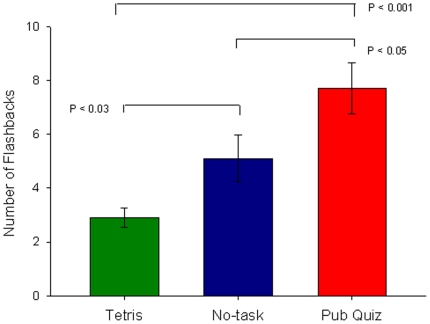
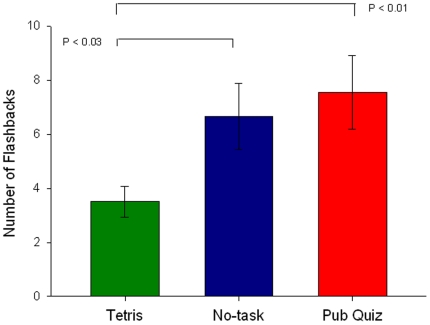
BACKGROUND: Flashbacks (intrusive memories of a traumatic event) are the hallmark feature of Post Traumatic Stress Disorder, however preventative interventions are lacking. Tetris may offer a 'cognitive vaccine' [1] against flashback development after trauma exposure. We previously reported that playing the computer game Tetris soon after viewing traumatic material reduced flashbacks compared to no-task [1]. However, two criticisms need to be addressed for clinical translation: (1) Would all games have this effect via distraction/enjoyment, or might some games even be harmful? (2) Would effects be found if administered several hours post-trauma? Accordingly, we tested Tetris versus an alternative computer game--Pub Quiz--which we hypothesized not to be helpful (Experiments 1 and 2), and extended the intervention interval to 4 hours (Experiment 2). METHODOLOGY/PRINCIPAL FINDINGS: The trauma film paradigm was used as an experimental analog for flashback development in healthy volunteers. In both experiments, participants viewed traumatic film footage of death and injury before completing one of the following: (1) no-task control condition (2) Tetris or (3) Pub Quiz. Flashbacks were monitored for 1 week. Experiment 1: 30 min after the traumatic film, playing Tetris led to a significant reduction in flashbacks compared to no-task control, whereas Pub Quiz led to a significant increase in flashbacks. Experiment 2: 4 hours post-film, playing Tetris led to a significant reduction in flashbacks compared to no-task control, whereas Pub Quiz did not. CONCLUSIONS/SIGNIFICANCE: First, computer games can have differential effects post-trauma, as predicted by a cognitive science formulation of trauma memory. In both Experiments, playing Tetris post-trauma film reduced flashbacks. Pub Quiz did not have this effect, even increasing flashbacks in Experiment 1. Thus not all computer games are beneficial or merely distracting post-trauma - some may be harmful. Second, the beneficial effects of Tetris are retained at 4 hours post-trauma. Clinically, this delivers a feasible time-window to administer a post-trauma "cognitive vaccine".
Overview
The claims and statistics of this paper haven’t been checked yet.
Free: it reads the open-access text and checks the first 5 claims that cite a source we can check. Create a free account to check every claim.
Integrity signals
Registry
Cites
Statistics
Figures


Verification
Claims the paper makes
The claims and statistics of this paper haven’t been checked yet.
Free: it reads the open-access text and checks the first 5 claims that cite a source we can check. Create a free account to check every claim.
Claims other papers make about this one
Each is checked against this paper’s own text: does it say what the citing paper says it does?
The source backs part of the claim, not all of it — or backs it for a different population, condition or comparison.
In the citing paper
“Six studies used serious games in the cognition training genre (48, 58, 59, 61, 63, 65).”
From Serious Games for Mental Health: Are They Accessible, Feasible, and Effective? A Systematic Review and Meta-analysis (2017) · cites this paper as [48]
Experimental — accuracy not yet measuredThe source backs part of the claim, not all of it — or backs it for a different population, condition or comparison.
In the citing paper
“Within both studies by Holmes et al. (48, 64), this game was played for 10 min with little instruction needed, after watching a film containing traumatic scenes.”
From Serious Games for Mental Health: Are They Accessible, Feasible, and Effective? A Systematic Review and Meta-analysis (2017) · cites this paper as [48]
Experimental — accuracy not yet measuredThe source backs part of the claim, not all of it — or backs it for a different population, condition or comparison.
In the citing paper
“the non-clinical group (34, 48, 58, 64) [g = 0.68 (95% CI 0.26–1.09, NNT = 2.70)]”
From Serious Games for Mental Health: Are They Accessible, Feasible, and Effective? A Systematic Review and Meta-analysis (2017) · cites this paper as [48]
Experimental — accuracy not yet measuredThe source backs part of the claim, not all of it — or backs it for a different population, condition or comparison.
In the citing paper
“the adult group (18+) (48, 58, 64) [g = 0.53 (95% CI 0.07–0.99, NNT = 3.42)]”
From Serious Games for Mental Health: Are They Accessible, Feasible, and Effective? A Systematic Review and Meta-analysis (2017) · cites this paper as [48]
Experimental — accuracy not yet measuredThe source backs part of the claim, not all of it — or backs it for a different population, condition or comparison.
In the citing paper
“Intrusive images over 1 week: S=2.90a (1.61) C=5.10b (3.80) V=7.70c (4.20)”
From Episodic memory, perceptual memory, and their interaction: Foundations for a theory of posttraumatic stress disorder. (2014) · cites this paper as Holmes et al. (2010) exp. 1
Experimental — accuracy not yet measured
14 more claims about this paper
Create a free account to see every claim other papers make about this one.
Self-check
Percentages, sums and reported differences re-computed from the paper’s own numbers.
The self-check needs the paper’s full text.
Citations
Cites
Diagnostic and Statistical Manual of Mental Disorders
Williams, J. B. W., & First, M. (2013) · Encyclopedia of Social Work · doi:10.1093/acrefore/9780199975839.013.104 · Cited by 109,519
Posttraumatic Stress Disorder in the National Comorbidity Survey
Kessler, R. C. (1995) · Archives of General Psychiatry · doi:10.1001/archpsyc.1995.03950240066012 · Cited by 10,379
A cognitive model of posttraumatic stress disorder
Ehlers, A., & Clark, D. M. (2000) · Behaviour Research and Therapy · doi:10.1016/s0005-7967(99)00123-0 · Cited by 6,147 · cited 2×
“Overall, the findings support established models of trauma memory processing [24,25,26,55].”
BackgroundResultThe construction of autobiographical memories in the self-memory system
Conway, M. A., & Pleydell-Pearce, C. W. (2000) · Psychological Review · doi:10.1037/0033-295x.107.2.261 · Cited by 4,089 · cited 1×
“Human memory differentiates visual and verbal components [13,14,15]”
BackgroundDiary Methods: Capturing Life as it is Lived
Bolger, N., Davis, A., & Rafaeli, E. (2003) · Annual Review of Psychology · doi:10.1146/annurev.psych.54.101601.145030 · Cited by 3,843 · cited 1×
“via PDA’s or mobile phone SMS technology; see [54] for a review).”
BackgroundThe world health report 2001 - Mental health: new understanding, new hope
Sayers, J. G. (2001) · Europe PMC (PubMed Central) · doi:10.1590/s0042-96862001001100014 · Cited by 3,123
Action video game modifies visual selective attention
Green, C. S., & Bavelier, D. (2003) · Nature · doi:10.1038/nature01647 · Cited by 2,540 · cited 1×
“Developing a safe cognitive intervention post-trauma: what are the next steps? With regards to points 1–5 above, our previous paper in PLoS ONE [1] provided the first step in developing an intervention, demonstrating under experimental conditions that intrusive flashback memories were reduced by the visuospatial task…”
Mental Health: New Understanding, New Hope
(2001) · JAMA · doi:10.1001/jama.286.19.2391 · Cited by 1,598
Psychological debriefing for preventing post traumatic stress disorder (PTSD)
Rose, S. C., Bisson, J., Churchill, R., & Wessely, S. (2002) · Cochrane Database of Systematic Reviews · doi:10.1002/14651858.cd000560 · Cited by 1,250
Preventing the return of fear in humans using reconsolidation update mechanisms
Schiller, D., Monfils, M.-H., Raio, C. M., Johnson, D. C., LeDoux, J. E., & Phelps, E. A. (2010) · Nature · doi:10.1038/nature08637 · Cited by 1,248 · cited 2×
“[42,43]), applied to the first time (to our”
Background
Cited by
Items 101–200 of 274
Condensed internet-delivered prolonged exposure provided soon after trauma: A randomised pilot trial
Bragesjö, M., Arnberg, F. K., Särnholm, J., Lauri, K. O., & Andersson, E. (2020) · Internet Interventions · doi:10.1016/j.invent.2020.100358 · Cited by 24
Yeung, R. C., Sokolowski, H. M., Fan, C. L., Fernandes, M. A., & Levine, B. (2025) · Clinical Psychological Science · doi:10.1177/21677026251315118 · Cited by 22
“Although there is notable evidence in favor of such effects (Holmes et al., 2009, 2010; James et al., 2015), there have also been failures to replicate these findings (Asselbergs et al., 2018; Brühl et al., 2019; Freedman et al., 2020).”
Romance Scams: Romantic Imagery and Transcranial Direct Current Stimulation
Chuang, J.-Y. (2021) · Frontiers in Psychiatry · doi:10.3389/fpsyt.2021.738874 · Cited by 18
Meyer, T., Otgaar, H., & Smeets, T. (2014) · Consciousness and Cognition · doi:10.1016/j.concog.2014.11.012 · Cited by 19
The Impact of the Brain-Derived Neurotrophic Factor Gene on Trauma and Spatial Processing
Miller, J. K., McDougall, S. J. P., Thomas, S., & Wiener, J. M. (2017) · Journal of Clinical Medicine · doi:10.3390/jcm6120108 · Cited by 21
“Understanding individuals’ self-awareness of their ability to apply hippocampal dependent processing when required is not only valuable to research into the declarative hippocampal dependent memory system [26,28,29] but could be highly valuable for clinical trauma processing and professional navigation training interv…”
BackgroundHashim, S., Stewart, L., & Küssner, M. B. (2020) · Music & Science · doi:10.1177/2059204320959580 · Cited by 21
Hilberdink, C. E., de Rooij, S. R., Olff, M., Bosch, J. A., & van Zuiden, M. (2022) · Psychoneuroendocrinology · doi:10.1016/j.psyneuen.2022.105686 · Cited by 20
Affective working memory in depression.
Songco, A., Patel, S. D., Dawes, K., Rodrigues, E., O’Leary, C., Hitchcock, C., Dalgleish, T., & Schweizer, S. (2023) · Emotion · doi:10.1037/emo0001130 · Cited by 24
“Research on anxiety has previously shown that high cognitive load can reduce or even eliminate the effects of fear conditioning (Yates et al., 2010) and encoding of highly aversive (traumaanalogue) information (Holmes et al., 2010).”
Davidson, P., & Marcusson‐Clavertz, D. (2022) · SLEEP · doi:10.1093/sleep/zsac280 · Cited by 17
“There are successful treatments available for patients who have developed PTSD, but it would be particularly helpful to develop interventions that prevent these symptoms from appearing in the first place [45].”
BackgroundTheories, methodologies, and effects of affect-adaptive games: A systematic review
Croissant, M., Schofield, G. P., & McCall, C. (2023) · Entertainment Computing · doi:10.1016/j.entcom.2023.100591 · Cited by 26
Kanstrup, M., Singh, L., Leehr, E. J., Göransson, K. E., Pihlgren, S. A., Iyadurai, L., Dahl, O., Falk, A., Lindström, V., Hadziosmanovic, N., et al. (2024) · BMC Medicine · doi:10.1186/s12916-024-03569-8 · Cited by 20
“Given that the theory on which the intervention was developed posits that the mental imagery-competing nature of the task is important [51], we opted to employ a control task that used an auditory modality (rather than utilising another visuospatial task).”
MethodSelf-citationCooper, J. L., & Wade, T. D. (2015) · Cognitive Therapy and Research · doi:10.1007/s10608-015-9709-1 · Cited by 18
“have links with the trauma field, where use of a visual task to interrupt embedding of traumatic images is significantly more effective than using a verbally based task (Holmes et al. 2010).”
BackgroundCroissant, M., & Frister, M. (2021) · PLoS ONE · doi:10.1371/journal.pone.0261328 · Cited by 18
Wartena, B. O., & van Dijk, H. W. (2013) · Springer eBooks · doi:10.1007/978-3-658-02897-8_4 · Cited by 20
“These modalities make Bias Blaster a potential cognitive vaccine [37, 38] for the mental healthcare, i.”
Curci, A., Soleti, E., Lanciano, T., Doria, V., & Rimé, B. (2015) · Frontiers in Psychology · doi:10.3389/fpsyg.2015.01275 · Cited by 24
“…task, i.e., the computer game “Tetris,” after the presentation of traumatic material prevents memory consolidation and reduces involuntary flashbacks while the execution of a verbal task, i.e., the game “Pub Quiz” has the opposite effect of increasing unwanted intrusions (Holmes et al., 2010).”
BackgroundA prospective examination of risk factors in the development of intrusions following a trauma analog
Ripley, A. J., Clapp, J. D., & Beck, J. G. (2017) · Behaviour Research and Therapy · doi:10.1016/j.brat.2017.05.001 · Cited by 14
Haim‐Nachum, S., & Levy‐Gigi, E. (2019) · Cognition · doi:10.1016/j.cognition.2019.104021 · Cited by 13
Taylor, A., Zajac, R., Takarangi, M. K. T., & Garry, M. (2021) · Clinical Psychological Science · doi:10.1177/21677026211053312 · Cited by 23
Le serious game : applications thérapeutiques en psychiatrie
Fovet, T., Micoulaud‐Franchi, J., Vaïva, G., Thomas, P., Jardri, R., & Amad, A. (2016) · L Encéphale · doi:10.1016/j.encep.2016.02.008 · Cited by 15
Landkroon, E., Salemink, E., & Engelhard, I. M. (2021) · Journal of Behavior Therapy and Experimental Psychiatry · doi:10.1016/j.jbtep.2021.101639 · Cited by 14
Kamboj, S. K., Gong, A. T., Sim, Z., Rashid, A. A., Baba, A., Iskandar, G., Das, R., & Curran, H. V. (2019) · Psychological Medicine · doi:10.1017/s0033291719001028 · Cited by 18
“…and Holcomb, 1997; Dudai, 2004) provides a window of opportunity to interfere with this process behaviourally, and this has been proposed as a means to protect trauma victims against developing re-experiencing symptoms in PTSD (Holmes et al., 2010; Horsch et al., 2017; Iyadurai et al., 2018).”
BackgroundBilateral eye movements disrupt the involuntary perceptual representation of trauma-related memories
Xu, Z., Hu, J., & Wang, Y. (2023) · Behaviour Research and Therapy · doi:10.1016/j.brat.2023.104311 · Cited by 15
Kehyayan, A., Thiel, J. P., Unterberg, K., Salja, V., Meyer-Wehrmann, S., Holmes, E. A., Matura, J.-M., Dieris-Hirche, J., Timmesfeld, N., Herpertz, S., et al. (2024) · European Journal of Psychotraumatology · doi:10.1080/20008066.2024.2331402 · Cited by 17
“After viewing a trauma fi lm, healthy participants that played Tetris after a reminder cue, had less intrusions compared to e.g. verbal control conditions (e.g. Holmes et al., 2009, 2010), with moderate to large e ff ect sizes.”
BackgroundMethodSelf-citationMental Imagery and Psychopathology: Examples of Post-traumatic Stress Disorder and Bipolar Disorder
Ng, R., Krans, J., & Holmes, E. A. (2012) · Springer eBooks · doi:10.1007/978-1-4614-5879-1_19 · Cited by 14
Self-citationUnintended side effects of a spotless mind: theory and practice
Hulbert, J. C., Hirschstein, Z., Brontë, C. A. L., & Broughton, E. (2017) · Memory · doi:10.1080/09658211.2017.1354999 · Cited by 13
Wakeful rest compared to vigilance reduces intrusive but not deliberate memory for traumatic videos
Hørlyck, L. D., Bisby, J. A., King, J. A., & Burgess, N. (2019) · Scientific Reports · doi:10.1038/s41598-019-49634-8 · Cited by 14
Reiser, E. M., Weiss, E. M., Schulter, G., Holmes, E. A., Fink, A., & Papousek, I. (2014) · Psychophysiology · doi:10.1111/psyp.12197 · Cited by 16
“The mean number of intrusive memories noted in the diary was somewhat lower than in previous studies (Holmes et al., 2009, 2010).”
BackgroundResultSelf-citationJobson, L., & Dalgleish, T. (2014) · PLoS ONE · doi:10.1371/journal.pone.0106759 · Cited by 16
“Some researchers have found that, as expected, participants who engaged in a task that interfered with verbal, conceptual processing of the film material reported an increase in intrusive images, relative to participants in a no-task condition [3], [14], [16], [20].”
BackgroundResultGhosh, A., Agnihotri, J., Bhalotia, S., Sati, B. K., Agarwal, L., Akash, A., Tandon, S., Meena, K., Raj, S., Azad, Y., et al. (2023) · JMIR Serious Games · doi:10.2196/37105 · Cited by 13
“multiple conditions, including posttraumatic stress disorder [41,42], autism spectrum disorder [43-45], attention-deficit/hyperactivity disorder [46], cognitive functioning [47,48], alcohol use disorder [49,50], trait anxiety [51,52], etc.”
BackgroundHagenaars, M. A., Engelhard, I. M., & Putman, P. (2016) · Journal of Experimental Psychopathology · doi:10.5127/jep.052215 · Cited by 13
Olatunji, B. O., Fan, Q., & Wolitzky-Taylor, K. B. (2018) · Journal of Behavior Therapy and Experimental Psychiatry · doi:10.1016/j.jbtep.2018.07.001 · Cited by 13
AURA: Amplifying Understanding, Resilience, and Awareness for Responsible AI Content Work
Zhang, A. Q., Amores, J., Shen, H., Czerwinski, M. P., Gray, M. L., & Suh, J. (2025) · Proceedings of the ACM on Human-Computer Interaction · doi:10.1145/3710931 · Cited by 24
“…the visual field [81], limiting color display [137], limiting amygdala activation from viewing facial emotions [24, 44], reducing intrusions [63], displaying content in monochrome greyscale, blocking faces, blurring visuals, muting audio, controlling the speed of videos, and allowing…”
Papousek, I., Weiss, E. M., Reiser, E. M., Schulter, G., Freudenthaler, H. H., & Lackner, H. K. (2013) · International journal of psychological research · doi:10.21500/20112084.718 · Cited by 13
Andersson, E., Holmes, E. A., & Kavanagh, D. J. (2018) · mHealth · doi:10.21037/mhealth.2018.09.11 · Cited by 15
Self-citationWhat keeps them motivated? Children’s views on an applied game for anxiety
Schoneveld, E. A., Lichtwarck‐Aschoff, A., & Granic, I. (2018) · Entertainment Computing · doi:10.1016/j.entcom.2018.12.003 · Cited by 15
Visser, R. M., Henson, R. N., & Holmes, E. A. (2021) · Biological Psychiatry Cognitive Neuroscience and Neuroimaging · doi:10.1016/j.bpsc.2021.08.006 · Cited by 13
“This idea has been exploited in experimental research, where the administration of pharmacological and behavioral manipulations immediately following analog trauma resulted in fewer intrusive memories (60,61).”
BackgroundSelf-citationMental imagery in dentistry: Phenomenology and role in dental anxiety
Schneider, A., Andrade, J., Dijkstra, K., & Moles, D. R. (2018) · Journal of Anxiety Disorders · doi:10.1016/j.janxdis.2018.06.009 · Cited by 12
Kessler, H., Dangellia, L., Kessler, R., Mahnke, V., Herpertz, S., & Kehyayan, A. (2019) · mHealth · doi:10.21037/mhealth.2019.09.15 · Cited by 10
Unconscious thought reduces intrusion development: A replication and extension
Krans, J., Janecko, D., & Bos, M. W. (2012) · Journal of Behavior Therapy and Experimental Psychiatry · doi:10.1016/j.jbtep.2012.08.004 · Cited by 15
Mental imagery in psychopathology: from the lab to the clinic
Clark, I. A., James, E. L., Iyadurai, L., & Holmes, E. A. (2015) · Cambridge University Press eBooks · doi:10.1017/cbo9781139626767.008 · Cited by 12
Self-citationArresting visuospatial stimulation is insufficient to disrupt analogue traumatic intrusions
Meyer, T., Brewin, C. R., King, J. A., Nijmeijer, D., Woud, M. L., & Becker, E. S. (2020) · PLoS ONE · doi:10.1371/journal.pone.0228416 · Cited by 13
“, [8, 9]), or after 4 h [10] The fact that tasks administered after film viewing can be effective suggests that traumatic memories are sensitive to disruption while they undergo the processes of consolidation or reconsolidation/re-encoding (i.”
BackgroundSerious Games and Gamification in Clinical Psychology
Fleming, T. M., Sutcliffe, K., Lucassen, M. F. G., Pine, R., & Donkin, L. (2020) · Elsevier eBooks · doi:10.1016/b978-0-12-818697-8.00011-x · Cited by 12
Hemi, A., Sopp, M. R., Perel, A., Holmes, E. A., & Levy‐Gigi, E. (2023) · Journal of Behavior Therapy and Experimental Psychiatry · doi:10.1016/j.jbtep.2023.101858 · Cited by 11
Self-citationVideo Games and Their Impact on Teens’ Mental Health
DeRosier, M. E., & Thomas, J. M. (2018) · Springer eBooks · doi:10.1007/978-3-319-69638-6_17 · Cited by 14
Guzey, M., Funk, J., Kustermann, J., & Ehring, T. W. (2021) · Behaviour Research and Therapy · doi:10.1016/j.brat.2021.103970 · Cited by 9
Anxiety Symptoms Influence the Effect of Post-Trauma Interventions after Analogue Trauma
Hagenaars, M. A. (2011) · Journal of Experimental Psychopathology · doi:10.5127/jep.020311 · Cited by 11
Interrupting traumatic memories in the emergency department: a randomized controlled pilot study
Freedman, S., Eitan, R., & Weiniger, C. F. (2020) · European Journal of Psychotraumatology · doi:10.1080/20008198.2020.1750170 · Cited by 7
“At the time of study planning, no comparable clinical studies had been published, and analogue studies had demonstrated significant differences, with sample sizes smaller than the subject numbers in this study (Holmes et al., 2010).”
ResultMental Imagery in Psychological Disorders
Holmes, E. A., Iyadurai, L., Jacob, G. A., & Hales, S. A. (2015) · Wiley eBooks · doi:10.1002/9781118900772.etrds0216 · Cited by 11
Self-citationExploring aspects of self-reported emotional mental imagery in patients with bipolar disorder
van den Berg, K. C., Voncken, M. J., Hendrickson, A. T., Simplicio, M. C. D., Regeer, E. J., Rops, L., & Keijsers, G. P. J. (2023) · Journal of Behavior Therapy and Experimental Psychiatry · doi:10.1016/j.jbtep.2023.101861 · Cited by 7
The effect of eye movements on craving, pleasantness and vividness in smokers
Rooijmans, J., Rosenkamp, N. H. G., Verholt, P., & Visser, R. A. (2012) · Utrecht University Repository (Utrecht University) · Cited by 9
Fodor, K. E., & Bitter, I. (2015) · Orvosi Hetilap · doi:10.1556/650.2015.30231 · Cited by 11
Feasibility of an adjunctive cognitive task in the treatment of posttraumatic stress disorder
Badawi, A., Steel, Z., Mahoney, C., & Berle, D. (2021) · Discover Psychology · doi:10.1007/s44202-021-00011-5 · Cited by 6
“Non-clinical studies have used the Tetris intervention during the memory consolidation phase at differing times points after the TFP was viewed; that is at 10- and 30-min [4] at 30-min and 4-h [5], and at 4-h [2] post-viewing.”
Nánay, B. (2023) · Oxford University Press eBooks · doi:10.1093/oso/9780198809500.003.0013 · Cited by 7
Floridou, G. A., Williamson, V. J., & Emerson, L. (2018) · Consciousness and Cognition · doi:10.1016/j.concog.2018.07.014 · Cited by 10
Active contextualization reduces traumatic memory intrusions via memory integration
Xu, Z., Yu, K., & Wang, Y. (2024) · Behaviour Research and Therapy · doi:10.1016/j.brat.2024.104644 · Cited by 7
Beckenstrom, A. C., Bonsall, M. B., Markham, A., Slade, O., Ramineni, V., Iyadurai, L., Islam, Z., Highfield, J. A., Jaki, T., Goodwin, G. M., et al. (2026) · The Lancet Psychiatry · doi:10.1016/s2215-0366(25)00397-9 · Cited by 7
“ICTI was 114·1 times more likely to reduce intrusive memories than active control and 15·8 times more likely than treatment as usual (appendix pp 9–12).”
Self-citationThe effect of motor interference therapy in traumatic memories: A pilot study
Morales‐Rivero, A., Reyes‐Santos, L., Bisanz, E., Ruíz-Chow, Á. A., & Crail‐Meléndez, D. (2020) · Brain and Behavior · doi:10.1002/brb3.1984 · Cited by 6
“Patients who performed visuospatial tasks had better outcome (Holmes et al., 2010; Iyadurai et al., 2018) suggesting that tasks act not only by distraction but by means of interference with sensory aspects of intrusive memory.”
BackgroundLau, H., Smit, J. H., Fleming, T. M., & Riper, H. M. (2020) · doi:10.26686/wgtn.12331268 · Cited by 6
Multisensory processing of emotional cues predicts intrusive memories after virtual reality trauma
Heffer, N., Dennie, E., Ashwin, C., Petrini, K., & Karl, A. (2023) · Virtual Reality · doi:10.1007/s10055-023-00784-1 · Cited by 8
Griffiths, E., Hawkes, N., Gilbert, S. J., & Serpell, L. (2016) · Journal of Eating Disorders · doi:10.1186/s40337-016-0098-y · Cited by 6
“Studies within the Post-Traumatic Stress Disorder (PTSD) literature have considered a similar approach of interrupting intrusive imagery to reduce later traumatic flashbacks [16, 17].”
BackgroundKanstrup, M., Rudman, A., Göransson, K. E., Andersson, E., Lauri, K. O., Rapoport, E., Sunnergård, L., Bragesjö, M., Andersson, E., Iyadurai, L., et al. (2021) · Pilot and Feasibility Studies · doi:10.1186/s40814-021-00916-x · Cited by 7
Self-citationRamineni, V., Millroth, P., Iyadurai, L., Jaki, T., Kingslake, J., Highfield, J. A., Summers, C., Bonsall, M. B., & Holmes, E. A. (2022) · medRxiv · doi:10.1101/2022.10.06.22280777 · Cited by 6
Self-citationTabrizi, F., & Jansson, B. (2016) · Journal of Behavior Therapy and Experimental Psychiatry · doi:10.1016/j.jbtep.2015.09.003 · Cited by 5
“This proposition is supported by a series of impressive experiments (Holmes et al., 2009, 2010) during which subjects were exposed to a stressful film depicting scenes of fatal road accidents, drowning and surgery.”
BackgroundResultInfluentialHighfield, J. A., Iyadurai, L., & Holmes, E. A. (2025) · Discover Mental Health · doi:10.1007/s44192-025-00205-6 · Cited by 10
“This approach first developed in the laboratory [14, 19, 20] has been developed across several trauma populations and settings in small scale clinical studies and case series, including with people who are refugees [21], inpatients with PTSD [22], a patient with bipolar disorder [23], and women…”
InfluentialSelf-citationThe visual and narrative rhetoric of mental health in Gris
Baker, M. M. (2022) · Journal of Gaming & Virtual Worlds · doi:10.1386/jgvw_00061_1 · Cited by 7
Asselbergs, J., Riper, H. M., Engelhard, I. M., Mannes, F., & Sijbrandij, M. (2023) · Journal of Behavior Therapy and Experimental Psychiatry · doi:10.1016/j.jbtep.2023.101920 · Cited by 7
Castelfranc-Allen, J., & Hope, L. (2018) · Psychiatry Psychology and Law · doi:10.1080/13218719.2018.1474814 · Cited by 6
de Gortari, A. B. O., & Griffiths, M. D. (2016) · Frontiers in Psychology · doi:10.3389/fpsyg.2016.00260 · Cited by 5
Huțul, T., Karner‐Huțuleac, A., & Huțul, A. (2024) · Entertainment Computing · doi:10.1016/j.entcom.2024.100649 · Cited by 6
Peters, J., Freund, I. M., Kindt, M., Visser, R. M., & van Emmerik, A. (2024) · Journal of Behavior Therapy and Experimental Psychiatry · doi:10.1016/j.jbtep.2024.101981 · Cited by 4
The effect of emotional prosody on content learning in S wedish school children
Dylman, A. S., & Champoux‐Larsson, M. (2022) · Applied Cognitive Psychology · doi:10.1002/acp.4009 · Cited by 6
Ming, W., Sun, Q., Liu, J., Ren, Z., & Guangrong, J. (2021) · Acta Psychologica Sinica · doi:10.3724/sp.j.1041.2022.00168 · Cited by 10
“…95%CI=−0.14~0.33,p=0.352),2 个因子 分与各自所属条目之间高相关(r=0.73~0.86,95%CI=[0.64, 0.81]~[0.81, 0.91],ps 0.001);2 个因 子各自所属条目之间相关较高(r=0.34~0.71,95%CI=[0.15, 0.52]~[0.60, 0.81],ps≤0.001),各条目 的鉴别指数 D=0.31~0.55。CFA 结果表明,2…”
InfluentialPavlovian threat conditioning can generate intrusive memories that persist over time
Espinosa, L., Bonsall, M. B., Becker, N., Holmes, E. A., & Olsson, A. (2022) · Behaviour Research and Therapy · doi:10.1016/j.brat.2022.104161 · Cited by 7
Self-citationThe Benefits of Playing Action-Like Video Games on Salience Processing
Franceschini, S., Puccio, G., Bertoni, S., Gori, S., Mascheretti, S., Fusina, F., Angrilli, A., & Facoetti, A. (2024) · International Journal of Human-Computer Interaction · doi:10.1080/10447318.2024.2346693 · Cited by 10
“Previous clinical findings have confirmed the benefits of multiple kinds of video games in increasing happiness, favoring emotional regulation, and reducing state and trait anxiety (Holmes et al., 2010; Horne-Moyer et al., 2014; Kowal et al., 2021).”
The role of memory in posttraumatic stress disorder: implications for clinical practice
Rigoli, M. M., Silva, G. R., de Oliveira, F. R., Pergher, G. K., & Kristensen, C. H. (2016) · Trends in Psychiatry and Psychotherapy · doi:10.1590/2237-6089-2014-0063 · Cited by 12
Social Anxiety and Mental Imagery Processes.
Guarnera, M. A., Buccheri, S. L., Castellano, S., Corrado, D. D., & Nuovo, S. D. (2019) · PubMed · Cited by 7
Müller, H., Moeller, S., Jenderek, K., Stroebel, A. M., Wiendieck, K., & Sperling, W. (2016) · Frontiers in Psychology · doi:10.3389/fpsyg.2016.00865 · Cited by 4
“Nevertheless, considering the factors influencing symptom variety might be crucial to individual therapy and to our understanding of PTSD (Holmes et al., 2010; Muller et al., 2015).”
Visuospatial Working Memory Tasks May Not Reduce the Intensity or Distress of Intrusive Memories
Badawi, A., Steel, Z., & Berle, D. (2022) · Frontiers in Psychiatry · doi:10.3389/fpsyt.2022.769957 · Cited by 4
“, (7, 8, 27)] and was used as an analog trauma condition designed to elicit intrusive memories.”
BackgroundMethodMurray, H., Wild, J., & Ehlers, A. (2021) · Elsevier eBooks · doi:10.1016/b978-0-12-818697-8.00229-6 · Cited by 3
Challenging memories reduces intrusive memories and the memory amplification effect
Чунлинь, Л., Otgaar, H., Battista, F., Muris, P., & Wang, J. (2023) · Memory · doi:10.1080/09658211.2023.2218631 · Cited by 4
Matura, J.-M., Kessler, H., Holmes, E. A., Timmesfeld, N., Tokic, M. C., Axmacher, N., Blackwell, S. E., Schmidt, A.-C., Schweer, J. M., Hippert, C., et al. (2025) · Frontiers in Psychology · doi:10.3389/fpsyg.2024.1454086 · Cited by 3
Self-citationLackner, H. K., Weiss, E. M., Hofer, E., Rössler, A., Fink, A., Schulter, G., & Papousek, I. (2015) · Psychology of sport and exercise · doi:10.1016/j.psychsport.2015.09.006 · Cited by 3
“For the assessment of the self-reported impact of the film, a composite mood score was calculated by summing participants' ratings (differences of the ratings after the film minus the ratings before the film) on three 10 cm horizontal visual analogue scales for feeling “sad”, “depressed”, and “hopeless”, following pre…”
MethodInfluentialComplexity and psychotherapy: A need for change
Tarquinio, C. (2019) · European Journal of Trauma & Dissociation · doi:10.1016/j.ejtd.2019.01.004 · Cited by 3
Spies, G., Huss, J. H., Motswage, O., Seedat, S., & Eichenberg, C. (2024) · Health Informatics Journal · doi:10.1177/14604582241259343 · Cited by 4
Freund, I. M., Peters, J., van Emmerik, A., Kindt, M., & Visser, R. M. (2025) · Behaviour Research and Therapy · doi:10.1016/j.brat.2025.104783 · Cited by 2
Testing a dose‐response effect of the visuospatial game Tetris on intrusive memories
Broughill, M., Commins, S., & Hyland, P. (2025) · Journal of Traumatic Stress · doi:10.1002/jts.70000 · Cited by 2
“%) to detect a large Cohen’s d effect size of 0.65, in line with the large effects reported in previous studies (e.g., Badawi et al., 2020; Holmes et al., 2010).”
Influential강혜림, & 정남운 (2018) · Korean Journal of Health Psychology · doi:10.17315/kjhp.2018.23.1.013 · Cited by 2
Rombold, F., Otte, C., Renneberg, B., Hellmann‐Regen, J., Bruch, L., Wingenfeld, K., & Roepke, S. (2018) · Neurobiology of Learning and Memory · doi:10.1016/j.nlm.2018.10.010 · Cited by 4
Mental imagery: Using working memory theory to design behaviour change interventions
Andrade, J. (2023) · Oxford University Press eBooks · doi:10.1093/oso/9780192849069.003.0014 · Cited by 3
On curiosity and passion for science: Interview with Emily Holmes
Glăveanu, V. P. (2011) · Europe’s Journal of Psychology · doi:10.5964/ejop.v7i4.154 · Cited by 2
“In fact we have recently used case studies to test drive the application of some experimental work done in the lab (Blackwell & Holmes, 2010).”
MethodAre there Special Mechanisms of Involuntary Memory?
Mole, C. (2016) · Review of Philosophy and Psychology · doi:10.1007/s13164-016-0326-z · Cited by 2
“A subsequent study found that participants who played Tetris were also less likely to have involuntary recollections than were participants who played a game without a visual/spatial component (Holmes et al. 2010).”
Grégoire, L., Landry, L., Gustafsson, E., & Blanchette, I. (2021) · Experimental Brain Research · doi:10.1007/s00221-021-06234-1 · Cited by 5
Nánay, B. (2023) · Oxford University Press eBooks · doi:10.1093/oso/9780198809500.003.0031 · Cited by 2
Perepezko, K. M., Bergendahl, M., Kunz, C., Labrique, A. B., Carras, M., & Carras, M. C. (2024) · Psychiatric Services · doi:10.1176/appi.ps.20230233 · Cited by 6
Nánay, B. (2023) · Oxford University Press eBooks · doi:10.1093/oso/9780198809500.003.0004 · Cited by 2
Yu, Y., Zhang, X., Xue, Y., & Ni, S. (2024) · Applied Psychology Health and Well-Being · doi:10.1111/aphw.12591 · Cited by 2
The effectiveness and adaptiveness of suppressing unwanted thoughts
Niczyporuk, A. (2025) · Psychonomic Bulletin & Review · doi:10.3758/s13423-025-02763-w · Cited by 6
“There arose a need to develop new interventions for use immediately after a traumatic event to prevent PTSD. Promising techniques, sometimes referred to as cognitive vaccines against traumatic flashbacks, emerged (Holmes et al., 2009, 2010).”
deBettencourt, M. T., Sakthivel, S., Holmes, E. A., & Chevillet, M. (2025) · npj Digital Medicine · doi:10.1038/s41746-025-02145-5 · Cited by 2
Self-citationWang, M., Han, B., Liu, Y., Teng, S., Jia, L., & Lu, G. (2025) · BMC Psychology · doi:10.1186/s40359-025-03741-6 · Cited by 3
“Specifically, repeated reactivation of sensory-bound memories in the absence of contextual interpretation contributes to sustained negative affect and maladaptive emotional regulation [24].”
Primary prevention and epidemiology of trauma- and stress-related disorders
Bragesjö, M., Holmes, E. A., Arnberg, F. K., & Andersson, E. M. (2020) · doi:10.1093/med/9780198713005.003.0082 · Cited by 1
Self-citation
Metadata
- Authors
- Holmes, E. A., James, E. L., Kilford, E. J., & Deeprose, C.
- Affiliations
- University of Oxford (GB)
- Corresponding author
- Holmes, Emily A.
- Venue
- PLoS ONE
- Publisher
- Public Library of Science (PLoS)
- Published
- 2010-11-10
- Volume
- 5
- Issue
- 11
- Pages
- e13706
- ISSN
- 1932-6203 (ISSN-L)
- PMC
- PMC2978094
- OpenAlex
- W2144876777
- Cited by
- 273
- References
- 60
- Citations by year
- 2026: 9 · 2025: 10 · 2024: 19 · 2023: 56 · 2022: 14 · 2021: 22 · 2020: 18 · 2019: 16 · 2018: 20 · 2017: 14 · 2016: 13 · 2015: 18 · 2014: 10 · 2013: 12 · 2012: 14
- FWCI
- 12.27
- Type
- journal article
- Language
- en
- Update notices
- correction (2012-11-14)
- Open access
- gold
- doi.org
- Locations
- PLoS ONE (publishedVersion, cc-by)
- Europe PMC (PubMed Central) (publishedVersion, cc-by)
- PubMed Central (publishedVersion, cc-by)
- PubMed (publishedVersion)
- ePrints Soton (University of Southampton) (acceptedVersion)
- DOAJ (DOAJ: Directory of Open Access Journals) (submittedVersion)
- UCL Discovery (University College London) (submittedVersion)
- Funders
- Wellcome Trust
- Royal Society
- Topics
- Social Sciences › Psychology › Clinical Psychology › Posttraumatic Stress Disorder Research
- Life Sciences › Neuroscience › Cognitive Neuroscience › Memory Processes and Influences
- Social Sciences › Psychology › Experimental and Cognitive Psychology › Cognitive Functions and Memory
- Keywords
- post-traumatic stress disorder, Tetris, video games, post-traumatic memory, distraction, intervention timing, trauma film paradigm, intrusive memories
- MeSH terms
- Adolescent, Adult, Affect, Computers, Female, Humans, Male, Middle Aged, Motion Pictures, Surveys and Questionnaires, Mental Recall, Stress Disorders, Post-Traumatic, Task Performance and Analysis, Cognitive Science, Young Adult
About these checks
Registry, retraction, Cites and statistics results are computed, not judged, with one exception: a printed reference that no index lists is read once by a model before it counts as a citation error. Claims are extracted by a model and kept only when their quote appears verbatim in the text; each cited source is then checked, with a model’s help, for whether it says what the claim relies on. Those verdicts can be wrong — read the claim’s quote and the cited source before relying on one.
Statistics and arithmetic are recomputed, not judged.
Confidence bands are shown only for fields calibrated on our annotated test set. None is calibrated yet, so no band is shown.
What counts as a claim ›How we measure confidence ›How we check this ›
Are you an author, or do you see a problem with this page? Request a review
Data sources
Bibliographic data: Semantic Scholar, OpenAlex, Crossref.
Contains information from the Semantic Scholar Academic Graph Datasets, made available under the ODC Attribution License (ODC-BY 1.0).
Semantic Scholar’s data is described in: Kinney, R., et al. (2023). The Semantic Scholar Open Data Platform. arXiv:2301.10140.
