

Key Steps in Developing a Cognitive Vaccine against Traumatic Flashbacks: Visuospatial Tetris versus Verbal Pub Quiz
Open accessThe DOI matches its Crossref record; 59 of the 60 references it cites were found in a registry or an index.
Abstract
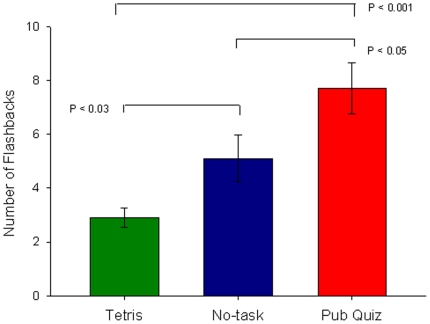
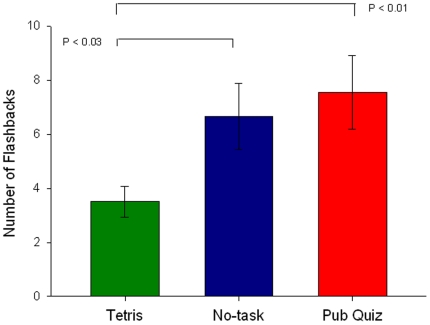
BACKGROUND: Flashbacks (intrusive memories of a traumatic event) are the hallmark feature of Post Traumatic Stress Disorder, however preventative interventions are lacking. Tetris may offer a 'cognitive vaccine' [1] against flashback development after trauma exposure. We previously reported that playing the computer game Tetris soon after viewing traumatic material reduced flashbacks compared to no-task [1]. However, two criticisms need to be addressed for clinical translation: (1) Would all games have this effect via distraction/enjoyment, or might some games even be harmful? (2) Would effects be found if administered several hours post-trauma? Accordingly, we tested Tetris versus an alternative computer game--Pub Quiz--which we hypothesized not to be helpful (Experiments 1 and 2), and extended the intervention interval to 4 hours (Experiment 2). METHODOLOGY/PRINCIPAL FINDINGS: The trauma film paradigm was used as an experimental analog for flashback development in healthy volunteers. In both experiments, participants viewed traumatic film footage of death and injury before completing one of the following: (1) no-task control condition (2) Tetris or (3) Pub Quiz. Flashbacks were monitored for 1 week. Experiment 1: 30 min after the traumatic film, playing Tetris led to a significant reduction in flashbacks compared to no-task control, whereas Pub Quiz led to a significant increase in flashbacks. Experiment 2: 4 hours post-film, playing Tetris led to a significant reduction in flashbacks compared to no-task control, whereas Pub Quiz did not. CONCLUSIONS/SIGNIFICANCE: First, computer games can have differential effects post-trauma, as predicted by a cognitive science formulation of trauma memory. In both Experiments, playing Tetris post-trauma film reduced flashbacks. Pub Quiz did not have this effect, even increasing flashbacks in Experiment 1. Thus not all computer games are beneficial or merely distracting post-trauma - some may be harmful. Second, the beneficial effects of Tetris are retained at 4 hours post-trauma. Clinically, this delivers a feasible time-window to administer a post-trauma "cognitive vaccine".
Overview
The claims and statistics of this paper haven’t been checked yet.
Free: it reads the open-access text and checks the first 5 claims that cite a source we can check. Create a free account to check every claim.
Integrity signals
Registry
Cites
Statistics
Figures


Verification
Claims the paper makes
The claims and statistics of this paper haven’t been checked yet.
Free: it reads the open-access text and checks the first 5 claims that cite a source we can check. Create a free account to check every claim.
Claims other papers make about this one
Each is checked against this paper’s own text: does it say what the citing paper says it does?
The source backs part of the claim, not all of it — or backs it for a different population, condition or comparison.
In the citing paper
“Six studies used serious games in the cognition training genre (48, 58, 59, 61, 63, 65).”
From Serious Games for Mental Health: Are They Accessible, Feasible, and Effective? A Systematic Review and Meta-analysis (2017) · cites this paper as [48]
Experimental — accuracy not yet measuredThe source backs part of the claim, not all of it — or backs it for a different population, condition or comparison.
In the citing paper
“Within both studies by Holmes et al. (48, 64), this game was played for 10 min with little instruction needed, after watching a film containing traumatic scenes.”
From Serious Games for Mental Health: Are They Accessible, Feasible, and Effective? A Systematic Review and Meta-analysis (2017) · cites this paper as [48]
Experimental — accuracy not yet measuredThe source backs part of the claim, not all of it — or backs it for a different population, condition or comparison.
In the citing paper
“the non-clinical group (34, 48, 58, 64) [g = 0.68 (95% CI 0.26–1.09, NNT = 2.70)]”
From Serious Games for Mental Health: Are They Accessible, Feasible, and Effective? A Systematic Review and Meta-analysis (2017) · cites this paper as [48]
Experimental — accuracy not yet measuredThe source backs part of the claim, not all of it — or backs it for a different population, condition or comparison.
In the citing paper
“the adult group (18+) (48, 58, 64) [g = 0.53 (95% CI 0.07–0.99, NNT = 3.42)]”
From Serious Games for Mental Health: Are They Accessible, Feasible, and Effective? A Systematic Review and Meta-analysis (2017) · cites this paper as [48]
Experimental — accuracy not yet measuredThe source backs part of the claim, not all of it — or backs it for a different population, condition or comparison.
In the citing paper
“Intrusive images over 1 week: S=2.90a (1.61) C=5.10b (3.80) V=7.70c (4.20)”
From Episodic memory, perceptual memory, and their interaction: Foundations for a theory of posttraumatic stress disorder. (2014) · cites this paper as Holmes et al. (2010) exp. 1
Experimental — accuracy not yet measured
14 more claims about this paper
Create a free account to see every claim other papers make about this one.
Self-check
Percentages, sums and reported differences re-computed from the paper’s own numbers.
The self-check needs the paper’s full text.
Citations
Cites
Diagnostic and Statistical Manual of Mental Disorders
Williams, J. B. W., & First, M. (2013) · Encyclopedia of Social Work · doi:10.1093/acrefore/9780199975839.013.104 · Cited by 109,519
Posttraumatic Stress Disorder in the National Comorbidity Survey
Kessler, R. C. (1995) · Archives of General Psychiatry · doi:10.1001/archpsyc.1995.03950240066012 · Cited by 10,379
A cognitive model of posttraumatic stress disorder
Ehlers, A., & Clark, D. M. (2000) · Behaviour Research and Therapy · doi:10.1016/s0005-7967(99)00123-0 · Cited by 6,147 · cited 2×
“Overall, the findings support established models of trauma memory processing [24,25,26,55].”
BackgroundResultThe construction of autobiographical memories in the self-memory system
Conway, M. A., & Pleydell-Pearce, C. W. (2000) · Psychological Review · doi:10.1037/0033-295x.107.2.261 · Cited by 4,089 · cited 1×
“Human memory differentiates visual and verbal components [13,14,15]”
BackgroundDiary Methods: Capturing Life as it is Lived
Bolger, N., Davis, A., & Rafaeli, E. (2003) · Annual Review of Psychology · doi:10.1146/annurev.psych.54.101601.145030 · Cited by 3,843 · cited 1×
“via PDA’s or mobile phone SMS technology; see [54] for a review).”
BackgroundThe world health report 2001 - Mental health: new understanding, new hope
Sayers, J. G. (2001) · Europe PMC (PubMed Central) · doi:10.1590/s0042-96862001001100014 · Cited by 3,123
Action video game modifies visual selective attention
Green, C. S., & Bavelier, D. (2003) · Nature · doi:10.1038/nature01647 · Cited by 2,540 · cited 1×
“Developing a safe cognitive intervention post-trauma: what are the next steps? With regards to points 1–5 above, our previous paper in PLoS ONE [1] provided the first step in developing an intervention, demonstrating under experimental conditions that intrusive flashback memories were reduced by the visuospatial task…”
Mental Health: New Understanding, New Hope
(2001) · JAMA · doi:10.1001/jama.286.19.2391 · Cited by 1,598
Psychological debriefing for preventing post traumatic stress disorder (PTSD)
Rose, S. C., Bisson, J., Churchill, R., & Wessely, S. (2002) · Cochrane Database of Systematic Reviews · doi:10.1002/14651858.cd000560 · Cited by 1,250
Preventing the return of fear in humans using reconsolidation update mechanisms
Schiller, D., Monfils, M.-H., Raio, C. M., Johnson, D. C., LeDoux, J. E., & Phelps, E. A. (2010) · Nature · doi:10.1038/nature08637 · Cited by 1,248 · cited 2×
“[42,43]), applied to the first time (to our”
Background
Cited by
Mental Imagery: Functional Mechanisms and Clinical Applications
Pearson, J., Naselaris, T., Holmes, E. A., & Kosslyn, S. M. (2015) · Trends in Cognitive Sciences · doi:10.1016/j.tics.2015.08.003 · Cited by 1,087
“This finding is consistent with the fact that strategically applied visual tasks, such as the computer game Tetris, performed soon after an experimental trauma (in the time window for memory consolidation), reduce the frequency of intrusive images [96]; this technique has recently been extended to reconsolidation [97].”
Self-citationThe human imagination: the cognitive neuroscience of visual mental imagery
Pearson, J. (2019) · Nature Reviews Neuroscience · doi:10.1038/s41583-019-0202-9 · Cited by 820
Brewin, C. R. (2014) · Psychological Bulletin · doi:10.1037/a0033722 · Cited by 492
“Five other studies carried out conceptual replications employing alternative verbal concurrent tasks, including remembering a 9-digit number (Nixon, Cain, Nehmy, & Seymour, 2009; Nixon, Nehmy, & Seymour, 2007), simple counting from 1 to 6 (Krans et al., 2010a), or the computer game Pub Quiz (Holmes et al., 2010, exps.”
BackgroundResultInfluentialArntz, A. (2012) · Journal of Experimental Psychopathology · doi:10.5127/jep.024211 · Cited by 373
James, E. L., Bonsall, M. B., Hoppitt, L., Tunbridge, E. M., Geddes, J. R., Milton, A. L., & Holmes, E. A. (2015) · Psychological Science · doi:10.1177/0956797615583071 · Cited by 333
“Intrusive memories were assessed in daily life (diary methodology; e.g., Holmes et al., 2009; Holmes et al., 2010) and through a laboratory task (intrusion-provocation task, or IPT).”
BackgroundMethodInfluentialSelf-citationLau, H. M., Smit, J. H., Fleming, T. M., & Riper, H. (2017) · Frontiers in Psychiatry · doi:10.3389/fpsyt.2016.00209 · Cited by 328
James, E. L., Lau-Zhu, A., Clark, I. A., Visser, R. M., Hagenaars, M. A., & Holmes, E. A. (2016) · Clinical Psychology Review · doi:10.1016/j.cpr.2016.04.010 · Cited by 300
Self-citationNanay, B. (2018) · Cortex · doi:10.1016/j.cortex.2017.07.006 · Cited by 299
Pearson, D. G., Deeprose, C., Wallace-Hadrill, S. M. A., Heyes, S. B., & Holmes, E. A. (2013) · Clinical Psychology Review · doi:10.1016/j.cpr.2012.09.001 · Cited by 277
“Participants are presented with a series of neutral static images taken from the stressful film and are then asked to record the number of intrusions experienced under varying experimental conditions within a set timeframe (e.g., Holmes, James et al. 2009; Holmes et al., 2010; Lang, Moulds, & Holmes, 2009).”
Self-citationIyadurai, L., Blackwell, S. E., Meiser-Stedman, R., Watson, P. C., Bonsall, M. B., Geddes, J. R., Nobre, A. C., & Holmes, E. A. (2018) · Molecular Psychiatry · doi:10.1038/mp.2017.23 · Cited by 266
Self-citationIyadurai, L., Visser, R. M., Lau-Zhu, A., Porcheret, K., Horsch, A., Holmes, E. A., & James, E. L. (2019) · Clinical Psychology Review · doi:10.1016/j.cpr.2018.08.005 · Cited by 256
Self-citationEmotional Mental Imagery as Simulation of Reality: Fear and Beyond—A Tribute to Peter Lang
Ji, J. L., Heyes, S. B., MacLeod, C., & Holmes, E. A. (2016) · Behavior Therapy · doi:10.1016/j.beth.2015.11.004 · Cited by 234
Self-citationTreatment of Posttraumatic Stress Disorder: A State-of-the-art Review
Burback, L., Brémault-Phillips, S., Nijdam, M. J., McFarlane, A., & Vermetten, E. (2024) · Current Neuropharmacology · doi:10.2174/1570159x21666230428091433 · Cited by 208
Hitchcock, C., Werner-Seidler, A., Blackwell, S. E., & Dalgleish, T. (2017) · Clinical Psychology Review · doi:10.1016/j.cpr.2016.12.003 · Cited by 157
Horsch, A., Vial, Y., Favrod, C., Harari, M. M., Blackwell, S. E., Watson, P., Iyadurai, L., Bonsall, M. B., & Holmes, E. A. (2017) · Behaviour Research and Therapy · doi:10.1016/j.brat.2017.03.018 · Cited by 158
“…healthy volunteers have demonstrated that engaging in the computer game Tetris, a game which taxes visuospatial functions (Green& Bavelier, 2003), up to 4 h following exposure to traumatic film material can significantly reduce the later number of intrusive memories (Holmes et al., 2009, 2010).”
BackgroundInfluentialSelf-citationBerntsen, D., Staugaard, S. R., & Sørensen, L. M. T. (2013) · Journal of Experimental Psychology: General · doi:10.1037/a0029128 · Cited by 147
Colder Carras, M., Kalbarczyk, A., Wells, K., Banks, J., Kowert, R., Gillespie, C., & Latkin, C. (2018) · Social Science & Medicine · doi:10.1016/j.socscimed.2018.08.044 · Cited by 128
“Video games have been shown to reduce symptoms of PTSD (Holmes et al., 2010; Iyadurai et al., 2017) and depression (Russoniello et al.”
BackgroundReduced intrusion development after post-trauma imagery rescripting; an experimental study
Hagenaars, M. A., & Arntz, A. (2012) · Journal of Behavior Therapy and Experimental Psychiatry · doi:10.1016/j.jbtep.2011.09.005 · Cited by 124
Ameliorating intrusive memories of distressing experiences using computerized reappraisal training
Woud, M. L., Holmes, E. A., Postma, P., Dalgleish, T., & Mackintosh, B. (2012) · Emotion · doi:10.1037/a0024992 · Cited by 109
Self-citationBisby, J., & Burgess, N. (2017) · Current Opinion in Behavioral Sciences · doi:10.1016/j.cobeha.2017.07.012 · Cited by 116
Direct suppression as a mechanism for controlling unpleasant memories in daily life.
Küpper, C. S., Benoit, R. G., Dalgleish, T., & Anderson, M. C. (2014) · Journal of Experimental Psychology: General · doi:10.1037/a0036518 · Cited by 113
Mental Imagery: Philosophy, Psychology, Neuroscience
Nánay, B. (2023) · doi:10.1093/oso/9780198809500.001.0001 · Cited by 137
van den Hout, M. A., Bartelski, N., & Engelhard, I. M. (2013) · Cognition & Emotion · doi:10.1080/02699931.2012.691087 · Cited by 109
Marks, E. H., Franklin, A. R., & Zoellner, L. A. (2018) · Psychological Bulletin · doi:10.1037/bul0000132 · Cited by 143
“…ly fo r th e pe rs on al us e of th e in di vi du al us er an d is no t to be di ss em in at ed br oa dl y. ant et al., 2013; Das et al., 2016; Holmes et al., 2009, 2010; Kindt et al., 2008; Kleim et al., 2016; Krans et al., 2009; Luo et al., 2013; Porcheret et al., 2015; Tabrizi & Jansson,…”
BackgroundKessler, H., Holmes, E. A., Blackwell, S. E., Schmidt, A.-C., Schweer, J. M., Bücker, A., Herpertz, S., Axmacher, N., & Kehyayan, A. (2018) · Journal of Consulting and Clinical Psychology · doi:10.1037/ccp0000340 · Cited by 104
“…way influenced by the study-specific intervention, but the relatively lower rate of “response” on overall symptom scores compared with intrusion frequency may also suggest a specific rather than generic effect of the intrusion-focused intervention (cf. Horsch et al., 2017; Iyadurai et al., 2017).”
BackgroundSelf-citationVisser, R. M., Lau-Zhu, A., Henson, R. N., & Holmes, E. A. (2018) · Philosophical Transactions of the Royal Society B: Biological Sciences · doi:10.1098/rstb.2017.0209 · Cited by 95
Self-citationSoni, M., Curran, V. H., & Kamboj, S. K. (2013) · Neurobiology of Learning and Memory · doi:10.1016/j.nlm.2013.04.003 · Cited by 102
Clark, I. A., & Mackay, C. E. (2015) · Frontiers in Psychiatry · doi:10.3389/fpsyt.2015.00104 · Cited by 103
van den Hout, M., Engelhard, I. M., Beetsma, D. J. V., Slofstra, C., Hornsveld, H. K., Houtveen, J. H., & Leer, A. (2011) · Journal of Behavior Therapy and Experimental Psychiatry · doi:10.1016/j.jbtep.2011.03.004 · Cited by 119
Serious Games for Psychotherapy: A Systematic Review
Eichenberg, C., & Schott, M. (2017) · Games for Health Journal · doi:10.1089/g4h.2016.0068 · Cited by 99
Kanstrup, M., Singh, L., Göransson, K. E., Widoff, J., Taylor, R. S., Gamble, B., Iyadurai, L., Moulds, M. L., & Holmes, E. A. (2021) · Translational Psychiatry · doi:10.1038/s41398-020-01124-6 · Cited by 90
Self-citationPapousek, I., Weiss, E. M., Schulter, G., Fink, A., Reiser, E. M., & Lackner, H. K. (2014) · Biological Psychology · doi:10.1016/j.biopsycho.2014.09.001 · Cited by 89
Developing Digital Intervention Games for Mental Disorders: A Review
Shah, A., Kraemer, K. R., Won, C. R., Black, S., & Hasenbein, W. (2018) · Games for Health Journal · doi:10.1089/g4h.2017.0150 · Cited by 85
Activating attachment representations during memory retrieval modulates intrusive traumatic memories
Bryant, R. A., & Chan, I. (2017) · Consciousness and Cognition · doi:10.1016/j.concog.2017.08.010 · Cited by 85
Lau‐Zhu, A., Henson, R. N., & Holmes, E. A. (2019) · Journal of Experimental Psychology General · doi:10.1037/xge0000598 · Cited by 87
“…reported fewer intrusions than the reminder-only group according to (a) a 1-week diary, replicating Experiment 1 as well as previous studies (e.g., Holmes et al., 2009, 2010; James et al., 2015), (b) a vigilanceintrusion task performed on Day 8 (replicating James et al., 2015), and (c) a…”
Self-citationImplicit Bias as Mental Imagery
Nánay, B. (2021) · Journal of the American Philosophical Association · doi:10.1017/apa.2020.29 · Cited by 73
Mental imagery, emotion and psychopathology across child and adolescent development
Burnett Heyes, S., Lau, J. Y. F., & Holmes, E. A. (2013) · Developmental Cognitive Neuroscience · doi:10.1016/j.dcn.2013.02.004 · Cited by 70
Self-citationWhy Does Nonsuicidal Self-Injury Improve Mood? A Preliminary Test of Three Hypotheses
Fox, K. R., Toole, K. E., Franklin, J. C., & Hooley, J. M. (2016) · Clinical Psychological Science · doi:10.1177/2167702616662270 · Cited by 82
Holmes, E. A., Ghaderi, A., Eriksson, E., Lauri, K. O., Kukacka, O. M., Mamish, M., James, E. L., & Visser, R. M. (2017) · Behavioural and Cognitive Psychotherapy · doi:10.1017/s135246581600062x · Cited by 60
“Tetris) when compared with a verbal control game (Holmes et al., 2010).”
BackgroundResultSelf-citationDeeprose, C., Zhang, S., DeJong, H., Dalgleish, T., & Holmes, E. A. (2012) · Journal of Behavior Therapy and Experimental Psychiatry · doi:10.1016/j.jbtep.2011.10.008 · Cited by 65
“…2002; Stickgold, Malia, Maguire, Roddenbury, & O’Connor, 2000) after a stressful film reduced involuntary memories relative to a no-task control condition (Holmes et al., 2009) and relative to a both a no-task control condition and a comparable verbal computer game “Pub Quiz” (Holmes et al., 2010).”
BackgroundResultSelf-citationThe multicomponent model of working memory fifty years on
Hitch, G. J., Allen, R. J., & Baddeley, A. (2024) · Quarterly Journal of Experimental Psychology · doi:10.1177/17470218241290909 · Cited by 117
Playing Tetris decreases drug and other cravings in real world settings
Skorka-Brown, J., Andrade, J., Whalley, B., & May, J. (2015) · Addictive Behaviors · doi:10.1016/j.addbeh.2015.07.020 · Cited by 73
“Tetris blocks development of distressing intrusive images (Holmes, James, Coode-Bate & Deeprose, 2009; Holmes, James, Kilford & Deeprose, 2010) and weakens naturally occurring cravings in a laboratory setting (Skorka-Brown et al., 2014).”
Hagenaars, M. A., Holmes, E. A., Klaassen, F., & Elzinga, B. (2017) · European Journal of Psychotraumatology · doi:10.1080/20008198.2017.1386959 · Cited by 52
“…frequencies in some studies (counting backwards in threes/sevens: Bourne, Frasquilho, Roth, & Holmes, 2010, exp 2; Holmes et al., 2004; Pub quiz: Holmes et al., 2010, exp 1), but not in others (counting backwards in threes/sevens: Deeprose et al., 2012; Krans, Näring, & Becker, 2009; Pub quiz:…”
BackgroundSelf-citationPreventing posttraumatic stress disorder following childbirth: a systematic review and meta-analysis
Dekel, S., Papadakis, J. E., Quagliarini, B., Pham, C. T., Pacheco‐Barrios, K., Hughes, F., Jagodnik, K. M., & Nandru, R. (2023) · American Journal of Obstetrics and Gynecology · doi:10.1016/j.ajog.2023.12.013 · Cited by 66
Kessler, H., Schmidt, A.-C., James, E. L., Blackwell, S. E., von Rauchhaupt, M., Harren, A. K., Kehyayan, A., Clark, I. A., Sauvage, M. M., Herpertz, S., et al. (2019) · Journal of Behavior Therapy and Experimental Psychiatry · doi:10.1016/j.jbtep.2019.01.006 · Cited by 73
“On the contrary, in some studies verbal tasks even led to an increase in intrusions (Bourne, Frasquilho, Roth, & Holmes, 2010; Holmes et al., 2004, 2010a).”
InfluentialSelf-citationButler, O., Herr, K., Willmund, G., Gallinat, J., Kühn, S., & Zimmermann, P. L. (2020) · Journal of Psychiatry and Neuroscience · doi:10.1503/jpn.190027 · Cited by 74
The future of psychological treatments: The Marburg Declaration
Rief, W., Asmundson, G. J. G., Bryant, R. A., Clark, D. M., Ehlers, A., Holmes, E. A., McNally, R. J., Neufeld, C. B., Wilhelm, S., Jaroszewski, A. C., et al. (2024) · Clinical Psychology Review · doi:10.1016/j.cpr.2024.102417 · Cited by 54
Self-citationKanstrup, M., Kontio, E., Geranmayeh, A., Lauri, K. O., Moulds, M. L., & Holmes, E. A. (2020) · Clinical Psychology & Psychotherapy · doi:10.1002/cpp.2489 · Cited by 58
Self-citationSingh, L., Espinosa, L., Ji, J. L., Moulds, M. L., & Holmes, E. A. (2020) · Cognitive Neuropsychiatry · doi:10.1080/13546805.2020.1804845 · Cited by 57
Self-citationNánay, B. (2017) · The Monist · doi:10.1093/monist/onx024 · Cited by 52
Clark, I. A., Mackay, C. E., & Holmes, E. A. (2015) · Cognition and Emotion · doi:10.1080/02699931.2014.926861 · Cited by 52
Self-citationPrice, R. B., Paul, B., Schneider, W., & Siegle, G. J. (2013) · Cognitive Therapy and Research · doi:10.1007/s10608-012-9508-x · Cited by 51
“…ER strategies has previously shown promise in effecting lasting decreases in negative emotional symptoms (DeRubeis et al. 2005; Holmes et al. 2009; Holmes et al. 2010; Resick et al. 2008; Siegle et al. 2007), but no previous study has examined whether dissociable or overlapping brain pathways are…”
BackgroundMethodInfluentialConditioning the Mind’s Eye: Associative Learning With Voluntary Mental Imagery
Lewis, D. E., O’Reilly, M. J., Khuu, S. K., & Pearson, J. (2013) · Clinical Psychological Science · doi:10.1177/2167702613484716 · Cited by 49
Knight, M., Acosta, C. D., Brocklehurst, P., Cheshire, A., Fitzpatrick, K. E., Hinton, L., Jokinen, M., Kemp, B., Kurinczuk, J. J., Lewis, G., et al. (2016) · Programme Grants for Applied Research · doi:10.3310/pgfar04090 · Cited by 72
Das, R. K., Tamman, A., Nikolova, V., Freeman, T. P., Bisby, J. A., Lazzarino, A. I., & Kamboj, S. K. (2016) · Psychological Medicine · doi:10.1017/s003329171600026x · Cited by 49
“The performance of a visuospatially demanding task (Tetris) following the viewing of aversive video footage has been shown to reduce the reported number of intrusive memories of the footage subsequently reported by participants (Holmes et al. 2009, 2010).”
InfluentialKvavilashvili, L. (2014) · Psychological Bulletin · doi:10.1037/a0034677 · Cited by 47
Sleep and intrusive memories immediately after a traumatic event in emergency department patients
Porcheret, K., Iyadurai, L., Bonsall, M. B., Goodwin, G. M., Beer, S. A., Darwent, M., & Holmes, E. A. (2020) · Sleep · doi:10.1093/sleep/zsaa033 · Cited by 46
“One approach to targeting intrusive memories is a brief behavioral procedure, involving a memory reminder cue followed by a visual interference task (playing the computer game Tetris), delivered within the first few hours post-trauma [49]: recent proof-of-concept trials show a reduction in the number of intrusive memo…”
BackgroundSelf-citationOlatunji, B. O., & Fan, Q. (2015) · Journal of Anxiety Disorders · doi:10.1016/j.janxdis.2015.06.002 · Cited by 45
When your heart is in your mouth: the effect of second language use on negative emotions
Dylman, A. S., & Bjärtå, A. (2018) · Cognition & Emotion · doi:10.1080/02699931.2018.1540403 · Cited by 67
Smeets, M. A. M., Dijs, M. W., Pervan, I., Engelhard, I. M., & van den Hout, M. A. (2012) · Memory · doi:10.1080/09658211.2012.665462 · Cited by 44
Commercial video games as a resource for mental health: A systematic literature review
Boldi, A., & Rapp, A. (2021) · Behaviour and Information Technology · doi:10.1080/0144929x.2021.1943524 · Cited by 56
“As for the first group (Brühl et al. 2019; Holmes et al. 2010; James et al. 2015; Kessler et al. 2020), research 2664 A.”
BackgroundInvoluntary memories of emotional scenes: The effects of cue discriminability and emotion over time.
Staugaard, S. R., & Berntsen, D. (2014) · Journal of Experimental Psychology General · doi:10.1037/a0037185 · Cited by 47
Dyregrov, A., & Regel, S. (2012) · Journal of Loss and Trauma · doi:10.1080/15325024.2011.616832 · Cited by 78
“Recently this research group have shown that the effect is not merely due to distraction and that the beneficial effects of Tetris are retained at 4 hours post-trauma (Holmes, James, Kilford & Deeprose, 2010 ).”
BackgroundPapousek, I., Reiser, E. M., Schulter, G., Fink, A., Holmes, E. A., Niederstätter, H., Nagl, S., Parson, W., & Weiss, E. M. (2013) · Emotion · doi:10.1037/a0033997 · Cited by 46
Self-citationEffects of rumination on intrusive memories: Does processing mode matter?
Maria, A. S., Reichert, F., Hummel, S. B., & Ehring, T. W. (2012) · Journal of Behavior Therapy and Experimental Psychiatry · doi:10.1016/j.jbtep.2012.01.004 · Cited by 51
Iyadurai, L., Highfield, J. A., Kanstrup, M., Markham, A., Ramineni, V., Guo, B., Jaki, T., Kingslake, J., Goodwin, G. M., Summers, C., et al. (2023) · Translational Psychiatry · doi:10.1038/s41398-023-02578-0 · Cited by 45
Self-citationNeuromodulation of Visual Cortex Reduces the Intensity of Intrusive Memories
Herz, N., Bar‐Haim, Y., Tavor, I., Tik, N., Sharon, H., Holmes, E. A., & Censor, N. (2021) · Cerebral Cortex · doi:10.1093/cercor/bhab217 · Cited by 45
“” A composite mood score (ranging 0–40) was computed by summing all scale scores after inverting the happy scale score (Holmes et al. 2010).”
MethodSelf-citationPottage, C. L., & Schaefer, A. (2012) · Emotion · doi:10.1037/a0024574 · Cited by 45
Exploring gamification design elements for mental health support
Ibrahim, E. N. M., Jamali, N., & Suhaimi, A. I. H. (2021) · International Journal of Advanced Technology and Engineering Exploration · doi:10.19101/ijatee.2020.s1762123 · Cited by 41
Cardi, V., Kan, C., Roncero, M., Harrison, A., Lounes, N., Tchanturia, K., Meyer, C., & Treasure, J. (2012) · Psychotherapy and Psychosomatics · doi:10.1159/000329992 · Cited by 34
“and emotional reactions. Interventions employing visuospatial elements to interrupt the elaboration of imagery and emotional reactions have been shown to reduce food craving and emotional reactions [”
BackgroundMeta-T: TetrisⓇ as an experimental paradigm for cognitive skills research
Lindstedt, J. K., & Gray, W. D. (2015) · Behavior Research Methods · doi:10.3758/s13428-014-0547-y · Cited by 41
“Many studies have used Tetris for reasons as diverse as enhancing the spatial abilities of student engineers (Martin-Gutierrez et al., 2009) or as a treatment for post-traumatic stress syndrome (Holmes et al., 2010).”
BackgroundLau‐Zhu, A., Henson, R. N., & Holmes, E. A. (2021) · Clinical Psychological Science · doi:10.1177/2167702621998315 · Cited by 36
Self-citationChoking under Pressure: Degrading Flashforwards Related to Performance Anxiety
Engelhard, I. M., Sijbrandij, M., van den Hout, M. A., Rutherford, N. M., Rahim, H. F., & Kocak, F. (2012) · Journal of Experimental Psychopathology · doi:10.5127/jep.024111 · Cited by 31
Ramineni, V., Millroth, P., Iyadurai, L., Jaki, T., Kingslake, J., Highfield, J. A., Summers, C., Bonsall, M. B., & Holmes, E. A. (2023) · Molecular Psychiatry · doi:10.1038/s41380-023-02062-7 · Cited by 39
“Animagery-competing task intervention approach (which includes computer gameplay) to prevent IMs was developed from insights from cognitive neuroscience and experimental research [9, 10] by taking a mechanistically informed single-symptom approach [11].”
MethodSelf-citationAnderson, R. J., Dewhurst, S. A., & Dean, G. M. (2017) · Consciousness and Cognition · doi:10.1016/j.concog.2017.02.010 · Cited by 35
James, E. L., Lau-Zhu, A., Tickle, H., Horsch, A., & Holmes, E. A. (2016) · Journal of Behavior Therapy and Experimental Psychiatry · doi:10.1016/j.jbtep.2015.11.004 · Cited by 27
“Another difference with our previous studies in which playing Tetris after a trauma fi lm reduced later intrusive memories (e.g. Holmes et al., 2010), is that visual representations of emotional traumatic fi lm content purportedly underwent interference from actual game play, rather than a memory…”
InfluentialSelf-citationAsselbergs, J., Sijbrandij, M., Hoogendoorn, E., Cuijpers, P., Olie, L., Oved, K., Merkies, J., Plooijer, T., Eltink, S., & Riper, H. (2018) · European Journal of Psychotraumatology · doi:10.1080/20008198.2018.1424447 · Cited by 29
Intrusive memories: A mechanistic signature for emotional memory persistence
Herz, N., Bar‐Haim, Y., Holmes, E. A., & Censor, N. (2020) · Behaviour Research and Therapy · doi:10.1016/j.brat.2020.103752 · Cited by 34
Self-citationDavies, C., Malik, A., Pictet, A., Blackwell, S. E., & Holmes, E. A. (2012) · Clinical Psychology & Psychotherapy · doi:10.1002/cpp.1800 · Cited by 28
“has been proposed for dampening down flashbacks in PTSD (Holmes, James, et al., 2009; Holmes et al., 2010; Lilley, Andrade, Turpin, Sabin-Farrell, & Holmes, 2009).”
BackgroundMethodResultInfluentialSelf-citationVideo game play as nightmare protection: A replication and extension.
Gackenbach, J., Darlington, M., Ferguson, M.-L., & Boyes, A. (2013) · Dreaming · doi:10.1037/a0032455 · Cited by 28
Ney, L. J., Schenker, M. T., & Lipp, O. V. (2022) · Behaviour Research and Therapy · doi:10.1016/j.brat.2022.104081 · Cited by 34
The effects of dual-tasks on intrusive memories following analogue trauma
van Schie, K., van Veen, S. C., & Hagenaars, M. A. (2019) · Behaviour Research and Therapy · doi:10.1016/j.brat.2019.103448 · Cited by 33
Malik, A., Goodwin, G. M., Hoppitt, L., & Holmes, E. A. (2014) · Clinical Psychological Science · doi:10.1177/2167702614527433 · Cited by 26
“The Verbal Recognition Memory Test was used (Holmes et al., 2010).”
MethodSelf-citationBlackwell, S. E. (2020) · Cambridge University Press eBooks · doi:10.1017/9781108580298.016 · Cited by 35
Deforges, C., Sandoz, V., Noël, Y., Avignon, V., Desseauve, D., Bourdin, J., Vial, Y., Ayers, S., Holmes, E. A., Epiney, M., et al. (2023) · Molecular Psychiatry · doi:10.1038/s41380-023-02275-w · Cited by 31
Self-citationDeforges, C., Fort, D., Stuijfzand, S., Holmes, E. A., & Horsch, A. (2022) · Journal of Affective Disorders · doi:10.1016/j.jad.2022.01.108 · Cited by 26
Self-citationBadawi, A., Berle, D., Rogers, K. D., & Steel, Z. (2020) · Clinical Psychological Science · doi:10.1177/2167702620906148 · Cited by 32
“However, we note that our prediction regarding the increased rate of decline was not supported for the novel task introduced (D-Corsi) to extend on the main study modeled for replication (Holmes et al., 2010).”
BackgroundMethodResultInfluentialKehyayan, A., Wright, P., Marks, J., Matura, J.-M., Axmacher, N., Herpertz, S., & Kessler, H. (2023) · European Journal of Psychotraumatology · doi:10.1080/20008066.2023.2172258 · Cited by 23
“While the trauma film paradigm used in this study has been employed by many previous studies (Holmes et al., 2010; James et al., 2015; Kessler et al., 2020) to model aspects of trauma and PTSD, a core necessity is – of course – to not actually traumatise the healthy participants.”
MethodSingh, L., Pihlgren, S. A., Holmes, E. A., & Moulds, M. L. (2022) · International Journal of Methods in Psychiatric Research · doi:10.1002/mpr.1936 · Cited by 22
“2.2.1 | Intrusive memory diary (Holmes et al., 2004, 2009, 2010) Participants monitored the occurrence of intrusive memories (of the trauma film clips in laboratory studies, of a real‐life traumatic event in clinical studies) in a pen and paper diary (or digital adaptation thereof; Singh et al.,…”
BackgroundMethodInfluentialSelf-citationSchäfer, J., Zvielli, A., Höfler, M., Wittchen, H.-U., & Bernstein, A. (2018) · Behaviour Research and Therapy · doi:10.1016/j.brat.2018.01.004 · Cited by 22
Increase value and reduce waste in research on psychological therapies
Cristea, I. A., & Naudet, F. (2019) · Behaviour Research and Therapy · doi:10.1016/j.brat.2019.103479 · Cited by 22
Asselbergs, J., van Bentum, J. S., Riper, H. M., Cuijpers, P. J., Holmes, E. A., & Sijbrandij, M. (2023) · Journal of Psychiatric Research · doi:10.1016/j.jpsychires.2023.01.028 · Cited by 24
Self-citationWorking Memory Load Attenuates Emotional Enhancement in Recognition Memory
Lombard, E., van Elswijk, G., Cannistraci, C. V., & van Ee, R. (2013) · Frontiers in Psychology · doi:10.3389/fpsyg.2013.00112 · Cited by 25
“Importantly, cognitive load can reduce subsequent negative memories and flashbacks when applied up to 4 h after a traumatic experience, but only certain tasks are effective in this respect (Holmes et al., 2010).”
BackgroundSierk, A., Manthey, A., King, J. A., Brewin, C. R., Bisby, J. A., Walter, H., Burgess, N., & Daniels, J. K. (2019) · Neurobiology of Learning and Memory · doi:10.1016/j.nlm.2019.107093 · Cited by 28
“…work are findings showing a decrease of intrusive images by deploying a visuospatial task either during encoding (Bourne, Frasquilho, Roth, & Holmes, 2010; Brewin & Saunders, 2001; Holmes, Brewin, & Hennessy, 2004) or directly thereafter (Holmes, James, Coode-Bate, & Deeprose, 2009; Holmes,…”
Oliveira, J., Dias, J. A., Correia, R., Pinheiro, R. S. A., Reis, V., Sousa, D., Agostinho, D., Simões, M. A., & Castelo-Branco, M. S. (2024) · JMIR Serious Games · doi:10.2196/53683 · Cited by 35
“Another study using a computer game showed potential to reduce intrusive memories of a traumatic event [79].”
BackgroundVarma, M. M., Zeng, S., Singh, L., Holmes, E. A., Huang, J., Chiu, M. H., & Hu, X. (2024) · Nature Human Behaviour · doi:10.1038/s41562-024-01956-y · Cited by 25
Self-citationÞórarinsdóttir, K., Holmes, E. A., Hardarson, J., Stephenssen, E. S., Jonasdottir, M. H., Kanstrup, M., Singh, L., Hauksdóttir, A., Halldorsdottir, T., Guðmundsdóttir, B., et al. (2022) · JMIR Formative Research · doi:10.2196/37382 · Cited by 19
“The aim of this case series was to extend our previous case study by evaluating a novel visuospatial intervention designed to reduce the number of intrusive memories of trauma [6,14,37].”
BackgroundSelf-citationSandoz, V., Deforges, C., Stuijfzand, S., Epiney, M., Vial, Y., Sekarski, N., Messerli‐Bürgy, N., Ehlert, U., Graz, M. B., Harari, M. M., et al. (2019) · BMJ Open · doi:10.1136/bmjopen-2019-032469 · Cited by 32
Self-citationBrühl, A., Heinrichs, N., Bernstein, E. E., & McNally, R. J. (2019) · Journal of Behavior Therapy and Experimental Psychiatry · doi:10.1016/j.jbtep.2019.01.004 · Cited by 22
Exploring the Touch and Motion Features in Game-Based Cognitive Assessments
Intarasirisawat, J., Ang, C. S., Efstratiou, C., Dickens, L., & Page, R. A. (2019) · Proceedings of the ACM on Interactive Mobile Wearable and Ubiquitous Technologies · doi:10.1145/3351245 · Cited by 22
“Our finding supports the recommendation of Tetris as a visuospatial diagnostic task from previous studies [13, 16].”
Result
Metadata
- Authors
- Holmes, E. A., James, E. L., Kilford, E. J., & Deeprose, C.
- Affiliations
- University of Oxford (GB)
- Corresponding author
- Holmes, Emily A.
- Venue
- PLoS ONE
- Publisher
- Public Library of Science (PLoS)
- Published
- 2010-11-10
- Volume
- 5
- Issue
- 11
- Pages
- e13706
- ISSN
- 1932-6203 (ISSN-L)
- PMC
- PMC2978094
- OpenAlex
- W2144876777
- Cited by
- 273
- References
- 60
- Citations by year
- 2026: 9 · 2025: 10 · 2024: 19 · 2023: 56 · 2022: 14 · 2021: 22 · 2020: 18 · 2019: 16 · 2018: 20 · 2017: 14 · 2016: 13 · 2015: 18 · 2014: 10 · 2013: 12 · 2012: 14
- FWCI
- 12.27
- Type
- journal article
- Language
- en
- Update notices
- correction (2012-11-14)
- Open access
- gold
- doi.org
- Locations
- PLoS ONE (publishedVersion, cc-by)
- Europe PMC (PubMed Central) (publishedVersion, cc-by)
- PubMed Central (publishedVersion, cc-by)
- PubMed (publishedVersion)
- ePrints Soton (University of Southampton) (acceptedVersion)
- DOAJ (DOAJ: Directory of Open Access Journals) (submittedVersion)
- UCL Discovery (University College London) (submittedVersion)
- Funders
- Wellcome Trust
- Royal Society
- Topics
- Social Sciences › Psychology › Clinical Psychology › Posttraumatic Stress Disorder Research
- Life Sciences › Neuroscience › Cognitive Neuroscience › Memory Processes and Influences
- Social Sciences › Psychology › Experimental and Cognitive Psychology › Cognitive Functions and Memory
- Keywords
- post-traumatic stress disorder, Tetris, video games, post-traumatic memory, distraction, intervention timing, trauma film paradigm, intrusive memories
- MeSH terms
- Adolescent, Adult, Affect, Computers, Female, Humans, Male, Middle Aged, Motion Pictures, Surveys and Questionnaires, Mental Recall, Stress Disorders, Post-Traumatic, Task Performance and Analysis, Cognitive Science, Young Adult
About these checks
Registry, retraction, Cites and statistics results are computed, not judged, with one exception: a printed reference that no index lists is read once by a model before it counts as a citation error. Claims are extracted by a model and kept only when their quote appears verbatim in the text; each cited source is then checked, with a model’s help, for whether it says what the claim relies on. Those verdicts can be wrong — read the claim’s quote and the cited source before relying on one.
Statistics and arithmetic are recomputed, not judged.
Confidence bands are shown only for fields calibrated on our annotated test set. None is calibrated yet, so no band is shown.
What counts as a claim ›How we measure confidence ›How we check this ›
Are you an author, or do you see a problem with this page? Request a review
Data sources
Bibliographic data: Semantic Scholar, OpenAlex, Crossref.
Contains information from the Semantic Scholar Academic Graph Datasets, made available under the ODC Attribution License (ODC-BY 1.0).
Semantic Scholar’s data is described in: Kinney, R., et al. (2023). The Semantic Scholar Open Data Platform. arXiv:2301.10140.
