

The DOI matches its Crossref record; 115 of the 115 references it cites were found in a registry or an index.
A Role for Thrombospondin-1 Deficits in Astrocyte-Mediated Spine and Synaptic Pathology in Down's Syndrome
Open accessAbstract
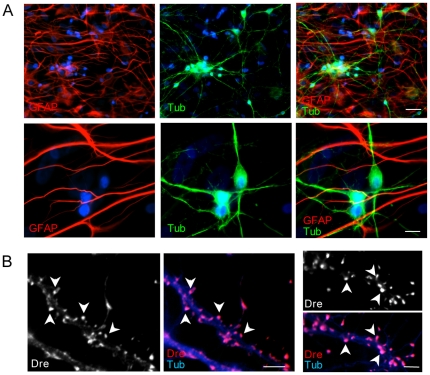
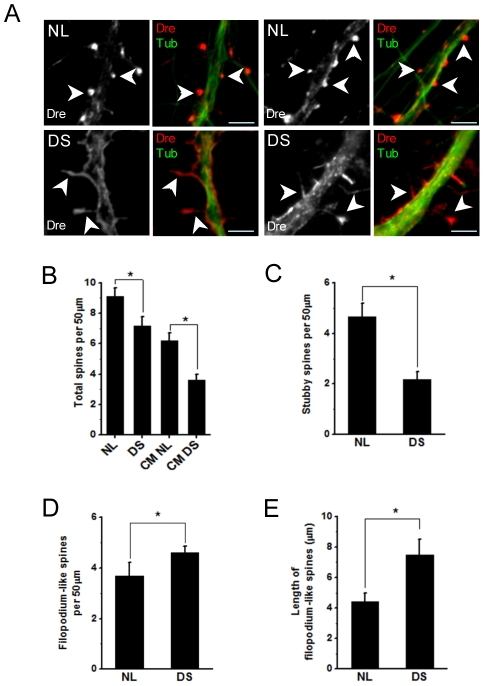
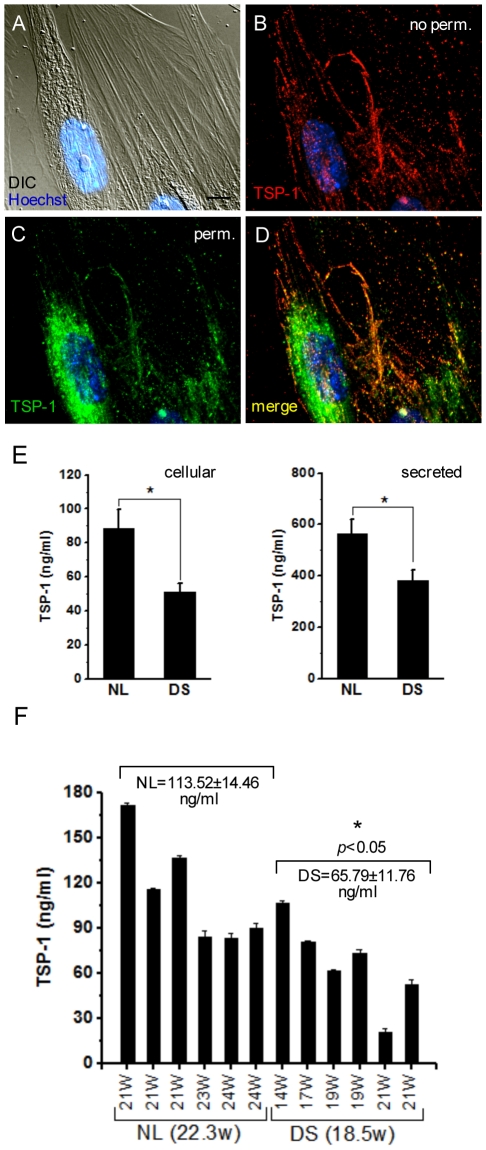
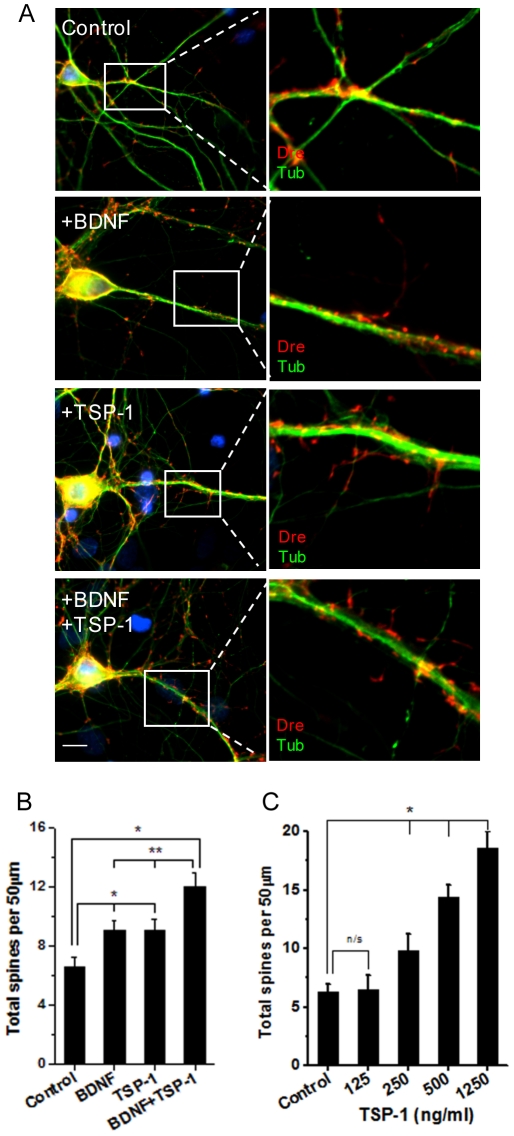
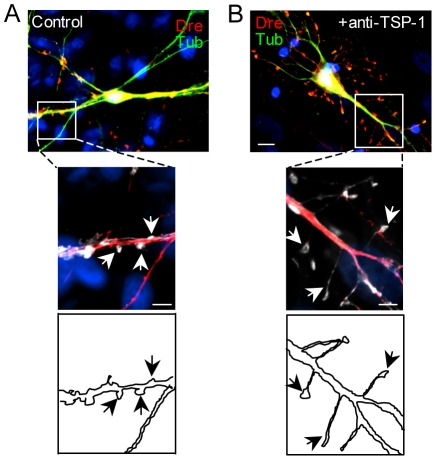
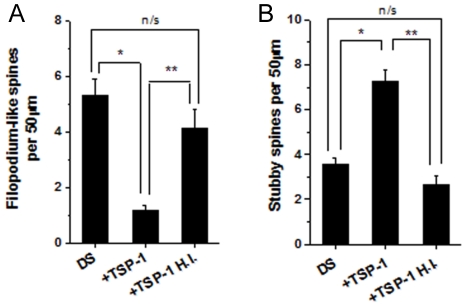
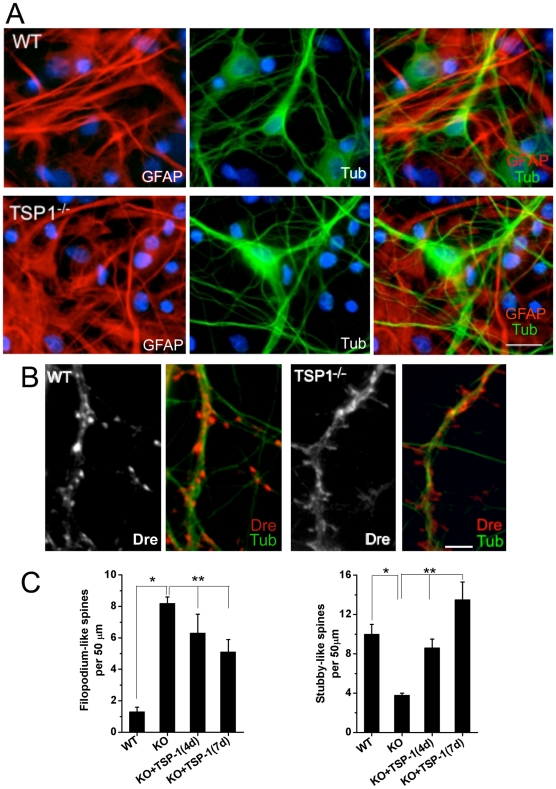
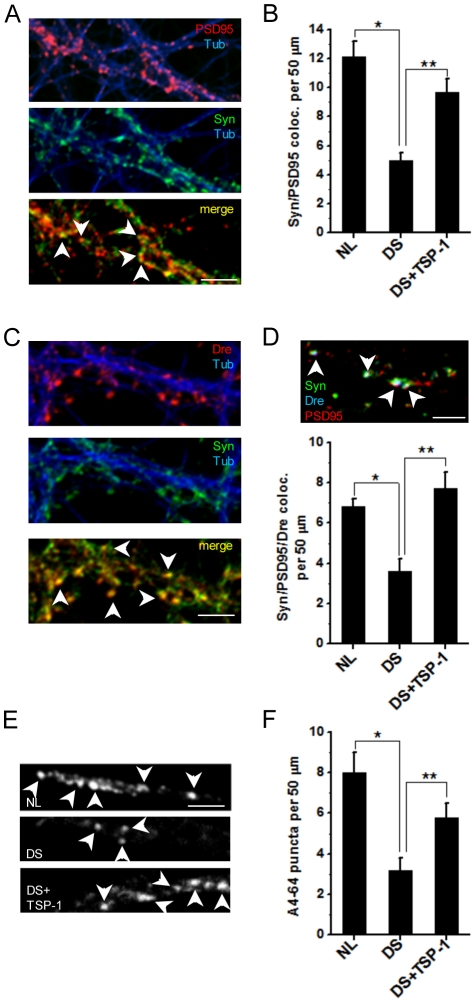
BACKGROUND: Down's syndrome (DS) is the most common genetic cause of mental retardation. Reduced number and aberrant architecture of dendritic spines are common features of DS neuropathology. However, the mechanisms involved in DS spine alterations are not known. In addition to a relevant role in synapse formation and maintenance, astrocytes can regulate spine dynamics by releasing soluble factors or by physical contact with neurons. We have previously shown impaired mitochondrial function in DS astrocytes leading to metabolic alterations in protein processing and secretion. In this study, we investigated whether deficits in astrocyte function contribute to DS spine pathology. METHODOLOGY/PRINCIPAL FINDINGS: Using a human astrocyte/rat hippocampal neuron coculture, we found that DS astrocytes are directly involved in the development of spine malformations and reduced synaptic density. We also show that thrombospondin 1 (TSP-1), an astrocyte-secreted protein, possesses a potent modulatory effect on spine number and morphology, and that both DS brains and DS astrocytes exhibit marked deficits in TSP-1 protein expression. Depletion of TSP-1 from normal astrocytes resulted in dramatic changes in spine morphology, while restoration of TSP-1 levels prevented DS astrocyte-mediated spine and synaptic alterations. Astrocyte cultures derived from TSP-1 KO mice exhibited similar deficits to support spine formation and structure than DS astrocytes. CONCLUSIONS/SIGNIFICANCE: These results indicate that human astrocytes promote spine and synapse formation, identify astrocyte dysfunction as a significant factor of spine and synaptic pathology in the DS brain, and provide a mechanistic rationale for the exploration of TSP-1-based therapies to treat spine and synaptic pathology in DS and other neurological conditions.
Overview
The claims and statistics of this paper haven’t been checked yet.
Run the check — free, no account needed. It reads the open-access text and checks the sources it cites.
Integrity signals
Registry
Cites
Statistics
Figures
Verification
Claims the paper makes
The claims and statistics of this paper haven’t been checked yet.
Run the check — free, no account needed. It reads the open-access text and checks the sources it cites.
Claims other papers make about this one
Each is checked against this paper’s own text: does it say what the citing paper says it does?
The source backs part of the claim, not all of it — or backs it for a different population, condition or comparison.
In the citing paper
“Evidence suggests that gene dysregulation and disrupted calcium signalling in glial cells also contribute to the synaptic deficits131,134.”
From Consequences of trisomy 21 for brain development in Down syndrome (2024) · cites this paper as [134]
Experimental — accuracy not yet measuredThe source backs part of the claim, not all of it — or backs it for a different population, condition or comparison.
In the citing paper
“Although the tools used to ensure accurate proportions of interneuron subtypes in a culture system have only recently been developed132, simple neuron–glia co-cultures have already provided evidence that astrocytes and microglia do have a role in the DS synaptic phenotype131,134,135.”
From Consequences of trisomy 21 for brain development in Down syndrome (2024) · cites this paper as [134]
Experimental — accuracy not yet measuredThe cited source says what the claim attributes to it.
In the citing paper
“Astrocytes isolated from DS fetal brain tissue produce less THBS1 than control astrocytes, and rodent neurons cultured with these astrocytes have fewer synapses and abnormal spine morphology than neurons cultured with control astrocytes134.”
From Consequences of trisomy 21 for brain development in Down syndrome (2024) · cites this paper as [134]
The cited source says what the claim attributes to it.
In the citing paper
“The introduction of exogenous THBS1 into these cultures rescues synaptic and spine deficits, even when neurons are co-cultured with astrocytes from individuals with DS134.”
From Consequences of trisomy 21 for brain development in Down syndrome (2024) · cites this paper as [134]
Self-check
Percentages, sums and reported differences re-computed from the paper’s own numbers.
The self-check needs the paper’s full text.
Citations
Cites
Astrocytes, from brain glue to communication elements: the revolution continues
Volterra, A., & Meldolesi, J. (2005) · Nature reviews. Neuroscience · doi:10.1038/nrn1722 · Cited by 1,837
Brain interleukin 1 and S-100 immunoreactivity are elevated in Down syndrome and Alzheimer disease.
Griffin, W. S., Stanley, L. C., Ling, C., White, L., MacLeod, V, Perrot, L. J., White, C. L., & Araoz, C. (1989) · Proceedings of the National Academy of Sciences · doi:10.1073/pnas.86.19.7611 · Cited by 1,777
Kaech, S., & Banker, G. A. (2006) · Nature Protocols · doi:10.1038/nprot.2006.356 · Cited by 1,766
CNS synaptogenesis promoted by glia-derived cholesterol
Mauch, D. H., Nägler, K., Schumacher, S., Göritz, C., Müller, E.-C., Otto, A., & Pfrieger, F. W. (2001) · Science · doi:10.1126/science.294.5545.1354 · Cited by 1,711
Thrombospondins are astrocyte-secreted proteins that promote CNS synaptogenesis
Christopherson, K. S., Ullian, E. M., Stokes, C. C. A., Mullowney, C. E., Hell, J. W., Agah, A., Lawler, J., Mosher, D. F., Bornstein, P., & Barres, B. A. (2005) · Cell · doi:10.1016/j.cell.2004.12.020 · Cited by 1,688
The DNA sequence of human chromosome 21
Hattori, M., Fujiyama, A., Taylor, T. D., Watanabe, H., Yada, T., Park, H.-S., Toyoda, A., Ishii, K., Totoki, Y., Choi, D., et al. (2000) · Nature · doi:10.1038/35012518 · Cited by 1,475
Glia: listening and talking to the synapse
Haydon, P. G. (2001) · Nature reviews. Neuroscience · doi:10.1038/35058528 · Cited by 1,454
Control of Synapse Number by Glia
Ullian, E. M., Sapperstein, S. K., Christopherson, K. S., & Barres, B. A. (2001) · Science · doi:10.1126/science.291.5504.657 · Cited by 1,380
Control of Synaptic Strength by Glial TNFα
Beattie, E. C., Stellwagen, D., Morishita, W., Bresnahan, J. C., Ha, B. K., Von Zastrow, M., Beattie, M. S., & Malenka, R. C. (2002) · Science · doi:10.1126/science.1067859 · Cited by 1,344
Astrocytes expressing ALS-linked mutated SOD1 release factors selectively toxic to motor neurons
Nagai, M., Re, D. B., Nagata, T., Chalazonitis, A., Jessell, T. M., Wichterle, H., & Przedborski, S. (2007) · Nature Neuroscience · doi:10.1038/nn1876 · Cited by 1,220
Cited by
Sorted by citations
Cell Biology of Astrocyte-Synapse Interactions
Allen, N. J., & Eroglu, C. (2017) · Neuron · doi:10.1016/j.neuron.2017.09.056 · Cited by 1,098
Emerging roles of astrocytes in neural circuit development
Clarke, L. E., & Barres, B. A. (2013) · Nature Reviews Neuroscience · doi:10.1038/nrn3484 · Cited by 975
Astrocytes Control Synapse Formation, Function, and Elimination
Chung, W.-S., Allen, N. J., & Eroglu, C. (2015) · Cold Spring Harbor Perspectives in Biology · doi:10.1101/cshperspect.a020370 · Cited by 839
Diniz, L. P., Almeida, J. C., Tortelli, V., Lopes, C. V., Setti-Perdigão, P., Stipursky, J., Kahn, S. A., Romão, L. F., Miranda, J. D., Alves‐Leon, S. V., et al. (2012) · Journal of Biological Chemistry · doi:10.1074/jbc.m112.380824 · Cited by 237
Role of astrocyte–synapse interactions in CNS disorders
Blanco‐Suárez, E., Caldwell, A. L. M., & Allen, N. J. (2016) · The Journal of Physiology · doi:10.1113/jp270988 · Cited by 234
Metadata
- Authors
- Garcia, O., Torres, M., Helguera, P., Coskun, P., & Busciglio, J.
- Affiliations
- University of California, Irvine (US)
- Corresponding author
- Busciglio, Jorge
- Venue
- PLoS ONE
- Publisher
- Public Library of Science (PLoS)
- Published
- 2010-12-02
- Volume
- 5
- Issue
- 12
- Pages
- e14200
- ISSN
- 1932-6203 (ISSN-L)
- PMC
- PMC2996288
- OpenAlex
- W2036755685
- Cited by
- 122
- References
- 115
- Citations by year
- 2026: 5 · 2025: 8 · 2024: 9 · 2023: 9 · 2022: 6 · 2021: 7 · 2020: 9 · 2019: 7 · 2018: 7 · 2017: 7 · 2016: 12 · 2015: 4 · 2014: 9 · 2013: 8 · 2012: 12
- FWCI
- 7.32
- Type
- journal article
- Language
- en
- Open access
- gold
- doi.org
- Locations
- PLoS ONE (publishedVersion, cc-by)
- PubMed Central (publishedVersion, cc-by)
- PubMed (publishedVersion)
- eScholarship (California Digital Library) (submittedVersion, cc-by)
- DOAJ (DOAJ: Directory of Open Access Journals) (submittedVersion, cc-by-sa)
- Figshare (submittedVersion, cc-by)
- Funders
- Larry L. Hillblom Foundation
- National Institutes of Health (AG16573)
- National Institute on Aging (AG 16573, P50AG016573)
- Eunice Kennedy Shriver National Institute of Child Health and Human Development (HD-38466, R01HD038466)
- Topics
- Health Sciences › Medicine › Public Health, Environmental and Occupational Health › Down syndrome and intellectual disability research
- Life Sciences › Neuroscience › Cellular and Molecular Neuroscience › Neuroscience and Neuropharmacology Research
- Life Sciences › Biochemistry, Genetics and Molecular Biology › Genetics › Genetics and Neurodevelopmental Disorders
- Keywords
- Down syndrome, thrombospondin-1, astrocytes, dendritic spines, synaptic pathology, dendritic spine morphology, synaptic density, astrocyte-neuron co-culture, hippocampal neurons, intellectual disability, astrocyte dysfunction
- MeSH terms
- Animals, Astrocytes, Brain, Down Syndrome, Humans, Microscopy, Fluorescence, Neurons, Synapses, Gene Expression Regulation, Developmental, Coculture Techniques, Thrombospondin 1, Animals, Genetically Modified, Dendritic Spines, Rats
About these checks
Registry, retraction, Cites and statistics results are computed, not judged, with one exception: a printed reference that no index lists is read once by a model before it counts as a citation error. Claims are extracted by a model and kept only when their quote appears verbatim in the text; each cited source is then checked, with a model’s help, for whether it says what the claim relies on. Those verdicts can be wrong — read the claim’s quote and the cited source before relying on one.
Statistics and arithmetic are recomputed, not judged.
Confidence bands are shown only for fields calibrated on our annotated test set. None is calibrated yet, so no band is shown.
What counts as a claim ›How we measure confidence ›How we check this ›
Are you an author, or do you see a problem with this page? Request a review
