

The DOI matches its Crossref record; 42 of the 45 references it cites were found in a registry or an index.
On-line Randomized Controlled Trial of an Internet Based Psychologically Enhanced Intervention for People with Hazardous Alcohol Consumption
Open accessAbstract
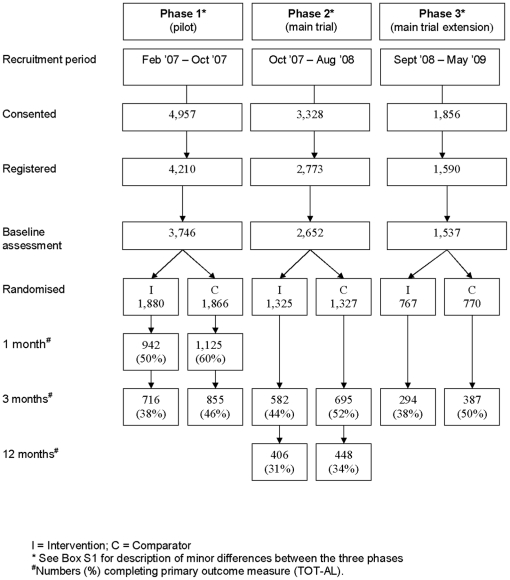
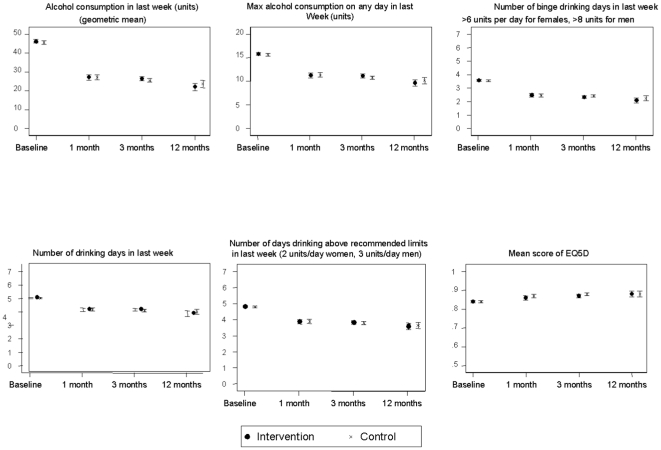
BACKGROUND: Interventions delivered via the Internet have the potential to address the problem of hazardous alcohol consumption at minimal incremental cost, with potentially major public health implications. It was hypothesised that providing access to a psychologically enhanced website would result in greater reductions in drinking and related problems than giving access to a typical alcohol website simply providing information on potential harms of alcohol. DYD-RCT Trial registration: ISRCTN 31070347. METHODOLOGY/PRINCIPAL FINDINGS: A two-arm randomised controlled trial was conducted entirely on-line through the Down Your Drink (DYD) website. A total of 7935 individuals who screened positive for hazardous alcohol consumption were recruited and randomized. At entry to the trial, the geometric mean reported past week alcohol consumption was 46.0 (SD 31.2) units. Consumption levels reduced substantially in both groups at the principal 3 month assessment point to an average of 26.0 (SD 22.3) units. Similar changes were reported at 1 month and 12 months. There were no significant differences between the groups for either alcohol consumption at 3 months (intervention: control ratio of geometric means 1.03, 95% CI 0.97 to 1.10) or for this outcome and the main secondary outcomes at any of the assessments. The results were not materially changed following imputation of missing values, nor was there any evidence that the impact of the intervention varied with baseline measures or level of exposure to the intervention. CONCLUSIONS/SIGNIFICANCE: Findings did not provide support for the hypothesis that access to a psychologically enhanced website confers additional benefit over standard practice and indicate the need for further research to optimise the effectiveness of Internet-based behavioural interventions. The trial demonstrates a widespread and potentially sustainable demand for Internet based interventions for people with hazardous alcohol consumption, which could be delivered internationally. TRIAL REGISTRATION: Controlled-Trials.com ISRCTN31070347.
Overview
The claims and statistics of this paper haven’t been checked yet.
Run the check — free, no account needed. It reads the open-access text and checks the sources it cites.
Integrity signals
Registry
Cites
Statistics
Figures
Verification
Claims the paper makes
The claims and statistics of this paper haven’t been checked yet.
Run the check — free, no account needed. It reads the open-access text and checks the sources it cites.
Claims other papers make about this one
Each is checked against this paper’s own text: does it say what the citing paper says it does?
In the citing paper
“Our own research on Web-based interventions supports these concerns about equity, with disproportionately high numbers of users having a university degree [29,30].”
From Web-Based Interventions for Behavior Change and Self-Management: Potential, Pitfalls, and Progress (2012) · cites this paper as [29]
Self-check
Percentages, sums and reported differences re-computed from the paper’s own numbers.
The self-check needs the paper’s full text.
Citations
Cites
SAUNDERS, J. B., AASLAND, O. G., BABOR, T. F., DE LA FUENTE, J. R., & GRANT, M. (1993) · Addiction · doi:10.1111/j.1360-0443.1993.tb02093.x · Cited by 13,597 · cited 1×
“Participants were randomly allocated to one of four secondary outcome measures, each of which addressed different domains of alcohol-related harm: the Alcohol Use Disorders Test (AUDIT)”
Bush, K. (1998) · Archives of Internal Medicine · doi:10.1001/archinte.158.16.1789 · Cited by 6,196
EQ-SD: a measure of health status from the EuroQol Group
Rabin, R., & Charro, F. D. (2001) · Annals of Medicine · doi:10.3109/07853890109002087 · Cited by 5,613
Rehm, J., Mathers, C., Popova, S., Thavorncharoensap, M., Teerawattananon, Y., & Patra, J. (2009) · The Lancet · doi:10.1016/s0140-6736(09)60746-7 · Cited by 3,870
Eysenbach, G. (2005) · Journal of Medical Internet Research · doi:10.2196/jmir.7.1.e11 · Cited by 2,524
Charbonneau, D. H. (2005) · Europe PMC (PubMed Central) · Cited by 2,041
Effectiveness of brief alcohol interventions in primary care populations
Kaner, E. F., Beyer, F. R., Muirhead, C., Campbell, F., Pienaar, E. D., Bertholet, N., Daeppen, J. B., Saunders, J. B., & Burnand, B. (2018) · Cochrane Database of Systematic Reviews · doi:10.1002/14651858.cd004148.pub4 · Cited by 1,665
Boca, F. K. D., & Darkes, J. (2003) · Addiction · doi:10.1046/j.1359-6357.2003.00586.x · Cited by 1,138
Towards a standardised brief outcome measure: Psychometric properties and utility of the CORE–OM
Evans, C., Connell, J., Barkham, M., Margison, F., McGrath, G., Mellor-Clark, J., & Audin, K. (2002) · British Journal of Psychiatry · doi:10.1192/bjp.180.1.51 · Cited by 934 · cited 1×
“Participants were randomly allocated to one of four secondary outcome measures, each of which addressed different domains of alcohol-related harm: the Alcohol Use Disorders Test (AUDIT) [26], the Leeds Dependence Questionnaire (LDQ) [27], the Alcohol Problem Questionnaire (APQ) [28], and the ten item Clinical Outcomes…”
Social cognition models and health behaviour: A structured review
Armitage, C. J., & Conner, M. (2000) · Psychology & Health · doi:10.1080/08870440008400299 · Cited by 797
Cited by
Sorted by citations
Economic evaluations of Internet interventions for mental health: a systematic review
Donker, T., Blankers, M., Hedman, E., Ljótsson, B., Petrie, K., & Christensen, H. (2015) · Psychological Medicine · doi:10.1017/s0033291715001427 · Cited by 316
“Conclusions are accompanied by the appropriate caveats Yes Yes Yes Yes Yes Yes Yes Yes Hollinghurst et al. (2010) Javitz et al. (2011) Phillips et al. (2014) Smit et al. (2013) Titov et al. (2009) van Spijker et al. (2012) Wallace et al. (2011) Warmerdam et al. (2010) Study design 1.”
BackgroundMethodResultInfluentialKaner, E. F., Beyer, F. R., Garnett, C., Crane, D., Brown, J., Muirhead, C., Redmore, J., O'Donnell, A., Newham, J. J., de Vocht, F., et al. (2017) · Cochrane Database of Systematic Reviews · doi:10.1002/14651858.cd011479.pub2 · Cited by 308
Riper, H., Blankers, M., Hadiwijaya, H., Cunningham, J., Clarke, S., Wiers, R., Ebert, D., & Cuijpers, P. (2014) · PLoS ONE · doi:10.1371/journal.pone.0099912 · Cited by 265
“Some explanations for this may lie in the three-times-higher number of comparisons involved in the current analysis and the fact that studies with null findings were now included [60,66].”
ResultRiper, H. M., Hoogendoorn, A. W., Cuijpers, P. J., Karyotaki, E., Boumparis, N., Mira, A., Andersson, G., Berman, A. H., Bertholet, N., Bischof, G., et al. (2018) · PLoS Medicine · doi:10.1371/journal.pmed.1002714 · Cited by 283
“2011 / UK [59] AUDIT-C�5 Community/web CBT/BSC/MI—MSU Internet 1,281(2) Unguided noninteractive web psychoeducation 3 months”
Self-citationWeb-Based Interventions for Behavior Change and Self-Management: Potential, Pitfalls, and Progress
Murray, E. (2012) · Medicine 2.0 · doi:10.2196/med20.1741 · Cited by 219
“Our own research on Web-based interventions supports these concerns about equity, with disproportionately high numbers of users having a university degree [29,30].”
BackgroundSelf-citationGajecki, M., Berman, A. H., Sinadinovic, K., Rosendahl, I., & Andersson, C. (2014) · Addiction Science & Clinical Practice · doi:10.1186/1940-0640-9-11 · Cited by 179
“8 percent [44-46].”
Mammalian sex determination—insights from humans and mice
Eggers, S., & Sinclair, A. H. (2012) · Chromosome Research · doi:10.1007/s10577-012-9274-3 · Cited by 168
Allexandre, D., Bernstein, A. M., Walker, E., Hunter, J., Roizen, M. F., & Morledge, T. J. (2016) · Journal of Occupational & Environmental Medicine · doi:10.1097/jom.0000000000000680 · Cited by 157
Effectiveness of a self-guided web-based cannabis treatment program: randomized controlled trial
Rooke, S., Copeland, J., Norberg, M., Hine, D., & McCambridge, J. (2013) · Journal of Medical Internet Research · doi:10.2196/jmir.2256 · Cited by 141
Self-citationAttrition Revisited: Adherence and Retention in a Web-Based Alcohol Trial
Murray, E., White, I. R., Varagunam, M., Godfrey, C., Khadjesari, Z., & McCambridge, J. (2013) · Journal of Medical Internet Research · doi:10.2196/jmir.2336 · Cited by 134
Self-citationVallina, S. M., Ward, B. A., Dutkiewicz, S., & Follows, M. J. (2013) · Progress In Oceanography · doi:10.1016/j.pocean.2013.08.001 · Cited by 116
Jones, A., McGrath, E., Robinson, E., Houben, K., Nederkoorn, C., & Field, M. (2018) · Journal of Consulting and Clinical Psychology · doi:10.1037/ccp0000312 · Cited by 115
“This intervention has demonstrable efficacy for increasing motivation to reduce drinking and reducing the volume of alcohol consumed (Wallace et al., 2011).”
BackgroundElectronic Interventions for Alcohol Misuse and Alcohol Use Disorders
Dedert, E. A., McDuffie, J. R., STEIN, R. M., McNiel, J. M., Kosinski, A. S., Freiermuth, C. E., Hemminger, A., & Williams, J. W. (2015) · Annals of Internal Medicine · doi:10.7326/m15-0285 · Cited by 110
Validation of the AUDIT-C in adults seeking help with their drinking online
Khadjesari, Z., White, I. R., McCambridge, J., Marston, L., Wallace, P., Godfrey, C., & Murray, E. (2017) · Addiction Science & Clinical Practice · doi:10.1186/s13722-016-0066-5 · Cited by 106
“Methods The data for this study were collected during the eight month pilot phase (February to October 2007) of an online randomised controlled trial investigating the effectiveness of an internet-based intervention (called Down Your Drink—DYD [33] for people looking for help or information on their drinking [34, 35].”
MethodSelf-citationGomes, M., Murray, E., & Raftery, J. P. (2022) · PharmacoEconomics · doi:10.1007/s40273-022-01130-0 · Cited by 114
Self-citationInternet-based randomized controlled trials: a systematic review
Mathieu, E., McGeechan, K., Barratt, A., & Herbert, R. (2013) · Journal of the American Medical Informatics Association · doi:10.1136/amiajnl-2012-001175 · Cited by 98
Garnett, C. V., Crane, D., Brown, J., Kaner, E., Beyer, F. R., Muirhead, C. R., Hickman, M., Beard, E., Redmore, J., de Vocht, F., et al. (2018) · Annals of Behavioral Medicine · doi:10.1093/abm/kax029 · Cited by 85
Technology‐Delivered Cognitive‐Behavioral Interventions for Alcohol Use: A Meta‐Analysis
Kiluk, B. D., Ray, L. A., Walthers, J., Bernstein, M. H., Tonigan, J. S., & Magill, M. (2019) · Alcoholism Clinical and Experimental Research · doi:10.1111/acer.14189 · Cited by 84
“…United States were as follows: Netherlands (Blankers et al., 2011; Riper et al., 2008); Norway (Brendryen et al., 2014); Canada (Cunningham, 2012); Ireland (Farren et al., 2015); Sweden (Gajecki et al., 2017); Australia (Kay-Lambkin et al., 2009, 2011); and United Kingdom (Wallace et al., 2011).”
BackgroundInfluentialSinadinovic, K., Wennberg, P., Johansson, M., & Berman, A. H. (2014) · European Addiction Research · doi:10.1159/000362406 · Cited by 70
Schulz, D. N., Candel, M. J. J. M., Kremers, S., Reinwand, D. A., Jander, A., & de Vries, H. (2013) · Journal of Medical Internet Research · doi:10.2196/jmir.2568 · Cited by 70
“To date, several studies of Web-based tailored alcohol interventions have been published, but randomized controlled trials among the general adult population using tailored self-help programs have been scarce [25-32].”
Comparison of two Internet-based interventions for problem drinkers: randomized controlled trial
Cunningham, J. A. (2012) · Journal of Medical Internet Research · doi:10.2196/jmir.2090 · Cited by 68
On the use of the not‐at‐random fully conditional specification (NARFCS) procedure in practice
Tompsett, D., Leacy, F. P., Moreno‐Betancur, M., Heron, J., & White, I. R. (2018) · Statistics in Medicine · doi:10.1002/sim.7643 · Cited by 64
“Other times, elicitation exercises obtain a set of plausible values from experts, rather than a plausible range, such as in Wallace et al.21, Table S8 Even when a plausible range for an MSP is elicited, interest may lie specifically at the lower and upper limits of the range.”
BackgroundSelf-citationWhite, I. R., Kalaitzaki, E., & Thompson, S. G. (2011) · Statistics in Medicine · doi:10.1002/sim.4360 · Cited by 63
Self-citationSundström, C., Gajecki, M., Johansson, M., Blankers, M., Sinadinovic, K., Stenlund-Gens, E., & Berman, A. H. (2016) · PLoS ONE · doi:10.1371/journal.pone.0157817 · Cited by 70
Engineered Breast Cancer Cell Spheroids Reproduce Biologic Properties of Solid Tumors
Ham, S. L., Joshi, R., Luker, G. D., & Tavana, H. (2016) · Advanced Healthcare Materials · doi:10.1002/adhm.201600644 · Cited by 66
Videira, M., Arranja, A., Rafael, D. F. D. S., & Gaspar, R. S. (2013) · Nanomedicine Nanotechnology Biology and Medicine · doi:10.1016/j.nano.2013.11.018 · Cited by 61
Danielsson, A.-K., Eriksson, A.-K., & Allebeck, P. (2014) · Addictive Behaviors · doi:10.1016/j.addbeh.2014.06.007 · Cited by 51
Should brief interventions in primary care address alcohol problems more strongly?
McCambridge, J., & Rollnick, S. (2014) · Addiction · doi:10.1111/add.12388 · Cited by 53
“On-line trials indicate that large numbers of people are prepared to seek help with alcohol [52], and it remains to be established what role primary care has in delivering these interventions in the era of the internet.”
BackgroundSelf-citationBardus, M., Blake, H., Lloyd, S., & Suzanne Suggs, L. (2014) · International Journal of Workplace Health Management · doi:10.1108/ijwhm-11-2013-0040 · Cited by 54
Hansen, A. B. G., Becker, U., Nielsen, A. S., Grønbæk, M., Tolstrup, J. S., & Thygesen, L. C. (2012) · Journal of Medical Internet Research · doi:10.2196/jmir.1883 · Cited by 51
Firestone, S. M., Cogger, N., Ward, M. P., Toribio, J.-A. L. M. L., Moloney, B., & Dhand, N. K. (2012) · PLoS ONE · doi:10.1371/journal.pone.0035284 · Cited by 47
Dack, C., Ross, J., Stevenson, F. A., Pal, K., Gubert, E., Michie, S., Yardley, L., Barnard, M., May, C. R., Farmer, A. A., et al. (2019) · Internet Interventions · doi:10.1016/j.invent.2019.100241 · Cited by 53
“…and when to take medicine; side effects of medicines; any changes to lifestyle; and what the medicine does (Berry et al. 1995; Busson & Dunn, 1986; Weinman, 1990) ( continued on next page ) (Carver & Scheier 1982; Michie et al. 2009; Michie et al. 2012) Problem Solving/Barriers iden fica on…”
BackgroundSelf-citationKhadjesari, Z., Stevenson, F., Godfrey, C., & Murray, E. (2015) · Health Expectations · doi:10.1111/hex.12351 · Cited by 46
Self-citationPowell, J., Williams, V., Atherton, H., Bennett, K., Yang, Y., Davoudianfar, M., Hellsing, A., Martin, A., Mollison, J., Shanyinde, M., et al. (2020) · Journal of Medical Internet Research · doi:10.2196/16804 · Cited by 44
“These included analyses (1) of participants with complete data at all time periods, (2) adjusting for factors found to be predictive of missingness, (3) fitting a pattern mixture model to assess different degrees of missing not at random, as well as (4) an assessment of missing not at random assumption for the primary…”
MethodJohansson, M., Berman, A. H., Sinadinovic, K., Lindner, P., Hermansson, U., & Andréasson, S. (2021) · Journal of Medical Internet Research · doi:10.2196/29666 · Cited by 50
“However, several previous large studies did not find a significant difference between self-help ICBT and minimal control [26,32,34].”
Bendtsen, M., & Bendtsen, P. (2014) · JMIR mhealth and uhealth · doi:10.2196/mhealth.3233 · Cited by 40
“Thus, Web-based interventions where a person is guided to a Web page with reflective information, exercises, and home work to be done before logging in at a later stage have been shown to be difficult to implement, not at least in the area of alcohol interventions [17].”
BackgroundBrendryen, H., Lund, I. O., Johansen, A. B., Riksheim, M., Nesvåg, S., & Duckert, F. (2014) · Addiction · doi:10.1111/add.12383 · Cited by 39
Eék, N., Romberg, K., Siljeholm, O., Johansson, M., Andréasson, S., Lundgren, T., Fahlke, C., Ingesson, S., Bäckman, L., & Hammarberg, A. (2019) · Alcohol and Alcoholism · doi:10.1093/alcalc/agz095 · Cited by 39
“In the area of AUD, internet-based approaches have shown corresponding efficacy as face-to-face treatment (Riper et al., 2008; Wallace et al., 2011; Sinadinovic et al., 2014).”
BackgroundHadjistavropoulos, H. D., Mehta, S., Wilhelms, A., Keough, M. T., & Sundström, C. (2019) · Cognitive Behaviour Therapy · doi:10.1080/16506073.2019.1663258 · Cited by 38
“Two studies reported the mean number of participant log-ins, with one study reporting a mean of 2.3 log-ins (Wallace et al., 2011) and the other study reporting a mean of 7.2 log-ins (Hester et al., 2013).”
BackgroundMethodInfluentialKhadjesari, Z., Freemantle, N., Linke, S., Hunter, R. M., & Murray, E. (2014) · PLoS ONE · doi:10.1371/journal.pone.0112553 · Cited by 37
“A challenge that faces the interpretation of many trials of online interventions is that they evaluate access to the intervention, rather than engagement or use of it [48-50].”
BackgroundSelf-citationHumphreys, G., Evans, R. K., Makin, H., Cooke, R. W. I., & Jones, A. (2020) · Journal of Medical Internet Research · doi:10.2196/22694 · Cited by 37
Quality of life among hazardous and harmful drinkers: EQ-5D over a 1-year follow-up period
Essex, H. N., White, I. R., Khadjesari, Z., Linke, S., McCambridge, J., Murray, E., Parrott, S., & Godfrey, C. (2013) · Quality of Life Research · doi:10.1007/s11136-013-0521-7 · Cited by 34
“baseline, follow-up at 3 months only) [27].”
BackgroundMethodInfluentialSelf-citationBrief Interventions Implementation on Alcohol from the European Health Systems Perspective
Colom, J., Scafato, E., Segura, L., Gandin, C., & Struzzo, P. (2014) · Frontiers in Psychiatry · doi:10.3389/fpsyt.2014.00161 · Cited by 31
“Without abandoning completely the traditional face-toface engagement, there is mounting evidence of the effectiveness of delivering aspects of healthcare using the Internet and mobile phone applications for the promotion of healthier lifestyles (smoking cessation, healthier drinking choices, and weight loss) (40, 41).”
BackgroundKeurhorst, M. N., Heinen, M. M., Colom, J., Linderoth, C., Müssener, U., Okulicz‐Kozaryn, K., Vieira, J. A. P., Segura, L., Silfversparre, F., Słodownik, L., et al. (2016) · BMC Family Practice · doi:10.1186/s12875-016-0461-8 · Cited by 33
Murray, E., Ross, J., Pal, K., Li, J., Dack, C., Stevenson, F. A., Sweeting, M. J., Parrott, S., Barnard, M., Yardley, L., et al. (2018) · Programme Grants for Applied Research · doi:10.3310/pgfar06050 · Cited by 33
“However, there was no difference between groups.(139) The IP was co-owned by chief investigator Elizabeth Murray, so it was a good case study for working through the challenges of incorporating a module into the HeLP-Diabetes programme (including IP, governance, software compatibility and adapting the appearance and a…”
BackgroundSelf-citationLópez‐Pelayo, H., Wallace, P., Segura, L., Miquel, L., Díaz, E., Teixidó, L., Baena, B., Struzzo, P., Vieira, J. A. P., Casajuana, C., et al. (2014) · BMJ Open · doi:10.1136/bmjopen-2014-007130 · Cited by 28
“uk website developed for the DYD-RCT (randomised controlled trial).(14) Details of DYD and the psychological theory that underpinned its development have been reported elsewhere.”
BackgroundSelf-citationRandomized Controlled Trial of a Brief Versus Extended Internet Intervention for Problem Drinkers
Cunningham, J. A., Shorter, G. W., Murphy, M., Kushnir, V., Rehm, J. T., & Hendershot, C. S. (2016) · International Journal of Behavioral Medicine · doi:10.1007/s12529-016-9604-5 · Cited by 27
“The Down Your Drink trial is one example of such a design and, further, one where there were no significant differences observed between conditions [21].”
BackgroundBuilding the first step: a review of low-intensity interventions for stepped care
Mckellar, J. D., Austin, J. L., & Moos, R. H. (2012) · Addiction Science & Clinical Practice · doi:10.1186/1940-0640-7-26 · Cited by 26
“…version of SAO’s MI/CBT protocol plus 7 synchronous chat-based therapy sessions) Control: waitlist (WL) condition Internet-based intervention Wallace et al (2011) Randomized trial Individuals who accessed the DYD website and scored ≥5 on the AUDIT-C Participants in the active condition…”
MethodMcCambridge, J., Bendtsen, P., Bendtsen, M., & Nilsén, P. (2012) · Trials · doi:10.1186/1745-6215-13-49 · Cited by 21
“However, there are also examples of apparently well designed interventions (for example, [12]) not being found to be effective [13].”
BackgroundSelf-citationSohi, I., Shield, K. D., Rehm, J. T., & Monteiro, M. G. (2023) · Alcoholism Clinical and Experimental Research · doi:10.1111/acer.15175 · Cited by 23
Khadjesari, Z., Newbury‐Birch, D., Murray, E., Shenker, D., Marston, L., & Kaner, E. (2015) · PLoS ONE · doi:10.1371/journal.pone.0121174 · Cited by 23
“The main reason for not accessing DYD was because participants did not want to change their drinking (39% male vs. 29% female; OR 1.5 95% CI: 1.08, 2.97).”
MethodInfluentialSelf-citationWallace, P., & Bendtsen, P. (2014) · Frontiers in Psychiatry · doi:10.3389/fpsyt.2014.00151 · Cited by 21
Self-citationNadkarni, A., Costa, S., Gupta, D., Fernandes, D. M., Catalano, A., Velleman, R. D. B., Sambari, S., Pednekar, S., Hussain, F. N., D’Souza, E., et al. (2021) · Journal of Substance Abuse Treatment · doi:10.1016/j.jsat.2021.108331 · Cited by 21
Voogt, C. V., Poelen, E. A. P., Kleinjan, M., Lemmers, L., & Engels, R. C. M. E. (2013) · Health Promotion International · doi:10.1093/heapro/dat016 · Cited by 21
“To determine the effectiveness of WDYD, a two-arm parallel group randomized controlled trial will be conducted among 908 heavy drinking college students (for other evaluations of web-based brief interventions, see Riper et al., 2008 and Wallace et al., 2011).”
MethodTwo fully automated web-based interventions for risky alcohol use: randomized controlled trial
Tensil, M.-D., Jonas, B., & Strüber, E. (2013) · Journal of Medical Internet Research · doi:10.2196/jmir.2489 · Cited by 20
Sinadinovic, K., Wennberg, P., & Berman, A. H. (2012) · Drug and Alcohol Dependence · doi:10.1016/j.drugalcdep.2012.04.016 · Cited by 20
Benton, J. S., Cotterill, S., Hawkes, R. E., Miles, L. M., & French, D. (2022) · Journal of Medical Internet Research · doi:10.2196/39483 · Cited by 17
“…a journal article describing the theoretical content of the HeLP-Diabetes intervention [24]; and (3) journal articles relating to the 3 pre-existing behavior change interventions that were integrated into the HeLP-Diabetes intervention—DownYourDrink [25,26], POWeR [27,28], and StopAdvisor [29,30].”
Sundström, C., Kraepelien, M., Eék, N., Fahlke, C., Kaldo, V., & Berman, A. H. (2017) · BMC Psychiatry · doi:10.1186/s12888-017-1355-6 · Cited by 20
“In other comparable studies, baseline consumption for preceding week has usually been somewhere between 30 and 45 standard drinks [23, 28, 30].”
BackgroundJones, A., McGrath, E., Houben, K., Nederkoorn, C., Robinson, E., & Field, M. (2014) · BMC Public Health · doi:10.1186/1471-2458-14-796 · Cited by 19
“Participants will be told that they should continue to use the DYD drinking diary for the remainder of the study, and they should complete training tasks by following Internet links that will be emailed to them.”
BackgroundInfluentialThomas, K., Bendtsen, M., Linderoth, C., Karlsson, N., Bendtsen, P., & Müssener, U. (2017) · Trials · doi:10.1186/s13063-017-1898-3 · Cited by 14
Murray, E., Khadjesari, Z., Linke, S., Hunter, R. M., & Freemantle, N. (2013) · BMC Public Health · doi:10.1186/1471-2458-13-505 · Cited by 16
“Our previous work had suggested that reductions in alcohol consumption seen at 3 months were maintained at 12 months [33], although the data from that trial may not apply to the different population recruited here.”
BackgroundResultSelf-citationBendtsen, P., Müssener, U., Karlsson, N. E., López‐Pelayo, H., Vieira, J. A. P., Colom, J., Gual, A., Reynolds, J., Wallace, P., Segura, L., et al. (2016) · BMJ Open · doi:10.1136/bmjopen-2015-010271 · Cited by 16
Self-citationMurray, E., Linke, S., Harwood, E., Conroy, S., Stevenson, F. A., & Godfrey, C. (2012) · Alcohol and Alcoholism · doi:10.1093/alcalc/ags096 · Cited by 16
“In common with many web-based interventions (Eysenbach, 2005), considerable attrition from DYD has been observed (Linke et al., 2007; Wallace et al., 2011).”
BackgroundSelf-citationMcCambridge, J., Bendtsen, M., Karlsson, N. E., White, I. R., & Bendtsen, P. (2013) · BMC Public Health · doi:10.1186/1471-2458-13-949 · Cited by 15
“If skewed, they will either be logtransformed and analysed by linear regression [17], or analysed by negative binomial regression [25], and results will be reported as% reduction.”
BackgroundMethodSelf-citationWallace, P., Struzzo, P., Vedova, R. D., Scafuri, F., Tersar, C., Lygidakis, C., McGregor, R., Scafato, E., Hunter, R. M., & Freemantle, N. (2017) · BMJ Open · doi:10.1136/bmjopen-2016-014576 · Cited by 19
Self-citationStruzzo, P., Scafato, E., McGregor, R., Vedova, R. D., Verbano, L., Lygidakis, C., Tersar, C., Crapesi, L., Tubaro, G., Freemantle, N., et al. (2013) · BMJ Open · doi:10.1136/bmjopen-2012-002304 · Cited by 14
Self-citationHawkes, R. E., Benton, J. S., Cotterill, S., Sanders, C., & French, D. (2024) · JMIR Diabetes · doi:10.2196/56276 · Cited by 19
Cleaner shrimp are true cleaners of injured fish
Vaughan, D. B., Grutter, A. S., Ferguson, H. W., Jones, R. E., & Hutson, K. S. (2018) · Marine Biology · doi:10.1007/s00227-018-3379-y · Cited by 13
Angus, C., Li, J., Rodríguez, E. M. R., Anderson, P., Parrott, S., & Brennan, A. (2018) · European Journal of Public Health · doi:10.1093/eurpub/cky181 · Cited by 16
Farren, C. K., Milnes, J., Lambe, K. A., & Ahern, S. (2014) · Irish Journal of Psychological Medicine · doi:10.1017/ipm.2014.64 · Cited by 12
“Although there are some studies about computer-delivered interventions for addictions, they appear to be primarily in tobacco use (Rooke et al. 2010), and if in alcohol, they appear to be targeted for problem drinking rather than for full AUD (Cunningham et al. 2009; Wallace et al. 2011).”
BackgroundResultBuntrock, C., Kählke, F., Smit, F., & Ebert, D. D. (2019) · European Journal of Public Health · doi:10.1093/eurpub/ckz022 · Cited by 11
Brier, L. M., Zhang, X., Bice, A. R., Gaines, S. H., Landsness, E. C., Lee, J., Anastasio, M. A., & Culver, J. P. (2021) · Cerebral Cortex · doi:10.1093/cercor/bhab282 · Cited by 11
Heatwole, H., Lillywhite, H. B., & Grech, A. (2016) · Journal of Sea Research · doi:10.1016/j.seares.2016.05.003 · Cited by 10
Gutiérrez, G., Meartsi, D., Nikjoo, N., Sajid, S., Moghimi, E., & Alavi, N. (2023) · International Journal of Mental Health and Addiction · doi:10.1007/s11469-023-01132-9 · Cited by 11
“…Gajecki et al., 2017; Guillemont et al., 2017; Johansson et al., 2021a; Johansson, Sinadinovic, Johansson et al., 2021a, b; Kiluk et al., 2016; Postel et al., 2010; Schaub et al., 2021; Sinadinovic et al., 2014; Sundström et al., 2020; Wallace et al., 2011; Wilks et al., 2018; Zill et al., 2019).”
InfluentialAlcohol Counseling in Hospital Trauma: Examining Two Brief Interventions
Veach, L. J., Moro, R. R., Miller, P. R., Reboussin, B. A., Ivers, N. N., Rogers, J. L., & O’Brien, M. C. (2018) · Journal of Counseling & Development · doi:10.1002/jcad.12199 · Cited by 13
Shaw, B. R., Sivakumar, G., Balinas, T., Chipman, R., & Krahn, D. D. (2013) · Journal of Technology in Human Services · doi:10.1080/15228835.2013.855995 · Cited by 9
“There are several potential advantages in using mobile technology to provide recovery-based educational content and support (Wallace et al., 2011).”
Backgroundda Silva-Junior, E. A., Paludo, C. R., Valadares, L., Lopes, N. P., do Nascimento, F. S., & Pupo, M. T. (2017) · Revista Brasileira de Farmacognosia · doi:10.1016/j.bjp.2017.05.001 · Cited by 9
Postel, M. G., ter Huurne, E. D., de Haan, H. A., van der Palen, J. A. M., & de Jong, C. A. J. (2015) · The American Journal of Drug and Alcohol Abuse · doi:10.3109/00952990.2015.1044606 · Cited by 7
“(29) found that both versions of their computer-based intervention (flat text-based and enhanced interactive) showed comparable reductions in alcohol consumption and related harms at 12 months of follow-up.”
BackgroundBlankers, M., Salemink, E., & Wiers, R. W. H. J. (2015) · Springer eBooks · doi:10.1007/978-3-319-20852-7_10 · Cited by 7
“There is at least one study however that fails to fi nd evidence for effectiveness [ 35 ].”
BackgroundMujcic, A., Linke, S., Hamilton, F. L., Phillips, A., & Khadjesari, Z. (2020) · Journal of Medical Internet Research · doi:10.2196/17285 · Cited by 7
“A more extensive description of the main trial procedures can be found in Murray et al [18] and Wallace et al [15].”
MethodSelf-citationCaballería, E., López‐Pelayo, H., Segura, L., Wallace, P., Oliveras, C., Díaz, E., Manthey, J., Baena, B., Colom, J., Gual, A., et al. (2021) · Internet Interventions · doi:10.1016/j.invent.2021.100446 · Cited by 6
Self-citationSimpson, T. L., Sistad, R. E., Brooks, J. T., Newberger, N. G., & Livingston, N. A. (2022) · Drug and Alcohol Dependence Reports · doi:10.1016/j.dadr.2022.100116 · Cited by 6
“Depression, anxiety and stress during COVID-19: associations with changes in physical activity, sleep, tobacco and alcohol use in Australian adults.”
InfluentialLow‐salt diet adherence in African Americans with hypertension
Bolin, L. P., Horne, C. E., Crane, P. B., & Powell, J. R. (2018) · Journal of Clinical Nursing · doi:10.1111/jocn.14551 · Cited by 6
Technological Interventions for the Treatment of Substance Use Disorders
Schulte, M. H. J., Boumparis, N., Huizink, A. C., & Riper, H. M. (2020) · Elsevier eBooks · doi:10.1016/b978-0-12-818697-8.00010-8 · Cited by 8
“Another study, investigating the effectiveness of an internet-based BI comprising CBT, MI and BSC, included 7935 participants who met the criteria for hazardous drinking (AUDIT-C (cid:1) 5; Wallace et al., 2011).”
Hamilton, F. L., Hornby, J., Sheringham, J., Kerry, S., Linke, S., Solmi, F., Ashton, C., Moore, K. P., & Murray, E. (2015) · Pilot and Feasibility Studies · doi:10.1186/s40814-015-0023-1 · Cited by 5
“The results of this feasibility RCT will provide useful evidence for commissioners of alcohol services as previous studies of web-based treatments for hazardous and harmful alcohol use have been conducted mainly online, for example, comparing websites with and without interaction or feedback [31].”
BackgroundSelf-citationDisorders due to substance use in ICD-11. Changes in clinical diagnosis
Modrzyński, R. (2023) · Psychiatria i Psychologia Kliniczna · doi:10.15557/pipk.2022.0031 · Cited by 5
Hamilton, F. L., Hornby, J., Sheringham, J., Linke, S., Ashton, C., Moore, K. P., Stevenson, F. A., & Murray, E. (2018) · Pilot and Feasibility Studies · doi:10.1186/s40814-018-0303-7 · Cited by 4
“We also decided to advertise the trial online, as previous trials of alcohol DHI have successfully recruited using this strategy [24, 35, 36].”
MethodSelf-citationBewick, B. M., Rumball, K., Birtwistle, J. C., Shaw, J. R., Johnson, O. A., Raistrick, D., & Tober, G. (2014) · Drug and Alcohol Review · doi:10.1111/dar.12174 · Cited by 3
e-Interventions for Alcohol Misuse
Dedert, E. A., Williams, J. W., STEIN, R. M., McNeil, J. M., McDuffie, J. R., Ross, I., Feiermuth, C., Hemminger, A., Kosinski, A., & Nagi, A. (2014) · Europe PMC (PubMed Central) · Cited by 3
Hoy, N., Newton, N. C., Kochan, N. A., Sunderland, M., Baillie, A., Chapman, C., Winter, V., Sachdev, P. S., Teesson, M., & Mewton, L. R. (2021) · Addiction · doi:10.1111/add.15672 · Cited by 4
Hawkes, R. E., Marsden, A., Cotterill, S., Benton, J. S., & French, D. (2025) · Social Science & Medicine · doi:10.1016/j.socscimed.2025.117858 · Cited by 2
O Uso de Biomarcadores em Pesquisas de Marketing
Pastore, C. M. D. A., Maffezzolli, E. C. F., & Mazzon, J. A. (2018) · Revista de Administração Contemporânea · doi:10.1590/1982-7849rac2018170223 · Cited by 2
Khadjesari, Z. (2012) · UCL Discovery (University College London) · Cited by 2
Self-citationYounès, N., Claude, L.-A., & Paolettí, X. (2021) · Frontiers in Psychiatry · doi:10.3389/fpsyt.2021.644980 · Cited by 1
Tryggedsson, J. S. J., Andersen, K., Nielsen, A. S., Olsen, C. D. H., & Mellentin, A. I. (2025) · Journal of Substance Use and Addiction Treatment · doi:10.1016/j.josat.2025.209793 · Cited by 1
Mewton, L. R., Winter, V., Hoy, N., Visontay, R., Davies, S. R., Kochan, N. A., Baillie, A., Chapman, C., Newton, N. C., Sunderland, M., et al. (2026) · The Lancet Public Health · doi:10.1016/s2468-2667(26)00056-3 · Cited by 1
Kiluk, B. D., Ray, L. A., Tartak, O., Werner, L., Trikalinos, T. A., & Magill, M. (2026) · JMIR Mental Health · doi:10.2196/82370 · Cited by 1
López‐Pelayo, H., Wallace, P., Miquel, L., Segura, L., Baena, B., Barrio, P., Colom, J., & Gual, A. (2019) · International Journal of Medical Informatics · doi:10.1016/j.ijmedinf.2019.04.018 · Cited by 1
Self-citationConversation with C hristine G odfrey
(2012) · Addiction · doi:10.1111/j.1360-0443.2012.04017.x · Cited by 1
Olszewska-Turek, K., Modrzyński, R., Kotowska, J., & Bętkowska-Korpała, B. (2022) · Psychoterapia · doi:10.12740/pt/147018 · Cited by 1
Metadata
- Authors
- Wallace, P., Murray, E., McCambridge, J., Khadjesari, Z., White, I. R., Thompson, S. G., Kalaitzaki, E., Godfrey, C., & Linke, S.
- Affiliations
- University College London (GB)
- London School of Hygiene & Tropical Medicine (GB)
- MRC Biostatistics Unit (GB)
- Institute of Cancer Research (GB)
- University of York (GB)
- Camden and Islington NHS Foundation Trust (GB)
- Corresponding author
- Wallace, Paul
- ORCID
- Venue
- PLoS ONE
- Publisher
- Public Library of Science (PLoS)
- Published
- 2011-03-09
- Volume
- 6
- Issue
- 3
- Pages
- e14740
- ISSN
- 1932-6203 (ISSN-L)
- PMC
- PMC3052303
- OpenAlex
- W2047401749
- Cited by
- 114
- References
- 45
- Citations by year
- 2026: 2 · 2025: 2 · 2024: 1 · 2023: 5 · 2022: 4 · 2021: 6 · 2020: 4 · 2019: 8 · 2018: 11 · 2017: 6 · 2016: 9 · 2015: 8 · 2014: 19 · 2013: 14 · 2012: 14
- FWCI
- 11.57
- Type
- journal article
- Language
- en
- Open access
- gold
- doi.org
- Locations
- PLoS ONE (publishedVersion, cc-by)
- PubMed Central (publishedVersion, cc-by)
- PubMed (publishedVersion)
- LSHTM Research Online (London School of Hygiene and Tropical Medicine) (acceptedVersion)
- RePEc: Research Papers in Economics (submittedVersion)
- DOAJ (DOAJ: Directory of Open Access Journals) (submittedVersion, cc-by-sa)
- UCL Discovery (University College London) (submittedVersion)
- Figshare (submittedVersion, cc-by)
- Research Portal (King's College London) (submittedVersion, other-oa)
- UEA Digital Repository (University of East Anglia) (submittedVersion)
- Funders
- Cancer Research UK
- National Institute for Health and Care Research
- British Heart Foundation (RG/08/014/24067)
- Diabetes UK
- Alcohol Change UK
- Medical Research Council (U.1052.00.006, U.1052.00.001)
- Economic and Social Research Council
- Topics
- Health Sciences › Medicine › Epidemiology › Substance Abuse Treatment and Outcomes
- Social Sciences › Psychology › Applied Psychology › Digital Mental Health Interventions
- Health Sciences › Medicine › Pathology and Forensic Medicine › Alcohol Consumption and Health Effects
- Keywords
- hazardous drinking, online intervention, alcohol consumption reduction, alcohol-related problems, intervention effectiveness
- MeSH terms
- Alcohol Drinking, Follow-Up Studies, Humans, Treatment Outcome, Patient Selection, Internet
About these checks
Registry, retraction, Cites and statistics results are computed, not judged, with one exception: a printed reference that no index lists is read once by a model before it counts as a citation error. Claims are extracted by a model and kept only when their quote appears verbatim in the text; each cited source is then checked, with a model’s help, for whether it says what the claim relies on. Those verdicts can be wrong — read the claim’s quote and the cited source before relying on one.
Statistics and arithmetic are recomputed, not judged.
Confidence bands are shown only for fields calibrated on our annotated test set. None is calibrated yet, so no band is shown.
What counts as a claim ›How we measure confidence ›How we check this ›
Are you an author, or do you see a problem with this page? Request a review
