

Variability and Diversity of Nasopharyngeal Microbiota in Children: A Metagenomic Analysis
Open accessThe DOI matches its Crossref record; 30 of the 30 references it cites were found in a registry or an index.
Abstract
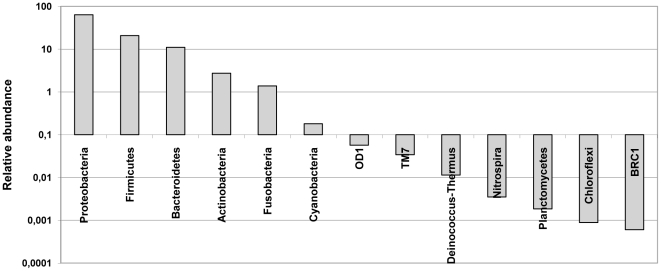
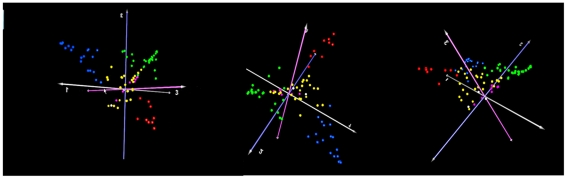
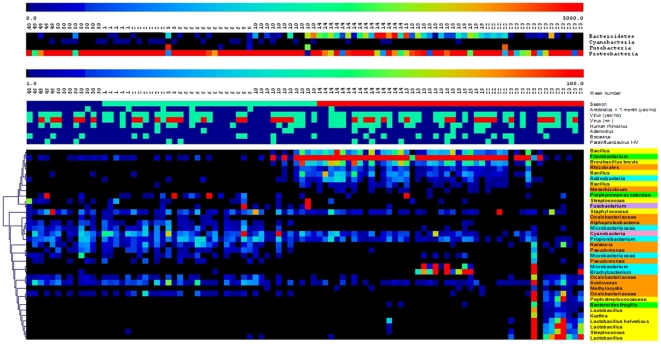
The nasopharynx is the ecological niche for many commensal bacteria and for potential respiratory or invasive pathogens like Streptococcus pneumoniae, Haemophilus influenzae, and Neisseria meningitidis. Disturbance of a balanced nasopharyngeal (NP) microbiome might be involved in the onset of symptomatic infections with these pathogens, which occurs primarily in fall and winter. It is unknown whether seasonal infection patterns are associated with concomitant changes in NP microbiota. As young children are generally prone to respiratory and invasive infections, we characterized the NP microbiota of 96 healthy children by barcoded pyrosequencing of the V5-V6 hypervariable region of the 16S-rRNA gene, and compared microbiota composition between children sampled in winter/fall with children sampled in spring. The approximately 1,000,000 sequences generated represented 13 taxonomic phyla and approximately 250 species-level phyla types (OTUs). The 5 most predominant phyla were Proteobacteria (64%), Firmicutes (21%), Bacteroidetes (11%), Actinobacteria (3%) and Fusobacteria (1,4%) with Moraxella, Haemophilus, Streptococcus, Flavobacteria, Dolosigranulum, Corynebacterium and Neisseria as predominant genera. The inter-individual variability was that high that on OTU level a core microbiome could not be defined. Microbiota profiles varied strongly with season, with in fall/winter a predominance of Proteobacteria (relative abundance (% of all sequences): 75% versus 51% in spring) and Fusobacteria (absolute abundance (% of children): 14% versus 2% in spring), and in spring a predominance of Bacteroidetes (relative abundance: 19% versus 3% in fall/winter, absolute abundance: 91% versus 54% in fall/winter), and Firmicutes. The latter increase is mainly due to (Brevi)bacillus and Lactobacillus species (absolute abundance: 96% versus 10% in fall/winter) which are like Bacteroidetes species generally related to healthy ecosystems. The observed seasonal effects could not be attributed to recent antibiotics or viral co-infection.The NP microbiota of young children is highly diverse and appears different between seasons. These differences seem independent of antibiotic use or viral co-infection.
Overview
The claims and statistics of this paper haven’t been checked yet.
Free: it reads the open-access text and checks the first 5 claims that cite a source we can check. Create a free account to check every claim.
Integrity signals
Registry
Cites
Statistics
Figures
Verification
Claims the paper makes
The claims and statistics of this paper haven’t been checked yet.
Free: it reads the open-access text and checks the first 5 claims that cite a source we can check. Create a free account to check every claim.
Claims other papers make about this one
Each is checked against this paper’s own text: does it say what the citing paper says it does?
The source backs part of the claim, not all of it — or backs it for a different population, condition or comparison.
In the citing paper
“In addition, season, vaccination, presence of siblings, day-care attendance, exposure to smoke and prior infections can also affect the infant microbiota22,31,32,33,34,35, which indicates that the microbiota during early life is dynamic and affected by numerous host and environmental factors (Fig. 2).”
From The microbiota of the respiratory tract: gatekeeper to respiratory health (2017) · cites this paper as [31]
Experimental — accuracy not yet measuredThe source backs part of the claim, not all of it — or backs it for a different population, condition or comparison.
In the citing paper
“These studies have reported an overall detection rate of 67% for respiratory viruses in healthy asymptomatic children, including human rhinovirus (HRV), human bocavirus, polyomaviruses, human adenovirus and human coronavirus31,53.”
From The microbiota of the respiratory tract: gatekeeper to respiratory health (2017) · cites this paper as [31]
Experimental — accuracy not yet measuredThe cited source says what the claim attributes to it.
In the citing paper
“In addition to bacterial inhabitants, PCR-based studies suggest the extensive presence of viral pathogens in the URT.”
From The microbiota of the respiratory tract: gatekeeper to respiratory health (2017) · cites this paper as [31]
In the citing paper
“Changes in nasopharyngeal microbiome diversity were observed across seasons, with a predominance of Proteobacteria and Fusobacteria in fall-winter and Bacteroidetes and Firmicutes in spring; these differences were independent of recent antibiotics and viral co-infection (114).”
From Respiratory viral infection-induced microbiome alterations and secondary bacterial pneumonia. (2018) · cites this paper as [114]
In the citing paper
“In healthy children, the major phyla among nasopharyngeal microbiotas are Proteobacteria, Firmicutes, Bacteroidetes, Actinobacteria, and Fusobacteria, with Moraxella, Haemophilus, Streptococcus, Flavobacteria, Dolosigranulum, Corynebacterium, and Neisseria as predominant genera.”
From Respiratory viral infection-induced microbiome alterations and secondary bacterial pneumonia. (2018) · cites this paper as [114]
Self-check
Percentages, sums and reported differences re-computed from the paper’s own numbers.
The self-check needs the paper’s full text.
Citations
Cites
In silico prediction of protein-protein interactions in human macrophages
Souiai, O., Guerfali, F., Ben Miled, S., Brun, C., & Benkahla, A. (2014) · BMC Research Notes · doi:10.1186/1756-0500-7-157 · Cited by 10,803
Significance analysis of microarrays applied to the ionizing radiation response
Tusher, V. G., Tibshirani, R., & Chu, G. (2001) · Proceedings of the National Academy of Sciences · doi:10.1073/pnas.091062498 · Cited by 10,568
A core gut microbiome in obese and lean twins
Turnbaugh, P. J., Hamady, M., Yatsunenko, T., Cantarel, B. L., Duncan, A., Ley, R. E., Sogin, M. L., Jones, W. J., Roe, B. A., Affourtit, J. P., et al. (2009) · Nature · doi:10.1038/nature07540 · Cited by 7,823 · cited 1×
“In other microbiota like the gastrointestinal and vaginal tract they are highly related to maintenance of a balanced microbiome as well [17] [18] [19] .”
BackgroundPruesse, E., Quast, C., Knittel, K., Fuchs, B. M., Ludwig, W., Peplies, J., & Glockner, F. O. (2007) · Nucleic Acids Research · doi:10.1093/nar/gkm864 · Cited by 6,668 · cited 1×
“We then used the GAST algorithm [24] to calculate the percent difference between each unique sequence and its closest match in a database of 69816 unique Eubacterial and 2779 unique Archaeal V5–V6 sequences, representing 323499 SSU rRNA sequences from the SILVA database [25].”
MethodFrank, D. N., St. Amand, A. L., Feldman, R. A., Boedeker, E. C., Harpaz, N., & Pace, N. R. (2007) · Proceedings of the National Academy of Sciences · doi:10.1073/pnas.0706625104 · Cited by 4,611 · cited 1×
“In other microbiota like the gastrointestinal and vaginal tract they are highly related to maintenance of a balanced microbiome as well [17] [18] [19] .”
BackgroundMicrobial diversity in the deep sea and the underexplored “rare biosphere”
Sogin, M. L., Morrison, H. G., Huber, J. A., Welch, D. M., Huse, S. M., Neal, P. R., Arrieta, J. M., & Herndl, G. J. (2006) · Proceedings of the National Academy of Sciences · doi:10.1073/pnas.0605127103 · Cited by 3,701 · cited 2×
“The operational taxonomic units (OTUs) were created by aligning unique sequences and calculating distance matrices as previously described [23] and using DOTUR [27] to create clusters at the 3% level.”
MethodSelf-citationBacterial Community Variation in Human Body Habitats Across Space and Time
Costello, E. K., Lauber, C. L., Hamady, M., Fierer, N., Gordon, J. I., & Knight, R. (2009) · Science · doi:10.1126/science.1177486 · Cited by 3,231 · cited 5×
“With this definition we observed a core microbiome of Moraxella, Haemophilus influenzae, Enhydrobacter (Proteobacteria), Streptococcus, Dolosigranulum (Firmicutes), and Corynebacterium (Actinobacteria) (Table 1).”
BackgroundInfluentialSchloss, P. D., & Handelsman, J. (2005) · Applied and Environmental Microbiology · doi:10.1128/aem.71.3.1501-1506.2005 · Cited by 2,501 · cited 1×
“The operational taxonomic units (OTUs) were created by aligning unique sequences and calculating distance matrices as previously described [23] and using DOTUR [27] to create clusters at the 3% level.”
Method[9] TM4 Microarray Software Suite
Saeed, A. I., Bhagabati, N. K., Braisted, J. C., Liang, W., Sharov, V., Howe, E. A., Li, J., Thiagarajan, M., White, J. A., & Quackenbush, J. (2006) · Methods in Enzymology · doi:10.1016/s0076-6879(06)11009-5 · Cited by 1,983 · cited 2×
“Seasonal differences in OTU patterns as well as potential correlations between respiratory viruses and OTU patterns were studied by the Significant Analysis of Microarrays (SAM analysis) - a nonparametric statistical technique for finding significant differences between microarray data of groups based on experimental…”
MethodStreptococcus pneumoniae colonisation: the key to pneumococcal disease
Bogaert, D., de Groot, R., & Hermans, P. (2004) · The Lancet Infectious Diseases · doi:10.1016/s1473-3099(04)00938-7 · Cited by 1,929 · cited 3×
“Although colonization by the ‘‘potential pathogens’’ of the NP microbiome is mainly asymptomatic, progression towards upper respiratory tract infections, pneumonia or even sepsis and meningitis may occur [3,4].”
BackgroundSelf-citation
Cited by
Items 401–468 of 468
Massively parallel sequencing for the microbiologist
Warrilow, D., & Allcock, R. J. N. (2013) · Microbiology Australia · doi:10.1071/ma13060
The interplay between microbial dysbiosis and immune dysfunction with age
Thevaranjan, N. (2016) · MacSphere (McMaster University) · doi:10.71548/20561
The Airway Microbiome After Burn and Inhalation Injury
Walsh, D. M. (2016) · Carolina Digital Repository (University of North Carolina at Chapel Hill) · doi:10.17615/f013-s169
Viral/bacterial respiratory tract co-infections in children
Brealey, J. C. (2017) · The University of Queensland · doi:10.14264/uql.2017.568 · Cited by 1
“Asymptomatic respiratory viral carriage has been reported in up to 70% of children under two years of age (20, 21, 27), and as early as two days after birth (30).”
Dorn, E. S. (2018) · Electronic Theses of LMU Munich (Ludwig-Maximilians-Universität München) · doi:10.5282/edoc.22009
Upper respiratory tract microbiota in health and disease – a minireview
Chwiejczak, E., & Kosikowska, U. (2018) · Current Issues in Pharmacy and Medical Sciences · doi:10.1515/cipms-2018-0035
“4, Pages 190-193 191 Gram-positive cocci (Streptococcus pneumoniae, Staphylococcus aureus) and Gram-negative cocci (Neisseria meningitidis and Moraxella catarrhalis [7,8].”
BackgroundAudry, M., Masselot, C. R., Barnier, J., Gachet, B., Saubaméa, B., Schmitt, A., Schönherr-Hellec, S., Léonard, R., Nassif, X., & Coureuil, M. (2019) · bioRxiv (Cold Spring Harbor Laboratory) · doi:10.1101/690610
Surface colonisation and survival of Staphylococcus aureus
Salgado, B. (2019) · University of Liverpool · doi:10.17638/03046539
Respiratory Microbiome in Children
Kim, D. H. (2019) · Pediatric Infection & Vaccine · doi:10.14776/piv.2019.26.e24
The stool microbiota and infant wheezing illness - the Drakenstein child health study, South Africa
Ngwarai, M. R. (2019) · Open University of Cape Town (University of Cape Town) · Cited by 1
The bacteriome and metabolome of human breast milk and their association with infant growth
Ojo, A. O. (2019) · Open University of Cape Town (University of Cape Town)
Carniel, B. F. (2019) · LSTM Online Archive (Liverpool School of Tropical Medicine)
Molecular evolution of the meningococcal fragments of 7 house-keeping genes
Kharkhal, H. N., Titov, L. P., & Yanovich, O. O. (2020) · Proceedings of the National Academy of Sciences of Belarus Medical series · doi:10.29235/1814-6023-2020-17-3-301-319
The development of the respiratory microbiota in infants and children
Powell, E. A. (2019) · doi:10.25560/82376
Hamman, B. (2020) · SUNScholar (Stellenbosch University)
Elimination and irrigation therapy to optimize the state of the nasal microbiome in children
Chelpachenko, O. E., Danilova, E. I., & In, C. (2021) · Meditsinskiy sovet = Medical Council · doi:10.21518/2079-701x-2021-1-50-58
Sigurdsson, S. (2018) · Opin vísindi (Opin vísindi)
The infant gut microbiome and resistome in health and disease
Reyman, M. (2021) · Utrecht University Repository (Utrecht University) · doi:10.33540/715
Modification of tau pathology by yeast prion seeding and tau oligomer expression
Flach, M. (2020) · edoc (University of Basel) · doi:10.5451/unibas-ep79908
Yadav, M., & Bhambi, M. (2021) · Elsevier eBooks · doi:10.1016/b978-0-12-819265-8.00078-4
(2021) · Microbiology Australia · doi:10.1071/mav42n2
Heredia‐Rodríguez, M., Balbás-Alvarez, S., Lorenzo‐López, M., Gómez‐Pesquera, E., Jorge-Monjas, P., Rojo‐Rello, S., Prada, L. S.-D., Sanz-Muñoz, I., Bouza, J. M. E., Martínez-Paz, P., et al. (2022) · Medicine · doi:10.1097/md.0000000000029902
Astım ve alerjik rinit komorbiditesi olan çocuklarda nazofaringeal mikrobiyotanın araştırılması
Çavuşoğlu, C., Yüksel, H., Yaşar, A., İnci, T., Polat, F., Uysal, A. A., & Aykut, A. (2022) · Ege Tıp Dergisi · doi:10.19161/etd.1167440
Role of Microbiome in the Etiopathogenesis of Head and Neck Cancer
Bianchini, C., Caranti, A., Corazzi, V., Pelucchi, S., & Ciorba, A. (2023) · Interdisciplinary cancer research · doi:10.1007/16833_2023_126
The modulatory effects of commensal neisseriae on upper respiratory tract infections
Page, K. L. (2014) · UWE Research Repository (UWE Bristol)
Brasil, I. M., de Andrade, C. F., de Oliveira, D. M., Caldeira, N. G. S., de Oliveira, J. R., Nascimento, A. P. A., de Almeida, A. E. C. C., & de Filippis, I. (2023) · Microbial Drug Resistance · doi:10.1089/mdr.2022.0156
Respiratory viruses in infancy and rapid RSV diagnostics
Zuurbier, R. P. (2023) · Utrecht University Repository (Utrecht University) · doi:10.33540/1723
Correlation of Human Microbiome and Immune Functioning with COVID-19 Infections: An Overview
Khatri, P., Rani, A., Pandey, R. P., & Hameed, S. (2023) · Springer eBooks · doi:10.1007/978-981-99-1463-0_11
Balbás-Alvarez, S. (2022) · UVaDOC UVaDOC University of Valladolid Documentary Repository (University of Valladolid) · doi:10.35376/10324/59895
Babišová, K., Krumpolec, P., Hadžega, D., Sabaka, P., Jackuliak, P., Minárik, G., & Hýblová, M. (2023) · Acta Virologica · doi:10.3389/av.2023.11664
“At the genus level, Moraxella is the most widespread (Bogaert et al., 2011).”
BackgroundRattanaburi, S. (2021) · Chula Digiverse · doi:10.58837/chula.the.2021.22
Yarlagadda, T. (2023) · Queensland University of Technology · doi:10.5204/thesis.eprints.244715
Tonsillectomies are associated with an increased risk of meningococcal carriage
Kristinsdóttir, Í., Haraldsson, Á., & Thors, V. S. (2024) · Scandinavian Journal of Infectious Diseases · doi:10.1080/23744235.2024.2354310
“The microbiological ecosystem is complex, and the colonisation equilibrium can be influenced by several factors [16,17].”
BackgroundHamdani, M. K. (2024) · American Journal of Biomedical Science & Research · doi:10.34297/ajbsr.2024.21.002843
Microbiome and colorectal cancer drug resistance
Miya, T. V., Belancio, V. P., & Dlamini, Z. (2024) · Elsevier eBooks · doi:10.1016/b978-0-443-33475-7.00016-0
Wang, L., Li, H., Liu, Z., Weng, T. T., Chen, X., Liu, P., & Dong, L. (2024) · Research Square · doi:10.21203/rs.3.rs-5326979/v1
Pérez‐Losada, M. (2025) · Allergies · doi:10.3390/allergies5020014
Ruan, W. H., Thapa, S., & Versalovic, J. A. (2025) · Elsevier eBooks · doi:10.1016/b978-0-323-82763-8.00005-4
(2019) · Microbiology Australia · doi:10.1071/mav40n4
Popovych, V., Koshel, I. V., Bezdetko, N. V., & Volyansky, A. Y. (2025) · OTORHINOLARYNGOLOGY · doi:10.37219/2528-8253-2025-3-4-62
Paulo, A. C., Lança, J., Almeida, S. T., Hilty, M., & Sá‐Leão, R. (2024) · Figshare · doi:10.6084/m9.figshare.26614456
Krawczyk, A. I., Röttjers, L., Fonville, M., Takumi, K., Takken, W., Faust, K., & Sprong, H. (2022) · Figshare · doi:10.6084/m9.figshare.20438436
IL-33 Controls IL-22-Dependent Antibacterial Defense by Modulating the Microbiota
Röwekamp, I. (2024) · Refubium (Universitätsbibliothek der Freien Universität Berlin) · doi:10.17169/refubium-44415
Claassen-Weitz, S., Gardner‐Lubbe, S., Xia, Y., Mwaikono, K. S., Mounaud, S. H., Nierman, W. C., Workman, L., Zar, H. J., & Nicol, M. P. (2024) · UWA Profiles and Research Repository (UWA) · doi:10.6084/m9.figshare.26594033
Henares Bonilla, D. (2022) · Tesis Doctorals en Xarxa (Consorci de Serveis Universitaris de Catalunya) · Cited by 1
A consortium of human commensals protects against middle ear colonization by otopathogensPreprint
Dewan, K. K., Callender, M., Masters, J., Gilbertson, E. A., Hurst, J. H., & Harvill, E. T. (2026) · bioRxiv (Cold Spring Harbor Laboratory) · doi:10.64898/2026.01.26.701666
Wojcicki, J. M., Mwaikono, K. S., Nsereko, E., Santos, N., Ndegwa, L. W., Blose, W., Claassen-Weitz, S., Patel, F., Africa, S. D., & Oyugi, J. O. (2026) · BMC Microbiology · doi:10.1186/s12866-025-04677-y
“The V4 region of the 16S rRNA gene was amplified using a two-step PCR protocol with primers and conditions previously described [16–18].”
Haines, R. R., Basuki, A., Tenaglia, V. P., Zar, H. J., Nicol, M. P., & Bahal, R. K. (2026) · INTERNATIONAL JOURNAL OF SYSTEMATIC AND EVOLUTIONARY MICROBIOLOGY · doi:10.1099/ijsem.0.007068
Infant Nasal Microbiome and Respiratory Health Outcomes in Early Childhood in the CHILD Cohort
Qian, Y. C. (2023) · TSpace (University of Toronto)
Optimisation of sampling for a new skin microbiome assay pilot study
Smith, A. J. (2026) · ResearchOnline@ND (The University of Notre Dame)
Diversité du microbiote digestif humain par culturomics et pyroséquençage
Lagier, J. (2013) · theses.fr (ABES) · doi:10.70675/fdc3e4efza1acz4c0dzbc96z23605b27d2a3 · Cited by 2
Host-pathogens interactions during RSV / S. pneumoniae infection immune response and p53 pathway
Machado, D. B. B. (2017) · theses.fr (ABES) · doi:10.70675/3b4a9038z62abz41fcz8fa8zd0dbd4dcbfe4
Rôle du microbiote dans les interactions hôte-pathogène dans la tuberculose
Dumas, A. (2018) · theses.fr (ABES) · doi:10.70675/6773a408zdb52z44bbzb51ez3998deaf3ded
Etude du microbiote urinaire et cancer de la vessie
Yacouba, A. (2022) · theses.fr (ABES) · doi:10.70675/341a3bb8z12c2z4184z8125zc97204dff5fb
Exploration du microbiote respiratoire des patients covid-19
Saha, O. L. F. T. (2023) · theses.fr (ABES) · doi:10.70675/10a5b3e7z7672z453ezab71z623a8f6506c4
Lakomska, N., Sharikadze, O. V., & Zubchenko, S. О. (2026) · The Journal of V N Karazin Kharkiv National University series Medicine · doi:10.26565/2313-6693-2026-58-02
Lopes, C. E., Cruz, J. C., Ferronato, A., Carvalho, J. B., Casagrande, M. B., Klain, V., Piva, M. M., Viott, A. D. M., Menegatt, J. C. O., Frazzon, J., et al. (2026) · Research in Veterinary Science · doi:10.1016/j.rvsc.2026.106233
Birgy, A., Lévy, C., Ouldali, N., Béchet, S., Batard, C., Zouari, M., Bonacorsi, S., Varon, E., & Cohen, R. (2026) · The Pediatric Infectious Disease Journal · doi:10.1097/inf.0000000000005373
Tang, J., Li, N., Zhou, W., Pan, R., Suo, L., Li, B., & Zhao, H. (2026) · Biology · doi:10.3390/biology15171530
“The NAS microbiota was dominated by Proteobacteria, resembling the upper respiratory tract microbiota of children [29], swine [30], bovines [31], and ovine species [32].”
Chai, W., Wang, L., Wang, W., Feng, C., He, M., Jiang, J., & Zhou, M. (2026) · Head and Neck Diseases Conflux · doi:10.71321/r7de2v23
Metadata
- Authors
- Bogaert, D., Keijser, B., Huse, S., Rossen, J., Veenhoven, R., van Gils, E., Bruin, J., Montijn, R., Bonten, M., & Sanders, E.
- Affiliations
- University Medical Center Utrecht (NL)
- Netherlands Organisation for Applied Scientific Research (NL)
- Marine Biological Laboratory (US)
- Elisabeth-TweeSteden Ziekenhuis (NL)
- Spaarne Ziekenhuis (NL)
- Corresponding author
- Bogaert, Debby
- Venue
- PLoS ONE
- Publisher
- Public Library of Science (PLoS)
- Published
- 2011-02-28
- Volume
- 6
- Issue
- 2
- Pages
- e17035
- ISSN
- 1932-6203 (ISSN-L)
- PMC
- PMC3046172
- OpenAlex
- W2096511107
- Cited by
- 454
- References
- 30
- Citations by year
- 2026: 14 · 2025: 23 · 2024: 30 · 2023: 27 · 2022: 37 · 2021: 41 · 2020: 33 · 2019: 38 · 2018: 39 · 2017: 36 · 2016: 34 · 2015: 25 · 2014: 30 · 2013: 23 · 2012: 20
- FWCI
- 30.30
- Type
- journal article
- Language
- en
- Open access
- gold
- doi.org
- Locations
- PLoS ONE (publishedVersion, cc-by)
- PubMed Central (publishedVersion, cc-by)
- PubMed (publishedVersion)
- TNO Repository (submittedVersion)
- DOAJ (DOAJ: Directory of Open Access Journals) (submittedVersion, cc-by-sa)
- Figshare (submittedVersion, cc-by)
- Repository hosted by TU Delft Library (TU Delft) (submittedVersion)
- Data Archiving and Networked Services (DANS) (submittedVersion, other-oa)
- Funders
- GlaxoSmithKline
- Nederlandse Organisatie voor Wetenschappelijk Onderzoek
- Topics
- Health Sciences › Dentistry › Periodontics › Oral microbiology and periodontitis research
- Life Sciences › Biochemistry, Genetics and Molecular Biology › Molecular Biology › Gut microbiota and health
- Life Sciences › Immunology and Microbiology › Microbiology › Microbial infections and disease research
- Keywords
- nasopharyngeal microbiota, seasonal variation, children, interindividual variability, Proteobacteria, Bacteroidetes, Firmicutes, Fusobacteria, Streptococcus, Haemophilus, Neisseria, Moraxella, Lactobacillus, respiratory infections, invasive infections, Streptococcus pneumoniae
- MeSH terms
- Heptavalent Pneumococcal Conjugate Vaccine, Bacteria, Child, Preschool, Humans, Individuality, Infant, Nasopharynx, Pneumococcal Infections, RNA, Ribosomal, 16S, Seasons, Cluster Analysis, Case-Control Studies, Randomized Controlled Trials as Topic, Genetic Heterogeneity, Pneumococcal Vaccines, Metagenome, Metagenomics
About these checks
Registry, retraction, Cites and statistics results are computed, not judged, with one exception: a printed reference that no index lists is read once by a model before it counts as a citation error. Claims are extracted by a model and kept only when their quote appears verbatim in the text; each cited source is then checked, with a model’s help, for whether it says what the claim relies on. Those verdicts can be wrong — read the claim’s quote and the cited source before relying on one.
Statistics and arithmetic are recomputed, not judged.
Confidence bands are shown only for fields calibrated on our annotated test set. None is calibrated yet, so no band is shown.
What counts as a claim ›How we measure confidence ›How we check this ›
Are you an author, or do you see a problem with this page? Request a review
Data sources
Bibliographic data: Semantic Scholar, OpenAlex, Crossref.
Contains information from the Semantic Scholar Academic Graph Datasets, made available under the ODC Attribution License (ODC-BY 1.0).
Semantic Scholar’s data is described in: Kinney, R., et al. (2023). The Semantic Scholar Open Data Platform. arXiv:2301.10140.
