

Sex Hormones in Autism: Androgens and Estrogens Differentially and Reciprocally Regulate RORA, a Novel Candidate Gene for Autism
Open accessThe DOI matches its Crossref record; 27 of the 27 references it cites were found in a registry or an index.
Abstract
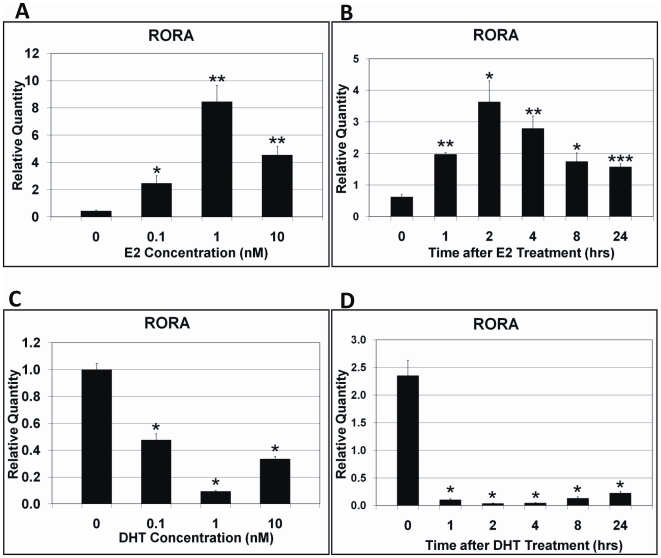
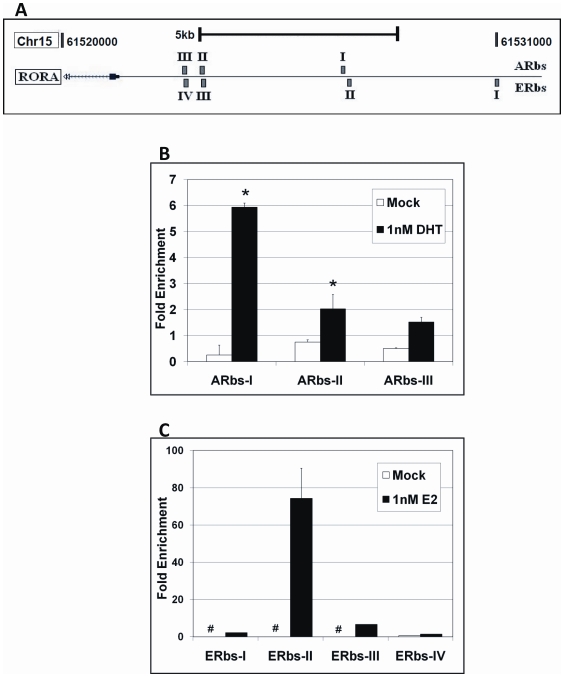
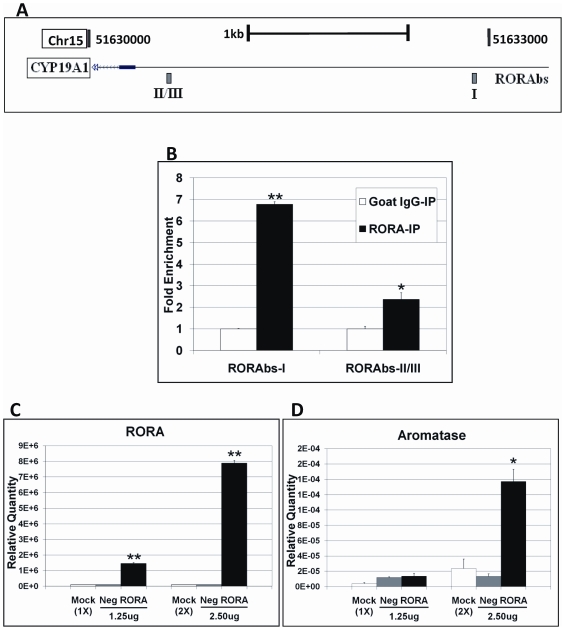
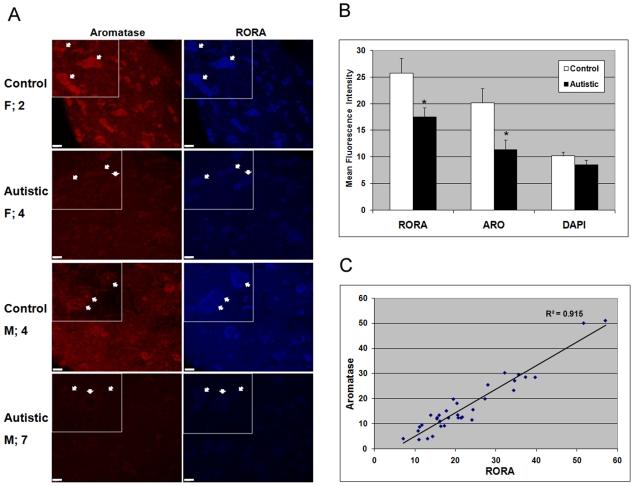
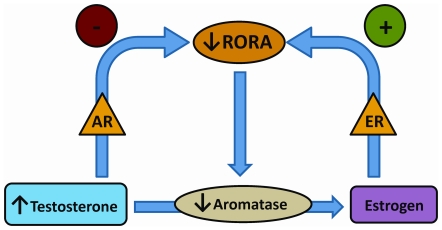
Autism, a pervasive neurodevelopmental disorder manifested by deficits in social behavior and interpersonal communication, and by stereotyped, repetitive behaviors, is inexplicably biased towards males by a ratio of ∼4∶1, with no clear understanding of whether or how the sex hormones may play a role in autism susceptibility. Here, we show that male and female hormones differentially regulate the expression of a novel autism candidate gene, retinoic acid-related orphan receptor-alpha (RORA) in a neuronal cell line, SH-SY5Y. In addition, we demonstrate that RORA transcriptionally regulates aromatase, an enzyme that converts testosterone to estrogen. We further show that aromatase protein is significantly reduced in the frontal cortex of autistic subjects relative to sex- and age-matched controls, and is strongly correlated with RORA protein levels in the brain. These results indicate that RORA has the potential to be under both negative and positive feedback regulation by male and female hormones, respectively, through one of its transcriptional targets, aromatase, and further suggest a mechanism for introducing sex bias in autism.
Overview
The claims and statistics of this paper haven’t been checked yet.
Free: it reads the open-access text and checks the first 5 claims that cite a source we can check. Create a free account to check every claim.
Integrity signals
Registry
Cites
Statistics
Figures
Verification
Claims the paper makes
The claims and statistics of this paper haven’t been checked yet.
Free: it reads the open-access text and checks the first 5 claims that cite a source we can check. Create a free account to check every claim.
Claims other papers make about this one
Each is checked against this paper’s own text: does it say what the citing paper says it does?
The cited source says what the claim attributes to it.
In the citing paper
“and RORA stimulates expression of aromatase”
From Sex differences in autism spectrum disorders (2013) · cites this paper as [75]
In the citing paper
“Finding of integral role for RORA, a gene downregulated in ASD, in sex hormone metabolism”
From Sex differences in autism spectrum disorders (2013) · cites this paper as [75]
In the citing paper
“transcription of RORA is activated by testosterone and inhibited by estrogen”
From Sex differences in autism spectrum disorders (2013) · cites this paper as [75]
Self-check
Percentages, sums and reported differences re-computed from the paper’s own numbers.
The self-check needs the paper’s full text.
Citations
Cites
Diagnostic and Statistical Manual of Mental Disorders
Williams, J. B. W., & First, M. (2013) · Encyclopedia of Social Work · doi:10.1093/acrefore/9780199975839.013.104 · Cited by 109,519
Diagnostic and Statistical Manual of Mental Disorders
Siegel, L. J., & Fletcher‐Janzem, E. (2008) · Encyclopedia of Special Education · doi:10.1002/9780470373699.speced0655 · Cited by 8,477
PROMO: detection of known transcription regulatory elements using species-tailored searches
Messeguer, X., Escudero, R., Farré, D., Núñez, O., Martı́nez, J., & Albà, M. M. (2002) · Bioinformatics · doi:10.1093/bioinformatics/18.2.333 · Cited by 1,369
Sex differences in the brain: implications for explaining autism
Baron-Cohen, S., Knickmeyer, R. C., & Belmonte, M. K. (2005) · Science · doi:10.1126/science.1115455 · Cited by 1,145 · cited 1×
“may increase susceptibility towards autism[3].”
Just, M. A., Cherkassky, V. L., Keller, T. A., Kana, R. K., & Minshew, N. J. (2007) · Cerebral Cortex · doi:10.1093/cercor/bhl006 · Cited by 1,081
Identification of patterns in biological sequences at the ALGGEN server: PROMO and MALGEN
Farre, D. (2003) · Nucleic Acids Research · doi:10.1093/nar/gkg605 · Cited by 1,036 · cited 1×
“3 to construct specific binding site weight matrices for prediction of transcription factor binding sites [23,24].”
BackgroundBryne, J. C., Valen, E., Tang, M.-H. E., Marstrand, T., Winther, O., da Piedade, I., Krogh, A., Lenhard, B., & Sandelin, A. (2007) · Nucleic Acids Research · doi:10.1093/nar/gkm955 · Cited by 692 · cited 1×
“The putative binding sites were then further validated using JASPAR and ChampionChIP databases [22], and carefully selected for ChIP-qPCR analyses.”
MethodFetal testosterone and autistic traits
Auyeung, B., Baron‐Cohen, S., Ashwin, E., Knickmeyer, R., Taylor, K., & Hackett, G. (2009) · British Journal of Psychology · doi:10.1348/000712608x311731 · Cited by 462
Field trial for autistic disorder in DSM-IV
(1994) · American Journal of Psychiatry · doi:10.1176/ajp.151.9.1361 · Cited by 401 · cited 1×
“opment and/or usage, and repetitive, stereotyped behaviors, often with restricted interests[1,2].”
BackgroundNguyen, A., Rauch, T. A., Pfeifer, G. P., & Hu, V. W. (2010) · The FASEB Journal · doi:10.1096/fj.10-154484 · Cited by 350 · cited 1×
“We have recently identified a novel autism candidate gene, retinoic acid-related (RAR) orphan receptor-alpha (RORA)”
BackgroundSelf-citation
Cited by
Items 101–200 of 234
The Expanding Genomic Landscape of Autism: Discovering the ‘Forest‘ Beyond the ‘Trees‘
Hu, V. W. (2012) · Future Neurology · doi:10.2217/fnl.12.83 · Cited by 28
“Reflecting the decreased expression in lymphoblastoid cell lines, a decrease in RORA protein is observed in post-mortem brain tissues of individuals with autism spectrum disorders relative to age-matched unaffected controls [45,47], and is correlated with a decrease in aromatase protein in the frontal cortex.”
BackgroundInfluentialSelf-citationYu, H. Y., Niu, Y., Jia, G., Liang, Y., Chen, B., Sun, R., Wang, M., Huang, S., Zeng, J., Lu, J., et al. (2022) · Communications Biology · doi:10.1038/s42003-022-03005-8 · Cited by 26
Prenatal Sex Hormone Exposure Is Associated with the Development of Autism Spectrum Disorder
Li, M., Usui, N., & Shimada, S. (2023) · International Journal of Molecular Sciences · doi:10.3390/ijms24032203 · Cited by 27
“demonstrated that the ASD candidate gene RORA that encodes retinoic acid-related orphan receptor alpha is differentially regulated by male and female sex hormones through their respective receptors [46].”
InfluentialFirestein, M. R., Romeo, R. D., Winstead, H., Goldman, D. A., Grobman, W. A., Haas, D., Mercer, B., Parker, C., Parry, S., Reddy, U., et al. (2022) · Hormones and Behavior · doi:10.1016/j.yhbeh.2022.105125 · Cited by 22
Cerebellum and neurodevelopmental disorders: RORα is a unifying force
Ribeiro, S., & Sherrard, R. M. (2023) · Frontiers in Cellular Neuroscience · doi:10.3389/fncel.2023.1108339 · Cited by 24
“Thus, in boys, less RORA expression and reduced aromatase will increase circulating testosterone, which in turn inhibits RORA expression (Sarachana et al., 2011), reinforcing the RORA deficiency.”
BackgroundNeurosteroids and the Nervous System
King, S. R. (2012) · SpringerBriefs in neuroscience · doi:10.1007/978-1-4614-5559-2 · Cited by 23
Signaling Pathways and Sex Differential Processes in Autism Spectrum Disorder
Enriquez, K., Gupta, A. R., & Hoffman, E. J. (2021) · Frontiers in Psychiatry · doi:10.3389/fpsyt.2021.716673 · Cited by 23
“Another post-mortem study found that protein levels of retinoic acid-related orphan receptoralpha (RORA), whose expression is differentially regulated by estradiol and dihydrotestosterone, as well as aromatase, the enzyme that converts testosterone into estrogen and whose expression is regulated by RORA, were signific…”
BackgroundAl-Zaid, F. S., Hurley, M. J., Dexter, D. T., & Gillies, G. E. (2023) · npj Parkinson's Disease · doi:10.1038/s41531-023-00563-4 · Cited by 20
Are Steroid Hormones Dysregulated in Autistic Girls?
Gasser, B. A., Kurz, J., Dick, B., & Mohaupt, M. G. (2020) · Diseases · doi:10.3390/diseases8010006 · Cited by 20
Hu, V. W. (2012) · Disease Markers · doi:10.1155/2012/835728 · Cited by 24
Self-citationMight cholesterol sulfate deficiency contribute to the development of autistic spectrum disorder?
Seneff, S., Davidson, R. M., & Mascitelli, L. (2011) · Medical Hypotheses · doi:10.1016/j.mehy.2011.10.026 · Cited by 19
“RORα has been shown to be deficient in the frontal cortex in association with ASD [40].”
Genetic variants in RORA and DNMT1 associated with cutaneous melanoma survival
Li, B., Wang, Y., Xu, Y., Liu, H., Bloomer, W., Zhu, D., Amos, C. I., Fang, S., Lee, J. E., Li, X., et al. (2018) · International Journal of Cancer · doi:10.1002/ijc.31243 · Cited by 19
“The resultant negative feedback transcriptionally regulates aromatase, which converts male hormones to estrogens.(43) RORA is also known as a binding site of melatonin, which participates in anti-apoptotic and antiinflammatory responses, suppressing neoplastic growth in a variety of SHRs-related tumors, including canc…”
Xiong, X., Liu, D., He, W., Sheng, X., Zhou, W., Xie, D., Liang, H., Zeng, T., Li, T., & Wang, Y. (2019) · The International Journal of Biochemistry & Cell Biology · doi:10.1016/j.biocel.2019.105594 · Cited by 21
Llorach-Parés, L., Nonell‐Canals, A., Àvila, C., & Sánchez-Martínez, M. (2022) · Marine Drugs · doi:10.3390/md20010053 · Cited by 19
Mondal, A., Mukherjee, S., Dar, W., Singh, S., & Pati, S. (2021) · Biochimica et Biophysica Acta (BBA) - Molecular Basis of Disease · doi:10.1016/j.bbadis.2021.166185 · Cited by 19
Kanlayaprasit, S., Saeliw, T., Thongkorn, S., Panjabud, P., Kasitipradit, K., Lertpeerapan, P., Songsritaya, K., Yuwattana, W., Jantheang, T., Jindatip, D., et al. (2024) · Biology of Sex Differences · doi:10.1186/s13293-024-00614-2 · Cited by 19
Self-citationHu, V. W., Hong, Y., Xu, M., & Shu, H. T. (2020) · Autism · doi:10.1177/1362361320971085 · Cited by 20
“Thus, a decrease in RORA and aromatase protein expression that was shown in the brain would be predicted to lead to elevated testosterone in the affected tissues (Sarachana et al., 2011).”
BackgroundSelf-citationBrain‐synthesized oestrogens regulate cortical migration in a sexually divergent manner
Sellers, K. J., Denley, M. C. S., Saito, A., Foster, E. M., Salgarella, I., Delogu, A., Kamiya, A., & Srivastava, D. P. (2020) · European Journal of Neuroscience · doi:10.1111/ejn.14755 · Cited by 18
“Furthermore, rare mutations in the CYP191A gene have been reported in autistic patients and reduced ERβ and aromatase expression has been measured in autistic post-mortem tissue (Chakrabarti et al., 2009; Sarachana et al., 2011; Crider et al., 2014).”
BackgroundXiao, L., Wang, M., Zhang, W., Song, Y., Zeng, J., Li, H., Yu, H. Y., Li, L., Gao, P., & Yao, P. (2022) · BMC Neuroscience · doi:10.1186/s12868-022-00693-0 · Cited by 16
“RORA may play an important role in sex bias in ASD development [37] by modulating the expression of CYP19A1 and SOD2 as well as oxidative stress in neurons [8, 28].”
BackgroundRORA and Autism in The Isfahan Population: Is There An Epigenetic Relationship.
Salehi, M., Kamali, E., Karahmadi, M., & Mousavi, S. M. (2017) · PubMed Central · doi:10.22074/cellj.2016.4720 · Cited by 17
“(29) agreed that, as a transcription factor, RORα can increase the aromatase enzyme level in the nervous system.”
BackgroundEstradiol-induced RORα expression positively regulates osteoblast differentiation
Min, H., Son, H., & Jang, W. (2019) · Steroids · doi:10.1016/j.steroids.2019.05.004 · Cited by 19
Erdoğan, M. A., Bozkurt, M. F., & Erbaş, O. (2023) · International Journal of Developmental Neuroscience · doi:10.1002/jdn.10248 · Cited by 16
“Various sources of evidence (Chakrabarti et al., 2009; Ruta et al., 2011; Sarachana et al., 2011) have been cited in support of the theory that dysregulation of sex-steroid hormones may play a role in the genesis and progression of ASD.”
BackgroundKosidou, K., Karlsson, H., Arver, S., Bhasin, S., Dalman, C., & Gardner, R. M. (2024) · Biological Psychiatry · doi:10.1016/j.biopsych.2024.02.1014 · Cited by 15
Benna, C., Rajendran, S., Spiro, G., Menin, C., Dall’Olmo, L., Rossi, C. R., & D, S. M. M. (2021) · Journal of Translational Medicine · doi:10.1186/s12967-021-02725-5 · Cited by 14
Cao, C., Wang, L., Cao, X., Dong, C., Liu, P., Luo, S., Cui, H., Yang, J., & Zhang, J. (2016) · Asian Journal of Psychiatry · doi:10.1016/j.ajp.2016.10.028 · Cited by 15
Yang, Y., Hu, H., Mao, C., Jiang, F., Lu, X., Han, X., Hao, K., Lan, X., Zhang, Q., & Pan, C. (2020) · Animal Biotechnology · doi:10.1080/10495398.2020.1770273 · Cited by 14
“It has been reported that RORA is a potential transcriptional target of androgen and estrogen receptor.(14)”
BackgroundFluoxetine Affects Differentiation of Midbrain Dopaminergic Neurons In Vitro
Lupu, D., Varshney, M., Mucs, D., Inzunza, J., Norinder, U., Loghin, F., Nalvarte, I., & Rüegg, J. (2018) · Molecular Pharmacology · doi:10.1124/mol.118.112342 · Cited by 14
“…receptor-a ( Rora ), and reelin ( Reln ), each of which not only plays a crucial role in midbrain patterning and neurogenesis (Nguyen et al., 2010; Sarachana et al., 2011; Lammert and Howell, 2016) but has also been implicated in autism (Borg et al., 2002; Nguyen et al., 2010; Bowers and…”
BackgroundGasser, B. A., Buerki, S., Kurz, J., & Mohaupt, M. G. (2021) · International Journal of Molecular Sciences · doi:10.3390/ijms222212324 · Cited by 12
“Nevertheless, steroids exert organizational and activating actions during brain development [53,54] and modulate neurotransmission either by directly interacting with neurotransmitter receptors or by genomic mechanisms [27,48,55,56].”
BackgroundDifferences in testosterone and its precursors by sex of the offspring in meconium
Frey, A. J., Park, B. Y., Schriver, E., Feldman, D. R., Parry, S. I., Croen, L., Fallin, M. D., Hertz‐Picciotto, I., Newschaffer, C. J., & Snyder, N. W. (2016) · The Journal of Steroid Biochemistry and Molecular Biology · doi:10.1016/j.jsbmb.2016.11.010 · Cited by 13
“Further evidence suggests that male hormones negatively regulate expression of RORA and, thus, aromatase, leading to even further elevated levels of androgens [9,37].”
Sex-Dependent Behavioral Functions of the Purkinje Cell-Specific Gαi/o Binding Protein, Pcp2(L7)
Walton, J. C., Schilling, K., Nelson, R. J., & Oberdick, J. (2012) · The Cerebellum · doi:10.1007/s12311-012-0368-4 · Cited by 12
“Finally, we tested sociability and preference for social novelty because imaging and lesion studies in humans have suggested the involvement of the cerebellum in social behaviors [7, 42, 58] and because the cerebellum and the genetic switch RORα have been implicated in autism [30, 48].”
Characterization of four types of tail abnormalities in rats treated prenatally with valproic acid
Saft, P., Toledo-Cárdenas, R., Ga, C. A., Perez‐Pouchoulen, M., Brug, B., Me, H., & Manzo, J. (2014) · eNeurobiología · Cited by 21
From molecules to behavior: An integrative theory of autism spectrum disorder
Niculae, A.-Ş., & Pavăl, D. (2016) · Medical Hypotheses · doi:10.1016/j.mehy.2016.10.016 · Cited by 12
Autism Spectrum Disorder (ASD) : Definition, Contexts, Neural Correlates and Clinical Strategies
Perrotta, G. (2019) · Neurology & Neurotherapy Open Access Journal · doi:10.23880/nnoaj-16000136 · Cited by 23
Benitah, K. C., Kavaliers, M., & Ossenkopp, K. (2023) · Pharmacology Biochemistry and Behavior · doi:10.1016/j.pbb.2023.173630 · Cited by 11
Maggio, A. G., Shu, H. T., Laufer, B. I., Hwang, H., Bi, C., Lai, Y., LaSalle, J. M., & Hu, V. W. (2022) · Frontiers in Genetics · doi:10.3389/fgene.2022.929471 · Cited by 13
“Interestingly, RBFOX1 was one of the top transcriptional targets of the orphan nuclear hormone receptor RORA which we found to be reduced in both lymphoblasts and brain tissues from individuals with ASD and regulated by sex hormones (Nguyen et al., 2010; Sarachana et al., 2011; Sarachana and Hu, 2013; Hu et al., 2015)…”
BackgroundSelf-citationAbdel‐Hameed, R., Ahmed, E. K., Mahmoud, A. A., & Atef, A. A. (2023) · Life Sciences · doi:10.1016/j.lfs.2023.121860 · Cited by 10
Gata-Garcia, A., Porat, A., Brimberg, L., Volpe, B. T., Huerta, P. T., & Diamond, B. (2021) · Frontiers in Neurology · doi:10.3389/fneur.2021.721108 · Cited by 10
Jin, S., Wu, Z., Wangtrakuldee, B., Choi, S., Zha, Z., Plöessl, K., Mach, R. H., & Kung, H. F. (2016) · Journal of Medicinal Chemistry · doi:10.1021/acs.jmedchem.6b00849 · Cited by 10
Chrisman, B., Varma, M., Washington, P. Y., Paskov, K. M., Stockham, N., Jung, J.-Y., & Wall, D. P. (2018) · IEEE International Conference on Bioinformatics and Biomedicine (BIBM) · doi:10.1109/bibm.2018.8621554 · Cited by 8
“regulating RORA, a candidate gene for ASD [22], and many”
BackgroundChen, C. T., Schultz, J. A., Haven, S. E., Wilhite, B. C., Liu, C., Chen, J., & Hibbeln, J. R. (2019) · Prostaglandins Leukotrienes and Essential Fatty Acids · doi:10.1016/j.plefa.2019.102036 · Cited by 9
“Moreover, the lowering of cerebellar DHA concentration in staggerer mice as compared to wildtype were statistically similar between sexes; even though RORα expression is differentially regulated by male and female hormones and may regulate the transcription of aromatase [31, 71].”
BackgroundThe impact of biological clock and sex hormones on the risk of disease
Furtado, A., Costa, D. R. B., Lemos, M. C., Cavaco, J. E. B., Santos, C. R. A., & Quintela, T. (2023) · Advances in protein chemistry and structural biology · doi:10.1016/bs.apcsb.2023.03.004 · Cited by 9
Gender Differences among Children with Autism Spectrum Disorder: Differential Symptom Patterns
Baker, S. M., & Milivojevich, A. (2013) · Global Advances in Health and Medicine · doi:10.7453/gahmj.2013.003 · Cited by 9
Hu, V. W. (2011) · Pharmacogenomics · doi:10.2217/pgs.11.94 · Cited by 8
Self-citationLiu, D., Shen, L., Tao, Y., KUANG, Y., CAI, L., Wang, D., He, M., Tong, X., Zhou, S., Sun, J., et al. (2014) · International Journal of Molecular Medicine · doi:10.3892/ijmm.2014.2015 · Cited by 11
“Previous studies have demonstrated that AR is involved in a series of developmental and physiological functions, particularly in male sexual differentiation (7), the maintenance of adolescent sexual maturation (8), sperm production (9) and male sex hormone regulation (10).”
A potential role for the adrenal gland in autism
Al-Zaid, F. S., Al-Hader, A. F. A., & AL-Ayadhi, L. Y. (2021) · Scientific Reports · doi:10.1038/s41598-021-97266-8 · Cited by 9
Liu, D., Shen, L., Tao, Y., Kuang, Y., Cai, L., Wang, D., He, M., Tong, X., Zhou, S., Sun, J., et al. (2019) · International Journal of Molecular Medicine · doi:10.3892/ijmm.2019.4274 · Cited by 8
Rynkiewicz, A., Lassalle, A., King, B. H., Smith, R. A., Mazur, A., Podgórska‐Bednarz, J., Słopień, A., & Tabarkiewicz, J. (2018) · Oxford University Press eBooks · doi:10.1093/obo/9780199791231-0209 · Cited by 8
Sakaguchi, K., & Tawata, S. (2024) · Frontiers in Endocrinology · doi:10.3389/fendo.2024.1343759 · Cited by 7
Pignataro, A., Krashia, P., Introna, M. D., Nobili, A., Sabetta, A., Stabile, F., Barbera, L. L., D’Addario, S. L., Ventura, R., Cecconi, F., et al. (2023) · Translational Psychiatry · doi:10.1038/s41398-023-02357-x · Cited by 7
“Chemogenetic activation of PV-IN normalizes hippocampal mRNA ERs in Ambra1 females ASD are more frequently observed in males than in females [33, 34] and, consistently with the view that estrogens protect from ASD [35, 36], reduced expression of ERs has been reported in the brain of ASD patients and animal models of b…”
BackgroundPharmaceuticals and Stem Cells in Autism Spectrum Disorders: Wishful Thinking?
Sivanesan, S., Tan, A., Jeyaraj, R., Lam, J. M., Gole, M., Hardan, A. Y., Ashkan, K., & Rajadas, J. (2016) · World Neurosurgery · doi:10.1016/j.wneu.2016.09.100 · Cited by 9
Zhao, Y., Zhao, P., Liang, H., & Zhang, X. (2020) · IEEE Access · doi:10.1109/access.2020.3019516 · Cited by 7
“[11] T. Sarachana, M. Xu, R.-C. Wu, and V. W. Hu, ‘‘Sex hormones in autism: Androgens and estrogens differentially and reciprocally regulate RORA, a novel candidate gene for autism,’’ PLoS ONE, vol. 6, no. 2, Feb. 2011, Art. no. e17116.”
BackgroundNeurosteroids and the Nervous System
King, S. R. (2012) · SpringerBriefs in neuroscience · doi:10.1007/978-1-4614-5559-2_1 · Cited by 8
KÖSE, S. B. E., Yirün, A., Balcı, A., & Erkekoğlu, P. (2021) · Journal of Applied Toxicology · doi:10.1002/jat.4269 · Cited by 7
“Sarachana et al. (2011) showed that female and male sex hormones differentially regulate the expression of an autism candidate gene, RORA, in the SH-SY5Y cell line.”
BackgroundLertpeerapan, P., Kanlayaprasit, S., Thongkorn, S., Kasitipradit, K., Panjabud, P., Songsritaya, K., Jantheang, T., Morita, M., Akaike, T., Hu, V. W., et al. (2025) · Biology of Sex Differences · doi:10.1186/s13293-025-00744-1 · Cited by 5
“Previous research has shown that ASD candidate genes, such as RORA , may be involved in a feedback mechanism influenced by sex hormones that could contribute to the sex bias seen in ASD individuals [5, 6].”
Self-citationPET imaging of brain aromatase in humans and rhesus monkeys by 11C-labeled cetrozole analogs
Takahashi, K., Hosoya, T., Onoe, K., Mori, T., Tazawa, S., Mawatari, A., Wada, Y., Watanabe, Y., Doi, H., & Watanabe, Y. (2021) · Scientific Reports · doi:10.1038/s41598-021-03063-8 · Cited by 5
Seward, C. H., Saul, M. C., Troy, J. M., Dibaeinia, P., Zhang, H., Sinha, S., & Stubbs, L. J. (2022) · PLoS ONE · doi:10.1371/journal.pone.0263632 · Cited by 5
“Notably, both TF genes have been associated with deficits in social behavior [49–51] and Rora has been implicated in maternal behavior specifically [52], supporting a functional role.”
Gasser, B. A., Kurz, J., Dick, B., & Mohaupt, M. G. (2022) · Life · doi:10.3390/life12060867 · Cited by 5
A reply to ‘Alteration of steroidogenesis in boys with autism spectrum disorders’
Gasser, B. A., Kurz, J., Dick, B., & Mohaupt, M. G. (2021) · Translational Psychiatry · doi:10.1038/s41398-021-01393-9 · Cited by 5
Hormonal disorders in autism spectrum disorders
Abad, S. J. K., Chir, G. K., Heydari, P., Fazilat, A., Moghadam, F. M., & Valilo, M. (2025) · Hormone Molecular Biology and Clinical Investigation · doi:10.1515/hmbci-2024-0078 · Cited by 6
“Also, in the frontal cortex of people with autism, the level of aromatase enzyme is low compared to healthy people who are similar in age and sex, and it is related to the level of RORA [89, 90].”
The Case of Hellmuth in The Autistic Psychopathy – Suffering from Cushing Syndrome?
Gasser, B. A. (2018) · Global Journal of Intellectual & Developmental Disabilities · doi:10.19080/gjidd.2018.04.555643 · Cited by 4
“Autism is inexplicably biased towards males by a ratio of around 4∶1, with no clear understanding of the role of sex hormones in autism[1,3].”
Background1F. Retinoic acid-related orphans (version 2019.4) in the IUPHAR/BPS Guide to Pharmacology Database
Jetten, A. M., Kang, H. S., & Takeda, Y. (2019) · IUPHAR/BPS Guide to Pharmacology CITE · doi:10.2218/gtopdb/f88/2019.4 · Cited by 3
Synthetic female gonadal hormones alter neurodevelopmental programming and behavior in F1 offspring
Garbett, K. A., Ding, T., Allison, J., Grueter, C. A., Grueter, B. A., Osteen, K. G., Strifert, K., & Sweatt, J. D. (2020) · Hormones and Behavior · doi:10.1016/j.yhbeh.2020.104848 · Cited by 3
“During the last decade, there has been an emergence of publications that specifically link 17β-estradiol (E2) and its synthetic derivative 17α-ethinylestradiol (EE2) to autism in humans (Crider et al., 2014; Sarachana et al., 2011) and to autism-like behaviors in animals (Catanese and Vandenberg, 2017; Hoffman et al.”
BackgroundYığıt, S., Kul, S., Acı, R., Keskin, A., Tuygun, T., & Duman, E. (2023) · PubMed Central · doi:10.22099/mbrc.2023.47336.1827 · Cited by 3
“Sarachana and colleagues have also found that androgens (especially dihydrotestosterone) and estrogens (beta-estradiol) suppress RORA expression [9].”
BackgroundGenetic Loss of RORα Impairs Visual Function With Rod Bipolar Cell Degeneration In Mice
Bora, K., Liu, C., Kushwah, N., Maurya, M., Pavlovich, M. C., Solt, L. A., Sun, Y., Fu, Z., Akula, J. D., & Chen, J. (2025) · Investigative Ophthalmology & Visual Science · doi:10.1167/iovs.66.11.20 · Cited by 2
“45 Several studies have emphasized the role of Rora in neurological and psychological disorders, including Parkinson’s disease, 46 Alzheimer’s disease, 47 autism, 48 bipolar disorder, 49 and fear-related psychopathology.”
Mishra, J. S., Bhamidipati, S. K., Ross, J. R., Dangudubiyyam, S. V., Samanta, J., & Kumar, S. (2025) · Pediatric Research · doi:10.1038/s41390-025-04425-y · Cited by 3
Pandey, P., Shamabadi, N. S., McLean, E., & Bagasra, O. (2021) · Advances in Environmental and Engineering Research · doi:10.21926/aeer.2102009 · Cited by 2
Gasser, B. A., Kurz, J., Escher, G., Mistry, H. D., & Mohaupt, M. G. (2022) · Life · doi:10.3390/life12071004 · Cited by 2
Flutamide Alters Markers of Inflammation and Oxidative stress in Experimental Model of Autism
Mirza, R., Sharma, P. C., Kulkarni, G. T., & Sharma, B. (2023) · Research Journal of Pharmacy and Technology · doi:10.52711/0974-360x.2023.00833 · Cited by 2
Mechanistic perspective on the actions of vitamin a in autism spectrum disorder etiology
Carrazana‐Escalona, R., Espinoza, F., & Ávila, A. (2024) · Neuroscience · doi:10.1016/j.neuroscience.2024.07.012 · Cited by 2
Thapliyal, A., Suri, K., Chauhan, R., Murugan, N. A., & Maurya, S. K. (2024) · Metabolic Brain Disease · doi:10.1007/s11011-024-01467-9 · Cited by 3
“RORA is an orphan, nucleus localized, Dihydrotestosterone (DHT) and Estradiol (E2) receptor, which acts as a transcription regulator in a sexually dimorphic manner, which correlates with the sex bias in ASD prevalence (Sarachana et al. 2011).”
Association Analysis of SNPs in GRHL2 and RORA Genes with Lambing Number in Small-Tailed Han Sheep
Pu, X., Liu, K., Wang, X., Di, R., He, X., Liu, Y., & Chu, M. (2025) · Animals · doi:10.3390/ani15101432 · Cited by 2
“At the same time, it was found that RORA was expressed in the ovarian epithelium of goats [33], and it is the transcriptional target of estrogen receptors, regulates the synthesis of estrogen [34], and regulates the aging of human cumulus cells [35].”
Treatment of Elevated Male Hormones in Autism
Geier, M. R., Kern, J. K., King, P. G., Sykes, L. K., & Geier, D. A. (2013) · Springer eBooks · doi:10.1007/978-1-4614-4788-7_71 · Cited by 2
“Subsequently, investigators showed that male and female hormones differentially regulate the expression of a novel autism candidate gene, retinoic acid-related orphan receptor-alpha (RORA) in a neuronal cell line, SH-SY5Y (Sarachana et al. 2011).”
BackgroundMcPartland, J., Dantzker, H. C., & Portier, C. J. (2017) · The Science of The Total Environment · doi:10.1016/j.scitotenv.2017.03.024 · Cited by 2
Otizm Spektrum Bozukluğunda Endokrin Bozucuların Rolü Var mıdır?
Ilhan, A., & Ayaz, A. (2019) · Hacettepe Üniversitesi Sağlık Bilimleri Fakültesi Dergisi · doi:10.21020/husbfd.420631 · Cited by 2
Immunoinflammatory Mechanisms in Sex-Dependent Vulnerability to Neuropsychiatric Disorders
Macêdo, D. S., Torres, D., Gomes, N. S., Soares, M. V. R., Lós, D. B., & Fiorenza, N. G. (2024) · Integrated science · doi:10.1007/978-3-031-72079-6_4 · Cited by 1
Orphan G Protein‐Coupled Receptors: A Novel Research Frontier in Autism and Associated Disorders
Gholamalizadeh, H., Rahimi, V. B., & Askari, V. R. (2025) · Archiv der Pharmazie · doi:10.1002/ardp.70018 · Cited by 2
Novel targets for autism spectrum disorder: Recent developments, challenges, and future perspectives
Dwivedi, S., Tschang, M., Subburaman, A., Varghese, S., Reddy, S. V., Shukla, S., Pandey, S., Gupta, P., Sharma, P., Kewat, D. P., et al. (2026) · Research in Autism · doi:10.1016/j.reia.2026.202900 · Cited by 1
The Social Brain is a Complex Super-Network
Waterhouse, L. H. (2012) · Elsevier eBooks · doi:10.1016/b978-0-12-415961-7.00003-4 · Cited by 2
Clinical Evaluations on the Diagnosis of Autism
Dobre, M., & Stoic, I. (2011) · InTech eBooks · doi:10.5772/17912 · Cited by 1
“In the autistic brain, besides reduced RORA-protein levels, low aromatase levels were also found (Sarachana et al., 2011).”
Zalachoras, I., & Meijer, O. C. (2016) · Epigenetics and human health · doi:10.1007/978-3-319-24493-8_3 · Cited by 1
Why is Autism More Common in Males?
Baron‐Cohen, S., Lombardo, M. V., Auyeung, B., Ashwin, E., Chakrabarti, B., & Knickmeyer, R. C. (2014) · WORLD SCIENTIFIC eBooks · doi:10.1142/9789814602167_0018 · Cited by 1
Neuroactive Steroids and Related Steroids in Autism Spectrum Disorders
Zheng, H. F., Wang, W. Q., Li, X. M., Rauw, G. A., MellAAdo, J. M. L., & Baker, G. B. (2018) · Neuropsychiatry · doi:10.4172/neuropsychiatry.1000368 · Cited by 2
“[9] showed that male and female hormones are different in regulating the expression of a novel autism candidate gene which is retinoic acidrelated orphan receptor-alpha (RORA) which is a nuclear hormone receptor and a transcriptional regulator.”
BackgroundKaufman, J., Montalvo‐Ortiz, J. L., & Lee, R. S. (2019) · Oxford University Press eBooks · doi:10.1093/oso/9780198793014.003.0021 · Cited by 3
The Staggerer Mouse: RORα Deficiency Induces Cerebellar Neurodegeneration
Morellini, N. M., Lohof, A. M., Mariani, J., & Sherrard, R. M. (2023) · Springer eBooks · doi:10.1007/978-3-031-15070-8_67 · Cited by 2
Distribution of Estrogen Synthase (Aromatase) in the Human Brain
Biegon, A. R. (2015) · Elsevier eBooks · doi:10.1016/b978-0-12-397025-1.00114-7 · Cited by 1
Wang, L., Yang, E., Stolovitzky, G. A., Schadt, E. E., & Zhu, J. (2025) · bioRxiv (Cold Spring Harbor Laboratory) · doi:10.1101/2025.01.17.633619 · Cited by 1
Wilson, L. M. (2015) · Edinburgh Napier Research Repository (Edinburgh Napier University) · doi:10.17869/enu.171487
Look at Me! The socio-neuro-endocrinology of eye-contact, dominance and status
Terburg, D. (2012) · Utrecht University Repository (Utrecht University) · doi:10.13140/rg.2.1.4511.4084
The Effects of Androgens on Hippocampal Synaptic Plasticity in Male Mammals
Mendell, A. L. (2014) · The Atrium (University of Guelph) · Cited by 2
Reed, S. A. (2014) · Scholars' Bank (University of Oregon)
Talebizadeh, Z., & Shah, A. (2014) · WORLD SCIENTIFIC eBooks · doi:10.1142/9789814602167_0005
A-to-I RNA Editing in Autism Spectrum Disorder
Eran, A., Kohane, I. S., & Kunkel, L. M. (2014) · WORLD SCIENTIFIC eBooks · doi:10.1142/9789814602167_0010
Cellular and Animal Models of Cerebellar Disorders: Staggerer Mouse
Morellini, N. M., Lohof, A. M., Sherrard, R. M., & Mariani, J. (2016) · Springer eBooks · doi:10.1007/978-3-319-24551-5_63
VIEWPOINT ASPERGER SYNDROME: A PRIMER FOR OPTOMETRISTS
Lemer, P. S. (2011)
UNIVERSIDAD VERACRUZANA INSTITUTO DE NEUROETOLOGÍA
Motriz, F.-Q. S. L. A., & manatus, Y. L. C. D. M. T. M. (2015)
Al-Zaid, F. S. (2017) · InTech eBooks · doi:10.5772/67402 · Cited by 1
“However, autism occurs more in boys than girls in a 4:1 male to female ratio [2].”
BackgroundInfluentialLa contribution biologique en psychopathologie développementale
Morange-Majoux, F. (2017) · doi:10.1016/b978-2-294-75466-1.00026-1
Rafiei, S., Edalatmanesh, M. A., & Rezaei, E. (2017) · The Neuroscience Journal of Shefaye Khatam · doi:10.18869/acadpub.shefa.5.3.11
Characterization of Ambra1 heterozygous mice as genetic mouse model of female-specific autism
Ju, A. (2017) · eDiss (Georg-August-Universität Göttingen) · doi:10.53846/goediss-6476
Metadata
- Authors
- Sarachana, T., Xu, M., Wu, R.-C., & Hu, V. W.
- Affiliations
- George Washington University (US)
- Corresponding author
- Hu, Valerie W.
- Venue
- PLoS ONE
- Publisher
- Public Library of Science (PLoS)
- Published
- 2011-02-16
- Volume
- 6
- Issue
- 2
- Pages
- e17116
- ISSN
- 1932-6203 (ISSN-L)
- PMC
- PMC3040206
- OpenAlex
- W1975616007
- Cited by
- 227
- References
- 27
- Citations by year
- 2026: 7 · 2025: 10 · 2024: 10 · 2023: 16 · 2022: 14 · 2021: 18 · 2020: 12 · 2019: 13 · 2018: 17 · 2017: 14 · 2016: 17 · 2015: 15 · 2014: 19 · 2013: 19 · 2012: 17
- FWCI
- 10.40
- Type
- journal article
- Language
- en
- Open access
- gold
- doi.org
- Locations
- PLoS ONE (publishedVersion, cc-by)
- PubMed Central (publishedVersion, cc-by)
- PubMed (publishedVersion)
- DOAJ (DOAJ: Directory of Open Access Journals) (submittedVersion, cc-by-sa)
- Figshare (submittedVersion, cc-by)
- Funders
- Autism Speaks (AS2381)
- George Washington University
- Children's National Hospital
- Commission on Higher Education
- National Institutes of Health
- National Center for Research Resources (S10RR025565)
- Topics
- Life Sciences › Neuroscience › Cognitive Neuroscience › Autism Spectrum Disorder Research
- Life Sciences › Biochemistry, Genetics and Molecular Biology › Genetics › Genetics and Neurodevelopmental Disorders
- Health Sciences › Medicine › Endocrinology, Diabetes and Metabolism › Sexual Differentiation and Disorders
- Keywords
- autism spectrum disorder, sex hormones, androgens, estrogen, RORA, aromatase, frontal cortex, SH-SY5Y cells, transcriptional regulation, sex differences
- MeSH terms
- Androgens, Aromatase, Autistic Disorder, Child, Estrogens, Female, Gene Expression Regulation, Humans, Male, Models, Biological, Sex Characteristics, Gonadal Steroid Hormones, Tumor Cells, Cultured, Gene Expression Regulation, Enzymologic, Case-Control Studies, Genetic Predisposition to Disease, Genetic Association Studies, Nuclear Receptor Subfamily 1, Group F, Member 1
About these checks
Registry, retraction, Cites and statistics results are computed, not judged, with one exception: a printed reference that no index lists is read once by a model before it counts as a citation error. Claims are extracted by a model and kept only when their quote appears verbatim in the text; each cited source is then checked, with a model’s help, for whether it says what the claim relies on. Those verdicts can be wrong — read the claim’s quote and the cited source before relying on one.
Statistics and arithmetic are recomputed, not judged.
Confidence bands are shown only for fields calibrated on our annotated test set. None is calibrated yet, so no band is shown.
What counts as a claim ›How we measure confidence ›How we check this ›
Are you an author, or do you see a problem with this page? Request a review
Data sources
Bibliographic data: Semantic Scholar, OpenAlex, Crossref.
Contains information from the Semantic Scholar Academic Graph Datasets, made available under the ODC Attribution License (ODC-BY 1.0).
Semantic Scholar’s data is described in: Kinney, R., et al. (2023). The Semantic Scholar Open Data Platform. arXiv:2301.10140.
