

Sex Hormones in Autism: Androgens and Estrogens Differentially and Reciprocally Regulate RORA, a Novel Candidate Gene for Autism
Open accessThe DOI matches its Crossref record; 27 of the 27 references it cites were found in a registry or an index.
Abstract
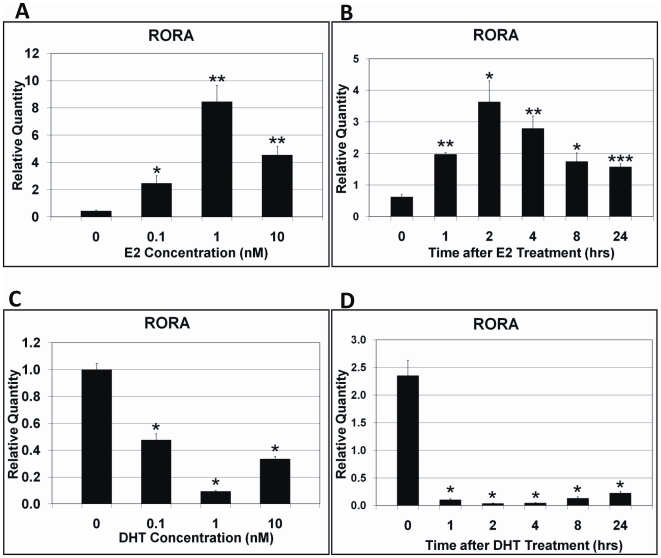
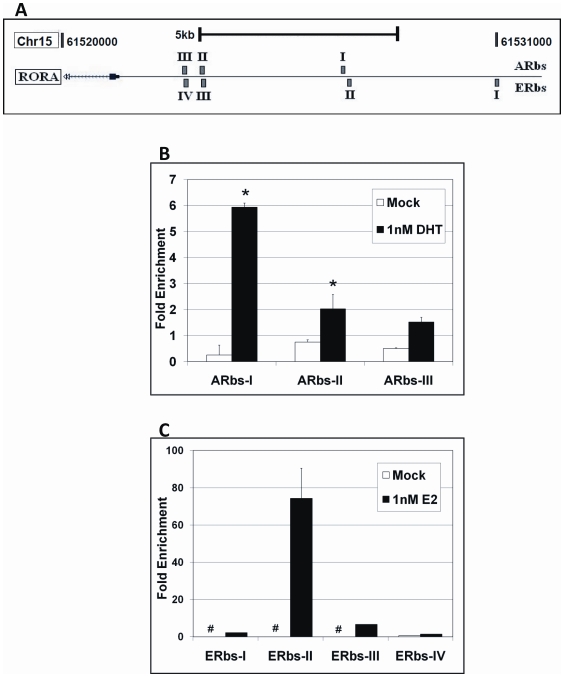
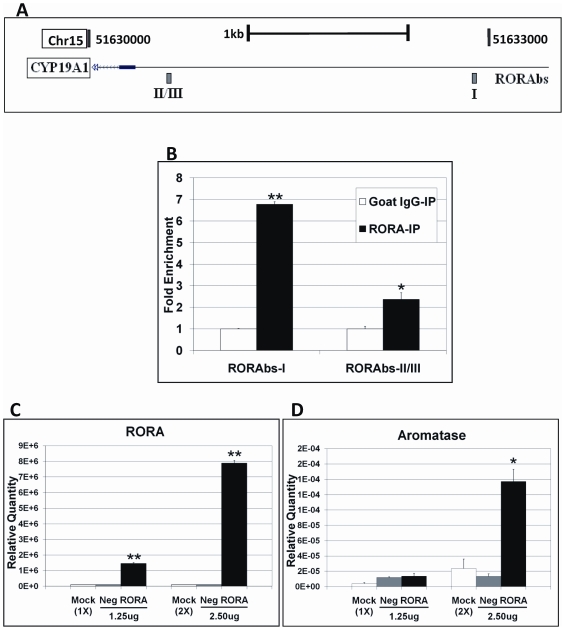
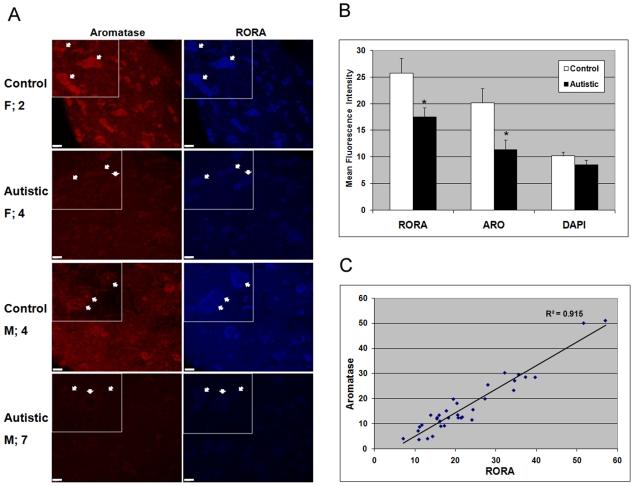
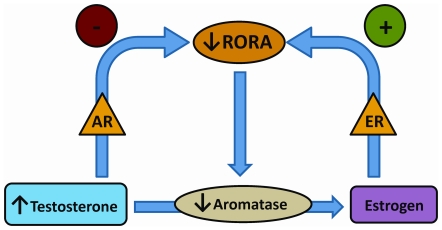
Autism, a pervasive neurodevelopmental disorder manifested by deficits in social behavior and interpersonal communication, and by stereotyped, repetitive behaviors, is inexplicably biased towards males by a ratio of ∼4∶1, with no clear understanding of whether or how the sex hormones may play a role in autism susceptibility. Here, we show that male and female hormones differentially regulate the expression of a novel autism candidate gene, retinoic acid-related orphan receptor-alpha (RORA) in a neuronal cell line, SH-SY5Y. In addition, we demonstrate that RORA transcriptionally regulates aromatase, an enzyme that converts testosterone to estrogen. We further show that aromatase protein is significantly reduced in the frontal cortex of autistic subjects relative to sex- and age-matched controls, and is strongly correlated with RORA protein levels in the brain. These results indicate that RORA has the potential to be under both negative and positive feedback regulation by male and female hormones, respectively, through one of its transcriptional targets, aromatase, and further suggest a mechanism for introducing sex bias in autism.
Overview
The claims and statistics of this paper haven’t been checked yet.
Free: it reads the open-access text and checks the first 5 claims that cite a source we can check. Create a free account to check every claim.
Integrity signals
Registry
Cites
Statistics
Figures
Verification
Claims the paper makes
The claims and statistics of this paper haven’t been checked yet.
Free: it reads the open-access text and checks the first 5 claims that cite a source we can check. Create a free account to check every claim.
Claims other papers make about this one
Each is checked against this paper’s own text: does it say what the citing paper says it does?
The cited source says what the claim attributes to it.
In the citing paper
“and RORA stimulates expression of aromatase”
From Sex differences in autism spectrum disorders (2013) · cites this paper as [75]
In the citing paper
“Finding of integral role for RORA, a gene downregulated in ASD, in sex hormone metabolism”
From Sex differences in autism spectrum disorders (2013) · cites this paper as [75]
In the citing paper
“transcription of RORA is activated by testosterone and inhibited by estrogen”
From Sex differences in autism spectrum disorders (2013) · cites this paper as [75]
Self-check
Percentages, sums and reported differences re-computed from the paper’s own numbers.
The self-check needs the paper’s full text.
Citations
Cites
Diagnostic and Statistical Manual of Mental Disorders
Williams, J. B. W., & First, M. (2013) · Encyclopedia of Social Work · doi:10.1093/acrefore/9780199975839.013.104 · Cited by 109,519
Diagnostic and Statistical Manual of Mental Disorders
Siegel, L. J., & Fletcher‐Janzem, E. (2008) · Encyclopedia of Special Education · doi:10.1002/9780470373699.speced0655 · Cited by 8,477
PROMO: detection of known transcription regulatory elements using species-tailored searches
Messeguer, X., Escudero, R., Farré, D., Núñez, O., Martı́nez, J., & Albà, M. M. (2002) · Bioinformatics · doi:10.1093/bioinformatics/18.2.333 · Cited by 1,369
Sex differences in the brain: implications for explaining autism
Baron-Cohen, S., Knickmeyer, R. C., & Belmonte, M. K. (2005) · Science · doi:10.1126/science.1115455 · Cited by 1,145 · cited 1×
“may increase susceptibility towards autism[3].”
Just, M. A., Cherkassky, V. L., Keller, T. A., Kana, R. K., & Minshew, N. J. (2007) · Cerebral Cortex · doi:10.1093/cercor/bhl006 · Cited by 1,081
Identification of patterns in biological sequences at the ALGGEN server: PROMO and MALGEN
Farre, D. (2003) · Nucleic Acids Research · doi:10.1093/nar/gkg605 · Cited by 1,036 · cited 1×
“3 to construct specific binding site weight matrices for prediction of transcription factor binding sites [23,24].”
BackgroundBryne, J. C., Valen, E., Tang, M.-H. E., Marstrand, T., Winther, O., da Piedade, I., Krogh, A., Lenhard, B., & Sandelin, A. (2007) · Nucleic Acids Research · doi:10.1093/nar/gkm955 · Cited by 692 · cited 1×
“The putative binding sites were then further validated using JASPAR and ChampionChIP databases [22], and carefully selected for ChIP-qPCR analyses.”
MethodFetal testosterone and autistic traits
Auyeung, B., Baron‐Cohen, S., Ashwin, E., Knickmeyer, R., Taylor, K., & Hackett, G. (2009) · British Journal of Psychology · doi:10.1348/000712608x311731 · Cited by 462
Field trial for autistic disorder in DSM-IV
(1994) · American Journal of Psychiatry · doi:10.1176/ajp.151.9.1361 · Cited by 401 · cited 1×
“opment and/or usage, and repetitive, stereotyped behaviors, often with restricted interests[1,2].”
BackgroundNguyen, A., Rauch, T. A., Pfeifer, G. P., & Hu, V. W. (2010) · The FASEB Journal · doi:10.1096/fj.10-154484 · Cited by 350 · cited 1×
“We have recently identified a novel autism candidate gene, retinoic acid-related (RAR) orphan receptor-alpha (RORA)”
BackgroundSelf-citation
Cited by
Sex differences in autism spectrum disorders
Werling, D. M., & Geschwind, D. H. (2013) · Current Opinion in Neurology · doi:10.1097/wco.0b013e32835ee548 · Cited by 1,245
Why are autism spectrum conditions more prevalent in males?
Baron-Cohen, S., Lombardo, M. V., Auyeung, B., Ashwin, E., Chakrabarti, B., & Knickmeyer, R. (2011) · PLoS Biology · doi:10.1371/journal.pbio.1001081 · Cited by 754
“Decreased expression of RORA gene and aromatase in post-mortem frontal and cerebellar tissue [179,180]”
BackgroundGenetic Causes and Modifiers of Autism Spectrum Disorder
Rylaarsdam, L., & Guemez-Gamboa, A. (2019) · Frontiers in Cellular Neuroscience · doi:10.3389/fncel.2019.00385 · Cited by 560
“Interestingly, multiple studies have found decreased levels of aromatase – an enzyme that catalyzes the conversion of testosterone to estradiol – in the brains of adolescent ASD individuals (Sarachana et al., 2011; Crider et al., 2014).”
BackgroundElevated fetal steroidogenic activity in autism
Baron-Cohen, S., Auyeung, B., Nørgaard-Pedersen, B., Hougaard, D. M., Abdallah, M. W., Melgaard, L., Cohen, A. S., Chakrabarti, B., Ruta, L., & Lombardo, M. V. (2015) · Molecular Psychiatry · doi:10.1038/mp.2014.48 · Cited by 471
Autism, oxytocin and interoception
Quattrocki, E., & Friston, K. (2014) · Neuroscience & Biobehavioral Reviews · doi:10.1016/j.neubiorev.2014.09.012 · Cited by 393
Sex differences in autism spectrum disorder: a review
Ferri, S. L., Abel, T., & Brodkin, E. S. (2018) · Current Psychiatry Reports · doi:10.1007/s11920-018-0874-2 · Cited by 392
Slavich, G. M., & Sacher, J. (2019) · Psychopharmacology · doi:10.1007/s00213-019-05326-9 · Cited by 383
“2005); and a candidate gene for autism has been identified that is responsive to sex hormones (Sarachana et al. 2011; see Baron-Cohen et al. 2005).”
Samsel, A., & Seneff, S. (2013) · Entropy · doi:10.3390/e15041416 · Cited by 293
“Suppressed aromatase synthesis has been found in the brain in association with autism [168],”
BackgroundMiller, M. W., & Sadeh, N. (2014) · Molecular Psychiatry · doi:10.1038/mp.2014.111 · Cited by 288
Meda, S. A., Ruaño, G., Windemuth, A., O’Neil, K., Berwise, C., Dunn, S. M., Boccaccio, L. E., Narayanan, B., Kocherla, M., Sprooten, E., et al. (2014) · Proceedings of the National Academy of Sciences · doi:10.1073/pnas.1313093111 · Cited by 242
Logue, M. W., Baldwin, C., Guffanti, G., Melista, E., Wolf, E. J., Reardon, A. F., Uddin, M., Wildman, D., Galea, S., Koenen, K. C., et al. (2013) · Molecular Psychiatry · doi:10.1038/mp.2012.113 · Cited by 237
RBFOX1 regulates both splicing and transcriptional networks in human neuronal development
Fogel, B. L., Wexler, E., Wahnich, A., Friedrich, T., Vijayendran, C., Gao, F., Parikshak, N., Konopka, G., & Geschwind, D. H. (2012) · Human Molecular Genetics · doi:10.1093/hmg/dds240 · Cited by 216
“Binding sites for two transcription factors with some circumstantial evidence for involvement in ASD (70,71), SP1 and RORA, were enriched among the differentially expressed genes (Supplementary Material, File S9), and transcriptional regulation may also occur among the differentially spliced genes (Supplementary Mater…”
BackgroundThe role of sex-differential biology in risk for autism spectrum disorder
Werling, D. M. (2016) · Biology of Sex Differences · doi:10.1186/s13293-016-0112-8 · Cited by 208
“Abbreviations ABIDE: Autism Brain Imaging Data Exchange; ADDM: Autism and Developmental Disabilities Monitoring Network; ADI-R: Autism Diagnostic Interview-Revised; ADOS: Autism Diagnostic Observation Schedule; AGP: Autism Genome Project; AGRE: Autism Genetic Resource Exchange; AQ: Autism Spectrum Quotient; ASD: Autis…”
BackgroundUnderstanding autism in the light of sex/gender
Lai, M.-C., Baron-Cohen, S., & Buxbaum, J. D. (2015) · Molecular Autism · doi:10.1186/s13229-015-0021-4 · Cited by 146
“Their previous studies show that autism may be associated with deficiency in the expression of the retinoic acid-related orphan receptor alpha (RORA) gene, and therefore, dysregulated feedback loops with androgen and oestrogen, as well as the many autism-associated genes regulated by RORA [62,23,22].”
BackgroundCook, D. N., Kang, H. S., & Jetten, A. M. (2015) · Nuclear Receptor Research · doi:10.11131/2015/101185 · Cited by 173
Gallese, V., Gernsbacher, M. A., Heyes, C., Hickok, G., & Iacoboni, M. (2011) · Perspectives on Psychological Science · doi:10.1177/1745691611413392 · Cited by 170
Solving the Autism Puzzle a Few Pieces at a Time
Schaaf, C. P., & Zoghbi, H. Y. (2011) · Neuron · doi:10.1016/j.neuron.2011.05.025 · Cited by 166
“Earlier this year, it was proposed that sex hormonal expression patterns may account for at least part of that, as androgens and estrogens differentially and reciprocally regulate RORA, a novel candidate gene for autism (Sarachana et al., 2011).”
BackgroundDevelopmental neurotoxicity of ortho-phthalate diesters: Review of human and experimental evidence
Miodovnik, A., Edwards, A., Bellinger, D. C., & Hauser, R. (2014) · NeuroToxicology · doi:10.1016/j.neuro.2014.01.007 · Cited by 164
Brain-derived estrogen and neural function
Brann, D. W., Lu, Y., Wang, J., Zhang, Q., Thakkar, R., Sareddy, G. R., Pratap, U. P., Tekmal, R. R., & Vadlamudi, R. K. (2022) · Neuroscience & Biobehavioral Reviews · doi:10.1016/j.neubiorev.2021.11.014 · Cited by 151
“RORA and aromatase were both significantly decreased in the frontal cortex of autistic subjects, which the authors postulate may contribute to the disorder (Sarachana et al., 2011).”
InfluentialSex-Based Analysis of De Novo Variants in Neurodevelopmental Disorders
Turner, T. N., Wilfert, A. B., Bakken, T. E., Bernier, R. A., Pepper, M. R., Zhang, Z., Torene, R. I., Retterer, K., & Eichler, E. E. (2019) · The American Journal of Human Genetics · doi:10.1016/j.ajhg.2019.11.003 · Cited by 159
New evidence on testosterone and cooperation
van Honk, J., Montoya, E. R., Bos, P. A., van Vugt, M., & Terburg, D. (2012) · Nature · doi:10.1038/nature11136 · Cited by 163
Sarachana, T., & Hu, V. W. (2013) · Molecular Autism · doi:10.1186/2040-2392-4-14 · Cited by 135
“Although CYP19A1 had previously been reported to be a target of RORA in human breast cancer cell lines [36], we recently demonstrated that its promoter region was a site of RORA binding in a human neuronal cell line [12].”
BackgroundResultInfluentialSelf-citationCrider, A., Thakkar, R., Ahmed, A. O., & Pillai, A. (2014) · Molecular Autism · doi:10.1186/2040-2392-5-46 · Cited by 124
“Our data is in agreement with a previous finding on reduced aromatase protein levels in the frontal cortex of ASD subjects [40].”
ResultLong, M., Ghisari, M., Kjeldsen, L., Wielsøe, M., Nørgaard-Pedersen, B., Mortensen, E. L., Abdallah, M. W., & Bonefeld-Jørgensen, E. C. (2019) · Molecular Autism · doi:10.1186/s13229-018-0253-1 · Cited by 125
Epigenetic Research in Neuropsychiatric Disorders: the “Tissue Issue”
Bakulski, K. M., Halladay, A., Hu, V. W., Mill, J., & Fallin, M. D. (2016) · Current Behavioral Neuroscience Reports · doi:10.1007/s40473-016-0083-4 · Cited by 127
Self-citationLiu, J., Liu, X., Xiong, X.-Q., Yang, T., Cui, T., Hou, N.-L., Lai, X., Liu, S., Guo, M., Liang, X.-H., et al. (2017) · BMC Microbiology · doi:10.1186/s12866-017-1096-1 · Cited by 115
“RORA was also associated with some symptoms of ASD [39].”
Terburg, D., & van Honk, J. (2013) · Emotion Review · doi:10.1177/1754073913477510 · Cited by 107
Chalmel, F., Lardenois, A., Evrard, B., Mathiéu, R., Feig, C., Demougin, P., Gattiker, A., Schulze, W., Jégou, B., Kirchhoff, C., et al. (2012) · Human Reproduction · doi:10.1093/humrep/des301 · Cited by 120
“…et al., 2009) localizing to the XY body in mouse spermatocytes (Chizaki et al., 2011); RORA, a regulator of aromatase that controls testosterone production (Sarachana et al., 2011); and RUNX2, a gene possibly involved in steroid metabolism in the testis (Jeong et al., 2008; Teplyuk et al., 2009).”
BackgroundSex differences in brain plasticity: a new hypothesis for sex ratio bias in autism
Mottron, L., Duret, P., Mueller, S., Moore, R. D., Forgeot d’Arc, B., Jacquemont, S., & Xiong, L. (2015) · Molecular Autism · doi:10.1186/s13229-015-0024-1 · Cited by 94
“For instance, androgens and estrogens differentially regulate the RORA gene, a candidate susceptibility gene for autism, the expression of which is low in the frontal cortex of autistic individuals [171].”
BackgroundUncovering steroidopathy in women with autism: a latent class analysis
Pohl, A., Cassidy, S., Auyeung, B., & Baron-Cohen, S. (2014) · Molecular Autism · doi:10.1186/2040-2392-5-27 · Cited by 97
“Additionally, CYP19A1 has been identified as a target of transcriptional regulators such as RORA, which is associated with autism [2], autoimmunity [22] and early age at menarche [23].”
Hu, V. W., Sarachana, T., Sherrard, R. M., & Kocher, K. M. (2015) · Molecular Autism · doi:10.1186/2040-2392-6-7 · Cited by 89
“We have previously demonstrated reduced expression of RORA and aromatase protein in ASD cases relative to controls using confocal immunofluorescence analyses of tissue arrays containing postmortem frontal cortex specimens [30].”
BackgroundMethodResultInfluentialSelf-citationEpigenetic Findings in Autism: New Perspectives for Therapy
Siniscalco, D., Cirillo, A., Bradstreet, J. J., & Antonucci, N. (2013) · International Journal of Environmental Research and Public Health · doi:10.3390/ijerph10094261 · Cited by 96
“RORA is a novel candidate gene for ASD pathology and could be related to sex hormones involvement in autism [37,38].”
BackgroundmiR-652 Promotes Tumor Proliferation and Metastasis by Targeting RORA in Endometrial Cancer
Sun, X., Dongol, S., Qiu, C., Xu, Y., Sun, C., Zhang, Z., Yang, X., Zhang, Q. H., & Kong, B. (2018) · Molecular Cancer Research · doi:10.1158/1541-7786.mcr-18-0267 · Cited by 90
“There have been few studies that theorized that miR-652, RORA, and b-catenin can be regulated by estrogen (32, 41, 42), and in our study, we found that miR-652 and RORA could be slightly regulated by estrogen in endometrial cancer cell lines; however, in endometrial cancer tissues, all three showed no significant corr…”
BackgroundAre endocrine disrupting compounds environmental risk factors for autism spectrum disorder?
Moosa, A., Shu, H., Sarachana, T., & Hu, V. W. (2018) · Hormones and Behavior · doi:10.1016/j.yhbeh.2017.10.003 · Cited by 87
“It was noted that dihydrotestosterone reduced the expression of RORA while estradiol increased its expression in SH-SY5Y neuroblastoma cells, a neuronal cell model (Sarachana et al., 2011).”
BackgroundSelf-citationQuartier, A., Chatrousse, L., Redin, C., Keime, C., Haumesser, N., Maglott-Roth, A., Brino, L., Le Gras, S., Benchoua, A., Mandel, J.-L., et al. (2018) · Biological Psychiatry · doi:10.1016/j.biopsych.2018.01.002 · Cited by 86
Majewska, M. D., Hill, M., Urbanowicz, E., Rok-Bujko, P., Bieńkowski, P., Namysłowska, I., & Mierzejewski, P. (2013) · European Child & Adolescent Psychiatry · doi:10.1007/s00787-013-0472-0 · Cited by 88
“Augmented levels of certain steroids may in turn alter the expression of genes implicated in autism pathogenesis such as Reelin and RORA [59, 60].”
BackgroundTiberi, J., Cesarini, V., Stefanelli, R., Canterini, S., Fiorenza, M. T., & Rosa, P. L. (2023) · Mechanisms of Ageing and Development · doi:10.1016/j.mad.2023.111802 · Cited by 83
Testosterone administration modulates moral judgments depending on second-to-fourth digit ratio
Montoya, E. R., Terburg, D., Bos, P. A., Will, G., Buskens, V., Raub, W., & van Honk, J. (2013) · Psychoneuroendocrinology · doi:10.1016/j.psyneuen.2012.12.001 · Cited by 81
“The availability of this enzyme differs between individuals (Sarachana et al., 2011).”
BackgroundBeversdorf, D. Q., & MISSOURI AUTISM SUMMIT CONSORTIUM* (2016) · Journal of Developmental & Behavioral Pediatrics · doi:10.1097/dbp.0000000000000351 · Cited by 74
Saeliw, T., Tangsuwansri, C., Thongkorn, S., Chonchaiya, W., Suphapeetiporn, K., Mutirangura, A., Tencomnao, T., Hu, V. W., & Sarachana, T. (2018) · Molecular Autism · doi:10.1186/s13229-018-0213-9 · Cited by 82
Self-citationMezzelani, A., Landini, M., Facchiano, F., Raggi, M. E., Villa, L., Molteni, M., De Santis, B., Brera, C., Caroli, A. M., Milanesi, L., et al. (2015) · Nutritional Neuroscience · doi:10.1179/1476830513y.0000000108 · Cited by 71
Nowack, N., Wittsiepe, J., Kasper-Sonnenberg, M., Wilhelm, M., & Schölmerich, A. (2015) · PLOS ONE · doi:10.1371/journal.pone.0129906 · Cited by 71
“Moreover, androgens and estrogens regulate RORA with androgens decreasing RORA expression and estrogens up-regulating it [111].”
BackgroundTangsuwansri, C., Saeliw, T., Thongkorn, S., Chonchaiya, W., Suphapeetiporn, K., Mutirangura, A., Tencomnao, T., Hu, V. W., & Sarachana, T. (2018) · PLOS ONE · doi:10.1371/journal.pone.0201071 · Cited by 68
Self-citationThe endocrinology of human caregiving and its intergenerational transmission
Bos, P. A. (2017) · Development and Psychopathology · doi:10.1017/s0954579416000973 · Cited by 69
Sex-specific impact of prenatal androgens on social brain default mode subsystems
Lombardo, M. V., Auyeung, B., Pramparo, T., Quartier, A., Courraud, J., Holt, R. J., Waldman, J., Ruigrok, A. N. V., Mooney, N., Bethlehem, R. A. I., et al. (2020) · Molecular Psychiatry · doi:10.1038/s41380-018-0198-y · Cited by 67
Thongkorn, S., Kanlayaprasit, S., Panjabud, P., Saeliw, T., Jantheang, T., Kasitipradit, K., Sarobol, S., Jindatip, D., Hu, V. W., Tencomnao, T., et al. (2021) · Scientific Reports · doi:10.1038/s41598-020-80390-2 · Cited by 76
Self-citationPrenatal hyperandrogenic environment induced autistic-like behavior in rat offspring
Xu, X., Zhang, H., Shou, X., Li, J., Jing, W.-L., Zhou, Y., Qian, Y., Han, S., Zhang, R., & Han, J. (2014) · Physiology & Behavior · doi:10.1016/j.physbeh.2014.09.014 · Cited by 70
“The hypothesis that dysregulation of sex-steroid hormones may be involved in the onset and development of ASD has been supported by several lines of evidence [8–10].”
ResultSex-specific Behavioral Features of Rodent Models of Autism Spectrum Disorder
Jeon, S. J., Gonzales, E. L., Mabunga, D. F. N., Valencia, S. T., Kim, D. G., Kim, Y., Adil, K. J. L., Shin, D., Park, D., & Shin, C. Y. (2018) · Experimental Neurobiology · doi:10.5607/en.2018.27.5.321 · Cited by 60
Language Impairments in ASD Resulting from a Failed Domestication of the Human Brain
Benítez-Burraco, A., Lattanzi, W., & Murphy, E. (2016) · Frontiers in Neuroscience · doi:10.3389/fnins.2016.00373 · Cited by 65
“RORA is differentially regulated in them by masculine and feminine hormones: Whereas it is under negative feedback regulation by androgens, it is under positive regulation by estrogens (Sarachana et al. 2011, Sarachana and Hu 2013b).”
BackgroundSarachana, T., & Hu, V. W. (2013) · Molecular Autism · doi:10.1186/2040-2392-4-39 · Cited by 62
“We recently demonstrated that male and female sex hormones inversely regulate RORA expression in human neuronal cells by suppressing and enhancing RORA expression, respectively [16].”
BackgroundResultInfluentialSelf-citationZou, Y., Lu, Q., Zheng, D., Chu, Z., Liu, Z., Chen, H., Ruan, Q., Ge, X., Zhang, Z., Wang, X., et al. (2017) · Molecular Autism · doi:10.1186/s13229-017-0159-3 · Cited by 68
Sex Differences in Neurodevelopmental Disorders: A Key Role for the Immune System
Breach, M. R., & Lenz, K. M. (2022) · Current Topics in Behavioral Neurosciences · doi:10.1007/7854_2022_308 · Cited by 62
Xu, X.-J., Shou, X.-J., Li, J., Jia, M.-X., Zhang, J.-S., Guo, Y., Wei, Q.-Y., Zhang, X.-T., Han, S.-P., Zhang, R., et al. (2013) · PLoS ONE · doi:10.1371/journal.pone.0074849 · Cited by 60
“Molecular and behavioral evidence also points to a connection between dysregulation of sex-steroid hormones and the onset or development of autism [22,23,24,25].”
BackgroundGenetic Analysis of Cortical Thickness and Fractional Anisotropy of Water Diffusion in the Brain
Kochunov, P., Glahn, D. C., Nichols, T. E., Winkler, A. M., Hong, E. L., Holcomb, H. H., Stein, J. L., Thompson, P. M., Curran, J. E., Carless, M. A., et al. (2011) · Frontiers in Neuroscience · doi:10.3389/fnins.2011.00120 · Cited by 62
“Its lymphocytic expression levels in autistic individuals were lower than in healthy controls and correlated with the severity of the disorder (Hu et al., 2006, 2009; Nguyen et al., 2010; Sarachana et al., 2010).”
BackgroundGenome-wide association study of age at menarche in African-American women
Demerath, E. W., Liu, C., Franceschini, N., Chen, G., Palmer, J. R., Smith, E. N., Chen, C. T. L., Ambrosone, C. B., Arnold, A. M., Bandera, E. V., et al. (2013) · Human Molecular Genetics · doi:10.1093/hmg/ddt181 · Cited by 67
“Recently, RORA expression has been found to regulate aromatase (CYP19A1), which converts testosterone to estrogen (45).”
BackgroundAutism spectrum disorder and sexual offending: Responsivity in forensic interventions
Higgs, T., & Carter, A. J. (2015) · Aggression and Violent Behavior · doi:10.1016/j.avb.2015.04.003 · Cited by 88
The retinoid-related orphan receptor alpha (RORA) gene and fear-related psychopathology
Miller, M. W., Wolf, E. J., Logue, M. W., & Baldwin, C. T. (2013) · Journal of Affective Disorders · doi:10.1016/j.jad.2013.07.022 · Cited by 55
“…the gene to attention-deficit hyperactivity disorder (Neale et al., 2008), bipolar disorder (Le-Niculescu et al., 2009), major depression (Garriock et al., 2010; Terracciano et al., 2010), autism (Sarachana et al., 2011) and, most recently, posttraumatic stress disorder (PTSD) (Logue et al., 2012).”
Burris, T. P., de Vera, I. M. S., Côté, I., Flaveny, C. A., Wanninayake, U. S., Chatterjee, A., Walker, J. K., Steinauer, N., Zhang, J., Coons, L. A., et al. (2023) · Pharmacological Reviews · doi:10.1124/pharmrev.121.000436 · Cited by 56
Developmental neurogenetics and multimodal neuroimaging of sex differences in autism
GENDAAR Research Consortium, Chen, C., & Van Horn, J. D. (2017) · Brain Imaging and Behavior · doi:10.1007/s11682-015-9504-3 · Cited by 47
“The RORA gene plays a critical role in cerebellar development and Purkinje cell differentiation (Sarachana et al. 2011).”
BackgroundInfluentialSayad, A., Noroozi, R., Omrani, M. D., Taheri, M. N., & Ghafouri‐Fard, S. (2017) · Metabolic Brain Disease · doi:10.1007/s11011-017-0049-6 · Cited by 59
“Retinoic acid-related orphan receptor-alpha (RORA) is a new autism candidate gene that has been shown in vitro to be differentially regulated by male and female hormones with dihydrotestosterone decreasing RORA expression and estradiol increasing it (Sarachana et al. 2011).”
BackgroundResultInfluentialAmstadter, A. B., Sumner, J. A., Acierno, R., Ruggiero, K. J., Koenen, K. C., Kilpatrick, D. G., Galea, S., & Gelernter, J. (2013) · Molecular Psychiatry · doi:10.1038/mp.2012.189 · Cited by 51
Wbp2 is required for normal glutamatergic synapses in the cochlea and is crucial for hearing
Buniello, A., Ingham, N. J., Lewis, M. A., Huma, A. C., Martínez‐Vega, R., Varela‐Nieto, I., Vizcay‐Barrena, G., Fleck, R. A., Houston, O., Bardhan, T., et al. (2016) · EMBO Molecular Medicine · doi:10.15252/emmm.201505523 · Cited by 53
“…ageing (Motohashi et al, 2010); however, their levels can also be reduced in young individuals due to genetic or environmental causes, including Turner syndrome (Stenberg et al, 2002), autism (Sarachana et al, 2011; Rosenhall et al, 1999) and early-onset Alzheimer’s disease (Henderson, 1997).”
BackgroundAcquaah-Mensah, G. K., Agu, N., Khan, T., & Gardner, A. (2015) · Journal of Alzheimer s Disease · doi:10.3233/jad-141731 · Cited by 52
“RORA regulates and is responsive to sex-hormones, and has been linked with autism spectrum disorders [51, 52].”
BackgroundHu, V. W. (2013) · Child Development · doi:10.1111/j.1467-8624.2012.01759.x · Cited by 45
“Sarachana et al. (2011) therefore postulated that a deficiency in RORA would result in a deficiency in aromatase, leading to the build-up of testosterone that can further inhibit RORA expression.”
InfluentialSelf-citationIn vivo visualization of aromatase in animals and humans
Biegon, A. R. (2015) · Frontiers in Neuroendocrinology · doi:10.1016/j.yfrne.2015.10.001 · Cited by 45
“…genotype are linked to Alzheimer's disease (Ishunina et al., 2005, Livonen et al., 2004, Huang et al., 2006, Hiltunen et al., 2006) and autism (Sarachana et al, 2011, 2013) In addition, increases in aromatase expression are implicated in a wide range of peripheral human diseases, most…”
BackgroundThe Imprinted Brain: How Genes Set the Balance Between Autism and Psychosis
Badcock, C. (2011) · Epigenomics · doi:10.2217/epi.11.19 · Cited by 43
Genes and sex hormones interaction in neurodevelopmental disorders
Romano, E., Cosentino, L., Laviola, G., & Filippis, B. D. (2016) · Neuroscience & Biobehavioral Reviews · doi:10.1016/j.neubiorev.2016.02.019 · Cited by 44
Kanlayaprasit, S., Thongkorn, S., Panjabud, P., Jindatip, D., Hu, V. W., Kikkawa, T., Osumi, N., & Sarachana, T. (2021) · International Journal of Molecular Sciences · doi:10.3390/ijms222413201 · Cited by 43
“Moreover, we found that RORA transcriptionally regulated aromatase and that the protein levels of RORA and aromatase were significantly reduced in the frontal cortex of people with ASD [86,176].”
BackgroundSelf-citationSex Hormones Regulate SHANK Expression
Berkel, S., Eltokhi, A., Fröhlich, H., Porras-Gonzalez, D., Rafiullah, R., Sprengel, R., & Rappold, G. A. (2018) · Frontiers in Molecular Neuroscience · doi:10.3389/fnmol.2018.00337 · Cited by 41
Role of perfumes in pathogenesis of Autism
Bagasra, O., Golkar, Z., García, M., Rice, L. N., & Pace, D. G. (2013) · Medical Hypotheses · doi:10.1016/j.mehy.2013.03.014 · Cited by 43
“[34] have recently identified a new autism candidate gene, retinoic acid-related (RAR) orphan receptor-alpha (RORA), a hormone-dependent transcription factor that is seen in a human NB cell line.”
BackgroundInfluentialRDoC and translational perspectives on the genetics of trauma‐related psychiatric disorders
Montalvo‐Ortiz, J. L., Gelernter, J. E., Hudziak, J. J., & Kaufman, J. (2015) · American Journal of Medical Genetics Part B Neuropsychiatric Genetics · doi:10.1002/ajmg.b.32395 · Cited by 44
“…[Logue et al., 2013], a gene which has also been associated with multiple other psychiatric disorders including depression [Terracciano et al., 2010], bipolar disorder [Le-Niculescu et al., 2009], attention deficit hyperactivity disorder [Neale et al., 2008], and autism [Sarachana et al., 2011].”
BackgroundBuskens, V., Raub, W., van Miltenburg, N., Montoya, E. R., & van Honk, J. (2016) · Scientific Reports · doi:10.1038/srep27655 · Cited by 47
11 C-Cetrozole: An Improved C- 11 C-Methylated PET Probe for Aromatase Imaging in the Brain
Takahashi, K., Hosoya, T., Onoe, K., Doi, H., Nagata, H., Hiramatsu, T., Li, X.-L., Watanabe, Y., Wada, Y., Takashima, T., et al. (2014) · Journal of Nuclear Medicine · doi:10.2967/jnumed.113.131474 · Cited by 39
“A relationship between aromatase and Alzheimer’s disease or autism was also suggested (12,13).”
BackgroundAssociations between polymorphisms in sex steroid related genes and autistic-like traits
Zettergren, A., Jönsson, L., Johansson, D., Melke, J., Lundström, S., Anckarsäter, H. S., Lichtenstein, P., & Westberg, L. (2013) · Psychoneuroendocrinology · doi:10.1016/j.psyneuen.2013.06.004 · Cited by 38
“Furthermore, the level of the enzyme aromatase (CYP19), converting testosterone to estrogen, has been found to be reduced in the frontal cortex of individuals with ASDs (Sarachana et al., 2011).”
Pichitpunpong, C., Thongkorn, S., Kanlayaprasit, S., Yuwattana, W., Plaingam, W., Sangsuthum, S., Aizat, W. M., Baharum, S. N., Tencomnao, T., Hu, V. W., et al. (2019) · PLoS ONE · doi:10.1371/journal.pone.0214198 · Cited by 44
Self-citationNeuron-Derived Estrogen—A Key Neuromodulator in Synaptic Function and Memory
Brann, D. W., Lu, Y., Wang, J., Sareddy, G. R., Pratap, U. P., Zhang, Q., TEKMAL, R. R., & Vadlamudi, R. K. (2021) · International Journal of Molecular Sciences · doi:10.3390/ijms222413242 · Cited by 41
The Link Between Autism and Sex-Related Neuroanatomy, and Associated Cognition and Gene Expression
Floris, D. L., Peng, H., Warrier, V., Lombardo, M. V., Pretzsch, C. M., Moreau, C. A., Tsompanidis, A., Gong, W., Mennes, M., Llera, A., et al. (2022) · American Journal of Psychiatry · doi:10.1176/appi.ajp.20220194 · Cited by 38
“This is in line with clinical fi ndings indicating that autistic females may be characterized by a relative imbalance between androgens and estrogens, rather than high steroid levels across all pathways (95, 96).”
The Imprinted Brain: How Genes Set the Balance Between Autism and Psychosis
Badcock, C. R. (2013) · Epigenetics and human health · doi:10.1007/978-3-642-36827-1_5 · Cited by 37
Functional changes between seasons in the male songbird auditory forebrain
Groof, G. D., Poirier, C., George, I., Hausberger, M., & der Linden, A. V. (2013) · Frontiers in Behavioral Neuroscience · doi:10.3389/fnbeh.2013.00196 · Cited by 37
“…could lead to a better understanding of human disorders characterized by social deficits [problems of interpreting communication signals like in autism (O’Connor, 2012)] that could be attributed to abnormalities of steroid receptors in auditory sensory areas of the brain (Sarachana et al., 2011).”
Sánchez-Luquez, K., Carpena, M. X., Karam, S. D. M., & Tovo‐Rodrigues, L. (2022) · Mutation Research/Reviews in Mutation Research · doi:10.1016/j.mrrev.2022.108428 · Cited by 37
Thongkorn, S., Kanlayaprasit, S., Kasitipradit, K., Lertpeerapan, P., Panjabud, P., Hu, V. W., Jindatip, D., & Sarachana, T. (2023) · Biology of Sex Differences · doi:10.1186/s13293-023-00496-w · Cited by 34
“Androgen negatively regulates the expression of RORA, whereas estrogen enhances the levels of RORA [46].”
BackgroundSelf-citationAssociation between aromatase in human brains and personality traits
Takahashi, K., Hosoya, T., Onoe, K., Takashima, T., Tanaka, M., Ishii, A., Nakatomi, Y., Tazawa, S., Takahashi, K., Doi, H., et al. (2018) · Scientific Reports · doi:10.1038/s41598-018-35065-4 · Cited by 35
Hippocampal Metabolite Profiles in Two Rat Models of Autism: NMR-Based Metabolomics Studies
Toczyłowska, B., Ziemińska, E., Senator, P., & Łazarewicz, J. W. (2020) · Molecular Neurobiology · doi:10.1007/s12035-020-01935-0 · Cited by 34
Gadow, K. D., & DeVincent, C. J. (2012) · Journal of Autism and Developmental Disorders · doi:10.1007/s10803-012-1473-4 · Cited by 36
Salcedo‐Arellano, M. J., Cabal-Herrera, A. M., Punatar, R., Clark, C. J., Romney, C. A., & Hagerman, R. J. (2020) · Neurotherapeutics · doi:10.1007/s13311-020-00968-6 · Cited by 35
An evaluation of the role and treatment of elevated male hormones in autism spectrum disorders
Geier, D., Kern, J., King, P., Sykes, L., & Geier, M. (2012) · Acta Neurobiologiae Experimentalis · doi:10.55782/ane-2012-1876 · Cited by 30
“Subsequently, investigators showed that male and female hormones differentially regulate the expression of a novel autism candidate gene, retinoic acid-related orphan receptor-alpha (RORA) in a neuronal cell line, SH-SY5Y (Sarachana et al. 2011).”
BackgroundXiang, D., Lu, J., Wei, C., Cai, X., Wang, Y., Liang, Y., Xu, M., Wang, Z., Liu, M., Wang, M., et al. (2020) · Frontiers in Cellular Neuroscience · doi:10.3389/fncel.2020.00087 · Cited by 34
Self-citationThe second to fourth digit ratio (2D:4D) in Saudi boys with autism: A potential screening tool
Al-Zaid, F. S., Alhader, A. A., & AL-Ayadhi, L. Y. (2015) · Early Human Development · doi:10.1016/j.earlhumdev.2015.04.007 · Cited by 34
Gadow, K. D. (2013) · Research in Developmental Disabilities · doi:10.1016/j.ridd.2013.01.011 · Cited by 34
Anderson, G., & Maes, M. H. J. (2014) · Current Neuropharmacology · doi:10.2174/1570159x11666131120223757 · Cited by 34
“Decreased retinoic acid-related orphan receptor alpha (ROR ) in ASD is epigenetically driven [71], with consequences for aromatase regulation and sex differences in susceptibility to ASD [72].”
Reinbolt, R. E., Sonis, S. T., Timmers, C. D., Fernández‐Martínez, J. L., Cernea, A., deAndrés‐Galiana, E. J., Hashemi, S., Miller, K. P., Pilarski, R., & Lustberg, M. B. (2017) · Cancer Medicine · doi:10.1002/cam4.1256 · Cited by 36
Associations of PER3 and RORA Circadian Gene Polymorphisms and Depressive Symptoms in Older Adults
Maglione, J. E., Nievergelt, C. M., Parimi, N., Evans, D. S., Ancoli‐Israel, S., Stone, K. L., Yaffe, K. S., Redline, S. S., & Tranah, G. J. (2015) · American Journal of Geriatric Psychiatry · doi:10.1016/j.jagp.2015.03.002 · Cited by 31
“These observations could be explained, in part, by the fact that RORA is a hormone-dependent transcription factor that is differentially regulated by male and female sex hormones (69).”
BackgroundDo cortical plasticity mechanisms differ between males and females?
Dachtler, J., & Fox, K. D. (2016) · Journal of Neuroscience Research · doi:10.1002/jnr.23850 · Cited by 31
“…receptor alpha (RORA), a gene found to be downregulated in autistic patients (Nguyen et al., 2010), is upregulated by E2 but, if the protein is deficient, will cause an accumulation of testosterone through the lack of suppression of CYP19A1 activity (encoding aromatase; Sarachana et al., 2011).”
BackgroundMabry, S., Wilson, E. N., Bradshaw, J. L., Gardner, J. J., Fadeyibi, O., Vera, E., Osikoya, O., Cushen, S. C., Karamichos, D., Goulopoulou, S., et al. (2023) · Biology of Sex Differences · doi:10.1186/s13293-023-00557-0 · Cited by 29
Hu, V. W. (2012) · NeuroToxicology · doi:10.1016/j.neuro.2012.07.009 · Cited by 29
Self-citationAutistic People’s Perinatal Experiences I: A Survey of Pregnancy Experiences
Hampton, S., Allison, C. L., Baron‐Cohen, S., & Holt, R. (2022) · Journal of Autism and Developmental Disorders · doi:10.1007/s10803-022-05754-1 · Cited by 28
“An increased risk of vaginal bleeding may in part be due to hormonal factors, given that differences in endocrine system function have been associ - ated with autism (Sarachana et al., 2011 ).”
BackgroundTan, D. W., Russell-Smith, S. N., Simons, J. M., Maybery, M. T., Leung, D., Ng, H. L. H., & Whitehouse, A. J. O. (2015) · PLOS ONE · doi:10.1371/journal.pone.0131780 · Cited by 27
“In summary, our key findings—that higher levels of autistic traits are associated with more masculinized voices in males and defeminized facial features in females—provide some support for the EMB account of ASD [1, 37].”
ResultDiaz-Thomas, A., Golden, S. H., Dabelea, D., Grimberg, A., Magge, S. N., Safer, J. D., Shumer, D. E., & Stanford, F. C. (2023) · The Journal of Clinical Endocrinology & Metabolism · doi:10.1210/clinem/dgad124 · Cited by 29
Le, D., Ngo, M.-H. T., Kuo, Y., Chen, S.-H., Lin, C., Ling, T., Pham, Q. T. T., Au, H., Myung, J., & Huang, Y. (2024) · Journal of Biomedical Science · doi:10.1186/s12929-024-01085-8 · Cited by 28
“The expression of Cyp19a1 is regulated by the REV-ERB α /RORA loop, where REV-ERB α acts as an inhibitor, whereas RORA has an opposing effect [60, 61, 68, 69].”
BackgroundMale Gender Bias in Autism and Pediatric Autoimmunity
Becker, K. G. (2012) · Autism Research · doi:10.1002/aur.1227 · Cited by 29
Metadata
- Authors
- Sarachana, T., Xu, M., Wu, R.-C., & Hu, V. W.
- Affiliations
- George Washington University (US)
- Corresponding author
- Hu, Valerie W.
- Venue
- PLoS ONE
- Publisher
- Public Library of Science (PLoS)
- Published
- 2011-02-16
- Volume
- 6
- Issue
- 2
- Pages
- e17116
- ISSN
- 1932-6203 (ISSN-L)
- PMC
- PMC3040206
- OpenAlex
- W1975616007
- Cited by
- 227
- References
- 27
- Citations by year
- 2026: 7 · 2025: 10 · 2024: 10 · 2023: 16 · 2022: 14 · 2021: 18 · 2020: 12 · 2019: 13 · 2018: 17 · 2017: 14 · 2016: 17 · 2015: 15 · 2014: 19 · 2013: 19 · 2012: 17
- FWCI
- 10.40
- Type
- journal article
- Language
- en
- Open access
- gold
- doi.org
- Locations
- PLoS ONE (publishedVersion, cc-by)
- PubMed Central (publishedVersion, cc-by)
- PubMed (publishedVersion)
- DOAJ (DOAJ: Directory of Open Access Journals) (submittedVersion, cc-by-sa)
- Figshare (submittedVersion, cc-by)
- Funders
- Autism Speaks (AS2381)
- George Washington University
- Children's National Hospital
- Commission on Higher Education
- National Institutes of Health
- National Center for Research Resources (S10RR025565)
- Topics
- Life Sciences › Neuroscience › Cognitive Neuroscience › Autism Spectrum Disorder Research
- Life Sciences › Biochemistry, Genetics and Molecular Biology › Genetics › Genetics and Neurodevelopmental Disorders
- Health Sciences › Medicine › Endocrinology, Diabetes and Metabolism › Sexual Differentiation and Disorders
- Keywords
- autism spectrum disorder, sex hormones, androgens, estrogen, RORA, aromatase, frontal cortex, SH-SY5Y cells, transcriptional regulation, sex differences
- MeSH terms
- Androgens, Aromatase, Autistic Disorder, Child, Estrogens, Female, Gene Expression Regulation, Humans, Male, Models, Biological, Sex Characteristics, Gonadal Steroid Hormones, Tumor Cells, Cultured, Gene Expression Regulation, Enzymologic, Case-Control Studies, Genetic Predisposition to Disease, Genetic Association Studies, Nuclear Receptor Subfamily 1, Group F, Member 1
About these checks
Registry, retraction, Cites and statistics results are computed, not judged, with one exception: a printed reference that no index lists is read once by a model before it counts as a citation error. Claims are extracted by a model and kept only when their quote appears verbatim in the text; each cited source is then checked, with a model’s help, for whether it says what the claim relies on. Those verdicts can be wrong — read the claim’s quote and the cited source before relying on one.
Statistics and arithmetic are recomputed, not judged.
Confidence bands are shown only for fields calibrated on our annotated test set. None is calibrated yet, so no band is shown.
What counts as a claim ›How we measure confidence ›How we check this ›
Are you an author, or do you see a problem with this page? Request a review
Data sources
Bibliographic data: Semantic Scholar, OpenAlex, Crossref.
Contains information from the Semantic Scholar Academic Graph Datasets, made available under the ODC Attribution License (ODC-BY 1.0).
Semantic Scholar’s data is described in: Kinney, R., et al. (2023). The Semantic Scholar Open Data Platform. arXiv:2301.10140.
