

Two Major Medicinal Honeys Have Different Mechanisms of Bactericidal Activity
Open accessThe DOI matches its Crossref record; 41 of the 42 references it cites were found in a registry or an index; none of the 6 sources its claims cite is checked for support yet.
Abstract
Honey is increasingly valued for its antibacterial activity, but knowledge regarding the mechanism of action is still incomplete. We assessed the bactericidal activity and mechanism of action of Revamil® source (RS) honey and manuka honey, the sources of two major medical-grade honeys. RS honey killed Bacillus subtilis, Escherichia coli and Pseudomonas aeruginosa within 2 hours, whereas manuka honey had such rapid activity only against B. subtilis. After 24 hours of incubation, both honeys killed all tested bacteria, including methicillin-resistant Staphylococcus aureus, but manuka honey retained activity up to higher dilutions than RS honey. Bee defensin-1 and H₂O₂ were the major factors involved in rapid bactericidal activity of RS honey. These factors were absent in manuka honey, but this honey contained 44-fold higher concentrations of methylglyoxal than RS honey. Methylglyoxal was a major bactericidal factor in manuka honey, but after neutralization of this compound manuka honey retained bactericidal activity due to several unknown factors. RS and manuka honey have highly distinct compositions of bactericidal factors, resulting in large differences in bactericidal activity.
Overview
CoChat Summary
TL;DR
RS and manuka honeys kill bacteria through distinct factor sets: RS relies on bee defensin-1 and H₂O₂ for rapid killing, while manuka relies heavily on high methylglyoxal for slower, dilution-resistant killing. Both killed all tested bacteria by 24 h, including MRSA, but with different potency and kinetics.
Key findings
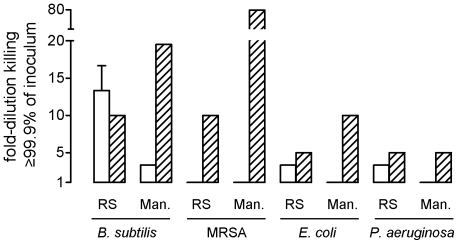
- RS honey killed *B. subtilis*, *E. coli*, and *P. aeruginosa* within 2 h; manuka honey had such rapid activity only against *B. subtilis*. At 2 h, RS killed *B. subtilis* up to 13.3±3.3-fold dilution versus 2.5-fold for manuka; after 24 h, RS and manuka killed *B. subtilis* up to 10- and 20-fold, MRSA up to 10- and 80-fold, *E. coli* up to 5- and 10-fold, and *P. aeruginosa* up to 5- and 5-fold, respectively.
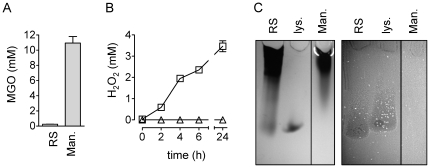
- RS and manuka differed sharply in bactericidal factors: RS contained 0.25±0.01 mM MGO and accumulated 3.47±0.25 mM H₂O₂ in 40% (v/v) solution over 24 h, while manuka contained 10.94±1.70 mM MGO (abstract: 44-fold higher; results: approximately 40-fold) and no detectable H₂O₂. Bee defensin-1 was detected in RS honey by AU-PAGE and *B. subtilis* overlay but not in manuka honey.
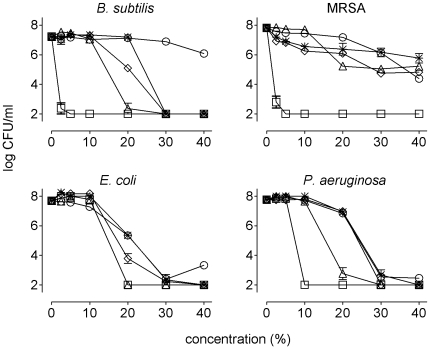
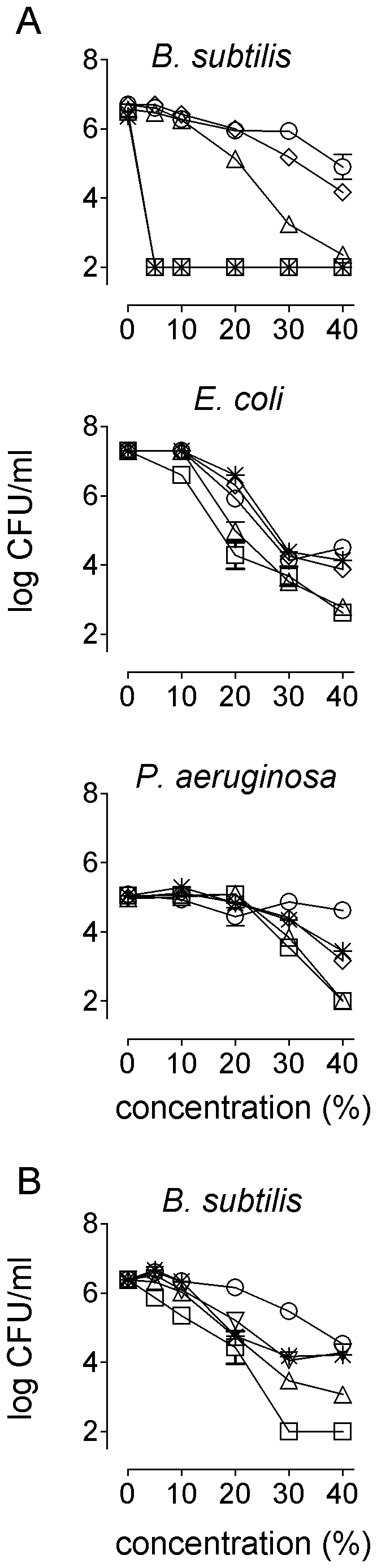
- Neutralizing MGO in manuka honey reduced activity against MRSA to sugar-solution level, required 8-fold and 2-fold higher manuka concentrations to kill *B. subtilis* and *P. aeruginosa*, and did not affect *E. coli*. Residual manuka activity involved unknown cationic and non-cationic factors; after MGO neutralization, low pH accounted for all non-cationic activity against *E. coli*, while *B. subtilis* retained substantial activity.
- Rapid manuka activity against *B. subtilis* required ≥30% honey; MGO neutralization reduced but did not abolish it, and the remaining activity was not affected by pH 7 or catalase but was further reduced, though not abolished, by SPS. For RS, 5% honey killed the entire *B. subtilis* inoculum within 2 h; SPS neutralization required 40% RS, and subsequent H₂O₂ neutralization reduced activity to sugar-solution level.
Methods
- Honey samples: unprocessed Revamil® source (RS) honey from Bfactory Health Products and non-sterilized UMF™ 16+ Active manuka honey from Nature’s nectar Limited; a honey-equivalent sugar solution contained 333 g/kg glucose, 385 g/kg fructose, 73 g/kg sucrose, and 62 g/kg maltose.
- Bacteria and bactericidal assay: *B. subtilis* ATCC6633, *E. coli* ML-35p, *P. aeruginosa* PAO-1 (ATCC 15692), and MRSA AMC201 were tested in 100 µl liquid assays with 50% honey stocks, final inocula of 1×10⁶ CFU/ml, incubation at 37°C and 150 rpm, and plating on blood agar; detection level was 100 CFU/ml. Neutralizers included catalase (600 U/ml), SPS (0.025%), glyoxalase I/glutathione for MGO conversion, and NaOH titration to pH 7.0.
- Factor quantification: H₂O₂ was measured by o-dianisidine/horseradish peroxidase; MGO was measured spectrophotometrically after glyoxalase I conversion to S-lactoylglutathione; bee defensin-1 was analyzed by 5 kDa ultrafiltration, native acid-urea PAGE, Coomassie staining, and *B. subtilis* overlay assay.
Limitations
- Stated: lack of standardization of antibacterial activity and incomplete knowledge of active components are major limitations for medical application of honey. The paper also states that the commonly used agar diffusion assay has limitations: activity against one species is not representative, zone size depends on diffusion, and the assay does not discriminate bacteriostatic from bactericidal activity or quantify killing kinetics.
- Stated: manuka honey has large batch-to-batch variation in antibacterial activity, and concerns about potential toxicity of dietary MGO and effects on wound healing remain to be investigated. The cationic and non-cationic factors responsible for residual manuka activity were not identified.
- Evident from the text: all experiments were in vitro with defined lab media and a limited bacterial panel; no wound exudate, clinical, or food-matrix validation was performed, and the neutralization/pH manipulations may not fully reflect native honey behavior.
Model-written summary. Check it against the paper before relying on it.
Integrity signals
Registry
Cites
Statistics
Figures
Verification
Claims the paper makes
0 Valid · 0 Not valid · 5 Not checked · 52 Own results and interpretations
A result the paper reports from its own data — it cites no other source for it, so there is none to check. The quote shows it is in the paper.
In the paper
“Subsequent neutralization of H2O2 reduced the activity of RS honey to that of a honey-equivalent sugar solution (Fig. 4A).”
§ Two Major Medicinal Honeys Have Different Mechanisms of Bactericidal Activity > Results > Factors contributing to the rapid bactericidal activity of RS and manuka honey
plainstates a cause- Asserted: passes — The authors put it forward as true.
- Checkable: passes — It can be checked against evidence.
- Load-bearing: passes — The paper’s conclusions depend on it.
- Based: passes — The paper gives a reason why it holds.
A result the paper reports from its own data — it cites no other source for it, so there is none to check. The quote shows it is in the paper.
In the paper
“MGO-neutralized manuka honey still had more activity than a sugar solution against these species”
§ Two Major Medicinal Honeys Have Different Mechanisms of Bactericidal Activity > Results > Factors contributing to the bactericidal activity of manuka honey after 24 hours
plain- Asserted: passes — The authors put it forward as true.
- Checkable: passes — It can be checked against evidence.
- Load-bearing: passes — The paper’s conclusions depend on it.
- Based: passes — The paper gives a reason why it holds.
A result the paper reports from its own data — it cites no other source for it, so there is none to check. The quote shows it is in the paper.
In the paper
“In a similar amount of manuka honey retentate no bee defensin-1 was detected either by Coomassie-staining or in a gel overlay assay (Fig. 2C).”
§ Two Major Medicinal Honeys Have Different Mechanisms of Bactericidal Activity > Results > Characterization of H2O2, MGO and bee defensin-1 in RS and manuka honey
plain- Asserted: passes — The authors put it forward as true.
- Checkable: passes — It can be checked against evidence.
- Load-bearing: passes — The paper’s conclusions depend on it.
- Based: passes — The paper gives a reason why it holds.
A result the paper reports from its own data — it cites no other source for it, so there is none to check. The quote shows it is in the paper.
In the paper
“After 2 h up to 13.3±3.3-fold diluted RS honey killed B. subtilis, whereas manuka honey could only be 2.5-fold diluted (Fig. 1).”
§ Two Major Medicinal Honeys Have Different Mechanisms of Bactericidal Activity > Results > Bactericidal activity of RS and manuka honey
plainstates a cause- Asserted: passes — The authors put it forward as true.
- Checkable: passes — It can be checked against evidence.
- Load-bearing: passes — The paper’s conclusions depend on it.
- Based: passes — The paper gives a reason why it holds.
A result the paper reports from its own data — it cites no other source for it, so there is none to check. The quote shows it is in the paper.
In the paper
“When the pH of MGO- and cationic compound-neutralized manuka honey was adjusted from 3.9 to 7.0, all remaining activity against E. coli was abolished.”
§ Two Major Medicinal Honeys Have Different Mechanisms of Bactericidal Activity > Results > Factors contributing to the bactericidal activity of manuka honey after 24 hours
plainstates a cause- Asserted: passes — The authors put it forward as true.
- Checkable: passes — It can be checked against evidence.
- Load-bearing: passes — The paper’s conclusions depend on it.
- Based: passes — The paper gives a reason why it holds.
32 more claims
Create a free account to see all 57 claims and to verify the 6 references still open.
- It may state two separate claims as one. 20
Claims other papers make about this one
Each is checked against this paper’s own text: does it say what the citing paper says it does?
The source backs part of the claim, not all of it — or backs it for a different population, condition or comparison.
In the citing paper
“The antibacterial peptide defensin-1 (Def-1) obtained from bees, is the main ingredient responsible for the antibacterial activity of honey, except for Manuka honey (Kwakman et al. 2011).”
From The antibacterial activities of honey (2021) · cites this paper as Kwakman et al. 2011
Experimental — accuracy not yet measured
Self-check
Percentages, sums and reported differences re-computed from the paper’s own numbers.
Each contradiction between two passages listed here was confirmed by an independent check.
Rated major: it would touch a result — a value a result rests on, reported and recomputed p-values on opposite sides of the significance level, two passages that conflict with no sign which is right, or a cited work retracted before this paper was published.
In the paper
§ Two Major Medicinal Honeys Have Different Mechanisms of Bactericidal Activity > Results > Factors contributing to the bactericidal activity of manuka honey after 24 hours
“| B. subtilis | rapidb | - | rapid | - | slow | rapid | slow | rapid | - | rapid | - | rapid |”
§ Two Major Medicinal Honeys Have Different Mechanisms of Bactericidal Activity > Results > Factors contributing to the rapid bactericidal activity of RS and manuka honey
“The remaining activity was not affected by titration to pH 7 (Fig. 4B) or addition of catalase (not shown), but this activity was further reduced but not abolished by addition of SPS (Fig. 4B).”
Rated minor: it would not touch a result — a value no result rests on, a p-value that stays on the same side of the significance level, or a conflict that is clerical, resolved elsewhere in the paper, or outside its own findings.
In the paper
§ Two Major Medicinal Honeys Have Different Mechanisms of Bactericidal Activity > Results > Factors contributing to the bactericidal activity of manuka honey after 24 hours
“| E. coli | rapid | - | slow | - | slow | slow | - | slow | - | slow | - | slow |”
§ Two Major Medicinal Honeys Have Different Mechanisms of Bactericidal Activity > Results > Factors contributing to the bactericidal activity of manuka honey after 24 hours
“the activity of manuka honey against E. coli was not affected by neutralization of MGO (Fig. 3).”
Rated minor: it would not touch a result — a value no result rests on, a p-value that stays on the same side of the significance level, or a conflict that is clerical, resolved elsewhere in the paper, or outside its own findings.
In the paper
§ Two Major Medicinal Honeys Have Different Mechanisms of Bactericidal Activity > Results > Factors contributing to the bactericidal activity of manuka honey after 24 hours
“| P. aeruginosa | rapid | - | slow | - | slow | slow | slow | - | - | slow | - | - |”
§ Two Major Medicinal Honeys Have Different Mechanisms of Bactericidal Activity > Results > Factors contributing to the rapid bactericidal activity of RS and manuka honey
“Titration of honey to pH 7 abolished all residual activity against P. aeruginosa (not shown).”
Citations
Cites
Antibiotics for Emerging Pathogens
Fischbach, M. A., & Walsh, C. T. (2009) · Science · doi:10.1126/science.1176667 · Cited by 1,777
Antimicrobial Use and Resistance in Animals
McEwen, S. A., & Fedorka‐Cray, P. J. (2002) · Clinical Infectious Diseases · doi:10.1086/340246 · Cited by 983
The Antibacterial Activity of Honey: 1. The nature of the antibacterial activity
Molan, P. C. (1992) · Bee World · doi:10.1080/0005772x.1992.11099109 · Cited by 822
Interaction of human defensins with Escherichia coli. Mechanism of bactericidal activity.
Lehrer, R. I., Barton, A., Daher, K. A., Harwig, S. S., Ganz, T., & Selsted, M. E. (1989) · Journal of Clinical Investigation · doi:10.1172/jci114198 · Cited by 715
Antibiotics: Actions, Origins, Resistance
Walsh, C. T. (2003) · Medical Entomology and Zoology · Cited by 675
Antibiotics: Actions, Origins, Resistance
Walsh, C. (2003) · Wiley eBooks · doi:10.1128/9781555817886 · Cited by 633
THE MECHANISM OF ACTION OF GLYOXALASE
Racker, E. (1951) · Journal of Biological Chemistry · doi:10.1016/s0021-9258(18)56017-8 · Cited by 581
A Survey of the Antibacterial Activity of Some New Zealand Honeys
Allen, K. L., Molan, P. C., & Reid, G. M. (1991) · Journal of Pharmacy and Pharmacology · doi:10.1111/j.2042-7158.1991.tb03186.x · Cited by 571
Mavric, E., Wittmann, S., Barth, G., & Henle, T. (2008) · Molecular Nutrition & Food Research · doi:10.1002/mnfr.200700282 · Cited by 545
White Jr., J. W., Subers, M. H., & Schepartz, A. I. (1963) · Biochimica et Biophysica Acta · doi:10.1016/0006-3002(63)90359-7 · Cited by 505
Cited by
Items 101–200 of 342
Cooper, R. (2014) · Chronic Wound Care Management and Research · doi:10.2147/cwcmr.s46520 · Cited by 39
Prospects of probiotics in beekeeping: a review for sustainable approach to boost honeybee health
Smriti, Rana, A., Singh, G., & Gupta, G. (2024) · Archives of Microbiology · doi:10.1007/s00203-024-03926-4 · Cited by 40
Antifungal activity of honey from stingless bee Melipona beecheii against Candida albicans
Hau-Yama, N. E., Magaña-Ortíz, D., Oliva, A. I., & Ortíz‐Vázquez, E. (2019) · Journal of Apicultural Research · doi:10.1080/00218839.2019.1665247 · Cited by 36
Periodontal Application of Manuka Honey: Antimicrobial and Demineralising Effects In Vitro
Safii, S. H., Tompkins, G. R., & Duncan, W. (2017) · International Journal of Dentistry · doi:10.1155/2017/9874535 · Cited by 36
Broznić, D., Ratkaj, I., Staver, M. M., Pavelić, S. K., Žurga, P., Bubalo, D., & Gobin, I. (2018) · Food Technology and Biotechnology · doi:10.17113/ftb.56.04.18.5666 · Cited by 34
Mechanistic Roles of Different Varieties of Honey on Wound Healing: Recent Update
Naskar, A., Chatterjee, K., Roy, K., Majie, A., Nair, A. B., Shinu, P., Morsy, M. A., Jain, N., Pandey, M., & Gorain, B. (2024) · Journal of Pharmacology and Pharmacotherapeutics · doi:10.1177/0976500x241237361 · Cited by 36
Honey and beehive products in otorhinolaryngology: a narrative review
Henatsch, D., Wesseling, F. W. R., Kross, K. W., & Stokroos, R. J. (2016) · Clinical Otolaryngology · doi:10.1111/coa.12557 · Cited by 34
Pectin-honey hydrogel: Characterization, antimicrobial activity and biocompatibility
Giusto, G., Beretta, G., Vercelli, C., Valle, E., Iussich, S., Borghi, R., Odetti, P. R., Monacelli, F., Tramuta, C., Grego, E., et al. (2018) · Bio-Medical Materials and Engineering · doi:10.3233/bme-181730 · Cited by 32
Beyond Pollination: Honey Bees (Apis mellifera) as Zootherapy Keystone Species
Easton‐Calabria, A., Demary, K. C., & Oner, N. J. (2019) · Frontiers in Ecology and Evolution · doi:10.3389/fevo.2018.00161 · Cited by 33
Green, K. J., Lawag, I. L., Locher, C., & Hammer, K. A. (2022) · PLoS ONE · doi:10.1371/journal.pone.0272376 · Cited by 31
Hamadou, W. S., Bouali, N., Badraoui, R., Lajimi, R. H., Hamdi, A., Alreshidi, M. M., Patel, M. B., Adnan, M., Siddiqui, A. J., Noumi, E., et al. (2022) · Evidence-based Complementary and Alternative Medicine · doi:10.1155/2022/1518511 · Cited by 31
SM, A. A. S. (2014) · Alternative & Integrative Medicine · doi:10.4172/2327-5162.1000171 · Cited by 31
Tsavea, E., & Mossialos, D. (2019) · Journal of Apicultural Research · doi:10.1080/00218839.2019.1649570 · Cited by 30
Norton, A., McKenzie, L. N., Brooks, P. R., & Pappalardo, L. (2015) · Journal of Agricultural and Food Chemistry · doi:10.1021/acs.jafc.5b01930 · Cited by 30
Impact of honey on dental erosion and adhesion of early bacterial colonizers
Hablützel, A. S., Schmid, C., Carvalho, T. S., Lussi, A., & Eick, S. (2018) · Scientific Reports · doi:10.1038/s41598-018-29188-x · Cited by 30
Bazaid, A. S., Alamri, A., Almashjary, M. N., Qanash, H., Almishaal, A. A., Amin, J., Binsaleh, N. K., Kraïem, J., Aldarhami, A., & Alafnan, A. (2022) · Applied Sciences · doi:10.3390/app12199928 · Cited by 29
3D-printed dual drug delivery nanoparticleloaded hydrogels to combat antibiotic-resistant bacteria
Martínez-Pérez, D. M., Guarch-Pérez, C., Purbayanto, M. A. K., Choińska, E., Riool, M., Zaat, S. A. J., & Święszkowski, W. (2023) · International Journal of Bioprinting · doi:10.18063/ijb.683 · Cited by 30
Self-citationSultanbawa, Y. F., Cozzolino, D., Fuller, S., Cusack, A., Currie, M., & Smyth, H. E. (2014) · Food Chemistry · doi:10.1016/j.foodchem.2014.09.067 · Cited by 28
Are there feasible prospects for manuka honey as an alternative to conventional antimicrobials?
Cooper, R., & Jenkins, R. (2012) · Expert Review of Anti-infective Therapy · doi:10.1586/eri.12.46 · Cited by 28
Kwakman, P. H. S., Müller, M. C. A., Binnekade, J. M., van den Akker, J. P. C., de Borgie, C. A. J. M., Schultz, M. J., & Zaat, S. A. J. (2012) · Critical Care · doi:10.1186/cc11849 · Cited by 28
Self-citationHossain, M. L., Hammer, K. A., Lim, L. Y., Hettiarachchi, D. S., & Locher, C. (2022) · Journal of Microbiological Methods · doi:10.1016/j.mimet.2022.106596 · Cited by 28
Beitlich, N., Lübken, T., Kaiser, M., Ispiryan, L., & Speer, K. (2016) · Journal of Agricultural and Food Chemistry · doi:10.1021/acs.jafc.6b03984 · Cited by 27
Ma, W., Yang, B. X., Li, J., & Li, X. (2022) · Molecules · doi:10.3390/molecules27031056 · Cited by 26
Royal Jelly Aliphatic Acids Contribute to Antimicrobial Activity of Honey
Isidorow, W., Witkowski, S., Iwaniuk, P., Zambrzycka, M., & Święcicka, I. (2018) · Journal of Apicultural Science · doi:10.2478/jas-2018-0012 · Cited by 25
Honey Therapy in Diabetic Foot Ulcers: A Promising Strategy for Effective Wound Healing
Bezerra, A. B. G., Fonseca, H., Rodrigues, F., Delerue-Matos, C. M., Gouvinhas, I., & Garcia, J. (2023) · Applied Sciences · doi:10.3390/app132312820 · Cited by 24
Rapid Colorimetric Determination of Methylglyoxal Equivalents for Manuka Honey
Kwok, T., Kirkpatrick, G., Yusof, H. I. M., Portokalakis, I., Nigam, P. S. N., & Owusu-Apenten, R. (2016) · Journal of Advances in Biology & Biotechnology · doi:10.9734/jabb/2016/26592 · Cited by 24
Ramón-Sierra, J., Martínez-Guevara, J. L., Pool-Yam, L., Magaña-Ortíz, D., Yam-Puc, A., & Ortíz‐Vázquez, E. (2020) · Food Science and Biotechnology · doi:10.1007/s10068-020-00744-4 · Cited by 24
Kwiecińska-Piróg, J., Przekwas, J., Majkut, M., Skowron, K., & Gospodarek-Komkowska, E. (2020) · Microorganisms · doi:10.3390/microorganisms8111823 · Cited by 25
Antimicrobial Potential of Bee-Derived Products: Insights into Honey, Propolis and Bee Venom
Grinn‐Gofroń, A., Kołodziejczak, M., Hrynkiewicz, R., Lewandowski, F., Bębnowska, D., Adamski, C., & Niedźwiedzka‐Rystwej, P. (2025) · Pathogens · doi:10.3390/pathogens14080780 · Cited by 24
Inhibition of Dermatophyte Fungi by Australian Jarrah Honey
Guttentag, A., Krishnakumar, K., Cokcetin, N. N., Hainsworth, S., Harry, E. J., & Carter, D. A. (2021) · Pathogens · doi:10.3390/pathogens10020194 · Cited by 23
Bučeková, M., Godočíková, J., Kohútová, L., Danchenko, M., Baráth, P., & Majtán, J. (2023) · Journal of Food Composition and Analysis · doi:10.1016/j.jfca.2023.105610 · Cited by 22
The gut microbiota of insects: a potential source of bacteria and metabolites
Huerta-García, A. D. J., & Álvarez-Cervantes, J. (2024) · International Journal of Tropical Insect Science · doi:10.1007/s42690-023-01147-8 · Cited by 22
Dryden, M., Tawse, C., Adams, J., Howard, A., Saeed, K. B. A., & Cooke, J. (2014) · Journal of Wound Care · doi:10.12968/jowc.2014.23.6.338 · Cited by 22
A cost-effective colourimetric assay for quantifying hydrogen peroxide in honey
Lehmann, D. M., Krishnakumar, K., Batres, M. A., Hakola-Parry, A., Cokcetin, N. N., Harry, E. J., & Carter, D. A. (2019) · Access Microbiology · doi:10.1099/acmi.0.000065 · Cited by 23
Quantification of Hydrogen Peroxide in Cretan Honey and Correlation with Physicochemical Parameters
Alygizou, A., Grigorakis, S., Gotsiou, P., Loupassaki, S., & Calokerinos, A. C. (2021) · Journal of Analytical Methods in Chemistry · doi:10.1155/2021/5554305 · Cited by 22
Methylglyoxal (MGO) in Italian Honey
Terio, V., Bozzo, G., Ceci, E., Savarino, A. E., Barrasso, R., Pinto, A. D., Mottola, A., Marchetti, P., Tantillo, G. M., & Bonerba, E. (2021) · Applied Sciences · doi:10.3390/app11020831 · Cited by 21
Borges, M. S., Peres, F. I. G., Oliveira, D. M., Silva, A. A. B. E., & Hori, J. I. (2021) · Brazilian Applied Science Review · doi:10.34115/basrv5n2-030 · Cited by 23
Mudenda, S., Hikaambo, C. N., Chabalenge, B., Mfune, R. L., Mufwambi, W., Ngazimbi, M., Matafwali, S. K., & Daka, V. (2023) · Journal of Pharmacognosy and Phytochemistry · doi:10.22271/phyto.2023.v12.i3a.14655 · Cited by 21
Obey, J. K., Ngeiywa, M. M., Lehesvaara, M., Kauhanen, J., VONWRIGHT, A., & Tikkanen‐Kaukanen, C. (2022) · Organic Agriculture · doi:10.1007/s13165-022-00389-z · Cited by 20
Antimicrobial activity of organic honeys against food pathogenic bacterium Clostridium perfringens
Oinaala, D., Lehesvaara, M., Lyhs, U., & Tikkanen‐Kaukanen, C. (2015) · Organic Agriculture · doi:10.1007/s13165-015-0103-9 · Cited by 20
Henatsch, D., Wesseling, F. W. R., Briedé, J. J., & Stokroos, R. J. (2015) · Otology & Neurotology · doi:10.1097/mao.0000000000000728 · Cited by 20
Manuka Honey: A Tissue Engineering Essential Ingredient
Speer, S. L., & Schreyack, G. E. (2015) · Journal of Tissue Science & Engineering · doi:10.4172/2157-7552.1000e130 · Cited by 20
Properties and use of a honey dressing and gel in wound management
Henry, N., Jeffery, S., & Radotra, I. (2019) · British Journal of Nursing · doi:10.12968/bjon.2019.28.6.s30 · Cited by 19
Multifunctionality and intrinsic disorder of royal jelly proteome
Uversky, V. N., Albar, A. H., Khan, R. H., & Redwan, E. M. M. M. (2021) · PROTEOMICS · doi:10.1002/pmic.202000237 · Cited by 20
Formulation of an antimicrobial superabsorbent powder that gels in situ to produce reactive oxygen
Hall, T. J., Azoidis, I., Barroso, I. A., Hughes, E. A. B., Grover, L. M., & Cox, S. C. (2020) · Materials Science and Engineering C · doi:10.1016/j.msec.2020.111479 · Cited by 19
DART, A., Bischofberger, A. S., Dart, C., & Jeffcott, L. B. (2015) · Equine Veterinary Education · doi:10.1111/eve.12379 · Cited by 19
Bioactivity of Honey and Propolis of Tetragonula laeviceps in Thailand
Chanchao, C. (2012) · Springer eBooks · doi:10.1007/978-1-4614-4960-7_36 · Cited by 19
Effect of United States buckwheat honey on antibiotic-resistant hospital acquired pathogens
Hammond, E. N., Duster, M. N., Musuuza, J., & Safdar, N. (2016) · Pan African Medical Journal · doi:10.11604/pamj.2016.25.212.10414 · Cited by 18
Natural Substances from Higher Plants as Potential Anti-MRSA Agents
Horváth, G., Farkas, Á., Papp, N., Bencsik, T., Ács, K., Gyergyák, K., & Kocsis, B. (2016) · Studies in natural products chemistry · doi:10.1016/b978-0-444-63603-4.00003-6 · Cited by 18
da Cruz, B. C. F., Ronqui, L., Scharnoski, P., Scharnoski, P., Peruzzolo, M. C., Santos, P. D. R., Halak, A. L., Wielewski, P., Magro, J. M., & de Araujo, K. F. (2020) · IntechOpen eBooks · doi:10.5772/intechopen.88211 · Cited by 18
Onyango, L. A., & Liang, J. (2024) · Frontiers in Cellular and Infection Microbiology · doi:10.3389/fcimb.2024.1380289 · Cited by 17
Bischofberger, A. M., Pfrunder‐Cardozo, K. R., Baumgartner, M., & Hall, A. R. (2021) · Evolutionary Applications · doi:10.1111/eva.13200 · Cited by 17
Lan, D., Zhang, Y., Zhang, H., Zhou, J., Chen, X., Li, Z., & Dai, F. (2021) · Journal of Applied Polymer Science · doi:10.1002/app.51686 · Cited by 17
Green, K. J., Islam, M. K., Lawag, I. L., Locher, C., & Hammer, K. A. (2022) · Journal of Apicultural Research · doi:10.1080/00218839.2022.2073953 · Cited by 18
Riazi, A., & Ziar, H. (2012) · African Journal of Microbiology Research · doi:10.5897/ajmr10.819 · Cited by 18
Henatsch, D., den Hartog, G. J. M., Duijvestijn, A. M., Wolffs, P. F. G., Phielix, E., Stokroos, R. J., & Briedé, J. J. (2018) · Journal of Functional Foods · doi:10.1016/j.jff.2018.04.012 · Cited by 17
Antibacterial Properties of Honey Nanocomposite Fibrous Meshes
Matharu, R. K., Ahmed, J., Seo, J., Karu, K., Golshan, M. A., Edirisinghe, M. J., & Ciric, L. (2022) · Polymers · doi:10.3390/polym14235155 · Cited by 16
Batiston, T. F. T. P., Frigo, A., Stefani, L. M., Silva, A. S. D., & Araújo, D. N. (2020) · Research Society and Development · doi:10.33448/rsd-v9i10.8223 · Cited by 16
Recent advances in topical wound healing products with special reference to honey: A review
Ismail, Z., Alshehabat, M. A. M., Hananeh, W. M., Daradka, M., Ali, J. H., & El-Najjar, E. K. M. (2015) · Research opinions in animal & veterinary sciences · Cited by 16
Antifungal efficacy of natural antiseptic products against Candida auris
Wu, W.-G., Luk, K. S., Hung, M.-F., Tsang, W.-Y., Lee, K.-P., Lam, B. H.-S., Cheng, K.-L., Cheung, W.-S., Tang, H.-L., & To, W. (2024) · Medical Mycology · doi:10.1093/mmy/myae060 · Cited by 15
Manuka honey chelates iron and impacts iron regulation in key bacterial pathogens
Ankley, L. M., Monteiro, M. P., Camp, K. M., O’Quinn, R., & Castillo, A. R. (2020) · Journal of Applied Microbiology · doi:10.1111/jam.14534 · Cited by 14
Plant Natural Products for Mitigation of Antibiotic Resistance
Ng, W. J., Shit, C. S., Ee, K. Y., & Chai, T. (2021) · Sustainable agriculture reviews · doi:10.1007/978-3-030-58259-3_3 · Cited by 15
Insect natural products as potential source for alternative medicines - A Review
Roy, S., Saha, S., & Pal, P. (2015) · World Scientific News · Cited by 15
Medical-Grade Honey Is a Versatile Wound Care Product for the Elderly
Chrysostomou, D., Pokorná, A., Cremers, N. A. J., & Peters, L. J. F. (2024) · Journal of Aging Research and Lifestyle · doi:10.14283/jarlife.2024.7 · Cited by 15
Yu, L., Palafox-Rosas, R., Luna, B. M., & She, R. C. (2020) · Antibiotics · doi:10.3390/antibiotics9100684 · Cited by 15
Nakurte, I., Berga, M., & Mežaka, I. (2023) · Molecules · doi:10.3390/molecules28093924 · Cited by 15
Future topical medications in chronic rhinosinusitis
Miyake, M. M., & Bleier, B. S. (2019) · International Forum of Allergy & Rhinology · doi:10.1002/alr.22341 · Cited by 14
Aamer, A., Abdul-Hafeez, M. M., & Sayed, S. M. (2015) · Global Journal of Human Social Science · Cited by 13
Hilmi, A. M., Jibril, F., & Aliyu, S. (2020) · Journal of Pharmacy And Bioallied Sciences · doi:10.4103/jpbs.jpbs_280_19 · Cited by 13
Valorization of Bioactive Compounds from By-Products of Matricaria recutita White Ray Florets
Nakurte, I., Berga, M., Pastare, L., Kienkas, L., Seņkovs, M., Borodušķis, M., & Ramata‐Stunda, A. (2023) · Plants · doi:10.3390/plants12020396 · Cited by 13
Antibacterial Properties of Kelulut, Tualang and Acacia Honey against Wound-Infecting Bacteria
Aspar, M. A. S. M., Edros, R. Z., & Hamzah Norul, A. (2019) · UMP Institutional Repository (Universiti Malaysia Pahang) · Cited by 13
Aween, M. M., Hassan, Z., Huda-Faujani, N., Emdakim, M. M., & Muhialdin, B. J. (2014) · American Journal of Applied Sciences · doi:10.3844/ajassp.2014.1773.1783 · Cited by 13
Fidaleo, M., Lavecchia, R., & Zuorro, A. (2015) · OnLine Journal of Biological Sciences · doi:10.3844/ojbsci.2015.236.243 · Cited by 12
Ahmed, M., & Khiati, B. (2016) · Journal of Food Processing & Technology · doi:10.4172/2157-7110.1000589 · Cited by 12
Barazesh, P., Hajihassani, H., Motalebi, F., Neiresi, S. M. H., Hajihassani, R., & Mehrabian, A. R. (2025) · Health Science Reports · doi:10.1002/hsr2.70240 · Cited by 12
Muñoz, M., del Sol, M., & Vásquez, B. (2023) · Frontiers in Veterinary Science · doi:10.3389/fvets.2023.1172025 · Cited by 11
Aburayyan, W. S., Seder, N., Al-fawares, O., Fararjeh, A., Majali, I. S., & Al-Hajaya, Y. (2024) · Journal of Evidence-Based Integrative Medicine · doi:10.1177/2515690x241271978 · Cited by 9
Aldarhami, A., Bazaid, A. S., Qanash, H., Ahmad, I., Alshammari, F. H., Alshammari, A. M., Alshammari, A. H., Aljanfawe, F. M., Aldamiri, B., Aldawood, E., et al. (2023) · Infection and Drug Resistance · doi:10.2147/idr.s410159 · Cited by 11
The therapeutic effects of honey
Knight, A. (2013) · The Plymouth Student Scientist · doi:10.24382/fgen-6a43 · Cited by 11
Antimicrobial Effect of Honey on Streptococcus Mutans of Dental Plaque
Yadav, N., Garla, B., Reddy, V., Tandon, S., & Prasad, S. (2014) · Journal of Oral Health and Community Dentistry · doi:10.5005/johcd-8-2-72 · Cited by 11
Impact of honey as a topical treatment for wounds remains unclear
Cooper, R. (2013) · BMJ Evidence-Based Medicine · doi:10.1136/eb-2013-101331 · Cited by 11
Recent Advances in the Insect Natural Product Chemistry: Structural Diversity and Their Applications
Rather, L. J., Ansari, M. F., & Li, Q. (2020) · Springer eBooks · doi:10.1007/978-3-030-36610-0_5 · Cited by 10
Evaluation of bactericidal activity of Hannon honey on slowly growing bacteria in the chemostat
Zorgani, A., Sufya, N., Matar, N., & Kaddura, R. (2014) · Drug Healthcare and Patient Safety · doi:10.2147/dhps.s66496 · Cited by 10
Alparslan, B., Demirci, A., Birinci, C., Tekintaş, Y., & Kolaylı, S. (2025) · Journal of Food Measurement & Characterization · doi:10.1007/s11694-025-03677-w · Cited by 9
Suđi, J., Pastor, K., Ilić, M., Radišić, P., Martić, N., & Petrović, N. (2023) · Journal of Apicultural Research · doi:10.1080/00218839.2023.2212490 · Cited by 9
Wultańska, D., Paterczyk, B., Nowakowska, J., & Pituch, H. M. (2022) · Molecules · doi:10.3390/molecules27217385 · Cited by 9
Quantitative comparison of manuka and clover honey proteomes with royal jelly
Paget, B. W., Kleffmann, T., Whiteman, K. E., Thomas, M. F., & McMahon, C. D. (2023) · PLoS ONE · doi:10.1371/journal.pone.0272898 · Cited by 9
Bee Better: The Role of Honey in Modern Wound Care
Tricou, L., Guirguis, N., Djebbar, S., Freedman, B. R., & Matoori, S. (2025) · Advanced Therapeutics · doi:10.1002/adtp.202400502 · Cited by 4
İstanbullugil, F. R., Taş, N., Acaröz, U., Arslan‐Acaröz, D., Çakmak, Ö., EVRENKAYA, S., & GÜRLER, Z. (2023) · Manas Journal of Agriculture Veterinary and Life Sciences · doi:10.53518/mjavl.1379465 · Cited by 8
Applicability of Honey on Silkworms (Bombyx mori) and Quality Improvement of Its Biomaterials
Baci, G.-M., Cucu, A.-A., MOISE, A. R., & Dezmirean, D. S. (2021) · Applied Sciences · doi:10.3390/app11104613 · Cited by 8
In Vitro Screening of Honey against Enterococcus spp. Biofilm
Ng, W. J., Lim, K.-Y., Chong, J.-Y., & Low, K. L. (2013) · Journal of Medical and Bioengineering · doi:10.12720/jomb.3.1.23-28 · Cited by 8
Application of Manuka honey in treatment patients with GERD
Gośliński, M., Nowak, D., Mindykowski, R., Kulewski, W., & Popławski, C. (2023) · Food Science & Nutrition · doi:10.1002/fsn3.3748 · Cited by 7
Thagriki, D. S. (2015) · International Journal of Advances in Life Science and Technology · doi:10.18488/journal.72/2015.2.2/72.2.16.24 · Cited by 7
Saied M Abdelhady, A., Department of Medical Microbiology and Immunology, F. O. M., Medhat Darwish, N., M. Abdel-Rahman, S., & M Abo El Magd, N. (2020) · AIMS Microbiology · doi:10.3934/microbiol.2020011 · Cited by 5
Taïbi, N., Ameraoui, R., Kaced, A., Aboumustapha, M., Bouchama, A., Djafri, A., Taïbi, A., Mellahi, K., Hadjadj, M., Touati, S., et al. (2022) · Food & Function · doi:10.1039/d2fo00566b · Cited by 7
Hegazi, A. G., El‐Moez, S. I. A., Abdou, A. M., & Allah, F. M. A. (2014) · Cited by 7
Hall, T. J., Hughes, E. A. B., Sajjad, H., Kuehne, S. A., Grant, M. M., Grover, L. M., & Cox, S. C. (2021) · Scientific Reports · doi:10.1038/s41598-021-84060-9 · Cited by 7
Antimicrobial emulsions: Formulation of a triggered release reactive oxygen delivery system
Hall, T. J., Blair, J. M. A., Moakes, R. J. A., Pelan, E. G., Grover, L. M., & Cox, S. C. (2019) · Materials Science and Engineering C · doi:10.1016/j.msec.2019.05.020 · Cited by 7
Aliyazıcıoğlu, R., & Boukraâ, L. (2015) · Anti-Infective Agents · doi:10.2174/2211352513666150318234101 · Cited by 9
Le miel dans la cicatrisation des plaies : un nouveau médicament ?
Koechler, S. (2015) · Publications Et Travaux Academiques de Lorraine (Universite de Lorraine) · Cited by 7
Metadata
- Authors
- Kwakman, P. H. S., te Velde, A. A., de Boer, L., Vandenbroucke-Grauls, C. M. J. E., & Zaat, S. A. J.
- Affiliations
- Amsterdam UMC Location University of Amsterdam (NL)
- Corresponding author
- Zaat, Sebastian A. J.
- Venue
- PLoS ONE
- Publisher
- Public Library of Science (PLoS)
- Published
- 2011-03-04
- Volume
- 6
- Issue
- 3
- Pages
- e17709
- ISSN
- 1932-6203 (ISSN-L)
- PMC
- PMC3048876
- OpenAlex
- W2097665122
- Cited by
- 342
- References
- 42
- Citations by year
- 2026: 12 · 2025: 15 · 2024: 22 · 2023: 28 · 2022: 25 · 2021: 30 · 2020: 37 · 2019: 23 · 2018: 21 · 2017: 16 · 2016: 16 · 2015: 27 · 2014: 29 · 2013: 22 · 2012: 15
- FWCI
- 19.41
- Type
- journal article
- Language
- en
- Open access
- gold
- doi.org
- Locations
- PLoS ONE (publishedVersion, cc-by)
- Amsterdam UMC (VU Amsterdam) - Institutional Repository (publishedVersion, other-oa)
- PubMed (publishedVersion)
- UvA-DARE (University of Amsterdam) (publishedVersion, other-oa)
- PubMed Central (publishedVersion, cc-by)
- Pure Amsterdam UMC (publishedVersion, other-oa)
- Data Archiving and Networked Services (DANS) (submittedVersion)
- Digital Academic REpository of VU University Amsterdam (Vrije Universiteit Amsterdam) (submittedVersion)
- DOAJ (DOAJ: Directory of Open Access Journals) (submittedVersion, cc-by-sa)
- Data Archiving and Networked Services (DANS) (submittedVersion, other-oa)
- Topics
- Life Sciences › Agricultural and Biological Sciences › Insect Science › Bee Products Chemical Analysis
- Health Sciences › Medicine › Pharmacology (medical) › Healthcare and Venom Research
- Life Sciences › Immunology and Microbiology › Microbiology › Antimicrobial Peptides and Activities
- Keywords
- honey, manuka honey, antibacterial activity, bactericidal mechanism, methylglyoxal, hydrogen peroxide, methicillin-resistant Staphylococcus aureus, Bacillus subtilis, Escherichia coli, Pseudomonas aeruginosa, honey composition
- MeSH terms
- Anti-Bacterial Agents, Bacteria, Honey, Hydrogen Peroxide, Microbial Sensitivity Tests, Pyruvaldehyde, Time Factors, Defensins
About these checks
Registry, retraction, Cites and statistics results are computed, not judged, with one exception: a printed reference that no index lists is read once by a model before it counts as a citation error. Claims are extracted by a model and kept only when their quote appears verbatim in the text; each cited source is then checked, with a model’s help, for whether it says what the claim relies on. Those verdicts can be wrong — read the claim’s quote and the cited source before relying on one.
A language model drew the claims from the paper on 2026-11-17, under version 3 of the claim definition (model deepseek-v4.1-flash, prompt extract-v3).
A second model labelled each claim on 2026-11-17 (model jev-1.13-20260917, definition revision gold-guideline-v0.2).
Statistics and arithmetic are recomputed, not judged.
Confidence bands are shown only for fields calibrated on our annotated test set. None is calibrated yet, so no band is shown.
What counts as a claim ›How we measure confidence ›How we check this ›
Are you an author, or do you see a problem with this page? Request a review
Data sources
Bibliographic data: Semantic Scholar, OpenAlex, Crossref.
Contains information from the Semantic Scholar Academic Graph Datasets, made available under the ODC Attribution License (ODC-BY 1.0).
Semantic Scholar’s data is described in: Kinney, R., et al. (2023). The Semantic Scholar Open Data Platform. arXiv:2301.10140.
