

Two Major Medicinal Honeys Have Different Mechanisms of Bactericidal Activity
Open accessThe DOI matches its Crossref record; 41 of the 42 references it cites were found in a registry or an index; none of the 6 sources its claims cite is checked for support yet.
Abstract
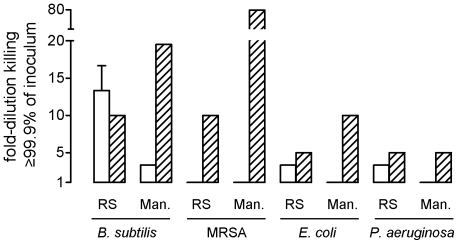
Honey is increasingly valued for its antibacterial activity, but knowledge regarding the mechanism of action is still incomplete. We assessed the bactericidal activity and mechanism of action of Revamil® source (RS) honey and manuka honey, the sources of two major medical-grade honeys. RS honey killed Bacillus subtilis, Escherichia coli and Pseudomonas aeruginosa within 2 hours, whereas manuka honey had such rapid activity only against B. subtilis. After 24 hours of incubation, both honeys killed all tested bacteria, including methicillin-resistant Staphylococcus aureus, but manuka honey retained activity up to higher dilutions than RS honey. Bee defensin-1 and H₂O₂ were the major factors involved in rapid bactericidal activity of RS honey. These factors were absent in manuka honey, but this honey contained 44-fold higher concentrations of methylglyoxal than RS honey. Methylglyoxal was a major bactericidal factor in manuka honey, but after neutralization of this compound manuka honey retained bactericidal activity due to several unknown factors. RS and manuka honey have highly distinct compositions of bactericidal factors, resulting in large differences in bactericidal activity.
Overview
CoChat Summary
TL;DR
RS and manuka honeys kill bacteria through distinct factor sets: RS relies on bee defensin-1 and H₂O₂ for rapid killing, while manuka relies heavily on high methylglyoxal for slower, dilution-resistant killing. Both killed all tested bacteria by 24 h, including MRSA, but with different potency and kinetics.
Key findings
- RS honey killed *B. subtilis*, *E. coli*, and *P. aeruginosa* within 2 h; manuka honey had such rapid activity only against *B. subtilis*. At 2 h, RS killed *B. subtilis* up to 13.3±3.3-fold dilution versus 2.5-fold for manuka; after 24 h, RS and manuka killed *B. subtilis* up to 10- and 20-fold, MRSA up to 10- and 80-fold, *E. coli* up to 5- and 10-fold, and *P. aeruginosa* up to 5- and 5-fold, respectively.
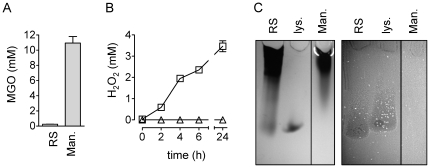
- RS and manuka differed sharply in bactericidal factors: RS contained 0.25±0.01 mM MGO and accumulated 3.47±0.25 mM H₂O₂ in 40% (v/v) solution over 24 h, while manuka contained 10.94±1.70 mM MGO (abstract: 44-fold higher; results: approximately 40-fold) and no detectable H₂O₂. Bee defensin-1 was detected in RS honey by AU-PAGE and *B. subtilis* overlay but not in manuka honey.
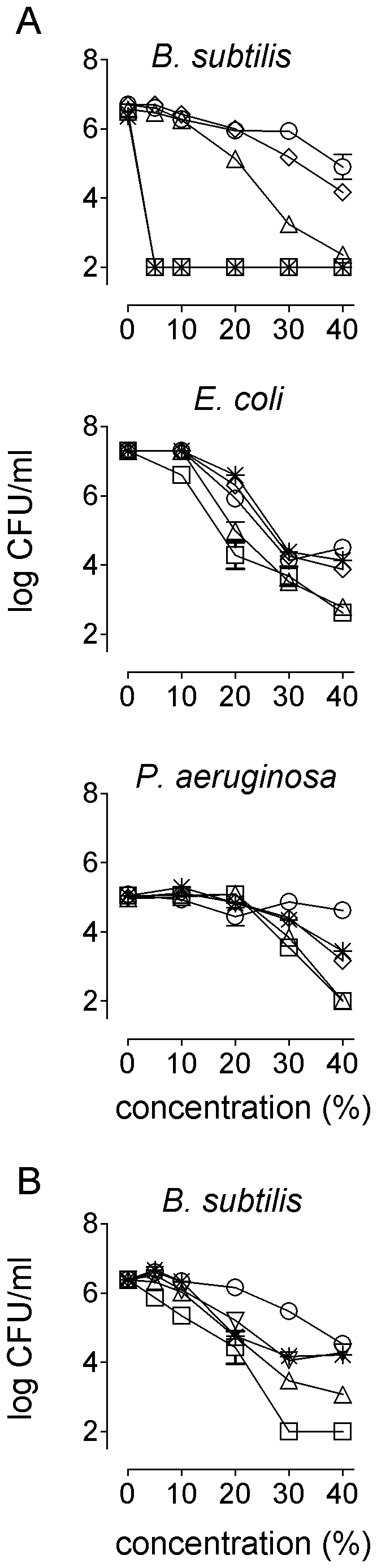
- Neutralizing MGO in manuka honey reduced activity against MRSA to sugar-solution level, required 8-fold and 2-fold higher manuka concentrations to kill *B. subtilis* and *P. aeruginosa*, and did not affect *E. coli*. Residual manuka activity involved unknown cationic and non-cationic factors; after MGO neutralization, low pH accounted for all non-cationic activity against *E. coli*, while *B. subtilis* retained substantial activity.
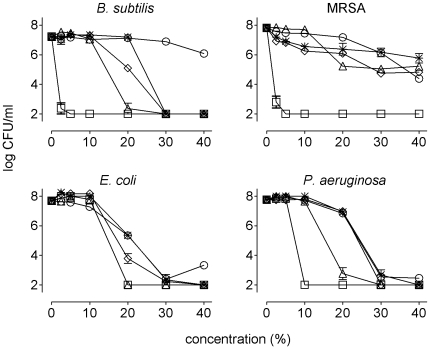
- Rapid manuka activity against *B. subtilis* required ≥30% honey; MGO neutralization reduced but did not abolish it, and the remaining activity was not affected by pH 7 or catalase but was further reduced, though not abolished, by SPS. For RS, 5% honey killed the entire *B. subtilis* inoculum within 2 h; SPS neutralization required 40% RS, and subsequent H₂O₂ neutralization reduced activity to sugar-solution level.
Methods
- Honey samples: unprocessed Revamil® source (RS) honey from Bfactory Health Products and non-sterilized UMF™ 16+ Active manuka honey from Nature’s nectar Limited; a honey-equivalent sugar solution contained 333 g/kg glucose, 385 g/kg fructose, 73 g/kg sucrose, and 62 g/kg maltose.
- Bacteria and bactericidal assay: *B. subtilis* ATCC6633, *E. coli* ML-35p, *P. aeruginosa* PAO-1 (ATCC 15692), and MRSA AMC201 were tested in 100 µl liquid assays with 50% honey stocks, final inocula of 1×10⁶ CFU/ml, incubation at 37°C and 150 rpm, and plating on blood agar; detection level was 100 CFU/ml. Neutralizers included catalase (600 U/ml), SPS (0.025%), glyoxalase I/glutathione for MGO conversion, and NaOH titration to pH 7.0.
- Factor quantification: H₂O₂ was measured by o-dianisidine/horseradish peroxidase; MGO was measured spectrophotometrically after glyoxalase I conversion to S-lactoylglutathione; bee defensin-1 was analyzed by 5 kDa ultrafiltration, native acid-urea PAGE, Coomassie staining, and *B. subtilis* overlay assay.
Limitations
- Stated: lack of standardization of antibacterial activity and incomplete knowledge of active components are major limitations for medical application of honey. The paper also states that the commonly used agar diffusion assay has limitations: activity against one species is not representative, zone size depends on diffusion, and the assay does not discriminate bacteriostatic from bactericidal activity or quantify killing kinetics.
- Stated: manuka honey has large batch-to-batch variation in antibacterial activity, and concerns about potential toxicity of dietary MGO and effects on wound healing remain to be investigated. The cationic and non-cationic factors responsible for residual manuka activity were not identified.
- Evident from the text: all experiments were in vitro with defined lab media and a limited bacterial panel; no wound exudate, clinical, or food-matrix validation was performed, and the neutralization/pH manipulations may not fully reflect native honey behavior.
Model-written summary. Check it against the paper before relying on it.
Integrity signals
Registry
Cites
Statistics
Figures
Verification
Claims the paper makes
0 Valid · 0 Not valid · 5 Not checked · 52 Own results and interpretations
A result the paper reports from its own data — it cites no other source for it, so there is none to check. The quote shows it is in the paper.
In the paper
“Subsequent neutralization of H2O2 reduced the activity of RS honey to that of a honey-equivalent sugar solution (Fig. 4A).”
§ Two Major Medicinal Honeys Have Different Mechanisms of Bactericidal Activity > Results > Factors contributing to the rapid bactericidal activity of RS and manuka honey
plainstates a cause- Asserted: passes — The authors put it forward as true.
- Checkable: passes — It can be checked against evidence.
- Load-bearing: passes — The paper’s conclusions depend on it.
- Based: passes — The paper gives a reason why it holds.
A result the paper reports from its own data — it cites no other source for it, so there is none to check. The quote shows it is in the paper.
In the paper
“MGO-neutralized manuka honey still had more activity than a sugar solution against these species”
§ Two Major Medicinal Honeys Have Different Mechanisms of Bactericidal Activity > Results > Factors contributing to the bactericidal activity of manuka honey after 24 hours
plain- Asserted: passes — The authors put it forward as true.
- Checkable: passes — It can be checked against evidence.
- Load-bearing: passes — The paper’s conclusions depend on it.
- Based: passes — The paper gives a reason why it holds.
A result the paper reports from its own data — it cites no other source for it, so there is none to check. The quote shows it is in the paper.
In the paper
“In a similar amount of manuka honey retentate no bee defensin-1 was detected either by Coomassie-staining or in a gel overlay assay (Fig. 2C).”
§ Two Major Medicinal Honeys Have Different Mechanisms of Bactericidal Activity > Results > Characterization of H2O2, MGO and bee defensin-1 in RS and manuka honey
plain- Asserted: passes — The authors put it forward as true.
- Checkable: passes — It can be checked against evidence.
- Load-bearing: passes — The paper’s conclusions depend on it.
- Based: passes — The paper gives a reason why it holds.
A result the paper reports from its own data — it cites no other source for it, so there is none to check. The quote shows it is in the paper.
In the paper
“After 2 h up to 13.3±3.3-fold diluted RS honey killed B. subtilis, whereas manuka honey could only be 2.5-fold diluted (Fig. 1).”
§ Two Major Medicinal Honeys Have Different Mechanisms of Bactericidal Activity > Results > Bactericidal activity of RS and manuka honey
plainstates a cause- Asserted: passes — The authors put it forward as true.
- Checkable: passes — It can be checked against evidence.
- Load-bearing: passes — The paper’s conclusions depend on it.
- Based: passes — The paper gives a reason why it holds.
A result the paper reports from its own data — it cites no other source for it, so there is none to check. The quote shows it is in the paper.
In the paper
“When the pH of MGO- and cationic compound-neutralized manuka honey was adjusted from 3.9 to 7.0, all remaining activity against E. coli was abolished.”
§ Two Major Medicinal Honeys Have Different Mechanisms of Bactericidal Activity > Results > Factors contributing to the bactericidal activity of manuka honey after 24 hours
plainstates a cause- Asserted: passes — The authors put it forward as true.
- Checkable: passes — It can be checked against evidence.
- Load-bearing: passes — The paper’s conclusions depend on it.
- Based: passes — The paper gives a reason why it holds.
32 more claims
Create a free account to see all 57 claims and to verify the 6 references still open.
- It may state two separate claims as one. 20
Claims other papers make about this one
Each is checked against this paper’s own text: does it say what the citing paper says it does?
The source backs part of the claim, not all of it — or backs it for a different population, condition or comparison.
In the citing paper
“The antibacterial peptide defensin-1 (Def-1) obtained from bees, is the main ingredient responsible for the antibacterial activity of honey, except for Manuka honey (Kwakman et al. 2011).”
From The antibacterial activities of honey (2021) · cites this paper as Kwakman et al. 2011
Experimental — accuracy not yet measured
Self-check
Percentages, sums and reported differences re-computed from the paper’s own numbers.
Each contradiction between two passages listed here was confirmed by an independent check.
Rated major: it would touch a result — a value a result rests on, reported and recomputed p-values on opposite sides of the significance level, two passages that conflict with no sign which is right, or a cited work retracted before this paper was published.
In the paper
§ Two Major Medicinal Honeys Have Different Mechanisms of Bactericidal Activity > Results > Factors contributing to the bactericidal activity of manuka honey after 24 hours
“| B. subtilis | rapidb | - | rapid | - | slow | rapid | slow | rapid | - | rapid | - | rapid |”
§ Two Major Medicinal Honeys Have Different Mechanisms of Bactericidal Activity > Results > Factors contributing to the rapid bactericidal activity of RS and manuka honey
“The remaining activity was not affected by titration to pH 7 (Fig. 4B) or addition of catalase (not shown), but this activity was further reduced but not abolished by addition of SPS (Fig. 4B).”
Rated minor: it would not touch a result — a value no result rests on, a p-value that stays on the same side of the significance level, or a conflict that is clerical, resolved elsewhere in the paper, or outside its own findings.
In the paper
§ Two Major Medicinal Honeys Have Different Mechanisms of Bactericidal Activity > Results > Factors contributing to the bactericidal activity of manuka honey after 24 hours
“| E. coli | rapid | - | slow | - | slow | slow | - | slow | - | slow | - | slow |”
§ Two Major Medicinal Honeys Have Different Mechanisms of Bactericidal Activity > Results > Factors contributing to the bactericidal activity of manuka honey after 24 hours
“the activity of manuka honey against E. coli was not affected by neutralization of MGO (Fig. 3).”
Rated minor: it would not touch a result — a value no result rests on, a p-value that stays on the same side of the significance level, or a conflict that is clerical, resolved elsewhere in the paper, or outside its own findings.
In the paper
§ Two Major Medicinal Honeys Have Different Mechanisms of Bactericidal Activity > Results > Factors contributing to the bactericidal activity of manuka honey after 24 hours
“| P. aeruginosa | rapid | - | slow | - | slow | slow | slow | - | - | slow | - | - |”
§ Two Major Medicinal Honeys Have Different Mechanisms of Bactericidal Activity > Results > Factors contributing to the rapid bactericidal activity of RS and manuka honey
“Titration of honey to pH 7 abolished all residual activity against P. aeruginosa (not shown).”
Citations
Cites
Antibiotics for Emerging Pathogens
Fischbach, M. A., & Walsh, C. T. (2009) · Science · doi:10.1126/science.1176667 · Cited by 1,777
Antimicrobial Use and Resistance in Animals
McEwen, S. A., & Fedorka‐Cray, P. J. (2002) · Clinical Infectious Diseases · doi:10.1086/340246 · Cited by 983
The Antibacterial Activity of Honey: 1. The nature of the antibacterial activity
Molan, P. C. (1992) · Bee World · doi:10.1080/0005772x.1992.11099109 · Cited by 822
Interaction of human defensins with Escherichia coli. Mechanism of bactericidal activity.
Lehrer, R. I., Barton, A., Daher, K. A., Harwig, S. S., Ganz, T., & Selsted, M. E. (1989) · Journal of Clinical Investigation · doi:10.1172/jci114198 · Cited by 715
Antibiotics: Actions, Origins, Resistance
Walsh, C. T. (2003) · Medical Entomology and Zoology · Cited by 675
Antibiotics: Actions, Origins, Resistance
Walsh, C. (2003) · Wiley eBooks · doi:10.1128/9781555817886 · Cited by 633
THE MECHANISM OF ACTION OF GLYOXALASE
Racker, E. (1951) · Journal of Biological Chemistry · doi:10.1016/s0021-9258(18)56017-8 · Cited by 581
A Survey of the Antibacterial Activity of Some New Zealand Honeys
Allen, K. L., Molan, P. C., & Reid, G. M. (1991) · Journal of Pharmacy and Pharmacology · doi:10.1111/j.2042-7158.1991.tb03186.x · Cited by 571
Mavric, E., Wittmann, S., Barth, G., & Henle, T. (2008) · Molecular Nutrition & Food Research · doi:10.1002/mnfr.200700282 · Cited by 545
White Jr., J. W., Subers, M. H., & Schepartz, A. I. (1963) · Biochimica et Biophysica Acta · doi:10.1016/0006-3002(63)90359-7 · Cited by 505
Cited by
Items 201–300 of 342
Pharmaceutical Applications of Honey
Elbargisy, R. M. (2020) · Springer eBooks · doi:10.1007/978-981-15-6799-5_14 · Cited by 6
Wadi, M. A. (2022) · BioMed Research International · doi:10.1155/2022/8441239 · Cited by 6
Sojobi, J. W., Ulelu, D. C., BANKOLE, O. L., & Fayomi, O. S. I. (2025) · Results in Surfaces and Interfaces · doi:10.1016/j.rsurfi.2025.100487 · Cited by 7
Oryan, A., & Alemzadeh, E. (2017) · Recent clinical techniques, results, and research in wounds · doi:10.1007/15695_2017_38 · Cited by 6
Jones, Z. J. M., Huang, Y., Green, K. J., & Hammer, K. A. (2023) · Journal of Applied Microbiology · doi:10.1093/jambio/lxad164 · Cited by 6
Innovative Adjunctive Approaches to Wound Management
Theoret, C. L., Lepage, O. M., Dart, A. J., Bischofberger, A. S., Stanley, B. J., & Koenig, J. B. (2016) · Wiley eBooks · doi:10.1002/9781118999219.ch22 · Cited by 6
Natural Food Antimicrobials of Animal Origin
Arias-Rios, E. V., Cabrera-Díaz, E., Márquez-González, M., & Castillo, A. (2017) · Springer eBooks · doi:10.1007/978-1-4939-7556-3_4 · Cited by 6
Ng, W. J., Hew, P. S., Loo, C., & Ee, K. Y. (2024) · Journal of Food Measurement & Characterization · doi:10.1007/s11694-024-02641-4 · Cited by 5
Pérez-Galván, J. M., Hernández, J. E. R., Martín-Barrasa, J. L., Monzón-Mayor, M., Saavedra, P., & Alemán, M. (2025) · Pharmaceutics · doi:10.3390/pharmaceutics17070833 · Cited by 6
Łyskowski, A., Miłek, M., & Dżugan, M. (2023) · Antibiotics · doi:10.3390/antibiotics12050830 · Cited by 6
Mohd-Aspar, M. A. S., Edros, R., Mokhtar, S. U., & Kamarudin, N. (2023) · Malaysian Journal of Microbiology · doi:10.21161/mjm.220084 · Cited by 5
Synergistic Effects of Honeys and Commonly Used Antibiotics on Gram Positive Bacteria
Masoud, A., Alqurashi, M., & Al-Amin, A. (2015) · Egyptian Academic Journal of Biological Sciences. G, Microbiology · doi:10.21608/eajbsg.2015.16491 · Cited by 5
Clébis, V. H., Proní, E. A., Puño-Sarmiento, J. J., Kobayashi, R. K. T., & Nakazato, G. (2021) · Brazilian Journal of Animal and Environmental Research · doi:10.34188/bjaerv4n1-076 · Cited by 5
Bezerra, A. B. G., Alves, M. J., Saavedra, M. J., Russo‐Almeida, P., Aires, A., Fonseca, H., Rodrigues, F., Delerue-Matos, C. M., Garcia, J., & Gouvinhas, I. (2024) · Food Bioscience · doi:10.1016/j.fbio.2024.104796 · Cited by 4
Ünlü, A. E., Altunkılıç, F., Asgari, Y., Demirtaş, S., Gökyer, Ş., Kıran, F., Huri, P. Y., & Takaç, S. (2024) · Turkish Journal of Agriculture - Food Science and Technology · doi:10.24925/turjaf.v12i10.1826-1834.6869 · Cited by 5
Characterisation of Tasmanian leatherwood (Eucryphia lucida) honey according to geographical origin
Schmidt, K., Close, D. C., Smith, J. A., Maya, F., & Garland, S. M. (2025) · Food Chemistry · doi:10.1016/j.foodchem.2025.143723 · Cited by 4
Health Benefits and Uses of Honey in Medicine
Majtán, J., Machado, A., Giampieri, F., & Álvarez-Suárez, J. M. (2025) · Springer eBooks · doi:10.1007/978-3-031-89049-9_4 · Cited by 4
Quantification of Firmicutes, Actinobacteria, and Gammaproteobacteria from Bohemian Honey
Hroncová, Z., Konopásková, K., Volstatova, T., & Killer, J. (2018) · Scientia Agriculturae Bohemica · doi:10.2478/sab-2018-0025 · Cited by 4
Excellent antibacterial activity of Slovak honeys on bacteria mostly infecting chronic wounds
Zemanová, M., Slobodníková, L., Čambal, M., & Labaš, P. (2021) · Bratislavské lekárske listy/Bratislava medical journal · doi:10.4149/bll_2021_084 · Cited by 5
In vitro Anti-candida Activity of Different Saudi Honeys and Honey Mixed with Taifi Rose Oil
Kalakattawi, A., Attas, S. G. A., Edris, S., Azeiz, A. Z. A., AlGuthami, A. F., Hegazi, A. G., Almasaudi, S. B., Al-Hindi, R. R., & Bahieldin, A. (2019) · Biosciences Biotechnology Research Asia · doi:10.13005/bbra/2794 · Cited by 4
Hasbi, N., Rosyunita, R., Rahim, A. R., Wardoyo, E. H., Arnawati, I. A., Hazaa, S. S., Hulfifa, L. N., Alamsyah, A. D. C. F., & Vaidika, I. K. S. (2023) · Jurnal Penelitian Pendidikan IPA · doi:10.29303/jppipa.v9i10.4913 · Cited by 4
Preventive Measures Against Transcutaneous Device Infections
Kwakman, P. H. S., & Zaat, S. A. J. (2012) · Springer eBooks · doi:10.1007/978-1-4614-1031-7_10 · Cited by 4
Self-citationInvestigating antibacterial plant-derived compounds from natural honey
Hawkins, J. M. (2015) · ORCA Online Research @Cardiff (Cardiff University) · Cited by 4
Serem, J. C. (2018) · UpSpace Institutional Repository (University of Pretoria) · Cited by 4
Evaluation of Honey as a Rooting Adjuvant for Cutting Propagation of Three Common Nursery Crops
Bowden, A. T., Knight, P. R., Ryals, J. B., Coker, C. E. H., Langlois, S. A., Broderick, S. R., Blythe, E. K., & Sakhanokho, H. F. (2025) · Agriculture · doi:10.3390/agriculture15030256 · Cited by 3
The role of antimicrobials in wound dressings
O’Dwyer, L. (2013) · The Veterinary Nurse · doi:10.12968/vetn.2013.4.2.98 · Cited by 3
Udegbunam, S. O., Ogbobe, S., Okereke, N. H., Enejere, A. S., Udegbunam, R. I., & Ezeobialu, T. H. (2022) · Tropical Journal of Pharmaceutical Research · doi:10.4314/tjpr.v20i8.11 · Cited by 3
A Review on Antimicrobial Activity of Honey
Supriya, N. R., & Vivek, P. (2018) · International Journal of Trend in Scientific Research and Development · doi:10.31142/ijtsrd15718 · Cited by 3
Comparison of In Vitro Bacterial Susceptibility to Common and Novel Equine Wound Care Dressings
Simpson, M., Hendrickson, D. A., Hyatt, D. R., & Rao, S. (2024) · Animals · doi:10.3390/ani14050776 · Cited by 3
Addo, M. G., Mutala, A., & Badu, K. (2020) · International Journal of Current Microbiology and Applied Sciences · doi:10.20546/ijcmas.2020.905.106 · Cited by 3
Anti-Biofilm Properties Exhibited by Different Types of Monofloral Honey
Nazzaro, F., Fratianni, F., d’Acierno, A., Ombra, M. N., Caputo, L., Coppola, R., & Feo, V. D. (2021) · International Electronic Conference on Microbiology (ECM) · doi:10.3390/proceedings2020066016 · Cited by 3
The role of honey in the treatment of type 2 diabetes mellitus: a review of literature
Ofor, C. C., Erejuwa, O. O., Akuodor, G. C., Aja, D. O. J., Mba, A. U., & Shu, E. N. (2022) · International Journal of Basic & Clinical Pharmacology · doi:10.18203/2319-2003.ijbcp20223366 · Cited by 3
Comparing antipseudomonal effects of honey samples with different geographical and botanical origin
Petrović, N., Lučić, M., Radovanović, B., & Martić, N. (2024) · Global Pediatrics · doi:10.1016/j.gpeds.2024.100149 · Cited by 3
Detection of honey adulterations based on physicochemical analysis
Gruznov, D. V., Gruznova, O. A., Lobanov, A. V., & Sokhlikov, A. B. (2023) · Himičeskaâ bezopasnostʹ. · doi:10.25514/chs.2023.2.25009 · Cited by 3
Abdelmelek, M., Aissat, S., Djebli, N., Khiati, B., & Ahmed, M. (2013) · Journal of Biologically Active Products from Nature · doi:10.1080/22311866.2013.833386 · Cited by 3
Okoro, P., Coyle, S., & Fyfe, L. (2015) · Food Science and Technology · doi:10.13189/fst.2015.030202 · Cited by 3
Meloncelli, D. (2019) · UniSC Research Bank (University of the Sunshine Coast) · doi:10.25907/00538 · Cited by 3
Main, E. N., Hall, S. C., & Bowlin, G. L. (2026) · Frontiers in Immunology · doi:10.3389/fimmu.2026.1760968 · Cited by 2
Damodharan, N., Verma, R. K., Angrup, A., Bakshi, J. B., & Panda, N. K. (2020) · Korean Journal of Otorhinolaryngology - Head and Neck Surgery · doi:10.3342/kjorl-hns.2019.00430 · Cited by 2
Silva, J. R., Villas-Bôas, J. K., Biz, G., Almeida, R. S., Spinosa, W. A., & Prudêncio, S. H. (2024) · Journal of Oral Biosciences · doi:10.1016/j.job.2024.100589 · Cited by 2
Manuka Honey: Feasibility and Safety in Postoperative Neurosurgical Wound Care
Felbaum, D. R., Dowlati, E. P., Jacobs, M., & Tom, L. K. (2021) · Advances in Skin & Wound Care · doi:10.1097/01.asw.0000741508.83558.ce · Cited by 2
Gray, B. H., Green, K. J., Haines, R. R., & Hammer, K. A. (2022) · BMC Complementary Medicine and Therapies · doi:10.1186/s12906-022-03695-x · Cited by 2
Božič, J., Bertoncelj, J., Drobne, D., Glavan, G., Gunde‐Cimerman, N., Leonardi, A., Kopinč, R., Kokalj, A. J., Novak, S., Korošec, M., et al. (2020) · Acta Biologica Slovenica · doi:10.14720/abs.63.2.15935 · Cited by 2
Gruznov, D. V., Gruznova, O. A., Lobanov, A. V., Sokhlikov, A. B., Shcherbakova, G. S., Stepanova, S. P., & Popov, N. I. (2024) · Russian Journal of Physical Chemistry B · doi:10.1134/s1990793124010275 · Cited by 2
Joković, N. M., Jovanović, N., Matejić, J. S., Stojanović-Radić, Z. Z., & Vitorović, J. (2025) · Biologica Nyssana · doi:10.46793/biolnyss.16.1.2j · Cited by 2
Chaturvedi, V., Vaishnaw, M., Bhatt, R., & Verma, P. (2014) · Current Trends in Biotechnology and Pharmacy · Cited by 2
Klein, J.-P., Graves-Morris, K., Coyle, S., & Fyfe, L. (2020) · Queen Margaret University Publications Repository (Queen Margaret University) · Cited by 2
Anti-biofilm properties exhibited by different types of monofloral honey
Nazzaro, F., Fratianni, F., d’Acierno, A., Caputo, L., Coppola, R., & Feo, V. D. (2020) · International Electronic Conference on Microbiology (ECM) · doi:10.3390/ecm2020-07111 · Cited by 2
Systematic reviews on interventions with honey in cancer
Vit Olivier, P., & Huq, F. (2013) · Actualidad Contable FACES · Cited by 2
Kinetics of Conversion of Dihydroxyacetone to Methylglyoxal in Honey
Grainger, M. N. C. (2015) · Research Commons (University of Waikato) · Cited by 2
Honey: A Novel Treatment in Chronic Ear Infections
Henatsch (2019) · Research Publications (Maastricht University) · doi:10.26481/dis.20190906dh · Cited by 2
Antimicrobial properties of wound dressings
Freeman-Parry, L. (2020) · Sheffield Hallam University · doi:10.7190/shu-thesis-00417 · Cited by 2
In-Vitro Effect of Natural Honey on the Growth of Streptococcus sanguinis
Alaee, A., Azizi, A., valaei, N., Taheri, S., microbiology, A. P. D., Ravanshadi, F., Dentist, Hajipour, M., Dentist, & Fattahi, M. (2019) · Journal of Research in Dental and Maxillofacial Sciences · doi:10.29252/jrdms.4.1.1 · Cited by 1
Ganjoo, A., Shah, S., Godse, K. V., Porwal, S., Caplash, P., Pereira, R., Nair, R., & Korukonda, K. (2023) · International Journal of Research in Dermatology · doi:10.18203/issn.2455-4529.intjresdermatol20233180 · Cited by 1
Mohd-Aspar, M. A. S., Kamarudin, N., Ghafar, A. N. A., & Manap, H. S. A. (2024) · Malaysian Journal of Microbiology · doi:10.21161/mjm.230348 · Cited by 1
Gruznov, D. V., Gruznova, O. A., Lobanov, A. V., Sokhlikov, A. B., Shcherbakova, G. S., Stepanova, S. P., & Popov, N. I. (2024) · Химическая физика · doi:10.31857/s0207401x24020099 · Cited by 1
In vitro evaluation of methylglyoxal as an antibacterial additive to bone cement
Bohn, M. C., Oltmanns, H., & Meißner, J. (2025) · Frontiers in Bioengineering and Biotechnology · doi:10.3389/fbioe.2025.1661383 · Cited by 1
Main, E. N., Huang, J. G., & Bowlin, G. L. (2026) · Journal of Inflammation Research · doi:10.2147/jir.s564685 · Cited by 1
Touzani, S., Masalha, M., Kmail, A., Amour, S., Qalalweh, H., Jarrar, D., Weldali, D., Lyoussi, B., & Saad, B. (2026) · Microbes & Immunity · doi:10.36922/mi026060016 · Cited by 1
Antibacterial and Physico-chemical Properties of Local Honey in Guyana
N’djelekulu, A., Kurup, R., & Ansari, A. A. (2015) · Journal of Advances in Medicine and Medical Research · doi:10.9734/bjmmr/2015/17063 · Cited by 1
De Jure Honey: Even without Antibacterial Activity
Bugárová, V., & Majtán, J. (2020) · Bee World · doi:10.1080/0005772x.2020.1838175 · Cited by 1
Investigation of Antioxidant and Antimicrobial Activity of Different Multifloral Honeys
Yeğin, S. Ç., Alver, D. O., Çiçek, F., & Güder, A. (2018) · Mellifera · Cited by 1
White, R. J. (2018) · Journal of Wound Care · doi:10.12968/jowc.2018.27.12.891 · Cited by 1
Properties of Honey: Its Mode of Action and Clinical Outcomes
Wani, R. A., Bhat, A. A., Rasool, I., Yousuf, S. M., Rasool, S., & Wani, H. A. (2020) · Springer eBooks · doi:10.1007/978-981-15-6799-5_15 · Cited by 2
Honey and Its Derivatives: A New Perspective on Its Antimicrobial Activities
Aga, S. S., Nissar, S., Banday, M. Z., & Rasool, I. (2020) · Springer eBooks · doi:10.1007/978-981-15-6799-5_7 · Cited by 1
Rosas, C. L. G., Mendoza, W., Medina, I. C., & Ribeiro, A. I. (2021) · doi:10.22533/at.ed.89421100810 · Cited by 1
Sievers, J. T. O., Moffat, E., Yusuf, K., Sarwar, N., Bowolaksono, A., & Fyfe, L. (2022) · Sains Malaysiana · doi:10.17576/jsm-2022-5105-05 · Cited by 1
Lawan, K. M., Aminu, B. M., Hussain, A. M., & Yunusa, A. (2022) · UMYU Journal of Microbiology Research (UJMR) · doi:10.47430/ujmr.2272.003 · Cited by 1
Raj, M. P., Arun, A. S., Kumar, R., Shah, S. D., & Mrudula, P. (2024) · Agricultural Science Digest - A Research Journal · doi:10.18805/ag.d-5759 · Cited by 1
Winter, G. (2017) · Bulletin of The Royal College of Surgeons of England · doi:10.1308/rcsbull.2017.52 · Cited by 1
Donkersley, P. (2014) · Lancaster EPrints (Lancaster University) · doi:10.17635/lancaster/thesis/96 · Cited by 1
Developing a unique medical-grade honey which maximizes glucose oxidase activityPreprint
Li, Z., & Parikh, R. (2018) · bioRxiv (Cold Spring Harbor Laboratory) · doi:10.1101/411819 · Cited by 1
Antimicrobial synergy between cranberry and Manuka honey against dental caries bacteria
Prince, A. (2019) · Holmes Museum Of Anthropology (Wichita State University) · Cited by 2
Hegazi, A. G., Guthami, F. M. A., Algethami, A. F. M., Ramadan, M. F. A., Craig, A. M., El-Seedi, H. R., & Serrano, S. (2022) · Preprints.org · doi:10.20944/preprints202211.0146.v1 · Cited by 1
Honeybees’ foraging patterns and their relation to honey antimicrobial activity
Rikohe, I. F. (2023) · doi:10.58694/20.500.12479/2142 · Cited by 1
Retraction: Antibacterial activity of honey on acne vulgaris caused by staphylococcus epidermidis
Abdulreda, G. R., Waheed, Z. A., Sarhan, N. H., & Abbas, N. N. (2023) · AIP conference proceedings · doi:10.1063/5.0187966 · Cited by 1
RetractedAdamopoulou, A. A. (2018) · University of Thessaly Institutional Repository (University of Thessaly) · doi:10.26253/heal.uth.5327 · Cited by 1
Le miel à usage médical : utilisation en milieu hospitalier
Hassan, A. (2023) · HAL · Cited by 1
Carbonyl Compounds in Manuka Honey:: Antibacterial Activity, Reactions and Metabolic Transit
Rückriemen, J. (2017) · Qucosa (Saxon State and University Library Dresden) · Cited by 1
Physicochemical and aroma characterization of Arbutus pavarii honey
Hwisa, N. T. (2021) · Illinois Digital Environment for Access to Learning and Scholarship (University of Illinois at Urbana-Champaign) · Cited by 1
Meuller, H. (2014) · Hungarian Veterinary Archive · Cited by 1
Hawari, K. E. (2016) · theses.fr (ABES) · doi:10.70675/cb1cac56z3c56z410cz9137z1756bf54bc8d · Cited by 1
Methylglyoxal in Manuka-Honig (Leptospermum scoparium): Bildung, Wirkung, Konsequenzen
Atrott, J. (2013) · Qucosa (Saxon State and University Library Dresden)
Boukraa, L. (2013) · CRC Press eBooks · doi:10.1201/b15608-7
Antibacterial Activity and Factors Impacting Antibacterial Stability of Southwestern Ontario Honey
Pask, J. (2013) · The Atrium (University of Guelph)
IMPACT OF HONEY DRESSING IN CHRONIC ULCER
Santhosh Kumar, S. S., & Sharmad, M. S. (2018) · Journal of Evidence Based Medicine and Healthcare · doi:10.18410/jebmh/2018/31
Bronkhorst, P. D. T. (2014) · UpSpace Institutional Repository (University of Pretoria)
An attempted transinfection of Wolbachia in the Western honey bee (Apis mellifera)
Russell, J. F. E. J. (2018) · Open Access Victoria University of Wellington | Te Herenga Waka (Figshare) · doi:10.26686/wgtn.17134223
Honey as a local antibacterial agent
Panajotović, L., Panajotović, R., & Panajotović, M. (2015) · Zdravstvena zastita · doi:10.5937/zz1501057p
Lietuvoje gaminamų bičių produktų specifiniai kokybės rodikliai ir antimikrobinės savybės
Jagminas, P. (2020) · Lithuanian University of Health Sciences
Unlocking the Secrets of an Ancient Antimicrobial, Honey, Using Modern Transcriptomic Techniques
Bouzo, D. (2020) · UTS ePRESS (University of Technology Sydney)
Therapeutic and Prophylactic Effects of Honey on Dermatitis and Related Disorders
Khan, M. S., Yasir, M., Wani, H. A., Bhat, G. H., Majid, S., & Rasool, I. (2020) · Springer eBooks · doi:10.1007/978-981-15-7305-7_11
Podisatti, A. (2021) · Journal of Medical Science And clinical Research · doi:10.18535/jmscr/v9i2.23
DETERMINATION THE ANTIBACTERIAL PROPERTIES OF HONEY
Gül, Ü. D. (2020) · International Journal of Natural and Engineering Sciences
McIver, V. C. (2020) · The Sydney eScholarship Repository (The University of Sydney)
de Melo, G. M. P., Bertipaglia, L. M. A., de Melo, W. J., Amancio, W. D. D. C., & Rubio, P. O. (2021) · doi:10.22533/at.ed.89421100818
COLETA SELETIVA: METODOLOGIA DE CONSCIENTIZAÇÃO AMBIENTAL COM ALUNOS DA APAE
Turmina, V. C. N., Ricoldi, G. M., Laureth, J. C. U., Castagna, J. Â., & Moreira, C. R. (2021) · doi:10.22533/at.ed.89421100828
Alves, R. S., Escarela, V. A. D. C., Barbosa, T. O. C., Silva, M. G. D., dos Santos, P. R. A., & Chioderoli, C. A. (2021) · doi:10.22533/at.ed.89421100812
LEVANTAMENTO DE PLANTAS DANINHAS NA CULTURA DO GIRASSOL EM DIFERENTES CLASSES TEXTURAIS DE SOLO
dos Santos, E. G., & Inoue, M. H. (2021) · doi:10.22533/at.ed.89421100813
Metadata
- Authors
- Kwakman, P. H. S., te Velde, A. A., de Boer, L., Vandenbroucke-Grauls, C. M. J. E., & Zaat, S. A. J.
- Affiliations
- Amsterdam UMC Location University of Amsterdam (NL)
- Corresponding author
- Zaat, Sebastian A. J.
- Venue
- PLoS ONE
- Publisher
- Public Library of Science (PLoS)
- Published
- 2011-03-04
- Volume
- 6
- Issue
- 3
- Pages
- e17709
- ISSN
- 1932-6203 (ISSN-L)
- PMC
- PMC3048876
- OpenAlex
- W2097665122
- Cited by
- 342
- References
- 42
- Citations by year
- 2026: 12 · 2025: 15 · 2024: 22 · 2023: 28 · 2022: 25 · 2021: 30 · 2020: 37 · 2019: 23 · 2018: 21 · 2017: 16 · 2016: 16 · 2015: 27 · 2014: 29 · 2013: 22 · 2012: 15
- FWCI
- 19.41
- Type
- journal article
- Language
- en
- Open access
- gold
- doi.org
- Locations
- PLoS ONE (publishedVersion, cc-by)
- Amsterdam UMC (VU Amsterdam) - Institutional Repository (publishedVersion, other-oa)
- PubMed (publishedVersion)
- UvA-DARE (University of Amsterdam) (publishedVersion, other-oa)
- PubMed Central (publishedVersion, cc-by)
- Pure Amsterdam UMC (publishedVersion, other-oa)
- Data Archiving and Networked Services (DANS) (submittedVersion)
- Digital Academic REpository of VU University Amsterdam (Vrije Universiteit Amsterdam) (submittedVersion)
- DOAJ (DOAJ: Directory of Open Access Journals) (submittedVersion, cc-by-sa)
- Data Archiving and Networked Services (DANS) (submittedVersion, other-oa)
- Topics
- Life Sciences › Agricultural and Biological Sciences › Insect Science › Bee Products Chemical Analysis
- Health Sciences › Medicine › Pharmacology (medical) › Healthcare and Venom Research
- Life Sciences › Immunology and Microbiology › Microbiology › Antimicrobial Peptides and Activities
- Keywords
- honey, manuka honey, antibacterial activity, bactericidal mechanism, methylglyoxal, hydrogen peroxide, methicillin-resistant Staphylococcus aureus, Bacillus subtilis, Escherichia coli, Pseudomonas aeruginosa, honey composition
- MeSH terms
- Anti-Bacterial Agents, Bacteria, Honey, Hydrogen Peroxide, Microbial Sensitivity Tests, Pyruvaldehyde, Time Factors, Defensins
About these checks
Registry, retraction, Cites and statistics results are computed, not judged, with one exception: a printed reference that no index lists is read once by a model before it counts as a citation error. Claims are extracted by a model and kept only when their quote appears verbatim in the text; each cited source is then checked, with a model’s help, for whether it says what the claim relies on. Those verdicts can be wrong — read the claim’s quote and the cited source before relying on one.
A language model drew the claims from the paper on 2026-11-17, under version 3 of the claim definition (model deepseek-v4.1-flash, prompt extract-v3).
A second model labelled each claim on 2026-11-17 (model jev-1.13-20260917, definition revision gold-guideline-v0.2).
Statistics and arithmetic are recomputed, not judged.
Confidence bands are shown only for fields calibrated on our annotated test set. None is calibrated yet, so no band is shown.
What counts as a claim ›How we measure confidence ›How we check this ›
Are you an author, or do you see a problem with this page? Request a review
Data sources
Bibliographic data: Semantic Scholar, OpenAlex, Crossref.
Contains information from the Semantic Scholar Academic Graph Datasets, made available under the ODC Attribution License (ODC-BY 1.0).
Semantic Scholar’s data is described in: Kinney, R., et al. (2023). The Semantic Scholar Open Data Platform. arXiv:2301.10140.
