

Two Major Medicinal Honeys Have Different Mechanisms of Bactericidal Activity
Open accessThe DOI matches its Crossref record; 41 of the 42 references it cites were found in a registry or an index; none of the 6 sources its claims cite is checked for support yet.
Abstract
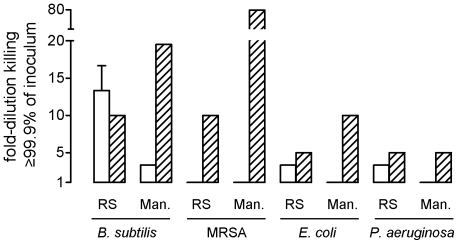
Honey is increasingly valued for its antibacterial activity, but knowledge regarding the mechanism of action is still incomplete. We assessed the bactericidal activity and mechanism of action of Revamil® source (RS) honey and manuka honey, the sources of two major medical-grade honeys. RS honey killed Bacillus subtilis, Escherichia coli and Pseudomonas aeruginosa within 2 hours, whereas manuka honey had such rapid activity only against B. subtilis. After 24 hours of incubation, both honeys killed all tested bacteria, including methicillin-resistant Staphylococcus aureus, but manuka honey retained activity up to higher dilutions than RS honey. Bee defensin-1 and H₂O₂ were the major factors involved in rapid bactericidal activity of RS honey. These factors were absent in manuka honey, but this honey contained 44-fold higher concentrations of methylglyoxal than RS honey. Methylglyoxal was a major bactericidal factor in manuka honey, but after neutralization of this compound manuka honey retained bactericidal activity due to several unknown factors. RS and manuka honey have highly distinct compositions of bactericidal factors, resulting in large differences in bactericidal activity.
Overview
CoChat Summary
TL;DR
RS and manuka honeys kill bacteria through distinct factor sets: RS relies on bee defensin-1 and H₂O₂ for rapid killing, while manuka relies heavily on high methylglyoxal for slower, dilution-resistant killing. Both killed all tested bacteria by 24 h, including MRSA, but with different potency and kinetics.
Key findings
- RS honey killed *B. subtilis*, *E. coli*, and *P. aeruginosa* within 2 h; manuka honey had such rapid activity only against *B. subtilis*. At 2 h, RS killed *B. subtilis* up to 13.3±3.3-fold dilution versus 2.5-fold for manuka; after 24 h, RS and manuka killed *B. subtilis* up to 10- and 20-fold, MRSA up to 10- and 80-fold, *E. coli* up to 5- and 10-fold, and *P. aeruginosa* up to 5- and 5-fold, respectively.
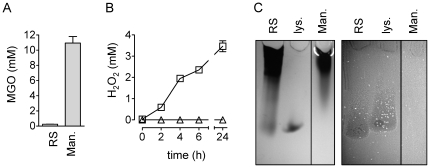
- RS and manuka differed sharply in bactericidal factors: RS contained 0.25±0.01 mM MGO and accumulated 3.47±0.25 mM H₂O₂ in 40% (v/v) solution over 24 h, while manuka contained 10.94±1.70 mM MGO (abstract: 44-fold higher; results: approximately 40-fold) and no detectable H₂O₂. Bee defensin-1 was detected in RS honey by AU-PAGE and *B. subtilis* overlay but not in manuka honey.
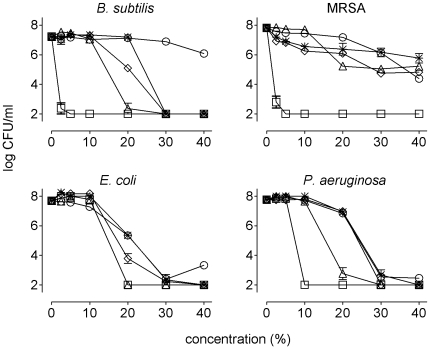
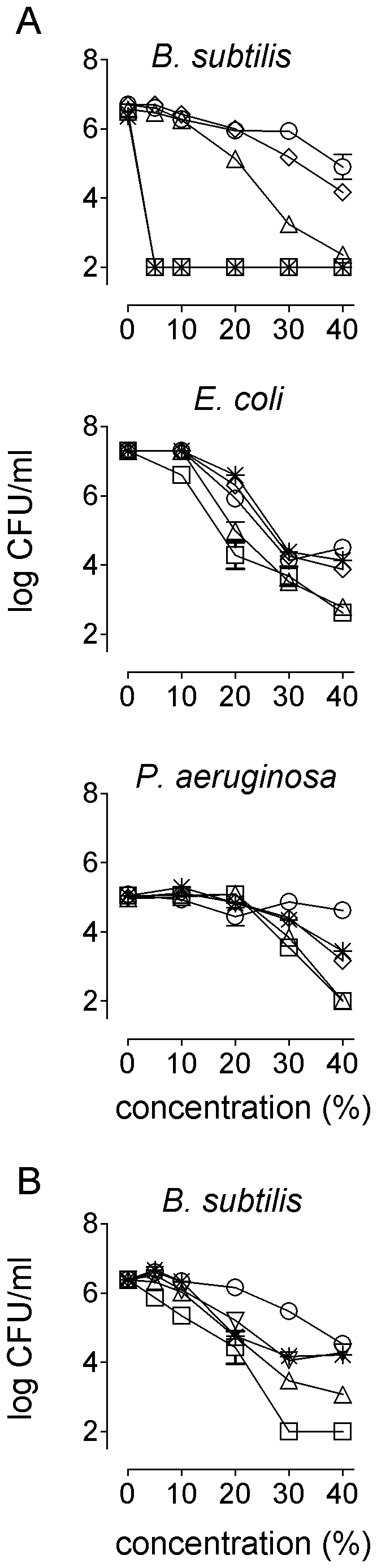
- Neutralizing MGO in manuka honey reduced activity against MRSA to sugar-solution level, required 8-fold and 2-fold higher manuka concentrations to kill *B. subtilis* and *P. aeruginosa*, and did not affect *E. coli*. Residual manuka activity involved unknown cationic and non-cationic factors; after MGO neutralization, low pH accounted for all non-cationic activity against *E. coli*, while *B. subtilis* retained substantial activity.
- Rapid manuka activity against *B. subtilis* required ≥30% honey; MGO neutralization reduced but did not abolish it, and the remaining activity was not affected by pH 7 or catalase but was further reduced, though not abolished, by SPS. For RS, 5% honey killed the entire *B. subtilis* inoculum within 2 h; SPS neutralization required 40% RS, and subsequent H₂O₂ neutralization reduced activity to sugar-solution level.
Methods
- Honey samples: unprocessed Revamil® source (RS) honey from Bfactory Health Products and non-sterilized UMF™ 16+ Active manuka honey from Nature’s nectar Limited; a honey-equivalent sugar solution contained 333 g/kg glucose, 385 g/kg fructose, 73 g/kg sucrose, and 62 g/kg maltose.
- Bacteria and bactericidal assay: *B. subtilis* ATCC6633, *E. coli* ML-35p, *P. aeruginosa* PAO-1 (ATCC 15692), and MRSA AMC201 were tested in 100 µl liquid assays with 50% honey stocks, final inocula of 1×10⁶ CFU/ml, incubation at 37°C and 150 rpm, and plating on blood agar; detection level was 100 CFU/ml. Neutralizers included catalase (600 U/ml), SPS (0.025%), glyoxalase I/glutathione for MGO conversion, and NaOH titration to pH 7.0.
- Factor quantification: H₂O₂ was measured by o-dianisidine/horseradish peroxidase; MGO was measured spectrophotometrically after glyoxalase I conversion to S-lactoylglutathione; bee defensin-1 was analyzed by 5 kDa ultrafiltration, native acid-urea PAGE, Coomassie staining, and *B. subtilis* overlay assay.
Limitations
- Stated: lack of standardization of antibacterial activity and incomplete knowledge of active components are major limitations for medical application of honey. The paper also states that the commonly used agar diffusion assay has limitations: activity against one species is not representative, zone size depends on diffusion, and the assay does not discriminate bacteriostatic from bactericidal activity or quantify killing kinetics.
- Stated: manuka honey has large batch-to-batch variation in antibacterial activity, and concerns about potential toxicity of dietary MGO and effects on wound healing remain to be investigated. The cationic and non-cationic factors responsible for residual manuka activity were not identified.
- Evident from the text: all experiments were in vitro with defined lab media and a limited bacterial panel; no wound exudate, clinical, or food-matrix validation was performed, and the neutralization/pH manipulations may not fully reflect native honey behavior.
Model-written summary. Check it against the paper before relying on it.
Integrity signals
Registry
Cites
Statistics
Figures
Verification
Claims the paper makes
0 Valid · 0 Not valid · 5 Not checked · 52 Own results and interpretations
A result the paper reports from its own data — it cites no other source for it, so there is none to check. The quote shows it is in the paper.
In the paper
“Subsequent neutralization of H2O2 reduced the activity of RS honey to that of a honey-equivalent sugar solution (Fig. 4A).”
§ Two Major Medicinal Honeys Have Different Mechanisms of Bactericidal Activity > Results > Factors contributing to the rapid bactericidal activity of RS and manuka honey
plainstates a cause- Asserted: passes — The authors put it forward as true.
- Checkable: passes — It can be checked against evidence.
- Load-bearing: passes — The paper’s conclusions depend on it.
- Based: passes — The paper gives a reason why it holds.
A result the paper reports from its own data — it cites no other source for it, so there is none to check. The quote shows it is in the paper.
In the paper
“MGO-neutralized manuka honey still had more activity than a sugar solution against these species”
§ Two Major Medicinal Honeys Have Different Mechanisms of Bactericidal Activity > Results > Factors contributing to the bactericidal activity of manuka honey after 24 hours
plain- Asserted: passes — The authors put it forward as true.
- Checkable: passes — It can be checked against evidence.
- Load-bearing: passes — The paper’s conclusions depend on it.
- Based: passes — The paper gives a reason why it holds.
A result the paper reports from its own data — it cites no other source for it, so there is none to check. The quote shows it is in the paper.
In the paper
“In a similar amount of manuka honey retentate no bee defensin-1 was detected either by Coomassie-staining or in a gel overlay assay (Fig. 2C).”
§ Two Major Medicinal Honeys Have Different Mechanisms of Bactericidal Activity > Results > Characterization of H2O2, MGO and bee defensin-1 in RS and manuka honey
plain- Asserted: passes — The authors put it forward as true.
- Checkable: passes — It can be checked against evidence.
- Load-bearing: passes — The paper’s conclusions depend on it.
- Based: passes — The paper gives a reason why it holds.
A result the paper reports from its own data — it cites no other source for it, so there is none to check. The quote shows it is in the paper.
In the paper
“After 2 h up to 13.3±3.3-fold diluted RS honey killed B. subtilis, whereas manuka honey could only be 2.5-fold diluted (Fig. 1).”
§ Two Major Medicinal Honeys Have Different Mechanisms of Bactericidal Activity > Results > Bactericidal activity of RS and manuka honey
plainstates a cause- Asserted: passes — The authors put it forward as true.
- Checkable: passes — It can be checked against evidence.
- Load-bearing: passes — The paper’s conclusions depend on it.
- Based: passes — The paper gives a reason why it holds.
A result the paper reports from its own data — it cites no other source for it, so there is none to check. The quote shows it is in the paper.
In the paper
“When the pH of MGO- and cationic compound-neutralized manuka honey was adjusted from 3.9 to 7.0, all remaining activity against E. coli was abolished.”
§ Two Major Medicinal Honeys Have Different Mechanisms of Bactericidal Activity > Results > Factors contributing to the bactericidal activity of manuka honey after 24 hours
plainstates a cause- Asserted: passes — The authors put it forward as true.
- Checkable: passes — It can be checked against evidence.
- Load-bearing: passes — The paper’s conclusions depend on it.
- Based: passes — The paper gives a reason why it holds.
32 more claims
Create a free account to see all 57 claims and to verify the 6 references still open.
- It may state two separate claims as one. 20
Claims other papers make about this one
Each is checked against this paper’s own text: does it say what the citing paper says it does?
The source backs part of the claim, not all of it — or backs it for a different population, condition or comparison.
In the citing paper
“The antibacterial peptide defensin-1 (Def-1) obtained from bees, is the main ingredient responsible for the antibacterial activity of honey, except for Manuka honey (Kwakman et al. 2011).”
From The antibacterial activities of honey (2021) · cites this paper as Kwakman et al. 2011
Experimental — accuracy not yet measured
Self-check
Percentages, sums and reported differences re-computed from the paper’s own numbers.
Each contradiction between two passages listed here was confirmed by an independent check.
Rated major: it would touch a result — a value a result rests on, reported and recomputed p-values on opposite sides of the significance level, two passages that conflict with no sign which is right, or a cited work retracted before this paper was published.
In the paper
§ Two Major Medicinal Honeys Have Different Mechanisms of Bactericidal Activity > Results > Factors contributing to the bactericidal activity of manuka honey after 24 hours
“| B. subtilis | rapidb | - | rapid | - | slow | rapid | slow | rapid | - | rapid | - | rapid |”
§ Two Major Medicinal Honeys Have Different Mechanisms of Bactericidal Activity > Results > Factors contributing to the rapid bactericidal activity of RS and manuka honey
“The remaining activity was not affected by titration to pH 7 (Fig. 4B) or addition of catalase (not shown), but this activity was further reduced but not abolished by addition of SPS (Fig. 4B).”
Rated minor: it would not touch a result — a value no result rests on, a p-value that stays on the same side of the significance level, or a conflict that is clerical, resolved elsewhere in the paper, or outside its own findings.
In the paper
§ Two Major Medicinal Honeys Have Different Mechanisms of Bactericidal Activity > Results > Factors contributing to the bactericidal activity of manuka honey after 24 hours
“| E. coli | rapid | - | slow | - | slow | slow | - | slow | - | slow | - | slow |”
§ Two Major Medicinal Honeys Have Different Mechanisms of Bactericidal Activity > Results > Factors contributing to the bactericidal activity of manuka honey after 24 hours
“the activity of manuka honey against E. coli was not affected by neutralization of MGO (Fig. 3).”
Rated minor: it would not touch a result — a value no result rests on, a p-value that stays on the same side of the significance level, or a conflict that is clerical, resolved elsewhere in the paper, or outside its own findings.
In the paper
§ Two Major Medicinal Honeys Have Different Mechanisms of Bactericidal Activity > Results > Factors contributing to the bactericidal activity of manuka honey after 24 hours
“| P. aeruginosa | rapid | - | slow | - | slow | slow | slow | - | - | slow | - | - |”
§ Two Major Medicinal Honeys Have Different Mechanisms of Bactericidal Activity > Results > Factors contributing to the rapid bactericidal activity of RS and manuka honey
“Titration of honey to pH 7 abolished all residual activity against P. aeruginosa (not shown).”
Citations
Cites
Antibiotics for Emerging Pathogens
Fischbach, M. A., & Walsh, C. T. (2009) · Science · doi:10.1126/science.1176667 · Cited by 1,777
Antimicrobial Use and Resistance in Animals
McEwen, S. A., & Fedorka‐Cray, P. J. (2002) · Clinical Infectious Diseases · doi:10.1086/340246 · Cited by 983
The Antibacterial Activity of Honey: 1. The nature of the antibacterial activity
Molan, P. C. (1992) · Bee World · doi:10.1080/0005772x.1992.11099109 · Cited by 822
Interaction of human defensins with Escherichia coli. Mechanism of bactericidal activity.
Lehrer, R. I., Barton, A., Daher, K. A., Harwig, S. S., Ganz, T., & Selsted, M. E. (1989) · Journal of Clinical Investigation · doi:10.1172/jci114198 · Cited by 715
Antibiotics: Actions, Origins, Resistance
Walsh, C. T. (2003) · Medical Entomology and Zoology · Cited by 675
Antibiotics: Actions, Origins, Resistance
Walsh, C. (2003) · Wiley eBooks · doi:10.1128/9781555817886 · Cited by 633
THE MECHANISM OF ACTION OF GLYOXALASE
Racker, E. (1951) · Journal of Biological Chemistry · doi:10.1016/s0021-9258(18)56017-8 · Cited by 581
A Survey of the Antibacterial Activity of Some New Zealand Honeys
Allen, K. L., Molan, P. C., & Reid, G. M. (1991) · Journal of Pharmacy and Pharmacology · doi:10.1111/j.2042-7158.1991.tb03186.x · Cited by 571
Mavric, E., Wittmann, S., Barth, G., & Henle, T. (2008) · Molecular Nutrition & Food Research · doi:10.1002/mnfr.200700282 · Cited by 545
White Jr., J. W., Subers, M. H., & Schepartz, A. I. (1963) · Biochimica et Biophysica Acta · doi:10.1016/0006-3002(63)90359-7 · Cited by 505
Cited by
Items 301–342 of 342
PRINCIPAIS ALIMENTOS FORNECIDOS PARA GATOS DOMICILIADOS NA CIDADE DE LAVRAS-MG
Afonso, M. V. R., Resende, F. A., Buson, M. C., Antelme, L. R., & Lacerda, R. F. (2021) · doi:10.22533/at.ed.89421100817
Intérêt de l’apithérapie en pédicurie-podologie
Potin, M. (2021) · Revue du Podologue · doi:10.1016/j.revpod.2021.09.009
Semprini, A. (2020) · Open Access Victoria University of Wellington | Te Herenga Waka (Figshare) · doi:10.26686/wgtn.17151791.v1
Semprini, A. (2020) · Open Access Victoria University of Wellington | Te Herenga Waka (Figshare) · doi:10.26686/wgtn.17151791
SYNERGISTIC ANTIBACTERIAL EFFECT OF APIS FLOREA BEE HONEY AND CIPROFLOXACIN ON PATHOGENIC BACTERIA
Bhushanam, M., S, M., & Mathias, A. J. (2023) · Asian Journal of Microbiology Biotechnology and Environmental Sciences · doi:10.53550/ajmbes.2023.v25i02.017
Adaji, J. Z., & Ashar, S. J. (2023) · doi:10.14293/pr2199.000425.v1
Pham, A. N., Ha, A. K., & Tran, T. T. T. (2023) · Vietnam Journal of Science and Technology/Science and Technology · doi:10.15625/2525-2518/17260
Ansari, M. J., Al-Waili, N., Al-Ghamdi, A., Salmen, S. H., & Al-Waili, H. (2024) · SSRN Electronic Journal · doi:10.2139/ssrn.4873468
An Interventional Study of Application of Manuka Honey in Post Mastoidectomy Surgery
Jain, S. K., Narang, S., & Kacker, V. (2024) · Indian Journal of Otolaryngology and Head & Neck Surgery · doi:10.1007/s12070-024-04962-8
Sử dụng mật ong hoa tràm chiếu xạ trong điều trị loét tì đè
Nguyễn, H. P., & Trần, V. P. (2024) · Tạp chí Y học Thảm hoạ và Bỏng · doi:10.54804/yhthvb.5.2024.361
Investigation of pollen analysis and antimicrobial effects of honey from Posof (Ardahan) district
Uluçay, A. G., & Akpınar, S. (2025) · Journal of Advances in VetBio Science and Techniques · doi:10.31797/vetbio.1543971
Antimicrobial properties of local Kelulut honey against selected oral pathogens
Jelantek, A. N. H. A., Noor, S., Mohamad, N. M., & Kannan, T. P. (2025) · International Journal of Orofacial and Health Sciences · doi:10.31436/ijohs.v6i2.400
Ανίχνευση αντιμικροβιακών ουσιών σε μέλια του Ολύμπου
Δάμτσιας, Θ. (2016) · University of Thessaly Institutional Repository (University of Thessaly) · doi:10.26253/heal.uth.5560
Gray, B. H., Green, K. J., Haines, R. R., & Hammer, K. A. (2022) · Figshare · doi:10.6084/m9.figshare.20678059
Η αντιβακτηριακή δράση του μελιού
Τσιρογιάννη, Γ. (2017) · University of Thessaly Institutional Repository (University of Thessaly) · doi:10.26253/heal.uth.4476
Κουβάτση, Α. (2013) · University of Thessaly Institutional Repository (University of Thessaly) · doi:10.26253/heal.uth.5363
Εκτίμηση της αυθεντικότητας και ανίχνευση της νοθείας στο μέλι
Σβερκούλης, Α. Κ. (2023) · University of Thessaly Institutional Repository (University of Thessaly) · doi:10.26253/heal.uth.39195
Tzika, P. (2015) · University of Thessaly Institutional Repository (University of Thessaly) · doi:10.26253/heal.uth.5570
Biosynthesis of silver nanoparticles using plant extracts: an update
Smilkov, K., & Gjorgieva Ackova, D. (2019) · Goce Delchev University Repository (Goce Delčev University of Štip)
Le miel, de l’abeille à la plaie : des propriétés thérapeutiques favorisant la cicatrisation
Bramaz, C. (2023) · HAL
Schmidt, C. (2020) · Qucosa (Saxon State and University Library Dresden)
Oinaala, D., Lyhs, U., & Tikkanen‐Kaukanen, C. (2014) · Helda - University of Helsinki Institutional Repository
Διερεύνηση της αναστολής βιοϋμένων κλινικών βακτηριακών στελεχών παρουσία μελιού
Χιονίδου, Ε. (2014) · University of Thessaly Institutional Repository (University of Thessaly)
Kayastha, S., Awal, B. K., Sudeep, K. C., Khanal, S., Joshi, T. P., & Joshi, D. R. (2026) · Journal of Nepal Biotechnology Association · doi:10.3126/jnba.v7i1.92152
El-Seedi, H. R., El‐Wahed, A. A. A., Swilam, M. M., Amro, A. M., Hussein, W. M., Cheng, G., Coghi, P. S., Guo, M., Saeed, A., Guo, Z., et al. (2026) · Food Bioscience · doi:10.1016/j.fbio.2026.108794
ALOE VERA AND HONEY ACCELERATING BURN WOUND TISSUE REPAIR: A COMPREHENSIVE REVIEW
Ramisha Naeem, K. S., Shakeel, K., Tahir, H., Khalid, S., & Batool, Z. (2026) · The Research of Medical Science Review · doi:10.5281/zenodo.20770162
Pallett, R., Pritchard, K., Wilkins, K., Galleh, R. P., Adebisi, O. O., Harman, L. A., Momi, T., Wilkes, H., & Pennock, C. (2026) · JAC-Antimicrobial Resistance · doi:10.1093/jacamr/dlag102.017
Potencial antimicrobiano de mieles de Montes del Queguay
Mattos, N. (2026) · LA Referencia (Red Federada de Repositorios Institucionales de Publicaciones Científicas)
Antibacterial Activity of Different Types of Honey
Gupta, B. G. W. A. N. A. (2022) · International Journal of Advanced Research in Science Communication and Technology · doi:10.48175/ijarsct-6802
Suwannapong, G., Benbow, M. E., Ponkit, R., Boonsriwong, W., & Naree, S. (2026) · Life · doi:10.3390/life16081366
Aspar, M. A. S. M. (2021) · UMP Institutional Repository (Universiti Malaysia Pahang)
Nolan, V. C., Harrison, J., & Cox, J. A. G. (2026) · PLoS ONE · doi:10.1371/journal.pone.0356687
Toward Sustainable Wound Bed Preparation: Rethinking Medical-Grade Honey in Pediatric Burn Care
Colabella, C., Difalco, B. V., & Khamisi, A. (2026) · International Journal of Wound Research · doi:10.64115/ijwr-2026-753
Samad, M. A. (2026) · Journal of Veterinary Medical and One Health Research · doi:10.36111/jvmohr.2026.8(1-2).0045
Udegbunam, S. O., Ogbobe, S., Okereke, H. N., Udegbunam, R., Enejere, A. S., & Ezeobialu, T. H. (2024) · Nigerian Journal of Animal Production
Massaro, C. (2014) · UniSC Research Bank (University of the Sunshine Coast) · doi:10.25907/00444
Muñoz, M., del Sol, M., & Vásquez, B. (2023) · doi:10.3389/fvets.2023.1172025.s001
Metadata
- Authors
- Kwakman, P. H. S., te Velde, A. A., de Boer, L., Vandenbroucke-Grauls, C. M. J. E., & Zaat, S. A. J.
- Affiliations
- Amsterdam UMC Location University of Amsterdam (NL)
- Corresponding author
- Zaat, Sebastian A. J.
- Venue
- PLoS ONE
- Publisher
- Public Library of Science (PLoS)
- Published
- 2011-03-04
- Volume
- 6
- Issue
- 3
- Pages
- e17709
- ISSN
- 1932-6203 (ISSN-L)
- PMC
- PMC3048876
- OpenAlex
- W2097665122
- Cited by
- 342
- References
- 42
- Citations by year
- 2026: 12 · 2025: 15 · 2024: 22 · 2023: 28 · 2022: 25 · 2021: 30 · 2020: 37 · 2019: 23 · 2018: 21 · 2017: 16 · 2016: 16 · 2015: 27 · 2014: 29 · 2013: 22 · 2012: 15
- FWCI
- 19.41
- Type
- journal article
- Language
- en
- Open access
- gold
- doi.org
- Locations
- PLoS ONE (publishedVersion, cc-by)
- Amsterdam UMC (VU Amsterdam) - Institutional Repository (publishedVersion, other-oa)
- PubMed (publishedVersion)
- UvA-DARE (University of Amsterdam) (publishedVersion, other-oa)
- PubMed Central (publishedVersion, cc-by)
- Pure Amsterdam UMC (publishedVersion, other-oa)
- Data Archiving and Networked Services (DANS) (submittedVersion)
- Digital Academic REpository of VU University Amsterdam (Vrije Universiteit Amsterdam) (submittedVersion)
- DOAJ (DOAJ: Directory of Open Access Journals) (submittedVersion, cc-by-sa)
- Data Archiving and Networked Services (DANS) (submittedVersion, other-oa)
- Topics
- Life Sciences › Agricultural and Biological Sciences › Insect Science › Bee Products Chemical Analysis
- Health Sciences › Medicine › Pharmacology (medical) › Healthcare and Venom Research
- Life Sciences › Immunology and Microbiology › Microbiology › Antimicrobial Peptides and Activities
- Keywords
- honey, manuka honey, antibacterial activity, bactericidal mechanism, methylglyoxal, hydrogen peroxide, methicillin-resistant Staphylococcus aureus, Bacillus subtilis, Escherichia coli, Pseudomonas aeruginosa, honey composition
- MeSH terms
- Anti-Bacterial Agents, Bacteria, Honey, Hydrogen Peroxide, Microbial Sensitivity Tests, Pyruvaldehyde, Time Factors, Defensins
About these checks
Registry, retraction, Cites and statistics results are computed, not judged, with one exception: a printed reference that no index lists is read once by a model before it counts as a citation error. Claims are extracted by a model and kept only when their quote appears verbatim in the text; each cited source is then checked, with a model’s help, for whether it says what the claim relies on. Those verdicts can be wrong — read the claim’s quote and the cited source before relying on one.
A language model drew the claims from the paper on 2026-11-17, under version 3 of the claim definition (model deepseek-v4.1-flash, prompt extract-v3).
A second model labelled each claim on 2026-11-17 (model jev-1.13-20260917, definition revision gold-guideline-v0.2).
Statistics and arithmetic are recomputed, not judged.
Confidence bands are shown only for fields calibrated on our annotated test set. None is calibrated yet, so no band is shown.
What counts as a claim ›How we measure confidence ›How we check this ›
Are you an author, or do you see a problem with this page? Request a review
Data sources
Bibliographic data: Semantic Scholar, OpenAlex, Crossref.
Contains information from the Semantic Scholar Academic Graph Datasets, made available under the ODC Attribution License (ODC-BY 1.0).
Semantic Scholar’s data is described in: Kinney, R., et al. (2023). The Semantic Scholar Open Data Platform. arXiv:2301.10140.
