

The Candida albicans-Specific Gene EED1 Encodes a Key Regulator of Hyphal Extension
Open accessThe DOI matches its Crossref record; 59 of the 59 references it cites were found in a registry or an index.
Abstract
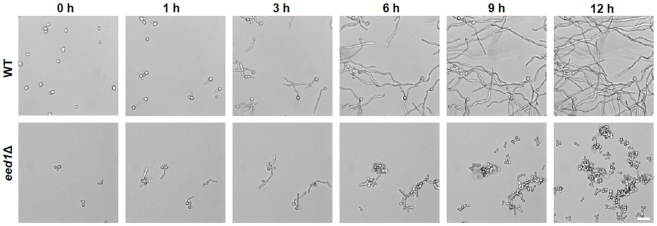
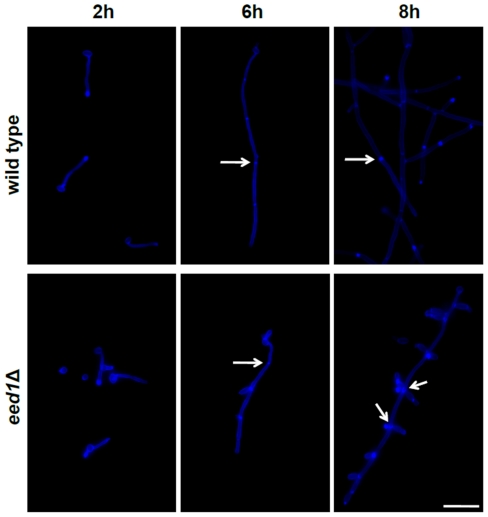
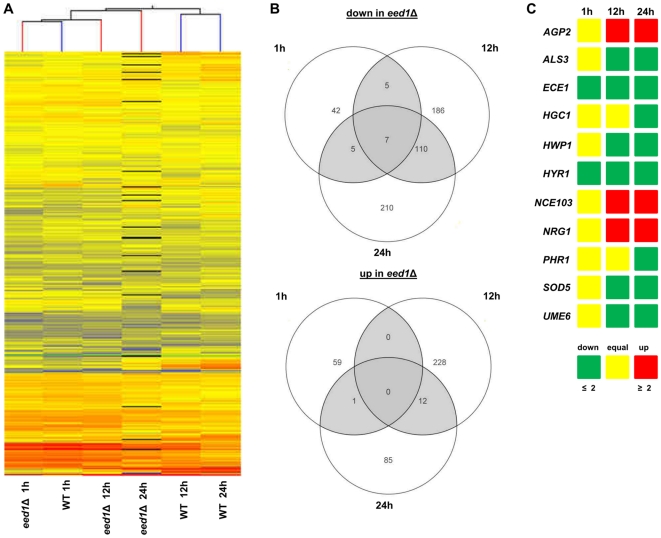
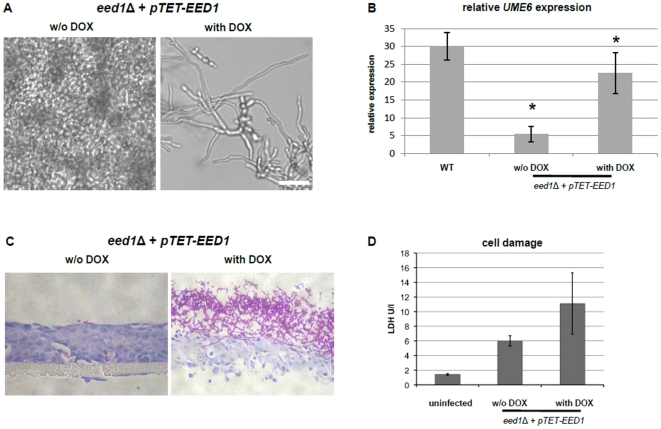
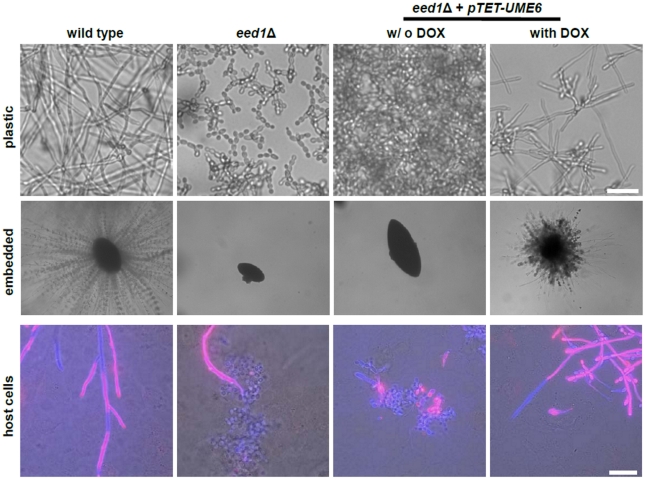
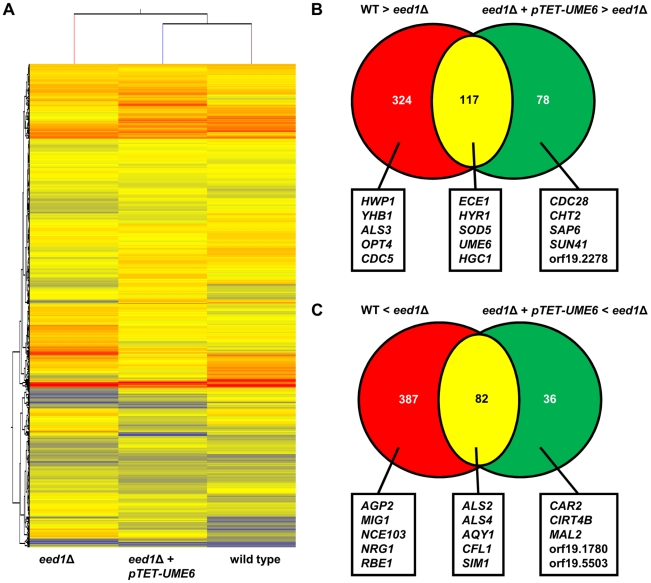
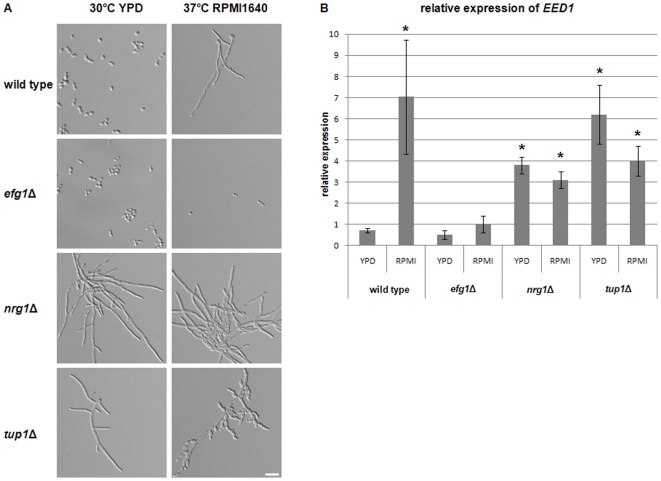
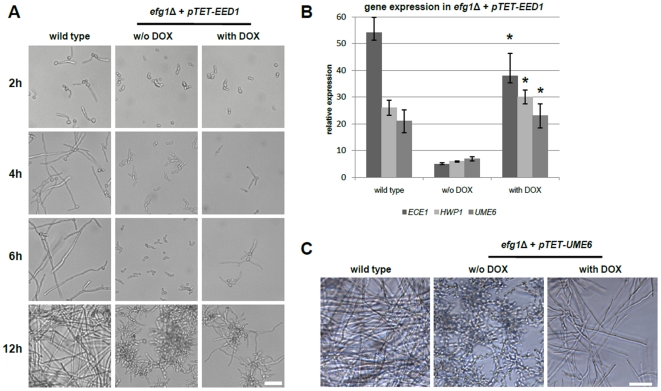
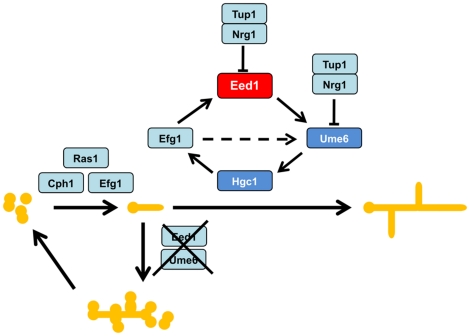
The extension of germ tubes into elongated hyphae by Candida albicans is essential for damage of host cells. The C. albicans-specific gene EED1 plays a crucial role in this extension and maintenance of filamentous growth. eed1Δ cells failed to extend germ tubes into long filaments and switched back to yeast growth after 3 h of incubation during growth on plastic surfaces. Expression of EED1 is regulated by the transcription factor Efg1 and ectopic overexpression of EED1 restored filamentation in efg1Δ. Transcriptional profiling of eed1Δ during infection of oral tissue revealed down-regulation of hyphal associated genes including UME6, encoding another key transcriptional factor. Ectopic overexpression of EED1 or UME6 rescued filamentation and damage potential in eed1Δ. Transcriptional profiling during overexpression of UME6 identified subsets of genes regulated by Eed1 or Ume6. These data suggest that Eed1 and Ume6 act in a pathway regulating maintenance of hyphal growth thereby repressing hyphal-to-yeast transition and permitting dissemination of C. albicans within epithelial tissues.
Overview
The claims and statistics of this paper haven’t been checked yet.
Free: it reads the open-access text and checks the first 5 claims that cite a source we can check. Create a free account to check every claim.
Integrity signals
Registry
Cites
Statistics
Figures
Verification
Claims the paper makes
The claims and statistics of this paper haven’t been checked yet.
Free: it reads the open-access text and checks the first 5 claims that cite a source we can check. Create a free account to check every claim.
Claims other papers make about this one
Each is checked against this paper’s own text: does it say what the citing paper says it does?
The cited source says what the claim attributes to it.
In the citing paper
“Intracellular hyphal extension is dependent on expression of EED1 (Epithelial Escape and Dissemination 1) [206], and continued growth of hyphae results in the piercing of epithelial cells and subsequent dissemination.”
From Mechanisms of fungal dissemination (2021) · cites this paper as [206]
Self-check
Percentages, sums and reported differences re-computed from the paper’s own numbers.
The self-check needs the paper’s full text.
Citations
Cites
A new mathematical model for relative quantification in real-time RT-PCR
Pfaffl, M. W. (2001) · Nucleic Acids Research · doi:10.1093/nar/29.9.e45 · Cited by 34,610
Nonfilamentous C. albicans Mutants Are Avirulent
Lo, H.-J., Köhler, J. R., DiDomenico, B., Loebenberg, D., Cacciapuoti, A., & Fink, G. R. (1997) · Cell · doi:10.1016/s0092-8674(00)80358-x · Cited by 1,809 · cited 3×
“HLC52(efg1D) efg1::hisG/efg1::hisG-URA3-hisG in CAI-4 [16]”
BackgroundGillum, A. M., Tsay, E. Y. H., & Kirsch, D. R. (1984) · Molecular and General Genetics MGG · doi:10.1007/bf00328721 · Cited by 1,251
Evolution of pathogenicity and sexual reproduction in eight Candida genomes
Butler, G., Rasmussen, M. D., Lin, M. F., Santos, M. A. S., Sakthikumar, S., Munro, C. A., Rheinbay, E., Grabherr, M., Forche, A., Reedy, J. L., et al. (2009) · Nature · doi:10.1038/nature08064 · Cited by 1,065
Self-citationAn integrated model of the recognition of Candida albicans by the innate immune system
Netea, M. G., Brown, G. D., Kullberg, B. J., & Gow, N. A. R. (2008) · Nature Reviews Microbiology · doi:10.1038/nrmicro1815 · Cited by 946 · cited 1×
“In addition, the transition between yeast and hyphal growth forms has a significant effect on the host immune response and possibly on the outcome of an infection [18,19].”
BackgroundThe SAT1 flipper, an optimized tool for gene disruption in Candida albicans
Reuß, O., Vik, Å., Kolter, R., & Morschhäuser, J. (2004) · Gene · doi:10.1016/j.gene.2004.06.021 · Cited by 742
Transcriptional Response of Candida albicans upon Internalization by Macrophages
Lorenz, M. C., Bender, J. A., & Fink, G. R. (2004) · Eukaryotic Cell · doi:10.1128/ec.3.5.1076-1087.2004 · Cited by 712 · cited 1×
“albicans as part of an escape mechanism: phagocytosed yeast cells can produce hyphae, which pierce the host membrane and kill the macrophage [16,17].”
BackgroundAls3 Is a Candida albicans Invasin That Binds to Cadherins and Induces Endocytosis by Host Cells
Phan, Q. T., Myers, C. L., Fu, Y., Sheppard, D. C., Yeaman, M. R., Welch, W. H., Ibrahim, A. S., Edwards, J. E., & Filler, S. G. (2007) · PLoS Biology · doi:10.1371/journal.pbio.0050064 · Cited by 641 · cited 1×
“albicans _nvasion triggering fungal up-take via interactions with receptors on epithelial or endothelial cells [9].”
BackgroundGenetic control of Candida albicans biofilm development
Finkel, J. S., & Mitchell, A. P. (2011) · Nature Reviews Microbiology · doi:10.1038/nrmicro2475 · Cited by 612 · cited 1×
“dispersion of yeast cells from biofilms [43,44].”
Adhesive and Mammalian Transglutaminase Substrate Properties of Candida albicans Hwp1
Staab, J. F., Bradway, S. D., Fidel, P. L., & Sundstrom, P. (1999) · Science · doi:10.1126/science.283.5407.1535 · Cited by 607 · cited 1×
“hyphae to epithelial surfaces is mediated by hyphal-associated ynvasiony, namely the glycosylphosphatidylinositol (GPI)-anchored protein Hwp1”
Background
Cited by
Growth of Candida albicans hyphae
Sudbery, P. E. (2011) · Nature Reviews Microbiology · doi:10.1038/nrmicro2636 · Cited by 1,110
“The null mutants eed1 −/− and um e 6 −/− each initiate germ tube formation in liquid culture on hyphal induction, but hyphal growth cannot be maintaine”
BackgroundZhou, N., Jiang, Y., Bergquist, T. R., Lee, A. J., Kacsoh, B. Z., Crocker, A. W., Lewis, K. A., Georghiou, G., Nguyen, H. N., Hamid, M. N., et al. (2019) · Genome Biology · doi:10.1186/s13059-019-1835-8 · Cited by 452
Candida albicans dimorphism as a therapeutic target
Jacobsen, I. D., Wilson, D., Wächtler, B., Brunke, S., Naglik, J. R., & Hube, B. (2012) · Expert Review of Anti-infective Therapy · doi:10.1586/eri.11.152 · Cited by 363
Self-citationCandida albicans interactions with epithelial cells and mucosal immunity
Naglik, J. R., Moyes, D. L., Wächtler, B., & Hube, B. (2011) · Microbes and Infection · doi:10.1016/j.micinf.2011.06.009 · Cited by 277
“Finally, EED1 is known to be essential for maintenance of hyphal elongation [9;62].”
BackgroundSelf-citationThe regulation of hyphae growth in Candida albicans
Chen, H., Zhou, X., Ren, B., & Cheng, L. (2020) · Virulence · doi:10.1080/21505594.2020.1748930 · Cited by 277
“is located between Efg1 and Ume6 in the pathway [90].”
BackgroundFox, E. P., Cowley, E. S., Nobile, C. J., Hartooni, N., Newman, D. K., & Johnson, A. D. (2014) · Current Biology · doi:10.1016/j.cub.2014.08.057 · Cited by 207
“DEF1, which regulates hyphal extension [24], and ALS3, which encodes an adhesin important for biofilm formation and plays a role in interacting with many bacterial species [25–29], were also required for aggregation (Figure S4C).”
BackgroundPolke, M., Hube, B., & Jacobsen, I. D. (2015) · Advances in Applied Microbiology · doi:10.1016/bs.aambs.2014.12.002 · Cited by 184
Self-citationCandida albicans hyphal initiation and elongation
Lu, Y., Su, C., & Liu, H. (2014) · Trends in Microbiology · doi:10.1016/j.tim.2014.09.001 · Cited by 193
“Future research should determine if and how different signaling pathways and transcriptional regulators, such as Eed1 [80, 81], Sfl2 [82, 83], Cph2 [84], and Rim101 [85, 86], converge to regulate their expression.”
From Jekyll to Hyde: The Yeast–Hyphal Transition of Candida albicans
Chow, E. W. L., Pang, L. M., & Wang, Y. (2021) · Pathogens · doi:10.3390/pathogens10070859 · Cited by 178
Mechanism of Candida pathogenesis: Revisiting the vital drivers
Mba, I. E., & Nweze, E. I. (2020) · European Journal of Clinical Microbiology & Infectious Diseases · doi:10.1007/s10096-020-03912-w · Cited by 143
A Core Filamentation Response Network in Candida albicans Is Restricted to Eight Genes
Martin, R., Albrecht-Eckardt, D., Brunke, S., Hube, B., Hünniger, K., & Kurzai, O. (2013) · PLoS ONE · doi:10.1371/journal.pone.0058613 · Cited by 129
“analyzing filaments induced by serum [18,42], cAMP [46], contact with plastic surfaces or human oral epithelial cells [35] caecum”
BackgroundMethodInfluentialSelf-citationMechanisms of fungal dissemination
Strickland, A. B., & Shi, M. (2021) · Cellular and Molecular Life Sciences · doi:10.1007/s00018-020-03736-z · Cited by 127
Farnesol and Cyclic AMP Signaling Effects on the Hypha-to-Yeast Transition in Candida albicans
Lindsay, A. K., Deveau, A., Piispanen, A. E., & Hogan, D. A. (2012) · Eukaryotic Cell · doi:10.1128/ec.00144-12 · Cited by 112
“Future studies will determine how farnesol-mediated inhibition of cAMP signaling may promote the hypha-to-yeast transition and inhibit hyphal cell elongation through other regulators such as Eed1, the epithelial escape and dissemination gene, and Ume6, which are required to maintain hyphal growth (4, 31, 46), or the C.”
BackgroundComparative Genome Analysis and Gene Finding in Candida Species Using CGOB
Maguire, S. L., ÓhÉigeartaigh, S. S., Byrne, K. P., Schröder, M. S., O’Gaora, P., Wolfe, K. H., & Butler, G. (2013) · Molecular Biology and Evolution · doi:10.1093/molbev/mst042 · Cited by 120
“albicans, was originally described as unique to this species (Martin et al. 2011a).”
BackgroundHsu, C.-C., Lai, W., Chuang, K.-C., Lee, M.-H., & Tsai, Y.-C. (2012) · Medical Mycology · doi:10.3109/13693786.2012.743051 · Cited by 128
Su, C., Lu, Y., & Liu, H. (2013) · Molecular Biology of the Cell · doi:10.1091/mbc.e12-06-0477 · Cited by 94
“UME6 overexpression can suppress the eed1 mutant in hyphal extension (Martin et al., 2011).”
InfluentialBrothers, K. M., Gratacap, R. L., Barker, S. E., Newman, Z. R., Norum, A., & Wheeler, R. T. (2013) · PLoS Pathogens · doi:10.1371/journal.ppat.1003634 · Cited by 96
“OxYellow-T, CAF2-dTomato, edt1D/D-dTomato and edt1D/EDT1-dTomato strains were created by transforming the original CTA1-GFP [32], CAF2 [87], edt1D/D and edt1D/EDT1 [88,89] strains with a construct containing the PENO1 promoter, a codon-optimized dTomato gene, the TTEF terminator, and a NAT r marker.”
MethodHyphae-specific genes HGC1, ALS3, HWP1, and ECE1 and relevant signaling pathways in Candida albicans
Fan, Y., He, H., Dong, Y., & Pan, H. (2013) · Mycopathologia · doi:10.1007/s11046-013-9684-6 · Cited by 93
Microevolution of Candida albicans in Macrophages Restores Filamentation in a Nonfilamentous Mutant
Wartenberg, A., Linde, J., Martin, R., Schreiner, M., Horn, F., Jacobsen, I. D., Jenull, S., Wolf, T., Kuchler, K., Guthke, R., et al. (2014) · PLoS Genetics · doi:10.1371/journal.pgen.1004824 · Cited by 86
“Thus, the mechanisms of hyphal extension seems similar between Evo and wild type cells [27].”
BackgroundSelf-citationNew signaling pathways govern the host response to C. albicans infection in various niches
Liu, Y., Shetty, A. C., Schwartz, J. A. J., Bradford, L. L., Xu, W., Phan, Q. T., Kumari, P., Mahurkar, A., Mitchell, A. P., Ravel, J., et al. (2015) · Genome Research · doi:10.5281/zenodo.13524844 · Cited by 97
Host–pathogen interactions and virulence-associated genes during Candida albicans oral infections
Martin, R., Wächtler, B., Schaller, M., Wilson, D., & Hube, B. (2011) · International Journal of Medical Microbiology · doi:10.1016/j.ijmm.2011.04.009 · Cited by 102
Self-citationLiu, S.-Y., Chen, J., Wang, J., Li, L., Xiao, H.-L., Adam, S. M., & Dai, X. (2013) · Gene · doi:10.1016/j.gene.2013.06.089 · Cited by 85
Complement and innate immune evasion strategies of the human pathogenic fungus Candida albicans
Luo, S., Skerka, C., Kurzai, O., & Zipfel, P. F. (2013) · Molecular Immunology · doi:10.1016/j.molimm.2013.05.218 · Cited by 95
Self-citationTarget specificity of the Candida albicans Efg1 regulator
Lassak, T., Schneider, E., Bussmann, M., Kurtz, D., Manak, J. R., Srikantha, T., Soll, D. R., & Ernst, J. F. (2011) · Molecular Microbiology · doi:10.1111/j.1365-2958.2011.07837.x · Cited by 76
“…of morphogenesis function downstream of Efg1 to regulate different aspects of cellular differentiation including Czf1 (Vinces et al., 2006), Rfg1 (Kadosh and Johnson, 2005), Tec1 (Lane et al., 2001), Ume6 (Banerjee et al., 2008), Eed1 (Martin et al., 2011) and Wor1/ Wor2 (Zordan et al., 2007).”
BackgroundInfluentialMogavero, S., Sauer, F. M., Brunke, S., Allert, S., Schulz, D., Wisgott, S., Jablonowski, N., Elshafee, O., Krüger, T., Kniemeyer, O., et al. (2021) · Cellular Microbiology · doi:10.1111/cmi.13378 · Cited by 104
“The mutant lacking Eed1 showed a mild reduction in hyphal length.”
BackgroundInfluentialSelf-citationAzadmanesh, J., Gowen, A. M., Creger, P. E., Schafer, N. D., & Blankenship, J. R. (2017) · G3 Genes|Genomes|Genetics · doi:10.1534/g3.117.300224 · Cited by 70
Fungal biofilm formation and its regulatory mechanism
Wang, D., Zeng, N., Li, C., Li, Z., Zhang, N., & Li, B. (2024) · Heliyon · doi:10.1016/j.heliyon.2024.e32766 · Cited by 90
“In addition, in other pathways, Bsc2 can regulate the expression of flo11 to promote biofilm formation and enhance the resistance of yeast to amphotericin (AMB) [93].”
BackgroundDunker, C., Polke, M., Schulze-Richter, B., Schubert, K., Rudolphi, S., Gressler, A. E., Pawlik, T., Prada Salcedo, J. P., Niemiec, M. J., Slesiona-Künzel, S., et al. (2021) · Nature Communications · doi:10.1038/s41467-021-24095-8 · Cited by 66
Self-citationHypoxia and Temperature Regulated Morphogenesis in Candida albicans
Desai, P. R., van Wijlick, L., Kurtz, D., Juchimiuk, M., & Ernst, J. F. (2015) · PLOS Genetics · doi:10.1371/journal.pgen.1005447 · Cited by 61
“albicans to the epithelium and trigger strong fungal proliferation and systemic invasion mediated by invasion-specific regulators including Eed1 [8,55].”
InfluentialLinking Cellular Morphogenesis with Antifungal Treatment and Susceptibility in Candida Pathogens
Sharma, J., Rosiana, S., Razzaq, I., & Shapiro, R. S. (2019) · Journal of Fungi · doi:10.3390/jof5010017 · Cited by 65
Impact of a lactobacilli-containing gel on vulvovaginal candidosis and the vaginal microbiome
Oerlemans, E. F. M., Bellen, G., Claes, I., Henkens, T., Allonsius, C. N., Wittouck, S., van den Broek, M. F. L., Wuyts, S., Kiekens, F., Donders, G. G. G., et al. (2020) · Scientific Reports · doi:10.1038/s41598-020-64705-x · Cited by 66
The Zebrafish as a Model Host for Invasive Fungal Infections
Rosowski, E. E., Knox, B. P., Archambault, L. S., Huttenlocher, A., Keller, N. P., Wheeler, R. T., & Davis, J. M. (2018) · Journal of Fungi · doi:10.3390/jof4040136 · Cited by 73
“albicans efg1/cph1 [28,44] [77] hgc1 [44] [78] eed1 [28,42] [79,80] NRG1 overexpression [48] [81] UME6 overexpression [29,48] [81] CAY4975 (white) [82] [83] CAY4986 (opaque) [82] [83] Oxyellow [28] [84]”
Riera, F. O., Caeiro, J. P., Angiolini, S. C., Vigezzi, C., Rodriguez, E., Icely, P. A., & Sotomayor, C. E. (2022) · Antibiotics · doi:10.3390/antibiotics11070877 · Cited by 65
“Intracellular hyph l exten ion depends on EED1 (Epithelial Escape and Dissemin tion 1) xpression [64] a d con inu d fungal elongatio results in th iercing of epithelial cells and subsequent spreading.”
BackgroundThe Novel Candida albicans Transporter Dur31 Is a Multi-Stage Pathogenicity Factor
Mayer, F. L., Wilson, D., Jacobsen, I. D., Miramón, P., Große, K., & Hube, B. (2012) · PLoS Pathogens · doi:10.1371/journal.ppat.1002592 · Cited by 62
“These investigations led to the discovery of the novel infection-associated gene EED1, which appears to encode a key regulator of hyphal extension [9,28].”
BackgroundSelf-citationA genome-wide transcriptional analysis of morphology determination in Candida albicans
Carlisle, P. L., & Kadosh, D. (2013) · Molecular Biology of the Cell · doi:10.1091/mbc.e12-01-0065 · Cited by 49
“In addition, an independent DNA microarray analysis confirmed that several hyphal-associated genes, including ECE1, HYR1, SOD5, and HGC1, are induced upon ectopic expression of UME6 (Martin et al., 2011).”
BackgroundMartin, I. W., Atkinson, A. E., Liu, X., Suriawinata, A. A., Lefferts, J. A., & Lisovsky, M. (2018) · Modern Pathology · doi:10.1038/s41379-018-0060-4 · Cited by 53
From Genes to Networks: The Regulatory Circuitry Controlling Candida albicans Morphogenesis
Basso, V., d’Enfert, C., Znaidi, S., & Bachellier‐Bassi, S. (2018) · Current topics in microbiology and immunology · doi:10.1007/82_2018_144 · Cited by 60
Mech, F., Wilson, D., Lehnert, T., Hube, B., & Figge, M. T. (2013) · Cytometry Part A · doi:10.1002/cyto.a.22418 · Cited by 55
Self-citationA functional link between hyphal maintenance and quorum sensing in Candida albicans
Polke, M., Sprenger, M., Scherlach, K., Albán‐Proaño, M. C., Martin, R., Hertweck, C., Hube, B., & Jacobsen, I. D. (2016) · Molecular Microbiology · doi:10.1111/mmi.13526 · Cited by 51
“Upon the transition back to yeast growth, HAGs become strongly downregulated (Martin et al., 2011a).”
BackgroundSelf-citationComparative Transcriptomics Reveal Possible Mechanisms of Amphotericin B Resistance in Candida auris
Shivarathri, R., Jenull, S., Chauhan, M., Singh, A., Mazumdar, R., Chowdhary, A., Kuchler, K., & Chauhan, N. (2022) · Antimicrobial Agents and Chemotherapy · doi:10.1128/aac.02276-21 · Cited by 41
Morphogenic plasticity: the pathogenic attribute of Candida albicans
Prasad, P., & Tippana, M. (2023) · Current Genetics · doi:10.1007/s00294-023-01263-5 · Cited by 41
Basso, V., Znaidi, S., Lagage, V., Cabral, V., Schönherr, F. A., LeibundGut‐Landmann, S., d’Enfert, C., & Bachellier‐Bassi, S. (2017) · Molecular Microbiology · doi:10.1111/mmi.13758 · Cited by 37
“The absence of phenotype linked to UME6 overexpression in the skn7 mutant is highly surprising, since it has been shown that it is able to bypass the efg1 (Zeidler et al., 2009) or eed1 (Martin et al., 2011) knockout mutants.”
BackgroundInfluentialQuorum sensing by farnesol revisited
Polke, M., & Jacobsen, I. D. (2017) · Current Genetics · doi:10.1007/s00294-017-0683-x · Cited by 38
Self-citationDeciphering fungal dimorphism: Farnesol's unanswered questions
Nickerson, K. W., & Atkin, A. L. (2016) · Molecular Microbiology · doi:10.1111/mmi.13601 · Cited by 31
“However, hyphal elongation is always short lived and lateral yeast formation occurs remarkably quickly (Martin et al., 2011).”
BackgroundInfluentialHellwig, D., Voigt, J., Bouzani, M., Löffler, J., Albrecht-Eckardt, D., Weber, M., Brunke, S., Martin, R., Kurzai, O., & Hünniger, K. (2016) · Frontiers in Microbiology · doi:10.3389/fmicb.2016.00750 · Cited by 33
“The slides were hybridized, washed and scanned with a Genepix 4000B (Molecular Devices) as described in a previous study (Martin et al., 2011).”
MethodSelf-citationLipid Signaling via Pkh1/2 Regulates Fungal CO 2 Sensing through the Kinase Sch9
Pohlers, S., Martin, R., Krüger, T., Hellwig, D., Hänel, F., Kniemeyer, O., Saluz, H. P., Van Dijck, P., Ernst, J. F., Brakhage, A., et al. (2017) · mBio · doi:10.1128/mbio.02211-16 · Cited by 24
“Pellets were harvested, and RNA was extracted using a hot phenol-chloroform method (47).”
Self-citationLi, G., Wu, X., Hu, Y., Muñoz‐Amatriaín, M., Luo, J., Zhou, W., Wang, B., Wang, Y., Wu, X., Huang, L., et al. (2019) · Journal of Experimental Botany · doi:10.1093/jxb/erz145 · Cited by 26
Dižová, S., Černáková, L., & Bujdáková, H. (2017) · Folia Microbiologica · doi:10.1007/s12223-017-0574-z · Cited by 21
“The genes ERG11, ERG25, ERG27, ERG6, ERG3, ERG4, and ERG1 located downstream of FAR synthesis were described as being downregulated in the presence of FAR (Martin et al. 2011; Yu et al. 2012).”
BackgroundDynamic expression of candidalysin facilitates oral colonization of Candida albicans in mice
Fróis-Martins, R., Lagler, J., Schille, T. B., Elshafee, O., Vicente, K. M. D. S., Mertens, S., Stokmaier, M., Kilb, I., Sertour, N., Bachellier‐Bassi, S., et al. (2025) · Nature Microbiology · doi:10.1038/s41564-025-02122-4 · Cited by 23
Self-citationCandida albicans Virulence Traits in Commensalism and Disease
Fróis-Martins, R., Lagler, J., & LeibundGut‐Landmann, S. (2024) · Current Clinical Microbiology Reports · doi:10.1007/s40588-024-00235-8 · Cited by 23
“Once the yeast-to-hyphae transition is initiated, hyphal extension and maintenance is regulated by Eed1 [57].”
Miramón, P., Pountain, A. W., van Hoof, A., & Lorenz, M. C. (2020) · Infection and Immunity · doi:10.1128/iai.00763-19 · Cited by 20
“Ume6 is a key regulator of hyphal extension (58, 59), especially in response to neutral pH (60), and is stabilized under high CO2 (61, 62).”
BackgroundFunctional analysis of the Candida albicans ECE1 Promoter
Garbe, E., Thielemann, N., Hohner, S., Kumar, A., Vylkova, S., Kurzai, O., & Martin, R. (2023) · Microbiology Spectrum · doi:10.1128/spectrum.00253-23 · Cited by 19
“Afterwards, total RNA was isolated from the harvested cells as previously described (29).”
MethodSelf-citationFarnesol-Containing Macromolecular Systems for Antibiofilm Strategies
Nowacka, M., Kowalewska, A., & Kręgiel, D. (2020) · Surfaces · doi:10.3390/surfaces3020015 · Cited by 18
Ppg1, a PP2A-Type Protein Phosphatase, Controls Filament Extension and Virulence in Candida albicans
Bataineh, M. T. A., Lazzell, A. L., Lopez-Ribot, J. L., & Kadosh, D. (2014) · Eukaryotic Cell · doi:10.1128/ec.00199-14 · Cited by 19
“Epistasis analysis has suggested that PPG1 does not appear to function in the UME6-HGC1 pathway, which has previously been shown to control hyphal filament extension (49, 67) (data not shown); PPG1 is also unlikely to function through EED1, another component of this pathway (68).”
BackgroundBöttcher, B., Hoffmann, B., Garbe, E., Weise, T., Cseresnyés, Z., Brandt, P., Dietrich, S., Driesch, D., Figge, M. T., & Vylkova, S. (2020) · Frontiers in Microbiology · doi:10.3389/fmicb.2020.00794 · Cited by 18
Functional divergence of a global regulatory complex governing fungal filamentation
Polvi, E. J., Veri, A. O., Liu, Z., Hossain, S., Hyde, S., Kim, S. H., Tebbji, F., Sellam, A., Todd, R. T., Xie, J. L., et al. (2019) · PLoS Genetics · doi:10.1371/journal.pgen.1007901 · Cited by 17
Grainha, T., Jorge, P., Pérez‐Pérez, M., Rodríguez, G. P., Pereira, M. O. B. O., & Lourenço, A. M. G. (2018) · FEMS Yeast Research · doi:10.1093/femsyr/foy022 · Cited by 14
Padmavathi, A. R., Reddy, G. K. K., Murthy, P. S., & Nancharaiah, Y. V. (2024) · Microbial Pathogenesis · doi:10.1016/j.micpath.2024.106800 · Cited by 13
Host albumin redirects Candida albicans metabolism to engage an alternative pathogenicity pathway
Hitzler, S. U. J., Fernández-Fernández, C., Günther, K., Dietschmann, A., Hovhannisyan, H., Möslinger, A., Austermeier, S., Cristóvão, B., Vascelli, G., Zelante, T., et al. (2025) · Nature Communications · doi:10.1038/s41467-025-61701-5 · Cited by 10
“Moreover, an eed1 ΔΔ deletion mutant was considered non-pathogenic based on in vitro infection models 10,46 .”
Analysis of in planta Expressed Orphan Genes in the Rice Blast Fungus Magnaporthe oryzae
Sadat, M. A., Jeon, J., Mir, A. A., Kim, S., Choi, J., & Lee, Y. (2014) · The Plant Pathology Journal · doi:10.5423/ppj.oa.08.2014.0072 · Cited by 12
“The EED1 gene, which is found only in Candida albicans, is crucial for hyphal extension and maintenance of filamentous growth both on solid surfaces and during the interaction with host cells (Martin et al., 2011).”
BackgroundShen, T., Tian, B., Liu, W., Yang, X., Sheng, Q., Li, M., Wang, H., Wang, X., Zhou, H., Han, Y., et al. (2024) · Microbiology Spectrum · doi:10.1128/spectrum.04247-23 · Cited by 10
“The activation of UME6 expression through Eed1 is required for long-term maintenance of hyphae-specific gene expression (44, 45).”
BackgroundCosta, A. C. B. P., Omran, R. P., Correia‐Mesquita, T. O., Dumeaux, V., & Whiteway, M. S. (2019) · Scientific Reports · doi:10.1038/s41598-019-45624-y · Cited by 12
Inhibiting roles of farnesol and HOG in morphological switching of Candida albicans.
Wang, X., He, H., Liu, J., Xie, S., & Han, J. (2020) · PubMed Central · Cited by 13
Garcia, J. A., Vu, K., Thompson, G. R., & Gelli, A. (2022) · Journal of Fungi · doi:10.3390/jof8050455 · Cited by 7
Kabir, A. R., Chaudhary, A. A., Aladwani, M. O., & Podder, S. (2023) · Frontiers in Genetics · doi:10.3389/fgene.2023.1245445 · Cited by 6
Candida albicans Mrv8, is involved in epithelial damage and biofilm formation
Costa, A. C. B. P., Back‐Brito, G. N., Mayer, F. L., Hube, B., & Wilson, D. (2020) · FEMS Yeast Research · doi:10.1093/femsyr/foaa033 · Cited by 6
“…Gola et al. (2003) HIS-F2 GGACGAATTGAAGAAAGCTGGTGCAACCG Gola et al. (2003) HIS-R2 CAACGAAATGGCCTCCCCTACCACAG Gola et al. (2003) ARG4-F2 GGATATGTTGGCTACTGATTTAGC Martin et al. (2011) ARG4-R2 AATGGATCAGTGGCACCGGTG Gola et al. (2003) (Bio-Link, Vilber-Lourmat) and incubated at 37◦C for up to 7 days.”
MethodSelf-citationNovel High-Throughput Screening Method for Identification of Fungal Dimorphism Blockers
Stylianou, M., Uvell, H., Lopes, J. P., Enquist, P., Elofsson, M., & Urban, C. F. (2014) · SLAS DISCOVERY · doi:10.1177/1087057114552954 · Cited by 6
Zhang, H., Chen, Z., Yu, Z., Tang, L., Gao, W., Lu, X., & Yang, J. (2024) · Journal of Fungi · doi:10.3390/jof10080511 · Cited by 5
“For example, EED1 , a gene unique to Candida albicans , plays an important role in maintaining filamentous growth and mycelium expansion on the host surface [14].”
BackgroundThe unique Efg1 fungal virulence regulon in the catheterized bladder environment
Bella, A. A. L., Gervais, N. C., Kohler, K. N., Akegbe, H., Obernuefemann, C. L. P., Gager, C., Hubbard, C. M. M., Marrufo, A. M., Jacobsen, I. D., Shapiro, R. S., et al. (2026) · Proceedings of the National Academy of Sciences · doi:10.1073/pnas.2533309123 · Cited by 3
Self-citationCritical parameters of fungal pathogenicity at the epithelial interphase
Möslinger, A., Allert, S., Vylkova, S., & Hube, B. (2026) · microLife · doi:10.1093/femsml/uqag001 · Cited by 3
“For example, a mutant lacking Eed1–a downstream target of Efg1 and key regulator of Ume6 (Martin et al. 2011 )—produces short germ tubes but fails to sustain hyphal growth and form extended filaments in liquid media, instead growing as pseudohyphae on oral epithelial cells (Zakikhany et al. 2007 ,…”
Self-citationShining a light on Candida -induced epithelial damage with a luciferase reporter
Tesfamariam, M., Vij, R., Trümper, V., Hube, B., & Brunke, S. (2024) · mSphere · doi:10.1128/msphere.00509-24 · Cited by 4
Self-citationControl of citrate utilization by Candida albicans Adr1
White, A. M., & Mitchell, A. P. (2025) · mSphere · doi:10.1128/msphere.00311-25 · Cited by 4
“Eed1 is best known as a positive regulator of hyphal extension and host cell damage (30, 31, 35).”
Host–fungal interactions: key players of antifungal immunity
Salek‐Ardakani, S., Cota, E., & Bignell, E. (2012) · Expert Review of Anti-infective Therapy · doi:10.1586/eri.11.169 · Cited by 4
Transcriptome in Human Mycoses
Peres, N. T. A., Persinoti, G. F., Lang, E. A. S., Rossi, A., & Martinez-Rossi, N. M. (2014) · Springer eBooks · doi:10.1007/978-3-319-11985-4_13 · Cited by 4
Minhas, R., Bedekovic, T., Veale, T., John, L. L. H., Hamied, A. S., Scrase, E., Read, S., Davies, C., Gifford, H., Farrer, R. A., et al. (2024) · bioRxiv (Cold Spring Harbor Laboratory) · doi:10.1101/2024.10.08.617174 · Cited by 4
Buchs, R., Lehner, B., Meuwly, P., & Schnyder, B. (2018) · Tissue Engineering Part C Methods · doi:10.1089/ten.tec.2018.0042 · Cited by 3
Cancer Drugs Inhibit Germ Tube Elongation in Candida albicans
Routh, M. M. (2014) · Journal of Scientific Research and Reports · doi:10.9734/jsrr/2014/4914 · Cited by 2
“albicans within epithelial tissues [19].”
In vitro conditions for budded-to-hyphal-form transition of Trichosporon asahii of different sources
Zhu, H. (2012) · African Journal of Microbiology Research · doi:10.5897/ajmr11.958 · Cited by 1
“Study has demonstrated that the hypha of fungi such as Candida albicans is closely related to the pathogenicity (Martin et al., 2011).”
BackgroundDalai, A. K. (2011) · Cited by 1
Abu, S. M. (2015) · Seoul National University Open Repository (Seoul National University) · Cited by 1
ACE2 y la regulación de la separación celular en Candida albicans
Calderón-Noreña, D. (2013) · Gredos (University of Salamanca) · doi:10.14201/gredos.121344
Rapid Proliferation Compensates for Defective Filamentation in Candida albicans Pathogenesis
Kadosh, D. (2021) · Trends in Microbiology · doi:10.1016/j.tim.2021.08.006
candida albicans sur puce : approche biomécanique de la plasticité morphogénétique de c. albicans
Albert, L. (2022) · theses.fr (ABES) · doi:10.70675/1f188066z3dd4z4ecbz8c2fzf2377b89514f · Cited by 2
Investigating Candida albicans epithelial infection using a high-throughput microscopy-based assay
Pascault, A. (2023) · theses.fr (ABES) · doi:10.70675/ff2492b1za253z4230zb90eze50f1e817aff
Aldejohann, A. M., Thielemann, N., Martinez, A. Z., Müller, C., Gräfenhan, T., Kriz, R., Lagler, H., Behr, I. S., Reus, N., Schöninger, A., et al. (2026) · mBio · doi:10.1128/mbio.02731-25
“Fungal cells were grown overnight in YPD at 37°C. 1 × 10 6 cells/mL were then added to prewarmed YPD with or without 1 µg/mL AMB and grown for 1 h at 37°C. Cells were harvested by centrifugation, and total RNA was isolated as previously described (33).”
Self-citationSonnberger, J., Böhm, E., Tomás-Morales, J. A., Lange, T., Bagola, K., Denner, L., Kasper, L., Brunke, S., van Zandbergen, G., Sprague, J. L., et al. (2026) · Disease Models & Mechanisms · doi:10.1242/dmm.052865
“To exclude additional Cph1/Efg1-associated effects, we tested another strain with defective hypha formation, eed1 Δ / Δ , which can initiate filamentation, but is unable to maintain filament elongation and reverts to the yeast form (Martin et al., 2011).”
Self-citation
Metadata
- Authors
- Martin, R., Moran, G. P., Jacobsen, I. D., Heyken, A., Domey, J., Sullivan, D. J., Kurzai, O., & Hube, B.
- Affiliations
- Leibniz-Institut für Naturstoff-Forschung und Infektionsbiologie e. V. - Hans-Knöll-Institut (HKI) (DE)
- Trinity College Dublin (IE)
- Corresponding author
- Hube, Bernhard
- Venue
- PLoS ONE
- Publisher
- Public Library of Science (PLoS)
- Published
- 2011-04-07
- Volume
- 6
- Issue
- 4
- Pages
- e18394
- ISSN
- 1932-6203 (ISSN-L)
- PMC
- PMC3075580
- OpenAlex
- W2003833125
- Cited by
- 85
- References
- 59
- Citations by year
- 2026: 3 · 2025: 4 · 2024: 7 · 2023: 3 · 2022: 3 · 2021: 5 · 2020: 8 · 2019: 6 · 2018: 5 · 2017: 5 · 2016: 3 · 2015: 4 · 2014: 8 · 2013: 8 · 2012: 7
- FWCI
- 3.74
- Type
- journal article
- Language
- en
- Open access
- gold
- doi.org
- Locations
- PLoS ONE (publishedVersion, cc-by)
- Europe PMC (PubMed Central) (publishedVersion, cc-by)
- PubMed Central (publishedVersion, cc-by)
- PubMed (publishedVersion)
- Arrow@dit (Dublin Institute of Technology) (submittedVersion, cc-by-nc-sa)
- DOAJ (DOAJ: Directory of Open Access Journals) (submittedVersion)
- Figshare (submittedVersion, cc-by)
- Trinity's Access to Research Output (TARA) (Trinity College Dublin) (submittedVersion)
- Lenus, The Irish Health Repository (Dr Steevens Hospital Library) (submittedVersion)
- Funders
- University of Aberdeen
- Deutsche Forschungsgemeinschaft (Hu528/10)
- Universität Salzburg
- University of California, San Francisco
- Topics
- Life Sciences › Biochemistry, Genetics and Molecular Biology › Molecular Biology › Fungal and yeast genetics research
- Health Sciences › Medicine › Infectious Diseases › Antifungal resistance and susceptibility
- Health Sciences › Medicine › Infectious Diseases › Fungal Infections and Studies
- Keywords
- Candida albicans, EFG1, Ume6, hyphal extension, filamentous growth, germ tube formation, transcriptional regulation, oral infection, fungal virulence, gene regulatory pathways
- MeSH terms
- Candida albicans, Fungal Proteins, Gene Expression Regulation, Fungal, Hyphae
About these checks
Registry, retraction, Cites and statistics results are computed, not judged, with one exception: a printed reference that no index lists is read once by a model before it counts as a citation error. Claims are extracted by a model and kept only when their quote appears verbatim in the text; each cited source is then checked, with a model’s help, for whether it says what the claim relies on. Those verdicts can be wrong — read the claim’s quote and the cited source before relying on one.
Statistics and arithmetic are recomputed, not judged.
Confidence bands are shown only for fields calibrated on our annotated test set. None is calibrated yet, so no band is shown.
What counts as a claim ›How we measure confidence ›How we check this ›
Are you an author, or do you see a problem with this page? Request a review
Data sources
Bibliographic data: Semantic Scholar, OpenAlex, Crossref.
Contains information from the Semantic Scholar Academic Graph Datasets, made available under the ODC Attribution License (ODC-BY 1.0).
Semantic Scholar’s data is described in: Kinney, R., et al. (2023). The Semantic Scholar Open Data Platform. arXiv:2301.10140.
