

The DOI matches its Crossref record; 44 of the 44 references it cites were found in a registry or an index.
Evaluating the Potential Efficacy of Invasive Lionfish (Pterois volitans) Removals
Open accessAbstract
The lionfish, Pterois volitans (Linnaeus) and Pterois miles (Bennett), invasion of the Western Atlantic Ocean, Caribbean Sea and Gulf of Mexico has the potential to alter aquatic communities and represents a legitimate ecological concern. Several local removal programs have been initiated to control this invasion, but it is not known whether removal efforts can substantially reduce lionfish numbers to ameliorate these concerns. We used an age-structured population model to evaluate the potential efficacy of lionfish removal programs and identified critical data gaps for future studies. We used high and low estimates for uncertain parameters including: length at 50% vulnerability to harvest (L(vul)), instantaneous natural mortality (M), and the Goodyear compensation ratio (CR). The model predicted an annual exploitation rate between 35 and 65% would be required to cause recruitment overfishing on lionfish populations for our baseline parameter estimates for M and CR (0.5 and 15). Lionfish quickly recovered from high removal rates, reaching 90% of unfished biomass six years after a 50-year simulated removal program. Quantifying lionfish natural mortality and the size-selective vulnerability to harvest are the most important knowledge gaps for future research. We suggest complete eradication of lionfish through fishing is unlikely, and substantial reduction of adult abundance will require a long-term commitment and may be feasible only in small, localized areas where annual exploitation can be intense over multiple consecutive years.
Overview
The claims and statistics of this paper haven’t been checked yet.
Run the check — free, no account needed. It reads the open-access text and checks the sources it cites.
Integrity signals
Registry
Cites
Statistics
Figures
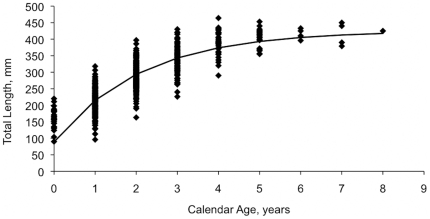
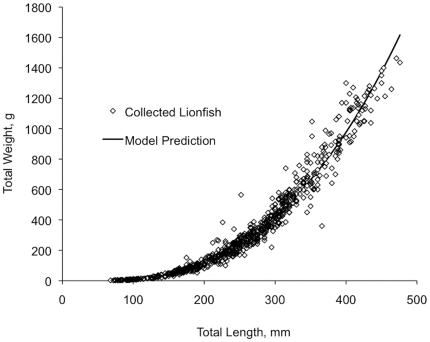
Verification
Claims the paper makes
The claims and statistics of this paper haven’t been checked yet.
Run the check — free, no account needed. It reads the open-access text and checks the sources it cites.
Claims other papers make about this one
Each is checked against this paper’s own text: does it say what the citing paper says it does?
The cited source says what the claim attributes to it.
In the citing paper
“To date, two studies have used modeling to predict responses of lionfish populations to removals (Barbour et al., 2011;Morris et al., 2011a).”
From Reproductive biology of invasive lionfish (Pterois spp.) (2015) · cites this paper as Barbour et al., 2011
The cited source says what the claim attributes to it.
In the citing paper
“Both of these studies relied on parameters that were not derived from data on lionfish reproduction in the Caribbean.”
From Reproductive biology of invasive lionfish (Pterois spp.) (2015) · cites this paper as Barbour et al., 2011
The cited source says what the claim attributes to it.
In the citing paper
“The majority of lionfish control efforts to date have focused on manual removal27”
From Invasive lionfish reduce native fish abundance on a regional scale (2016) · cites this paper as [27]
The cited source says what the claim attributes to it.
In the citing paper
“lionfish are not effectively targeted by standard fishing gears such as fish traps or hook-and line.”
From Invasive lionfish reduce native fish abundance on a regional scale (2016) · cites this paper as [27]
Self-check
Percentages, sums and reported differences re-computed from the paper’s own numbers.
The self-check needs the paper’s full text.
Citations
Cites
Catastrophes, Phase Shifts, and Large-Scale Degradation of a Caribbean Coral Reef
Hughes, T. P. (1994) · Science · doi:10.1126/science.265.5178.1547 · Cited by 2,915
BECK, M. W., HECK, K. L., ABLE, K. W., CHILDERS, D. L., EGGLESTON, D. B., GILLANDERS, B. M., HALPERN, B., HAYS, C. G., HOSHINO, K., MINELLO, T. J., et al. (2001) · BioScience · doi:10.1641/0006-3568(2001)051[0633:ticamo]2.0.co;2 · Cited by 2,642
Mangroves enhance the biomass of coral reef fish communities in the Caribbean
Mumby, P. J., Edwards, A. J., Arias‐González, J. E., Lindeman, K. C., Blackwell, P. G., Gall, A., Gorczynska, M. I., Harborne, A. R., Pescod, C. L., Renken, H., et al. (2004) · Nature · doi:10.1038/nature02286 · Cited by 1,121
Fisheries Ecology and Management
Walters, C. J., & Martell, S. J. D. (2005) · Princeton University Press eBooks · doi:10.1515/9780691214634 · Cited by 860
Invasive Indo-Pacific lionfish Pterois volitans reduce recruitment of Atlantic coral-reef fishes
Albins, M., & Hixon, M. (2008) · Marine Ecology Progress Series · doi:10.3354/meps07620 · Cited by 544
Maximum reproductive rate of fish at low population sizes
Myers, R. A., Bowen, K. G., & Barrowman, N. J. (1999) · Canadian Journal of Fisheries and Aquatic Sciences · doi:10.1139/f99-201 · Cited by 506
Fisheries Ecology and Management
Pepin, P. (2005) · Fish and Fisheries · doi:10.1111/j.1467-2979.2005.00191.x · Cited by 474
Marine nurseries and effective juvenile habitats: concepts and applications
Dahlgren, C., Kellison, G. T., Adams, A., Gillanders, B. M., Kendall, M., Layman, C., Ley, J., Nagelkerken, I., & Serafy, J. (2006) · Marine Ecology Progress Series · doi:10.3354/meps312291 · Cited by 450
Nagelkerken, I., Roberts, C. M., van der Velde, G., DORENBOSCH, M., van Riel, M. C., de la Morinière, E. C., & Nienhuis, P. H. (2002) · Marine Ecology Progress Series · doi:10.3354/meps244299 · Cited by 409
Mace, P. M. (1994) · Canadian Journal of Fisheries and Aquatic Sciences · doi:10.1139/f94-013 · Cited by 398
Research works printed but not linked: 1
- JC Potts, Age and growth of lionfish from the Western North Atlantic., Proceedings of the 63
Cited by
Sorted by citations
Invasive Lionfish Drive Atlantic Coral Reef Fish Declines
Green, S. J., Akins, J. L., Maljković, A., & Côté, I. M. (2012) · PLoS ONE · doi:10.1371/journal.pone.0032596 · Cited by 434
“Given the broad geographic extent of the invasion, complete eradication of lionfish from the Atlantic appears unlikely [12].”
BackgroundPredatory fish invaders: Insights from Indo-Pacific lionfish in the western Atlantic and Caribbean
Côté, I. M., Green, S. J., & Hixon, M. A. (2013) · Biological Conservation · doi:10.1016/j.biocon.2013.04.014 · Cited by 269
“The exploitation rates necessary to cause these reductions are high (e.g., 27–65% of the population per annum), and cessation of removals leads to quick lionfish recovery (Arias-González et al., 2011; Barbour et al., 2011).”
BackgroundInvasive Species: to eat or not to eat, that is the question
Nuñez, M. A., Kuebbing, S. E., Dimarco, R. D., & Simberloff, D. (2012) · Conservation Letters · doi:10.1111/j.1755-263x.2012.00250.x · Cited by 183
“These models have been used to direct management strategies, including selecting the appropriate life stage to target for management of invasive plants and animals (Ramula et al. 2008; Barbour et al. 2011).”
BackgroundMethodExternal morphology explains the success of biological invasions
Azzurro, E., Tuset, V. M., Lombarte, A., Maynou, F., Simberloff, D., Rodríguez‐Pérez, A., & Solé, R. V. (2014) · Ecology Letters · doi:10.1111/ele.12351 · Cited by 141
“Invasive species are difficult to control, particularly in the marine environment (Barbour et al. 2011), making the ability to understand what species can develop abundant populations vitally important for assessing the risk of unwanted introductions.”
BackgroundProgression of invasive lionfish in seagrass, mangrove and reef habitats
Claydon, J. A. B., Calosso, M. C., & Traiger, S. B. (2011) · Marine Ecology Progress Series · doi:10.3354/meps09534 · Cited by 131
“Herein collectively referred to as red lionfish, these species have spread throughout the southeast coast of the USA, through the tropical western Atlantic, the Caribbean Sea and the Gulf of Mexico, and are predicted to continue expanding their range south (Schofield 2009, 2010), possibly as far as Uruguay (Morris & W…”
BackgroundMethodResultInfluentialNative Predators Do Not Influence Invasion Success of Pacific Lionfish on Caribbean Reefs
Hackerott, S., Valdivia, A., Green, S. J., Côté, I. M., Cox, C., Akins, L., Layman, C. A., Precht, W. F., & Bruno, J. F. (2013) · PLoS ONE · doi:10.1371/journal.pone.0068259 · Cited by 140
“Research evaluating the efficacy of local removals as a tool in lionfish control is on-going [37], and some results are promising [38–40].”
BackgroundCoping with the lionfish invasion: can targeted removals yield beneficial effects?
Frazer, T. K., Jacoby, C. A., Edwards, M. A., Barry, S. C., & Manfrino, C. M. (2012) · Reviews in Fisheries Science · doi:10.1080/10641262.2012.700655 · Cited by 162
Self-citationLinking removal targets to the ecological effects of invaders: a predictive model and field test
Green, S. J., Dulvy, N. K., Brooks, A. M. L., Akins, J. L., Cooper, A. B., Miller, S., & Côté, I. M. (2014) · Ecological Applications · doi:10.1890/13-0979.1 · Cited by 150
“455 22 Eradication of lionfish from the western Atlantic is not possible with the available 456 management resources (Barbour et al. 2011).”
BackgroundMaintenance management and eradication of established aquatic invaders
Simberloff, D. (2020) · Hydrobiologia · doi:10.1007/s10750-020-04352-5 · Cited by 130
Site fidelity and movement patterns of invasive lionfish, Pterois spp., in a Florida estuary
Jud, Z., & Layman, C. (2012) · Journal of Experimental Marine Biology and Ecology · doi:10.1016/j.jembe.2012.01.015 · Cited by 119
“While existing lionfish population models include parameters related to recruitment and early life history processes, they do not account for movement of individuals following recruitment (Barbour et al., 2010a; Morris et al., 2010).”
BackgroundInfluentialThe Presence of the invasive Lionfish Pterois miles in the Mediterranean Sea
Bariche, M., TORRES, M., & Azzurro, E. (2013) · Mediterranean Marine Science · doi:10.12681/mms.428 · Cited by 117
“Nevertheless, when the Lion - fish has established a permanent population, its complete eradication seems to be unrealistic (Barbour et al. , 2011).”
BackgroundEffectiveness of lionfish removal efforts in the southern Caribbean
de León, R., Vane, K., Bertuol, P., Chamberland, V. F., Simal, F., Imms, E., & Vermeij, M. J. A. (2013) · Endangered Species Research · doi:10.3354/esr00542 · Cited by 105
“For lionfish, a removal rate between 35 and 65% of the adult biomass per year (Barbour et al. 2011) or a monthly 27% reduction in adult lionfish density are required to significantly reduce population renewal (Morris et al. 2011b).”
BackgroundInvasive lionfish reduce native fish abundance on a regional scale
Ballew, N. G., Bacheler, N. M., Kellison, G. T., & Schueller, A. M. (2016) · Scientific Reports · doi:10.1038/srep32169 · Cited by 96
Review of harvest incentives to control invasive species
Pasko, S. R., & Goldberg, J. (2014) · Management of Biological Invasions · doi:10.3391/mbi.2014.5.3.10 · Cited by 93
“For example, models have predicted that annual removal rates between 15 and 65% are required to reduce lionfish populations (Barbour et al. 2011), though targeted and repeated lionfish removals may be a viable management option to protect ecologically important species (Frazer et al. 2012).”
BackgroundReproductive biology of invasive lionfish (Pterois spp.)
Gardner, P. G., Frazer, T. K., Jacoby, C. A., & Yanong, R. P. E. (2015) · Frontiers in Marine Science · doi:10.3389/fmars.2015.00007 · Cited by 87
Self-citationNon-linear effects of invasive lionfish density on native coral-reef fish communities
Benkwitt, C. E. (2014) · Biological Invasions · doi:10.1007/s10530-014-0801-3 · Cited by 87
“The current method of controlling lionfish populations is through manual removal, which is a labor-intensive process and is unlikely to fully eradicate them (Barbour et al. 2011).”
MethodThe Role of Citizens in Detecting and Responding to a Rapid Marine Invasion
Scyphers, S. B., Powers, S. P., Akins, J. L., Drymon, J. M., Martin, C. W., Schobernd, Z. H., Schofield, P. J., Shipp, R. L., & Switzer, T. S. (2014) · Conservation Letters · doi:10.1111/conl.12127 · Cited by 83
“2008) and population control or culling efforts often termed “lionfish derbies” (Barbour et al. 2011; Albins & Hixon 2013), the abundance and geographic footprint of lionfish have continued to rapidly expand (Schofield 2009; Green et al.”
BackgroundLionfish: a major marine invasion
Hixon, M., Green, S. J., Albins, M., Akins, J. L., & Morris, J. (2016) · Marine Ecology Progress Series · doi:10.3354/meps11909 · Cited by 83
“To date, the only local controls of the invasion have been targeted fisheries and removals by divers, especially lionfish derbies (Barbour et al. 2011, Frazer et al. 2012, Morris 2012).”
BackgroundThey are here to stay: the biology and ecology of lionfish (Pterois miles) in the Mediterranean Sea
Savva, I., Chartosia, N., Antoniou, C., Kleitou, P., Georgiou, A. M., Stern, N., Hadjioannou, L., Jiménez, C., Andreou, V., Hall-Spencer, J. M., et al. (2020) · Journal of Fish Biology · doi:10.1111/jfb.14340 · Cited by 86
“The LFA growth rate parameters reported here were higher than those generated by otolith ring readings, but both estimates were found in line with several studies carried out in the Atlantic Ocean, including North Carolina, Florida and Little Cayman (Barbour et al ., 2011; Edwards et al ., 2014; Johnson & Swenarton, 2…”
Orfinger, A. B., & Goodding, D. D. (2018) · PubMed Central · doi:10.6620/zs.2018.57-07 · Cited by 74
Re-examining the relationship between invasive lionfish and native grouper in the Caribbean
Valdivia, A., Bruno, J. F., Cox, C., Hackerott, S., & Green, S. J. (2014) · PeerJ · doi:10.7717/peerj.348 · Cited by 68
A behavioural framework for trapping success and its application to invasive sea lamprey
Bravener, G. A., & McLaughlin, R. L. (2013) · Canadian Journal of Fisheries and Aquatic Sciences · doi:10.1139/cjfas-2012-0473 · Cited by 63
“The demands of trapping in complex ecosystems can create considerable risks for decision makers, including investment in a control option with poor efficiency in terms of catch or suppression of reproduction (Barbour et al. 2011; Jones et al. 2012), making decisions based on inaccurate estimates (from trapping) of pop…”
BackgroundLag times in Lessepsian fish invasion
Azzurro, E., Maynou, F., Belmaker, J., Golani, D., & Crooks, J. A. (2016) · Biological Invasions · doi:10.1007/s10530-016-1184-4 · Cited by 62
“This temporal aspect of the human dimension clearly influences the success of actions aimed to control unwanted invaders before they become irreversible (Barbour et al. 2011).”
BackgroundNon-native fishes in Florida freshwaters: a literature review and synthesis
Schofield, P. J., & Loftus, W. F. (2014) · Reviews in Fish Biology and Fisheries · doi:10.1007/s11160-014-9373-7 · Cited by 63
“modelling studies additionally included two papers aimed at providing guidelines for population control (Morris et al. 2011b; Barbour et al. 2011) and one that included both ecological effects and population control (Green et al.”
BackgroundMethodManaging marine invasive species through public participation: Lionfish derbies as a case study
Malpica‐Cruz, L., Chaves, L. C. T., & Côté, I. M. (2016) · Marine Policy · doi:10.1016/j.marpol.2016.09.027 · Cited by 69
Johnston, M., & Purkis, S. (2015) · Marine Ecology Progress Series · doi:10.3354/meps11399 · Cited by 59
“Natural mortality (M) has not been quantified for any larval tropical scorpaenid and is an element to which lionfish, and most marine fish, population models are the most sensitive (Barbour et al. 2011, Morris et al. 2011, Johnston & Purkis 2014b).”
BackgroundMethodResultInfluentialChapman, J. K., Anderson, L. G., Gough, C., & Harris, A. (2016) · Marine Policy · doi:10.1016/j.marpol.2016.07.023 · Cited by 66
An Ecosystem-Based Approach to Evaluating Impacts and Management of Invasive Lionfish
Chagaris, D., Binion‐Rock, S. M., Bogdanoff, A. K., Dahl, K. A., Granneman, J. E., Harris, H. E., Mohan, J. A., Rudd, M. B., Swenarton, M. K., Ahrens, R., et al. (2017) · Fisheries · doi:10.1080/03632415.2017.1340273 · Cited by 64
Self-citationLuiz, O. J., Floeter, S. R., Rocha, L. A., & Ferreira, C. (2013) · Marine Ecology Progress Series · doi:10.3354/meps10383 · Cited by 57
“Measures to deter the spread of lionfish are considered by some to be ineffective and/or to have the potential to cause more harm than good (Barbour et al. 2011, Nuñez et al. 2012).”
BackgroundPusack, T. J., Benkwitt, C. E., Cure, K., & Kindinger, T. L. (2016) · Environmental Biology of Fishes · doi:10.1007/s10641-016-0499-4 · Cited by 60
“Other VBGF's by both Barbour et al. (2011) and Edwards et al. (2014) estimated larger L ∞ (425.2 mm and 349 mm vs. 322 mm), but a smaller k (0.47 and 0.42 vs. 1.48).”
BackgroundInfluentialDahl, K. A., Patterson, W. F., & Snyder, R. A. (2016) · Marine Ecology Progress Series · doi:10.3354/meps11898 · Cited by 57
“However, lionfish populations have shown an ability to recover quickly from removal efforts, requiring repeated and substantial harvesting effort to maintain low abundances (AriasGonzález et al. 2011, Barbour et al. 2011).”
BackgroundMethodResultInfluentialSouth, J., Dick, J. T. A., McCard, M., Barrios-O'Neill, D., & Anton, A. (2017) · Environmental Biology of Fishes · doi:10.1007/s10641-017-0633-y · Cited by 44
“…from this data are limited to juveniles under experimental conditions, however, due to high lionfish fecunidity (Gardner et al. 2015) and low efficacy of juvenile removal by divers (Barbour et al. 2011; Morris et al. 2011) they should be considered a pervasive threat to crustacean prey populations.”
BackgroundDensity-Dependent Growth in Invasive Lionfish (Pterois volitans)
Benkwitt, C. E. (2013) · PLoS ONE · doi:10.1371/journal.pone.0066995 · Cited by 54
“Thus, it will be difficult to accurately predict when invasive lionfish populations will naturally level-off, and current efforts to reduce local densities via manual removal by divers [33,34] are likely to remain the most effective management strategy.”
BackgroundMethodRuttenberg, B. I., Schofield, P. J., Akins, J. L., Acosta, A., Feeley, M. W., Blondeau, J., Smith, S. G., & Ault, J. S. (2012) · Bulletin of Marine Science · doi:10.5343/bms.2011.1108 · Cited by 51
Tidal Habitats Support Large Numbers of Invasive Blue Catfish in a Chesapeake Bay Subestuary
Fabrizio, M. C., Tuckey, T. D., Latour, R. J., White, G. C., & Norris, A. J. (2017) · Estuaries and Coasts · doi:10.1007/s12237-017-0307-1 · Cited by 49
“, lionfish Pterois volitans), sufficiently high removal rates may be attained only locally, but not throughout the range (Barbour et al. 2011).”
BackgroundCarballo-Cárdenas, E. C., & Tobi, H. (2016) · Ocean & Coastal Management · doi:10.1016/j.ocecoaman.2016.09.014 · Cited by 57
Poursanidis, D., Kalogirou, S., Azzurro, E., Parravicini, V., Bariche, M., & zu Dohna, H. (2020) · Marine Pollution Bulletin · doi:10.1016/j.marpolbul.2020.111054 · Cited by 49
Environmental and Biotic Correlates to Lionfish Invasion Success in Bahamian Coral Reefs
Antón, A., Simpson, M., & Vu, I. (2014) · PLoS ONE · doi:10.1371/journal.pone.0106229 · Cited by 47
“While the question of whether Atlantic native fish predators might exert a top-down control on invasive lionfish deserves further empirical investigation, the restoration and preservation of potential lionfish predators, in combination with selected removals of this invader [59,60], are useful conservation efforts to…”
BackgroundEffectiveness of removals of the invasive lionfish: how many dives are needed to deplete a reef?
Usseglio, P., Selwyn, J., Downey-Wall, A. M., & Hogan, J. (2017) · PeerJ · doi:10.7717/peerj.3043 · Cited by 40
“However, there is evidence that local-scale removal efforts can reduce lionfish abundance and have benefits for the local native reef community (Morris & Whitfield, 2009; Barbour et al., 2011; Frazer et al., 2012).”
BackgroundInfluentialTesting the efficacy of lionfish traps in the northern Gulf of Mexico
Harris, H. E., Fogg, A. Q., Gittings, S. R., Ahrens, R., Allen, M. S., & Patterson, W. F. (2020) · PLoS ONE · doi:10.1371/journal.pone.0230985 · Cited by 44
Self-citationEdwards, M. A., Frazer, T. K., & Jacoby, C. A. (2014) · Bulletin of Marine Science · doi:10.5343/bms.2014.1022 · Cited by 56
Self-citationDISTRIBUTION AND LENGTH FREQUENCY OF INVASIVE LIONFISH (PTEROIS SP.) IN THE NORTHERN GULF OF MEXICO
Fogg, A., Hoffmayer, E., Driggers, W., Campbell, M. D., Pellegrin, G., & Stein, W. (2013) · Gulf and Caribbean Research · doi:10.18785/gcr.2501.08 · Cited by 37
Coping with the lionfish invasion: Evidence that naïve, native predators can learn to help
Diller, J. L., Frazer, T. K., & Jacoby, C. A. (2014) · Journal of Experimental Marine Biology and Ecology · doi:10.1016/j.jembe.2014.02.014 · Cited by 40
Self-citationZelasko, K. A., Bestgen, K. R., Hawkins, J. A., & White, G. C. (2016) · Transactions of the American Fisheries Society · doi:10.1080/00028487.2016.1173586 · Cited by 38
Detection and removal efficiency of invasive lionfish in the northern Gulf of Mexico
Harris, H. E., Patterson, W. F., Ahrens, R., & Allen, M. S. (2019) · Fisheries Research · doi:10.1016/j.fishres.2019.01.002 · Cited by 40
Self-citationPimiento, C., Nifong, J. C., Hunter, M. E., Monaco, E., & Silliman, B. R. (2013) · Marine Ecology · doi:10.1111/maec.12114 · Cited by 38
“Urgent action is therefore needed (e.g. Barbour et al. 2011) to slow the continued growth of this invasive species, which likely affects both mangrove and reef systems.”
BackgroundInvasive Lionfish (Pterois volitans and P. miles): Distribution, Impact, and Management
Andradi‐Brown, D. A. (2019) · Coral reefs of the world · doi:10.1007/978-3-319-92735-0_48 · Cited by 41
Goodbody‐Gringley, G., Eddy, C., Pitt, J. M., Chequer, A. D., & Smith, S. R. (2019) · Frontiers in Marine Science · doi:10.3389/fmars.2019.00258 · Cited by 37
Density-dependent condition and growth of invasive lionfish in the northern Gulf of Mexico
Dahl, K. A., Edwards, M., & Patterson, W. F. (2019) · Marine Ecology Progress Series · doi:10.3354/meps13028 · Cited by 35
“Our overall (joint-sex) estimates of L¥ (381.3 mm) and k (0.30 yr−1) are generally consistent with results from previous studies on lionfish in the western Atlantic (Potts et al. 2010, Barbour et al. 2011, Fogg 2017).”
BackgroundResultInfluentialUlman, A., Harris, H. E., Doumpas, N., Akbora, H. D., Mabruk, S. A. A. A., Azzurro, E., Bariche, M., Çi̇çek, B. A., Deidun, A., Demirel, N., et al. (2021) · Frontiers in Marine Science · doi:10.3389/fmars.2021.670413 · Cited by 35
Bejarano, S., Lohr, K. E., Hamilton, S., & Manfrino, C. (2014) · Marine Biology · doi:10.1007/s00227-014-2595-3 · Cited by 33
López-Gómez, M. J., Aguilar‐Perera, A., & Perera-Chan, L. (2013) · Biological Invasions · doi:10.1007/s10530-013-0582-0 · Cited by 36
“Physical removals may represent the most viable alternative to control its population, at least on a local scale (Barbour et al. 2011; Frazer et al. 2012).”
BackgroundInvasive lionfish in the Mediterranean: Low public awareness yet high stakeholder concerns
Kleitou, P., Savva, I., Kletou, D., Hall-Spencer, J. M., Antoniou, C., Christodoulides, Y., Chartosia, N., Hadjioannou, L., Dimitriou, A. C., Jiménez, C., et al. (2019) · Marine Policy · doi:10.1016/j.marpol.2019.02.052 · Cited by 38
Kleitou, P., Rees, S. E., Cecconi, F., Kletou, D., Savva, I., Cai, L. L., & Hall-Spencer, J. M. (2021) · Aquatic Conservation Marine and Freshwater Ecosystems · doi:10.1002/aqc.3669 · Cited by 36
“A similar phenomenon was observed in the western Atlantic and should be taken into account as it can have implications for the impact of the invasive species and for the design and success of management measures (Côté et al., 2014).”
InfluentialTrégarot, E., Fumaroli, M., Arqué, A., Hellio, C., & Maréchal, J. (2015) · Marine Biodiversity Records · doi:10.1017/s1755267214001341 · Cited by 35
“…decrease in the overall population; it has been stated by Morris et al. (2011) that 27% of the adult population should be removed every month while Barbour et al. (2011) mentioned that a rate of 15–65% removal of the total population each year would be necessary to control lionfish population…”
BackgroundMethodIs the lionfish invasion waning? Evidence from The Bahamas
Benkwitt, C. E., Albins, M. A., Buch, K. L., Ingeman, K. E., Kindinger, T. L., Pusack, T. J., Stallings, C. D., & Hixon, M. A. (2017) · Coral Reefs · doi:10.1007/s00338-017-1620-7 · Cited by 33
“Moreover, the closest annual lionfish fishing competition to the study area is over 350 km away in Abaco, The Bahamas, and the intensity of fishing required to cause recruitment failure is extremely high (Morris et al. 2010; Barbour et al. 2011; Johnston and Purkis 2015).”
BackgroundDahl, K. A., & Patterson, W. F. (2020) · Marine Biology · doi:10.1007/s00227-020-03728-4 · Cited by 34
Hardison, D. R., Holland, W. C., Darius, H. T., Chinain, M., Tester, P. A., Shea, D., Bogdanoff, A. K., Morris, J. A., Quintana, H. A. F., Loeffler, C. R., et al. (2018) · PLoS ONE · doi:10.1371/journal.pone.0198358 · Cited by 31
“Predicted annual exploitation rates between 35 and 65% of the total population would be required to eliminate lionfish [15], and a predicted monthly exploitation of 27% of the adult population would result in zero net growth [16].”
BackgroundBogdanoff, A. K., Shertzer, K. W., Layman, C. A., Chapman, J. K., Fruitema, M. L., Solomon, J. N., Sabattis, J., Green, S. J., & Morris, J. A. (2020) · Biological Invasions · doi:10.1007/s10530-020-02398-z · Cited by 31
“…predicted monthly exploitation of 27% of the adult population in the temperate and tropical western Atlantic would result in zero net growth; Barbour et al. (2011) predicted annual exploitation rates between 35 and 65% of the total population in North Carolina would be required to cause…”
BackgroundResultInfluentialSmith, N. S., Green, S. J., Akins, J. L., Miller, S., & Côté, I. M. (2017) · Biological Invasions · doi:10.1007/s10530-017-1449-6 · Cited by 31
“…however, suggest that regular culling at targeted sites significantly reduces lionfish abundance and mean size (e.g., Arias-González et al. 2011; Barbour et al. 2011; Morris et al. 2011; Frazer et al. 2012; de León et al. 2013; Green et al. 2014; Johnston and Purkis 2015a), sometimes with…”
BackgroundInfluentialBors, E. K., Herrera, S., Morris, J. A., & Shank, T. M. (2019) · Ecology and Evolution · doi:10.1002/ece3.4952 · Cited by 29
Sandel, V., Martínez-Fernández, D., Wangpraseurt, D., & Sierra, L. S. (2015) · Revista de Biología Tropical · doi:10.15517/rbt.v63i1.14749 · Cited by 29
“present an unintended bias towards larger fish, as nearly all fishing gears do, since small fish are less visible and harder to catch with a polespear (Barbour et al., 2011).”
BackgroundInfluentialJohnson, E. G., & Swenarton, M. K. (2016) · PeerJ · doi:10.7717/peerj.2730 · Cited by 33
“Lionfish live for decades in aquaria (Potts, Berrane & Morris Jr, 2010) and older fish are reported from North Carolina (Barbour et al., 2011) and the more recently invaded Caribbean (Edwards, Frazer & Jacoby, 2014), so this finding is unexpected given that lionfish have been established in…”
BackgroundMethodResultInfluentialInvasive Lionfish (Pterois volitans/miles) feeding ecology in Biscayne National Park, Florida, USA
Sancho, G., Kingsley‐Smith, P. R., Morris, J. A., Toline, C. A., McDonough, V., & Doty, S. M. (2018) · Biological Invasions · doi:10.1007/s10530-018-1705-4 · Cited by 29
“…the presence of Lionfish within shallow nursery areas (e.g., mangroves, seagrass beds) may be a source of early juvenile mortality for native fish species, via either direct predation or competition for food and/or space (Morris and Whitfield 2009; Barbour et al. 2010, 2011; Green et al. 2012).”
BackgroundHarris, H. E., Fogg, A. Q., Allen, M. S., Ahrens, R., & Patterson, W. F. (2020) · Scientific Reports · doi:10.1038/s41598-020-58886-8 · Cited by 33
Self-citationRemoval of corallivorous snails as a proactive tool for the conservation of acroporid corals
Williams, D. E., Miller, M. W., Bright, A., & Cameron, C. (2014) · PeerJ · doi:10.7717/peerj.680 · Cited by 27
“Predator control as a management strategy is most commonly considered for invasive predators (Barbour et al., 2011; Baxter et al., 2008; Morris Jr, Shertzer & Rice, 2011) or outbreaks of endemic predators (Sanz-Aguilar et al., 2009; Yamaguchi, 1986).”
BackgroundPredicting impacts of lionfish (Pterois volitans) invasion in a coastal ecosystem of southern Brazil
Bumbeer, J., da Rocha, R. M., Bornatowski, H., Robert, M. D. C., & Ainsworth, C. H. (2017) · Biological Invasions · doi:10.1007/s10530-017-1625-8 · Cited by 26
“…in the Caribbean and USA, usually conducted with spear guns during diving activities, are efficient only in reducing the number of individuals in small areas, and require an enormous and continuous effort (Morris and Whitfield 2009; Barbour et al. 2011; Frazer et al. 2012; León et al. 2013).”
BackgroundCerveira, I., Baptista, V., Teodósio, M. A., & Morais, P. (2021) · Biological Invasions · doi:10.1007/s10530-021-02685-3 · Cited by 26
“However, there are cases where the population size may rebound once removal rates decrease, as predicted for the invasive populations of red lionfish Pterois volitans (Linnaeus, 1758) and common lionfish Pterois miles (Bennett, 1828) (Barbour et al. 2011).”
BackgroundHavird, J. C., Weeks, J. R., Hau, S., & Santos, S. R. (2013) · Hydrobiologia · doi:10.1007/s10750-013-1568-8 · Cited by 26
“On the other hand, while physical removal of invasive species can be timeconsuming and expensive (Zabala et al., 2010; Barbour et al., 2011), ongoing attempts to eradicate invasive fishes via trapping at WC have proven moderately successful, with fish densities decreasing over time (S. Hau pers.…”
BackgroundKindinger, T. L. (2014) · Environmental Biology of Fishes · doi:10.1007/s10641-014-0279-y · Cited by 27
“Various models have indicated that manual removal efforts must remain intense and necessitates long-term commitment to effectively reduce adult lionfish densities, which further limits control mostly to small, localized areas (Morris et al. 2011; Arias-González et al. 2011; Barbour et al. 2011).”
BackgroundSwitzer, T. S., Tremain, D. M., Keenan, S. F., Stafford, C. J., Parks, S. L., & McMichael, R. H. (2015) · Marine and Coastal Fisheries · doi:10.1080/19425120.2014.987888 · Cited by 25
“…the extreme southeastern portion of the gulf before 2010, we cannot confirm or refute the notion that introduction into the gulf was possible as early as 2008, an idea based on the projected age at length (e.g., Barbour et al. 2011) of a single large specimen collected in 2012 (Fogg et al. 2013).”
BackgroundMeasuring Bahamian lionfish impacts to marine ecological services using habitat equivalency analysis
Johnston, M. W., Purkis, S. J., & Dodge, R. E. (2015) · Marine Biology · doi:10.1007/s00227-015-2745-2 · Cited by 24
“In an effort to reduce the impacts of the fish, removal programs have been implemented by many Caribbean nations to varying degrees of success (Barbour et al. 2011; de León et al. 2013).”
BackgroundInfluentialOrtiz, M., Rodríguez-Zaragoza, F. A., Hermosillo‐Núñez, B. B., & Jordán, F. (2015) · PLoS ONE · doi:10.1371/journal.pone.0130261 · Cited by 22
“These qualitative responses do not agree with the outcomes described by [27, 28], who simulated dynamically different harvest scenarios considering only lionfish from shallow waters.”
BackgroundMethodPhoto‐identification as a simple tool for studying invasive lionfish Pterois volitans populations
Chaves, L. C. T., Hall, J., Feitosa, J. L. L., & Côté, I. M. (2015) · Journal of Fish Biology · doi:10.1111/jfb.12857 · Cited by 23
Rojas, D. C., Schmitter-Soto, J. J., Aguilar‐Perera, A., Betancourt, C. M. A., Ruíz-Zárate, M.-Á., González-Sansón, G., Monteagudo, P. P. C., García‐Rodríguez, A., Herrera-Pavón, R. L., Perera‐Valderrama, S., et al. (2017) · Revista de Biología Tropical · doi:10.15517/rbt.v66i1.28197 · Cited by 22
Fogg, A. Q., Evans, J. T., Peterson, M. S., Brown‐Peterson, N. J., Hoffmayer, E. R., & Ingram, G. W. (2019) · Fishery Bulletin · doi:10.7755/fb.117.3.1 · Cited by 21
Ramos-Ascherl, Z., Williams, E. H., Bunkley-Williams, L., Tuttle, L. J., Sikkel, P. C., & Hixon, M. A. (2014) · Journal of Parasitology · doi:10.1645/13-422.1 · Cited by 21
Malpica‐Cruz, L., Fulton, S., Quintana, A. C. E., Zepeda-Domínguez, J. A., Quiroga-García, B. A., Tamayo, L., Noh, J. Á. C., & Côté, I. M. (2021) · Reviews in Fish Biology and Fisheries · doi:10.1007/s11160-021-09660-0 · Cited by 24
Harris, H. E., Patterson, W. F., Ahrens, R., Allen, M. S., Chagaris, D., & Larkin, S. L. (2023) · Biological Invasions · doi:10.1007/s10530-023-02998-5 · Cited by 23
“This is consistent with early population models constructed for lionfish (Arias-González et al. 2011; Barbour et al. 2011; Morris et al. 2011b) as well as recent assessments.”
ResultSelf-citationMarine Transcriptomics Analysis for the Identification of New Antimicrobial Peptides
Houyvet, B., Bouchon‐Navaro, Y., Bouchon, C., Corre, E., & Zatylny‐Gaudin, C. (2021) · Marine Drugs · doi:10.3390/md19090490 · Cited by 20
“Lionfish total length ranged between 19 and 37 cm, corresponding to one-and-a-half to four-anda-half-year-old animals, respectively, based on the equati n proposed by B rbour and collaborators [79].”
MethodJohnston, M. W., & Purkis, S. J. (2013) · PLoS ONE · doi:10.1371/journal.pone.0073023 · Cited by 21
“Longevity 19 years up to 30 years in captivity [26]”
BackgroundRitger, A. L., Curtis, A. N., & Chen, C. Y. (2018) · Marine Pollution Bulletin · doi:10.1016/j.marpolbul.2018.03.035 · Cited by 19
A global review of marine recreational spearfishing
Sbragaglia, V., Arlinghaus, R., Blumstein, D. T., Diogo, H., Giglio, V. J., Gordoa, A., Januchowski‐Hartley, F. A., Laporta, M., Lindfield, S. J., Lloret, J., et al. (2023) · Reviews in Fish Biology and Fisheries · doi:10.1007/s11160-023-09790-7 · Cited by 30
“The average intrinsic vulnerability index of fishes (i.e., an index ranging from 0 to 100, which integrates life history and ecological characteristics of marine fishes to estimate their intrinsic vulnerability to fishing; Cheung et al. 2005) harvested within recreational spearfishing catches was reported in eight pap…”
BackgroundInfluentialOptimal monitoring and control under state uncertainty: Application to lionfish management
Kling, D. M., Sanchirico, J. N., & Fackler, P. L. (2017) · Journal of Environmental Economics and Management · doi:10.1016/j.jeem.2017.01.001 · Cited by 19
Growth parameters of the invasive lionfish (Pterois volitans) in the Colombian Caribbean
Bustos-Montes, D., Wolff, M., Sanjuan-Muñoz, A., & P., A. (2020) · Regional Studies in Marine Science · doi:10.1016/j.rsma.2020.101362 · Cited by 9
Marshak, A. R., Heck, K. L., & Jud, Z. R. (2018) · PLoS ONE · doi:10.1371/journal.pone.0206749 · Cited by 17
The lionfish expansion in the Aegean Sea in Turkey: A looming potential ecological disaster
Ulman, A., Tunçer, S., Kızılkaya, İ. T., Zilifli, A., Alford, P., & Giovos, I. (2020) · Regional Studies in Marine Science · doi:10.1016/j.rsma.2020.101271 · Cited by 18
Resilient and rapid recovery of native trout after removal of a non‐native trout
Budy, P. E., Walsworth, T. E., Thiede, G. P., Thompson, P. D., McKell, M. D., Holden, P. B., Chase, P. D., & Saunders, W. C. (2020) · Conservation Science and Practice · doi:10.1111/csp2.325 · Cited by 17
“The native fish restoration literature is replete with studies documenting the general failure of a restoration project to meet intended goals because the scale of action is inadequate (Bernhardt & Palmer, 2011) or conversely unmanageable (Barbour, Allen, Frazer, & Sherman, 2011).”
Malpica‐Cruz, L., Haider, W., Smith, N. S., Fernández-Lozada, S., & Côté, I. M. (2017) · Frontiers in Marine Science · doi:10.3389/fmars.2017.00138 · Cited by 17
“However, these interventions must be maintained over the long term to prevent lionfish populations from rebounding (Arias-Gonzalez et al., 2011; Barbour et al., 2011).”
BackgroundDriven by speculation, not by impact – the effects of plastic on fish species
Cunningham, E. M., Kiriakoulakis, K., Dick, J. T. A., Kregting, L., Schuchert, P., & Sigwart, J. D. (2020) · Journal of Fish Biology · doi:10.1111/jfb.14303 · Cited by 16
“populations globally are inestimable (Barbour et al. 2011), and more devastating when multiplied by the number of introduced fish species around the world.”
BackgroundPopulation Characteristics and the Suppression of Nonnative Burbot
Klein, Z. B., Quist, M. C., Rhea, D. T., & Senecal, A. C. (2016) · North American Journal of Fisheries Management · doi:10.1080/02755947.2016.1173137 · Cited by 16
“Similarly, Barbour et al. (2011) evaluated the potential removal of nonnative Red Lionfish Pterois volitans from the western Atlantic Ocean, Caribbean Sea, and Gulf of Mexico and concluded that an A of at least 0.60 would be needed to cause recruitment overfishing.”
BackgroundInfluentialOngoing removals of invasive lionfish in Honduras and their effect on native Caribbean prey fishes
Peiffer, F., Bejarano, S., de Witte, G. P., & Wild, C. (2017) · PeerJ · doi:10.7717/peerj.3818 · Cited by 18
“Models suggest that removing 35–65% of adult biomass yearly, or 20–30%monthly, is needed to control population (Barbour et al., 2011; Morris, Rice & Shertzer, 2011; Johnston & Purkis, 2015).”
BackgroundBlakeway, R. D., Jones, G. A., & Boekhoudt, B. (2019) · Fisheries Management and Ecology · doi:10.1111/fme.12404 · Cited by 20
Weitzmann, B., Mercader, L., & Azzurro, E. (2014) · Mediterranean Marine Science · doi:10.12681/mms.963 · Cited by 15
Age-dependent strategies related to lionfish activities in the Mexican Caribbean
García-Rivas, M. D. C., Machkour-M’Rabet, S., Pérez-Lachaud, G., Schmitter-Soto, J., Céréghino, R., Doneys, C., St-Jean, N., & Hénaut, Y. (2018) · Environmental Biology of Fishes · doi:10.1007/s10641-018-0718-2 · Cited by 14
“However, current control measures are based on direct capture by divers and fishermen, which has resulted in great effort with local and limited results (Barbour et al. 2011; Frazer et al. 2012).”
BackgroundRodríguez-Cortés, K. D., Aguilar-Perera, A., & Bonilla-Gómez, J. L. (2015) · Acta Ichthyologica Et Piscatoria · doi:10.3750/aip2014.45.2.07 · Cited by 15
Loya-Cancino, K. F., Ángeles–González, L. E., Yáñez‐Arenas, C., Ibarra-Cerdeña, C. N., Velázquez‐Abunader, I., Aguilar‐Perera, A., & Vidal-Martinez, V. M. (2023) · Marine Biology · doi:10.1007/s00227-023-04174-8 · Cited by 16
“Many strategies have been attempted to cope with lionfish populations, chiefly involving traps and mechanical removal from coral reefs (Barbour et al. 2011; Bogdanoff et al. 2021; Harris et al. 2020; Green and Grosholz 2021).”
BackgroundAguilar‐Perera, A., Quijano-Puerto, L., & Hernández‐Landa, R. C. (2016) · Marine Biodiversity · doi:10.1007/s12526-016-0536-8 · Cited by 14
“Removal by divers is the more common and recommended method for population control (Barbour et al. 2011); however, such a method is only possible for divers in waters shallower than 35 m.”
Díaz‐Ferguson, E., & Hunter, M. E. (2019) · Regional Studies in Marine Science · doi:10.1016/j.rsma.2019.100793 · Cited by 14
Sliding mode dynamics on a prey–predator system with intermittent harvesting policy
Bhattacharyya, J., Roelke, D. L., Pal, S., & Banerjee, S. (2019) · Nonlinear Dynamics · doi:10.1007/s11071-019-05263-4 · Cited by 14
Metadata
- Authors
- Barbour, A. B., Allen, M. S., Frazer, T. K., & Sherman, K. D.
- Affiliations
- University of Florida (US)
- Corresponding author
- Barbour, Andrew B.
- Venue
- PLoS ONE
- Publisher
- Public Library of Science (PLoS)
- Published
- 2011-05-10
- Volume
- 6
- Issue
- 5
- Pages
- e19666
- ISSN
- 1932-6203 (ISSN-L)
- PMC
- PMC3091870
- OpenAlex
- W2012613333
- Cited by
- 188
- References
- 44
- Citations by year
- 2026: 4 · 2025: 4 · 2024: 4 · 2023: 9 · 2022: 6 · 2021: 14 · 2020: 22 · 2019: 20 · 2018: 14 · 2017: 14 · 2016: 14 · 2015: 14 · 2014: 25 · 2013: 15 · 2012: 7
- FWCI
- 13.40
- Type
- journal article
- Language
- en
- Update notices
- correction (2011-05-31)
- Open access
- gold
- doi.org
- Locations
- PLoS ONE (publishedVersion, cc-by)
- PubMed Central (publishedVersion, cc-by)
- PubMed (publishedVersion)
- DOAJ (DOAJ: Directory of Open Access Journals) (submittedVersion)
- Funders
- National Science Foundation (0802270)
- University of Florida
- National Oceanic and Atmospheric Administration
- National Marine Fisheries Service
- National Centers for Coastal Ocean Science
- Southeast Fisheries Science Center
- Topics
- Physical Sciences › Environmental Science › Global and Planetary Change › Marine Ecology and Invasive Species
- Physical Sciences › Environmental Science › Nature and Landscape Conservation › Fish Ecology and Management Studies
- Life Sciences › Agricultural and Biological Sciences › Aquatic Science › Marine and fisheries research
- Keywords
- invasive lionfish, Pterois volitans, Pterois miles, invasive species management, recruitment overfishing, exploitation rate, natural mortality, population recovery, age-structured population model, western Atlantic, Caribbean, Gulf of Mexico
- MeSH terms
- Aging, Animals, Body Weight, Computer Simulation, Conservation of Natural Resources, Female, Male, Models, Biological, North Carolina, Perciformes, Introduced Species
About these checks
Registry, retraction, Cites and statistics results are computed, not judged, with one exception: a printed reference that no index lists is read once by a model before it counts as a citation error. Claims are extracted by a model and kept only when their quote appears verbatim in the text; each cited source is then checked, with a model’s help, for whether it says what the claim relies on. Those verdicts can be wrong — read the claim’s quote and the cited source before relying on one.
Statistics and arithmetic are recomputed, not judged.
Confidence bands are shown only for fields calibrated on our annotated test set. None is calibrated yet, so no band is shown.
What counts as a claim ›How we measure confidence ›How we check this ›
Are you an author, or do you see a problem with this page? Request a review
