

REVIGO Summarizes and Visualizes Long Lists of Gene Ontology Terms
Open accessThe DOI matches its Crossref record; 25 of the 25 references it cites were found in a registry or an index.
Abstract
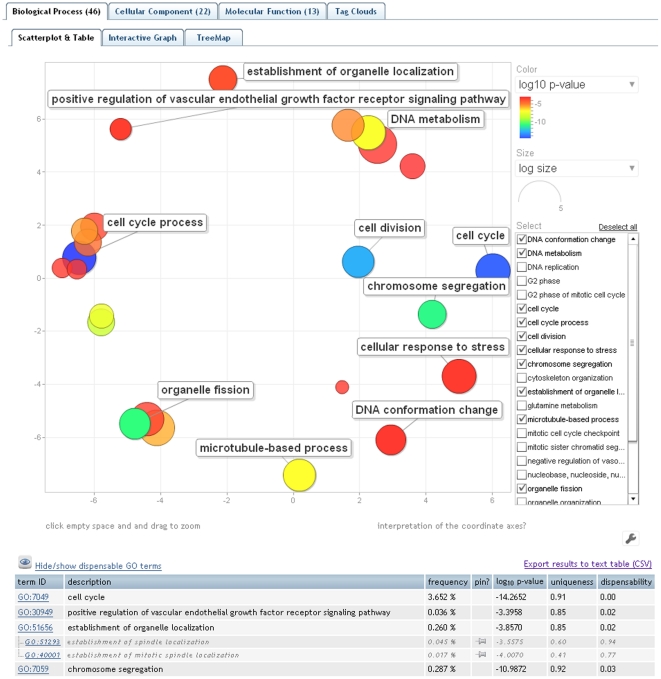
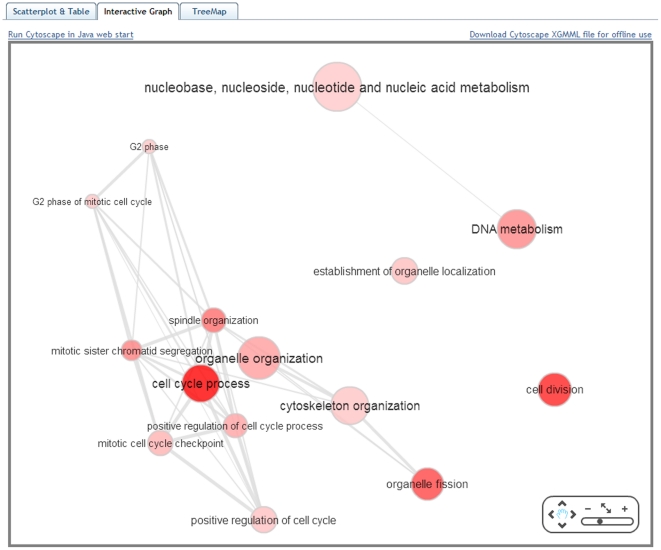
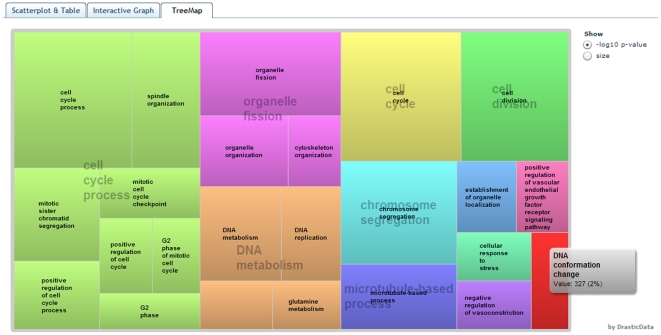
Outcomes of high-throughput biological experiments are typically interpreted by statistical testing for enriched gene functional categories defined by the Gene Ontology (GO). The resulting lists of GO terms may be large and highly redundant, and thus difficult to interpret.REVIGO is a Web server that summarizes long, unintelligible lists of GO terms by finding a representative subset of the terms using a simple clustering algorithm that relies on semantic similarity measures. Furthermore, REVIGO visualizes this non-redundant GO term set in multiple ways to assist in interpretation: multidimensional scaling and graph-based visualizations accurately render the subdivisions and the semantic relationships in the data, while treemaps and tag clouds are also offered as alternative views. REVIGO is freely available at http://revigo.irb.hr/.
Overview
The claims and statistics of this paper haven’t been checked yet.
Free: it reads the open-access text and checks the first 5 claims that cite a source we can check. Create a free account to check every claim.
Integrity signals
Registry
Cites
Statistics
Figures
Verification
Claims the paper makes
The claims and statistics of this paper haven’t been checked yet.
Free: it reads the open-access text and checks the first 5 claims that cite a source we can check. Create a free account to check every claim.
Self-check
Percentages, sums and reported differences re-computed from the paper’s own numbers.
The self-check needs the paper’s full text.
Citations
Cites
The neighbor-joining method: a new method for reconstructing phylogenetic trees.
(1987) · Molecular Biology and Evolution · doi:10.1093/oxfordjournals.molbev.a040454 · Cited by 59,715 · cited 2×
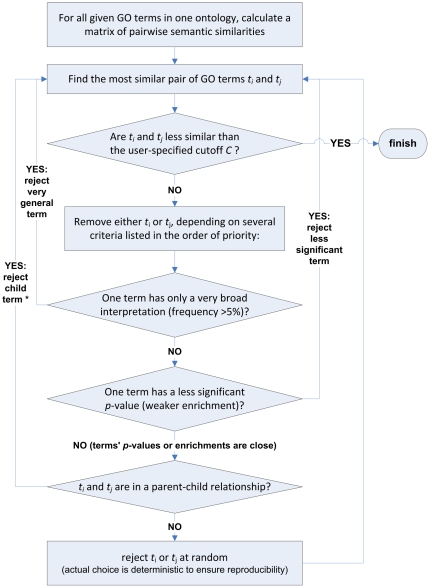
“REVIGO performs a simple clustering procedure which is in concept similar to the hierarchical (agglomerative) clustering methods such as the neighbor joining approach [10].”
MethodGene Ontology: tool for the unification of biology
Ashburner, M., Ball, C. A., Blake, J. A., Botstein, D., Butler, H., Cherry, J. M., Davis, A. P., Dolinski, K., Dwight, S. S., Eppig, J. T., et al. (2000) · Nature Genetics · doi:10.1038/75556 · Cited by 43,206 · cited 1×
“The formality and structure, along with extensive manual curation, have made Gene Ontology (GO) [2] the vocabulary of choice in these analyses.”
BackgroundGene expression profiling predicts clinical outcome of breast cancer
van 't Veer, L. J., Dai, H., van de Vijver, M. J., He, Y. D., Hart, A. A. M., Mao, M., Peterse, H. L., van der Kooy, K., Marton, M. J., Witteveen, A. T., et al. (2002) · Nature · doi:10.1038/415530a · Cited by 9,536 · cited 1×
“…# 1, a comparative analysis of predicted gene expression levels in bacteria and archaea [15]; example # 2, finding putative targets for the cytostatic activity of a small molecule against cancer cell lines [16]; and example # 3, gene expression profiling of aggressive breast cancer samples [17].”
BackgroundMaere, S., Heymans, K., & Kuiper, M. (2005) · Bioinformatics · doi:10.1093/bioinformatics/bti551 · Cited by 4,155 · cited 1×
“Brief description BINGO [21] Cytoscape plug-in that tests for GO category enrichment in a list or network of genes, and displays the results in a graph of GO terms.”
BackgroundGOrilla: a tool for discovery and visualization of enriched GO terms in ranked gene lists
Eden, E., Navon, R., Steinfeld, I., Lipson, D., & Yakhini, Z. (2009) · BMC Bioinformatics · doi:10.1186/1471-2105-10-48 · Cited by 3,356
Integration of biological networks and gene expression data using Cytoscape
Cline, M. S., Smoot, M., Cerami, E., Kuchinsky, A., Landys, N., Workman, C., Christmas, R., Avila-Campilo, I., Creech, M., Gross, B., et al. (2007) · Nature Protocols · doi:10.1038/nprot.2007.324 · Cited by 2,507
agriGO: a GO analysis toolkit for the agricultural community
Du, Z., Zhou, X., Ling, Y., Zhang, Z., & Su, Z. (2010) · Nucleic Acids Research · doi:10.1093/nar/gkq310 · Cited by 2,396 · cited 2×
“A multitude of Web servers exists to assist in this task, including but not limited to: L2L [3], FatiGO [4], GOrilla [5] or agriGO [6].”
MethodSemantic Similarity in Biomedical Ontologies
Pesquita, C., Faria, D., Falcão, A. O., Lord, P., & Couto, F. M. (2009) · PLoS Computational Biology · doi:10.1371/journal.pcbi.1000443 · Cited by 774 · cited 3×
“The complex structure of the GO warrants a solution that takes into account the terms’ proximity in the GO graph, quantified by the GO term ‘semantic similarity’ measures [8].”
MethodInfluentialCytoscape Web: an interactive web-based network browser
Lopes, C. T., Franz, M., Kazi, F., Donaldson, S. L., Morris, Q., & Bader, G. D. (2010) · Bioinformatics · doi:10.1093/bioinformatics/btq430 · Cited by 721
Enrichment or depletion of a GO category within a class of genes: which test?
Rivals, I., Personnaz, L., Taing, L., & Potier, M.-C. (2007) · Bioinformatics · doi:10.1093/bioinformatics/btl633 · Cited by 718 · cited 1×
“In order to interpret the results of such experiments, statistical testing for over-and under-representation of gene functional categories is used [1].”
Background
Cited by
Items 901–1,000 of 1,055
Devi, L. L., Pandey, A., Gupta, S., & Singh, A. P. (2022) · PLANT PHYSIOLOGY · doi:10.1093/plphys/kiac157 · Cited by 58
Hefer, C. A., Mizrachi, E., Myburg, A. A., Douglas, C. J., & Mansfield, S. D. (2015) · New Phytologist · doi:10.1111/nph.13277 · Cited by 66
A prognostic 4‐gene expression signature for squamous cell lung carcinoma
Li, J., Wang, J., Chen, Y., Yang, L., & Chen, S. (2017) · Journal of Cellular Physiology · doi:10.1002/jcp.25846 · Cited by 55
RNF40 regulates gene expression in an epigenetic context-dependent manner
Xie, W., Nagarajan, S., Baumgart, S. J., Kosinsky, R. L., Najafova, Z., Kari, V., Hennion, M., Indenbirken, D., Bonn, S., Grundhoff, A. T., et al. (2017) · Genome biology · doi:10.1186/s13059-017-1159-5 · Cited by 58
“The significant enriched GO terms (FDR < 0.05) were shown as a bubble plot generated from REViGO [61].”
InfluentialPlass, M., Rasmussen, S. H., & Krogh, A. (2017) · PLoS Computational Biology · doi:10.1371/journal.pcbi.1005460 · Cited by 60
Variation in DNA Methylation Is Not Consistently Reflected by Sociality in Hymenoptera
Glastad, K. M., Arsenault, S. V., Vertacnik, K. L., Geib, S. M., Kay, S., Danforth, B. N., Rehan, S. M., Linnen, C. R., Kocher, S. D., & Hunt, B. G. (2017) · Genome Biology and Evolution · doi:10.1093/gbe/evx128 · Cited by 57
Deng, Z.-L., Sztajer, H., Jarek, M., Bhuju, S., & Wagner‐Döbler, I. (2018) · Frontiers in Microbiology · doi:10.3389/fmicb.2018.00124 · Cited by 61
“GO terms with enrichment analysis P-value ≤ 0.05 were taken as input for REVIGO.”
MethodInfluentialGao, H., Wang, Y., Li, W., Gu, Y., Lai, Y., Bi, Y., & He, C. (2018) · Journal of Experimental Botany · doi:10.1093/jxb/ery291 · Cited by 65
“Functional categories were based on biological processes that were summarized using REViGO.”
MethodInfluentialRoth, A., Adapa, S. R., Zhang, M., Liao, X., Saxena, V., Goffe, R., Li, S., Ubalee, R., Saggu, G. S., Pala, Z. R., et al. (2018) · Scientific Reports · doi:10.1038/s41598-018-30713-1 · Cited by 58
Potts, A. H., Guo, Y., Ahmer, B. M. M., & Romeo, T. (2019) · PLoS ONE · doi:10.1371/journal.pone.0211430 · Cited by 58
Fiorucci, A.-S., Bourbousse, C., Concia, L., Rougée, M., Deton-Cabanillas, A.-F., Zabulon, G., Layat, E., Latrasse, D., Kim, S. K., Chaumont, N., et al. (2019) · Genome biology · doi:10.1186/s13059-019-1705-4 · Cited by 57
Alag, A. (2019) · PLOS ONE · doi:10.1371/journal.pone.0218253 · Cited by 55
“REVIGO, an online tool that summarizes and visualizes lists of gene ontology terms, was also used to find a representative set of terms (through a clustering algorithm) [38][39].”
The developmental origins of sex-biased expression in cardiac development
Deegan, D. F., Karbalaei, R., Madžo, J., Kulathinal, R. J., & Engel, N. (2019) · Biology of Sex Differences · doi:10.1186/s13293-019-0259-1 · Cited by 56
The FGF, TGFβ and WNT axis Modulate Self-renewal of Human SIX2+ Urine Derived Renal Progenitor Cells
Rahman, M. S., Wruck, W., Spitzhorn, L., Nguyen, L., Bohndorf, M., Martins, S., Asar, F., Ncube, A., Erichsen, L., Graffmann, N., et al. (2020) · Scientific Reports · doi:10.1038/s41598-020-57723-2 · Cited by 58
A chromosome‐level genome assembly of the parasitoid wasp Pteromalus puparum
Ye, X., Yan, Z., Yang, Y., Xiao, S., Chen, L., Wang, J., Wang, F., Xiong, S., Yang, M., Wang, F., et al. (2020) · Molecular Ecology Resources · doi:10.1111/1755-0998.13206 · Cited by 59
Bozack, A. K., Rifas‐Shiman, S. L., Coull, B. A., Baccarelli, A., Wright, R. O., Amarasiriwardena, C. J., Gold, D. R., Oken, E., Hivert, M., & Cárdenas, A. (2021) · Clinical Epigenetics · doi:10.1186/s13148-021-01198-z · Cited by 62
“REVIGO was used to aid in interpretation of relationships between identified GO terms [92].”
MethodDigital expression profiling of the compartmentalized translatome of Purkinje neurons
Kratz, A., Béguin, P., Kaneko, M., Chimura, T., Suzuki, A. M., Matsunaga, A., Kato, S., Bertin, N., Lassmann, T., Vigot, R., et al. (2014) · Genome Research · doi:10.1101/gr.164095.113 · Cited by 65
“REVIGO summarizes and visualizes long lists of gene ontology terms.”
MethodFoxp1 regulation of neonatal vocalizations via cortical development
Usui, N., Araujo, D. J., Kulkarni, A., Co, M., Ellegood, J., Harper, M., Toriumi, K., Lerch, J. P., & Konopka, G. (2017) · Genes & Development · doi:10.1101/gad.305037.117 · Cited by 55
“GO analysis with the significant DEGs was carried out using ToppGene (https://toppgene.cchmc .org), and these GO terms were consolidated using REVIGO (reduce and visualize GO) (Supek et al. 2011).”
MethodNoh, H. J., Ponting, C. P., Boulding, H. C., Meader, S., Betancur, C., Buxbaum, J. D., Pinto, D., Marshall, C. R., Lionel, A. C., Scherer, S. W., et al. (2013) · PLoS Genetics · doi:10.1371/journal.pgen.1003523 · Cited by 54
“…the combined set of ASD dn CNV genes that are associated either with an abnormal synaptic transmission phenotype in the mouse or whose protein product directly interacts with an ASD dn CNV gene that is associated with this phenotype (Supek et al., 2011; The Gene Ontology Consortium et al., 2000).”
BackgroundGenome-wide analysis identifies impaired axonogenesis in chronic overlapping pain conditions
Khoury, S., Parisien, M., Thompson, S. J., Vachon‐Presseau, É., Roy, M., Martinsen, A. E., Winsvold, B. S., Pain, H. A.-I., Skogholt, A. H., Brumpton, B. M., et al. (2021) · Brain · doi:10.1093/brain/awab359 · Cited by 60
Proteomics Analysis of Tears and Saliva From Sjogren’s Syndrome Patients
Das, N., Menon, N. G., de Almeida, L. G. N., Woods, P. S., Heynen, M., Jay, G. D., Caffery, B. E., Jones, L., Krawetz, R. J., Schmidt, T. A., et al. (2021) · Frontiers in Pharmacology · doi:10.3389/fphar.2021.787193 · Cited by 60
“(D) Visualization of PIGNON results using Revigo.”
MethodInfluentialKisty, E. A., Falco, J. A., & Weerapana, E. (2023) · Cell chemical biology · doi:10.1016/j.chembiol.2023.02.006 · Cited by 56
Evolution of tissue-specific expression of ancestral genes across vertebrates and insects
Mantica, F., Iñiguez, L., Márquez, Y., Permanyer, J., Torres-Méndez, A., Cruz, J., Franch‐Marro, X., Tulenko, F. J., Burguera, D., Bertrand, S., et al. (2024) · Nature Ecology & Evolution · doi:10.1038/s41559-024-02398-5 · Cited by 60
“5a left): (1) the first-branching species in the node was tissue specific in the query tissue (as defined in the previous section); (2) at least 50% of the node’s descendant species with an orthologue had Tau ≥ 0.60 and were associated with the query tissue; and (3) none of the outgroup species to…”
InfluentialWynne, J. W., Shiell, B. J., Marsh, G. A., Boyd, V., Harper, J. A., Heesom, K. J., Monaghan, P., Zhou, P., Payne, J., Klein, R., et al. (2014) · Genome biology · doi:10.1186/preaccept-1718798964145132 · Cited by 55
Inflammatory responses in primary muscle cell cultures in Atlantic salmon (Salmo salar)
Pooley, N. J., Tacchi, L., Secombes, C. J., & Martín, S. (2013) · BMC Genomics · doi:10.1186/1471-2164-14-747 · Cited by 61
“The output from GOEAST was entered into the software REVIGO [117] to remove redundant GOs.”
MethodComplete genomes of Hairstreak butterflies, their speciation and nucleo-mitochondrial incongruence
Cong, Q., Shen, J., Borek, D., Robbins, R. K., Otwinowski, Z., & Grishin, N. V. (2016) · Scientific Reports · doi:10.1038/srep24863 · Cited by 62
Ecdysone signaling induces two phases of cell cycle exit inDrosophilacells
Guo, Y., Flegel, K. A., Kumar, J., McKay, D. J., & Buttitta, L. (2016) · Biology Open · doi:10.1242/bio.017525 · Cited by 58
“The resulting gene lists were submitted to DAVID (Huang et al., 2009) gene ontology analysis, and subsequently filtered using REViGO (Supek et al., 2011) to remove redundant terms.”
MethodSex differences in the molecular signature of the developing mouse hippocampus
Bundy, J. L., Vied, C., & Nowakowski, R. S. (2017) · BMC Genomics · doi:10.1186/s12864-017-3608-7 · Cited by 48
“Lists of enriched GO terms were uploaded to the online tool REVIGO (REduce and VIsualize Gene Ontology) to create visualizations [51].”
MethodTranscriptional Roadmap to Seasonal Variation in Wood Formation of Norway Spruce
Jokipii‐Lukkari, S., Delhomme, N., Schiffthaler, B., Mannapperuma, C., Prestele, J., Nilsson, O. R., Street, N. R., & Tuominen, H. (2018) · PLANT PHYSIOLOGY · doi:10.1104/pp.17.01590 · Cited by 58
Allen, M., Wang, X., Serie, D. J., Strickland, S. L., Burgess, J. D., Koga, S., Younkin, C. S., Nguyen, T. T., Malphrus, K. G., Lincoln, S. J., et al. (2018) · Acta Neuropathologica · doi:10.1007/s00401-018-1900-5 · Cited by 58
HPV, tumour metabolism and novel target identification in head and neck squamous cell carcinoma
Fleming, J. C., Woo, J., Moutasim, K. A., Mellone, M., Frampton, S. J., Mead, A., Ahmed, W., Wood, O., Robinson, H., Ward, M. J., et al. (2019) · British Journal of Cancer · doi:10.1038/s41416-018-0364-7 · Cited by 61
Thakur, S., Choudhary, S., & Bhardwaj, P. (2019) · Journal of Plant Growth Regulation · doi:10.1007/s00344-019-09919-8 · Cited by 56
Sharmin, R. A., Bhuiyan, M. R., Lv, W., Yu, Z., Chang, F., Kong, J., Bhat, J. A., & Zhao, T. (2019) · Environmental and Experimental Botany · doi:10.1016/j.envexpbot.2019.103906 · Cited by 65
Ruocco, M., Entrambasaguas, L., Dattolo, E., Milito, A., Marín‐Guirao, L., & Procaccini, G. (2020) · Journal of Ecology · doi:10.1111/1365-2745.13479 · Cited by 59
Bain, S. A., Marshall, H., de la Filia, A. G., Laetsch, D. R., Husník, F., & Ross, L. (2021) · Molecular Ecology · doi:10.1111/mec.15842 · Cited by 59
Tian, P., Lin, Z., Lin, D., Dong, S., Huang, J., & Huang, T. (2021) · The Plant Journal · doi:10.1111/tpj.15486 · Cited by 65
Renschler, G., Richard, G., Valsecchi, C. I. K., Toscano, S., Arrigoni, L., Ramírez, F., & Akhtar, A. (2019) · Genes & Development · doi:10.1101/gad.328971.119 · Cited by 57
Wang, S.-B., Venkatraman, V., Crowgey, E. L., Liu, T., Fu, Z., Holewinski, R., Ranek, M., Kass, D. A., O’Rourke, B., & Van Eyk, J. E. (2018) · Circulation Research · doi:10.1161/circresaha.118.312789 · Cited by 54
Riesgo, A., Peterson, K. D., Richardson, C., Heist, T., Strehlow, B. W., McCauley, M., Cotman, C., Hill, M. S., & Hill, A. (2014) · BMC Genomics · doi:10.1186/1471-2164-15-376 · Cited by 56
“Gene Ontology treemaps that display hierarchical data using nested rectangles (see [56]) reveal that some of the genes expressed at higher levels in the “aposymbiotic” treatment (compared to “normal”) were particularly interesting in the context of symbiosis (Additional file 4: Table S4; Figure 5 top).”
BackgroundChromatin Looping Shapes KLF5-Dependent Transcriptional Programs in Human Epithelial Cancers
Liu, Y., Guo, B., Aguilera-Jimenez, E., Chu, V. S., Zhou, J. R., Wu, Z., Francis, J. M., Yang, X., Choi, P. S., Bailey, S. D., et al. (2020) · Cancer Research · doi:10.1158/0008-5472.can-20-1287 · Cited by 56
Pallakies, H., & Simon, R. G. (2014) · Molecular Plant · doi:10.1093/mp/ssu094 · Cited by 57
Creason, A., Vandeputte, O. M., Savory, E. A., Davis, E. W., Putnam, M. L., Hu, E., Swader-Hines, D., Mol, A., Baucher, M., Prinsen, E., et al. (2014) · PLoS ONE · doi:10.1371/journal.pone.0101996 · Cited by 58
“9) were used to assign genes to Cluster of Orthologous Groups and Gene Ontology (GO) categories, respectively [87,88].”
MethodWang, X., Li, Q., Jin, X., Xiao, G., Liu, G.-J., Liu, N.-J., & Qin, Y. (2014) · Journal of Proteomics · doi:10.1016/j.jprot.2014.10.022 · Cited by 53
Novel skin phenotypes revealed by a genome-wide mouse reverse genetic screen
Liakath‐Ali, K., Vancollie, V. E., Heath, E., Smedley, D. P., Estabel, J., Sunter, D. C., DiTommaso, T., White, J. K., Ramírez‐Solis, R., Smyth, I., et al. (2014) · Nature Communications · doi:10.1038/ncomms4540 · Cited by 57
Seidl, M. F., den Ackerveken, G. F. J. M. V., Govers, F., & Snel, B. (2012) · Genome Biology and Evolution · doi:10.1093/gbe/evs003 · Cited by 53
Ghan, R., Sluyter, S. C. V., Hochberg, U., Degu, A., Hopper, D. W., Tillet, R. L., Schlauch, K. A., Haynes, P. A., Fait, A., & Cramer, G. R. (2015) · BMC Genomics · doi:10.1186/s12864-015-2115-y · Cited by 55
“4) with a treemap using REVIGO and the treemap R package that depicts loosely related GO terms by color [49].”
MethodEthanol Cellular Defense Induce Unfolded Protein Response in Yeast
Navarro‐Tapia, E., Nana, R. K., Querol, A., & Pérez‐Torrado, R. (2016) · Frontiers in Microbiology · doi:10.3389/fmicb.2016.00189 · Cited by 59
The ubiquitin ligase Ubr4 controls stability of podocin/MEC-2 supercomplexes
Rinschen, M. M., Bharill, P., Wu, X., Kohli, P., Reinert, M. J., Kretz, O., Saez, I., Schermer, B., Höhne, M., Bartram, M. P., et al. (2016) · Human Molecular Genetics · doi:10.1093/hmg/ddw016 · Cited by 55
“The GO terms were cleared for redundant annotations using the ReViGo software with default options (65).”
MethodSazzini, M., Gnecchi Ruscone, G. A., Giuliani, C., Sarno, S., Quagliariello, A., De Fanti, S., Boattini, A., Gentilini, D., Fiorito, G., Catanoso, M., et al. (2016) · Scientific Reports · doi:10.1038/srep32513 · Cited by 50
In silico prediction of lncRNA function using tissue specific and evolutionary conserved expression
Perron, U., Provero, P., & Molineris, I. (2017) · BMC Bioinformatics · doi:10.1186/s12859-017-1535-x · Cited by 57
“We used REVIGO [24] to summarize the predicted GO key-word lists and to plot the Fig.”
MethodZeng, W., Wang, J., Wang, Y., Lin, J., Fù, Y., Xiè, J., Jiāng, D., Chen, T., Liu, H., & Chéng, J. (2018) · Frontiers in Microbiology · doi:10.3389/fmicb.2018.00818 · Cited by 58
“FIGURE S5 | The network of enriched Gene ontology (GO) terms of common up-regulated DEGs between 1Fgdcl1 and 1Fgdcl1/2 according to REVIGO.”
MethodGenomic DNA Methylation-Derived Algorithm Enables Accurate Detection of Malignant Prostate Tissues
Aref‐Eshghi, E., Schenkel, L. C., Ainsworth, P., Lin, H., Rodenhiser, D. I., Cutz, J., & Sadiković, B. (2018) · Frontiers in Oncology · doi:10.3389/fonc.2018.00100 · Cited by 58
“The redundant GO terms were reduced, and following a multiple dimensional scaling, visualized using REViGO tool (19).”
MethodPORCUPINE regulates development in response to temperature through alternative splicing
Capovilla, G., Delhomme, N., Collani, S., Shutava, I., Bezrukov, I., Symeonidi, E., Amorim, M. D. F., Laubinger, S., & Schmid, M. (2018) · Nature Plants · doi:10.1038/s41477-018-0176-z · Cited by 62
Kashpur, O., Smith, A., Gerami‐Naini, B., Maione, A. G., Calabrese, R., Tellechea, A., Theocharidis, G., Liang, L., Pastar, I., Tomic‐Canic, M., et al. (2018) · The FASEB Journal · doi:10.1096/fj.201801059 · Cited by 55
“Gene ontology analysis was performed with GOrilla (36, 37) and visualized with Revigo (38).”
MethodAbscisic acid‐dependent histone demethylation during postgermination growth arrest in Arabidopsis
Wu, J., Ichihashi, Y., Suzuki, T., Shibata, A., Shirasu, K., Yamaguchi, N., & Ito, T. (2019) · Plant Cell & Environment · doi:10.1111/pce.13547 · Cited by 55
Mead, M. E., Knowles, S. L., Raja, H. A., Beattie, S. R., Kowalski, C. H., Steenwyk, J. L., Silva, L. P., Chiaratto, J., Ries, L. N. A., Goldman, G. H., et al. (2019) · mSphere · doi:10.1128/msphere.00018-19 · Cited by 57
Lee, C., Kang, E. Y., Gandal, M. J., Eskin, E., & Geschwind, D. H. (2019) · Nature Neuroscience · doi:10.1038/s41593-019-0461-9 · Cited by 51
Haile, Z. M., Malacarne, G., Pilati, S., Sonego, P., Moretto, M., Masuero, D., Vrhovšek, U., Engelen, K., Baraldi, E., & Moser, C. (2020) · Frontiers in Plant Science · doi:10.3389/fpls.2019.01704 · Cited by 56
“Enriched GO terms (FDR 0.01) were visualized using the ‘Reduce + Visualize Gene Ontology’ (REViGO) webserver (http://revigo.irb.hr; Supek et al., 2011).”
MethodInfluentialCharacterization and regulation of extracellular vesicles in the lumen of the ovine uterus†
O’Neil, E. V., Burns, G. W., Ferreira, C. R., & Spencer, T. E. (2020) · Biology of Reproduction · doi:10.1093/biolre/ioaa019 · Cited by 55
“To understand the potential functional impacts of proteins enriched in cyclic or pregnant EVs, gene names of the differentially abundant proteins identified were entered into a Generic Gene Ontology (GO) Term Finder [45] and significant GO terms analyzed and visualized by REViGo [46].”
MethodMoyo, M., Parker, J. B., & Chakravarti, D. (2020) · Nature Communications · doi:10.1038/s41467-020-14701-6 · Cited by 58
Laufer, B. I., Hwang, H., Jianu, J. M., Mordaunt, C. E., Korf, I. F., Hertz‐Picciotto, I., & LaSalle, J. M. (2020) · Human Molecular Genetics · doi:10.1093/hmg/ddaa218 · Cited by 57
“05) GO terms were then slimmed using REVIGO and ranked by dispensability (43).”
MethodEpigenetic alterations in skin homing CD4+CLA+ T cells of atopic dermatitis patients
Acevedo, N., Benfeitas, R., Katayama, S., Bruhn, S., Andersson, A., Wikberg, G., Lundeberg, L., Lindvall, J. M., Greco, D., Kere, J., et al. (2020) · Scientific Reports · doi:10.1038/s41598-020-74798-z · Cited by 56
Urbanization is associated with modifications in DNA methylation in a small passerine bird
Watson, H., Powell, D., Salmón, P., Jacobs, A., & Isaksson, C. (2020) · Evolutionary Applications · doi:10.1111/eva.13160 · Cited by 55
“Revigo summarizes and visualizes long lists of gene ontology terms.”
MethodGosselin, M. R. F., Mournetas, V., Borczyk, M., Verma, S., Occhipinti, A., Róg, J., Bożycki, Ł., Korostyński, M., Robson, S. C., Angione, C., et al. (2022) · eLife · doi:10.7554/elife.75521 · Cited by 58
An autoactive NB-LRR gene causes Rht13 dwarfism in wheat
Borrill, P., Mago, R., Xu, T., Ford, B., Williams, S. J., Derkx, A. P., Bovill, W. D., Hyles, J., Bhatt, D., Xia, X., et al. (2022) · Proceedings of the National Academy of Sciences · doi:10.1073/pnas.2209875119 · Cited by 60
Gene3D: Multi-domain annotations for protein sequence and comparative genome analysis
Lees, J., Lee, D., Studer, R. A., Dawson, N. L., Sillitoe, I., Das, S., Yeats, C., Dessailly, B. H., Rentzsch, R., & Orengo, C. A. (2013) · Nucleic Acids Research · doi:10.1093/nar/gkt1205 · Cited by 60
“Sometimes the GO predictions from FunFams are extensive, so we provide links to visualize the results using the Revigo resource (26).”
MethodTimmermann, T., Poupin, M. J., Vega, A., Urrutia, C., Ruz, G. A., & González, B. (2019) · PLoS ONE · doi:10.1371/journal.pone.0221358 · Cited by 53
“For functional analysis, the Virtual-Plant [52] and Revigo [53] platforms were used.”
Wu, Y., Wang, Y., Shi, H., Hu, H., Yi, L., & Hou, J. (2022) · PLoS ONE · doi:10.1371/journal.pone.0265447 · Cited by 68
“DEGs at 7 day were mainly enriched in cell wall (GO:0042546, GO:0009832, GO:0070592), microtubule organization (GO:0043622, GO:0031122), and auxin signal-related (GO:0009734, GO:0010928) GO-terms.”
MethodInfluentialPopulation Genetics and Signatures of Selection in Early Neolithic European Farmers
Childebayeva, A., Rohrlach, A. B., Barquera, R., Rivollat, M., Aron, F., Szolek, A., Kohlbacher, O., Nicklisch, N., Alt, K. W., Gronenborn, D., et al. (2022) · Molecular Biology and Evolution · doi:10.1093/molbev/msac108 · Cited by 60
“We summarized and visualized the GO terms with REVIGO (Supek et al. 2011) using the default parameters (supplementary fig.”
Yoshinaga, M., Han, K., Morgens, D. W., Horii, T., Kobayashi, R., Tsuruyama, T., Hia, F., Yasukura, S., Kajiya, A., Cai, T., et al. (2022) · Nature Communications · doi:10.1038/s41467-022-34078-y · Cited by 72
Lopez, C. M. R., Tan, J. W., Shinde, H., Tesfamicael, K., Hu, Y., Fruzangohar, M., Tricker, P. J., Baumann, U., & Edwards, E. (2023) · Frontiers in Plant Science · doi:10.3389/fpls.2023.1096225 · Cited by 57
“A Web tool “REVIGO” was used to summarize the long lists of GO terms (Supek et al., 2011);”
MethodTorow, N., Li, R., Hitch, T. C. A., Mingels, C., Bounny, S. A., van Best, N., Stange, E.-L., Simons, B., Maié, T., Rüttger, L., et al. (2023) · Immunity · doi:10.1016/j.immuni.2023.04.002 · Cited by 54
Empowering biologists to decode omics data: the Genekitr R package and web server
Liu, Y., & Li, G. (2023) · BMC Bioinformatics · doi:10.1186/s12859-023-05342-9 · Cited by 60
“Revigo [54] ORA GO 25 – – – No webserver”
ABP1/ABL3-TMK1 cell-surface auxin signaling targets PIN2-mediated auxin fluxes for root gravitropism
Rodríguez, L., Fiedler, L., Zou, M., Giannini, C., Monzer, A., Vladimirtsev, D., Randuch, M., Yu, Y., Gelová, Z., Verstraeten, I., et al. (2025) · Cell · doi:10.1016/j.cell.2025.08.026 · Cited by 53
“The resultant terms were processed in REVIGO 74 (parameters: medium list size of 0.7, clustering variables: p-value or fold enrichment, removal of obsolete GO terms, whole Uniprot reference set, SimRel semantic similarity) and visualized as treemaps with arbitrary coloring.”
InfluentialLighten, J., Incarnato, D., Ward, B. J., van Oosterhout, C., Bradbury, I., Hanson, M. A., & Bentzen, P. (2016) · Royal Society Open Science · doi:10.1098/rsos.160299 · Cited by 56
“Comparisonamongclusters of highlyupregulated transcripts in the southernGulf of St Lawrencewinter skatepopulationafter a reduction inGO termredundancywasappliedusingREVIGO.”
MethodInfluentialAn interaction map of circulating metabolites, immune gene networks, and their genetic regulation
Nath, A. P., Ritchie, S. C., Byars, S., Fearnley, L. G., Havulinna, A. S., Joensuu, A., Kangas, A. J., Soininen, P., Wennerström, A., Milani, L. A., et al. (2017) · Genome biology · doi:10.1186/s13059-017-1279-y · Cited by 80
“Significant GO terms for each module were further summarized into a subset of representative GO terms with REVIGO [22] using the”
MethodInfluentialSavage, A. F., Kolev, N. G., Franklin, J. B., Vigneron, A., Aksoy, S., & Tschudi, C. (2016) · PLoS ONE · doi:10.1371/journal.pone.0168877 · Cited by 52
Fountain, J. C., Koh, J., Yang, L., Pandey, M. K., Nayak, S. N., Bajaj, P., Zhuang, W., Chen, Z.-Y., Kemerait, R. C., Lee, R. D., et al. (2018) · Scientific Reports · doi:10.1038/s41598-018-21653-x · Cited by 56
Clusterin Is Required for β-Amyloid Toxicity in Human iPSC-Derived Neurons
Robbins, J. P., Perfect, L., Ribe, E. M., Maresca, M., Dangla-Valls, A., Foster, E. M., Killick, R., Nowosiad, P., Reid, M. J., Polit, L. D., et al. (2018) · Frontiers in Neuroscience · doi:10.3389/fnins.2018.00504 · Cited by 54
The primary transcriptome of the fast-growing cyanobacterium Synechococcus elongatus UTEX 2973
Tan, X., Hou, S., Song, K., Georg, J., Klähn, S., Lu, X., & Hess, W. R. (2018) · Biotechnology for Biofuels · doi:10.1186/s13068-018-1215-8 · Cited by 54
“The enriched GO terms were semantically clustered using the REVIGO [78] online server with the default parameters and visualized with the ggplot2 v2.”
MethodInfluentialMa, Y., Liu, M., Stiller, J., & Liu, C. (2019) · BMC Genomics · doi:10.1186/s12864-018-5357-7 · Cited by 54
Baker, J. L., Hendrickson, E. L., Tang, X., Lux, R., He, X., Edlund, A., McLean, J. S., & Shi, W. (2019) · Proceedings of the National Academy of Sciences · doi:10.1073/pnas.1820594116 · Cited by 56
Zhao, S., Mi, X., Guo, R., Xia, X., Liu, L., An, Y., Yan, X., Wang, S., Guo, L., & Wei, C. (2020) · Journal of Agricultural and Food Chemistry · doi:10.1021/acs.jafc.0c01833 · Cited by 57
Comprehensive analysis of the secreted proteome of adult Necator americanus hookworms
Logan, J., Pearson, M. S., Manda, S. S., Choi, Y.-J., Field, M. A., Eichenberger, R. M., Mulvenna, J. P., Nagaraj, S. H., Fujiwara, R. T., Gazzinelli-Guimarães, P. H., et al. (2020) · PLoS neglected tropical diseases · doi:10.1371/journal.pntd.0008237 · Cited by 59
“REViGO, an online tool, was used to summarise and plot GO terms [50].”
MethodLayunta, E., Jäverfelt, S., Dolan, B., Arike, L., & Pelaseyed, T. (2021) · Cell Reports · doi:10.1016/j.celrep.2021.108757 · Cited by 52
Chen, Z., Traniello, I. M., Rana, S., Cash-Ahmed, A. C., Sankey, A. L., Yang, C., & Robinson, G. E. (2021) · Journal of Neurogenetics · doi:10.1080/01677063.2021.1887173 · Cited by 62
Wingfield, B. D., Ades, P. K., Al‐Naemi, F., Beirn, L. A., Bihon, W., Crouch, J. A., de Beer, Z. W., Vos, L. D., Duong, T. A., Fields, C. J., et al. (2015) · IMA Fungus · doi:10.5598/imafungus.2015.06.01.15 · Cited by 61
(2019) · doi:10.1038/s41598-019-49817-3 · Cited by 52
“Gene Ontology (GO) terms associated (FDR ≥ 0.05) with each cluster were summarized with REVIGO (Supek et al. 2011).”
BackgroundMethodInfluentialIsrael, S., Ernst, M., Psathaki, O. E., Drexler, H. C. A., Casser, E., Suzuki, Y., Makalowski, W., Boiani, M., Fuellen, G., & Taher, L. (2018) · doi:10.1101/495788 · Cited by 52
Weber, K. C., Mahmoud, L. M., Stanton, D., Welker, S., Qiu, W., Grosser, J. W., Levy, A., & Dutt, M. (2022) · Frontiers in Plant Science · doi:10.3389/fpls.2022.1019295 · Cited by 52
“The statistically significant GO terms from AgriGO v2 were then inputted into REVIGO software to remove redundant GO terms (Supek et al., 2011).”
Chen, F., Wang, X., Jang, S.-K., Quach, B. C., Weissenkampen, J. D., Khunsriraksakul, C., Yang, L., Sauteraud, R., Albert, C. M., Palmer, N. D., et al. (2023) · Nature Genetics · doi:10.1038/s41588-022-01282-x · Cited by 58
Gawra, J., Valdivieso, A., Roux, F., Laporte, M., de Lorgeril, J., Gueguen, Y., Saccas, M., Escoubas, J.-M., Montagnani, C., Destoumieux‐Garzón, D., et al. (2023) · Science Advances · doi:10.1126/sciadv.adh8990 · Cited by 55
Mapping early human blood cell differentiation using single-cell proteomics and transcriptomics
Furtwängler, B., Üresin, N., Richter, S., Schuster, M. B., Barmpouri, D., Holze, H., Wenzel, A., Grønbæk, K., Theilgaard‐Mönch, K., Theis, F. J., et al. (2025) · Science · doi:10.1126/science.adr8785 · Cited by 65
Li, Y., Varala, K., Moose, S. P., & Hudson, M. E. (2012) · PLoS ONE · doi:10.1371/journal.pone.0047043 · Cited by 56
Bilyk, K. T., & Cheng, C.-H. (2013) · BMC Genomics · doi:10.1186/1471-2164-14-634 · Cited by 57
“The list of enriched GO terms was then investigated further using the TreeMap in REVIGO [25] to identify major functional classes.”
MethodInfluentialPaula, D. P., Togawa, R. C., Costa, M. M. C., Grynberg, P., Martins, N. F., & Andow, D. A. (2016) · Insect Molecular Biology · doi:10.1111/imb.12243 · Cited by 62
Graf, A., Coman, D., Uhrig, R. G., Walsh, S., Flis, A., Stitt, M., & Gruissem, W. (2017) · Open Biology · doi:10.1098/rsob.160333 · Cited by 55
“The GO analysis was performed using the BINGO software [111] implemented in CYTOSCAPE [112] and was displayed using REVIGO [113].”
MethodSublethal oligodendrocyte injury: A reversible condition in multiple sclerosis?
Cui, Q., Khan, D., Rone, M., T.S. Rao, V., Johnson, R. M., Lin, Y. H., Bilodeau, P., Hall, J. A., Rodriguez, M., Kennedy, T. E., et al. (2017) · Annals of Neurology · doi:10.1002/ana.24944 · Cited by 49
“To identify pathways altered by experimental manipulations, Gene Ontology (GO) biological process (BP) term enrichment analysis was performed with the gage (version 2.22.0) Bioconductor R package.25 The GO BP terms were grouped into categories using REVIGO.26”
MethodInfluentialPain-Associated Transcriptome Changes in Synovium of Knee Osteoarthritis Patients
Bratus-Neuenschwander, A., Castro-Giner, F., Frank‐Bertoncelj, M., Aluri, S., Fucentese, S. F., Schlapbach, R., & Sprott, H. (2018) · Genes · doi:10.3390/genes9070338 · Cited by 51
“Redundant GO terms were removed using the REVIGO portal [23].”
MethodEvolution in chronic cold: varied loss of cellular response to heat in Antarctic notothenioid fish
Bilyk, K. T., Vargas‐Chacoff, L., & Cheng, C. ‐. C. (2018) · BMC Evolutionary Biology · doi:10.1186/s12862-018-1254-6 · Cited by 54
“Supek F, Bošnjak M, Škunca N, Šmuc T. REVIGO Summarizes and Visualizes Long Lists of Gene Ontology Terms.”
Metadata
- Authors
- Supek, F., Bošnjak, M., Škunca, N., & Šmuc, T.
- Affiliations
- Universitat Pompeu Fabra (ES)
- Ruđer Bošković Institute (HR)
- Corresponding author
- Supek, Fran
- Venue
- PLoS ONE
- Publisher
- Public Library of Science (PLoS)
- Published
- 2011-07-18
- Volume
- 6
- Issue
- 7
- Pages
- e21800
- ISSN
- 1932-6203 (ISSN-L)
- PMC
- PMC3138752
- OpenAlex
- W1969353942
- Cited by
- 6,264
- References
- 25
- Citations by year
- 2026: 299 · 2025: 417 · 2024: 616 · 2023: 612 · 2022: 701 · 2021: 830 · 2020: 716 · 2019: 551 · 2018: 465 · 2017: 360 · 2016: 282 · 2015: 217 · 2014: 97 · 2013: 59 · 2012: 32
- FWCI
- 24.69
- Type
- journal article
- Language
- en
- Open access
- gold
- doi.org
- Locations
- PLoS ONE (publishedVersion, cc-by)
- Europe PMC (PubMed Central) (publishedVersion, cc-by)
- PubMed Central (publishedVersion, cc-by)
- PubMed (publishedVersion)
- RePEc: Research Papers in Economics (submittedVersion)
- DOAJ (DOAJ: Directory of Open Access Journals) (submittedVersion, cc-by-sa)
- Institutional Repository of the Ruđer Bošković Institute (Ruđer Bošković Institute) (submittedVersion, cc-by)
- Topics
- Life Sciences › Biochemistry, Genetics and Molecular Biology › Molecular Biology › Bioinformatics and Genomic Networks
- Health Sciences › Medicine › Health Informatics › Biomedical Text Mining and Ontologies
- Life Sciences › Biochemistry, Genetics and Molecular Biology › Molecular Biology › Genomics and Phylogenetic Studies
- Keywords
- REVIGO, Gene Ontology, gene ontology enrichment, semantic similarity, multidimensional scaling, treemaps, word clouds, network visualization, web server
- MeSH terms
- Algorithms, Gene Expression Regulation, Humans, Software, Transcription Factors, User-Computer Interface, Computational Biology, Internet, Molecular Sequence Annotation
About these checks
Registry, retraction, Cites and statistics results are computed, not judged, with one exception: a printed reference that no index lists is read once by a model before it counts as a citation error. Claims are extracted by a model and kept only when their quote appears verbatim in the text; each cited source is then checked, with a model’s help, for whether it says what the claim relies on. Those verdicts can be wrong — read the claim’s quote and the cited source before relying on one.
Statistics and arithmetic are recomputed, not judged.
Confidence bands are shown only for fields calibrated on our annotated test set. None is calibrated yet, so no band is shown.
What counts as a claim ›How we measure confidence ›How we check this ›
Are you an author, or do you see a problem with this page? Request a review
Data sources
Bibliographic data: Semantic Scholar, OpenAlex, Crossref.
Contains information from the Semantic Scholar Academic Graph Datasets, made available under the ODC Attribution License (ODC-BY 1.0).
Semantic Scholar’s data is described in: Kinney, R., et al. (2023). The Semantic Scholar Open Data Platform. arXiv:2301.10140.
