

REVIGO Summarizes and Visualizes Long Lists of Gene Ontology Terms
Open accessThe DOI matches its Crossref record; 25 of the 25 references it cites were found in a registry or an index.
Abstract
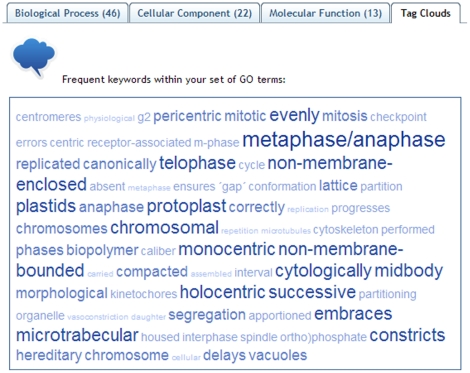
Outcomes of high-throughput biological experiments are typically interpreted by statistical testing for enriched gene functional categories defined by the Gene Ontology (GO). The resulting lists of GO terms may be large and highly redundant, and thus difficult to interpret.REVIGO is a Web server that summarizes long, unintelligible lists of GO terms by finding a representative subset of the terms using a simple clustering algorithm that relies on semantic similarity measures. Furthermore, REVIGO visualizes this non-redundant GO term set in multiple ways to assist in interpretation: multidimensional scaling and graph-based visualizations accurately render the subdivisions and the semantic relationships in the data, while treemaps and tag clouds are also offered as alternative views. REVIGO is freely available at http://revigo.irb.hr/.
Overview
The claims and statistics of this paper haven’t been checked yet.
Free: it reads the open-access text and checks the first 5 claims that cite a source we can check. Create a free account to check every claim.
Integrity signals
Registry
Cites
Statistics
Figures
Verification
Claims the paper makes
The claims and statistics of this paper haven’t been checked yet.
Free: it reads the open-access text and checks the first 5 claims that cite a source we can check. Create a free account to check every claim.
Self-check
Percentages, sums and reported differences re-computed from the paper’s own numbers.
The self-check needs the paper’s full text.
Citations
Cites
The neighbor-joining method: a new method for reconstructing phylogenetic trees.
(1987) · Molecular Biology and Evolution · doi:10.1093/oxfordjournals.molbev.a040454 · Cited by 59,715 · cited 2×
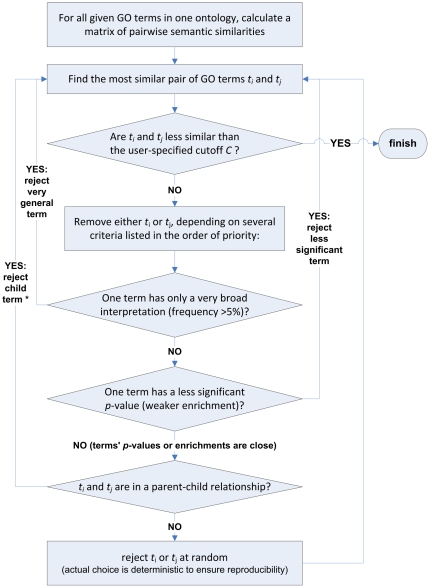
“REVIGO performs a simple clustering procedure which is in concept similar to the hierarchical (agglomerative) clustering methods such as the neighbor joining approach [10].”
MethodGene Ontology: tool for the unification of biology
Ashburner, M., Ball, C. A., Blake, J. A., Botstein, D., Butler, H., Cherry, J. M., Davis, A. P., Dolinski, K., Dwight, S. S., Eppig, J. T., et al. (2000) · Nature Genetics · doi:10.1038/75556 · Cited by 43,206 · cited 1×
“The formality and structure, along with extensive manual curation, have made Gene Ontology (GO) [2] the vocabulary of choice in these analyses.”
BackgroundGene expression profiling predicts clinical outcome of breast cancer
van 't Veer, L. J., Dai, H., van de Vijver, M. J., He, Y. D., Hart, A. A. M., Mao, M., Peterse, H. L., van der Kooy, K., Marton, M. J., Witteveen, A. T., et al. (2002) · Nature · doi:10.1038/415530a · Cited by 9,536 · cited 1×
“…# 1, a comparative analysis of predicted gene expression levels in bacteria and archaea [15]; example # 2, finding putative targets for the cytostatic activity of a small molecule against cancer cell lines [16]; and example # 3, gene expression profiling of aggressive breast cancer samples [17].”
BackgroundMaere, S., Heymans, K., & Kuiper, M. (2005) · Bioinformatics · doi:10.1093/bioinformatics/bti551 · Cited by 4,155 · cited 1×
“Brief description BINGO [21] Cytoscape plug-in that tests for GO category enrichment in a list or network of genes, and displays the results in a graph of GO terms.”
BackgroundGOrilla: a tool for discovery and visualization of enriched GO terms in ranked gene lists
Eden, E., Navon, R., Steinfeld, I., Lipson, D., & Yakhini, Z. (2009) · BMC Bioinformatics · doi:10.1186/1471-2105-10-48 · Cited by 3,356
Integration of biological networks and gene expression data using Cytoscape
Cline, M. S., Smoot, M., Cerami, E., Kuchinsky, A., Landys, N., Workman, C., Christmas, R., Avila-Campilo, I., Creech, M., Gross, B., et al. (2007) · Nature Protocols · doi:10.1038/nprot.2007.324 · Cited by 2,507
agriGO: a GO analysis toolkit for the agricultural community
Du, Z., Zhou, X., Ling, Y., Zhang, Z., & Su, Z. (2010) · Nucleic Acids Research · doi:10.1093/nar/gkq310 · Cited by 2,396 · cited 2×
“A multitude of Web servers exists to assist in this task, including but not limited to: L2L [3], FatiGO [4], GOrilla [5] or agriGO [6].”
MethodSemantic Similarity in Biomedical Ontologies
Pesquita, C., Faria, D., Falcão, A. O., Lord, P., & Couto, F. M. (2009) · PLoS Computational Biology · doi:10.1371/journal.pcbi.1000443 · Cited by 774 · cited 3×
“The complex structure of the GO warrants a solution that takes into account the terms’ proximity in the GO graph, quantified by the GO term ‘semantic similarity’ measures [8].”
MethodInfluentialCytoscape Web: an interactive web-based network browser
Lopes, C. T., Franz, M., Kazi, F., Donaldson, S. L., Morris, Q., & Bader, G. D. (2010) · Bioinformatics · doi:10.1093/bioinformatics/btq430 · Cited by 721
Enrichment or depletion of a GO category within a class of genes: which test?
Rivals, I., Personnaz, L., Taing, L., & Potier, M.-C. (2007) · Bioinformatics · doi:10.1093/bioinformatics/btl633 · Cited by 718 · cited 1×
“In order to interpret the results of such experiments, statistical testing for over-and under-representation of gene functional categories is used [1].”
Background
Cited by
Items 801–900 of 1,055
Olson, P. D., Zarowiecki, M., James, K., Baillie, A., Bartl, G., Burchell, P., Chellappoo, A., Jarero, F., Tan, L. Y., Holroyd, N. E., et al. (2018) · EvoDevo · doi:10.1186/s13227-018-0110-5 · Cited by 75
Shahid, M., Cai, G., Zu, F., Zhao, Q., Qasim, M. U., Hong, Y., Fan, C., & Zhou, Y. (2019) · International Journal of Molecular Sciences · doi:10.3390/ijms20081982 · Cited by 67
A genome-wide assessment of the ancestral neural crest gene regulatory network
Hockman, D., Chong-Morrison, V., Green, S. A., Gavriouchkina, D., Candido-Ferreira, I., Ling, I. T. C., Williams, R. M., Amemiya, C. T., Smith, J. J., Bronner-Fraser, M. E., et al. (2019) · Nature Communications · doi:10.1038/s41467-019-12687-4 · Cited by 62
Tigano, A., Colella, J. P., & MacManes, M. D. (2020) · Molecular Ecology · doi:10.1111/mec.15401 · Cited by 69
“The full list of genes and reduced GO terms in REVIGO can be found in Supplementary Tables 3, 4 and 5).”
MethodInfluentialComprehensive plasma proteomic profiling reveals biomarkers for active tuberculosis
Garay‐Baquero, D. J., White, C., Walker, N. F., Tebruegge, M., Schiff, H. F., Ugarte‐Gil, C., Morris-Jones, S. D., Marshall, B. G., Manousopoulou, A., Adamson, J., et al. (2020) · JCI Insight · doi:10.1172/jci.insight.137427 · Cited by 67
“21 terms were summarised by removing redundant terms using the tool REVIGO (71).”
MethodInfluentialEvolution of Protein Domain Repeats in Metazoa
Schüler, A., & Bornberg‐Bauer, E. (2016) · Molecular Biology and Evolution · doi:10.1093/molbev/msw194 · Cited by 60
“01) has been filtered with REVIGO (Supek et al. 2011) using the SimRel semantic similarity measure and a similarity cutoff of 0.”
MethodInfluentialde Jong, S. E., van Unen, V., Manurung, M. D., Stam, K. A., Goeman, J. J., Jochems, S. P., Höllt, T., Pezzotti, N., Mouwenda, Y. D., Ongwe, M. E. B., et al. (2021) · Nature Immunology · doi:10.1038/s41590-021-00911-7 · Cited by 68
Mishra, D., Mishra, A., Nand, S., Vamanu, E., & Singh, M. P. (2023) · Diagnostics · doi:10.3390/diagnostics13050965 · Cited by 63
“The epigenetic alterations have an effect on the genes participating in the tumorigenesis and metastasis of cancer [40].”
BackgroundMethodCheedipudi, S. M., Puri, D., Saleh, A., Gala, H., Rumman, M., Pillai, M. S., Sreenivas, P., Arora, R., Sellathurai, J., Schrøder, H. D., et al. (2015) · Nucleic Acids Research · doi:10.1093/nar/gkv567 · Cited by 62
“jsp) (44) highlighted the enrichment of the muscle regulatory program in the upregulated genes and cell cycle program in the downregulated genes (Supplementary Figure S4B).”
BackgroundShemesh‐Mayer, E., Michael, T. E. B., Rotem, N., Rabinowitch, H. D., Doron‐Faigenboim, A., Kosmala, A., Perlikowski, D., Sherman, A., & Kamenetsky, R. (2015) · Frontiers in Plant Science · doi:10.3389/fpls.2015.00271 · Cited by 66
“The REVIGO web server (Supek et al., 2011) was used for visualization of the GO terms.”
MethodHnilicová, J., Hozeifi, S., Stejskalová, E., Dušková, E., Poser, I., Humpolíčková, J., Hof, M., & Staněk, D. (2013) · Molecular Biology of the Cell · doi:10.1091/mbc.e13-06-0303 · Cited by 60
“GO terms with FDR-corrected p 0.05 were considered as significantly enriched and were refined and visualized by ReviGO (Supek et al., 2011).”
MethodInfluentialSmall RNAs from cereal powdery mildew pathogens may target host plant genes
Kusch, S., Frantzeskakis, L., Thieron, H., & Panstruga, R. (2018) · Fungal Biology · doi:10.1016/j.funbio.2018.08.008 · Cited by 60
Cerulus, B., Jariani, A., Perez-Samper, G., Vermeersch, L., Pietsch, J. M., Crane, M. M., New, A. M., Gallone, B., Roncoroni, M., Dzialo, M. C., et al. (2018) · eLife · doi:10.7554/elife.39234 · Cited by 64
“Second, redundant GO terms were removed using REVIGO filtering out categories with a similarity >0.5 (Supek et al., 2011), reducing the total number of 83 GO terms.”
MethodInfluentialDressano, K., Weckwerth, P. R., Poretsky, E., Takahashi, Y., Villarreal, C., Shen, Z., Schroeder, J. I., Briggs, S. P., & Huffaker, A. (2020) · Nature Plants · doi:10.1038/s41477-020-0724-1 · Cited by 60
KDM5A mutations identified in autism spectrum disorder using forward genetics
Hayek, L. E., Tuncay, İ. O., Nijem, N., Russell, J. L., Ludwig, S. M., Kaur, K. J., Li, X., Anderton, P. D., Tang, M., Gerard, A., et al. (2020) · eLife · doi:10.7554/elife.56883 · Cited by 66
“, 2009b) with the mouse genome as the background and redundant gene ontology terms were merged using Revigo (Supek et al., 2011).”
MethodInfluentialIdentification of Nidogen 1 as a lung metastasis protein through secretome analysis
Alečković, M., Wei, Y., LeRoy, G., Sidoli, S., Liu, D. D., Garcia, B. A., & Kang, Y. (2017) · Genes & Development · doi:10.1101/gad.301937.117 · Cited by 66
“GO FAT ontologies were obtained fromDAVID (Huang et al. 2008), and redundant and child terms were removed using Reduce and Visualize GO (REViGO) (Supek et al. 2011) and manual inspection and visualized using Cytoscape.”
York, R. A., Patil, C., Abdilleh, K., Johnson, Z. V., Conte, M. A., Genner, M. J., McGrath, P. T., Fraser, H. B., Fernald, R. D., & Streelman, J. T. (2018) · Proceedings of the National Academy of Sciences · doi:10.1073/pnas.1810140115 · Cited by 60
Histone Modifier Genes Alter Conotruncal Heart Phenotypes in 22q11.2 Deletion Syndrome
Guo, T., Chung, J. H., Wang, T., McDonald‐McGinn, D. M., Kates, W. R., Hawuła, W., Coleman, K. B., Zackai, E. H., Emanuel, B. S., & Morrow, B. E. (2015) · The American Journal of Human Genetics · doi:10.1016/j.ajhg.2015.10.013 · Cited by 65
“2 The American Journal of Human Genetics 97, 1–9, December 3, 20 reduce the redundancy of GO terms from the enrichment analysis, we used the REVIGO tool, which uses a simple clustering algorithm to summarize GO terms.(11) GO terms were clustered into ‘‘tissue development,’’ ‘‘chromosome organization,’’ ‘‘regulation of…”
Batz, Z. A., Goff, A. C., & Armbruster, P. (2017) · Insect Molecular Biology · doi:10.1111/imb.12332 · Cited by 65
Renaud, L., da Silveira, W. A., Takamura, N., Hardiman, G., & Feghali‐Bostwick, C. A. (2020) · Frontiers in Immunology · doi:10.3389/fimmu.2020.00383 · Cited by 64
“GO terms were then visualized using REViGO (20), a tool that summarizes long lists of GO terms by removing redundant ones.”
MethodSyrimi, E., Fennell, É., Richter, A. G., Vrljicak, P., Stark, R., Ott, S., Murray, P. G., Al‐Abadi, E., Chikermane, A., Dawson, P., et al. (2021) · iScience · doi:10.1016/j.isci.2021.103215 · Cited by 64
Active growth signaling promotes senescence and cancer cell sensitivity to CDK7 inhibition
Wilson, G. A., Vuina, K., Sava, G. P., Huard, C., Meneguello, L., Coulombe‐Huntington, J., Bertomeu, T., Maizels, R. J., Lauring, J. D., Kriston-Vizi, J., et al. (2023) · Molecular Cell · doi:10.1016/j.molcel.2023.10.017 · Cited by 58
Yao, W., King, D. A., Beckwith, S. L., Gowans, G. J., Yen, K., Zhou, C. Y., & Morrison, A. J. (2016) · Molecular and Cellular Biology · doi:10.1128/mcb.00801-15 · Cited by 60
Olivas, N. H. D., Coolen, S., Huang, P., Severing, E. I., Verk, M. C. V., Hickman, R. J., Wittenberg, A. H. J., de Vos, M., Prins, M., van Loon, J. J. A., et al. (2016) · New Phytologist · doi:10.1111/nph.13847 · Cited by 71
“GO term categories were reduced by semantic similarity using R EVIGO (Supek et al. , 2011).”
Transcriptome modulation during host shift is driven by secondary metabolites in desert D rosophila
Panis, D. N. D., Padró, J., Furió‐Tarí, P., Tarazona, S., Carmona, P. S. M., Soto, I. M., Dopazo, H., Conesa, A., & Hasson, E. (2016) · Molecular Ecology · doi:10.1111/mec.13785 · Cited by 59
Jueterbock, A. O., Franssen, S. U., Bergmann, N., Gu, J., Coyer, J. A., Reusch, T. B. H., Bornberg‐Bauer, E., & Olsen, J. (2016) · Molecular Ecology · doi:10.1111/mec.13829 · Cited by 70
Altered Epithelial Gene Expression in Peripheral Airways of Severe Asthma
Singhania, A., Rupani, H., Jayasekera, N. P., Lumb, S., Hales, P., Gozzard, N., Davies, D. E., Woelk, C. H., & Howarth, P. H. (2017) · PLoS ONE · doi:10.1371/journal.pone.0168680 · Cited by 61
Burns, J. A., Zhang, H., Hill, E. M., Kim, E., & Kerney, R. R. (2017) · eLife · doi:10.7554/elife.22054 · Cited by 65
“Other tools such as REViGO (Supek et al., 2011) performed better (Supplementary files 15 and 16 for algal genes, and Supplementary files 17 and 18 for salamander genes), but did not catch large functional modules that were evident upon further manual inspection of the gene lists.”
Multivalent binding of PWWP2A to H2A.Z regulates mitosis and neural crest differentiation
Pünzeler, S., Link, S., Wagner, G., Keilhauer, E. C., Kronbeck, N., Spitzer, R. M., Leidescher, S., Markaki, Y., Mentele, E., Regnard, C., et al. (2017) · The EMBO Journal · doi:10.15252/embj.201695757 · Cited by 57
“GO groups were kept for visualization using REVIGO (Supek et al, 2011), if group size was larger than 19 genes and the P-value smaller than 5%.”
MethodMixão, V., Hansen, A. P., Saus, E., Boekhout, T., Lass‐Flörl, C., & Gabaldón, T. (2019) · Frontiers in Genetics · doi:10.3389/fgene.2019.00383 · Cited by 78
“Many studies support that C. inconspicua can often be found in lactic products, including milk, cheese, or butter (Minervini et al., 2001; Suzzi et al., 2003; Krukowski et al., 2006; Callon et al., 2007; Kurtzman et al., 2011).”
ResultRichards, V. P., Velsko, I. M., Alam, M. T., Zadoks, R. N., Manning, S. D., Bitar, P. D. P., Hassler, H. B., Crestani, C., Springer, G. H., Probert, B., et al. (2019) · Molecular Biology and Evolution · doi:10.1093/molbev/msz169 · Cited by 68
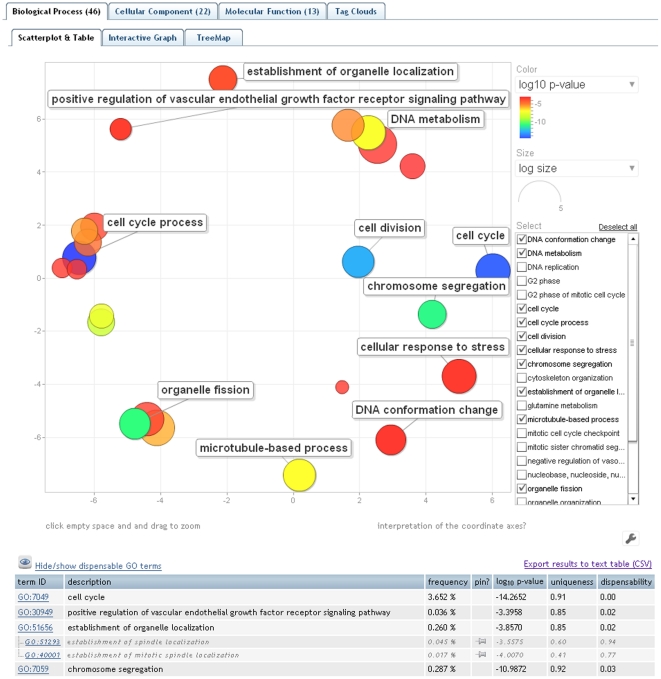
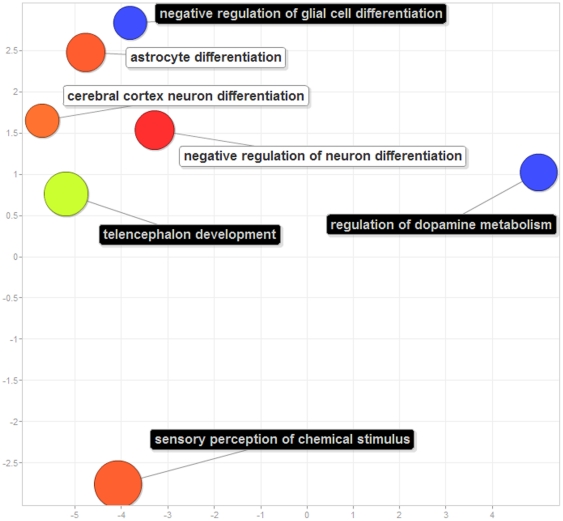
“Custom R scripts generated by REVIGO were downloaded from the REVIGO website and used to generate graphs in R. Circles representing summarized GO terms were sized based on frequency of the GO term in the UniProt database (where higher numbers are more general terms), and colored based on the log10 P value of the repre…”
InfluentialSex‐specific changes in the aphid DNA methylation landscape
Mathers, T. C., Mugford, S. T., Percival‐Alwyn, L., Chen, Y., Kaithakottil, G., Swarbreck, D., Hogenhout, S. A., & van Oosterhout, C. (2019) · Molecular Ecology · doi:10.1111/mec.15216 · Cited by 58
Myrf guides target gene selection of transcription factor Sox10 during oligodendroglial development
Aprato, J., Sock, E., Weider, M., Elsesser, O., Fröb, F., & Wegner, M. (2019) · Nucleic Acids Research · doi:10.1093/nar/gkz1158 · Cited by 50
Frameshifting preserves key physicochemical properties of proteins
Bartonek, L., Braun, D., & Zagrovic, B. (2020) · Proceedings of the National Academy of Sciences · doi:10.1073/pnas.1911203117 · Cited by 54
“Enrichment analysis of GO terms was carried out using Gorilla (48), Panther (49), and REVIGO (50) tools.”
Cohain, A. T., Barrington, W. T., Jordan, D. M., Beckmann, N. D., Argmann, C., Houten, S. M., Charney, A. W., Ermel, R., Sukhavasi, K., Franzén, O., et al. (2021) · Nature Communications · doi:10.1038/s41467-020-20750-8 · Cited by 66
Wolstenholme, J. T., Saunders, J. M., Smith, M. L., Kang, J. D., Hylemon, P. B., González‐Maeso, J., Fagan, A., Zhao, D., Sikaroodi, M., Herzog, J., et al. (2022) · Nature Communications · doi:10.1038/s41467-022-34054-6 · Cited by 62
Gomes, L. C., Hänzelmann, S., Hausmann, F., Khatri, R., Moreno, S. O., Parvaz, M., Tzeplaeff, L., Pasetto, L., Gébelin, M., Ebbing, M., et al. (2024) · Nature Communications · doi:10.1038/s41467-024-49196-y · Cited by 68
Tiwari, V., Prajapati, B., Asare, Y., Damkou, A., Ji, H., Liu, L., Naser, N., Gouna, G., Leszczyńska, K. B., Mieczkowski, J., et al. (2024) · Immunity · doi:10.1016/j.immuni.2024.07.001 · Cited by 53
Circulating micro RNA signature of genotype‐by‐age interactions in the long‐lived Ames dwarf mouse
Victoria, B., Dhahbi, J. M., Nunez Lopez, Y. O., Spinel, L., Atamna, H., Spindler, S. R., & Masternak, M. M. (2015) · Aging Cell · doi:10.1111/acel.12373 · Cited by 59
Costa, M. C. D., Righetti, K., Nijveen, H., Yazdanpanah, F., Ligterink, W., Buitink, J., & Hilhorst, H. W. M. (2015) · Planta · doi:10.1007/s00425-015-2283-7 · Cited by 72
“Functional classes were determined using Gene Trail and ReviGO.”
MethodInfluentialKaplan, R. E. W., Chen, Y., Moore, B. T., Jordan, J. M., Maxwell, C. S., Schindler, A. J., & Baugh, L. R. (2015) · PLoS Genetics · doi:10.1371/journal.pgen.1005731 · Cited by 66
“Specific parameters used with GOrilla and REVIGO are documented in S1 Dataset.”
MethodReprogramming of Strawberry (Fragaria vesca) Root Transcriptome in Response to Phytophthora cactorum
Toljamo, A., Blande, D., Kärenlampi, S. O., & Kokko, H. (2016) · PLoS ONE · doi:10.1371/journal.pone.0161078 · Cited by 58
“REVIGO was used to remove redundant terms [31].”
Method5′ to 3′ mRNA Decay Contributes to the Regulation of Arabidopsis Seed Germination by Dormancy
Basbouss-Serhal, I., Pateyron, S., Cochet, F., Leymarie, J., & Bailly, C. (2017) · PLANT PHYSIOLOGY · doi:10.1104/pp.16.01933 · Cited by 62
Anjanappa, R. B., Mehta, D., Okoniewski, M. J., Szabelska‐Beręsewicz, A., Gruissem, W., & Vanderschuren, H. (2017) · Molecular Plant Pathology · doi:10.1111/mpp.12565 · Cited by 65
“Significantly enriched GO categories (Biological Process) were then summarized and visualized based on semantic similarity using REVIGO (Supek et al ., 2011) (Fig.”
Hales, N. R., Schield, D. R., Andrew, A. L., Card, D. C., Walsh, M., & Castoe, T. A. (2017) · Molecular Ecology · doi:10.1111/mec.14213 · Cited by 71
Identification of regenerative roadblocks via repeat deployment of limb regeneration in axolotls
Bryant, D. M., Sousounis, K., Payzin‐Dogru, D., Bryant, S., Sandoval, A. G. W., Fernandez, J. M., Mariano, R., Oshiro, R., Wong, A. Y. L., Leigh, N. D., et al. (2017) · npj Regenerative Medicine · doi:10.1038/s41536-017-0034-z · Cited by 68
Krivoshiev, B. V., Beemster, G. T. S., Sprangers, K., Blust, R., & Husson, S. J. (2017) · Journal of Applied Toxicology · doi:10.1002/jat.3553 · Cited by 62
Lin, Y., Wu, P., Tsai, Y., Hsu, Y., Wang, H. Y., Kuo, M., Kuo, P., & Hwang, S. (2019) · Journal of Clinical Medicine · doi:10.3390/jcm8020191 · Cited by 67
“hr/) [37] for semantic representative subset analysis of nonredundant GO terms.”
BackgroundKuon, J., Qi, W., Schläpfer, P., Hirsch‐Hoffmann, M., von Bieberstein, P. R., Patrignani, A., Poveda, L., Grob, S., Keller, M., Shimizu‐Inatsugi, R., et al. (2019) · BMC Biology · doi:10.1186/s12915-019-0697-6 · Cited by 67
“The REVIGO [91] package was used to remove redundant and similar terms from long Gene Ontology lists by semantic clustering and to visualize the enrichment results.”
MethodShcherbakov, D., Teo, Y., Boukari, H., Sanchón, A. C., Mantovani, M., Osinnii, I., Moore, J. M., Juskeviciene, R., Brilkova, M., Duscha, S., et al. (2019) · Communications Biology · doi:10.1038/s42003-019-0626-9 · Cited by 64
Mutation of the PTCH1 gene predicts recurrence of breast cancer
Wang, C., Chang, Y.-C., Kuo, Y., Lee, K., Chen, P., Cheung, C. H. A., Chang, C., Phan, N. N., Shen, M., & Hsu, H. (2019) · Scientific Reports · doi:10.1038/s41598-019-52617-4 · Cited by 62
Kifle, D. W., Pearson, M. S., Becker, L., Pickering, D., Loukas, A. C., & Sotillo, J. (2020) · Molecular and Biochemical Parasitology · doi:10.1016/j.molbiopara.2020.111264 · Cited by 62
Morrison, J. K., DeRossi, C., Alter, I. L., Nayar, S., Giri, M., Zhang, C., Cho, J. H., & Chu, J. (2022) · Hepatology Communications · doi:10.1002/hep4.1930 · Cited by 63
Hilgers, L., Hartmann, S. A., Hofreiter, M., & von Rintelen, T. (2018) · Molecular Biology and Evolution · doi:10.1093/molbev/msy052 · Cited by 68
Ge, G., Long, Y., Shi, L., Ren, J., Yan, J., Li, C., Li, Q., & Cui, Z. (2020) · BMC Genomics · doi:10.1186/s12864-020-06946-8 · Cited by 61
All-in-One digital microfluidics pipeline for proteomic sample preparation and analysis
Peng, J., Chan, C. C. H., Zhang, S., Sklavounos, A. A., Olson, M. E., Scott, E., Hu, Y., Rajesh, V., Li, B. ‘., Chamberlain, M. D., et al. (2023) · Chemical Science · doi:10.1039/d3sc00560g · Cited by 58
Ibrahim, S. S., Muhammad, A., Hearn, J., Weedall, G. D., Nagi, S. C., Mukhtar, M. M., Fadel, A. N., Mugenzi, L. M. J., Patterson, E. I., Irving, H., et al. (2023) · BMC Biology · doi:10.1186/s12915-023-01610-5 · Cited by 69
“For analysis, the GO terms lists for MF were used as input into the Revigo [45] for interpretation and visualisation, querying the Whole Uniprot database and SimRel setting for semantic similarity measurements.”
MethodForensic genomics as a novel tool for identifying the causes of mass mortality events
Wit, P. D., Rogers‐Bennett, L., Kudela, R. M., & Palumbi, S. R. (2014) · Nature Communications · doi:10.1038/ncomms4652 · Cited by 57
Differential gene expression and alternative splicing in insect immune specificity
Riddell, C., Garces, J. D. L., Adams, S., Barribeau, S. M., Twell, D., & Mallon, E. B. (2014) · BMC Genomics · doi:10.1186/1471-2164-15-1031 · Cited by 66
“We then used REVIGO to summarize and visualise these terms [75].”
Kretschmer, M., Croll, D., & Kronstad, J. W. (2016) · Molecular Plant Pathology · doi:10.1111/mpp.12486 · Cited by 57
“were also visualized with REVIGO (Supek et al., 2011) (Figs 2 and”
MethodTranscriptome profiles reveal gene regulation of peanut (Arachis hypogaea L.) nodulation
Peng, Z., Liu, F., Wang, L., Zhou, H. L., Paudel, D., Tan, L., Maku, J., Gallo‐Meagher, M., & Wang, J. (2017) · Scientific Reports · doi:10.1038/srep40066 · Cited by 57
Christiano, R., Kolev, N. G., Shi, H., Ullu, E., Walther, T. C., & Tschudi, C. (2017) · Molecular Microbiology · doi:10.1111/mmi.13754 · Cited by 71
“GO terms were further submitted to REVIGO, a web server that summarizes and condenses long lists of GO terms by removing redundant entries (Supek et al., 2011).”
MethodGitiaux, C., Latroche, C., Weiss‐Gayet, M., Rodero, M. P., Duffy, D., Bader‐Meunier, B., Glorion, C., Nusbaum, P., Bodemer, C., Mouchiroud, G., et al. (2017) · Arthritis & Rheumatology · doi:10.1002/art.40328 · Cited by 57
“Functional analyses were carried out using DAVID (16) and REVIGO (17) bioinformatics tools.”
MethodDiscovery of microRNA-target modules of African rice (Oryza glaberrima) under salinity stress
Mondal, T. K., Panda, A. K., Rawal, H. C., & Sharma, T. R. (2018) · Scientific Reports · doi:10.1038/s41598-017-18206-z · Cited by 60
“On the contrary, 3 most frequent GO terms in Molecular Function were found to be transcription regulator activity (19), catalytic activity (38) and binding (42) (Fig.”
BackgroundMaser: one-stop platform for NGS big data from analysis to visualization
Kinjo, S., Monma, N., Misu, S., Kitamura, N., Imoto, J. M., Yoshitake, K., Gojobori, T., & Ikeo, K. (2018) · Database · doi:10.1093/database/bay027 · Cited by 62
“In both pipelines, the resultant DEGs are subjected to a gene ontology (GO) enrichment test using GOseq (13) and visualization by REVIGO (14).”
MethodRNAseq analysis of hippocampal microglia after kainic acid-induced seizures
Bosco, D. B., Zheng, J., Xu, Z., Peng, J., Eyo, U. B., Tang, K., Yan, C., Huang, J., Feng, L., Wu, G., et al. (2018) · Molecular Brain · doi:10.1186/s13041-018-0376-5 · Cited by 62
“of identified Gene Ontology terms was completed using REViGO [22].”
MethodInfluentialKohlmeier, P., Alleman, A., Libbrecht, R., Foitzik, S., & Feldmeyer, B. (2018) · Molecular Ecology · doi:10.1111/mec.14971 · Cited by 57
“We found 52.2% of the GO term superclusters (Supek et al., 2011) that were enriched in young brood carers (Supporting Information Figure S7), and 57.1% of the GO term superclusters that were enriched in old foragers to be also enriched in brood carers and foragers in the age‐controlled GLM…”
BackgroundInfluentialRobert, A. W., Gomes, F. A., Rode, M. P., da Silva, M. M., Veleirinho, B., Maraschin, M., Hayashi, L., Calloni, G. W., & Stimamiglio, M. A. (2019) · Journal of Tissue Engineering · doi:10.1177/2041731419833391 · Cited by 60
Electrical stimulation shifts healing/scarring towards regeneration in a rat limb amputation model
Oliveira, K. M. C., Barker, J. H., Berezikov, E., Pindur, L., Kynigopoulos, S., Eischen-Loges, M. J., Han, Z., Bhavsar, M. B., Henrich, D. M., & Leppik, L. P. (2019) · Scientific Reports · doi:10.1038/s41598-019-47389-w · Cited by 63
Milesi, P., Berlin, M., Chen, J., Orsucci, M., Li, L., Jansson, G., Karlsson, B., & Lascoux, M. (2019) · Evolutionary Applications · doi:10.1111/eva.12855 · Cited by 61
Blanc, M., Alfonso, S., Bégout, M., Barrachina, C., Hyötyläinen, T., Keiter, S. H., & Cousin, X. (2020) · The Science of The Total Environment · doi:10.1016/j.scitotenv.2020.142097 · Cited by 58
Zarkali, A., McColgan, P., Ryten, M., Reynolds, R., Leyland, L.-A., Lees, A. J., Rees, G., & Weil, R. S. (2020) · Brain · doi:10.1093/brain/awaa270 · Cited by 64
“We used the reduce and visualize gene ontology tool (REVIGO) to visualize significant GO terms using semantic similarity (Supek et al., 2011) (Fig.”
MethodJönsson, J., Renault, K. M., García-Calzón, S., Perfilyev, A., Estampador, A. C., Nørgaard, K., Lind, M. V., Vaag, A. A., Hjort, L., Michaelsen, K. F., et al. (2021) · Diabetes · doi:10.2337/db20-0487 · Cited by 60
“Moreover, performing GO and REViGO analyses, we found 15 biological processes (P , 0.01).”
BackgroundMethodInfluentialTime of the day prioritizes the pool of translating mRNAs in response to heat stress
Bonnot, T., & Nagel, D. H. (2021) · The Plant Cell · doi:10.1093/plcell/koab113 · Cited by 59
Identification of long non-coding RNAs involved in neuronal development and intellectual disability
D’haene, E., Jacobs, E., Volders, P., Meyer, T. D., Menten, B., & Vergult, S. (2016) · Scientific Reports · doi:10.1038/srep28396 · Cited by 57
Long‐term changes in adipose tissue gene expression following bariatric surgery
Kerr, A. G., Andersson, D. P., Rydén, M., Arner, P., & Dahlman, I. A. (2020) · Journal of Internal Medicine · doi:10.1111/joim.13066 · Cited by 62
de Oliveira, M., Síbio, M. T. D., Mathias, L. S., Rodrigues, B. M., Sakalem, M. E., & Nogueira, C. R. (2020) · Molecular and Cellular Endocrinology · doi:10.1016/j.mce.2020.110917 · Cited by 62
Gans, I. M., Hartig, E. I., Zhu, S., Tilden, A. R., Hutchins, L. N., Maki, N. J., Graber, J. H., & Coffman, J. A. (2020) · Scientific Reports · doi:10.1038/s41598-020-68040-z · Cited by 60
Individual-based population genomics reveal different drivers of adaptation in sympatric fish
Torrado, H., Carreras, C., Raventos, N., Macpherson, E., & Pascual, M. (2020) · Scientific Reports · doi:10.1038/s41598-020-69160-2 · Cited by 56
Jeong, C., Kang, H.-M., Byeon, E., Kim, M., Ha, S. Y., Kim, M., Jung, J.-H., & Lee, J. (2021) · Journal of Hazardous Materials · doi:10.1016/j.jhazmat.2021.125703 · Cited by 57
Sirt6 regulates lifespan in Drosophila melanogaster
Taylor, J. R., Wood, J. G., Mizerak, E., Hinthorn, S. J., Liu, J., Finn, M., Gordon, S., Zingas, L., Chang, C.-Y., Klein, M. A., et al. (2022) · Proceedings of the National Academy of Sciences · doi:10.1073/pnas.2111176119 · Cited by 67
“Redundant terms were removed using REVIGO (53).”
Recent gene selection and drug resistance underscore clinical adaptation across Candida species
Schikora-Tamarit, M. À., & Gabaldón, T. (2024) · Nature Microbiology · doi:10.1038/s41564-023-01547-z · Cited by 60
Mukhopadhyay, A., Maulik, U., & Bandyopadhyay, S. (2012) · PLoS ONE · doi:10.1371/journal.pone.0032289 · Cited by 58
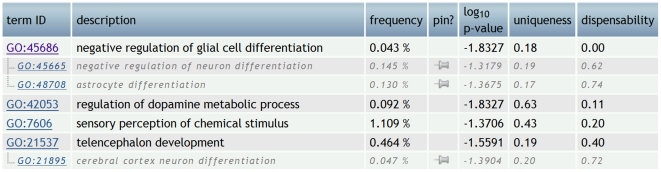
“Lower value of Dispensability indicates lesser redundancy of the corresponding term [22].”
BackgroundMethodPalm, T., Bolognin, S., Meiser, J., Nickels, S., Träger, C., Meilenbrock, R.-L., Brockhaus, J., Schreitmüller, M., Missler, M., & Schwamborn, J. C. (2015) · Scientific Reports · doi:10.1038/srep16321 · Cited by 54
Pereira-Fernandes, A., Vanparys, C., Hectors, T. L. M., Vergauwen, L., Knapen, D., Jorens, P. G., & Blust, R. (2013) · Molecular and Cellular Endocrinology · doi:10.1016/j.mce.2013.02.011 · Cited by 58
“Top 50 GO terms obtained from the DAVID software were analysed by the visualisation software REVIGO (REduce and VIsualize GO; http://revigo.irb.hr/).”
MethodInfluentialImmune adaptation to chronic intense exercise training: new microarray evidence
Liu, D., Wang, R., Grant, A. R., Zhang, J., Gordon, P. M., Wei, Y., & Chen, P. (2017) · BMC Genomics · doi:10.1186/s12864-016-3388-5 · Cited by 60
“Redundant/overlapping GO terms were removed by clustering similar terms semantically with REVIGO [39].”
Poleti, M., Moncau, C. T., Silva‐Vignato, B., Rosa, A. F., Lobo-Jr, A. R., Cataldi, T. R., Negrão, J. A., Silva, S. D. L. E., Eler, J. P., & Balieiro, J. C. D. C. (2018) · Meat Science · doi:10.1016/j.meatsci.2018.06.041 · Cited by 62
Identification of functional lipid metabolism biomarkers of brown adipose tissue aging
Gohlke, S., Zagoriy, V., Inostroza, A. C., Méret, M., Mancini, C., Japtok, L., Schumacher, F., Kuhlow, D., Graja, A., Stephanowitz, H., et al. (2019) · Molecular Metabolism · doi:10.1016/j.molmet.2019.03.011 · Cited by 62
“Gene ontology (GO) terms were annotated to proteins with DAVID database [30] and GO cluster enrichment analysis was carried using the top twenty significantly reduced or enriched GO terms with REVIGO web server [31].”
MethodMitochondria Associated Degradation Pathway (MAD) Function Beyond the Outer Membrane
Liao, P., Wolken, D. M. A., Serrano, E., Srivastava, P., & Pon, L. A. (2019) · Cell Reports · doi:10.1016/j.celrep.2020.107902 · Cited by 58
“Using next-generation RNA sequencing (RNA-seq; GEO: GSE150804) and the FunSpec algorithm (Robinson et al., 2002) to group Gene Ontology (GO) terms in a Revigo plot (Supek et al., 2011), we find that PQ treatment results in changes in the transcripts for hundreds of genes (Figure 1F; Table S1).”
Shah, U. A., Kotta‐Loizou, I., Fitt, B. D. L., & Coutts, R. H. A. (2019) · Molecular Plant-Microbe Interactions · doi:10.1094/mpmi-09-19-0254-r · Cited by 61
Analyzing the genes and pathways related to major depressive disorder via a systems biology approach
Fan, T., Hu, Y. C., Xin, J., Zhao, M., & Wang, J. (2019) · Brain and Behavior · doi:10.1002/brb3.1502 · Cited by 65
Vigneron, A., O’Neill, M. B., Weiss, B. L., Savage, A. F., Campbell, O. C., Kamhawi, S., Valenzuela, J. G., & Aksoy, S. (2020) · Proceedings of the National Academy of Sciences · doi:10.1073/pnas.1914423117 · Cited by 65
“We then applied a gene ontology (GO) enrichment analysis and summarized the redundant terms using the REVIGO webtool (23) for functional differences (Dataset S2 and Fig.”
MethodPeng, C., Ren, J., Deng, C., Jiang, D., Wang, J., Qu, J., Chang, J., Yan, C., Jiang, K., Murphy, R. W., et al. (2020) · Molecular Biology and Evolution · doi:10.1093/molbev/msaa043 · Cited by 62
Rajan, C., Roshan, V. G. D., Khan, I., Manasa, V. G., Himal, I., Kattoor, J., Thomas, S., Kondaiah, P., & Kannan, S. (2021) · Scientific Reports · doi:10.1038/s41598-021-86316-w · Cited by 62
Kong, K.-Y. E., Fischer, B., Meurer, M., Kats, I., Li, Z., Rühle, F., Barry, J. D., Kirrmaier, D., Chevyreva, V., San Luis, B.-J., et al. (2021) · Molecular Cell · doi:10.1016/j.molcel.2021.04.018 · Cited by 56
Reproductive Status Alters Transcriptomic Response to Infection in FemaleDrosophila melanogaster
Short, S. M., & Lazzaro, B. P. (2013) · G3 Genes Genomes Genetics · doi:10.1534/g3.112.005306 · Cited by 68
“REVIGO (Supek et al. 2011) was used to eliminate redundant GO terms, and multiple-test correction for significant GO terms was performed using the BenjaminiHochberg method (Benjamini and Hochberg 1995) with a false discovery rate of 5.0%.”
MethodInfluentialDistinctive regulatory architectures of germline-active and somatic genes in C. elegans
Serizay, J., Dong, Y., Jänes, J., Chesney, M. A., Cerrato, C., & Ahringer, J. (2020) · Genome Research · doi:10.1101/gr.265934.120 · Cited by 64
“2012) was used, filtering for redundant terms using REVIGO (Supek et al. 2011).”
MethodInfluentialEnvironmental conditions shape the nature of a minimal bacterial genome
Antczak, M., Michaelis, M., & Wass, M. N. (2019) · Nature Communications · doi:10.1038/s41467-019-10837-2 · Cited by 55
Kakebeen, A. D., Chitsazan, A. D., Williams, M. C., Saunders, L. M., & Wills, A. E. (2020) · eLife · doi:10.7554/elife.52648 · Cited by 59
Wang, W., Wang, L., Wang, L., Tan, M., Ogutu, C. O., Yin, Z., Zhou, J., Wang, J., Wang, L., & Yan, X. (2021) · BMC Genomics · doi:10.1186/s12864-021-07416-5 · Cited by 68
Metadata
- Authors
- Supek, F., Bošnjak, M., Škunca, N., & Šmuc, T.
- Affiliations
- Universitat Pompeu Fabra (ES)
- Ruđer Bošković Institute (HR)
- Corresponding author
- Supek, Fran
- Venue
- PLoS ONE
- Publisher
- Public Library of Science (PLoS)
- Published
- 2011-07-18
- Volume
- 6
- Issue
- 7
- Pages
- e21800
- ISSN
- 1932-6203 (ISSN-L)
- PMC
- PMC3138752
- OpenAlex
- W1969353942
- Cited by
- 6,264
- References
- 25
- Citations by year
- 2026: 299 · 2025: 417 · 2024: 616 · 2023: 612 · 2022: 701 · 2021: 830 · 2020: 716 · 2019: 551 · 2018: 465 · 2017: 360 · 2016: 282 · 2015: 217 · 2014: 97 · 2013: 59 · 2012: 32
- FWCI
- 24.69
- Type
- journal article
- Language
- en
- Open access
- gold
- doi.org
- Locations
- PLoS ONE (publishedVersion, cc-by)
- Europe PMC (PubMed Central) (publishedVersion, cc-by)
- PubMed Central (publishedVersion, cc-by)
- PubMed (publishedVersion)
- RePEc: Research Papers in Economics (submittedVersion)
- DOAJ (DOAJ: Directory of Open Access Journals) (submittedVersion, cc-by-sa)
- Institutional Repository of the Ruđer Bošković Institute (Ruđer Bošković Institute) (submittedVersion, cc-by)
- Topics
- Life Sciences › Biochemistry, Genetics and Molecular Biology › Molecular Biology › Bioinformatics and Genomic Networks
- Health Sciences › Medicine › Health Informatics › Biomedical Text Mining and Ontologies
- Life Sciences › Biochemistry, Genetics and Molecular Biology › Molecular Biology › Genomics and Phylogenetic Studies
- Keywords
- REVIGO, Gene Ontology, gene ontology enrichment, semantic similarity, multidimensional scaling, treemaps, word clouds, network visualization, web server
- MeSH terms
- Algorithms, Gene Expression Regulation, Humans, Software, Transcription Factors, User-Computer Interface, Computational Biology, Internet, Molecular Sequence Annotation
About these checks
Registry, retraction, Cites and statistics results are computed, not judged, with one exception: a printed reference that no index lists is read once by a model before it counts as a citation error. Claims are extracted by a model and kept only when their quote appears verbatim in the text; each cited source is then checked, with a model’s help, for whether it says what the claim relies on. Those verdicts can be wrong — read the claim’s quote and the cited source before relying on one.
Statistics and arithmetic are recomputed, not judged.
Confidence bands are shown only for fields calibrated on our annotated test set. None is calibrated yet, so no band is shown.
What counts as a claim ›How we measure confidence ›How we check this ›
Are you an author, or do you see a problem with this page? Request a review
Data sources
Bibliographic data: Semantic Scholar, OpenAlex, Crossref.
Contains information from the Semantic Scholar Academic Graph Datasets, made available under the ODC Attribution License (ODC-BY 1.0).
Semantic Scholar’s data is described in: Kinney, R., et al. (2023). The Semantic Scholar Open Data Platform. arXiv:2301.10140.
