

REVIGO Summarizes and Visualizes Long Lists of Gene Ontology Terms
Open accessThe DOI matches its Crossref record; 25 of the 25 references it cites were found in a registry or an index.
Abstract
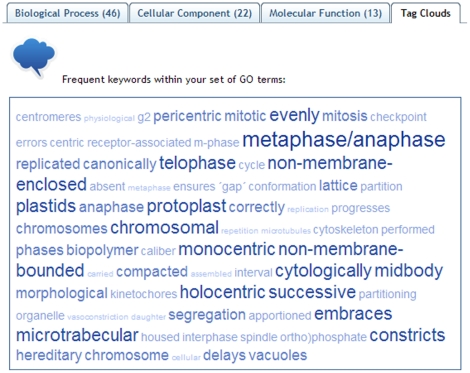
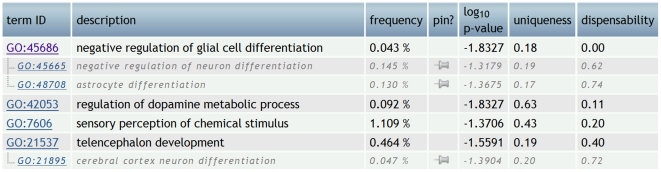
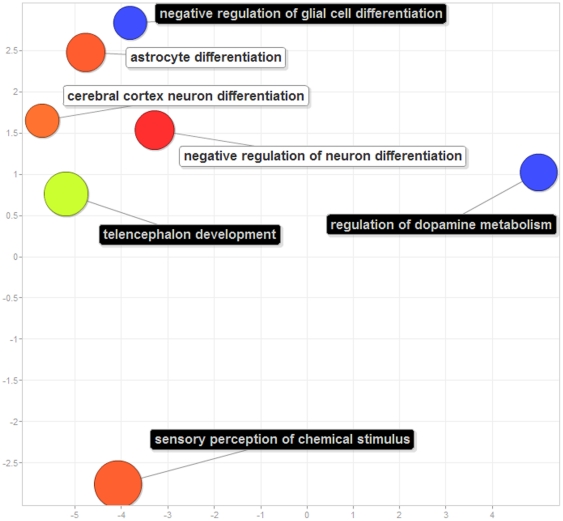
Outcomes of high-throughput biological experiments are typically interpreted by statistical testing for enriched gene functional categories defined by the Gene Ontology (GO). The resulting lists of GO terms may be large and highly redundant, and thus difficult to interpret.REVIGO is a Web server that summarizes long, unintelligible lists of GO terms by finding a representative subset of the terms using a simple clustering algorithm that relies on semantic similarity measures. Furthermore, REVIGO visualizes this non-redundant GO term set in multiple ways to assist in interpretation: multidimensional scaling and graph-based visualizations accurately render the subdivisions and the semantic relationships in the data, while treemaps and tag clouds are also offered as alternative views. REVIGO is freely available at http://revigo.irb.hr/.
Overview
The claims and statistics of this paper haven’t been checked yet.
Free: it reads the open-access text and checks the first 5 claims that cite a source we can check. Create a free account to check every claim.
Integrity signals
Registry
Cites
Statistics
Figures
Verification
Claims the paper makes
The claims and statistics of this paper haven’t been checked yet.
Free: it reads the open-access text and checks the first 5 claims that cite a source we can check. Create a free account to check every claim.
Self-check
Percentages, sums and reported differences re-computed from the paper’s own numbers.
The self-check needs the paper’s full text.
Citations
Cites
The neighbor-joining method: a new method for reconstructing phylogenetic trees.
(1987) · Molecular Biology and Evolution · doi:10.1093/oxfordjournals.molbev.a040454 · Cited by 59,715 · cited 2×
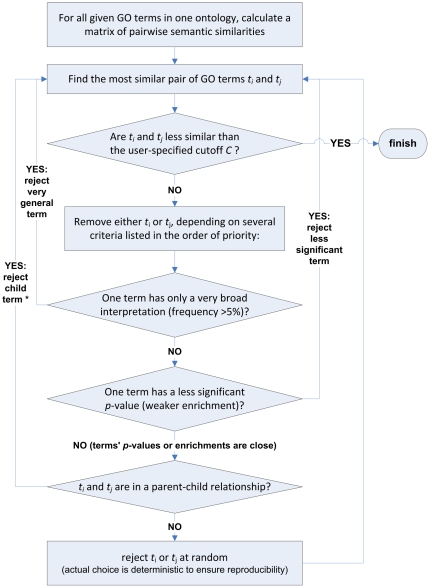
“REVIGO performs a simple clustering procedure which is in concept similar to the hierarchical (agglomerative) clustering methods such as the neighbor joining approach [10].”
MethodGene Ontology: tool for the unification of biology
Ashburner, M., Ball, C. A., Blake, J. A., Botstein, D., Butler, H., Cherry, J. M., Davis, A. P., Dolinski, K., Dwight, S. S., Eppig, J. T., et al. (2000) · Nature Genetics · doi:10.1038/75556 · Cited by 43,206 · cited 1×
“The formality and structure, along with extensive manual curation, have made Gene Ontology (GO) [2] the vocabulary of choice in these analyses.”
BackgroundGene expression profiling predicts clinical outcome of breast cancer
van 't Veer, L. J., Dai, H., van de Vijver, M. J., He, Y. D., Hart, A. A. M., Mao, M., Peterse, H. L., van der Kooy, K., Marton, M. J., Witteveen, A. T., et al. (2002) · Nature · doi:10.1038/415530a · Cited by 9,536 · cited 1×
“…# 1, a comparative analysis of predicted gene expression levels in bacteria and archaea [15]; example # 2, finding putative targets for the cytostatic activity of a small molecule against cancer cell lines [16]; and example # 3, gene expression profiling of aggressive breast cancer samples [17].”
BackgroundMaere, S., Heymans, K., & Kuiper, M. (2005) · Bioinformatics · doi:10.1093/bioinformatics/bti551 · Cited by 4,155 · cited 1×
“Brief description BINGO [21] Cytoscape plug-in that tests for GO category enrichment in a list or network of genes, and displays the results in a graph of GO terms.”
BackgroundGOrilla: a tool for discovery and visualization of enriched GO terms in ranked gene lists
Eden, E., Navon, R., Steinfeld, I., Lipson, D., & Yakhini, Z. (2009) · BMC Bioinformatics · doi:10.1186/1471-2105-10-48 · Cited by 3,356
Integration of biological networks and gene expression data using Cytoscape
Cline, M. S., Smoot, M., Cerami, E., Kuchinsky, A., Landys, N., Workman, C., Christmas, R., Avila-Campilo, I., Creech, M., Gross, B., et al. (2007) · Nature Protocols · doi:10.1038/nprot.2007.324 · Cited by 2,507
agriGO: a GO analysis toolkit for the agricultural community
Du, Z., Zhou, X., Ling, Y., Zhang, Z., & Su, Z. (2010) · Nucleic Acids Research · doi:10.1093/nar/gkq310 · Cited by 2,396 · cited 2×
“A multitude of Web servers exists to assist in this task, including but not limited to: L2L [3], FatiGO [4], GOrilla [5] or agriGO [6].”
MethodSemantic Similarity in Biomedical Ontologies
Pesquita, C., Faria, D., Falcão, A. O., Lord, P., & Couto, F. M. (2009) · PLoS Computational Biology · doi:10.1371/journal.pcbi.1000443 · Cited by 774 · cited 3×
“The complex structure of the GO warrants a solution that takes into account the terms’ proximity in the GO graph, quantified by the GO term ‘semantic similarity’ measures [8].”
MethodInfluentialCytoscape Web: an interactive web-based network browser
Lopes, C. T., Franz, M., Kazi, F., Donaldson, S. L., Morris, Q., & Bader, G. D. (2010) · Bioinformatics · doi:10.1093/bioinformatics/btq430 · Cited by 721
Enrichment or depletion of a GO category within a class of genes: which test?
Rivals, I., Personnaz, L., Taing, L., & Potier, M.-C. (2007) · Bioinformatics · doi:10.1093/bioinformatics/btl633 · Cited by 718 · cited 1×
“In order to interpret the results of such experiments, statistical testing for over-and under-representation of gene functional categories is used [1].”
Background
Cited by
Items 1,001–1,055 of 1,055
Valenzuela‐Miranda, D., & Gallardo‐Escárate, C. (2018) · Frontiers in Microbiology · doi:10.3389/fmicb.2018.02877 · Cited by 53
“Further, resulting GO enrichment analysis was visualized in REVIGO platform (Supek et al., 2011).”
MethodBi, X., van Esse, G. W., Mulki, M. A., Kirschner, G. K., Zhong, J., Simon, R. G., & von Korff, M. (2019) · PLANT PHYSIOLOGY · doi:10.1104/pp.18.01454 · Cited by 58
Pérez‐Rodríguez, D., Kalyva, M., Leija‐Salazar, M., Lashley, T., Tarabichi, M., Chelban, V., Gentleman, S., Schottlaender, L., Franklin, H., Vasmatzis, G., et al. (2019) · Acta Neuropathologica Communications · doi:10.1186/s40478-019-0873-5 · Cited by 56
Ho, W. W. H., Hill, C. B., Doblin, M. S., Shelden, M. C., van de Meene, A., Rupasinghe, T., Bacic, A., & Roessner, U. (2020) · Plant Communications · doi:10.1016/j.xplc.2020.100031 · Cited by 56
“Dotted edges indicate one or more hierarchies of GO, which have no edundant via REVIGO, were not shown for clarity.”
BackgroundInfluentialRambani, A., Pantalone, V. R., Yang, S., Rice, J. H., Song, Q., Mazarei, M., Arelli, P. R., Meksem, K., Stewart, C. N., & Hewezi, T. (2020) · New Phytologist · doi:10.1111/nph.16511 · Cited by 55
Human angiogenin is a potent cytotoxin in the absence of ribonuclease inhibitor
Thomas, S. P., Hoang, T. T., Ressler, V. T., & Raines, R. T. (2018) · RNA · doi:10.1261/rna.065516.117 · Cited by 50
“Significant GO annotations for sets of miRNAs with differential abundance were then loaded into the REVIGO web server for term reduction and analysis (Supek et al. 2011).”
Marthandan, S., Priebe, S., Baumgart, M., Groth, M., Cellerino, A., Guthke, R., Hemmerich, P., & Diekmann, S. (2015) · BioMed Research International · doi:10.1155/2015/731938 · Cited by 47
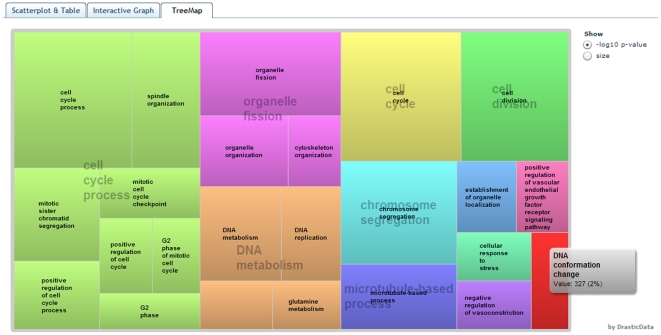
“The list of GO-terms was further summarized using TreeMaps of the REVIGO online tool [34].”
MethodInsights into replicative senescence of human testicular peritubular cells
Schmid, N., Flenkenthaler, F., Stöckl, J. B., Dietrich, K.-G., Köhn, F. M., Schwarzer, J. U., Kunz, L., Luckner, M., Wanner, G., Arnold, G. J., et al. (2019) · Scientific Reports · doi:10.1038/s41598-019-51380-w · Cited by 49
Cortical Foxp2 Supports Behavioral Flexibility and Developmental Dopamine D1 Receptor Expression
Co, M., Hickey, S. L., Kulkarni, A., Harper, M., & Konopka, G. (2020) · Cerebral Cortex · doi:10.1093/cercor/bhz209 · Cited by 48
Saul, M. C., Seward, C. H., Troy, J. M., Zhang, H., Sloofman, L. G., Lu, X., Weisner, P. A., Caetano-Anolles, D., Sun, H., Zhao, S. D., et al. (2017) · Genome Research · doi:10.1101/gr.214221.116 · Cited by 46
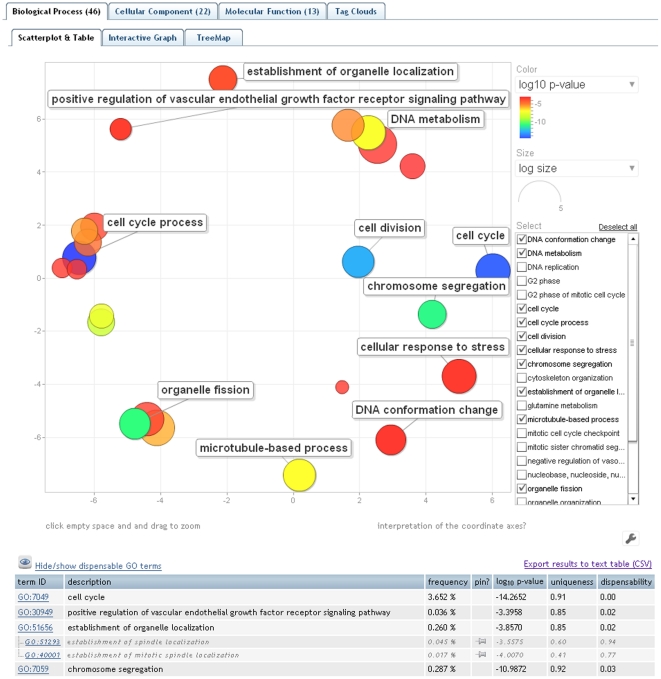
“ric multidimensional scaling (MDS) on distances derived fromGO term semantic dissimilarity (Supek et al. 2011).”
InfluentialA Truncated Singleton NLR Causes Hybrid Necrosis in Arabidopsis thaliana
Barragan, A. C., Collenberg, M., Wang, J., Lee, R. R. Q., Cher, W. Y., Rabanal, F. A., Ashkenazy, H., Weigel, D., & Chae, E. (2021) · Molecular Biology and Evolution · doi:10.1093/molbev/msaa245 · Cited by 46
“The GO results were visualized with REVIGO treemap (Supek et al. 2011), for clearer visualization only the top 13 and GO categories with the lowest p values were plotted in Fig 1G, the complete list of GO terms is found in Table S2.”
MethodLi, X., Ye, J., Ma, H., & Lu, P. (2018) · The Plant Journal · doi:10.1111/tpj.13766 · Cited by 39
Alfatah, M., Wong, J. H., Krishnan, V. G., Lee, Y. C., Sin, Q. F., Goh, C. J. H., Kong, K. W., Lee, W. T., Lewis, J., Hoon, S., et al. (2021) · BMC Biology · doi:10.1186/s12915-021-01030-3 · Cited by 39
“C) Representation of enriched GO terms among genes that are upregulated by TORC1 (at least 2-fold increase) during spore germination by REVIGO.”
MethodRooda, I., Hasan, M. M., Roos, K., Viil, J., Andronowska, A., Smolander, O.-P., Jaakma, Ü., Salumets, A., Fazeli, A., & Velthut-Meikas, A. (2020) · International Journal of Molecular Sciences · doi:10.3390/ijms21249550 · Cited by 38
“Results were visualized with REVIGO [77].”
Zhao, Z., Dong, Q., Liu, X., Wei, L., Liu, L., Li, Y., & Wang, X. (2020) · Genomics · doi:10.1016/j.ygeno.2019.07.020 · Cited by 37
Jean-Toussaint, R., Lin, Z., Tian, Y., Gupta, R., Pande, R., Luo, X., Hu, H., Sacan, A., & Ajit, S. K. (2021) · Brain, Behavior, and Immunity · doi:10.1016/j.bbi.2021.02.005 · Cited by 36
Mullenbrock, S., Liu, F., Szak, S., Hronowski, X., Gao, B., Juhasz, P., Sun, C., Liu, M., McLaughlin, H., Xiao, Q., et al. (2018) · Genes · doi:10.3390/genes9120588 · Cited by 35
“Shown are the significantly enriched GO terms (p ≤ 0.05, ≥5% of genes had to be classified by a GO term), with highly similar GO terms being collapsed using REVIGO [18].”
MethodInfluentialSystematic identification of structure-specific protein–protein interactions
(2024) · doi:10.1038/s44320-024-00037-6 · Cited by 34
“We further utilized the rrvgo package (Supek et al, 2011) (version 1.8.0) to summarize the enriched terms by removing redundant GO terms.”
InfluentialBens, M., Szafranski, K., Holtze, S., Sahm, A., Groth, M., Kestler, H. A., Hildebrandt, T. B., & Platzer, M. (2018) · BMC Biology · doi:10.1186/s12915-018-0546-z · Cited by 34
Systematic identification of structure-specific protein–protein interactions
Holfeld, A., Schuster, D., Sesterhenn, F., Stalder, P., Haenseler, W., Barrio-Hernandez, I., Ghosh, D., Vowles, J., Cowley, S. A., Nagel, L., et al. (2023) · doi:10.1101/2023.02.01.522707 · Cited by 34
Srivastava, V. K., Suneetha, K. J., & Kaur, R. (2015) · The FEBS Journal · doi:10.1111/febs.13264 · Cited by 33
A cyclin-dependent kinase-mediated phosphorylation switch of disordered protein condensation
Valverde, J. M., Dubra, G., Phillips, M., Haider, A., Elena-Real, C., Fournet, A., Alghoul, E., Chahar, D., Andrés-Sanchez, N., Paloni, M., et al. (2023) · Nature Communications · doi:10.1038/s41467-023-42049-0 · Cited by 33
Integrated approach reveals diet, APOE genotype and sex affect immune response in APP mice
Nam, K. N., Wolfe, C. M., Fitz, N. F., Letronne, F., Castranio, E. L., Mounier, A., Schug, J., Lefterov, I., & Koldamova, R. (2018) · Biochimica et Biophysica Acta (BBA) - Molecular Basis of Disease · doi:10.1016/j.bbadis.2017.10.018 · Cited by 32
Differential RNA packaging into small extracellular vesicles by neurons and astrocytes
Luo, X., Jean-Toussaint, R., Sacan, A., & Ajit, S. K. (2021) · Cell Communication and Signaling · doi:10.1186/s12964-021-00757-4 · Cited by 32
“7 [39, 40] and REVIGO [41], respectively.”
InfluentialNicosia, L., Boffo, F. L., Ceccacci, E., Conforti, F., Pallavicini, I., Bedin, F., Ravasio, R., Massignani, E., Somervaille, T. C. P., Minucci, S., et al. (2022) · Oncogene · doi:10.1038/s41388-021-02123-7 · Cited by 31
“05), and then BP was grouped using Revigo [46].”
MethodInfluentialSandovici, I., Hammerle, C. M., Cooper, W. N., Smith, N. H., Tarry-Adkins, J. L., Dunmore, B. J., Bauer, J., Andrews, S. R., Yeo, G. S. H., Ozanne, S. E., et al. (2016) · Diabetologia · doi:10.1007/s00125-015-3837-8 · Cited by 31
“These terms were then clustered semantically using the REViGO (Reduce and Visualize GO) server [17], which removes redundancy.”
MethodClayton, K., Vallejo, A., Sirvent, S., Davies, J., Porter, G., Reading, I. C., Lim, F., Ardern‐Jones, M. R., & Polak, M. E. (2021) · British Journal of Dermatology · doi:10.1111/bjd.19431 · Cited by 28
An isoform‐specific role of FynT tyrosine kinase in Alzheimer's disease
Lee, C., Low, C. Y. B., Francis, P. T., Attems, J., Wong, P. T. ‐., Lai, M. K. P., & Tan, M. G. K. (2016) · Journal of Neurochemistry · doi:10.1111/jnc.13429 · Cited by 27
Cheng, S., Brenière-Letuffe, D., Ahola, V., Wong, A. O. T., Keung, H. Y., Gurung, B., Zheng, Z., Costa, K. D., Lieu, D. K., Keung, W., et al. (2023) · iScience · doi:10.1016/j.isci.2023.106302 · Cited by 23
“The enriched GO terms were summarised into non-redundant parental groups with REVIGO (R package rrvgo version 1.4.4 59,60 ) (Table S7).”
MethodInfluentialAspergillus fumigatus Can Display Persistence to the Fungicidal Drug Voriconazole
Scott, J., Valero, C., Mato-López, Á., Donaldson, I. J., Roldán, A., Chown, H., Van Rhijn, N., Lobo-Vega, R., Gago, S., Furukawa, T., et al. (2023) · Microbiology Spectrum · doi:10.1128/spectrum.04770-22 · Cited by 24
“(B to E) The most significantly upregulated GO biological processes are shown using the REVINGO tool for GO data visualization (151).”
MethodWang, W., Penland, L., Gokce, O., Croote, D., & Quake, S. R. (2018) · BMC Genomics · doi:10.1186/s12864-018-4512-5 · Cited by 23
“259 Visualization of the hierarchy of the enriched ontology was done using Revigo [24].”
Using transcriptomics to examine the physiological status of wild-caught walleye (Sander vitreus)
Jeffrey, J. D., Thorstensen, M. J., Enders, E. C., Treberg, J. R., & Jeffries, K. M. (2023) · FACETS · doi:10.1139/facets-2022-0177 · Cited by 22
Genes essential for embryonic stem cells are associated with neurodevelopmental disorders
Shohat, S., & Shifman, S. (2019) · Genome Research · doi:10.1101/gr.250019.119 · Cited by 21
“GO terms significant at FDR corrected value P < 0.05 were summarized using reviGO (Supek et al. 2011).”
MethodInfluentialAnton, L., Cheng, W., Haile, M. T., Dziekan, J. M., Cobb, D. W., Zhu, X., Han, L., Li, E., Nair, A., Lee, C. L., et al. (2025) · Nature Structural & Molecular Biology · doi:10.1038/s41594-025-01632-3 · Cited by 21
Goh, C. J. H., Wong, J. H., El Farran, C., Tan, B. X., Coffill, C. R., Loh, Y.-H., Lane, D., & Arumugam, P. (2021) · G3 Genes|Genomes|Genetics · doi:10.1093/g3journal/jkaa069 · Cited by 20
“We removed the redundant GO terms using the online tool REVIGO [21].”
MethodInfluentialHofford, R. S., Euston, T. J., Wilson, R. S., Meckel, K. R., Peck, E. G., Godino, A., Landry, J. A., Calipari, E. S., Lam, T. T., & Kiraly, D. D. (2021) · The Journal of Neuroscience · doi:10.1523/jneurosci.1452-20.2020 · Cited by 17
Slota, J. A., Medina, S. J., Frost, K. L., & Booth, S. A. (2022) · Frontiers in Neuroscience · doi:10.3389/fnins.2022.918811 · Cited by 16
“Sematic similarity of enriched biological processes was determined using Revigo (Supek et al., 2011), which was used to summarize lists of biological process gene ontologies (with p < 0.”
MethodInfluentialSpeciation with gene flow between two Neotropical sympatric species (Pitcairnia spp.: Bromeliaceae)
Tavares, M. M., Ferro, M., Leal, B. S. S., & Palma‐Silva, C. (2022) · Ecology and Evolution · doi:10.1002/ece3.8834 · Cited by 15
Han, X., Maharjan, S., Chen, J., Zhao, Y., Qi, Y., White, L. E., Johnson, G. A., & Wang, N. (2024) · NeuroImage · doi:10.1016/j.neuroimage.2024.120734 · Cited by 15
“In particular, dMRI has been widely used in evaluating white matter (WM) related disorders (Raja et al., 2019; Horsfield and Jones, 2002; Silk et al., 2009; Szeszko et al., 2005).”
MethodGenomic signatures associated with the evolutionary loss of egg yolk in parasitoid wasps
Zhao, X., Liu, Y., Yuan, B., Cao, Z., Yang, Y., He, C., Chan, K. C., Xiao, S., Lin, H., Fang, Q., et al. (2025) · Proceedings of the National Academy of Sciences · doi:10.1073/pnas.2422292122 · Cited by 12
Streptococcus mutans transcriptome in the presence of sodium fluoride and sucrose
Damé-Teixeira, N., Deng, D., & Do, T. (2019) · Archives of Oral Biology · doi:10.1016/j.archoralbio.2019.04.020 · Cited by 12
Wang, V. E., Blaser, B. W., Patel, R. K., Behbehani, G. K., Rao, A. A., Durbin-Johnson, B., Jiang, T., Logan, A. C., Settles, M., Mannis, G. N., et al. (2021) · Blood Cancer Discovery · doi:10.1158/2643-3230.bcd-21-0055 · Cited by 11
“Redundant GO terms were filtered using REViGO and summarized using semantic space plots (34).”
MethodHIV-1 Vpr combats the PU.1-driven antiviral response in primary human macrophages
Virgilio, M. C., Ramnani, B., Chen, T., Disbennett, W. M., Lubow, J., Welch, J. D., & Collins, K. L. (2024) · Nature Communications · doi:10.1038/s41467-024-49635-w · Cited by 14
Dynamic changes in mRNA nucleocytoplasmic localization in the nitrate response of Arabidopsis roots
(2024) · doi:10.1111/pce.15018 · Cited by 9
Forés-Martos, J., Forte, A., García-Martínez, J., & Pérez-Ortín, J. E. (2021) · Cells · doi:10.3390/cells10020334 · Cited by 8
“In this set of GO terms (from Biological Process, BP, and Cellular Component, CC, ontologies), we reduced the redundancy of similar GO terms by applying a procedure inspired by the REVIGO pipeline [77] (see Materials and Methods).”
MethodForés-Martos, J., Forte, A., García-Martínez, J., & Pérez-Ortín, J. E. (2020) · doi:10.1101/2020.09.04.283143 · Cited by 8
Hierarchical cortical transcriptome disorganization in autism
Lombardo, M. V., Courchesne, E., Lewis, N. E., & Pramparo, T. (2016) · doi:10.1101/042937 · Cited by 7
Martins-Macedo, J., Araújo, B., Anjo, S. I., Silveira-Rosa, T., Patrício, P., Alves, N. D., Silva, J. M., Teixeira, F. G., Manadas, B., Rodrigues, A. J., et al. (2024) · Molecular Psychiatry · doi:10.1038/s41380-024-02490-z · Cited by 6
“Normality was measured using the Kolmogorov-Smirnov and Shapiro-Wilk statistical tests, taking into account the respective histograms and measures of skewness and kurtosis.”
Advancing the Indian Cattle Pangenome: Characterizing Non-Reference Sequences in Bos indicus
Azam, S., Sahu, A., Pandey, N. K., Neupane, M., Van Tassell, C. P., Rosen, B. D., Gandham, R. K., Rath, S. N., & Majumdar, S. S. (2025) · Journal of Animal Science and Biotechnology · doi:10.1186/s40104-024-01133-1 · Cited by 5
“The resulting GO IDs from the clusterProfiler package, along with their respective P -values, were then subjected to REVIGO (RRID: SCR_005825) [61] to eliminate redundant GO categories from all enriched terms.”
Balestra, C., Maj, C., Müller, E., & Mayr, A. (2023) · PLOS ONE · doi:10.1371/journal.pone.0282699 · Cited by 4
Martin, L. E., Barr, J. S., Cartailler, J.-P., Shrestha, S., Estévez-Lao, T. Y., & Hillyer, J. F. (2025) · Immunity & Ageing · doi:10.1186/s12979-025-00551-7 · Cited by 3
“…reference, to summarize the resulting significant GO terms (log 2 fold change ≥ 1 or ≤ −1; adjusted p < 0.05) into common representative terms [64], and parsed them into 12 overarching functional categories: cell adhesion, cell cycle, DNA replication and repair, immunity, metabolism and…”
InfluentialImmune System Promiscuity in Human and Nonhuman Primate Evolution
Brinkworth, & Babbitt (2018) · Human Biology · doi:10.13110/humanbiology.90.4.01 · Cited by 3
Genes essential for embryonic stem cells are associated with neurodevelopmental disorders
Shohat, S., & Shifman, S. (2019) · doi:10.1101/567073 · Cited by 1
Li, Q., Nichols, C., Welner, R. S., Chen, J. Y., Ku, W.-S., & Yue, Z. (2026) · Briefings in Bioinformatics · doi:10.1093/bib/bbag244
“…GOLDEN fusion against the established similarity-based redundancy reduction and clustering methods, including semantic similarity, e.g. REVIGO [ 71] (default similarity cutoff is 0.7) and the Lin measure via GOSemSim [ 72, 73] (default similarity cutoff is 0.7), Jaccard-based redundancy…”
InfluentialChronic stress primes innate immune responses in mice and humans
Barrett, T. J., Corr, E. M., van Solingen, C., Schlamp, F., Brown, E. J., Koelwyn, G. J., Lee, A. H., Shanley, L. C., Spruill, T. M., Bozal, F., et al. (2021) · Cell Reports · doi:10.1016/j.celrep.2021.109595 · Cited by 169
Metadata
- Authors
- Supek, F., Bošnjak, M., Škunca, N., & Šmuc, T.
- Affiliations
- Universitat Pompeu Fabra (ES)
- Ruđer Bošković Institute (HR)
- Corresponding author
- Supek, Fran
- Venue
- PLoS ONE
- Publisher
- Public Library of Science (PLoS)
- Published
- 2011-07-18
- Volume
- 6
- Issue
- 7
- Pages
- e21800
- ISSN
- 1932-6203 (ISSN-L)
- PMC
- PMC3138752
- OpenAlex
- W1969353942
- Cited by
- 6,264
- References
- 25
- Citations by year
- 2026: 299 · 2025: 417 · 2024: 616 · 2023: 612 · 2022: 701 · 2021: 830 · 2020: 716 · 2019: 551 · 2018: 465 · 2017: 360 · 2016: 282 · 2015: 217 · 2014: 97 · 2013: 59 · 2012: 32
- FWCI
- 24.69
- Type
- journal article
- Language
- en
- Open access
- gold
- doi.org
- Locations
- PLoS ONE (publishedVersion, cc-by)
- Europe PMC (PubMed Central) (publishedVersion, cc-by)
- PubMed Central (publishedVersion, cc-by)
- PubMed (publishedVersion)
- RePEc: Research Papers in Economics (submittedVersion)
- DOAJ (DOAJ: Directory of Open Access Journals) (submittedVersion, cc-by-sa)
- Institutional Repository of the Ruđer Bošković Institute (Ruđer Bošković Institute) (submittedVersion, cc-by)
- Topics
- Life Sciences › Biochemistry, Genetics and Molecular Biology › Molecular Biology › Bioinformatics and Genomic Networks
- Health Sciences › Medicine › Health Informatics › Biomedical Text Mining and Ontologies
- Life Sciences › Biochemistry, Genetics and Molecular Biology › Molecular Biology › Genomics and Phylogenetic Studies
- Keywords
- REVIGO, Gene Ontology, gene ontology enrichment, semantic similarity, multidimensional scaling, treemaps, word clouds, network visualization, web server
- MeSH terms
- Algorithms, Gene Expression Regulation, Humans, Software, Transcription Factors, User-Computer Interface, Computational Biology, Internet, Molecular Sequence Annotation
About these checks
Registry, retraction, Cites and statistics results are computed, not judged, with one exception: a printed reference that no index lists is read once by a model before it counts as a citation error. Claims are extracted by a model and kept only when their quote appears verbatim in the text; each cited source is then checked, with a model’s help, for whether it says what the claim relies on. Those verdicts can be wrong — read the claim’s quote and the cited source before relying on one.
Statistics and arithmetic are recomputed, not judged.
Confidence bands are shown only for fields calibrated on our annotated test set. None is calibrated yet, so no band is shown.
What counts as a claim ›How we measure confidence ›How we check this ›
Are you an author, or do you see a problem with this page? Request a review
Data sources
Bibliographic data: Semantic Scholar, OpenAlex, Crossref.
Contains information from the Semantic Scholar Academic Graph Datasets, made available under the ODC Attribution License (ODC-BY 1.0).
Semantic Scholar’s data is described in: Kinney, R., et al. (2023). The Semantic Scholar Open Data Platform. arXiv:2301.10140.
