

REVIGO Summarizes and Visualizes Long Lists of Gene Ontology Terms
Open accessThe DOI matches its Crossref record; 25 of the 25 references it cites were found in a registry or an index.
Abstract
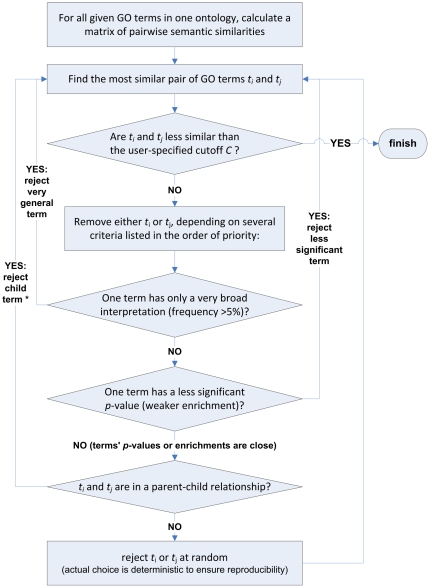
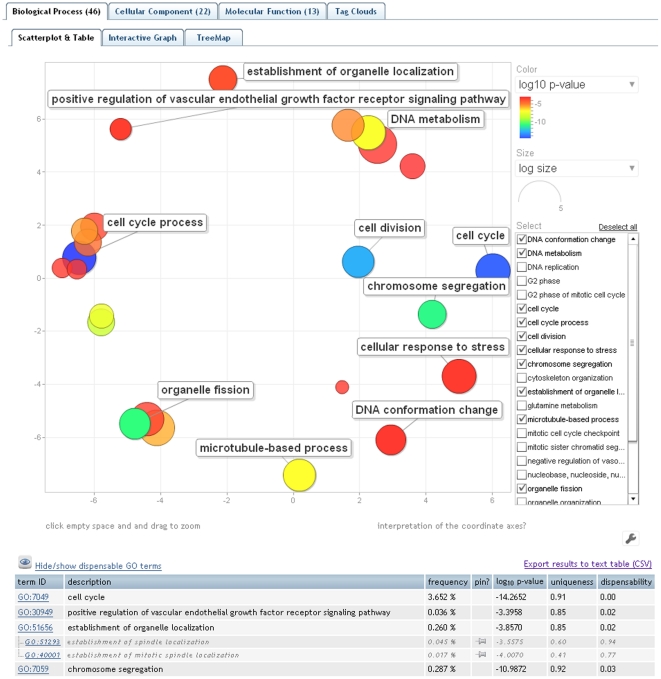
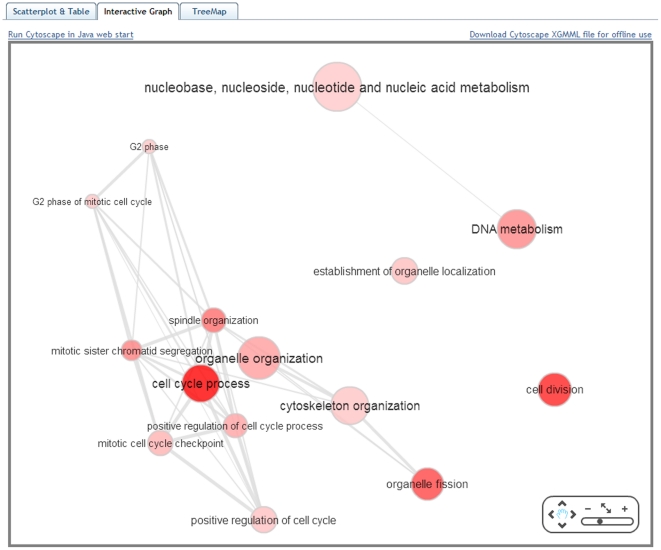
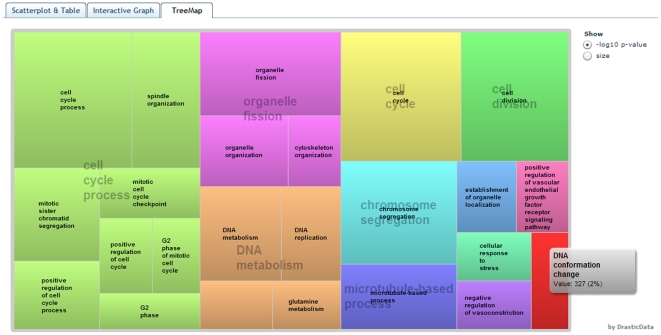
Outcomes of high-throughput biological experiments are typically interpreted by statistical testing for enriched gene functional categories defined by the Gene Ontology (GO). The resulting lists of GO terms may be large and highly redundant, and thus difficult to interpret.REVIGO is a Web server that summarizes long, unintelligible lists of GO terms by finding a representative subset of the terms using a simple clustering algorithm that relies on semantic similarity measures. Furthermore, REVIGO visualizes this non-redundant GO term set in multiple ways to assist in interpretation: multidimensional scaling and graph-based visualizations accurately render the subdivisions and the semantic relationships in the data, while treemaps and tag clouds are also offered as alternative views. REVIGO is freely available at http://revigo.irb.hr/.
Overview
The claims and statistics of this paper haven’t been checked yet.
Free: it reads the open-access text and checks the first 5 claims that cite a source we can check. Create a free account to check every claim.
Integrity signals
Registry
Cites
Statistics
Figures
Verification
Claims the paper makes
The claims and statistics of this paper haven’t been checked yet.
Free: it reads the open-access text and checks the first 5 claims that cite a source we can check. Create a free account to check every claim.
Self-check
Percentages, sums and reported differences re-computed from the paper’s own numbers.
The self-check needs the paper’s full text.
Citations
Cites
The neighbor-joining method: a new method for reconstructing phylogenetic trees.
(1987) · Molecular Biology and Evolution · doi:10.1093/oxfordjournals.molbev.a040454 · Cited by 59,715 · cited 2×
“REVIGO performs a simple clustering procedure which is in concept similar to the hierarchical (agglomerative) clustering methods such as the neighbor joining approach [10].”
MethodGene Ontology: tool for the unification of biology
Ashburner, M., Ball, C. A., Blake, J. A., Botstein, D., Butler, H., Cherry, J. M., Davis, A. P., Dolinski, K., Dwight, S. S., Eppig, J. T., et al. (2000) · Nature Genetics · doi:10.1038/75556 · Cited by 43,206 · cited 1×
“The formality and structure, along with extensive manual curation, have made Gene Ontology (GO) [2] the vocabulary of choice in these analyses.”
BackgroundGene expression profiling predicts clinical outcome of breast cancer
van 't Veer, L. J., Dai, H., van de Vijver, M. J., He, Y. D., Hart, A. A. M., Mao, M., Peterse, H. L., van der Kooy, K., Marton, M. J., Witteveen, A. T., et al. (2002) · Nature · doi:10.1038/415530a · Cited by 9,536 · cited 1×
“…# 1, a comparative analysis of predicted gene expression levels in bacteria and archaea [15]; example # 2, finding putative targets for the cytostatic activity of a small molecule against cancer cell lines [16]; and example # 3, gene expression profiling of aggressive breast cancer samples [17].”
BackgroundMaere, S., Heymans, K., & Kuiper, M. (2005) · Bioinformatics · doi:10.1093/bioinformatics/bti551 · Cited by 4,155 · cited 1×
“Brief description BINGO [21] Cytoscape plug-in that tests for GO category enrichment in a list or network of genes, and displays the results in a graph of GO terms.”
BackgroundGOrilla: a tool for discovery and visualization of enriched GO terms in ranked gene lists
Eden, E., Navon, R., Steinfeld, I., Lipson, D., & Yakhini, Z. (2009) · BMC Bioinformatics · doi:10.1186/1471-2105-10-48 · Cited by 3,356
Integration of biological networks and gene expression data using Cytoscape
Cline, M. S., Smoot, M., Cerami, E., Kuchinsky, A., Landys, N., Workman, C., Christmas, R., Avila-Campilo, I., Creech, M., Gross, B., et al. (2007) · Nature Protocols · doi:10.1038/nprot.2007.324 · Cited by 2,507
agriGO: a GO analysis toolkit for the agricultural community
Du, Z., Zhou, X., Ling, Y., Zhang, Z., & Su, Z. (2010) · Nucleic Acids Research · doi:10.1093/nar/gkq310 · Cited by 2,396 · cited 2×
“A multitude of Web servers exists to assist in this task, including but not limited to: L2L [3], FatiGO [4], GOrilla [5] or agriGO [6].”
MethodSemantic Similarity in Biomedical Ontologies
Pesquita, C., Faria, D., Falcão, A. O., Lord, P., & Couto, F. M. (2009) · PLoS Computational Biology · doi:10.1371/journal.pcbi.1000443 · Cited by 774 · cited 3×
“The complex structure of the GO warrants a solution that takes into account the terms’ proximity in the GO graph, quantified by the GO term ‘semantic similarity’ measures [8].”
MethodInfluentialCytoscape Web: an interactive web-based network browser
Lopes, C. T., Franz, M., Kazi, F., Donaldson, S. L., Morris, Q., & Bader, G. D. (2010) · Bioinformatics · doi:10.1093/bioinformatics/btq430 · Cited by 721
Enrichment or depletion of a GO category within a class of genes: which test?
Rivals, I., Personnaz, L., Taing, L., & Potier, M.-C. (2007) · Bioinformatics · doi:10.1093/bioinformatics/btl633 · Cited by 718 · cited 1×
“In order to interpret the results of such experiments, statistical testing for over-and under-representation of gene functional categories is used [1].”
Background
Cited by
Items 201–300 of 1,055
Mirabella, F., Desiato, G., Mancinelli, S., Fossati, G., Rasile, M., Morini, R., Markicevic, M., Grimm, C., Amegandjin, C. A., Termanini, A., et al. (2021) · Immunity · doi:10.1016/j.immuni.2021.10.006 · Cited by 160
Zheng, B., Ren, T., Huang, Y., Sun, K., Wang, S., Bao, X., Liu, K., & Guo, W. (2018) · Journal of Hematology & Oncology · doi:10.1186/s13045-018-0560-1 · Cited by 151
“The gene annotation network analysis was performed using the GATHER [32], BINGO [33], and REVIGO [34] software.”
MethodHoss, A. G., Labadorf, A., Latourelle, J. C., Kartha, V. K., Hadzi, T. C., Gusella, J. F., MacDonald, M. E., Chen, J.-F., Akbarian, S., Weng, Z., et al. (2015) · BMC Medical Genomics · doi:10.1186/s12920-015-0083-3 · Cited by 151
“Significant terms were collapsed by semantic similarity using the program REVIGO [59], with p-value included for each term and using the “Small (0.”
MethodInfluentialGaritaonandia, I., Amir, H., Boscolo, F. S., Wambua, G. K., Schultheisz, H. L., Sabatini, K., Morey, R., Waltz, S., Wang, Y.-C., Tran, H., et al. (2015) · PLOS ONE · doi:10.1371/journal.pone.0118307 · Cited by 150
“Pathway analysis was performed using GREAT [12], and visualized using REVIGO [13].”
MethodMicroglial autophagy–associated phagocytosis is essential for recovery from neuroinflammation
Berglund, R., Guerreiro-Cacais, A. O., Adzemovic, M. Z., Zeitelhofer, M., Lund, H., Ewing, E., Ruhrmann, S., Nutma, E., Parsa, R., Thessen-Hedreul, M., et al. (2020) · Science Immunology · doi:10.1126/sciimmunol.abb5077 · Cited by 149
Diaferia, G. R., Balestrieri, C., Prosperini, E., Nicoli, P., Spaggiari, P., Zerbi, A., & Natoli, G. (2016) · The EMBO Journal · doi:10.15252/embj.201592404 · Cited by 164
“Data visualization was carried out using REVIGO (http://revigo.irb.hr/index.jsp) (Supek et al , 2011).”
SOG1 activator and MYB3R repressors regulate a complex DNA damage network in Arabidopsis
Bourbousse, C., Vegesna, N., & Law, J. A. (2018) · Proceedings of the National Academy of Sciences · doi:10.1073/pnas.1810582115 · Cited by 163
Brionne, A., Juanchich, A., & Hennequet‐Antier, C. (2019) · BioData Mining · doi:10.1186/s13040-019-0204-1 · Cited by 165
Modeling cancer drug response through drug-specific informative genes
Parca, L., Pepe, G., Pietrosanto, M., Galvan, G., Galli, L., Palmeri, A., Sciandrone, M., Ferrè, F., Ausiello, G., & Helmer-Citterich, M. (2019) · Scientific Reports · doi:10.1038/s41598-019-50720-0 · Cited by 140
Garrido-Martín, D., Borsari, B., Calvo, M., Reverter, F., & Guigó, R. (2021) · Nature Communications · doi:10.1038/s41467-020-20578-2 · Cited by 164
Trans-vaccenic acid reprograms CD8+ T cells and anti-tumour immunity
Fan, H., Xia, S., Xiang, J., Li, Y., Ross, M. O., Lim, S. A., Yang, F., Tu, J., Xie, L., Dougherty, U., et al. (2023) · Nature · doi:10.1038/s41586-023-06749-3 · Cited by 152
“The list of differentially expressed gene bodies was then submitted for GO enrichment and visualization, which was performed via the Gene Ontology project 18,19 and REVIGO 46 and Cytoscape 47 , respectively.”
MethodHan, X., Yin, H., Song, X., Zhang, Y., Liu, M., Sang, J., Jiang, J., Li, J., & Zhuo, R. (2016) · Plant Biotechnology Journal · doi:10.1111/pbi.12512 · Cited by 170
“05) were visualized using the reviGO tool (Supek et al., 2011) and plotted (Figure 3b).”
MethodInfluentialRecapitulation and Reversal of Schizophrenia-Related Phenotypes in Setd1a-Deficient Mice
Mukai, J., Cannavò, E., Crabtree, G. W., Sun, Z., Diamantopoulou, A., Thakur, P., Chang, C., Cai, Y., Lomvardas, S., Takata, A., et al. (2019) · Neuron · doi:10.1016/j.neuron.2019.09.014 · Cited by 156
Blumenthal, I., Ragavendran, A., Erdin, S., Klei, L., Sugathan, A., Guide, J. R., Manavalan, P., Zhou, J. Q., Wheeler, V. C., Levin, J. Z., et al. (2014) · The American Journal of Human Genetics · doi:10.1016/j.ajhg.2014.05.004 · Cited by 145
“We also assessed the physical interactions and networks of dysregulated genes by using DAPPLE.45 Next, we performed overrepresentation analysis to identify enriched pathways with the BIOCARTA, KEGG,46,47 PANTHER,48 and REACTOME49 databases and statistically significant gene ontology (GO) terms with DAVID,50 which are…”
MethodSex, Scavengers, and Chaperones: Transcriptome Secrets of DivergentSymbiodiniumThermal Tolerances
Levin, R. A., Beltran, V. H., Hill, R., Kjelleberg, S. J., McDougald, D., Steinberg, P. D., & van Oppen, M. J. H. (2016) · Molecular Biology and Evolution · doi:10.1093/molbev/msw119 · Cited by 154
“GO relationship graphs for enriched biological process GO categories (Goseq: FDR < 0.05) at 32 (cid:2) C were generated using REVIGO (Supek et al. 2011).”
Influential(2017) · Methods in Molecular Biology · doi:10.1007/978-1-4939-3743-1 · Cited by 133
Self-citationRevealing Hi-C subcompartments by imputing inter-chromosomal chromatin interactions
Xiong, K., & Ma, J. (2019) · Nature Communications · doi:10.1038/s41467-019-12954-4 · Cited by 163
Yost, S., Stashenko, P., Choi, Y., Kukuruzinska, M., Genco, C. A., Salama, A., Weinberg, E. O., Kramer, C. D., & Frias-Lopez, J. (2018) · International Journal of Oral Science · doi:10.1038/s41368-018-0037-7 · Cited by 144
MYC Is a Major Determinant of Mitotic Cell Fate
Topham, C., Tighe, A., Ly, P., Bennett, A., Sloss, O., Nelson, L., Ridgway, R. A., Huels, D., Littler, S., Schandl, C., et al. (2015) · Cancer Cell · doi:10.1016/j.ccell.2015.06.001 · Cited by 142
“, 2009) then visualized with Revigo (Supek et al., 2011).”
Hutchins, E. D., Markov, G. J., Eckalbar, W. L., George, R. M., King, J. M., Tokuyama, M. A., Geiger, L. A., Emmert, N., Ammar, M. J., Allen, A. N., et al. (2014) · PLoS ONE · doi:10.1371/journal.pone.0105004 · Cited by 151
“hr), which removes redundant GO terms and visualizes the semantic similarity of remaining terms [39].”
BackgroundField, K. A., Johnson, J. S., Lilley, T. M., Reeder, S. M., Rogers, E. J., Behr, M. J., & Reeder, D. M. (2015) · PLoS Pathogens · doi:10.1371/journal.ppat.1005168 · Cited by 170
“NA indicates that no isoform for that gene was differentially expressed at an FDR < 0.001 6 Posterior probability estimate by EBSeq that the isoform is differentially expressed. doi:10.1371/journal.ppat.1005168.t002 PLOS Pathogens | DOI:10.1371/journal.ppat.1005168 October 1, 2015 9 / 29 determine significantly upregu…”
MethodInfluentialTranscriptomic response of durum wheat to nitrogen starvation
Curci, P. L., Cigliano, R. A., Zuluaga, D. L., Janni, M., Sanseverino, W., & Sonnante, G. (2017) · Scientific Reports · doi:10.1038/s41598-017-01377-0 · Cited by 161
Lee, H. J., Georgiadou, A., Walther, M., Nwakanma, D., Stewart, L. B., Levin, M., Otto, T. D., Conway, D. J., Coin, L. J., & Cunnington, A. J. (2018) · Science Translational Medicine · doi:10.1126/scitranslmed.aar3619 · Cited by 141
“The least redundant GO terms with greatest significance in each analysis were identified for reporting using the tool REVIGO[59].”
MethodTranscriptome analysis of a wild bird reveals physiological responses to the urban environment
Watson, H., Videvall, E., Andersson, M. N., & Isaksson, C. (2017) · Scientific Reports · doi:10.1038/srep44180 · Cited by 154
Arenhart, R. A., Bai, Y., de Oliveira, L. F. V., Bücker-Neto, L., Schünemann, M., Maraschin, F. D. S., Mariath, J. E. D. A., Silverio, A. D., Sachetto‐Martins, G., Margis, R., et al. (2013) · Molecular Plant · doi:10.1093/mp/sst160 · Cited by 151
“, 2010) and ReviGO (Supek et al., 2011) revealed several enriched terms.”
BackgroundAdult Neural Stem Cells Are Alerted by Systemic Inflammation through TNF-α Receptor Signaling
Belenguer, G., Duart-Abadía, P., Jordán‐Pla, A., Domingo-Muelas, A., Blasco-Chamarro, L., Ferrón, S. R., Morante‐Redolat, J. M., & Fariñas, I. (2020) · Cell stem cell · doi:10.1016/j.stem.2020.10.016 · Cited by 147
Canales, J., Moyano, T. C., Villarroel-Candia, E., & Gutiérrez, R. A. (2014) · Frontiers in Plant Science · doi:10.3389/fpls.2014.00022 · Cited by 146
“In order to focus on specific functions, we only considered GO terms at level 7 and 8 and removed redundant terms using the REVIGO tool (Supek et al., 2011).”
Global population-specific variation in miRNA associated with cancer risk and clinical biomarkers
Rawlings-Goss, R., Campbell, M. C., & Tishkoff, S. A. (2014) · BMC Medical Genomics · doi:10.1186/1755-8794-7-53 · Cited by 146
Guo, M., Price, M. J., Patterson, D. G., Barwick, B. G., Haines, R. R., Kania, A. K., Bradley, J. E., Randall, T. D., Boss, J. M., & Scharer, C. D. (2018) · The Journal of Immunology · doi:10.4049/jimmunol.1701470 · Cited by 135
“Gene Ontology functional analysis, summarized and condensed by REVIGO (50) (Fig.”
BackgroundGroszmann, M., González‐Bayón, R., Lyons, R. L., Greaves, I. K., Kazan, K., Peacock, W. J., & Dennis, E. S. (2015) · Proceedings of the National Academy of Sciences · doi:10.1073/pnas.1519926112 · Cited by 156
“REViGO (9) was used to generate GO term redundancy clusters.”
MethodTranscriptomic responses to high water temperature in two species of P acific salmon
Jeffries, K. M., Hinch, S. G., Sierocinski, T., Pavlidis, P., & Miller, K. M. (2013) · Evolutionary Applications · doi:10.1111/eva.12119 · Cited by 140
“Functional redundancies in the GO term lists were reduced using Revigo (Supek et al. 2011).”
MethodNeagu, A., van Genderen, E., Escudero, I., Verwegen, L., Kurek, D., Lehmann, J., Stel, J. M., Dirks, R. A. M., van Mierlo, G., Maas, A., et al. (2020) · Nature Cell Biology · doi:10.1038/s41556-020-0508-x · Cited by 150
CytoTalk: De novo construction of signal transduction networks using single-cell transcriptomic data
Hu, Y., Peng, T., Gao, L., & Tan, K. (2021) · Science Advances · doi:10.1126/sciadv.abf1356 · Cited by 136
“Then, we performed enrichment analysis of the neighborhood using g:Profiler ( 67 ) and removed redundant Gene Ontology terms using REVIGO ( 68 ).”
MethodBeemelmanns, A., Zanuzzo, F. S., Xue, X., Sandrelli, R. M., Rise, M. L., & Gamperl, A. K. (2021) · BMC Genomics · doi:10.1186/s12864-021-07464-x · Cited by 147
“cluster algorithm [139] and visualized with dot plots.”
MethodSUMO, a heavyweight player in plant abiotic stress responses
Castro, P. H., Tavares, R. M., Bejarano, E. R., & Azevedo, H. (2012) · Cellular and Molecular Life Sciences · doi:10.1007/s00018-012-1094-2 · Cited by 134
“The REVIGO tool was used to exclude redundant GO terms, as redundancy tends to confound interpretation and inflate the perceived number of biologically relevant results [65].”
Youlten, S. E., Kemp, J. P., Logan, J. G., Ghirardello, E. J., Sergio, C. M., Dack, M. R. G., Guilfoyle, S. E., Leitch, V. D., Butterfield, N. C., Komla-Ebri, D., et al. (2021) · Nature Communications · doi:10.1038/s41467-021-22517-1 · Cited by 133
Loher, P., Londin, E. R., & Rigoutsos, I. (2014) · Oncotarget · doi:10.18632/oncotarget.2405 · Cited by 133
“We generated GO terms for these targets using DAVID [14, 15] and clustered them using REVIGO [16].”
MethodSanders, D. A., Ross-Innes, C. S., Beraldi, D., Carroll, J. S., & Balasubramanian, S. (2013) · Genome Biology · doi:10.1186/gb-2013-14-1-r6 · Cited by 129
“Gene Ontology pathway analysis Gene Otology pathway enrichment was performed using GeneGo metacore (MetaCore from Thomson Reuters (New York, USA)) and visualized with REViGO (Reduce and Visualize Gene Ontology) [81].”
MethodAref-Eshghi, E., Bend, E. G., Hood, R. L., Schenkel, L. C., Carere, D. A., Chakrabarti, R., Nagamani, S. C. S., Cheung, S. W., Campeau, P. M., Prasad, C., et al. (2018) · Nature Communications · doi:10.1038/s41467-018-07193-y · Cited by 128
Cuadrado, E., van den Biggelaar, M., de Kivit, S., Chen, Y.-Y., Slot, M., Doubal, I., Meijer, A., van Lier, R. A. W., Borst, J., & Amsen, D. (2018) · Immunity · doi:10.1016/j.immuni.2018.04.008 · Cited by 132
Bionaz, M., Periasamy, K., Rodriguez‐Zas, S. L., Everts, R. E., Lewin, H. A., Hurley, W. L., & Loor, J. J. (2012) · PLoS ONE · doi:10.1371/journal.pone.0033268 · Cited by 133
“(TIF) Figure S3 TreeMap results from REVIGO of GO Biological process terms induced (A) and inhibited (B) during lactation (from 15 to 120 vs. 230 d).”
MethodInfluentialMolecular profiling of CD8 T cells in autochthonous melanoma identifies Maf as driver of exhaustion
Giordano, M., Henin, C., Maurizio, J., Imbratta, C., Bourdely, P., Buferne, M., Baitsch, L., Vanhille, L., Sieweke, M. H., Speiser, D. E., et al. (2015) · The EMBO Journal · doi:10.15252/embj.201490786 · Cited by 147
“Gene Ontology terms were summarized and visualized by using REVIGO (http://revigo.irb.hr/) (Supek et al, 2011).”
MethodGlobal genome diversity of the Leishmania donovani complex
Franssen, S. U., Durrant, C., Stark, O., Moser, B. A., Downing, T., Imamura, H., Dujardin, J., Sanders, M. J., Maurício, I. L., Miles, M. A., et al. (2020) · eLife · doi:10.7554/elife.51243 · Cited by 145
“GO categories enriched with a p-value 0.05 (test: weightFish) were subsequently visualised with Revigo (http://revigo.irb.hr/, assessed: February 2019, Supek et al., 2011) using default settings and rectangle sizes normalized by absolute p-value.”
MethodInfluentialA comparison of gene expression and DNA methylation patterns across tissues and species
Blake, L. E., Roux, J., Hernando-Herraez, I., Banovich, N. E., García-Pérez, R., Hsiao, C. J., Eres, I. E., Chavarria, C., Marquès‐Bonet, T., & Gilad, Y. (2020) · Genome Research · doi:10.1101/gr.254904.119 · Cited by 153
“found that genes with the closest TSSs to conserved tissue-specific DMRs are highly enrichedwith relevant functional annotations in hearts and livers (the tissues with the largest numbers of conserved hypomethylated tissue-specific DMRs) (Fig. 3E,F; Supplemental Table S10D; Supek et al. 2011).”
BackgroundDynamic changes in human single-cell transcriptional signatures during fatal sepsis
Qiu, X., Li, J., Bonenfant, J., Jaroszewski, L., Mittal, A., Klein, W., Godzik, A., & Nair, M. G. (2021) · Journal of Leukocyte Biology · doi:10.1002/jlb.5ma0721-825r · Cited by 144
Giladi, A., Wagner, L. K., Li, H., Dörr, D., Medaglia, C., Paul, F., Shemer, A., Jung, S., Yona, S., Mack, M., et al. (2020) · Nature Immunology · doi:10.1038/s41590-020-0661-1 · Cited by 130
Comprehensive Analysis of Glycolytic Enzymes as Therapeutic Targets in the Treatment of Glioblastoma
Sanzey, M., Abdul Rahim, S. A., Oudin, A., Dirkse, A., Kaoma, T., Vallar, L., Herold-Mende, C., Bjerkvig, R., Golebiewska, A., & Niclou, S. P. (2015) · PLOS ONE · doi:10.1371/journal.pone.0123544 · Cited by 129
“REVIGO server was used for summarization of the altered Gene Ontology (GO) terms [22].”
MethodTrait associations in the pangenome of pigeon pea ( Cajanus cajan )
Zhao, J., Bayer, P. E., Ruperao, P., Saxena, R. K., Khan, A. W., Golicz, A. A., Nguyen, H. T., Batley, J., Edwards, D., & Varshney, R. K. (2020) · Plant Biotechnology Journal · doi:10.1111/pbi.13354 · Cited by 144
“REVIGO (Supek et al., 2011) was used to remove redundant GO categories from all GO terms enriched with a Pvalue below 0.05, and CirGO (Kuznetsova et al., 2019) was used to visualize the results.”
MethodInfluentialPalma, M. D., Salzano, M., Villano, C., Aversano, R., Lorito, M., Ruocco, M., Docimo, T., Piccinelli, A. L., D’Agostino, N., & Tucci, M. (2018) · Horticulture Research · doi:10.1038/s41438-018-0079-1 · Cited by 131
Single-Cell Transcriptomic Analyses of Cell Fate Transitions during Human Cardiac Reprogramming
Zhou, Y., Liu, Z., Welch, J. D., Gao, X., Wang, L., Garbutt, T. A., Keepers, B., Ma, H., Prins, J. F., Shen, W., et al. (2019) · Cell stem cell · doi:10.1016/j.stem.2019.05.020 · Cited by 135
Regulation of Phosphoribosyl-Linked Serine Ubiquitination by Deubiquitinases DupA and DupB
Shin, D. H., Mukherjee, R., Liu, Y., González, A., Bonn, F., Liu, Y., Rogov, V. V., Heinz, M., Stolz, A., Hummer, G., et al. (2019) · Molecular Cell · doi:10.1016/j.molcel.2019.10.019 · Cited by 129
“Redundant terms were removed by Revigo (Supek et al., 2011) and the enrichment factors of the top hits were plotted with GraphPad Prism.”
MethodThe somatic mutation landscape of the human body
García-Nieto, P. E., Morrison, A. J., & Fraser, H. B. (2019) · Genome Biology · doi:10.1186/s13059-019-1919-5 · Cited by 126
Kamenetsky, R., Faigenboim, A., Mayer, E. S., Michael, T. E. B., Gershberg, C., Kimhi, S., Esquira, I., Shalom, S. R., Eshel, D., Rabinowitch, H. D., et al. (2015) · BMC Genomics · doi:10.1186/s12864-015-1212-2 · Cited by 157
“The REViGO web server was used for visualization of the GO terms in a semantic similarity-based scatterplot (http://revigo.irb.hr/ [62]).”
A single locus confers tolerance to continuous light and allows substantial yield increase in tomato
Vélez‐Ramírez, A. I., van Ieperen, W., Vreugdenhil, D., van Poppel, P. M. J. A., Heuvelink, E., & Millenaar, F. F. (2014) · Nature Communications · doi:10.1038/ncomms5549 · Cited by 138
Cunning, R., Bay, R. A., Gillette, P. R., Baker, A. C., & Traylor‐Knowles, N. (2018) · Scientific Reports · doi:10.1038/s41598-018-34459-8 · Cited by 145
Deep proteome analysis identifies age-related processes in C. elegans
Narayan, V., Ly, T., Pourkarimi, E., Murillo, A. B., Gartner, A., Lamond, A. I., & Kenyon, C. (2016) · Cell Systems · doi:10.1016/j.cels.2016.06.011 · Cited by 127
Hao, Q., Yadav, R., Basse, A. L., Petersen, S., Sonne, S. B., Rasmussen, S., Zhu, Q., Lu, Z., Wang, J., Audouze, K., et al. (2014) · American Journal of Physiology-Endocrinology and Metabolism · doi:10.1152/ajpendo.00277.2014 · Cited by 139
“REVIGO was used to summarize and visualize the enriched GO terms (57).”
MethodDisease-Causing Mutations in SF3B1 Alter Splicing by Disrupting Interaction with SUGP1
Zhang, J., Ali, A. M., Lieu, Y. K., Liu, Z., Gao, J., Rabadán, R., Raza, A., Mukherjee, S., & Manley, J. L. (2019) · Molecular Cell · doi:10.1016/j.molcel.2019.07.017 · Cited by 131
“05 were selected, and REVIGO was used to visualize the most informative ontology themes (Supek et al., 2011).”
MethodSummary Visualizations of Gene Ontology Terms With GO-Figure!
Reijnders, M. J. M. F., & Waterhouse, R. M. (2021) · Frontiers in Bioinformatics · doi:10.3389/fbinf.2021.638255 · Cited by 130
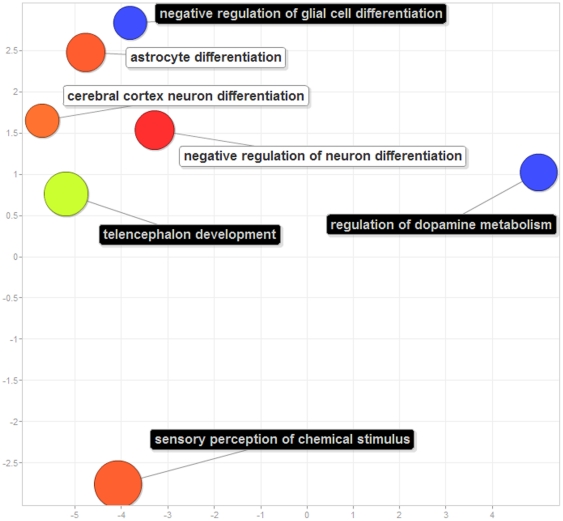
“Both scatterplots show the significance obtained from the enrichment analysis using a gradient color palette (log10 p-value), and the sizes of the plotted circles are scaled by the number of GO terms they represent for GO-Figure! and by the GO term frequency for REVIGO.”
InfluentialSandovici, I., Georgopoulou, A., Pérez-García, V., Hufnagel, A., López‐Tello, J., Lam, B., Schiefer, S., Gaudreau, C., Santos, F., Hoelle, K., et al. (2021) · Developmental Cell · doi:10.1016/j.devcel.2021.12.005 · Cited by 137
The genetic regulatory signature of type 2 diabetes in human skeletal muscle
Scott, L. J., Erdos, M. R., Huyghe, J. R., Welch, R. P., Beck, A. T., Wolford, B. N., Chines, P. S., Didion, J. P., Narisu, N., Stringham, H. M., et al. (2016) · Nature Communications · doi:10.1038/ncomms11764 · Cited by 130
Shumayla, Sharma, S., Taneja, M., Tyagi, S., Singh, K., & Upadhyay, S. K. (2017) · Frontiers in Plant Science · doi:10.3389/fpls.2017.01019 · Cited by 140
“The GO terms were further analyzed using REVIGO web server (http://revigo.irb.hr/), which summarizes the results by removing redundant GO terms and provides graph-based visualization (Supek et al., 2011).”
BackgroundMethodGene-by-environment interactions in urban populations modulate risk phenotypes
Favé, M.-J., Lamaze, F. C., Soave, D., Hodgkinson, A., Gauvin, H., Bruat, V., Grenier, J.-C., Gbeha, E., Skead, K., Smargiassi, A., et al. (2018) · Nature Communications · doi:10.1038/s41467-018-03202-2 · Cited by 117
Tollis, M., Robbins, J., Webb, A. E., Kuderna, L. F. K., Caulin, A. F., Garcia, J. D., Bèrubè, M., Pourmand, N., Marques-Bonet, T., O’Connell, M. J., et al. (2019) · Molecular Biology and Evolution · doi:10.1093/molbev/msz099 · Cited by 123
A Simple Protocol for Informative Visualization of Enriched Gene Ontology Terms
Bonnot, T., Gillard, M. B., & Nagel, D. H. (2019) · BIO-PROTOCOL · doi:10.21769/bioprotoc.3429 · Cited by 125
“The Web server REVIGO (http://revigo.irb.hr/) is particularly useful for this step because it calculates similarity between GO terms and removes redundant terms (Supek et al., 2011).”
BackgroundRoussin‐Léveillée, C., Lajeunesse, G., St‐Amand, M., Veerapen, V. P., Silva-Martins, G., Nomura, K., Brassard, S., Bolaji, A., He, S. Y., & Moffett, P. (2022) · Cell Host & Microbe · doi:10.1016/j.chom.2022.02.006 · Cited by 129
Natural hybridization reveals incompatible alleles that cause melanoma in swordtail fish
Powell, D. L., García-Olazábal, M., Keegan, M., Reilly, P., Du, K., Díaz-Loyo, A. P., Banerjee, S., Blakkan, D., Reich, D., Andolfatto, P., et al. (2020) · Science · doi:10.1126/science.aba5216 · Cited by 124
The activity-dependent histone variant H2BE modulates the life span of olfactory neurons
Santoro, S. W., & Dulac, C. (2012) · eLife · doi:10.7554/elife.00070 · Cited by 119
“Reported gene ontology summaries represent a subset of biological process terms selected based on redundancy using the REViGO software (http://revigo.irb.hr/; Supek et al., 2011).”
MethodTak, T., Wijten, P., Heeres, M., Pickkers, P., Scholten, A., Heck, A. J. R., Vrisekoop, N., Leenen, L. P. H., Borghans, J. A. M., Tesselaar, K., et al. (2017) · Blood · doi:10.1182/blood-2016-07-727669 · Cited by 140
Genomic architecture of phenotypic extremes in a wild cervid
Anderson, S. J., Côté, S. D., Richard, J. H., & Shafer, A. B. A. (2022) · BMC Genomics · doi:10.1186/s12864-022-08333-x · Cited by 133
“Results from DAVID with a p-value 0.01 were used with REVIGO to generate plots of significant GO terms for biological processes, molecular function, and cellular components of antler and body size phenotypes.”
MethodInfluentialKartalaei, P. S., Yamada-Inagawa, T., Vink, C. S., de Pater, E., van der Linden, R., Marks-Bluth, J., van der Sloot, A., van den Hout, M. C. G. N., Yokomizo, T., van Schaick-Solernó, M. L., et al. (2014) · The Journal of Experimental Medicine · doi:10.1084/jem.20140767 · Cited by 134
Zylicz, J. J., Dietmann, S., Günesdogan, U., Hackett, J. A., Cougot, D., Lee, C., & Surani, M. A. (2015) · eLife · doi:10.7554/elife.09571 · Cited by 122
“To summarize relative enrichment of GO terms in H3K9me2- versus H3K27me- marked and repressed genes, we have used ‘revigo’ tool to remove terms with substantial overlapping gene sets (http:// revigo.irb.hr, [Supek et al., 2011]).”
MethodPredictive models of subcellular localization of long RNAs
Zuckerman, B., & Ulitsky, I. (2019) · RNA · doi:10.1261/rna.068288.118 · Cited by 112
“The obtained FDR-corrected P-values were clustered by REVIGO (Supek et al. 2011).”
MethodMarra, N. J., Stanhope, M. J., Jue, N. K., Wang, M., Sun, Q., Bitar, P. P., Richards, V. P., Komissarov, A. S., Rayko, M., Kliver, S. F., et al. (2019) · Proceedings of the National Academy of Sciences · doi:10.1073/pnas.1819778116 · Cited by 134
Mouse screen reveals multiple new genes underlying mouse and human hearing loss
Ingham, N. J., Pearson, S. A., Vancollie, V. E., Rook, V., Lewis, M. A., Chen, J., Buniello, A., Martelletti, E., Preite, L., Lam, C. C., et al. (2019) · PLoS Biology · doi:10.1371/journal.pbio.3000194 · Cited by 125
“Revigo was used to reduce the redundancy in GO terms classed as over- or under-represented (by FuncAssociate) by clustering significant terms into more representative subsets ([54] http://revigo.”
MethodVogg, M. C., Beccari, L. L., Ollé, L. I., Rampon, C., Vriz, S., Perruchoud, C., Wenger, Y., & Galliot, B. (2019) · Nature Communications · doi:10.1038/s41467-018-08242-2 · Cited by 131
Mechanism-of-Action Classification of Antibiotics by Global Transcriptome Profiling
O’Rourke, A. E., Beyhan, S., Choi, Y., Morales, P., Chan, A. P.-Y., Espinoza, J. L., Dupont, C. L., Meyer, K. J., Spoering, A. L., Lewis, K., et al. (2020) · Antimicrobial Agents and Chemotherapy · doi:10.1128/aac.01207-19 · Cited by 138
Gene pleiotropy constrains gene expression changes in fish adapted to different thermal conditions
Papakostas, S., Vøllestad, L. A., Bruneaux, M., Aykanat, T., Vanoverbeke, J., Ning, M., Primmer, C. R., & Leder, E. H. (2014) · Nature Communications · doi:10.1038/ncomms5071 · Cited by 125
Han, X., Chen, H., Huang, D., Chen, H., Fei, L., Cheng, C., Huang, H., Yuan, G.-C., & Guo, G. (2018) · Genome Biology · doi:10.1186/s13059-018-1426-0 · Cited by 116
“GO terms were visualized by REVIGO [102] and Cytoscape [103].”
MethodPRMT5 Modulates Splicing for Genome Integrity and Preserves Proteostasis of Hematopoietic Stem Cells
Tan, D. Q., Li, Y., Yang, C., Li, J., Tan, S. H., Chin, D. W. L., Nakamura‐Ishizu, A., Yang, H. H., & Suda, T. (2019) · Cell Reports · doi:10.1016/j.celrep.2019.02.001 · Cited by 125
Primmer, C. R., Papakostas, S., Leder, E. H., Davis, M. J., & Ragan, M. A. (2013) · Molecular Ecology · doi:10.1111/mec.12309 · Cited by 132
“An important distinction here is that while expression patterns can provide useful evidence that a gene product © 2013 John Wiley & Sons Ltd Box 1 Ontology and the structure of the Gene Ontology database An ontology is an explicit specification of concepts, including their attributes and the relationships between them…”
BackgroundMethodInfluentialImperial, R. J. L., Ahmed, Z., Toor, O. M., Erdoğan, C., Khaliq, A. M., Case, P., Case, J., Kennedy, K. F., Cummings, L. S., Melton, N. M., et al. (2018) · Molecular Cancer · doi:10.1186/s12943-018-0923-9 · Cited by 137
Amsalem, E., Galbraith, D. A., Cnaani, J., Teal, P. E. A., & Grozinger, C. M. (2015) · Molecular Ecology · doi:10.1111/mec.13410 · Cited by 131
“To refine the list of GO terms, the significant terms (Benjamini correction <0.05) that were generated using DAVID Bioinformatics Resources were imported into REVIGO (Supek et al. 2011), which clusters the GO terms using semantic similarity measures. qRT–PCR analysis To validate the RNA-Seq results, we evaluated the e…”
MethodInfluentialSex Change in Clownfish: Molecular Insights from Transcriptome Analysis
Casas, L., Saborido‐Rey, F., Ryu, T., Michell, C., Ravasi, T., & Irigoien, X. (2016) · Scientific Reports · doi:10.1038/srep35461 · Cited by 157
Groß-Thebing, T., Yigit, S., Pfeiffer, J., Reichman‐Fried, M., Bandemer, J., Ruckert, C., Rathmer, C., Goudarzi, M., Stehling, M., Tarbashevich, K., et al. (2017) · Developmental Cell · doi:10.1016/j.devcel.2017.11.019 · Cited by 126
Aging Fly Cell Atlas identifies exhaustive aging features at cellular resolution
Lu, T.-C., Brbić, M., Park, Y.-J., Jackson, T., Chen, J., Kolluru, S. S., Qi, Y., Katheder, N. S., Cai, X. T., Lee, S., et al. (2023) · Science · doi:10.1126/science.adg0934 · Cited by 114
Luo, J., Xia, W., Cao, P., Xiao, Z., Zhang, Y., Liu, M., Zhan, C., & Wang, N. (2019) · Biomolecules · doi:10.3390/biom9010012 · Cited by 127
“hr/) [32] and visualized in Cytoscape (version 3.”
BackgroundHormone-dependent control of developmental timing through regulation of chromatin accessibility
Uyehara, C. M., Nystrom, S. L., Niederhuber, M. J., Leatham-Jensen, M., Ma, Y., Buttitta, L. A., & McKay, D. J. (2017) · Genes & Development · doi:10.1101/gad.298182.117 · Cited by 121
“Gene ontology (GO) analysis showed enrichment for biological processes known to occur at these times (Huang da et al. 2009; Supek et al. 2011).”
Groh, J., Knöpper, K., Arampatzi, P., Yuan, X., Lößlein, L., Saliba, A.-E., Kastenmüller, W., & Martini, R. (2021) · Nature Aging · doi:10.1038/s43587-021-00049-z · Cited by 118
Blanco‐Ulate, B., Amrine, K. C. H., Collins, T. S., Rivero, R. M., Vicente, A. R., Morales‐Cruz, A., Doyle, C. L., Ye, Z., Allen, G., Heymann, H., et al. (2015) · PLANT PHYSIOLOGY · doi:10.1104/pp.15.00852 · Cited by 139
U1 snRNP telescripting regulates a size–function-stratified human genome
Oh, J.-M., Di, C., Venters, C. C., Guo, J., Arai, C., So, B. R., Pinto, A. M., Zhang, Z., Wan, L., Younis, I., et al. (2017) · Nature Structural & Molecular Biology · doi:10.1038/nsmb.3473 · Cited by 117
Comparative analysis of differential gene expression tools for RNA sequencing time course data
Spies, D., Renz, P. F., Beyer, T. A., & Ciaudo, C. (2017) · Briefings in Bioinformatics · doi:10.1093/bib/bbx115 · Cited by 140
Scott, G. R., Elogio, T. S., Lui, M. A., Storz, J. F., & Cheviron, Z. A. (2015) · Molecular Biology and Evolution · doi:10.1093/molbev/msv076 · Cited by 130
“2009) to test for functional enrichment of specific terms within modules, and we visualized the GOrilla output using the program REViGO (Supek et al. 2011).”
MethodNitric oxide-dependent regulation of sweet pepper fruit ripening
González‐Gordo, S., Bautista, R., Claros, M. G., Cañas, A., Palma, J. M., & Corpas, F. J. (2019) · Journal of Experimental Botany · doi:10.1093/jxb/erz136 · Cited by 117
“Significantly enriched GO terms were submitted to REViGO (Supek et al., 2011) to remove redundant categories.”
MethodInfluentialTriTrypDB: An integrated functional genomics resource for kinetoplastida
Shanmugasundram, A., Starns, D., Böhme, U., Amos, B., Wilkinson, P. A., Harb, O. S., Warrenfeltz, S., Kissinger, J. C., McDowell, M. A., Roos, D. S., et al. (2023) · PLOS Neglected Tropical Diseases · doi:10.1371/journal.pntd.0011058 · Cited by 118
“GO enrichment results can also be exported to REVIGO [57], which facilitates data visualization via a variety of interactive tools.”
BackgroundTranscriptome analysis of heat stress response in switchgrass (Panicum virgatumL.)
Li, Y.-F., Wang, Y., Tang, Y., Kakani, V. G., & Mahalingam, R. (2013) · BMC Plant Biology · doi:10.1186/1471-2229-13-153 · Cited by 126
“to the REVIGO (REduce and Visualize GO) program [84].”
Comprehensive transcriptional landscape of aging mouse liver
White, R. R., Milholland, B., MacRae, S. L., Lin, M., Zheng, D., & Vijg, J. (2015) · BMC Genomics · doi:10.1186/s12864-015-2061-8 · Cited by 113
“We then used REVIGO, which uses utilizes semantic similarity to parse GO annotations in order to remove redundant terms and to visualize clusters of enriched terms [32].”
MethodMetatranscriptomic exploration of microbial functioning in clouds
Amato, P., Besaury, L., Joly, M., Penaud, B., Deguillaume, L., & Delort, A. M. (2019) · Scientific Reports · doi:10.1038/s41598-019-41032-4 · Cited by 120
Induced organoids derived from patients with ulcerative colitis recapitulate colitic reactivity
Sarvestani, S. K., Signs, S., Hu, B., Yeu, Y., Feng, H., Ni, Y., Hill, D. R., Fisher, R. C., Ferrandon, S., DeHaan, R. K., et al. (2021) · Nature Communications · doi:10.1038/s41467-020-20351-5 · Cited by 111
Najafova, Z., Tirado-Magallanes, R., Subramaniam, M., Hossan, T., Schmídt, G., Nagarajan, S., Baumgart, S. J., Mishra, V. K., Bedi, U., Hesse, E., et al. (2016) · Nucleic Acids Research · doi:10.1093/nar/gkw826 · Cited by 120
“Author contributions: The experiments were designed by S.A.J. and Z.N. R.T.M. contributed to bioinformatic analyses including HTSeq, DESeq2, GO analysis, REVIGO, DiffBind, motif discovery (RSAT & ReMap) and chromatin segmentation (EpiCSeg) analysis.”
MethodInfluential
Metadata
- Authors
- Supek, F., Bošnjak, M., Škunca, N., & Šmuc, T.
- Affiliations
- Universitat Pompeu Fabra (ES)
- Ruđer Bošković Institute (HR)
- Corresponding author
- Supek, Fran
- Venue
- PLoS ONE
- Publisher
- Public Library of Science (PLoS)
- Published
- 2011-07-18
- Volume
- 6
- Issue
- 7
- Pages
- e21800
- ISSN
- 1932-6203 (ISSN-L)
- PMC
- PMC3138752
- OpenAlex
- W1969353942
- Cited by
- 6,264
- References
- 25
- Citations by year
- 2026: 299 · 2025: 417 · 2024: 616 · 2023: 612 · 2022: 701 · 2021: 830 · 2020: 716 · 2019: 551 · 2018: 465 · 2017: 360 · 2016: 282 · 2015: 217 · 2014: 97 · 2013: 59 · 2012: 32
- FWCI
- 24.69
- Type
- journal article
- Language
- en
- Open access
- gold
- doi.org
- Locations
- PLoS ONE (publishedVersion, cc-by)
- Europe PMC (PubMed Central) (publishedVersion, cc-by)
- PubMed Central (publishedVersion, cc-by)
- PubMed (publishedVersion)
- RePEc: Research Papers in Economics (submittedVersion)
- DOAJ (DOAJ: Directory of Open Access Journals) (submittedVersion, cc-by-sa)
- Institutional Repository of the Ruđer Bošković Institute (Ruđer Bošković Institute) (submittedVersion, cc-by)
- Topics
- Life Sciences › Biochemistry, Genetics and Molecular Biology › Molecular Biology › Bioinformatics and Genomic Networks
- Health Sciences › Medicine › Health Informatics › Biomedical Text Mining and Ontologies
- Life Sciences › Biochemistry, Genetics and Molecular Biology › Molecular Biology › Genomics and Phylogenetic Studies
- Keywords
- REVIGO, Gene Ontology, gene ontology enrichment, semantic similarity, multidimensional scaling, treemaps, word clouds, network visualization, web server
- MeSH terms
- Algorithms, Gene Expression Regulation, Humans, Software, Transcription Factors, User-Computer Interface, Computational Biology, Internet, Molecular Sequence Annotation
About these checks
Registry, retraction, Cites and statistics results are computed, not judged, with one exception: a printed reference that no index lists is read once by a model before it counts as a citation error. Claims are extracted by a model and kept only when their quote appears verbatim in the text; each cited source is then checked, with a model’s help, for whether it says what the claim relies on. Those verdicts can be wrong — read the claim’s quote and the cited source before relying on one.
Statistics and arithmetic are recomputed, not judged.
Confidence bands are shown only for fields calibrated on our annotated test set. None is calibrated yet, so no band is shown.
What counts as a claim ›How we measure confidence ›How we check this ›
Are you an author, or do you see a problem with this page? Request a review
Data sources
Bibliographic data: Semantic Scholar, OpenAlex, Crossref.
Contains information from the Semantic Scholar Academic Graph Datasets, made available under the ODC Attribution License (ODC-BY 1.0).
Semantic Scholar’s data is described in: Kinney, R., et al. (2023). The Semantic Scholar Open Data Platform. arXiv:2301.10140.
