

Caffeine Consumption Prevents Diabetes-Induced Memory Impairment and Synaptotoxicity in the Hippocampus of NONcZNO10/LTJ Mice
Open accessThe DOI matches its Crossref record; 58 of the 58 references it cites were found in a registry or an index.
Abstract
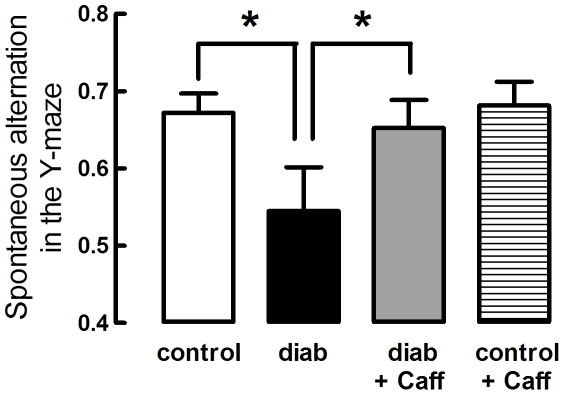
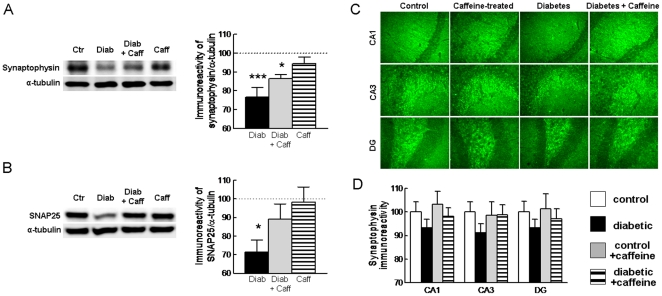
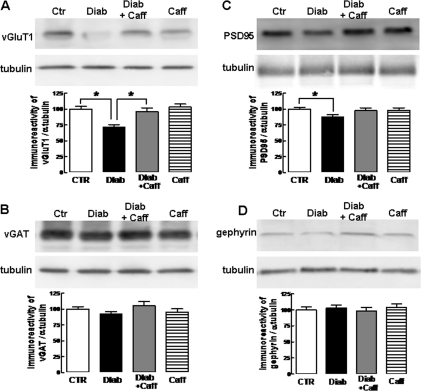
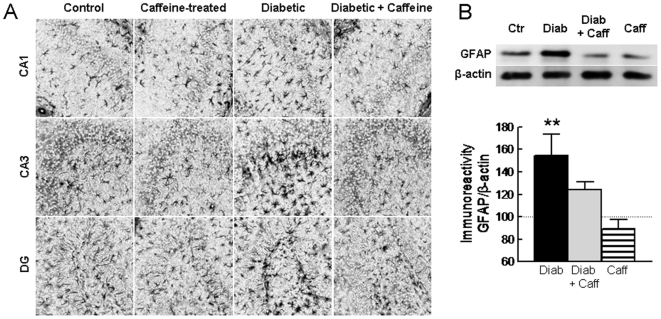
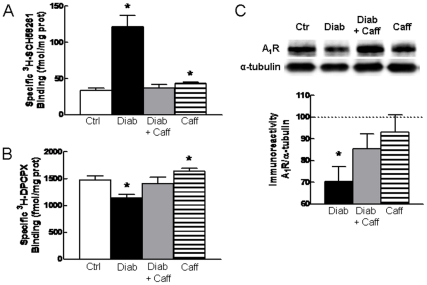
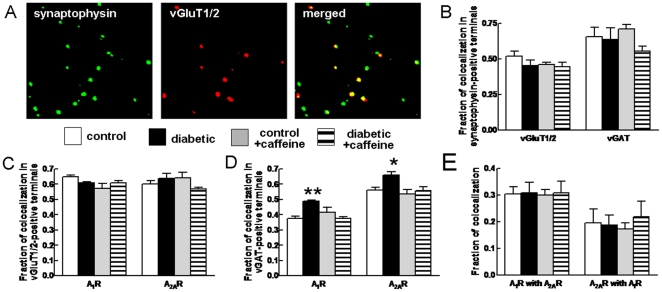
Diabetic conditions are associated with modified brain function, namely with cognitive deficits, through largely undetermined processes. More than understanding the underlying mechanism, it is important to devise novel strategies to alleviate diabetes-induced cognitive deficits. Caffeine (a mixed antagonist of adenosine A(1) and A(2A) receptors) emerges as a promising candidate since caffeine consumption reduces the risk of diabetes and effectively prevents memory deficits caused by different noxious stimuli. Thus, we took advantage of a novel animal model of type 2 diabetes to investigate the behavioural, neurochemical and morphological modifications present in the hippocampus and tested if caffeine consumption might prevent these changes. We used a model closely mimicking the human type 2 diabetes condition, NONcNZO10/LtJ mice, which become diabetic at 7-11 months when kept under an 11% fat diet. Caffeine (1 g/l) was applied in the drinking water from 7 months onwards. Diabetic mice displayed a decreased spontaneous alternation in the Y-maze accompanied by a decreased density of nerve terminal markers (synaptophysin, SNAP25), mainly glutamatergic (vesicular glutamate transporters), and increased astrogliosis (GFAP immunoreactivity) compared to their wild type littermates kept under the same diet. Furthermore, diabetic mice displayed up-regulated A(2A) receptors and down-regulated A(1) receptors in the hippocampus. Caffeine consumption restored memory performance and abrogated the diabetes-induced loss of nerve terminals and astrogliosis. These results provide the first evidence that type 2 diabetic mice display a loss of nerve terminal markers and astrogliosis, which is associated with memory impairment; furthermore, caffeine consumption prevents synaptic dysfunction and astrogliosis as well as memory impairment in type 2 diabetes.
Overview
The claims and statistics of this paper haven’t been checked yet.
Free: it reads the open-access text and checks the first 5 claims that cite a source we can check. Create a free account to check every claim.
Integrity signals
Registry
Cites
Statistics
Figures
Verification
Claims the paper makes
The claims and statistics of this paper haven’t been checked yet.
Free: it reads the open-access text and checks the first 5 claims that cite a source we can check. Create a free account to check every claim.
Claims other papers make about this one
Each is checked against this paper’s own text: does it say what the citing paper says it does?
The cited source says what the claim attributes to it.
In the citing paper
“caffeine consumption could also reduce the loss of glutamatergic nerve terminals in the hippocampus, restoring diabetes-induced memory dysfunction in mice [209].”
From Effects of Coffee and Its Components on the Gastrointestinal Tract and the Brain–Gut Axis (2020) · cites this paper as [209]
Self-check
Percentages, sums and reported differences re-computed from the paper’s own numbers.
The self-check needs the paper’s full text.
Citations
Cites
Astrocyte-Neuron Lactate Transport Is Required for Long-Term Memory Formation
Suzuki, A., Stern, S. A., Bozdagi, O., Huntley, G. W., Walker, R. H., Magistretti, P. J., & Alberini, C. M. (2011) · Cell · doi:10.1016/j.cell.2011.02.018 · Cited by 1,711
Astrocyte activation and reactive gliosis
Pekny, M., & Nilsson, M. (2005) · Glia · doi:10.1002/glia.20207 · Cited by 1,611
Astrocyte Control of Synaptic Transmission and Neurovascular Coupling
Haydon, P. G., & Carmignoto, G. (2006) · Physiological Reviews · doi:10.1152/physrev.00049.2005 · Cited by 1,323
Synaptic alterations in CA1 in mild Alzheimer disease and mild cognitive impairment
Scheff, S. W., Price, D. A., Schmitt, F. A., DeKosky, S. T., & Mufson, E. J. (2007) · Neurology · doi:10.1212/01.wnl.0000260698.46517.8f · Cited by 824
Fredholm, B. B., Chen, J.-F., Cunha, R. A., Svenningsson, P., & Vaugeois, J.-M. (2005) · International Review of Neurobiology · doi:10.1016/s0074-7742(05)63007-3 · Cited by 692
Self-citationCoffee Consumption and Risk of Type 2 Diabetes: A Systematic Review
van Dam, R. M., & Hu, F. B. (2005) · JAMA · doi:10.1001/jama.294.1.97 · Cited by 662
Neuroprotection by adenosine in the brain: From A1 receptor activation to A2A receptor blockade
Cunha, R. A. (2005) · Purinergic Signalling · doi:10.1007/s11302-005-0649-1 · Cited by 537
Self-citationSelective induction of astrocytic gliosis generates deficits in neuronal inhibition
Ortinski, P. I., Dong, J., Mungenast, A., Yue, C., Takano, H., Watson, D. J., Haydon, P. G., & Coulter, D. A. (2010) · Nature Neuroscience · doi:10.1038/nn.2535 · Cited by 495 · cited 1×
“A recent study showed a direct causal relation between reactive astrocytosis and modifications of GABAergic transmission leading to over-excitability in hippocampal tissue, which was argued to have a metabolic basis [53].”
BackgroundHippocampal damage and memory impairments as possible early brain complications of type 2 diabetes
Gold, S. M., Dziobek, I., Sweat, V., Tirsi, A., Rogers, K., Bruehl, H., Tsui, W., Richardson, S., Javier, E., & Convit, A. (2007) · Diabetologia · doi:10.1007/s00125-007-0602-7 · Cited by 489
Arendash, G. W., Schleif, W., Rezai-Zadeh, K., Jackson, E. K., Zacharia, L. C., Cracchiolo, J. R., Shippy, D., & Tan, J. (2006) · Neuroscience · doi:10.1016/j.neuroscience.2006.07.021 · Cited by 457
Rebola, N., Lujan, R., Cunha, R. A., & Mulle, C. (2008) · Neuron · doi:10.1016/j.neuron.2007.11.023 · Cited by 376
Self-citationDall'Igna, O. P., Fett, P., Gomes, M. W., Souza, D. O., Cunha, R. A., & Lara, D. R. (2007) · Experimental Neurology · doi:10.1016/j.expneurol.2006.08.008 · Cited by 372
Self-citationLi, H., Li, S.-H., Yu, Z.-X., Shelbourne, P., & Li, X.-J. (2001) · The Journal of Neuroscience · doi:10.1523/jneurosci.21-21-08473.2001 · Cited by 359
Does caffeine intake protect from Alzheimer's disease?
Maia, L., & De Mendonça, A. (2002) · European Journal of Neurology · doi:10.1046/j.1468-1331.2002.00421.x · Cited by 357
Canas, P. M., Porciúncula, L. O., Cunha, G. M. A., Silva, C. G., Machado, N. J., Oliveira, J. M. A., Oliveira, C. R., & Cunha, R. A. (2009) · The Journal of Neuroscience · doi:10.1523/jneurosci.3728-09.2009 · Cited by 357
Self-citationConvit, A., Wolf, O. T., Tarshish, C., & de Leon, M. J. (2003) · Proceedings of the National Academy of Sciences · doi:10.1073/pnas.0336073100 · Cited by 347
A focus on the synapse for neuroprotection in Alzheimer disease and other dementias
Coleman, P., Federoff, H., & Kurlan, R. (2004) · Neurology · doi:10.1212/01.wnl.0000140626.48118.0a · Cited by 314 · cited 4×
“Evidence is accumulating supporting the idea that the deterioration of memory performance is primarily related to synaptic dysfunction and degeneration [24,25].”
BackgroundInfluentialAdenosine signaling and function in glial cells
Boison, D., Chen, J.-F., & Fredholm, B. B. (2010) · Cell Death & Differentiation · doi:10.1038/cdd.2009.131 · Cited by 306
Apoptotic mechanisms and the synaptic pathology of schizophrenia
Glantz, L. A., Gilmore, J. H., Lieberman, J. A., & Jarskog, L. F. (2006) · Schizophrenia Research · doi:10.1016/j.schres.2005.08.014 · Cited by 292
Prediger, R. D. S., Batista, L. C., & Takahashi, R. N. (2005) · Neurobiology of Aging · doi:10.1016/j.neurobiolaging.2004.08.012 · Cited by 243
Chen, J.-F., Sonsalla, P. K., Pedata, F., Melani, A., Domenici, M. R., Popoli, P., Geiger, J., Lopes, L. V., & de Mendonça, A. (2007) · Progress in Neurobiology · doi:10.1016/j.pneurobio.2007.09.002 · Cited by 239
Cunha, R. A., & Agostinho, P. M. (2010) · Journal of Alzheimer's Disease · doi:10.3233/jad-2010-1408 · Cited by 232
Self-citationThe adenosine kinase hypothesis of epileptogenesis
Boison, D. (2008) · Progress in Neurobiology · doi:10.1016/j.pneurobio.2007.12.002 · Cited by 225
Caspase Cascades in Human Immunodeficiency Virus-Associated Neurodegeneration
Garden, G. A., Budd, S. L., Tsai, E., Hanson, L., Kaul, M., D'Emilia, D. M., Friedlander, R. M., Yuan, J., Masliah, E., & Lipton, S. A. (2002) · The Journal of Neuroscience · doi:10.1523/jneurosci.22-10-04015.2002 · Cited by 219
Rodrigues, R. J., Almeida, T., Richardson, P. J., Oliveira, C. R., & Cunha, R. A. (2005) · The Journal of Neuroscience · doi:10.1523/jneurosci.0628-05.2005 · Cited by 214
Self-citationMinkeviciene, R., Ihalainen, J., Malm, T., Matilainen, O., Keksa‐Goldsteine, V., Goldsteins, G., Iivonen, H., Leguit, N., Glennon, J., Koistinaho, J., et al. (2008) · Journal of Neurochemistry · doi:10.1111/j.1471-4159.2007.05147.x · Cited by 208
Synaptic Vulnerability in Neurodegenerative Disease
Wishart, T. M., Parson, S. H., & Gillingwater, T. H. (2006) · Journal of Neuropathology & Experimental Neurology · doi:10.1097/01.jnen.0000228202.35163.c4 · Cited by 204
Rebola, N., Canas, P. M., Oliveira, C. R., & Cunha, R. A. (2005) · Neuroscience · doi:10.1016/j.neuroscience.2005.01.014 · Cited by 202
Self-citationAdenosine A2A receptors control neuroinflammation and consequent hippocampal neuronal dysfunction
Rebola, N., Simões, A. P., Canas, P. M., Tomé, A. R., Andrade, G. M., Barry, C. E., Agostinho, P. M., Lynch, M. A., & Cunha, R. A. (2011) · Journal of Neurochemistry · doi:10.1111/j.1471-4159.2011.07178.x · Cited by 196
Self-citationKirvell, S. L., Esiri, M., & Francis, P. T. (2006) · Journal of Neurochemistry · doi:10.1111/j.1471-4159.2006.03935.x · Cited by 187
Adenosine receptor antagonists for cognitive dysfunction: a review of animal studies
Takahashi, R. N. (2008) · Frontiers in Bioscience · doi:10.2741/2870 · Cited by 174
Modulation of glial cell functions by adenosine receptors
Daré, E., Schulte, G., Karovic, O., Hammarberg, C., & Fredholm, B. B. (2007) · Physiology & Behavior · doi:10.1016/j.physbeh.2007.05.031 · Cited by 171
The impact of diabetes on cognition: What can be learned from rodent models?
Biessels, G. J., & Gispen, W. H. (2005) · Neurobiology of Aging · doi:10.1016/j.neurobiolaging.2005.08.015 · Cited by 171
Glutamate and astrocytes—Key players in human mesial temporal lobe epilepsy?
Eid, T., Williamson, A., Lee, T. W., Petroff, O. A., & De Lanerolle, N. C. (2008) · Epilepsia · doi:10.1111/j.1528-1167.2008.01492.x · Cited by 165
Yu, L., Shen, H., Coelho, J. E., Araújo, I. M., Huang, Q., Day, Y., Rebola, N., Canas, P. M., Rapp, E. K., Ferrara, J., et al. (2008) · Annals of Neurology · doi:10.1002/ana.21313 · Cited by 160
Self-citationDai, S.-S., Zhou, Y.-G., Li, W., An, J.-H., Li, P., Yang, N., Chen, X.-Y., Xiong, R.-P., Liu, P., Zhao, Y., et al. (2010) · The Journal of Neuroscience · doi:10.1523/jneurosci.0268-10.2010 · Cited by 160
The amyloid pathology progresses in a neurotransmitter-specific manner
Bell, K. F. S., Ducatenzeiler, A., Ribeiro‐da‐Silva, A., Duff, K., Bennett, D. A., & Cuello, A. C. (2005) · Neurobiology of Aging · doi:10.1016/j.neurobiolaging.2005.09.034 · Cited by 153
Adenosine A2A receptors modulate glutamate uptake in cultured astrocytes and gliosomes
Matos, M., Augusto, E., Santos‐Rodrigues, A. D., Schwarzschild, M. A., Chen, J., Cunha, R. A., & Agostinho, P. (2012) · Glia · doi:10.1002/glia.22290 · Cited by 148
Self-citationda Costa, M. S., Botton, P. H. S., Mioranzza, S., Souza, D. O., & Porciúncula, L. O. (2008) · Neuroscience · doi:10.1016/j.neuroscience.2008.03.038 · Cited by 140
Duarte, J. M. N., Carvalho, R. A., Cunha, R. A., & Gruetter, R. (2009) · Journal of Neurochemistry · doi:10.1111/j.1471-4159.2009.06349.x · Cited by 140
Self-citationDendritic Pathology in Prion Disease Starts at the Synaptic Spine
Fuhrmann, M., Mitteregger, G., Kretzschmar, H., & Herms, J. (2007) · Journal of Neuroscience · doi:10.1523/jneurosci.5062-06.2007 · Cited by 137
Chen, X., Ghribi, O., & Geiger, J. D. (2010) · Journal of Alzheimer's Disease · doi:10.3233/jad-2010-1376 · Cited by 132
Caffeine, Adenosine Receptors, and Synaptic Plasticity
Costenla, A. R., Cunha, R. A., & de Mendonça, A. (2010) · Journal of Alzheimer's Disease · doi:10.3233/jad-2010-091384 · Cited by 132
Self-citationCognato, G. P., Agostinho, P. M., Hockemeyer, J., Müller, C. E., Souza, D. O., & Cunha, R. A. (2010) · Journal of Neurochemistry · doi:10.1111/j.1471-4159.2009.06465.x · Cited by 125
Self-citationCaffeine attenuates lipopolysaccharide-induced neuroinflammation
Brothers, H. M., Marchalant, Y., & Wenk, G. L. (2010) · Neuroscience Letters · doi:10.1016/j.neulet.2010.06.013 · Cited by 115
Caffeine reverses the memory disruption induced by intra-nigral MPTP-injection in rats
Gevaerd, M. S., Takahashi, R. N., Silveira, R., & Cunha, C. D. (2001) · Brain Research Bulletin · doi:10.1016/s0361-9230(01)00501-9 · Cited by 111
Cunha, G. M. A., Canas, P. M., Oliveira, C. R., & Cunha, R. A. (2006) · Neuroscience · doi:10.1016/j.neuroscience.2006.05.024 · Cited by 108
Self-citationAlcohol-induced retrograde memory impairment in rats: prevention by caffeine
Spinetta, M. J., Woodlee, M. T., Feinberg, L. M., Stroud, C., Schallert, K., Cormack, L. K., & Schallert, T. J. (2008) · Psychopharmacology · doi:10.1007/s00213-008-1294-5 · Cited by 107
Differential Levels of Diabetogenic Stress in Two New Mouse Models of Obesity and Type 2 Diabetes
Leiter, E. H., & Reifsnyder, P. C. (2004) · Diabetes · doi:10.2337/diabetes.53.2007.s4 · Cited by 99
Pires, V. A., Pamplona, F. A., Pandolfo, P., Fernandes, D., Prediger, R. D. S., & Takahashi, R. N. (2009) · Behavioural Pharmacology · doi:10.1097/fbp.0b013e32832a80bf · Cited by 84
Duarte, J. M. N., Oliveira, C. R., Ambrósio, A. F., & Cunha, R. A. (2005) · Neurochemistry International · doi:10.1016/j.neuint.2005.08.008 · Cited by 77
Self-citationSilva, C. G., Porciúncula, L. O., Canas, P. M., Oliveira, C. R., & Cunha, R. A. (2007) · Neurobiology of Disease · doi:10.1016/j.nbd.2007.04.018 · Cited by 71
Self-citationCho, Y.-R., Kim, H.-J., Park, S.-Y., Ko, H. J., Hong, E.-G., Higashimori, T., Zhang, Z., Jung, D. Y., Ola, M. S., LaNoue, K. F., et al. (2007) · American Journal of Physiology-Endocrinology and Metabolism · doi:10.1152/ajpendo.00376.2006 · Cited by 64
Gaspar, J. M., Baptista, F. I., Galvão, J., Castilho, Á., Cunha, R. A., & Ambrósio, A. F. (2010) · Neuroscience · doi:10.1016/j.neuroscience.2010.06.021 · Cited by 61
Self-citationModification of adenosine modulation of acetylcholine release in the hippocampus of aged rats
Rodrigues, R. J., Canas, P. M., Lopes, L. V., Oliveira, C. R., & Cunha, R. A. (2007) · Neurobiology of Aging · doi:10.1016/j.neurobiolaging.2007.03.025 · Cited by 60
Self-citationDoes caffeine modify corticomotor excitability?
Cerqueira, V. B., de Mendonça, A., Minez, A., Dias, Â. R. M., & de Carvalho, M. A. (2006) · Neurophysiologie Clinique · doi:10.1016/j.neucli.2006.08.005 · Cited by 55
Early reaction of astroglial cells in rat hippocampus to streptozotocin-induced diabetes
Lebed, Y. V., Orlovsky, M., Nikonenko, A. G., Ушакова, Г. А., & Skibo, G. G. (2008) · Neuroscience Letters · doi:10.1016/j.neulet.2008.07.094 · Cited by 54
Caffeine, Diabetes, Cognition, and Dementia
Biessels, G. J. (2010) · Journal of Alzheimer s Disease · doi:10.3233/jad-2010-091228 · Cited by 38
Cited by
How does adenosine control neuronal dysfunction and neurodegeneration?
Cunha, R. A. (2016) · Journal of Neurochemistry · doi:10.1111/jnc.13724 · Cited by 441
“…disease (Arendash et al. 2006, 2009; Dall’Igna et al. 2007; Espinosa et al. 2013; Han et al. 2013; Laurent et al. 2014), diabetic neuropathy (Duarte et al. 2012), chronic repeated stress (Pechlivanova et al. 2012; Alzoubi et al. 2013; Kaster et al. 2015; Yin et al. 2015), sleep…”
BackgroundInfluentialSelf-citationKaster, M. P., Machado, N. J., Silva, H. B., Nunes, A., Ardais, A. P., Santana, M., Baqi, Y., Müller, C. E., Rodrigues, A. L. S., Porciúncula, L. O., et al. (2015) · Proceedings of the National Academy of Sciences · doi:10.1073/pnas.1423088112 · Cited by 312
“Immunohistochemical analysis of microglia (CD11-b staining; 1:500; Serotec), astrocytes (GFAP staining; 1:1,000; Sigma), or nerve terminals (synaptophysin staining; 1:200; Sigma) was done as previously described (17, 31).”
BackgroundMethodSelf-citationATP as a multi-target danger signal in the brain
Rodrigues, R. J., Tomé, A. R., & Cunha, R. A. (2015) · Frontiers in Neuroscience · doi:10.3389/fnins.2015.00148 · Cited by 259
“…and neuropsychiatric disorders in glial cells (Yu et al., 2008; Matos et al., 2012b) but mainly in synapses (Rebola et al., 2005b; Cunha et al., 2006; Duarte et al., 2012), which is associated with a shift of function of A2AR (reviewed in Cunha et al., 2008; Rial et al., 2014) (Figures 1, 2).”
BackgroundSelf-citationNakano, M., Nagaishi, K., Konari, N., Saito, Y., Chikenji, T., Mizue, Y., & Fujimiya, M. (2016) · Scientific Reports · doi:10.1038/srep24805 · Cited by 209
Effects of metformin on inflammation and short-term memory in streptozotocin-induced diabetic mice
Oliveira, W. H., Nunes, A. K., França, M. E. R., Santos, L. A., Lós, D. B., Rocha, S. W., Barbosa, K. P., Rodrigues, G. B., & Peixoto, C. A. (2016) · Brain Research · doi:10.1016/j.brainres.2016.05.013 · Cited by 209
Metadata
- Authors
- Duarte, J. M. N., Agostinho, P. M., Carvalho, R. A., & Cunha, R. A.
- Affiliations
- Centro de Neurociências e Biologia Celular (PT)
- Corresponding author
- Cunha, Rodrigo A.
- Venue
- PLoS ONE
- Publisher
- Public Library of Science (PLoS)
- Published
- 2012-04-13
- Volume
- 7
- Issue
- 4
- Pages
- e21899
- ISSN
- 1932-6203 (ISSN-L)
- PMC
- PMC3326010
- OpenAlex
- W2070016881
- Cited by
- 130
- References
- 58
- Citations by year
- 2026: 3 · 2025: 5 · 2024: 10 · 2023: 8 · 2022: 6 · 2021: 11 · 2020: 7 · 2019: 8 · 2018: 15 · 2017: 7 · 2016: 17 · 2015: 9 · 2014: 11 · 2013: 8 · 2012: 4
- FWCI
- 7.51
- Type
- journal article
- Language
- en
- Open access
- gold
- doi.org
- Locations
- PLoS ONE (publishedVersion, cc-by)
- Europe PMC (PubMed Central) (publishedVersion, cc-by)
- PubMed Central (publishedVersion, cc-by)
- PubMed (publishedVersion)
- DOAJ (DOAJ: Directory of Open Access Journals) (submittedVersion)
- Portuguese National Funding Agency for Science, Research and Technology (RCAAP Project by FCT) (submittedVersion, cc-by)
- Lund University Publications (Lund University) (submittedVersion)
- Topics
- Health Sciences › Medicine › Pharmacology (medical) › Coffee research and impacts
- Life Sciences › Neuroscience › Cellular and Molecular Neuroscience › Neuroscience and Neuropharmacology Research
- Life Sciences › Neuroscience › Cellular and Molecular Neuroscience › Alzheimer's disease research and treatments
- Keywords
- caffeine, type 2 diabetes, memory impairment, hippocampus, synaptotoxicity, adenosine A1 receptor, adenosine A2A receptor, astrocyte activation, synaptophysin, SNAP-25, vesicular glutamate transporter, spontaneous alternation, cognitive impairment
- MeSH terms
- Animals, Caffeine, Diabetes Mellitus, Experimental, Hippocampus, Immunohistochemistry, Insulin, Male, Memory Disorders, Blotting, Western, Mice
About these checks
Registry, retraction, Cites and statistics results are computed, not judged, with one exception: a printed reference that no index lists is read once by a model before it counts as a citation error. Claims are extracted by a model and kept only when their quote appears verbatim in the text; each cited source is then checked, with a model’s help, for whether it says what the claim relies on. Those verdicts can be wrong — read the claim’s quote and the cited source before relying on one.
Statistics and arithmetic are recomputed, not judged.
Confidence bands are shown only for fields calibrated on our annotated test set. None is calibrated yet, so no band is shown.
What counts as a claim ›How we measure confidence ›How we check this ›
Are you an author, or do you see a problem with this page? Request a review
Data sources
Bibliographic data: Semantic Scholar, OpenAlex, Crossref.
Contains information from the Semantic Scholar Academic Graph Datasets, made available under the ODC Attribution License (ODC-BY 1.0).
Semantic Scholar’s data is described in: Kinney, R., et al. (2023). The Semantic Scholar Open Data Platform. arXiv:2301.10140.
