

Epigenetic Silencing of Nucleolar rRNA Genes in Alzheimer's Disease
Open accessThe DOI matches its Crossref record; 38 of the 38 references it cites were found in a registry or an index.
Abstract
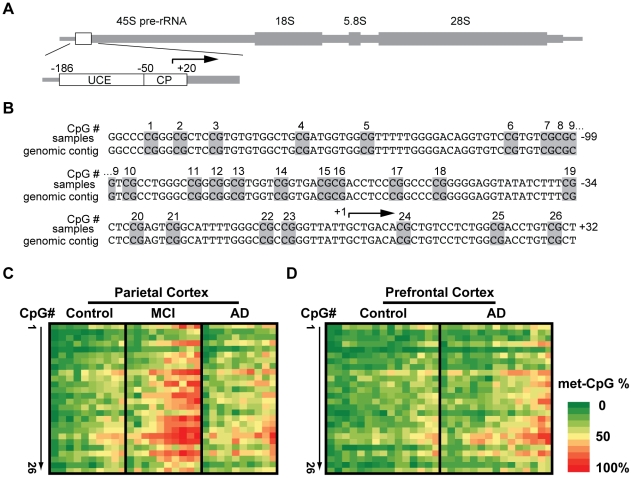
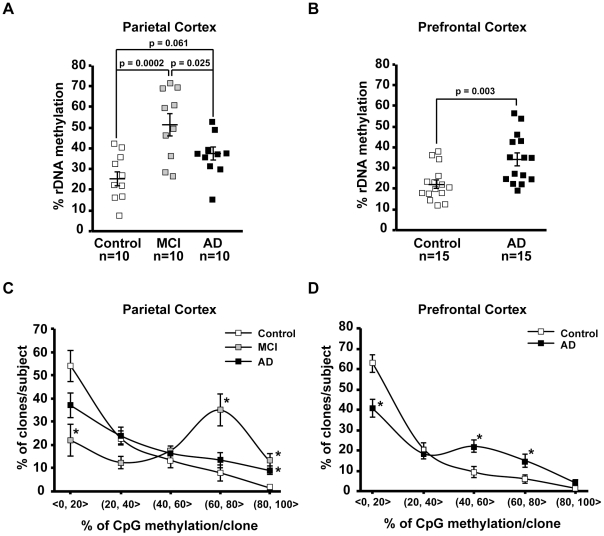
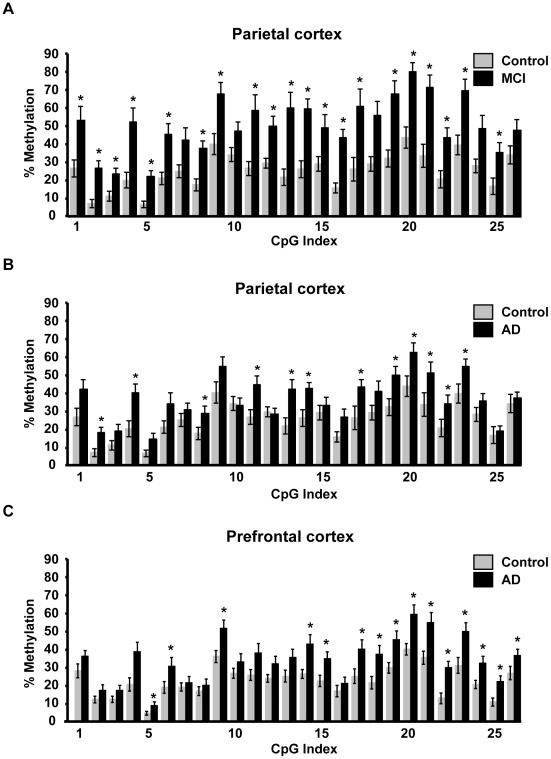
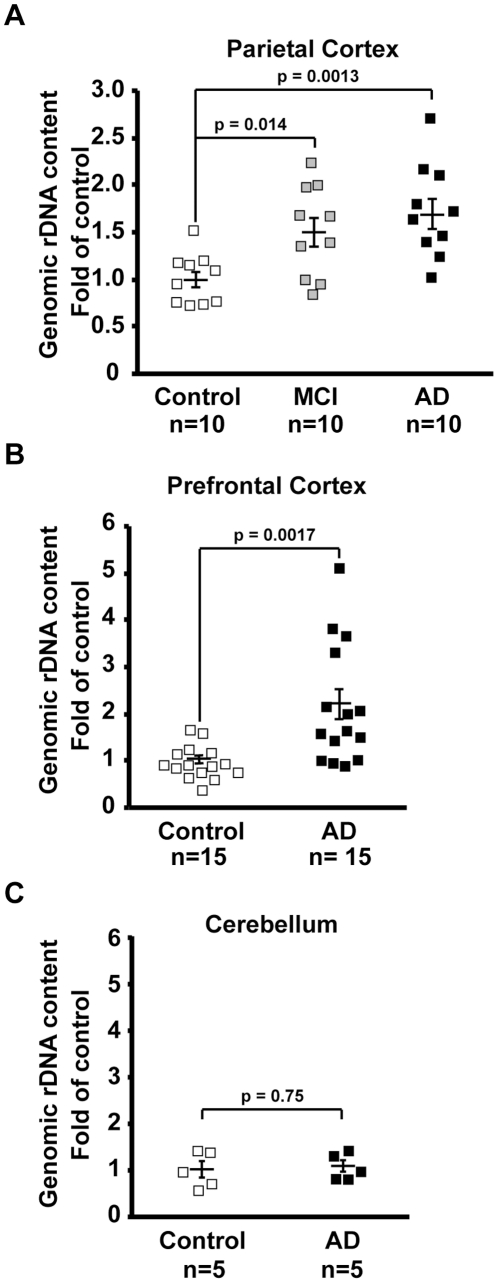
BACKGROUND: Ribosomal deficits are documented in mild cognitive impairment (MCI), which often represents an early stage Alzheimer's disease (AD), as well as in advanced AD. The nucleolar rRNA genes (rDNA), transcription of which is critical for ribosomal biogenesis, are regulated by epigenetic silencing including promoter CpG methylation. METHODOLOGY/PRINCIPAL FINDINGS: To assess whether CpG methylation of the rDNA promoter was dysregulated across the AD spectrum, we analyzed brain samples from 10 MCI-, 23 AD-, and, 24 age-matched control individuals using bisulfite mapping. The rDNA promoter became hypermethylated in cerebro-cortical samples from MCI and AD groups. In parietal cortex, the rDNA promoter was hypermethylated more in MCI than in advanced AD. The cytosine methylation of total genomic DNA was similar in AD, MCI, and control samples. Consistent with a notion that hypermethylation-mediated silencing of the nucleolar chromatin stabilizes rDNA loci, preventing their senescence-associated loss, genomic rDNA content was elevated in cerebrocortical samples from MCI and AD groups. CONCLUSIONS/SIGNIFICANCE: In conclusion, rDNA hypermethylation could be a new epigenetic marker of AD. Moreover, silencing of nucleolar chromatin may occur during early stages of AD pathology and play a role in AD-related ribosomal deficits and, ultimately, dementia.
Overview
The claims and statistics of this paper haven’t been checked yet.
Free: it reads the open-access text and checks the first 5 claims that cite a source we can check. Create a free account to check every claim.
Integrity signals
Registry
Cites
Statistics
Figures
Verification
Claims the paper makes
The claims and statistics of this paper haven’t been checked yet.
Free: it reads the open-access text and checks the first 5 claims that cite a source we can check. Create a free account to check every claim.
Claims other papers make about this one
Each is checked against this paper’s own text: does it say what the citing paper says it does?
The cited source says what the claim attributes to it.
In the citing paper
“other factors, as epigenetic regulation of rDNA 80, are probably implicated in the altered rRNA biogenesis in AD.”
From Altered Machinery of Protein Synthesis in Alzheimer's: From the Nucleolus to the Ribosome (2016) · cites this paper as [80]
Self-check
Percentages, sums and reported differences re-computed from the paper’s own numbers.
The self-check needs the paper’s full text.
Citations
Cites
In silico prediction of protein-protein interactions in human macrophages
Souiai, O., Guerfali, F., Ben Miled, S., Brun, C., & Benkahla, A. (2014) · BMC Research Notes · doi:10.1186/1756-0500-7-157 · Cited by 10,803
Significance analysis of microarrays applied to the ionizing radiation response
Tusher, V. G., Tibshirani, R., & Chu, G. (2001) · Proceedings of the National Academy of Sciences · doi:10.1073/pnas.091062498 · Cited by 10,568
Epigenetic programming by maternal behavior
Weaver, I. C. G., Cervoni, N., Champagne, F. A., D'Alessio, A. C., Sharma, S., Seckl, J. R., Dymov, S., Szyf, M., & Meaney, M. J. (2004) · Nature Neuroscience · doi:10.1038/nn1276 · Cited by 6,177 · cited 1×
“reducing methylation of the glucocorticoid receptor gene promoter in the brain [3].”
BackgroundDNA methylation landscapes: Provocative insights from epigenomics
Suzuki, M. M., & Bird, A. (2008) · Nature Reviews Genetics · doi:10.1038/nrg2341 · Cited by 3,039 · cited 1×
“. Instead, they involve chemical modifications of DNA and/or histones. Cytosine methylation at DNA CpG sites is the principal epigenetic modification of DNA that silences gene expression”
BackgroundHydroxylation of 5-Methylcytosine by TET1 Promotes Active DNA Demethylation in the Adult Brain
Guo, J. U., Su, Y., Zhong, C., Ming, G.-L., & Song, H. (2011) · Cell · doi:10.1016/j.cell.2011.03.022 · Cited by 1,360
GtRNAdb: a database of transfer RNA genes detected in genomic sequence
Chan, P. P., & Lowe, T. M. (2009) · Nucleic Acids Research · doi:10.1093/nar/gkn787 · Cited by 877 · cited 1×
“For normalization, the gene for tRNA was selected as it represents repeated DNA (17 almost identical copies per haploid) that, in contrast to rDNA, is not clustered together [23].”
BackgroundThe Epigenetics of rRNA Genes: From Molecular to Chromosome Biology
McStay, B., & Grummt, I. (2008) · Annual Review of Cell and Developmental Biology · doi:10.1146/annurev.cellbio.24.110707.175259 · Cited by 526 · cited 5×
“The rDNA promoter methylation reduces Pol1-mediated transcription of rRNA [7].”
BackgroundResultInfluentialAge-Specific Epigenetic Drift in Late-Onset Alzheimer's Disease
Wang, S.-C., Oelze, B., & Schumacher, A. (2008) · PLoS ONE · doi:10.1371/journal.pone.0002698 · Cited by 466
Ribosome Dysfunction Is an Early Event in Alzheimer's Disease
Ding, Q., Markesbery, W. R., Chen, Q., Li, F., & Keller, J. N. (2005) · The Journal of Neuroscience · doi:10.1523/jneurosci.3040-05.2005 · Cited by 433 · cited 3×
“The ribosome is the nexus for all cellular protein translation and reduced ribosomal activity has been suggested to be a major contributor to the pathology of Alzheimer’s disease (AD) [11,12,13,14].”
BackgroundResultSiegmund, K. D., Connor, C. M., Campan, M., Long, T. I., Weisenberger, D. J., Biniszkiewicz, D., Jaenisch, R., Laird, P. W., & Akbarian, S. (2007) · PLoS ONE · doi:10.1371/journal.pone.0000895 · Cited by 414 · cited 3×
“involved in AD pathogenesis appeared differentially methylated [5,6].”
BackgroundInfluential
Research works printed but not linked: 1
- Kalita K Makonchuk D Gomes C Zheng JJ Hetman M 2008 Inhibition of nucleolar transcription as a trigger for neuronal apoptosis. J Neurochem 105 2286 2299 18315559 PMC2909334 · DOI · Paper page
Cited by
Items 101–176 of 176
Age-related disturbances in DNA (hydroxy)methylation in APP/PS1 mice
Chouliaras, L., Lardenoije, R., Kenis, G., Mastroeni, D., Hof, P. R., van Os, J., Steinbusch, H. W. M., van Leeuwen, F. W., Rutten, B. P. F., & van den Hove, D. (2018) · Translational Neuroscience · doi:10.1515/tnsci-2018-0028 · Cited by 11
Roles of ribosomal RNA in health and disease
Johnston, R., Aldrich, A., & Lyons, S. M. (2024) · Frontiers in RNA Research · doi:10.3389/frnar.2023.1331185 · Cited by 10
“In contrast, patients with Alzheimer’s disease also show an increase in epigenetic silencing of rDNA repeats, which would result in a reduced transcriptional potential (Pietrzak et al., 2011).”
Ramirez, P., Sun, W., Dehkordi, S. K., Zare, H., Pascarella, G., Carninci, P., Fongang, B., Bieniek, K. F., & Frost, B. E. (2025) · Alzheimer s & Dementia · doi:10.1002/alz.70852 · Cited by 10
rRNA-gene methylation and biological aging
D’Aquila, P., Bellizzi, D., & Passarino, G. (2018) · Aging · doi:10.18632/aging.101369 · Cited by 8
Su, W., Xie, Z., Bai, X., Li, Z., & Liu, X. (2023) · Brain Sciences · doi:10.3390/brainsci13030478 · Cited by 7
Krzyżanowska, M., Steiner, J., Brisch, R., Mawrin, C., Busse, S., Braun, K., Jankowski, Z., Bernstein, H., Bogerts, B., & Gos, T. (2015) · Psychiatry Research · doi:10.1016/j.psychres.2015.08.045 · Cited by 7
Lin, Y.-M., Chu, P., & Ouyang, P. (2019) · Biochemical and Biophysical Research Communications · doi:10.1016/j.bbrc.2019.06.057 · Cited by 7
Gos, T., Steiner, J., Krell, D., Bielau, H., Mawrin, C., Krzyżanowski, M., Brisch, R., Pieśniak, D., Bernstein, H., Jankowski, Z., et al. (2013) · Psychiatry Research · doi:10.1016/j.psychres.2013.02.017 · Cited by 7
“Recent molecular studies revealing disturbed rDNA transcription in AD patients (Ding et al., 2005, 2006; Pietrzak et al., 2011) support these morphological results (Lu et al., 1998), which are consistent with our present findings in the AC of patients with MDD (Table 3).”
InfluentialSia, P. I., Wood, J. P. M., Chidlow, G., Sharma, S., Craig, J. E., & Casson, R. J. (2016) · Clinical and Experimental Ophthalmology · doi:10.1111/ceo.12661 · Cited by 7
“Hypermethylation of the rDNA promoter regionmay cause impaired ribosome production in the affected brains.(51) The levels of basal RNA pol I are reduced in cellular and animal models of Huntington’s disease, further suggesting disruption in ribosome biogenesis.”
BackgroundEpigenetics and Cognitive Disorders
Coppedè, F. (2014) · Elsevier eBooks · doi:10.1016/b978-0-12-417114-5.00017-6 · Cited by 7
Coronin 2B deficiency induces nucleolar stress and neuronal apoptosis
Wu, H., Yang, Y., Yi, W., Qiu, Y., Ma, S., Xu, J., Fan, Y., Chen, Y., & Chen, Y. (2024) · Cell Death and Disease · doi:10.1038/s41419-024-06852-x · Cited by 6
Bongiorni, S., Catalani, E., Arisi, I., Lazzarini, F., Quondam, S. D., Brunetti, K., Cervia, D., & Prantera, G. (2024) · Biomolecules · doi:10.3390/biom14070855 · Cited by 6
“This downregulation seems to result from rDNA promoter hypermethylation [87].”
BackgroundCopy Number Variations of Human Ribosomal Genes in Health and Disease: Role and Causes
Вейко, Н. Н., Ershova, E. S., Кондратьева, Е. И., Porokhovnik, L. N., Zinchenko, R. A., Melyanovskaya, Y. L., Krasovskiy, S., Vasilyeva, T. P., Kostyuk, G. P., Zakharova, N. V., et al. (2025) · Frontiers in Bioscience-Landmark · doi:10.31083/fbl25765 · Cited by 6
Neuroepigenética: metilación del ADN en la enfermedad de Alzheimer y otras demencias
Mendióroz, M., Fontes, L. P., & Méndez-López, I. (2014) · Medicina Clínica · doi:10.1016/j.medcli.2014.03.023 · Cited by 6
CCNA2 Ablation in Aged Mice Results in Abnormal rRNA Granule Accumulation in Hippocampus
Alves, M. J., Göksel, M., Kaya, B., Mostafa, H. R., Gygli, P. E., Stephens, J. A., Fair, S. R., Otero, J. J., & Czeisler, C. M. (2018) · American Journal Of Pathology · doi:10.1016/j.ajpath.2018.10.020 · Cited by 6
Nucleolar aggregation of key neuropathological proteins in the postmortem neurodegenerative brain
Lourenco, G. F., Torres-Pacheco, M. E., Fu, Y., Li, H., McCann, H., Shepherd, C. E., Kril, J. J., & Halliday, G. M. (2025) · Acta Neuropathologica · doi:10.1007/s00401-025-02968-2 · Cited by 5
“As previously published [22, 30, 74], aged controls have higher rRNA levels compared with AD cases (Fig.”
Liskovykh, M. A., Petrov, N. S., Noskov, V. N., Masumoto, H., Earnshaw, W. C., Schlessinger, D., Shabalina, S. A., Larionov, V., & Kouprina, N. (2023) · Cellular and Molecular Life Sciences · doi:10.1007/s00018-023-04770-3 · Cited by 5
“Another study suggested that reduced ribosomal activity is a major contributor to the pathology of Alzheimer’s disease [26]; and it has been reported that Alzheimer’s disease is accompanied by epigenetic rDNA silencing, which reduces the number of active rRNA genes while the total number of ribosomal repeats is not de…”
BackgroundRibosomal DNA and Neurological Disorders
Zhou, H., Xia, Y., Zhu, R., Zhang, Y., Zhang, X., Zhang, Y., & Wang, J. (2024) · Current Molecular Medicine · doi:10.2174/0115665240292079240513093708 · Cited by 4
Neuroepigenetics: Desoxyribonucleic acid methylation in Alzheimer's disease and other dementias
Mendióroz, M., Fontes, L. P., & Méndez-López, I. (2015) · Medicina Clínica (English Edition) · doi:10.1016/j.medcle.2015.12.014 · Cited by 4
Mayburd, A. L., & Baranova, A. V. (2017) · Methods in molecular biology · doi:10.1007/978-1-4939-7027-8_17 · Cited by 3
Le protéasome et le fer : rôles et/ou régulations dans le nucléole d’Arabidopsis thaliana
Montacié, C. (2019) · theses.fr (ABES) · doi:10.70675/19513209z9ae3z4903z9d88z0d9e3ee4a286 · Cited by 3
Molecular Mechanisms of RNA Polymerase I Transcription in Health and Disease: An Overview
Walker, B. E., Chung, J., Pascual, H. G., Adala, J. D., & Knutson, B. A. (2026) · Molecular and Cellular Biology · doi:10.1080/10985549.2026.2628826 · Cited by 2
Masi, M., Oliviero, C., Govoni, S. M., Wolozin, B. L., Racchi, M., & Buoso, E. (2026) · European Journal of Pharmacology · doi:10.1016/j.ejphar.2026.179033 · Cited by 2
Human rDNA Structure, Expression, and Non-Canonical Functions: the Role of Non-Coding Regions
Sadova, A. A., Panteleev, D. Y., & Pavlova, G. V. (2023) · Molecular Biology · doi:10.31857/s0026898423030084 · Cited by 2
The Structure, Expression, and Non-Canonical Functions of Human rDNA: The Role of Non-Coding Regions
Sadova, A. A., Panteleev, D. Y., & Pavlova, G. V. (2023) · Molecular Biology · doi:10.1134/s002689332303007x · Cited by 2
“Methylation profile is also altered in Alzheimer disease in addition to the reduced rRNA synthesis and decreased ribosome number [80, 81].”
BackgroundMolecular genetic markers of sensitivity to industrial environment factors at miners
Тимофеева, А. А., Minina, V. I., Astaf’eva, E. A., Golovina, T. A., Fedoseev, V. I., Владимировна, Р. А., Соболева, О. А., Savchenko, Y. A., Баканова, М. Л., & Glushkov, A. A. (2020) · Ecological genetics · doi:10.17816/ecogen20418 · Cited by 2
Neurodegeneration-associated instability of ribosomal DNA.
Hallgren, J. (2014) · ThinkIR: The University of Louisville's Institutional Repository (University of Louisville) · doi:10.18297/etd/562 · Cited by 2
Ribosomal RNA – a tail wagging the dog?
Stehle, J. H., & Rawashdeh, O. (2016) · Journal of Neurochemistry · doi:10.1111/jnc.13499 · Cited by 1
“2014); finally, the involvement of the well-documented epigenetic control of polymerase I (Pietrzak et al. 2011; Dutta et al. 2015) in learning-induced spatiotemporal dynamics of rRNA processing also requires considerable attention.”
BackgroundMaina, M. B. (2017) · Sussex Research Online (University of Sussex) · Cited by 1
Jorge, F. M. D. H. (2018) · Digital Library of Theses and Dissertations (Universidade de São Paulo) · doi:10.11606/t.5.2018.tde-02082018-113658 · Cited by 1
Francés, R. (2019) · LA Referencia (Red Federada de Repositorios Institucionales de Publicaciones Científicas) · Cited by 1
Lead Exposure, Homocysteine, DNA Methylation and Late-Onset Alzheimer's Disease.
Bakulski, K. M. (2012) · Deep Blue (University of Michigan) · Cited by 1
Weiss, E. (2024) · ANU Open Research (Australian National University) · doi:10.25911/374s-7h89 · Cited by 1
Couture, M. (2020) · eScholarship@McGill (McGill) · doi:10.82308/47559 · Cited by 1
Epigenetic dysregulation and the pathophysiology of Alzheimer’s disease
Mastroeni, D. (2013) · Research Publications (Maastricht University) · doi:10.26481/dis.20130503dm
The regulation of RNA Polymerase I-mediated transcription in forebrain neurons.
Smith, S. C. (2012) · ThinkIR: The University of Louisville's Institutional Repository (University of Louisville) · doi:10.18297/etd/1350
Blackmore, L. (2013) · Dublin City University Open Access Institutional Repository (Dublin City University) · Cited by 1
Nucleolar Contributions to DNA-Damage Response and Genomic (In)Stability in the Nervous System
Hetman, M. (2016) · Elsevier eBooks · doi:10.1016/b978-0-12-803309-8.00030-6
Self-citationThe role of the nucleolus in neurodegeneration.
Hallgren, J. (2016) · ThinkIR: The University of Louisville's Institutional Repository (University of Louisville) · doi:10.18297/etd/2547
Epigenetic Regulation of Silent Chromatin in Saccharomyces cerevisiae
Jordan, R. A. (2015) · OakTrust (Texas A&M University Libraries)
Khalouei, S. (2014) · TSpace (University of Toronto)
Herdman, C. (2017) · Corpus Université Laval (Université Laval)
The Drosophila Neuroblasts: A Model System For Human Ribosomopathies
Baral, S. S. (2019) · Louisiana State University · doi:10.31390/gradschool_dissertations.4859
Small RNA modifications in Alzheimer’s diseasePreprint
Zhang, X., Trebak, F., Souza, L. A., Shi, J., Zhou, T., Kehoe, P. G., Chen, Q., & Feng, Y. (2020) · bioRxiv (Cold Spring Harbor Laboratory) · doi:10.1101/2020.04.30.071100
Muthuswami, R. (2020) · Springer eBooks · doi:10.1007/978-981-32-9005-1_8
Niehaus, C. (2021) · Elsevier eBooks · doi:10.1016/b978-0-323-85679-9.00029-5
Nucleolar epigenomics by dynamic molecular combing and nucleolar matrix analysis
Zillner, K. (2013) · University of Regensburg Publication Server (University of Regensburg) · doi:10.5283/epub.28221
Epigenetics and cognitive disorders
Stoccoro, A., & Coppedè, F. (2021) · Elsevier eBooks · doi:10.1016/b978-0-12-823577-5.00032-5
Porokhovnik, L. N. (2022) · Journal of Personalized Medicine · doi:10.3390/jpm12101752
“By reducing nucleolar transcription and subsequently decelerating ribosomal turnover, the hypermethylation of the rDNA promoter may participate in the decline of the rRNA component of brain ribosomes, contributing to Alzheimer’s disease-associated synapse loss and resulting in dementia [31].”
BackgroundDouble strand break repair in human heterochromatin
Mitrentsi, I. (2020) · theses.fr (ABES) · doi:10.70675/c005a287z377fz40aeza122zda63d677ced3
Unraveling the Role of Non-Coding RNAs in Alzheimer's Disease
Siragam, S. (2024) · Research Journal of Biotechnology · doi:10.25303/201rjbt2410249
Investigating the genetic and environmental influences on rDNA methylation in mouse and human
Yildizoglu, S. (2023) · Queen Mary Research Online (Queen Mary University of London)
rDNA copy number variation alters response to common growth environments in yeast
Thornton, K. (2023) · ResearchWorks at the University of Washington (University of Washington)
La Proteina Tau: ruolo nucleare, trasporto e implicazioni patologiche nelle Tauopatie
Bernini, F. (2024) · Electronic Theses and Dissertations Repository (University of Pisa)
Altered mechanisms of protein synthesis in frontal cortex in Alzheimer disease and a mouse model
(n.d.) · RECERCAT (Consorci de Serveis Universitaris de Catalunya)
Unravelling the contribution of small non-coding RNAs to Huntington’s disease pathogenesis
Guisado Corcoll, A. (2023) · Dipòsit Digital de la Universitat de Barcelona (Universitat de Barcelona)
RNA-binding Proteins and RNA-DNA Hybrids Regulate Repetitive DNA Stability in Health and Disease
Ostrowski, L. (2020) · TSpace (University of Toronto)
Purohit, M. K. (2024) · TSpace (University of Toronto)
The nuclear protein quality control system for the elimination of stress-induced aggregates
Brunello, L. (2021) · theses.fr (ABES) · doi:10.70675/ce9204b1z17c7z476bz9bd5z4e801e0613ef
Napolitano, L. (2026) · Firenze University Press eBooks · doi:10.36253/979-12-215-0993-9.05
Napolitano, L. (2026) · Firenze University Press eBooks · doi:10.36253/979-12-215-0993-9.references
Napolitano, L. (2026) · Firenze University Press eBooks · doi:10.36253/979-12-215-0993-9.07
Third Section: Design of a dimeric-nanobody specific for Aβ42 oligomers: the Dimeric-DesAb-O
Napolitano, L. (2026) · Firenze University Press eBooks · doi:10.36253/979-12-215-0993-9.06
Napolitano, L. (2026) · Firenze University Press eBooks · doi:10.36253/979-12-215-0993-9
Napolitano, L. (2026) · Firenze University Press eBooks · doi:10.36253/979-12-215-0993-9.03
Napolitano, L. (2026) · Firenze University Press eBooks · doi:10.36253/979-12-215-0993-9.04
Napolitano, L. (2026) · Firenze University Press eBooks · doi:10.36253/979-12-215-0993-9.02
Conclusion and Future Perspectives
Napolitano, L. (2026) · Firenze University Press eBooks · doi:10.36253/979-12-215-0993-9.08
Zheng, X., Ke, W., Meng, Z., Wang, P., & Huang, M. (2026) · Food, Nutrition and Health. · doi:10.1007/s44403-026-00067-y
“This is further supported by reports that the rRNA gene promoter is hypermethylated, suggesting epigenetic silencing of rDNA in the early stages of AD [12, 13].”
Contribution of G4 Structure to Alzheimer’s Disease and Tau Pathology
Kallweit, L. M. (2026) · Digital Commons - DU (University of Denver) · doi:10.56902/etdcrp.2026.63
Beyond the Ribosome: The Expanding Role of the Nucleolus in Neurodegenerative Pathways
Iacono, D., & Feltis, G. C. (2026) · Molecular Neurobiology · doi:10.1007/s12035-026-06146-7
“This finding provides a direct molecular mechanism for the observed reduction in rRNA levels and nucleolar atrophy in AD, linking epigenetic dysregulation to the core pathology of the disease [124].”
Saturation barcoding of ribosomal DNA resolves the nucleolar organizer regions of the human genomePreprint
Zhao, S., Wallentin, J., Potapova, T., Zheng, S., Liu, X., Daza, R. M., Gerton, J. L., Shendure, J., & Li, X. (2026) · bioRxiv (Cold Spring Harbor Laboratory) · doi:10.64898/2026.11.10.765783
Metadata
- Authors
- Pietrzak, M., Rempala, G., Nelson, P. T., Zheng, J.-J., & Hetman, M.
- Affiliations
- University of Louisville (US)
- University of Kentucky (US)
- Corresponding author
- Hetman, Michal
- Venue
- PLoS ONE
- Publisher
- Public Library of Science (PLoS)
- Published
- 2011-07-22
- Volume
- 6
- Issue
- 7
- Pages
- e22585
- ISSN
- 1932-6203 (ISSN-L)
- PMC
- PMC3142181
- OpenAlex
- W2063969996
- Cited by
- 155
- References
- 38
- Citations by year
- 2026: 14 · 2025: 4 · 2024: 6 · 2023: 7 · 2022: 6 · 2021: 10 · 2020: 15 · 2019: 12 · 2018: 12 · 2017: 7 · 2016: 15 · 2015: 10 · 2014: 16 · 2013: 14 · 2012: 7
- FWCI
- 4.80
- Type
- journal article
- Language
- en
- Open access
- gold
- doi.org
- Locations
- PLoS ONE (publishedVersion, cc-by)
- Europe PMC (PubMed Central) (publishedVersion, cc-by)
- PubMed Central (publishedVersion, cc-by)
- PubMed (publishedVersion)
- UKnowledge (University of Kentucky) (submittedVersion, cc-by)
- DOAJ (DOAJ: Directory of Open Access Journals) (submittedVersion)
- Figshare (submittedVersion, cc-by)
- Funders
- National Science Foundation (1021860, 0840695)
- National Institutes of Health (5r01de019243-05, 5r01ca152158-06, IOS1021860, RR015576)
- National Institute on Aging (P30AG028383)
- National Cancer Institute (R01CA-152158)
- National Institute of Neurological Disorders and Stroke (R01NS047341, NS047341)
- National Institute of Dental and Craniofacial Research (R01-DE019243)
- National Center for Research Resources (RR015576, P20RR015576)
- Topics
- Life Sciences › Biochemistry, Genetics and Molecular Biology › Molecular Biology › Epigenetics and DNA Methylation
- Life Sciences › Neuroscience › Cellular and Molecular Neuroscience › Alzheimer's disease research and treatments
- Health Sciences › Medicine › Psychiatry and Mental health › Dementia and Cognitive Impairment Research
- Keywords
- Alzheimer's disease, mild cognitive impairment, DNA methylation, epigenetic silencing, ribosome biogenesis, epigenetic biomarkers, rDNA copy number
- MeSH terms
- Aged, 80 and over, Alzheimer Disease, Base Sequence, Cell Nucleolus, Cytosine, DNA, Ribosomal, Female, Humans, Male, Molecular Sequence Data, Promoter Regions, Genetic, RNA, Ribosomal, CpG Islands, DNA Methylation, Gene Silencing, Epigenesis, Genetic
About these checks
Registry, retraction, Cites and statistics results are computed, not judged, with one exception: a printed reference that no index lists is read once by a model before it counts as a citation error. Claims are extracted by a model and kept only when their quote appears verbatim in the text; each cited source is then checked, with a model’s help, for whether it says what the claim relies on. Those verdicts can be wrong — read the claim’s quote and the cited source before relying on one.
Statistics and arithmetic are recomputed, not judged.
Confidence bands are shown only for fields calibrated on our annotated test set. None is calibrated yet, so no band is shown.
What counts as a claim ›How we measure confidence ›How we check this ›
Are you an author, or do you see a problem with this page? Request a review
Data sources
Bibliographic data: Semantic Scholar, OpenAlex, Crossref.
Contains information from the Semantic Scholar Academic Graph Datasets, made available under the ODC Attribution License (ODC-BY 1.0).
Semantic Scholar’s data is described in: Kinney, R., et al. (2023). The Semantic Scholar Open Data Platform. arXiv:2301.10140.
